Organize Christmas decor by zones, not by boxes: give each room one focal display, swap everyday decor out as the holiday pieces come in — one in, one out — and keep every other surface at its normal load. The tree zone, the mantel and the entryway can carry the whole season.
Thank you for reading this post, don’t forget to subscribe!Part of our guide: 30 Toy Storage Ideas to Finally Tame the Toy Clutter
Christmas clutter rarely comes from one big piece. It comes from a little decor on every surface — a garland here, a snowman there, a bowl of baubles on a table that already had a vase on it. The nine ideas below work on the opposite principle: fewer spots, chosen well, with clear rules for what goes where and what comes out. Follow them in order and the house will look decorated, not crowded.
1. Give each room one focal display
Pick one spot in each room to carry the season. In the living room it is the tree; in the family room it is the mantel; by the front door it is a small arrangement on the console. One focal display per room gives the eye somewhere to land, and the empty surfaces around it are what make the display look intentional instead of crowded. When every surface holds a little Christmas, none of them reads as a display — it just reads as clutter.

Stand in the doorway of each room and look for the first thing your eye lands on — that is the natural focal spot. If nothing stands out, the tree, the mantel or the largest wall is the place to start.
2. Swap one in, one out
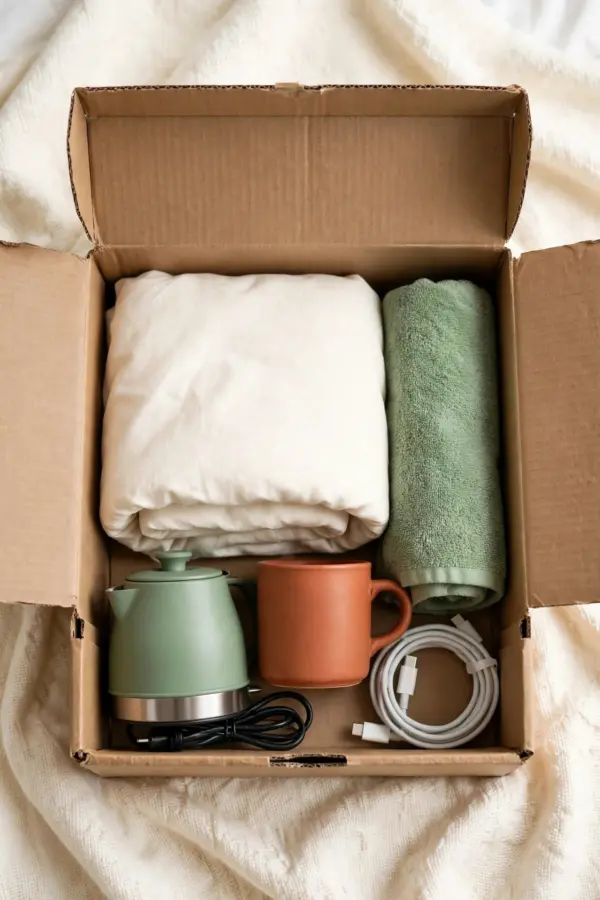
Every Christmas piece that comes out should send an everyday piece into the empty box it came from. The boxes are sitting there anyway, so the everyday decor gets a labelled home. This is the rule that keeps the total amount of decor in the house the same all December — nothing is added, only swapped. When the season ends, the everyday pieces go straight back to their spots, and our guide to how to store Christmas decorations covers packing the holiday pieces away just as neatly.
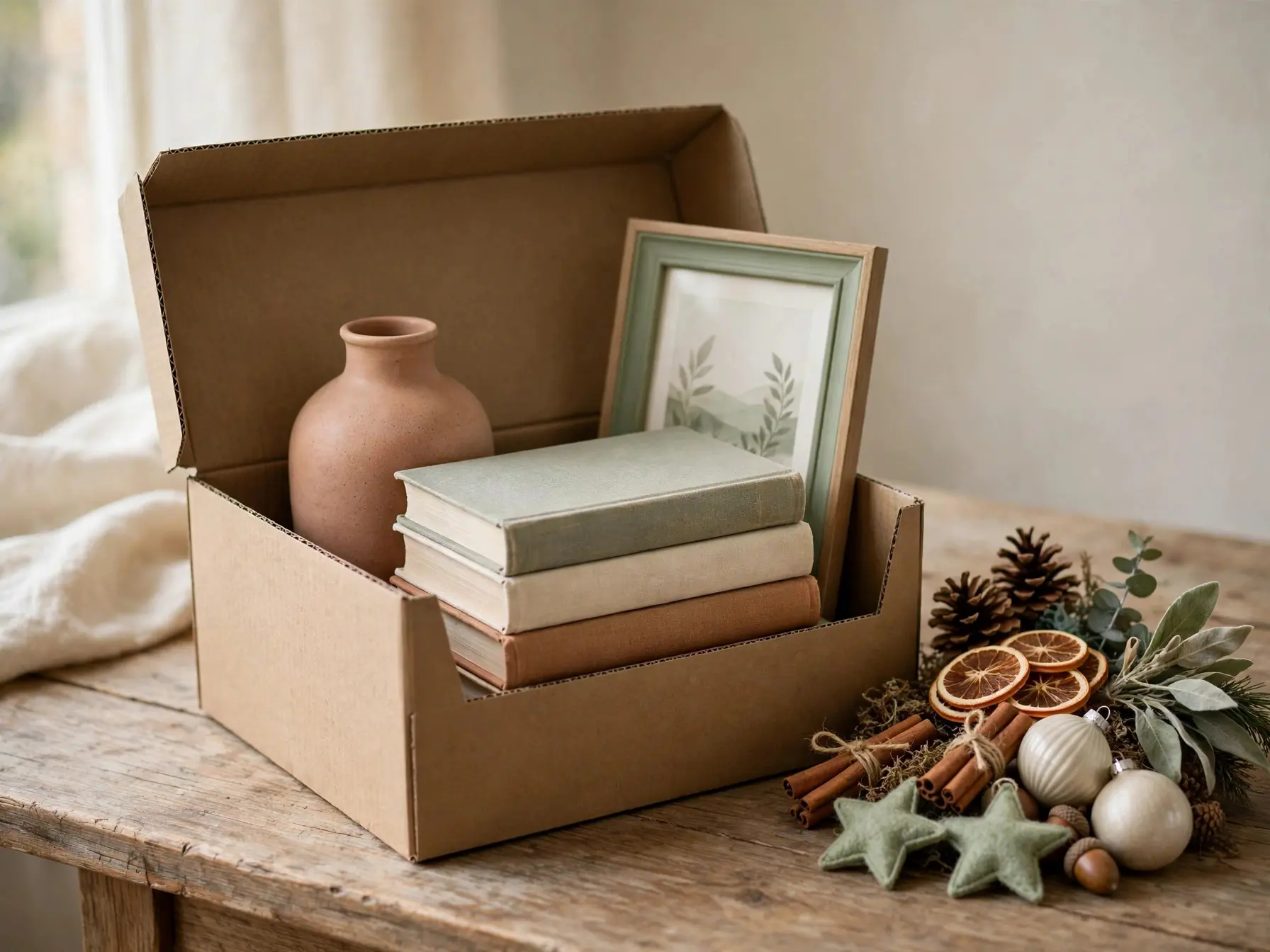
Label the box with the room it came from, not just “everyday decor” — a box marked “living room” goes back to the living room in one trip in January, with no sorting.
3. Keep the tree zone clear
The tree is the biggest piece of decor in the house, so it needs breathing room. Give it a defined zone — a rug underneath, or the corner it stands in — and keep everything else out of that zone. No trailing garlands leading away from it, no extra ornaments on the side table, no pile of gifts stacked against the trunk before the day arrives. A tree with clear space around it looks bigger and calmer than a tree hemmed in by more decor.

A rug under the tree does two jobs at once: it marks the zone, and it catches the needles. Shake it out every few days and the floor around the tree stays tidy.
4. Style the mantel in three heights
A mantel looks cluttered when everything on it is the same height. Build it in three levels instead: something tall at each end, like candlesticks or a pair of lanterns; something medium running along the top, like a garland; and something low in front, like sprigs of greenery or a few pinecones. Three heights give the mantel a shape the eye can follow, and they stop you adding more pieces to fill gaps that are not really there.

Step back to the far side of the room before deciding the mantel is finished — heights that look right from a metre away can look flat or lopsided from the sofa.
5. Let the entryway carry the welcome
The entryway is the first thing guests see, so it earns a display — but a small one. A wreath on the wall, a vase of greenery on the console, and the doormat swapped for a seasonal one is enough. The entryway is also the busiest traffic point in the house, so anything fragile or trailing here will get knocked or tripped over. Keep the console clear enough for keys and bags, and keep the floor clear of anything that narrows the path through the door.

Hang the wreath on the inside of the front door or the wall opposite it, not on the console — the console needs to stay free for the things people actually set down when they walk in.
6. Build a centrepiece that moves for meals
A table centrepiece only works if it can move. Build yours on a tray: greenery, candles and a few pinecones arranged low enough to see over, all sitting on one board or tray that lifts off in a single motion. When the meal is served, the whole centrepiece moves to the sideboard and the table is clear for plates and serving dishes. A centrepiece fixed to the table ends up pushed aside piece by piece, and that is how a dining table turns into a cluttered shelf.
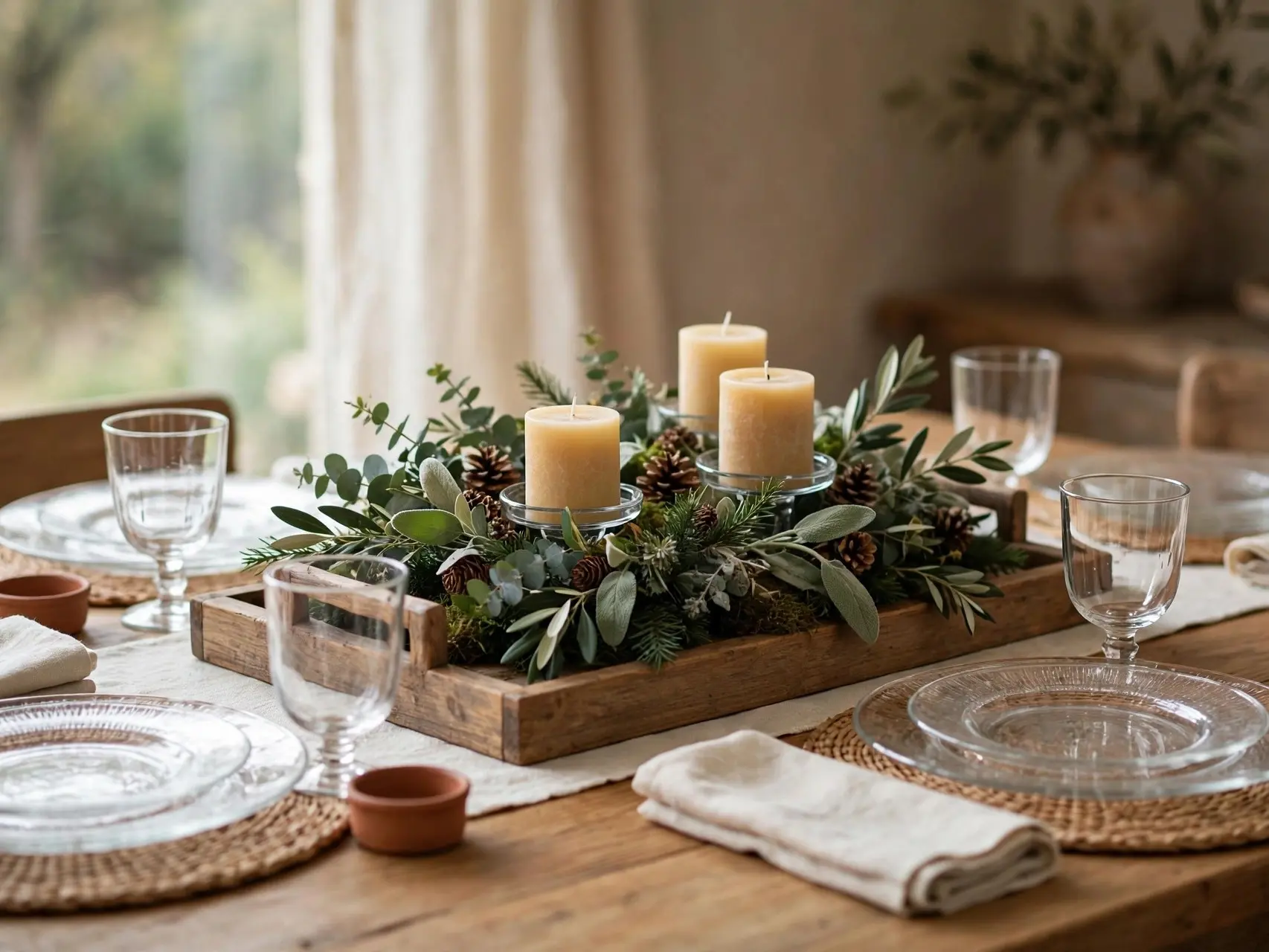
Keep the candles in holders and the greenery away from the flame, and test the lift before the first meal — if the tray is too heavy or too wide for one person to carry, it will never actually move.
7. Tame the cords and timers
Loose cords are the quietest form of Christmas clutter, and the easiest to fix. Run each set of lights to one power strip, clip the cords along the skirting board, and put the strip on a timer plug so the lights switch themselves on at dusk and off at bedtime. One strip per room is enough — if a display needs a second strip, it probably needs fewer lights instead.
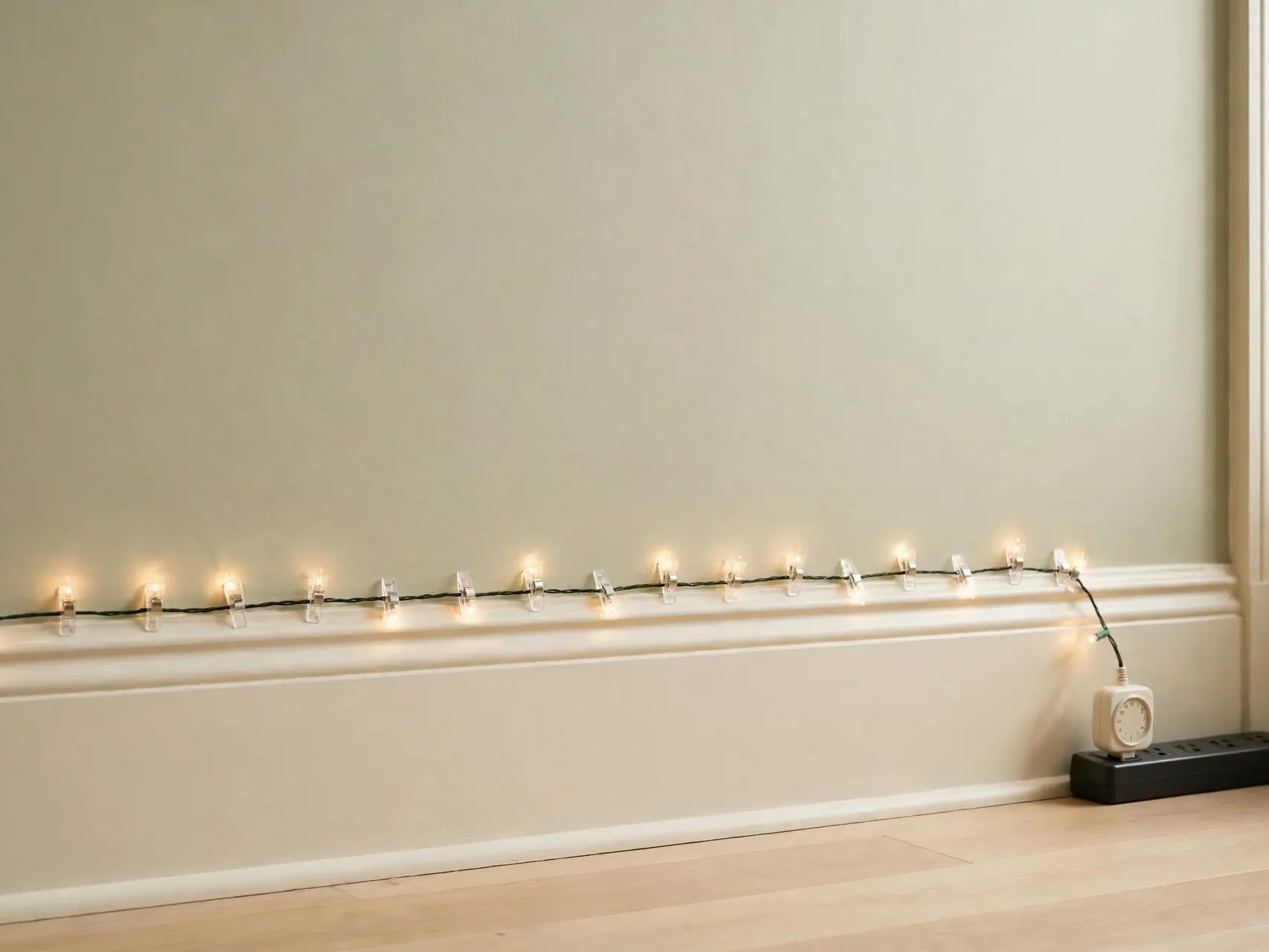
Clear clips hold the cord tight to the skirting board without leaving marks, and they are worth buying once rather than improvising with tape every December.
8. Keep fragile pieces out of traffic paths
Glass baubles and ceramic figures belong where nobody brushes past them. Put fragile pieces on high shelves, inside a cabinet, or in a quiet corner — never on a low table beside a doorway, at the end of a sofa arm, or anywhere a coat or a bag swings past. Traffic paths are the places decorations get knocked, and a broken ornament in mid-December is hard to replace.

If a piece is both fragile and precious, display it inside a glass cabinet rather than on an open shelf — you can still see it, and nobody can knock it.
9. Do a halfway-day edit in mid-December
Plan a halfway-day edit for mid-December: walk through the house with a basket and remove about a fifth of the decor. Take the pieces that never quite worked — the extra garland, the third snowman, the ornaments that looked better in the box. The display will look calmer the moment the basket is full, because the pieces left behind finally have room to be seen. Put the removed pieces back in their boxes straight away, or they will drift back onto the shelves before Christmas Day.

Put the halfway-day edit in the calendar now, before the decorating starts — an edit you have to remember to do is an edit that never happens.
Questions, answered
How do you organize Christmas decorations around the house?
Organize Christmas decorations by zones, not by boxes. Give each room one focal display — the tree in the living room, the mantel in the family room, a small arrangement by the front door — and leave every other surface at its normal load. Swap everyday decor out as the holiday pieces come in, one in and one out, so the total amount of decor in the house never grows.
How do you decorate for Christmas without it looking cluttered?
Give each room one focal display and stop there. Cluttered Christmas decor is almost always too many small pieces spread across every surface, so pick the one spot in each room that carries the season and leave the rest alone. A mid-December edit helps too: if the house starts to feel busy, remove about a fifth of the decor and the display will look intentional again.
Where should you put Christmas decorations in a small home?
Put Christmas decorations in the three places guests actually look: the tree zone, the mantel and the entryway. In a small home, one focal display per room is even more important, because every extra piece competes for the same little surface space. Keep the kitchen and bathroom free of decor, and choose one hero piece — a wreath, a garland, a small tree — rather than a collection of small ones.
What do you do with your everyday decor when the Christmas decor goes up?
Pack it into the empty Christmas boxes as the holiday pieces come out — one in, one out. The boxes are sitting empty anyway, so the everyday decor has a labelled home instead of piling up on a spare-room shelf. Put the everyday pieces back in their usual spots when the Christmas decor comes down in January, and the house returns to normal in one pass.
Keep reading
When the season ends, our guide to how to store Christmas decorations covers packing every piece away so it survives until next year. For the hosting side of the season, the holiday cleaning checklist deep cleans the house in four timed passes before guests arrive, and Christmas kitchen organization resets the pantry and fridge before the holiday cooking starts.
A Christmas display that never looks cluttered is not about owning less decor — it is about giving the decor fewer, better places to live. One focal display per room, one swap in and one out, and one honest edit in mid-December: that is the whole system.