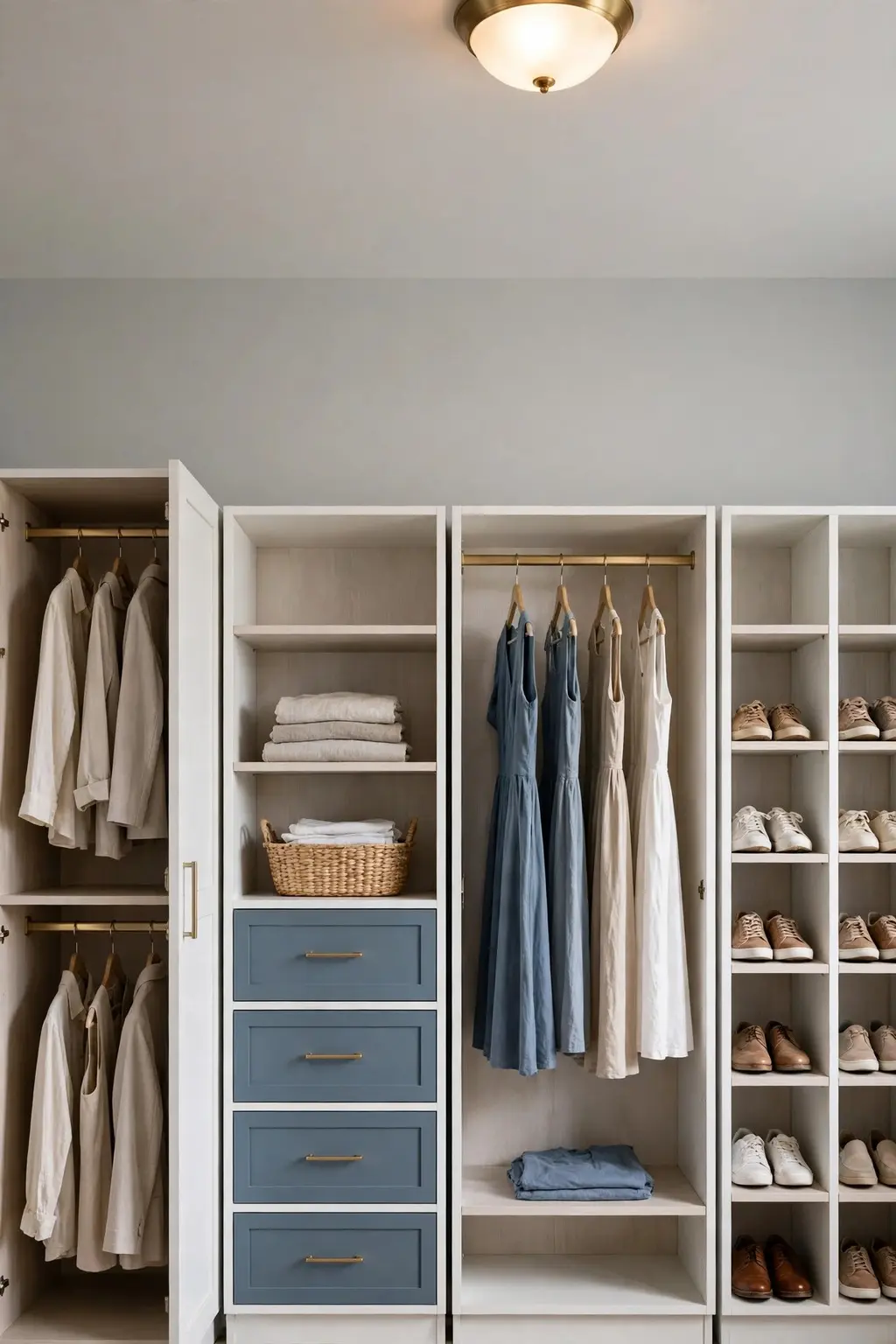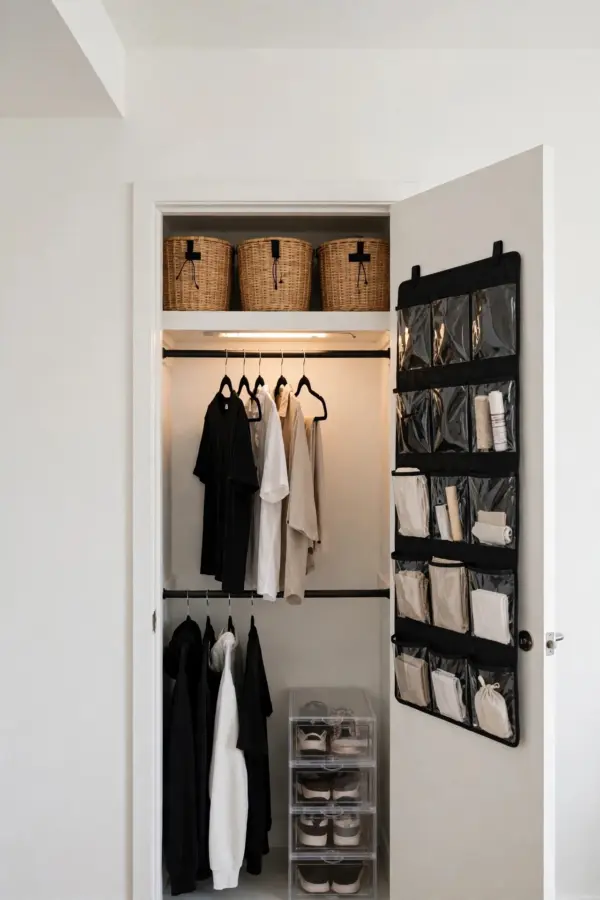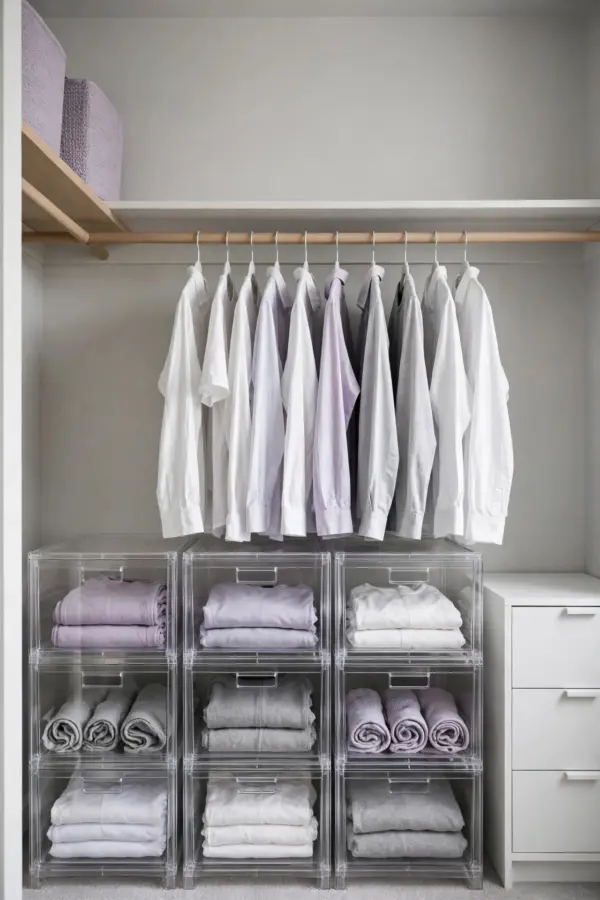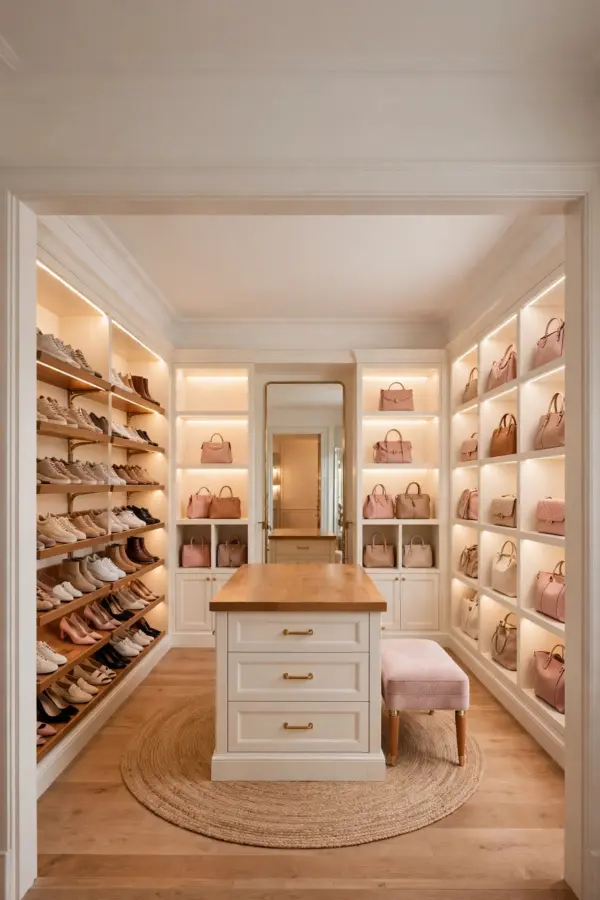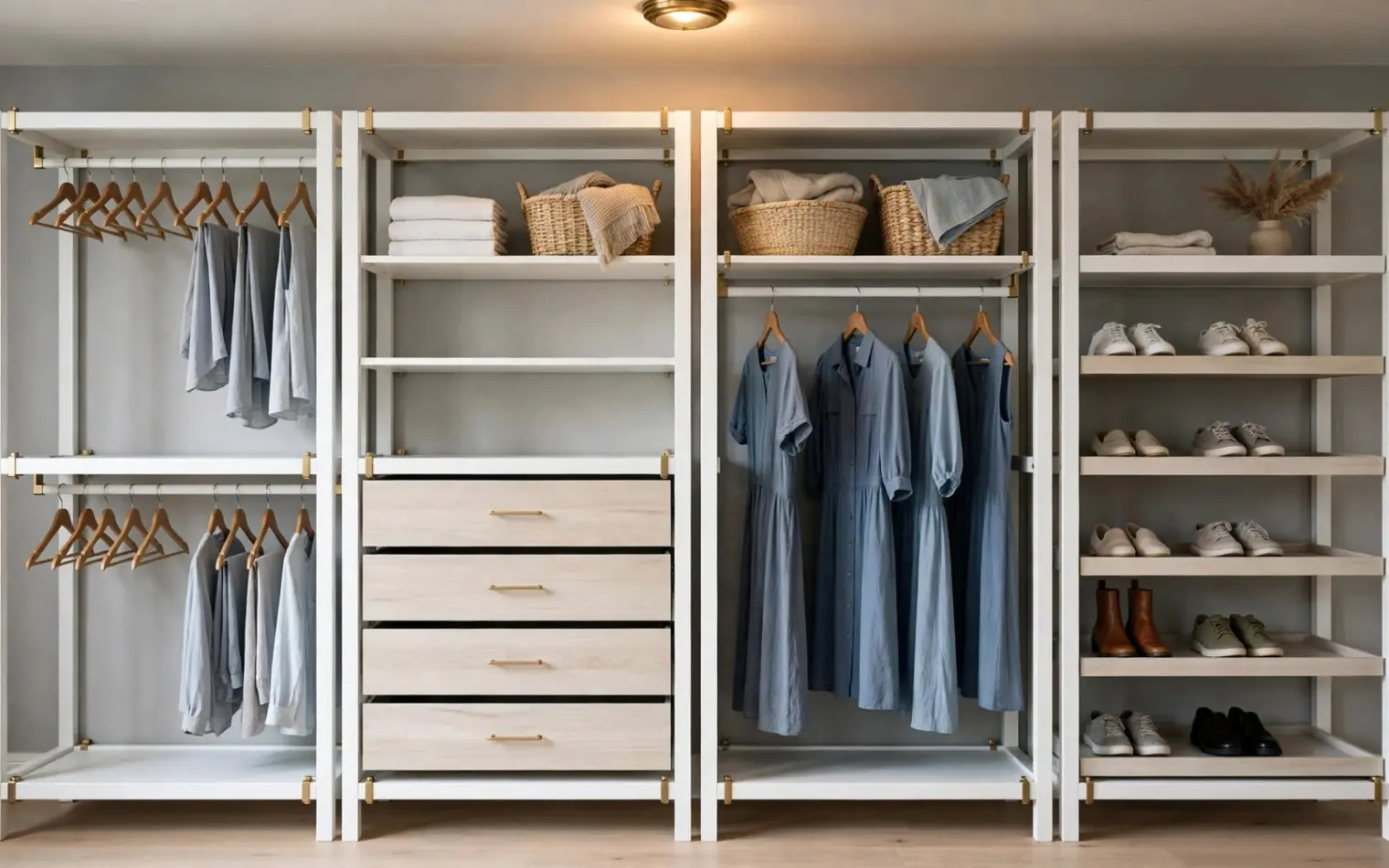
A modular closet system is a set of separate closet units — hanging rods, shelf towers, drawers and shoe shelves — that you arrange to fit your wall, instead of buying one fixed wardrobe. The best kit for most closets is a double-hang starter kit with a shelf tower, because it holds the most everyday clothes for the least money, and you can add modules later as your needs change. This guide compares 8 kits by price band, best use and module width, then walks you through planning your layout in 5 steps.
Thank you for reading this post, don’t forget to subscribe!Most closets waste space because they were built with one rod and one shelf. A modular system fixes that by letting you mix hanging, folding and drawer space in the proportions your clothes actually need. The kits below are configurations, not brands: the same module types show up across makers, so compare widths and prices before you buy. Measure first, sketch second, order last — that order is what keeps a kit from arriving too wide for its wall.
Compare the 8 kits at a glance
Every kit below is built from the same handful of parts — side panels, shelves, rods, drawers and hardware — arranged in different proportions. Use this table to narrow the choice to two or three kits, then read the detail for each one before you order.
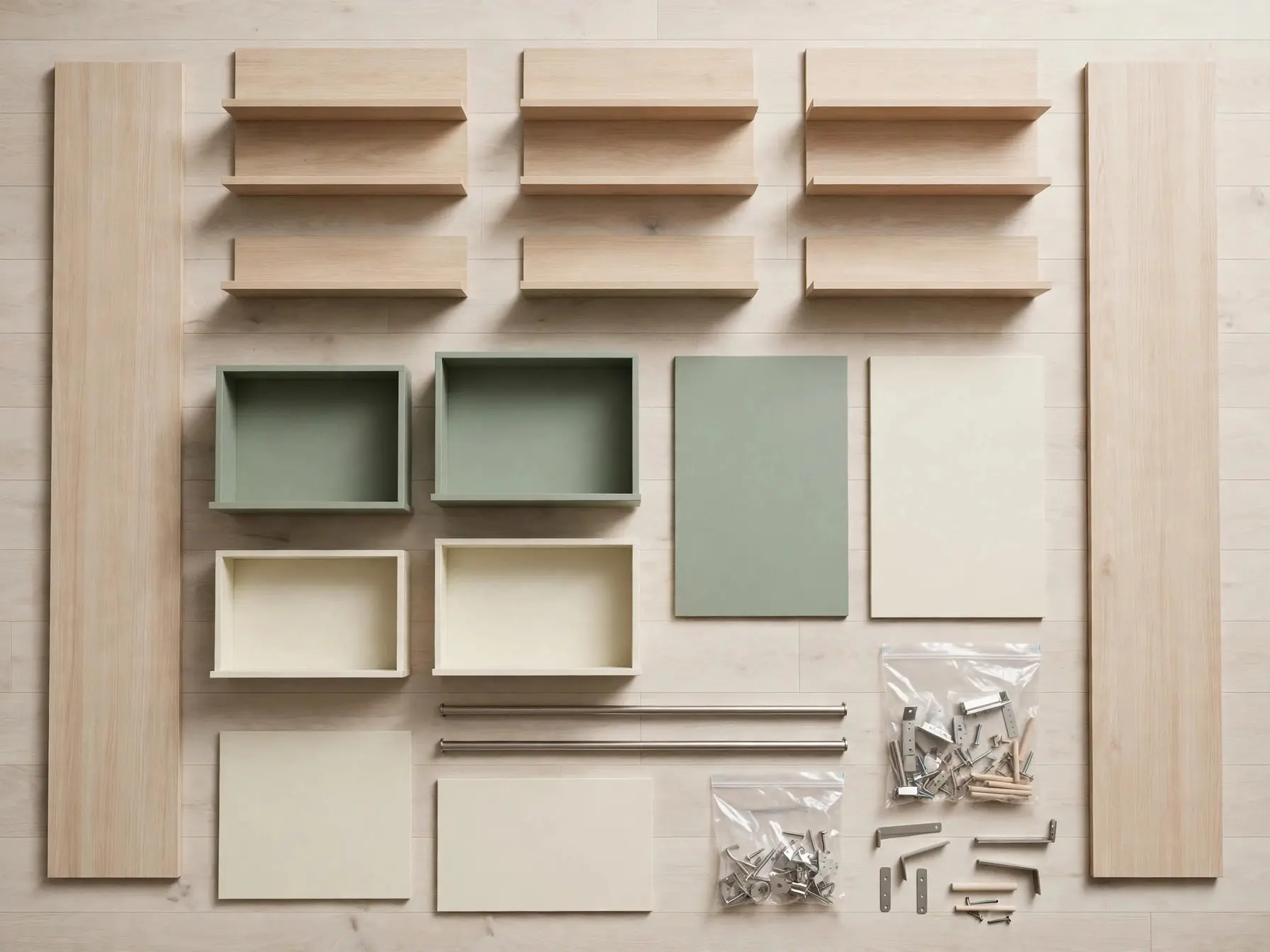
| Kit | Price band | Best for | Module widths |
|---|---|---|---|
| Double-hang starter | $150–$300 | Everyday tops and shirts | 24–48 in |
| Long-hang | $100–$250 | Dresses, coats and jumpsuits | 24–36 in |
| Shelf tower | $200–$450 | Folded clothes and linens | 18–36 in |
| Drawer base | $180–$400 | Socks, underwear and accessories | 24–48 in |
| Small reach-in | $120–$280 | Apartments, kids’ closets and rentals | 24–36 in |
| Full wall | $400–$900 | A full closet wall or walk-in | 72–120 in |
| Shoe shelf | $150–$350 | Shoe-heavy closets | 24–48 in |
| Corner L-shaped | $350–$800 | Walk-ins and awkward corners | 48–96 in |
Prices are typical ranges for the kit type, not one brand: the same module widths show up across makers, so compare the width and the price band before you fall for a finish. The detail for each kit below says what it holds best and where it fits.
The 8 kits, in detail
1. Double-hang starter kit
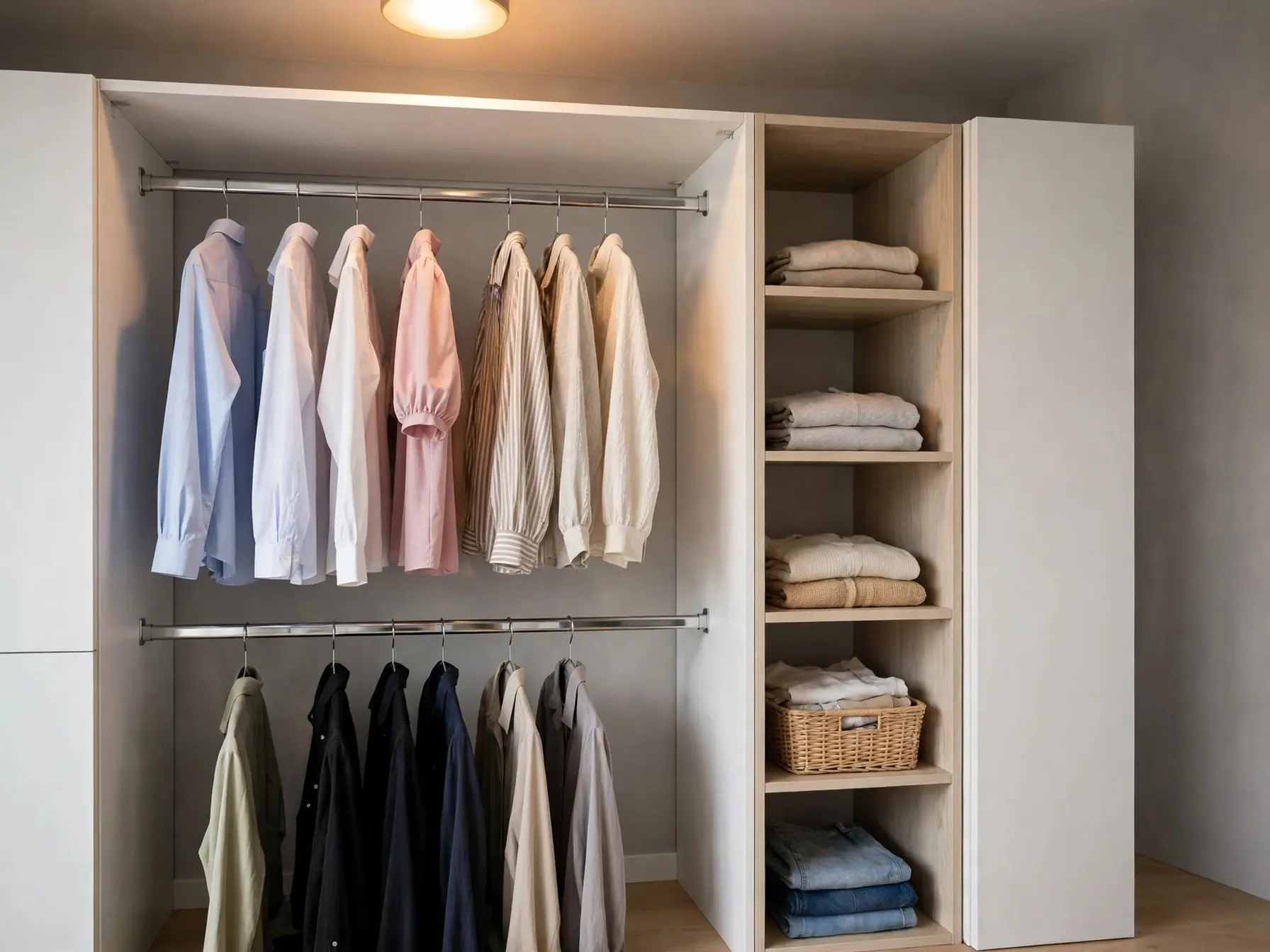
Two rods stacked one above the other, usually with a shelf on top and a small tower beside them. That is the whole kit, and it is the best starting point for most closets because short items — shirts, blouses, folded pants — take up most of the hanging space in a real wardrobe. A 48-inch double-hang module holds roughly twice as many garments as a single rod at the same width. Add a narrow shelf tower for folded sweaters and you have a complete system for under $300 in most cases. It suits reach-in closets and works as the first kit in a larger wall. Price band: $150–$300.
- Two rods stacked for shirts, blouses and folded pants
- A shelf on top and a narrow tower beside it
- The most clothes per dollar of any kit here
2. Long-hang kit
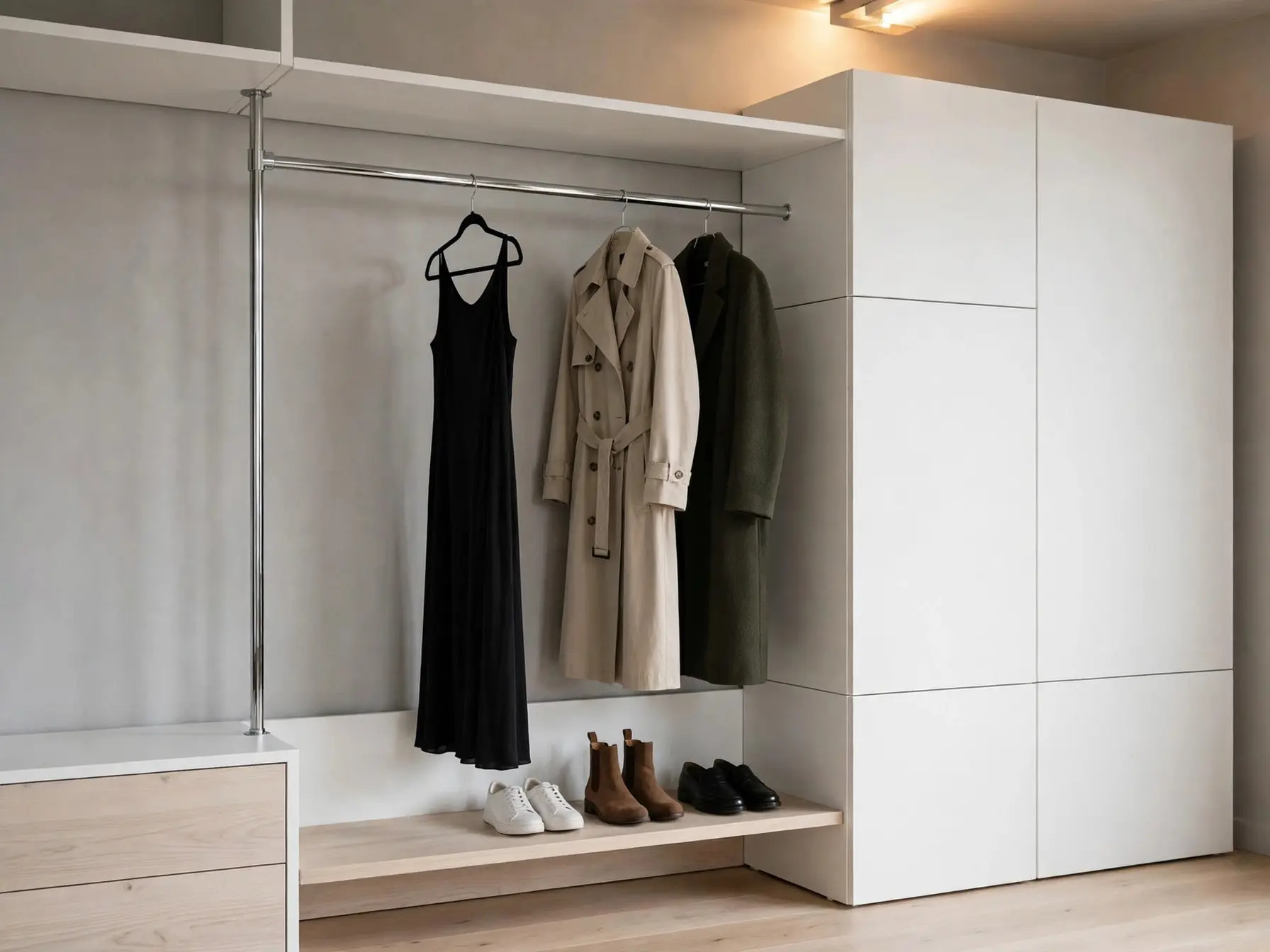
One tall rod with clear floor space below it, sometimes with a single shelf above for hats or bags. Dresses, coats, jumpsuits and long skirts need a full 54 to 60 inches of drop, and a long-hang module is the only kit that gives it to them without bunching the hems on the floor. Keep it narrow — 24 to 36 inches wide — and pair it with a double-hang module beside it for everything else. It is the kit to buy first if your wardrobe is mostly dresses, and the one to skip if you rarely wear anything longer than a shirt. Price band: $100–$250.
- One tall rod with 54 to 60 inches of clear drop
- Keep it narrow: 24 to 36 inches wide
- Pair it with a double-hang module beside it
3. Shelf-tower kit
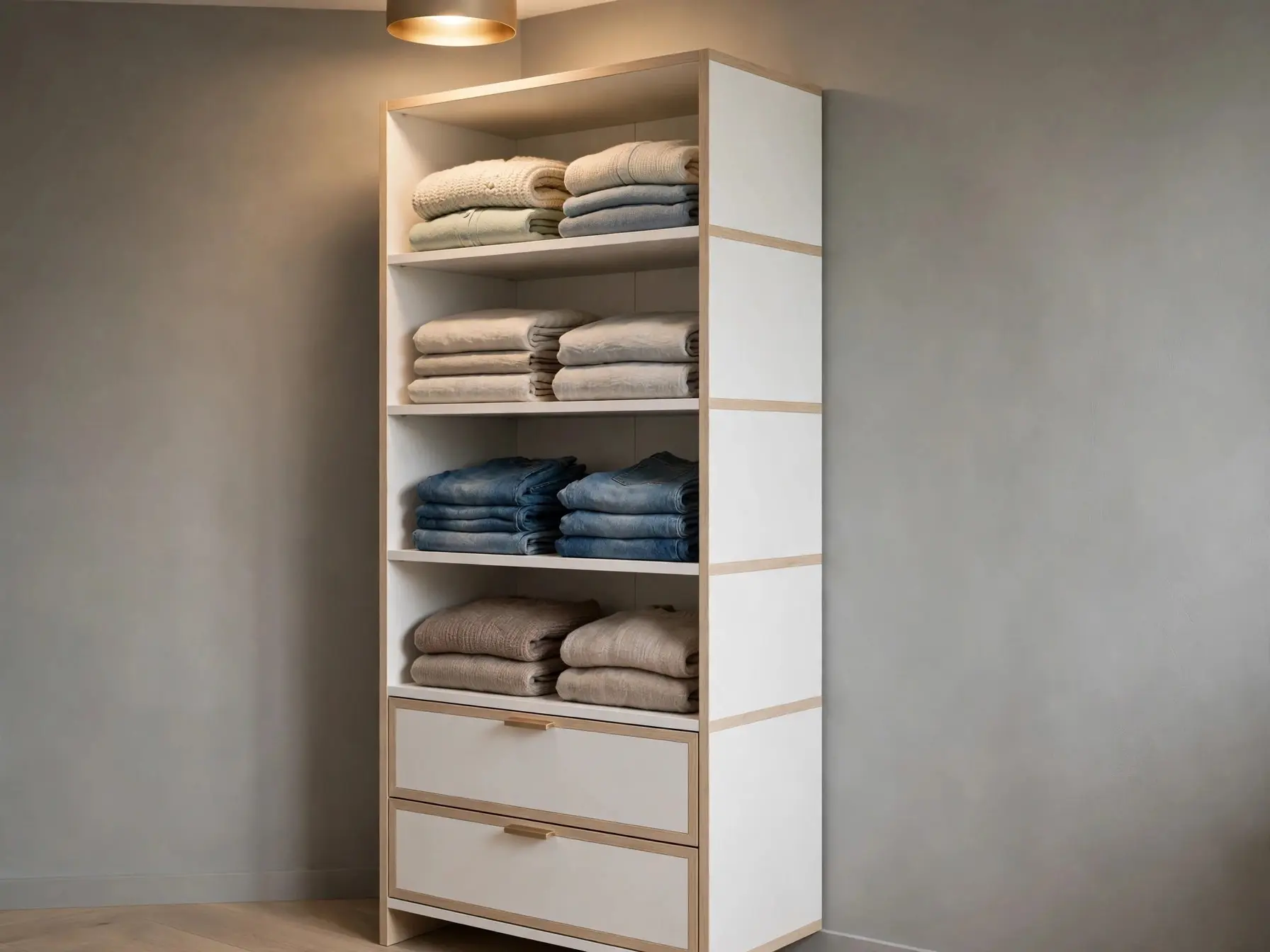
A tall column of adjustable shelves, often with one or two drawers at the bottom. Folded sweaters, jeans, T-shirts and bed linens live here, stacked in piles no higher than 10 inches so nothing topples when you pull the bottom item out. Adjustable shelf pins are the feature that matters: move a shelf up two inches and a stack of chunky knits fits; move it down and you gain a shelf for shoes. Put the tower between two hanging modules so folded and hanging storage sit side by side, and keep the top shelf for out-of-season items. Price band: $200–$450.
- Adjustable shelves — move them to fit chunky knits
- Folded piles no higher than 10 inches
- Top shelf for out-of-season items
4. Drawer-base kit
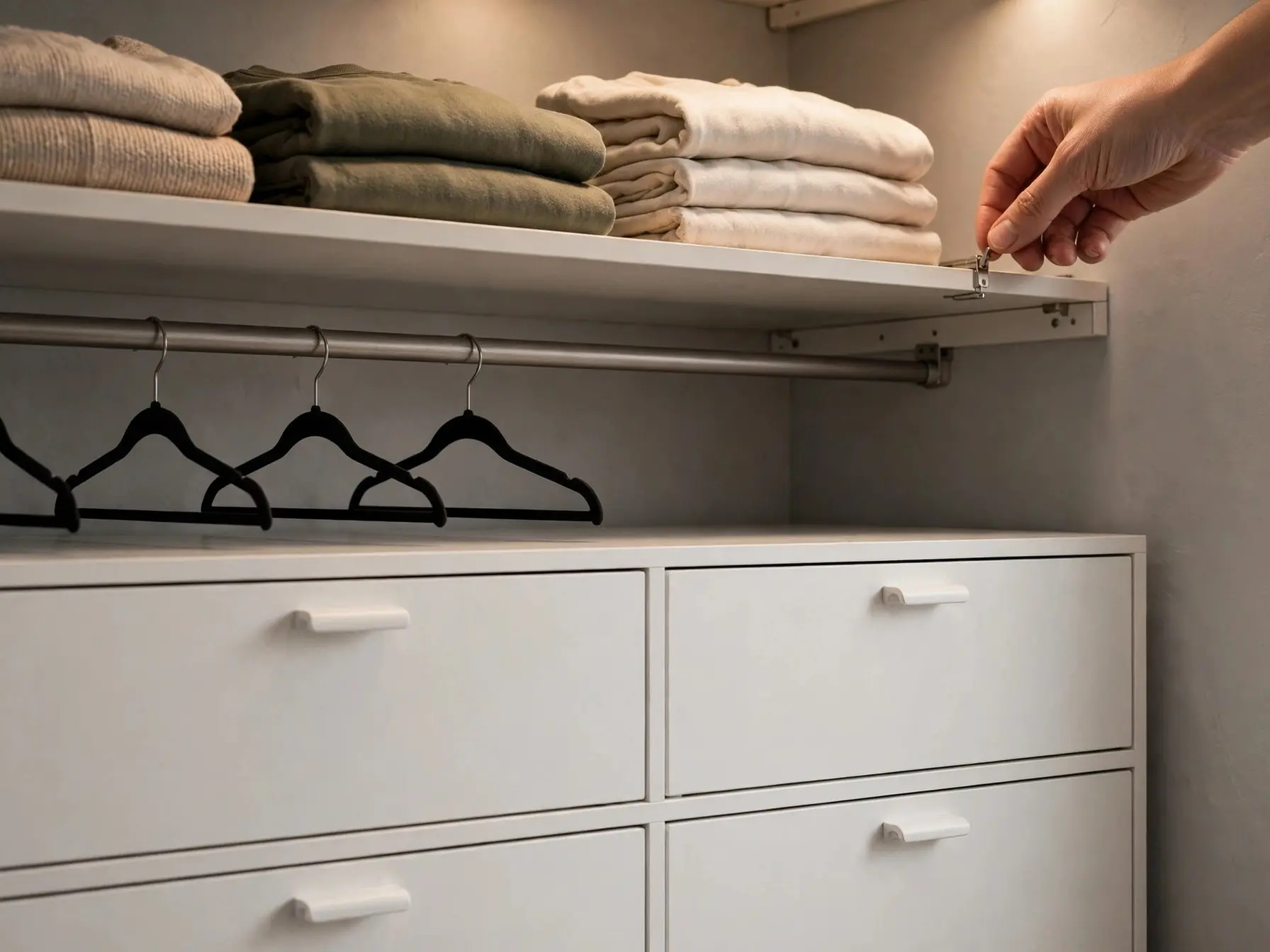
A low bank of drawers that slides under a hanging rod, usually three or four drawers deep. Socks, underwear, belts, scarves and jewelry disappear into drawers instead of piling on shelves, and the top of the unit doubles as a surface for folded clothes. Measure the drawer depth before you buy: a 14-inch drawer holds folded T-shirts, while a 16-inch drawer fits bulkier items. Leave at least 24 inches of clear floor in front so the drawers open fully. It is the kit that makes a closet feel finished instead of half-built. Price band: $180–$400.
- Three or four drawers under a hanging rod
- 14-inch drawers for T-shirts, 16-inch for bulkier items
- At least 24 inches of clear floor in front
5. Small reach-in kit
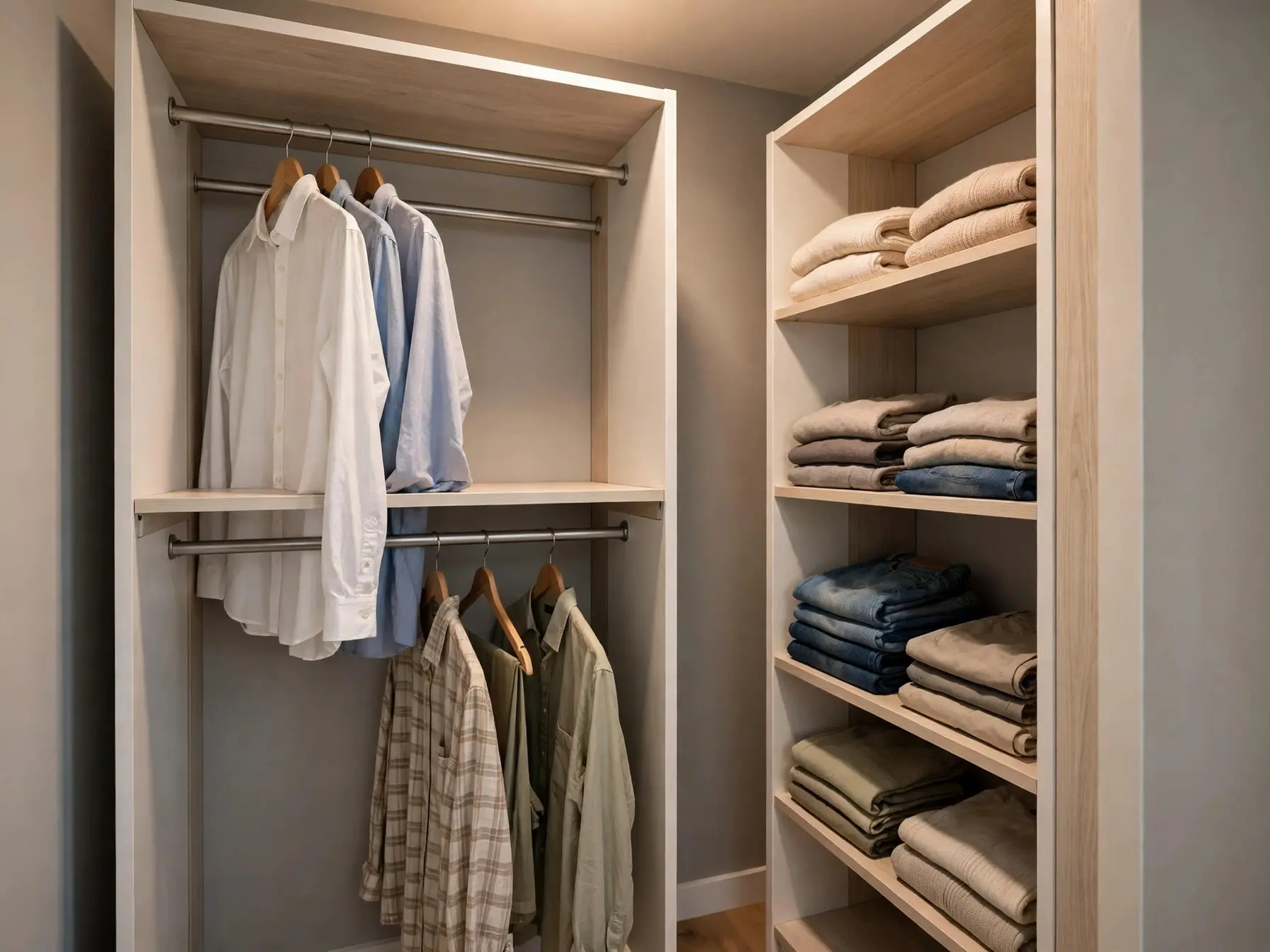
One double-hang module and one narrow shelf module side by side, sized for the shallow closets in apartments and older homes. Reach-in closets are usually 24 inches deep and 36 to 48 inches wide, so a kit built for that footprint is the only one that fits without blocking the door. The narrow shelf tower takes folded clothes and shoes, the double rod takes the hanging, and nothing needs a drill or a saw. Because the modules are freestanding, you can take the whole kit with you when you move — a real advantage in a rental. Price band: $120–$280.
- One double-hang module plus one narrow shelf module
- Sized for 24-inch-deep, 36- to 48-inch-wide closets
- Freestanding — take it with you when you move
6. Full-wall kit
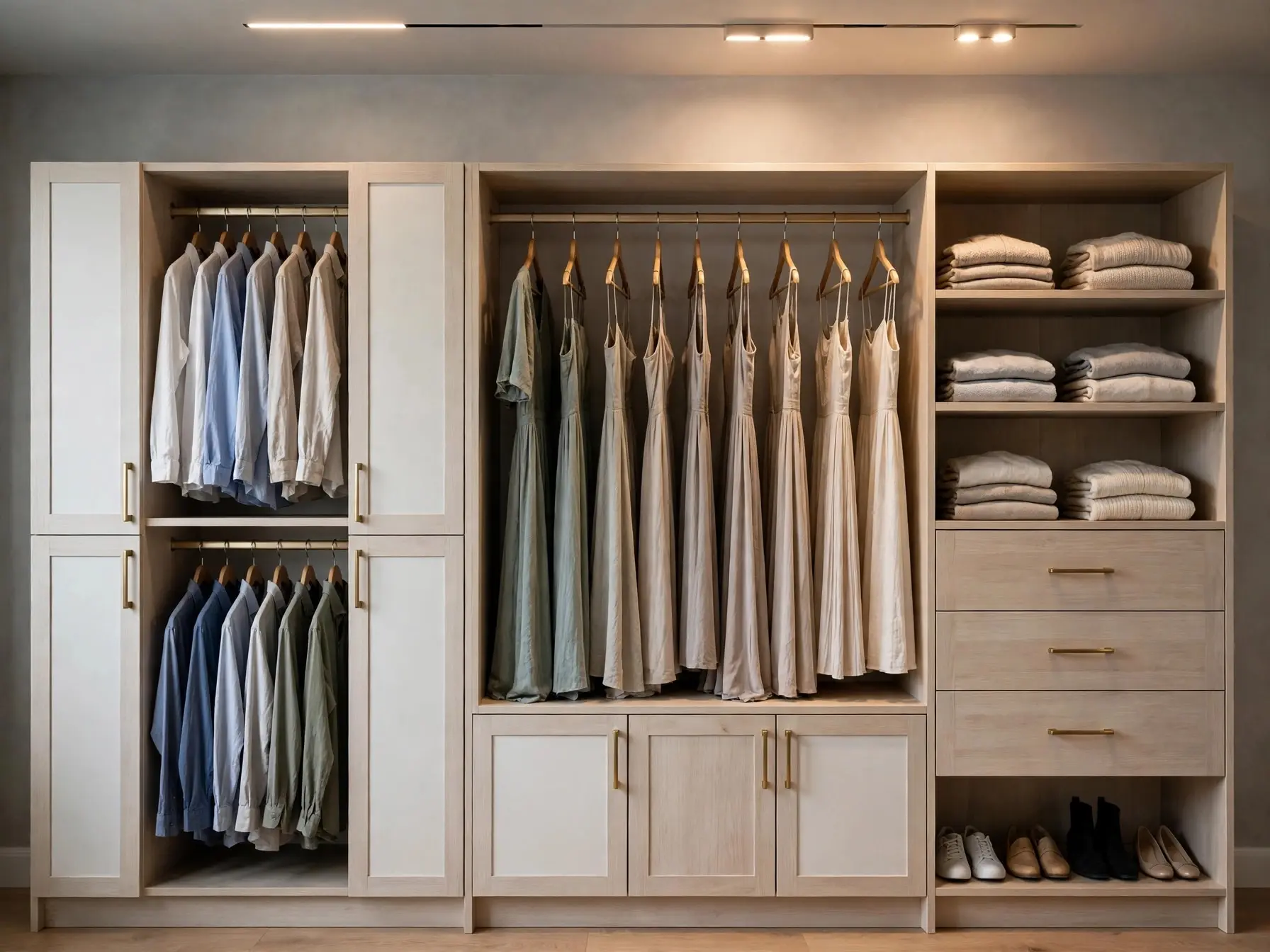
A complete wall of modules: double-hang, long-hang, a shelf tower with drawers and a shoe shelf, all matched in finish and hardware. This is the kit for a walk-in or a wide reach-in where one module would leave half the wall empty. Plan it on paper first, because a full wall has the most parts and the most room for error — a tower placed an inch too wide throws off the whole run. The price climbs with the width, but a full-wall kit usually costs less per module than buying the same pieces separately. It is the closest a modular system comes to a built-in closet. Price band: $400–$900.
- Double-hang, long-hang, tower and shoe shelf in one run
- Plan it on paper first — the most parts, the most room for error
- Usually cheaper per module than buying the pieces separately
7. Shoe-shelf kit
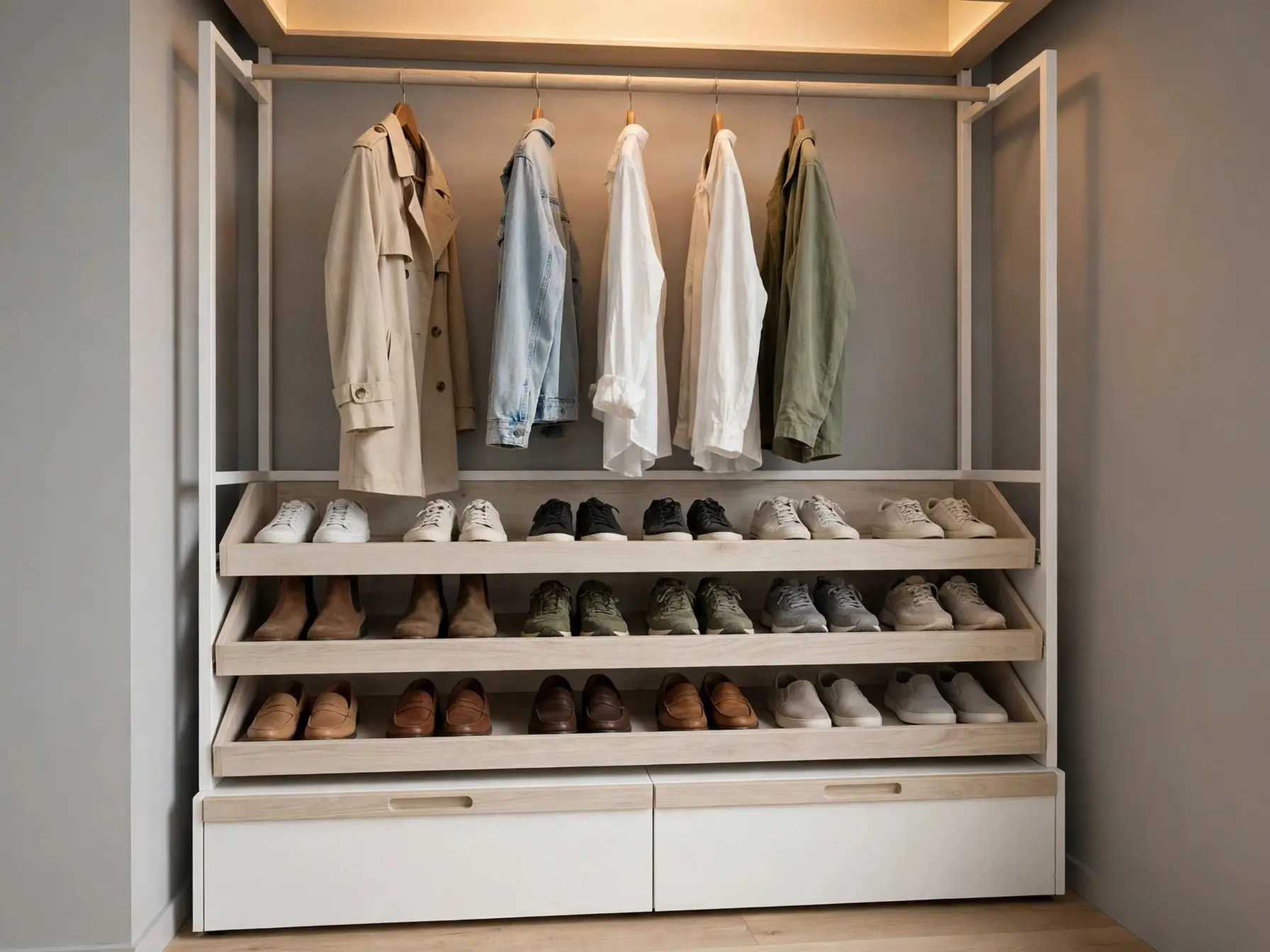
Slanted or flat shelves sized for shoes, often with a low drawer or two underneath for the pairs you wear least. A slanted shelf shows every pair at a glance and keeps heels from tipping, while a flat shelf holds boots and sneakers better. Count your pairs before you order: most people need one shelf per four to six pairs, and a 36-inch module holds about 12 pairs across three shelves. Put the shoe kit at the bottom of the wall, under the hanging clothes, so shoes stay out of the way and the closet still reads as one tidy wall. Price band: $150–$350.
- Slanted shelves show every pair at a glance
- One shelf per four to six pairs
- Put it at the bottom of the wall, under the hanging clothes
8. Corner L-shaped kit
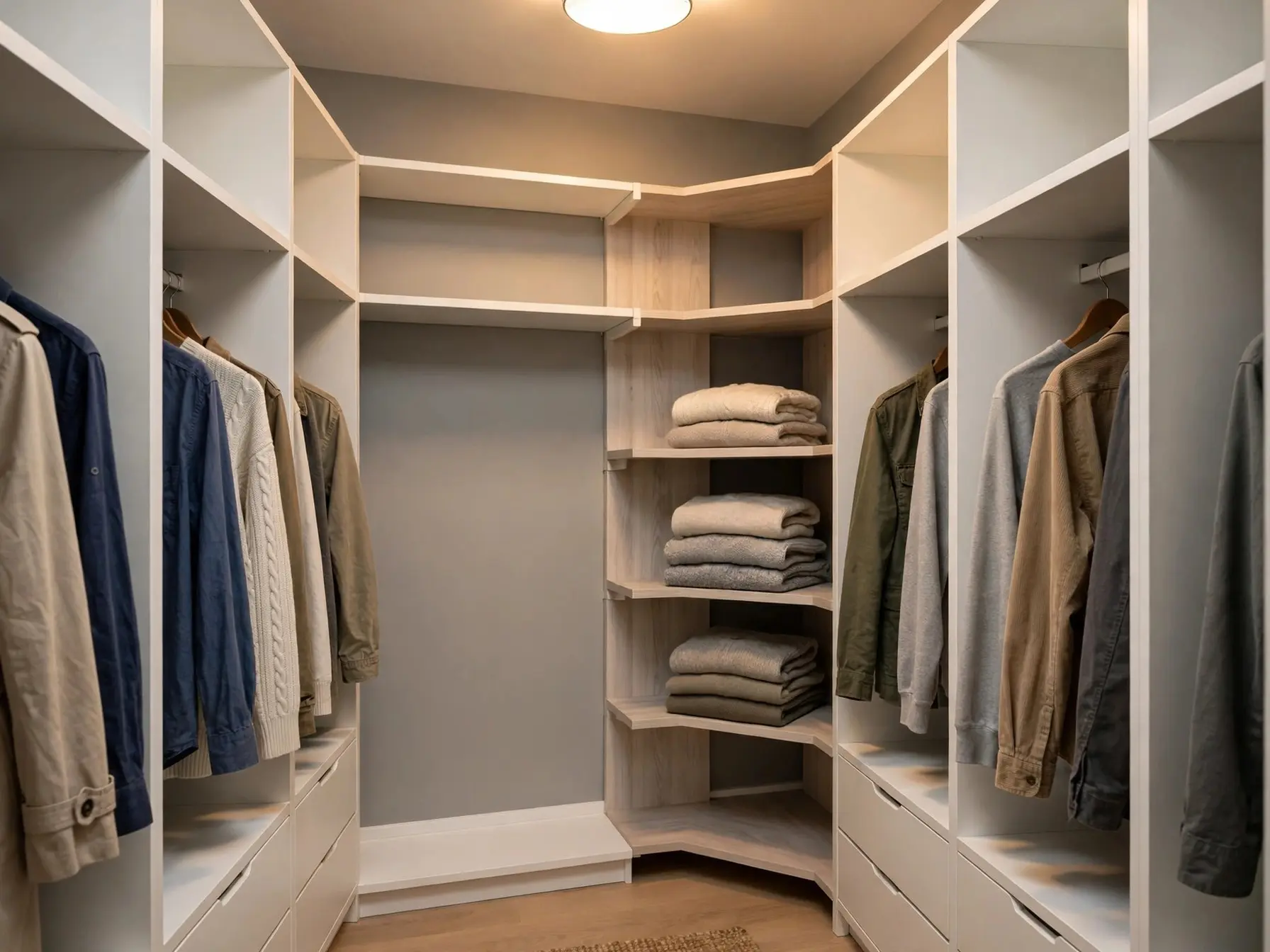
Modules that wrap around a corner, with hanging on both walls and a tower or shoe shelf in the corner itself. Corners are the hardest space in a walk-in to use, because a straight run of modules leaves a dead triangle where the walls meet. An L-shaped kit solves it with a corner tower or angled shelves, and the two runs can be different depths — deep hanging on one wall, shallow shelves on the other. It costs more than a straight run and takes longer to plan, but it turns the most wasted space in a closet into the most useful. Price band: $350–$800.
- Hanging on both walls, a tower or angled shelves in the corner
- Two runs can be different depths
- Costs more and takes longer to plan than a straight run
How to plan your layout in 5 steps
A kit only works if it fits the wall it was bought for. Run through these five steps on paper before you order anything — they take an evening and they are the difference between a closet that fits and a pile of modules that does not.
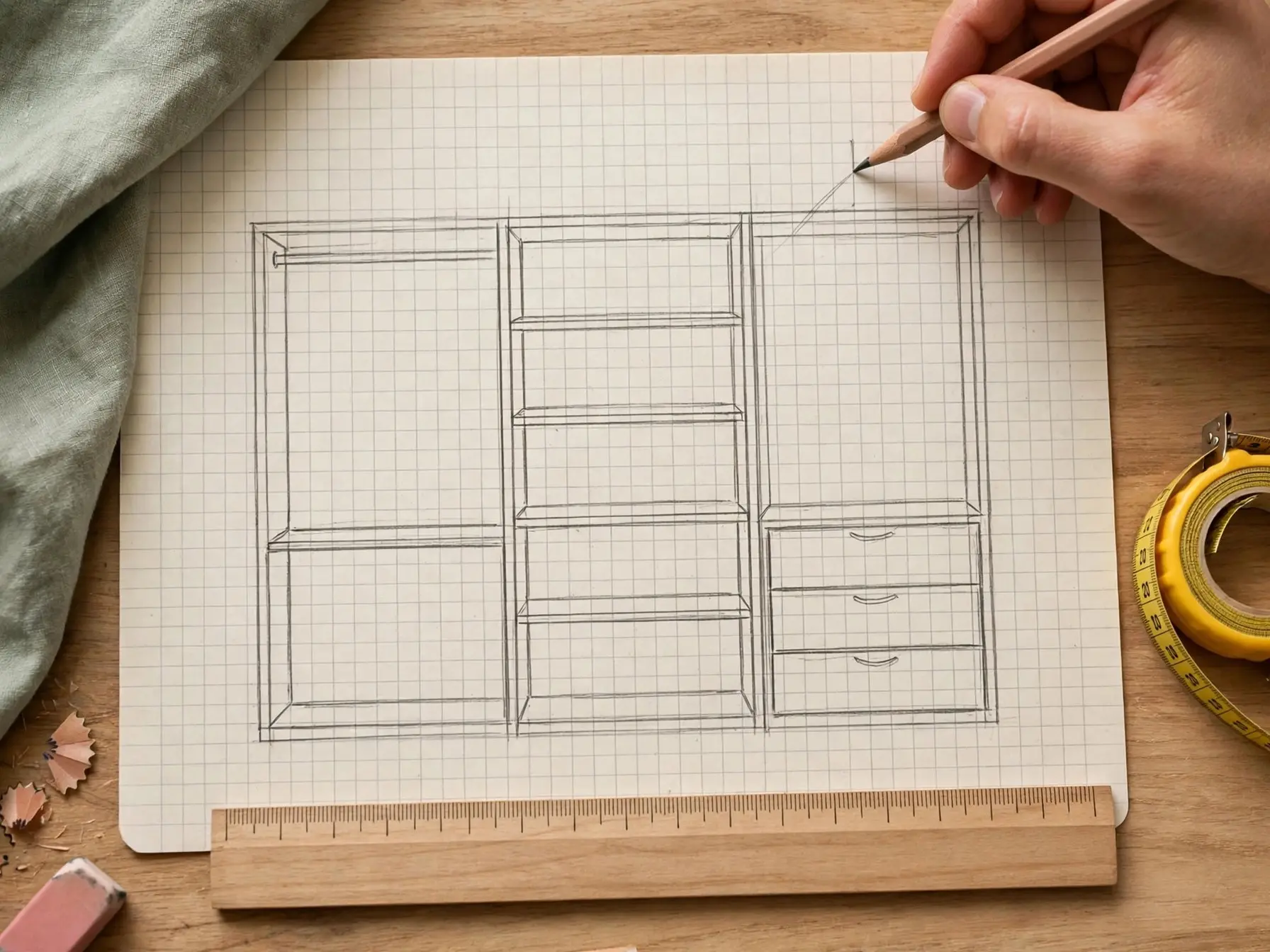
- Measure the wall, the height and the depth, and note doors, outlets, baseboards and any light switches in the way.
- Count what you own: how much hangs long, how much hangs short, and how much folds or sits in drawers.
- Sketch the layout to scale on graph paper, one square per 6 inches, and mark each module in its place.
- Pick modules to match the sketch: double-hang for tops, long-hang for dresses, a tower for folded items and drawers for the small stuff.
- Leave clearance for drawers and doors to open fully, then order the modules and assemble them in place.
Sketching first is the step most people skip and the one that saves the most money. A layout that fits on graph paper fits on the wall — and if a module does not fit the sketch, you find out before you pay for it.
Questions, answered
How to plan a closet?
Start by measuring the wall, height and depth, then count what you own: how much hangs long, how much hangs short and how much folds. Sketch the layout to scale on graph paper, one square per 6 inches, and pick modules that match the sketch. Leave clearance for drawers and doors to open, and order the modules last, once the plan fits on paper.
How to design a closet layout?
Put the most-used items at eye level: hanging clothes in the middle, folded items on shelves above or below, and shoes at the bottom. Group by type — double-hang for tops, long-hang for dresses, a tower for folded items — and leave a clear walkway in a walk-in. The 5-step plan in this guide walks through the whole layout, from measuring to ordering.
What is a modular closet system?
A modular closet system is a set of separate closet units — hanging rods, shelf towers, drawers and shoe shelves — that you arrange to fit your wall. Unlike a fixed wardrobe, you can add, move or remove modules as your needs change, and most kits come apart for moving. The modules share standard widths, usually 18 to 48 inches, so pieces from the same range fit together.
Can you move a modular closet system to a new home?
Yes, most modular systems are designed to come apart and move: the units are held together with brackets and screws, not glue or nails. Take photos before you dismantle it, bag the hardware by module and keep the assembly guide. Measure the new closet first — a kit sized for one wall may need a module left out or added to fit the next one.
Keep reading
Our closet organization ideas show how to zone a closet so each area has one job, and the best closet systems compare 12 complete systems for every budget. Closet shelving ideas show how extra shelves double the storage in a closet that already has rods in place.
A modular closet system works because you buy the storage your clothes actually need, in the widths your wall actually fits. Measure first, sketch the layout, then order the kit that matches — and start with the double-hang starter kit if you are unsure, since it is the easiest one to build on later.