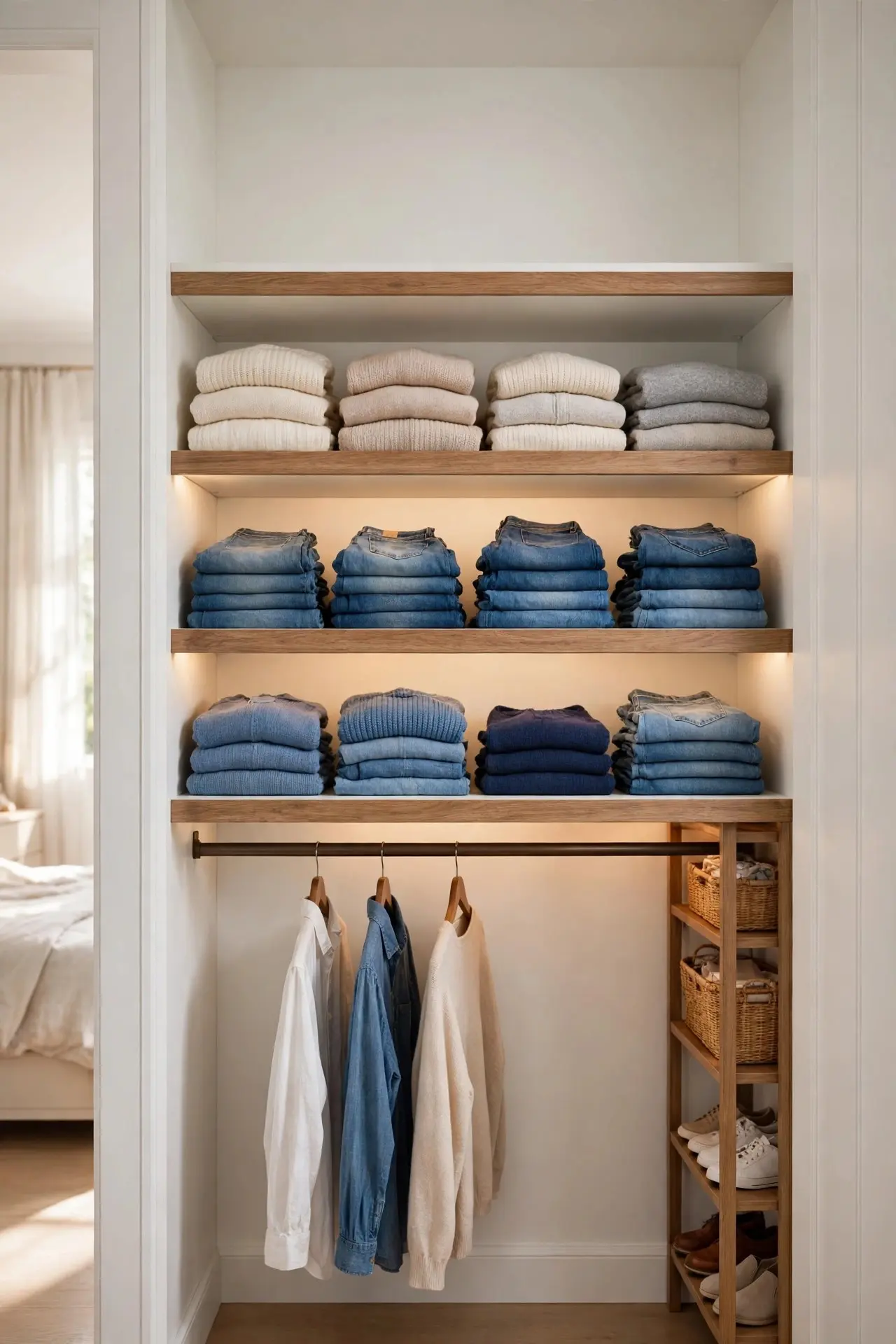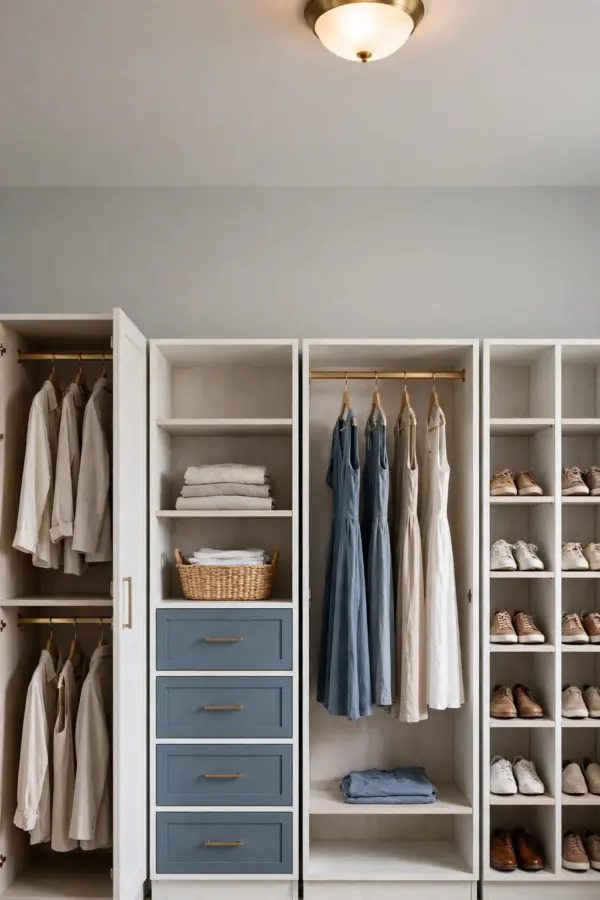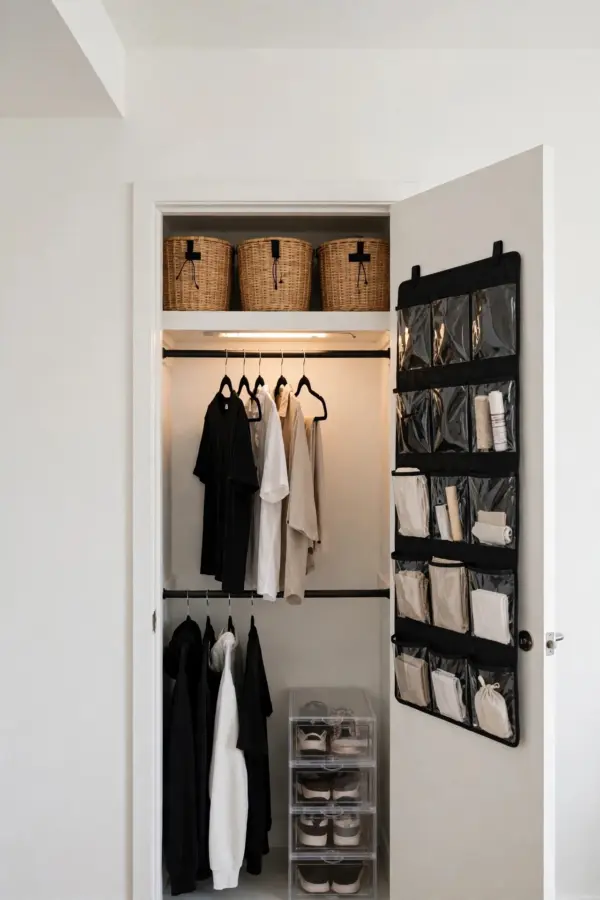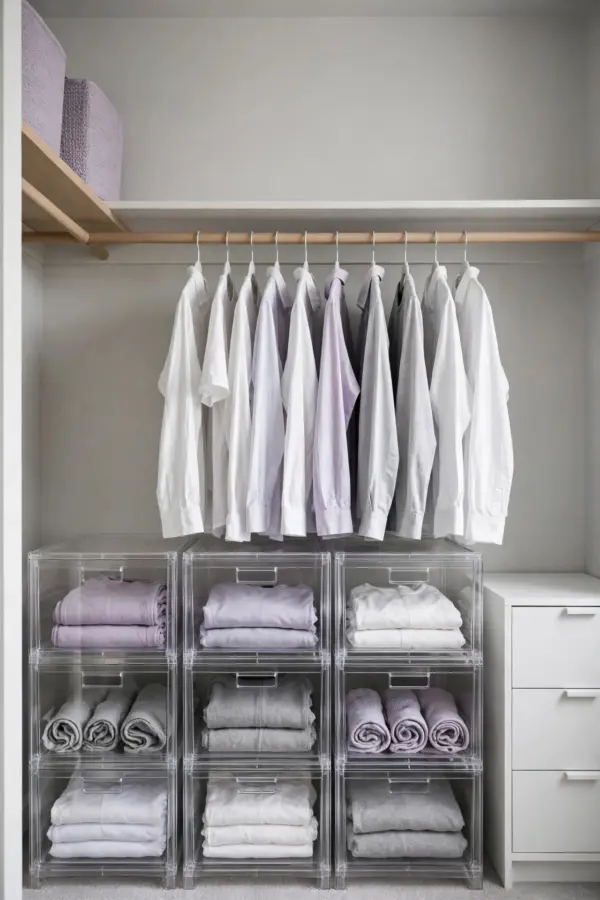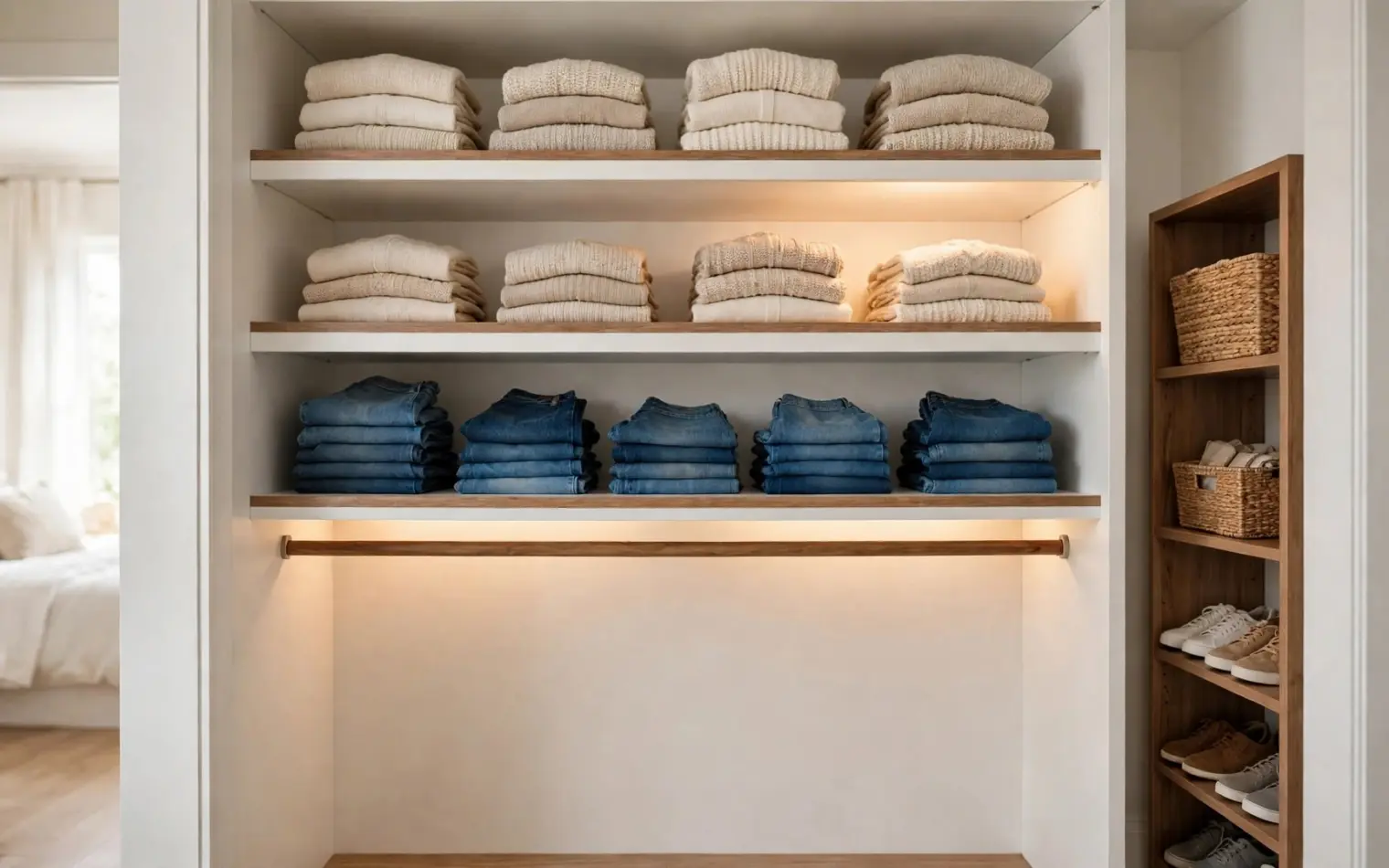
Adding closet shelving can double your storage: one extra shelf above the rod adds a full row for folded clothes, and a freestanding unit in the corner adds three to five more shelves without any drilling. In a standard reach-in closet, going from one shelf to three or four roughly doubles the shelf space you can actually use. Measure the space above the rod first, then pick the shelf type that fits your closet.
Thank you for reading this post, don’t forget to subscribe!Closets run out of storage for one reason: the single shelf above the rod does all the work while the walls and the ceiling height sit empty. This guide groups 20 closet shelving ideas by how they add space — above the rod, freestanding, inside existing shelves, and around corners — so you can skip straight to the ones that fit yours. Our guide to closet organization ideas covers the whole closet system; here we zoom in on shelves alone, with a comparison table up front so you can pick in minutes.
Which closet shelving fits your closet?
Measure your closet before you shop: width, depth, and how far the door swings. Then find your closet in the table and pick the organizer that fits it.
| Shelf type | Depth that works | What it holds | Best for |
|---|---|---|---|
| Shelf above the rod | 12 in | Folded jeans, sweaters, and linens | Every reach-in closet |
| Second shelf to the ceiling | 12 in | Out-of-season clothes and spare bedding | Closets with 12 in or more above the rod |
| Freestanding shelving unit | 12 to 16 in | Folded clothes, baskets, and shoes | Renters and no-drill closets |
| Bracket-mounted wood shelf | 12 to 16 in | Heavy stacks and storage bins | Closets that need a strong, fixed shelf |
| Stackable shelf riser | Fits a 12 in shelf | Doubles one shelf into two layers | Small closets on a budget |
| Adjustable shelf unit | 12 to 14 in | Clothes, shoes, and bins at changing heights | Shared closets and growing collections |
| Narrow tower unit | 10 to 12 in | Folded clothes and shoes in a corner | Corners and walk-in closets |
Prices move around, but the sizes do not: a rack that is wider than your closet will never fit, whatever it costs. Measure first, then buy.
Above the rod: the fastest way to double your storage
The space above the rod is the biggest empty spot in most closets, and it is the cheapest to fill. These five ideas turn it into one, two, or three extra shelves.
1. Add a shelf above the rod, all the way to the ceiling
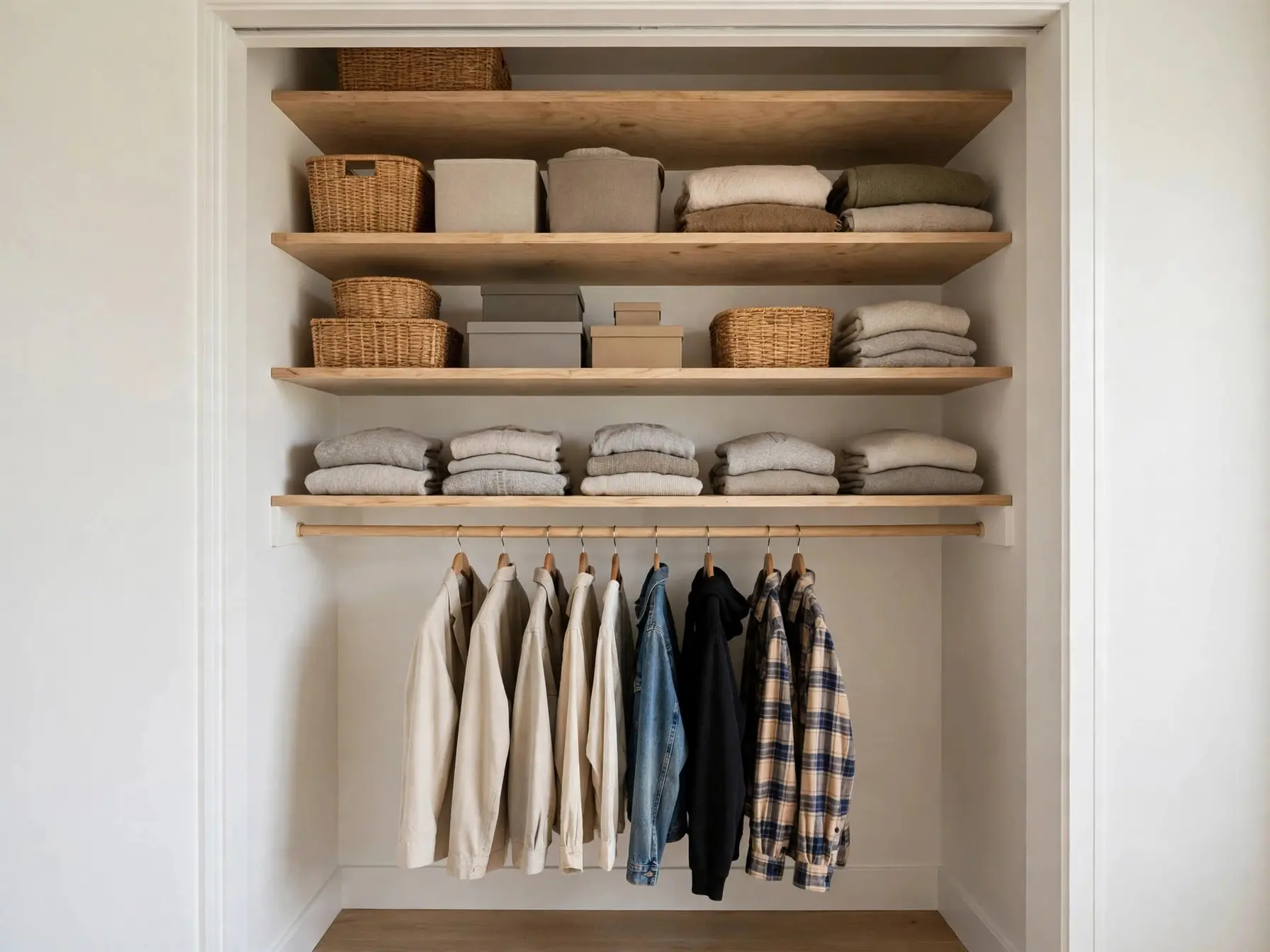
The single best closet shelving move is also the simplest: add one more shelf above the rod, then keep going until you reach the ceiling. Most reach-in closets have 12 to 24 inches of dead air above the existing shelf, which is room for one or two full rows of folded clothes. Use a 12 inch deep board for folded jeans and sweaters, fix brackets into studs where you can, and keep a small step stool nearby so the top shelf stays in use. This one change alone can double the shelf space in a standard closet.
- Fits: any reach-in closet with 12 in above the rod
- Holds: one full row of folded clothes
- Best for: the fastest first shelf
2. Add a freestanding shelving unit inside the closet
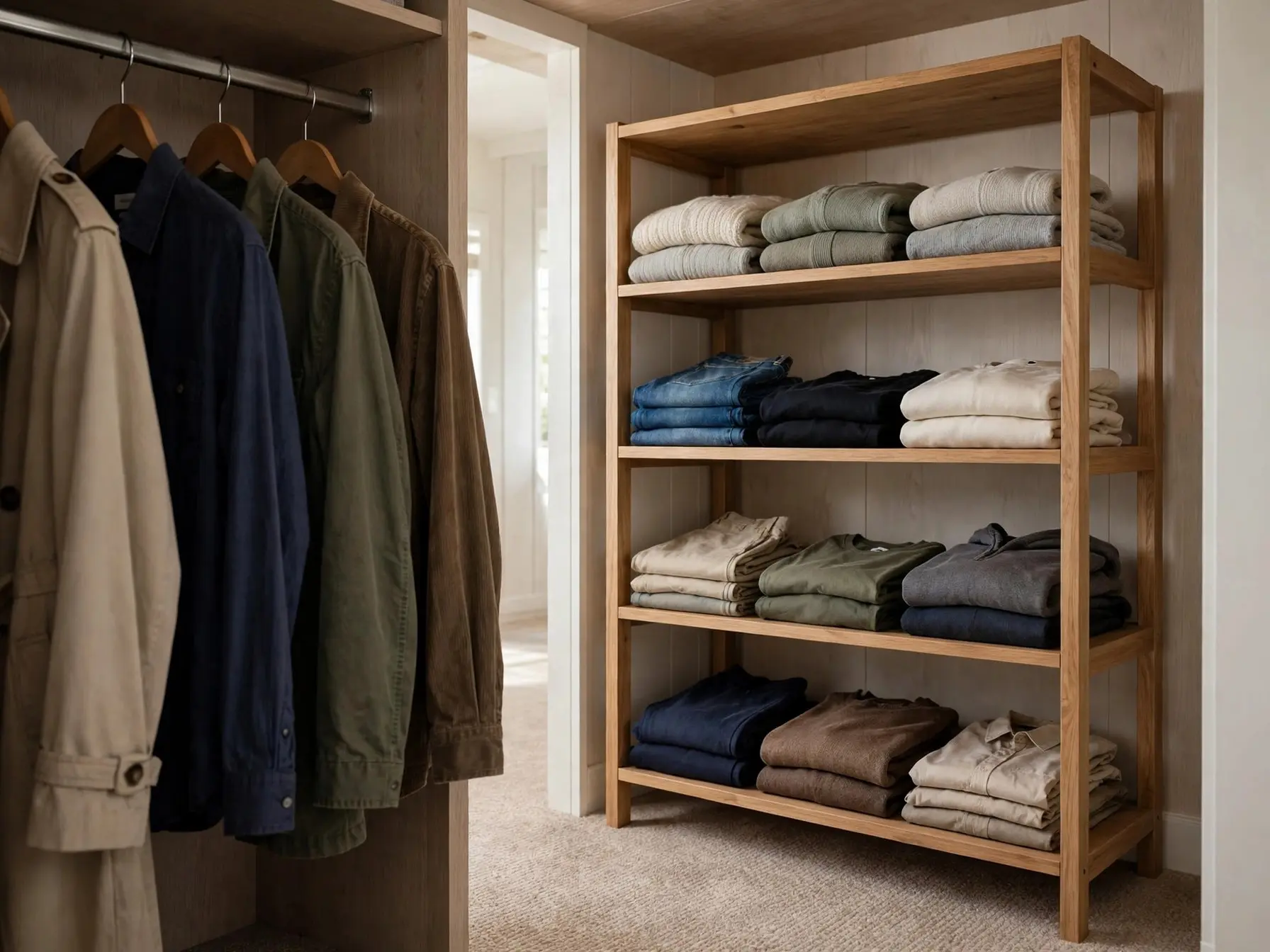
A freestanding shelving unit slides into a closet like a piece of furniture, which makes it the best option when you cannot drill or do not want to. Pick a unit 12 to 16 inches deep and no wider than the free floor space beside your hanging clothes, then fill it with folded clothes, baskets, and shoes. Three to five shelves in one unit can hold a whole season of sweaters. Choose a wood-look finish close to your closet trim and it reads as built in, not borrowed.
- Fits: any closet with floor space to spare
- Holds: three to five shelves of folded clothes
- Best for: renters and no-drill closets
3. Install wood shelves on brackets with a level
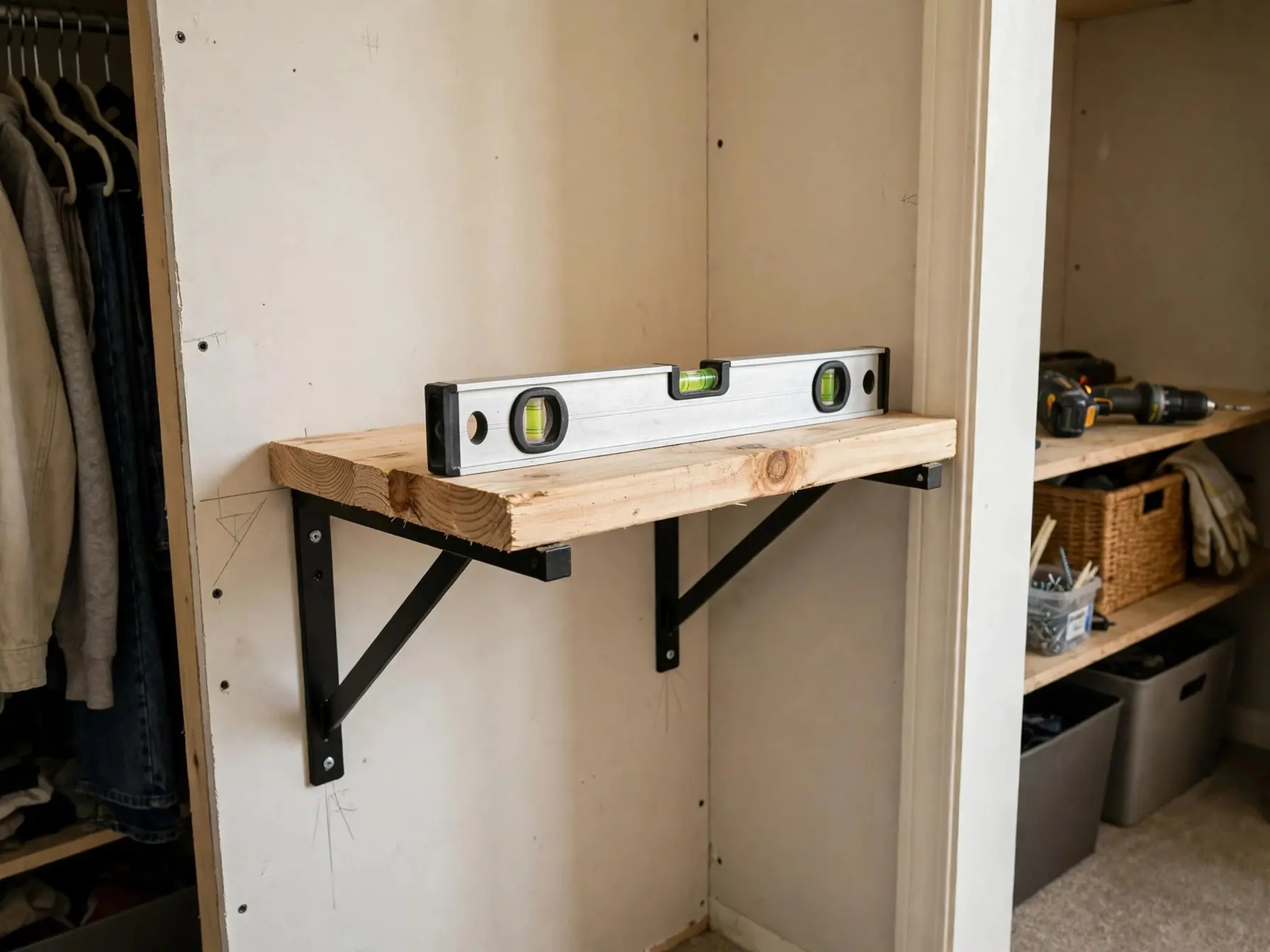
Brackets and a cut-to-fit wood plank are the cheapest way to get a shelf exactly where you want it, at exactly the depth you need. Mark the height on both walls, fix the brackets into studs or use anchors rated for at least 20 pounds per pair, and set the level on the plank before you tighten anything — a shelf that slopes even a little will slide stacks off over time. A 12 inch deep pine or plywood board, sanded and painted to match the trim, looks like it came with the closet.
- Fits: any closet wall, once you find the studs
- Holds: heavy stacks and bins, 20 lb per bracket pair
- Best for: a strong, permanent shelf
4. Add stackable shelf risers to double an existing shelf
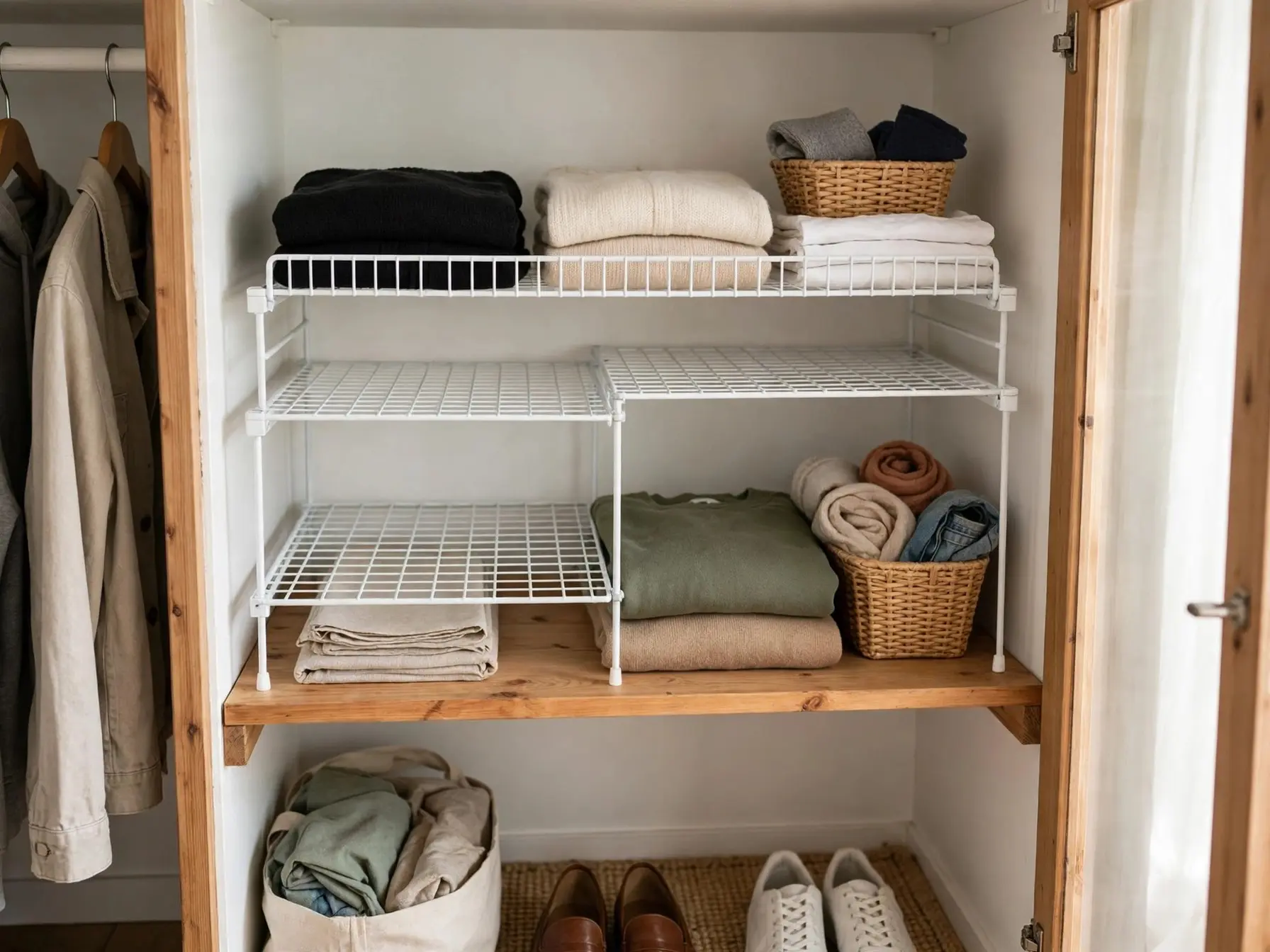
A shelf riser is a small raised platform that sits on a shelf you already own, and it turns one layer of folded clothes into two. Stack two risers and a single shelf holds three short rows instead of one tall pile that topples every time you pull a sweater out. They cost a few dollars each, need no tools, and work in any closet with at least 12 inches of height above the shelf. Use them for T-shirts, jeans, and kids clothes, and keep heavy items off the top layer.
- Fits: any existing shelf 12 in deep
- Holds: doubles one shelf into two layers
- Best for: small closets on a budget
5. Add a second hanging rod under the top shelf
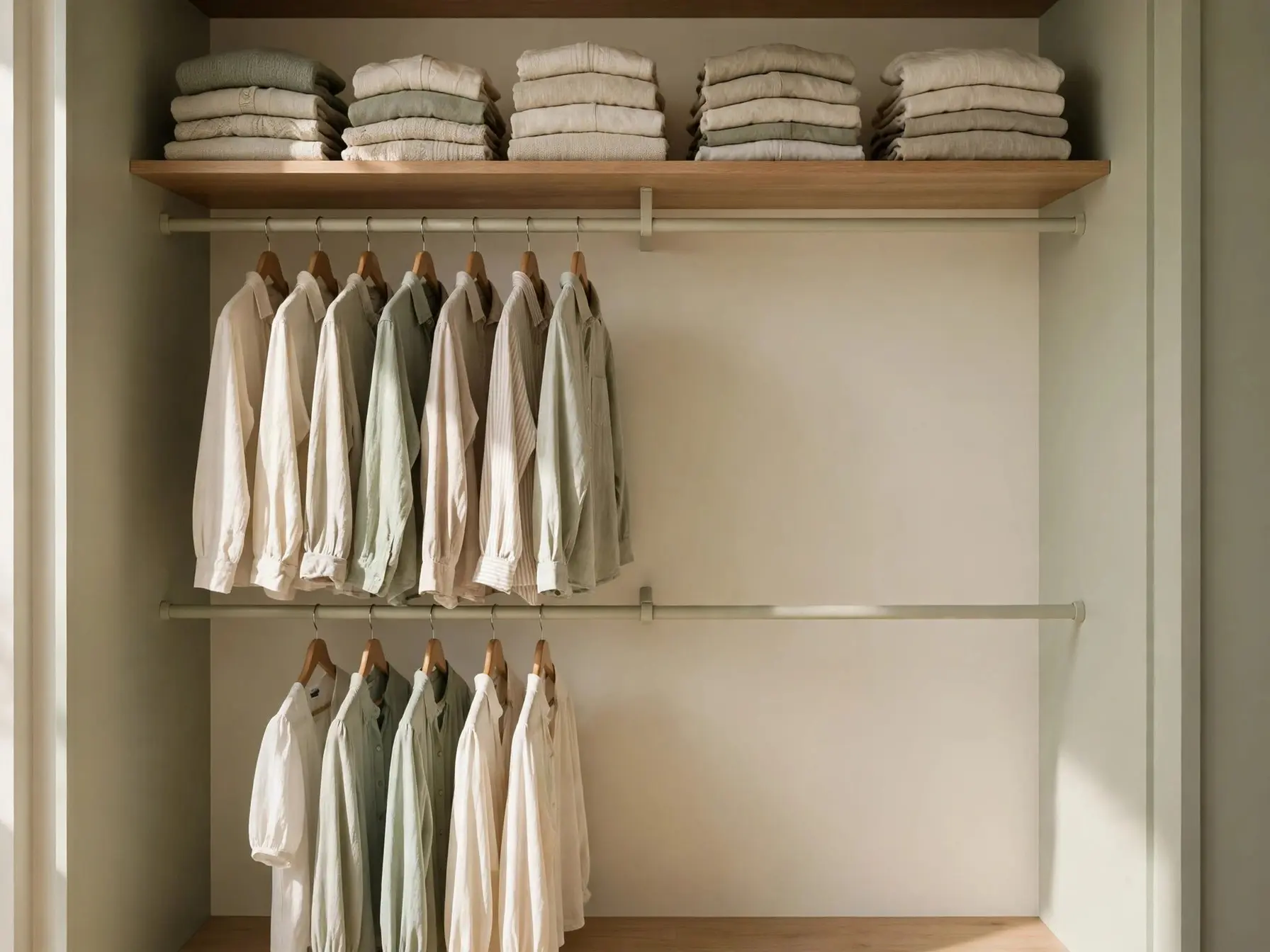
A second rod under the top shelf is not a shelf itself, but it is what makes the shelves above it work: shirts and blouses hang on two levels, and the top shelf stays free for folded clothes instead of becoming a dumping ground. Mount the lower rod about 40 inches below the upper one so shirts hang clear of the shelf below. The pair costs little, installs with two brackets, and roughly doubles the hanging capacity of a reach-in closet. Keep long dresses and coats on a single-rod section at one end.
- Fits: closets with 60 in or more of height
- Holds: a second row of shirts and blouses
- Best for: doubling hanging space as well as shelves
Freestanding units and adjustable shelves: storage without drilling
Not every closet can take fixed shelves, and renters need options that leave no holes. These five ideas add shelves that stand on their own or move when you do.
6. Stand a narrow tower unit in the closet corner
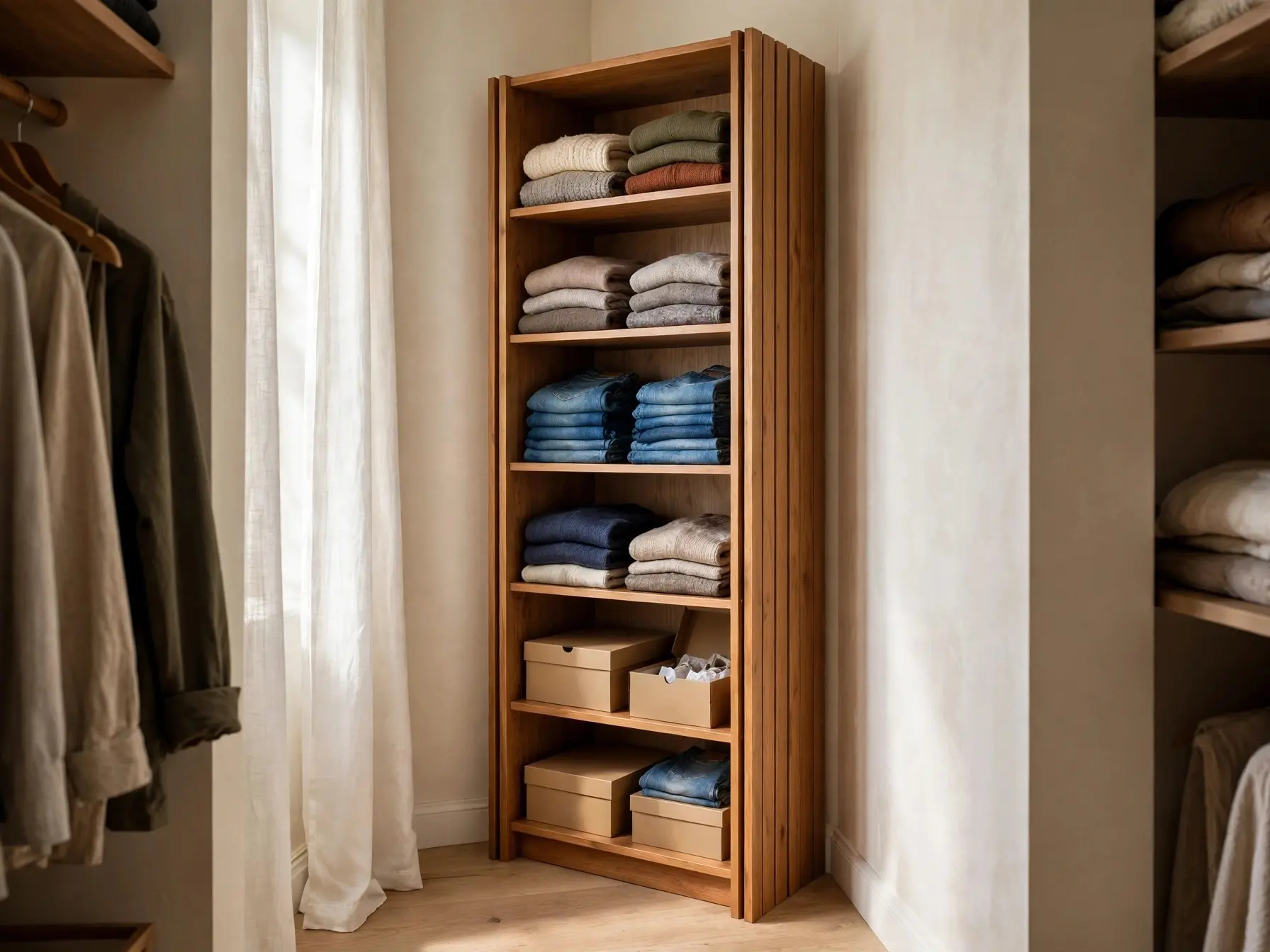
Corners are the most wasted spot in a walk-in closet, and a narrow tower unit turns one into three to five shelves of storage. Pick a tower 10 to 14 inches wide so it fits the corner without blocking the hanging clothes, and anchor it to the wall so it can never tip forward. Folded sweaters and jeans go on the middle shelves where they are easy to reach, shoes and shoe boxes on the bottom, and out-of-season clothes up top. One tower can hold a whole wardrobe section by itself.
- Fits: a corner at least 12 in wide
- Holds: folded clothes and shoes on three to five shelves
- Best for: dead corners in walk-in closets
7. Use adjustable shelves so heights change with the seasons
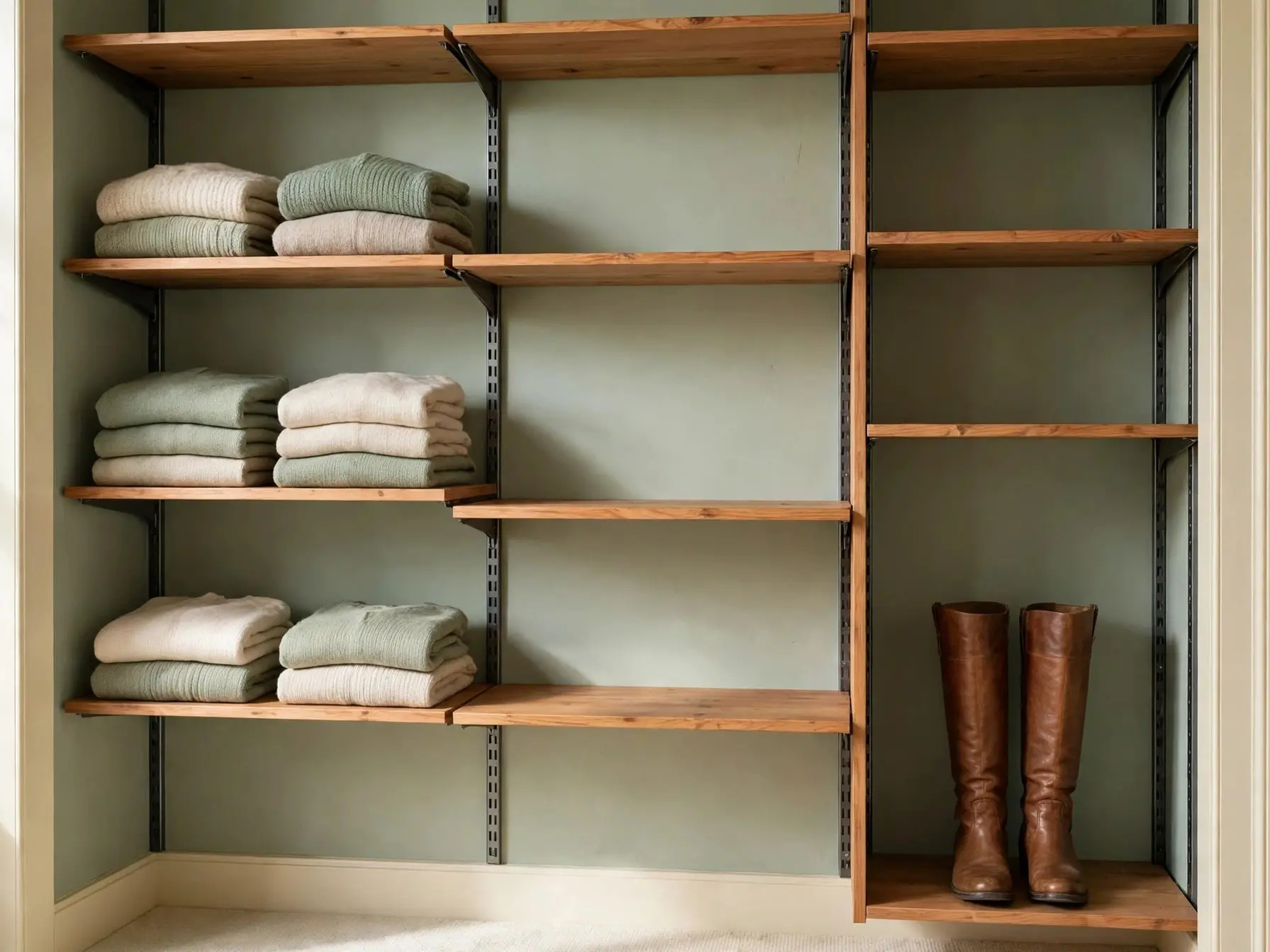
Fixed shelves freeze your closet at one height, and shoe heights change with the seasons. Adjustable shelves on slotted uprights let you re-space the gaps in minutes: short gaps for T-shirts and flats in summer, taller gaps for boots and bulky sweaters in winter. Set the uprights into studs, slide the brackets in, and lay the boards across. Keep the pairs and stacks you use most between knee and eye level, and re-space the shelves twice a year when you swap the seasons.
- Fits: any closet, once you measure the wall
- Holds: clothes, shoes, and bins at changing heights
- Best for: shared closets and growing collections
8. Line the back wall with shallow shelves for folded clothes
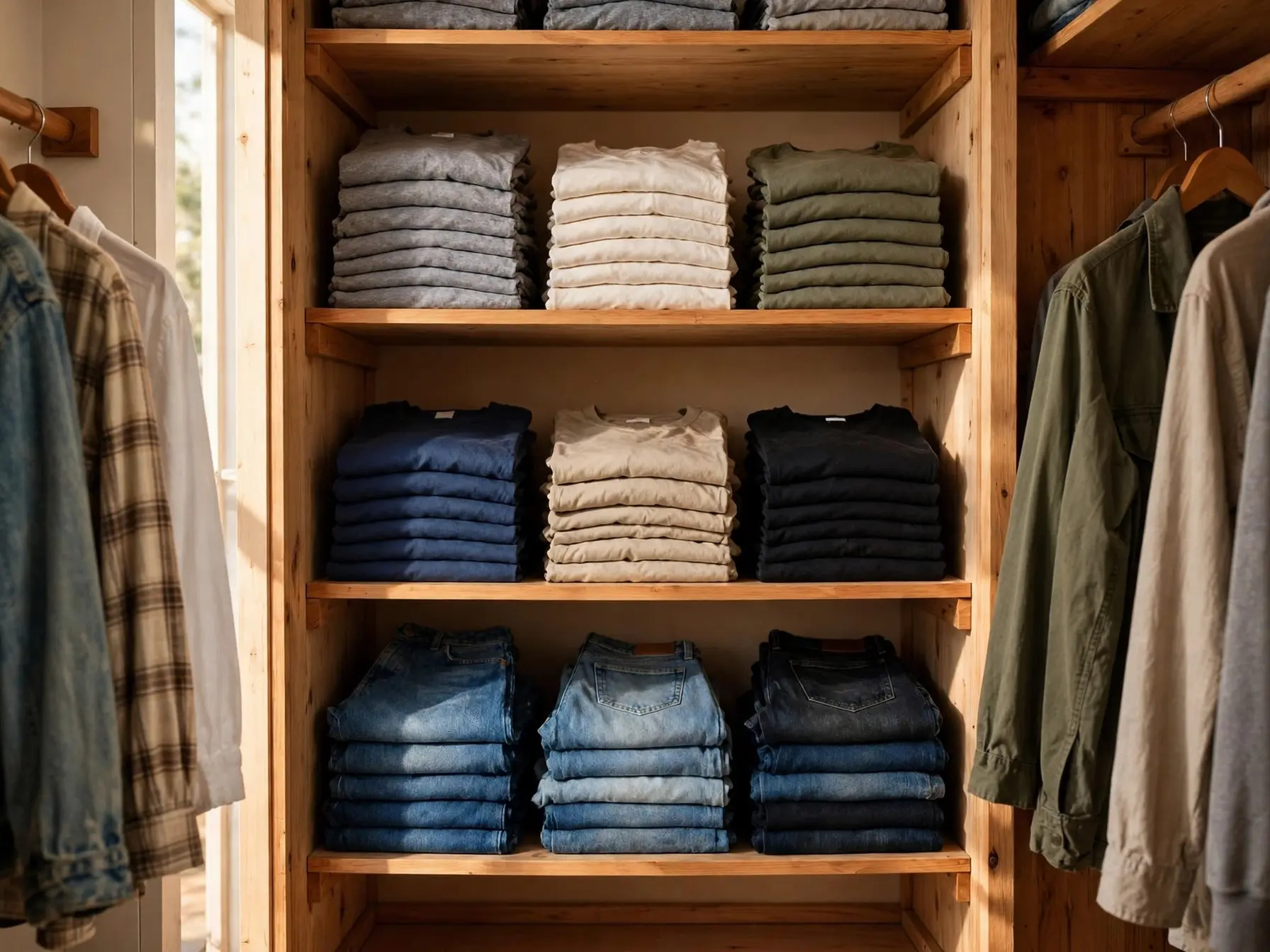
The back wall of a small closet is usually bare, and a run of shallow shelves turns it into the main storage wall. Use 10 to 12 inch deep boards so folded clothes sit in one neat stack each, and leave a few inches of air above every stack so you can pull a shirt out without disturbing the rest. Three shelves on the back wall can hold a week of outfits. Keep the shelves shallow on purpose: deep shelves bury clothes at the back, while shallow ones keep everything visible.
- Fits: any back wall at least 24 in wide
- Holds: folded T-shirts, jeans, and linens
- Best for: small closets with no side walls to spare
9. Add a shelf above the door for out-of-season storage
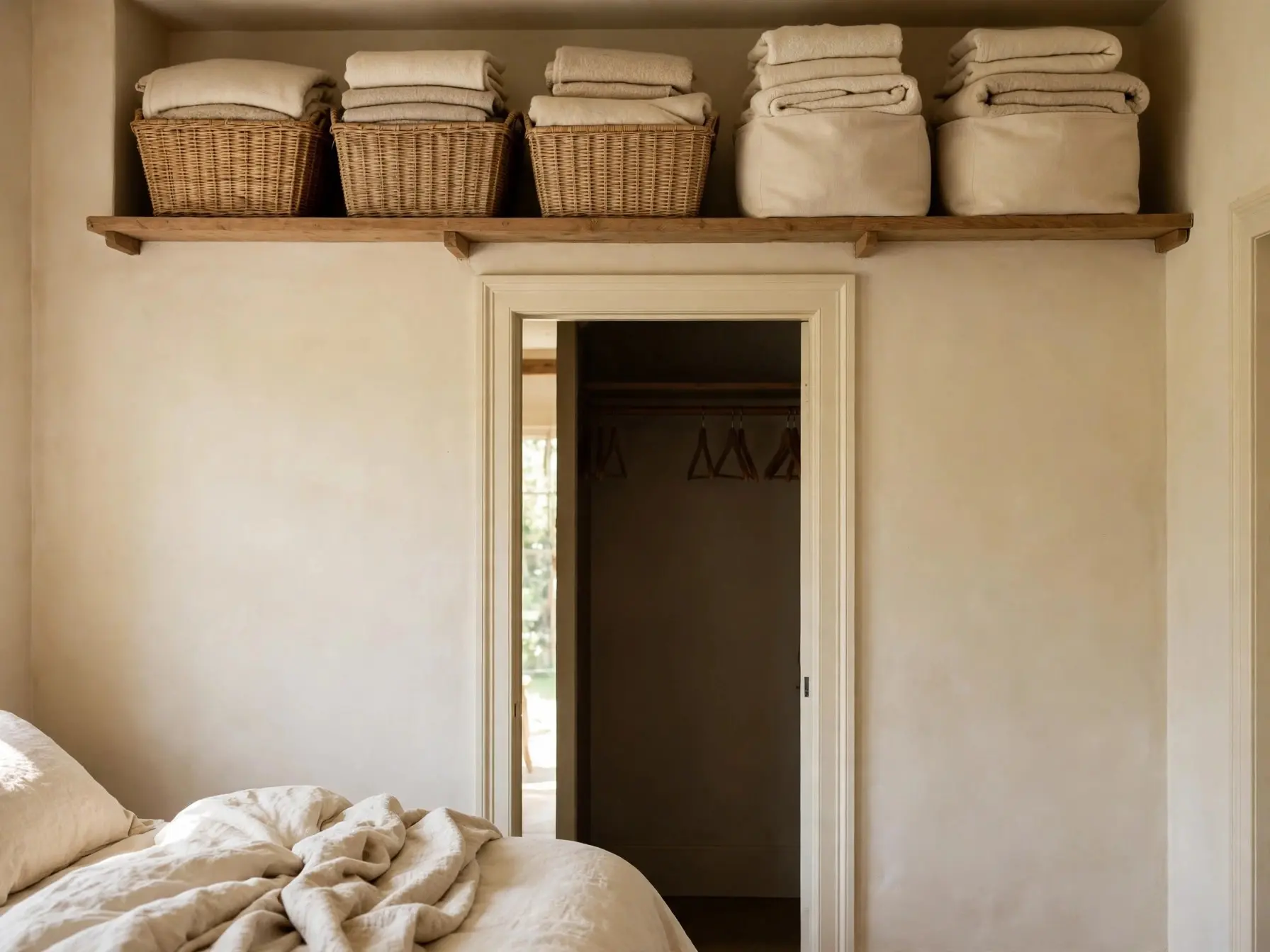
The strip of wall above the closet door is easy to forget and perfect for the things you only touch twice a year. One shelf up there, 12 to 14 inches deep, holds labeled bins of out-of-season clothes, spare bedding, or holiday outfits, and it costs nothing in floor or hanging space. Fix it into studs or use anchors rated for the load, since you will be reaching up to it with a step stool. Keep a label on the front of every bin so you can find things without climbing up to look.
- Fits: any closet with 12 in above the door frame
- Holds: out-of-season clothes and spare bedding
- Best for: storage you only touch twice a year
10. Choose wire shelving for light, airy storage on a budget
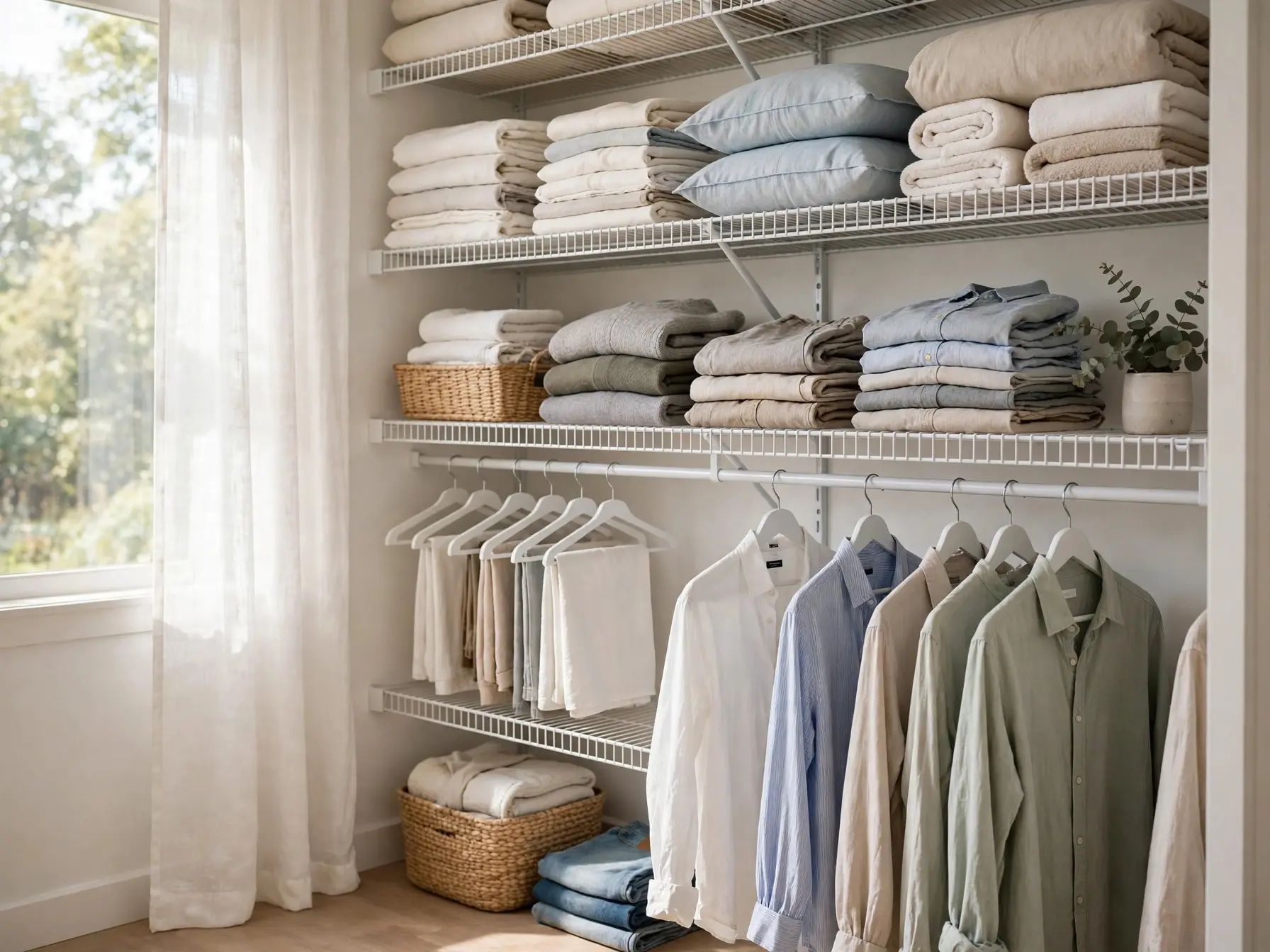
Wire shelving is the cheapest way to fill a closet with shelves, and it has one real advantage over wood: air moves through it, so linens and stored clothes stay fresh instead of musty. A coated wire shelf kit cuts to length, clips into wall brackets, and holds about 10 pounds per foot — enough for folded clothes and linens, but not for heavy bins. Narrow items can tip through the gaps, so lay a thin shelf liner on top for small stacks. It is the right pick for a spare closet, a kids closet, or a rental.
- Fits: any closet, including rentals
- Holds: light clothes and linens, up to 10 lb per shelf
- Best for: spare closets on a budget
Risers, dividers, and inserts: double what you already have
You do not always need a new shelf — sometimes the shelf you have just needs to work twice as hard. These five ideas double the capacity of shelves that are already there.
11. Add shelf dividers to stop stacks from toppling
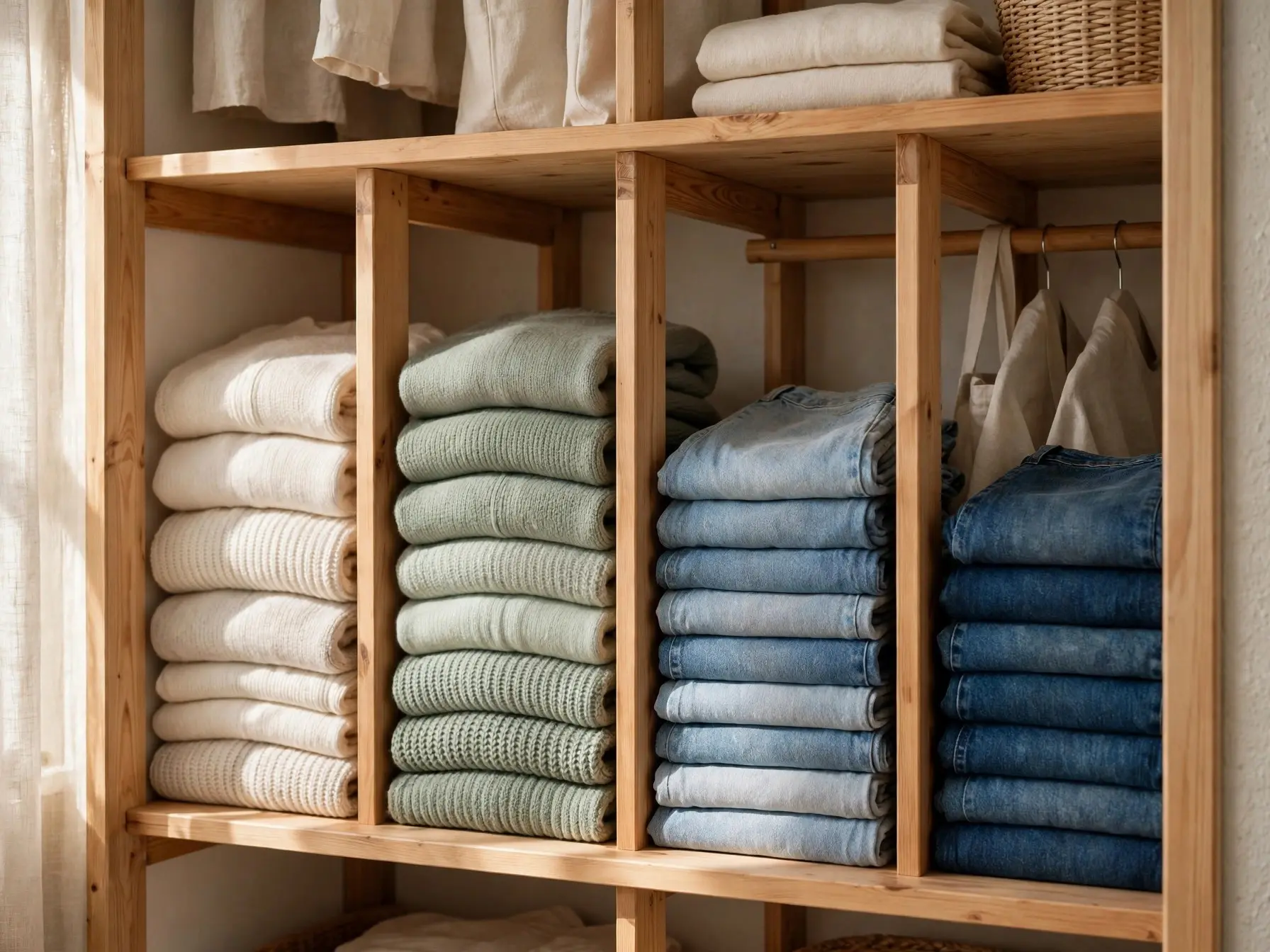
Tall stacks of sweaters lean, slide, and topple the moment you pull one out, and a shelf divider is the five-dollar fix. Slide one or two dividers onto the shelf and each stack gets its own bay, so pulling a sweater from the middle no longer knocks the whole row over. Wood, acrylic, and metal dividers all work; pick the one that matches your shelf finish. Space them 8 to 12 inches apart for folded clothes, wider for bulky bedding, and the shelf stays tidy between laundry days.
- Fits: any shelf with stacks over 8 in tall
- Holds: stacks upright and separate
- Best for: sweaters and jeans that topple
12. Split a tall shelf with cubby inserts
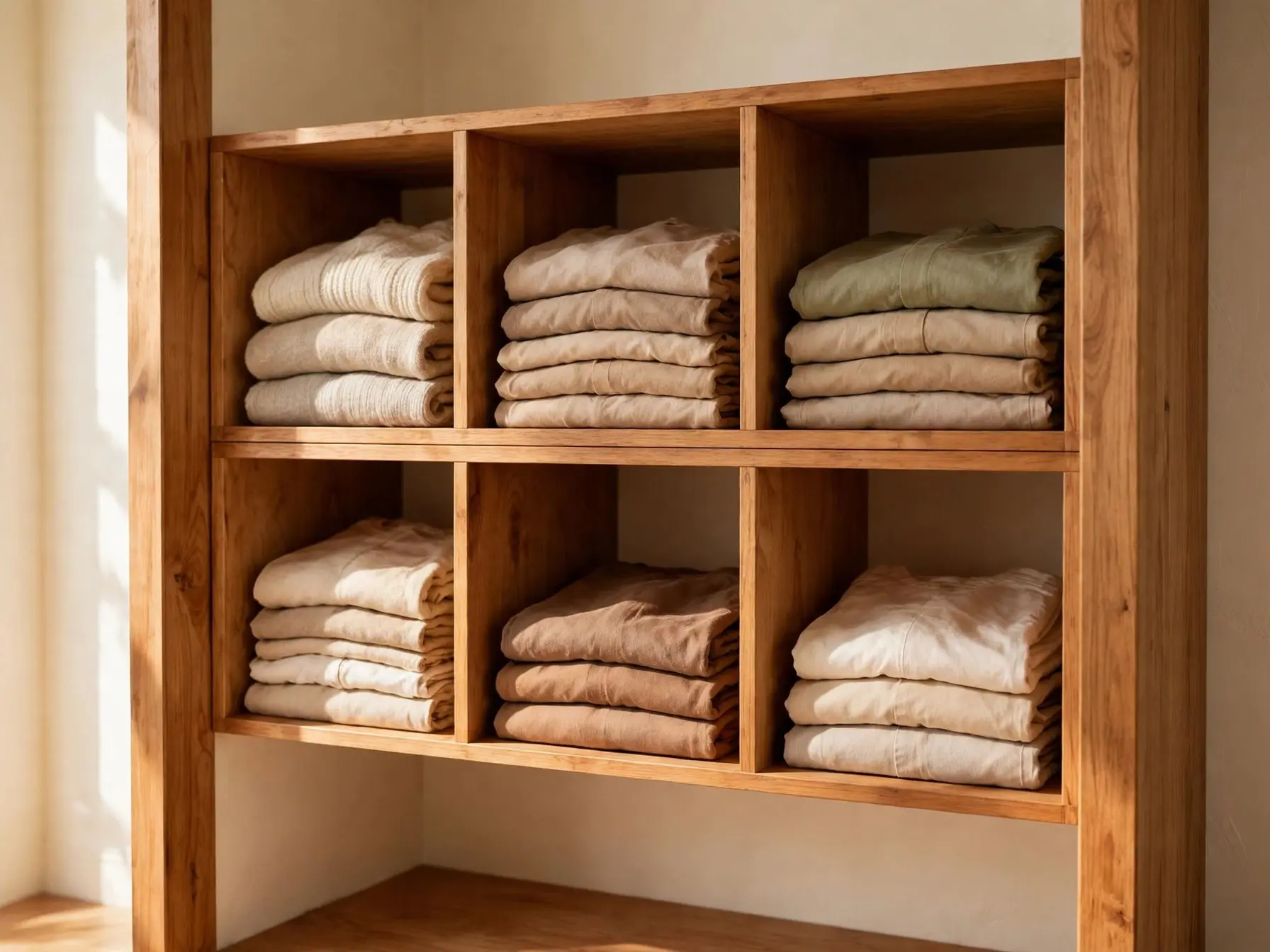
A tall shelf wastes its top half when stacks only reach halfway up, and a cubby insert fixes that without a single screw. The insert drops onto the shelf and splits it into two or four cubbies, so one shelf suddenly holds two short stacks instead of one tall pile. Use the lower cubbies for daily clothes and the upper ones for the next size up or the next season. Measure the shelf height first — you need at least 20 inches of clearance for two usable levels — and pick an insert that fits the depth exactly.
- Fits: any tall shelf with 20 in or more of height
- Holds: two levels of folded clothes per shelf
- Best for: deep shelves that swallow small stacks
13. Slide a pull-out basket under a fixed shelf
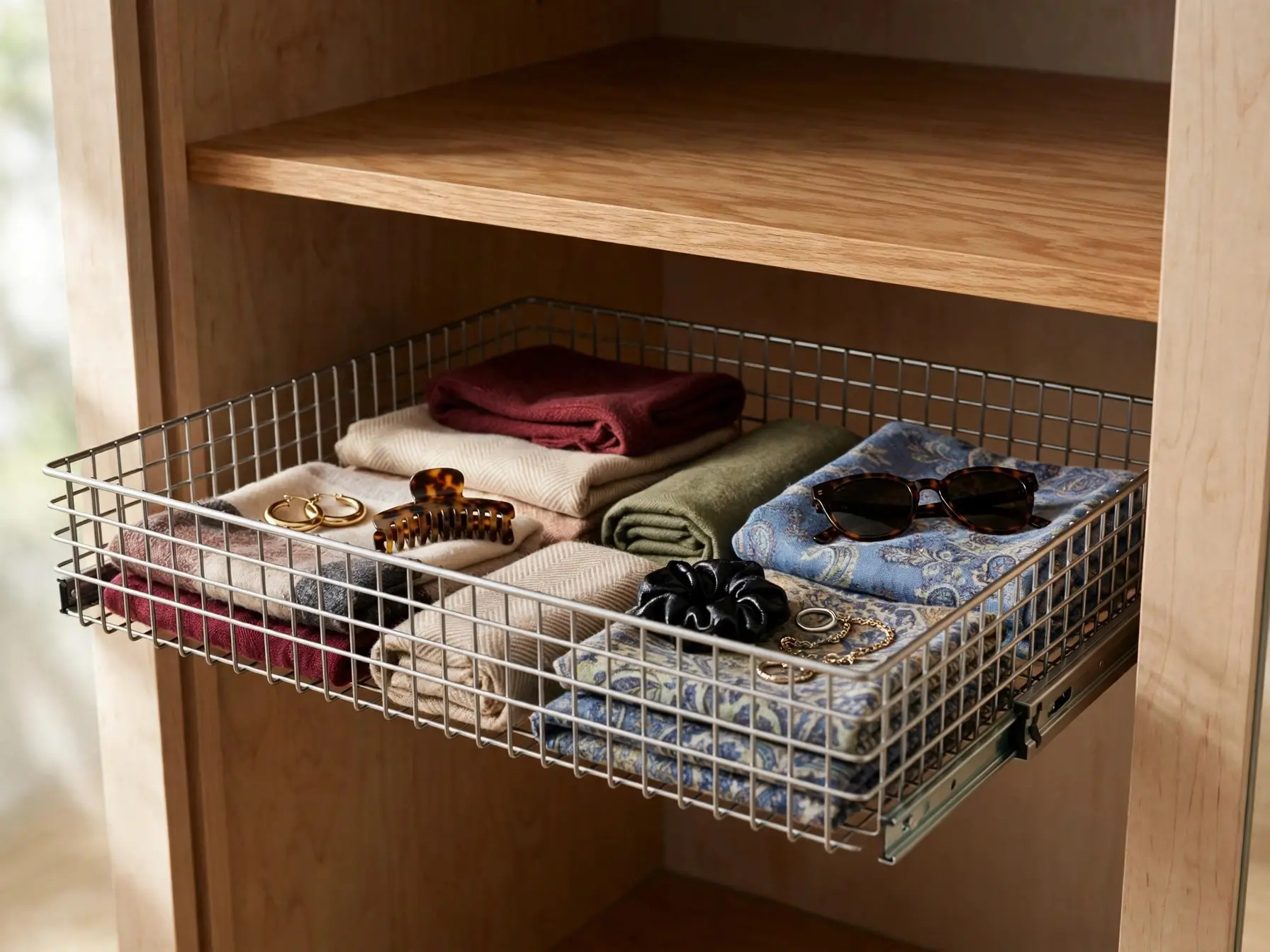
The space under a fixed shelf is dead air, and a pull-out basket turns it into a drawer you can reach into. The basket mounts under the shelf on two rails and slides out like a drawer, which makes it perfect for scarves, belts, socks, and the small things that otherwise end up in a pile. Pick a basket no deeper than the shelf above it so it does not stick out past the edge. One basket per shelf is enough — two and the closet starts to feel like a filing cabinet.
- Fits: under any fixed shelf with 10 in of clearance
- Holds: scarves, accessories, and small items
- Best for: the clutter that has no home
14. Add a low shelf for shoes at the bottom of the closet
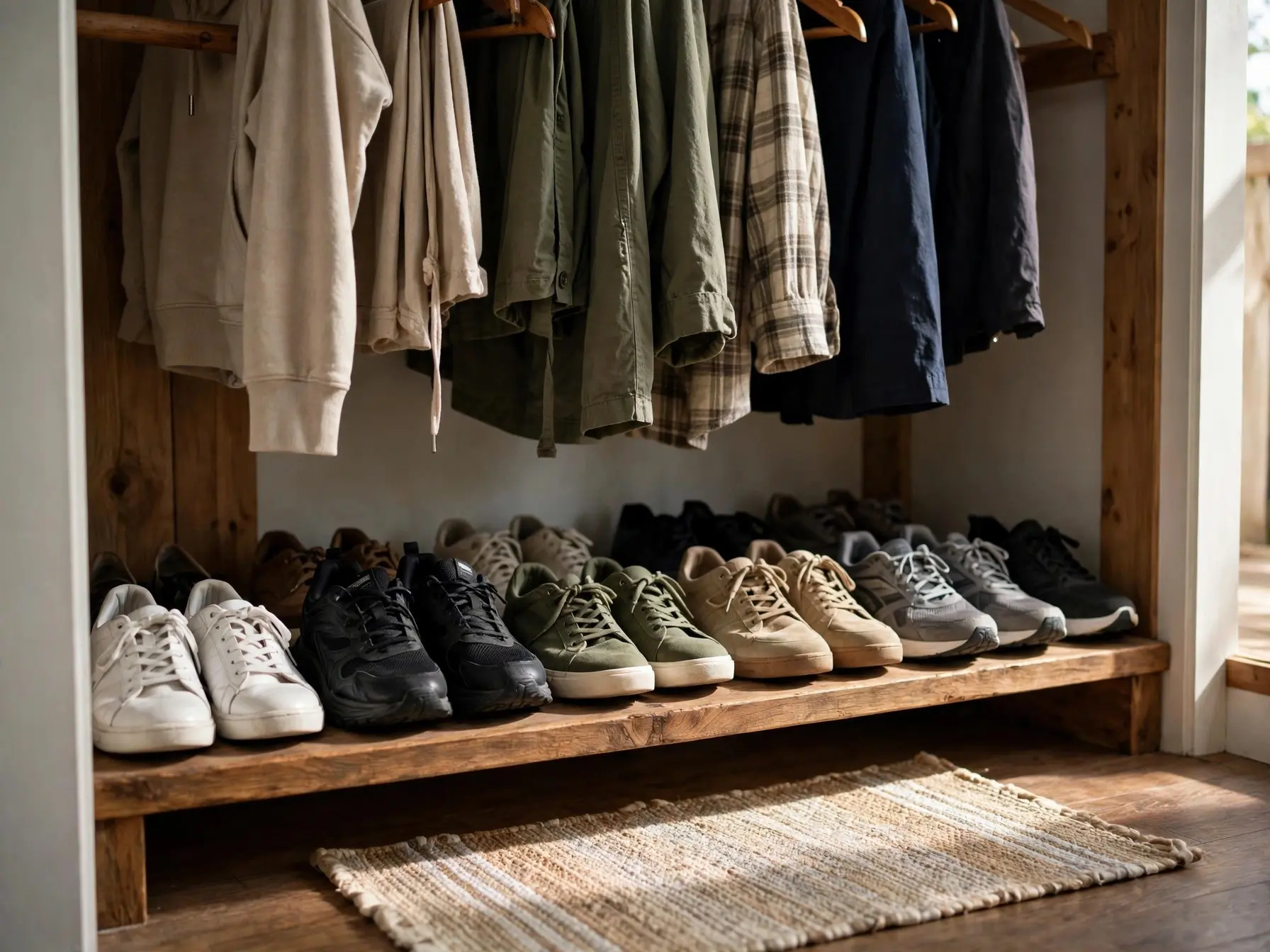
Shoes on the closet floor always end up in a heap, and one low shelf is all it takes to fix it. A shelf 6 to 8 inches off the floor, 12 inches deep, holds four to eight pairs in a neat row and keeps them off the carpet or the wood. Slanted shelves work even better, since you can see every pair at a glance. Keep daily shoes on this shelf and boots on the floor beside it, where their height does not matter. It is the cheapest shoe storage on this whole list.
- Fits: any closet floor, under hanging clothes
- Holds: 4 to 8 pairs of daily shoes
- Best for: shoes that live on the floor
15. Keep labeled bins on the high shelves for seasonal clothes
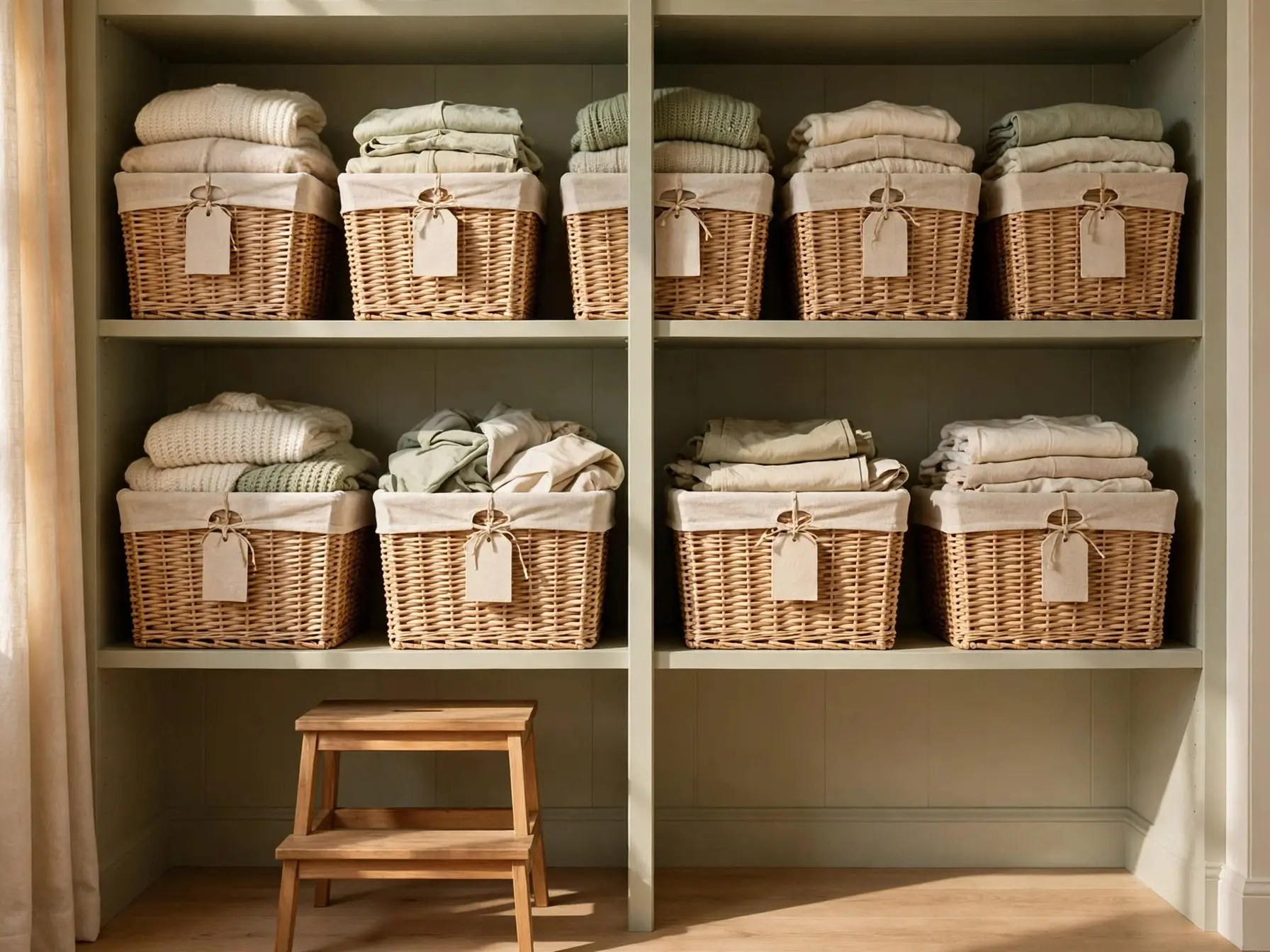
High shelves only work when you can find what is up there without climbing up to look, and labeled bins solve that. One bin per season or per person, a label on the front in plain words, and the swap takes ten minutes twice a year. Pick bins that fit the shelf depth so nothing sticks out past the edge, and use the same bin size across the shelf so they line up neatly. Woven bins look softer than plastic, but clear bins let you see the contents at a glance.
- Fits: any high shelf, once you have a step stool
- Holds: one season of clothes per bin
- Best for: seasonal swaps and spare bedding
Shelving for every closet shape: small, shared, and walk-in
A small closet, a shared closet, and a walk-in all waste space in different ways. These five ideas fit the shelf to the shape of the closet you have.
16. Wrap shelves around the corner in an L-shaped closet
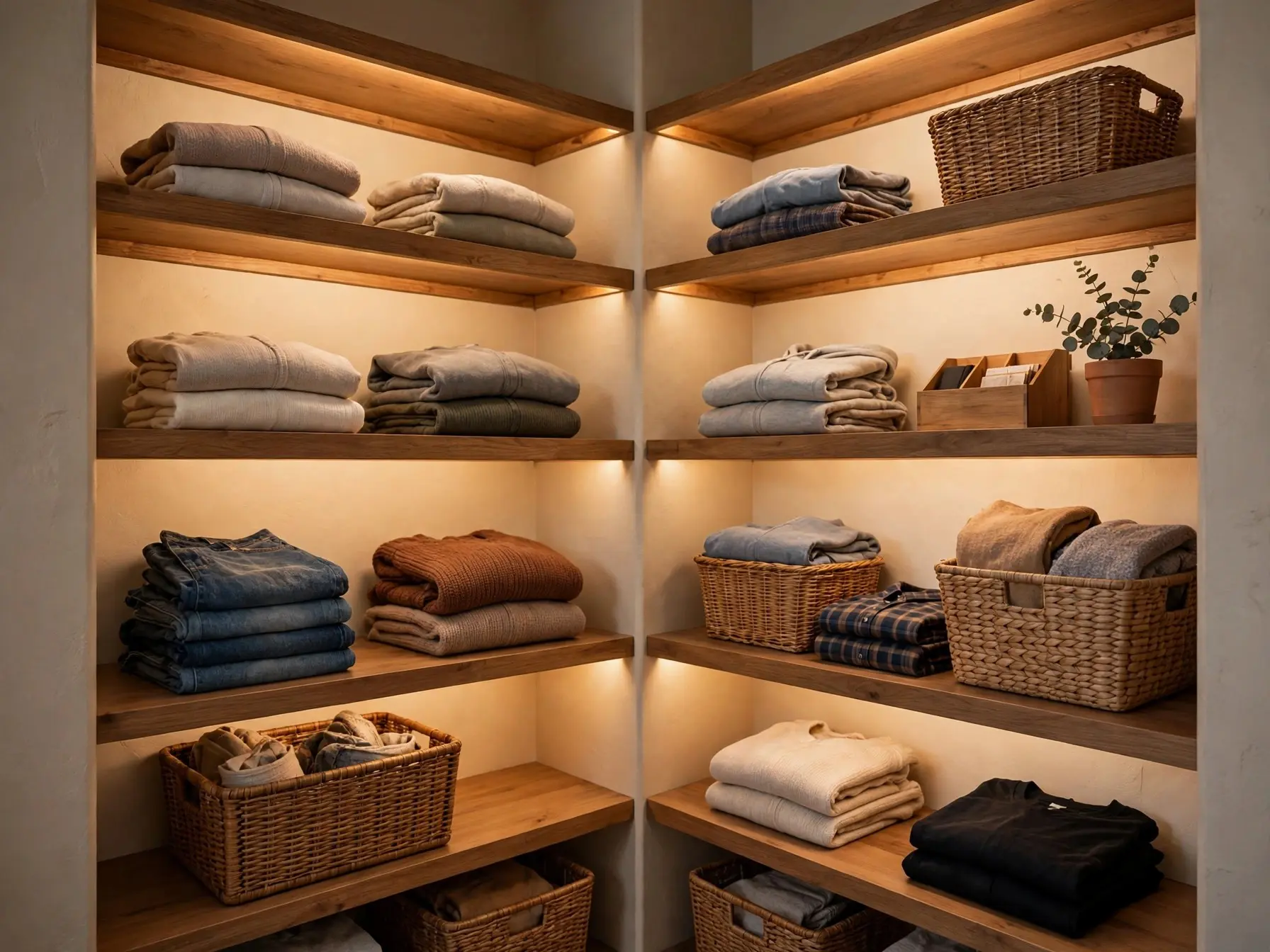
An L-shaped closet wastes one whole wall when shelves only run along one side, and wrapping them around the corner fixes it. Run the same 12 inch deep shelves along both walls so they meet in the corner, and put baskets or the bulkiest folded clothes in the corner itself, where reaching is hardest. Keep daily clothes on the easy-to-reach wall and seasonal clothes around the bend. The corner shelves add two to three rows of storage to a closet that looked full already.
- Fits: any L-shaped closet with two usable walls
- Holds: folded clothes and baskets on both walls
- Best for: corners that waste a whole wall
17. Use one shelving unit per person in a shared closet
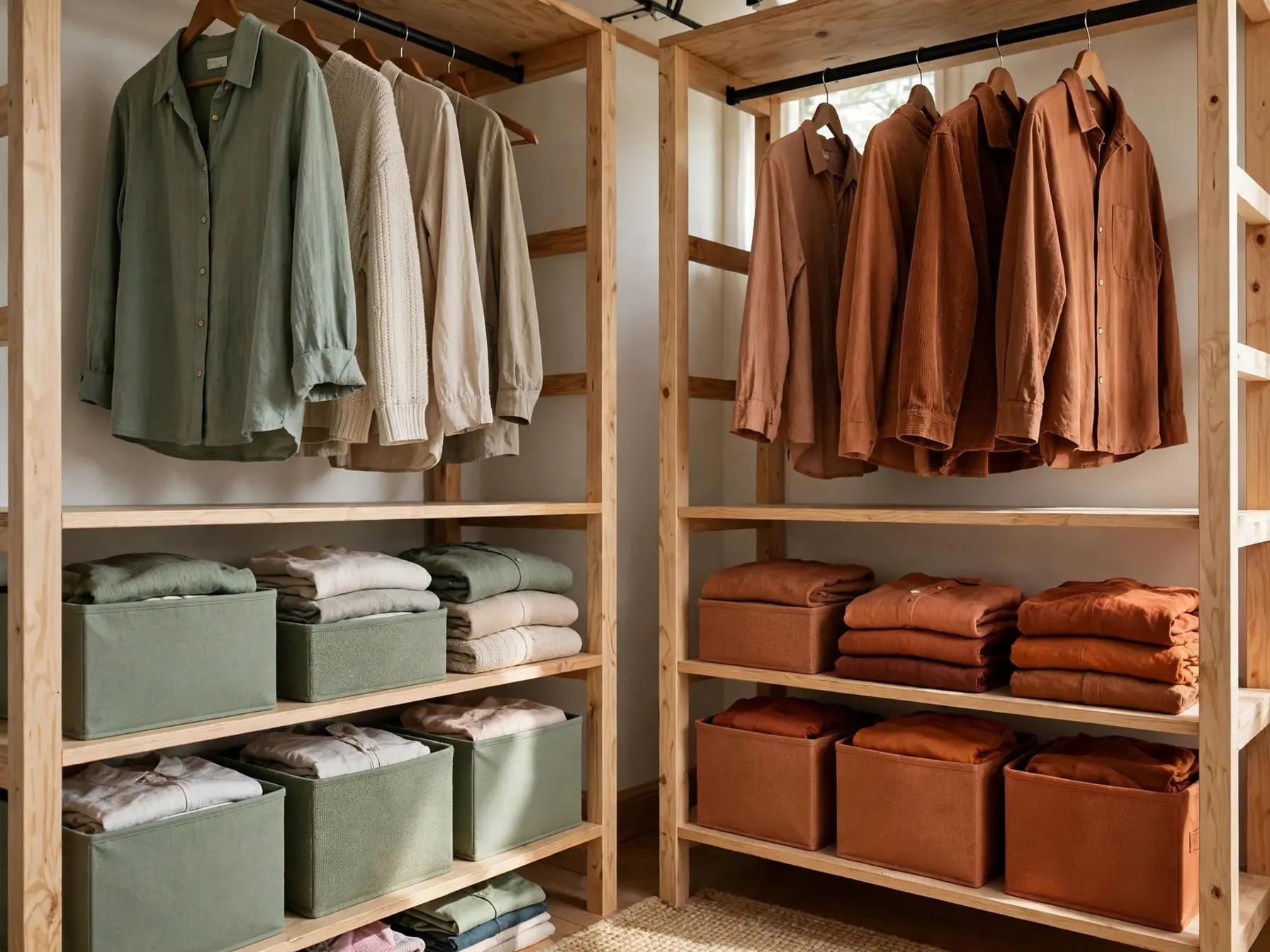
A shared closet only stays tidy when everyone knows which shelves are theirs, and one unit per person makes that obvious. Give each person a matching freestanding unit or one side of a fixed shelf run, and mark it with a color or a label they can spot at a glance. Keep each person’s daily clothes between knee and eye level on their own side, and seasonal clothes up high. When one side overflows, that person edits their own stacks — the rule keeps the peace better than any organizer ever will.
- Fits: any shared closet with 36 in or more of width
- Holds: one full wardrobe section per person
- Best for: couples and families sharing one closet
18. Add a shelf with hooks underneath for bags and belts
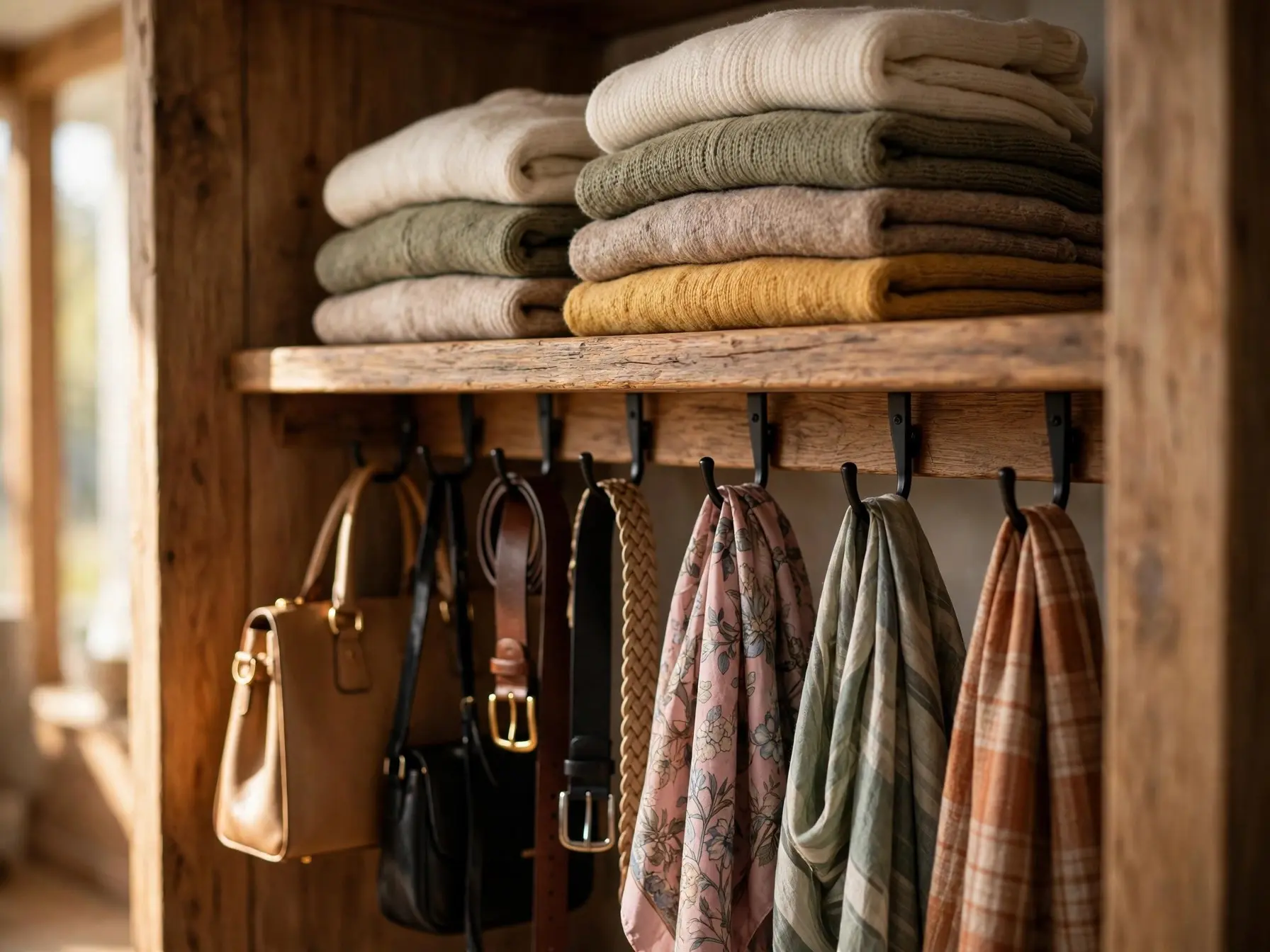
A shelf with hooks underneath does two jobs at once: folded clothes on top, bags and belts hanging below. Screw a row of small hooks into the underside of any wood shelf — five or six hooks, spaced about 4 inches apart — and hang handbags by their straps, belts by their buckles, and scarves looped over the hooks. Keep the heaviest bag nearest the bracket so the shelf never sags. The accessories stop piling up on the shelf itself, which frees the whole surface for clothes.
- Fits: under any shelf with 6 in of clearance below
- Holds: bags, belts, scarves, and hats
- Best for: accessories that pile up on shelves
19. Match the shelf depth to what it holds
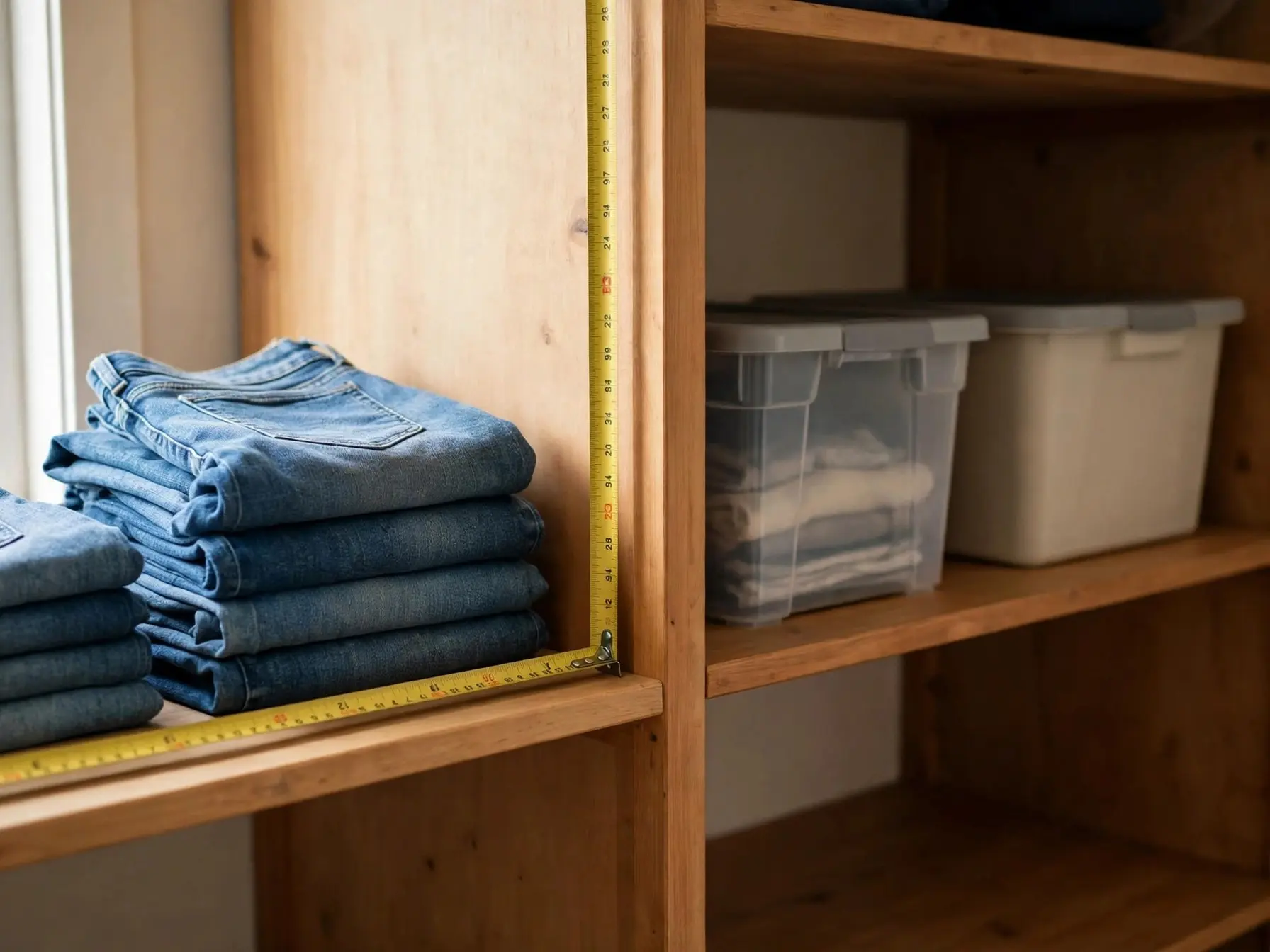
The most common closet shelving mistake is building every shelf the same depth, and the fix is matching the depth to the contents. Folded clothes need 12 inches, shoes need 10 to 12, and storage bins need 14 to 16 — deeper than that and things get buried at the back. Measure what will actually sit on each shelf before you cut a single board, and write the depth on the plan. A closet with three depths holds more, and stays tidier, than a closet with one.
- Fits: every shelf in the closet
- Holds: the right clothes at the right depth
- Best for: planning before you buy or build
20. Leave one shelf half empty on purpose
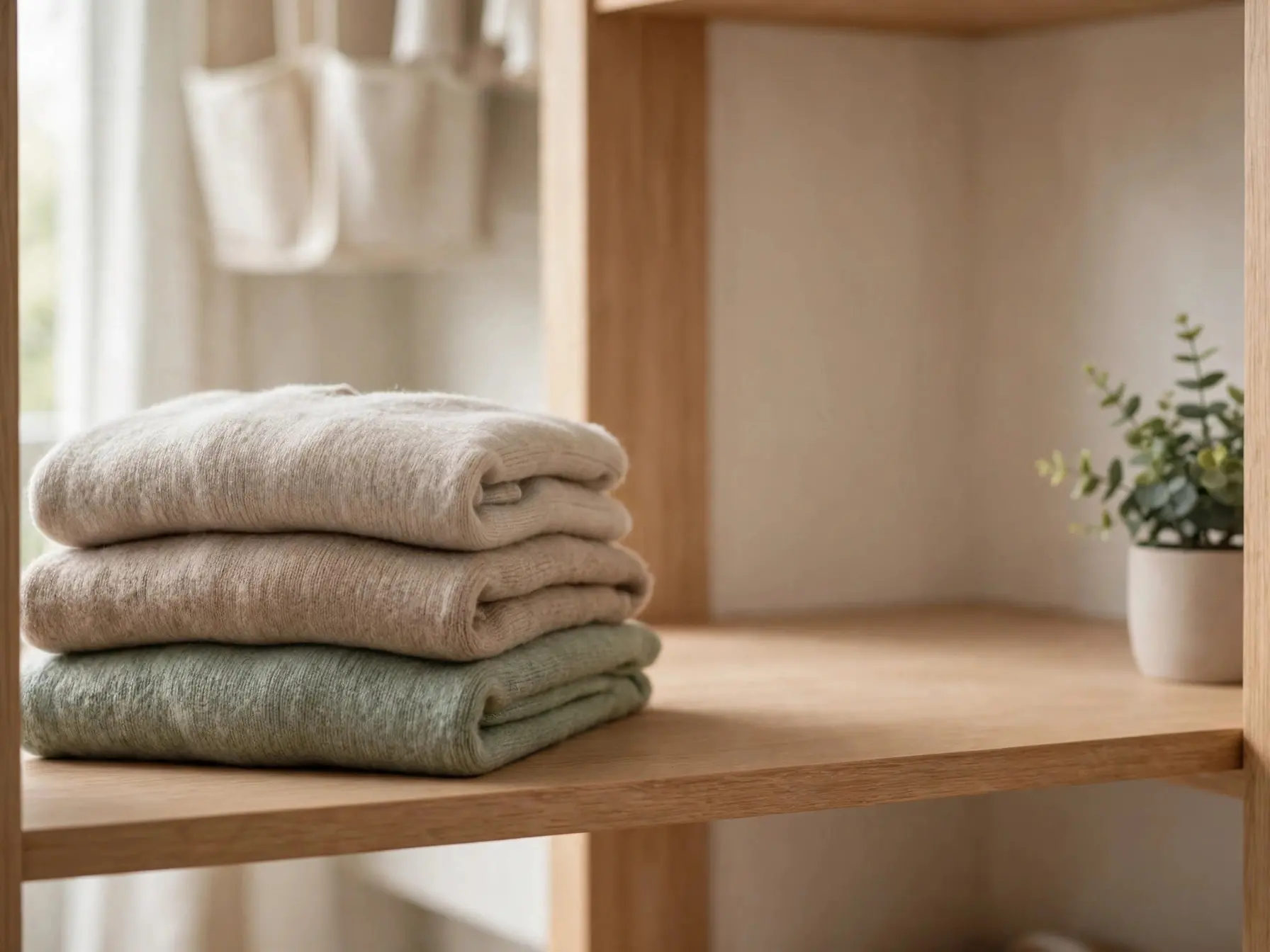
A closet filled to the edge has nowhere for the next load of laundry to go, so it ends up on the floor. Leave one shelf half empty on purpose — a landing shelf for clean clothes waiting to be put away, new purchases, or the next season’s swap. The empty half also makes the whole closet look calmer and more spacious, which is why show closets always leave breathing room. When the shelf fills up anyway, that is the signal to edit the closet, not to add another shelf.
- Fits: any closet, on any shelf
- Holds: nothing — and that is the point
- Best for: closets that creep full again
Questions, answered
How do you add shelves to a closet?
Measure the space above the rod and the width between the walls, then cut boards to fit or buy a freestanding unit. For fixed shelves, fix brackets into studs where you can, or use wall anchors rated for the load, and check the shelf is level before you load it. A freestanding unit needs no tools at all: slide it in, level the feet, and start stacking.
What depth should closet shelves be?
Twelve inches suits folded clothes, sweaters, and jeans, since a folded stack is about 10 to 12 inches deep. Use 14 to 16 inches for storage bins and bulky bedding, and 10 to 12 inches for shoes. Deeper than 16 inches wastes space at the back, because clothes back there get buried and forgotten.
Are wire or wood closet shelves better?
Wire shelves are cheaper, lighter, and let air move, which suits linens and light clothes, but narrow items can tip through the gaps. Wood shelves are stronger, hold heavy stacks and bins without sagging, and look more like built-in furniture. For a closet you use every day, wood wins; for a spare closet on a budget, wire is fine.
How do I maximize closet storage with shelves?
Run shelves to the ceiling, use every wall, and add risers so each shelf holds two layers instead of one. Keep daily clothes between knee and eye level, seasonal clothes up high, and shoes on the lowest shelf. Measure before you buy, and leave a little breathing room on each shelf so stacks stay neat.
Keep reading
Shoes are one piece of a closet that stays tidy on a system. Our guides to closet organization ideas, shoe organizer for closet ideas, and the best shoe rack for a closet all build on the same idea: give everything one home, and the small space stops fighting you.
Pick the shelf that fits the closet you have, not the one you wish you had. Measure once, buy once, and the pile of folded clothes on the floor stops being a daily negotiation. Start above the rod, add a unit or a riser where the gaps are, and give every stack one home.