A garage is the only room in the house that has to hold cars, sports gear, tools and four seasons of clutter at once. These 25 garage organization ideas give it a system instead of a shove: five zones — walls, floor, kids’ gear, workshop and seasonal — each with ideas you can copy in a single weekend. Every one uses kit you already know: matching bins, a label maker, wall hooks and one good afternoon.
Thank you for reading this post, don’t forget to subscribe!Work through the zones in order or jump to the one that bothers you most. Each idea says what to do, why it holds up, and one concrete detail — a measurement, a rough cost or a capacity — so you can actually act on it this weekend.
Zone 1: Use the walls
Everything long, awkward or heavy gets lifted off the floor and onto the wall. Wall storage is the single biggest win in a garage because it frees floor space without buying a single extra bin.
1. Run a slatwall panel for hand tools
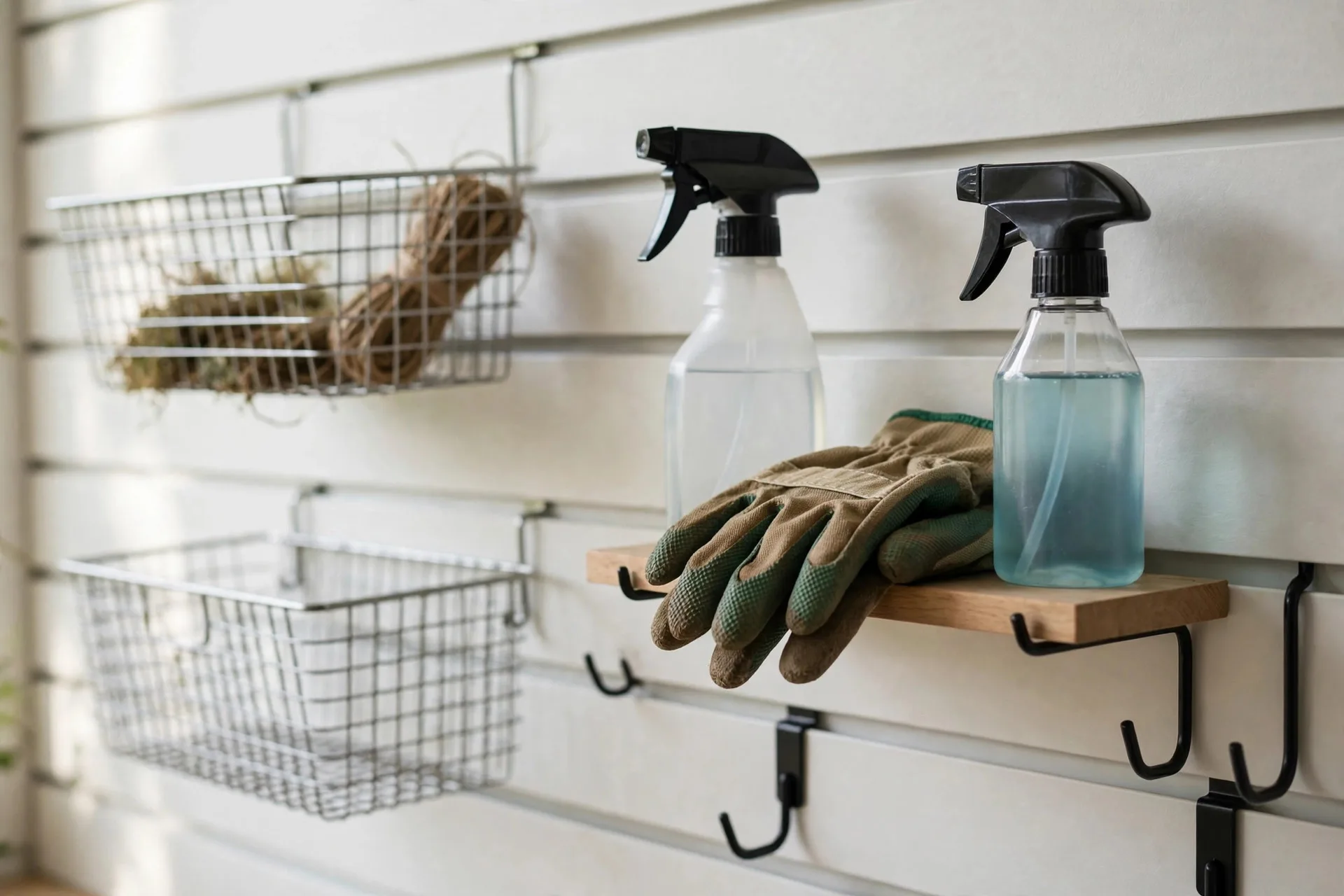
A single 2.4-metre slatwall panel holds a drill, shears and cordless tools on hooks, with baskets and a small shelf for gardening gloves and spray bottles. Hooks slide anywhere on the panel, so the layout changes as your kit changes.
Tip: mount the panel at shoulder height and keep the 20 centimetres above it clear — that is the zone where hooks get added fastest.
2. Switch to matching labeled bins on steel shelves
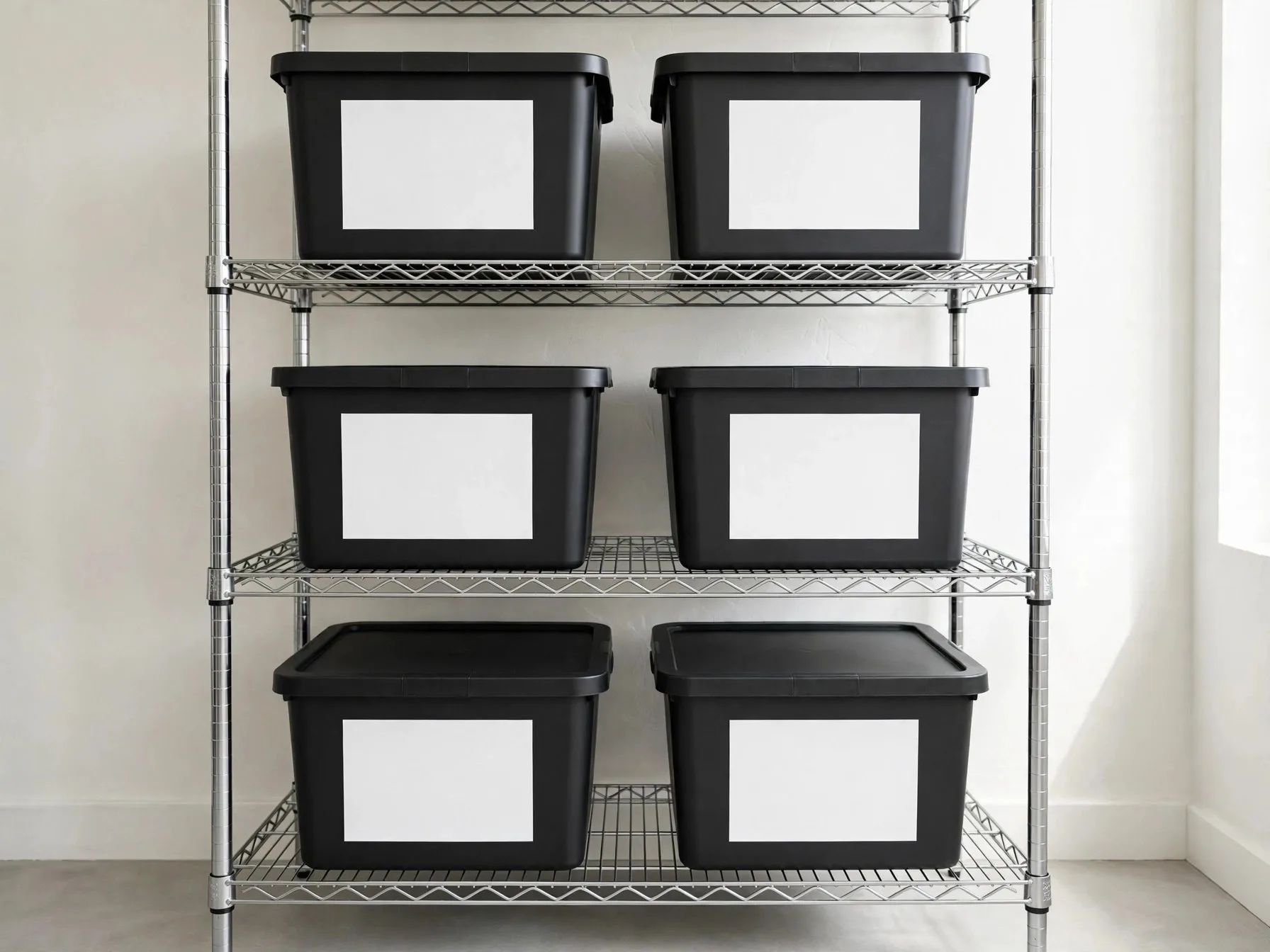
Identical black lidded bins read as one system instead of a jumble of odd boxes. Big white label-maker labels — Camping, Holiday, Car Care — make the contents obvious from the garage door, so nobody opens six bins looking for the tent pegs.
Tip: one label per bin, three words at most, stuck at eye level on the short end facing the room.
3. Hang every bike on a wall hook
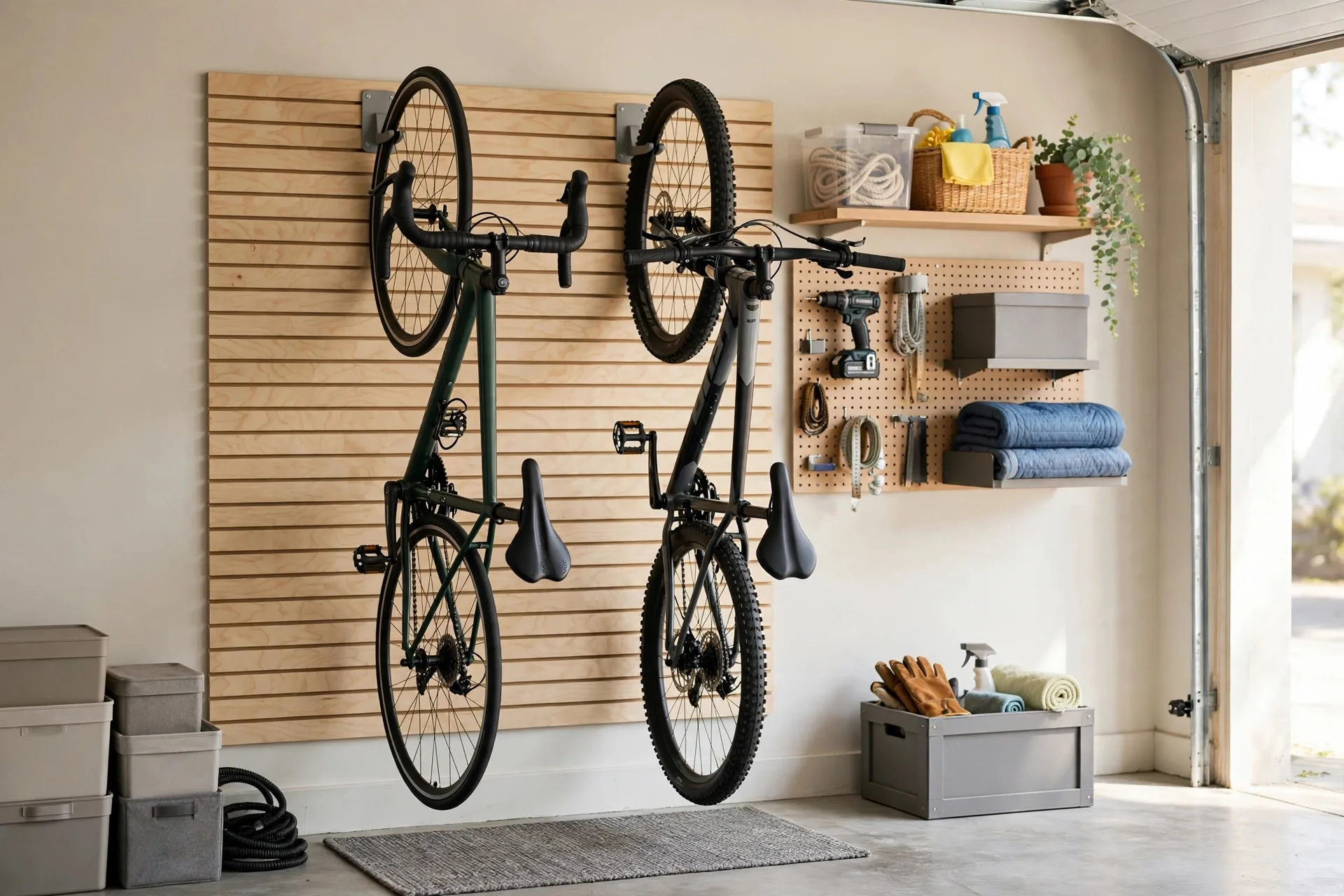
Folding wall hooks take every bike off the floor; each bike you hang frees roughly a square metre of floor. Mount the hook at shoulder height so the front wheel lifts on without a struggle.
Tip: angle the bikes slightly apart so handlebars never tangle — about 30 centimetres between hooks keeps them from catching.
4. Build a sports corner around a ball cage
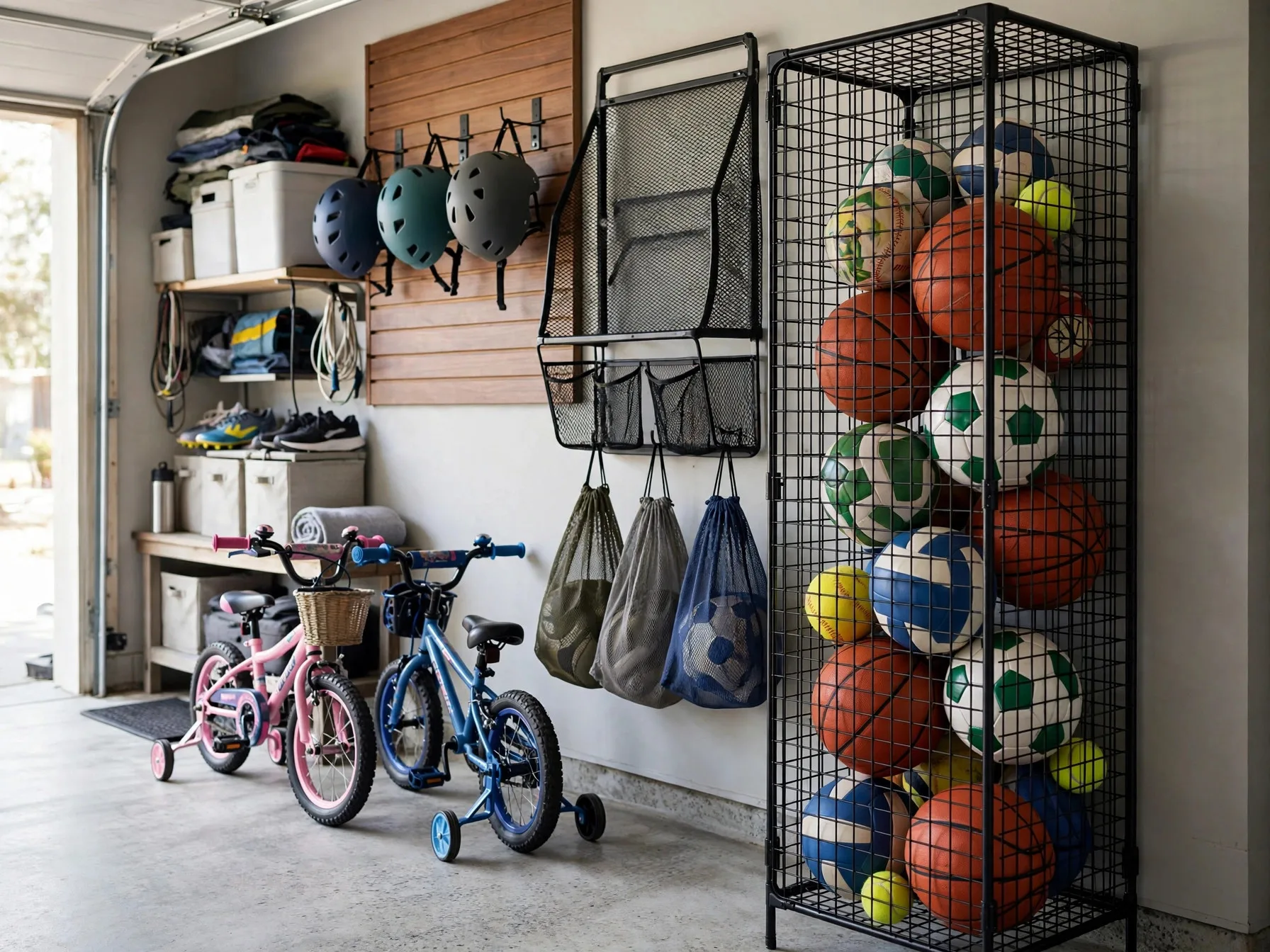
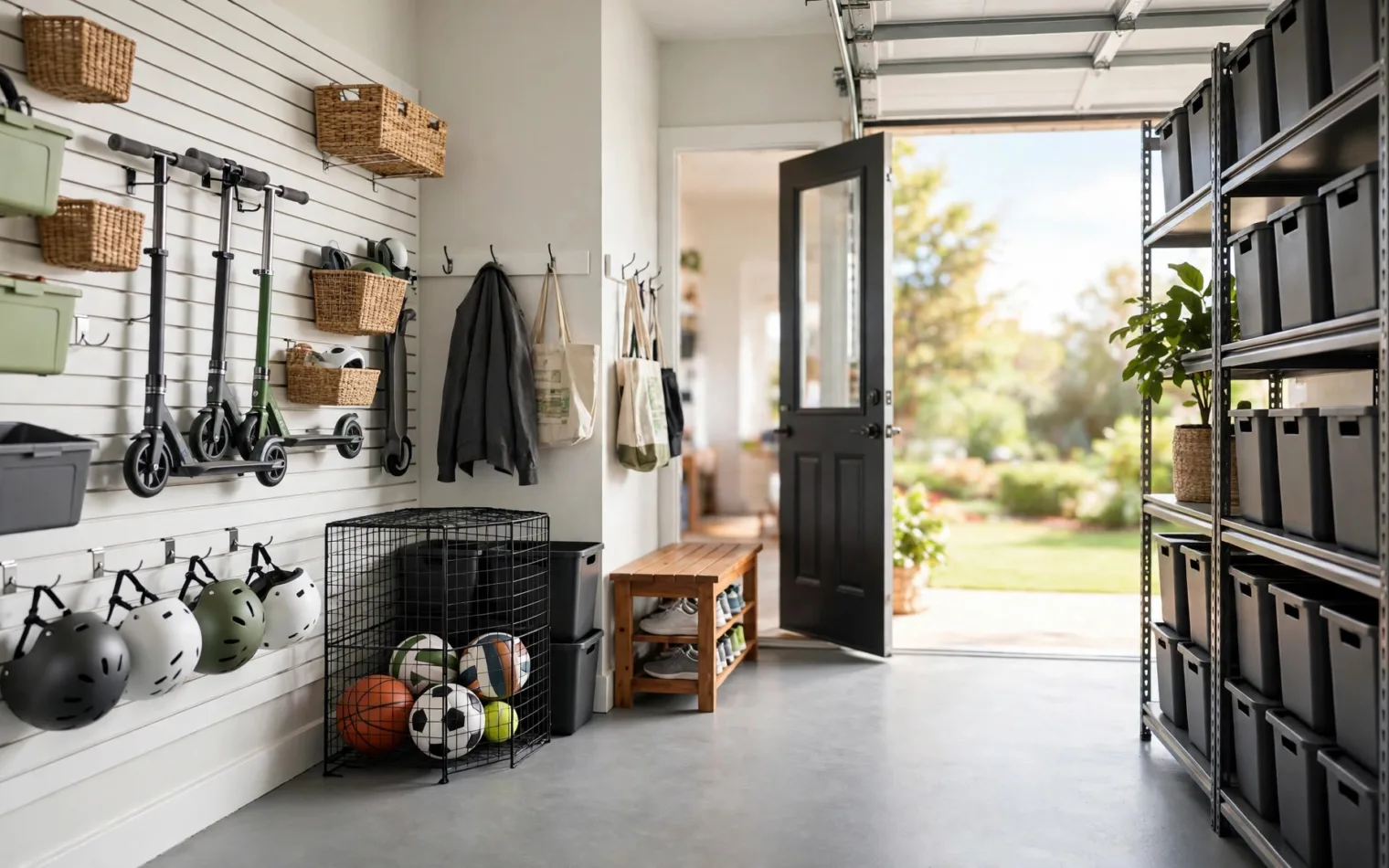
An upright ball cage plus helmet hooks and a mesh bag rack turns the kids’ gear into one tidy corner. Park the bikes next to it so the whole zone lives together — one corner, not five piles scattered around the room.
Tip: choose the corner nearest the house door; gear gets used far more when the trip from house to gear is short.
5. Pegboard for fasteners and small parts
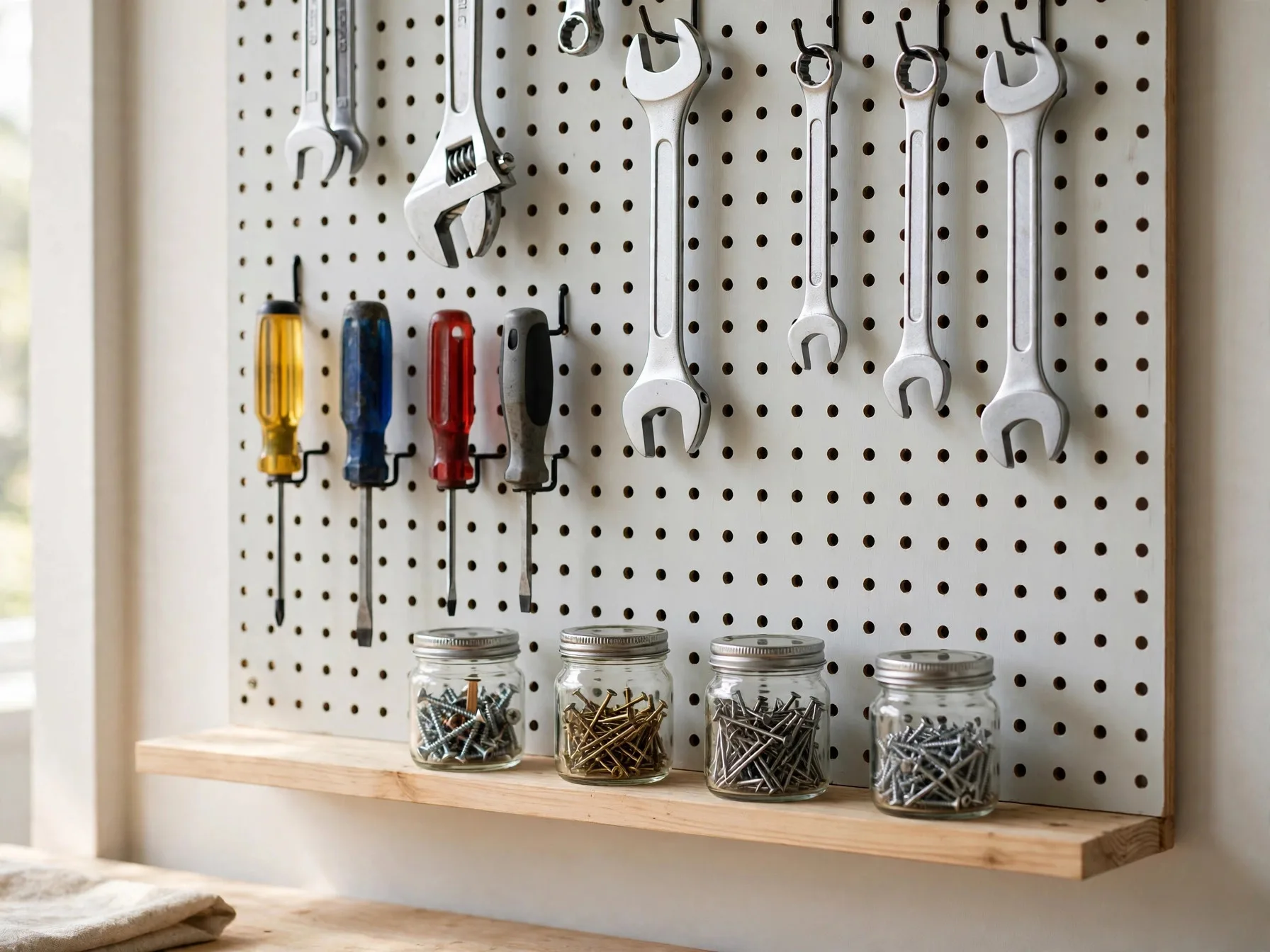
A pegboard panel with hooks for wrenches and screwdrivers, plus small jars on a shelf rail sorted by screw and nail size, keeps every fixing visible at a glance. Nothing hides in drawers.
Tip: sort jars by size, not by project — screws live with screws, nails with nails, and you see what you have before you buy more.
Zone 2: Free the floor
The floor is the garage’s most abused surface and its most valuable one. Protect it with boundaries: the car’s spot is sacred, and everything else earns its place at the edges or overhead.
6. Tape a parking box on the floor
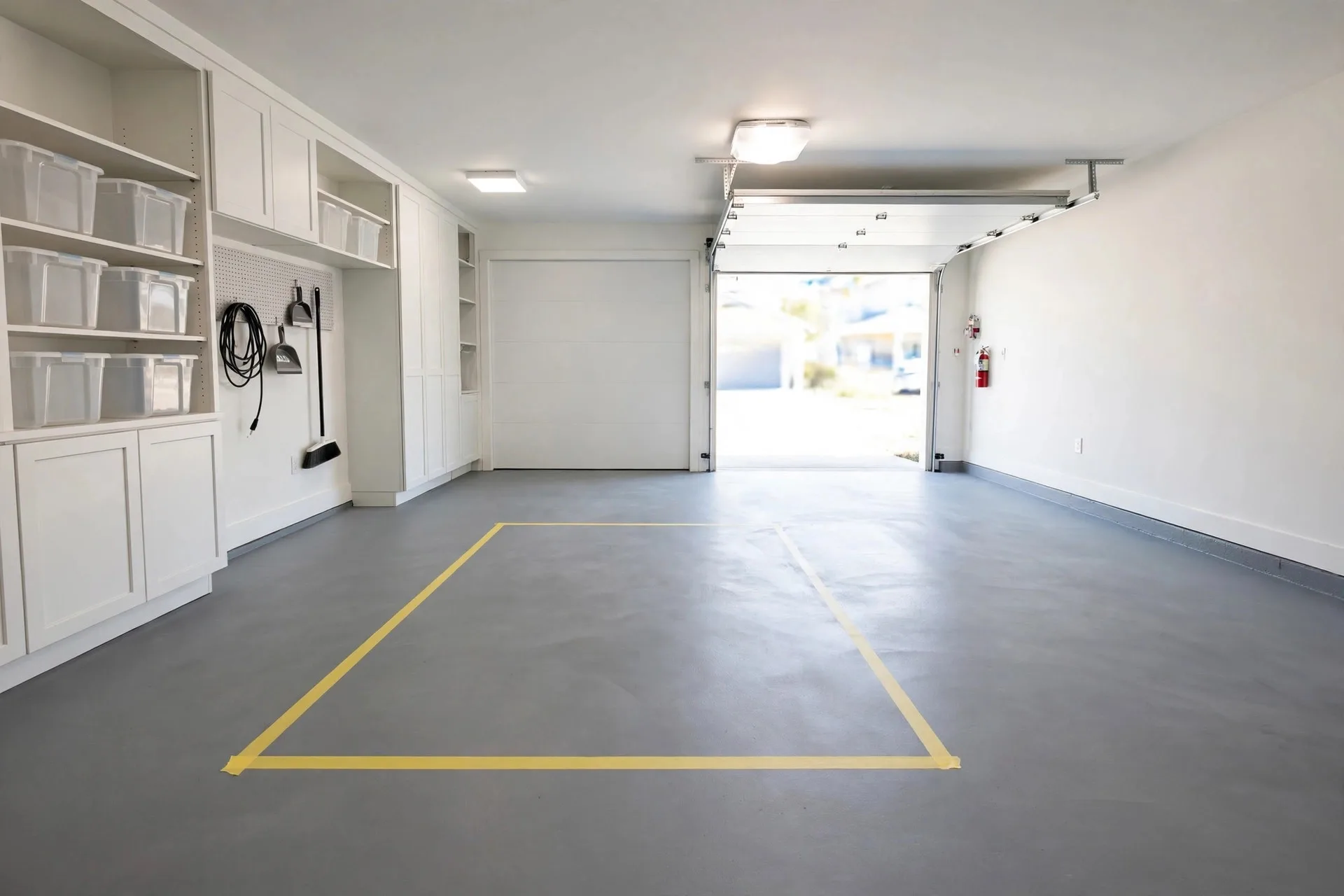
Painter’s tape marks the car’s exact spot on the sealed floor. Nothing lives inside the box, so parking stays effortless even when the garage is full — and the tape makes the rule visible to everyone.
Tip: leave 50 centimetres of clear space on the driver’s side for the door to open fully before you tape the second line.
7. Put seasonal totes on an overhead rack
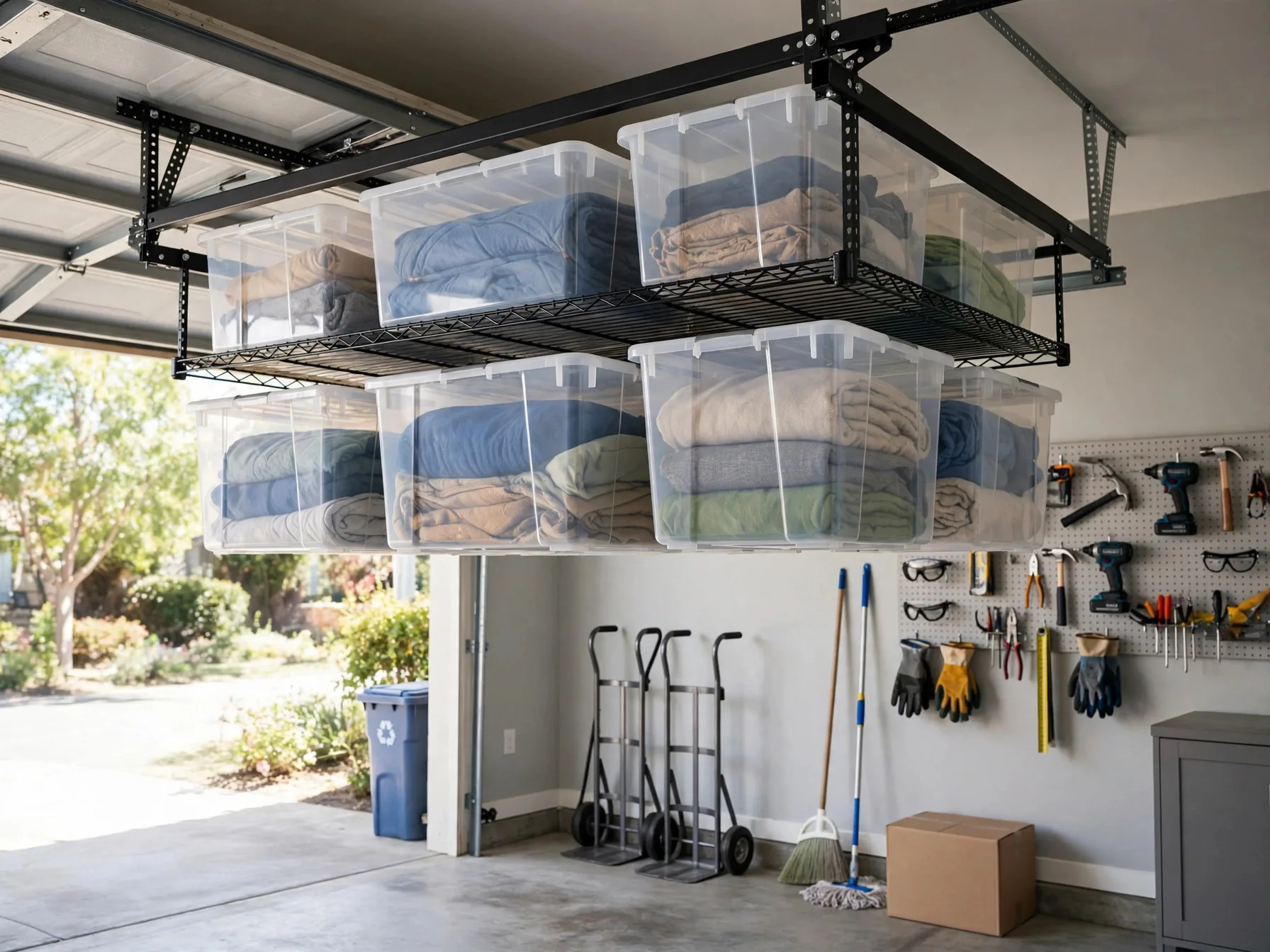
A ceiling-mounted rack rated to about 250 kilograms holds four to six labeled totes. Holiday bins live up high and out of the way, never in the car’s parking space, and the rack uses ceiling space that was doing nothing.
Tip: keep the heaviest tote under 20 kilograms and push it to the rack’s centre, where the supports are strongest.
8. Corral garden tools in one tall caddy
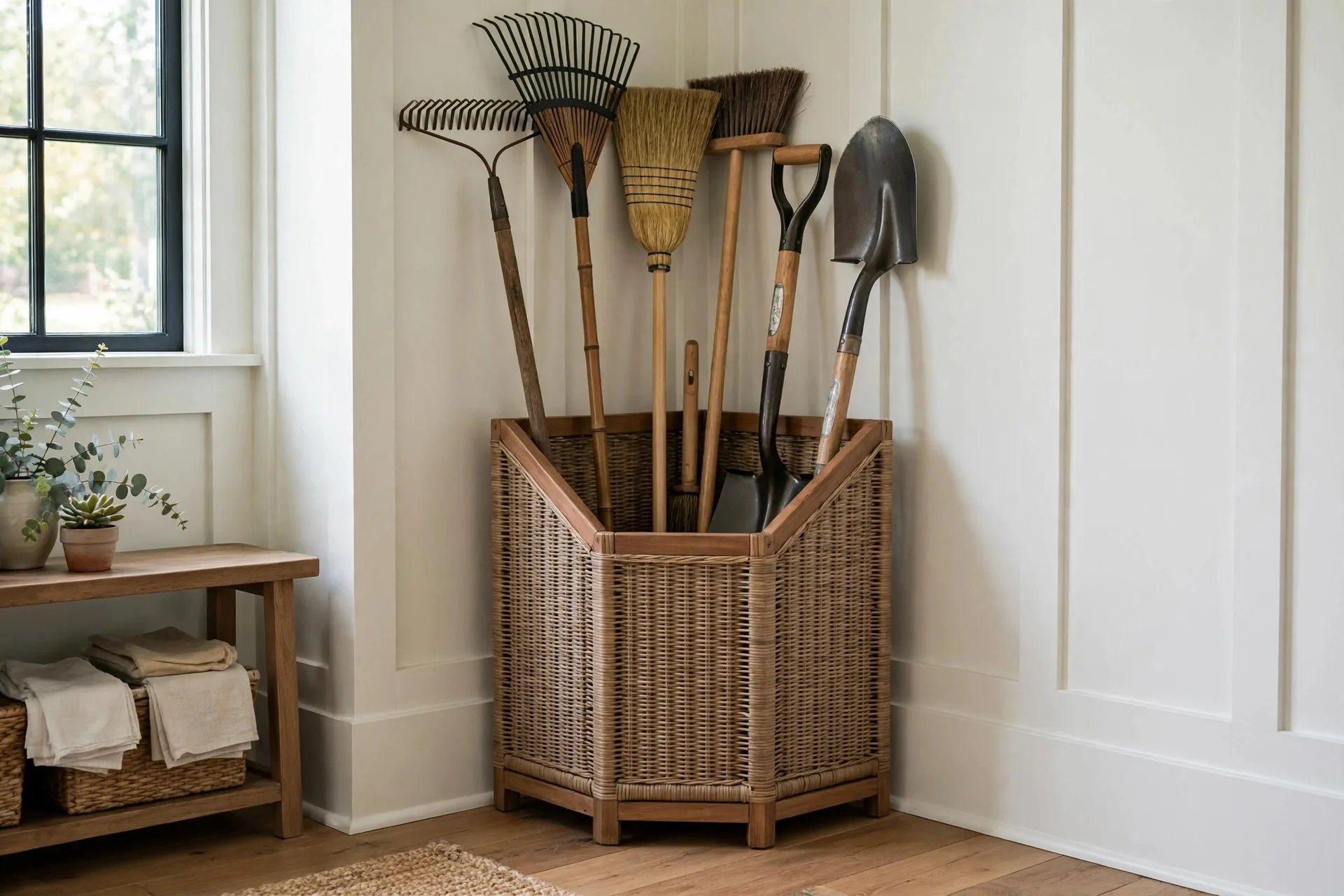
Rakes, brooms and shovels stand upright in a tall bin in one corner, so long handles never lean against the car or slide across the floor. One caddy, one corner, everything with a long handle.
Tip: weigh the caddy base with a brick or a bag of sand — tall bins tip the first time someone grabs a rake in a hurry.
9. Park a rolling tool chest in one spot
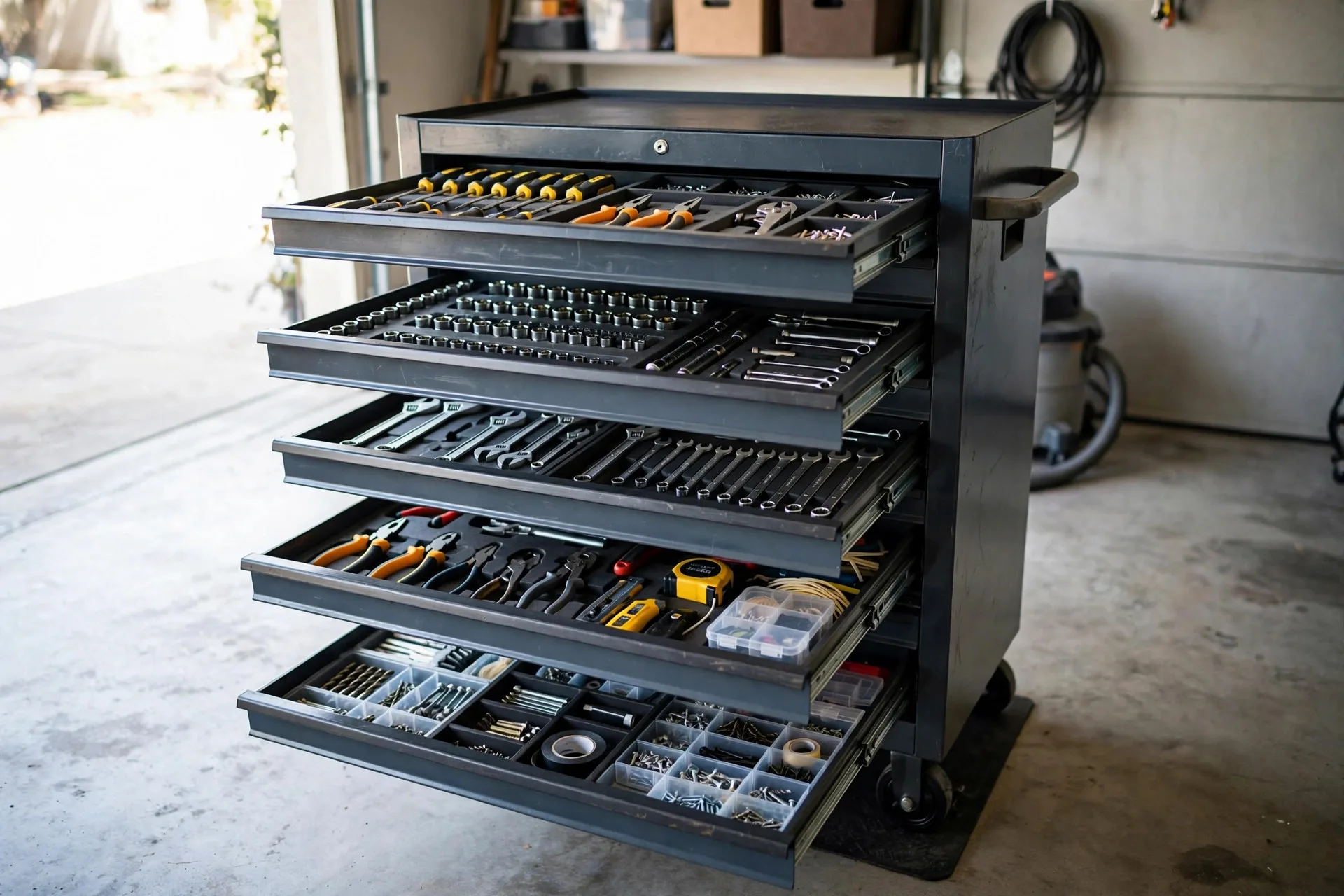
A tool chest on casters becomes a mobile workstation: roll it to the project, then roll it back to the same wall spot every time. The “one spot” rule matters more than the chest itself — wheels without a home just wander.
Tip: lock two of the four casters when you park it, or the first drawer you open will push the whole chest backwards.
10. Give the drop zone a bench, hooks and a bag bin
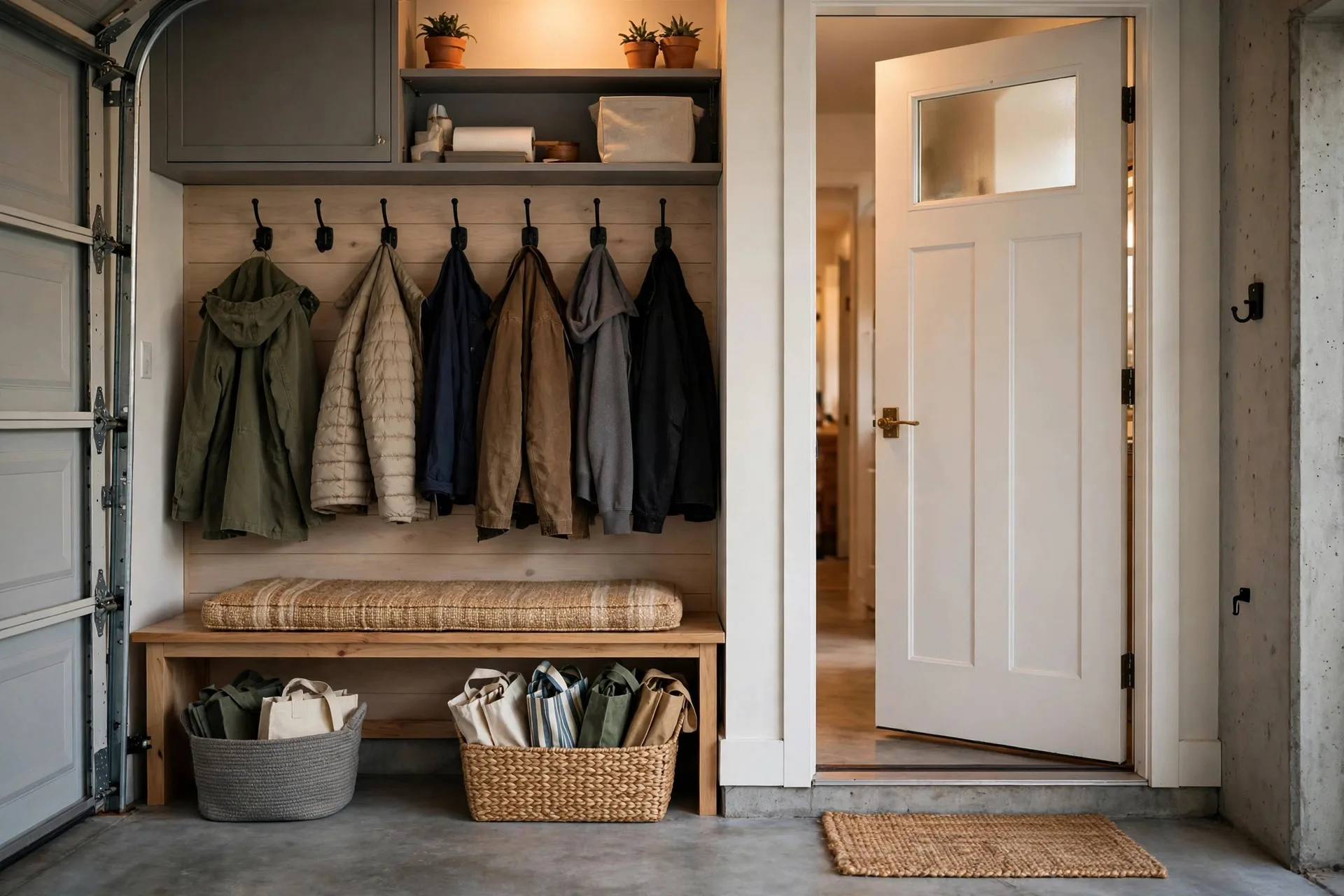
A bench, jacket hooks, a bin for reusable shopping bags and a shoe tray by the house door catch the daily drop before it lands on the bonnet. This one zone absorbs most of the mess that makes garages feel chaotic.
Tip: keep a canvas bag in the bin permanently — the bag bin only works if there is always one bag ready to grab.
Zone 3: Kids and sports gear
Kids’ gear multiplies faster than anything else in a garage. Give it its own zone with hooks at their height, open bins, and a rule so simple a tired child can follow it.
11. One grab-and-go bag per sport
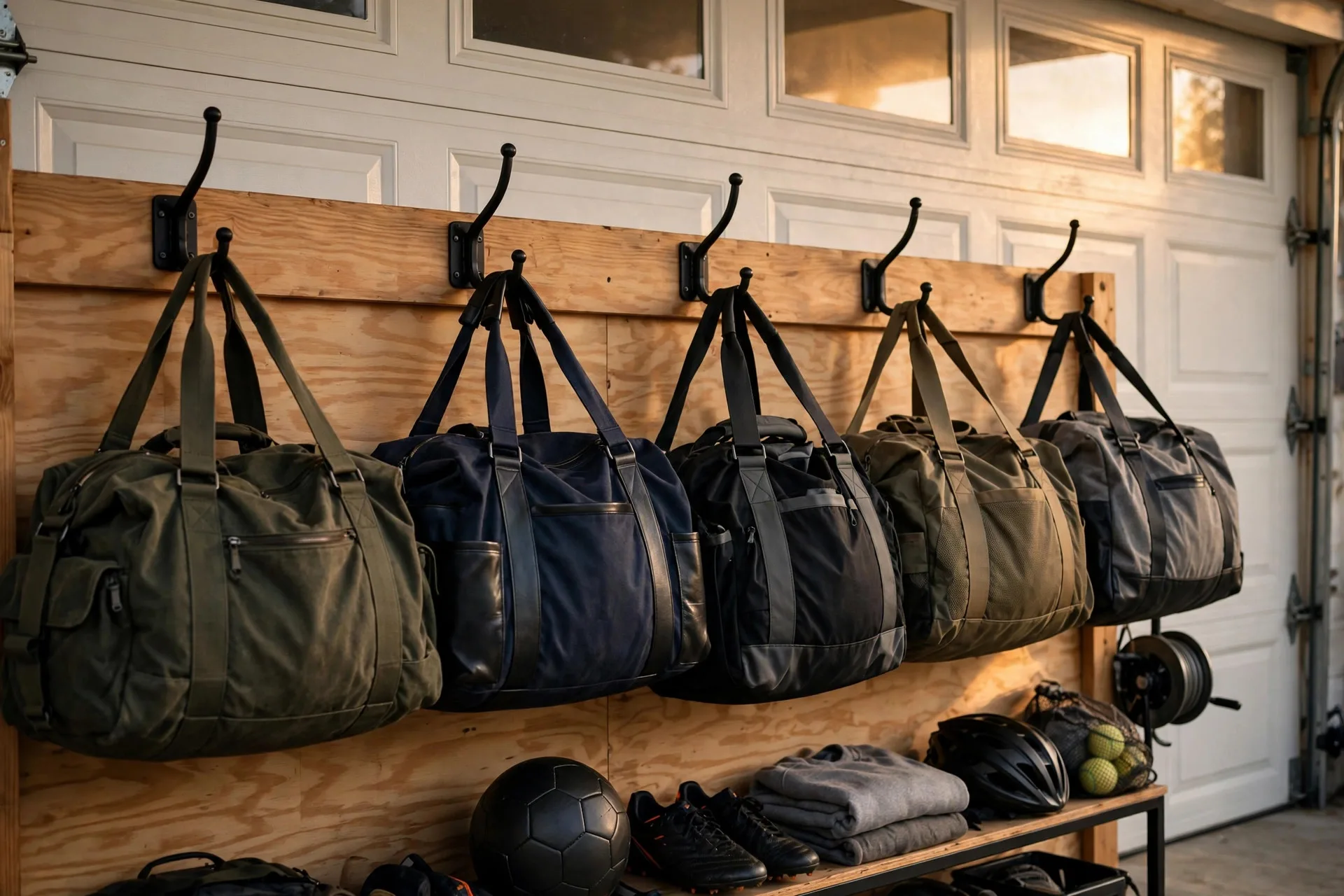
A packed bag for each sport hangs on its own hook by the door. Game-day mornings become grab-and-go instead of a frantic hunt through three different bins for one shin pad.
Tip: repack the bag the night after the game, not the morning of it — ten minutes at night beats thirty in a panic.
12. Mesh bag rack for the oddballs
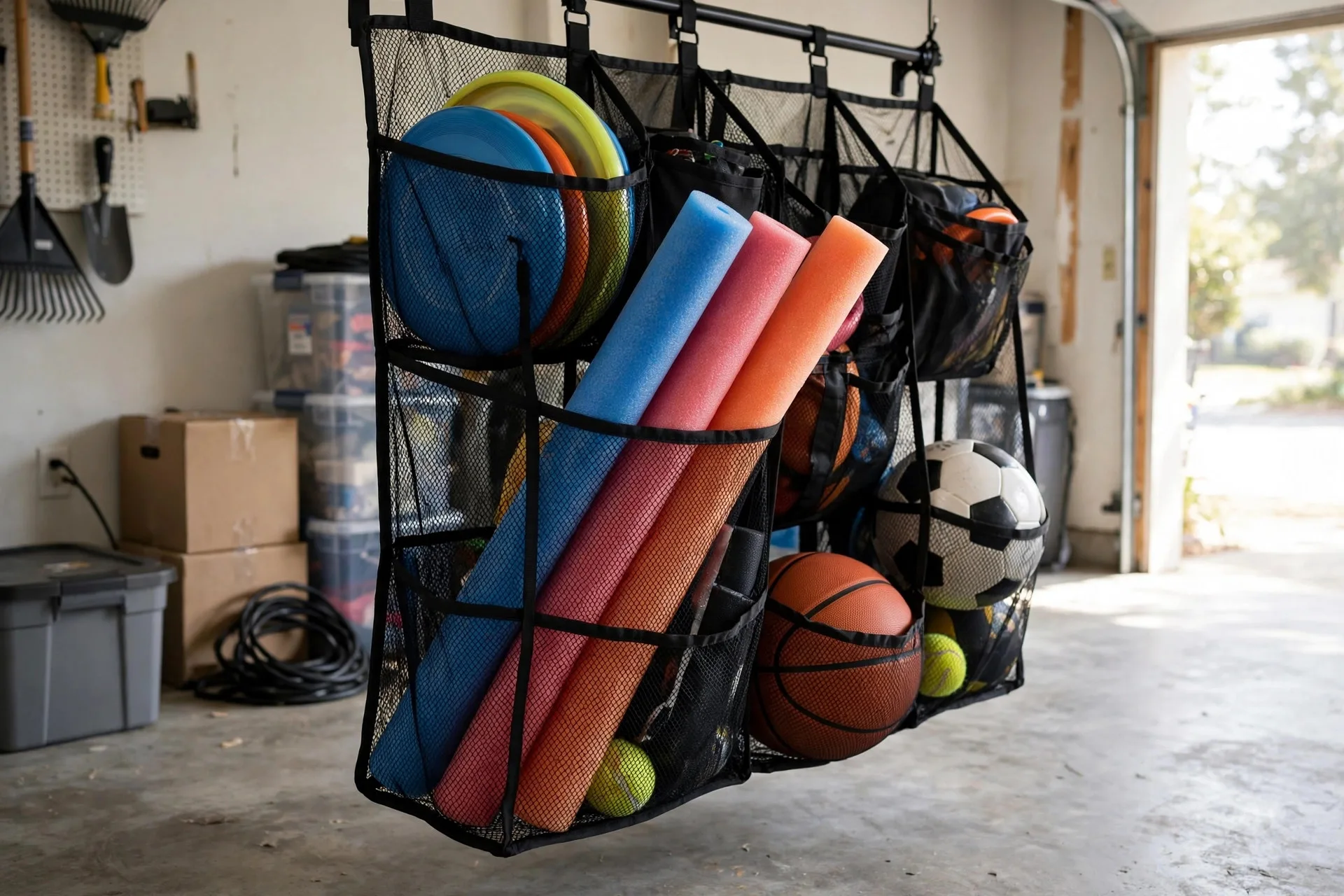
Frisbees, swim noodles and half-deflated balls go in mesh bags on a rack. They stay visible, so nobody buys a second beach ball because the first one was buried somewhere.
Tip: mesh beats solid bags here — wet swim gear dries out instead of going musty in a closed bin.
13. Scooter rack against the wall
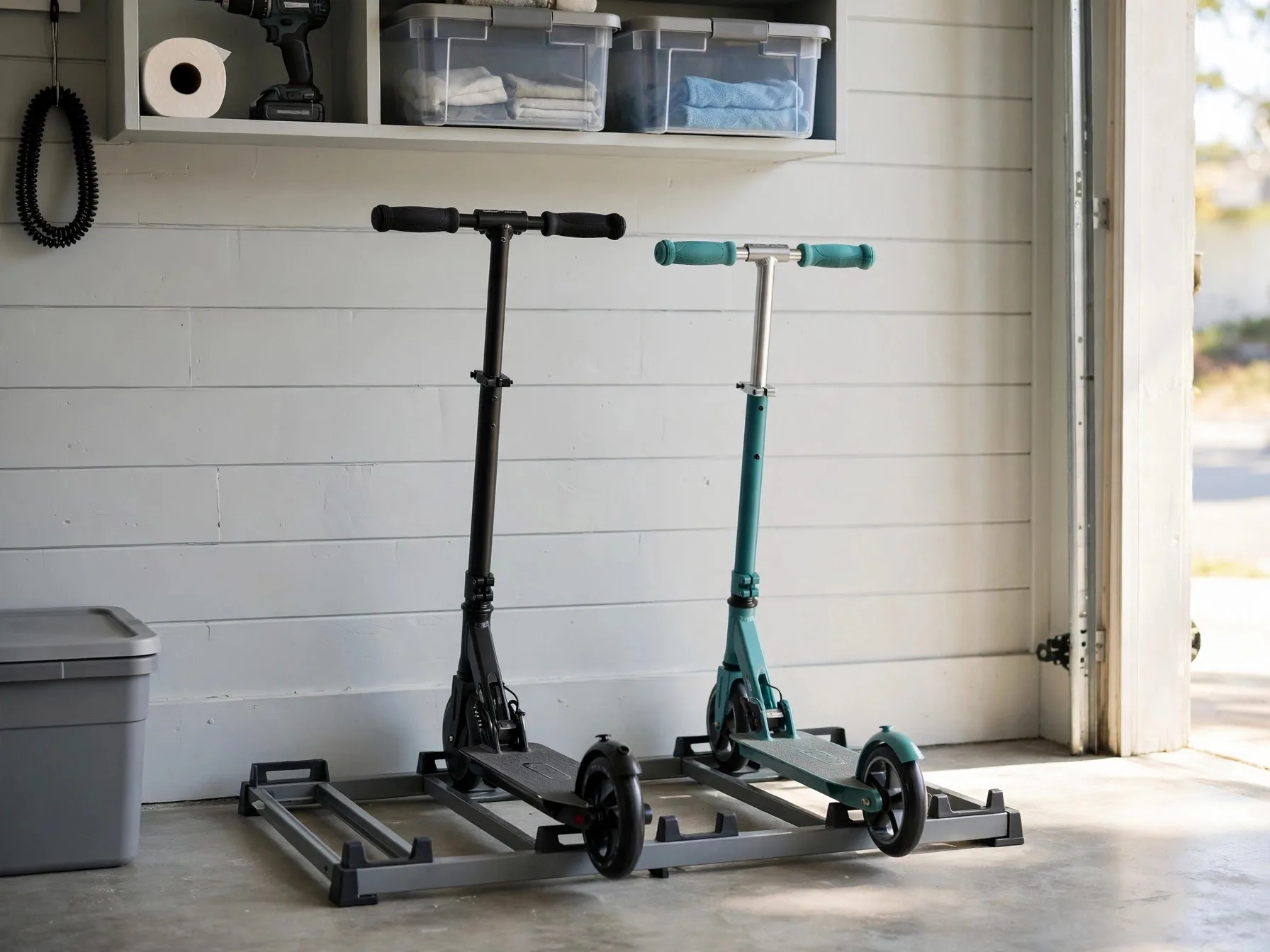
A floor rack slots two or three scooters upright along the wall instead of sprawled across the floor where the car needs to go. Scooters are the number-one floor offender in family garages.
Tip: put the rack at the room’s end, not by the door — scooters by the door block the exit and become a trip hazard.
14. Cleat tray by the drop zone
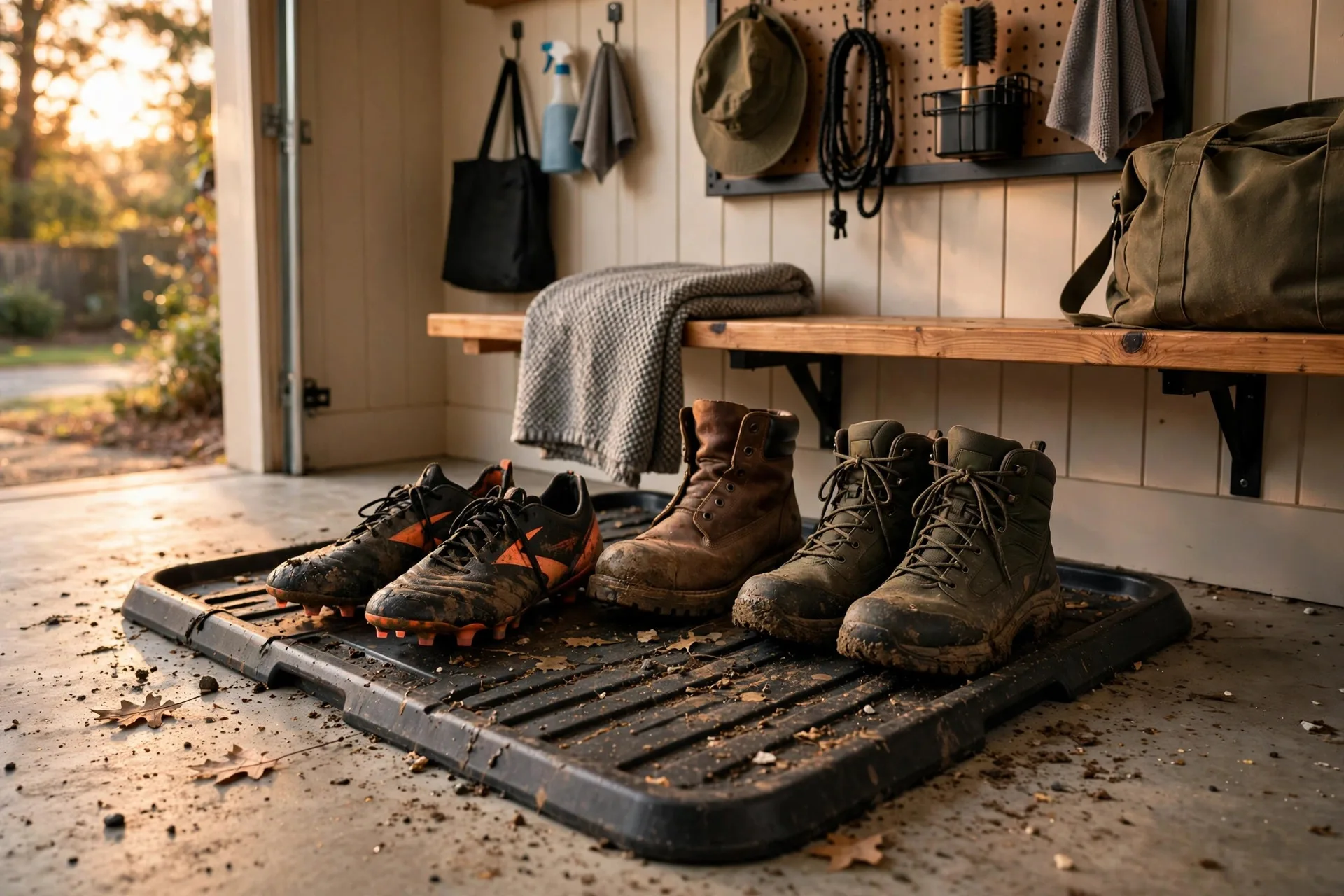
A boot tray catches mud from cleats and boots right at the drop zone. Wet shoes drip-dry over the tray instead of the floor, and the tray rinses clean under a hose.
Tip: size the tray for two pairs, not one — siblings arrive at the same time and the second pair always lands on the floor without a spare spot.
15. One open bin for helmets, gloves and pads
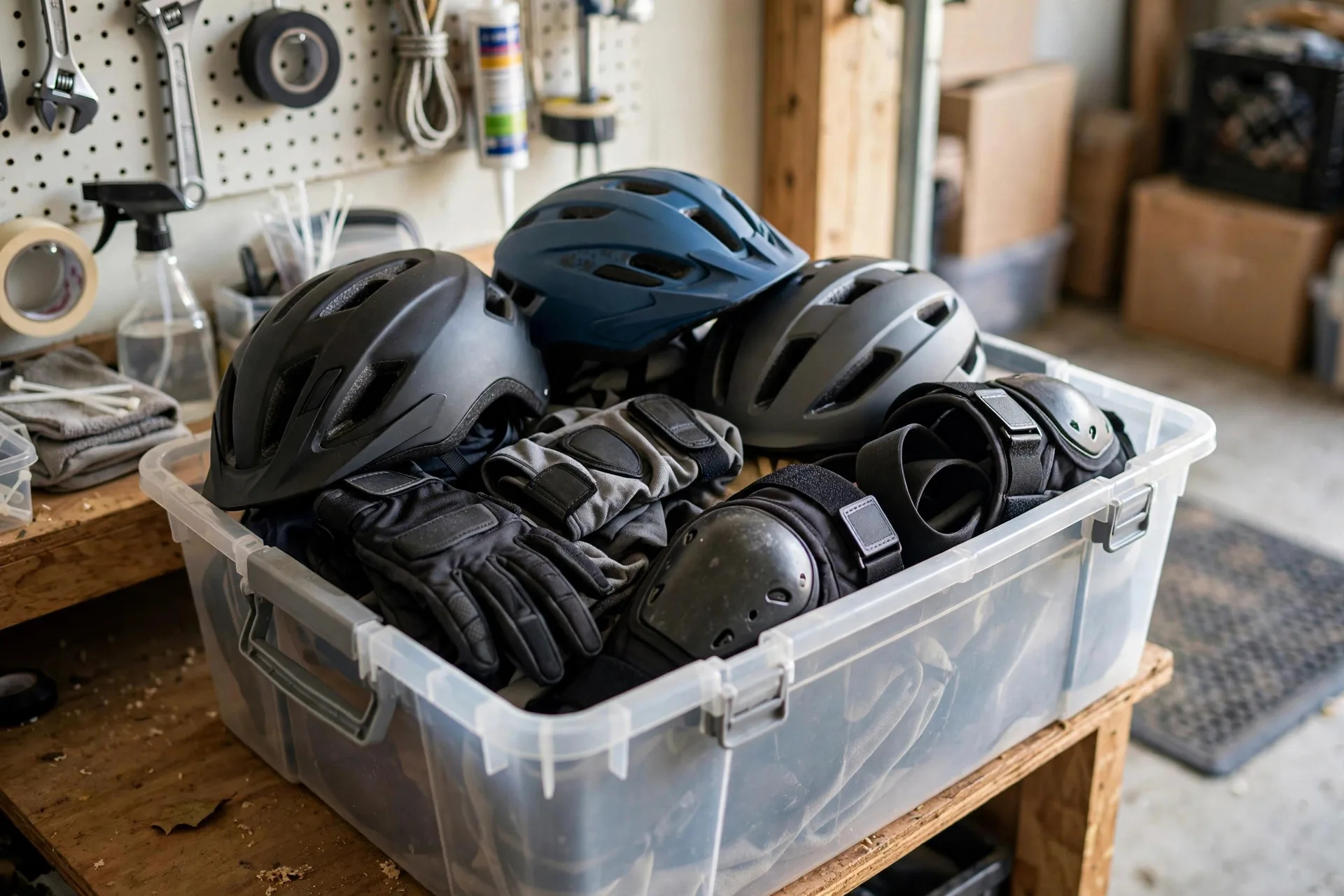
Helmets, gloves and pads land in one open bin or they do not land at all. The rule works because there is no second option — an open bin with a clear “everything here” job beats any elaborate system kids ignore.
Tip: no lid, no liner, nothing to fold or close — every extra step is an excuse for gear to end up on the floor.
Zone 4: Workshop corner
Tools deserve a corner that works like a workshop, not a junk drawer with walls. Keep the workshop compact — one bench, one chest, one charging shelf — and it stays usable instead of sprawling.
16. Folding workbench against the wall
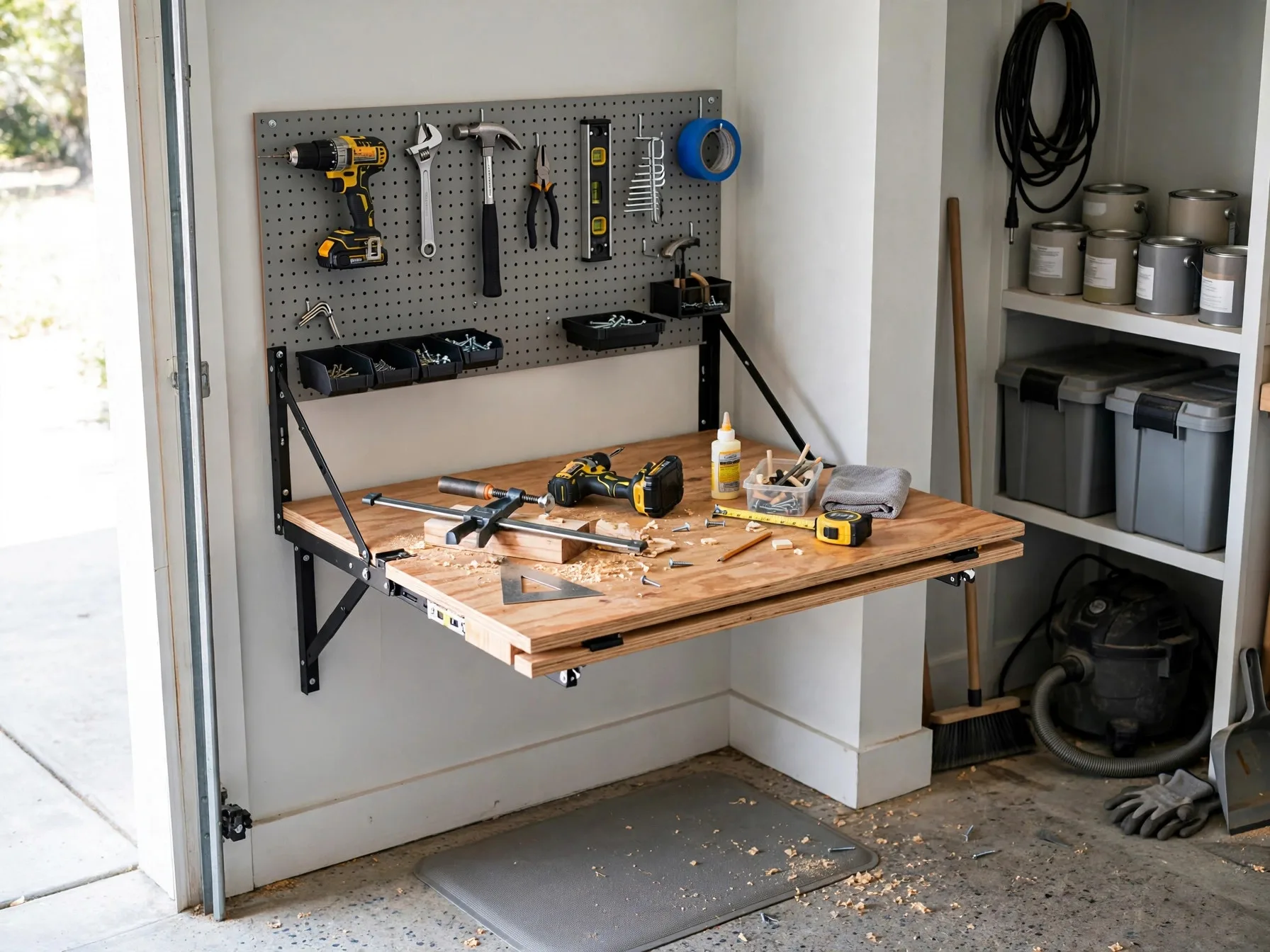
A wall-mounted bench drops down for projects and folds flat when you are done, so the workshop never eats floor permanently. It gives you a real work surface without dedicating four square metres to one.
Tip: a 90 by 45 centimetre top handles most home repairs; anything bigger needs the floor anyway.
17. Tool chest with foam outlines
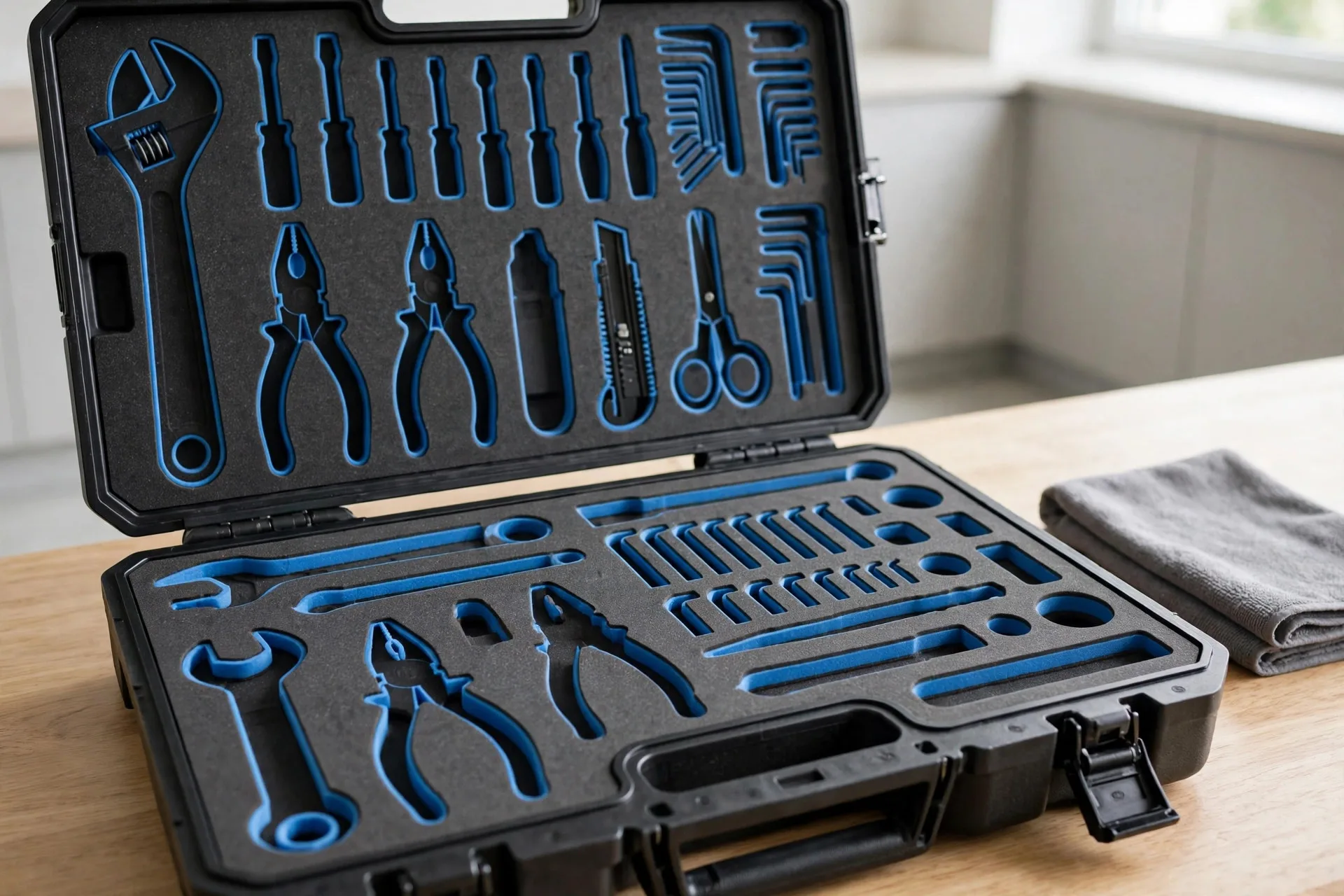
Every tool gets a traced foam home. A missing tool shows as an empty silhouette, so it goes back where it belongs instead of vanishing into the car’s boot or the garden shed.
Tip: trace only the tools you actually use weekly; rarely used tools get a second, less prime drawer.
18. One battery charging shelf
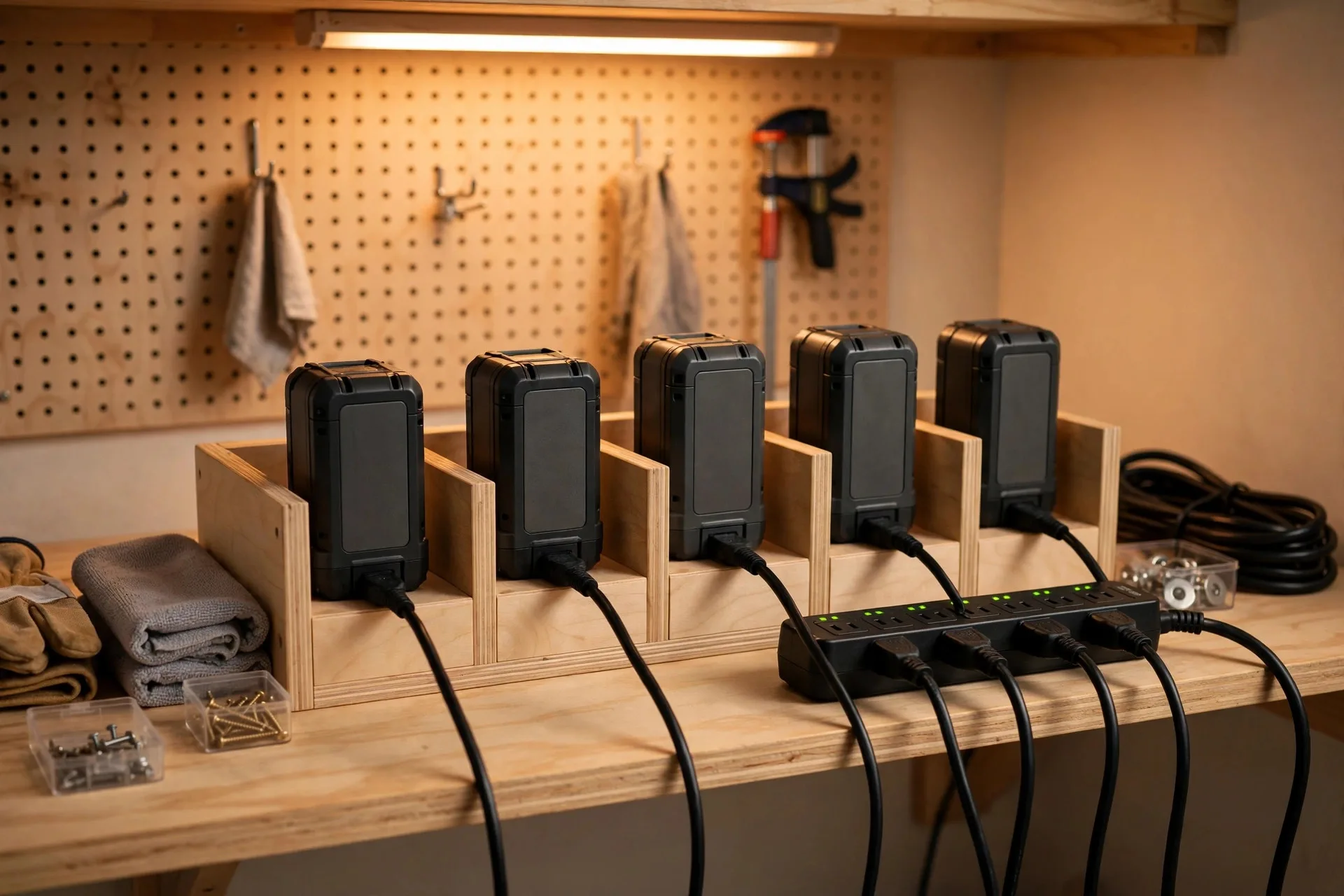
A power strip plus labeled bays for drill batteries on one shelf ends the great charger scatter. No chargers on the bench, no batteries dead in a drawer somewhere — everything charges in one place and comes back to it.
Tip: label each bay with the battery’s tool (“drill”, “trimmer”) — batteries migrate between tools and the bay should say where it belongs.
19. Small-parts jars on a rail
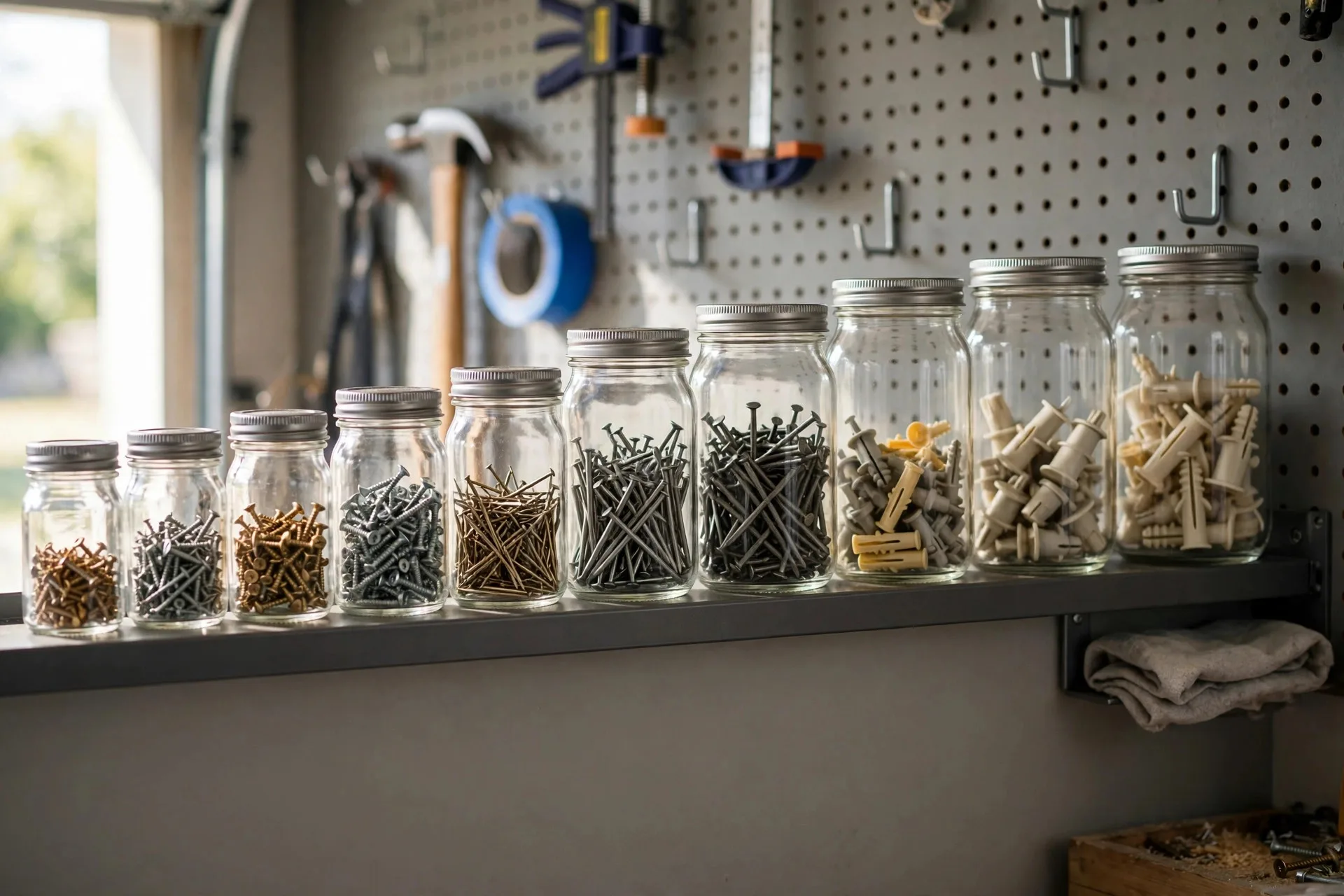
Jars of screws, nails and wall plugs sit on a shelf rail sorted by size. You see what you have before you buy more, and the rail keeps the jars from creeping across the shelf.
Tip: use wide-mouth jars — narrow necks make fishing out the last screws a job nobody wants.
20. Mounted safety corner
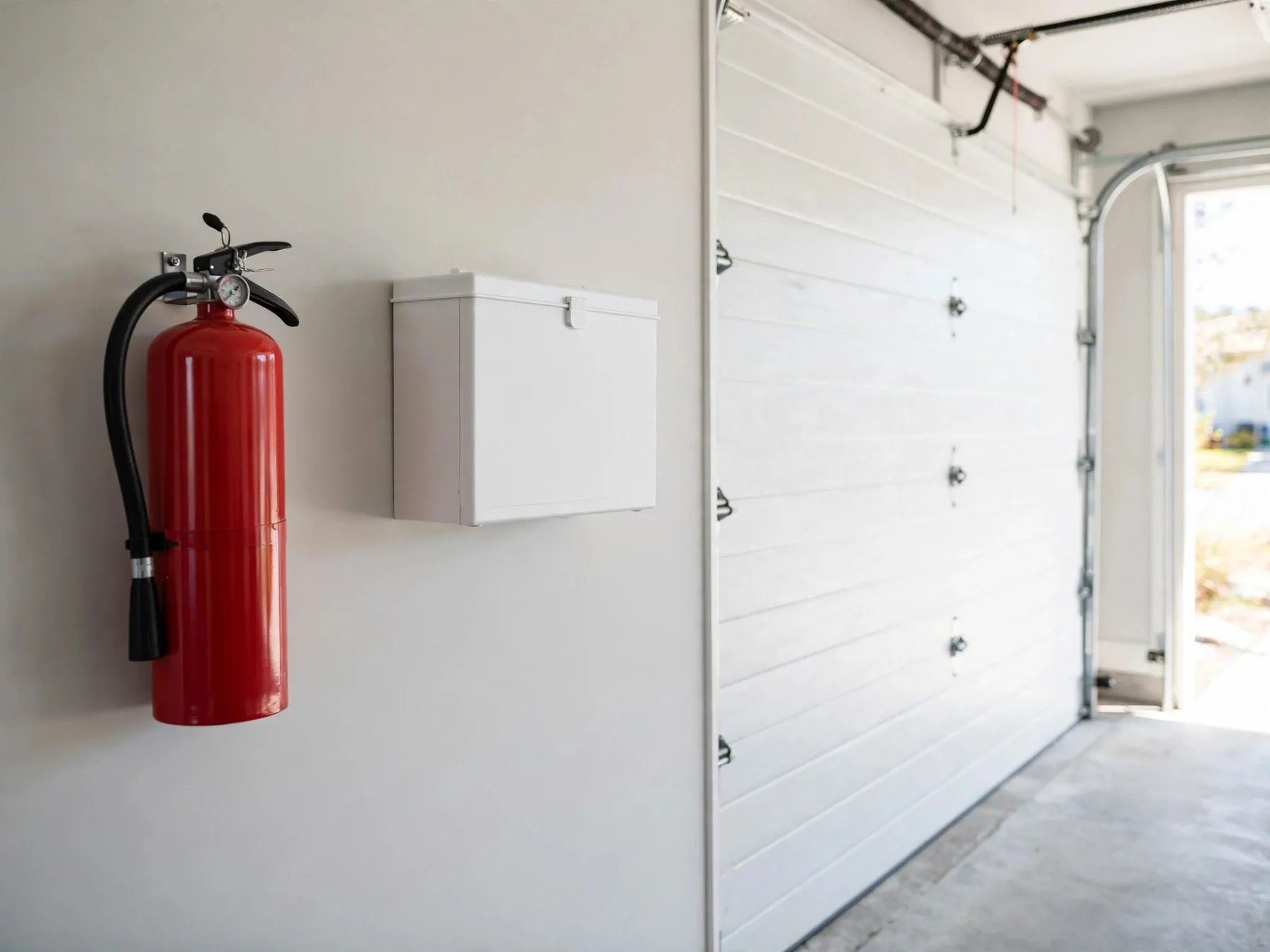
A fire extinguisher at shoulder height by the door and a first-aid kit on the wall stay visible and reachable. Safety kit buried behind bins is decoration, not equipment — it earns its wall spot permanently.
Tip: check the extinguisher gauge once a year when you do the seasonal bin rotation; the reminder is already built in.
Zone 5: Seasonal and upkeep
A garage reorganises itself all year if you never rotate. These five ideas build the rhythm that keeps the zones working: rotate twice a year, reset quarterly, and cap what can live in the room.
21. Rotate seasonal bins twice a year
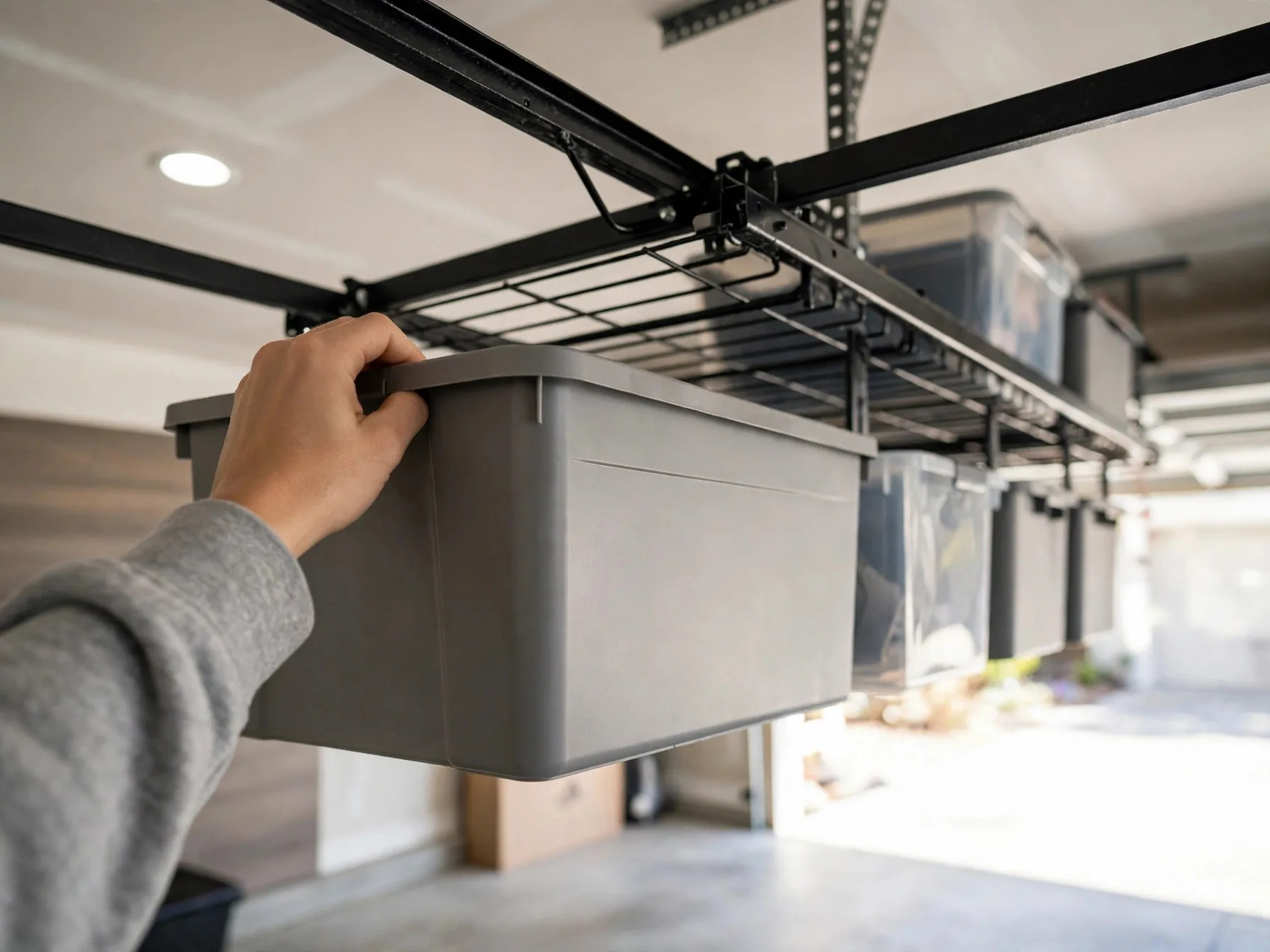
Spring and summer bins come down, winter bins go up on the rack, all in one weekend. The swap takes an afternoon, not a season — and the bins you reach for are always the ones at hand.
Tip: do the rotation when the clocks change; a built-in reminder beats a good intention every time.
22. Keep a car-care caddy by the car
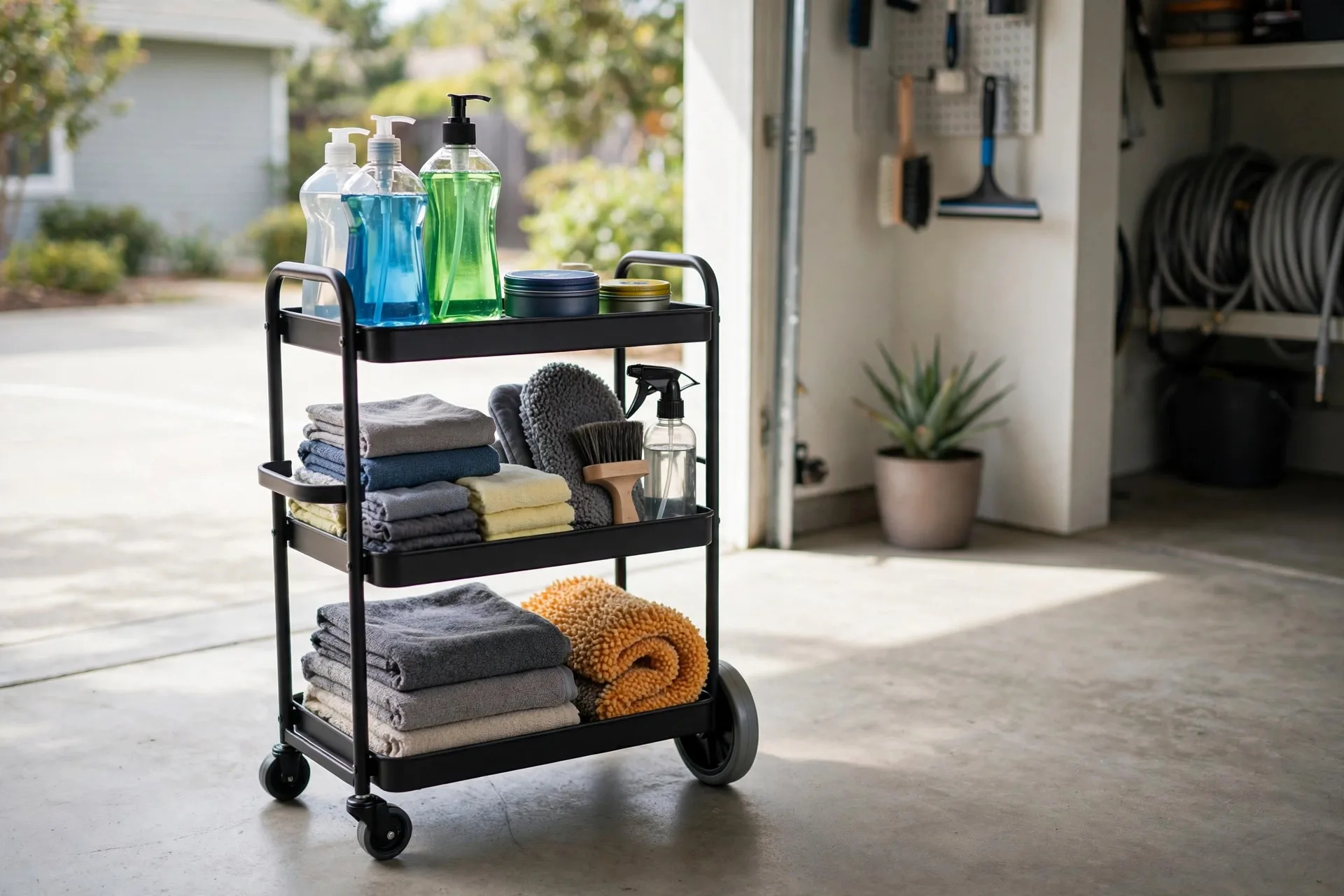
Wash soap, wax, a tyre gauge and microfibre cloths live in one caddy with a handle, parked by the parking box. Car care happens more often when the kit is already standing where the car is.
Tip: restock the caddy when you rotate the seasonal bins, so it never runs dry for months at a time.
23. Give holiday decor one shelf boundary
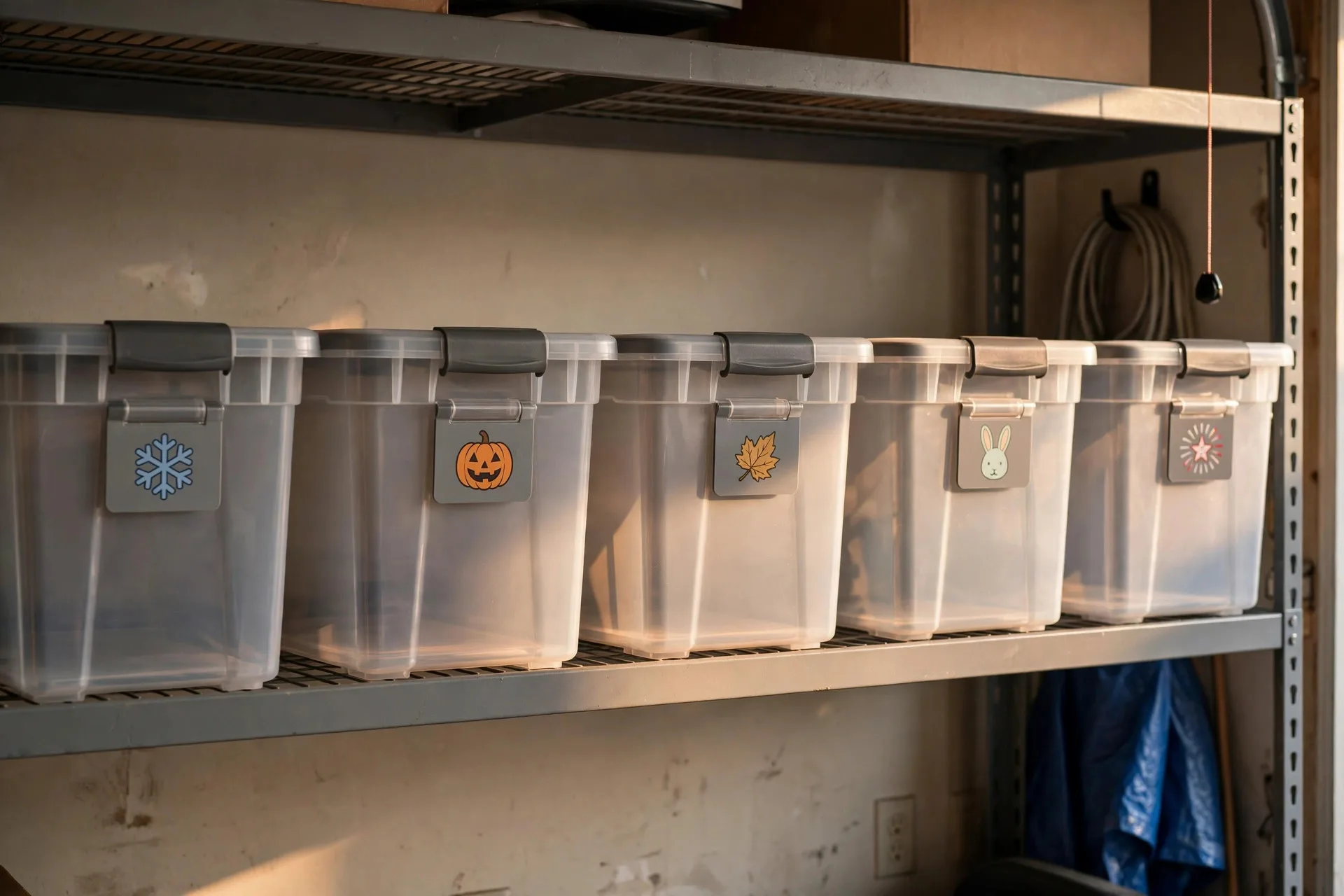
All holiday bins get a single shelf. If they do not fit, something gets donated before anything gets squeezed in — the boundary is the system, and it is what stops one Christmas from colonising the whole rack.
Tip: photograph the bin’s contents before you seal it in January; next December you will shop from the photo instead of the shop.
24. Run a quarterly reset weekend
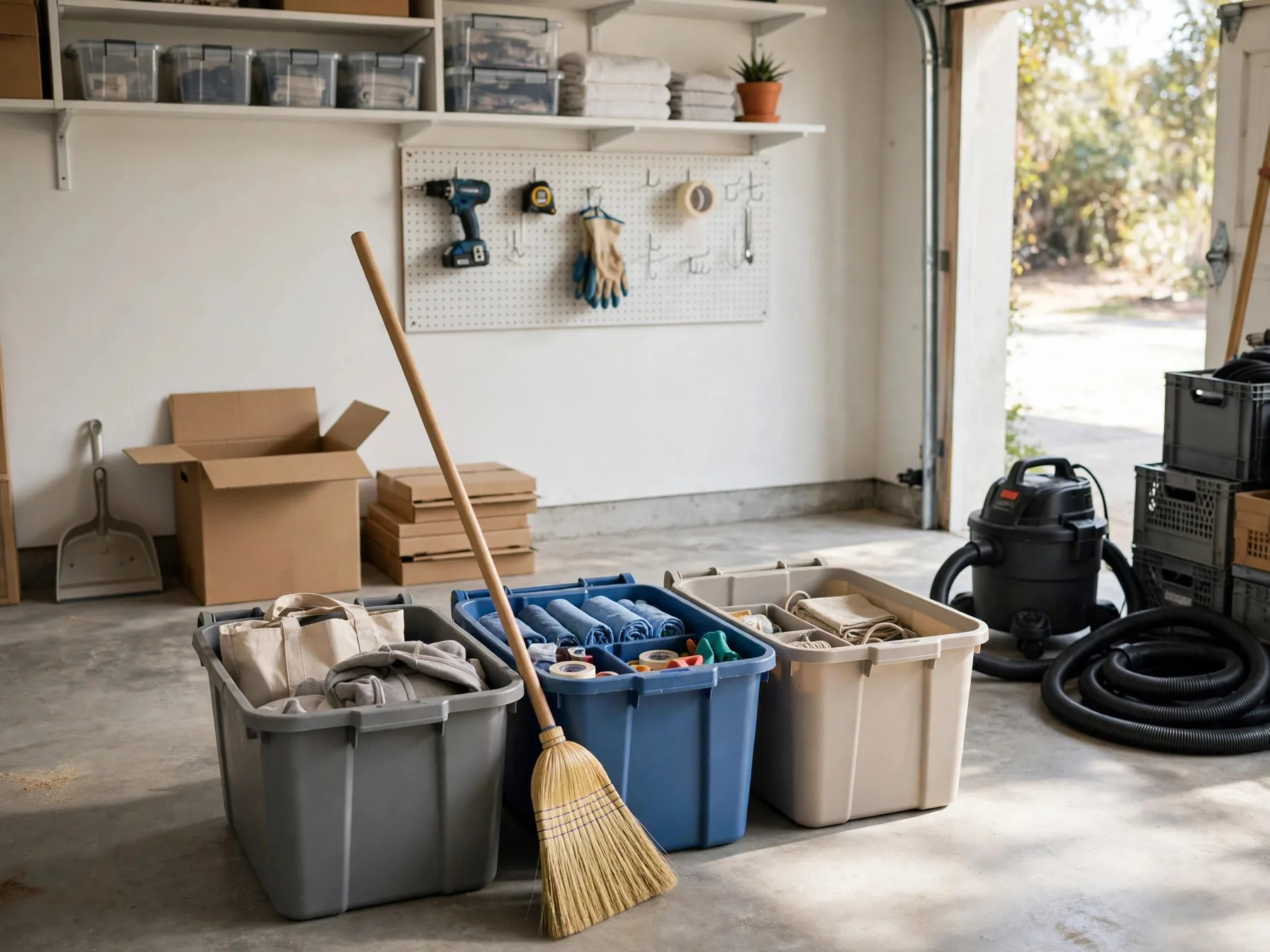
One weekend each season: sweep, mend and relabel one zone. The garage never slides back all at once because you only ever have to fix one zone at a time — four small weekends beat one miserable annual clear-out.
Tip: start each reset at the drop zone, where clutter arrives fastest; if the weekend runs short, the zone that matters most is already done.
25. Label everything so kids can put it back
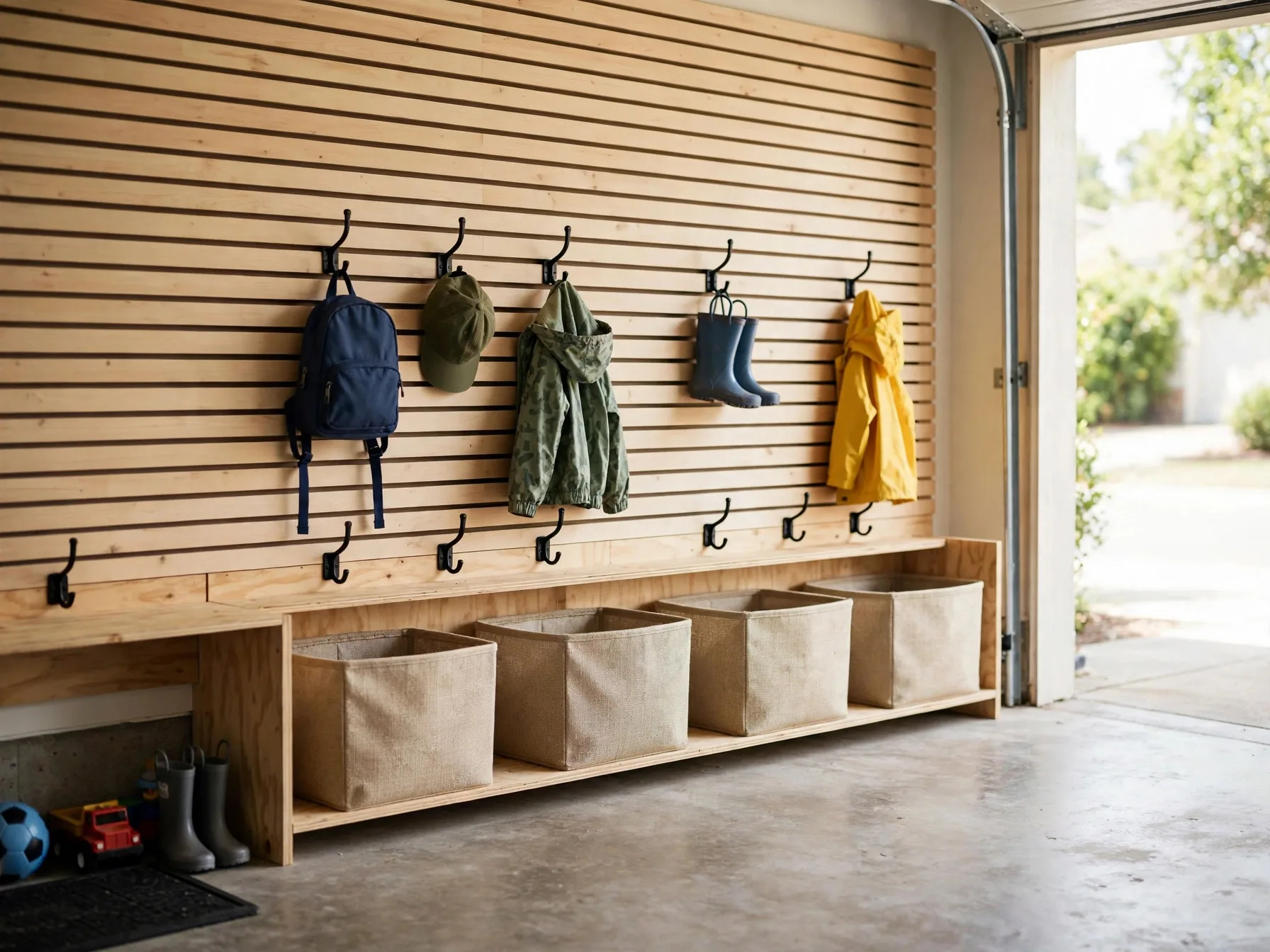
The same label-everything method we used in our pantry organization ideas, applied lower: kids’ gear gets hooks at their height with matching labels, so putting things back needs no reading lesson. When the whole family can read the system, the whole family keeps it.
Tip: add a picture label next to the word for the youngest ones — a ball picture on the ball hook works before they can read “balls”.
Garage organization FAQs
What is the best organization system for a garage?
One system, done in order: sort everything into categories, give each category a zone, store it in matching labeled bins, then hang everything long or awkward on the wall. Walls first, floor second, seasonal up high — the order matters because each step frees space for the next.
What is the most efficient way to organize a garage?
Work in zones: walls first (slatwall, hooks, shelves), then the floor (parking box, drop zone), then seasonal storage up high. Keep the parking box sacred — nothing stored inside it — and give every zone a boundary so clutter cannot quietly expand.
How do you organize a garage on a budget?
Start with painter’s tape for the parking box, a label maker, one set of matching bins and wall hooks before any new furniture. As a rough guide, the basics land under $100; buy bins only after you have zones, never before, or you will fill them with the same clutter you meant to sort.
How do you keep a garage organized long term?
Three habits do the heavy lifting: label everything so the whole household can put things back, run a quarterly reset weekend on one zone, and rotate seasonal bins twice a year. Containment matters too — the parking box and shelf boundaries give every category physical limits that survive busy months.
Keep reading
Another room, the same method. Our 35 pantry organization ideas apply the label-everything system shelf by shelf, and our 35 closet organization ideas run the same zone approach inside a wardrobe. Reset one room, then the next.
Walls first, parking box second, labels always. Start with one zone this weekend — the rest of the garage will follow.