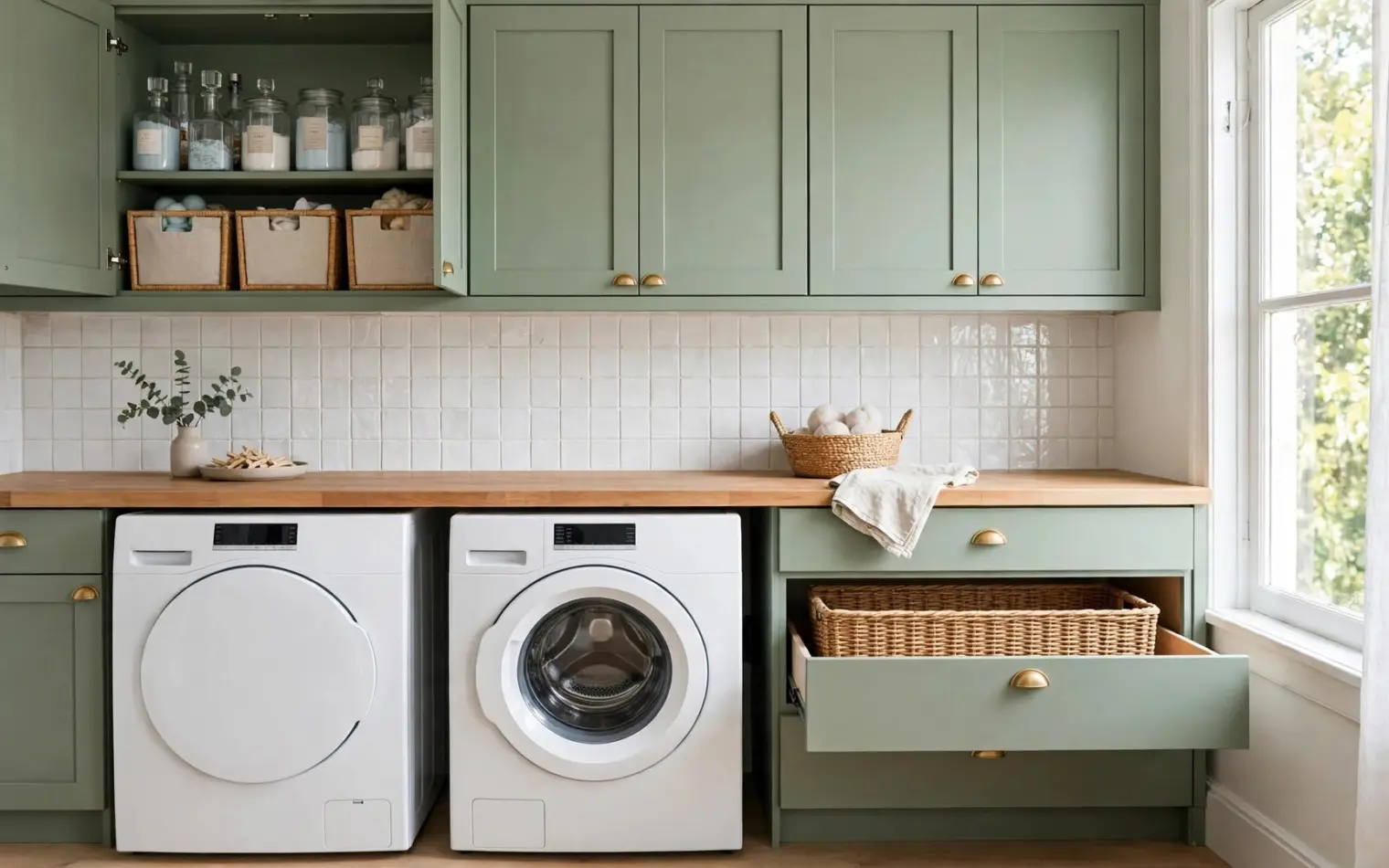
The cheapest laundry room cabinets for a small space are a freestanding over-washer unit or a single ready-to-assemble wall cabinet, many under $150. For a medium room, a ready-to-assemble upper pair gives the best value, and for a large room, a full upper-plus-base wall with a folding counter is the cheapest per cabinet. These 25 laundry room cabinets ideas cover upper, base, tall and renter-friendly styles, so you can find the one that fits your room, your machines and your budget.
Thank you for reading this post, don’t forget to subscribe!Part of our guide: 25 Garage Organization Ideas for a Clutter-Free Garage
Laundry room cabinets hide the bottles, baskets and clutter that open shelves show off. The trick is matching the cabinet type to the size of your room and the size of your budget, because the cheapest cabinet for a tiny closet is not the cheapest one for a full laundry room. These 25 laundry room cabinets ideas cover uppers, bases, tall utility cabinets and renter-friendly picks, with the measurements and costs that matter before you buy.
The cheapest laundry room cabinets for every size space
Start here: the cheapest cabinet type for your room size, before you look at the 25 ideas below.
| Room size | Cheapest cabinet pick | What it costs |
|---|---|---|
| Small | Freestanding over-washer unit or a single ready-to-assemble wall cabinet | Many under $150 |
| Medium | A ready-to-assemble upper pair in a stock finish | Best value per cabinet |
| Large | A full upper-plus-base wall with a folding counter | Cheapest per cabinet as ready-to-assemble boxes |
Upper cabinets: storage above the machines
1. Start with the layout: uppers only, full wall, or one tall cabinet
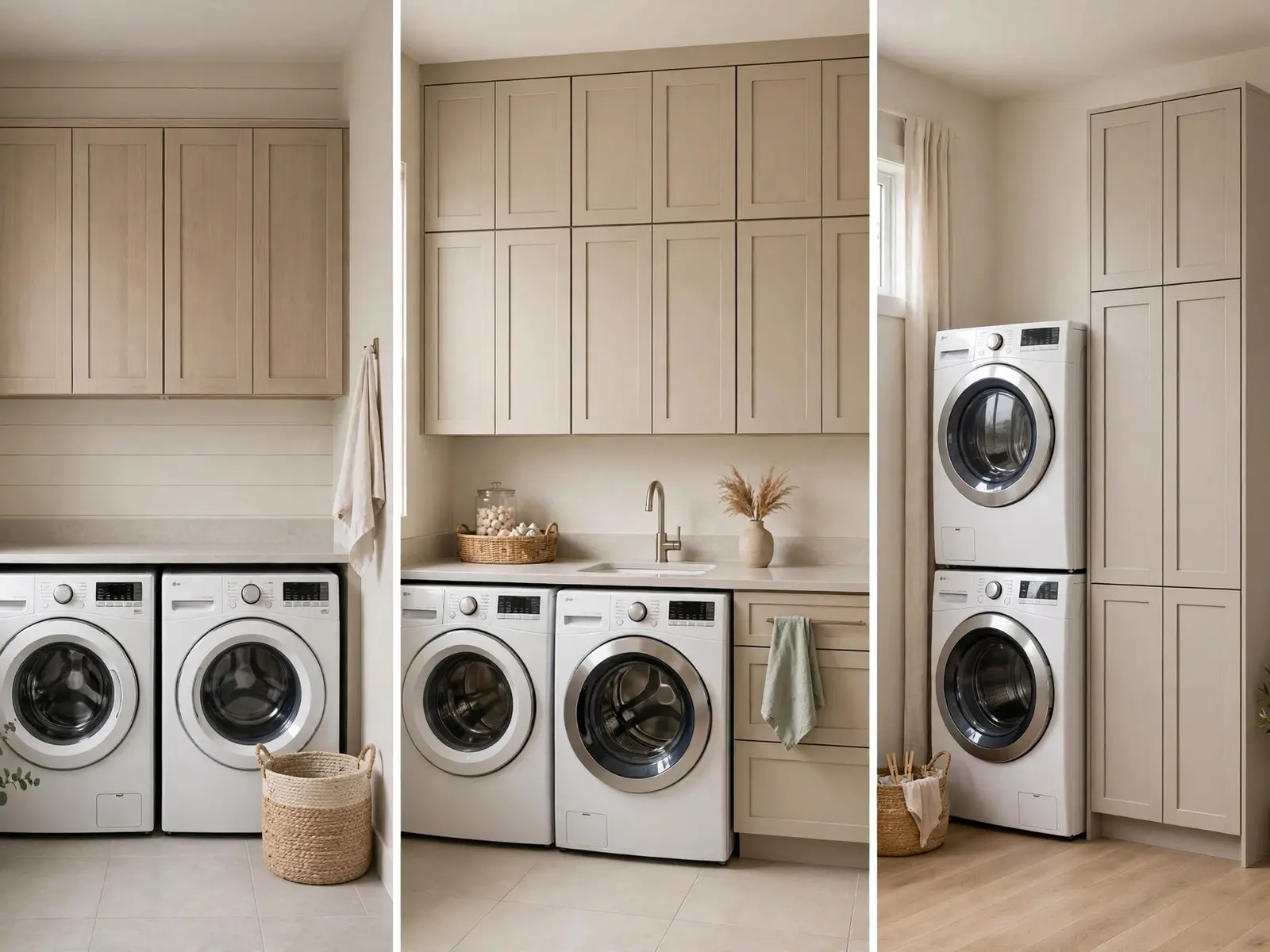
Before you buy a single cabinet, pick one of three layouts. Upper cabinets alone suit a small nook or a closet laundry, where one or two wall boxes hold everything you use every week. A full wall of uppers and bases suits a large room, with a folding counter across the machines and storage below it. One tall utility cabinet suits a narrow room, holding brooms, supplies and linens in a single box. Sketch your wall, measure the machines, and choose the layout that leaves a clear path to the washer before you spend anything.
- Sketch the wall and measure the machines first
- Pick one layout before you buy any boxes
- Leave a clear path to the washer and dryer
2. Classic shaker upper cabinets above the machines
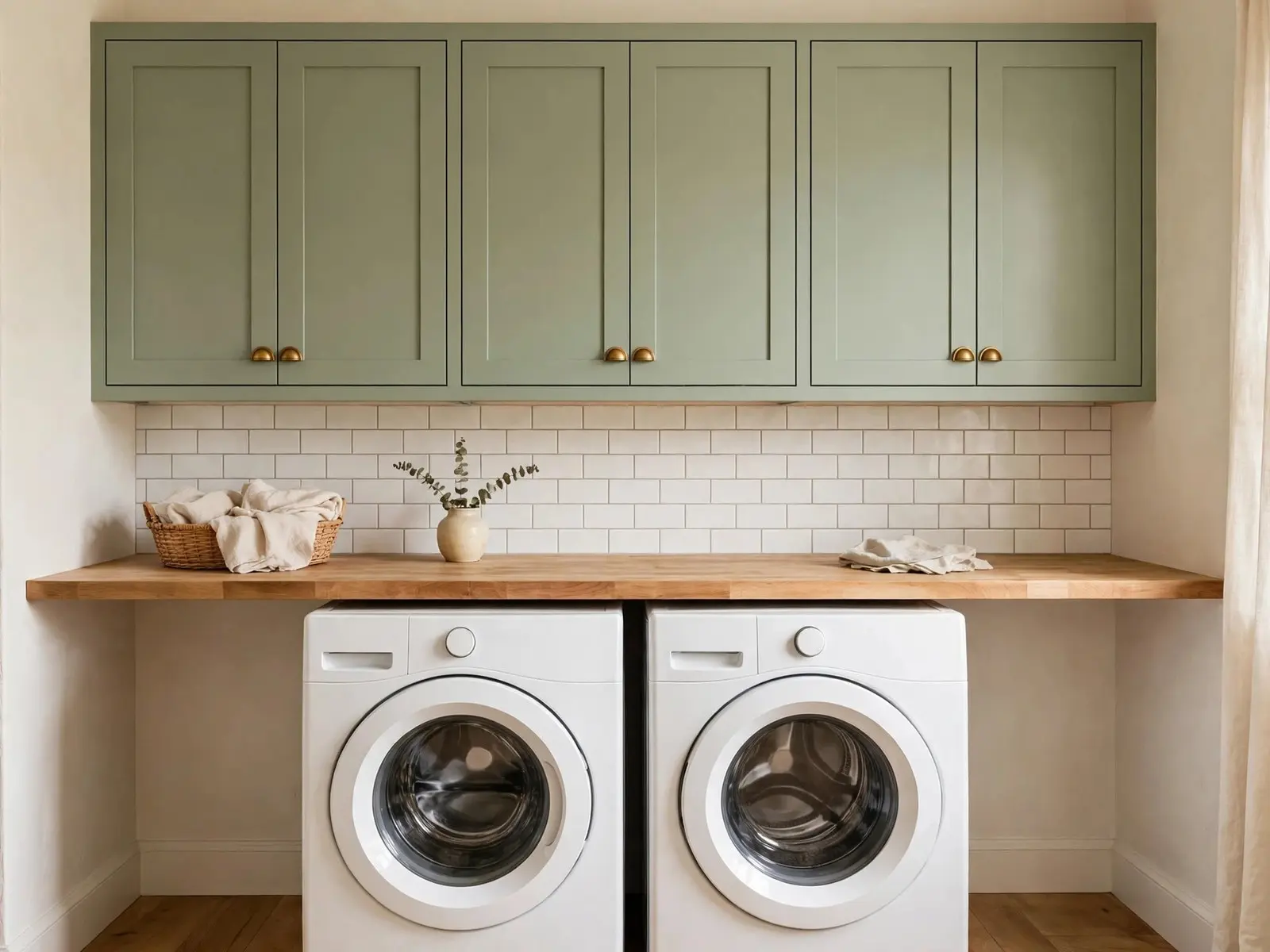
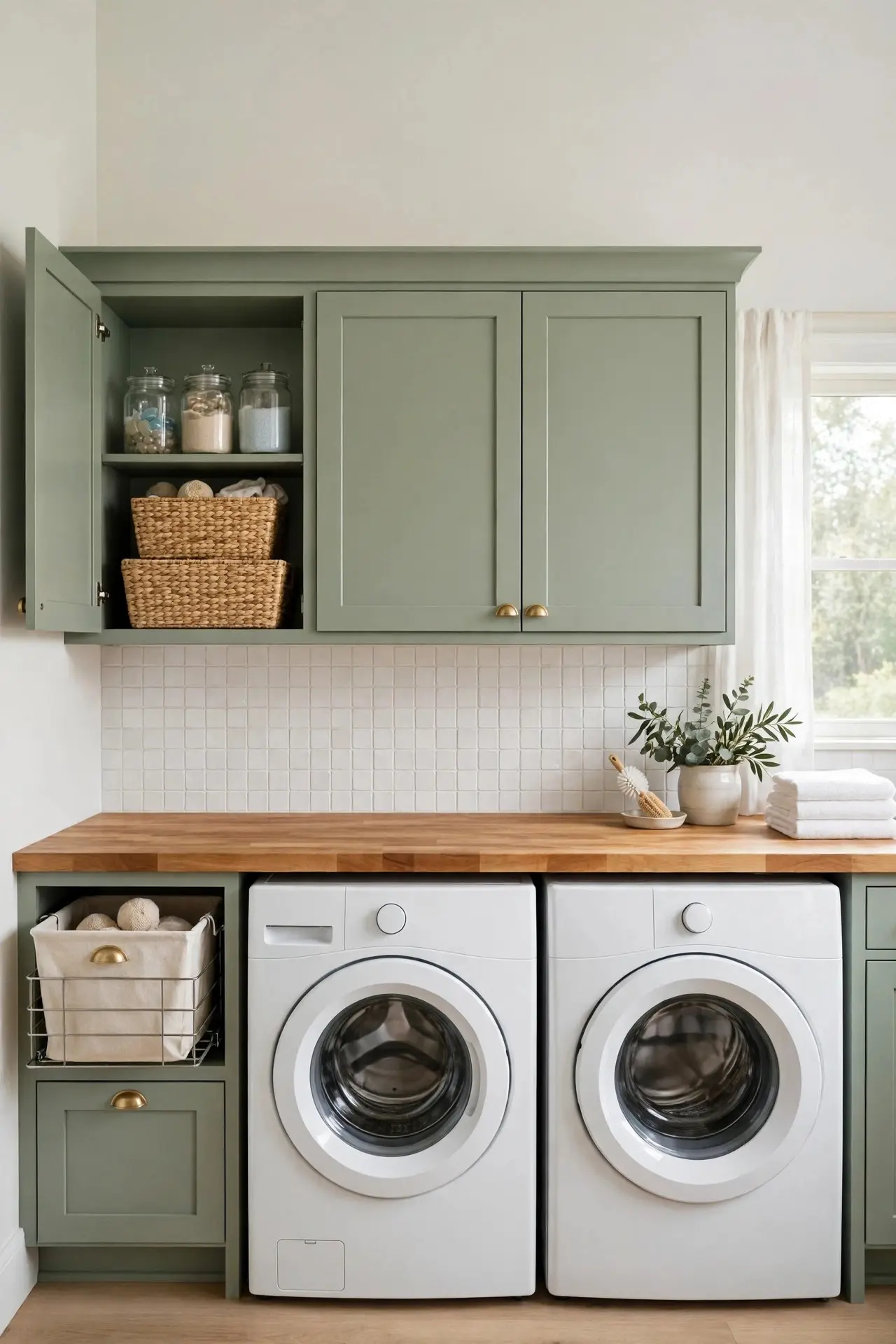
Shaker upper cabinets are the safest pick above a washer and dryer, because the flat paneled doors suit almost any laundry room and never look dated. Hang two or three boxes across the machine wall, leaving 18 to 24 inches above a top-loading lid so it opens fully. Inside, keep detergent, stain spray and dryer sheets at eye level, and put rarely used items on the top shelf. Paint them sage green or soft white for a calm look, and add simple cup pulls in brass or matte black to finish them.
- Leave 18 to 24 inches above a top-loading lid
- Keep daily supplies at eye level
- Add simple cup pulls in brass or matte black
3. Upper cabinets with labeled bins and decanted detergent
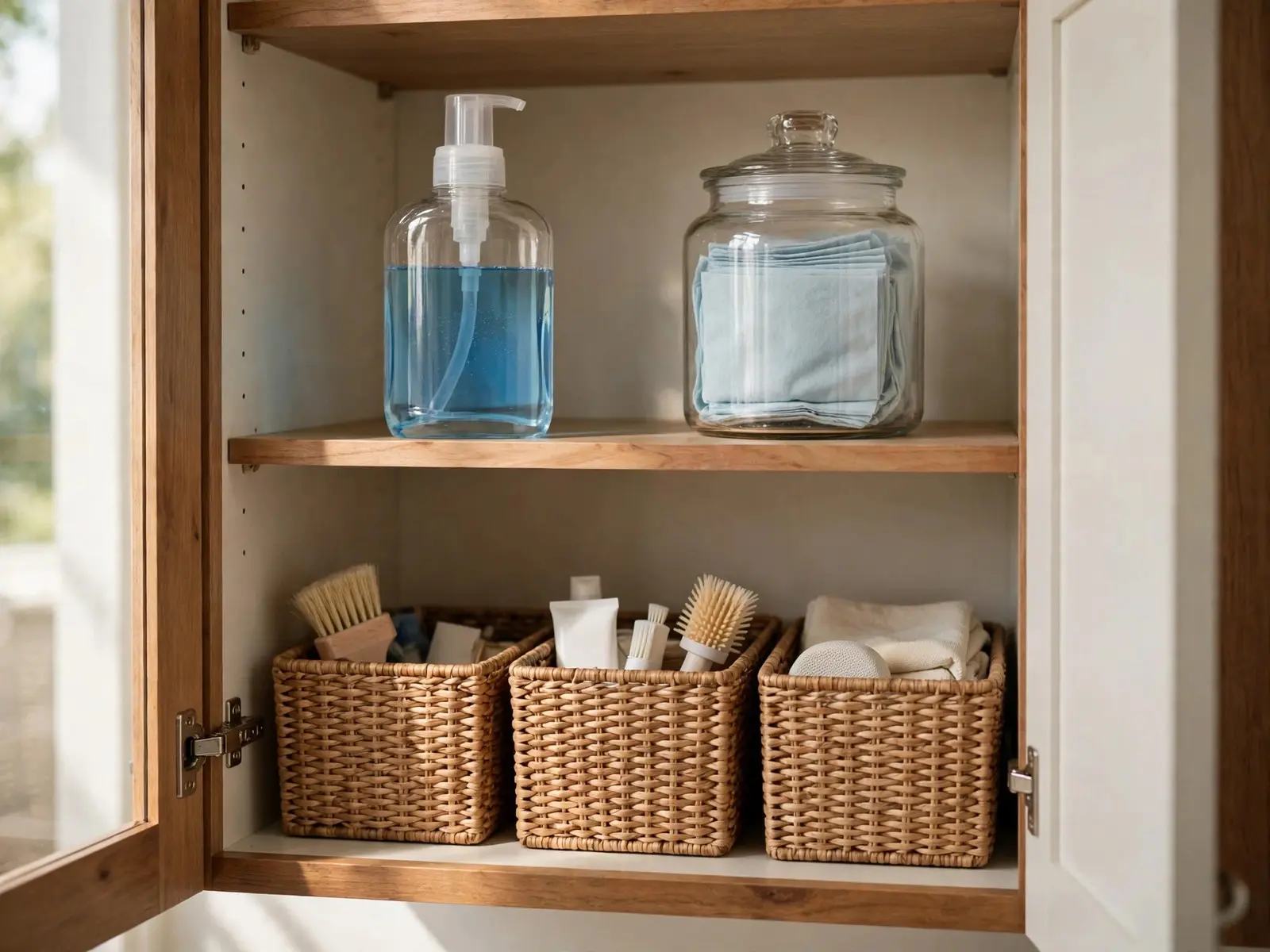
Open an upper cabinet and you should see what you need in one glance. Decant detergent into glass jars, keep dryer sheets in a jar of their own, and sort stain supplies into small labeled bins by job. Use one bin for whites, one for colors and one for stain treatment, so nobody hunts through bottles. Keep the heaviest jars on the lowest shelf and the lightest bins up high. The system takes an afternoon to set up, and it turns a jumbled cabinet into the tidiest shelf in the house.
- Decant detergent into glass jars
- Sort stain supplies into labeled bins by job
- Keep the heaviest jars on the lowest shelf
4. One long upper cabinet run with no gaps
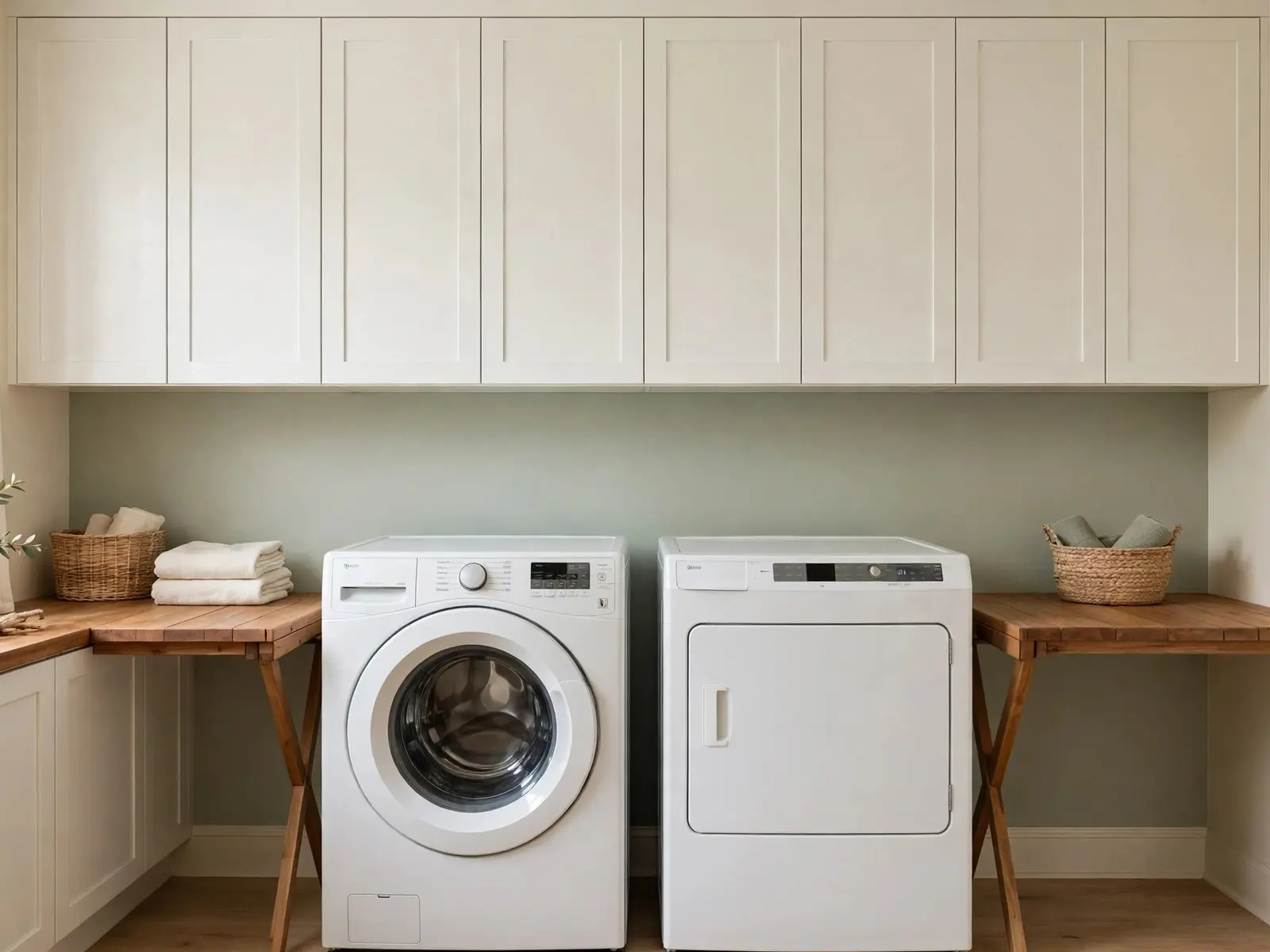
A single long run of upper cabinets, with no gaps between boxes, looks built in and holds far more than scattered single cabinets. Measure the full wall, order boxes that add up to the width, and add a filler strip at the end if the total falls a few inches short. Hang them on a level ledger board so every door lines up, and keep the doors the same style across the run. The unbroken line of doors hides clutter, makes a small room feel wider, and costs little more than buying the boxes one at a time.
- Measure the full wall before ordering
- Add a filler strip if the total falls short
- Hang boxes on a level ledger board
5. Upper cabinets with a glass door for display
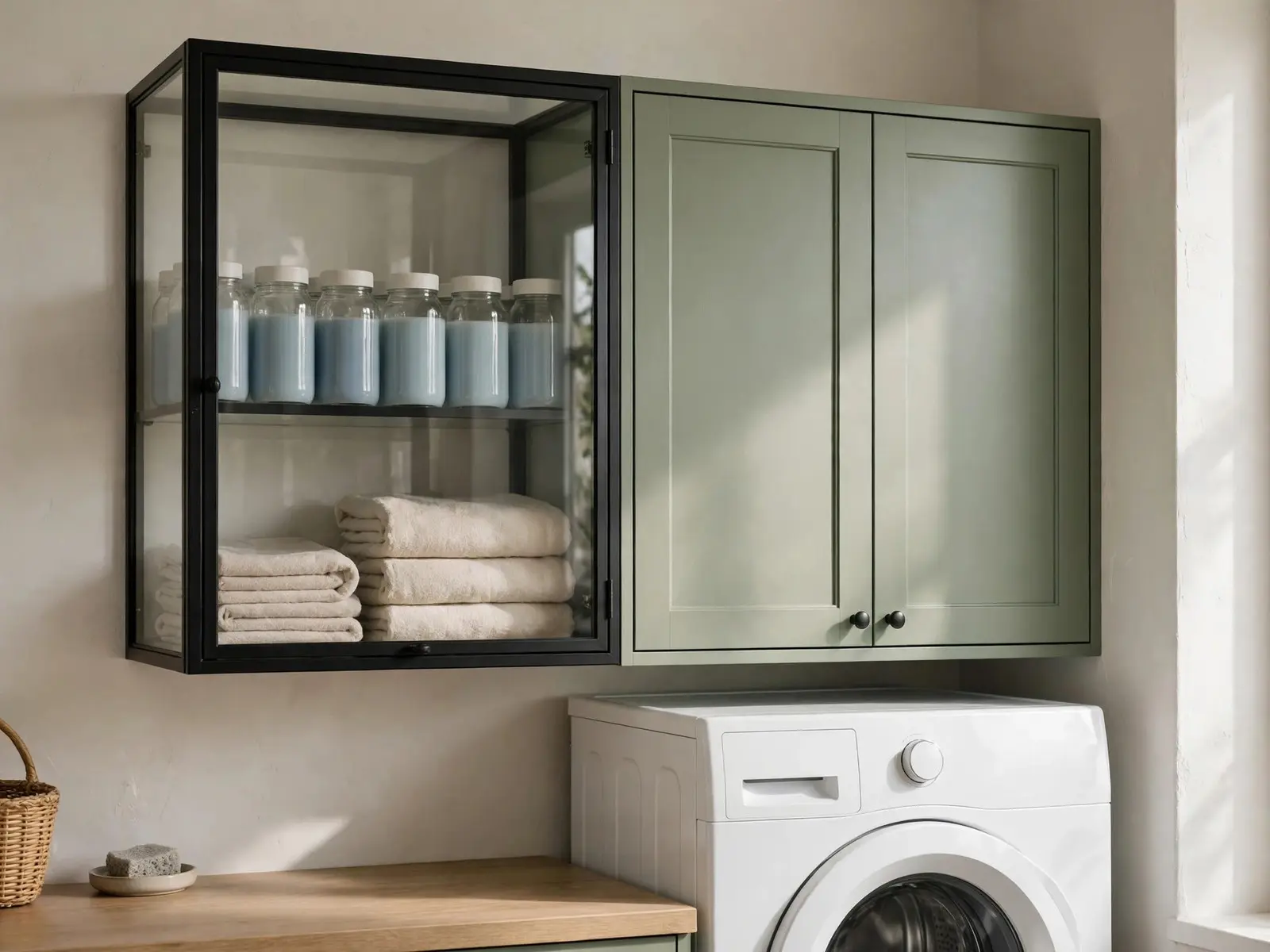
One glass-door upper cabinet breaks up a wall of solid doors and gives you a place to show off the pretty supplies. Use it for matching glass jars of detergent, folded towels in a neat stack, or a small plant that likes humidity. Keep the glass cabinet for display only, and hide the messy bottles behind solid doors next to it. Frosted glass is a good middle ground if you want the light look without showing every jar. One glass door is enough; two or more can make the wall feel busy.
- Use one glass door as an accent
- Keep display jars matching and neat
- Hide messy bottles behind solid doors
6. Open shelving between two upper cabinets
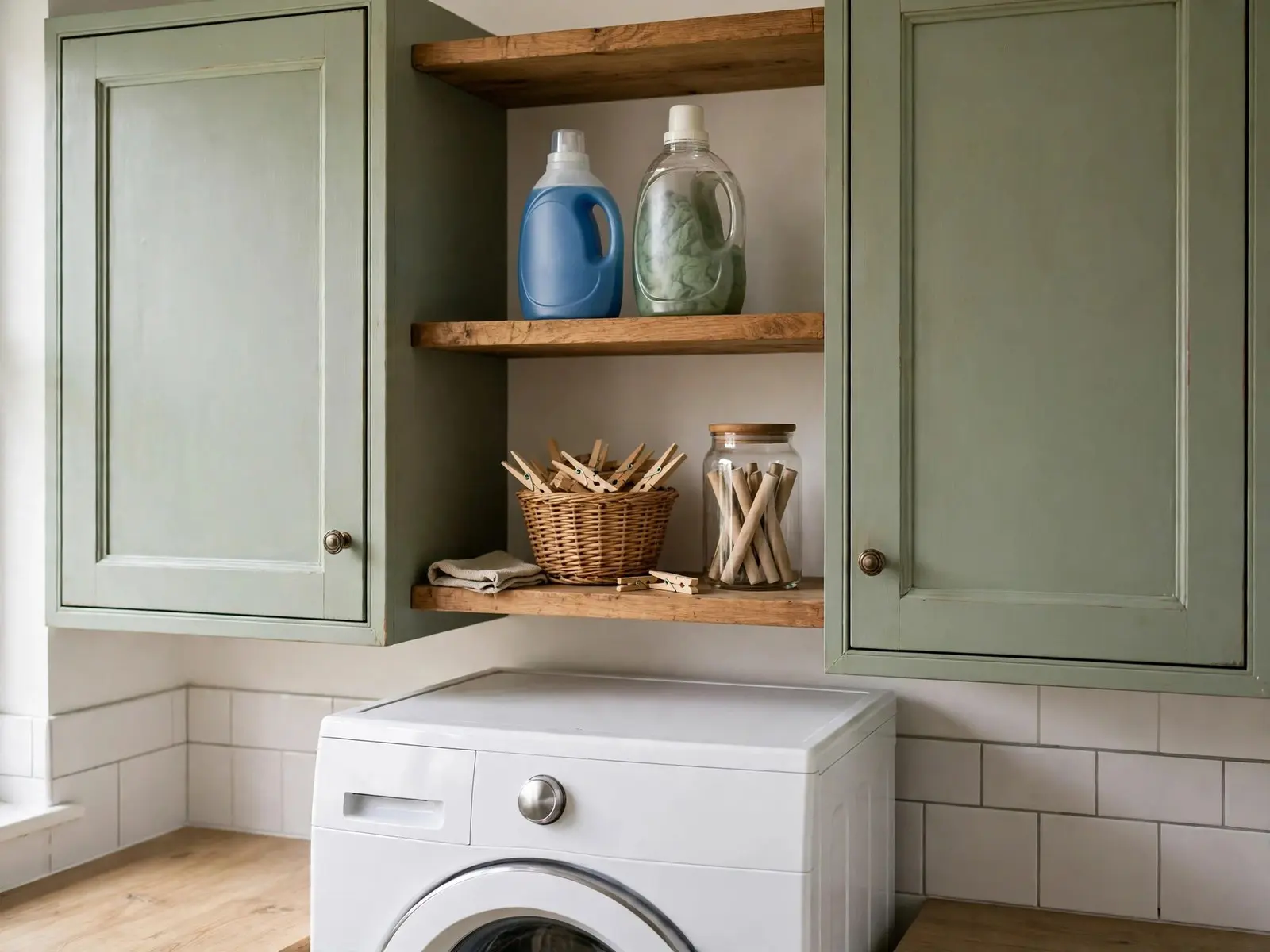
A stretch of open shelving between two upper cabinets keeps everyday supplies within reach without opening a door. Use it for the detergent you grab every load, a small basket of clothespins, and a jar of stain sticks. Keep the shelf to one or two rows so it never turns into a cluttered display, and match the shelf wood to the counter below. The open gap also breaks up a long cabinet run and makes a narrow laundry room feel less boxed in. Wipe the shelf weekly, since open shelves collect lint fast.
- Keep the open shelf to one or two rows
- Match the shelf wood to the counter below
- Wipe the open shelf weekly to clear lint
7. Upper cabinets with under-cabinet lighting
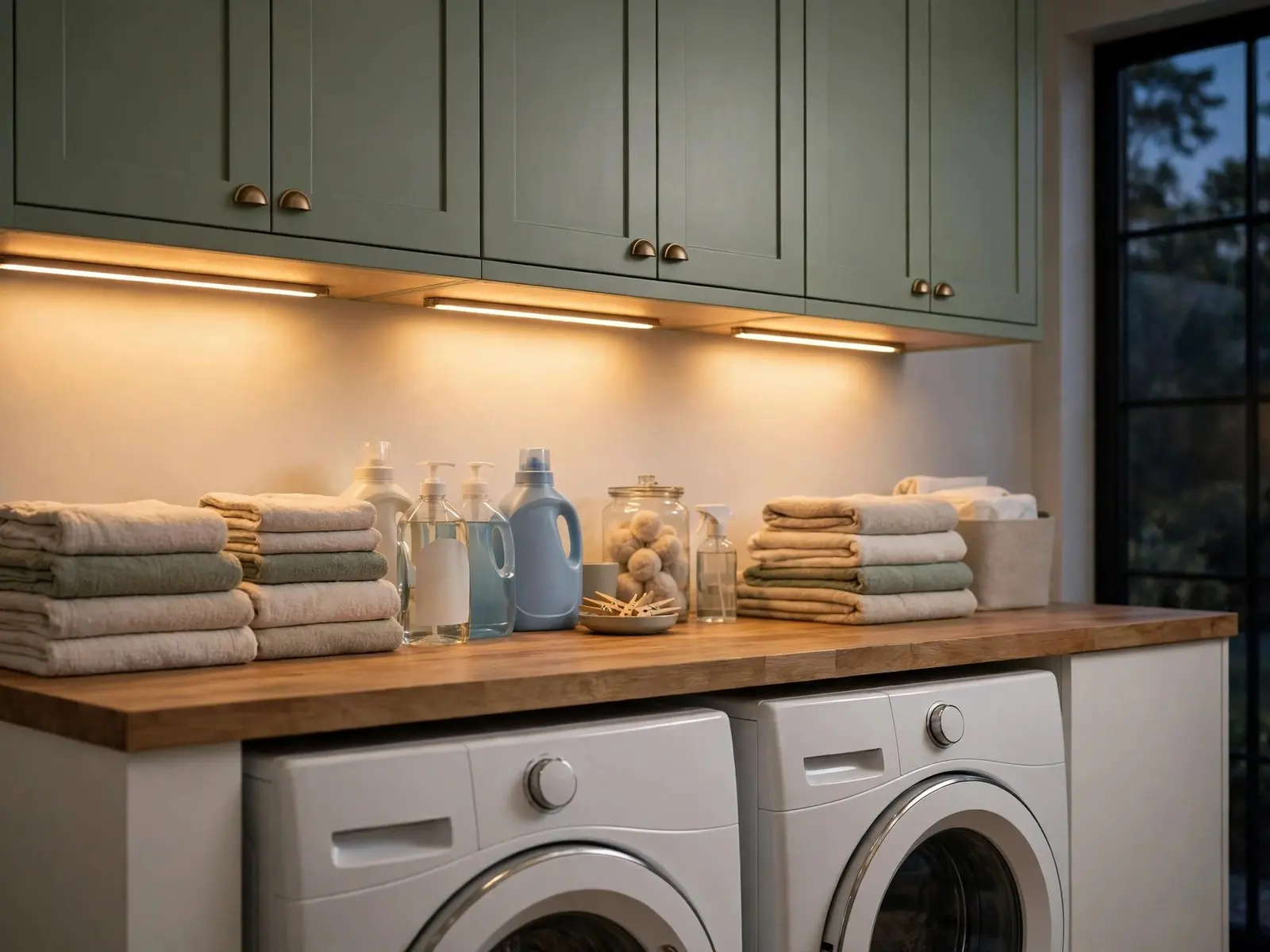
Under-cabinet lighting turns the counter below into a real folding station instead of a shadowy shelf. Stick-on LED bars or slim puck lights mount under the upper cabinets in minutes, and many run on batteries, so no wiring is needed. Pick a warm white light that matches the room, and place one bar over each work zone: sorting, folding and stain treatment. The light also makes it easier to read care labels and spot stains before a load goes in. It is one of the cheapest upgrades in this list, and renters can take the bars when they move.
- Pick warm white LED bars
- Place one bar over each work zone
- Choose battery bars if you cannot wire lights
8. Shallow upper cabinets for a tight wall
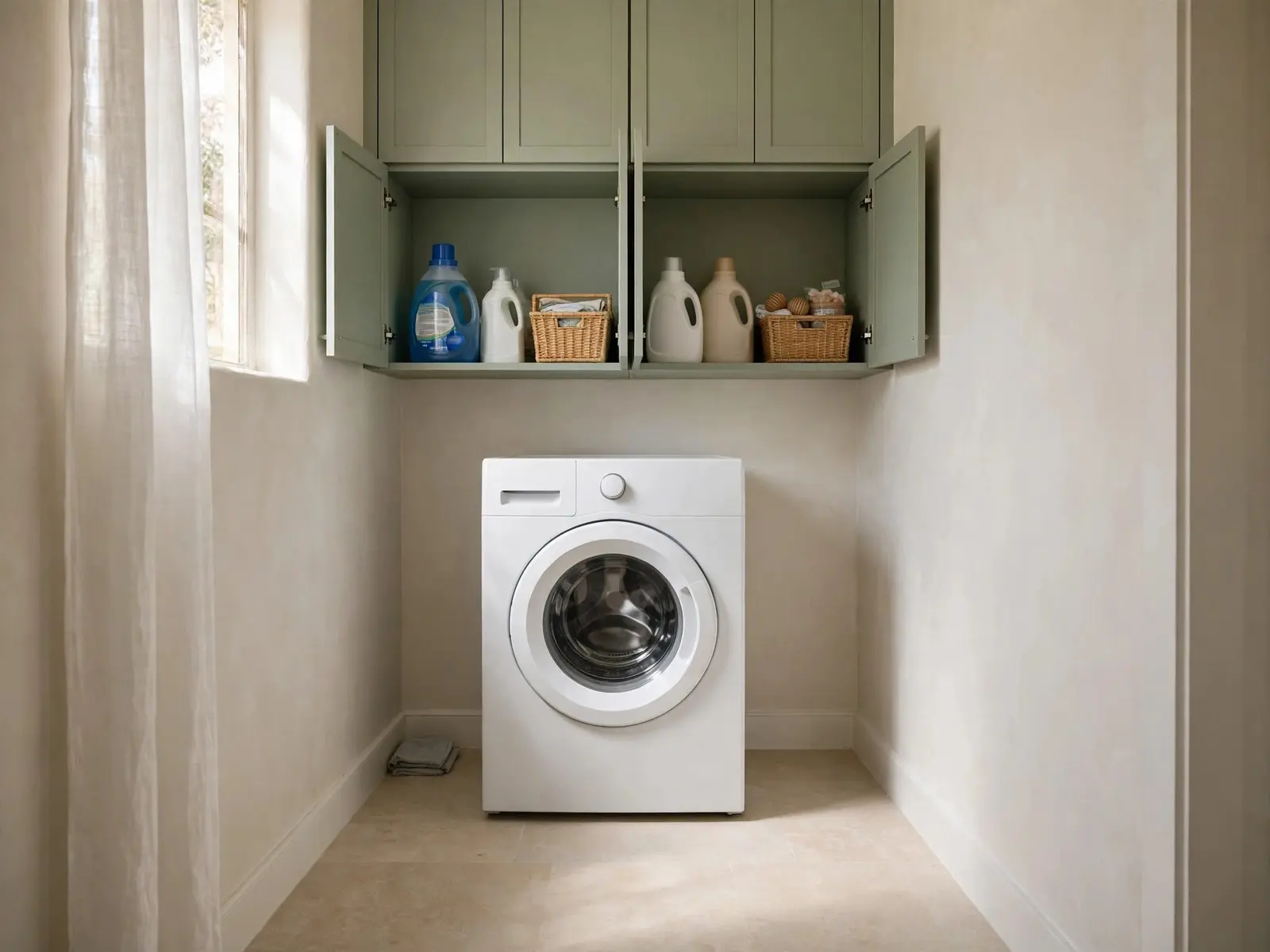
When the wall is tight, shallow upper cabinets still earn their keep. At 9 inches deep they hold detergent bottles, dryer sheets and small bins, yet they leave the walkway clear and keep you from bumping your head. Hang them above the machines or over a narrow counter, and use the lowest shelf for the supplies you reach for every load. Shallow boxes cost less than full-depth ones and weigh less, so they are easier to hang alone. Measure your tallest bottle first, and leave an inch of clearance above it.
- Measure your tallest bottle first
- Use the lowest shelf for daily supplies
- Keep a finger of clearance above each bottle
9. Upper cabinets that reach the ceiling
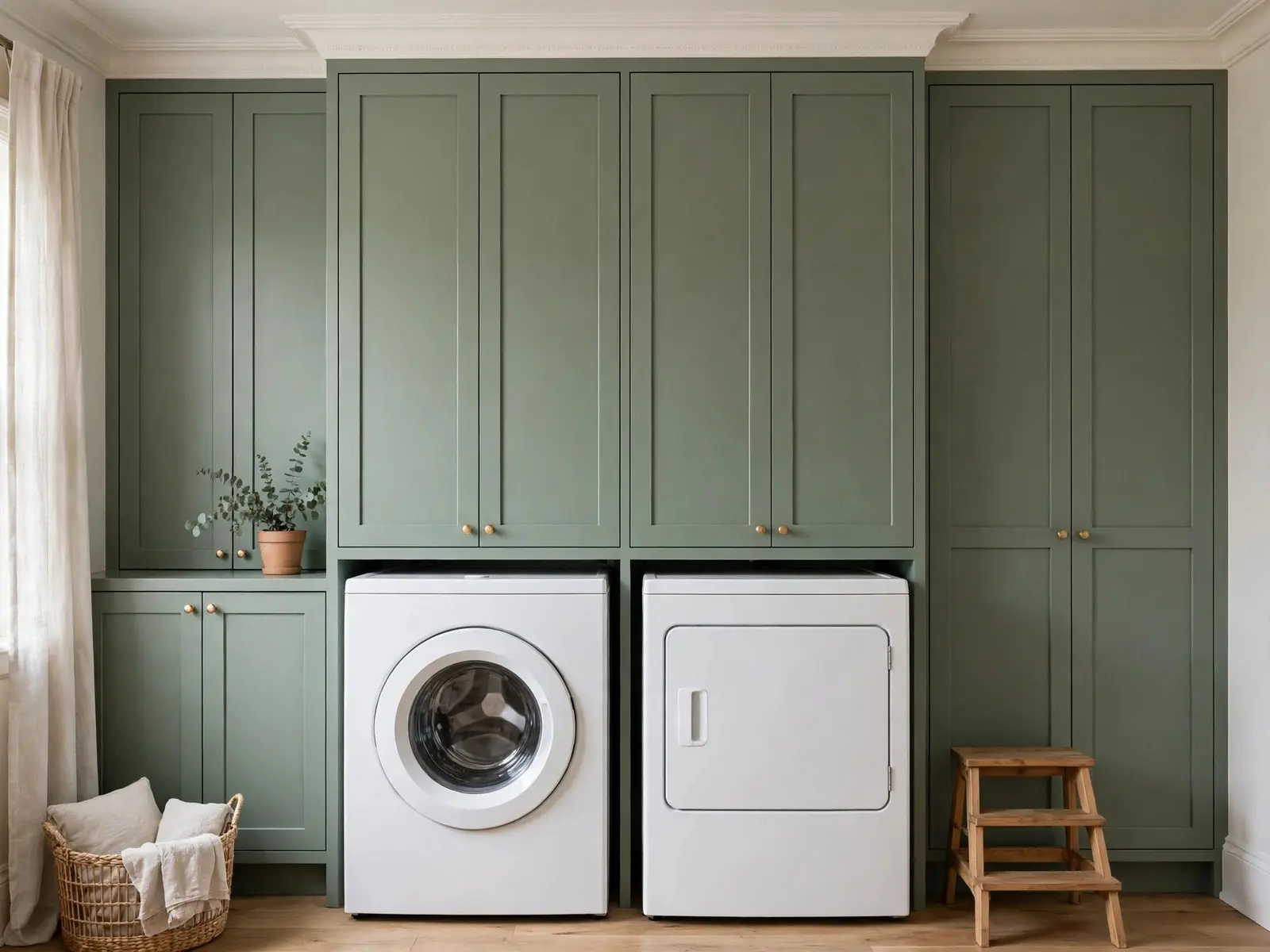
Cabinets that reach the ceiling use every inch of wall and make a small laundry room feel taller. Stack a shorter box above the main uppers, or order tall boxes and add a crown molding strip to close the gap at the top. Keep seasonal items and spare supplies in the top boxes, and keep a small step stool nearby so the top shelf stays useful. The closed top also stops dust and lint from settling on the cabinets. It is a custom look for the price of one extra box per run.
- Add a crown molding strip to close the top gap
- Keep seasonal items in the top boxes
- Keep a small step stool nearby
Base cabinets and folding counters
10. Base cabinets with a butcher block folding counter
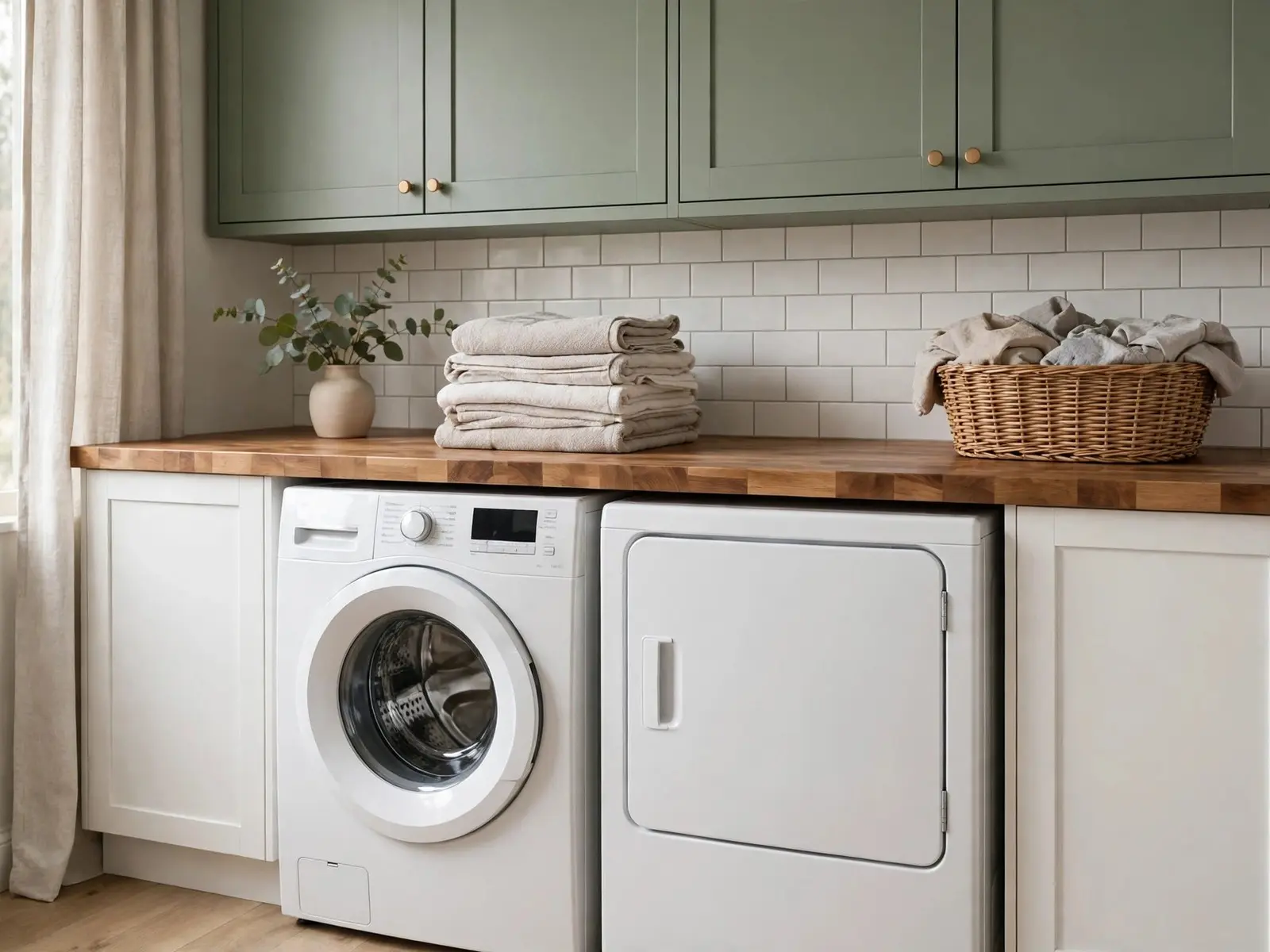
A butcher block counter across base cabinets turns the top of the machines into a folding station. Set two base cabinets beside the washer and dryer, or run one long counter over the machines with a base cabinet at each end. The warm wood softens white machines and sage cabinets, and it is easy to wipe clean. Seal the wood with a clear topcoat so damp clothes do not stain it. Leave a small gap at the back for hoses, and the counter lifts off easily if a machine ever needs service.
- Seal the wood so damp clothes do not stain it
- Leave a small gap at the back for hoses
- Match the counter wood to the shelf above
11. Base cabinet with a pull-out hamper
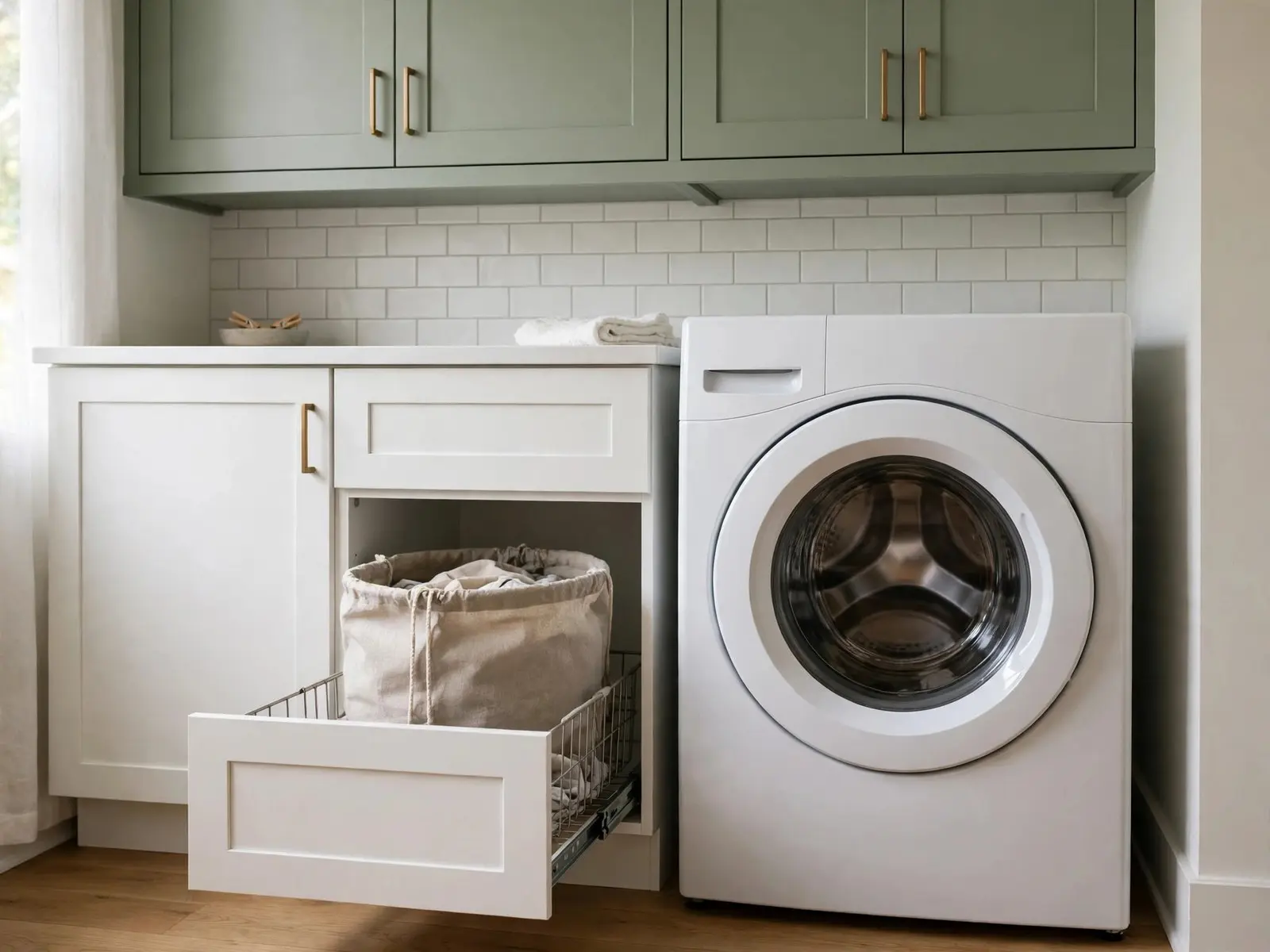
A base cabinet with a pull-out hamper hides the dirty laundry and keeps the floor clear. The hamper slides out on runners, so you can carry the whole basket to the washer, and a ventilated basket or a fabric bag inside stops smells from building up. Put the hamper cabinet beside the washer so sorting happens in one step, and sort lights and darks into two bags if you have the room. Measure the cabinet opening before you buy the basket, and leave a finger of clearance on each side so it slides freely.
- Put the hamper cabinet beside the washer
- Use a ventilated basket or fabric bag inside
- Leave clearance on each side so it slides freely
12. Base cabinets with deep drawers for supplies
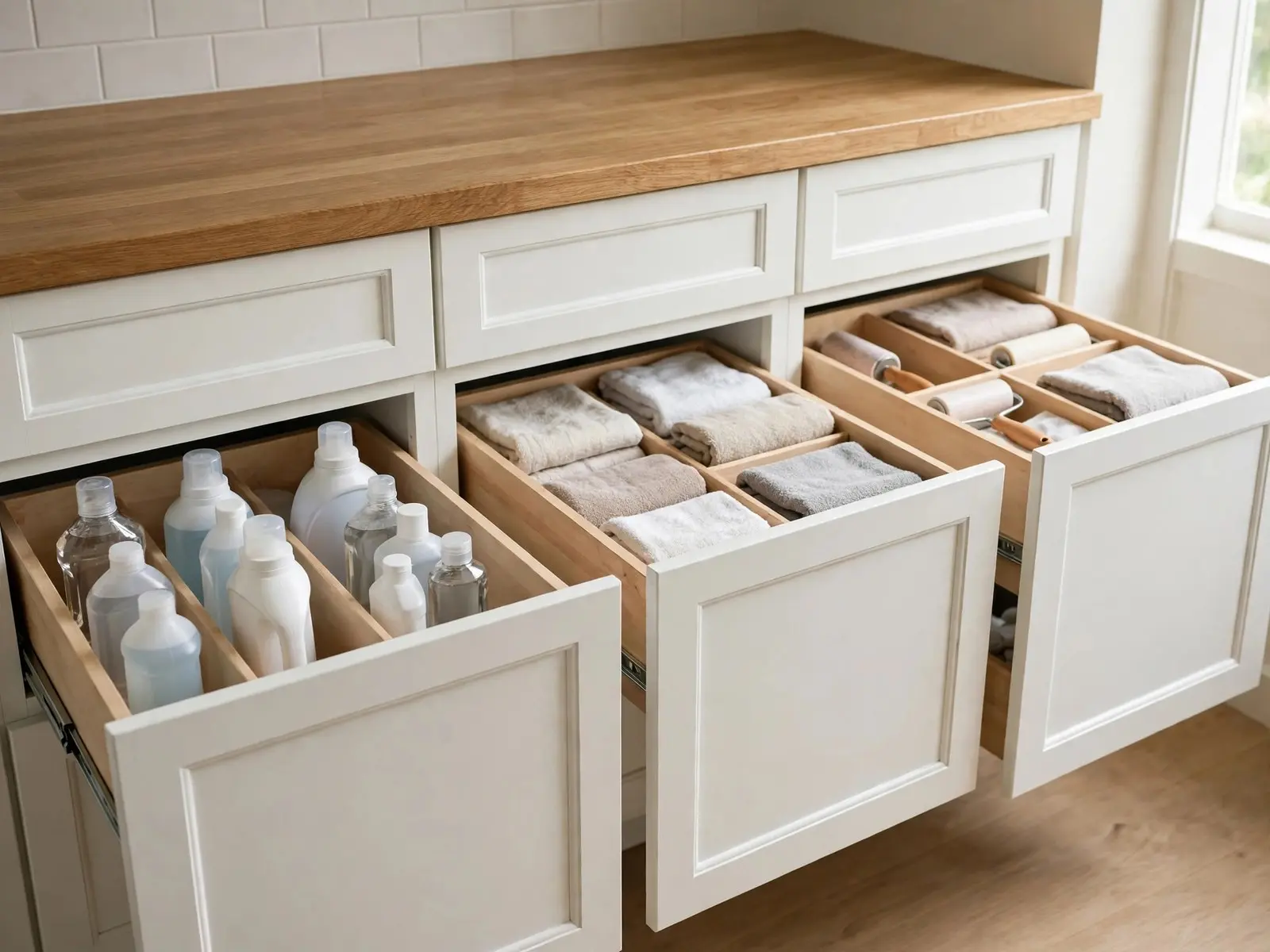
Deep drawers in a base cabinet hold more than shelves, because you can see everything from above instead of digging to the back. Use one drawer for detergent and stain supplies, one for clean folded towels, and one for the iron, lint rollers and sewing kit. Full-extension runners let the drawer open all the way, so nothing hides at the back. Add dividers or small bins inside each drawer to stop bottles from tipping. Drawers cost more than doors, so use them where you reach most often and keep plain doors elsewhere.
- Use full-extension runners
- Add dividers so bottles do not tip
- Keep plain doors where you reach less often
13. A sink base cabinet with a drying rack above it
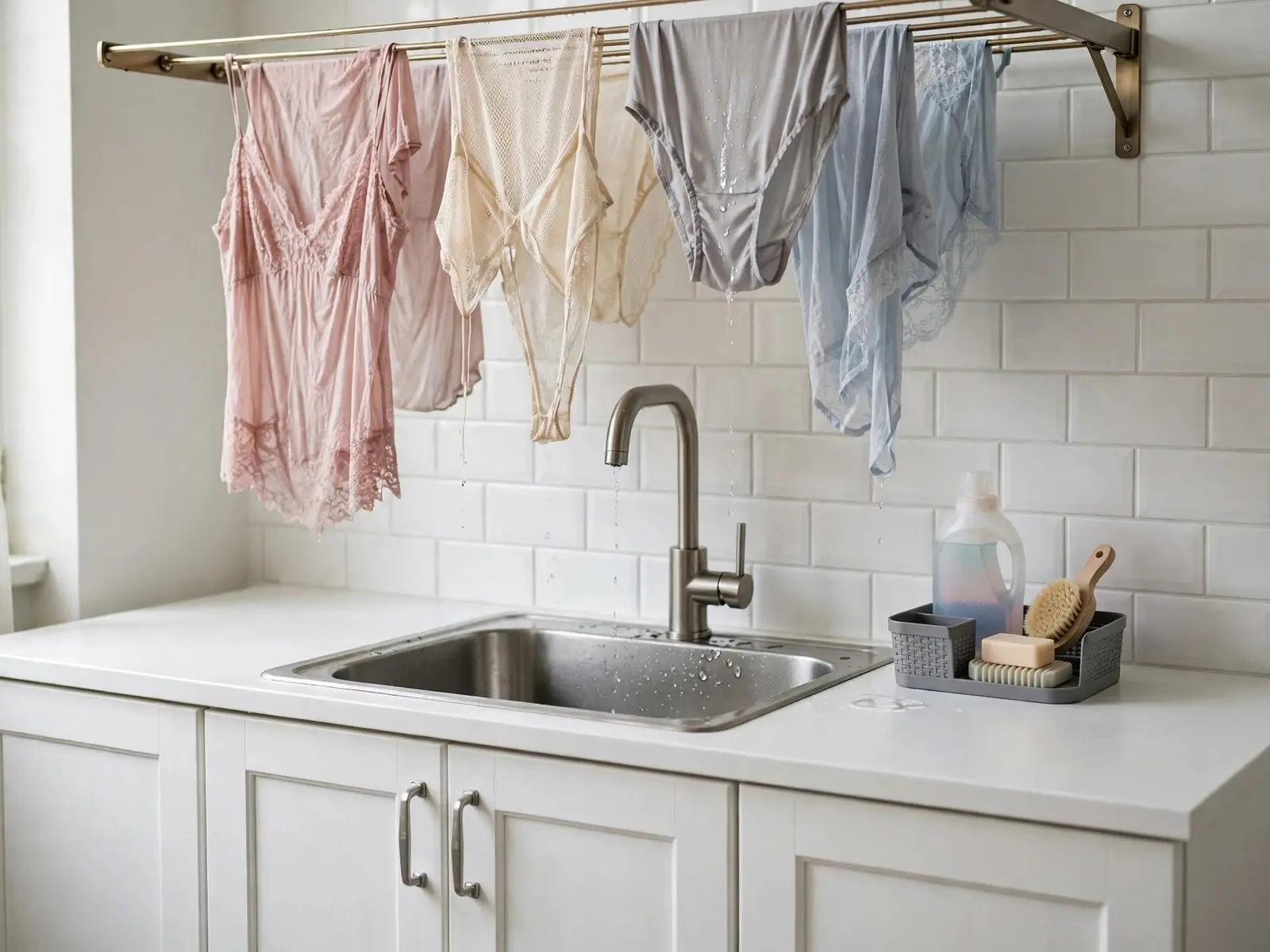
A sink base cabinet with a drying rack above it turns hand-washing into a one-spot job. The base cabinet holds the sink and hides the pipes, while a wall-mounted rack or a pull-out bar above it holds damp delicates. Keep a small caddy of hand-wash detergent in the cabinet, and hang a towel ring on the side for wet hands. Choose a shallow sink if the room is tight, and leave the counter beside it clear for folding. The setup suits homes that hand-wash sweaters, baby clothes or swimwear every week.
- Keep a hand-wash detergent caddy in the cabinet
- Hang a towel ring on the side
- Leave the counter beside the sink clear
14. Base cabinets flanking a pedestal washer and dryer
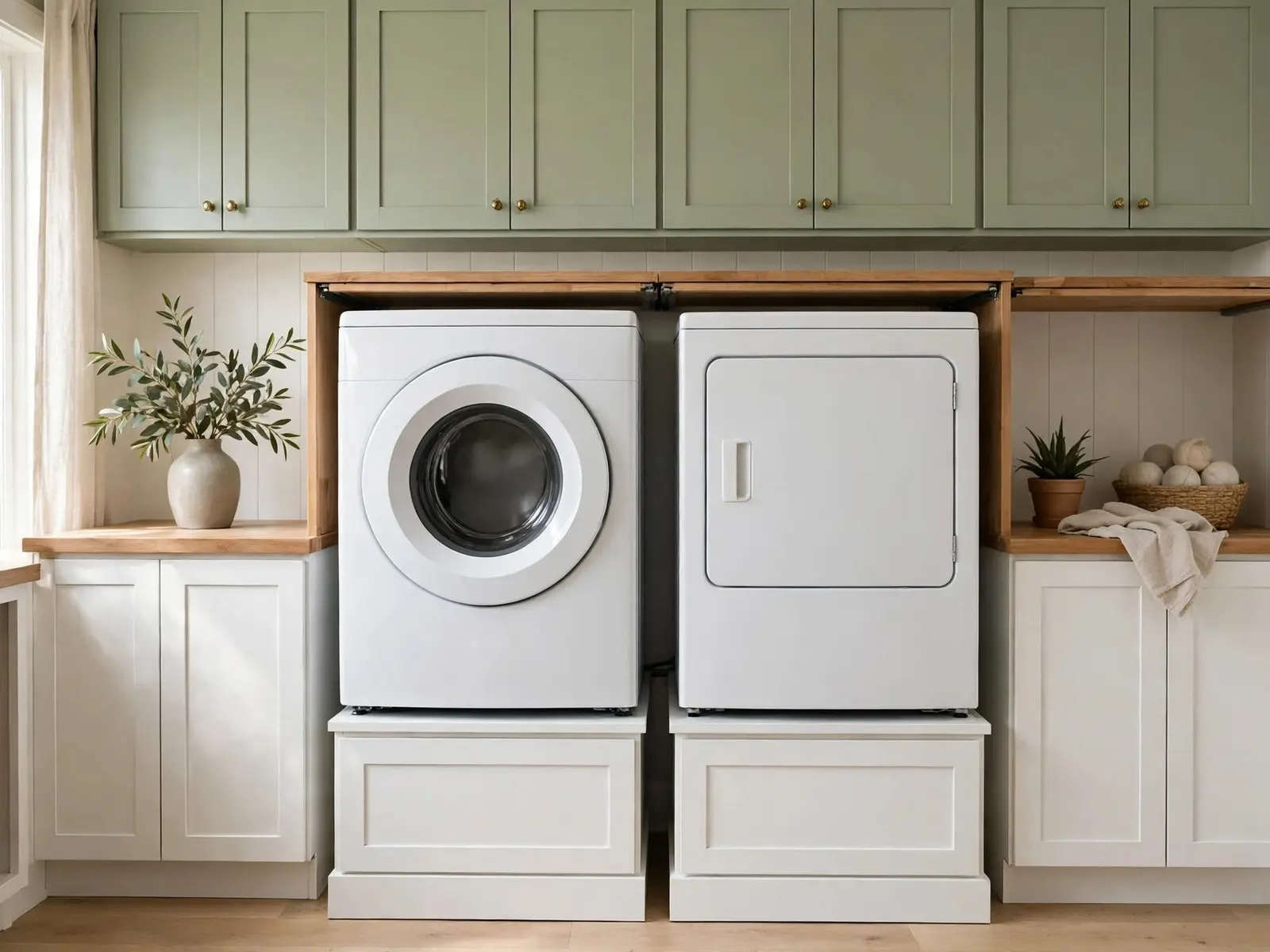
Base cabinets flanking a washer and dryer on pedestals raise the machines to a comfortable height and fill the gaps at each side. The pedestals lift the doors so you load without bending, and the base cabinets beside them hold detergent at waist height. Match the cabinet doors to the pedestal fronts for a built-in look, and use the counter on top as a folding surface. Check the pedestal height before you order cabinets, so the counter lines up. The result looks like a fitted laundry wall, even when it started as separate boxes.
- Check the pedestal height before ordering
- Match cabinet doors to the pedestal fronts
- Use the counter on top as a folding surface
15. A folding station base with a pull-out ironing board
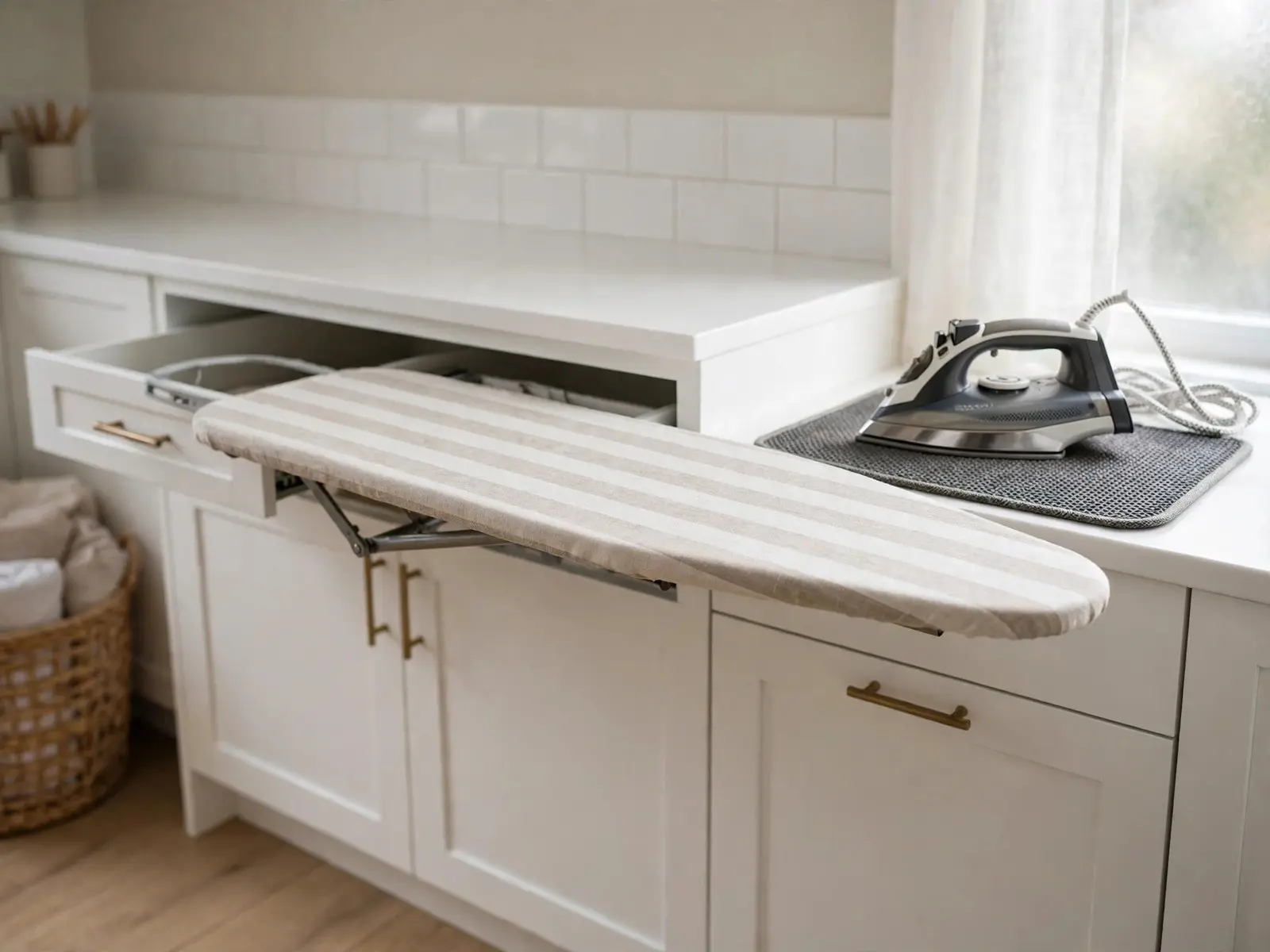
A folding station base with a pull-out ironing board hides the board until you need it. The board slides out of a shallow drawer in the base cabinet, locks flat, and folds away when the shirt is done. Keep the iron in the cabinet below, with a heat-resistant mat beside it, so everything for pressing lives in one place. The pull-out board suits small rooms where a full ironing board has nowhere to stand. Measure the drawer depth before you order, since the board needs a cabinet at least 18 inches deep.
- Keep the iron in the cabinet below
- Use a heat-resistant mat beside the board
- Measure the drawer depth before ordering
Tall and utility cabinets
16. A tall utility cabinet for brooms and mops
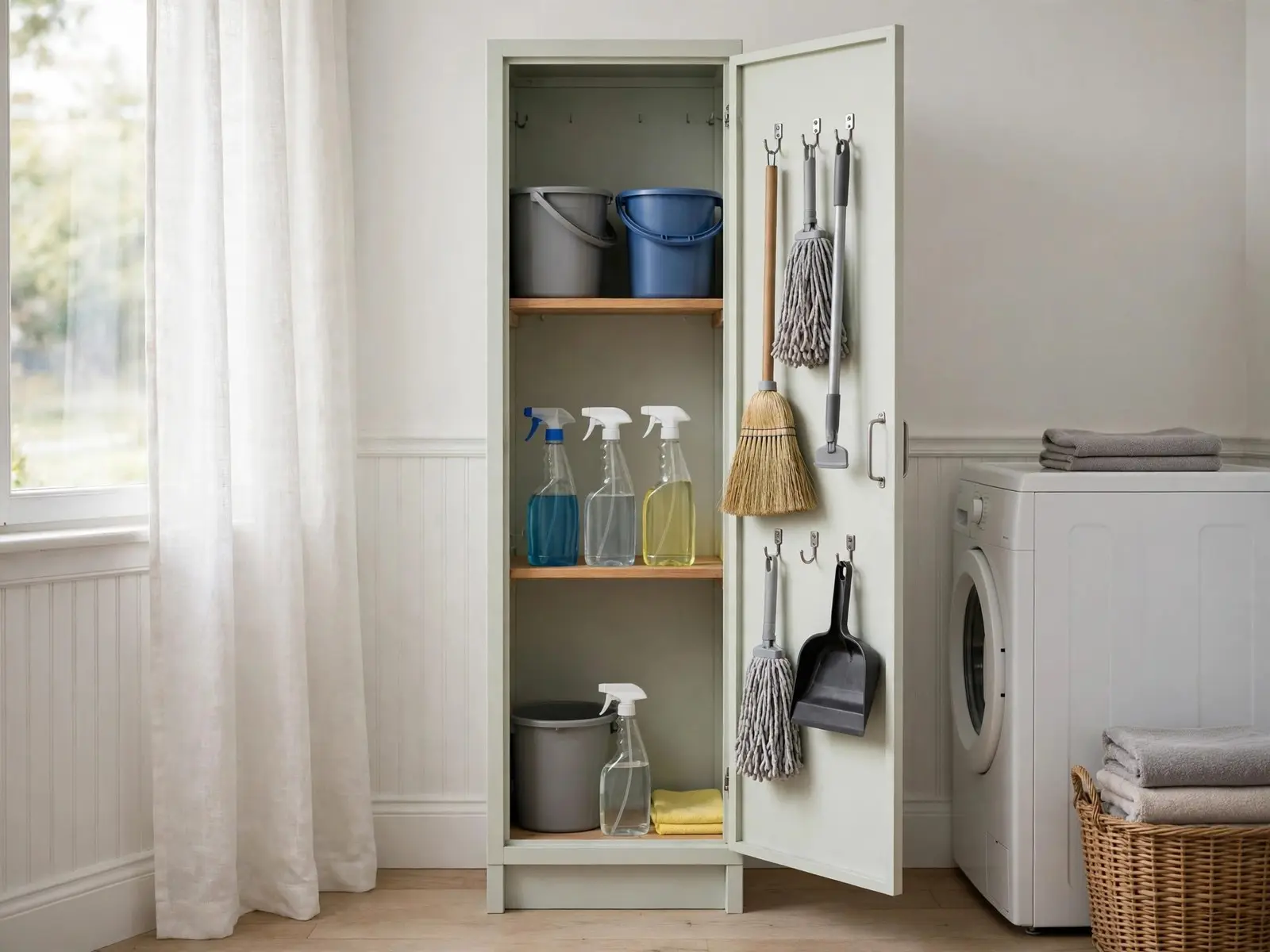
A tall utility cabinet for brooms and mops keeps cleaning tools upright, out of sight and easy to grab. Hang hooks or clips inside the door for the broom, mop and dustpan, and use the shelves for buckets, sprays and spare vacuum bags. A narrow tall cabinet fits beside the washer, and a wider one can hold the vacuum too. Keep the floor of the cabinet clear so the mop head dries, and add a small drip tray if you store a wet mop. One tall box ends the habit of leaning brooms in a corner.
- Hang brooms on hooks inside the door
- Keep the cabinet floor clear so mop heads dry
- Add a drip tray for a wet mop
17. A tall linen-style cabinet for towels and bedding
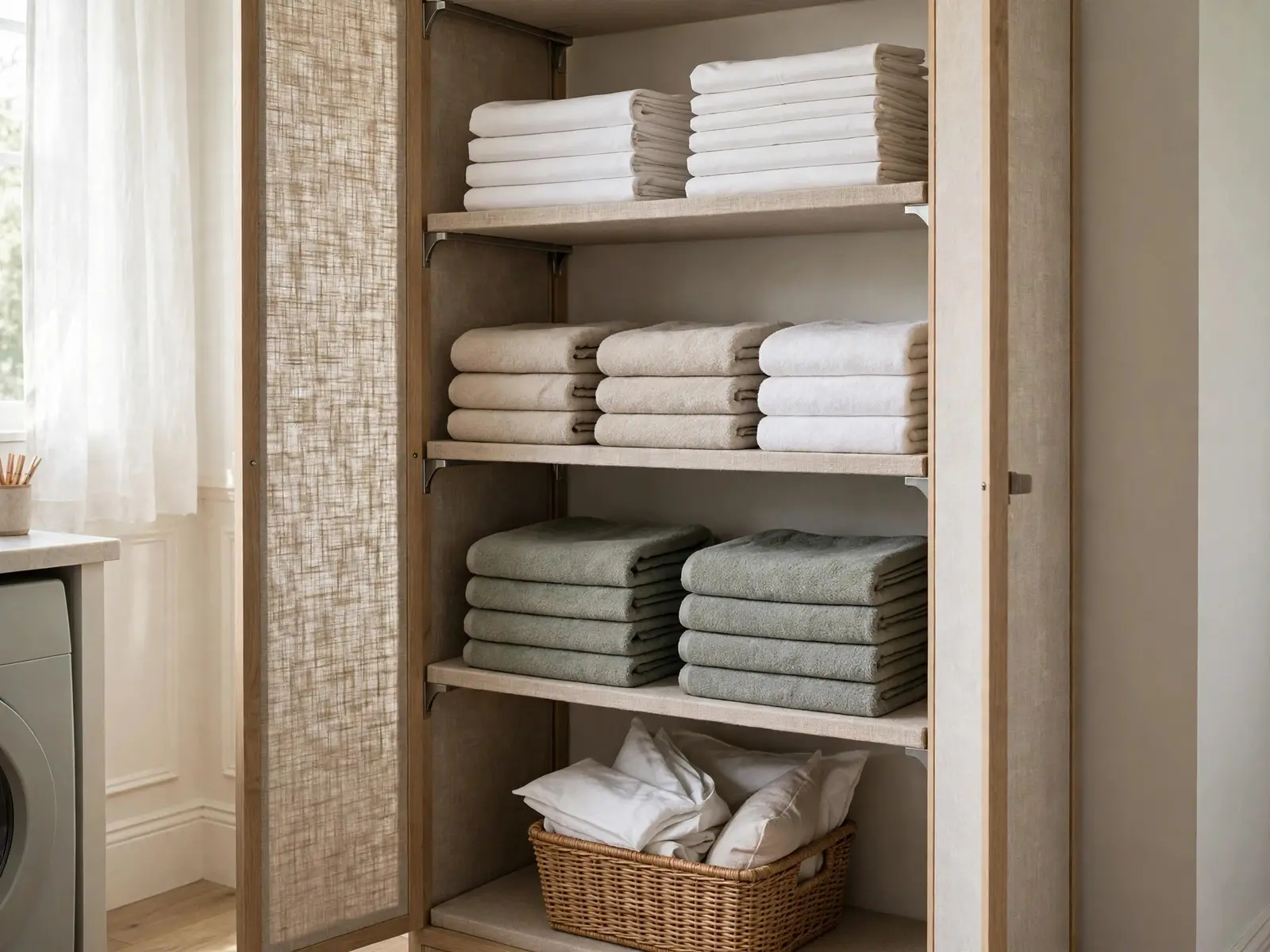
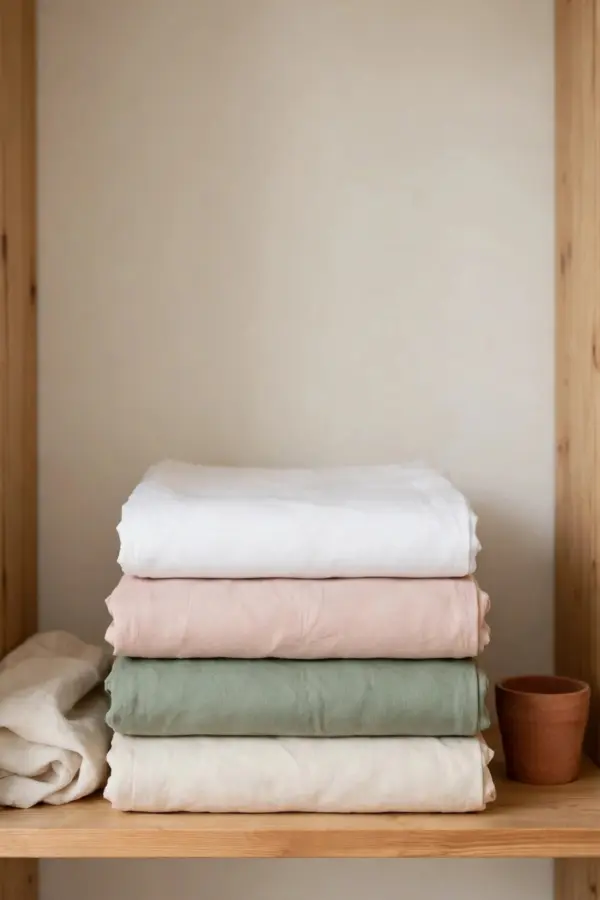
A tall linen-style cabinet in the laundry room holds towels, bedding and tablecloths right where they get washed and folded. Adjust the shelves to fit folded bath towels on one shelf, sheet sets on another, and spare pillowcases in a small basket. Keep a set of shelf dividers in place so tall stacks do not topple. Put the cabinet near the dryer so clean linens go straight from the machine to the shelf. A linen cabinet in the laundry room also frees a shelf in the bathroom or hall closet.
- Adjust shelves to fit folded towel stacks
- Use shelf dividers so tall stacks do not topple
- Put the cabinet near the dryer
18. A tall cabinet with a pull-out drying rack
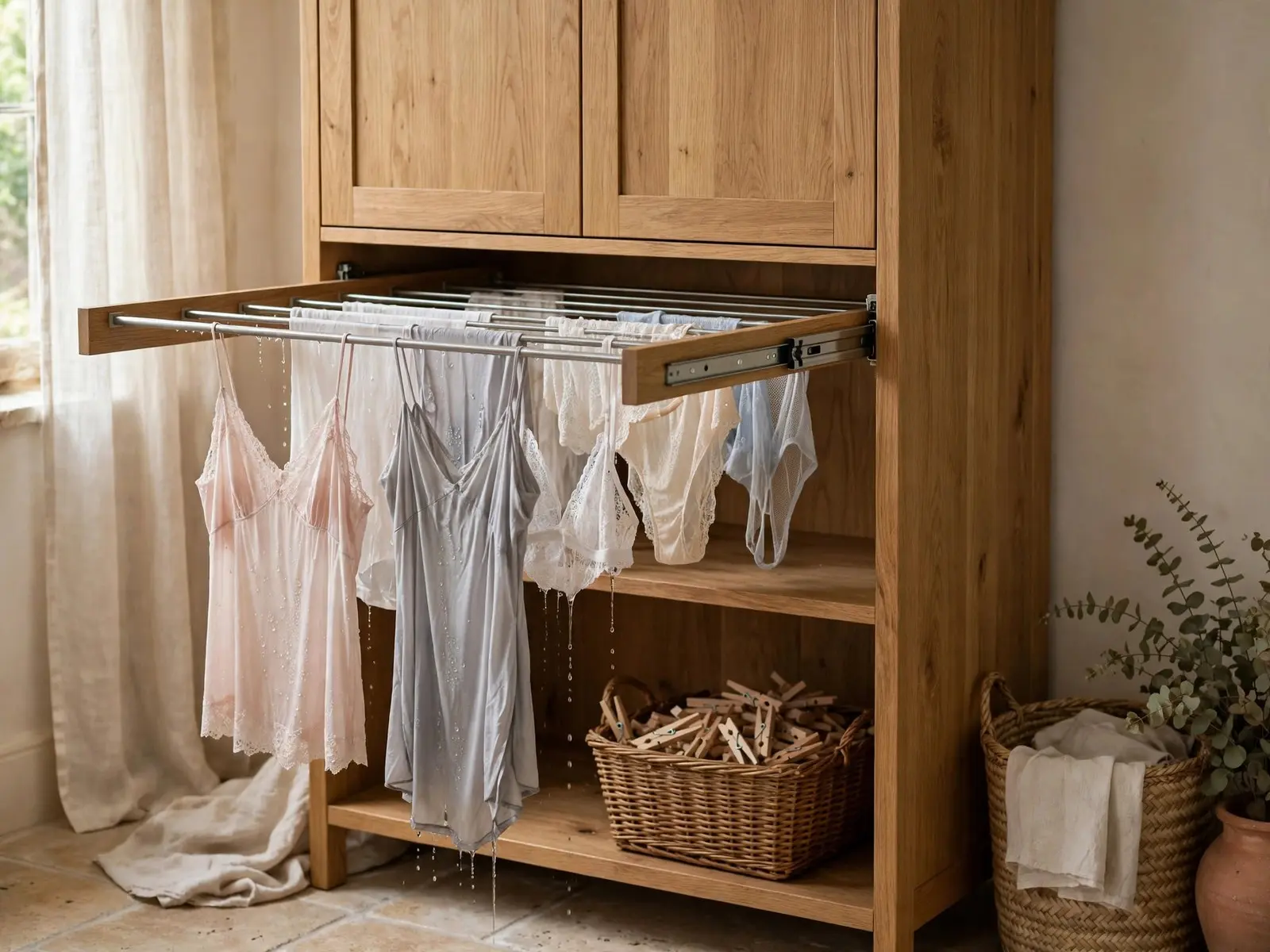
A tall cabinet with a pull-out drying rack gives delicates a place to dry without a rack cluttering the floor. The rack slides out like a drawer, with bars or mesh for hanging wet clothes, and slides back in when the load is dry. Mount it at waist height inside a tall cabinet, and leave space below for a basket of pegs and hangers. Air dries gentler than a machine, so the rack suits wool, swimwear and anything with a lay-flat-to-dry label. Wipe the bars dry after use so the cabinet stays fresh.
- Mount the rack at waist height
- Leave space below for pegs and hangers
- Wipe the bars dry after each use
19. A corner cabinet that uses dead space
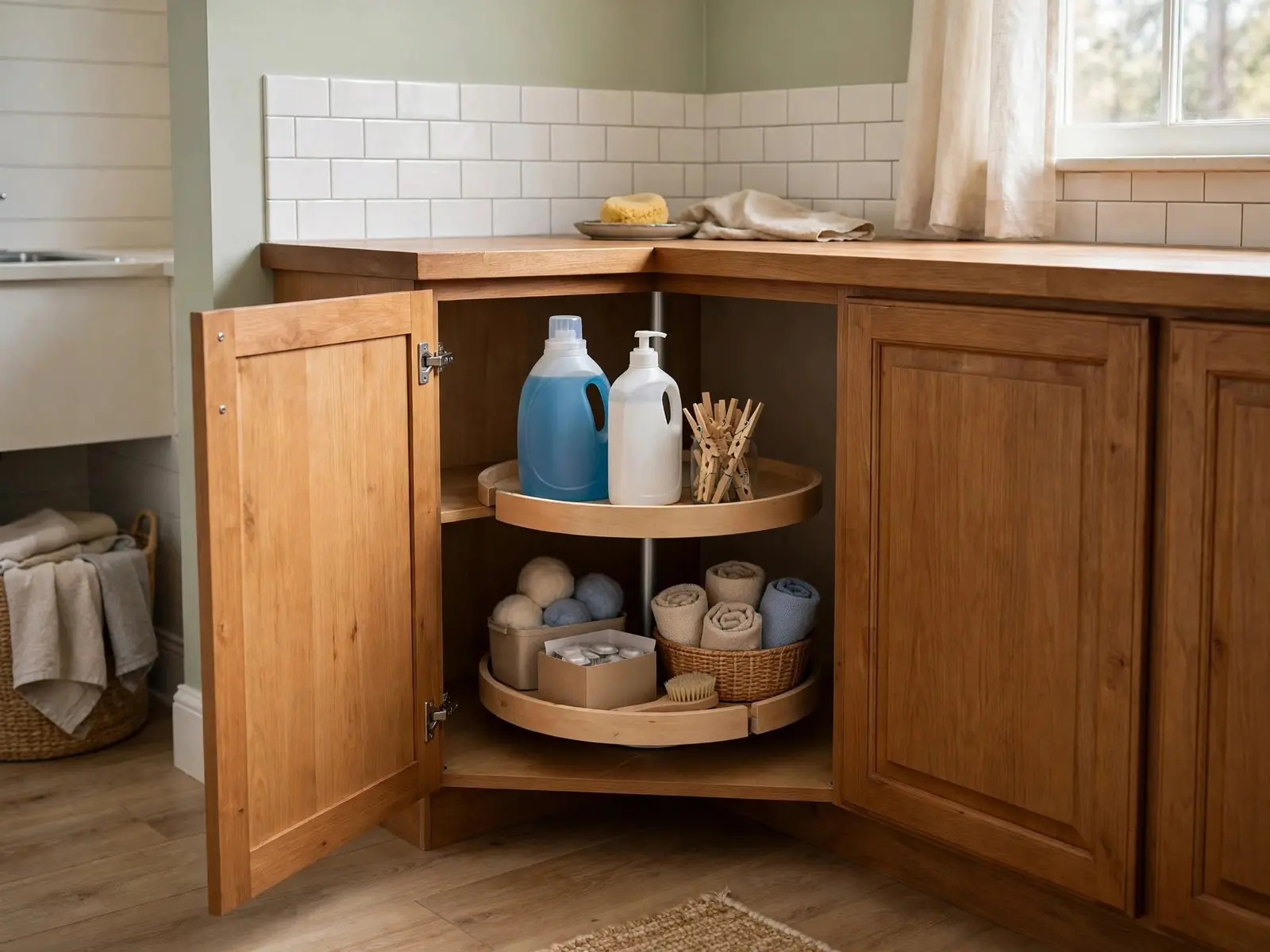
A corner cabinet uses the dead space where two laundry walls meet. A lazy Susan inside a base corner cabinet spins supplies around to the front, so nothing gets lost at the back. In an upper corner, an angled cabinet or a diagonal door keeps the corner reachable. Measure the corner carefully, since walls are rarely square, and leave room for the doors to swing clear of the machines. A corner cabinet is a good place for spare supplies and bulky items you only reach for once a week.
- Measure the corner carefully, since walls are rarely square
- Leave room for doors to swing clear of the machines
- Use the corner for spare supplies you reach for weekly
Small spaces and closet laundries
20. A ready-to-assemble cabinet above a stacked washer and dryer
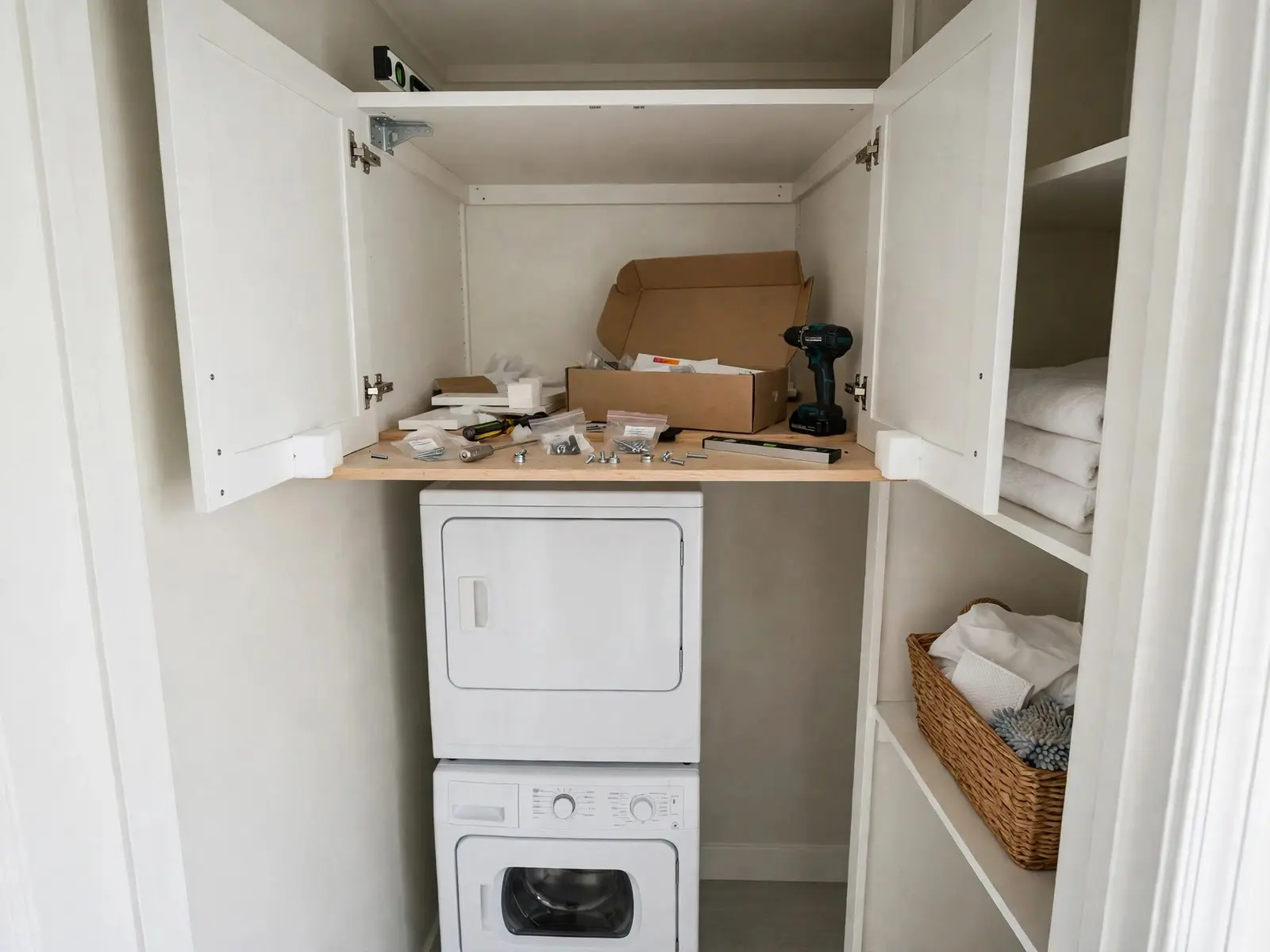
A ready-to-assemble white cabinet above a stacked washer and dryer fits a closet laundry where space is tight and the budget is tighter. The flat-pack box assembles on the floor, then hangs on the wall above the machines, holding detergent and supplies at eye level. Check the stacked height first, and leave room to open the washer door and reach the controls. Choose a moisture-resistant box and seal the edges, since closet laundries get humid. It is the cheapest real cabinet in this list, and it installs in an afternoon.
- Check the stacked height before you buy
- Leave room to open the washer door
- Seal the edges against humidity
21. An over-washer shelf-and-cabinet unit for a closet laundry
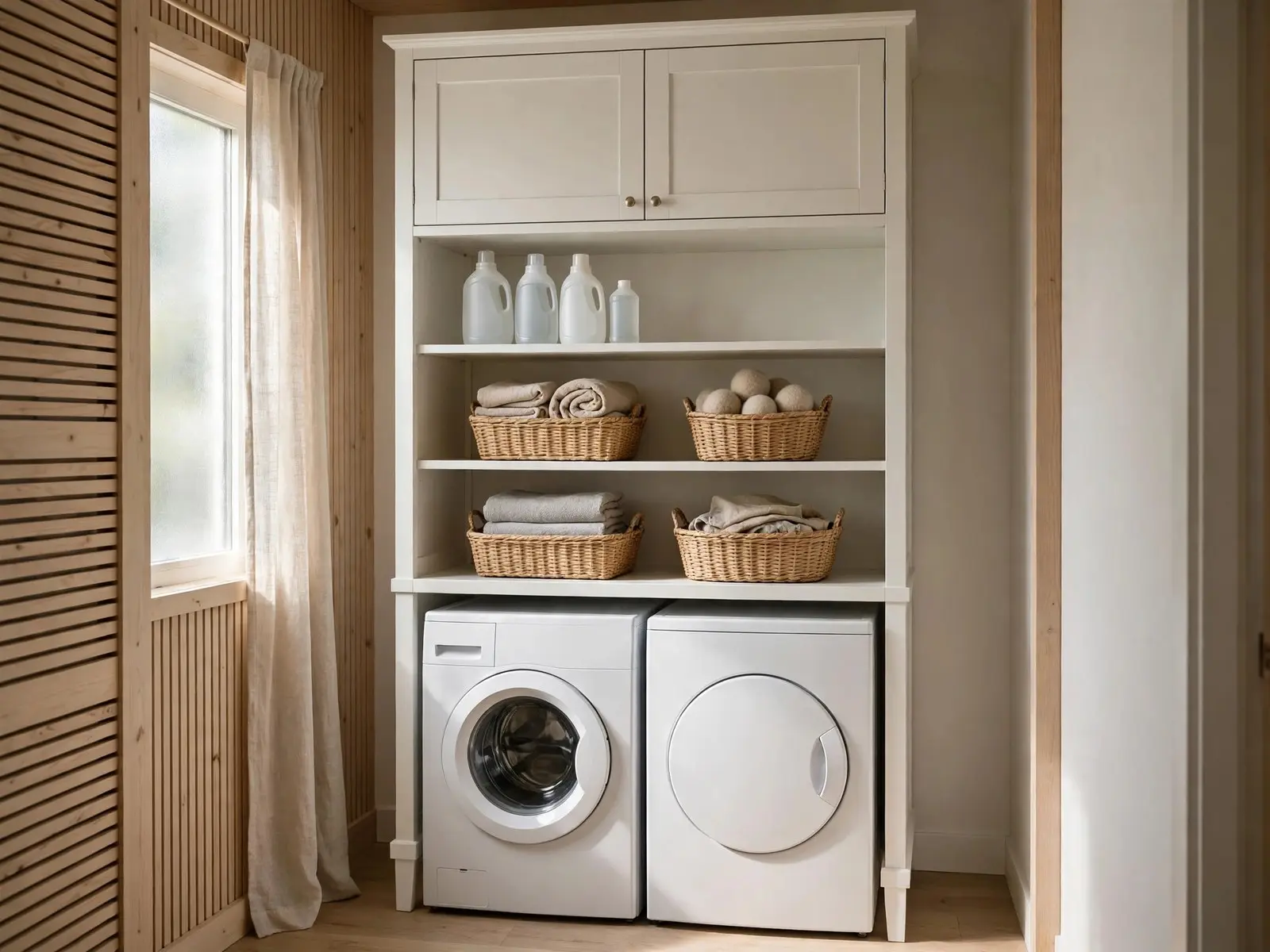
An over-washer shelf-and-cabinet unit for a closet laundry adds storage without a single wall fixing. The unit stands on the floor or rests on the machines, with a cabinet on top and open shelves below for detergent and baskets. Measure the width of your machines first, since units come in standard widths, and leave a gap at the back for hoses and vents. Keep heavy items low and light items up high so the unit stays steady. When you move, the whole unit comes with you.
- Measure the width of your machines first
- Leave a gap at the back for hoses and vents
- Keep heavy items low and light items high
22. A freestanding utility cabinet beside the washer
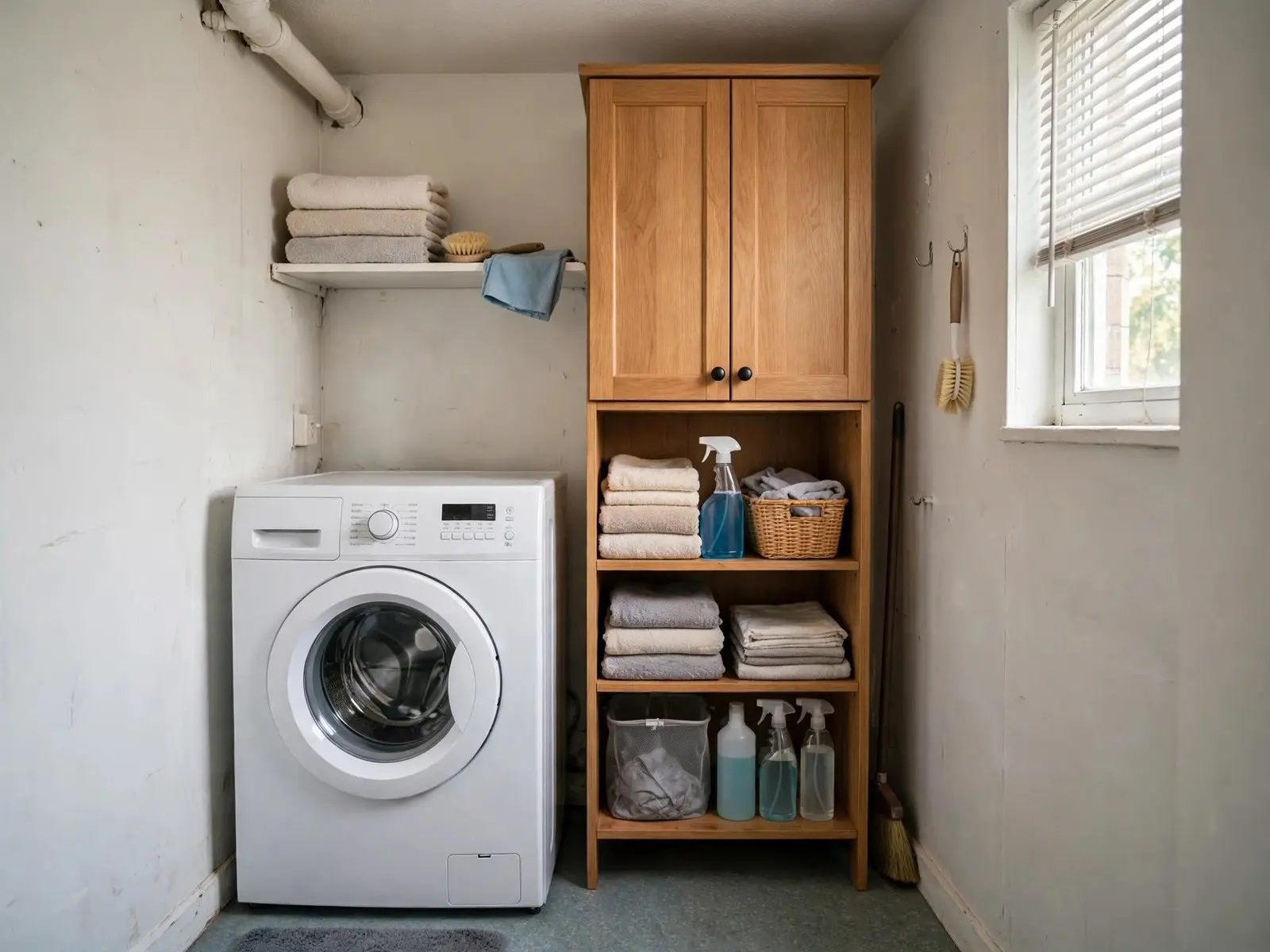
A freestanding utility cabinet beside the washer adds storage to a rental laundry nook with no drilling at all. Open the doors and you will find shelves for bins, detergent and spare towels, all within arm’s reach of the machines. Pick a cabinet that matches the width of the gap beside your washer, and anchor it to the wall with a strap only if your lease allows it. Keep the heaviest items on the lowest shelf so it never tips. It is the simplest cabinet in this list, and it moves with you.
- Match the cabinet width to the gap beside the washer
- Keep the heaviest items on the lowest shelf
- Anchor it only if your lease allows it
Budget and renter-friendly cabinets
23. A narrow pull-out cabinet for the gap between machines
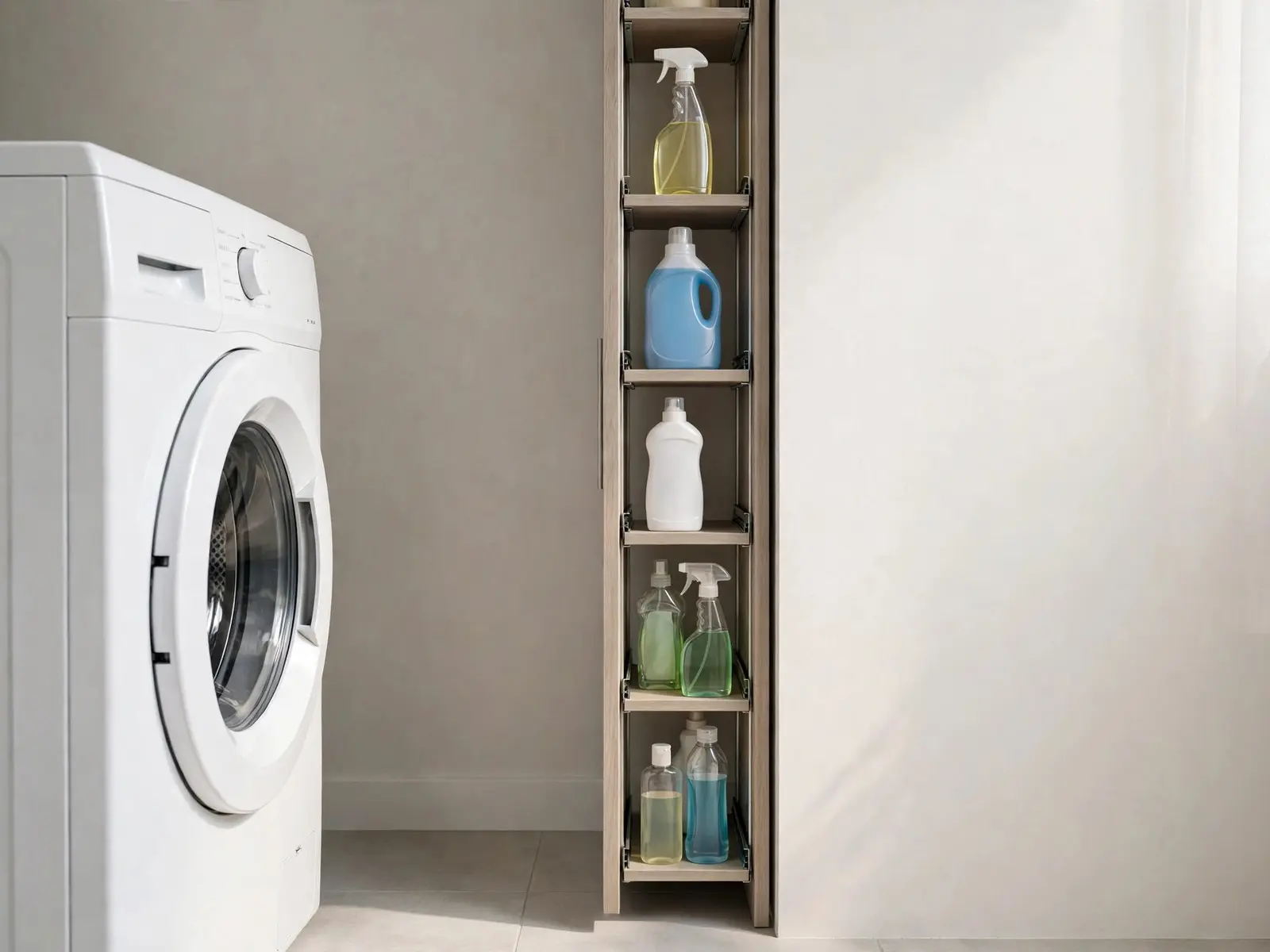
A narrow pull-out cabinet fills the gap between the washer and the wall that is too small for a normal cabinet. The tall, slim box slides out on runners, with shelves sized for detergent bottles, stain spray and dryer sheets. Measure the gap twice, since a pull-out needs a finger of clearance on each side to slide freely. Keep the lightest bottles at the top and the heaviest at the bottom. The pull-out turns six inches of wasted space into the most-used storage in the room.
- Measure the gap twice before ordering
- Keep the lightest bottles at the top
- Leave a finger of clearance on each side
24. Ready-to-assemble upper cabinets in a stock finish
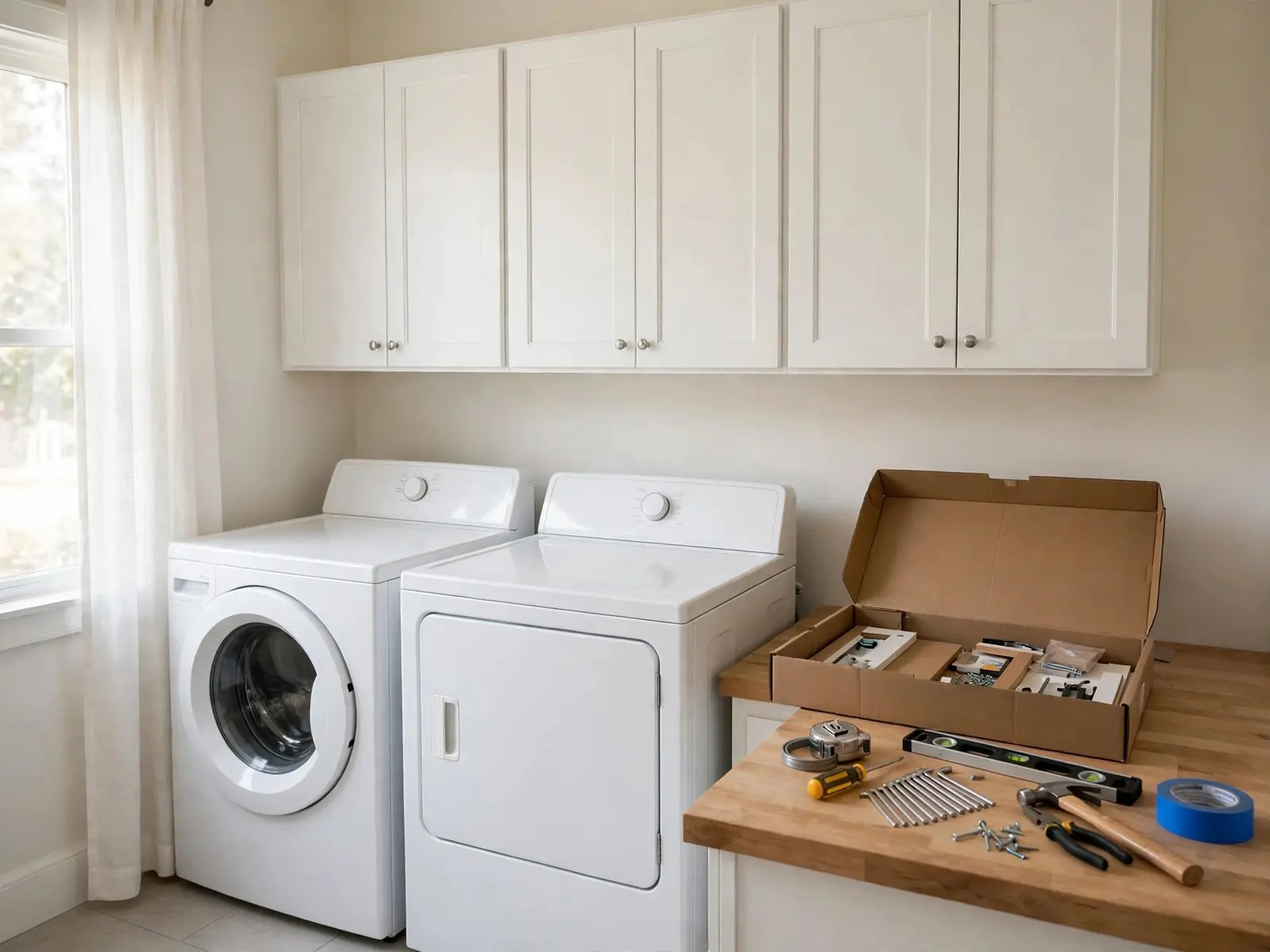
Ready-to-assemble upper cabinets in a stock finish are the cheapest way to get a full cabinet wall. The boxes arrive flat, assemble with basic tools, and hang on a ledger board in an afternoon. White and light gray stock finishes suit most laundry rooms, and you can paint them later for a custom look. Check that the box is plywood or moisture-resistant board, not raw particleboard, and seal any cut edges. Two stock uppers above the machines often cost less than one custom cabinet.
- Choose plywood or moisture-resistant board
- Seal any cut edges against humidity
- Paint stock cabinets later for a custom look
25. A rolling cabinet cart that tucks away
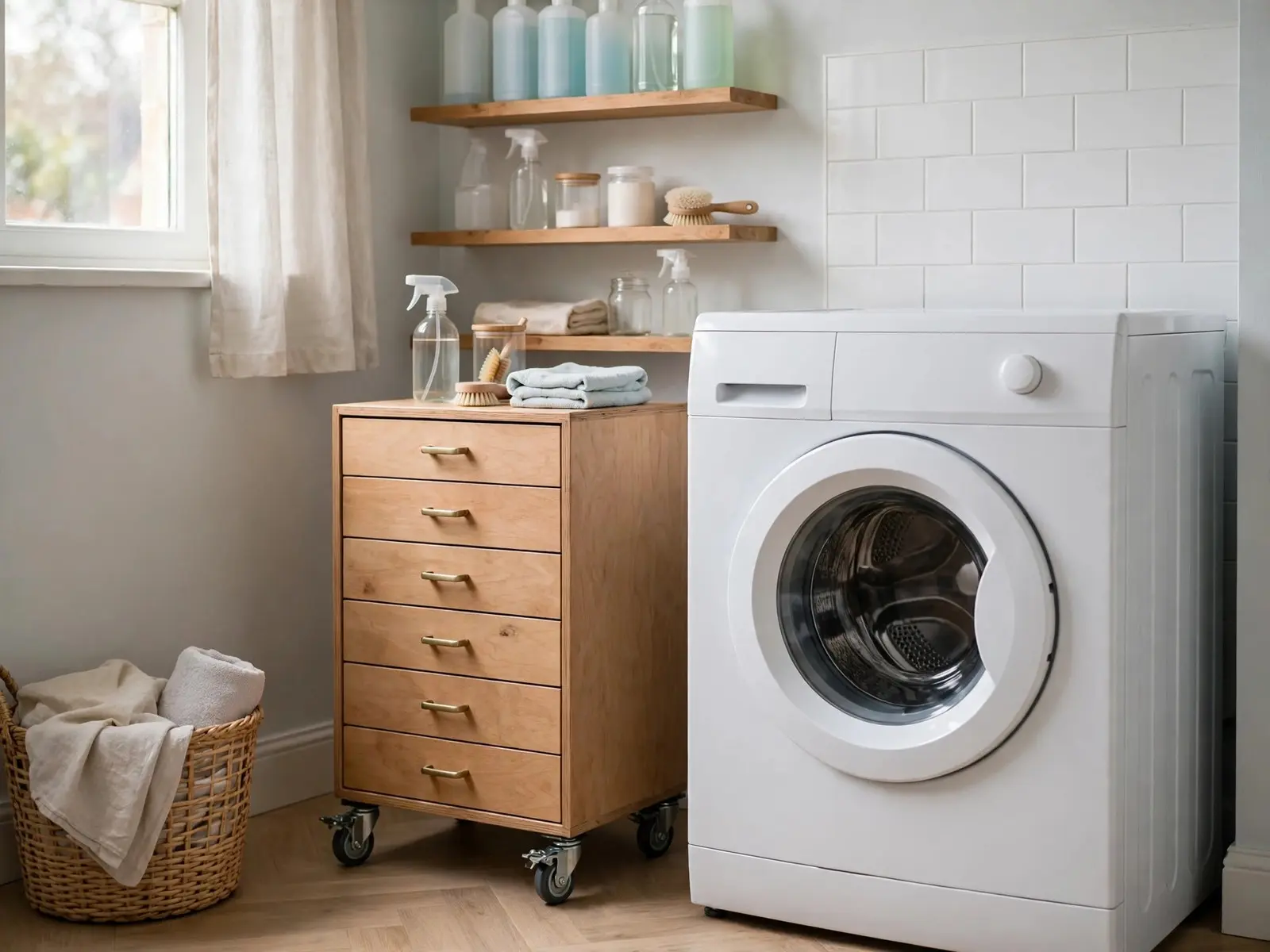
A rolling cabinet cart tucks under the counter or beside the washer, and rolls out when you need it. Use it for detergent, stain supplies and a small basket of pegs, with the most-used items on the top shelf. Locking casters keep it still while you load the washer, and the cart rolls into a closet when guests arrive. Pick a cart narrow enough to fit the gap, and keep the top clear so it slides under the counter. For renters, it is the easiest cabinet of all, because it needs no fixing to the wall.
- Pick a cart narrow enough to fit the gap
- Use locking casters so it stays still
- Keep the top clear so it slides under the counter
Questions, answered
How high should laundry room cabinets be above the washer?
Leave 18 to 24 inches between the top of a top-loading washer and the bottom of the cabinet, so the lid opens fully and you can reach inside. Over a front-loading washer, or above a counter, 18 inches above the counter is a comfortable reach. Measure your lid swing before you drill, because a cabinet hung too low blocks the lid and a cabinet hung too high is hard to reach.
Are ready-to-assemble cabinets good for a laundry room?
Yes, ready-to-assemble cabinets are a good fit for a laundry room, and they are the cheapest way to get real cabinets, with many wall cabinets under $150. Choose plywood boxes or moisture-resistant board and seal any raw edges, because laundry rooms get humid. Assemble them on the floor first, then hang them on a ledger board so they sit level.
What depth should laundry room cabinets be?
Upper cabinets should be 12 inches deep, which holds detergent bottles and bins without jutting so far out that you bump your head. Base cabinets are usually 24 inches deep, the same as a standard counter, and they line up neatly beside a washer and dryer. In a very tight room, 9-inch-deep uppers still hold most supplies and keep the walkway clear.
Can renters add cabinets to a laundry room?
Yes, renters can add cabinets without drilling into the walls. Freestanding utility cabinets, over-washer units that rest on the machines, and rolling carts all move with you when you leave. Check your lease first, and use adhesive hooks or tension rods for anything that needs a wall fixing.
Keep reading
Start with our laundry room organization guide for the 12-step system these cabinets fit into, then work through our room-by-room declutter plan to clear the space first. Our cleaning schedule for the home keeps the room tidy once the cabinets are in, and our storage ideas for small spaces cover the rest of the house when the laundry room is done.
Pick the cheapest cabinet that fits your room size, measure twice, and start with one wall. The right cabinets turn laundry from a chore you dread into a routine that runs itself, and the folding counter is where you will notice the difference first.