Wash a comforter in a machine it can move freely in — volume, not weight, is the limit — on a gentle cycle at the fill's temperature, then dry it completely in stages, shaking the filling out as it dries so it can't clump or mildew.
Thank you for reading this post, don’t forget to subscribe!Part of our guide: 25 Garage Organization Ideas for a Clutter-Free Garage
A comforter is the one thing in the bedroom that never gets washed often enough, mostly because the wash itself feels risky: will it fit, will the filling clump, will it ever dry? The five steps below answer all three questions in order, and the table further down has the temperature and cycle for every fill type.
What you’ll need
A washing machine the comforter can move freely in — a front-loader, or a large-capacity laundromat machine for king-size comforters. Mild liquid detergent, two or three wool dryer balls, a spare hour for the drying stages, and a breathable cotton storage bag for afterwards. No special products, and no fabric softener.
The five steps
Work through the steps in order — label, fit test, wash, dry, store — because each one protects the next. The fit test decides the machine, the machine decides the wash, and the drying decides whether the filling stays fluffy or sets into lumps.
1. Check the label first
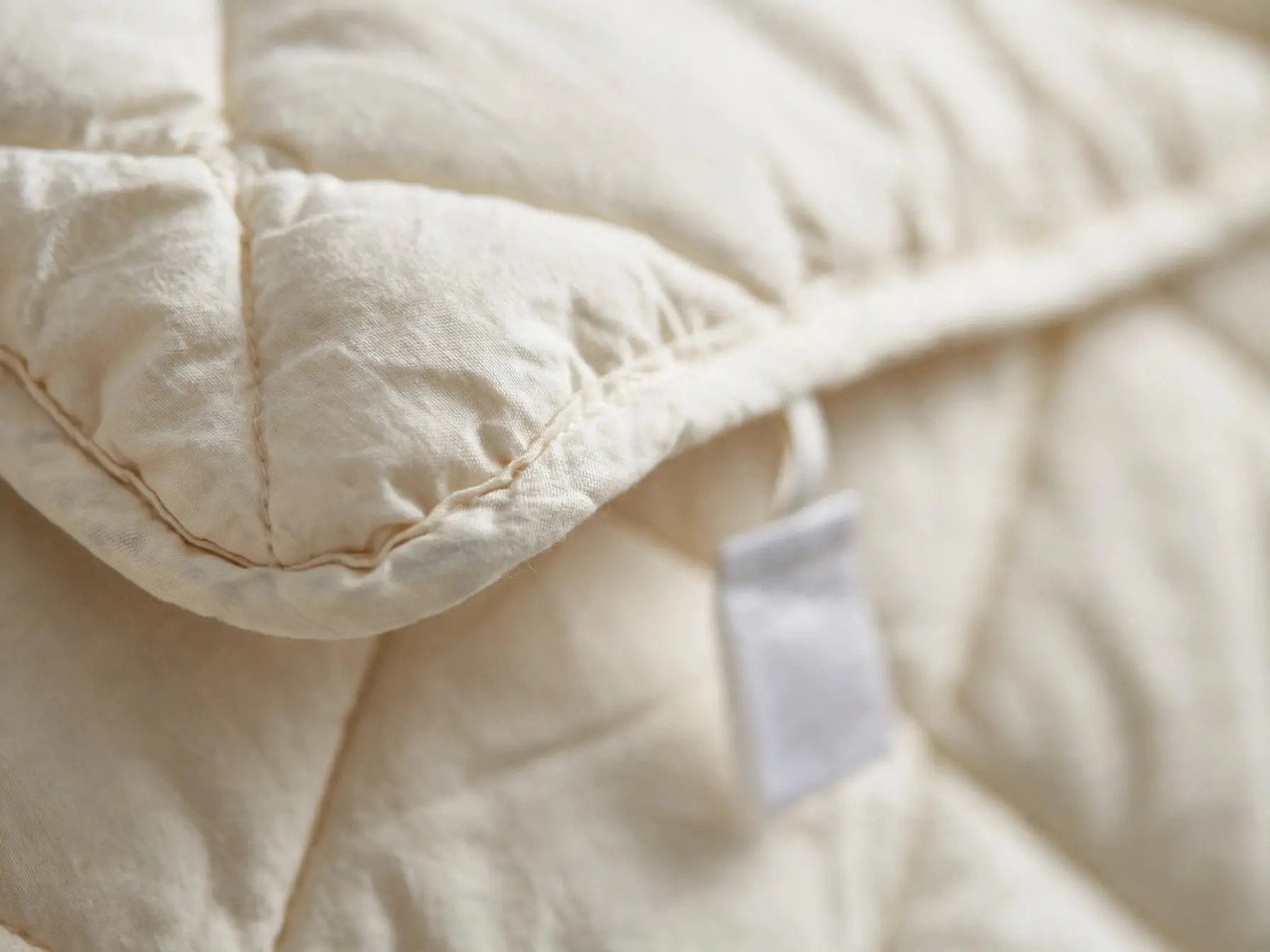
Every comforter starts with its care label. It tells you the fill type, the wash temperature and whether the maker wants it dry cleaned — and that last line is the one to respect: a 'dry clean only' label means the filling or the shell will not survive a home wash. Check the seams while you are there: a small tear becomes a big one in the washer, and loose filling escapes through it. Stitch any weak seam before the comforter goes anywhere near water. If the label is missing, treat the comforter as down — gentle cycle, low heat — and wash it at the laundromat, where a big machine forgives mistakes.
- Read the care label before anything else
- 'Dry clean only' means do not machine wash
- Check seams for tears and stitch them first
2. The fit test: can it move freely?
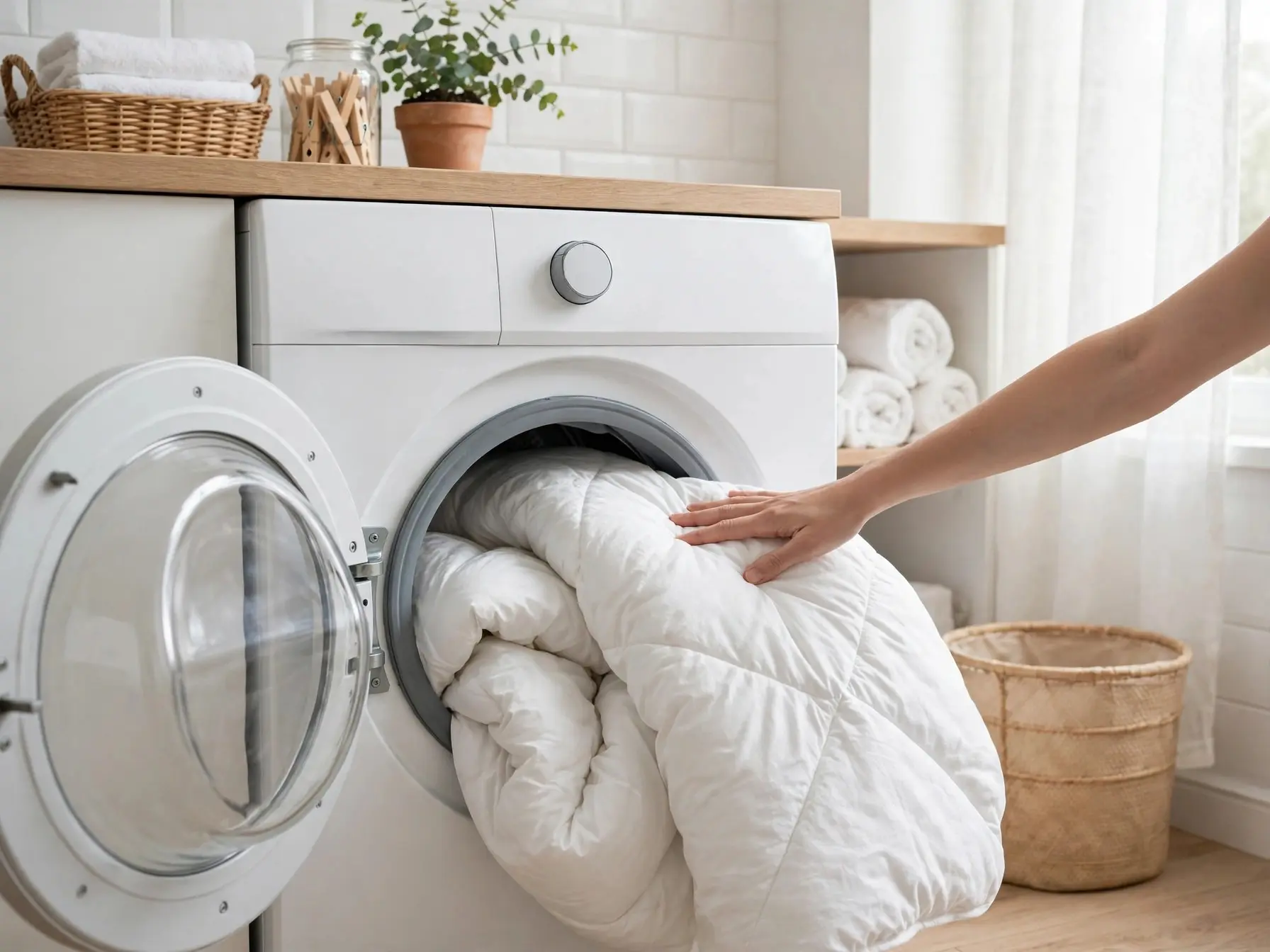
A comforter that cannot move cannot get clean — or dry. Load it dry and press it down: if you can slide your flat hand between the comforter and the top of the drum, it fits. Volume, not weight, is the limit; a light king-size down comforter can still be too big for a standard machine. Twin and full comforters usually fit a home washer; king-size and thick winter comforters usually need a large-capacity laundromat machine. One exception: top-loaders with a center agitator can snag and tear seams, so take those loads to a front-loader.
- Press it down: a flat hand must fit above it
- Volume, not weight, is the limit
- Top-loader with an agitator? Use a front-loader instead
3. Wash by fill type
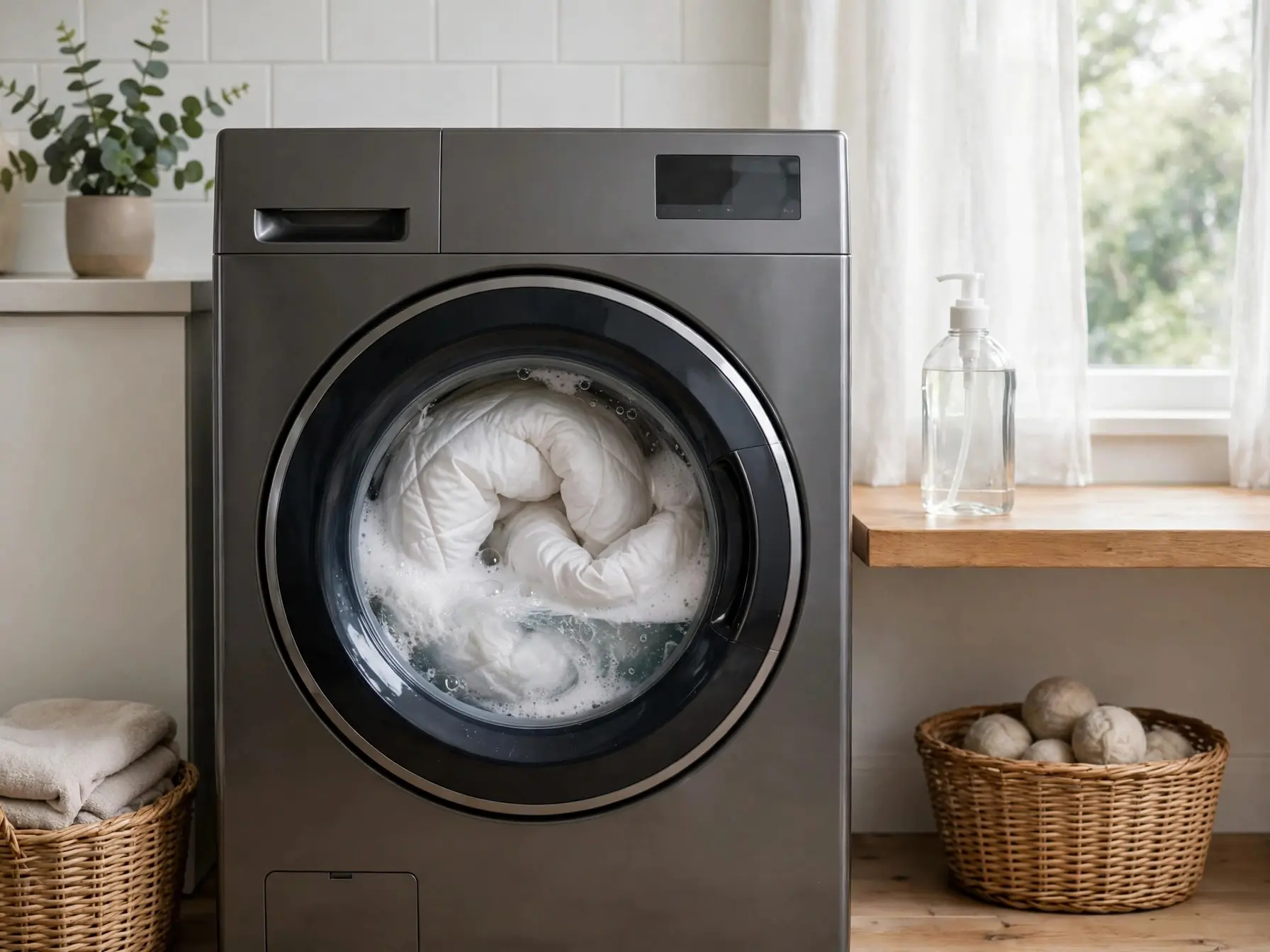
Wash on a gentle cycle at the temperature in the table below — 30°C for down and feather, 40°C for synthetic, cold for wool — with a mild detergent and only half the usual amount. Too much detergent is worse than too little: it gets trapped in the filling and dries into the clumps this whole guide is trying to avoid. Add an extra rinse to flush it out fully. Skip fabric softener entirely on down and feather — it coats the fibers and kills the loft. Let the machine finish its spin; a well-spun comforter dries in two cycles instead of four.
- Gentle cycle, mild detergent, half the usual amount
- Extra rinse — detergent trapped in filling causes clumps
- No fabric softener on down: it coats the fibers
4. Dry in stages — and dry it completely
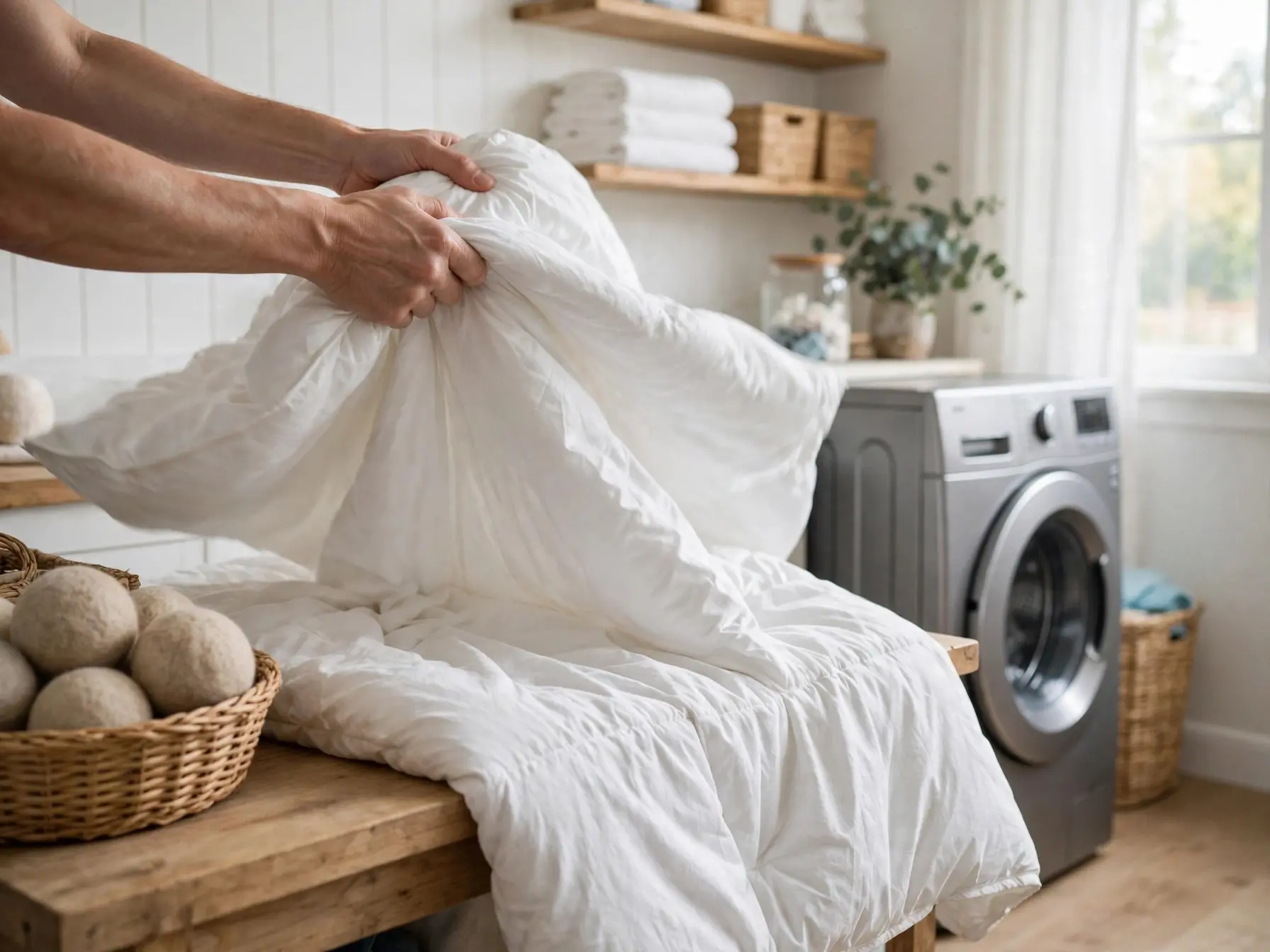
Drying is where comforters are won or lost. Tumble dry on low with two or three wool dryer balls, which beat the filling apart as they bounce, and pause every 30 minutes to pull the comforter out and shake it by hand, breaking up any clumps forming inside. Budget two to three full cycles — a thick comforter can feel dry on the outside while the middle is still damp, and damp filling clumps and mildews. Never hang a wet down comforter to dry: the weight drags the filling to the bottom and it dries in one solid lump.
- Tumble dry low with two or three dryer balls
- Pause every 30 minutes to shake the filling out
- It must be bone dry — damp down clumps and mildews
5. Store it so it stays fluffy
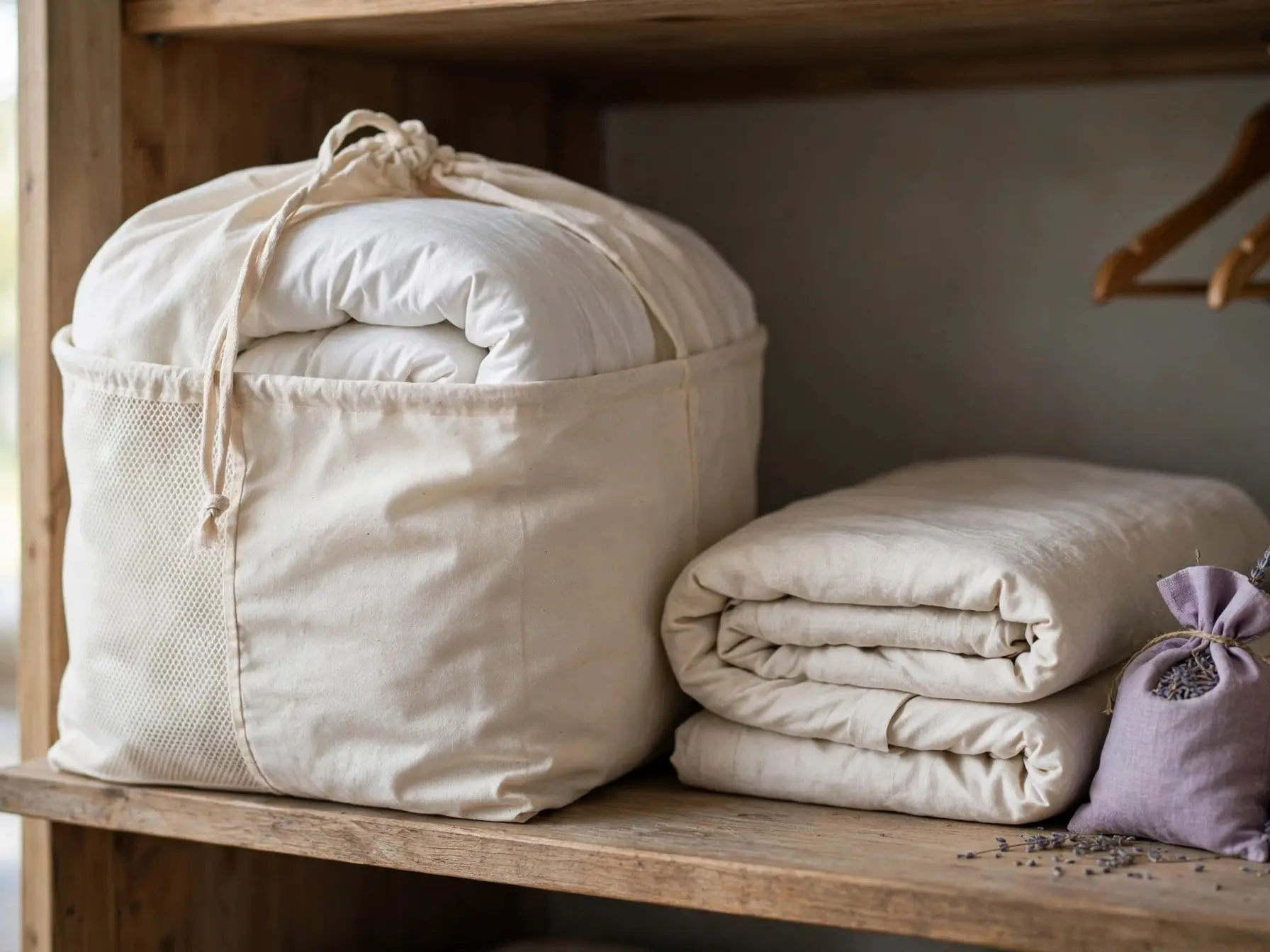
A clean comforter deserves clean storage. Put it in a breathable cotton storage bag — never a plastic one, which traps moisture — and keep it in a cool, dry closet, never the attic or the garage, where heat and damp grow mildew. Never vacuum-seal a down comforter: the compression crushes the loft, and down that has been flattened for months may never fully recover. Refold it differently each season so the creases move and the filling stays evenly distributed. Stored right, it comes out next winter as fluffy as the day you washed it.
- Breathable cotton storage bag, never plastic
- Cool, dry closet — never the attic or garage
- Refold it differently each season so creases move
Wash and dry by fill type
The temperature and cycle depend on the filling, not the size — so check the label for the fill type before you pick a setting. Down and feather want it cool and gentle; synthetic takes a warmer wash; wool wants a cold wool cycle and no tumble dryer at all.
| Fill type | Wash temperature | Cycle | Dry method |
|---|---|---|---|
| Down | 30°C / 86°F | Gentle, low spin | Tumble dry low with dryer balls, several cycles |
| Feather | 30°C / 86°F | Gentle, low spin | Tumble dry low with dryer balls |
| Synthetic | 40°C / 104°F | Normal or gentle | Tumble dry low, or line dry |
| Wool | Cold / 30°C | Wool cycle, gentle | Air dry flat — never tumble dry |
If the label is missing and you cannot tell the fill, wash it as if it were down: gentle cycle at 30°C, low-spin, tumble dry low with dryer balls. The gentle route is safe for every fill type; the wrong hot wash is not.
Questions, answered
How do you know if a comforter fits in your washing machine?
Load it dry and press it down: if you can slide your flat hand between the comforter and the top of the drum, it fits — volume, not weight, is the limit. A standard home machine usually takes a twin or full comforter; king-size and thick down comforters usually need a large-capacity laundromat machine. Top-loaders with a center agitator are the exception: the agitator can tear seams, so use a front-loader instead.
How often should you wash a comforter or duvet?
Wash the duvet cover every one to two weeks, like sheets, and the comforter itself two to three times a year — more often if you sleep without a cover or have allergies. A duvet cover is the real protection: it takes the nightly sweat and oils, so the filling stays clean for months. Spot-clean small marks between washes instead of running a full cycle.
Can you wash a down comforter at home or must it be dry cleaned?
You can wash most down comforters at home if the label allows it — check for 'dry clean only' first, and respect it. Use a front-loader with room to spare, a gentle cycle at 30°C, mild detergent, and an extra rinse; then tumble dry low with dryer balls until it is completely dry. The risk is not the wash but an incomplete dry: damp down clumps and mildews, so budget two to three drying cycles.
Why did my comforter go lumpy after washing, and can I fix it?
Lumps mean the filling clumped while wet and dried that way — usually because the machine was too full or the dryer stopped too soon. Fix it by tumble drying on low with two or three dryer balls, pausing every 30 minutes to shake the comforter out by hand and break the clumps apart. Repeat until every section feels evenly fluffy; a fully dry comforter should feel uniform, with no cold, dense patches.
Keep reading
Bedding care is one part of a bedroom that stays fresh on a schedule. Our guide to how to clean a washer keeps the machine that washes the comforter free of odor and residue, laundry room organization puts the detergent, dryer balls and storage bags where you can reach them, and how to organize anything is the five-step method behind every system on this site. Start with the fit test, then let the routine spread.
Five steps, one rule: give it room to move, wash it gentle, and dry it completely. Do it that way and the comforter comes out as fluffy as it went in — and stays that way until next season.