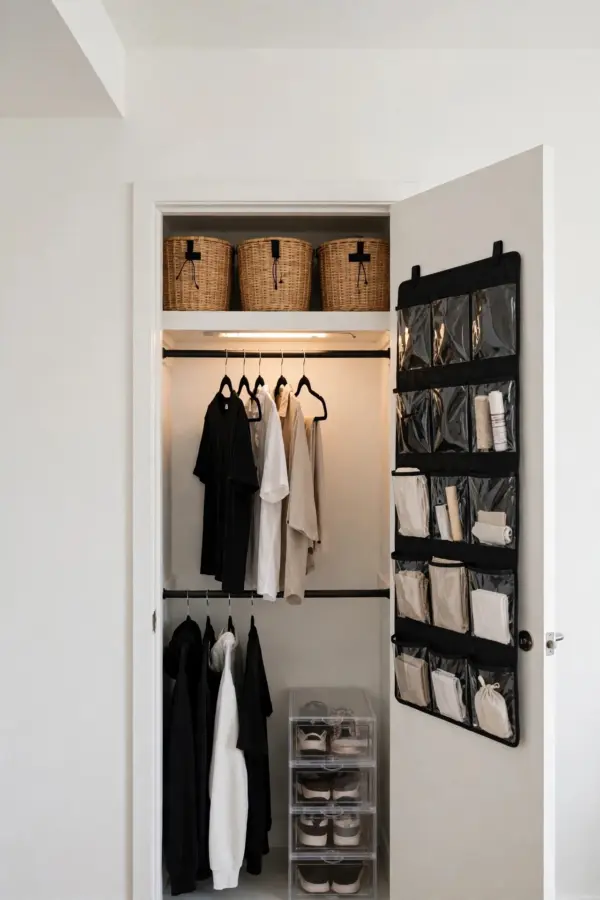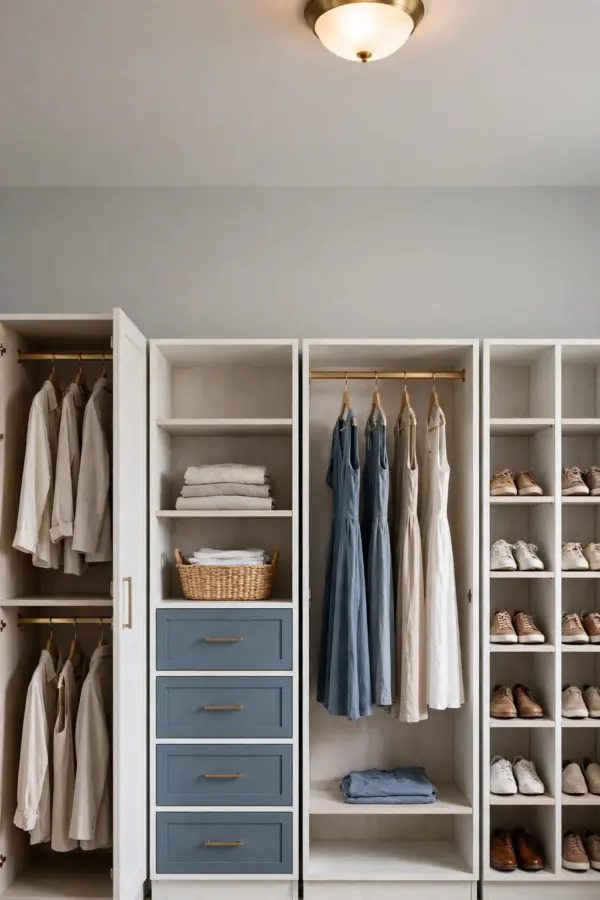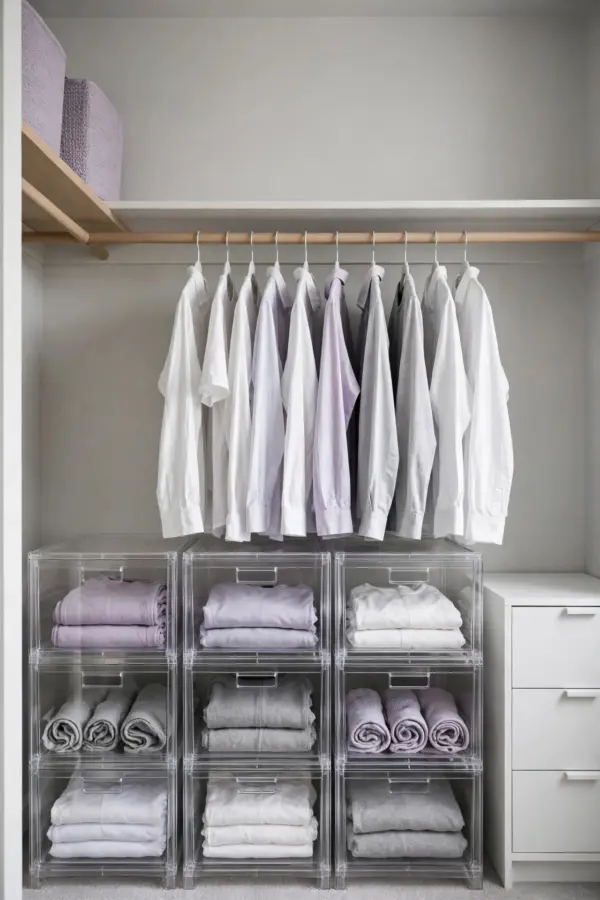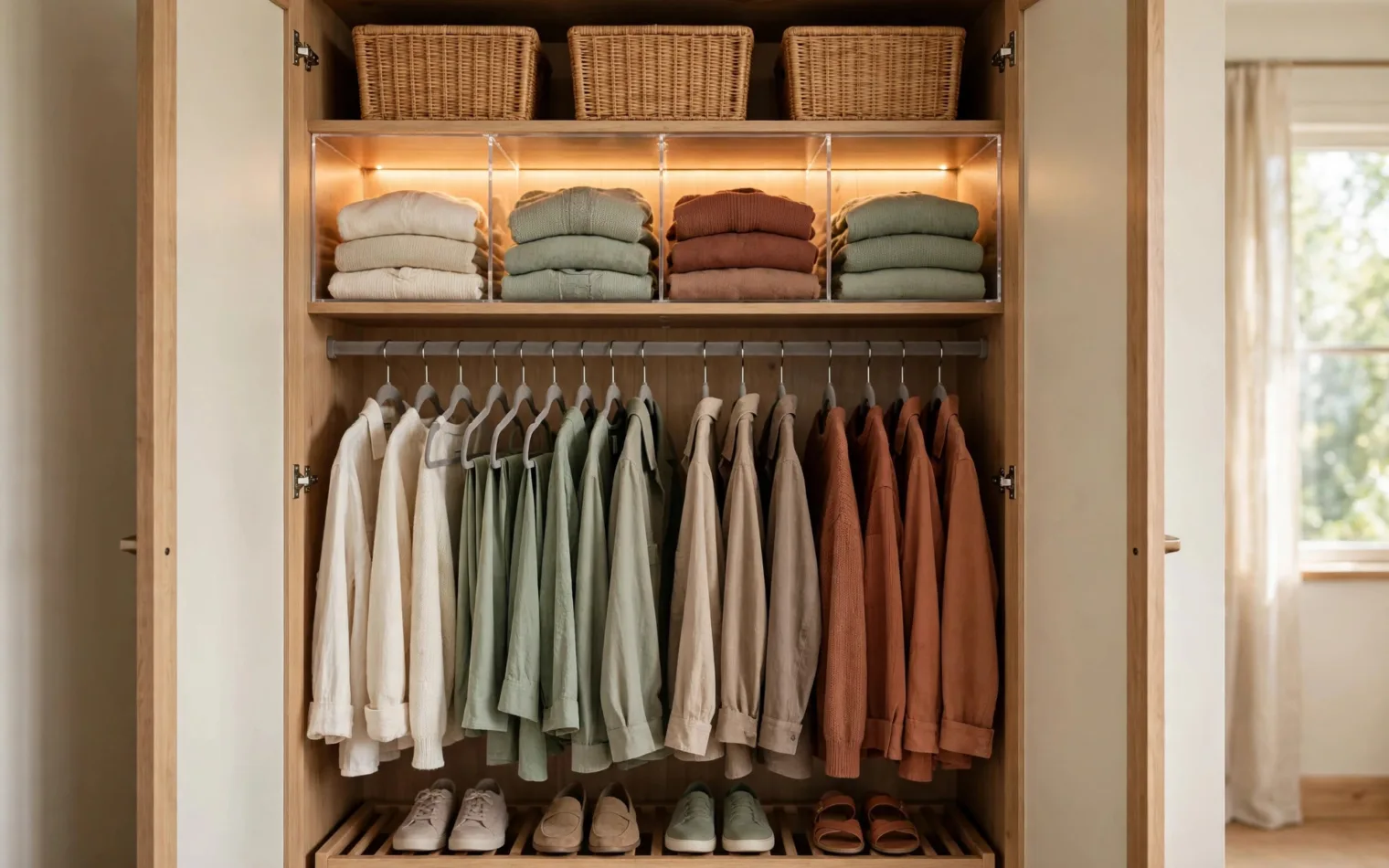
The best way to organize a closet in 2026 is to give every zone a job: hanging clothes on the rod, folded stacks on the shelves, shoes on the floor, and small things on the back of the door. Start with a quick declutter, put the pieces you wear most at eye level, and keep it that way with a ten-minute weekly reset.
Thank you for reading this post, don’t forget to subscribe!A small closet stays tidy when everything has a zone. This closet organization guide walks through one ordinary reach-in closet, zone by zone: the rod, the shelves, the drawers, the floor and the back of the door. Each idea is small on its own, but together they build a closet you can reset in minutes — a simple system, not a one-weekend tidy-up.
Start at the rod and work down. You do not need a custom system or a big budget. Most of these ideas use hangers, bins and dividers you can add in one afternoon, and they suit renters because nothing needs drilling.
The hanging rod
The rod holds most of what you wear, so it sets the tone for the whole closet. Slim hangers, clear categories and one fixed home per item keep it calm.
Swap every hanger for slim velvet hangers
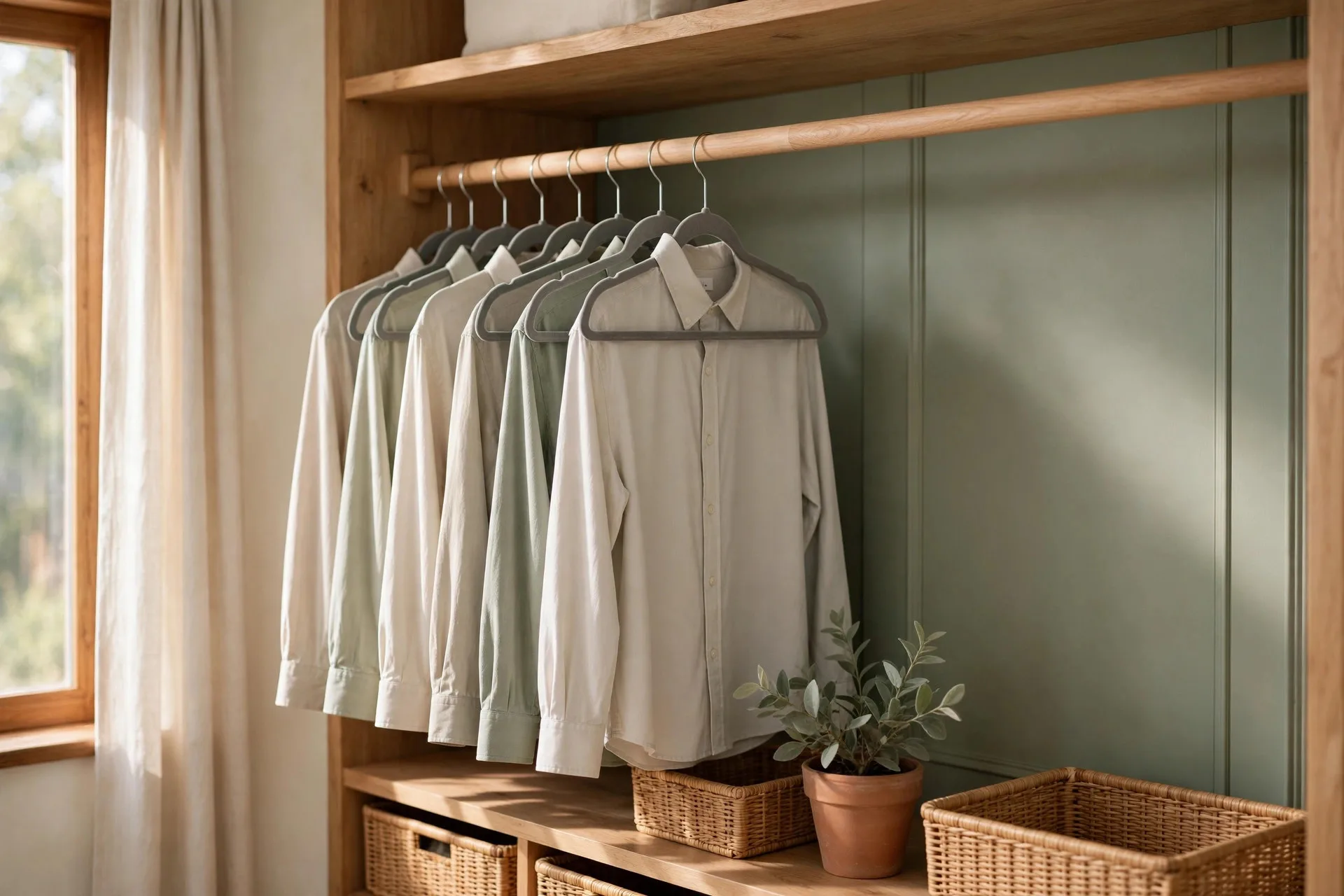
Matching slim hangers are the single biggest space-saver in a small closet. A standard plastic hanger is about 1 cm thick; a velvet one is closer to 0.5 cm, so a 90 cm rod can hold roughly a third more clothes. Clothes also stop sliding onto the floor. Switch the whole rod at once, in one color, and the closet looks calmer straight away. Keep five spare hangers, no more, so the rod never creeps back to crowded.
Group clothes by type, then by color
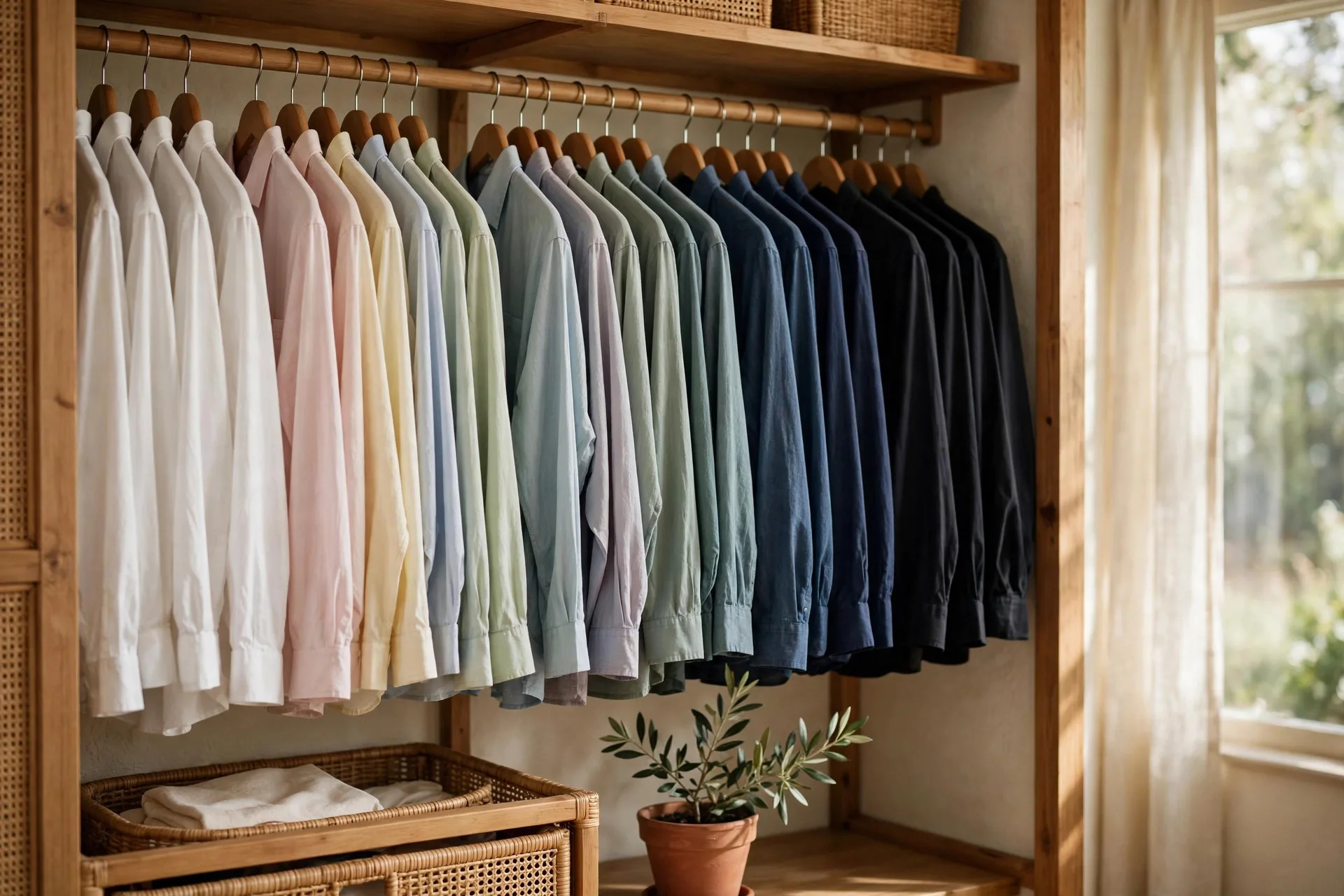
Hang clothes in category blocks: shirts with shirts, trousers with trousers, dresses together. Inside each block, run light to dark. It sounds fussy, but it makes getting dressed faster because your eye lands on the right section at once, and it shows you duplicates you did not know you owned. If two tops are near-identical, one can usually go. Keep each block separated by a finger-width gap so the groups stay readable.
Put daily clothes at eye level
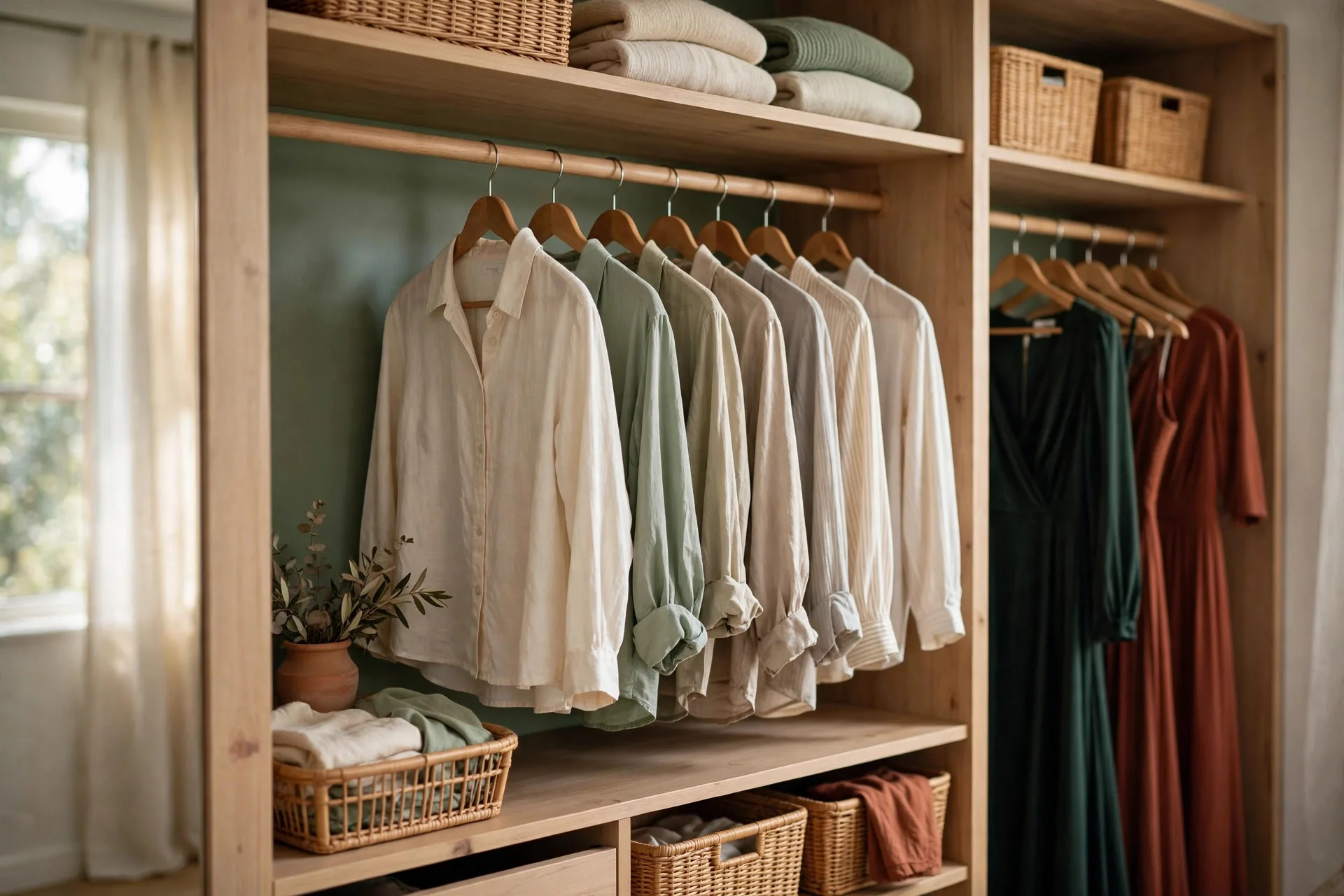
The middle of the rod, roughly between your hip and your eye line, is prime space. Reserve it for the clothes you wear every week. Occasion dresses, spare suit covers and anything seasonal move to the far ends. This one habit stops the daily rummage that pulls a tidy rod apart, because the things you reach for are never buried. Re-check the prime zone once a season and demote anything you have stopped wearing.
Use cascading hanger hooks to hang down, not out
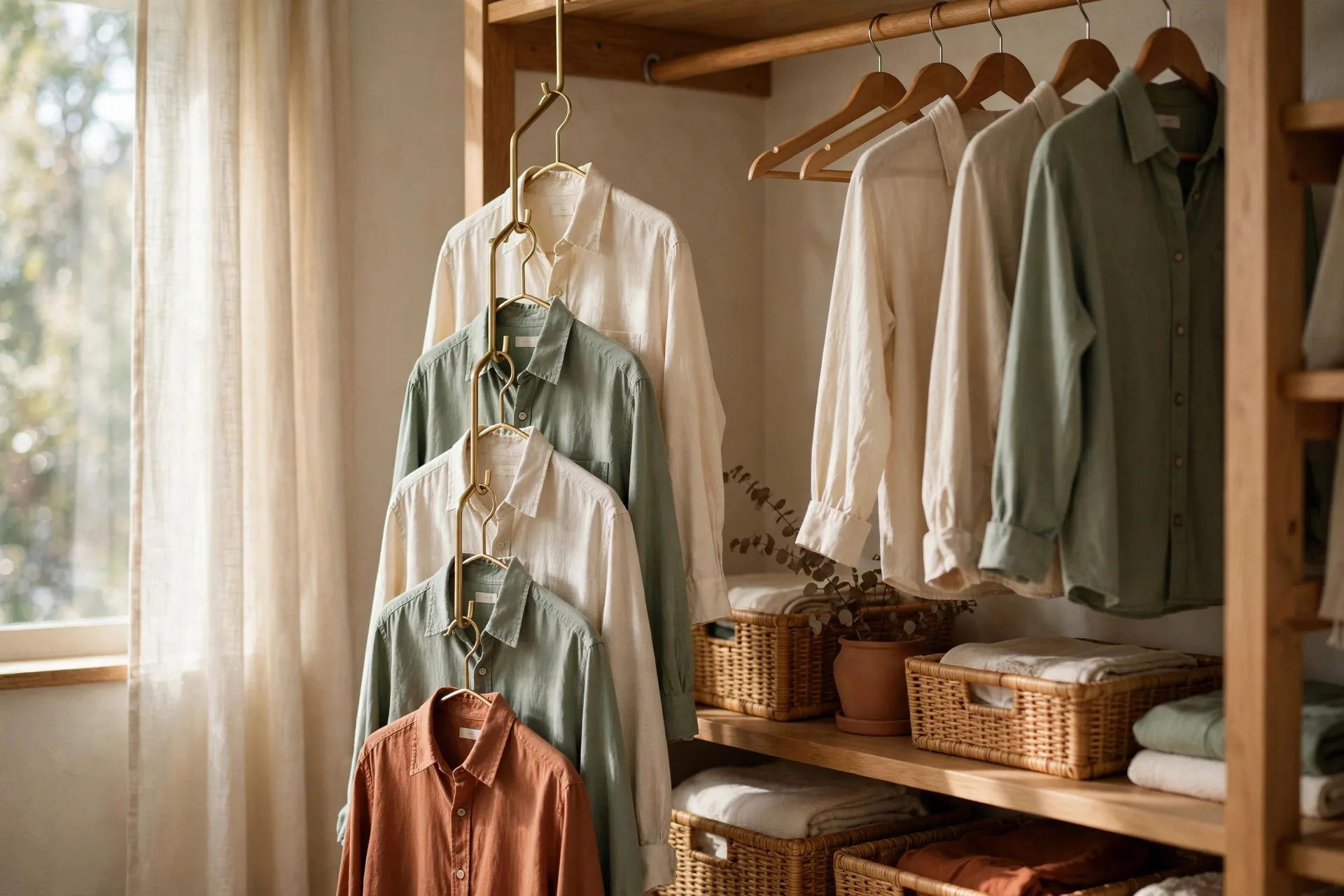
Cascading hooks clip onto a hanger and let the next one hang below it, so five shirts take the rod space of one and stack down the wall of the closet instead. They work best for tops and light shirts that you group as a set, like work blouses. A pack of ten hooks costs very little and can win back 20 to 30 cm of rod. Do not cascade heavy coats; the stack gets too weighty and creases the bottom pieces.
Add a second rod below for shirts and trousers
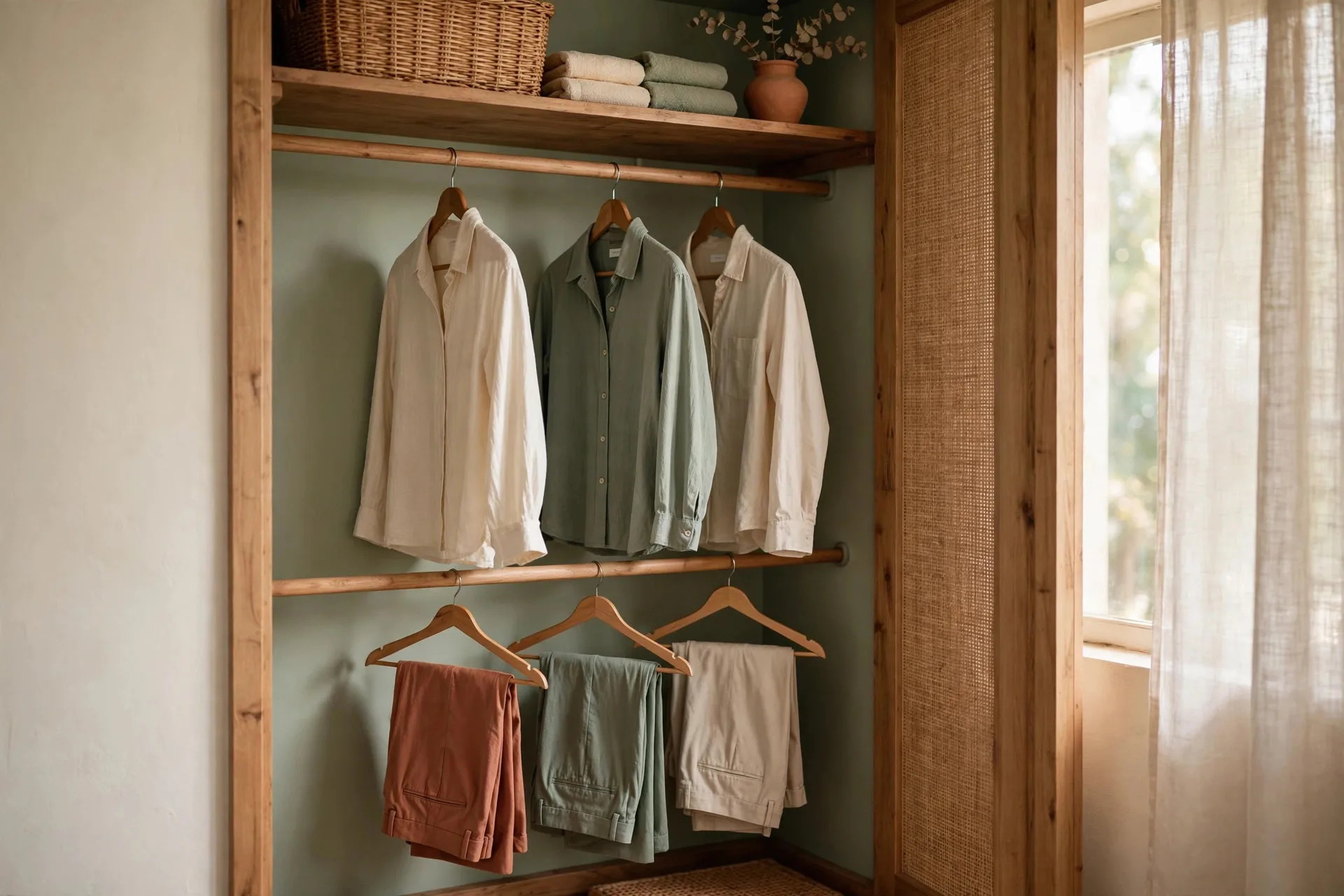
Most reach-in closets waste the space under short hanging clothes. A tension rod or a hanging rod extender fitted about 90 cm below the main rod doubles hanging room for shirts, blouses and trousers folded over hangers. Measure first: shirts need roughly 90 cm of drop, so the lower rod suits tops while the top rod takes dresses and longer pieces. It is a renter-friendly change because tension rods leave no holes.
Hang tomorrow’s outfit on a valet hook
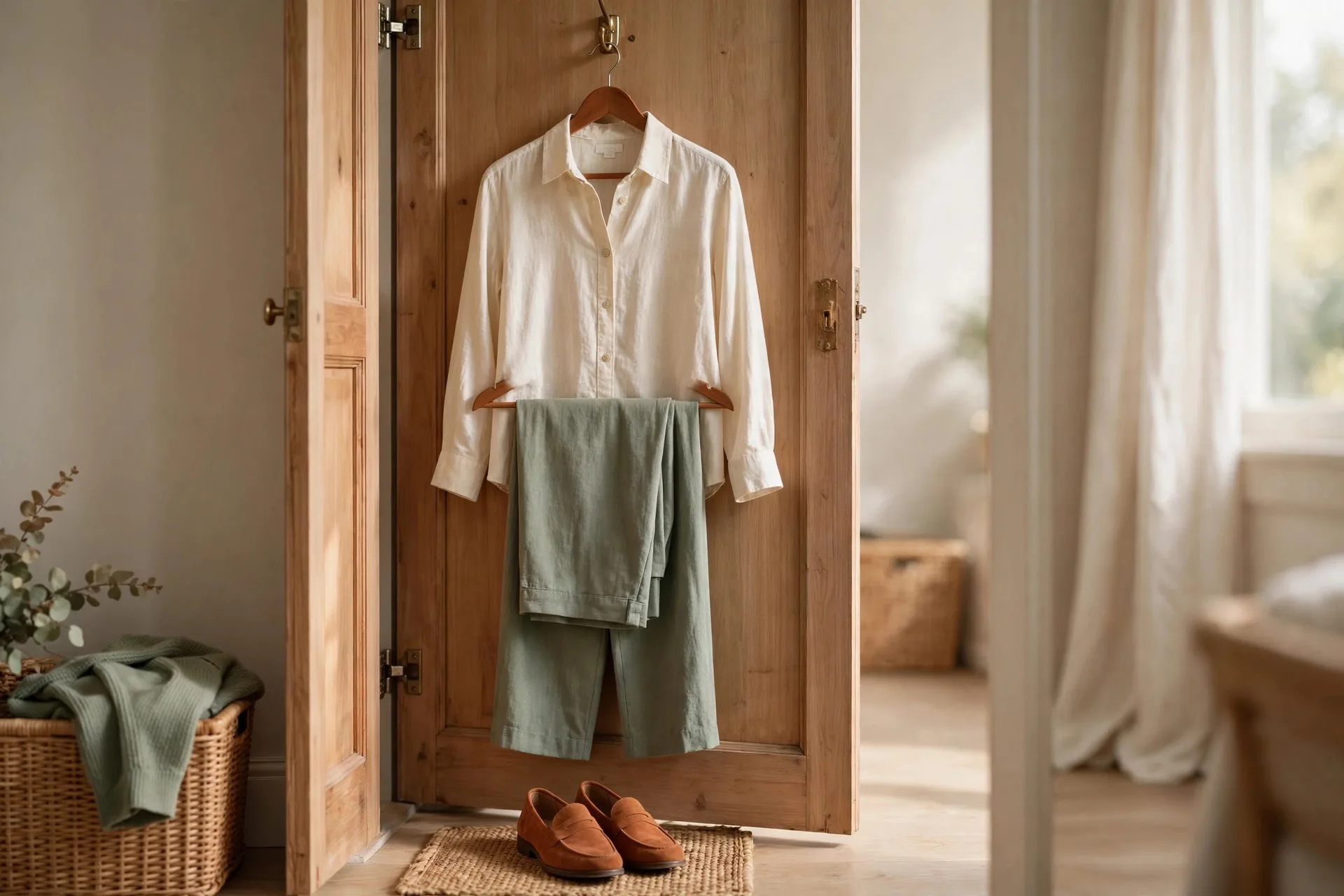
Choose tomorrow’s outfit the night before and hang it on one hook or the end of the rod. It takes two minutes and ends the morning habit of pulling out five things and dropping four on a chair. The hook also gives worn-once clothes a home that is not the floor: if it can be worn again, it waits on the valet hook instead of mixing back in with clean laundry.
Mark where each category starts with divider discs
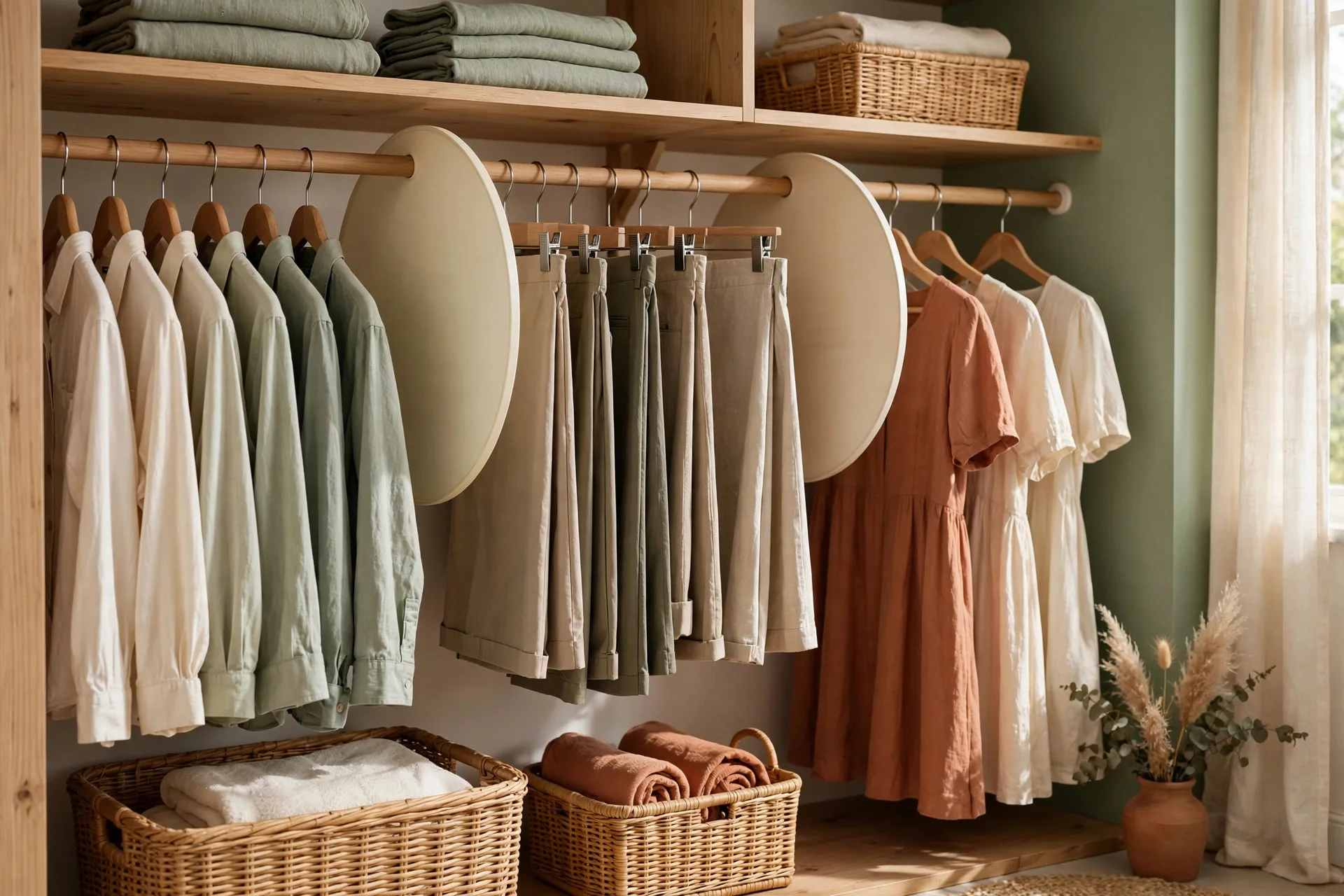
Round closet dividers, the kind made for baby clothes, work just as well for adults. Slip one over the rod wherever a category changes and leave it blank or mark it with a small sticker dot. Dividers stop the slow slide where shirts drift into the dress section until nothing has a boundary. They also make the ten-minute reset quicker, because you can see at a glance which group has wandered.
Hang jeans from S-hooks on the rod
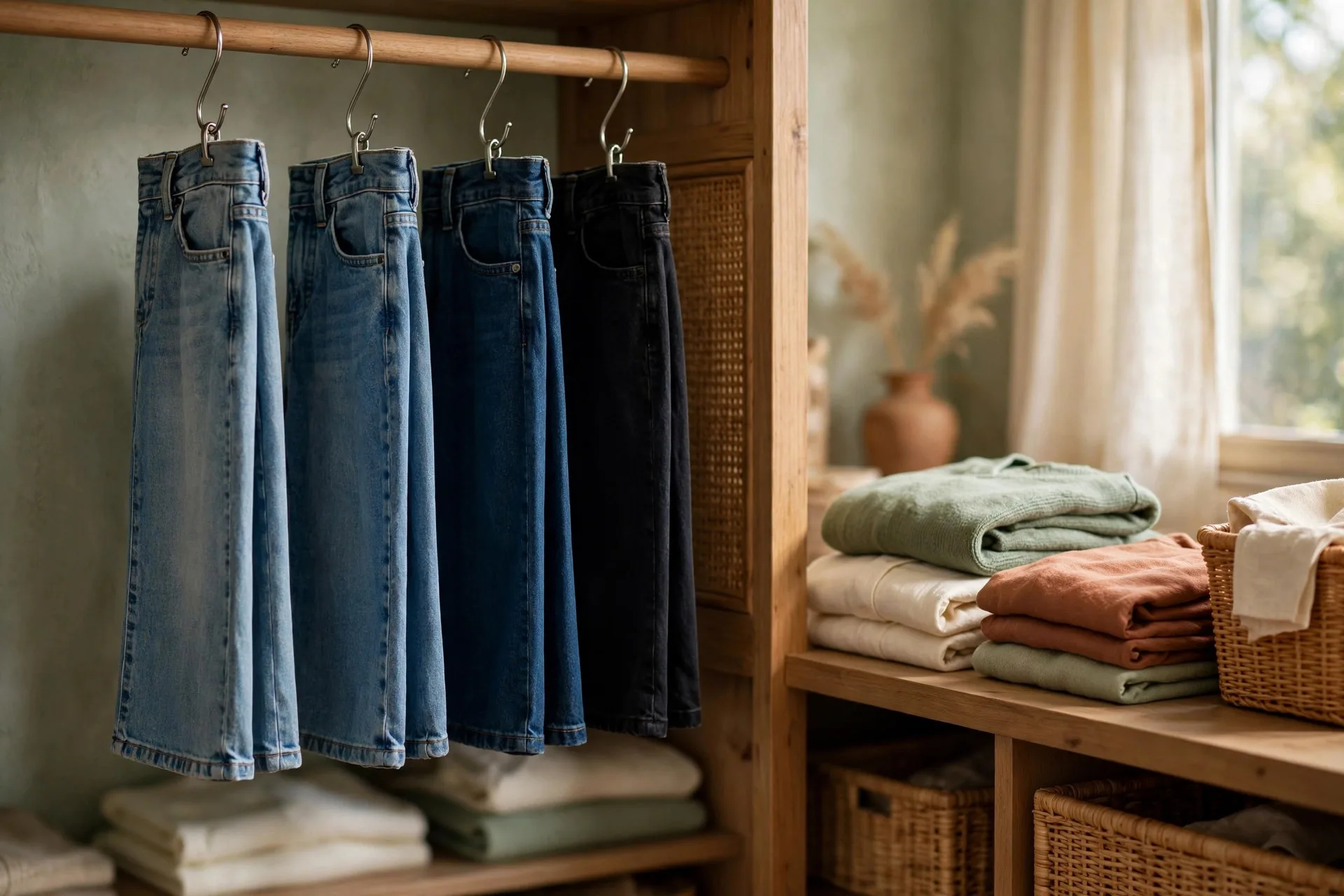
Jeans folded on a shelf form a stack that collapses every time you pull the middle pair out. Hang them instead: clip an S-hook through the back belt loop and hook it over the rod. Four or five pairs hang in the space of two hangers, you can see every wash at once, and they come off without disturbing the rest. It suits trousers with sturdy belt loops; keep delicate fabrics on hangers.
Shelves and folded clothes
Shelves fail when stacks lean and merge. Short stacks, upright folds and dividers keep every pile separate and visible.
File-fold T-shirts so every one shows
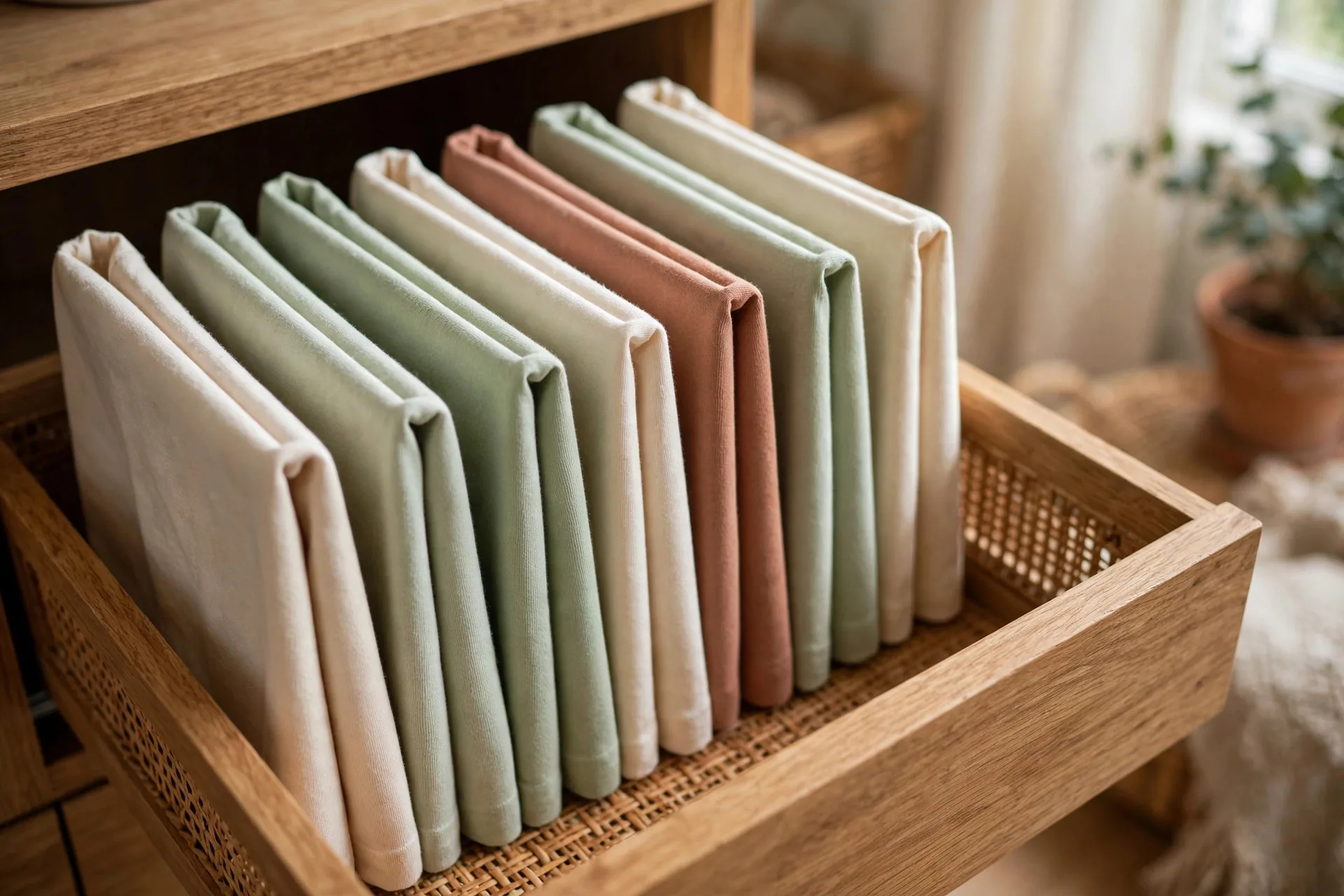
Fold each T-shirt into a neat rectangle and stand it upright in a drawer or bin, front edge up, like files in a drawer cabinet. You see every shirt at once and pull one out without unfolding the pile. It works for kids’ clothes, gym tops and pyjama sets too. If a row starts to slump, the drawer is overfilled; move two pieces out and the files stand again.
Keep folded stacks upright with shelf dividers
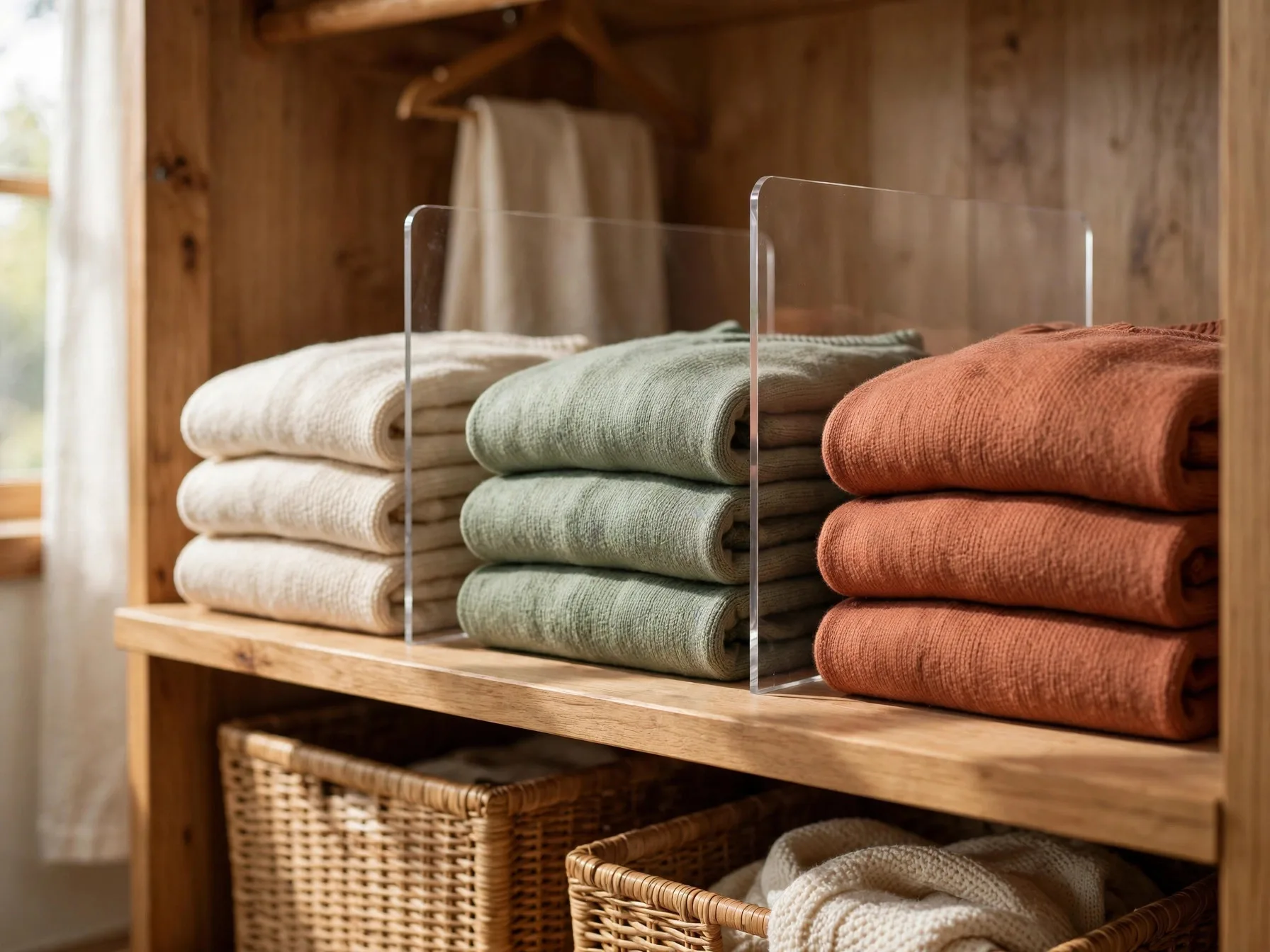
Clear acrylic dividers clip onto a shelf and act as bookends for folded clothes. Keep stacks short, four to six pieces, with a divider on each side, and the piles stop leaning into each other. They are ideal for sweaters and jeans on an open shelf. Measure your shelf thickness before buying; most dividers fit shelves 1.5 to 2.5 cm thick, and they slide off for cleaning with no tools.
Fold sweaters, never hang them
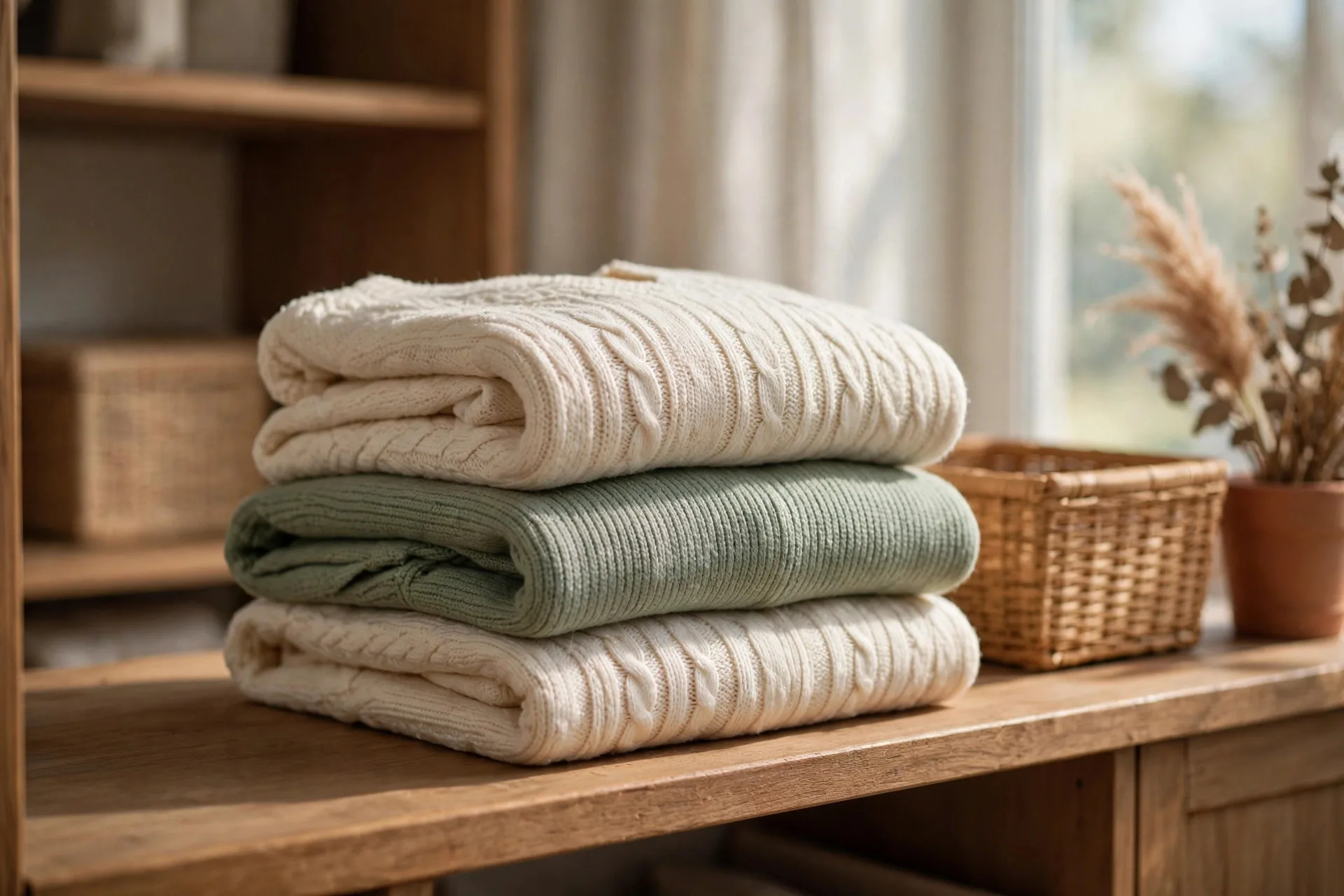
Knitwear stretches on hangers and grows shoulder bumps that ironing barely fixes. Fold sweaters instead: sleeves across the back, body folded in thirds, and stacked four high at most so the bottom one does not crush. Heavy knits go at the bottom of the stack. If shelf space is short, a hanging fabric shelf with wide compartments gives sweaters a flat home without the hanger damage.
Roll gym clothes and pyjamas into an open bin
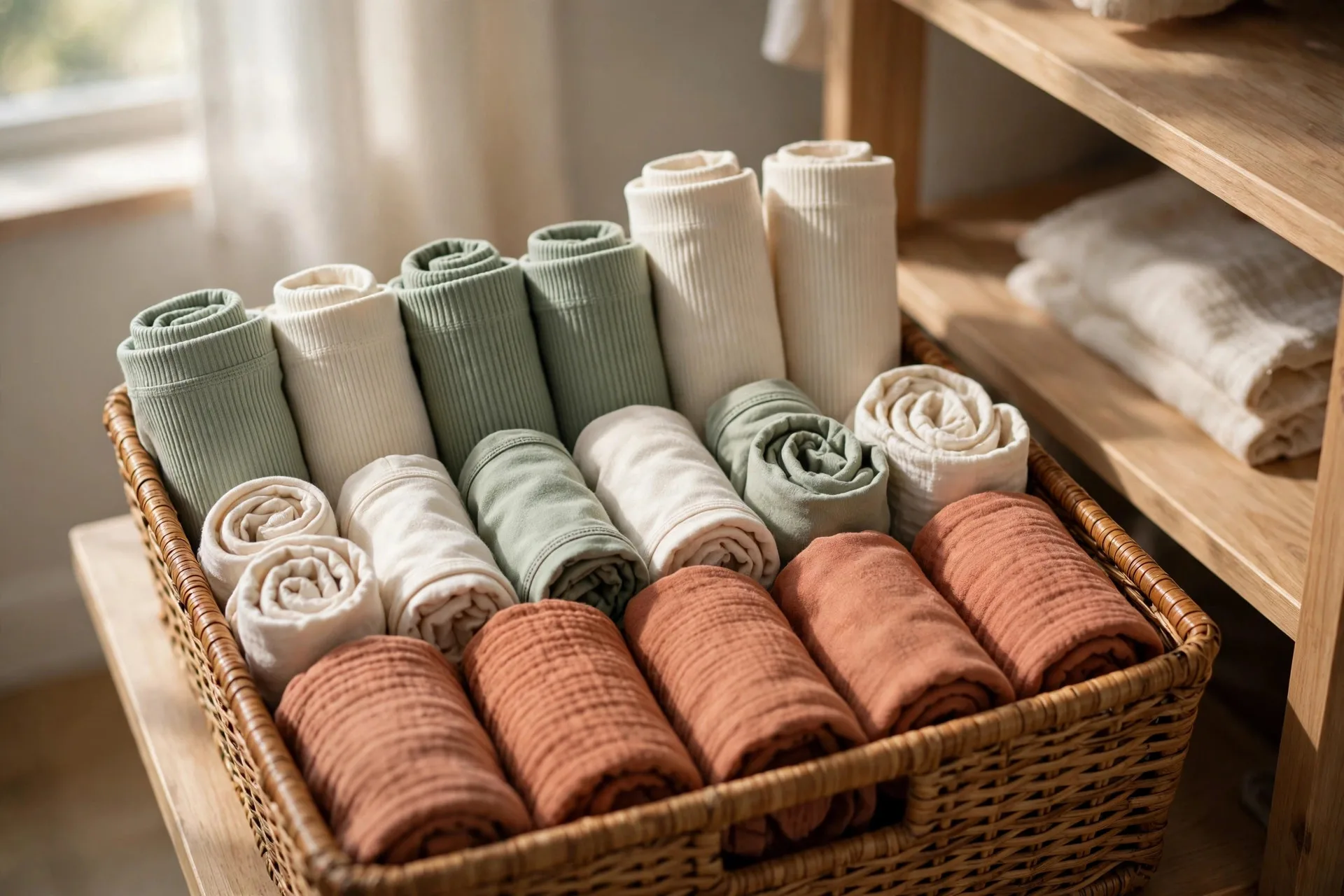
Soft, crease-proof clothes do not need folding precision. Roll leggings, vests, gym tops and pyjamas and stand the rolls in an open bin or basket on a shelf. Rolling takes half the space of folding and you can see each item from above. One bin per type keeps it simple. Choose a bin with handles so you can carry the whole set to the bed on gym mornings.
Keep one shelf per category, with no overflow shelf
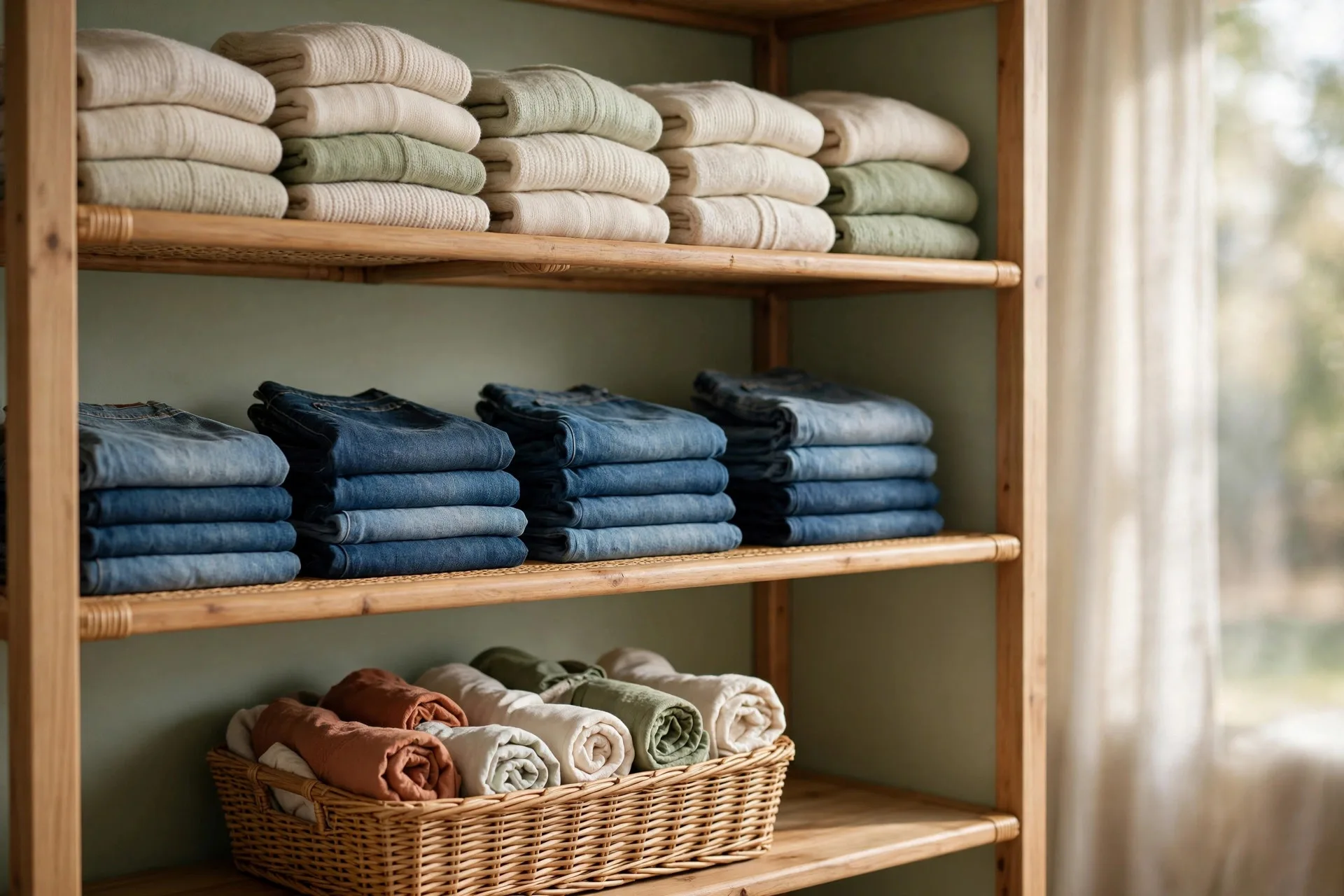
Give each shelf one job: sweaters here, jeans there, the rolled-clothes bin below. The rule that makes it stick is having no overflow shelf where anything extra can land, because overflow space is where mess starts. When a category outgrows its shelf, that is the signal to let a few pieces go, not to spill into the next shelf. Write the category on a small tag on the shelf edge if your household shares the closet.
Split a tall shelf with a riser
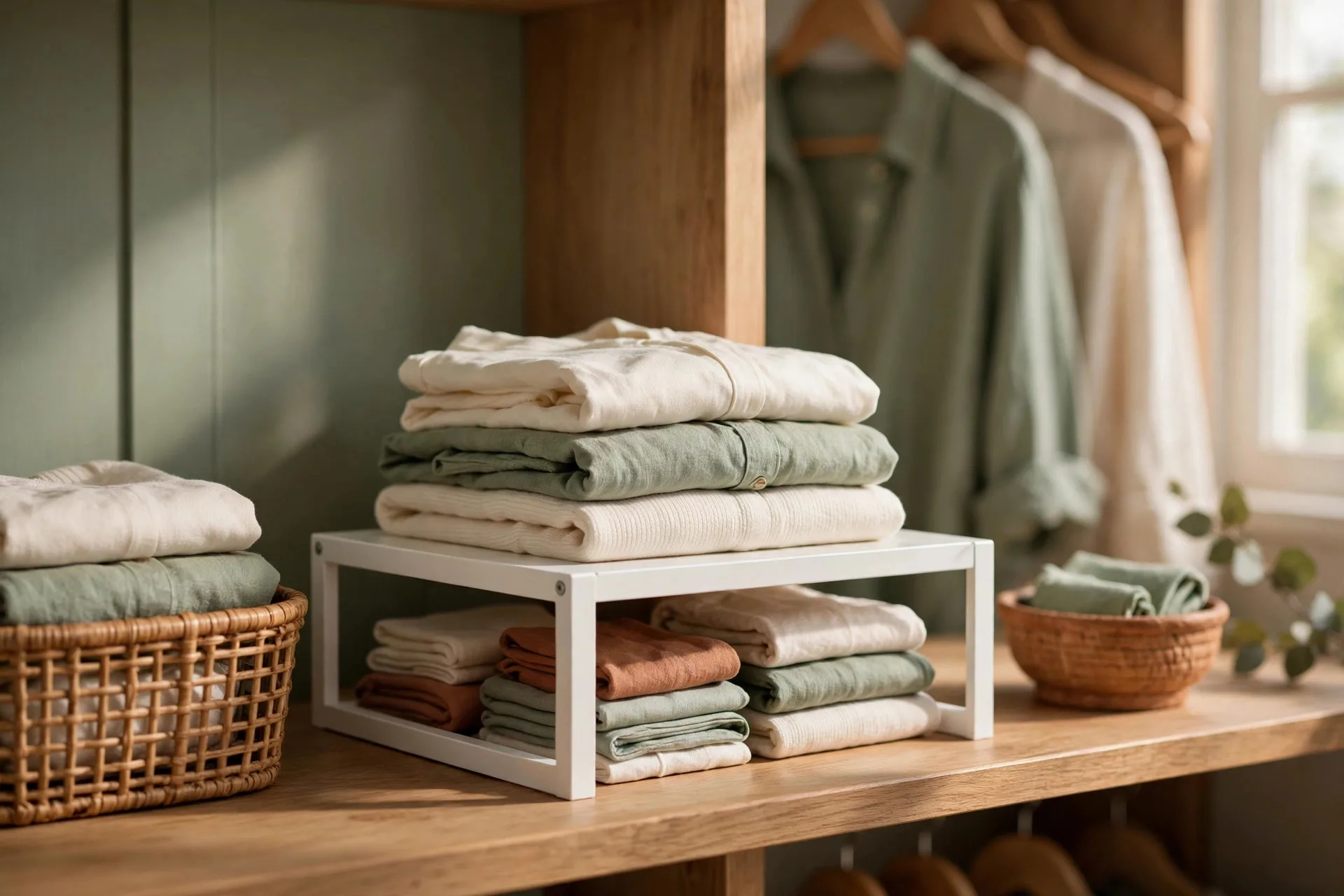
Closet shelves are often 30 to 40 cm apart, and folded clothes only use the bottom half. A riser, a small standing shelf like the ones made for kitchen cupboards, splits that tall gap into two levels. Put the daily stack on the riser and lesser-used pieces underneath. Measure the gap before you buy and leave 2 cm of clearance. It is a cheap way to gain a whole extra shelf without touching a drill.
Store off-season clothes in bins on the top shelf
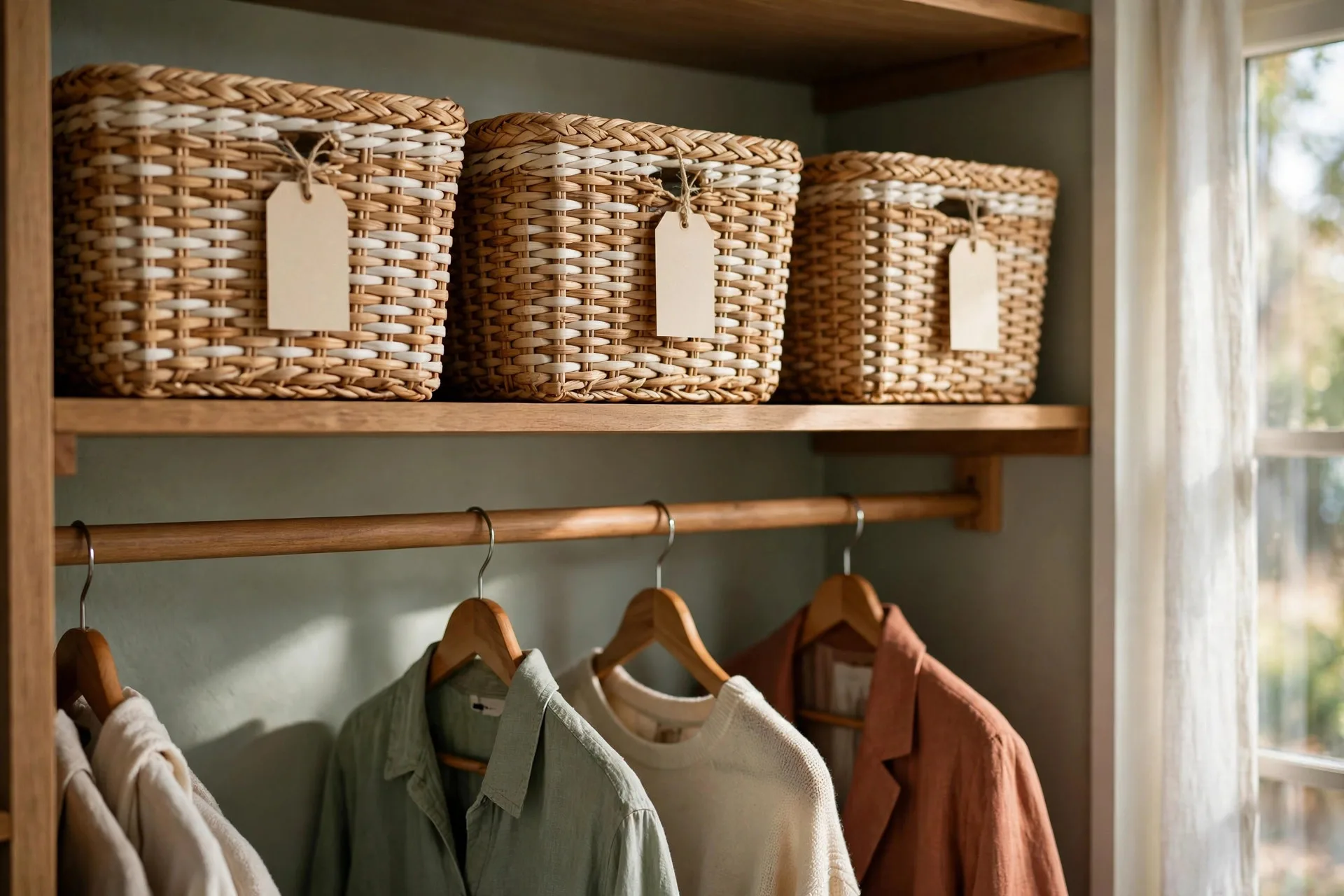
The top shelf is hard to reach, so it belongs to the clothes you will not touch for months. Pack off-season pieces into matching bins, one per season or per person, and add a plain tag so you know what is inside without climbing up. Three 40 cm bins usually cover a winter wardrobe for one person. Keep the current season’s spares lower, where a step-stool is not part of getting dressed.
Drawers, bags and small things
Small items cause most of the daily mess. Give each type a divided, shallow home and they stop wandering.
Divide drawers for socks and underwear
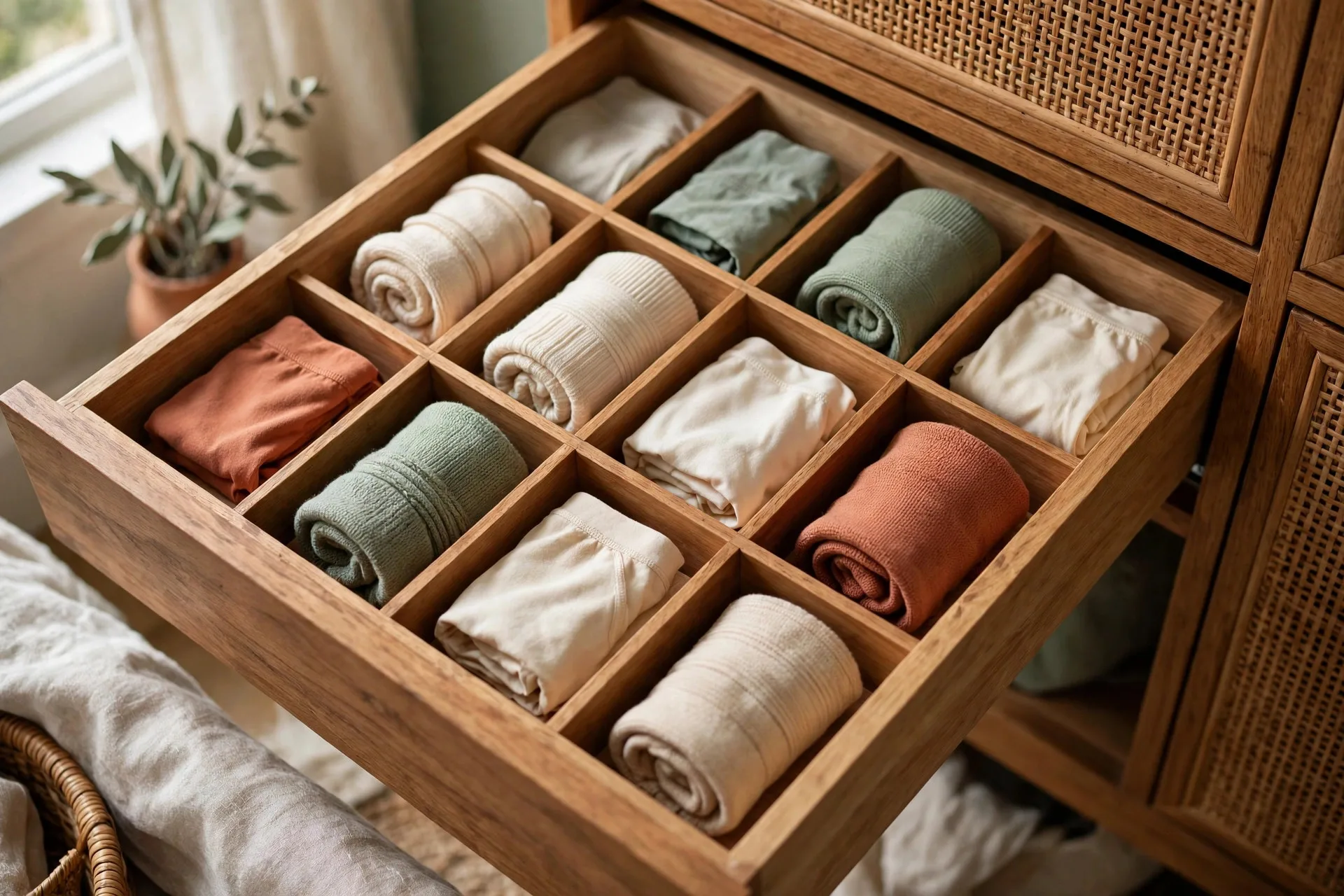
A drawer without dividers becomes a single padded tangle within a week. Slot in a set of small boxes or a honeycomb divider so socks, underwear and tights each get a cell. Roll socks in pairs and stand them in rows; you will see at once when laundry is running low. Dividers made from cut-down small boxes work just as well to start. Keep the drawer three-quarters full at most, or the cells stop holding their shape.
Keep handbags upright, stuffed, between dividers
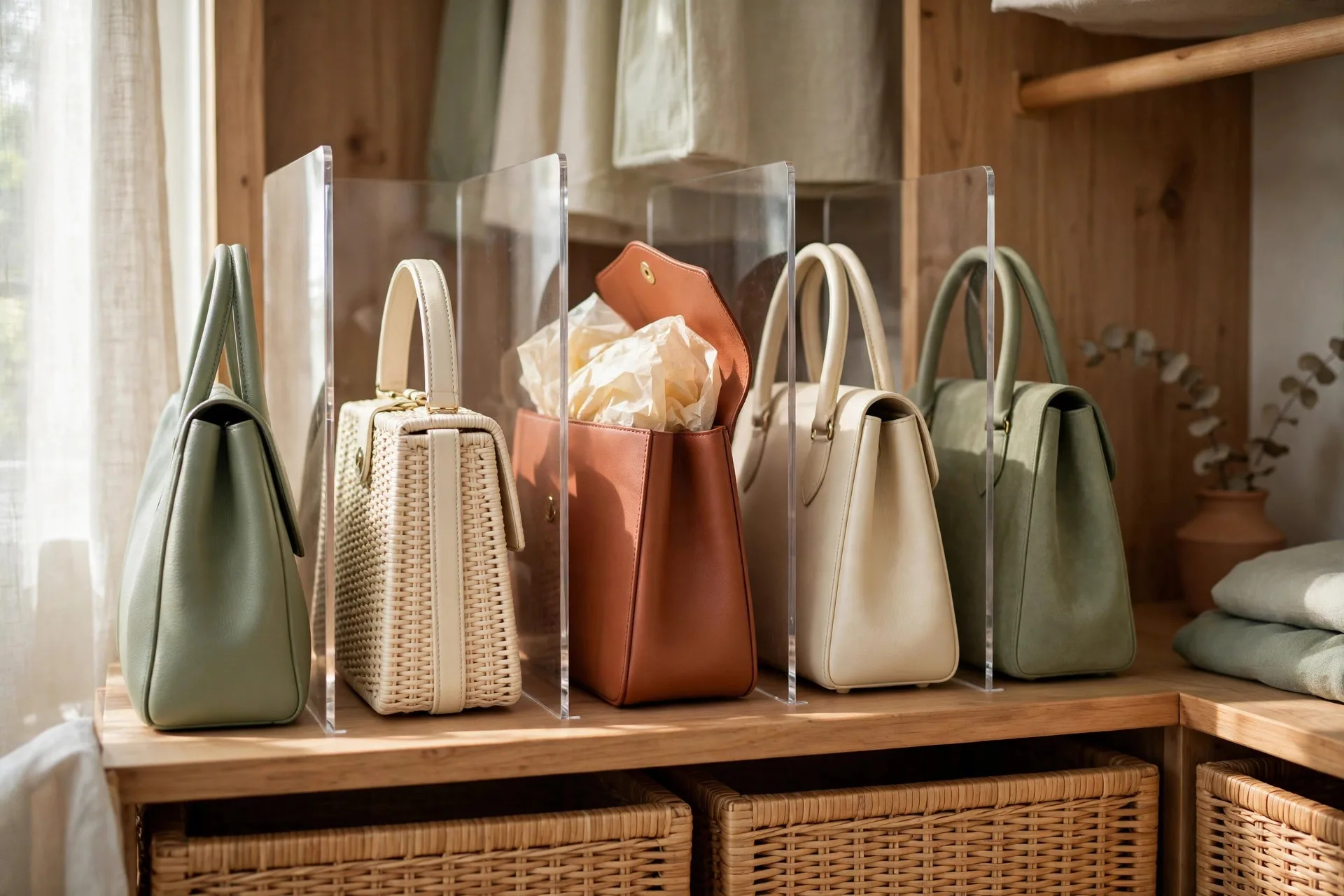
Bags stored flat in a pile crack, slump and hide each other. Stand them upright on a shelf like books, with a divider or a magazine file between them, and stuff soft bags with old T-shirts or tissue so they keep their shape. The bag you use daily goes at the front, the rest behind. If your collection is bigger than the shelf, that is the honest limit; a door hook can take the overflow of two everyday bags.
Corral belts and ties in a shallow tray
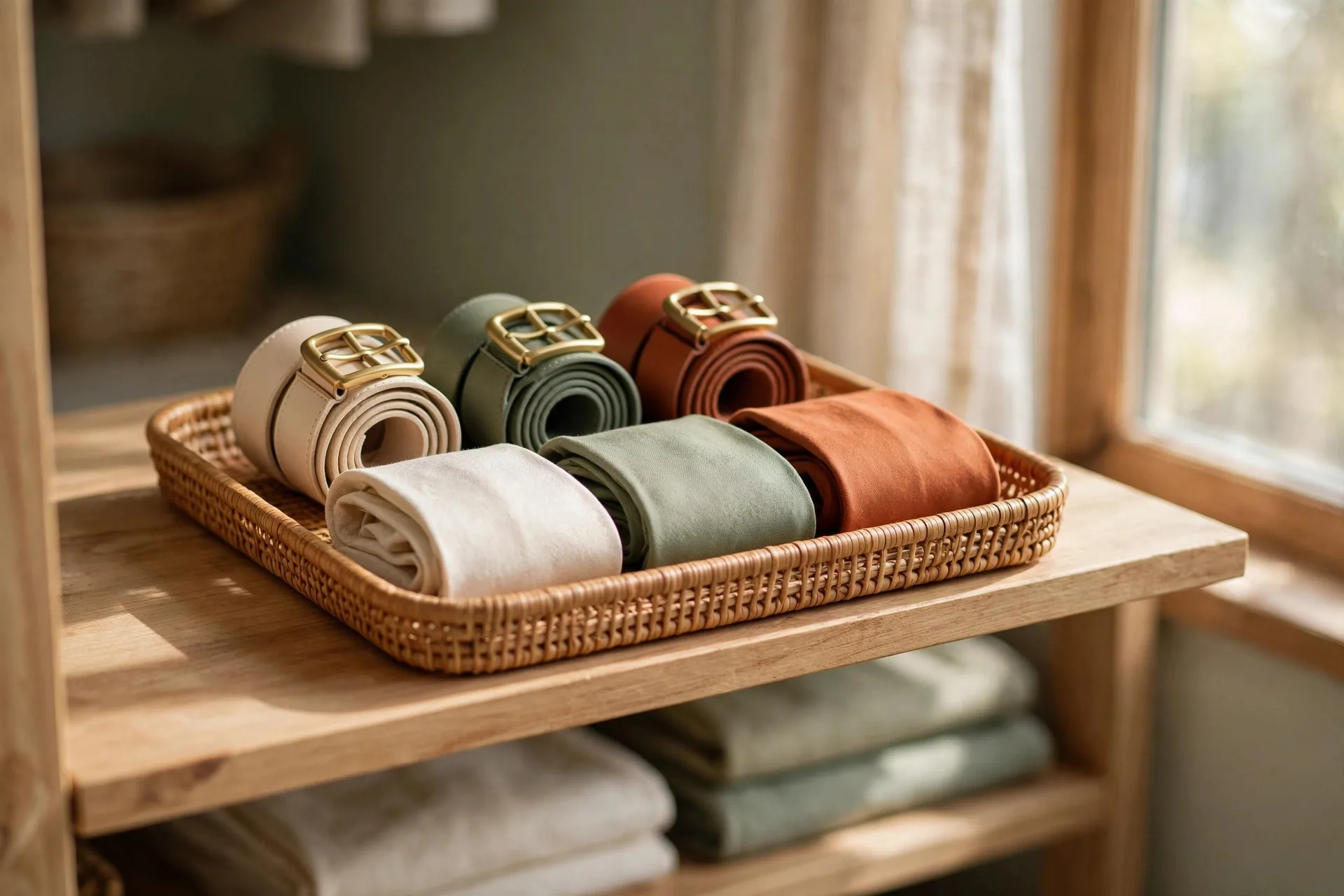
Belts draped over a hook tangle and ties slip off hangers. Roll each belt buckle-out and stand the rolls in a shallow tray, a cutlery insert or a small box on a shelf, buckles up so you can pick by color. Ties fold into the same tray or roll into a drawer cell. Keeping them at waist height near the trousers means the whole outfit comes together in one spot.
Store scarves and gloves in packing cubes
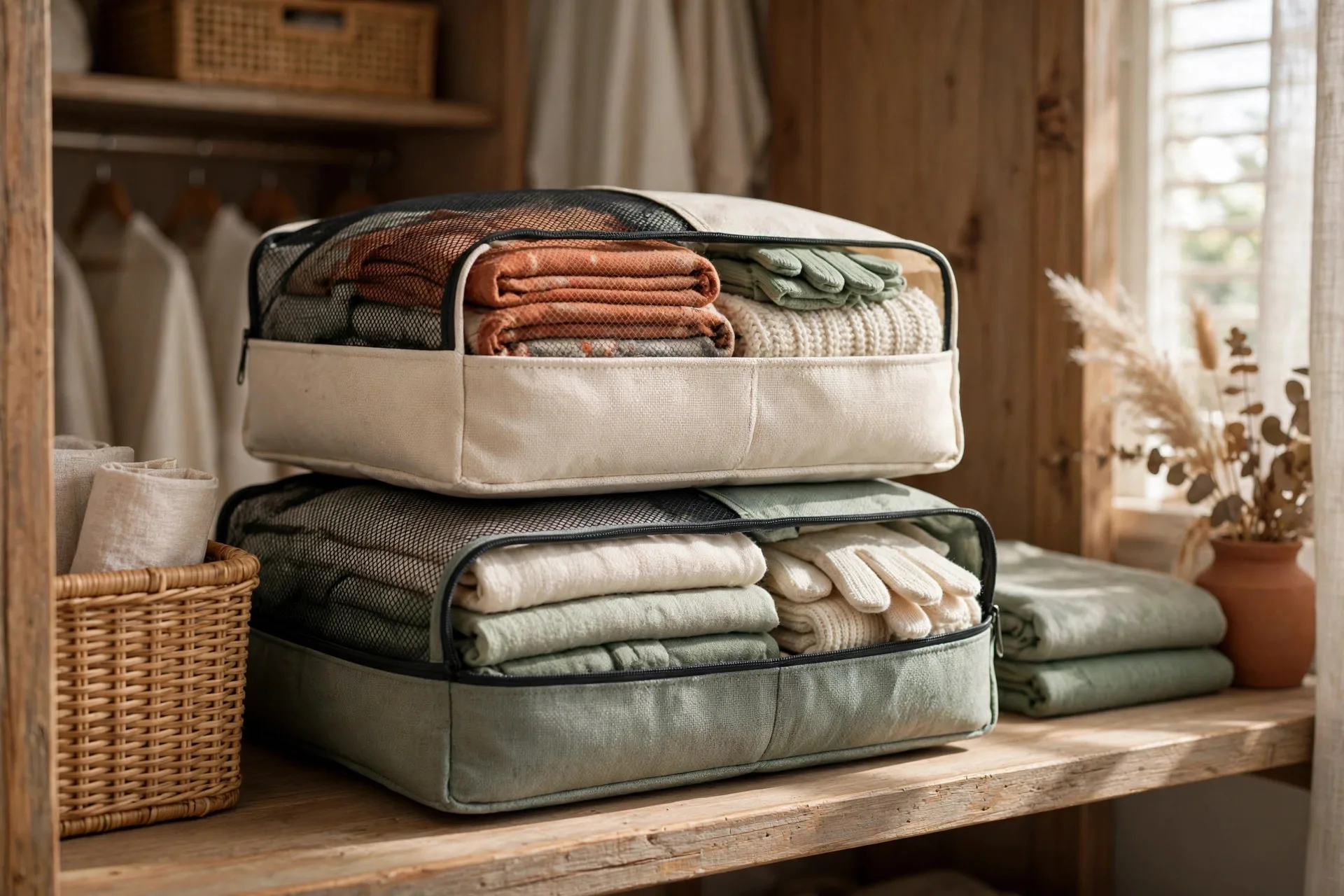
Scarves, gloves and hats are bulky, slippery and always needed in a hurry. Packing cubes, the soft zip cases made for suitcases, hold a whole category in one grab-able block on a shelf or in a bin. Roll scarves so the mesh top shows what is inside. One cube for winter pairs, one for lighter wraps. In summer the winter cube moves to the top shelf and swaps with the off-season bin.
Put jewellery in a vertical hanging organizer
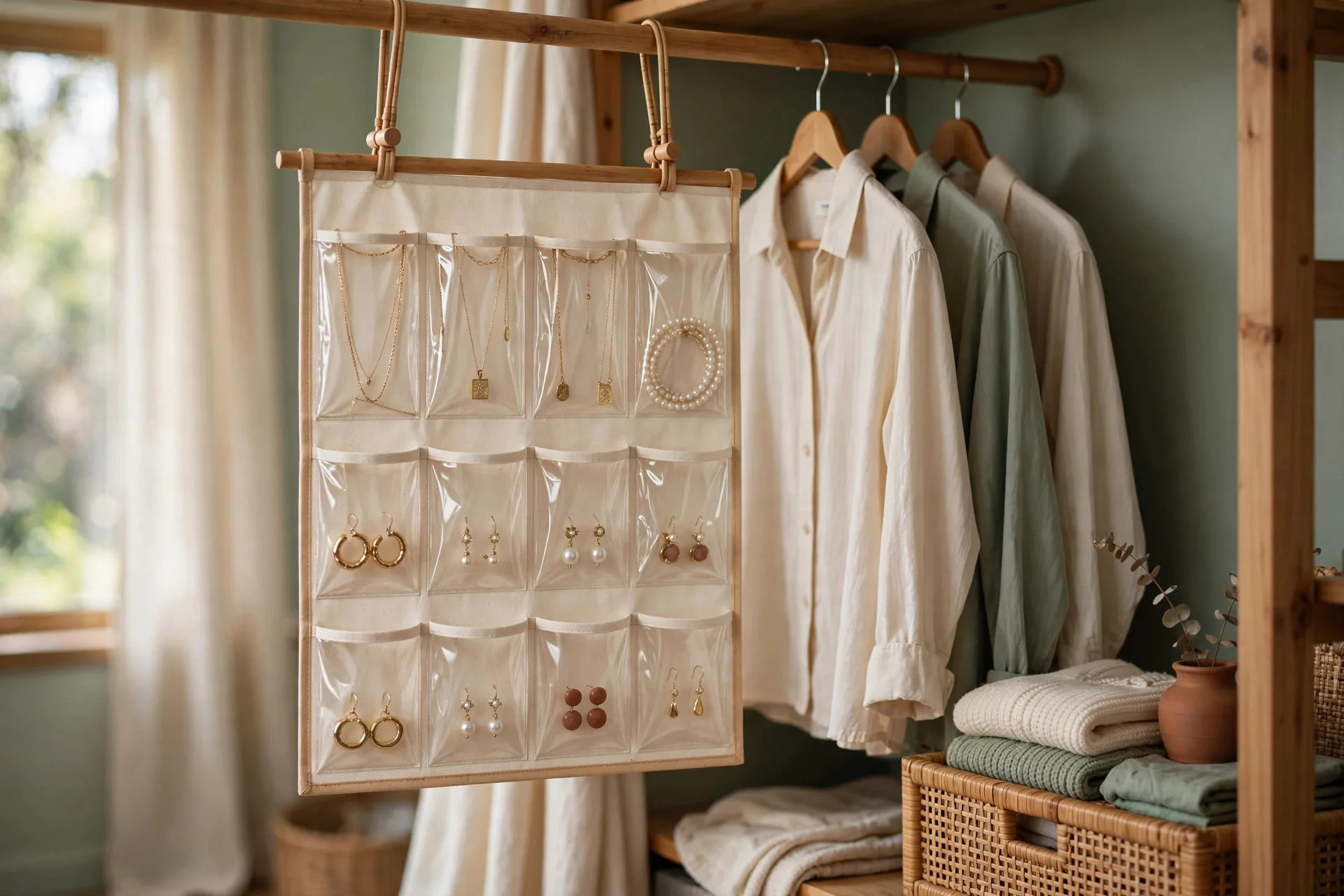
Necklaces tangle in drawers and earrings lose their partners. A two-sided hanging organizer with clear pockets keeps every piece visible and apart, and it hangs from the rod or a hook using almost no width. Long necklaces get their own tall pocket so chains never knot. Keep everyday pieces in the pockets at chest height and the rarely worn ones lower down, and getting ready stops involving a jewellery rescue.
Keep a small mending pouch in the closet
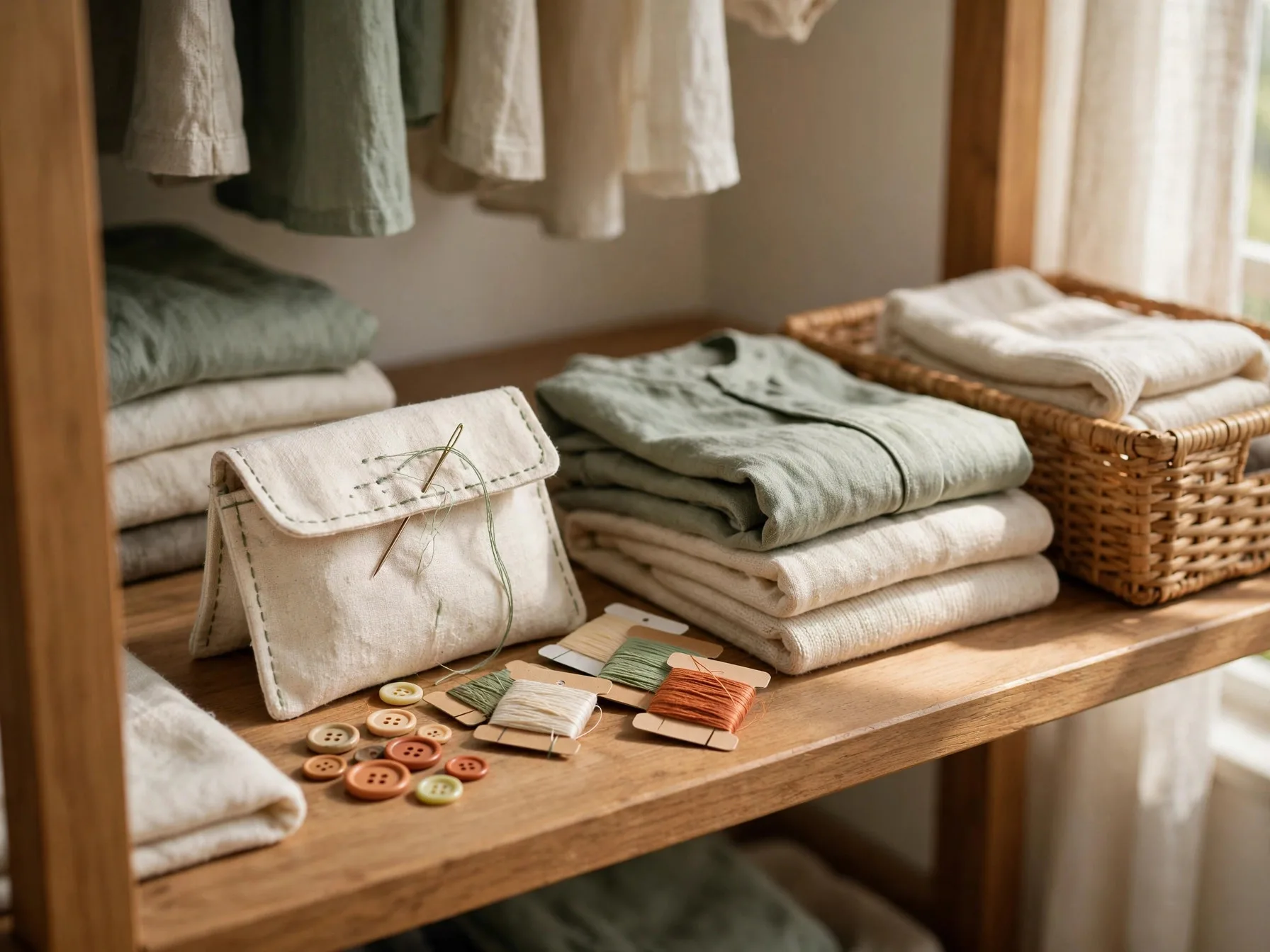
Loose buttons and small tears usually end with the item buried at the back of a drawer. A small pouch with a needle, two thread colors, spare buttons and safety pins, kept on a closet shelf, means a two-minute fix happens while you remember it. Add a sticky lint roller beside it. Clothes that need a real repair go on the valet hook, not back on the rod, until they are fixed.
Stand sunglasses and watches on a narrow shelf tray
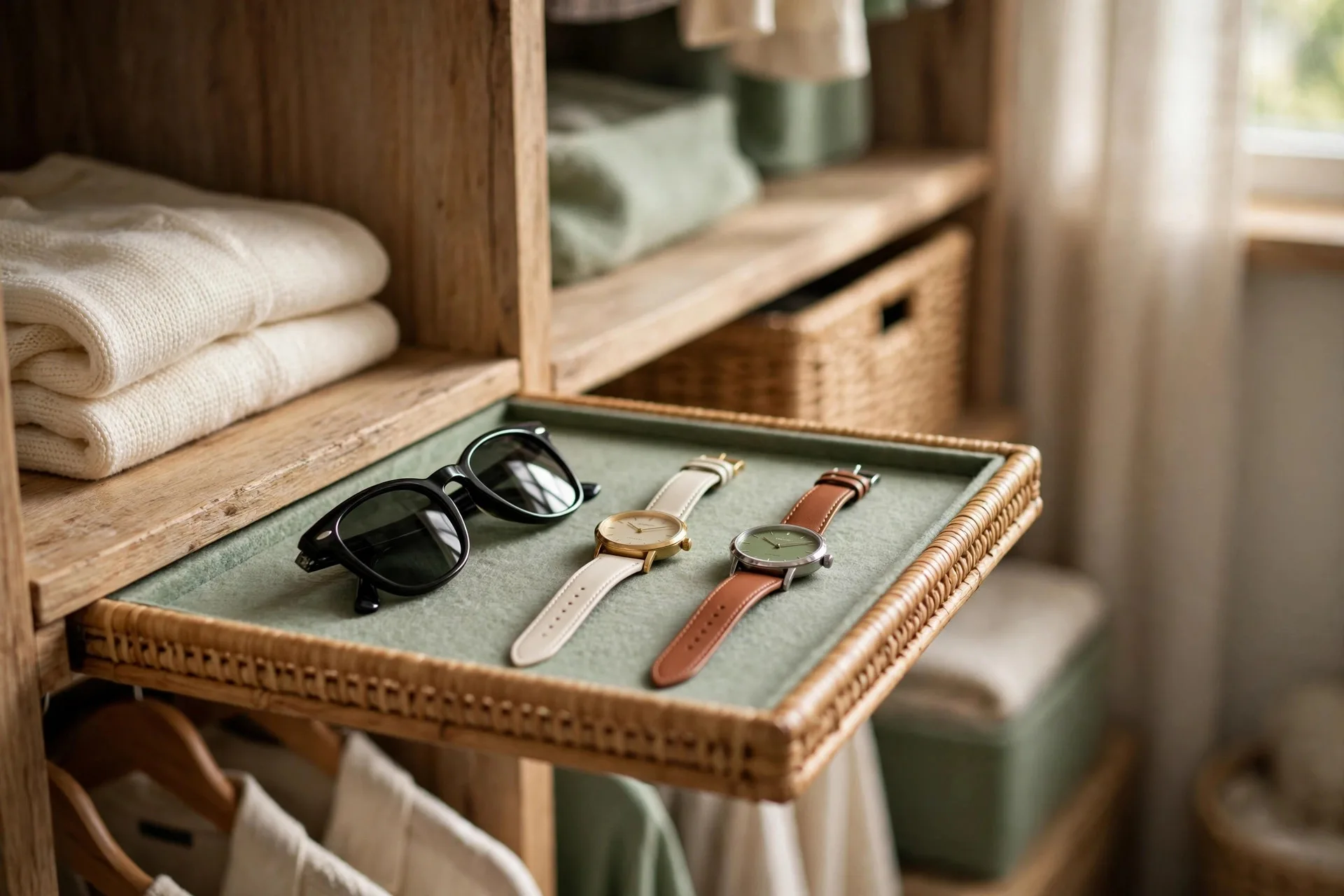
Sunglasses and watches end up on every flat surface in the home. A narrow tray, about 10 cm wide, on the edge of a shelf or inside the door gives them one landing strip in the closet where you dress. Line it with felt or cork so lenses do not slide. Limit the tray to what fits in a single row; overflow pairs belong in a drawer cell with the other small things.
The floor and shoe zone
The floor should hold shoes and nothing else. Vertical racks and clear boxes keep pairs visible and off the walkway.
Fit a two-tier shoe rack under the hanging clothes
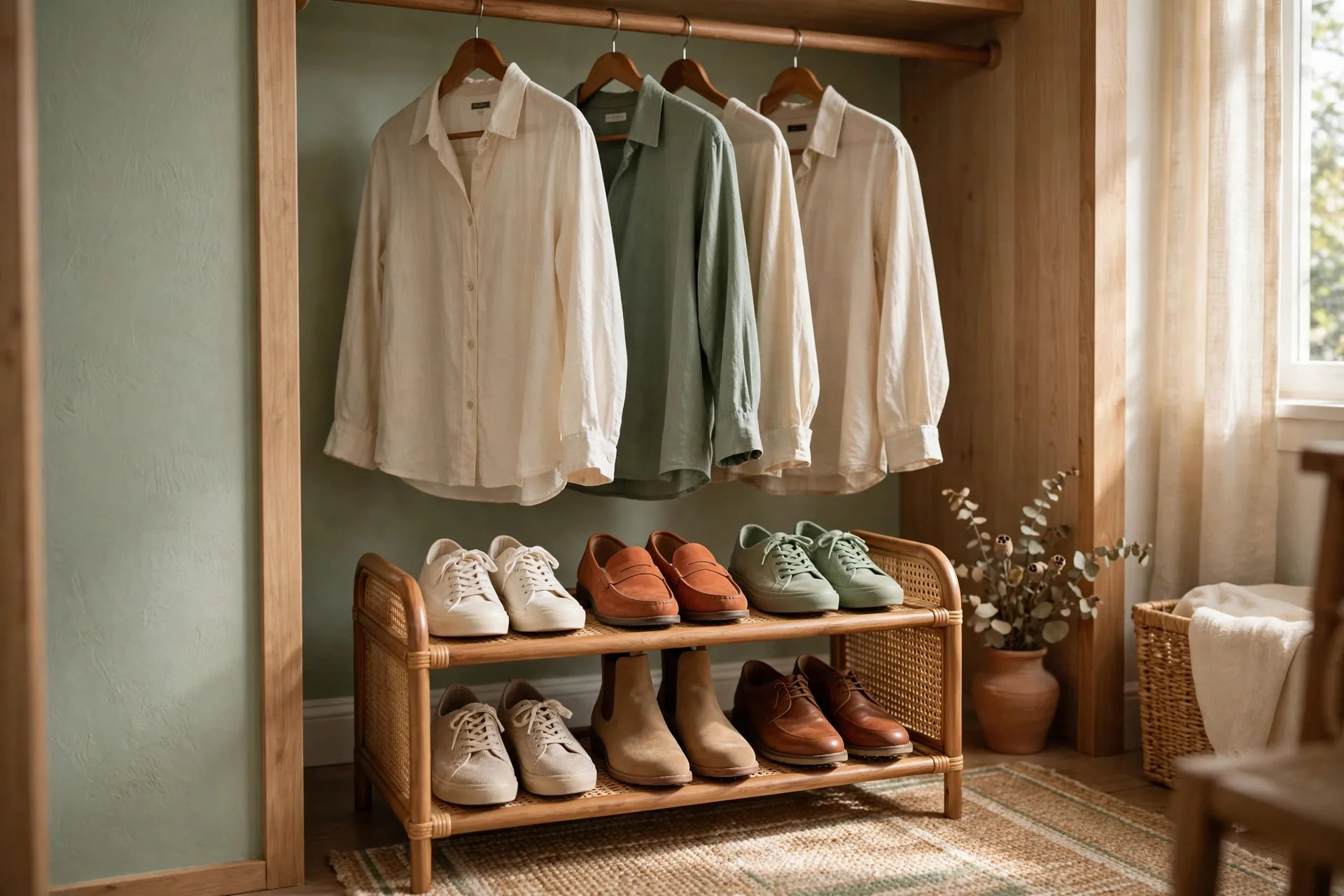
The floor under short hanging clothes is usually dead space. A two-tier rack about 80 cm wide holds six to eight pairs in two rows and still leaves the door swing clear. Keep heels and daily trainers on the bottom tier, lighter shoes above. Measure the depth from the wall to the door before buying; most racks need about 30 cm. Shoes you wear daily may live faster by the front door, with the closet rack for the rest.
Keep boots upright with shapers
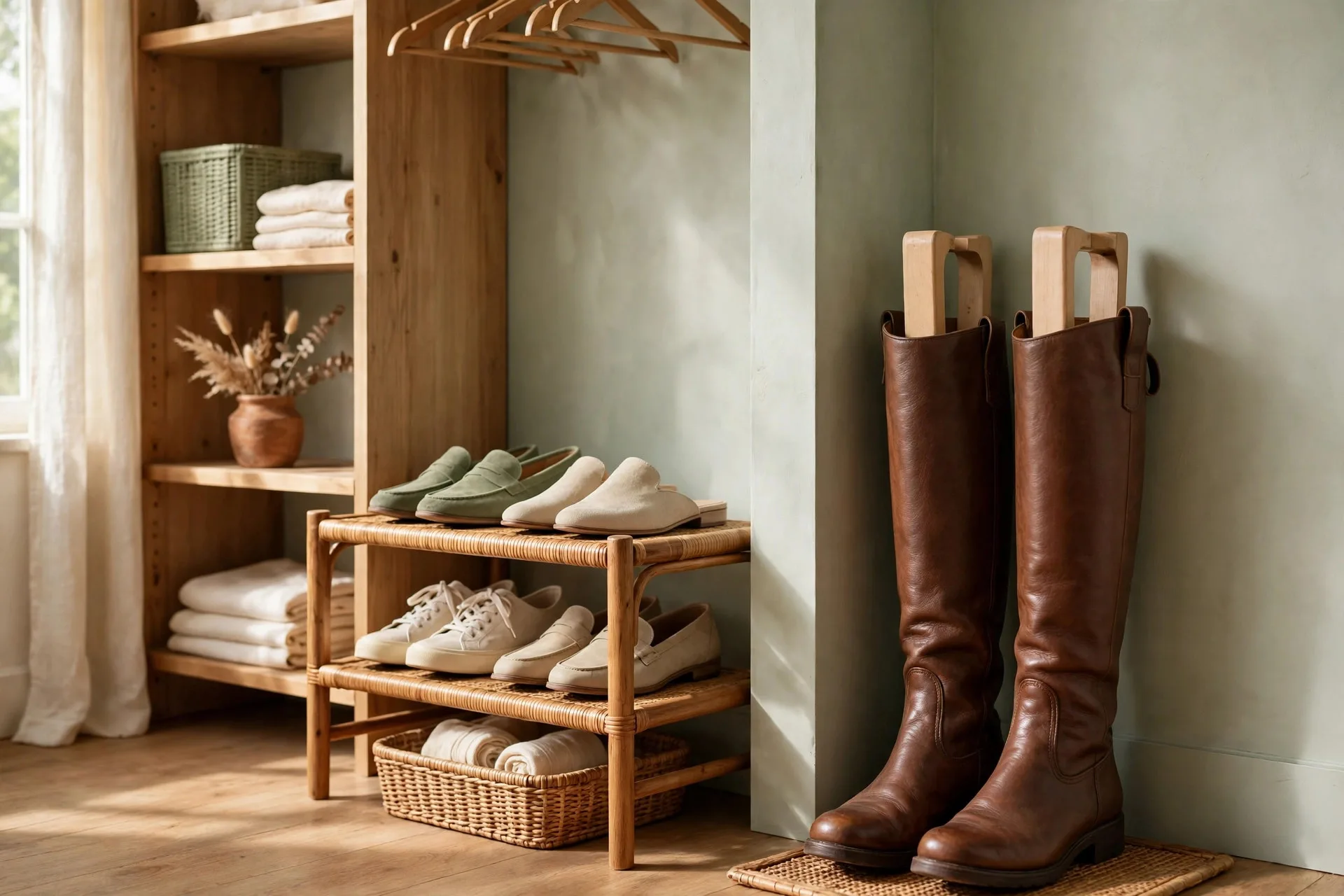
Tall boots flop over, crease at the ankle and eat floor space. Boot shapers, rolled magazines or even two empty bottles inside the shafts keep them standing in a corner or at the end of the shoe rack. Standing pairs take half the footprint of fallen ones and the leather keeps its shape longer. In summer, clean them, stuff them and move them to the top-shelf bin so the floor zone stays lean.
Use clear stackable boxes for special-occasion shoes
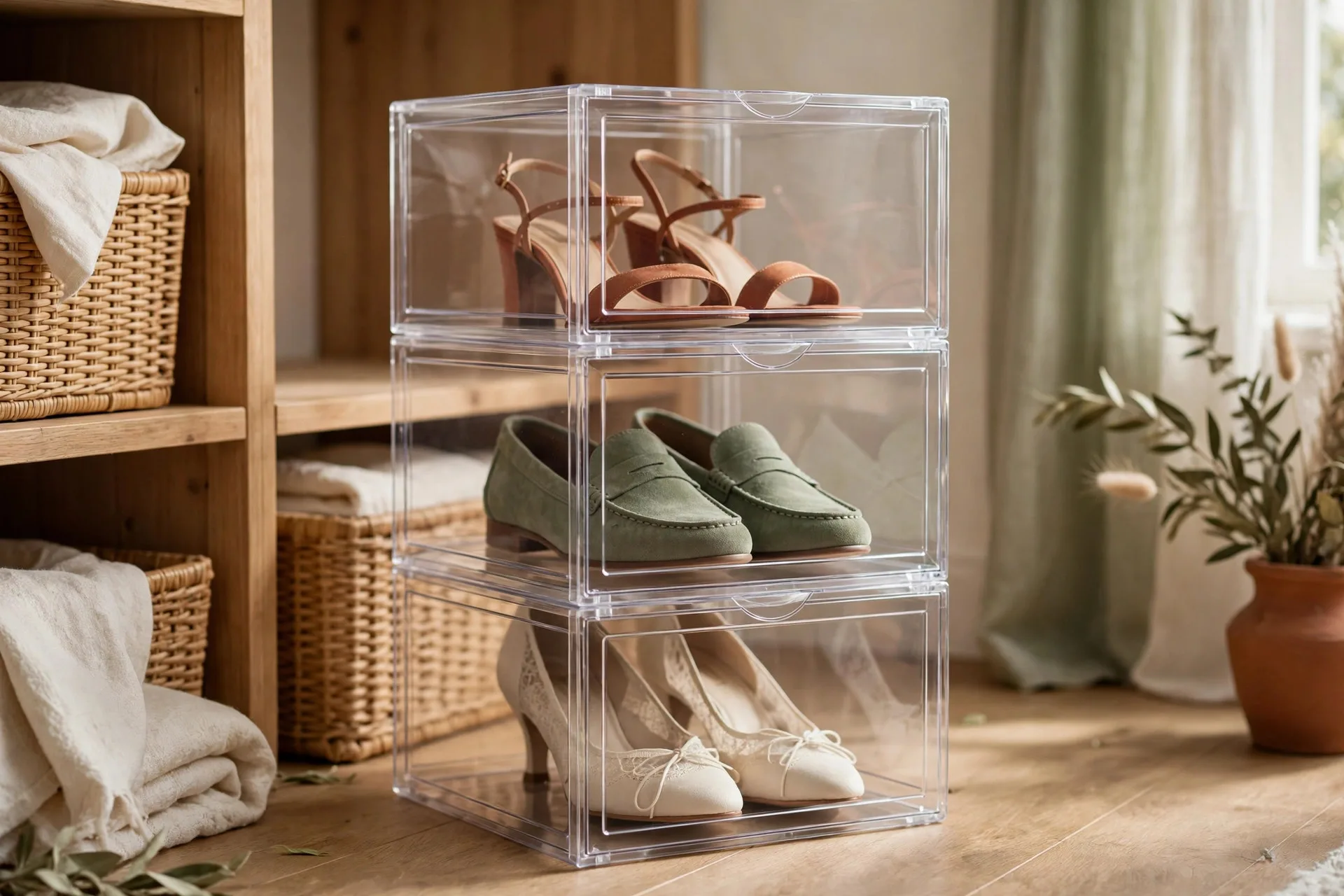
Party shoes and spare trainers get worn a few times a year, so they do not earn rack space. Clear stackable boxes keep each pair dust-protected and visible, and three or four boxes stack in the corner where boots stood. You can see the contents without opening anything, which is the whole point. Boxes with a front opening save unstacking when you need the bottom pair.
Give the gym bag a basket of its own
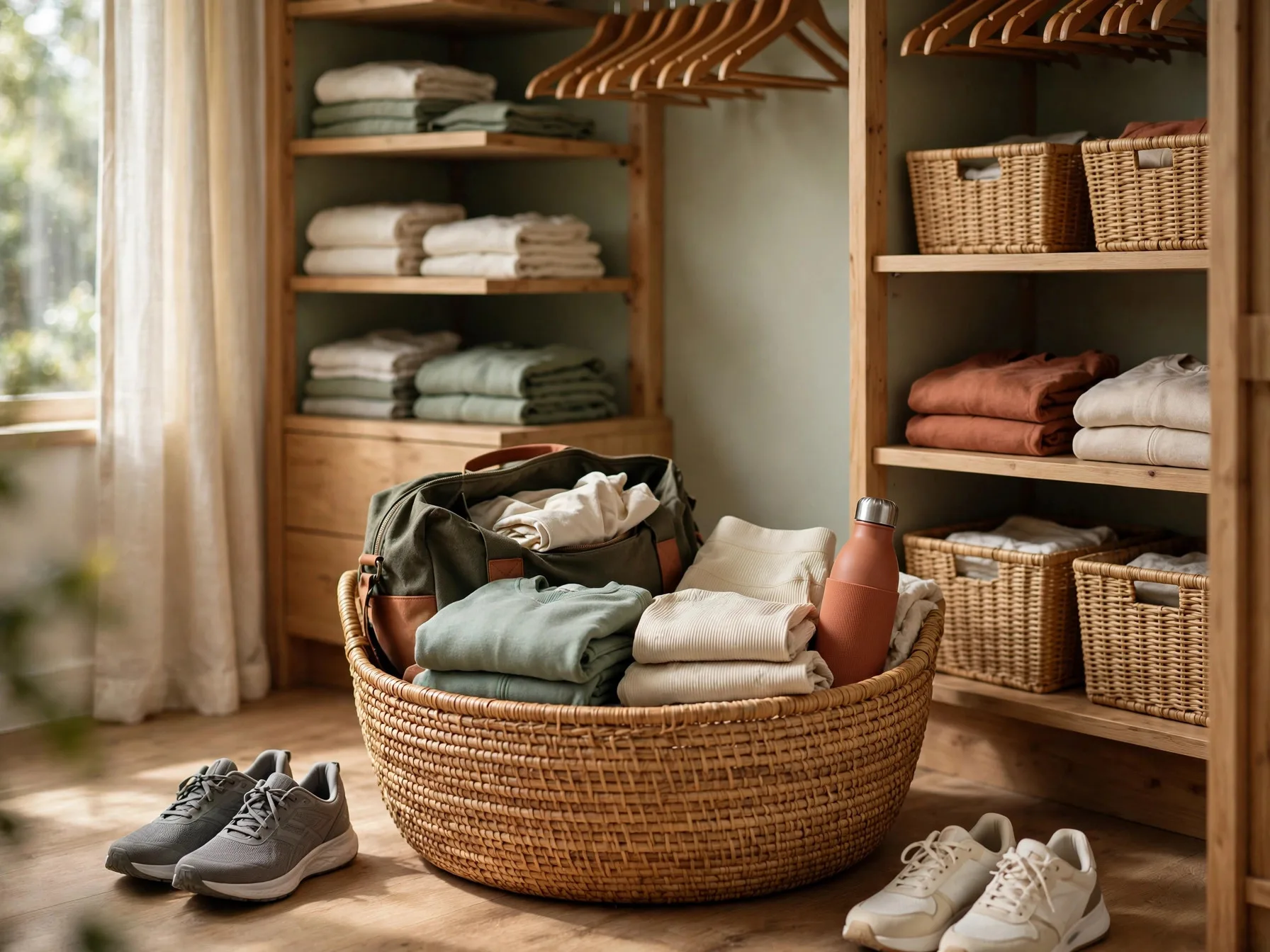
Every closet has one bag that lives on the floor and gets stepped over. A wide basket or open crate gives the gym bag, work tote or school-run bag a parking space that looks deliberate. Keep the bag packed and standing in the basket, bottle beside it. When the basket is full, something has to leave the closet; the basket is the boundary that stops the floor zone spreading.
Keep one clear strip of floor in front of the rod
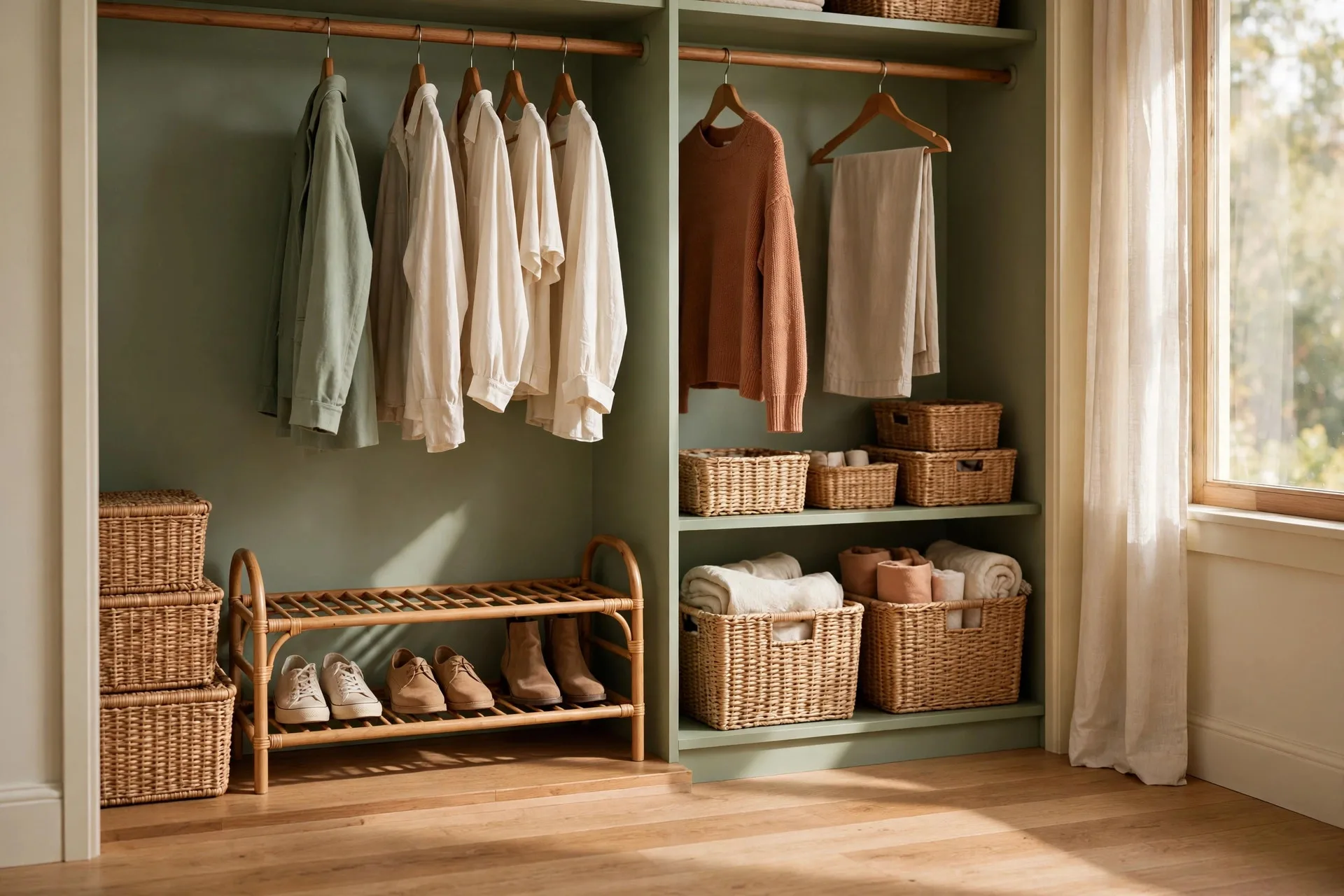
However small the closet, defend one clear strip of floor about 40 cm wide in front of the clothes. It is where you stand to reach the top shelf and where the door needs to swing. Everything stored on the floor, racks, boxes and baskets, stays to the sides of that strip. The rule sounds minor, but a clear strip is what makes a small closet feel usable instead of stuffed.
Doors, walls and light
The inside of the door and the walls you never look at can hold a surprising amount. Light finishes the job, because a closet you can see into stays tidy longer.
Hang an over-the-door rack for hats and scarves
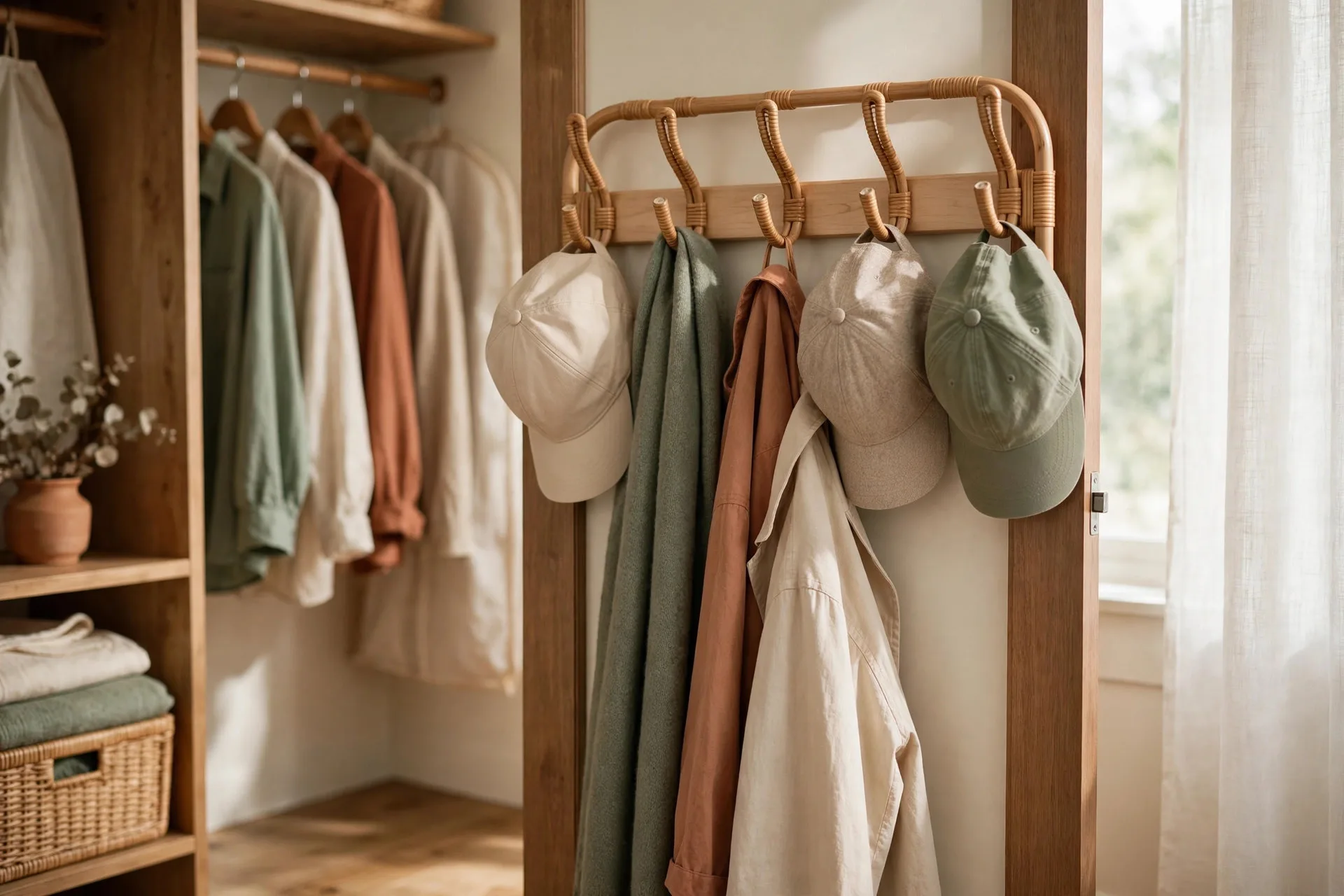
An over-the-door rack with four to six hooks adds a vertical row of storage without a single screw, which makes it a renter favorite. Use it for caps, scarves, the valet outfit and the bag you carry most. Check the gap at the top of your door first; most racks need about 4 cm of clearance and a strip of felt where the metal touches the door stops any rattling.
Use clear over-door pockets for small accessories
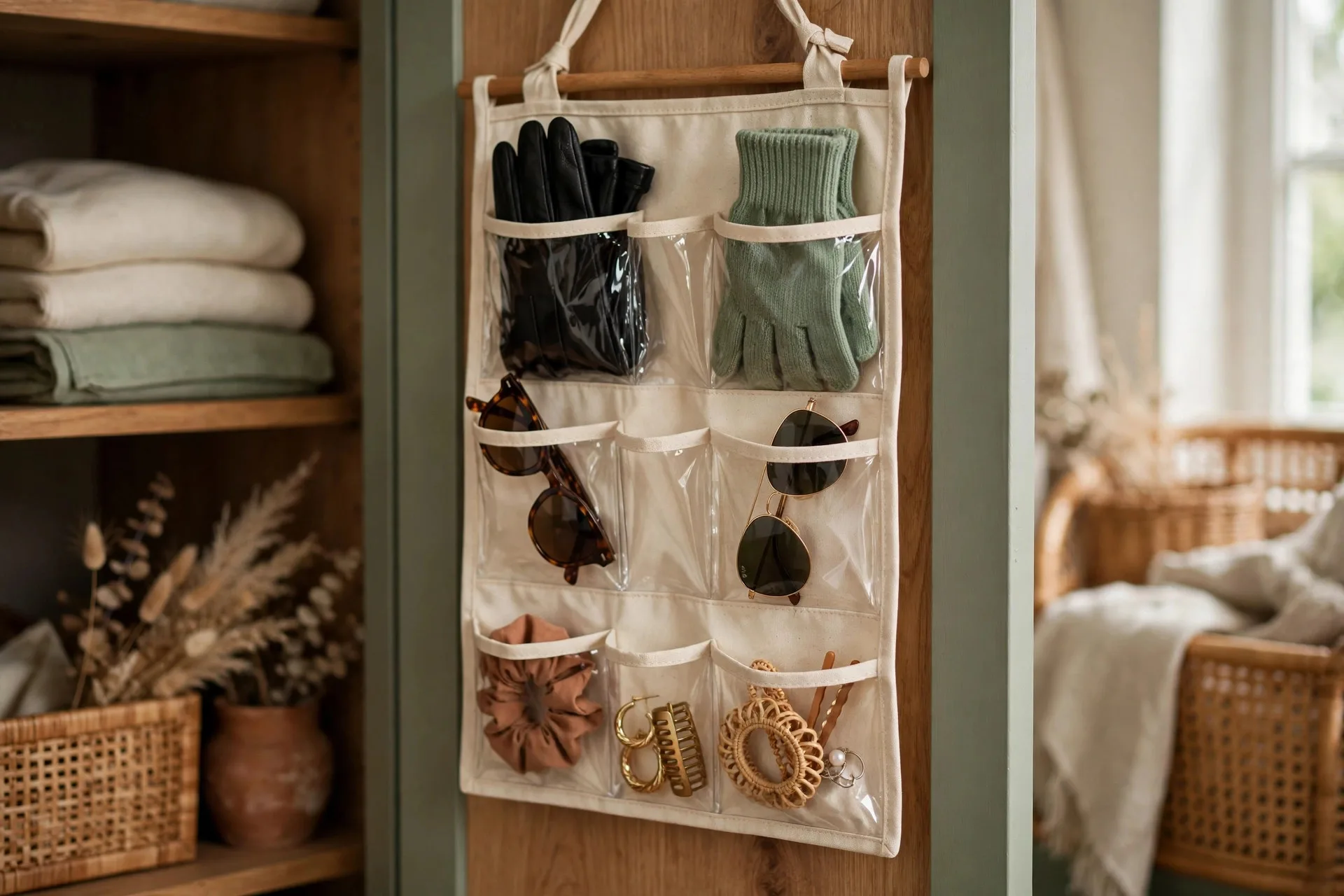
A clear-pocket organizer on the inside of the door swallows the small things that vanish in drawers: gloves, sunglasses, hair ties, spare laces, lint rollers. Because the pockets are clear, nothing hides. Assign one row per person if the closet is shared. Avoid overloading the bottom pockets with heavy items; the door hinges will thank you. It is also the fastest spot to check before buying a duplicate of something small.
Add wall hooks for the bags you carry weekly
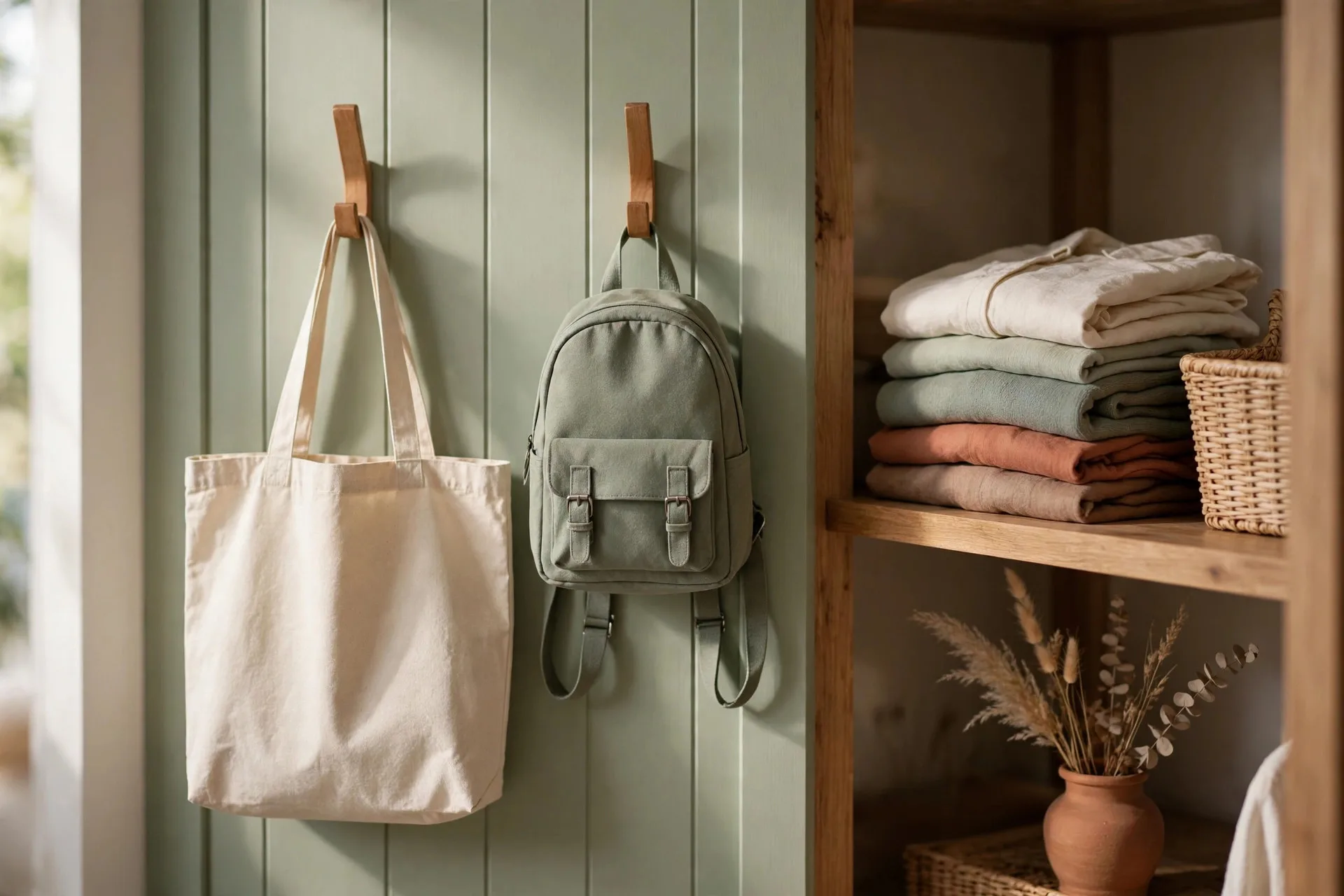
Two or three hooks on the side wall, at shoulder height, hold the tote and backpack you actually use. Bags on hooks stay in shape better than bags on the floor and they are off the shelf, which wins space for folded clothes. Adhesive hooks rated for 2 kg handle most everyday bags if the lease rules out screws. Keep the hooks to the bags in weekly rotation; the rest stand between dividers on the shelf.
Stick an LED strip under the top shelf
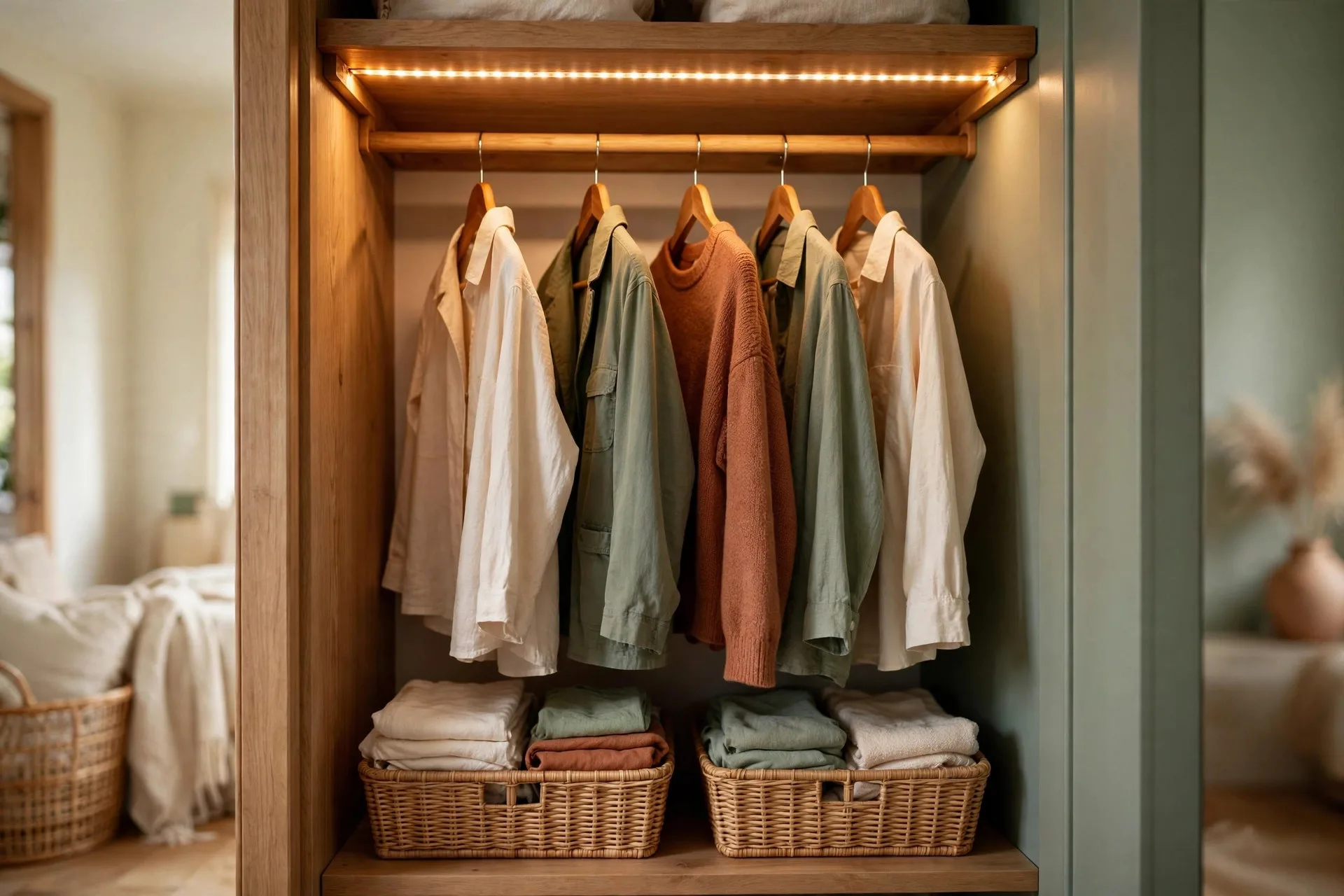
Half of closet mess is really a lighting problem: black and navy look the same in the dark, so clothes get pulled out and dropped. A battery or USB LED strip stuck under the top shelf lights the whole rod for very little money, and motion-sensor versions switch on when the door opens. Warm white light shows colors most honestly. It peels off cleanly when you move out, so it is safe for rentals.
Mount a slim mirror inside the door
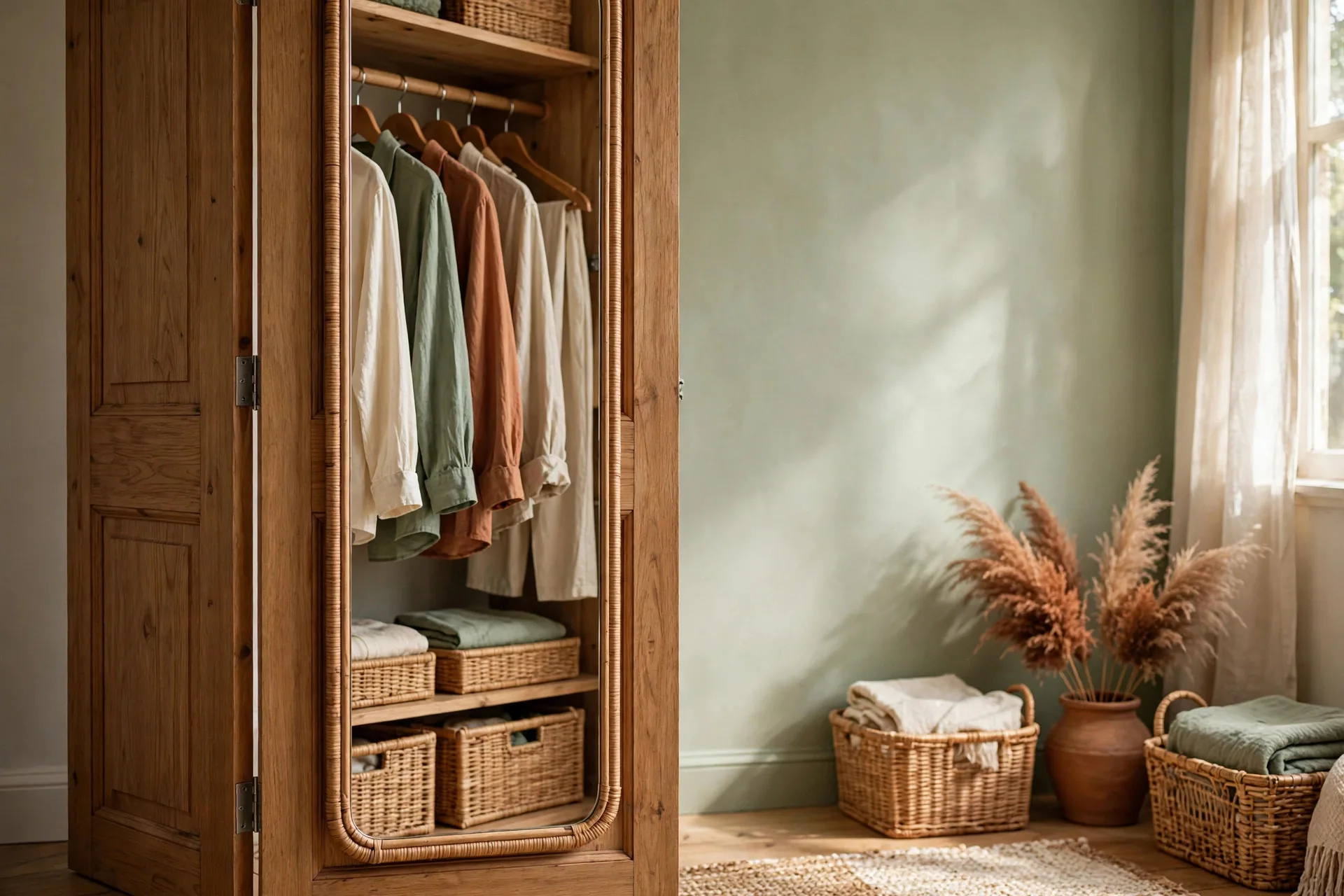
A slim mirror on the inside of the closet door lets you check an outfit where you dress, so tried-on pieces go straight back on their hangers instead of onto the bed. Adhesive mirror tiles or a lightweight over-door mirror both work and leave no holes. Keep the mirror on the door that opens widest, and leave the bottom third clear if the door passes close to the shoe rack.
Keep it tidy
Systems fail without small habits. These three routines take minutes and stop the slow slide back to a stuffed closet.
Keep a donation bag hanging in the closet all year
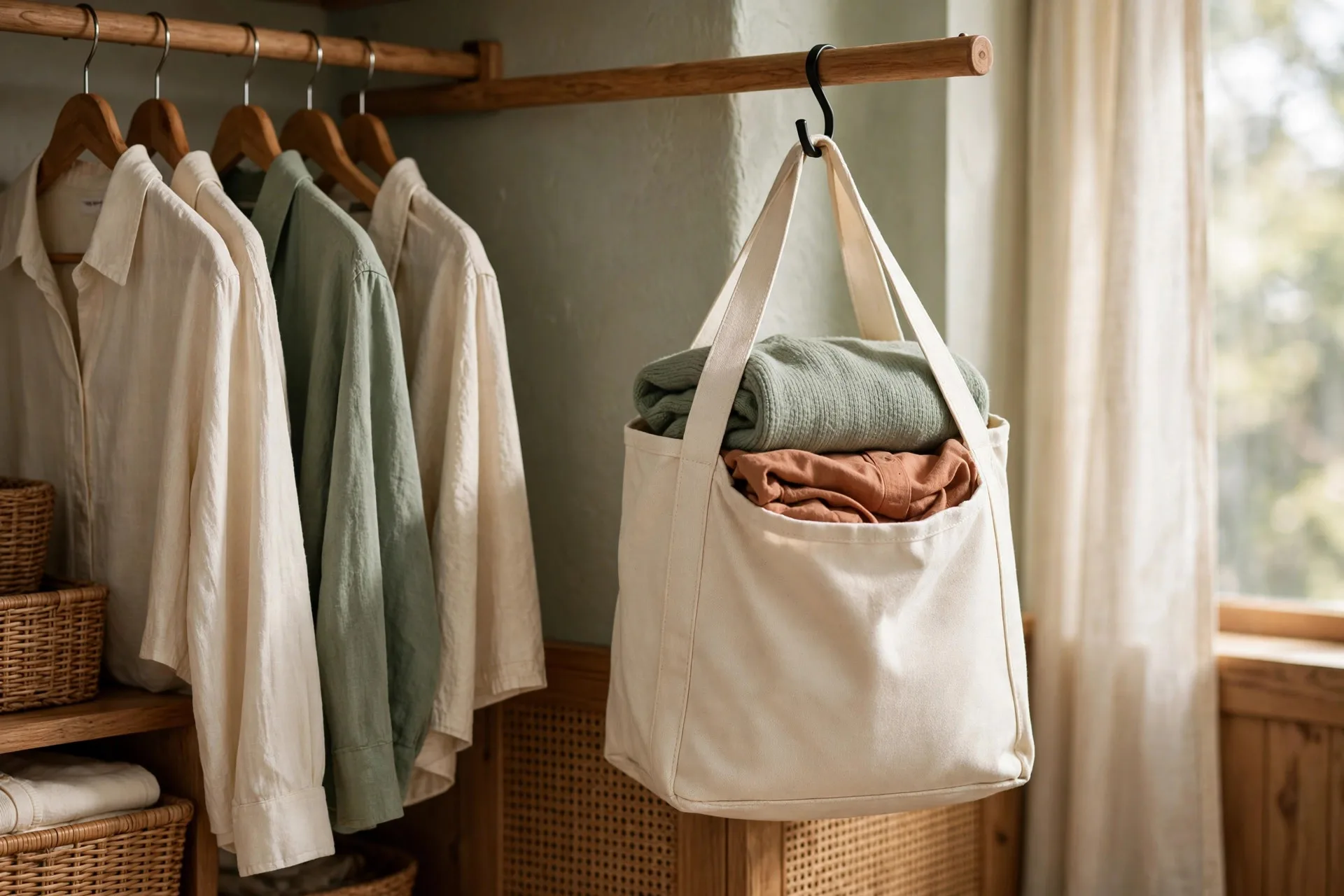
Hang a sturdy bag on the end of the rod or a door hook and let it live there. Every time you try something on and hesitate, it goes in the bag instead of back on the rod. When the bag is full, it leaves the house that week. This quiet habit keeps the rod at the right fullness all year, because letting go happens in the moment, not in a big yearly purge you keep postponing.
Run a ten-minute reset once a week
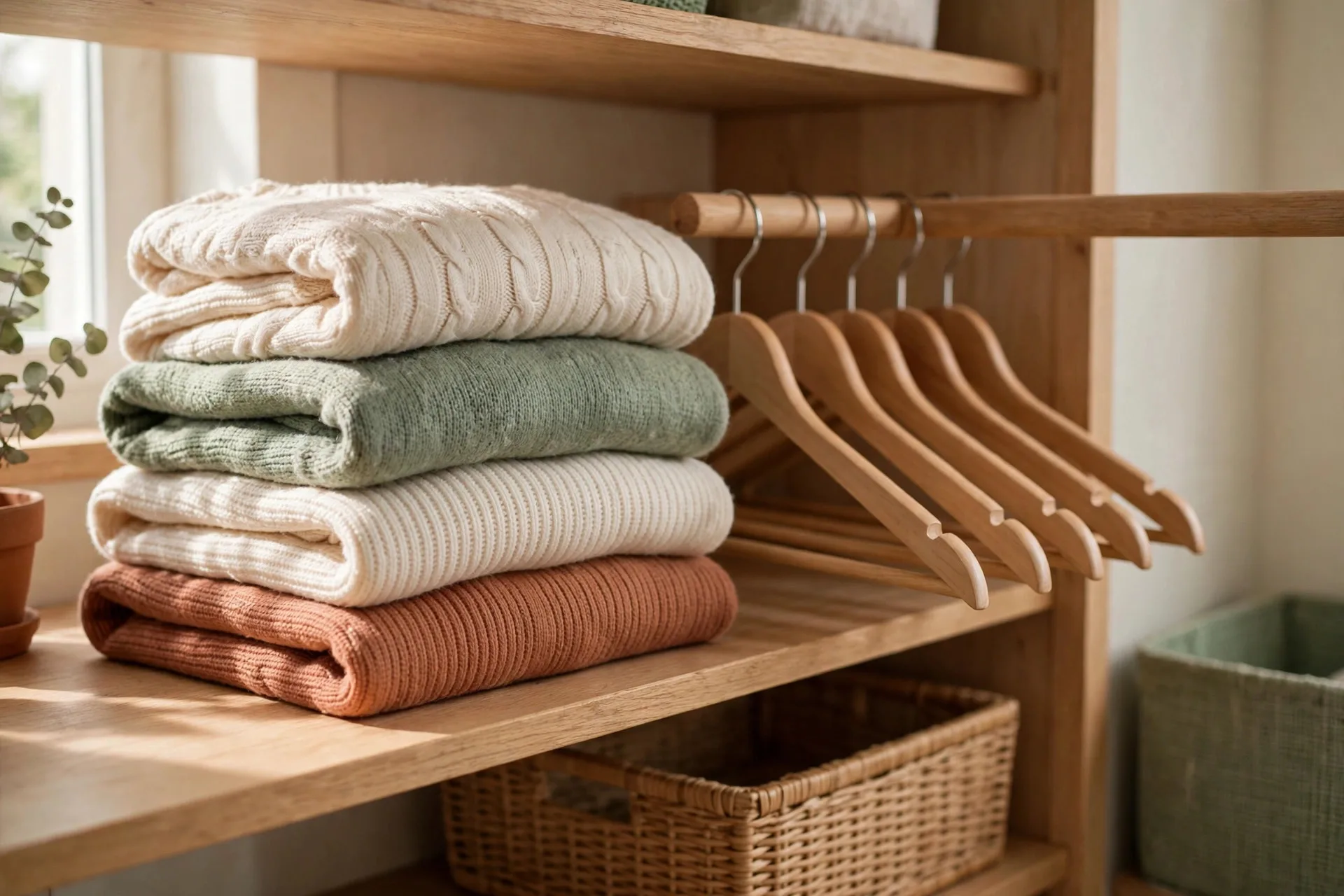
Once a week, set a timer for ten minutes and return everything to its zone: rehang the drifters, refold the two stacks that lean, empty the valet hook, check the floor strip is clear. Ten minutes is enough because the zones do the heavy lifting. Pair it with laundry day and the reset becomes part of the same rhythm. If a zone overflows every single week, it needs a different idea from this list, not more willpower.
Swap the off-season bin twice a year
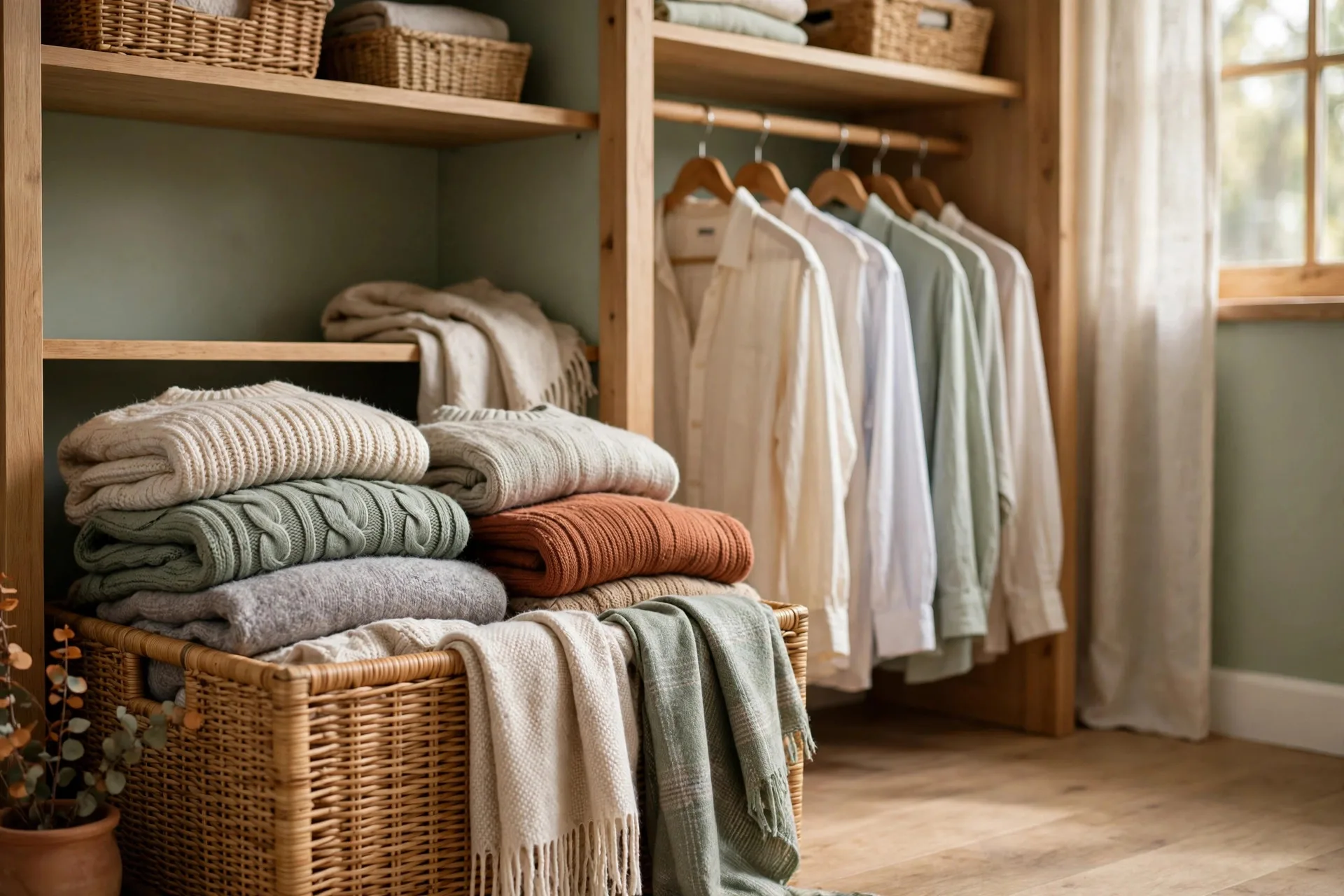
Twice a year, spring and autumn, trade places: the off-season bin comes down from the top shelf, the outgoing season gets washed, folded and packed into it. While the closet is half empty, wipe the shelves and check every hanger. The swap takes under an hour and doubles as your declutter moment, because anything you did not wear all season is easy to spot and easy to let go.
Questions, answered
How to go through a closet effectively?
Work by category, not by area. Take out all of one type, such as every top, try each piece on if you are unsure, and decide keep, donate or toss before moving to the next category. Only put back what fits the zone it belongs to. A donation bag hanging in the closet makes the decisions stick, because pieces leave straight away instead of drifting back onto the rod.
What can I put in my closet?
Clothes, shoes, bags and accessories belong in the closet, plus one or two bins of off-season clothing on the top shelf. Luggage, keepsakes and household extras are better stored elsewhere if space allows, because they crowd out the things you use daily. If they must live in the closet, give them the least reachable corner so the daily zones stay easy to use.
What are some common closet mistakes?
The big ones are mixed thick hangers that waste rod space, hanging sweaters so they stretch, buying bins before deciding what to keep, and letting shoes spread across the whole floor. Another quiet culprit is having no zones at all, so every item lands wherever there is a gap. Fixing the hangers and setting zones solves most of the rest on its own.
What is the best way to organize a closet?
By zones: one home for hanging clothes, one for folded stacks, one for shoes and one for small things, with daily items at eye level. Add matching slim hangers, short divided stacks and a weekly ten-minute reset, and the system keeps itself going. The best closet organization is the kind you can tidy in minutes, because that is the kind that stays tidy.
A tidy closet is not about having less; it is about every piece having a zone and a home. Pick one zone from this list this week, and the rest gets easier each time you open the door.