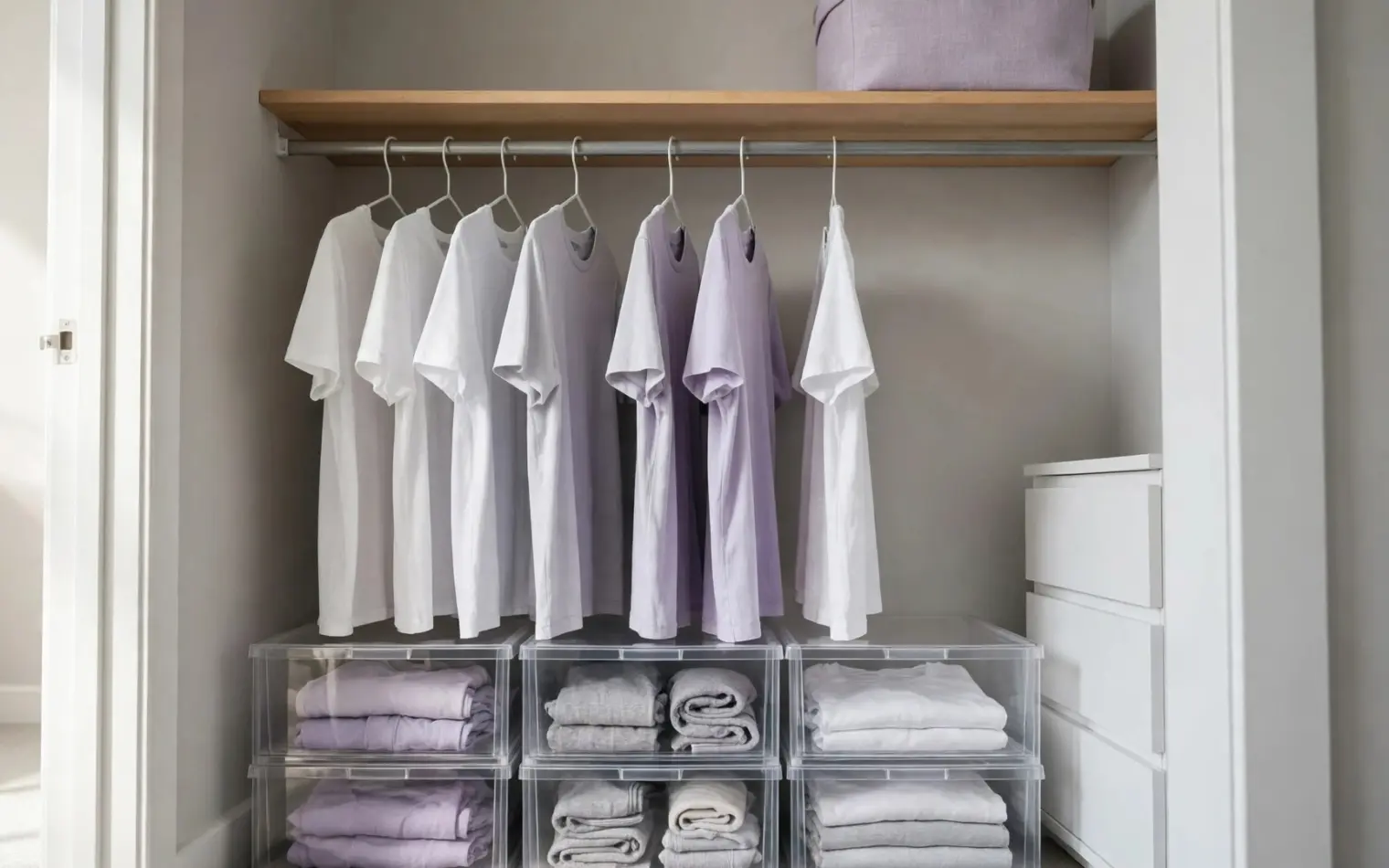
The best closet drawers for renters are clear stackable plastic units that fit under hanging clothes, with a slim dresser as the polished alternative. They use the dead space under shirts and jackets, need no drilling, and move with you when you move. These 10 picks cover plastic stacks, fabric towers and small dressers, with the measurements that make each one fit.
Thank you for reading this post, don’t forget to subscribe!Every pick below fits a standard reach-in closet, and each one is renter-friendly: no screws into the wall, no built-ins, nothing you cannot carry out on moving day. Start with the comparison table if you are torn between a dresser and drawers, then pick the unit that matches what you fold most.
Dresser or drawers: which wins for your closet
The short answer: plastic stacks win on price and moving day, a small dresser wins on looks and weight. Here is how the three picks in this guide compare.
| Pick | Price band | Holds best | Best for renters |
|---|---|---|---|
| Clear plastic stackable drawers | $25-$60 for a 3-drawer stack | Folded tees, socks and leggings | Yes – light, no tools, stacks come apart |
| Fabric drawer tower | $20-$45 | Light items, shared family closets | Yes – folds flat for a move |
| Slim small dresser | $80-$200 | Heavier folded clothes, a finished look | Yes if freestanding – check the width fits first |
If you move often, start with the plastic stacks. If this closet is yours for years, the slim dresser is the pick you will still love in five years.
Clear plastic stackable drawers
1. Clear stackable drawers under short hang
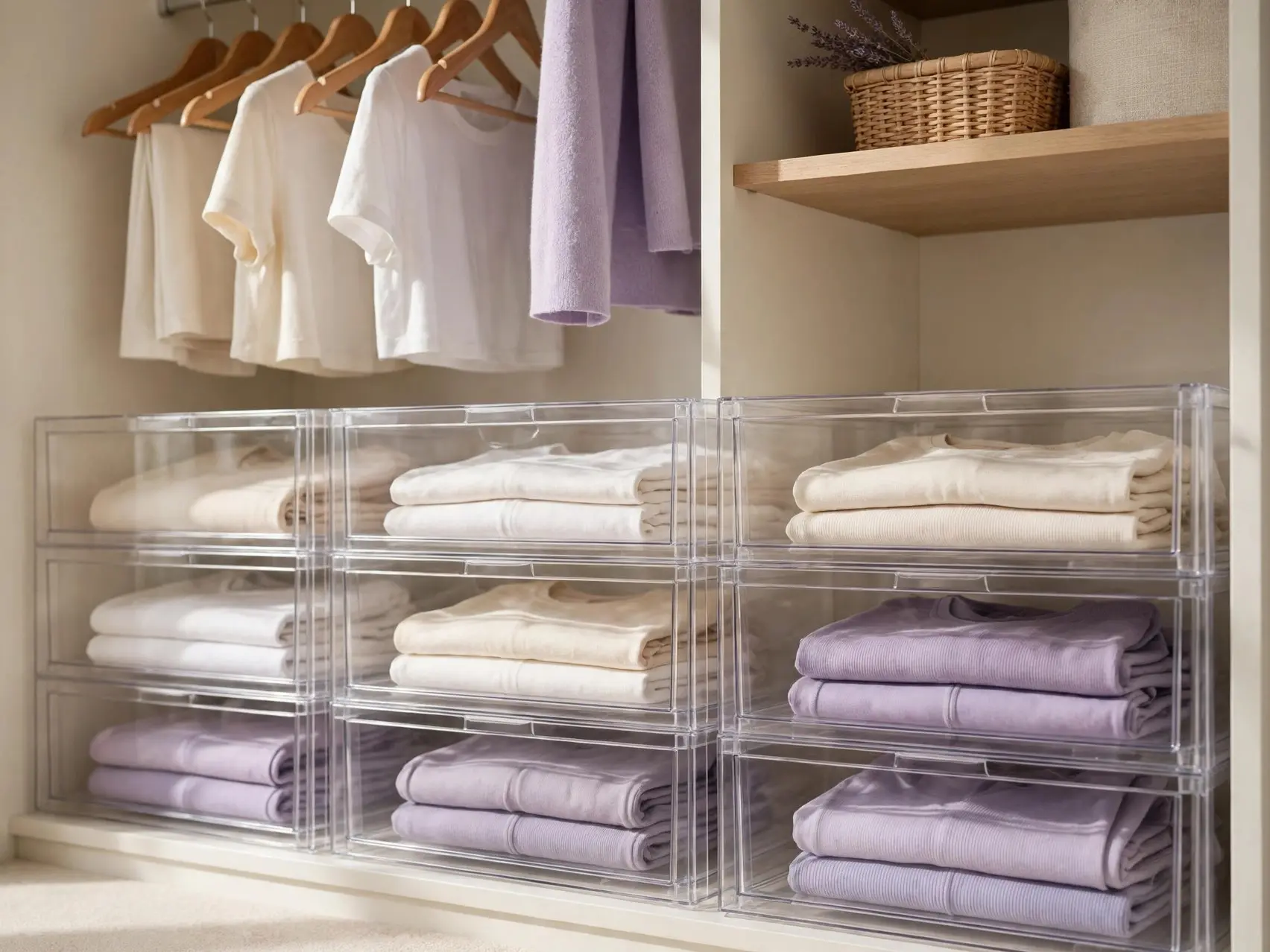
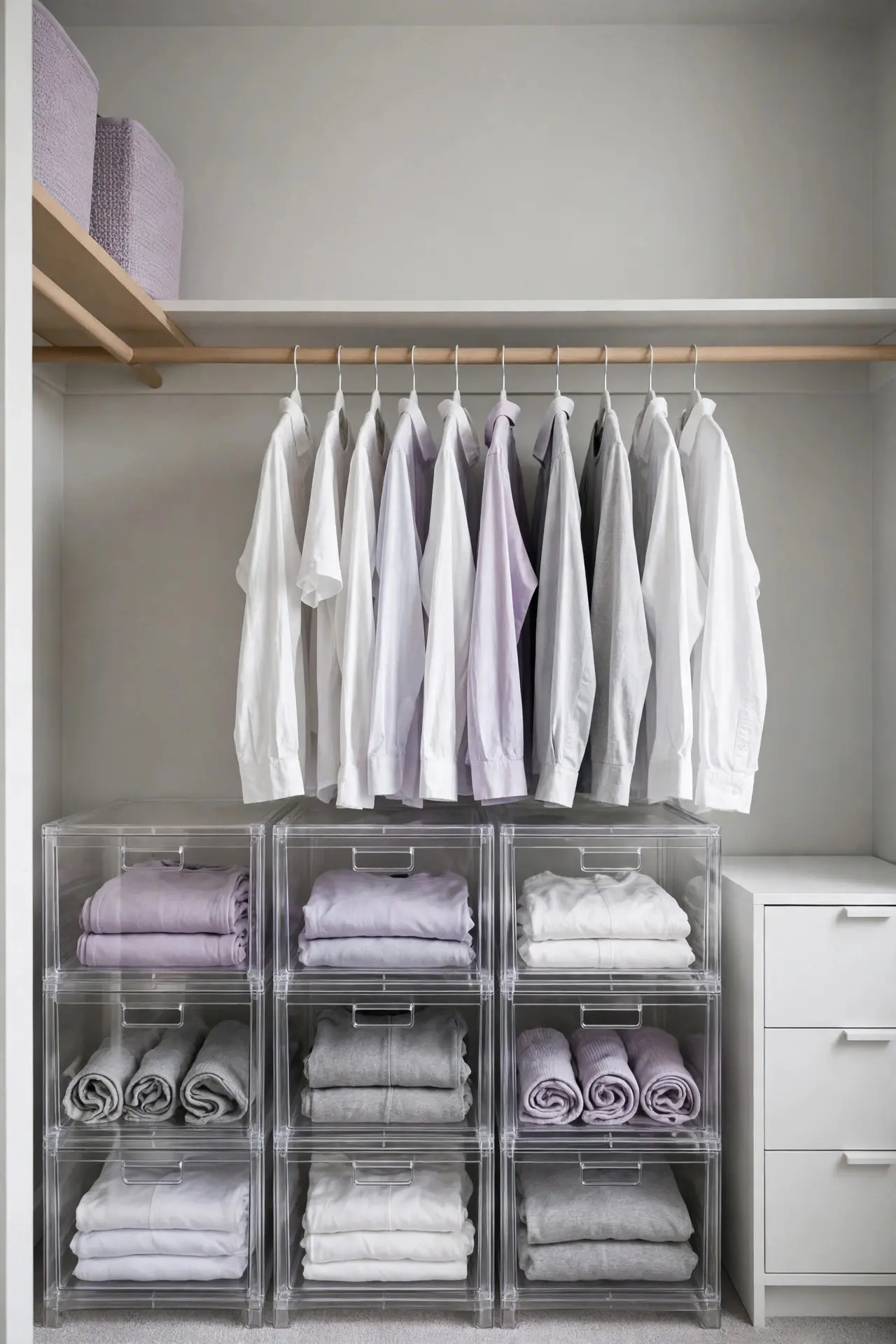
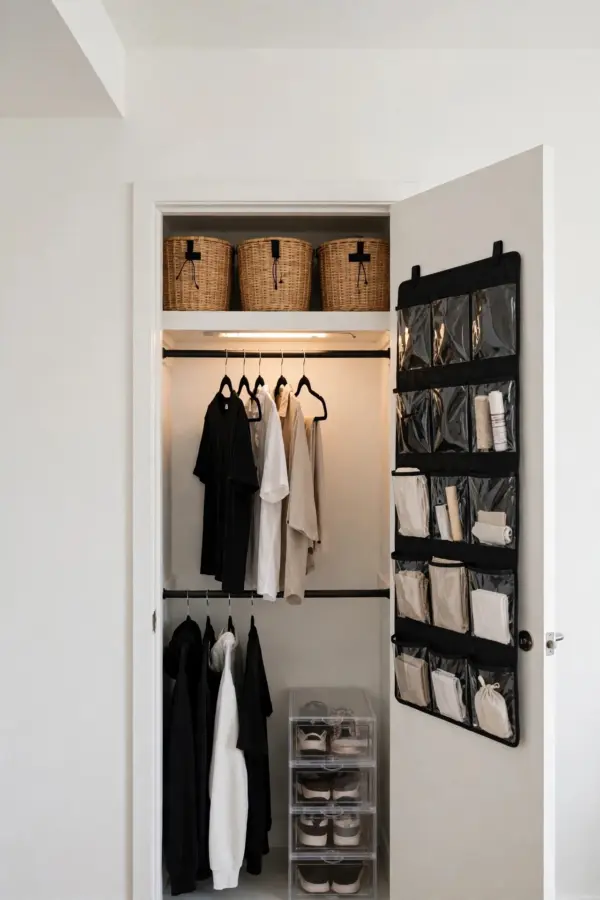
This is the classic closet-drawer pick for a reason: clear plastic units stack two or three high in the dead space under shirts and jackets, and you can see what is inside without opening a drawer. Measure the height under your shortest hanging clothes first – most stacks need 24 to 30 inches for three drawers – then buy units at least an inch narrower than the space so they slide in without scraping the walls. Look for smooth runners and a flat top, so the next unit sits level. One three-drawer stack holds a week of tees, socks and leggings for one person.
- Measure the height under your shortest hanging clothes first
- Leave an inch of clearance on the width so the stack slides in
- Pick smooth runners if you open the drawers daily
2. Wide three-drawer units for folded tees and jeans
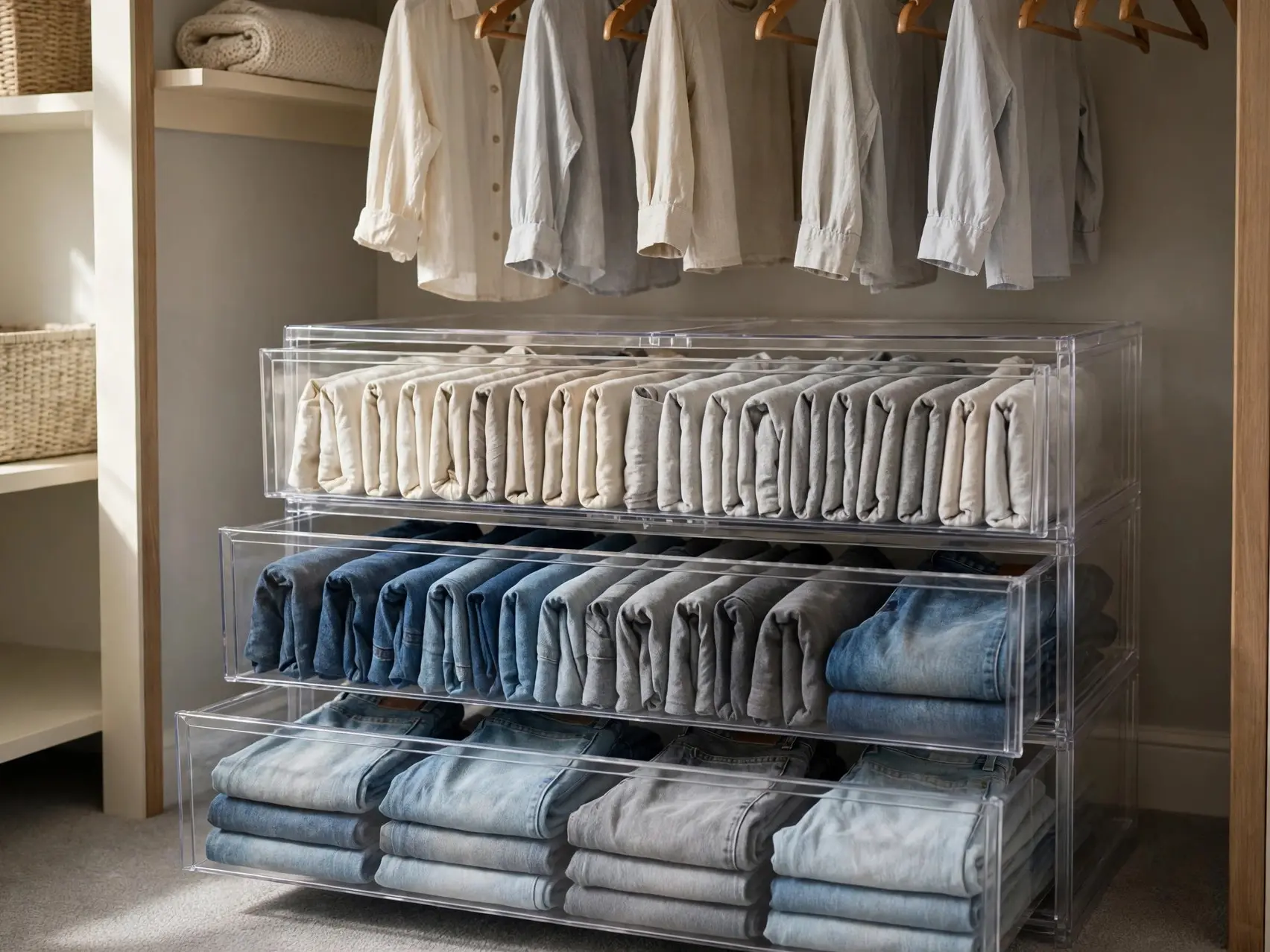
Wide units, around 24 inches across, are the ones that actually hold folded jeans without a fight. Fold each pair in thirds and file them upright, spine facing up, so you can pull one pair without toppling the stack. Give each drawer a job – tees on top, jeans in the middle, gym kit at the bottom – and the unit becomes a tiny dresser that lives under your shirts. Check the drawer depth before you buy: 14 inches fits folded jeans, while shallow 10-inch drawers only suit socks and tees. Two wide units side by side replace a small chest of drawers.
- Fold jeans in thirds so they sit flat in wide drawers
- Keep one drawer per category: tees, jeans, gym kit
- Check the drawer depth – 14 inches fits folded jeans
3. Narrow stackable drawers for the gap beside the rod
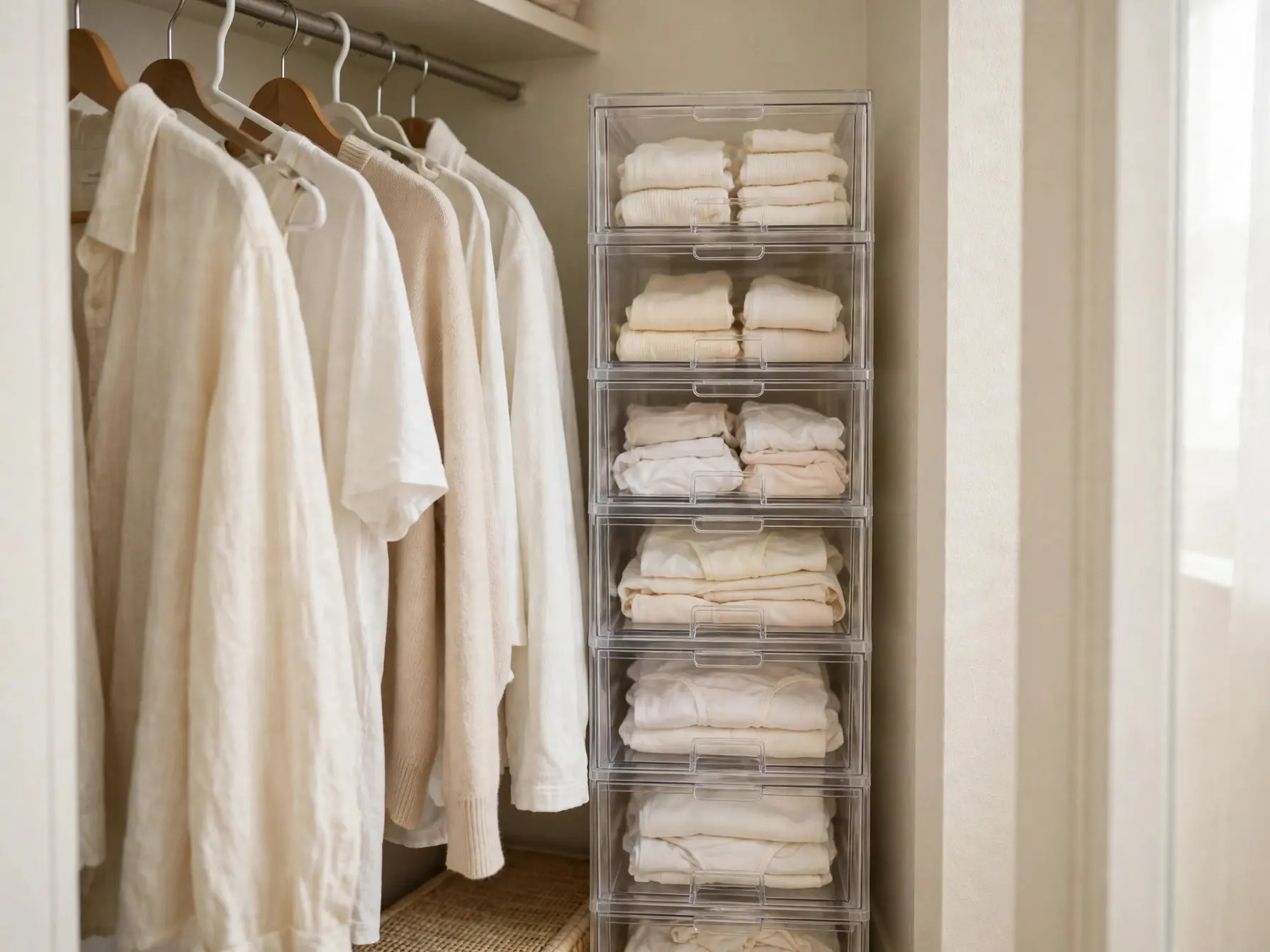
Most closets have a dead strip beside the hanging rod – too narrow for clothes, too awkward for shelves – and a 12-inch drawer tower is made for exactly that gap. Stack two or three narrow units to use the full height under the rod, and keep socks, underwear and accessories in them, closest to the door where you grab them while dressing. Because the tower is slim, it slides out for cleaning without moving anything else. Measure the gap twice: a tower that is half an inch too wide will not go in at all.
- Measure the gap beside the rod – 12 inches is common
- Stack two or three narrow units to use the full height
- Keep socks and underwear here, closest to the door
4. Wheeled drawer units you can roll out
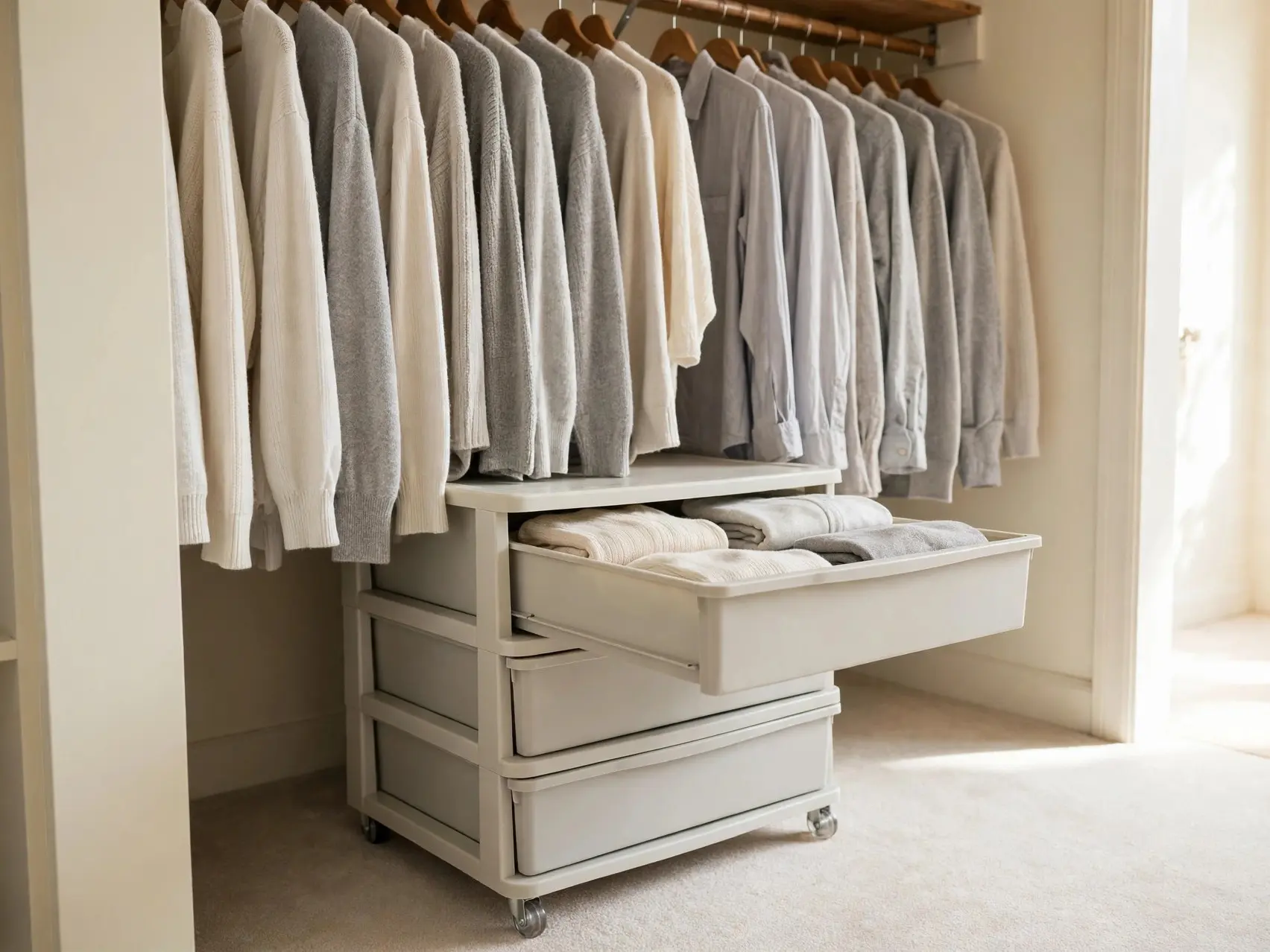
A drawer unit on caster wheels solves the one annoying thing about closet drawers: the dust and lost socks that collect behind them. Roll the unit out, sweep the floor, and roll it back – a two-minute job that keeps the closet floor as clean as the shelves. Check that the casters lock, or the unit will drift every time you open a drawer. Keep heavier folded clothes in the bottom drawer so the unit stays stable when you roll it, and leave lighter items up top. This is the best pick for a closet you clean properly.
- Check the casters lock, so the unit stays put
- Roll it out monthly to clean the closet floor
- Keep heavier items in the bottom drawer for balance
Fabric drawer towers
5. Fabric drawer towers with a label on every drawer
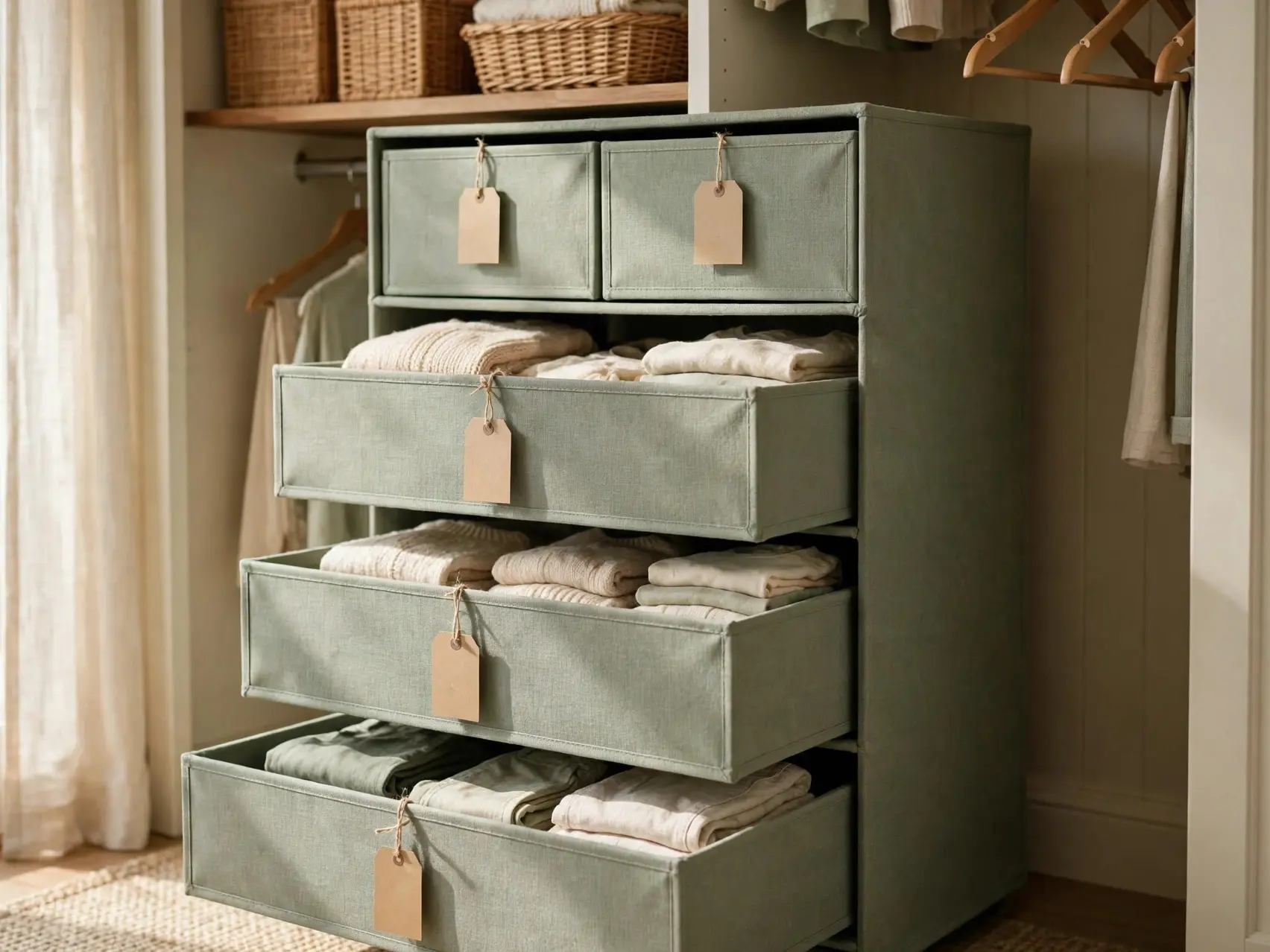
Fabric towers are the lightest closet drawers you can buy, and they fold flat when you move – two things renters should care about. The fabric sides will not hold heavy jeans, so use them for tees, leggings, socks and kids’ clothes, and put a blank tag on every drawer front so nobody has to open three drawers to find socks. In a shared closet, give each person a drawer and the morning argument disappears. Pick a tower with a rigid frame and a solid base, or the drawers sag once they are full.
- Put a blank tag on every drawer front
- Keep one drawer per person in a shared closet
- Fold the tower flat when you move house
6. Hanging fabric drawers that hook over the closet rod
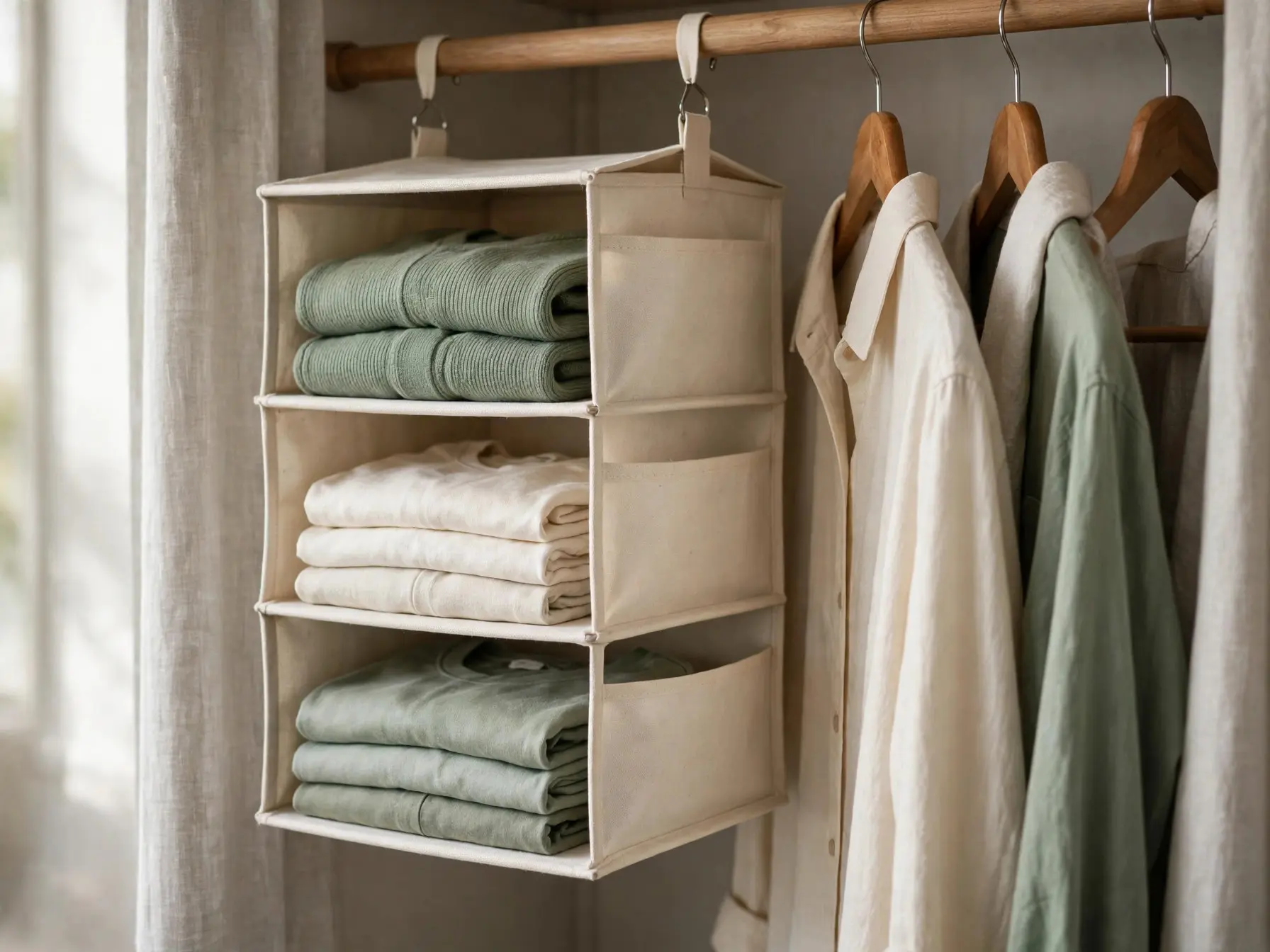
If your closet floor is already full, go up: hanging fabric drawers hook straight over the closet rod and turn one hanging space into six folded shelves. They are best for sweaters, tees and knitwear that stretch on hangers, and they cost less than any drawer unit on this list. Hang the organizer from the rod itself, not from a shelf, so it hangs straight and the compartments stay open. Use the top cubby for hats and scarves, and keep the bottom one for the clothes you reach for least.
- Hang it from the rod, not from a shelf
- Keep folded sweaters here – they stay crease-free
- Use the top cubby for hats and scarves
Slim dressers that fit inside a closet
7. Slim small dresser fitted inside the closet
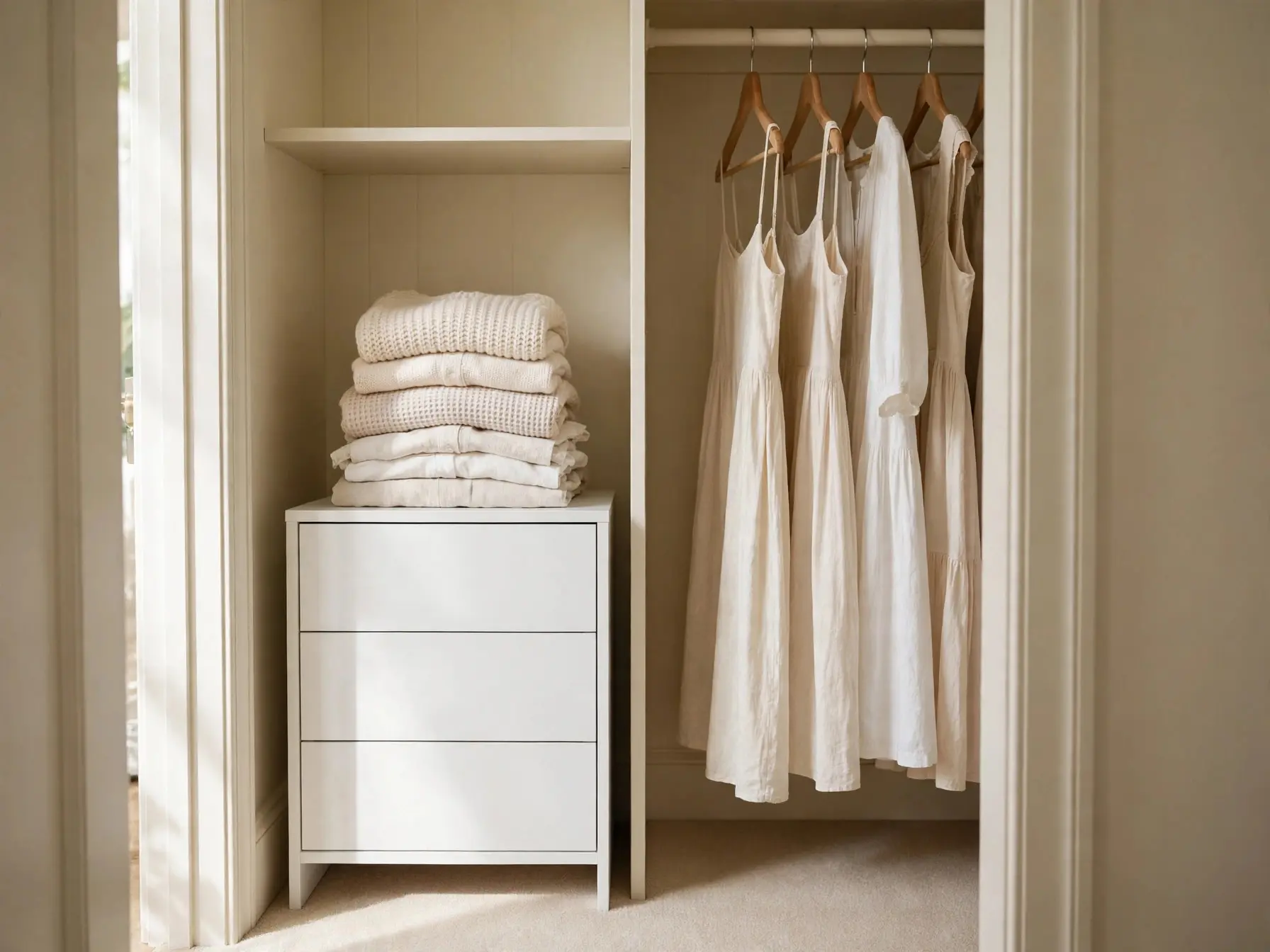
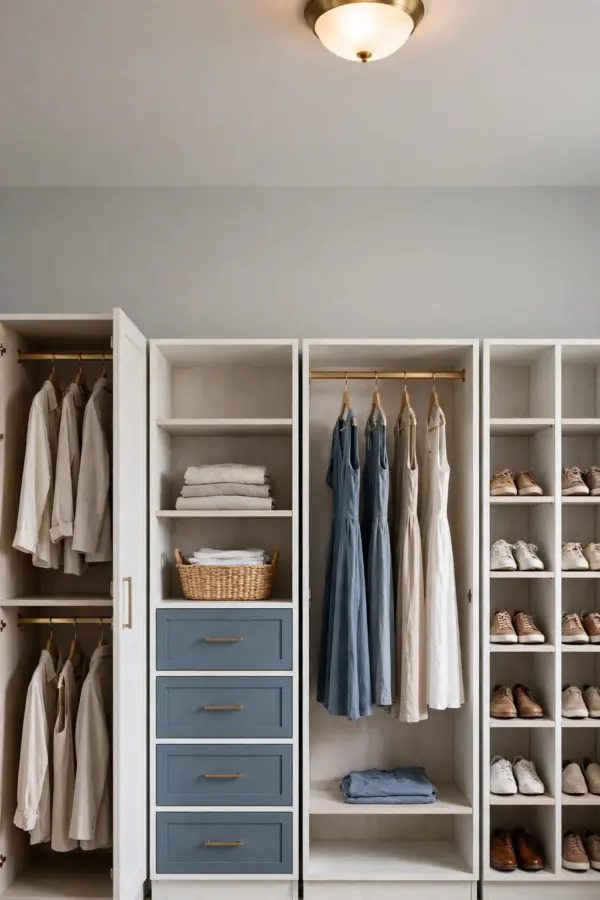
A slim dresser inside the closet is the most polished pick on this list: it looks like built-in storage, it holds heavier folded clothes without sagging, and its top becomes a shelf for the things you fold daily. The trick is the size – a dresser 30 inches wide and 16 inches deep fits most reach-in closets, but measure your closet’s width, depth and door opening first and leave two inches of clearance on every side. Open every drawer in the shop before you buy: if a drawer sticks or the dresser wobbles, it will only get worse once it is loaded.
- Pick a dresser 30 inches wide and 16 inches deep
- Leave two inches of clearance on every side
- Check the drawers open fully before you buy
8. Two-drawer chest for a reach-in corner
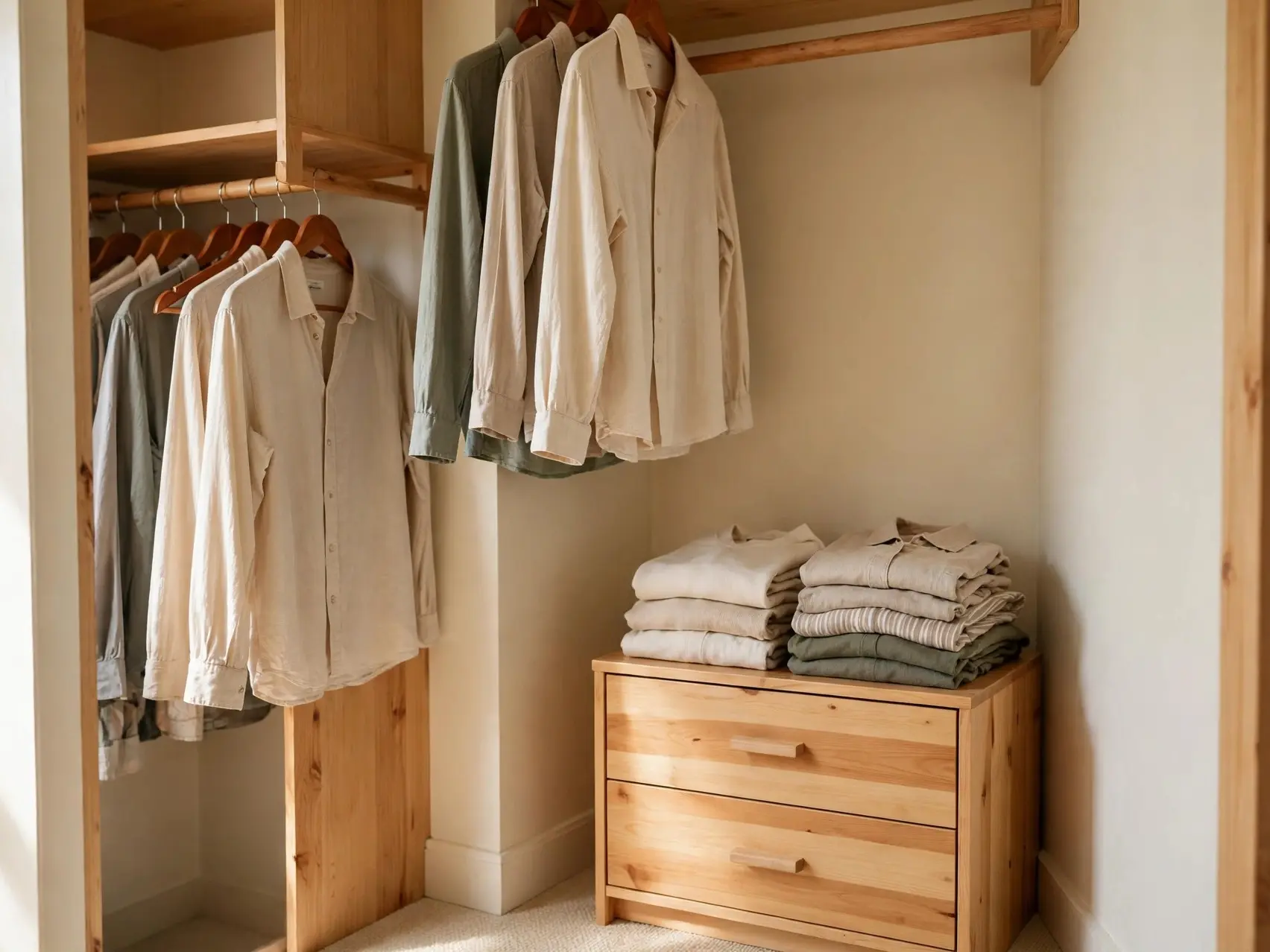
A two-drawer chest – the size of a nightstand – is the quiet answer for a reach-in closet with one awkward corner. It holds pajamas, underwear and gym kit in two deep drawers, and its top becomes the landing spot for the clothes you fold each evening. Because it is small, it fits through the closet door without a fight and moves with you in one trip. Choose light wood or white so it does not darken a small closet, and skip anything with a wide overhang – the corners catch on hanging clothes every time you reach past.
- A nightstand-sized chest fits most reach-in corners
- Use the top for folded clothes you grab daily
- Anchor it only if your lease allows – freestanding is fine
Measure, stack and keep it tidy
9. Measure first: width, depth and height under your shortest hang
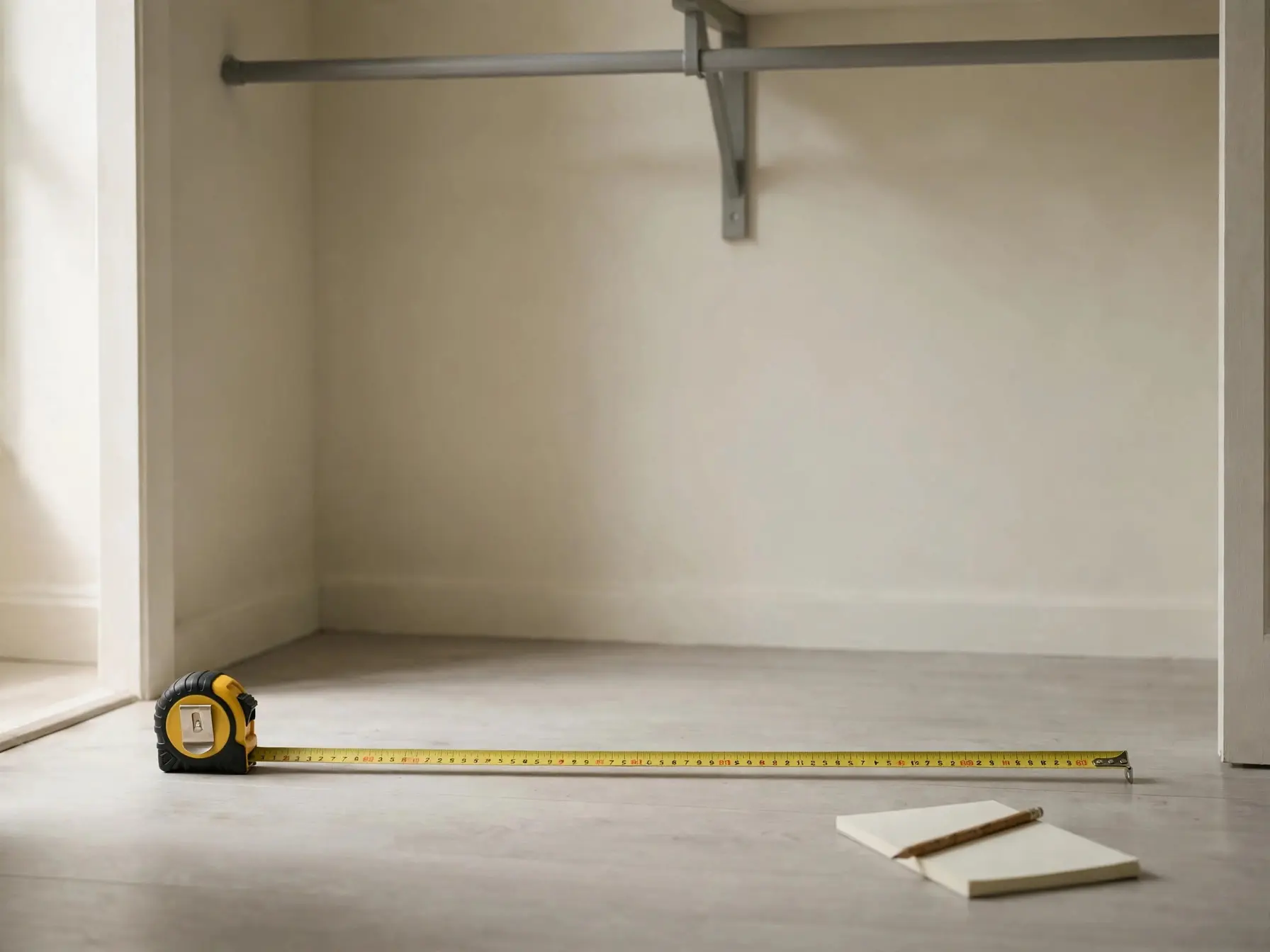
Every closet-drawer mistake starts with skipping the tape measure. Measure three numbers and write them on your phone before you shop: the width of the floor space, the depth from the wall to the door track, and the height from the floor to the bottom of your shortest hanging clothes. Leave an inch of clearance on the width and the height so the unit slides in and the drawers open fully. And check the product’s outside dimensions, not just the drawer size – a drawer that is 12 inches wide can sit in a unit that is 15 inches wide, and that is the number that has to fit.
- Width, depth and height under your shortest hang
- Leave an inch of clearance on width and height
- Check outside dimensions, not just drawer size
10. Drawer dividers and labels that keep every stack tidy
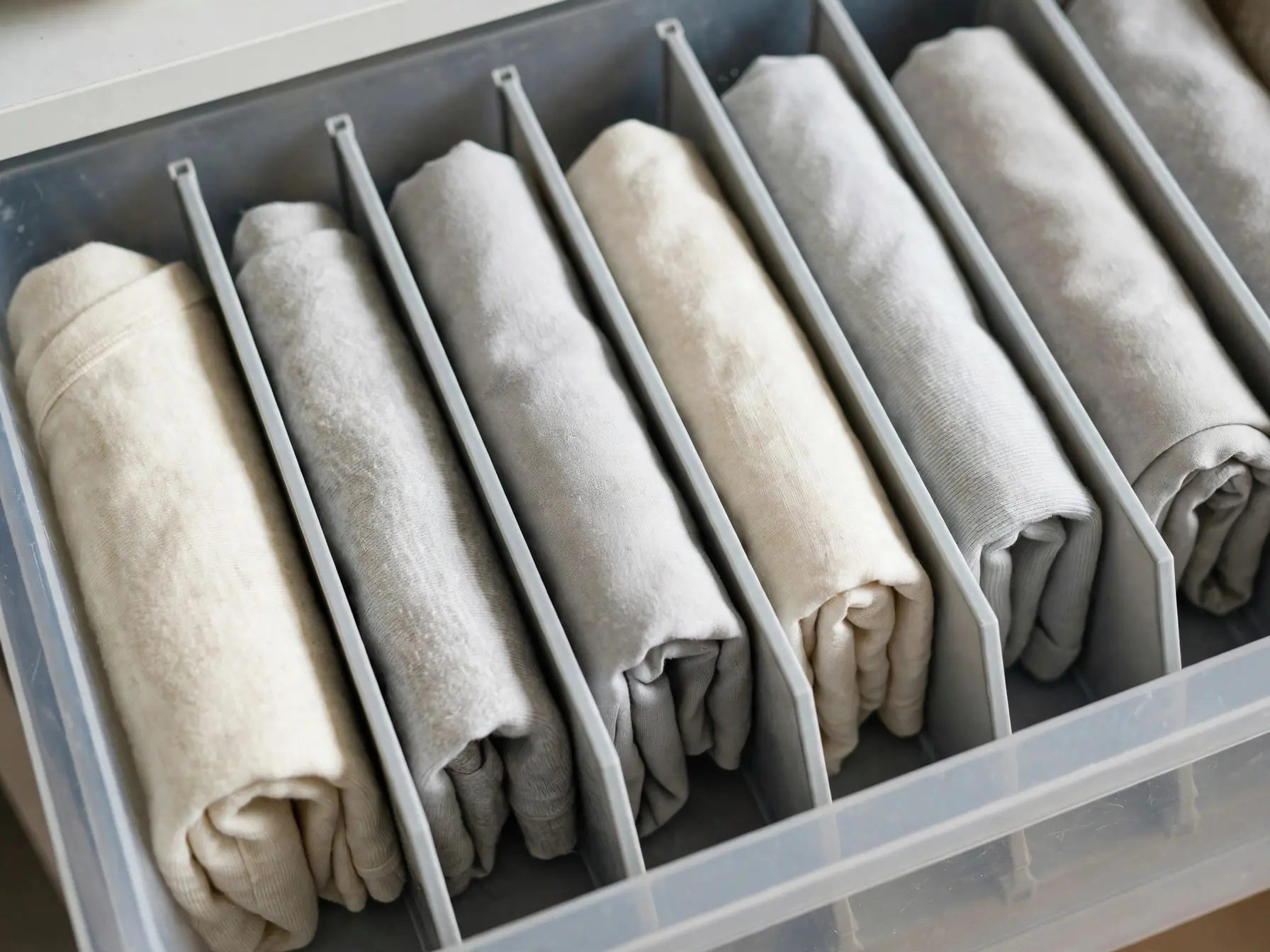
Drawers only stay tidy with dividers and labels – without them, every stack slowly becomes one mixed pile. File-fold clothes upright, spine facing up, so you can see every item at a glance, then slide slim dividers between categories to stop stacks toppling when you pull one piece out. A blank tag on the drawer front tells the household what lives inside, and relabeling takes a minute when the seasons change. This is the cheapest pick on the list and the one that makes all nine picks above actually work.
- File-fold clothes upright so you see every item
- Use slim dividers to stop stacks toppling
- Relabel the tags when the seasons change
Questions, answered
Are plastic closet drawers worth it?
Yes, if you buy them for the right job. Clear stackable drawers are the cheapest way to add folded-clothes storage under hanging clothes, and they move with you, which is exactly what renters need. They are not a replacement for a dresser: they hold less weight, the drawers can stick when overloaded, and they look best when the fronts stay tidy. Buy one stack, live with it for a month, then add a second only if the first one earns its space.
How do you measure for closet drawers?
Measure three numbers before you buy anything: the width of the floor space, the depth from the wall to the closet door track, and the height from the floor to the bottom of your shortest hanging clothes. Leave at least an inch of clearance on the width and the height so the unit slides in and the drawers open fully. Write the numbers on your phone before you shop, and check the product’s outside dimensions – not just the drawer size – against them.
Can you put a dresser in a closet?
Yes, and it is one of the best closet upgrades if the dresser fits. Measure the closet’s width, depth and door opening first, and pick a dresser at least two inches narrower than the smallest of those numbers so it goes in without scraping. A slim dresser 30 inches wide and 16 inches deep fits most reach-in closets, and it gives you a finished look plus a top surface for folded clothes. Leave the drawers able to open fully – if the closet door blocks them, the dresser is too deep.
What are the best stackable drawers for a closet?
The best stackable drawers are clear plastic units with smooth runners, a flat top for stacking, and a width that leaves an inch of clearance in your closet. Clear fronts matter more than brand: you find things without opening every drawer, and the stack stays tidy because you can see when it is full. For light items and shared closets, a fabric tower with blank tags on each drawer is the lighter, cheaper alternative, and it folds flat when you move.
Keep reading
Start with our closet organization ideas guide for the whole system these drawers fit into, then see how closet shelving ideas doubles the storage on the walls above them. Shoe organizer for closet ideas sorts the shoes that live on the closet floor, and storage ideas for small spaces covers the rest of a small home once the closet is done.
Measure first, buy one stack, and live with it for a month before you add more. The right closet drawers turn the dead space under your hanging clothes into the most-used storage in the room – and when moving day comes, they come with you.