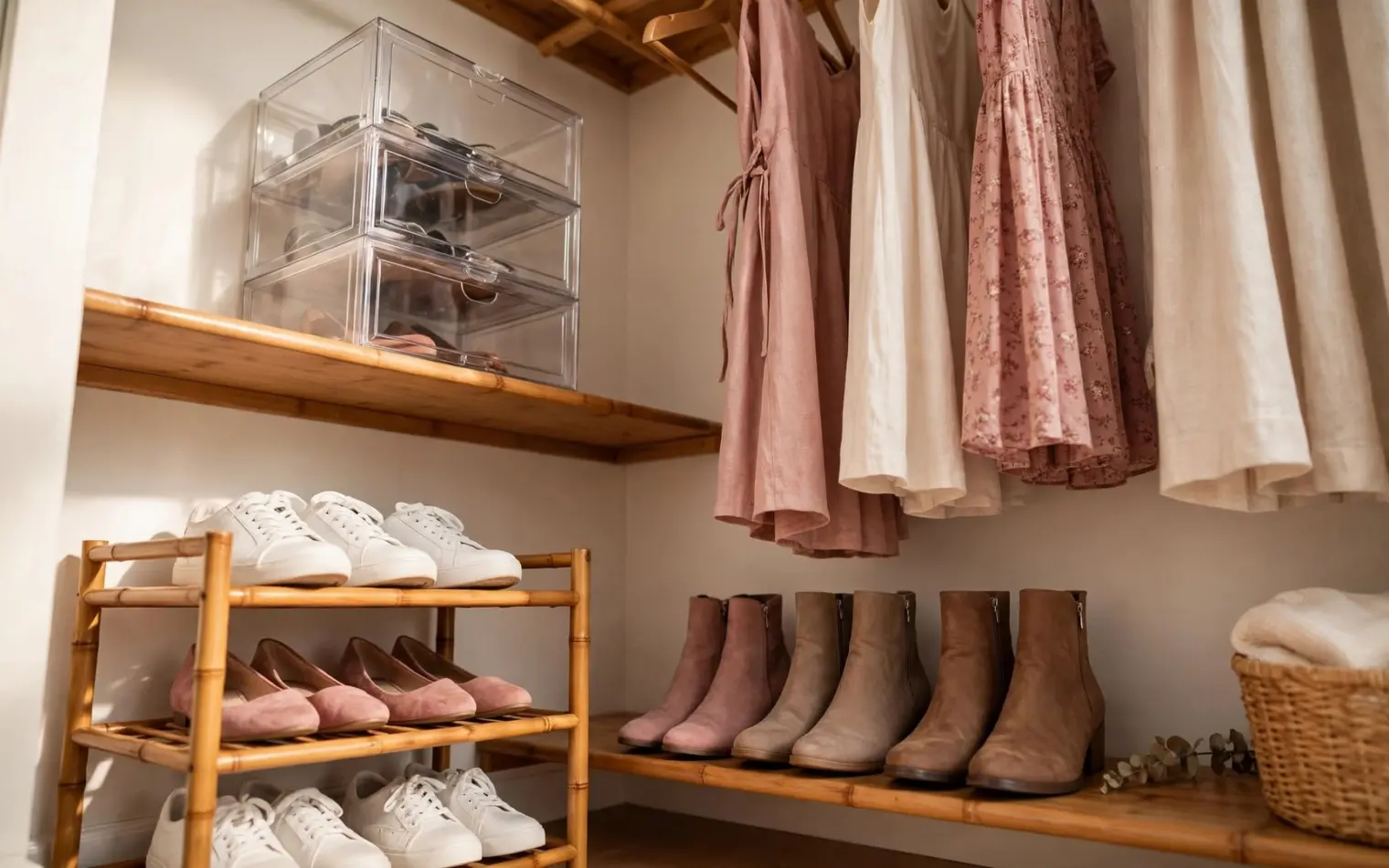
A slim stackable rack is the best shoe organizer for closet spaces: it slides under short hanging clothes, holds 6 to 12 pairs, and costs less than most alternatives. If your floor is already full, clear over-door pockets are the next best pick, and labeled clear boxes win for the top shelf. Measure the width, depth, and door clearance of your closet first, then match the organizer to the space you actually have.
Thank you for reading this post, don’t forget to subscribe!Shoes end up in a heap for one reason: the organizer does not fit the closet. This guide groups 20 ideas by closet size — reach-in, walk-in, small and narrow, and shared — so you can skip straight to the ones that work in yours. Our guide to closet organization ideas covers the whole closet system; here we zoom in on shoes alone, with a comparison table up front so you can pick in minutes.
Which shoe organizer fits your closet?
Measure your closet before you shop: width, depth, and how far the door swings. Then find your closet in the table and pick the organizer that fits it.
| Organizer type | Closet width it fits | Pairs held | Best for |
|---|---|---|---|
| Slim stackable floor rack | 24 to 36 in | 6 to 12 pairs | Reach-in closets under short clothes |
| Over-door pocket organizer | Any door, about 24 in wide | 12 to 24 pairs | Closets with no floor space |
| Clear drop-front boxes | 12 in deep shelf | 1 pair per box | Top shelves and seasonal pairs |
| Hanging fabric shelves | 12 in of rod space | 6 to 10 pairs | Renters and no-drill closets |
| Tall shoe tower | 24 to 36 in wide | 16 to 30 pairs | Walk-in closets |
| Wall-mounted rack | Any wall, about 24 in | 6 to 10 pairs | Narrow closets with free wall space |
| Rolling shoe cart | 6 to 8 in gap | 8 to 10 pairs | Narrow gaps beside a dresser |
Prices move around, but the sizes do not: a rack that is wider than your closet will never fit, whatever it costs. Measure first, then buy.
Reach-in closets: use the floor, the door, and the top shelf
A reach-in closet is shallow and narrow, so the floor, the door, and the top shelf all have to work. These six ideas use all three.
1. Learn the four main types before you buy anything
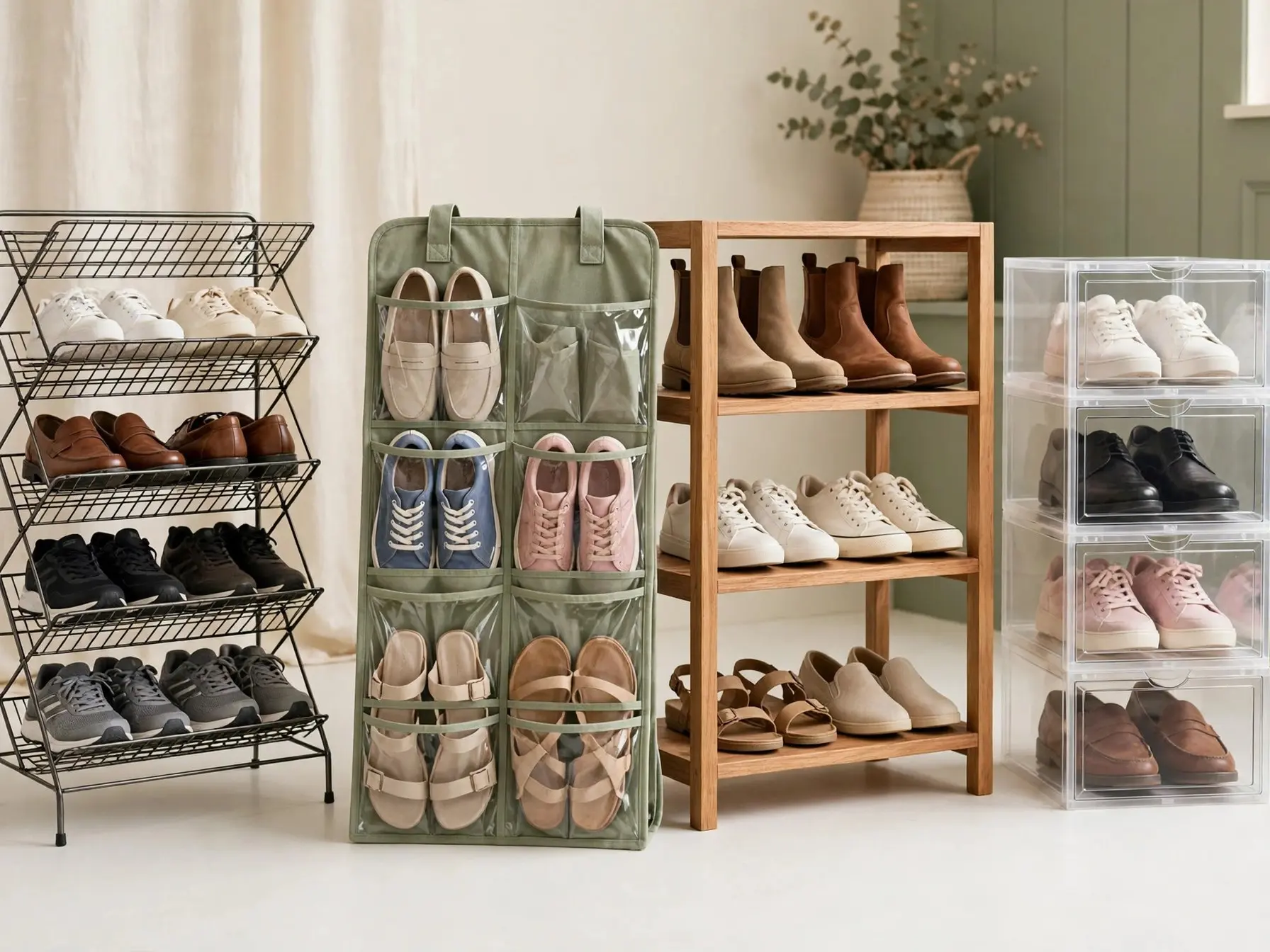
Every shoe organizer for closet spaces is one of four types: a floor rack, over-door pockets, clear boxes, or hanging fabric shelves. Racks are the cheapest and easiest to move. Pockets hold the most pairs without using floor space. Boxes protect shoes from dust and stack neatly on shelves. Hanging shelves need no tools at all. Spend five minutes comparing them against your closet’s width, depth, and door before you buy, and you will only buy once.
- Fits: any closet, once you measure
- Holds: 6 to 24 pairs, by type
- Best for: first-time buyers
2. Hang clear over-door pockets on the closet door
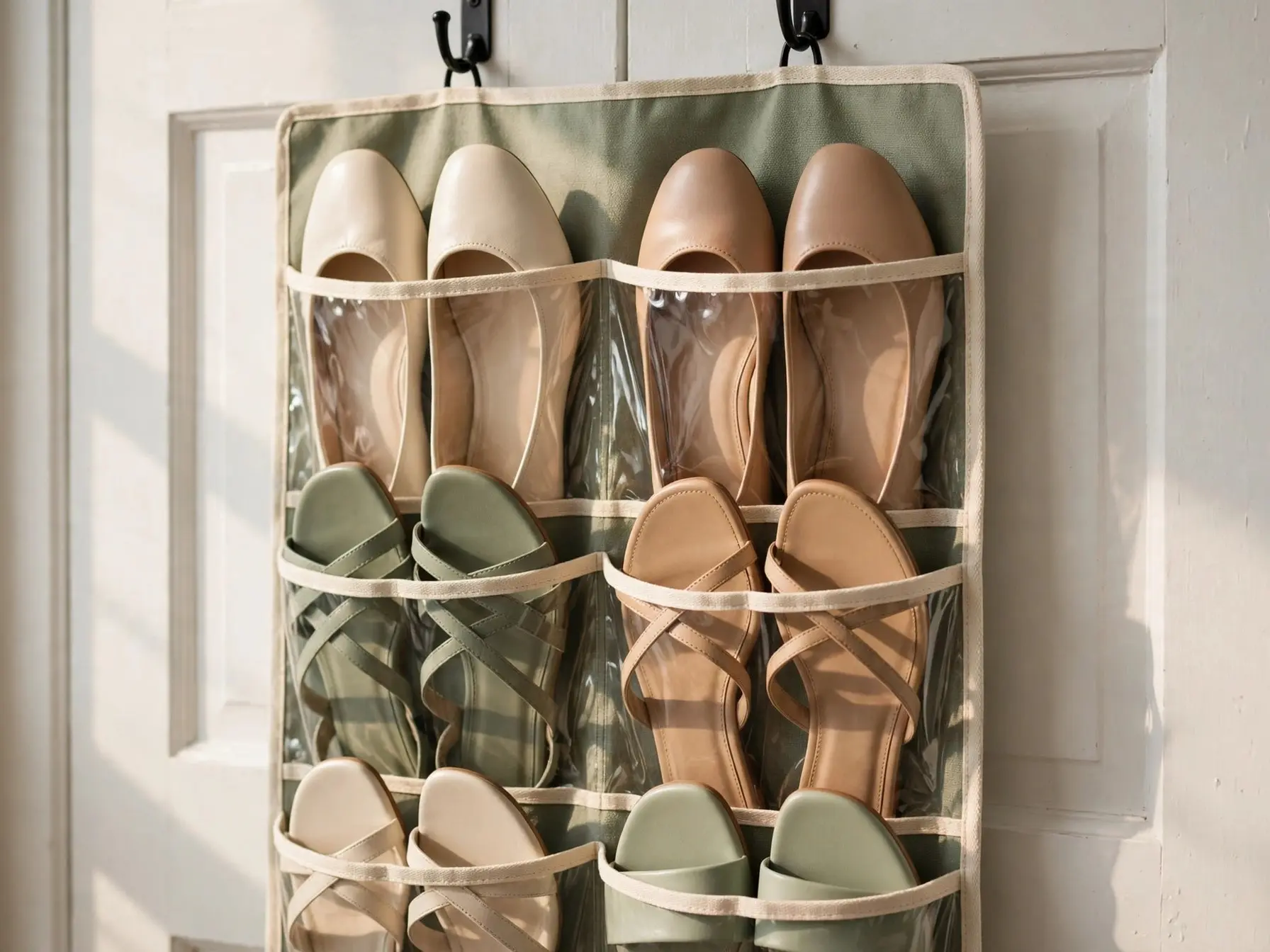
Clear over-door pockets are the fastest fix for a closet with no floor space left. One organizer holds 12 to 24 pairs, hooks over the door in seconds, and costs less than a single pair of shoes. Pick clear pockets so you can see every pair at a glance, and check the door still closes with the pockets full — shallow pockets suit thin doors best. Heels and bulky boots fit better in the deeper bottom rows.
- Fits: any standard door, about 24 in wide
- Holds: 12 to 24 pairs
- Best for: closets with no floor space
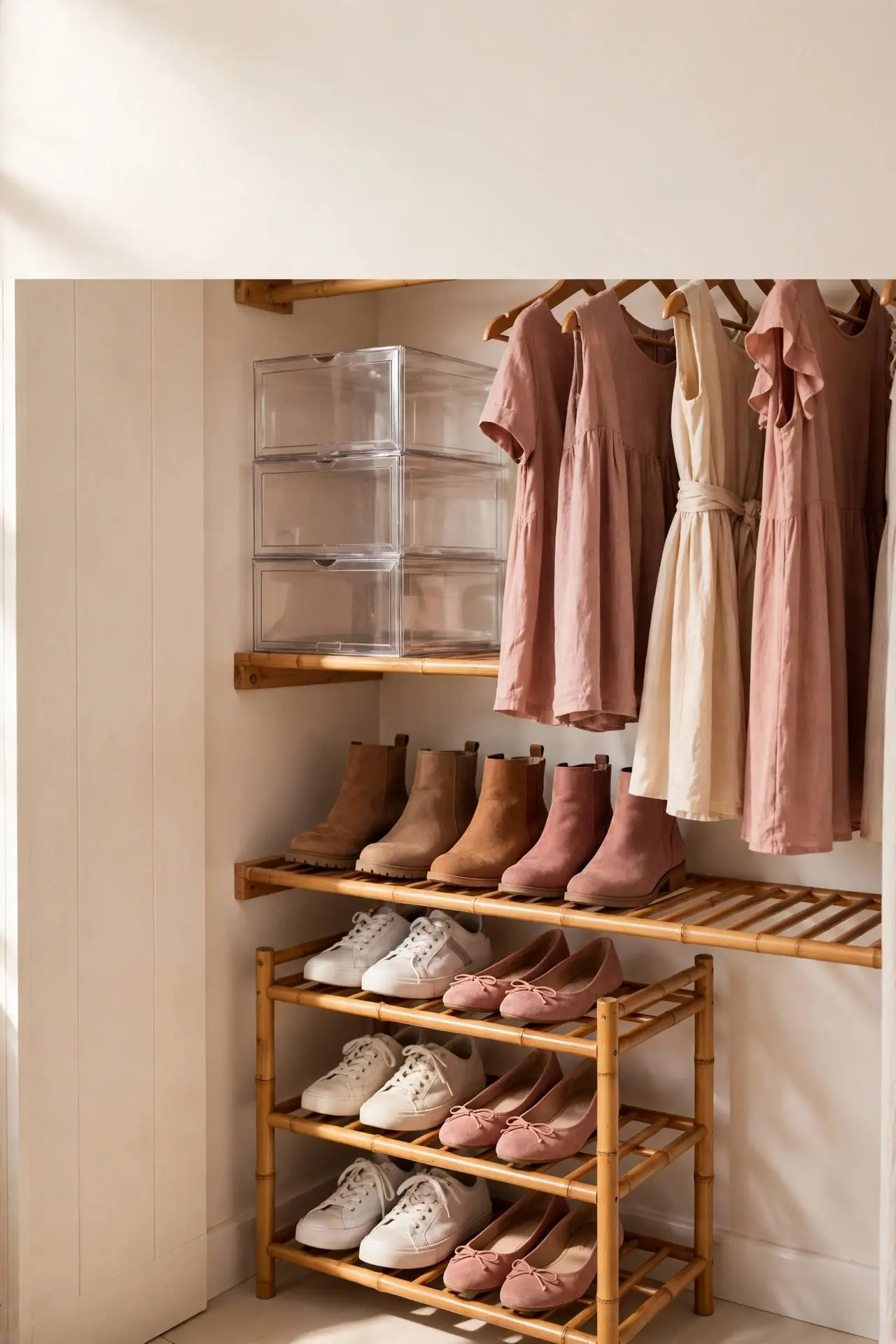
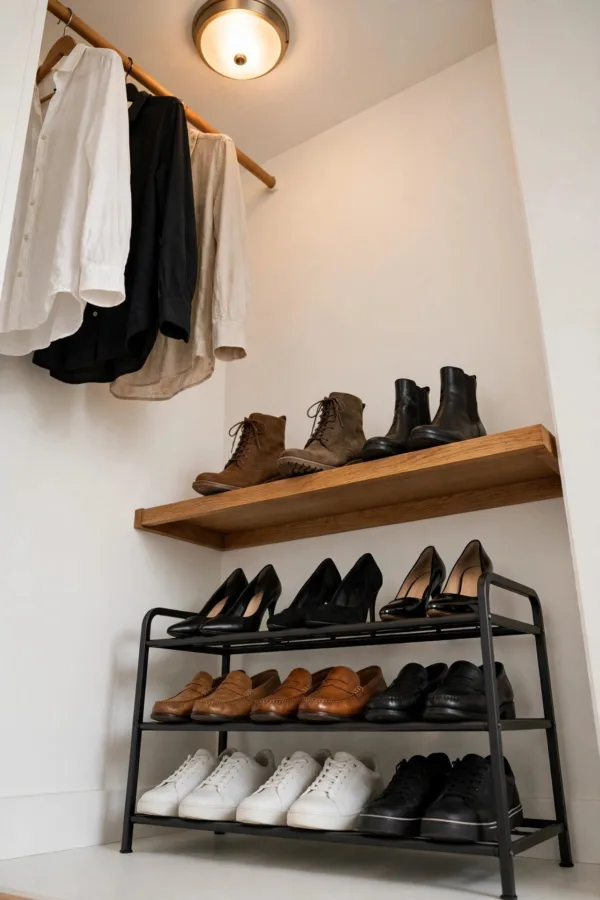
3. Slide a slim stackable rack under short hanging clothes
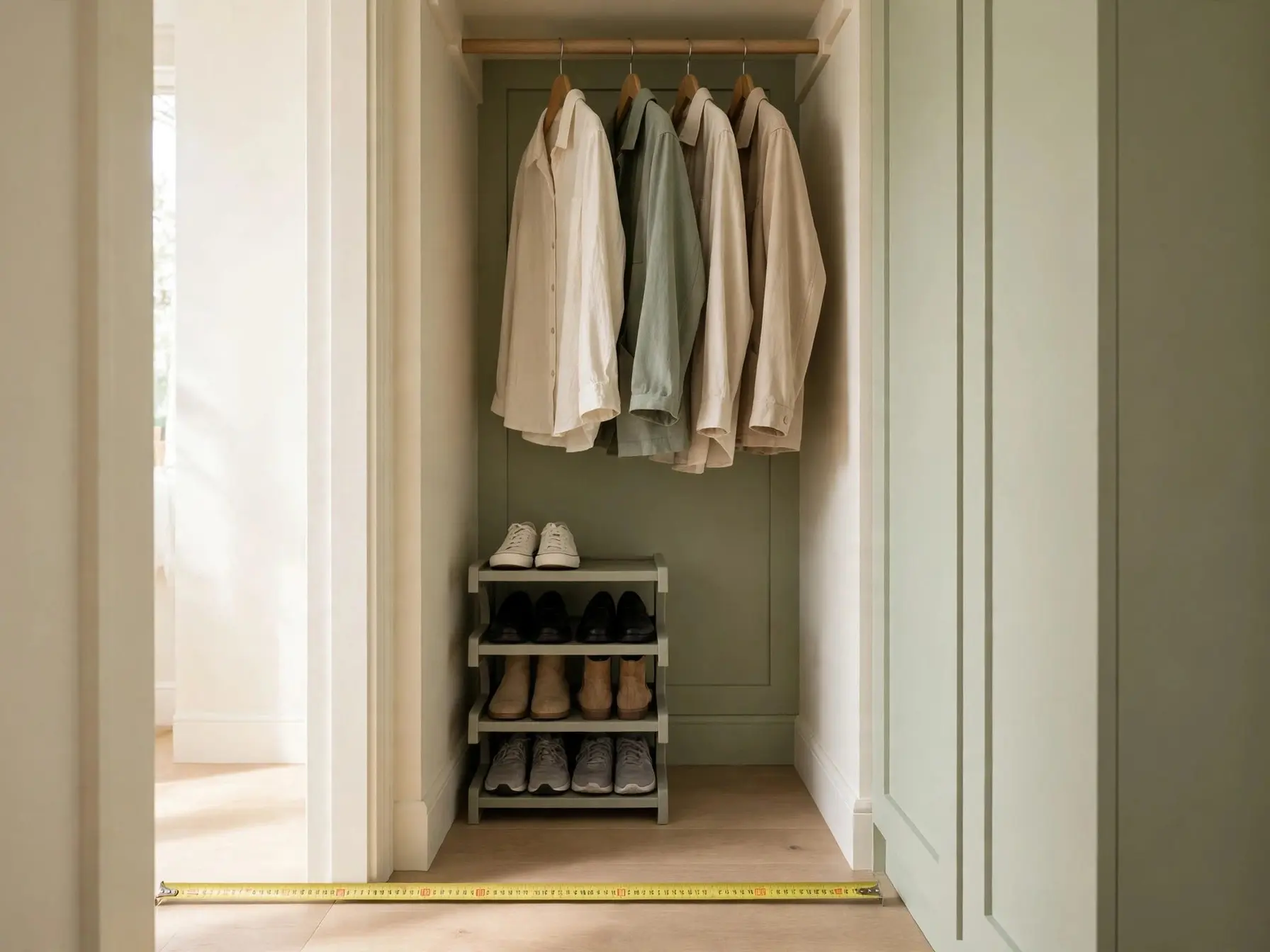
The space under short hanging clothes is the most wasted spot in a reach-in closet, and a slim stackable rack was made for it. Measure the width first — most racks are 24 to 36 inches wide — then stack two or three tiers to fit the height you have. Sneakers and flats sit neatly on each tier, and you can add another tier later when the collection grows. Keep boots off the rack; they belong on the floor or the top shelf.
- Fits: 24 to 36 in wide, under short clothes
- Holds: 6 to 12 pairs
- Best for: reach-in closets
4. Stack labeled clear boxes on the top shelf
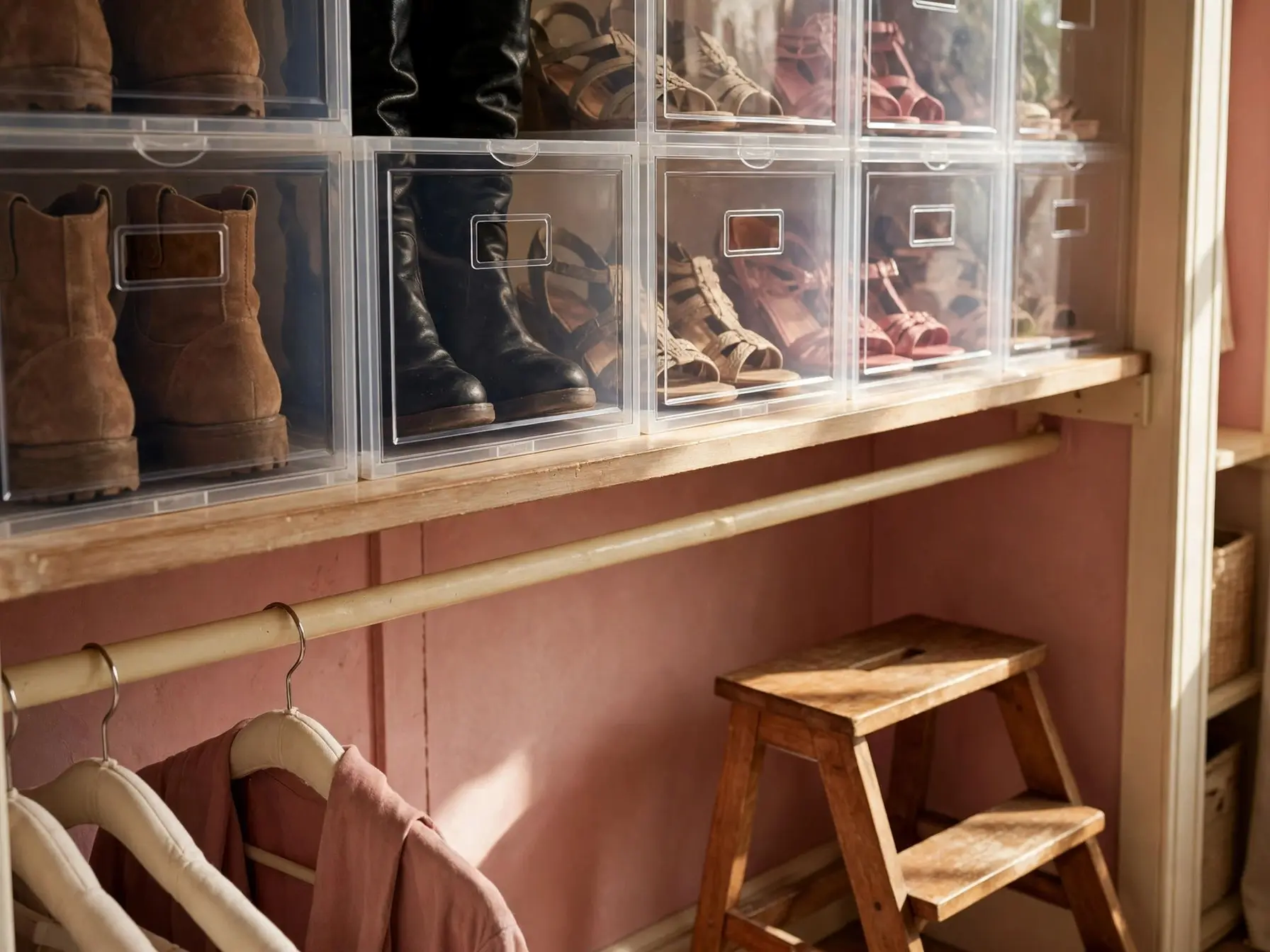
The top shelf is perfect for the pairs you wear least, and clear drop-front boxes keep them visible and dust-free up there. One pair goes in each box, the front drops open so you can pull shoes out without unstacking, and a simple label tells you what is inside. Keep a small step stool nearby so the shelf stays in use instead of becoming a graveyard. Rotate seasonal pairs down twice a year.
- Fits: a 12 in deep shelf
- Holds: 1 pair per box
- Best for: top shelves and seasonal pairs
5. Hang fabric cubby shelves from the closet rod
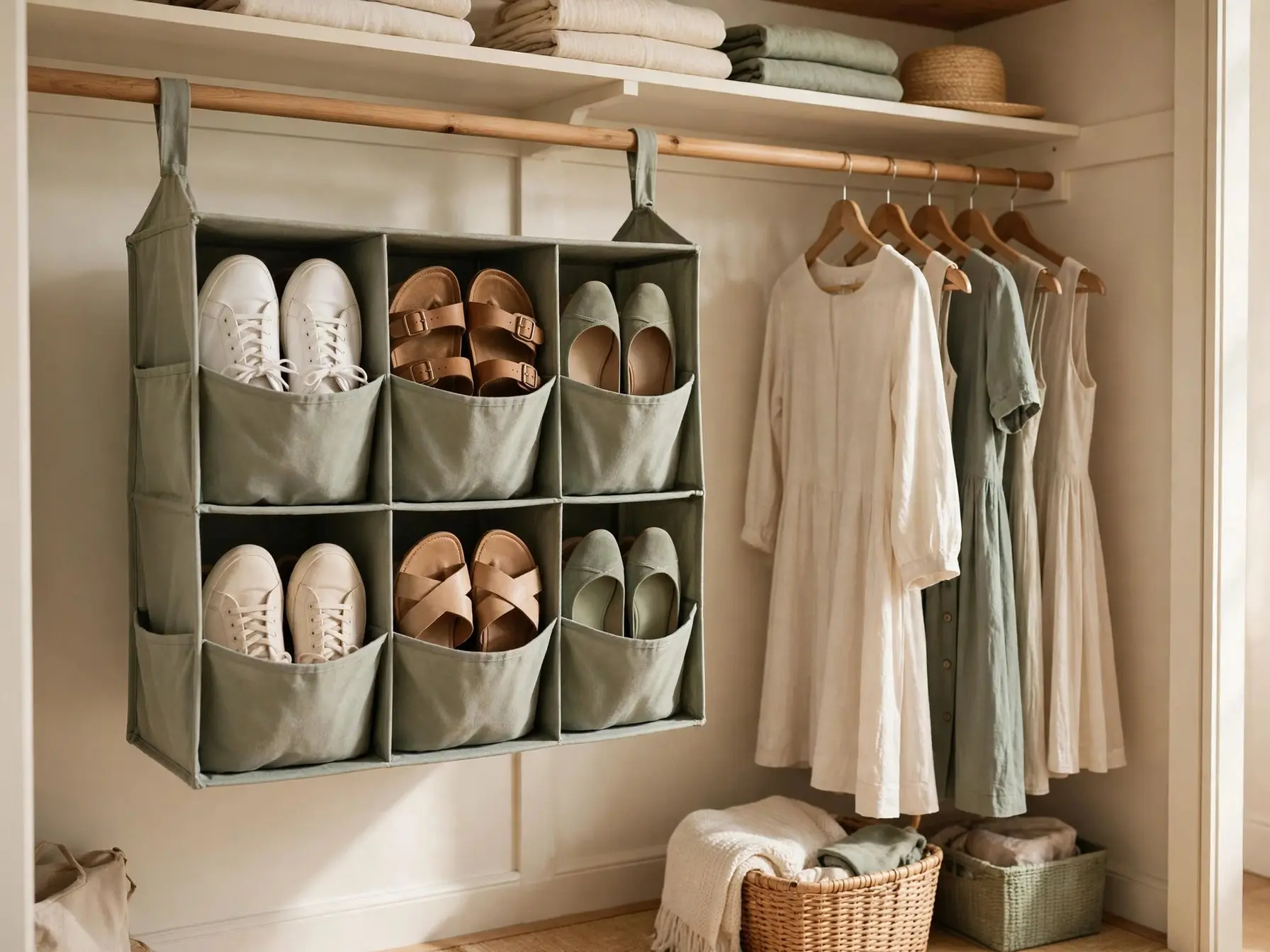
Fabric cubby shelves hook straight onto the closet rod, so they need no drilling, no screws, and no tools — a genuine renter-friendly fix. Each cubby holds one pair, and a six- or ten-cubby unit fits in about a foot of rod space. Use them for flats, sandals, and sneakers, and leave heavy boots for the floor, since fabric shelves sag under weight. They fold flat when you move, which makes them easy to take with you.
- Fits: about 12 in of rod space
- Holds: 6 to 10 pairs
- Best for: renters and no-drill closets
6. Add a low two-tier rack along the side wall
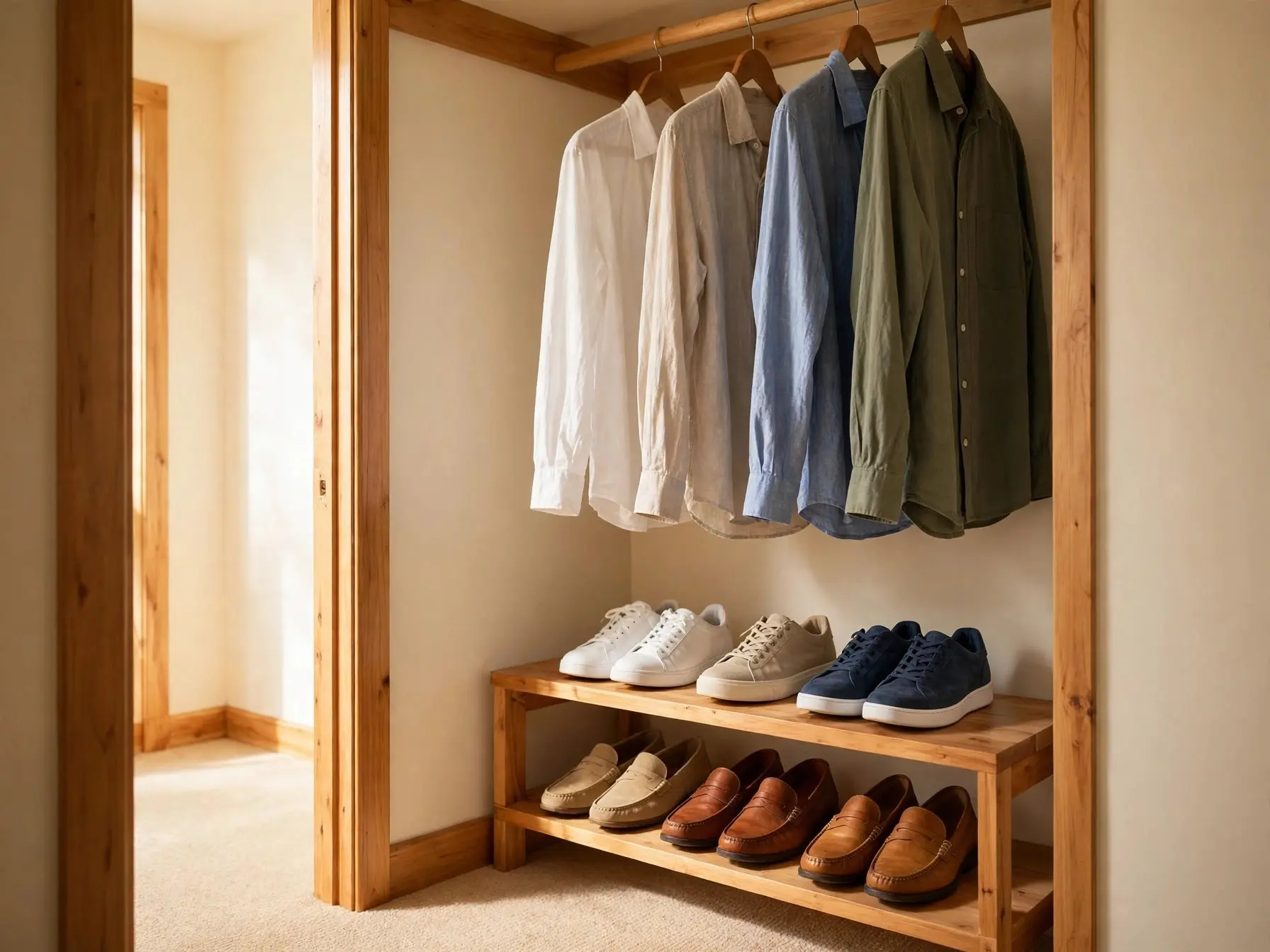
The strip of wall beside your hanging clothes is usually dead space, and a low two-tier rack turns it into room for four to eight more pairs. Pick a rack no deeper than 12 inches so it does not block the clothes, and keep the pairs you wear most on the top tier where they are easy to grab. Boots stand on the floor beside it, not on the rack. This is the cheapest way to add capacity without changing anything else.
- Fits: side wall, up to 12 in deep
- Holds: 4 to 8 pairs
- Best for: reach-in closets with a spare side wall
Walk-in closets: give shoes a wall of their own
A walk-in closet has the wall space a reach-in never will. Use one wall for shoes and the rest of the closet stays calm.
7. Build an open cubby shoe wall
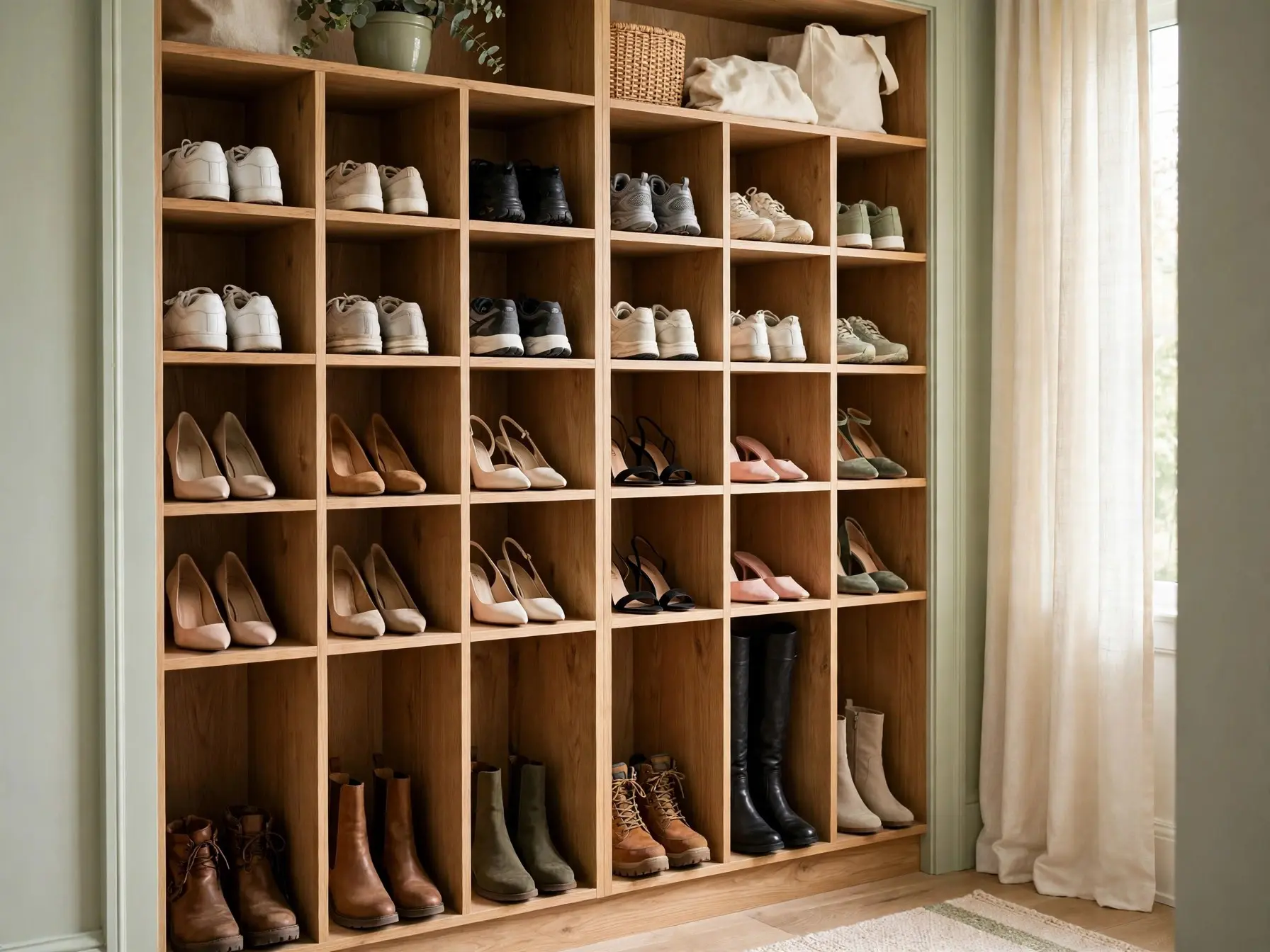
A wall of open cubbies is the walk-in closet classic: every pair visible, every pair reachable, and nothing hidden behind anything else. Size the cubbies to the shoes — taller cubbies for boots, short ones for flats — and keep the pairs you wear most at eye level. Open cubbies also make it obvious when the collection has outgrown the closet, which is the moment to pass a few pairs on. Anchor any tall unit to the wall.
- Fits: one full wall, 36 in or wider
- Holds: 20 pairs or more
- Best for: walk-in closets
8. Line one wall with a tall shoe tower
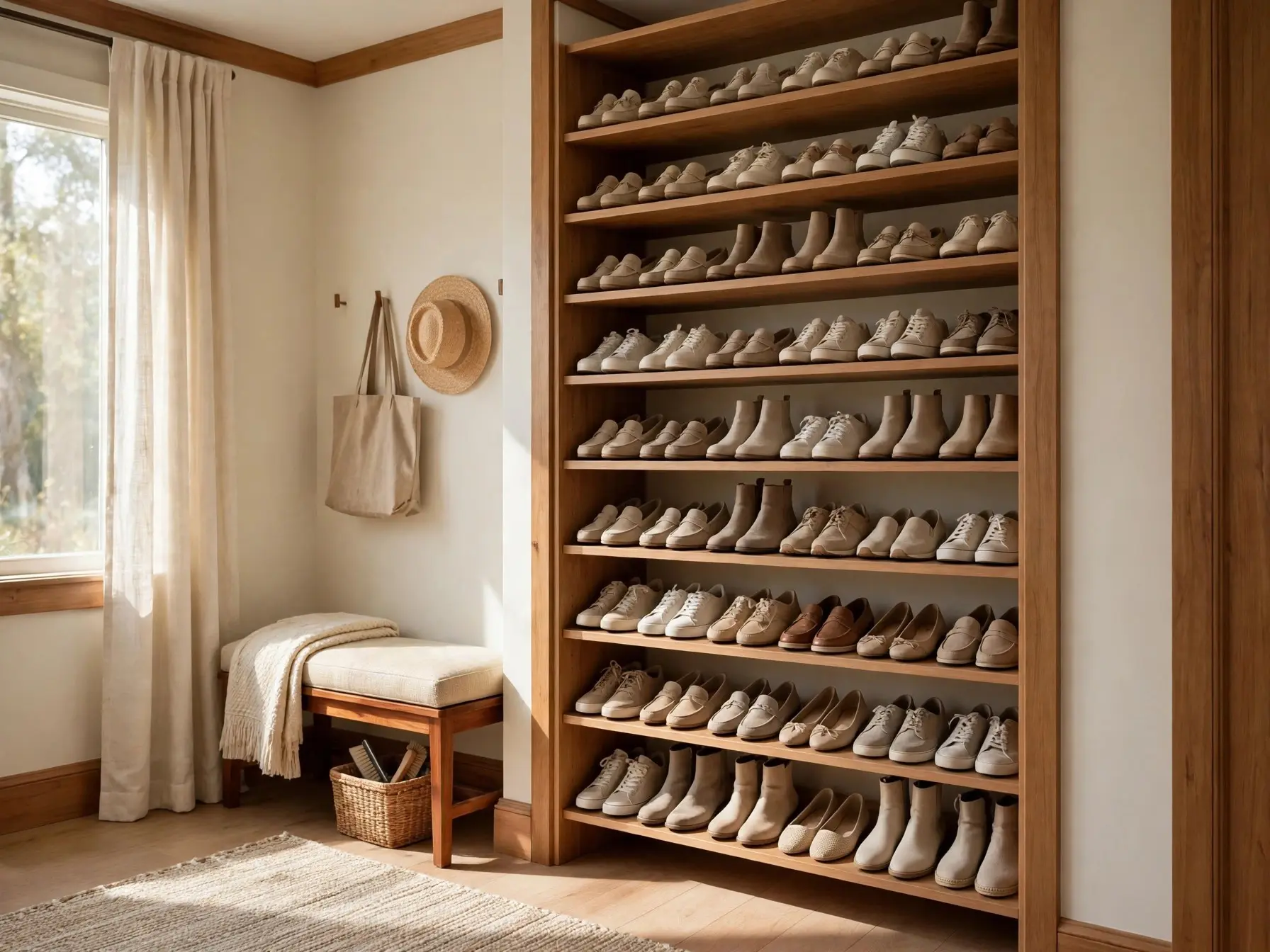
A tall shoe tower uses a narrow strip of wall to hold 16 to 30 pairs, floor to ceiling, which makes it the best capacity-per-inch option for a walk-in closet. Choose adjustable shelves so boot heights and flat heights can change with the seasons. Keep the top shelves for the pairs you wear least and a step stool nearby. Anchor the tower to the wall so it can never tip forward.
- Fits: 24 to 36 in wide, floor to ceiling
- Holds: 16 to 30 pairs
- Best for: walk-in closets with one free wall
9. Angle display shelves for the pairs you wear most
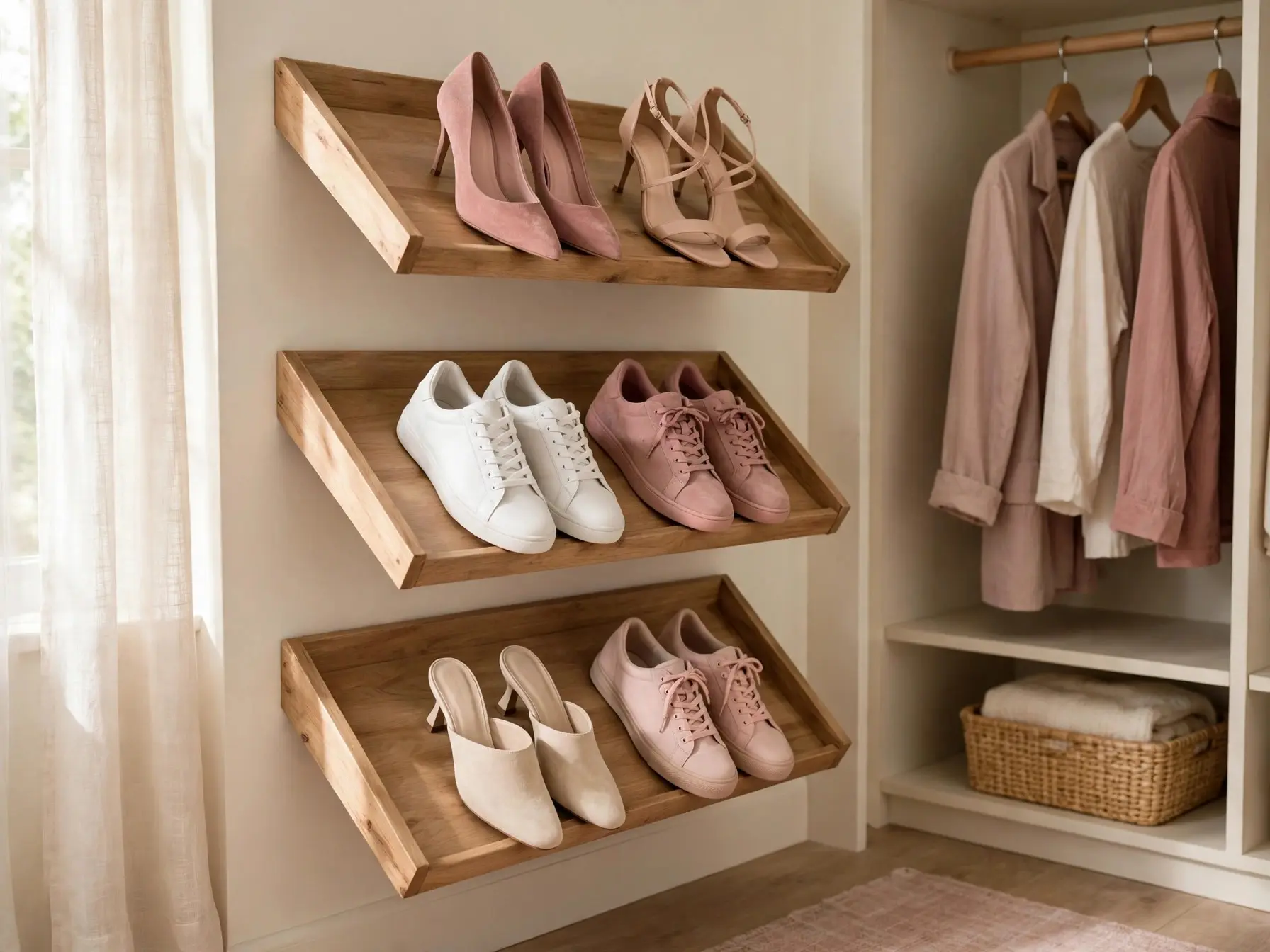
Slanted display shelves tilt each pair toe-down, so you can see every shoe at a glance and grab the right pair without digging. Reserve them for the eight to twelve pairs you actually wear every week — the rest live in cubbies or boxes. A shallow lip at the front of each shelf keeps heels from sliding off. This is the prettiest option in the list, and it works best at eye level in a walk-in closet.
- Fits: 36 in or wider, at eye level
- Holds: 8 to 12 pairs
- Best for: favorite pairs in walk-in closets
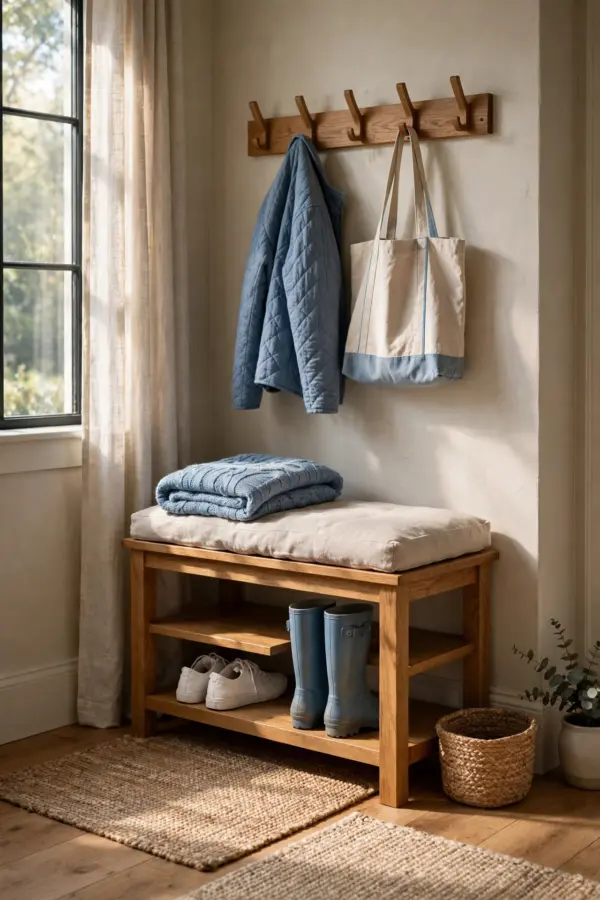
10. Tuck shoes under a dressing bench
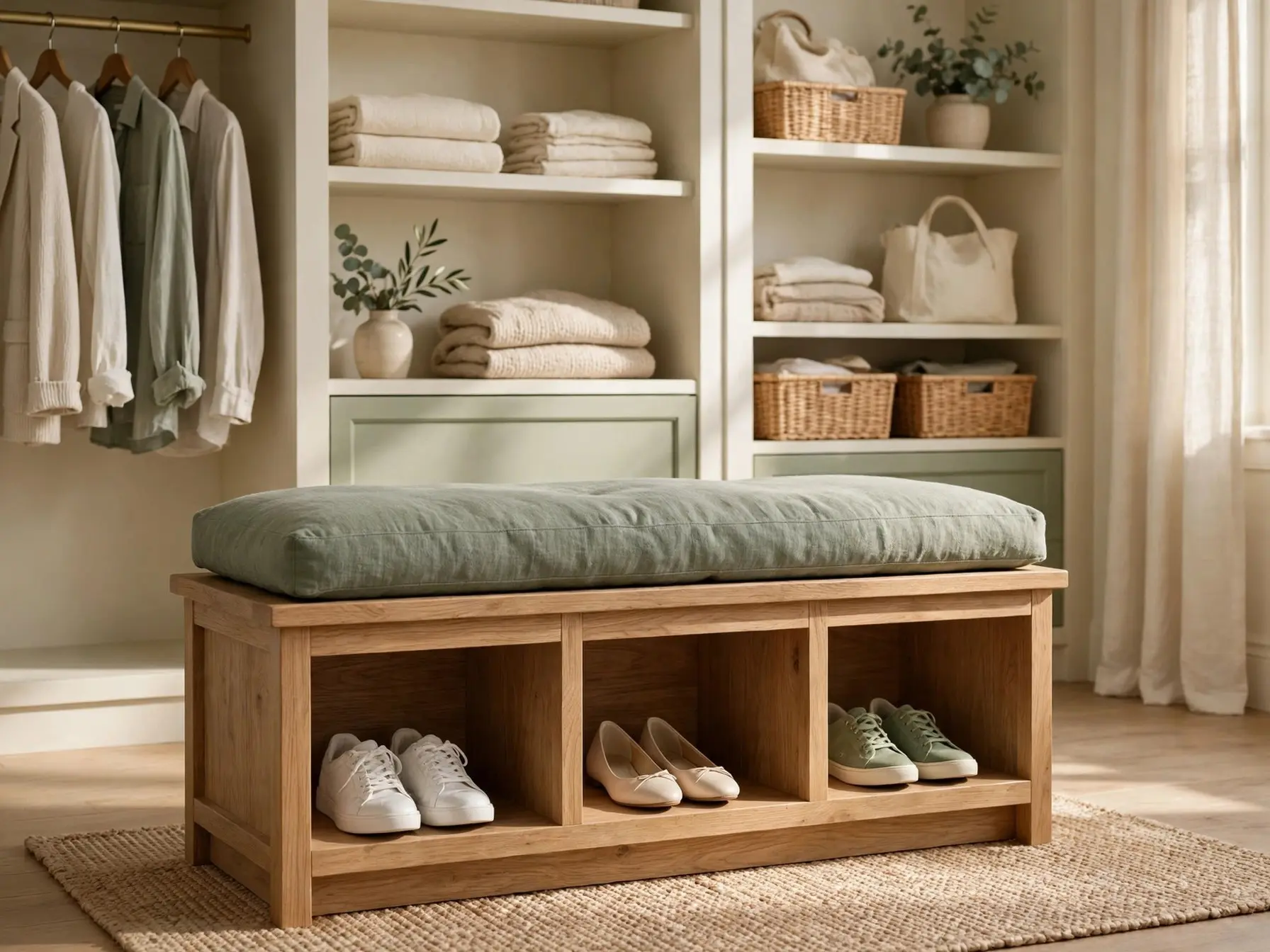
A bench in a walk-in closet does two jobs: somewhere to sit while you put shoes on, and storage underneath for six to ten pairs. Pick a bench with open cubbies or baskets below so shoes stay visible and easy to reach. Keep the pairs you wear daily under the bench and the rest on the wall. A cushion on top makes the bench a proper seat, not just another shelf.
- Fits: walk-in closet, about 36 in wide
- Holds: 6 to 10 pairs
- Best for: walk-in closets with dressing space
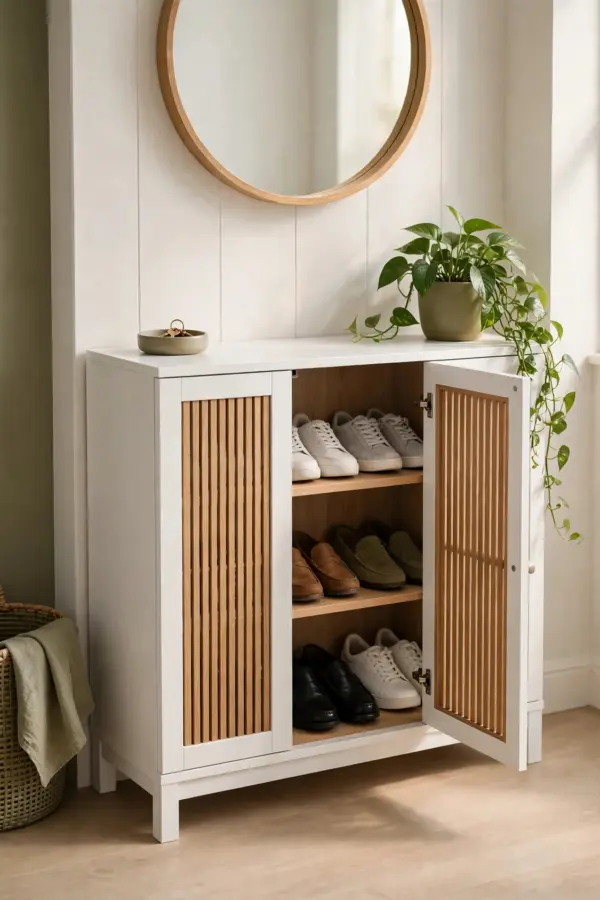
11. Hide the overflow in a lidded cabinet with doors
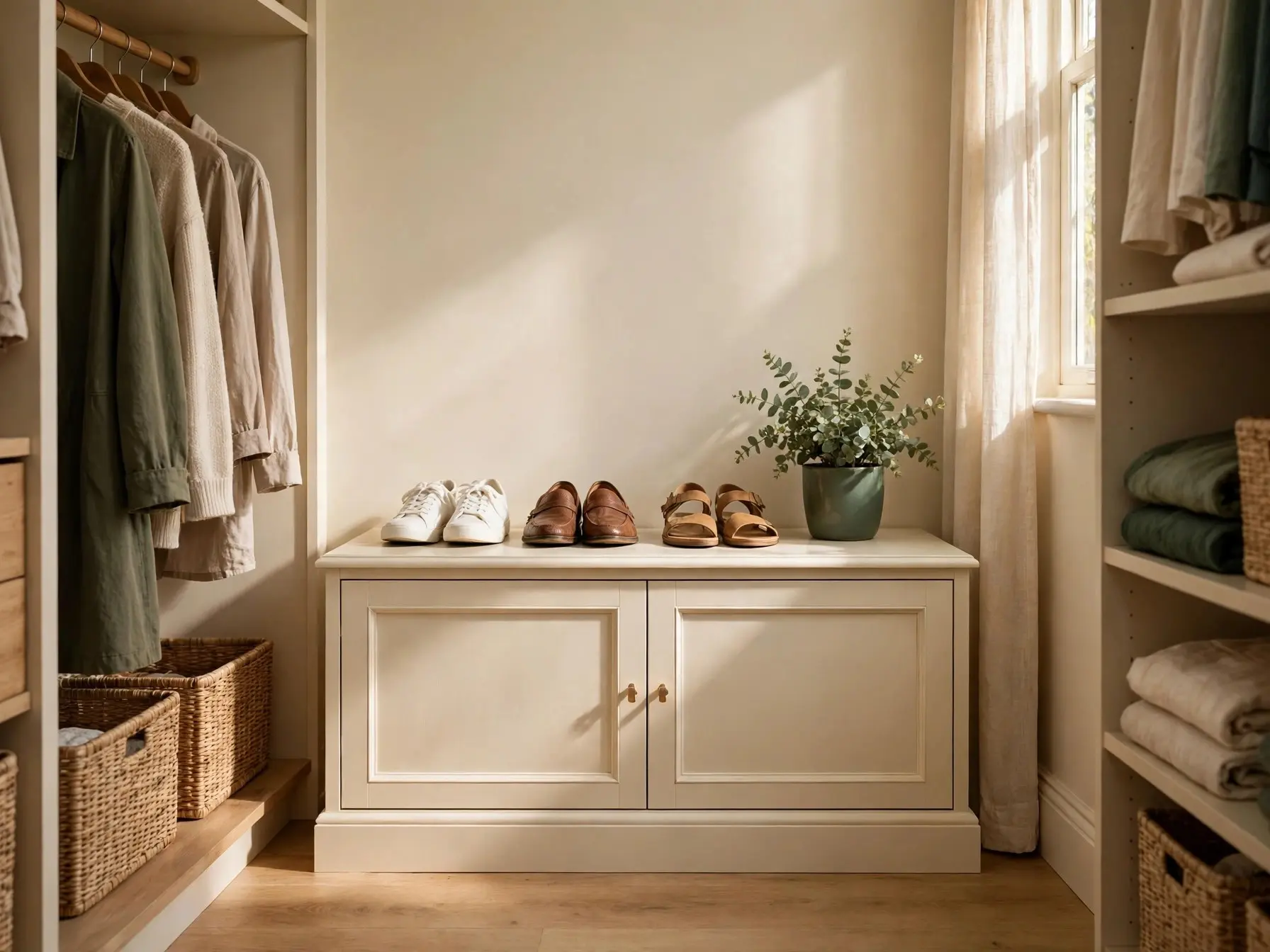
Not every pair needs to be on display. A shallow cabinet with doors hides the overflow, keeps dust off, and makes a walk-in closet look calm instead of crowded. Choose a depth of 12 to 14 inches so it fits a closet wall without eating the walkway. Store off-season and occasion pairs inside, and keep daily pairs on open shelves. Doors also stop shoes from fading in direct sunlight.
- Fits: 12 to 14 in deep, any wall
- Holds: 10 to 16 pairs
- Best for: overflow and off-season pairs
Small and narrow closets: stack up, not out
A narrow closet has almost no floor to spare, so the only direction left is up. These five ideas add capacity without widening anything.
12. Run adjustable shelves from floor to ceiling
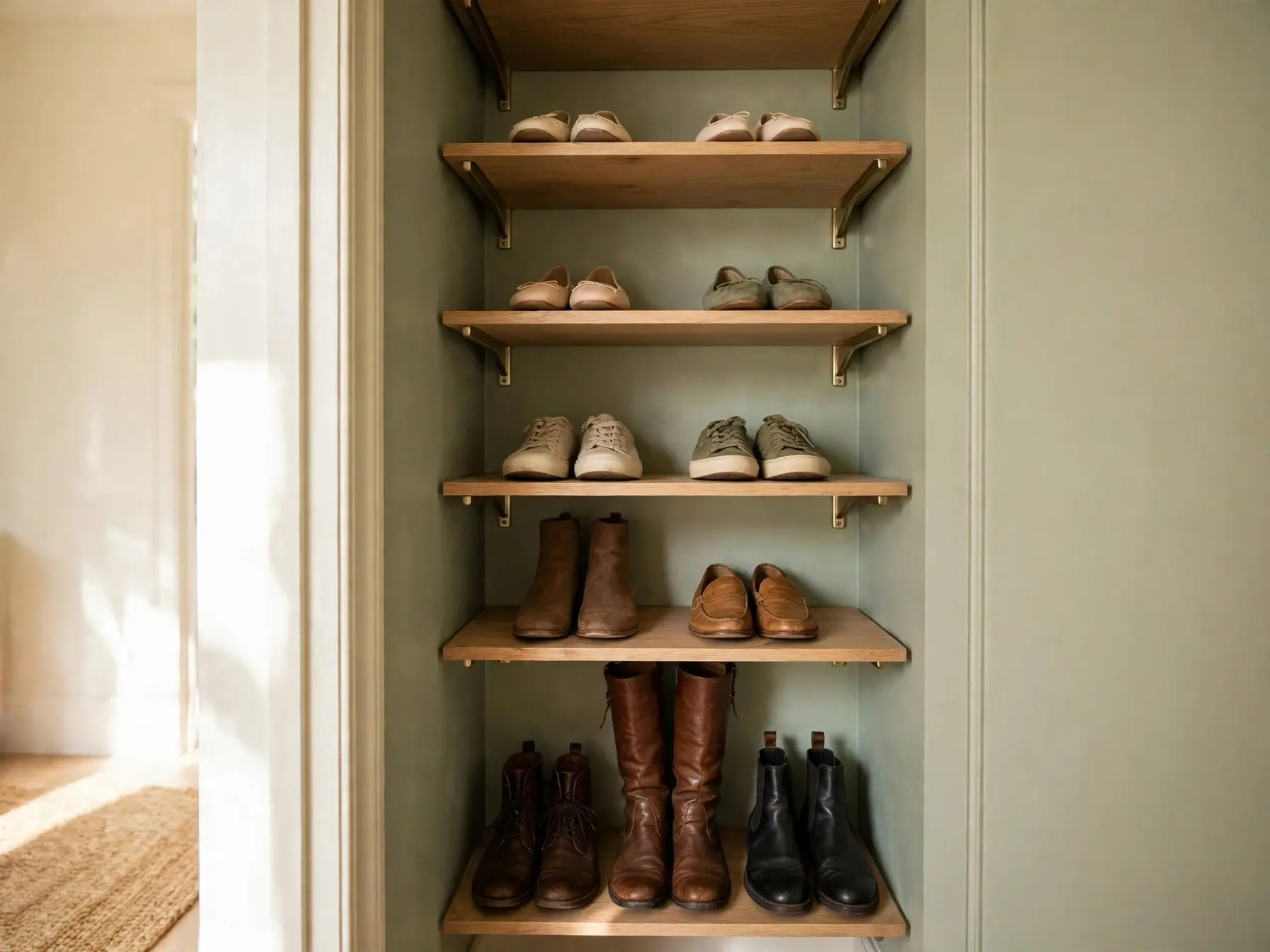
In a small closet, adjustable shelves beat fixed ones because shoe heights change with the seasons. Set short gaps for flats and sandals, taller gaps for boots, and re-space them twice a year when you swap seasons. Brackets and boards cut to fit cost little and use every inch of height. Keep the pairs you wear most between knee and eye level, and the rest above or below.
- Fits: any narrow closet, floor to ceiling
- Holds: 12 to 20 pairs
- Best for: small closets with changing seasons
13. Stand pairs upright in vertical shoe slots
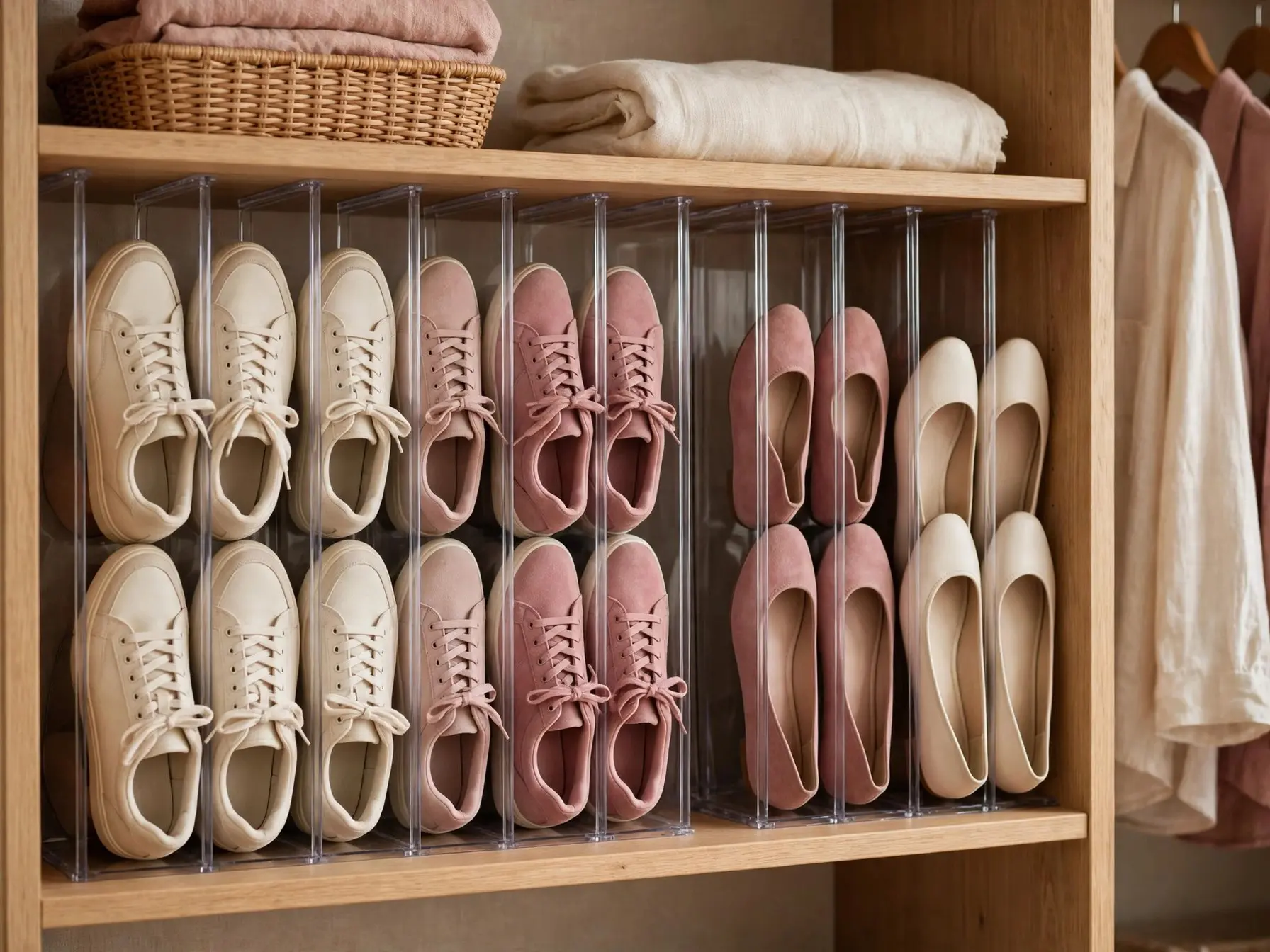
Vertical shoe slots hold each pair upright, heel to toe, so one shelf holds nearly twice as many pairs as flat stacking. They work best for sneakers, flats, and low shoes, and they keep pairs together instead of drifting apart on the shelf. Slide a row of slots onto any existing shelf — no tools, no assembly. Count on eight to twelve pairs per shelf, depending on shoe size.
- Fits: any shelf, 12 in deep
- Holds: 8 to 12 pairs per shelf
- Best for: sneakers and flats on existing shelves
14. Mount a wall rack above the floor line
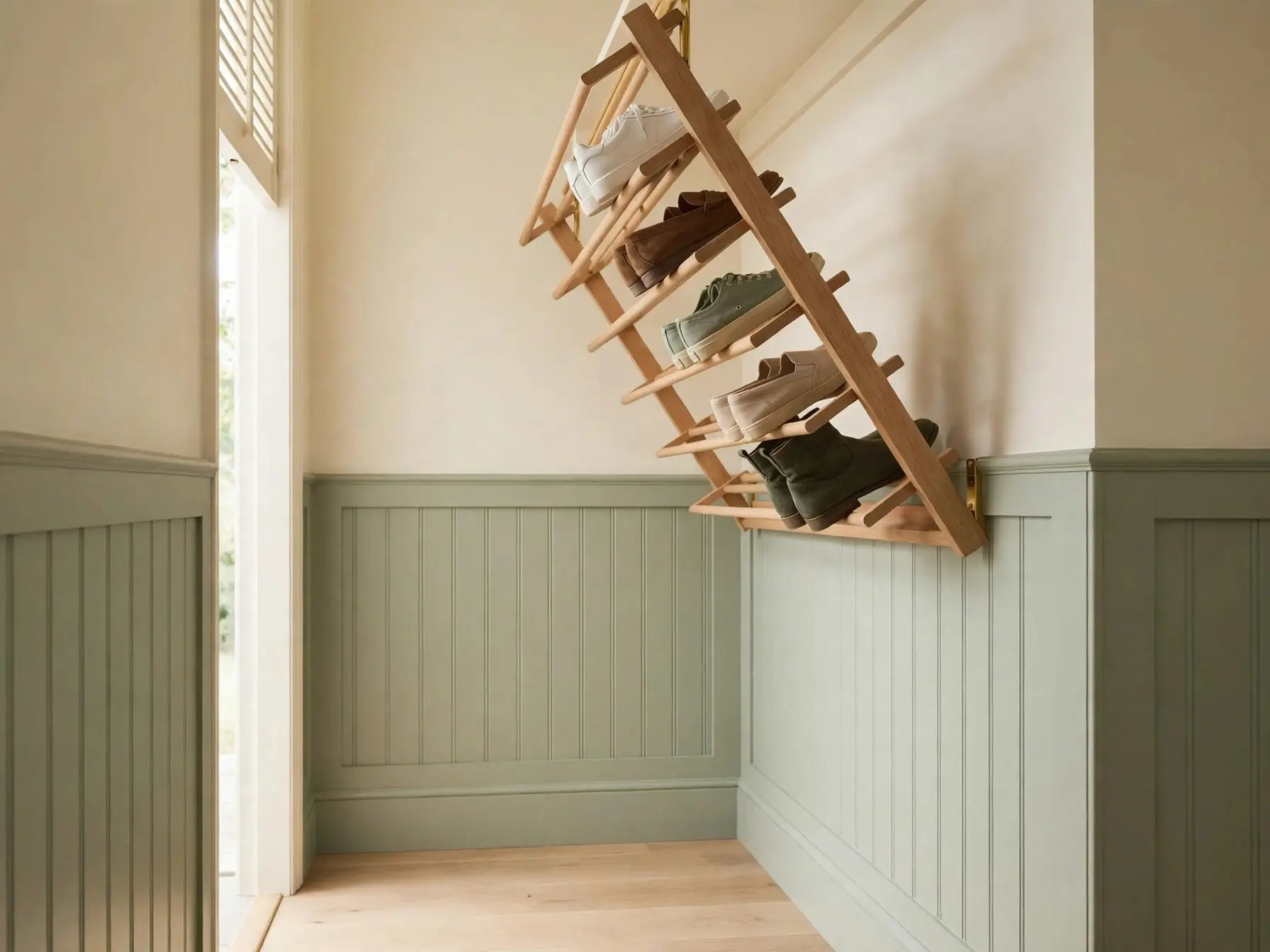
A wall-mounted rack lifts shoes off the floor entirely, which frees the floor for boots, a laundry basket, or simply nothing at all. Tilted rails hold each pair by the heel, and one rack about 24 inches wide holds six to ten pairs. Fix it into studs where you can, or use anchors rated for the weight, and mount it high enough that shoes clear the floor but low enough to reach easily.
- Fits: any wall, about 24 in wide
- Holds: 6 to 10 pairs
- Best for: narrow closets with free wall space
15. Slide a rolling cart into a narrow gap
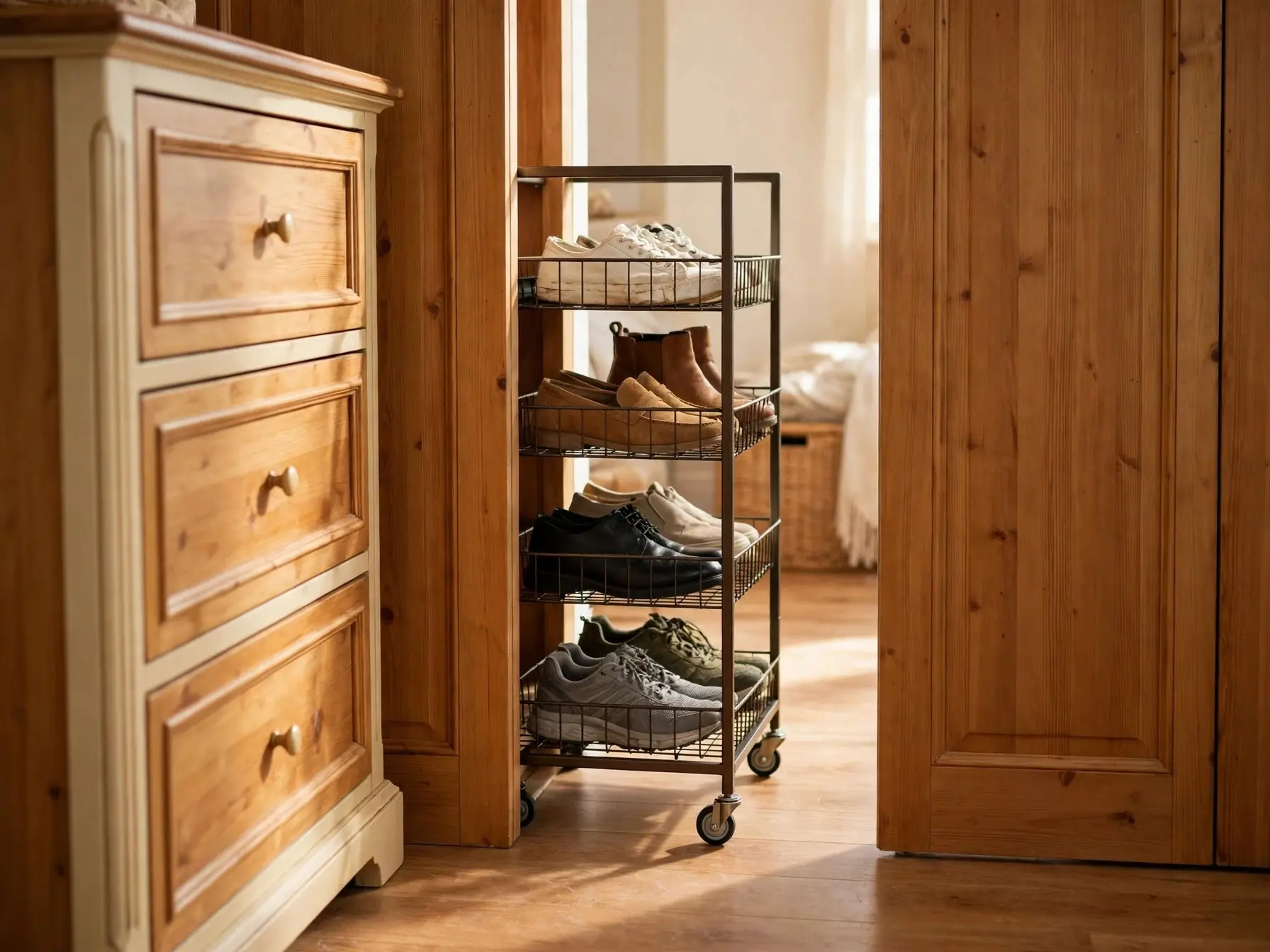
The gap between a dresser and the closet wall is usually wasted, and a slim rolling cart turns it into shoe storage for eight to ten pairs. Pick a cart six to eight inches wide with two or three tiers, and roll it out when you need a pair. Wheels matter — without them the cart becomes a fixed shelf you cannot reach behind. This is the best fix for closets that share a wall with furniture.
- Fits: a 6 to 8 in gap beside furniture
- Holds: 8 to 10 pairs
- Best for: narrow gaps in small closets
16. Double each slot with shoe stackers
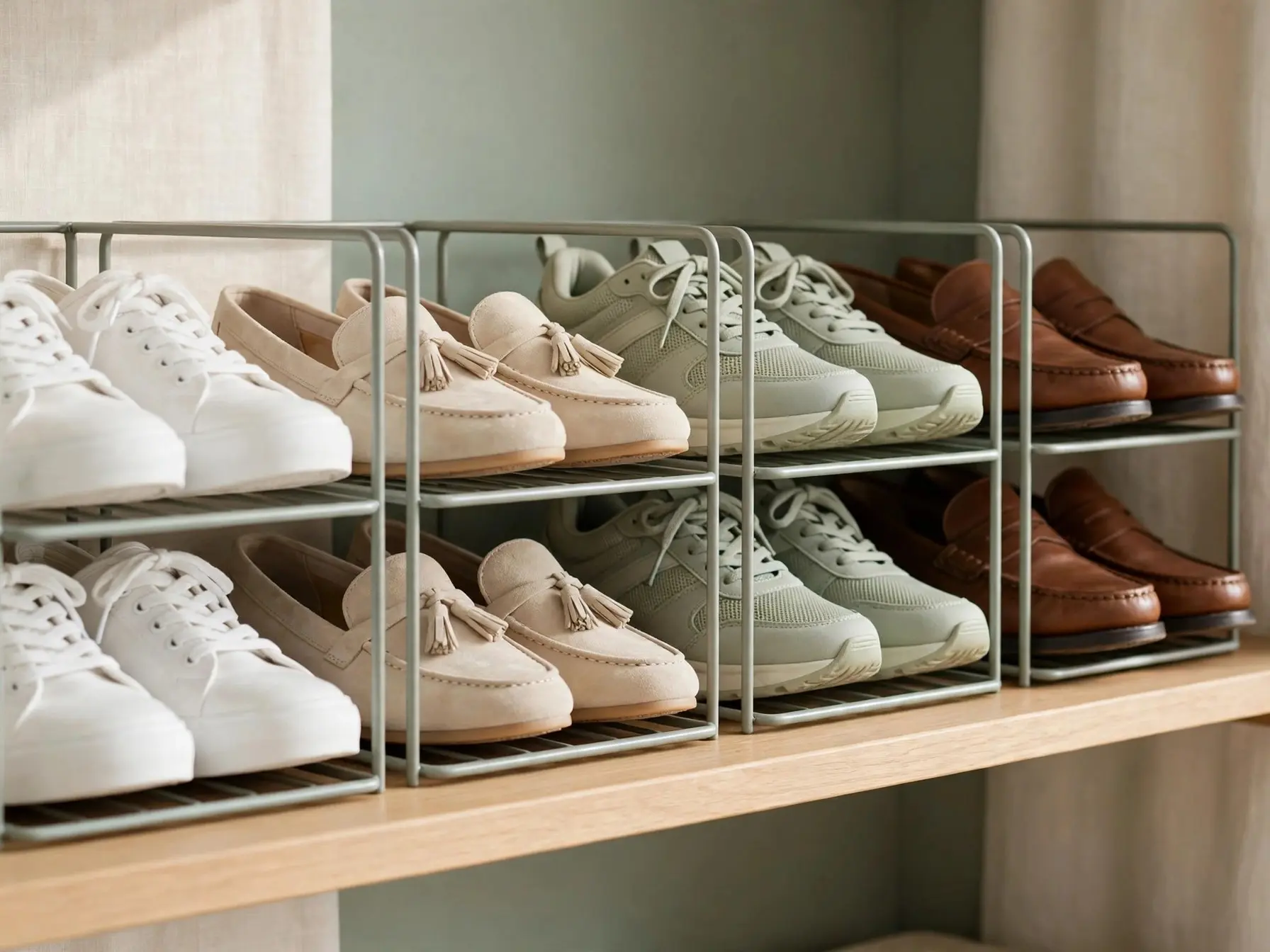
A shoe stacker is a small frame that holds one shoe above the other, so every slot on a shelf suddenly holds two pairs instead of one. They cost a few dollars for a set, need no tools, and work on any shelf you already own. Use them for flats, sneakers, and low shoes; tall boots still need a full-height slot. They are the cheapest capacity upgrade on this whole list.
- Fits: any shelf, 12 in deep
- Holds: doubles a shelf’s pairs
- Best for: flats and sneakers on existing shelves
Shared closets: one zone per person
A shared closet fails when nobody knows whose shoes are whose. Give each person a zone and the floor stops being a negotiation.
17. Give each person a labeled shelf zone
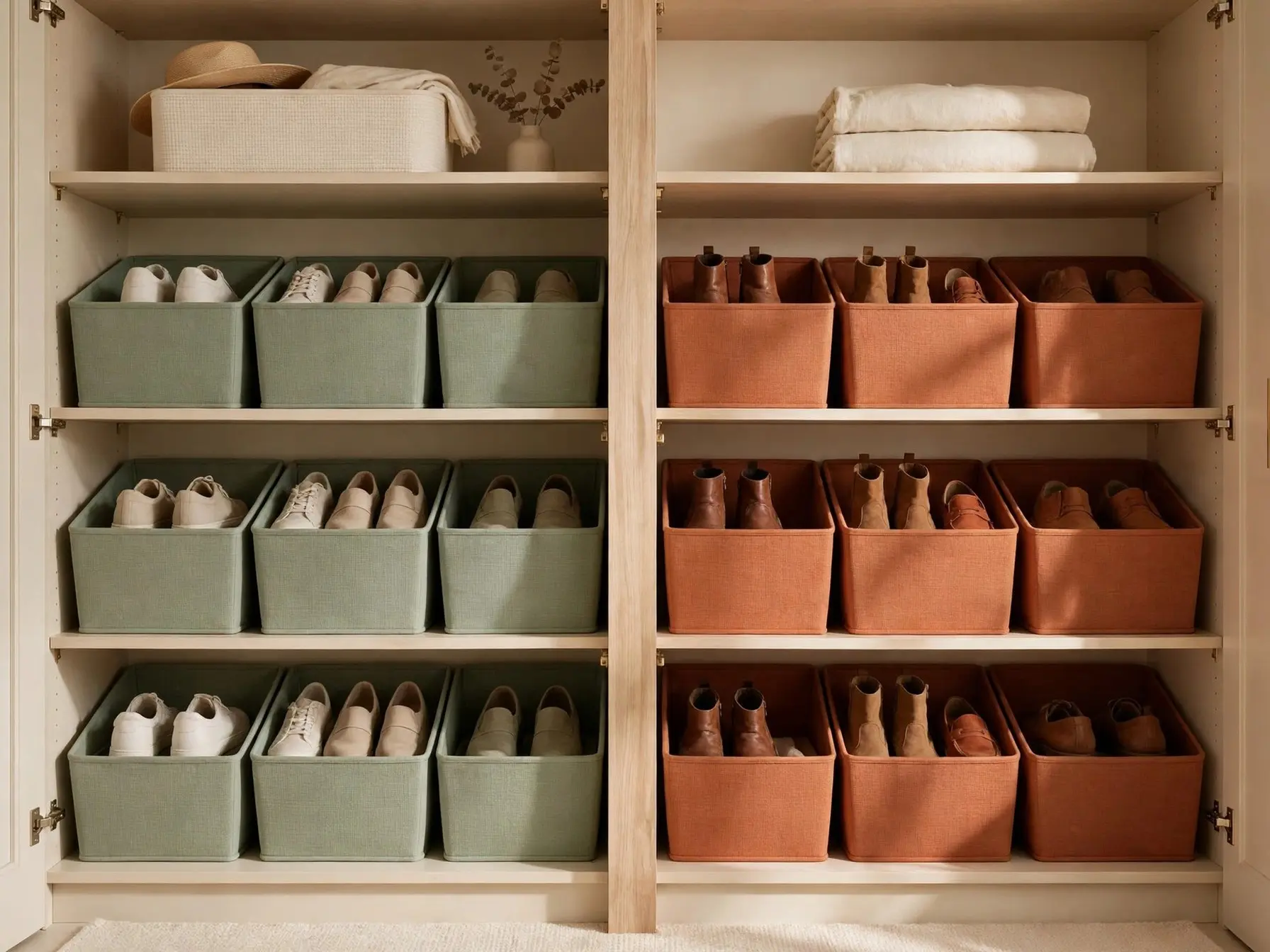
A shared closet only stays tidy when everyone knows which shelf is theirs. Give each person one shelf or one cubby row, and mark it with their name or a color they can spot at a glance. Keep children’s shoes on the lowest shelf so they can reach them and put them back themselves. When a zone overflows, that person edits their own pairs — the rule keeps the peace.
- Fits: any shared closet
- Holds: 4 to 8 pairs per person
- Best for: couples and families sharing one closet
18. Use color-coded bins, one color per person
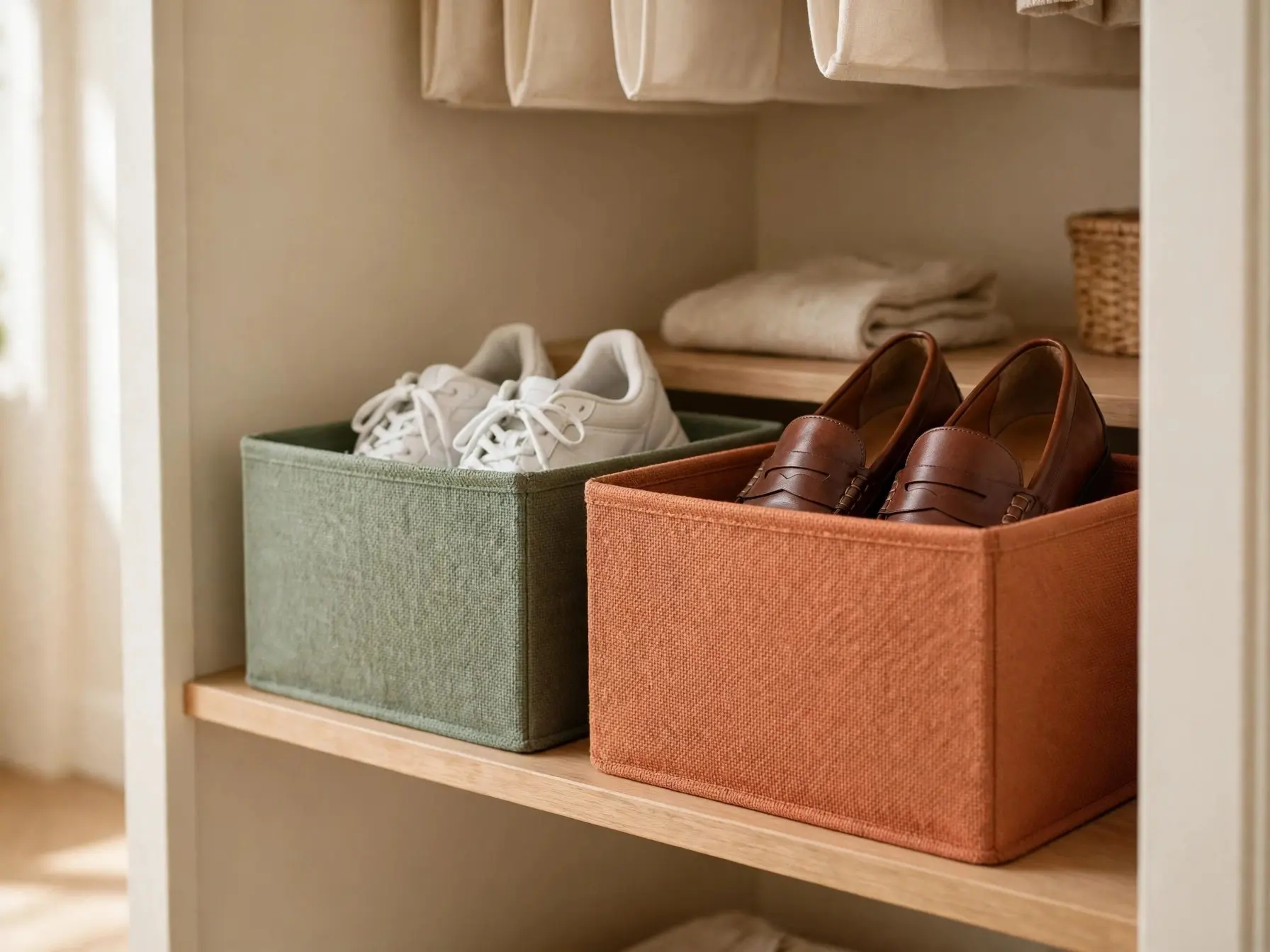
Color-coded bins make shared-closet ownership obvious at a glance: sage bins for one person, terracotta for the other, and nobody’s shoes end up in the wrong pile. Each bin holds four to six pairs, and a label on the front says what is inside. Bins also stack, so a shared shelf holds more pairs than open rows. Pick bins that fit the shelf depth so nothing sticks out past the edge.
- Fits: any shelf, 12 in deep
- Holds: 4 to 6 pairs per bin
- Best for: shared closets and kids’ shoes
19. Split the floor with a center divider
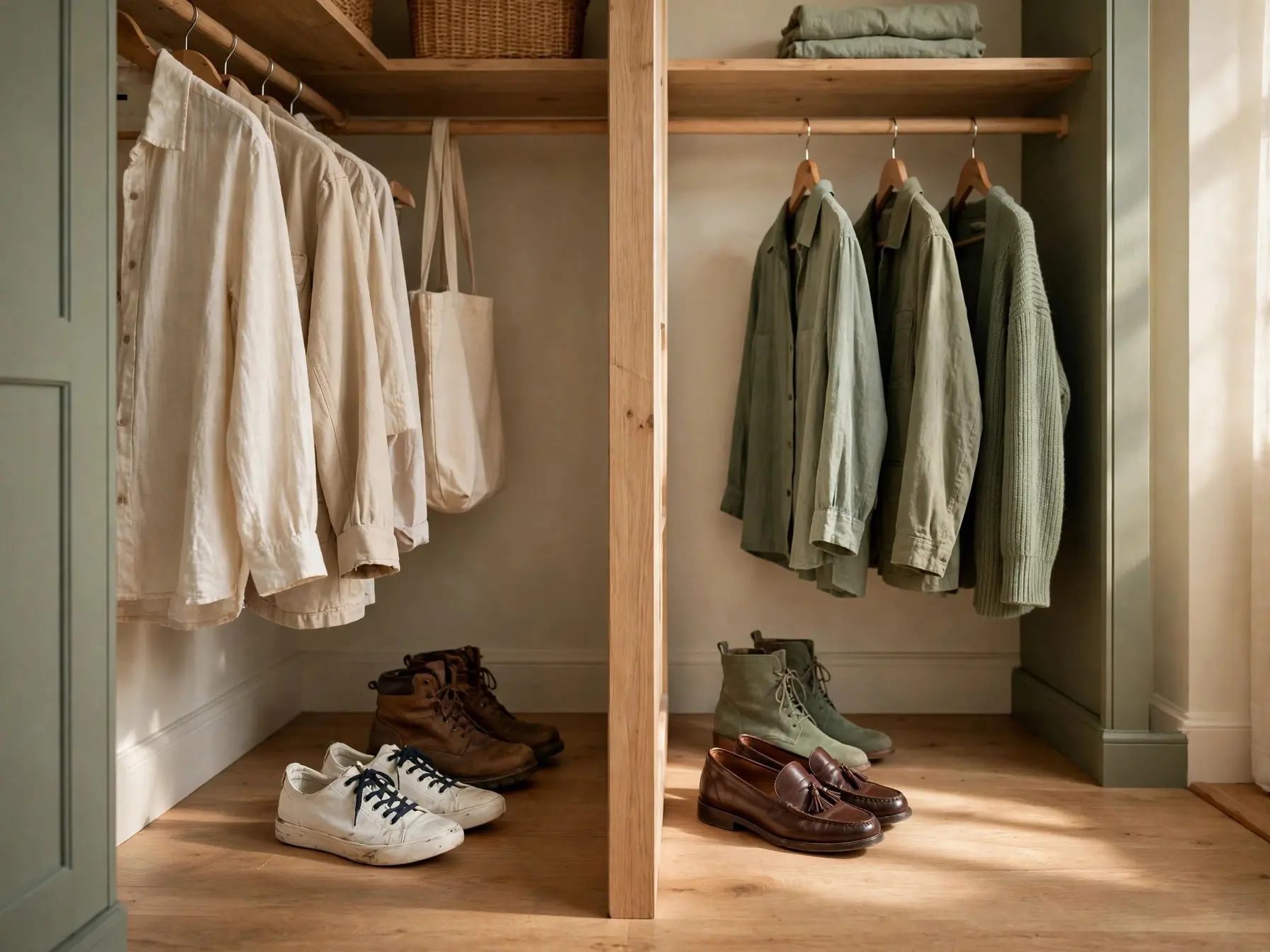
When two people share one closet floor, shoes drift into one big pile. A low center divider — a narrow basket row, a strip of wood, or even a boot tray turned sideways — splits the floor into two clear halves, one per person. Each side holds four to six pairs, and the boundary makes it obvious whose pile is whose. It costs almost nothing and ends the daily argument about the mess.
- Fits: any shared closet floor
- Holds: 4 to 6 pairs per side
- Best for: shared reach-in closets
20. Keep a swap shelf for seasonal and outgrown pairs
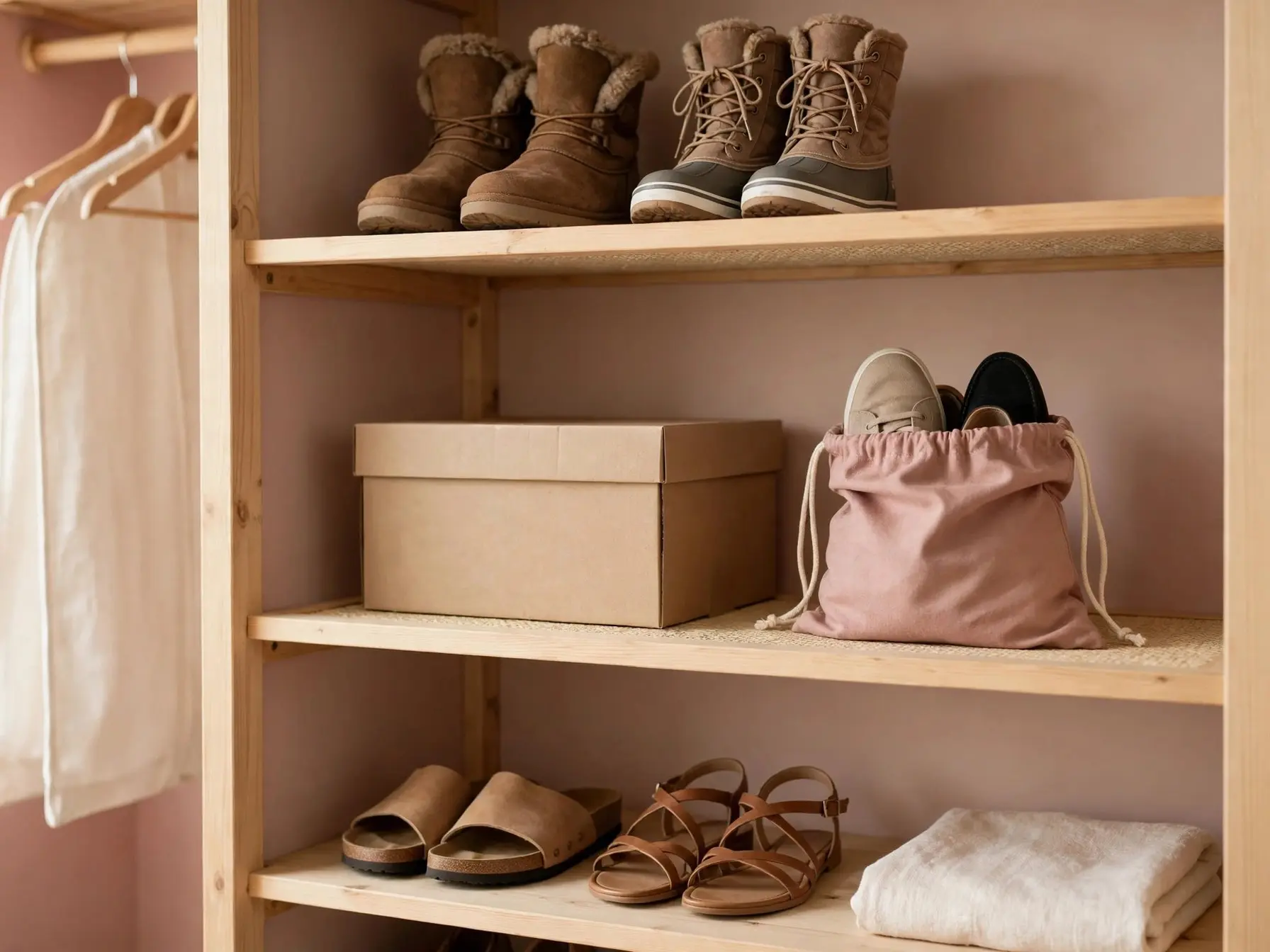
Every shared closet needs one shelf for rotation: winter boots go up in spring, sandals come down, and outgrown pairs go into a bag to pass on. Keep the swap shelf at the top or the back, and run the swap twice a year when the seasons turn. A small bag or box on the shelf catches pairs to donate before they creep back into daily use. The closet never grows beyond what it can hold.
- Fits: one shelf, top or back
- Holds: 4 to 8 pairs in rotation
- Best for: shared closets with seasonal swaps
Questions, answered
What is the best shoe organizer for a small closet?
A slim stackable rack is the best pick for most small closets, because it uses the floor space under short hanging clothes and holds 6 to 12 pairs without any drilling. If the floor is already taken, clear over-door pockets hold just as many pairs and use no floor space at all.
How do I store shoes in a closet with no floor space?
Use the door and the walls: clear over-door pockets hold 12 to 24 pairs, and a wall-mounted rack above the floor line holds 6 to 10 more. Keep the pairs you wear least in labeled clear boxes on the top shelf, and leave the floor clear.
Are over-the-door shoe organizers worth it?
Yes, when the door has the depth for them: they hold the most pairs per dollar and need no floor space, no drilling, and no assembly. Check that the door still closes with the pockets full, and pick clear pockets so you can see each pair at a glance.
How many pairs of shoes fit on a standard shoe rack?
A standard two-tier rack about 30 inches wide holds 6 to 8 pairs, and a three-tier rack of the same width holds 9 to 12. Bulky boots and high-top sneakers take more room, so count on two slots per bulky pair when you plan.
Keep reading
Shoes are one piece of a closet that stays tidy on a system. Our guides to closet organization ideas, shoe storage ideas for every room, and the best shoe rack for a closet all build on the same idea: give everything one home, and the small space stops fighting you.
Pick the organizer that fits the closet you have, not the one you wish you had. Measure once, buy once, and the shoe pile stops being a daily negotiation. Start with the rack or the pockets, add boxes up top for the pairs you wear least, and give every pair one home.