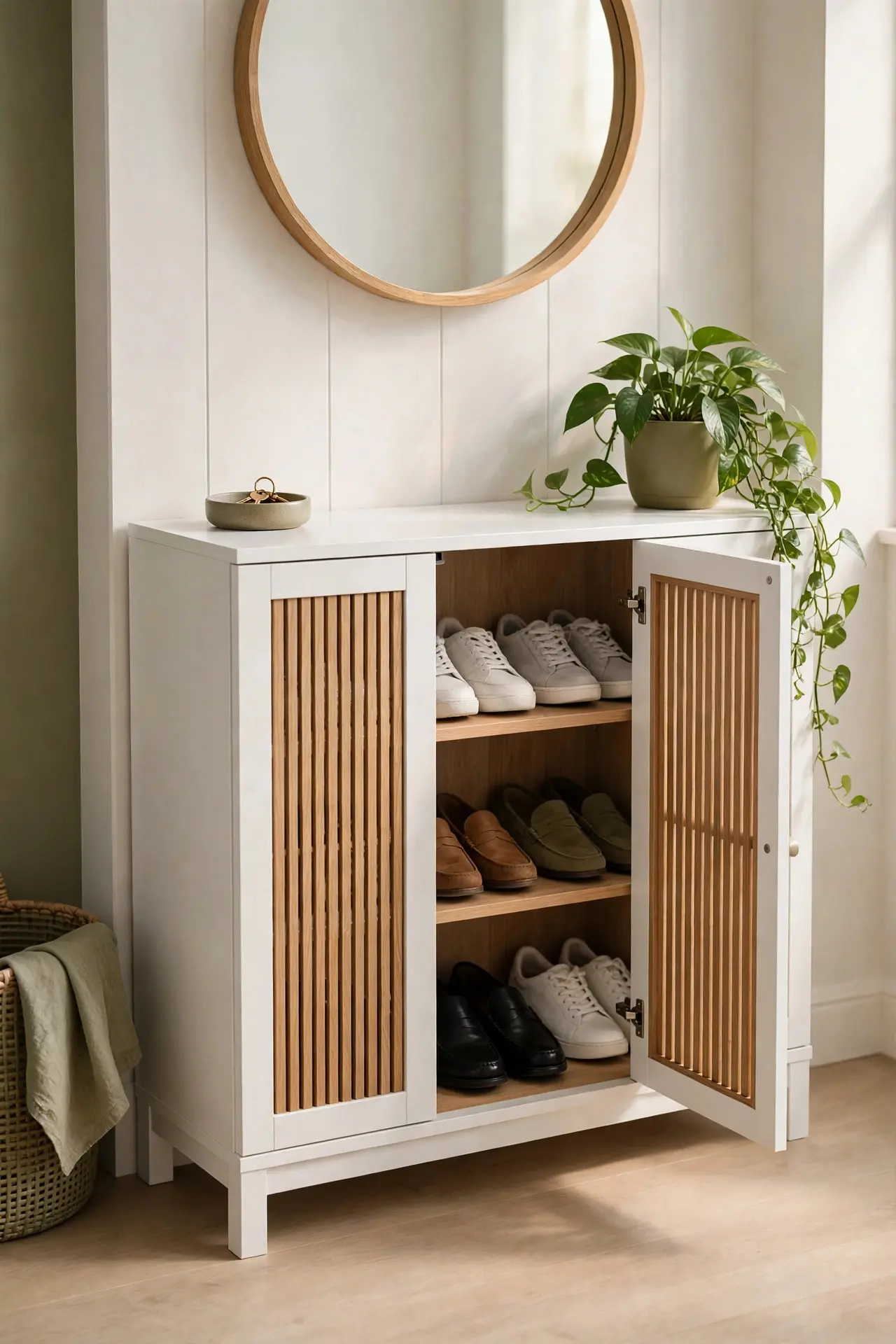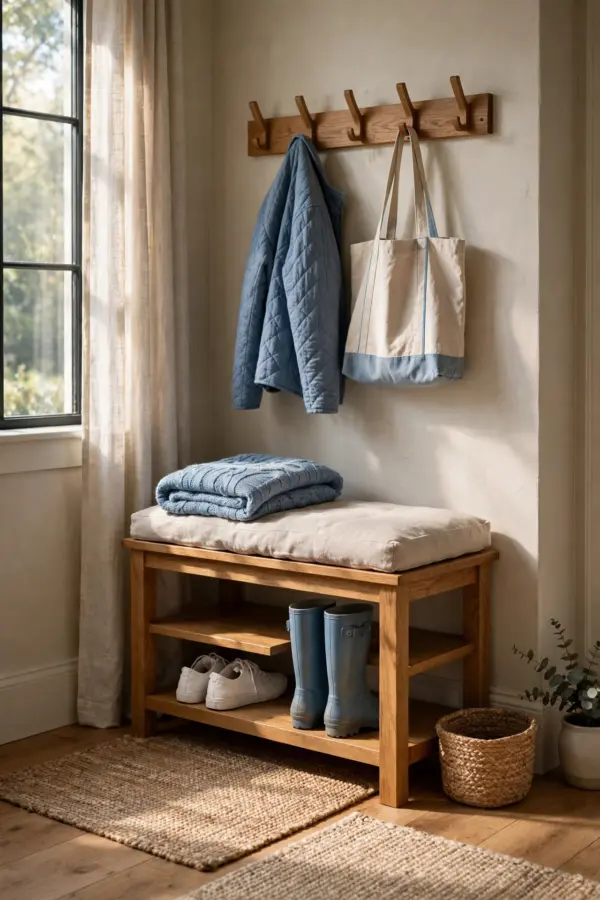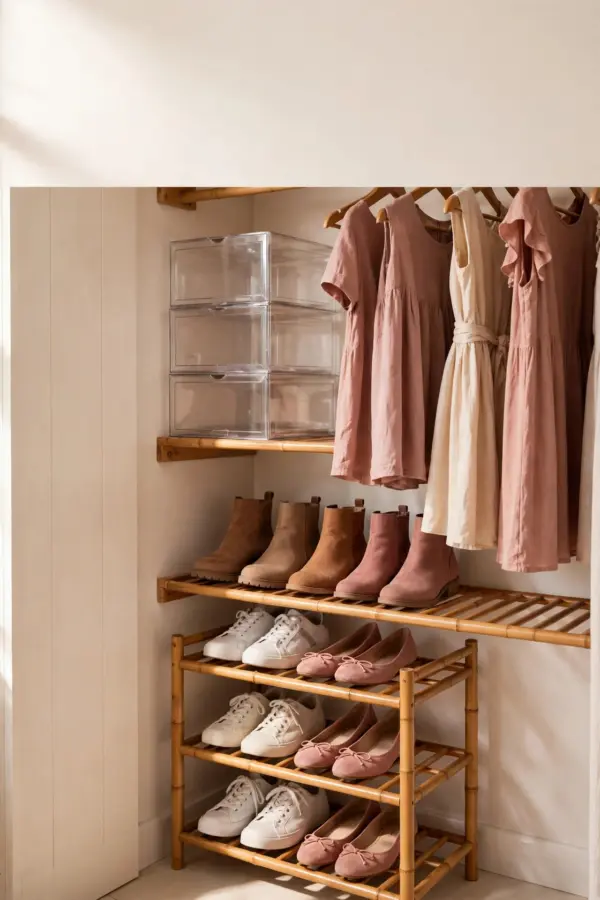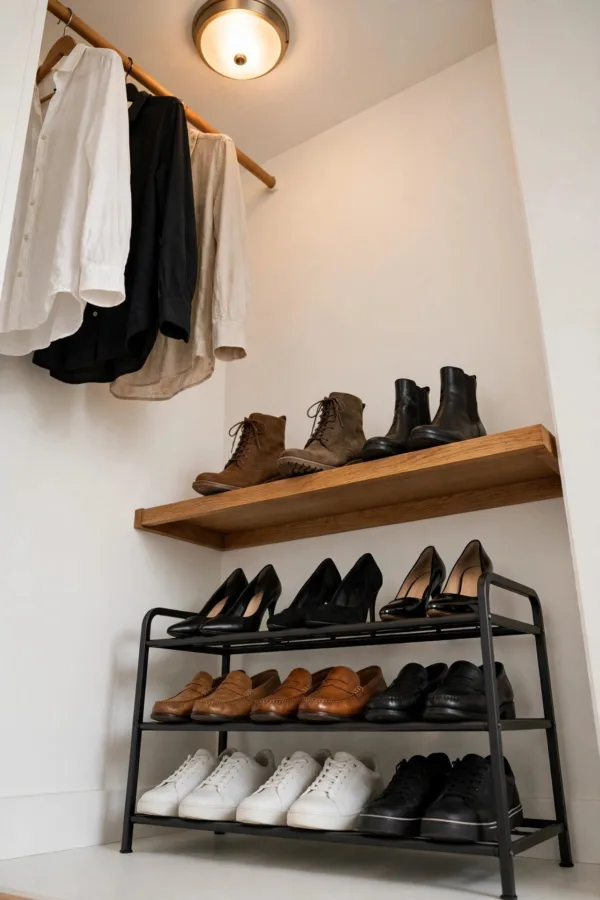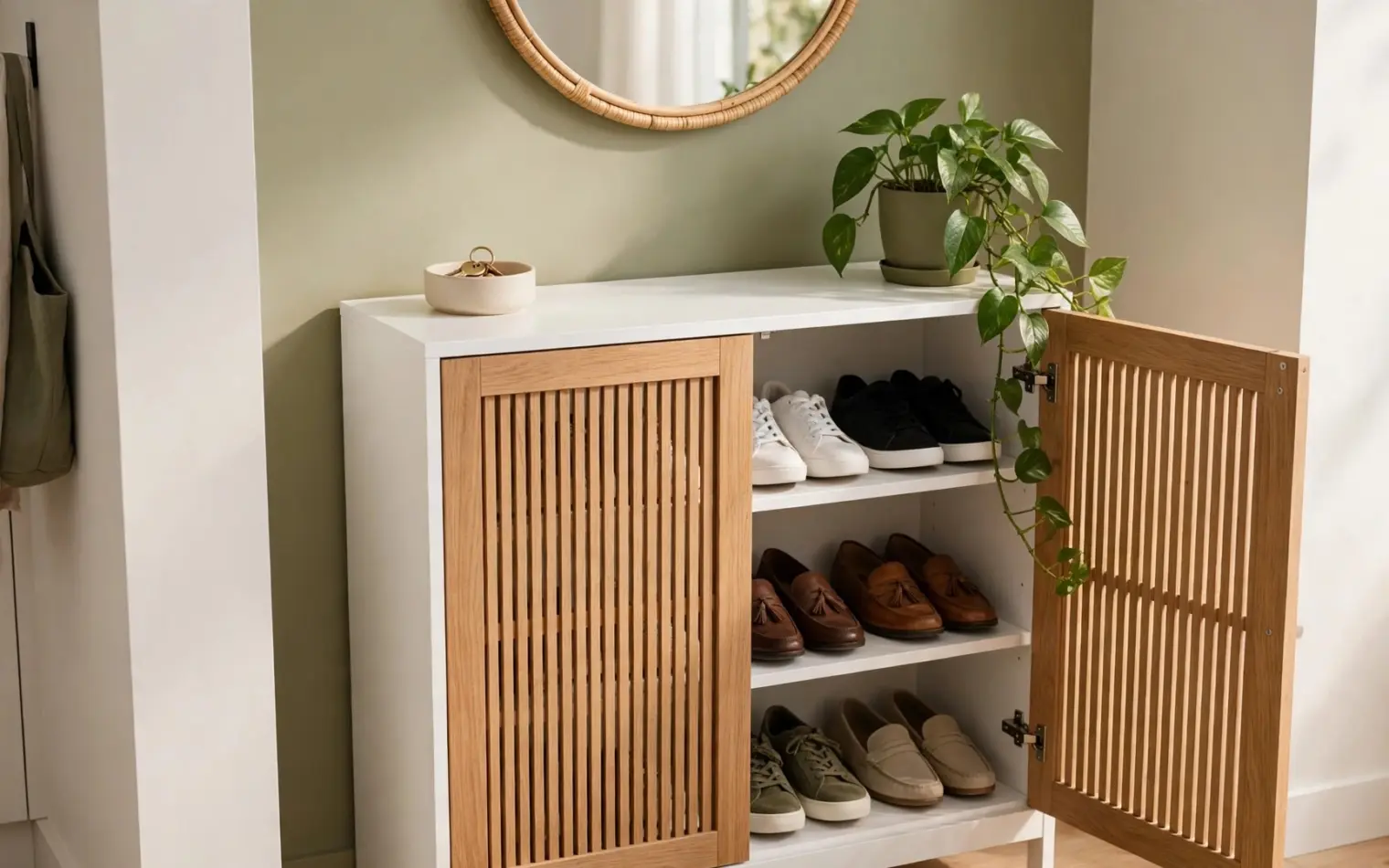
The best shoe storage cabinet for most homes is a slim tip-out cabinet: it is only about 6 inches deep, holds 6 to 8 pairs, and fits a hallway or entry where a deeper cabinet would block the walkway. If you have more pairs, a tall shoe rack cabinet with doors holds 18 to 24 pairs in about 12 to 14 inches of depth. Measure your wall space first, then match the cabinet depth to the room you actually have.
Thank you for reading this post, don’t forget to subscribe!Part of our guide: 30 Shoe Storage Ideas for Every Room, Closet and Entryway
Shoes end up in a heap for one reason: the storage does not fit the entry. This guide sorts 14 shoe storage cabinets by depth and pair count, from 6-inch tip-outs for shallow halls to tall units for big collections, so you can skip straight to the ones that work in yours. Our guide to closet organization ideas covers the whole closet system; here we zoom in on cabinets alone, with a comparison table up front so you can pick in minutes.
How we chose
Every cabinet on this list fits a real entry, not a showroom. We picked cabinets that hold the shoes people actually wear, cost under $250, and come in a depth for every hallway, from a 6-inch tip-out for narrow entries to a tall unit for big collections. Every depth and pair count below is a typical figure for the type, not a single model’s spec, and every price band is a typical street price, not a sale price.
What to measure first
Measure before you buy anything: the depth of wall space the cabinet will stand against, the clear walkway in front of it, the door swing on both sides, and the height under a window or beside a radiator. A cabinet that is one inch too deep turns a hallway into a squeeze, whatever it costs. Count the pairs you wear weekly, then size up by two.
Which shoe storage cabinet fits your entry?
Find your entry in the table first, then jump to the picks that fit it. The shallowest cabinets come first, since they work in the tightest hallways.
| Cabinet type | Depth (inches) | Pairs held | Best for | Price band |
|---|---|---|---|---|
| Three types compared | 6 to 14 in | 6 to 24 pairs | First-time buyers | $40–$250 |
| Slim tip-out cabinet | 6 to 7 in | 6 to 8 pairs | Shallow entries and hallways | $50–$120 |
| Tall shoe organizer cabinet | 12 to 14 in | 18 to 24 pairs | Big collections | $120–$250 |
| Sideboard-style cabinet | 12 to 14 in | 10 to 14 pairs | Bedrooms | $100–$220 |
| Wide two-door cabinet | 12 to 14 in | 12 to 16 pairs | Family entries | $80–$180 |
| Bench-seat cabinet | 12 to 14 in | 8 to 12 pairs | Entries with no seat | $90–$200 |
| Open-cubby and door cabinet | 12 in | 10 to 14 pairs | Families | $70–$160 |
| Narrow single-door cabinet | 10 to 12 in | 6 to 10 pairs | Tight gaps | $60–$140 |
| Mirrored-door cabinet | 12 to 14 in | 10 to 14 pairs | Small, dark entries | $100–$200 |
| Low under-window cabinet | 12 in | 8 to 10 pairs | Under windows | $60–$150 |
| Corner cabinet | 12 to 14 in | 8 to 12 pairs | Square entries | $80–$170 |
| Cabinet with drawers | 13 to 15 in | 12 to 16 pairs | Entries with clutter | $110–$230 |
| Louvered-door cabinet | 12 to 14 in | 10 to 16 pairs | Damp or sports shoes | $90–$190 |
| Lockable cabinet | 12 to 14 in | 10 to 14 pairs | Shared houses | $100–$210 |
Prices move around, but the depths do not: a cabinet that is deeper than its wall space will never fit, whatever it costs. Measure first, then buy.
First, the three types and the measurement that matters
If you only read one section, read this one. These three picks cover the cabinet types every other pick builds on: the side-by-side comparison, the shallow tip-out, and the tall unit for big collections.
1. Learn the three main cabinet types before you buy anything
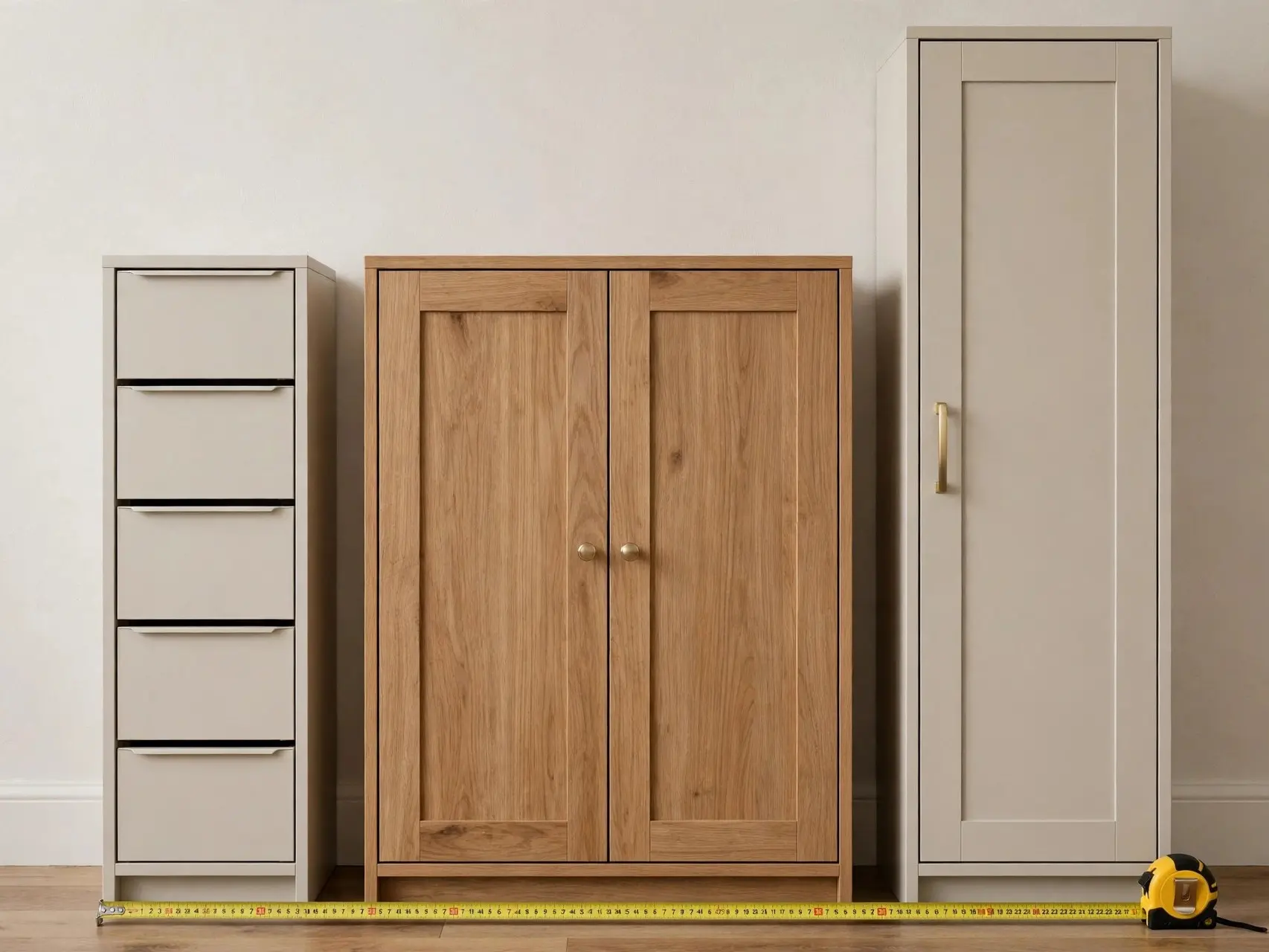
Every shoe storage cabinet is one of three types: a slim tip-out unit, a two-door cabinet, or a tall shoe rack cabinet. Tip-outs are the shallowest, at about 6 inches deep, and suit narrow halls. Two-door cabinets hold the most per dollar in a standard entry. Tall cabinets take the biggest collections but need the most floor space. Spend five minutes comparing the three against your wall depth and the number of pairs you own, and you will only buy once.
Measure the wall depth first: tip-outs need 6 inches, two-door cabinets need 12 to 14.
Our pick
Three Cabinet Types Compared
First-time buyers who have not measured yet
Pros: One photo shows the depth difference between the three types; Comparing first stops you buying a cabinet that cannot fit your wall; The three types cover every entry, from narrow halls to big collections
Cons: The comparison photo cannot show how each type opens; Depths vary by model, so check the spec sheet before you buy
2. Pick a slim tip-out cabinet for a shallow entry
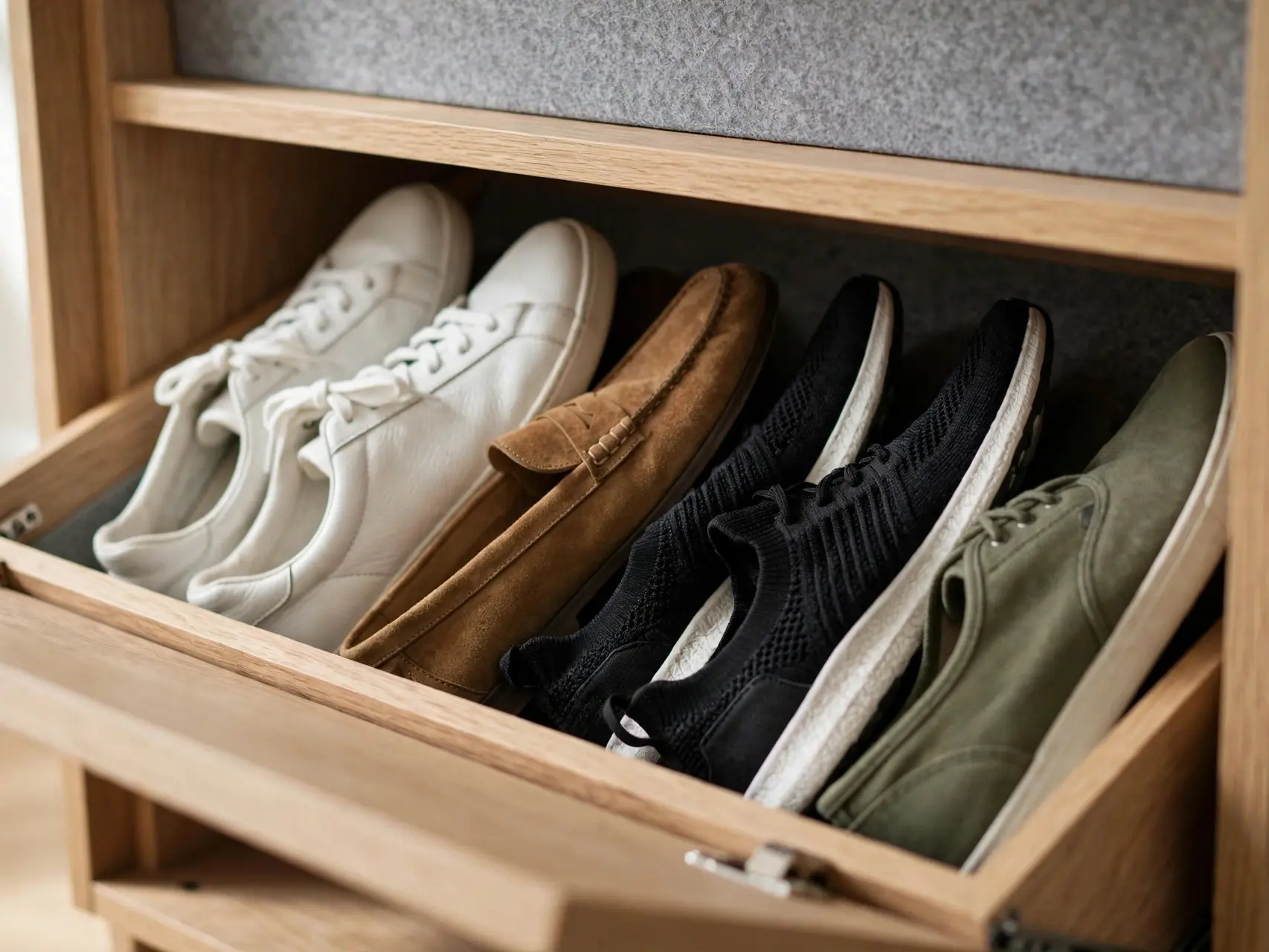
A tip-out cabinet is the shallowest shoe storage you can buy, at about 6 to 7 inches deep, so it fits hallways where a normal cabinet would block the walkway. Each compartment tilts open and holds two to three pairs stored at an angle, which keeps shoes visible and easy to grab. Pick a unit with a soft-close hinge so the compartments do not slam, and check the depth twice: a cabinet that is one inch too deep turns a hallway into a squeeze.
Count the pairs you actually wear weekly, not the pairs you own, before you pick a size.
Our pick
Slim Tip-Out Shoe Cabinet
Shallow entries and hallways under 36 inches wide
Pros: Only about 6 inches deep, so it fits hallways a normal cabinet would block; Shoes stored at an angle stay visible and easy to grab; Soft-close hinges keep the compartments quiet
Cons: Bulky boots do not fit the shallow compartments; Each compartment holds only two to three pairs
3. Go tall when the collection has outgrown the entry
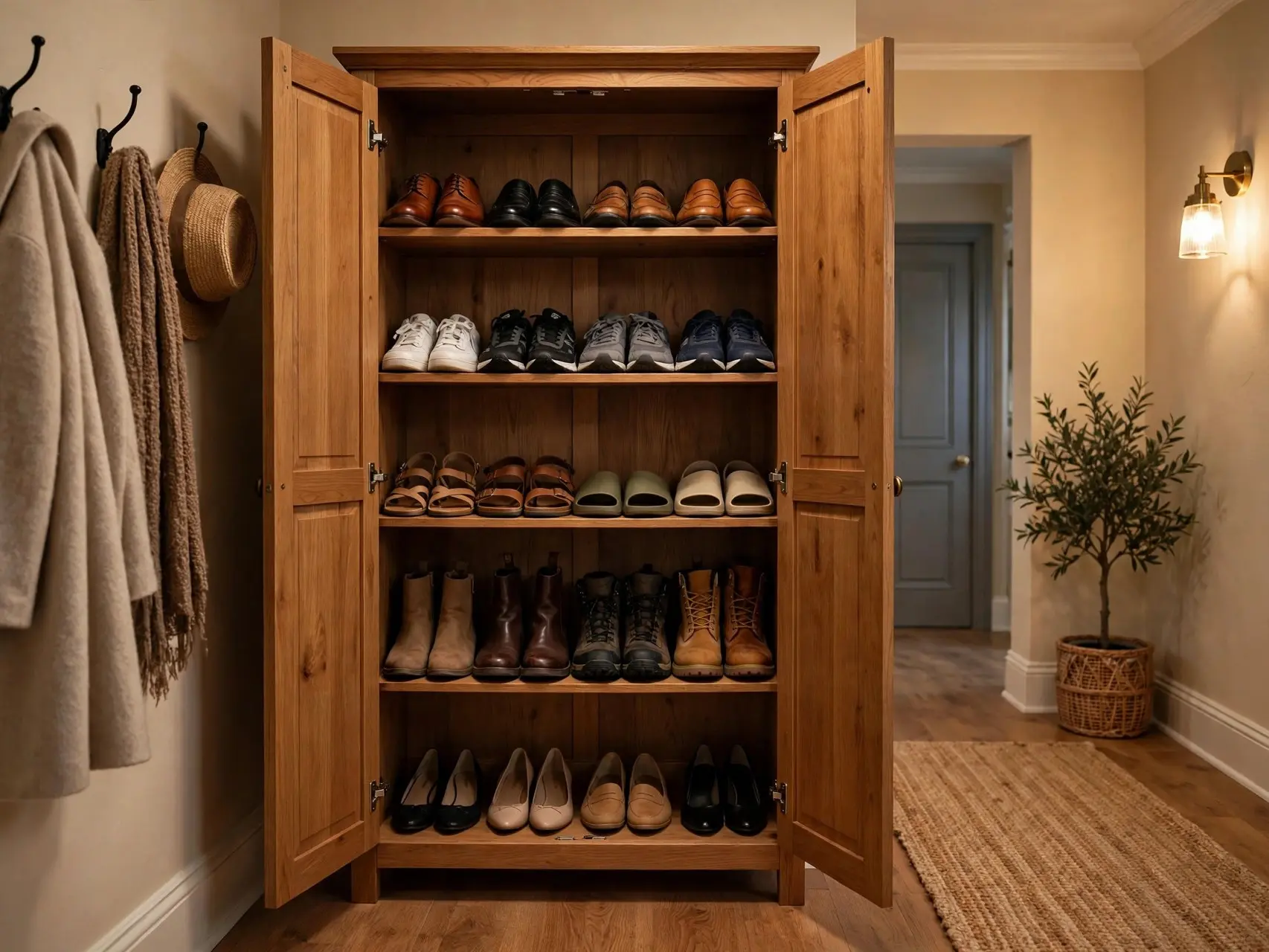
A tall shoe organizer cabinet with doors is the answer when the collection has outgrown the entry. Adjustable shelves hold about 20 pairs sorted by type — sneakers on one shelf, boots on another — and the doors keep dust off and the hallway looking calm. Measure the ceiling height and the door swing before you buy, since tall units need both. Keep daily pairs at waist height and seasonal pairs up top.
Put boots on the bottom shelf and flats up top, so the tall pairs never crush the short ones.
Our pick
Tall Shoe Organizer Cabinet With Doors
Big collections in a hallway with room to spare
Pros: Holds about 20 pairs, the most on this list; Adjustable shelves suit boots, sneakers, and flats in one unit; Doors keep dust off and the hallway looking calm
Cons: Needs the most floor space and a full door swing; Top shelves need a step stool to reach
Cabinets that double as furniture
A shoe cabinet that looks like furniture earns its place in a room guests see. These four picks store shoes behind doors and work as a sideboard, a bench, or a display shelf at the same time.
4. Choose a sideboard-style cabinet for the bedroom
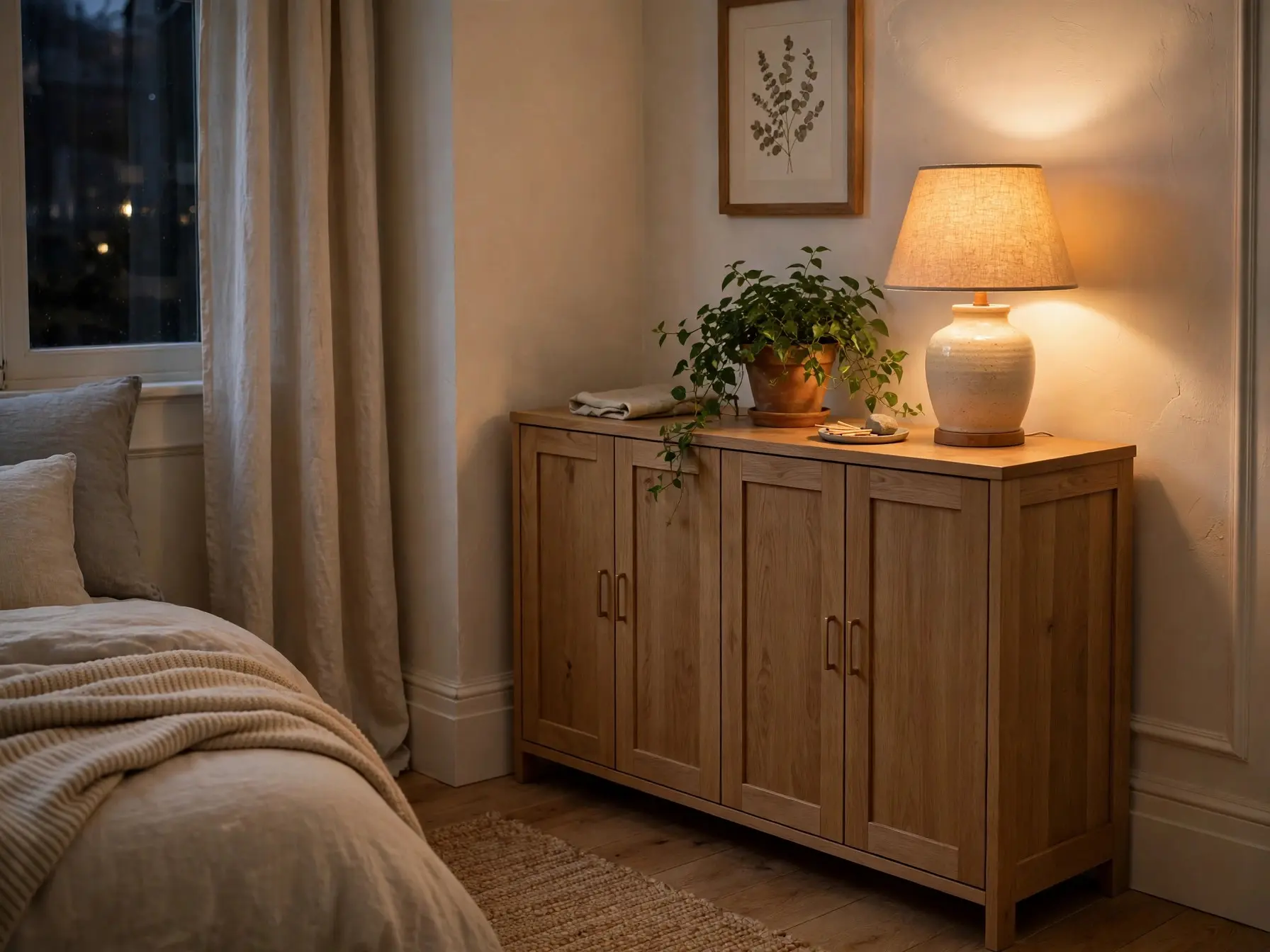
A sideboard-style shoe cabinet belongs in the bedroom, where it stores shoes and works as furniture at the same time. Closed doors hide 10 to 14 pairs, while the top holds a lamp, a plant, and the book you are reading. Pick a height that matches the bed or the dresser beside it so the room reads as one set, not a storage unit parked in the corner. Soft-close doors keep late-night shoe runs quiet.
Match the cabinet height to the furniture beside it so the room reads as one set.
Our pick
Sideboard-Style Shoe Cabinet
Bedrooms where the cabinet must look like furniture
Pros: Stores 10 to 14 pairs and works as bedroom furniture at the same time; The top holds a lamp and a plant, so the unit blends into the room; Soft-close doors keep late-night shoe runs quiet
Cons: Lower capacity than a tall cabinet for the same footprint; The top invites clutter if you do not keep it clear
5. Pick a wide two-door cabinet for a family entry
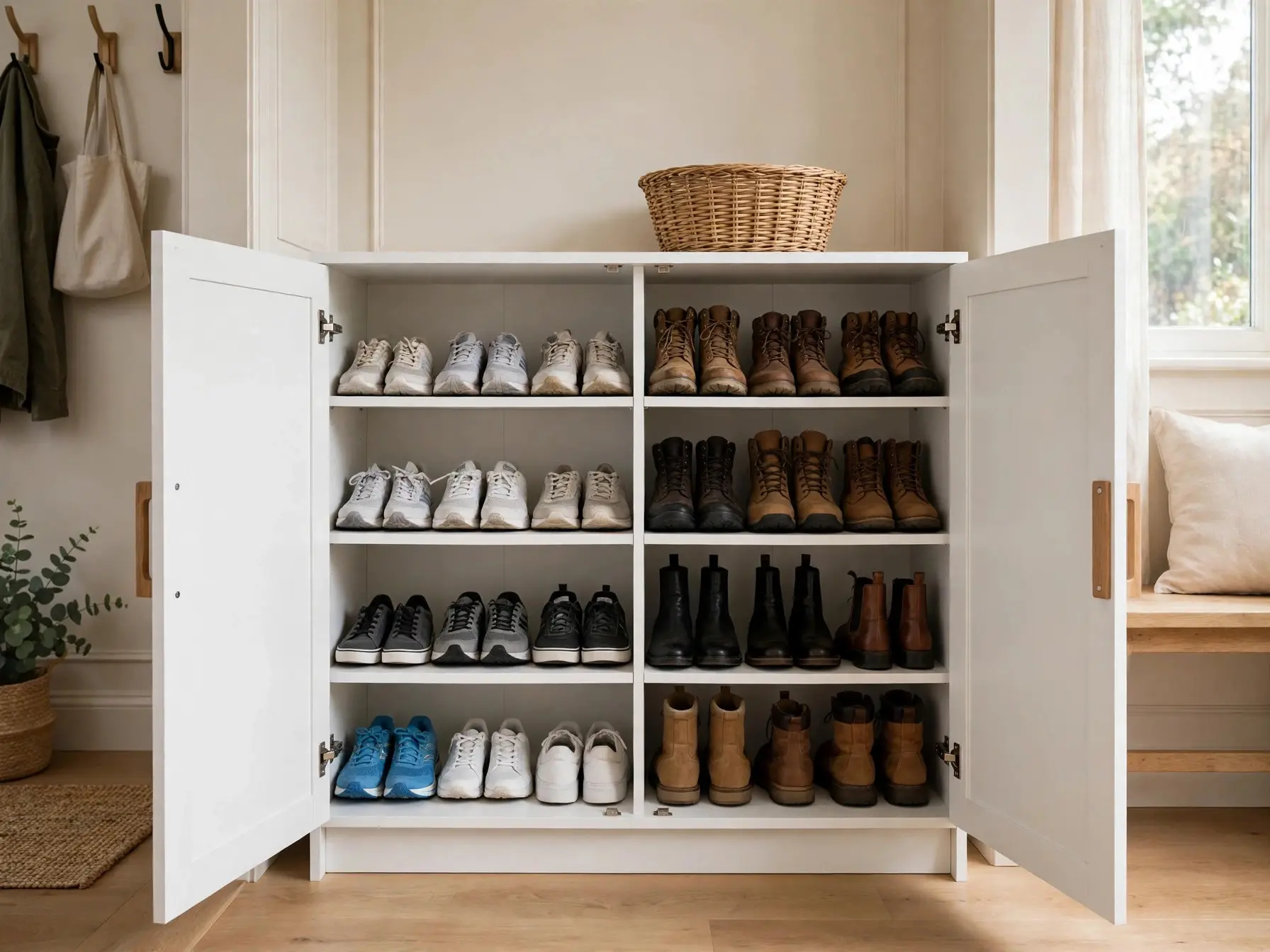
A wide two-door cabinet is the workhorse of the list: adjustable shelves hold 12 to 16 pairs, and the wide doors open fully so you can see everything at once. Sort by type — sneakers together, boots together — and put the pairs you wear most at waist height. Look for shelves that move in small steps, since boot heights and flat heights never match. A solid back panel keeps the unit rigid when it is full.
Leave one shelf empty on purpose: the collection always grows by two pairs a year.
Our pick
Wide Two-Door Shoe Cabinet
Family entries with a full wall to spare
Pros: Adjustable shelves hold 12 to 16 pairs, the best per dollar on this list; Wide doors open fully so you can see every pair at once; Sorting by type keeps the pairs you wear most at waist height
Cons: Needs a wide, clear wall and a full door swing; Heavy when full, so it must sit level on the floor
6. Add a bench seat for entries with nowhere to sit
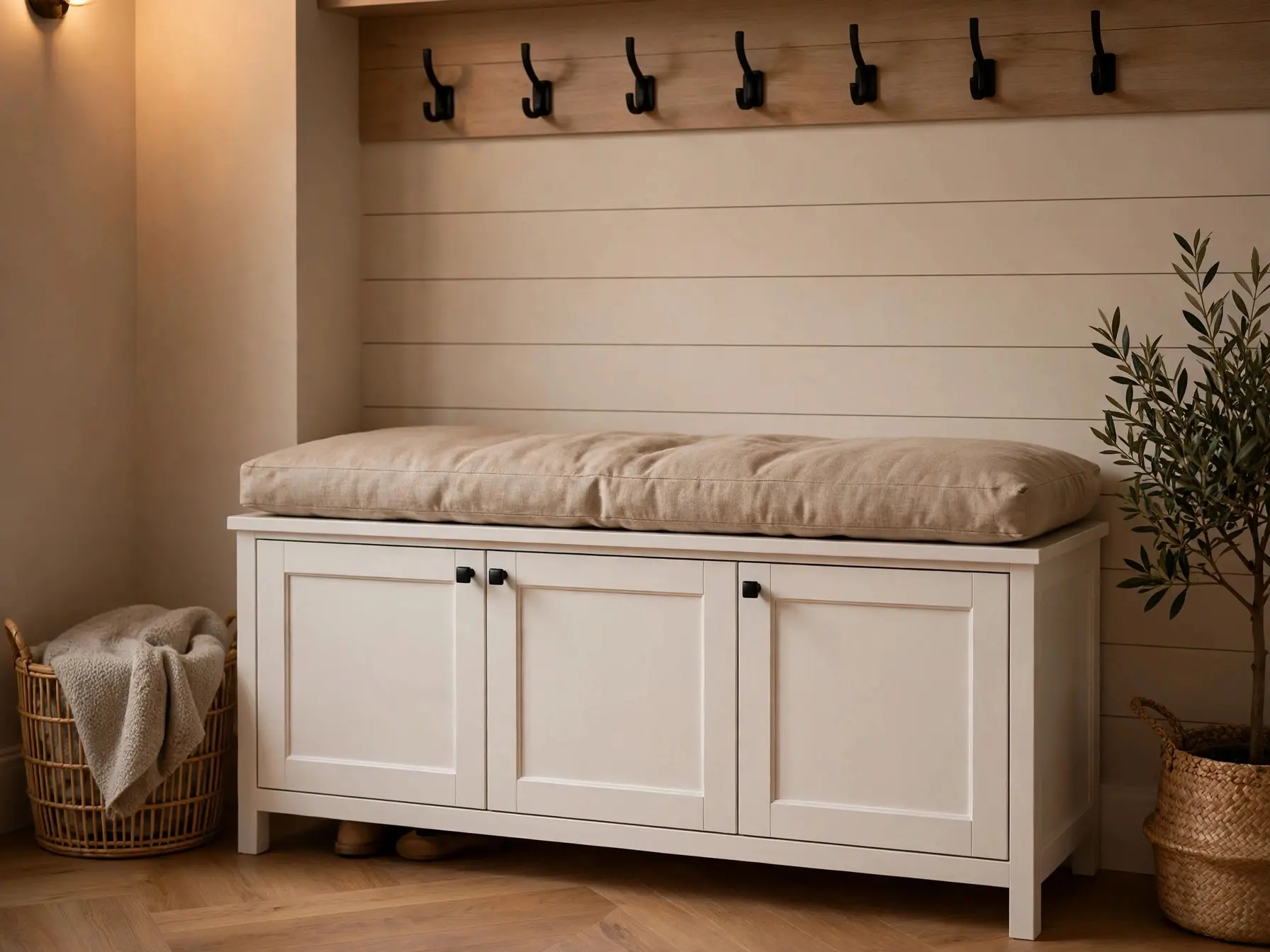
A shoe cabinet with a bench seat solves two entry problems at once: somewhere to sit while you put shoes on, and hidden storage for 8 to 12 pairs behind the doors. Pick a seat height of about 18 inches, which suits most adults, and a cushion that wipes clean. Keep daily pairs behind the doors and a small tray on top for keys and mail, so the bench stays a seat instead of becoming another shelf.
Keep a small tray on top for keys and mail, and the bench stays a seat.
Our pick
Shoe Cabinet With a Bench Seat
Entries with nowhere to sit down
Pros: Somewhere to sit while you put shoes on, plus hidden storage for 8 to 12 pairs; An 18-inch seat height suits most adults; A tray on top keeps keys and mail off the seat
Cons: Lower capacity than a full-height cabinet; The cushion needs a wipe-clean cover in a busy entry
7. Mix open cubbies on top with doors below
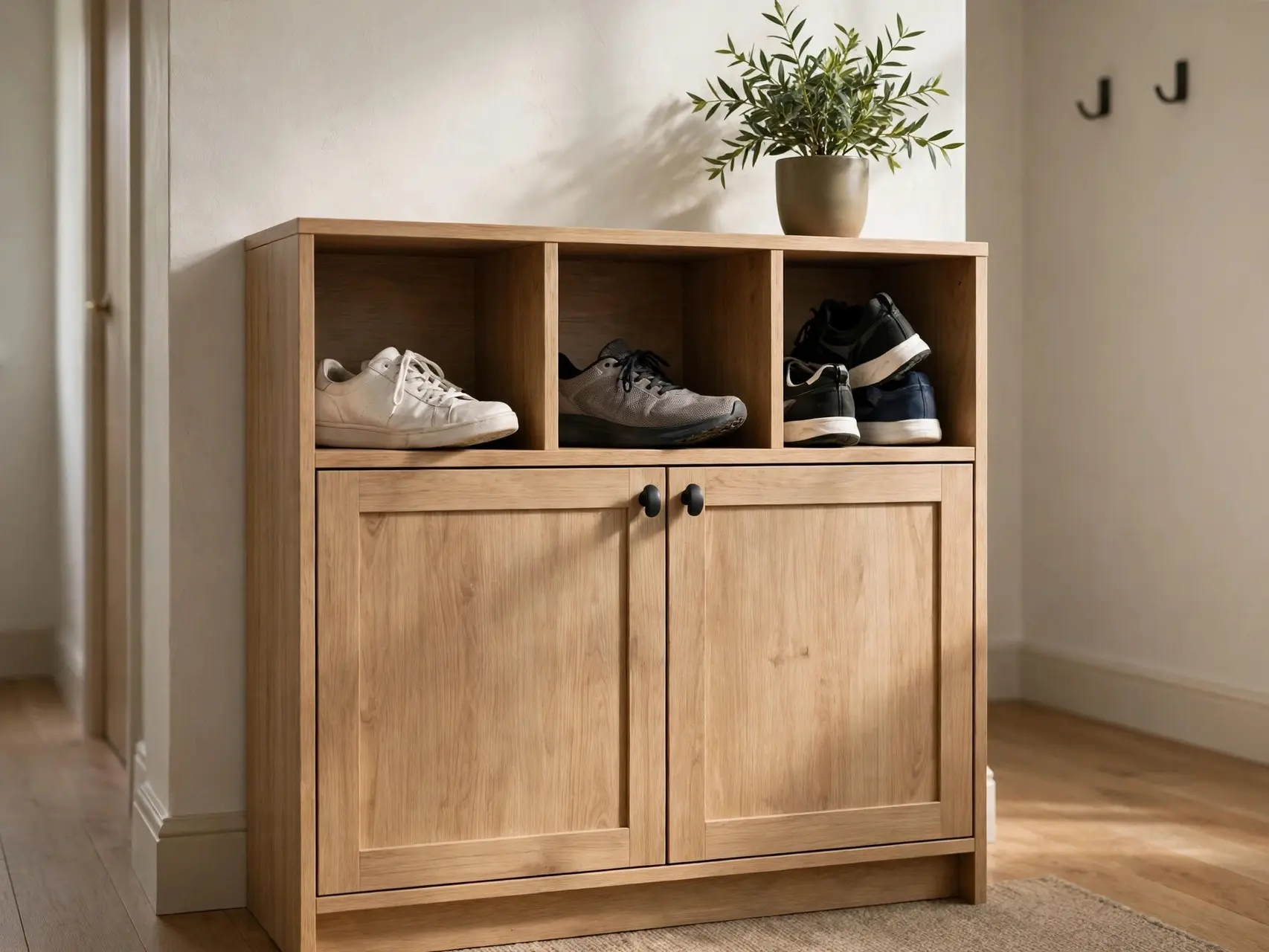
A hybrid cabinet pairs open cubbies on top with closed doors below, so daily shoes stay within reach and the rest stay hidden. The cubbies hold the three or four pairs you wear this week, while the doors hide out-of-season and occasion shoes. This is the best pick for families, since each person gets one cubby and the doors keep the overflow out of sight. Wipe the cubbies weekly — open shelves show dust fast.
Give each person one cubby, and the open shelves stay tidy without a daily tidy-up.
Our pick
Open-Cubby and Door Shoe Cabinet
Families who need daily shoes within reach
Pros: Daily shoes stay within reach in the open cubbies; Doors below hide out-of-season and occasion shoes; Each person gets one cubby, which ends the daily mix-up
Cons: Open cubbies show dust fast and need a weekly wipe; Daily pairs stay visible, so the top row must stay tidy
Small and awkward spaces
Narrow halls, tight corners, and the strip of wall under a window all need a cabinet shaped for the spot. These four picks fit the spaces a standard two-door cabinet cannot.
8. Squeeze a narrow single-door cabinet into a tight gap
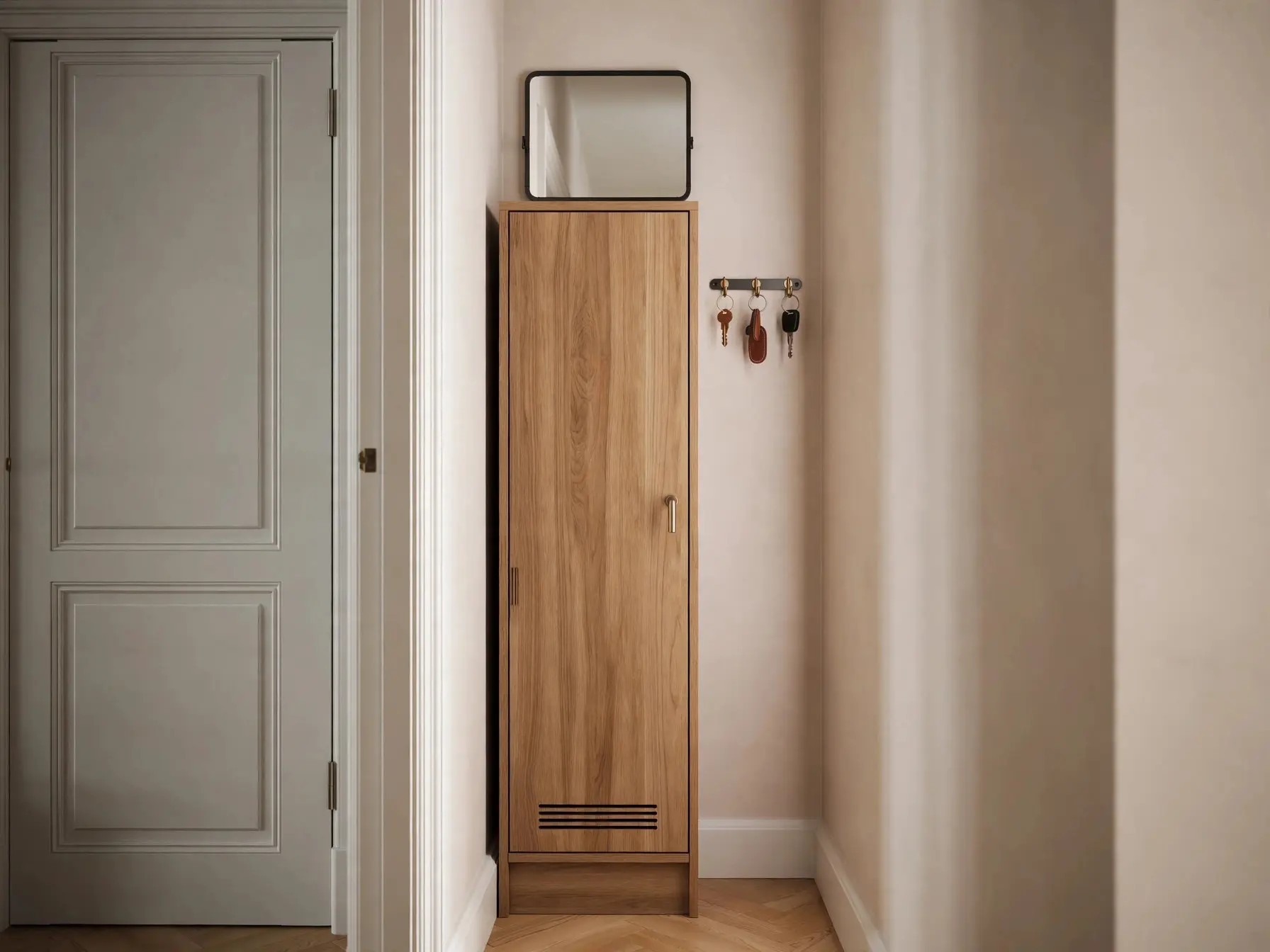
A narrow single-door cabinet fits the gap every other cabinet is too wide for: the strip of wall between a door frame and a corner, or beside a radiator. At 10 to 12 inches deep it holds 6 to 10 pairs on adjustable shelves, and one door means no second door swing to plan around. Anchor it to the wall, since narrow units tip more easily than wide ones, and keep boots on the bottom shelf where the height fits.
Anchor narrow cabinets to the wall: they tip more easily than wide ones.
Our pick
Narrow Single-Door Shoe Cabinet
The strip of wall between a door frame and a corner
Pros: Fits the gap every other cabinet is too wide for; One door means no second door swing to plan around; Adjustable shelves still hold 6 to 10 pairs
Cons: One door means less capacity than a two-door unit; Narrow units tip more easily and must be anchored
9. Double up with a mirrored-door cabinet
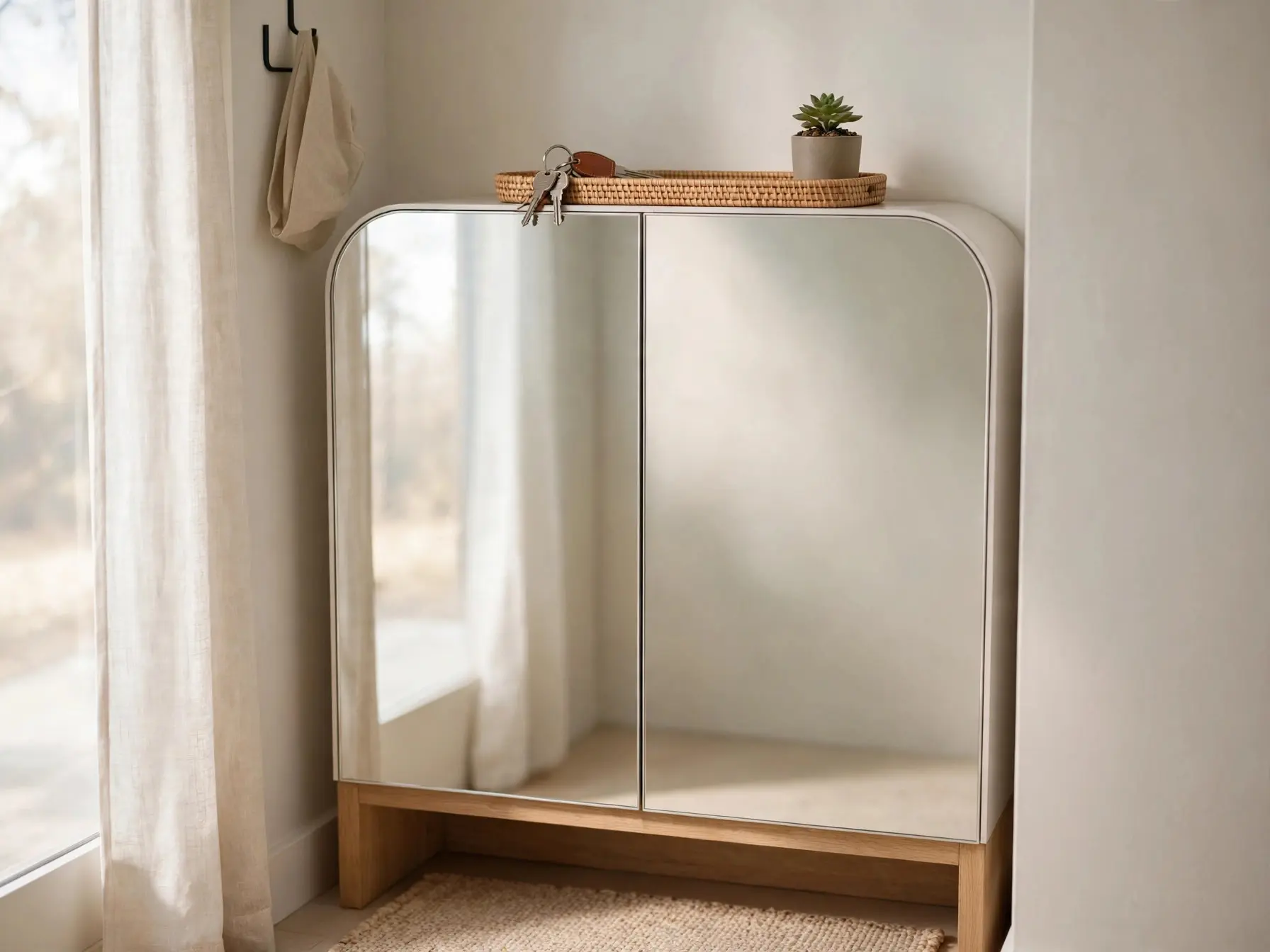
A mirrored-door shoe cabinet does two jobs in a small entry: it hides 10 to 14 pairs and gives you a full-length mirror for the last look before you leave. The mirror also bounces light around a dark hallway, which makes the whole entry feel bigger. Pick a mirror that runs the full door height, and wipe it weekly — fingerprints show fast on a door you touch every day. Keep the frame slim so the cabinet reads as a mirror, not a box.
Wipe the mirror weekly; fingerprints show fast on a door you touch daily.
Our pick
Mirrored-Door Shoe Cabinet
Small, dark entries that need light and a mirror
Pros: Hides 10 to 14 pairs and gives a full-length mirror for the last look; The mirror bounces light around a dark hallway; A slim frame makes the cabinet read as a mirror, not a box
Cons: The mirror shows fingerprints and needs a weekly wipe; Heavier than a plain-door cabinet of the same size
10. Use the wall under a window with a low cabinet
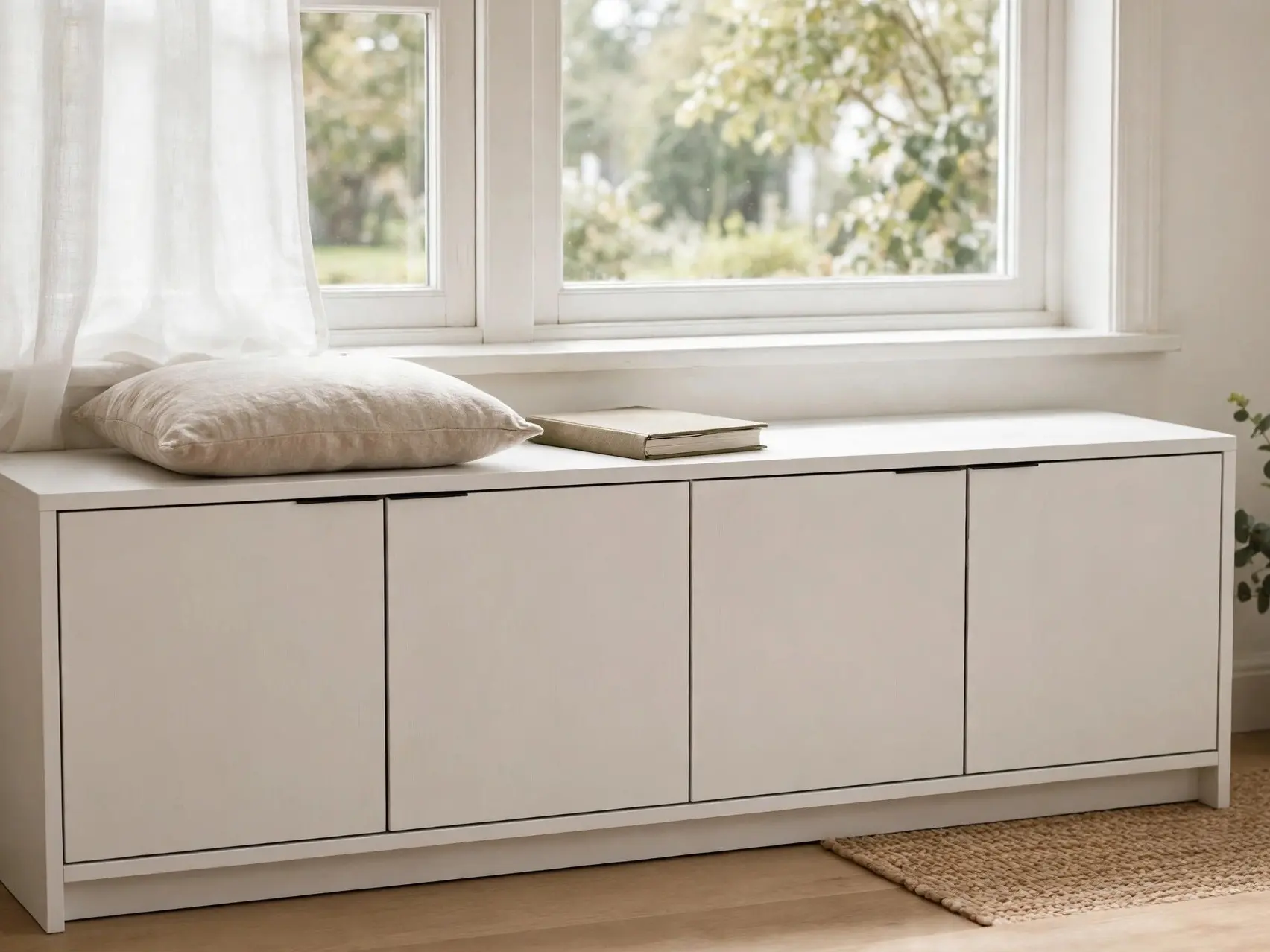
A low shoe cabinet under a window uses wall space that usually sits empty, and at about 12 inches deep it holds 8 to 10 pairs without blocking any light. The top doubles as a display shelf for a plant or a cushion, so the unit reads as furniture rather than storage. Measure the window sill height first — the cabinet must sit clear below it — and leave a finger-width gap at the back so air can move behind the unit.
Leave a finger-width gap behind the unit so air can move and the wall stays dry.
Our pick
Low Shoe Cabinet for Under a Window
The wall space under a window
Pros: Uses wall space that usually sits empty; Holds 8 to 10 pairs without blocking any light; The top doubles as a display shelf for a plant or a cushion
Cons: Lower capacity than a full-height cabinet; Must sit clear below the sill, so heights vary by window
11. Turn a dead corner into storage
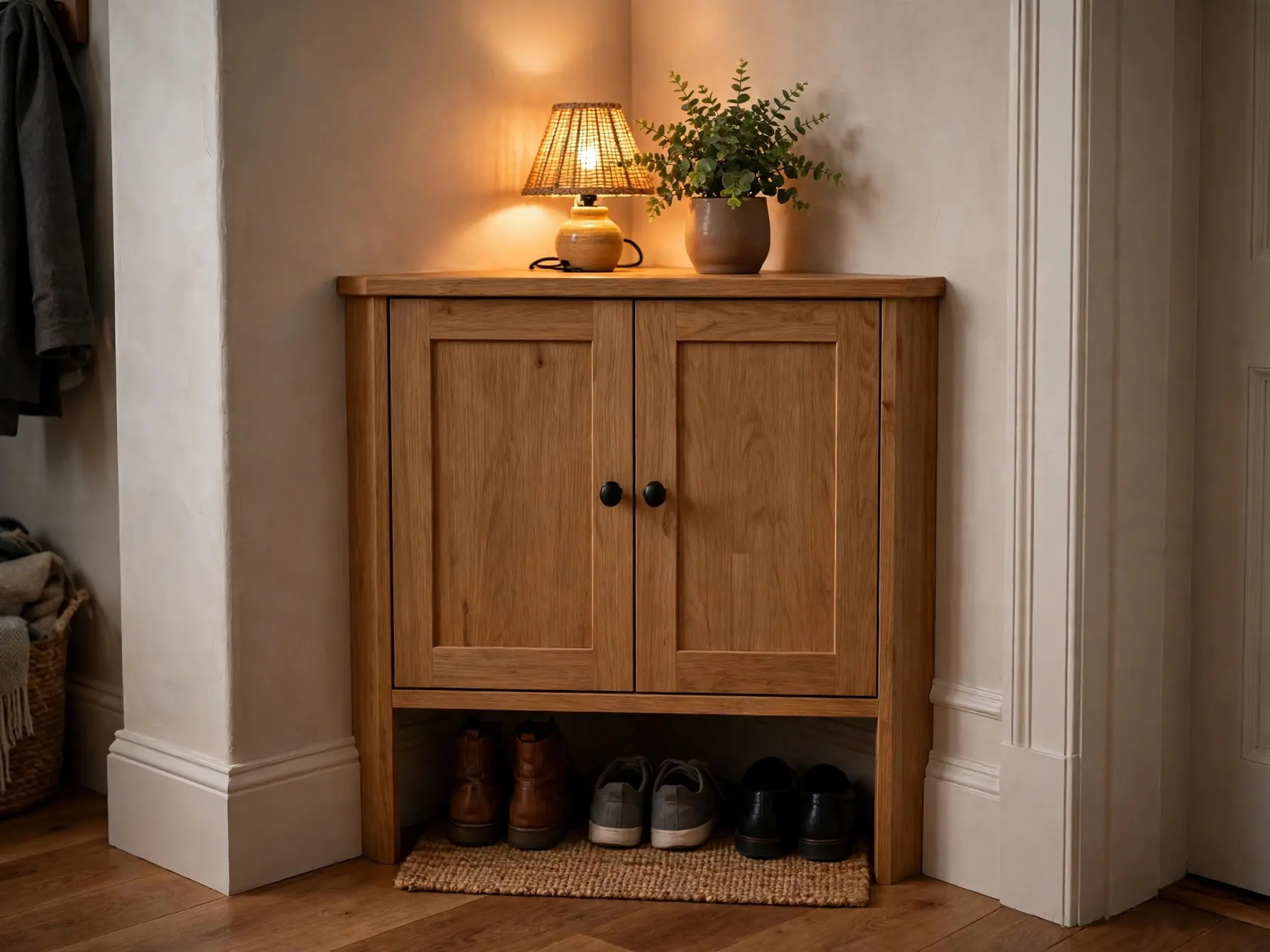
A corner shoe cabinet turns the dead corner of an entry into storage for 8 to 12 pairs, using wall space that no straight cabinet can reach. Two doors meet at the corner, and the shelves inside run deep enough for boots. Check the door swing on both sides before you buy, since a corner unit needs clearance on two walls, not one. This is the best pick for square entries where the door opens into the corner.
Check the door swing on both walls before you buy a corner unit.
Our pick
Corner Shoe Cabinet
Square entries where the door opens into a corner
Pros: Turns the dead corner of an entry into storage for 8 to 12 pairs; Uses wall space no straight cabinet can reach; Shelves run deep enough for boots
Cons: Needs door-swing clearance on two walls, not one; Deep corner shelves can hide pairs at the back
Built to last: ventilation, locks and drawers
The last three picks solve the problems that show up after a year of daily use: damp shoes, shared-house mix-ups, and the small clutter that lands on top of every cabinet.
12. Keep the small stuff in drawers below the doors
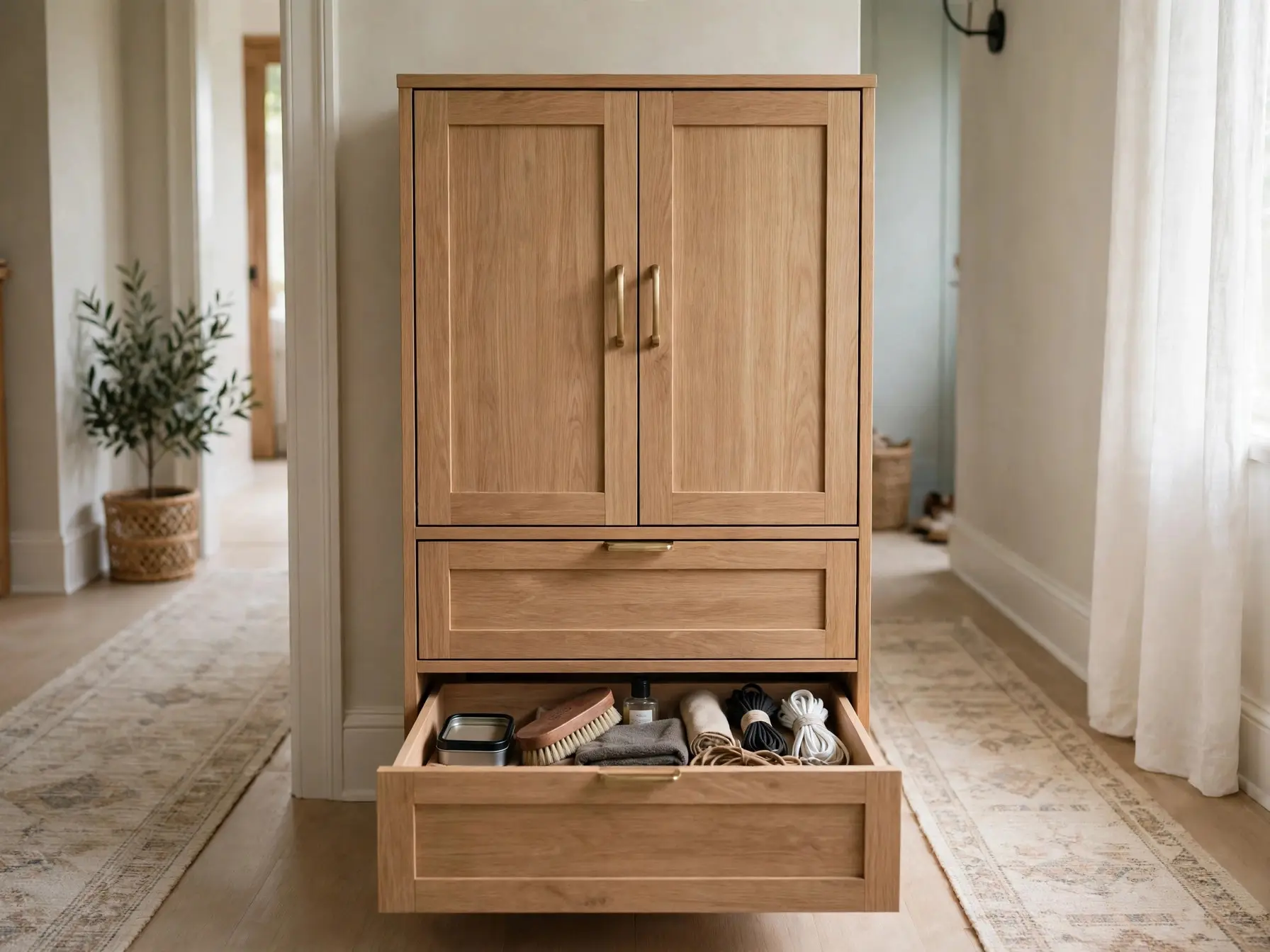
A shoe cabinet with drawers below the doors adds a home for the small things that usually end up on top of the cabinet: shoe care supplies, spare laces, insoles, and the dog lead. The doors hold 12 to 16 pairs on adjustable shelves, and the drawers keep the top clear. Pick drawers that run on full-extension slides so nothing hides at the back, and keep one drawer for each person in the house.
Keep one drawer per person, and the small things stop landing on top of the cabinet.
Our pick
Shoe Cabinet With Drawers Below
Entries where small clutter lands on top of the cabinet
Pros: Drawers hold shoe care supplies, spare laces, and insoles; The doors hold 12 to 16 pairs on adjustable shelves; The top stays clear because the small things have a home
Cons: Deeper than a standard cabinet, at 13 to 15 inches; Drawers add cost and weight to the unit
13. Let the shoes breathe with louvered doors
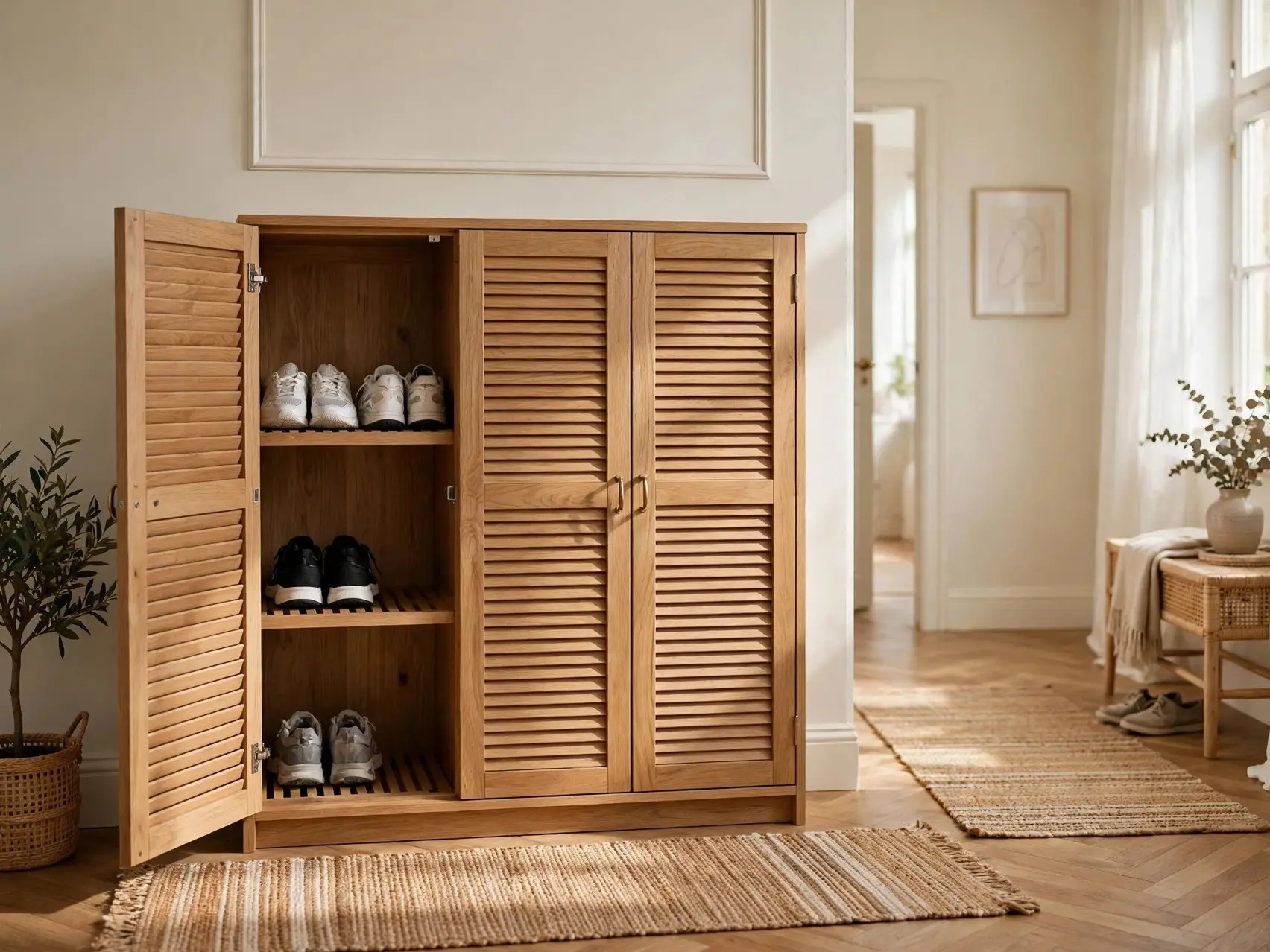
Shoes trap moisture, and a closed cabinet without airflow turns damp shoes musty. A louvered-door cabinet fixes that: slatted doors let air move through the shelves while still hiding the mess. Air wet shoes out overnight before you put them away, and add a cedar block or a small pouch of baking soda on each shelf for the pairs you wear most. This is the pick for households with sports shoes and school shoes.
Air wet shoes out overnight before they go back in the cabinet.
Our pick
Louvered-Door Shoe Cabinet
Households with sports shoes and school shoes
Pros: Slatted doors let air move through the shelves while hiding the mess; Holds 10 to 16 pairs with the same shelves as a plain cabinet; Cedar blocks and baking soda work best with airflow behind them
Cons: Slatted doors show shoe shapes through the gaps in bright light; Needs the same airing-out habit as any closed cabinet
14. Lock it down in a shared house
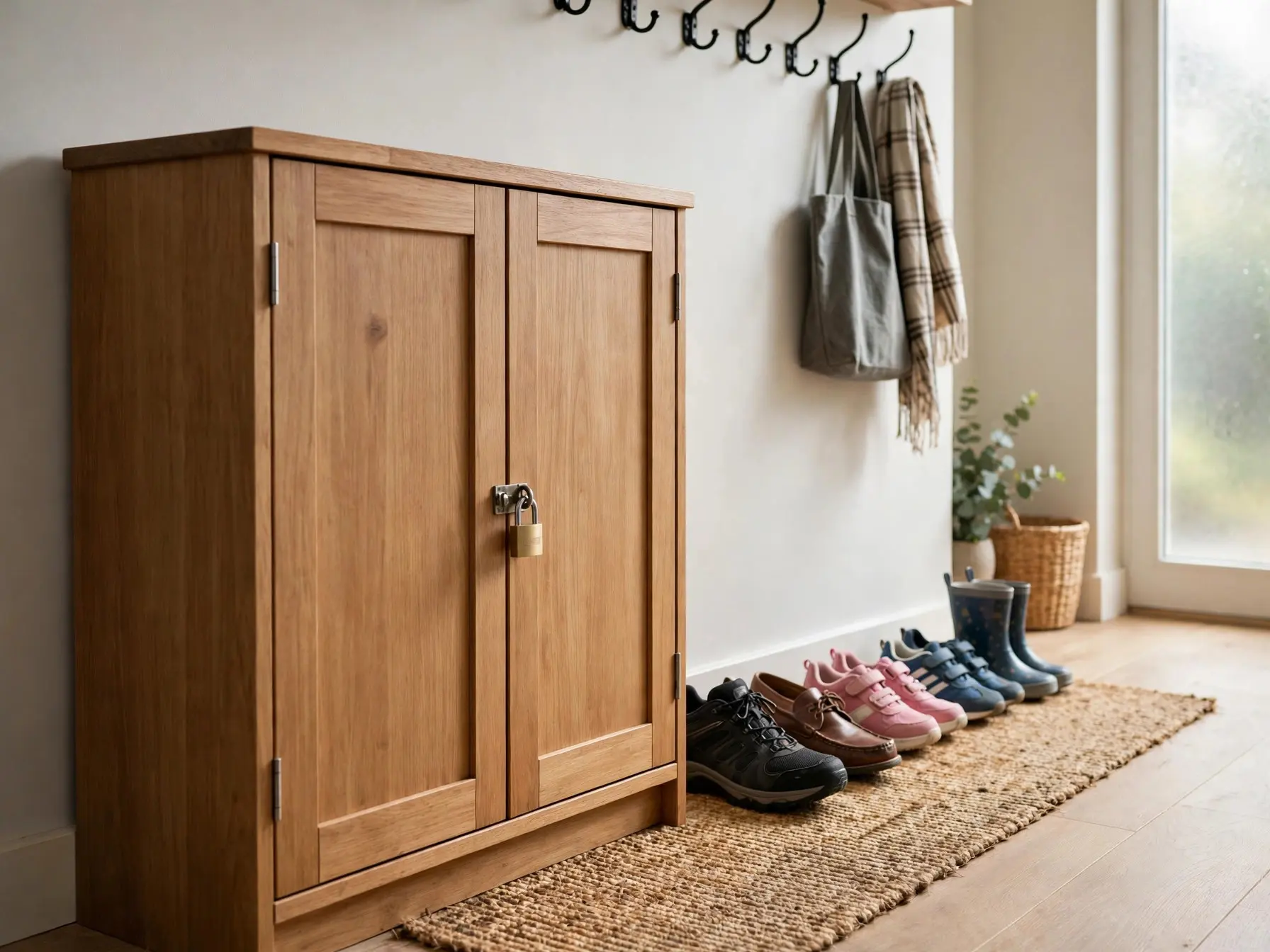
A lockable shoe cabinet suits shared houses, rentals with a shared entry, and families with children who borrow shoes without asking. One small lock on the doors keeps 10 to 14 pairs safe and stops the daily drift of shoes from one person’s shelf to another’s. Pick a lock that uses a simple key you can copy, and keep a spare with the house keys. The cabinet itself is a standard two-door unit, so it fits any entry the same way.
Keep a spare key with the house keys, so a lost key never locks the shoes away.
Our pick
Lockable Shoe Cabinet
Shared houses and rentals with a shared entry
Pros: One small lock keeps 10 to 14 pairs safe; Stops the daily drift of shoes from one person's shelf to another's; The cabinet itself is a standard two-door unit, so it fits any entry
Cons: A lost key locks the shoes away until the spare turns up; The lock adds cost to an otherwise standard cabinet
Questions, answered
What depth should a shoe storage cabinet be?
A slim tip-out cabinet is about 6 to 7 inches deep and suits a narrow hallway, while a standard two-door cabinet is 12 to 14 inches deep. Measure the wall space first and leave at least 30 inches of clear walkway in front of the cabinet. If the hallway is under 36 inches wide, a tip-out is the only cabinet that fits without blocking the way.
Do shoe cabinets need ventilation?
Yes, because shoes trap moisture and a sealed cabinet turns damp shoes musty. Pick louvered or slatted doors, or a cabinet with air gaps at the back, so air can move through the shelves. Air wet shoes out overnight before you put them away, and keep a cedar block or baking soda on each shelf.
Is a shoe cabinet better than an open shoe rack?
A cabinet is better for entries guests see, because it hides clutter, keeps dust off, and makes the room look calm. An open rack is cheaper, gives better airflow, and makes grab-and-go easier, so it wins in a mudroom or a closet. Pick the cabinet for the entry and the rack for the closet.
How many pairs of shoes fit in a shoe cabinet?
A slim tip-out cabinet holds 6 to 8 pairs, a standard two-door cabinet holds 12 to 16 pairs, and a tall cabinet holds 18 to 24 pairs. Count bulky boots as two slots each, since they take twice the shelf space of flats. If your count is close to the limit, size up: the collection always grows.
Keep reading
Shoe storage is one piece of a closet that stays tidy on a system. Our guides to shoe organizer for closet ideas, the best shoe rack for a closet, and closet shelving ideas all build on the same idea: give everything one home, and the small space stops fighting you.
Pick the cabinet that fits the entry you have, not the one you wish you had. Measure once, start with the tip-out or the two-door, and keep only the pairs you wear every week within reach. The shoe pile clears fast once every pair has one home behind a door.