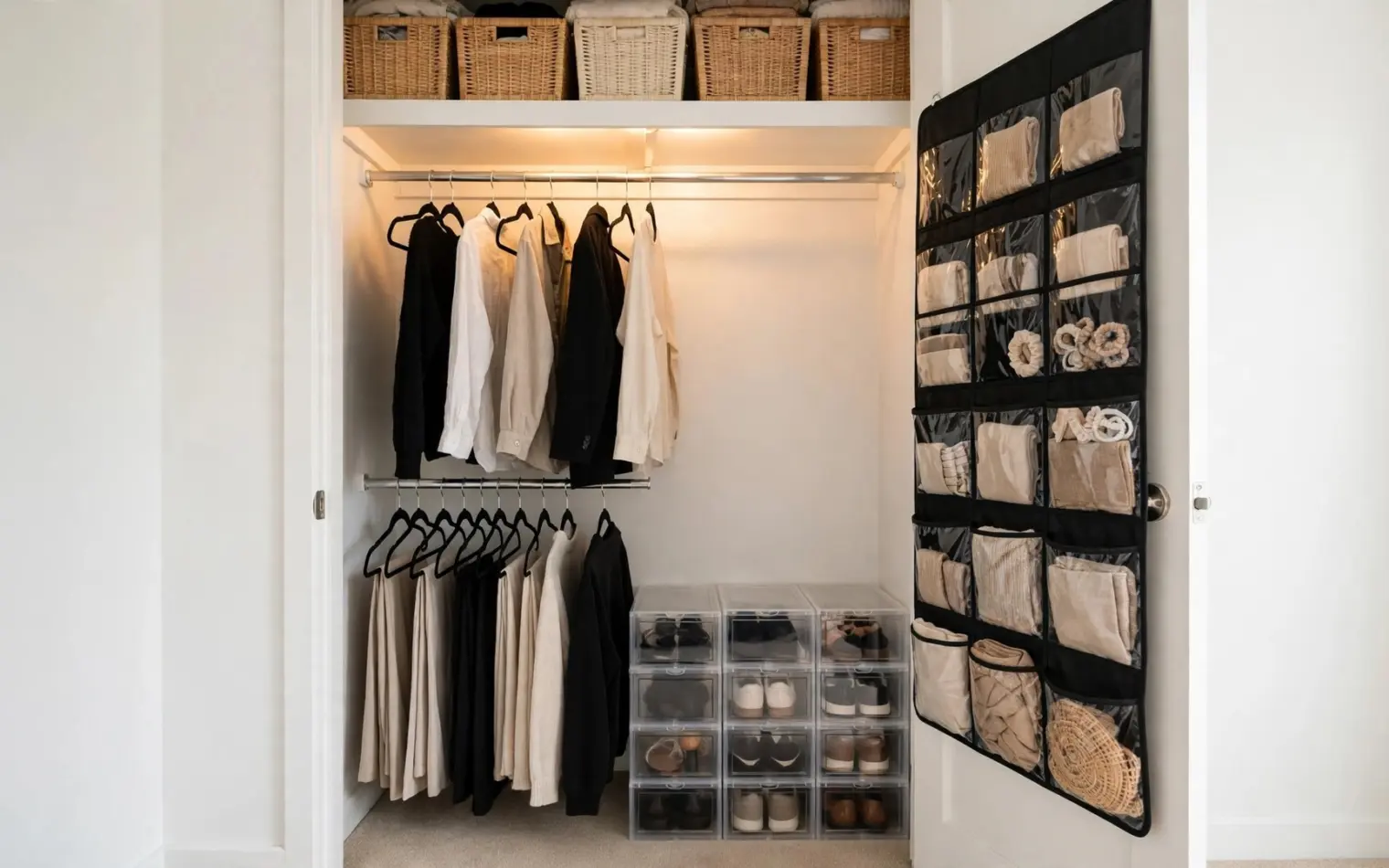
The best closet organization for small closets starts with editing, not shopping. Pull everything out, measure the width, depth and height, then use the full height with a second rod, shelf risers and stacked bins, and put the door to work with a pocket organizer. These 25 ideas work in reach-in closets as narrow as 4 feet, and most of them are renter-friendly, with no drilling needed.
Thank you for reading this post, don’t forget to subscribe!The ideas below are grouped so you can copy a whole zone at once or steal one detail. Start by measuring, because every other choice — how many rods, how deep the shelves, whether a second rod fits — follows from those few numbers. Then work through hanging, doors, shoes and the finishing touches that keep a small closet working week after week.
Measure first: the numbers that make a small closet work
A small closet feels generous or cramped because of a few inches. These are the standard planning numbers to check before you buy a single rod or bin.
| Measure | Planning number | Why it matters |
|---|---|---|
| Reach-in closet depth | 24 inches standard | Hangers need about 22 inches to turn freely without catching the door |
| Double hang height | 40 inches for the lower rod, 80 inches for the upper | Two rods stack shirts and pants in the same wall height |
| Long hang height | 66 to 72 inches from rod to floor | Keeps dress and coat hems off the floor with room for shoes below |
| Shelf depth for folded clothes | 12 to 14 inches | Deep enough for a folded sweater stack, shallow enough to see the back |
| Shoe shelf spacing | 8 to 10 inches between shelves | Fits most shoes flat, with room for taller boots on a higher shelf |
Tape these numbers to the wall while you plan. They are the difference between a closet that looks good in a photo and one that works every morning.
Edit and measure first
1. Empty the closet completely and edit first
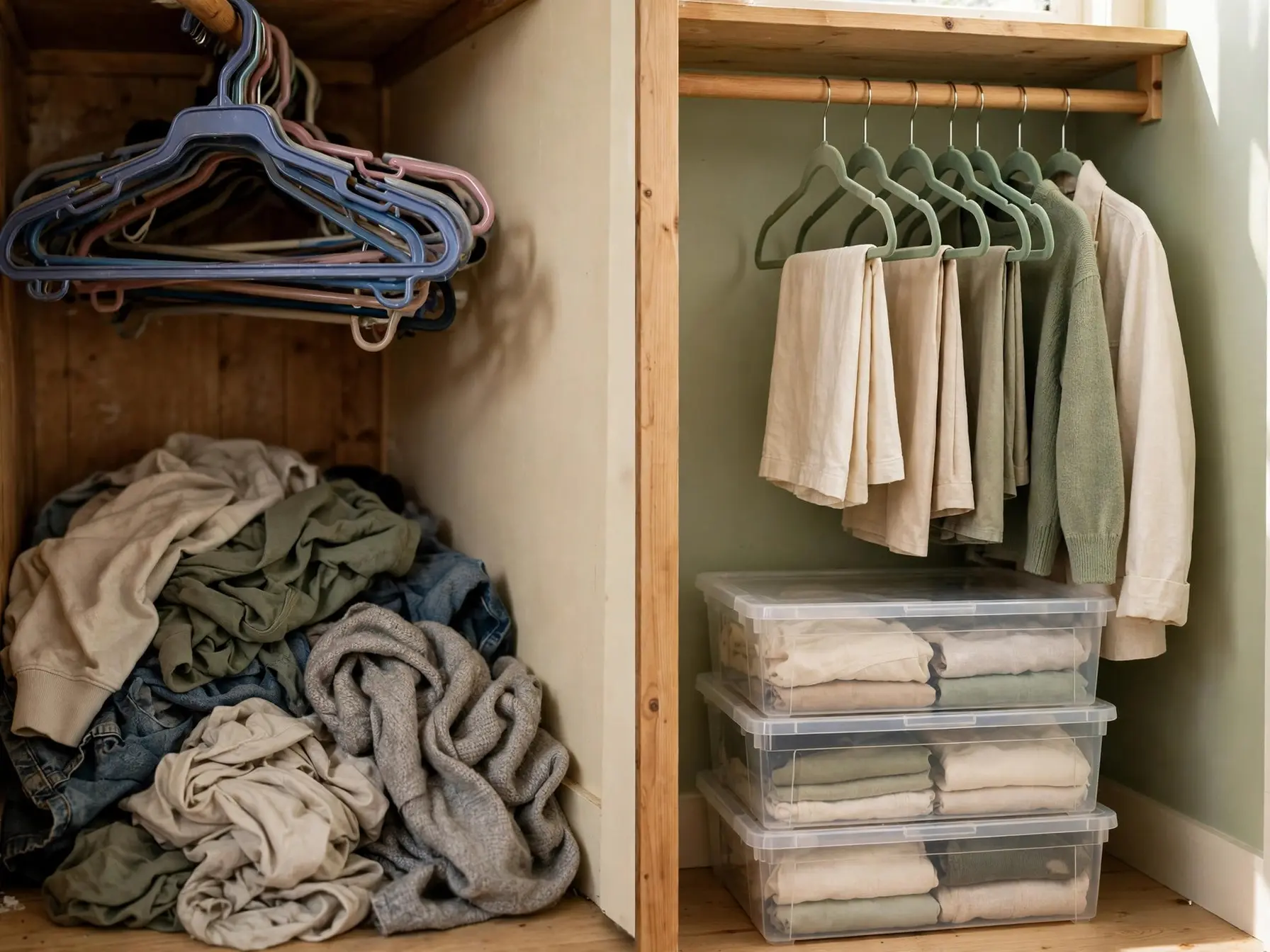
Every small closet reset starts with an empty closet, not a shopping trip. Pull everything out, then keep only what fits well and gets worn regularly. Most small closets hold a surprising share of clothes that have not been worn in a year, and each one takes up rod space a favorite could use. Sort as you go into keep, donate and store piles, and be honest about the maybe pile: if you have not reached for it in twelve months, it goes. Once the closet is empty you can see the real space you have, and every idea below gets easier.
2. Measure width, depth and height before you buy
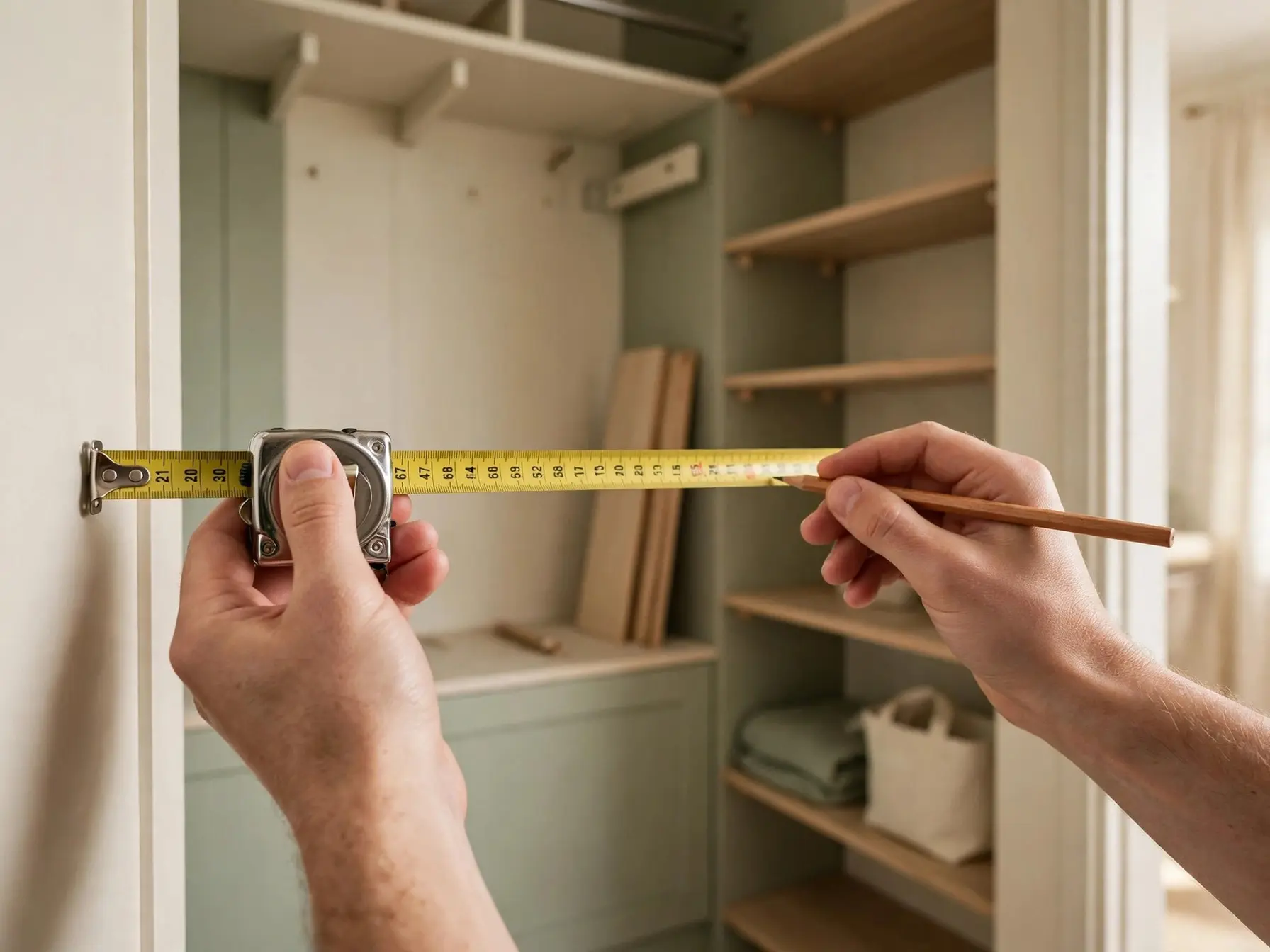
A tape measure saves more money than any organizer. Record the width, depth and height of the closet, the height of the existing rod, the depth of the top shelf and how far the door swings. Most reach-in closets are about 24 inches deep and 4 to 8 feet wide, which decides whether a second rod, a rolling cart or a shoe rack will actually fit. Write the numbers on your phone before you shop, and check every product against them. A bin that is one inch too wide is a bin that lives on the floor.
3. Sketch the layout on paper first
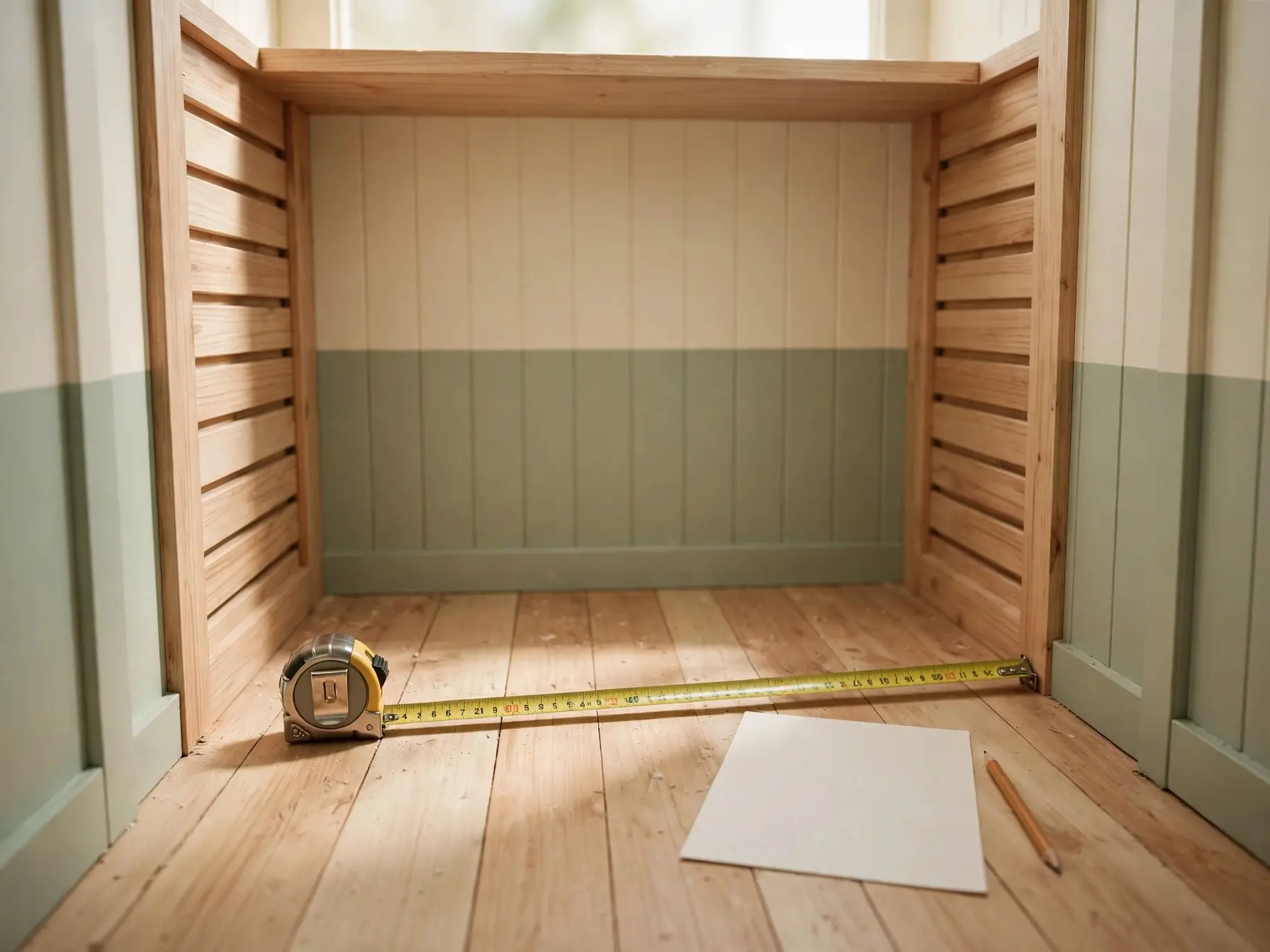
Before buying a single organizer, draw the closet as a simple rectangle and mark the rod zones, shelf zones and shoe zone. Note where long hang goes, where the second rod fits, and what needs hanging versus folding. A five-minute sketch shows whether the plan works before you spend anything, and it keeps you from buying bins that do not fit or rods that block the door. Tape the sketch to the wall while you work, and check each idea against it. Planning on paper is the cheapest organizer there is.
4. Sort what stays into keep, donate and store piles
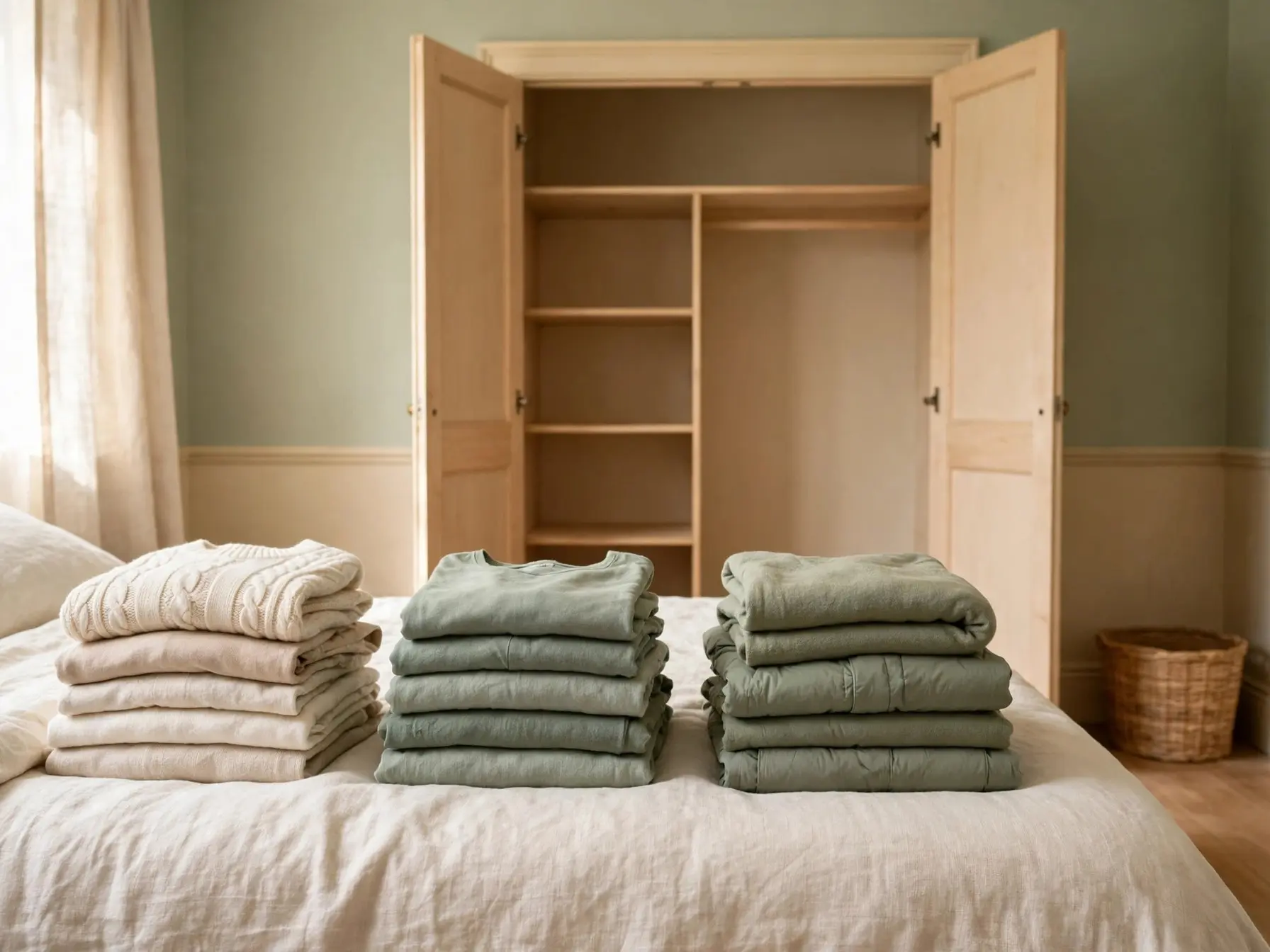
Sorting is what turns an edit into a system. Keep the clothes you wear weekly, donate the ones in good shape that no longer fit your life, and store the off-season pieces out of the way. Use three piles on the bed so nothing drifts back into the closet unexamined, and bag the donate pile the same day so it does not creep back onto a hanger. Store means up high or in another room, not on the closet floor. When only the keep pile goes back in, the closet instantly feels twice as big.
Use the full height
5. Add a shelf riser to double the top shelf
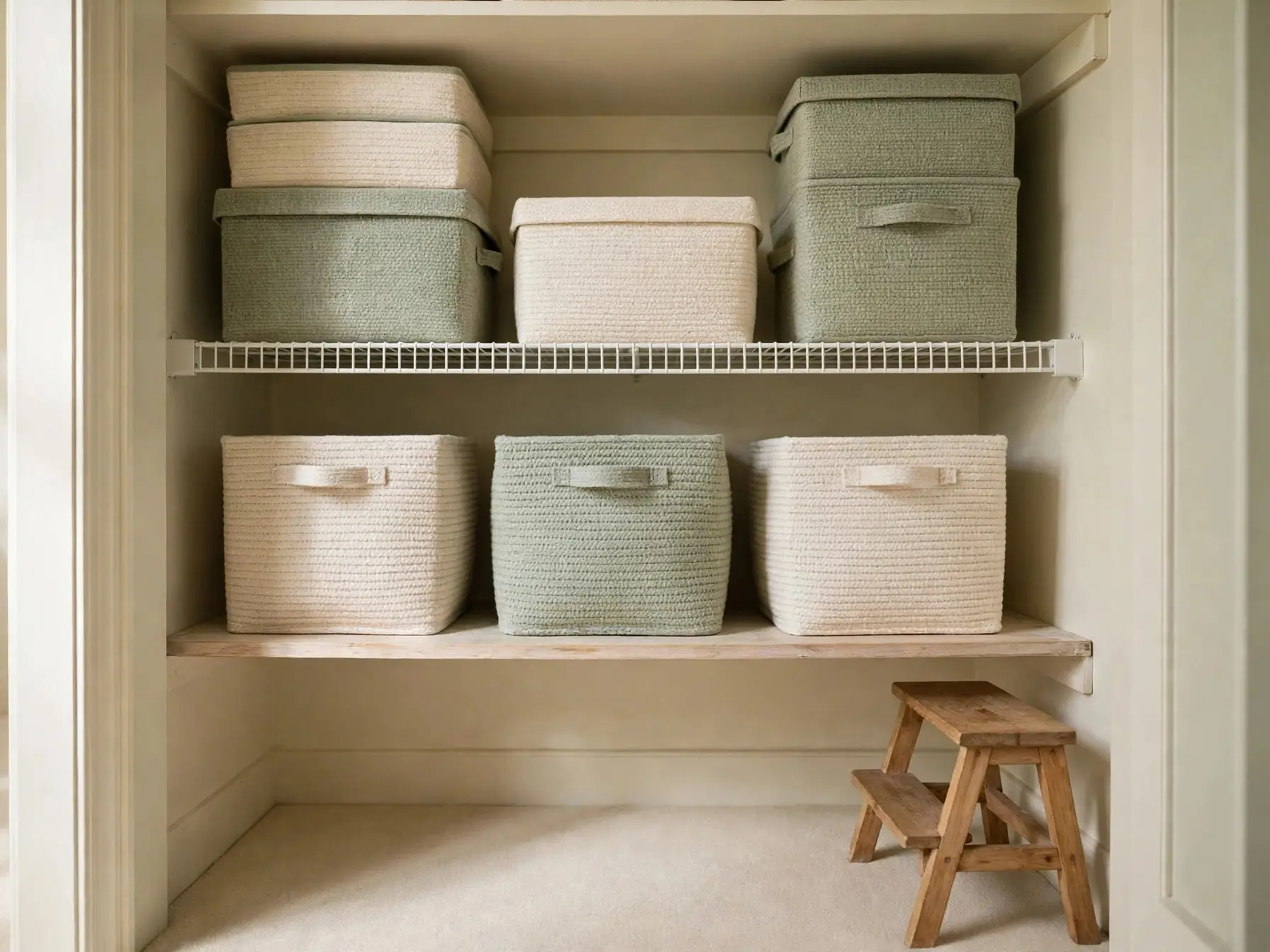
The top shelf of a small closet usually wastes half its height on air. A shelf riser, a small freestanding shelf that sits on the existing shelf, splits that tall space into two usable levels. Put folded sweaters or labeled fabric bins on the riser and lighter items below it, and the shelf suddenly holds twice as much. Most risers are 10 to 12 inches tall and cost less than a dinner out, and they need no tools at all. It is the fastest way to gain storage without changing a single screw.
6. Stack labeled bins to the ceiling
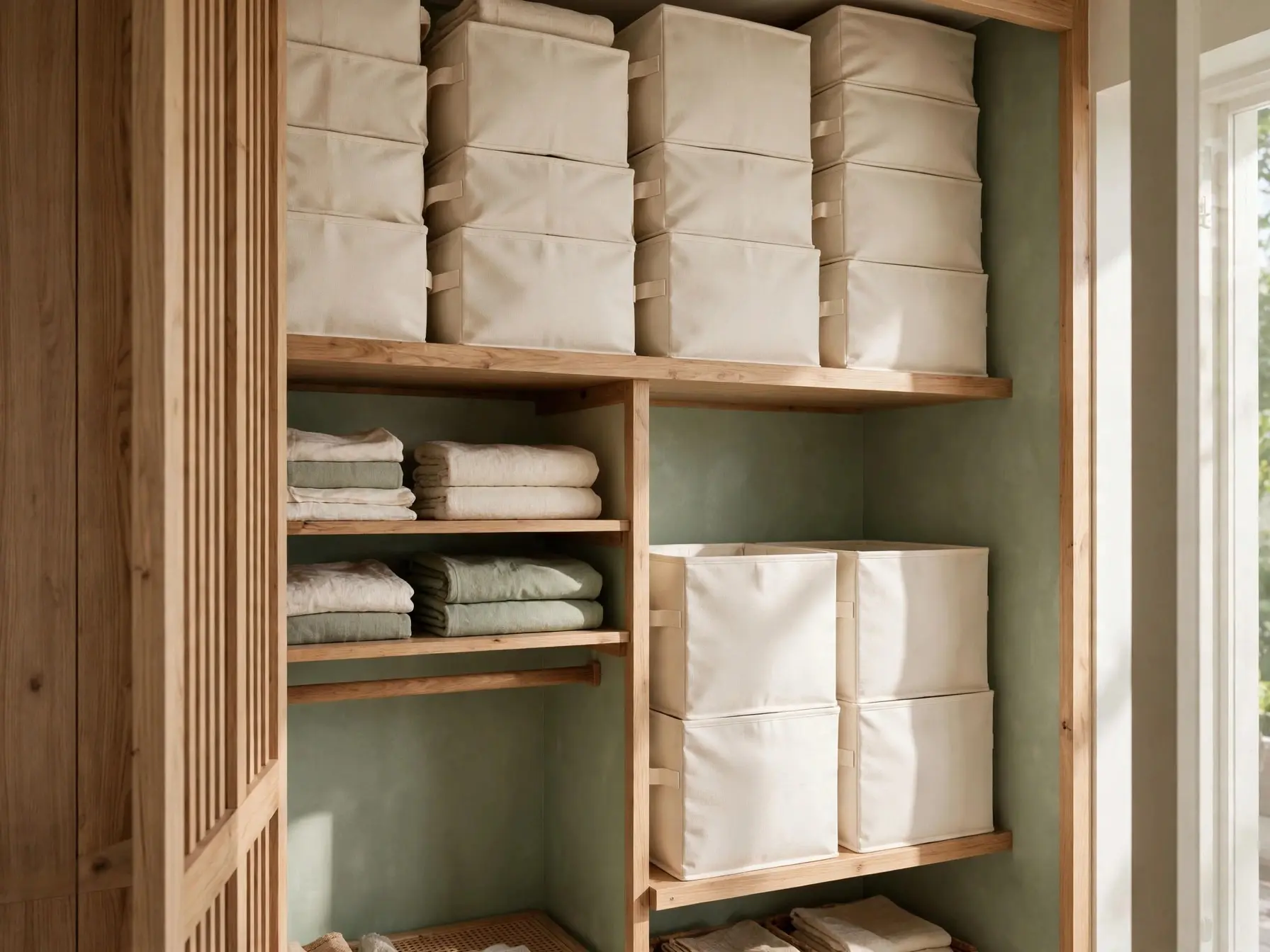
The space above eye level is the most wasted part of a small closet, and bins are how you claim it. Choose fabric or clear bins about 11 inches tall so two stack neatly in a standard top zone, and label the front of each one so you can find things without pulling the stack down. Off-season clothes go up high, daily items stay at eye level. Matching bins in one color keep the top of the closet looking calm instead of cluttered, and a small step stool makes the top row easy to reach.
7. Add a second rod below for short items
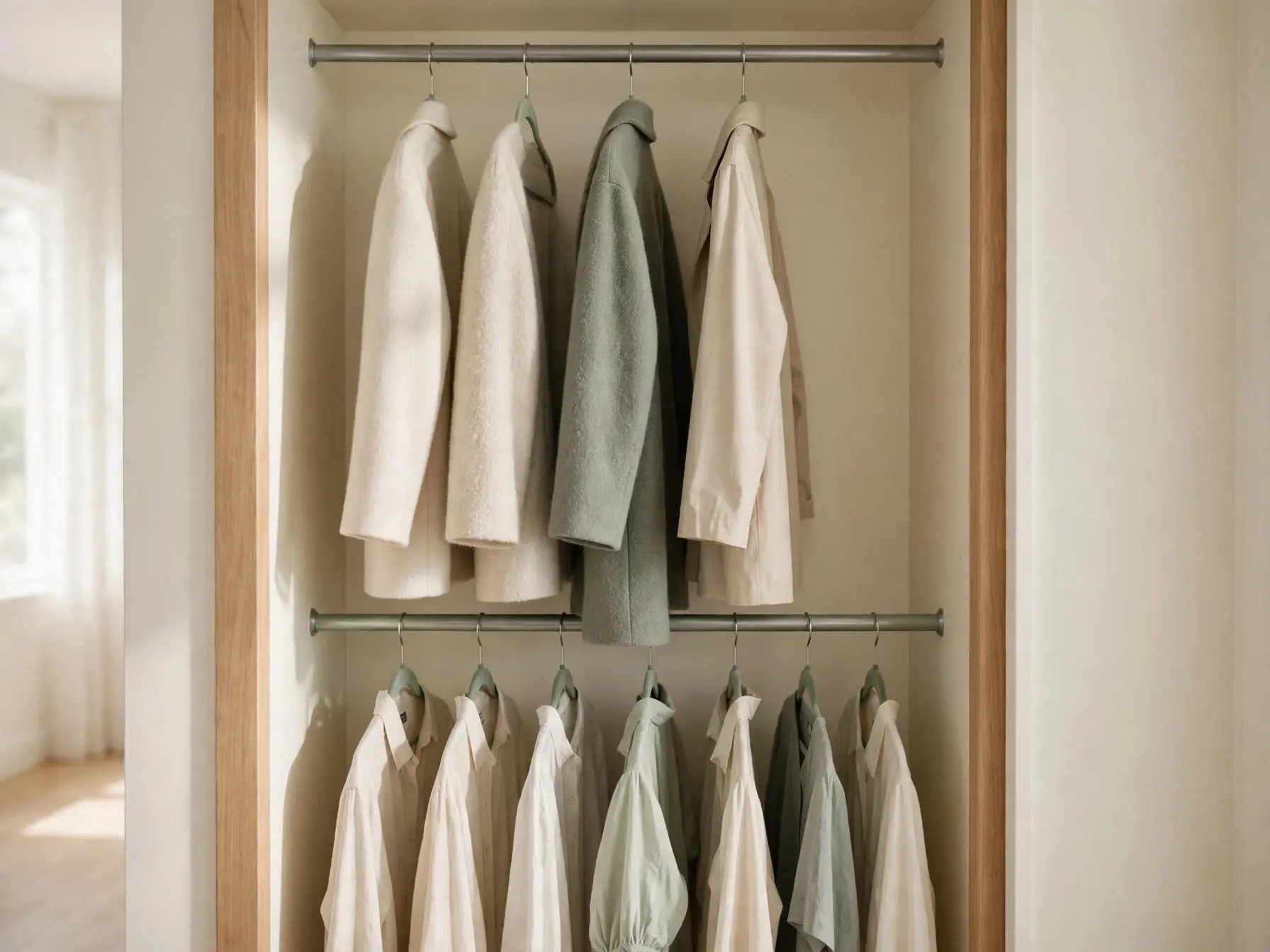
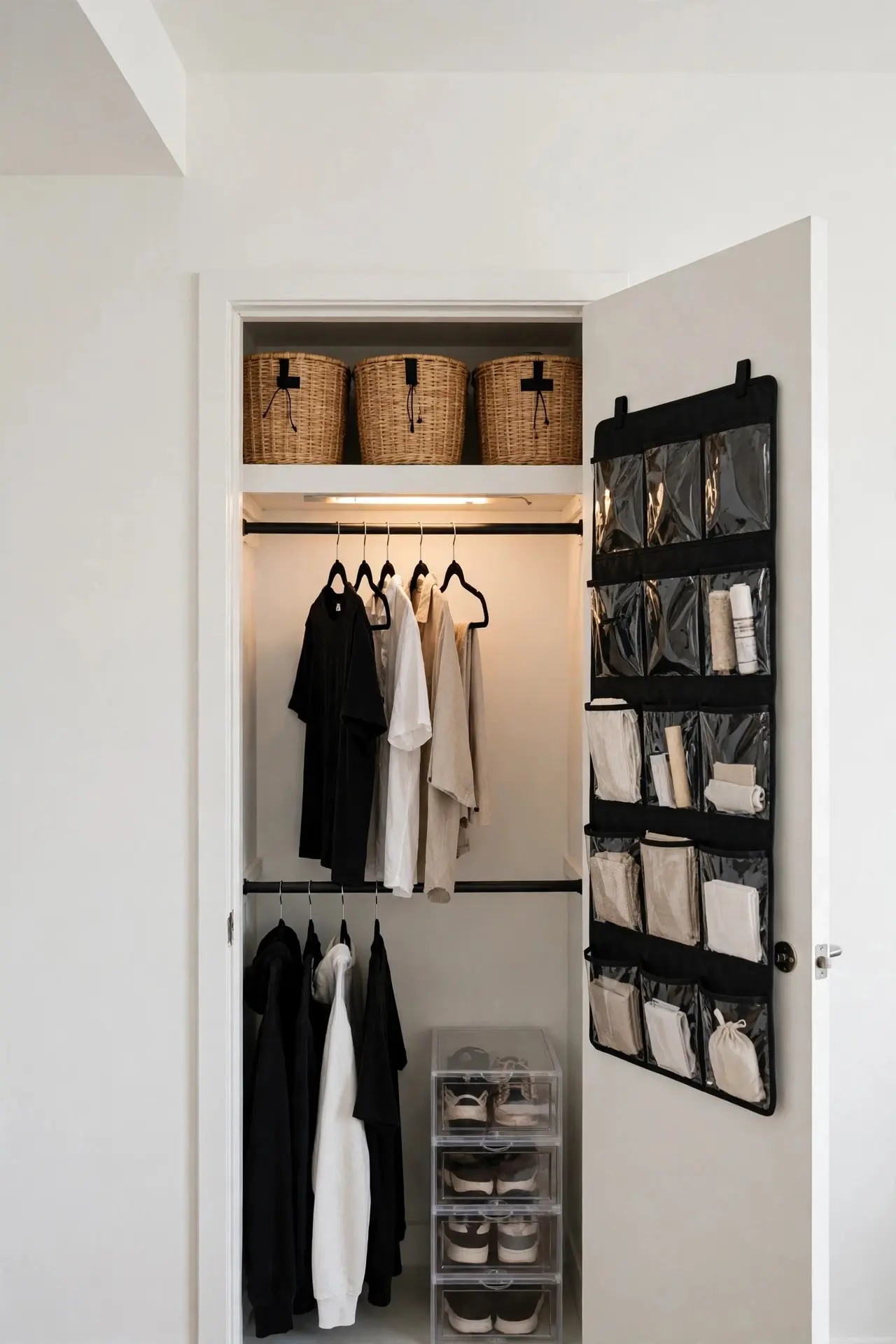
A single rod wastes the lower half of a closet on shirts that only need 40 inches of hanging height. Add a second rod below the first, at about 40 inches from the floor, and shirts, blouses and folded pants get their own level while dresses and coats keep the long-hang side. The rod can be a simple tension rod or a screw-in rod, and most small closets gain room for 15 to 20 more hangers this way. It is the single biggest capacity gain in a small closet, and it takes about ten minutes to install.
8. Put the door to work with a pocket organizer
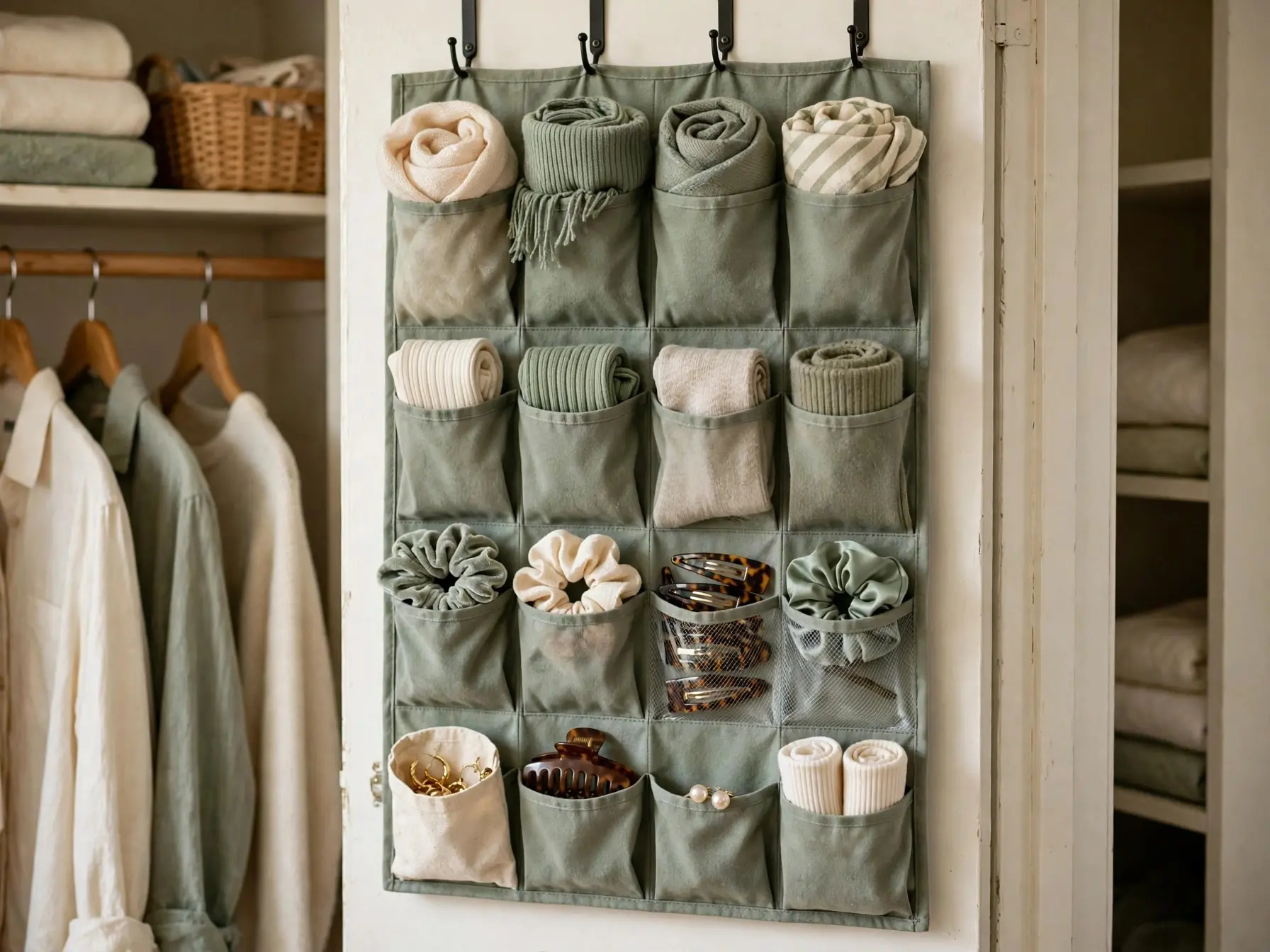
The inside of the closet door is free storage hiding in plain sight. An over-the-door pocket organizer with clear pockets holds scarves, socks, belts, hats and accessories that would otherwise pile up on a shelf. It hangs over the door with no drilling, which makes it ideal for rentals, and the clear pockets mean you can see everything at a glance. Keep the heaviest items low so the door still swings easily, and leave the top row for the things you reach for least. One door can hold a whole accessory collection.
Hang smarter
9. Swap bulky hangers for slim velvet hangers
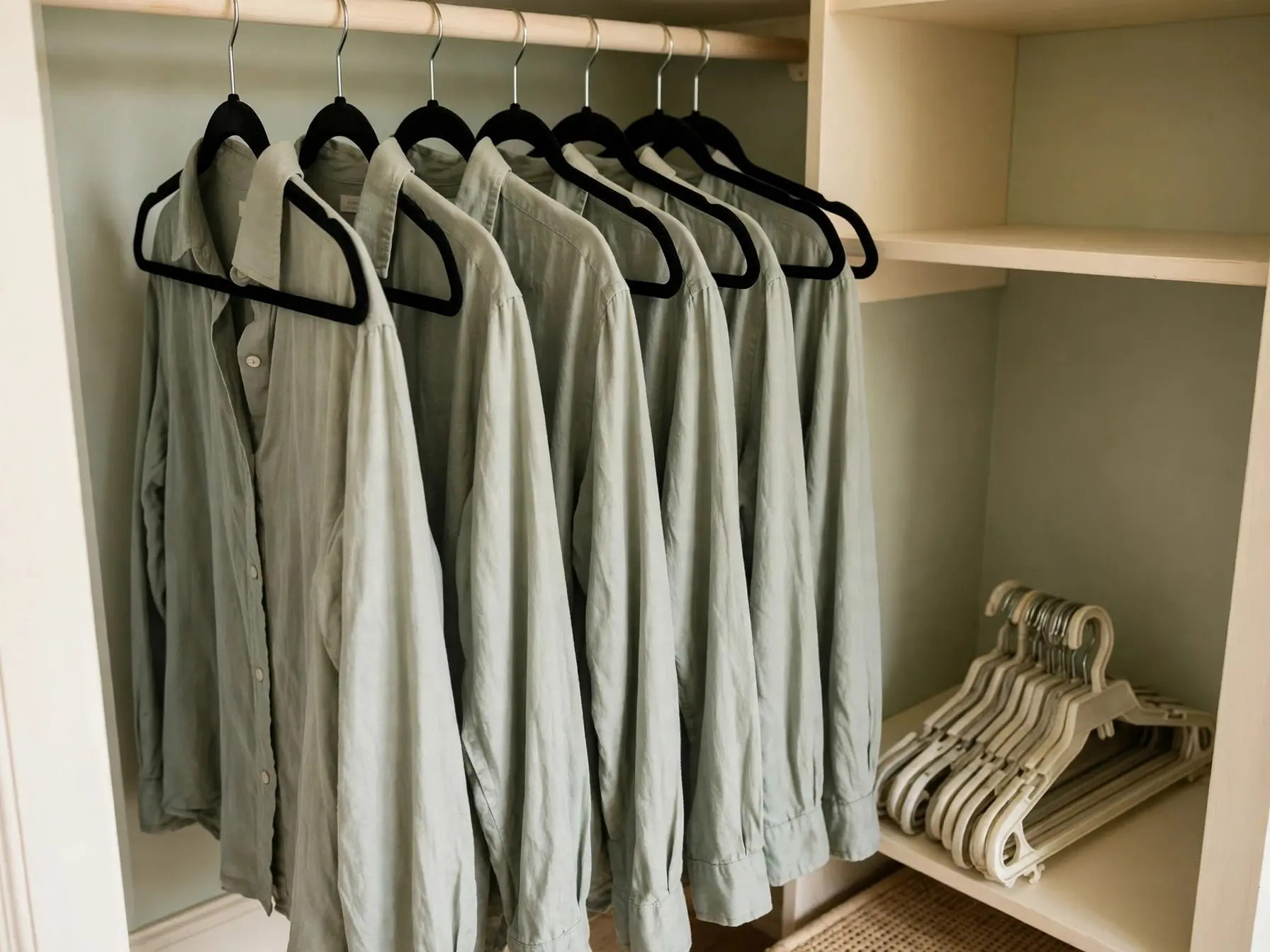
Bulky plastic and wire hangers eat rod space and let clothes slide off. Slim velvet hangers are about a quarter inch thick, so a rod that held 20 bulky hangers can hold 30 or more slim ones, and the velvet grip keeps silky tops and dresses in place. Swap them in one color for a calm, matching look, and keep the old hangers for the donate pile. It is a small spend with an instant visual payoff: the closet looks tidier the moment the hangers match. Our guide to closet organization ideas shows the same swap on a bigger closet.
10. Hang a valet rod for tomorrow’s outfit
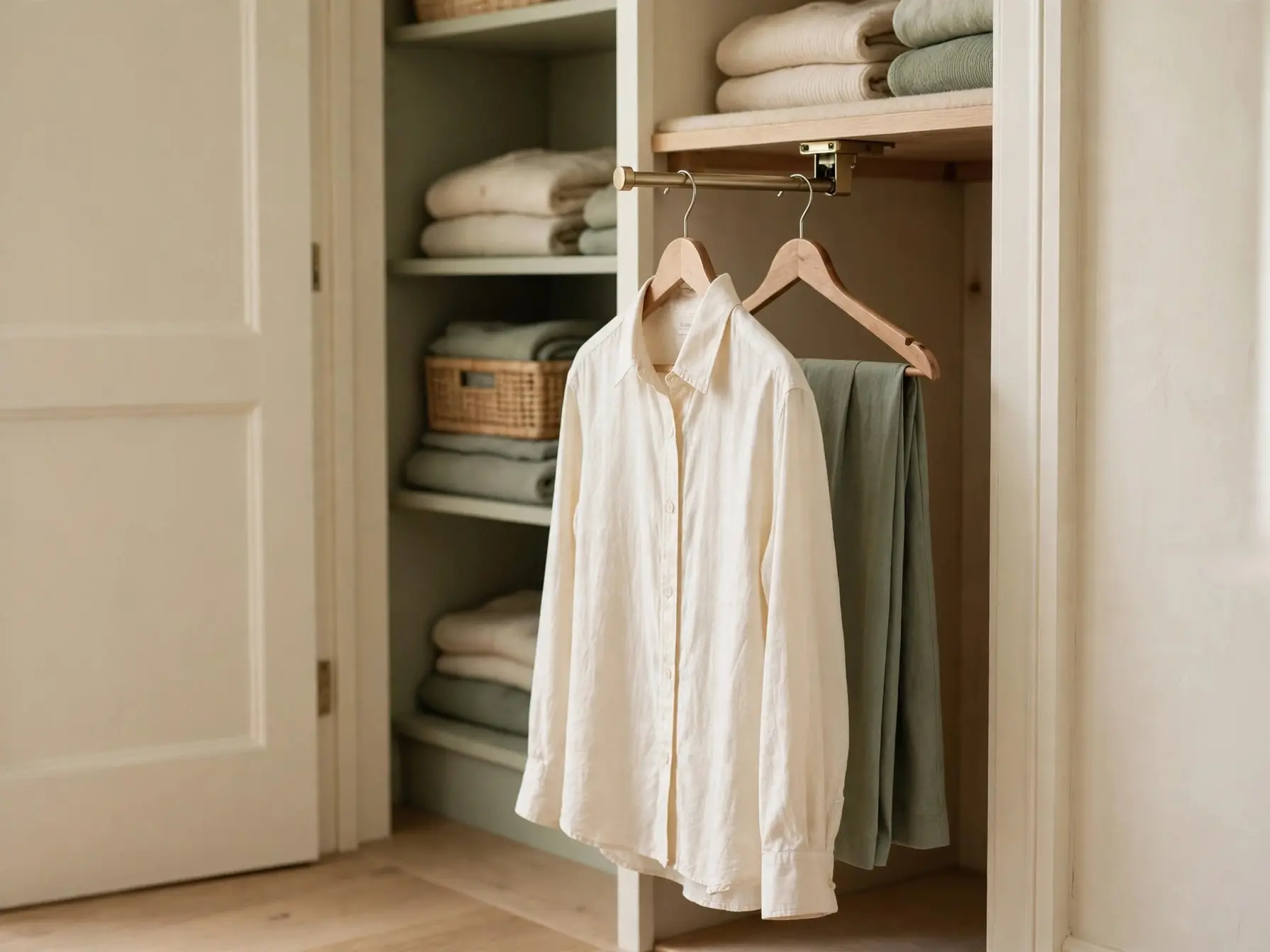
A pull-out valet rod is a small hook that slides out from the closet wall and holds tomorrow’s outfit while you plan it. Mount it near the door at about 48 inches high, and it takes up no rod space when pushed back in. It is the kind of detail that makes mornings calmer: lay out the outfit the night before, and getting dressed becomes a one-minute job. Valet rods come in no-drill and screw-in versions, cost very little, and also work for airing a jacket or holding a bag while you pack. One small rod, used daily, earns its place fast.
11. Use cascading hangers for matching sets
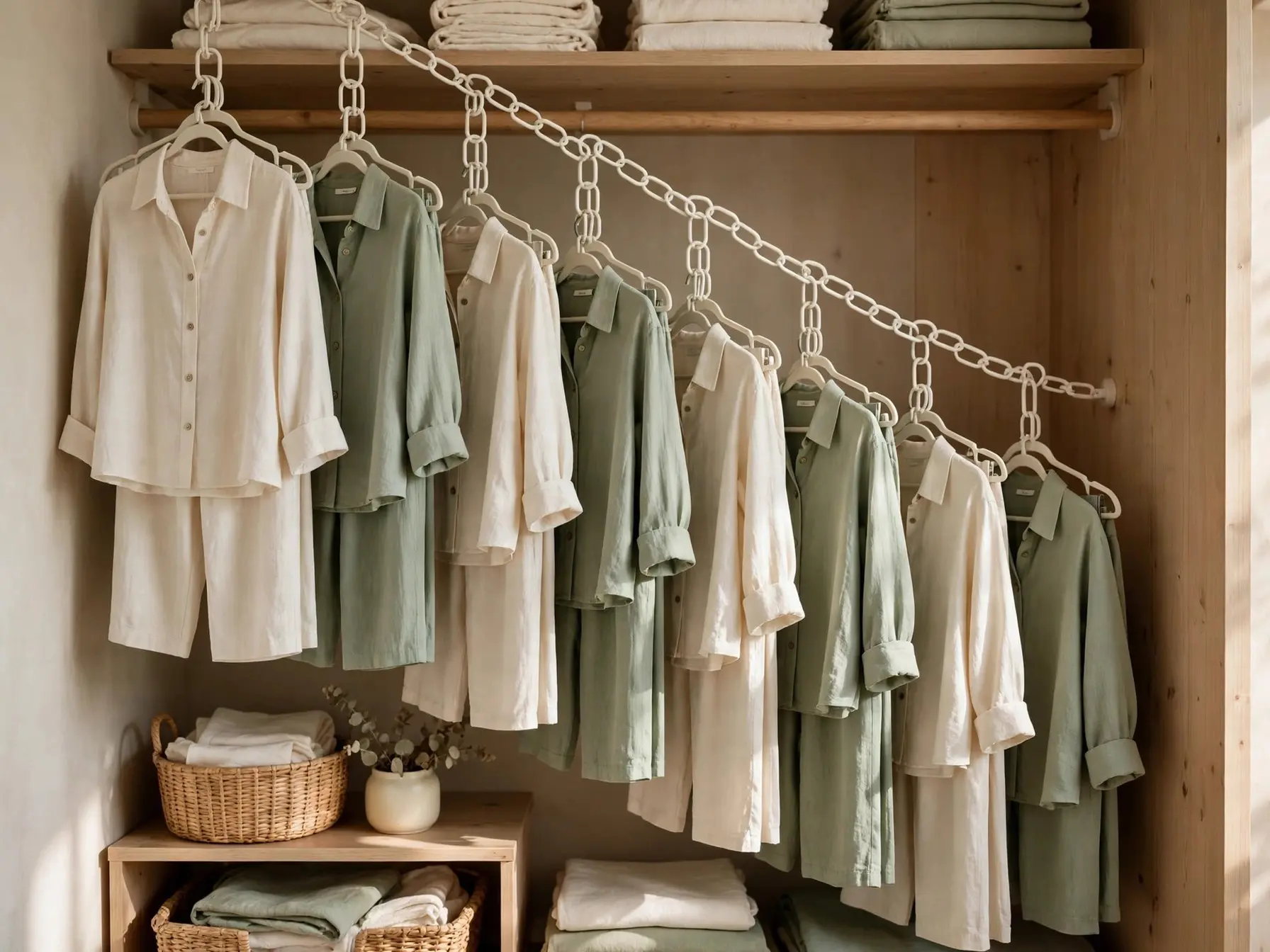
Cascading hangers hang one hanger from the hook of another, so a matching top and bottom share a single spot on the rod. They are ideal for two-piece outfits, suits and sets you always wear together, and they free up rod space for the pieces you mix and match. Use them only for sets, not for everything: a whole rod of cascaded hangers gets heavy and hard to browse. Keep the sets on one side of the rod and the singles on the other, and getting dressed becomes a grab-and-go instead of a search.
12. Slide a rolling cart under the hanging clothes
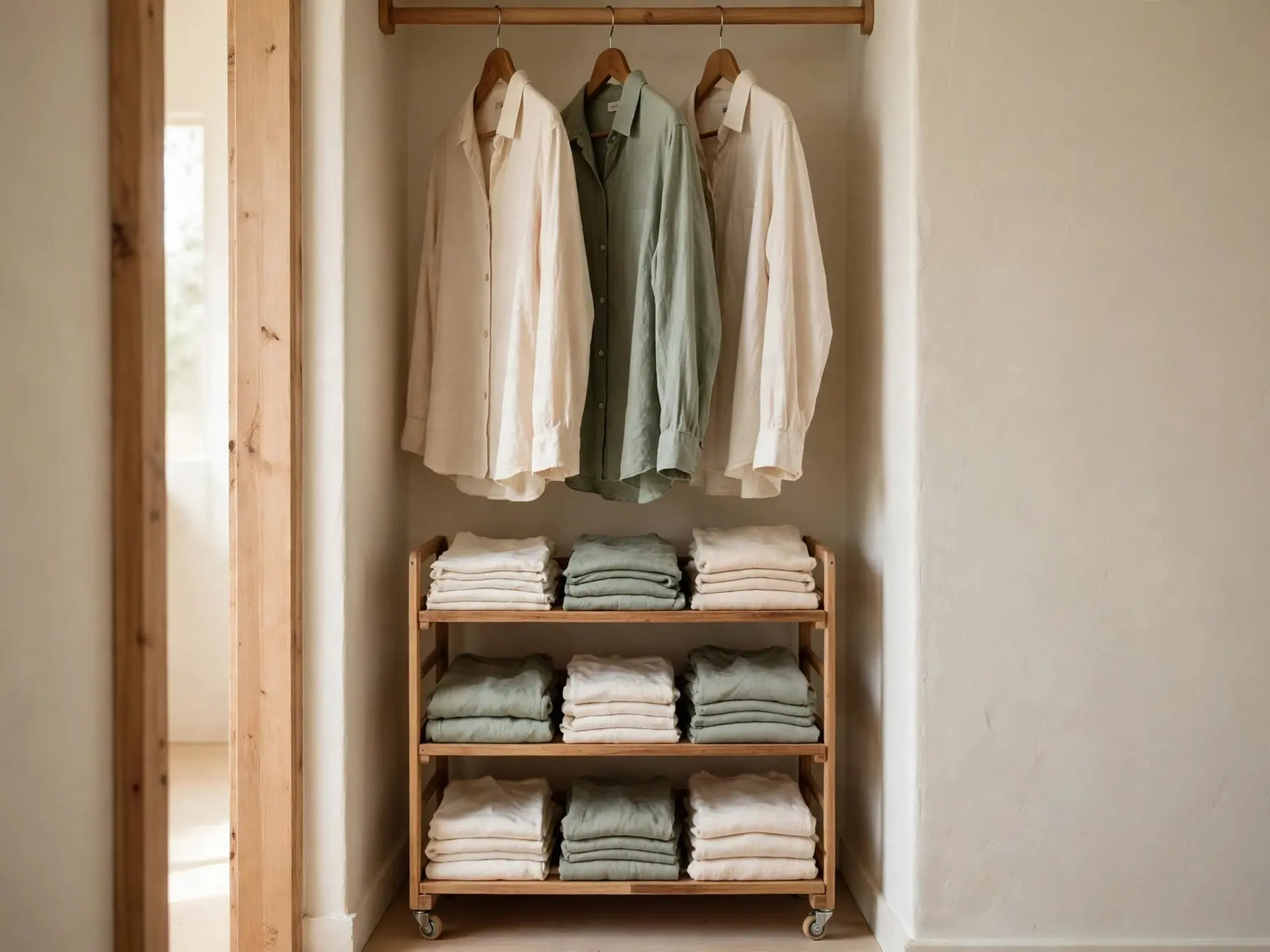
The space under short hanging clothes is often dead space, and a narrow rolling cart turns it into drawers. A three-tier cart about 12 inches wide slides under shirts and blouses and holds folded tees, underwear, socks or workout gear in easy reach. Because it rolls, you can pull it out to find things and push it back when you are done, which beats a fixed drawer in a tight closet. Choose a cart with a flat top so it can double as a shelf for shoes or a small basket.
Doors and walls do the work
13. Hang hooks on the side walls for bags and belts
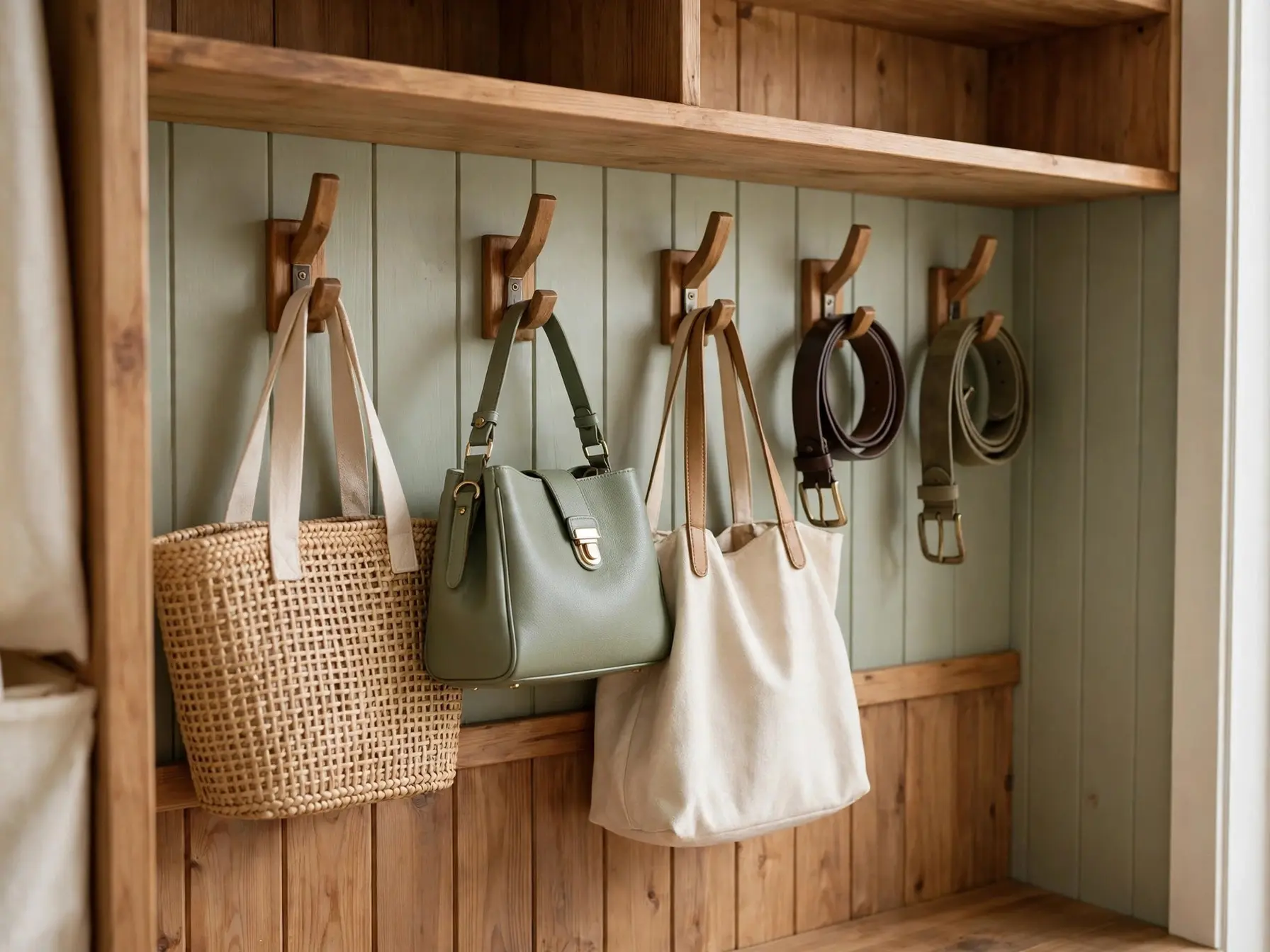
The side walls of a closet are narrow but perfect for hooks. Two or three sturdy hooks hold handbags, belts, tote bags and tomorrow’s jacket without taking a single inch of rod or shelf space. Adhesive hooks work well in rentals and hold lighter bags, while screw-in hooks carry heavier totes. Hang bags by their straps so they keep their shape, and keep the hooks at eye level so nothing drags on the floor. It is a five-minute job that clears a whole shelf of clutter.
14. Add a narrow shelf above the rod for folded items
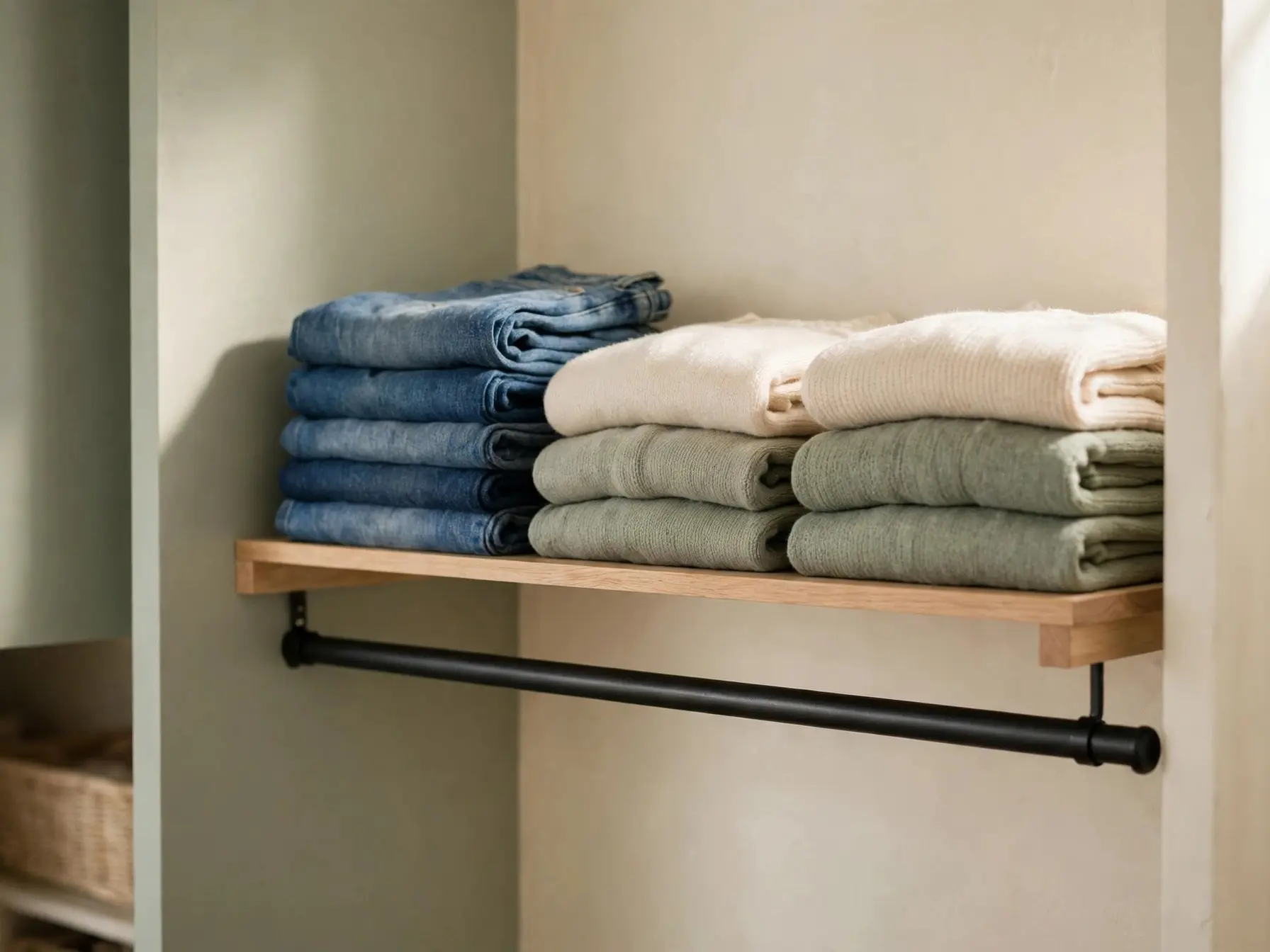
If your closet has a gap between the rod and the shelf above it, a narrow add-on shelf fills it with folding space. A 10 to 12 inch deep shelf mounted just above the rod holds folded jeans, sweaters or tees where they are easy to see and reach. Keep the stacks low, about six inches high, so they do not topple, and put the items you wear most at the front. It is a simple screw-in or bracket shelf, and it turns wasted air into a whole extra shelf of storage.
15. Use shelf dividers to keep stacks upright
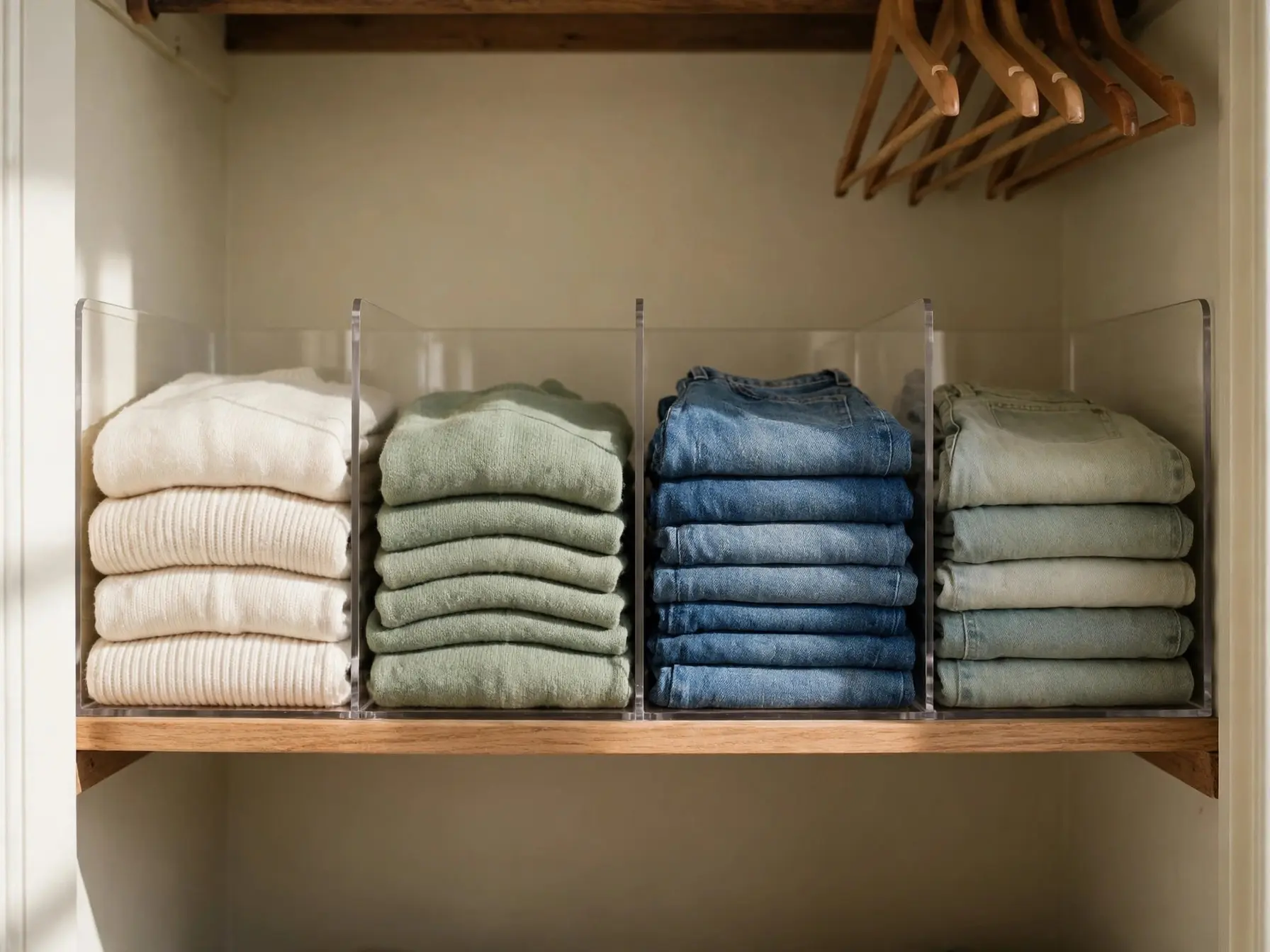
Folded stacks fall over because nothing holds their sides, and shelf dividers fix that for a few dollars. Slide a divider every 10 to 12 inches along the shelf and each stack gets its own bay: tees in one, sweaters in the next, jeans in the third. Acrylic dividers keep the look light, while wood ones match a warmer closet. The stacks stay upright even when you pull from the middle, so the shelf looks tidy for weeks instead of days. Measure the shelf depth first so the dividers sit flush.
16. Store off-season clothes in vacuum bags up high
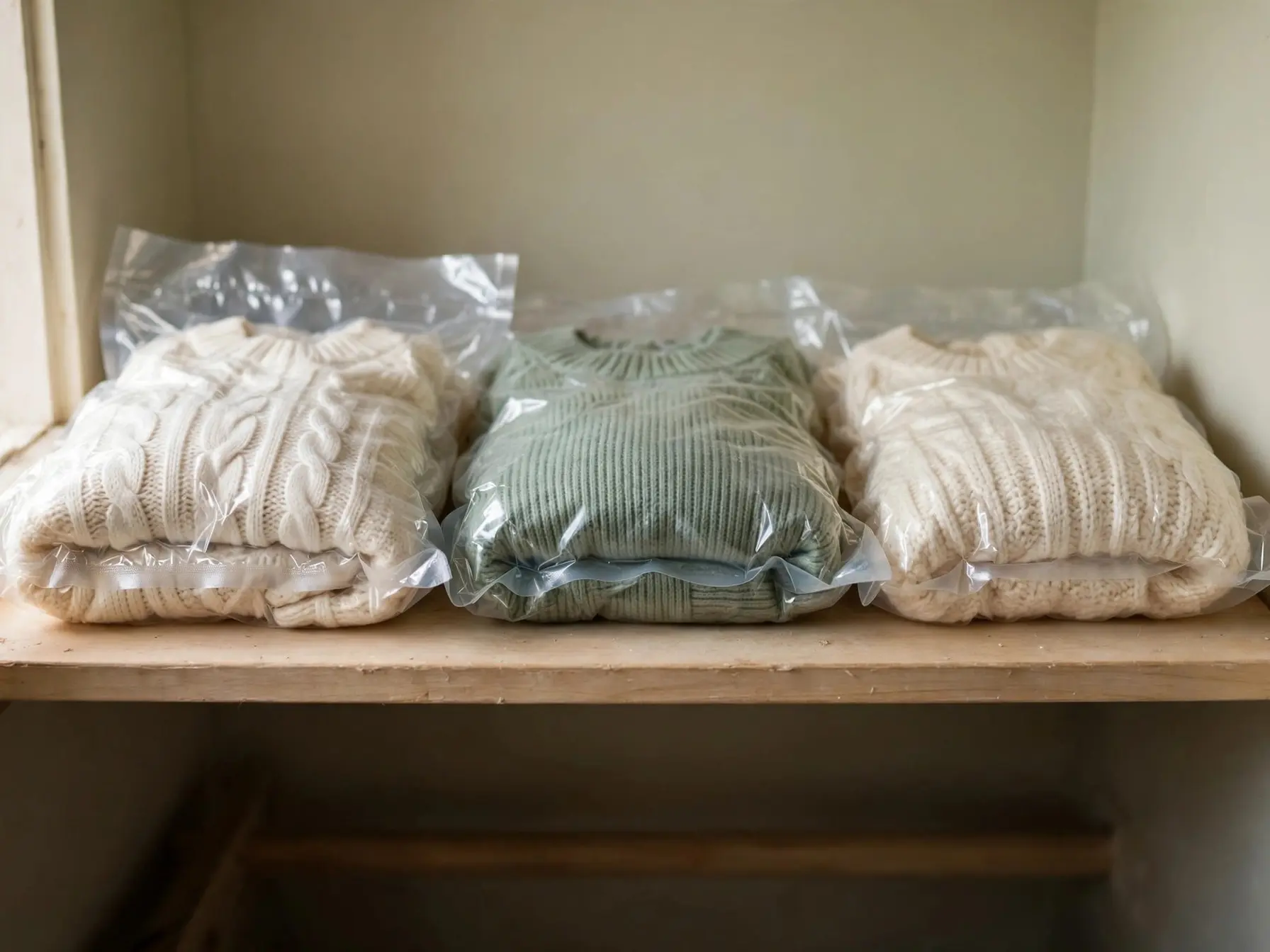
Bulky winter sweaters and heavy coats take up rod and shelf space all summer, and vacuum bags shrink them to a flat parcel. Seal off-season clothes in the bags, press out the air, and slide them onto the top shelf or above the bins where they stay out of the way until the season turns. The bags also keep clothes clean and safe from dust while they wait. Keep one bag per category, labeled on the front, so the winter swap takes minutes instead of an afternoon of digging.
Shoes, bags and accessories
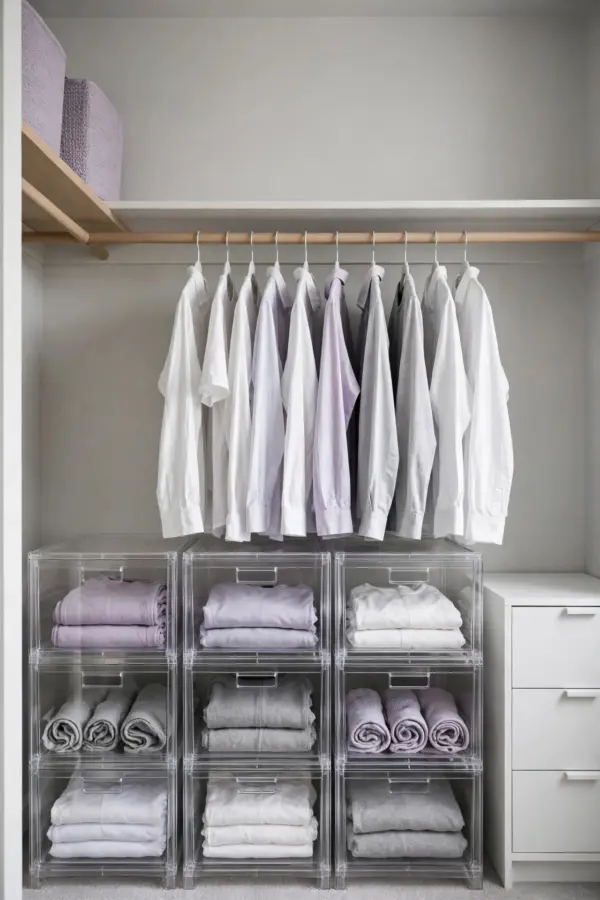
17. Line shoes in clear stackable boxes on the floor
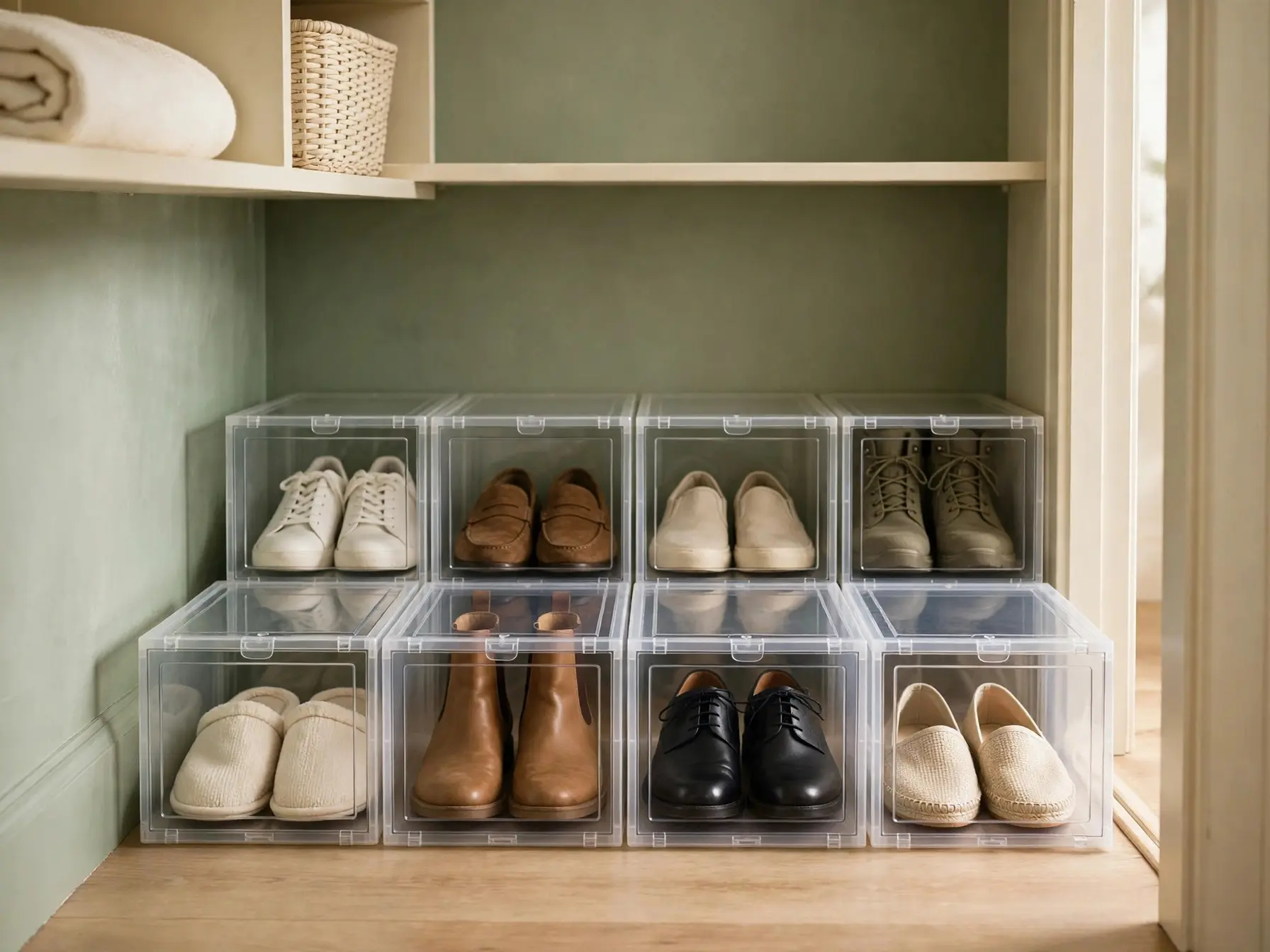
Shoes scattered on a closet floor waste the whole bottom of the closet and make pairs hard to find. Clear stackable boxes change that: each pair gets its own box, the boxes stack two or three high, and you can see every pair without opening a lid. Keep everyday shoes at the front and occasion shoes at the back or on the second layer. Measure the floor width first, because most closets fit three or four boxes across, and leave a small gap at the door side so the boxes do not block the swing.
18. Add a low angled shoe shelf at the base
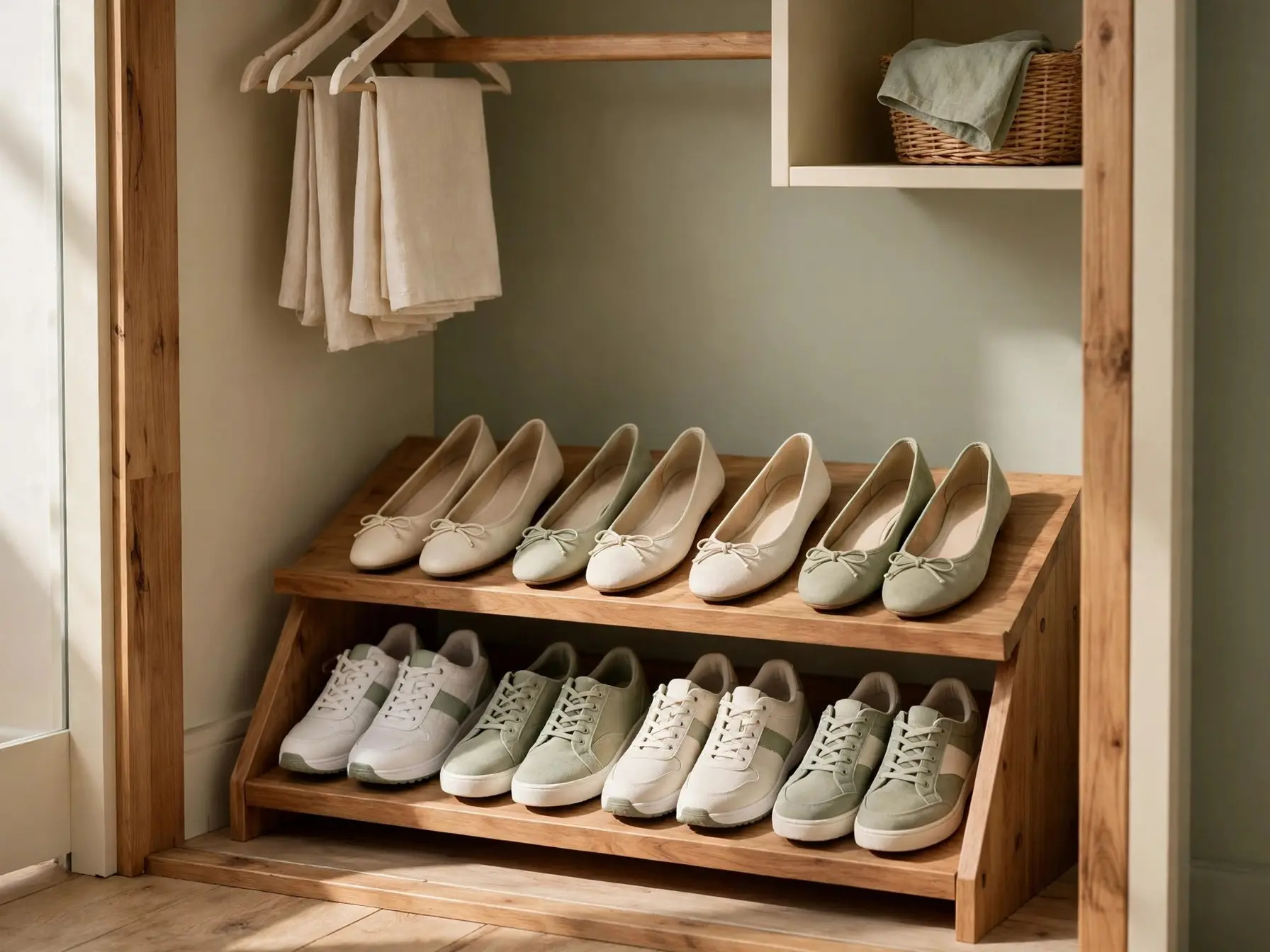
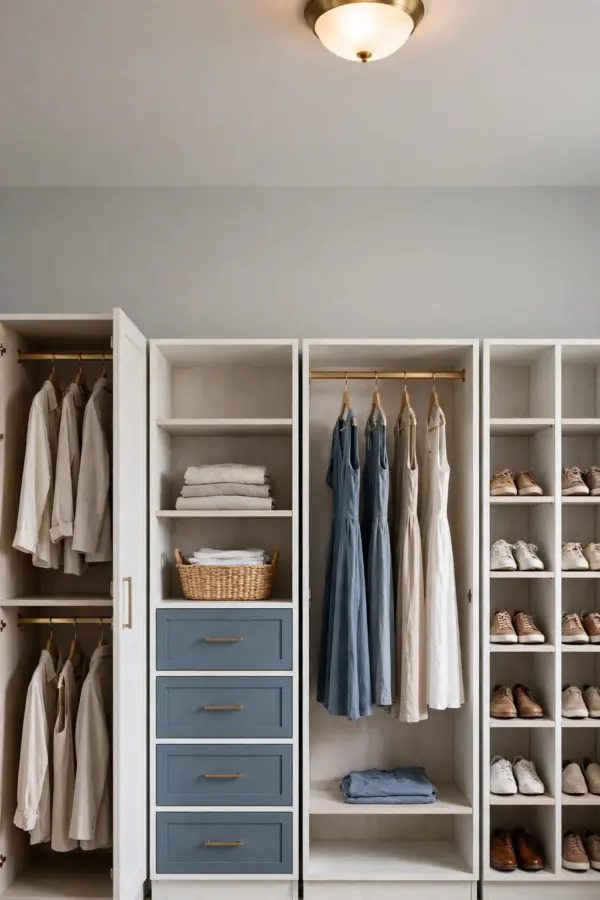
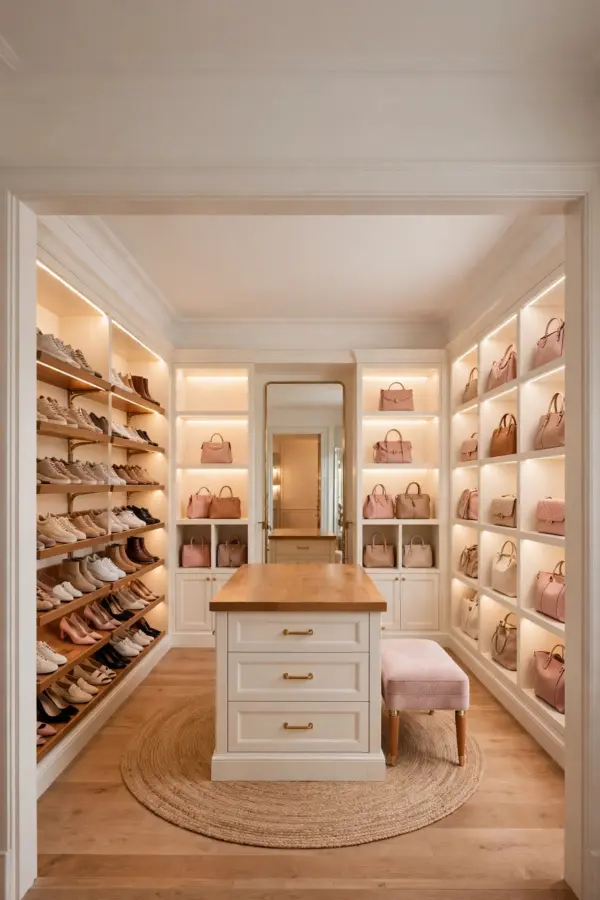
If boxes feel fiddly, a low angled shoe shelf is the simpler answer. A single slanted shelf about 8 to 10 inches above the floor holds one row of shoes tilted so you can see each pair, and a second shelf above it holds the next row. Angled shelves work well for flats, trainers and low heels, while tall boots go on a flat shelf with more clearance. A freestanding two-tier rack needs no fixing at all, which suits rentals, and it keeps shoes off the floor so the closet is easier to clean.
19. Keep accessories in small labeled baskets on a shelf
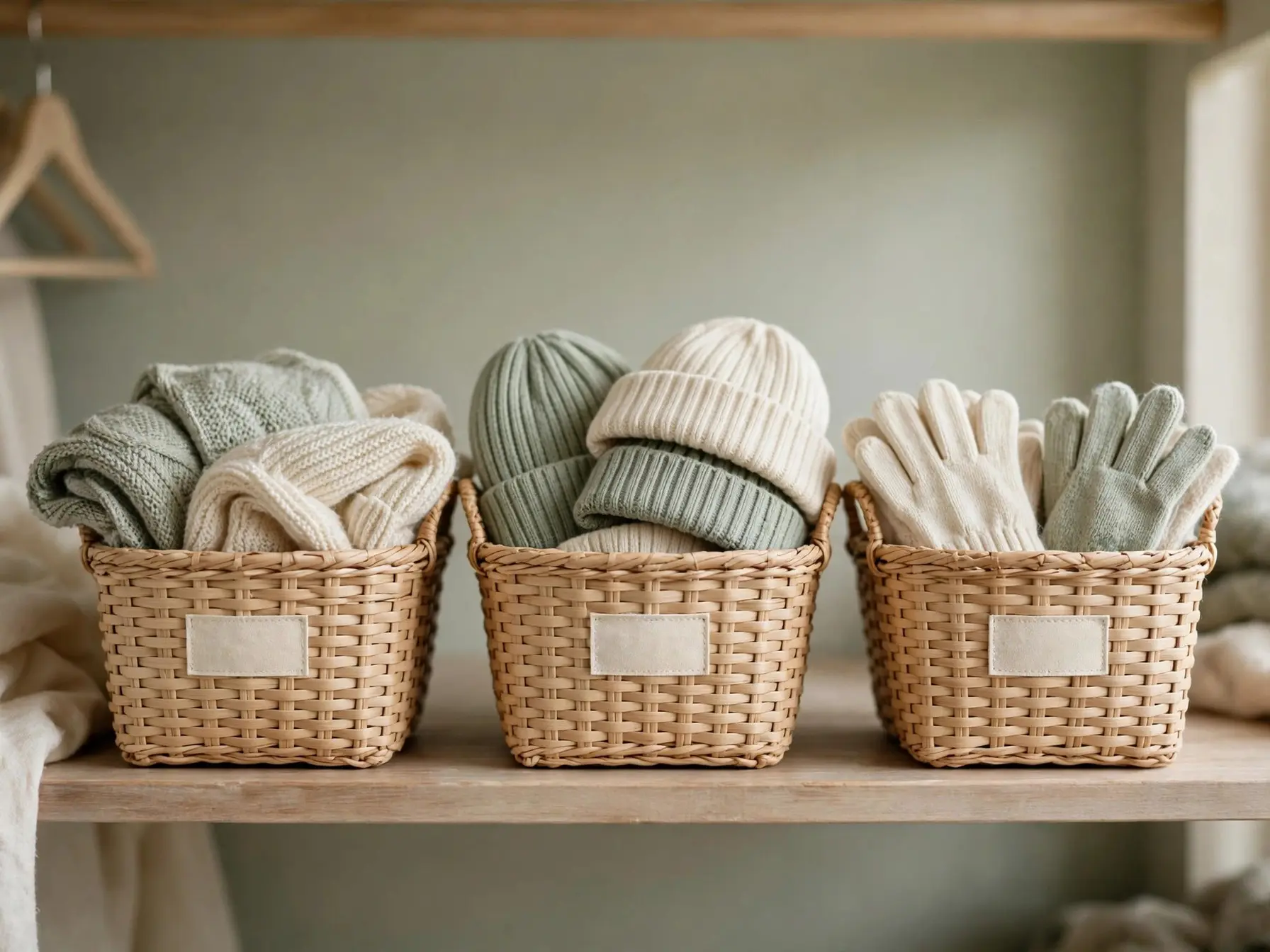
Scarves, hats, gloves and small accessories vanish into a pile if they have no home, and a few small baskets give them one. Place two or three matching baskets on a mid-level shelf, one per category, and label the front of each so the whole household knows where things live. Woven baskets suit a warm closet, while fabric ones keep the look soft and calm. Keep the basket size small enough to lift down with one hand, and the accessories stay sorted instead of drifting onto the floor.
20. Hang a belt and scarf rack on the door or wall
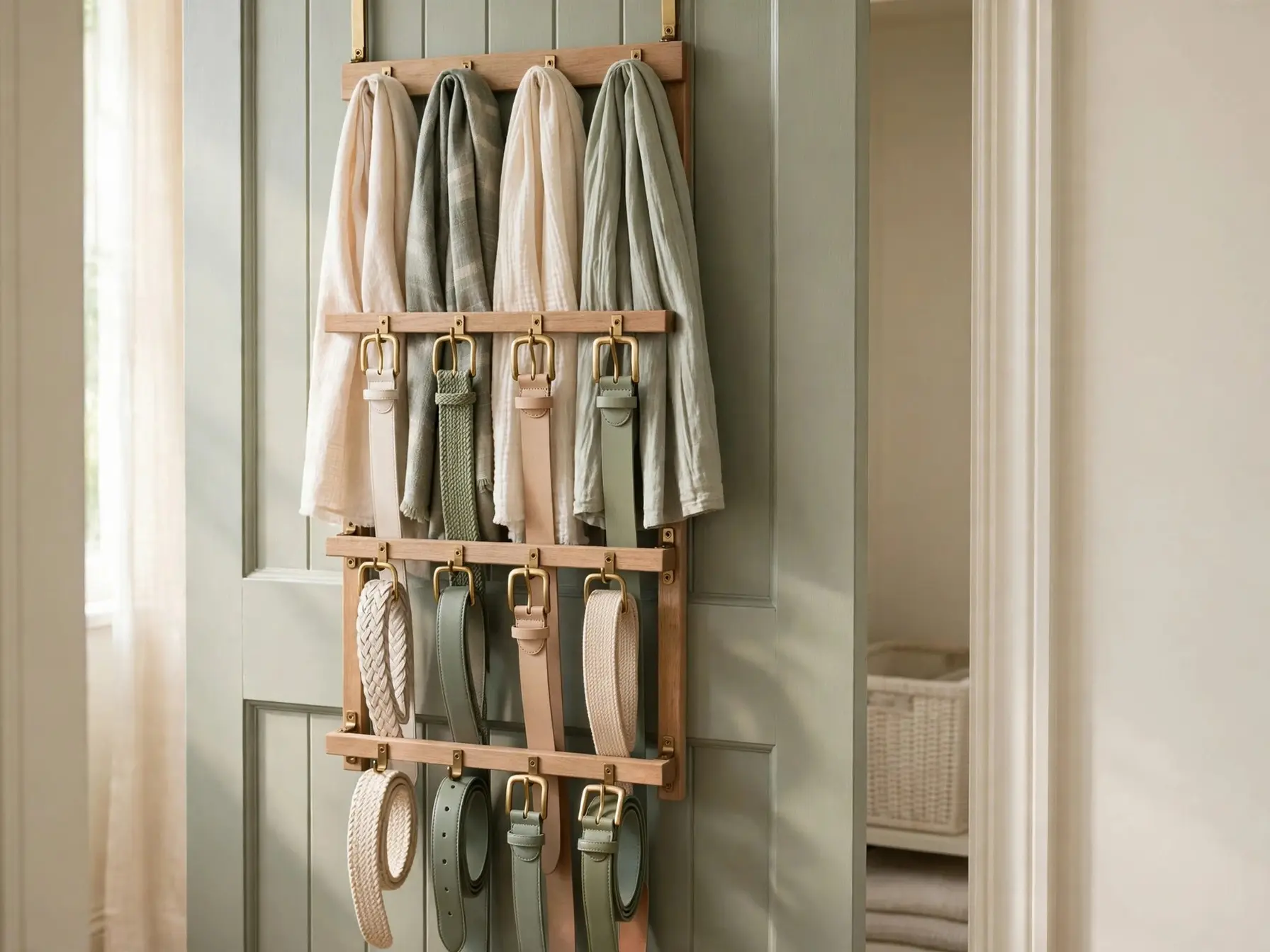
Belts and scarves tangle in a drawer and crease when folded, but they hang neatly on a dedicated rack. A ring-style or tiered rack mounts on the door or a side wall and holds a dozen belts or scarves in the space of one hanger. Hang belts by their buckles and scarves through the rings so each one is visible and easy to grab. It frees a whole drawer for other things, and it turns a fiddly category into the easiest one in the closet to keep tidy.
Fold, stack and finish
21. Use matching bins in one color so the closet looks calm
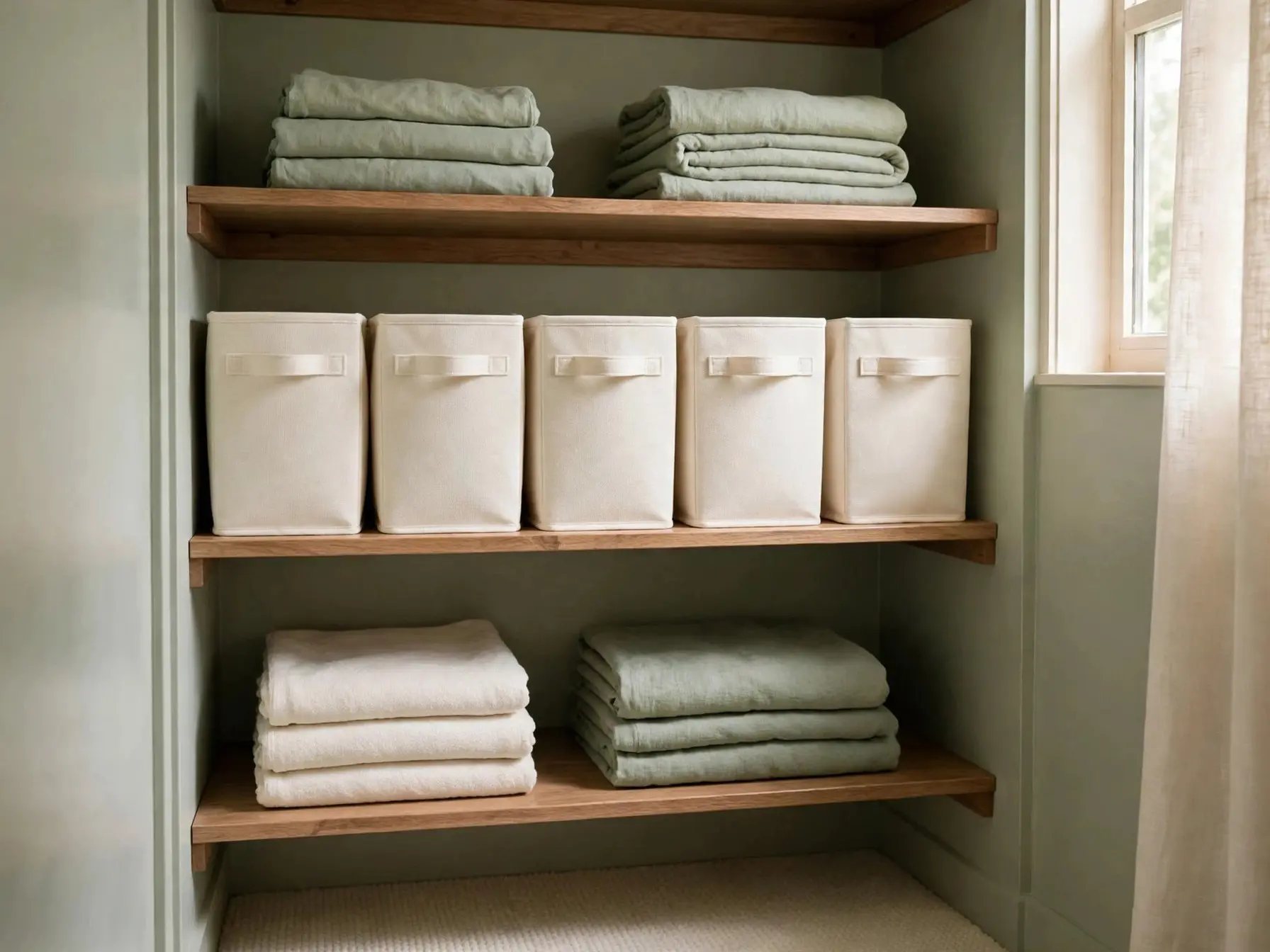
A small closet looks crowded when every bin is a different color and size, even if it is technically organized. Matching bins in one color, cream or sage for a soft look, make the shelves read as one calm system instead of a jumble. Buy them in two or three sizes from the same range so they stack and sit neatly side by side, and keep the fronts aligned. The closet feels bigger when the eye has less to sort out, and matching bins are the cheapest way to get that effect.
22. Label every bin and box on the front
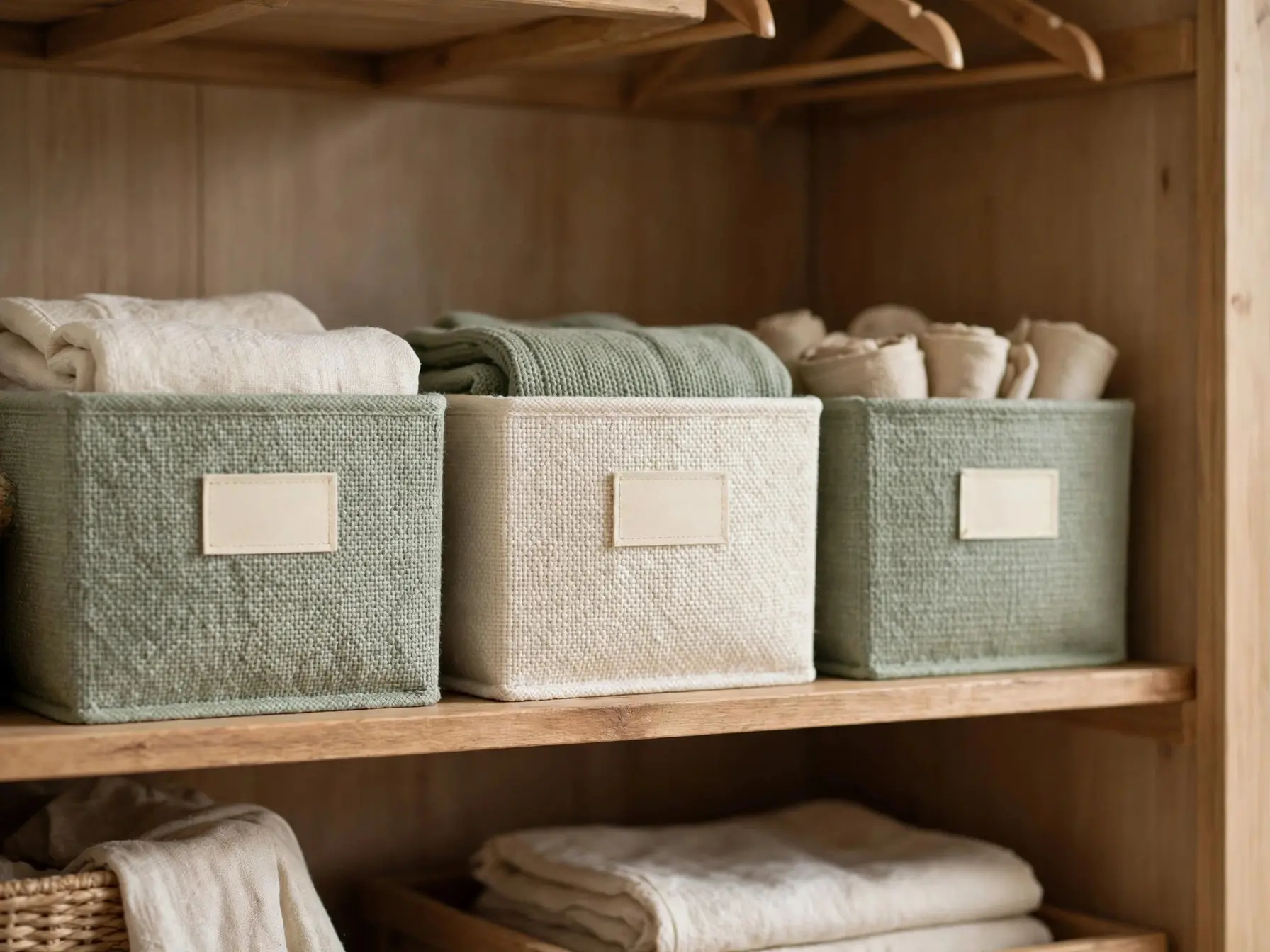
A bin without a label is a box you have to open to check, and that friction is what lets a closet slide back into mess. Label the front of every bin and box with what lives inside: winter scarves, gym clothes, spare bedding. Clip-on labels, chalk labels or simple adhesive labels all work, and they take seconds to add. Put the label at eye level and keep the wording short, one or two words. When everyone in the house can see where things go, they actually go back there.
23. Keep daily clothes at eye level, rarely worn items up high
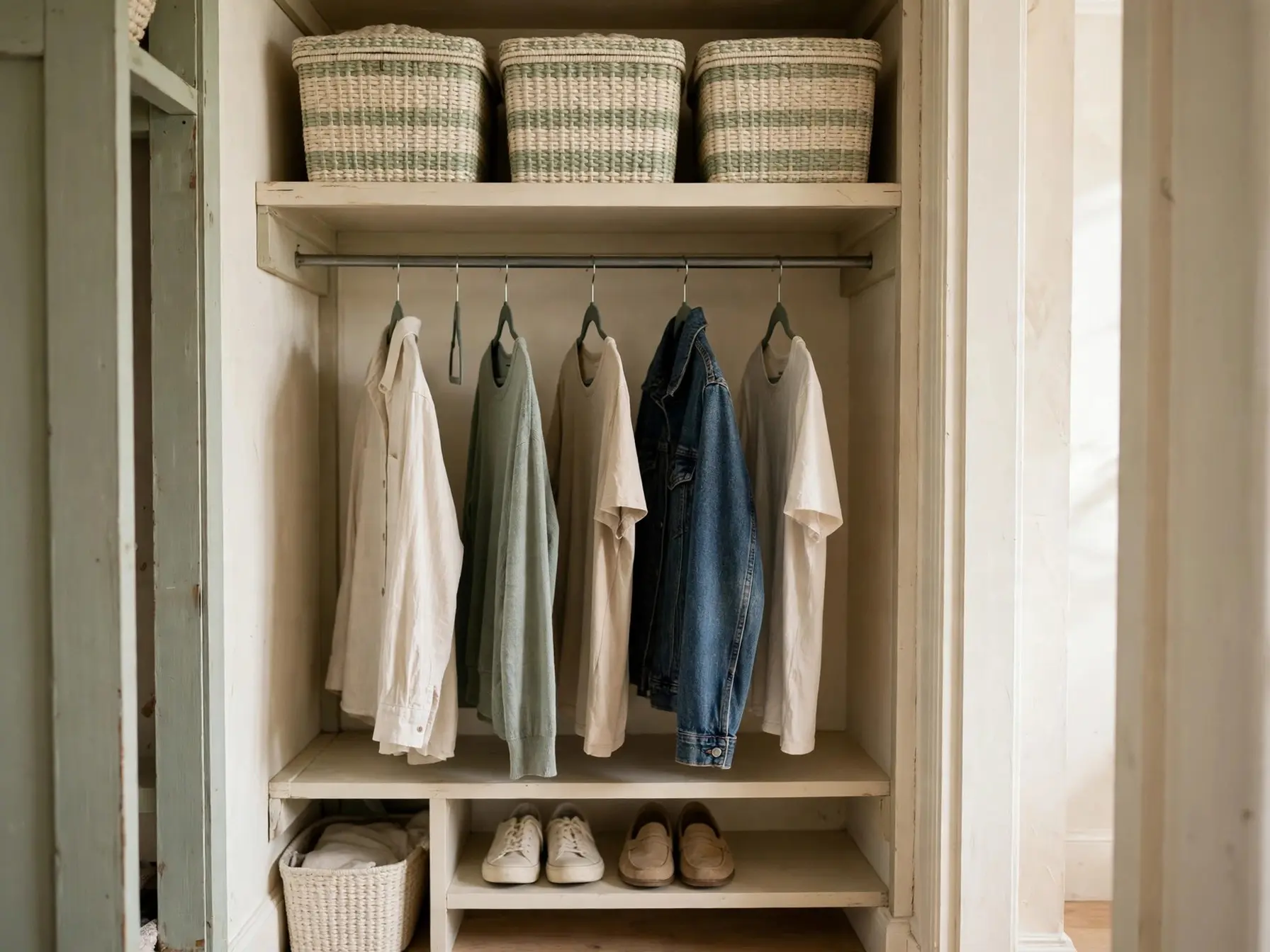
Zone the closet by how often you reach for things, not by type alone. Daily clothes go at eye level and on the easiest rod, weekly items sit just above or below, and rarely worn or off-season pieces go up high or at the back. It sounds obvious, but most closets mix everything together, which means the daily shirt hides behind the occasion dress. When the clothes you wear most are the easiest to grab, getting dressed gets faster and the closet stays tidy because nothing needs digging out.
24. Add battery stick-on lights under the shelves
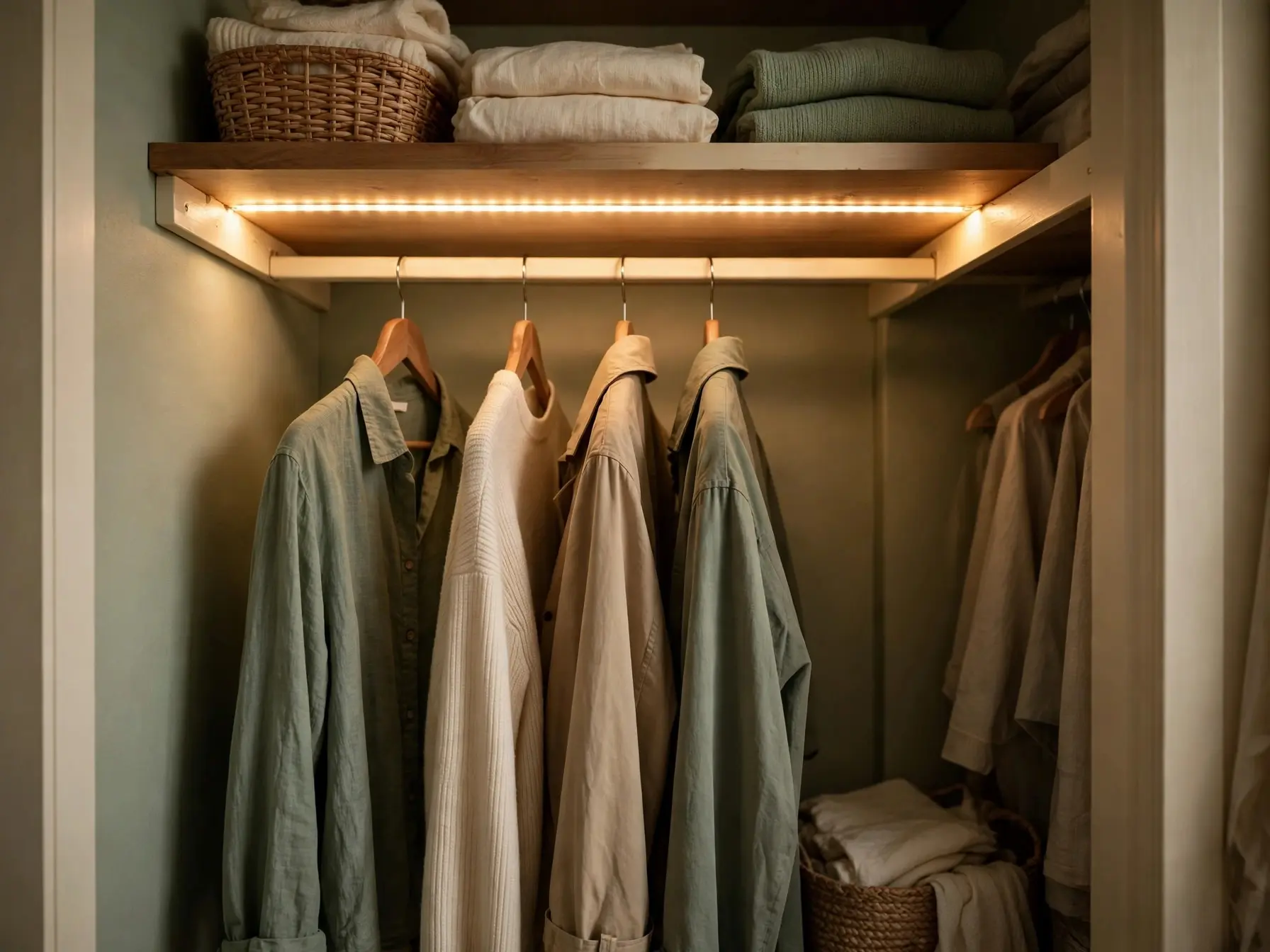
Small closets are often dark, and a dark closet is a closet where things get lost. Battery stick-on LED lights under each shelf light the rod below without any wiring, and motion-sensor versions switch on when the door opens and off when it closes. Place one strip under the top shelf and one under the mid shelf, and the whole closet becomes visible at a glance. The lights cost little, run for months on a set of batteries, and make the closet feel like a proper room instead of a dark cupboard.
25. Do a five-minute weekly reset to keep it working
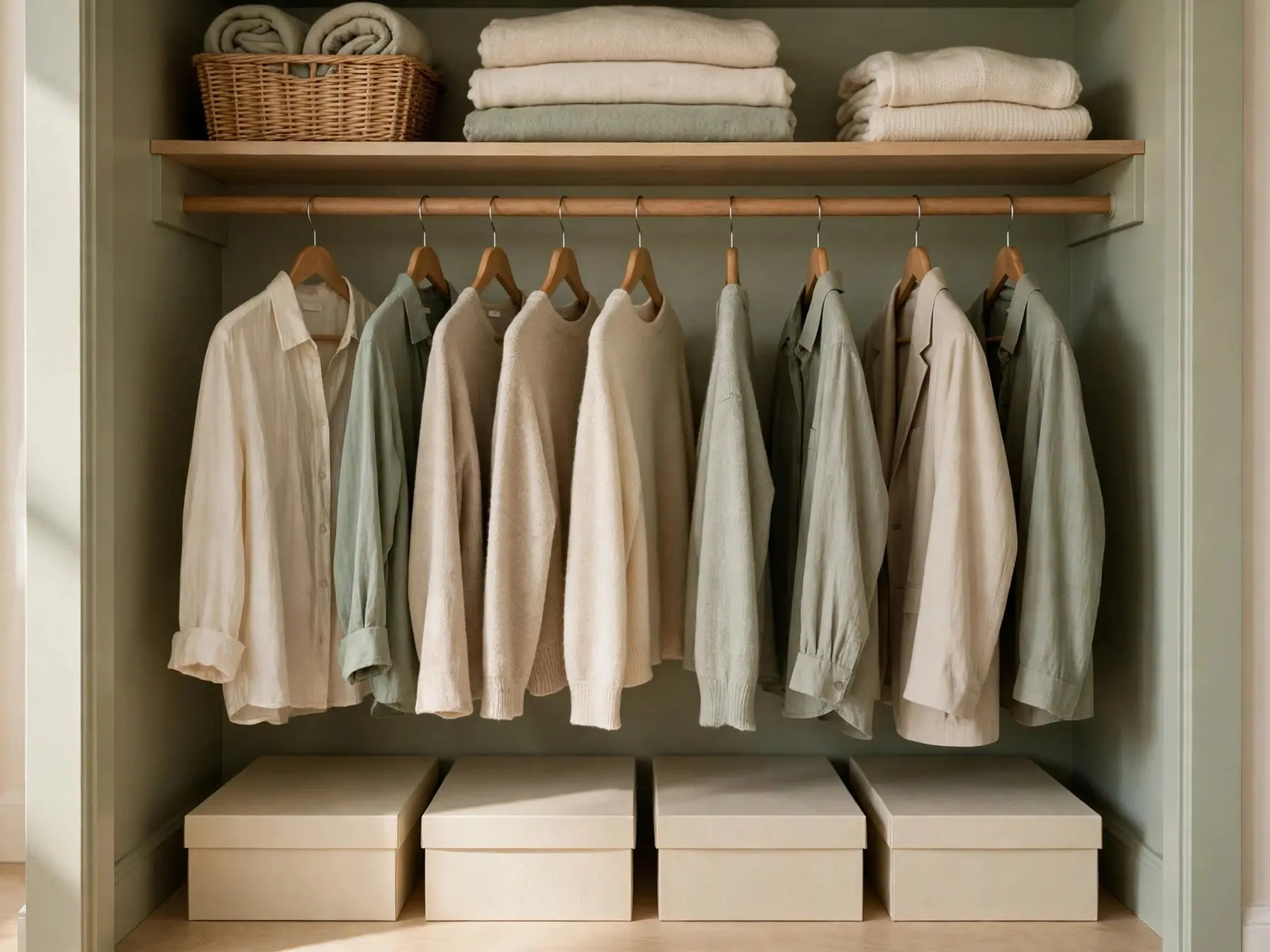
No closet stays tidy on its own, and a five-minute weekly reset is what keeps these 25 ideas working. Once a week, rehang anything that slipped off its hanger, return strays to their labeled bins, straighten the shoe row and check the door pockets. It is a tiny habit, but it stops the slow drift that turns an organized closet into a messy one over a month. Pair it with a quick seasonal edit, and the closet you built this weekend will still be working next year.
Questions, answered
How to improve a small closet?
Start by editing: pull everything out and keep only what fits and gets worn regularly. Then use the full height with a second rod and shelf risers, swap to slim hangers, and add door storage for accessories. Most small closets feel twice as big after an edit and a second rod, with no remodel needed.
What is the best closet system for a small closet?
A simple rod-and-shelf kit with a second rod for short items is the best starting point for most small closets, because it doubles hanging space and often costs under $100. Add matching bins for the top shelf and a pocket organizer on the door. Skip a full built-in system unless you own the home and the closet is at least 5 feet wide.
How to organize your closet cheaply?
Edit first, then spend on the cheapest wins: slim velvet hangers, a second rod for short items, and a few matching bins. Use what you already own for sorting, and buy organizers only after you measure, so nothing comes home the wrong size. A solid small-closet reset often costs less than $75.
How do I maximize space in a small closet?
Use every inch of height: a second rod, a shelf riser, and bins stacked to the ceiling. Put the door to work with a pocket organizer, keep shoes in clear boxes on the floor, and store off-season clothes up high in vacuum bags. Keep daily clothes at eye level so the space you use most stays the easiest to reach.
Keep reading
A small closet is one part of a bedroom that stays tidy. Our guide to closet organization ideas covers the whole system behind these ideas, walk-in closet ideas shows the same thinking on a bigger scale, and best closet drawers stackable sorts the folded clothes that live in drawers instead of on hangers.
Start with the tape measure and the sketch, then pick the three ideas that fit your closet and your budget this weekend. A small closet that works is built one zone at a time — and the first zone you finish is the one you will enjoy every single morning.