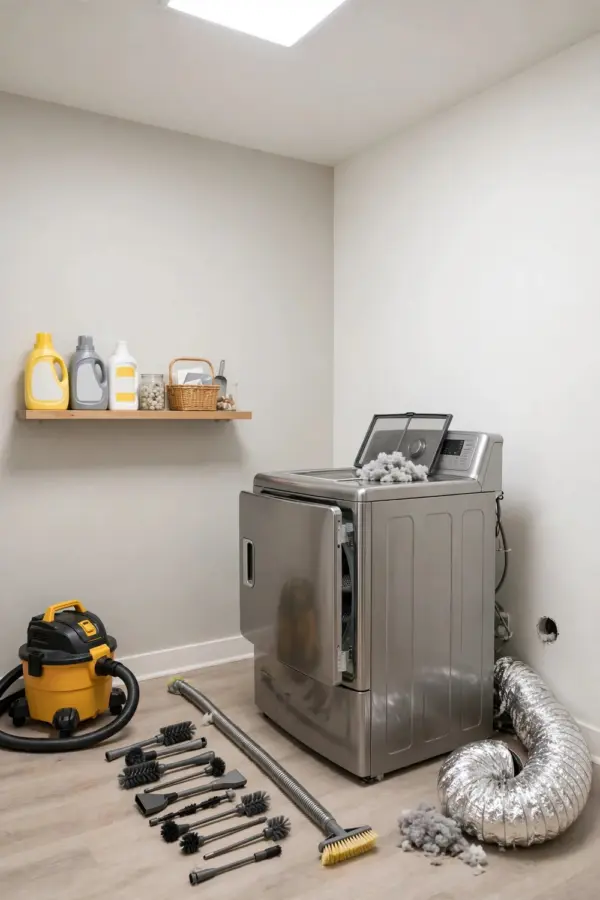
Here is how to clean a washer in 2026: empty the drum, scrub the dispenser, wipe the seals, run a hot cleaning cycle, rinse the filter and dry everything out. The same six steps work for front-load and top-load machines, the deep clean takes about an hour, and a ten-minute version once a month keeps the musty smell from coming back.
Thank you for reading this post, don’t forget to subscribe!Your washer works hard, but nothing washes the washer — and that is exactly where the question of how to clean washer machines starts. A musty smell on “clean” towels, dark clothes coming out with gray lint, or black gunk around the dispenser drawer all point to the same thing: detergent residue, mildew and hard-water buildup living inside your machine — and the fix is the same six steps in the box below.
Here is how to clean a washer the right way, whether it loads from the top or the front. These six steps cover the drum, the dispenser, the seals, a hot cleaning cycle, the filter and the finishing touches. If your laundry corner needs wider help, start with the room-by-room decluttering guide first — then come back here.
How to clean a washer in 6 steps
- Empty the drum and clear out trapped items
- Pull the dispenser drawer and give it a scrub
- Wipe the seal, lid rim and door glass
- Run a hot cleaning cycle on an empty washer
- Find and rinse the drain-pump filter
- Dry everything and leave the door cracked
What you’ll need
- White distilled vinegar (about 2 cups for the cleaning cycle)
- A washer cleaning tablet, or liquid chlorine bleach if your manual allows it
- An old toothbrush or small scrub brush for the dispenser
- Two clean microfiber cloths — one damp, one dry
- A shallow dish or folded towel to catch drips from the filter
- Your phone timer, for the monthly ten-minute routine below
1. Empty the drum and clear out trapped items
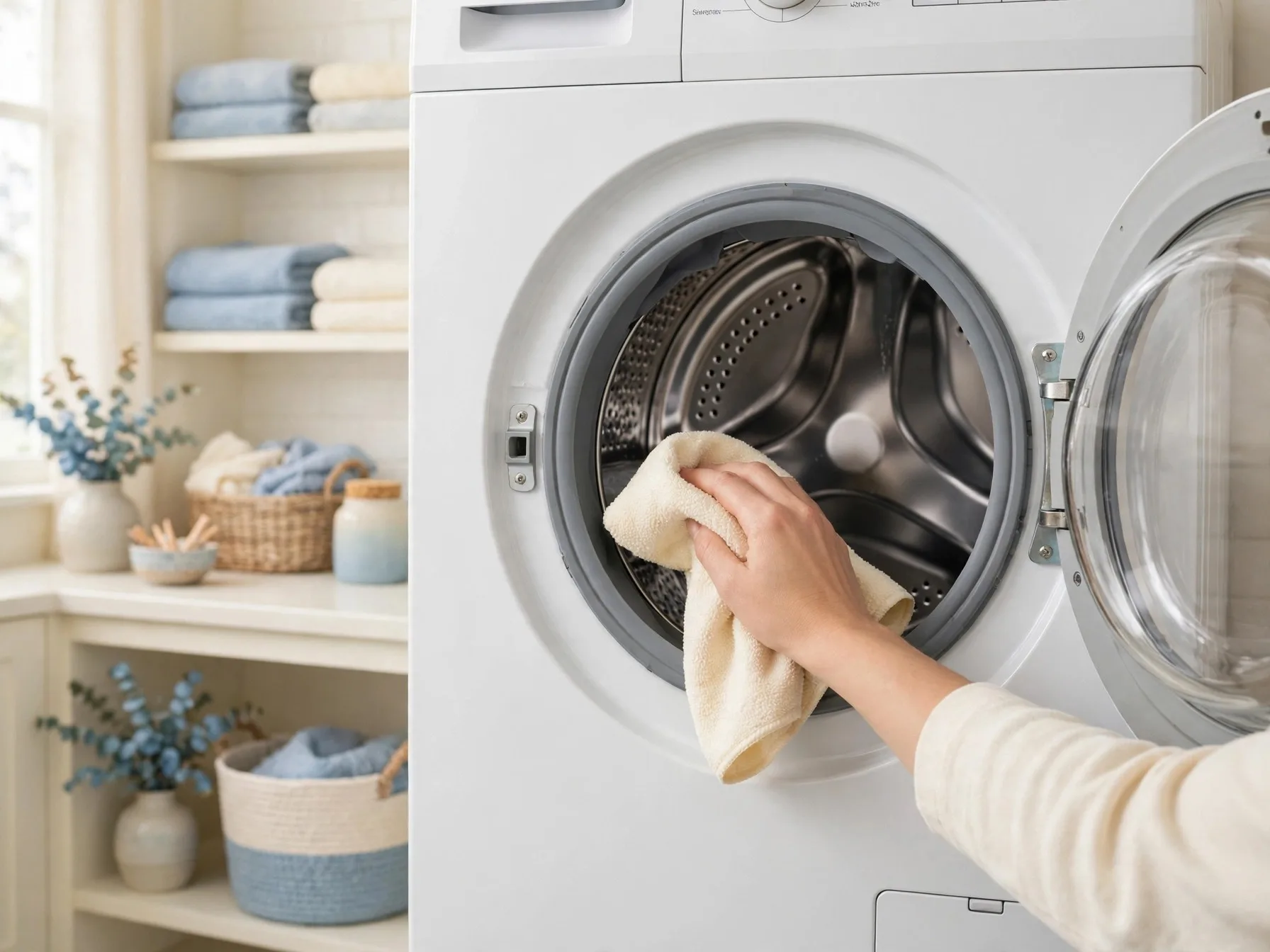
Before you clean anything, run the washer completely empty of laundry. Pull out the detergent pod drawer if your model has one, check every pocket and shake out the drum — leftover tissues, loose change and hair ties are the usual suspects, and they clog the filter later.
Now check the hiding spots. On a front-loader, gently peel back the rubber gasket around the door: you will almost always find a trapped sock, a hair tie or gray slime in the lower fold. Wipe what you find with a damp cloth. On a top-loader, lift the lid and look around the agitator base and under the rim — this is where fabric softener drips harden into a sticky ring.
Tip: keep a small bin on the dryer top for the bits you fish out. Coins, buttons and pins go straight in; everything else goes in the trash.
2. Pull the dispenser drawer and give it a scrub
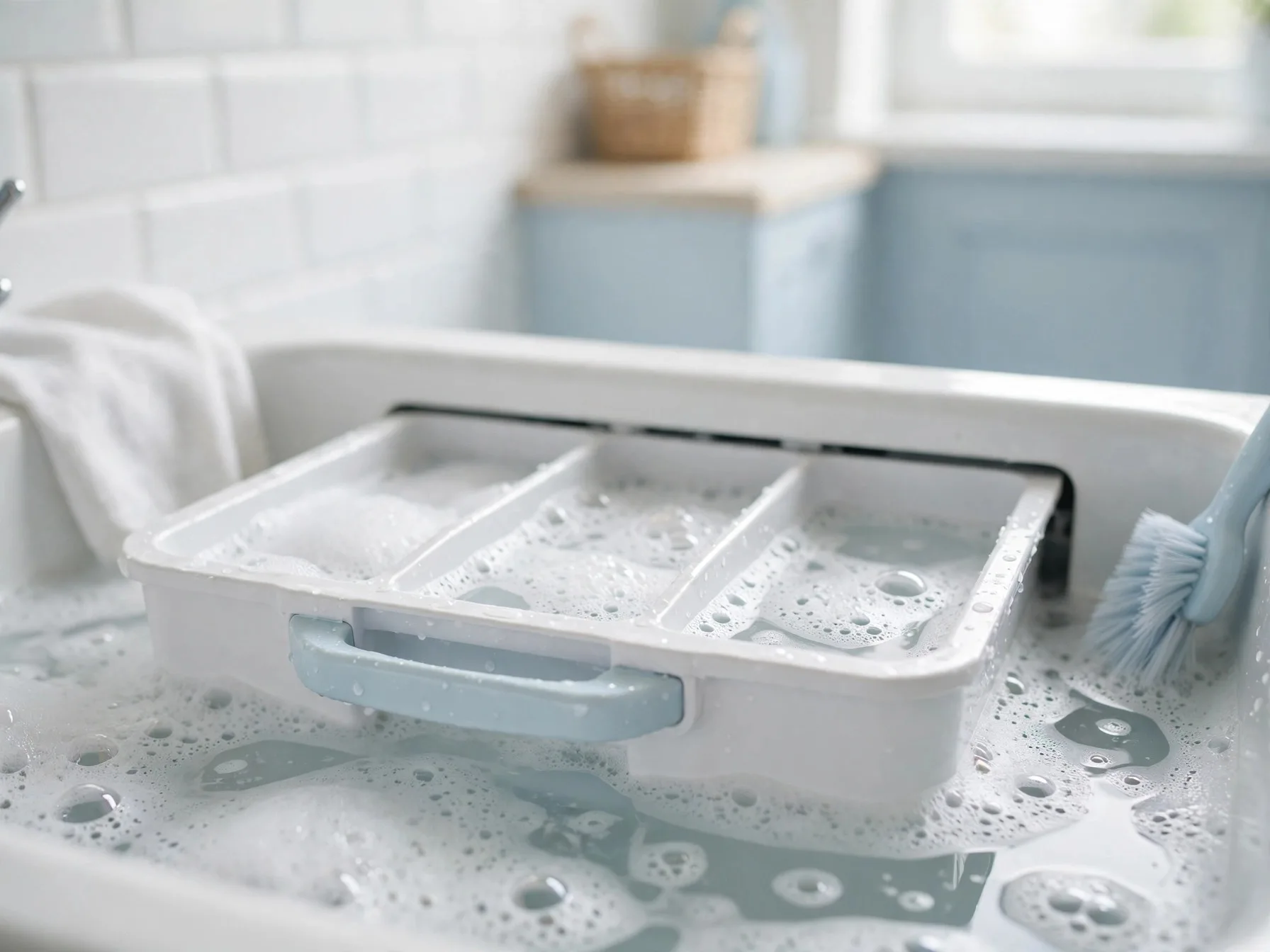
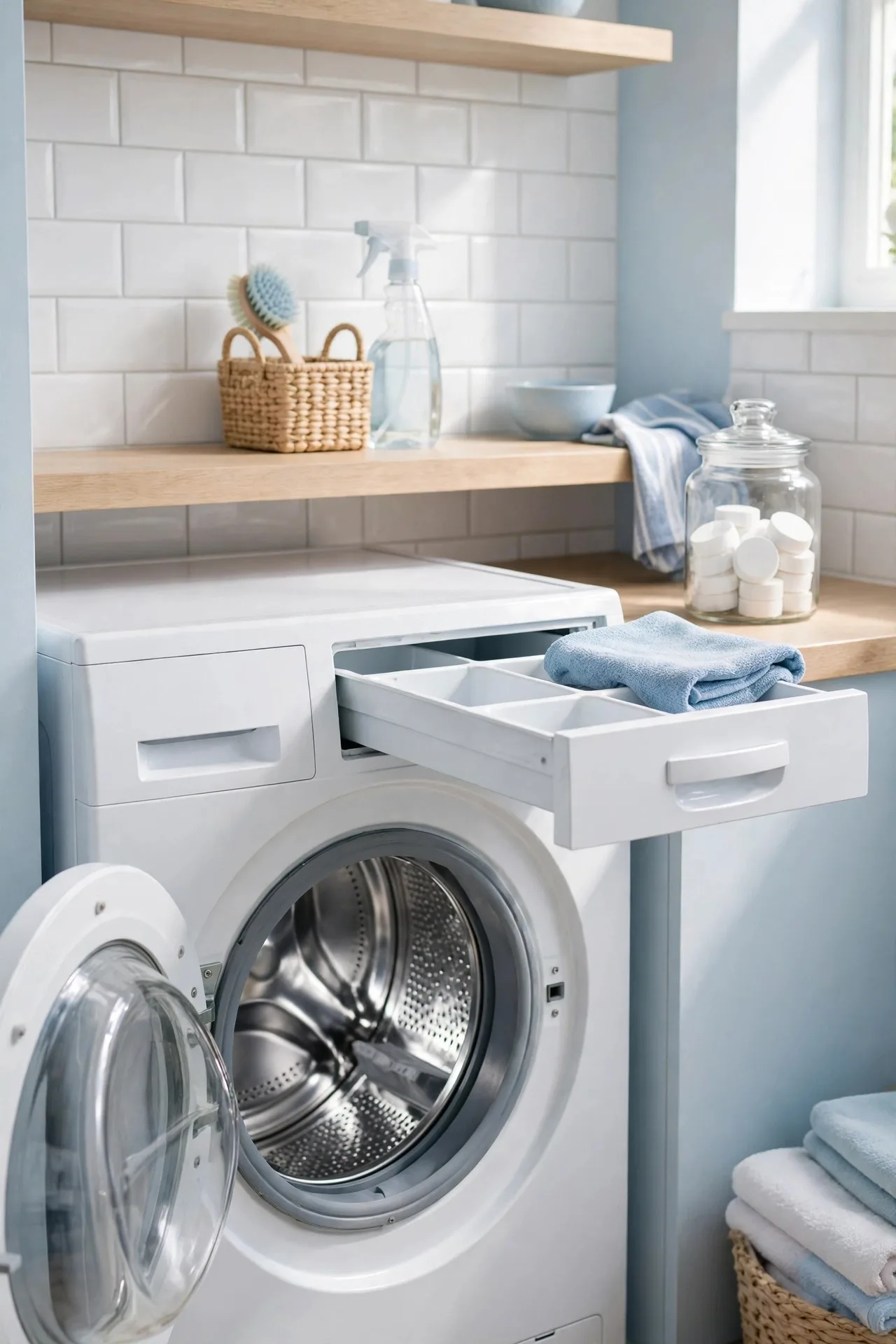
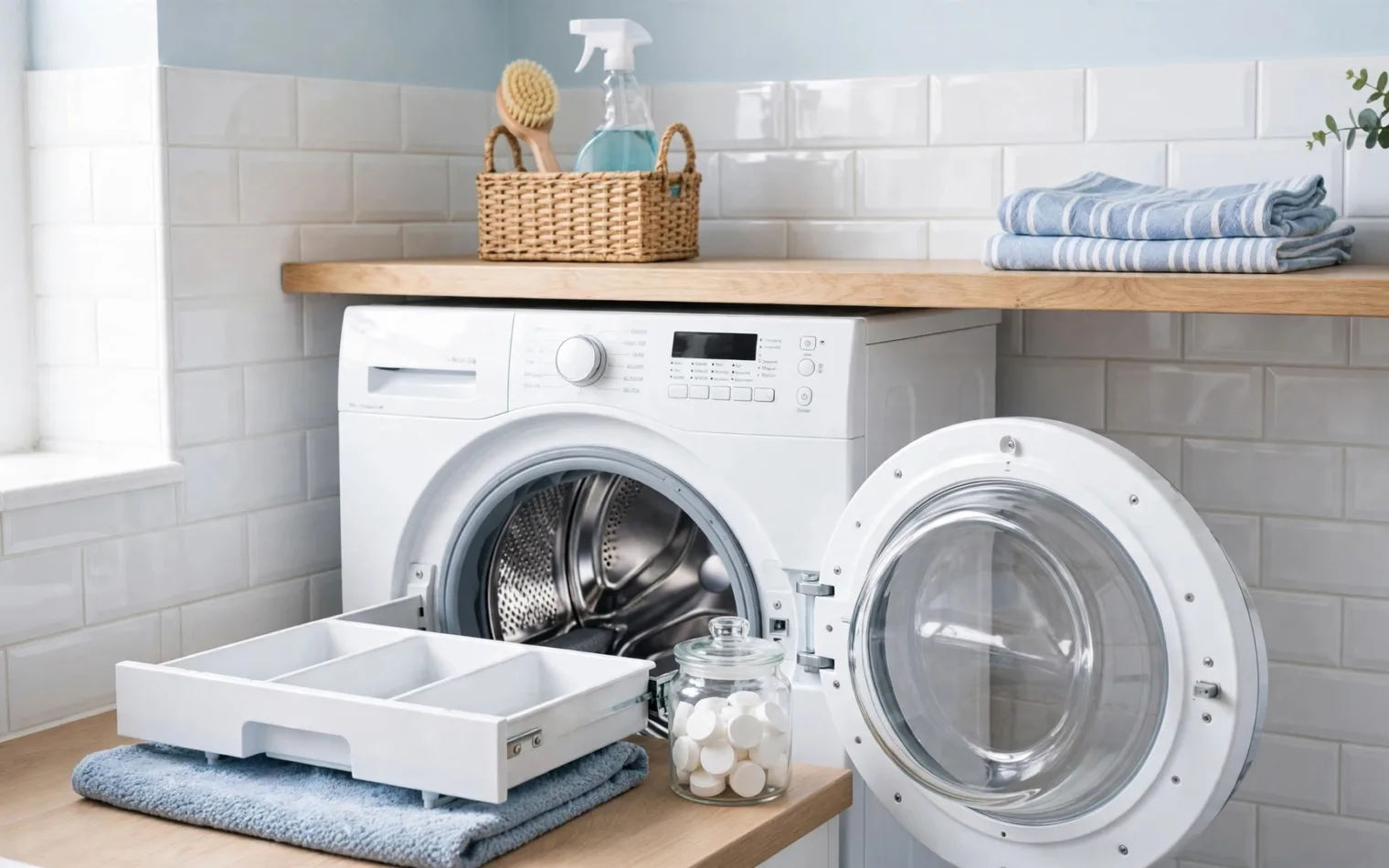
The dispenser drawer is the number-one source of the mildew smell people blame on the drum. On most front-loaders and many top-loaders, the whole drawer slides out: press the release tab inside (usually a small blue or gray button) and lift it free. If yours will not budge, it cleans in place just as well.
Soak the drawer in your sink in hot water with a squirt of dish soap for ten minutes. Then attack the compartments with the toothbrush — old detergent leaves a crusty film that feeds odor, and the bleach or softener channel clogs first. Rinse it clean and dry it fully before it goes back.
While the drawer is out, shine a light into the empty drawer cavity and wipe it with a damp microfiber cloth. That hidden tunnel gets just as grimy. Tip: dry the drawer with your second cloth so no water stands in it — standing water is what mildew needs to restart.
3. Wipe the seal, lid rim and door glass
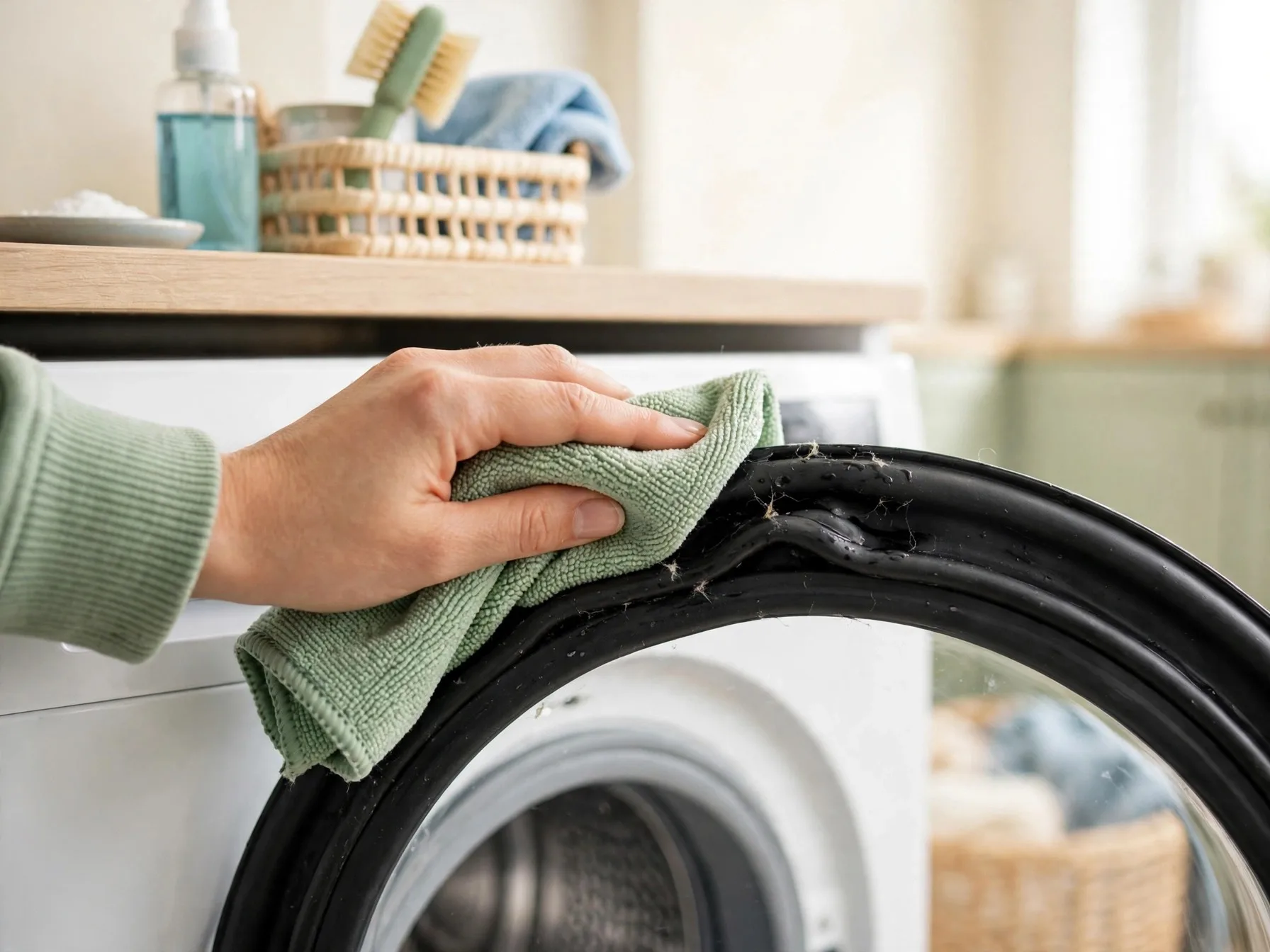
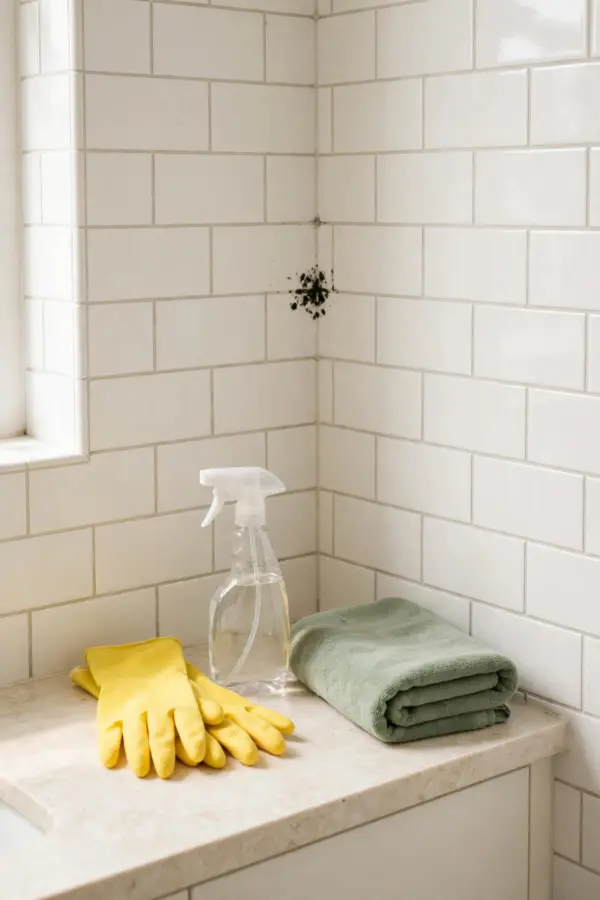
This is the step that finally kills the smell. On a front-loader, fold the rubber gasket back with one hand and wipe the full ring with a damp microfiber cloth, getting into the pleats where water sits after every wash. Gray or black residue there is mildew — keep wiping until the cloth comes away clean, then dry the gasket with your second cloth.
On a top-loader, there is no gasket to fold, but the same grime collects under the lid edge and around the tub rim. Wipe the underside of the lid, the rim of the tub and the bleach-dispenser cup if your machine has one.
Then wipe the door or lid glass and the control panel with a dry cloth — detergent mist settles there over time. Tip: keep a small cleaning caddy with your washer supplies so this quick wipe stays easy. For storage ideas that keep the corner tidy, browse these laundry room organization ideas.
4. Run a hot cleaning cycle on an empty washer
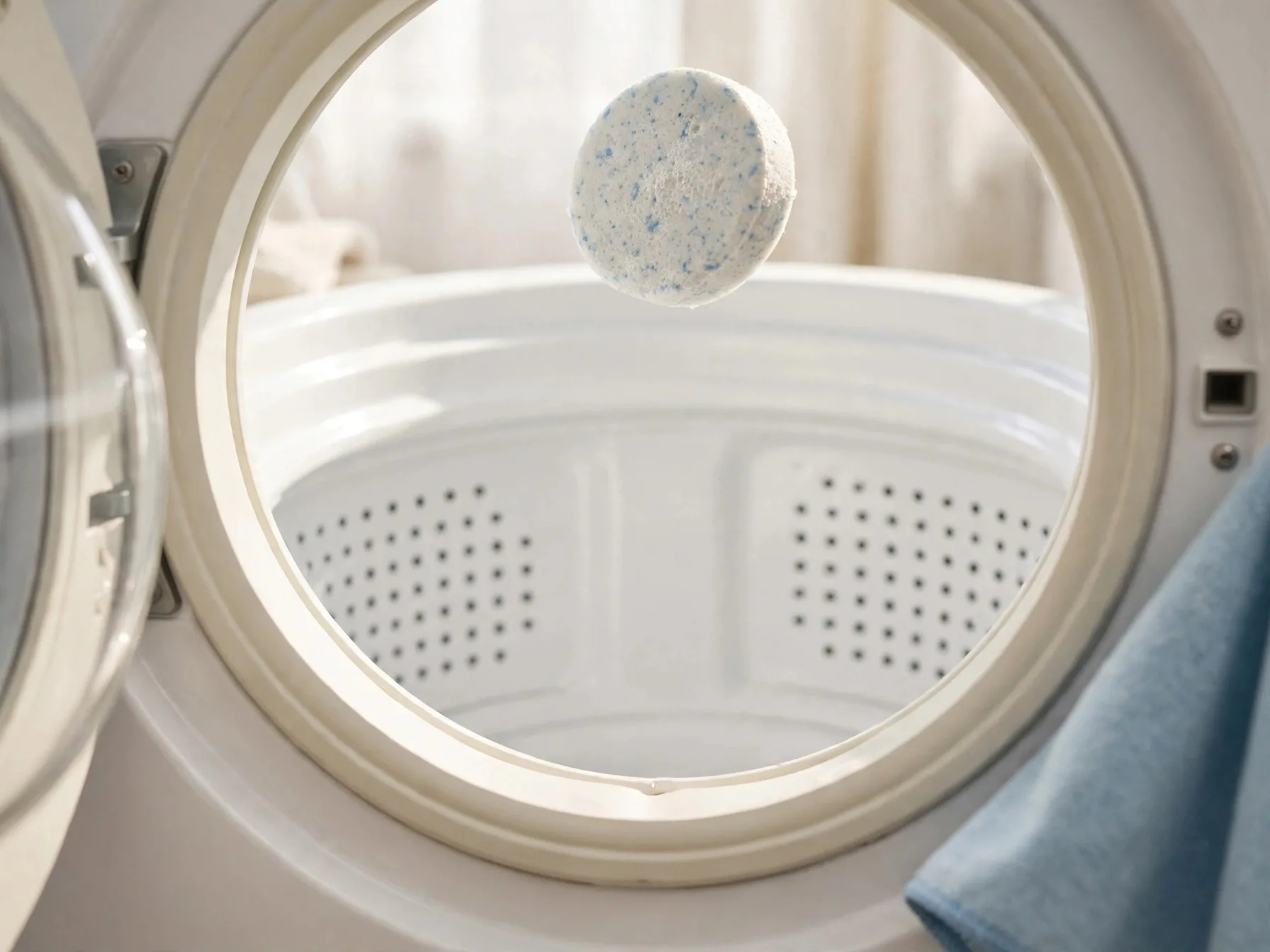
With the drum empty and the drawer back in, drop one washer cleaning tablet directly into the drum — not the dispenser, so it dissolves through the whole tub. If you prefer no special product, pour 2 cups of white distilled vinegar straight into the drum instead. Either way, skip the laundry.
Select the hottest, longest cycle your machine offers: “sanitize” or “tub clean” if you have it, otherwise heavy-duty hot with an extra rinse. Top-loaders with a soak option benefit from a 30-minute pause mid-cycle so the solution sits on the buildup.
When it finishes, leave the washer closed for five minutes, then open it and smell the drum. If a musty trace remains, repeat the cycle once — one rewash fixes the stubborn cases. Tip: run this cycle the same weekend each month and the buildup never gets a second chance.
5. Find and rinse the drain-pump filter
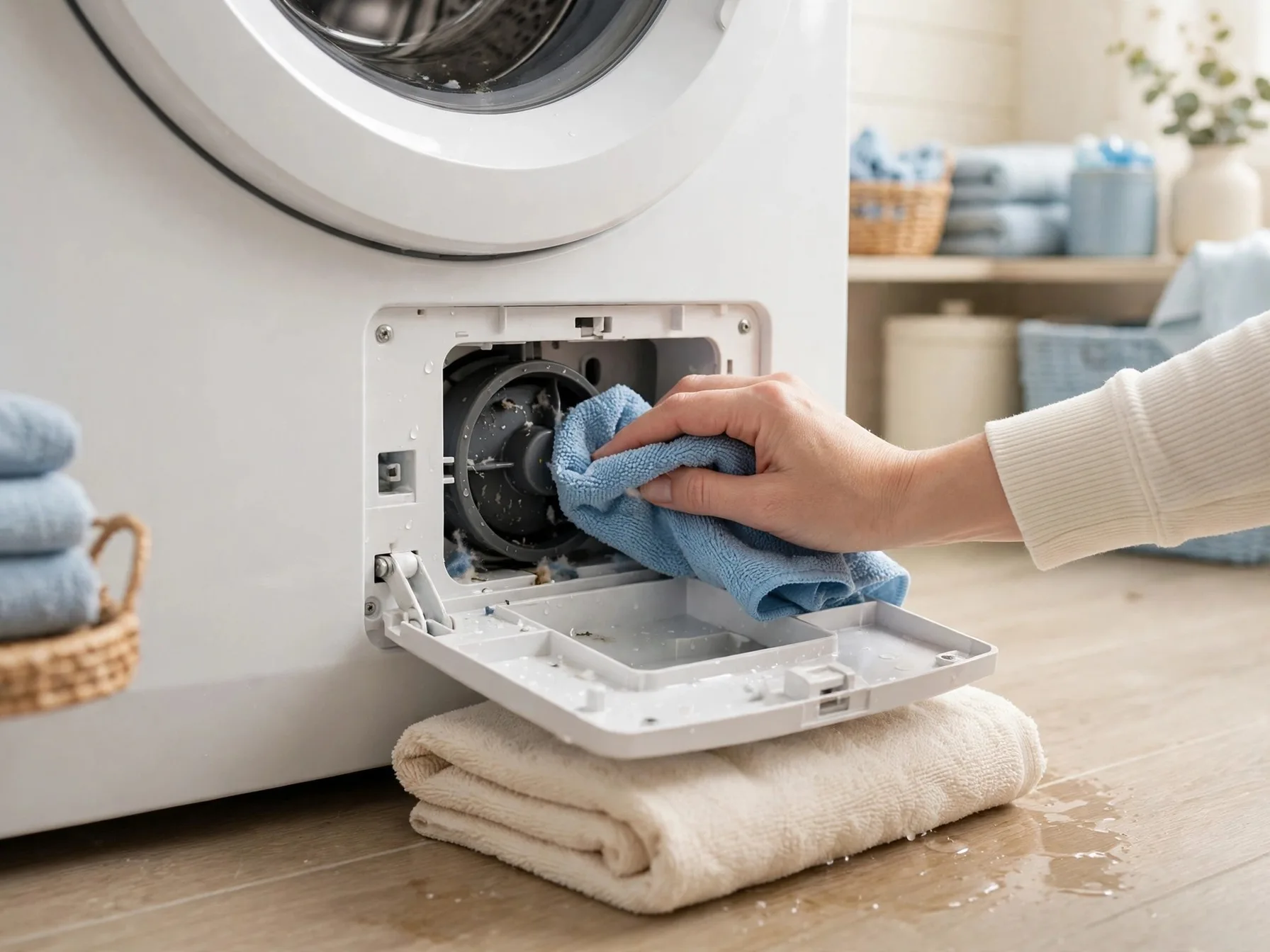
The filter catches the junk the cycle loosens, and it needs its own cleaning. On most front-loaders, a small square access door sits low on the front panel. Open it, set your shallow dish or folded towel underneath, and twist the round cap counterclockwise — expect up to a cup of trapped water to drain out.
Pull the filter free and rinse it under warm water, picking off lint, hair and anything else wound around it. Coins and hair ties end up here too, which is why skipping the filter can bring the smell back.
Top-loaders rarely have a drain-pump filter. Instead, pull out the lint filter or the softener cup on top of the agitator and rinse that, and check the bleach-dispenser area for hardened residue. Tip: wipe the empty filter housing with a damp cloth before the filter goes back, so nothing moldy stays behind.
6. Dry everything and leave the door cracked
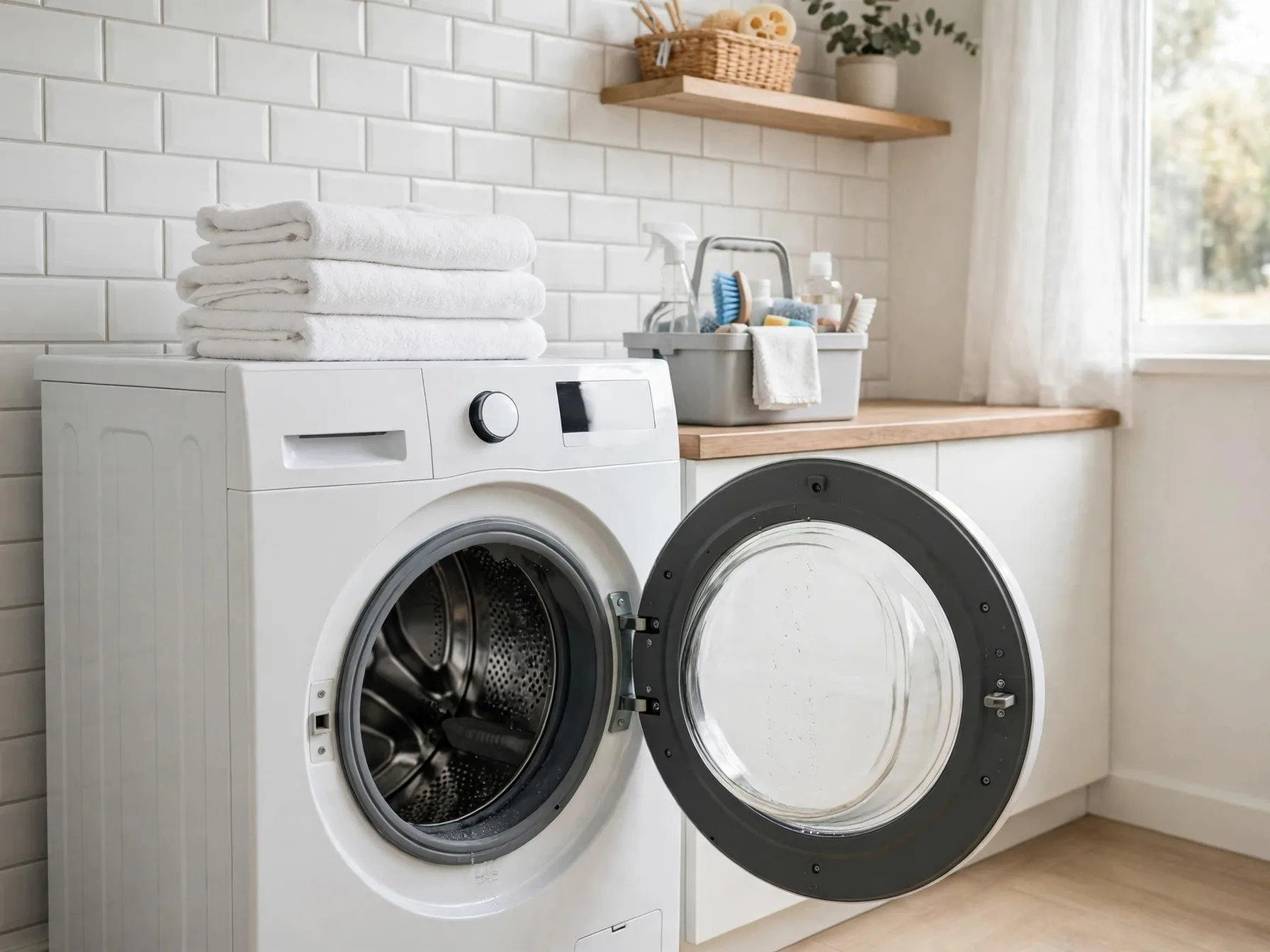
A clean washer stays clean by drying out between loads. After the final wipe, run your hand over the drum, gasket and dispenser — everything should feel dry to the touch, not damp. Use your dry microfiber cloth on any spots the cleaning cycle left wet.
Then leave the machine open. Front-loaders: leave the door ajar by a few inches so air circulates through the drum and gasket. Top-loaders: prop the lid open the same way. Thirty minutes of airflow after every wash does more against mildew than any product.
Slide the dispenser drawer back in but leave it cracked half an inch too — its little chamber dries the same way. Tip: set a monthly phone reminder titled “washer clean” so the ten-minute routine below happens before the smell returns, not after.
Monthly washer routine: 10 minutes
One deep clean fixes a smelly machine; this ten-minute monthly routine keeps it from coming back. Work through the list below once a month — same weekend, every month.
- Empty the washer and drop a cleaning tablet or 2 cups of white vinegar into the drum.
- Run the hottest, longest cycle the machine offers.
- While it runs, wipe the seal or lid rim and the drawer cavity with a damp cloth.
- After the cycle, rinse the drain-pump filter (front-load) or the agitator lint cup (top-load).
- Dry the drum, leave the door or lid open for 30 minutes, and crack the drawer half an inch.
- Reset your phone reminder for next month.
Questions, answered
How often should you clean your washing machine?
Run the monthly routine above every month — a hot cleaning cycle, a seal wipe and a filter check. If you wash daily, have hard water or mostly use cold cycles, do it every three weeks, because residue builds faster. A full deep clean of the drawer, seals and filter every three months keeps the deeper gunk from setting in.
Why does my washing machine smell even after cleaning?
The smell usually hides where the cycle cannot reach: the rubber gasket folds, the dispenser drawer cavity or a lint-clogged filter. Re-clean those three spots by hand with a damp cloth, then repeat the hot cycle. If the odor still comes back, the drain hose or standpipe may be the culprit — check that the hose is not sitting deep in the drain, which can push sewer air back into the machine.
Can I use bleach to clean my washer?
Yes. Add half a cup of liquid chlorine bleach to the dispenser and run the hottest cycle on an empty machine. It disinfects the drum and kills mildew effectively. Just never mix bleach with vinegar or other cleaners, and skip it if your manual warns against bleach for your model.
Should you leave the washer door open after a cycle?
Yes — leave the door (or lid) open a few inches after every wash so the drum and gasket dry completely. Constant moisture is what lets mildew grow between cleanings. In tight spaces where an open door blocks a walkway, leave it open for at least 30 minutes, then close it.
Keep reading
A fresh washer works best in a tidy laundry corner — see these laundry room organization ideas for storage that keeps cleaning supplies within reach. If the whole house needs the same treatment, the room-by-room decluttering guide walks you through it. And to keep the routine going, put this washer list on your cleaning schedule for your home.
That is the whole method: empty, scrub, wipe, cycle, filter, dry — six steps, one afternoon, and a machine that smells like nothing at all. Your clothes will notice the difference before you do.