How to clean out dryer vent ducts in 30 minutes? Unplug the dryer, pull it out from the wall, clean the lint trap and its slot, disconnect the duct and run a vent brush kit through it from both ends, clear the outside hood, then reconnect everything and run a short test cycle. Lint buildup slows drying and is a real fire risk, so this 30-minute job, done once a year, is one of the most important home maintenance tasks there is.
Thank you for reading this post, don’t forget to subscribe!Part of our guide: How to Declutter Your Home: A Simple Room-by-Room Plan
A dryer vent is easy to forget because it hides behind the machine, but the signs show up in your laundry first: loads that need two cycles, clothes that come out hotter than usual, a laundry room that feels humid. This guide walks the whole job in order – inside the dryer, through the duct and out at the exterior hood – with the safety rules that matter and the yearly reminder that keeps it done.
Signs your dryer vent is clogged
Six warning signs that the vent needs cleaning now, not next year:
- Clothes take two cycles to dry, or a normal load still feels damp.
- The dryer feels hotter than usual on the outside, or shuts off mid-cycle.
- A burning smell when the dryer runs, even with a clean lint trap.
- The laundry room feels humid, or the walls feel damp after a load.
- Lint builds up around the outside vent hood, or the flap barely opens.
- Drying times have crept up slowly over months, not all at once.
The 30-minute clean at a glance
The whole job, in the order that matters. Each step below has the full detail and a photo – and the signs list above tells you when to do it this week.
- Unplug the dryer and pull it out from the wall.
- Clean the lint trap and the slot it sits in.
- Disconnect the duct from the dryer and the wall.
- Run the vent brush through the duct from inside.
- Clear the exterior vent hood.
- Reconnect, test the dryer and set a yearly reminder.
What you’ll need
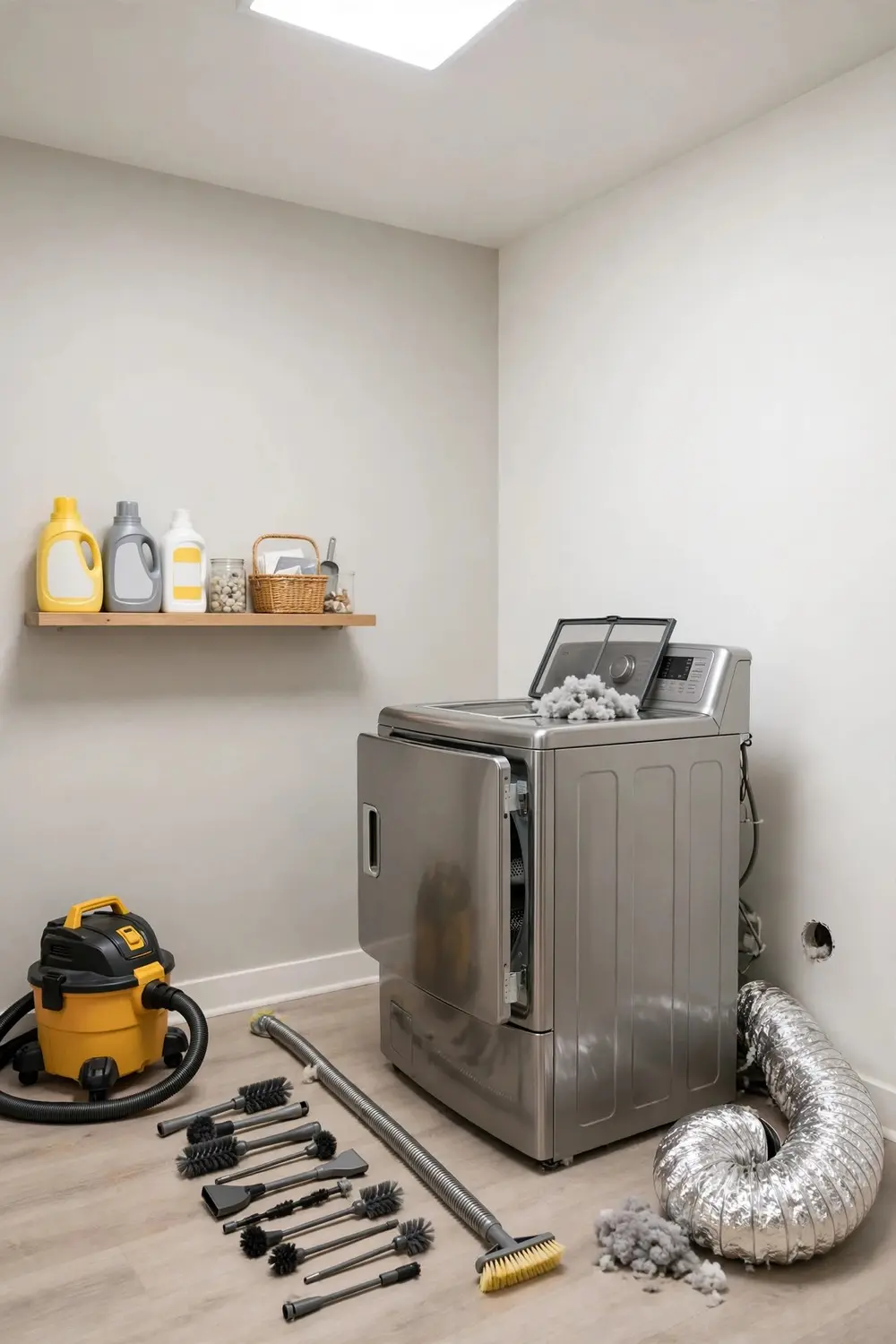
One brush kit and a few things from the cleaning cupboard. Gather everything before you pull the dryer out, and remember the one rule that matters most: never work on the vent with the dryer plugged in.
- A dryer vent brush kit with flexible rods
- A screwdriver or nut driver for the duct clamps
- A vacuum with a hose attachment
- A narrow lint trap brush, gloves and a flashlight
- A labeled bin on a shelf to store the kit
The 6 steps, in order
1. Unplug the dryer and pull it out from the wall
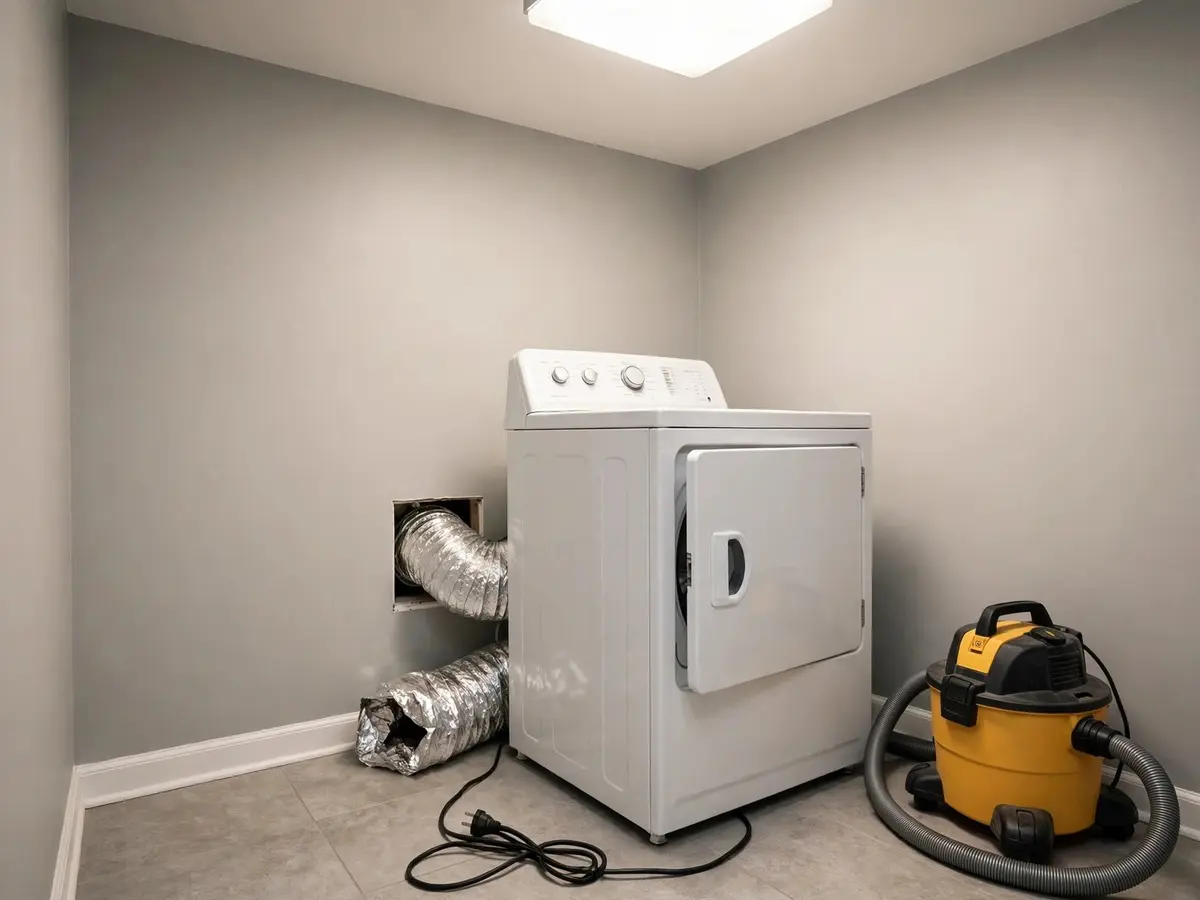
Start with safety: unplug the dryer from the wall outlet, and turn off the gas supply if yours is a gas dryer. Pull the machine straight out a few feet so you can reach the duct behind it – ask someone to help if the dryer is heavy, and protect the floor with a towel or a piece of cardboard if you need to slide it. Check the power cord and the gas line for wear while you are back there. Never work on the vent with the dryer plugged in, and never run the dryer while the duct is disconnected. Keep children and pets out of the room while the machine is out.
- Dryer unplugged from the wall outlet
- Gas supply off, if yours is a gas dryer
- Floor protected before sliding the dryer out
2. Clean the lint trap and the slot it sits in
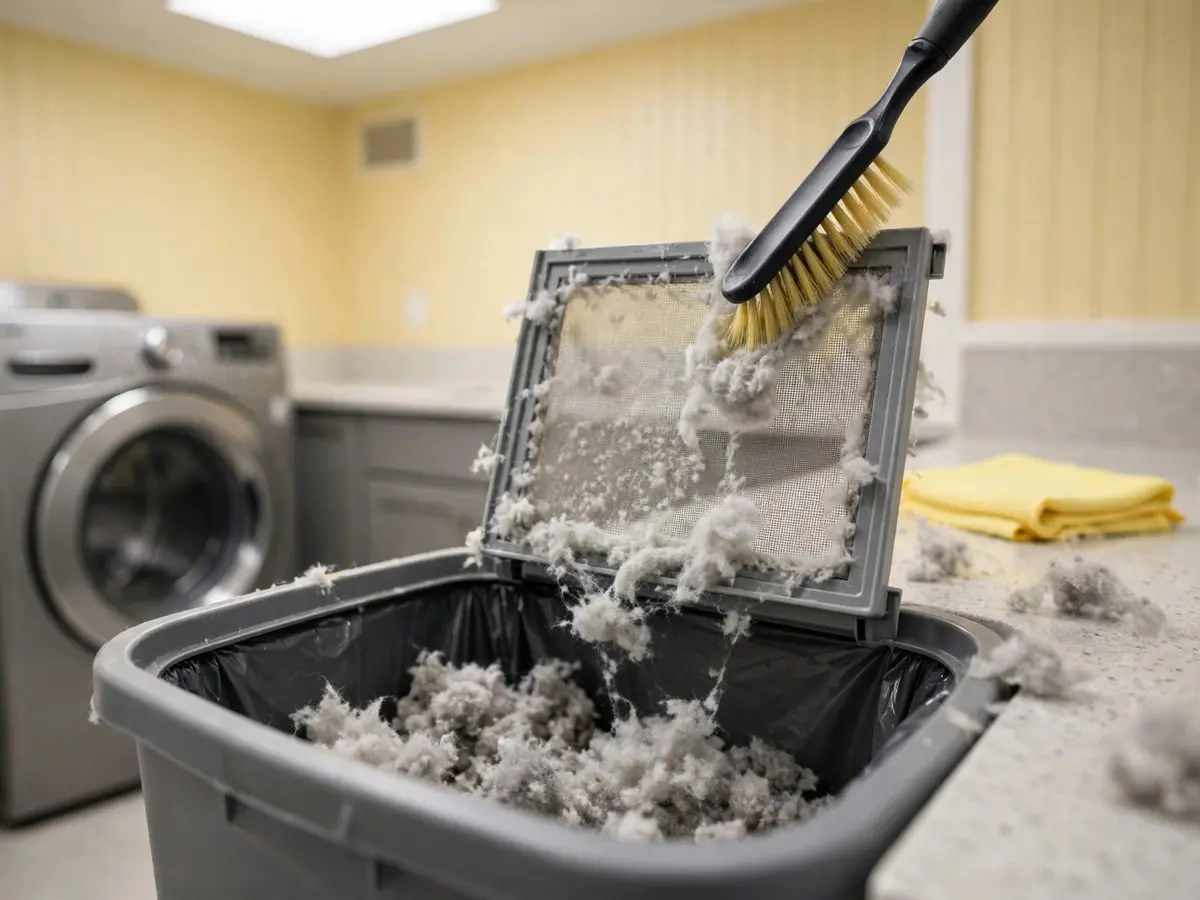
Pull the lint trap out and peel off the lint with your fingers, then run a narrow lint trap brush down into the slot it sits in – lint packs into that slot on every load and a full trap is the first thing that slows drying. Rinse the mesh screen under warm water if it looks coated, and let it dry fully before it goes back: a screen that stays wet grows mildew and blocks airflow. Vacuum around the slot opening while the trap is out. Do this every load from now on – it takes 20 seconds and it is the single best habit for a safe dryer.
- Lint peeled off the trap screen
- Narrow brush run through the trap slot
- Screen rinsed and dried fully before replacing
3. Disconnect the duct from the dryer and the wall
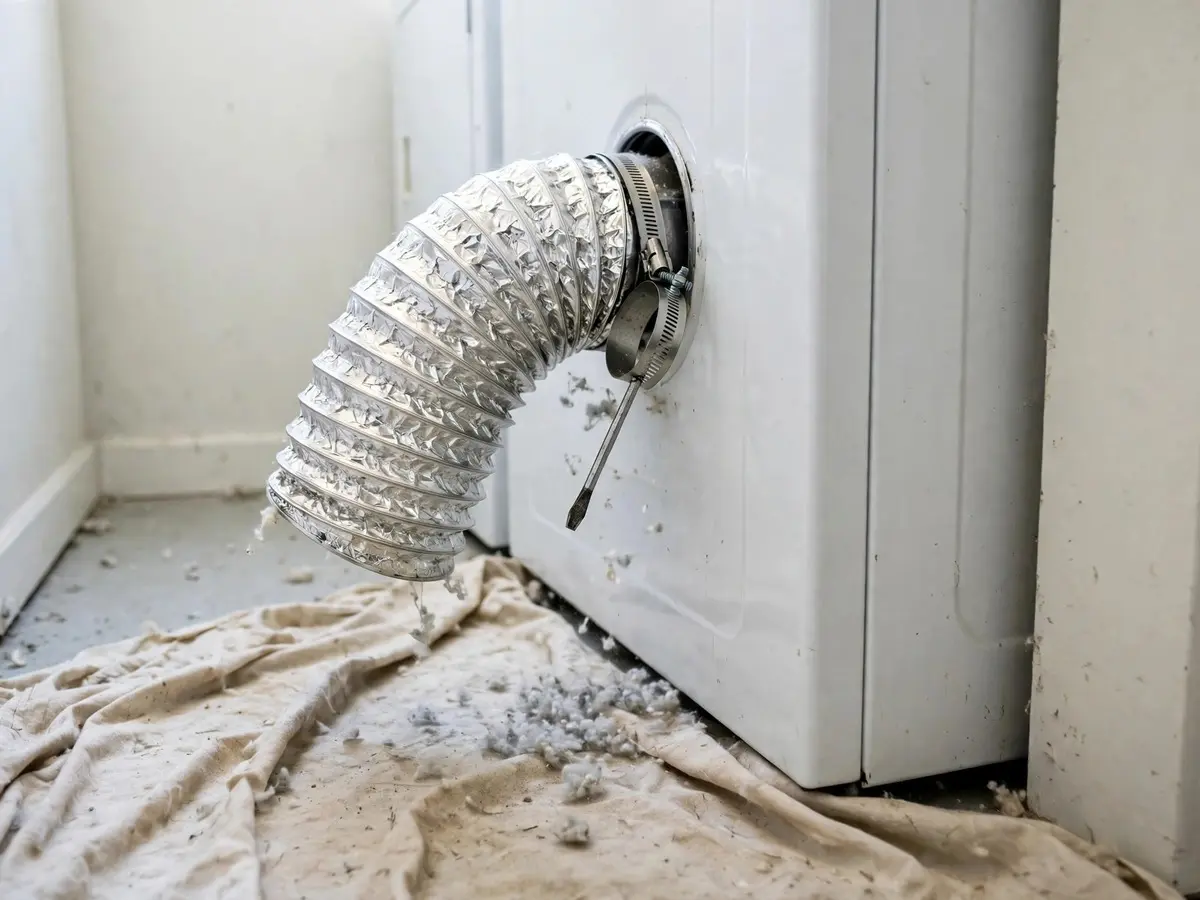
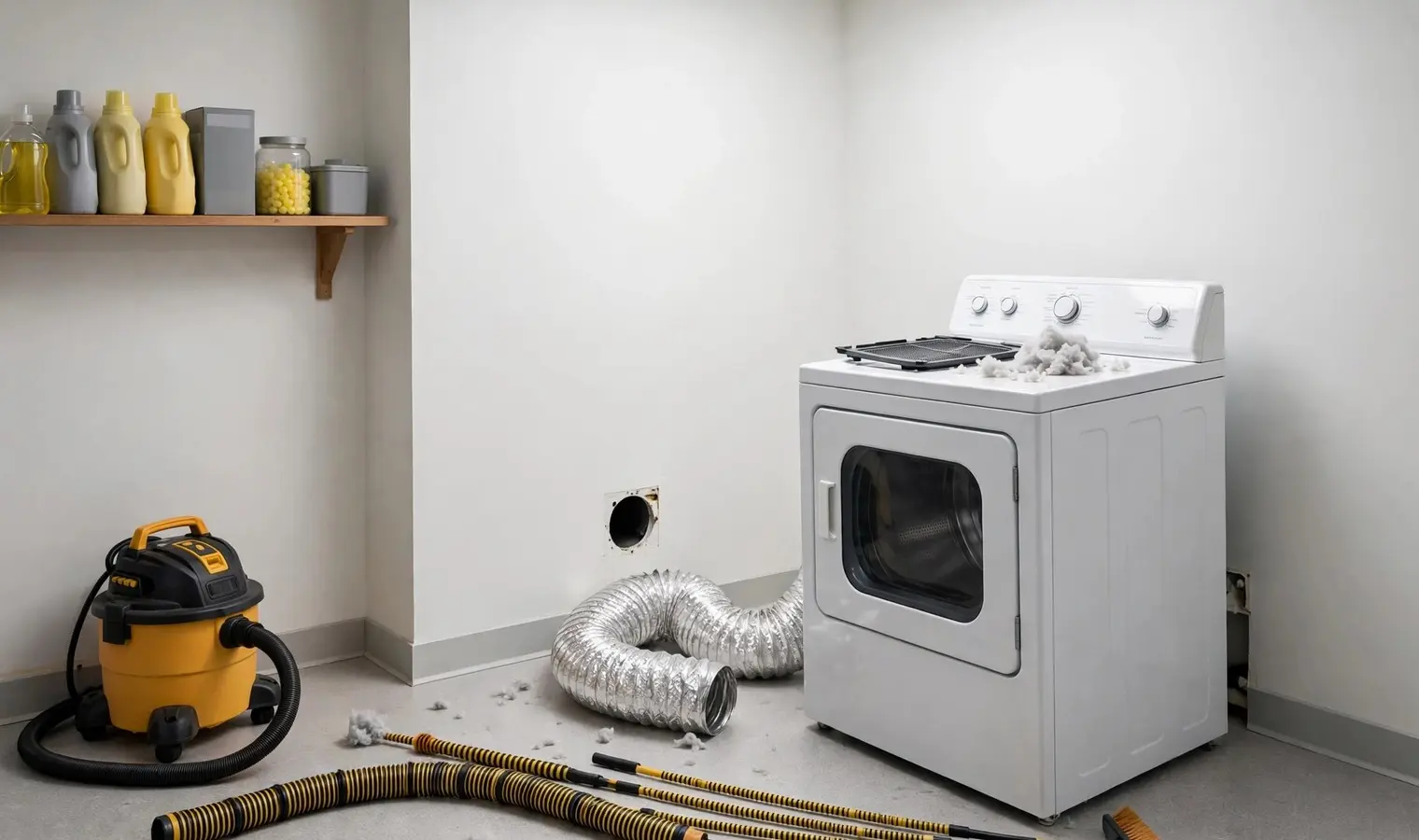
Loosen the clamp where the duct meets the back of the dryer, then the clamp where it meets the wall vent, and pull the duct gently free at both ends. Have a trash bag or an old sheet underneath: a year’s worth of lint will fall out when the duct comes loose. Check the duct itself – a crushed or torn foil duct needs replacing, and a rigid metal duct cleans better and lasts longer than thin foil. Note which end went where so the reconnection is quick. If the duct is long, screwed together or runs through the wall, stop here and call a pro.
- Both duct clamps loosened with a screwdriver
- Trash bag underneath to catch falling lint
- Duct checked for crushing or tears
4. Run the vent brush through the duct from inside
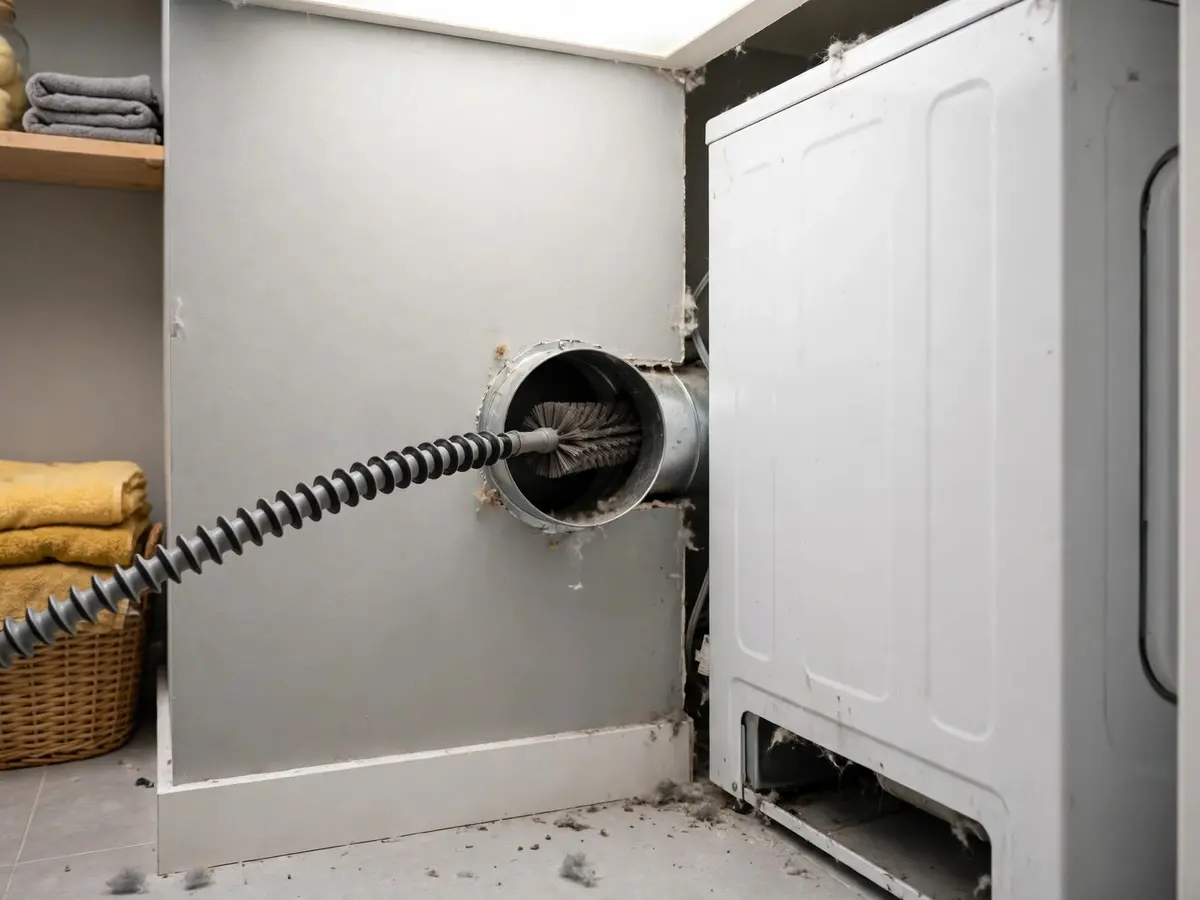
Feed the vent brush into the duct from the dryer end, adding rods as it goes, and twist it slowly as you push so the bristles scrape lint off the duct walls. Pull it back out, clear the lint off the brush and run it through again until it comes back mostly clean. Then do the same from the wall end so the whole run is brushed from both directions. Vacuum the lint that falls out at each end. Do not force the brush if it sticks – pull back, twist and try again, and never run the brush with the dryer on.
- Brush fed in from the dryer end, rods added as it goes
- Duct brushed from the wall end too
- Loose lint vacuumed at both ends
5. Clean the exterior vent hood
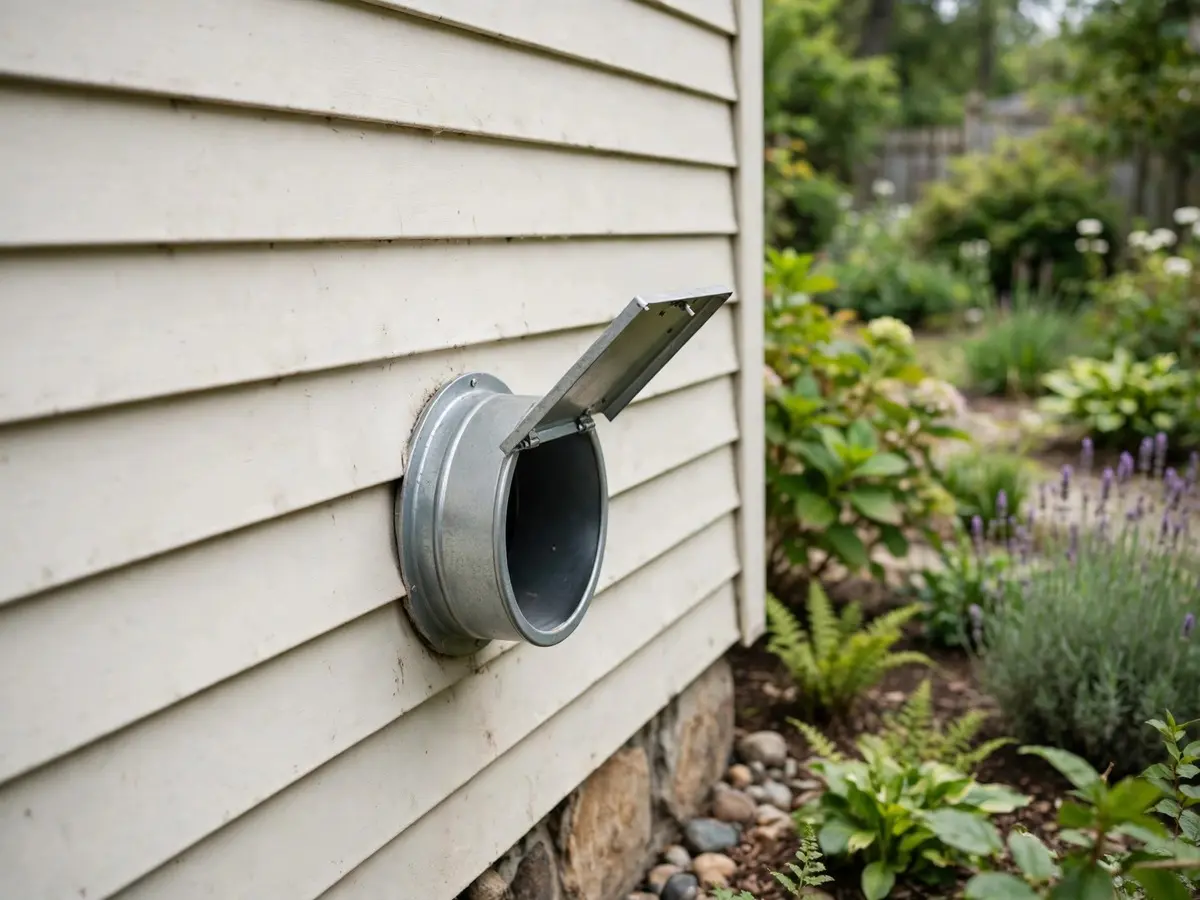
Go outside to the vent hood on the house wall and open the flap – it should swing freely, and if it sticks, lint is holding it shut. Pull out the lint by hand with gloves on, then push the brush in from outside toward the dryer to clear the last stretch. Check the flap closes fully when you let go: a hood that hangs open lets in cold air, insects and rain. Clear leaves and debris from around the hood, and trim back any plants growing against it. This outside step takes five minutes and it is the one most people skip.
- Flap opened and lint pulled out by hand
- Brush pushed in from outside toward the dryer
- Flap checked to close fully
6. Reconnect, test the dryer and set a yearly reminder
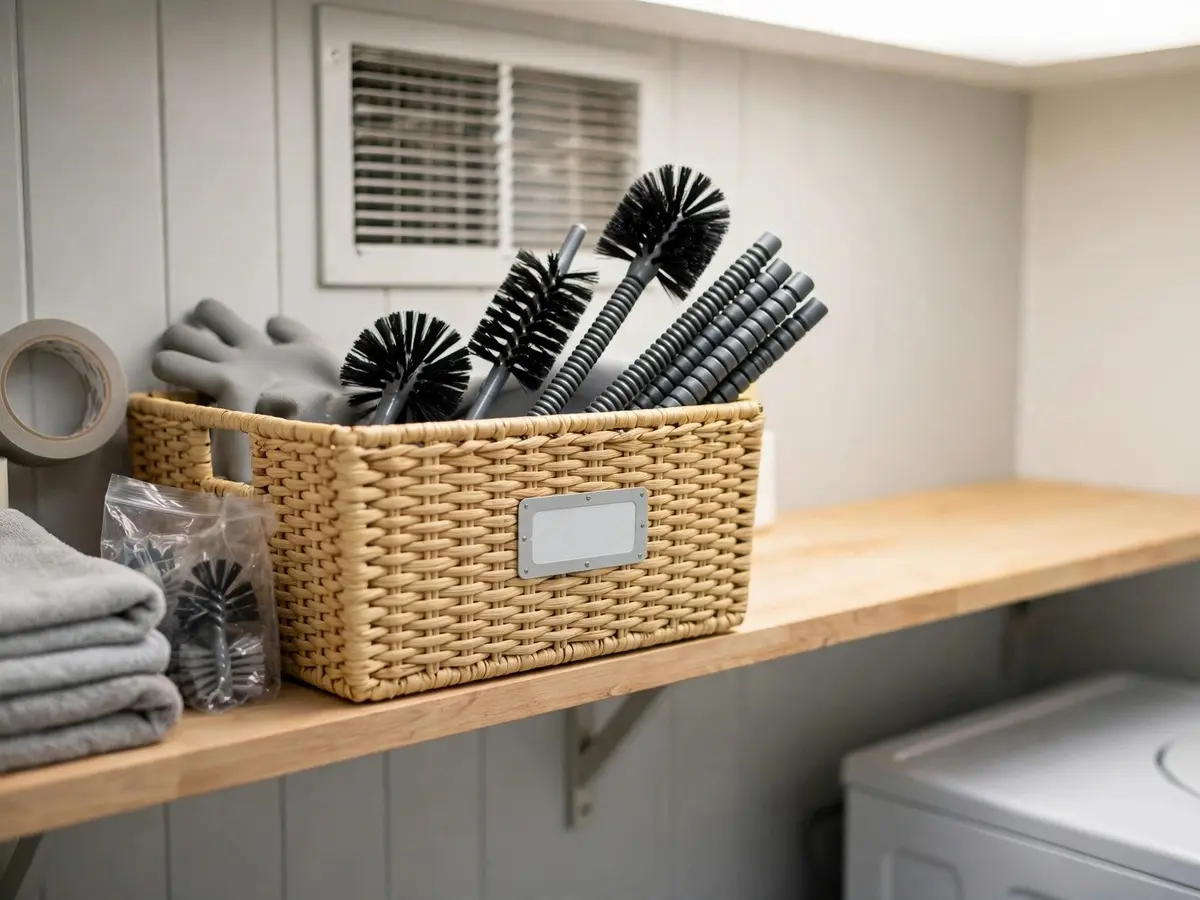
Push the dryer back into place, reconnect the duct at both ends and tighten both clamps so no air leaks at the joints. Plug the dryer back in, turn the gas back on if you turned it off, and run a short empty test cycle – then go outside and check that warm air is blowing strongly from the hood. Weak airflow means lint is still in there, so brush it again. Finally, store the brush kit in a labeled bin on a laundry room shelf and set a yearly phone reminder, so the next clean happens on schedule instead of after another year of slow drying.
- Duct reconnected and both clamps tightened
- Test cycle run and strong airflow checked outside
- Yearly phone reminder set and kit stored in its bin
Questions, answered
How often should you clean your dryer vent?
Clean the full vent at least once a year, and every six months if you do a lot of laundry or have a large household. Clean the lint trap after every single load – that takes 20 seconds and stops most buildup before it starts. If your dryer vent run is long, bends a lot or goes up through the roof, clean it twice a year, because lint collects faster in long runs.
What are signs your dryer vent is clogged?
Clothes take two cycles to dry, the dryer feels hotter than usual or shuts off mid-cycle, and you smell something burning when it runs. The laundry room feels humid, lint builds up around the outside vent hood, and drying times creep up slowly over months. Any one of these is a sign to clean the vent this week, not next year.
Can you clean a dryer vent from outside?
Yes, you can clean part of it from outside: remove the vent cover, pull the lint out by hand and push a vent brush in toward the dryer. That clears the last stretch of duct and the hood, which is the part most people never touch. For a full clean, though, you still need the inside steps – the lint trap, the duct behind the dryer and the brush run from the dryer end.
Should you hire a pro to clean a dryer vent?
Hire a pro when the vent run is long, goes up through the roof or through a wall you cannot reach, or when the brush sticks and will not move. Also call one if the duct is damaged, the dryer still dries slowly after a full clean, or you are not comfortable moving a heavy dryer. A standard straight run behind the dryer is a straightforward 30-minute job to do yourself.
Keep reading
Our home maintenance checklist walks through the other once-a-year jobs worth doing on the same day, and the cleaning schedule for the home keeps the laundry room on a monthly routine. How to clean a dishwasher covers the other machine that hides its buildup, and laundry room organization shows where to keep the vent brush kit so it is ready next year.
Thirty minutes, once a year, and the dryer runs faster, uses less energy and stops being a fire risk. Put the yearly reminder in your phone before you put the brush kit away – the next clean is the one that gets forgotten.