A house that looks spotless on Sunday and chaotic by Wednesday is not a willpower problem. It is a schedule problem. Most cleaning routines fail because they try to do everything in one exhausting session, then nothing at all for a fortnight.
Thank you for reading this post, don’t forget to subscribe!This cleaning schedule for home breaks every task into three simple layers: a 10-minute daily reset, one focus zone per weekday, and a short monthly list. Twenty-five tasks in total — small enough to fit a busy week, steady enough to keep the mess from creeping back.
Your cleaning schedule at a glance
Daily — the 10-minute reset
- Make the beds
- Wipe the kitchen counters
- Load or run the dishwasher
- Wipe the bathroom sink and mirror
- Five-minute entryway reset (shoes, bags, post)
- Fold or start one load of laundry
- Wipe the dining table
- Ten-minute living-room pick-up
- Spot-sweep or vacuum the busy floors
- Take out any full bin
Weekly — one focus zone per weekday
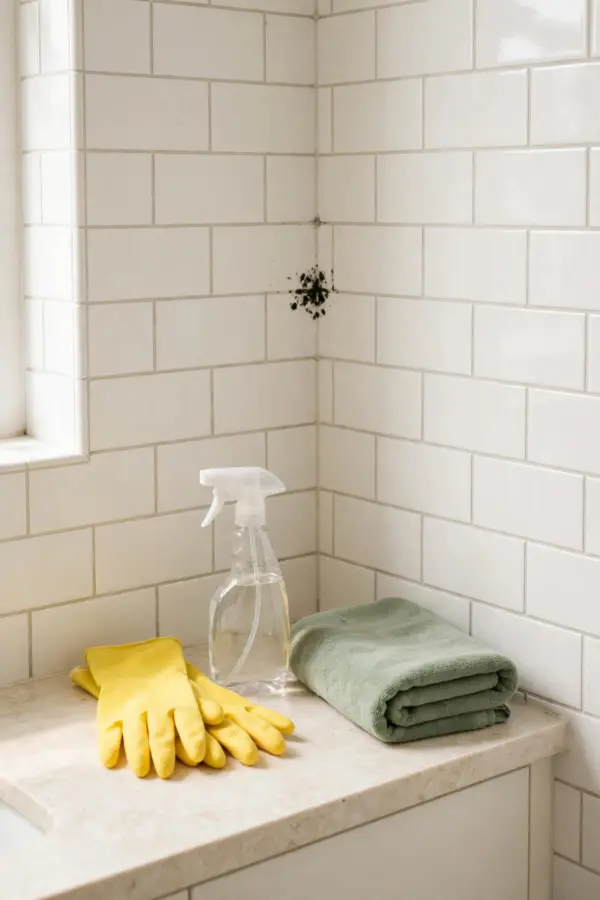
- Monday: bathrooms — toilet, shower, sink, mirrors
- Tuesday: dust every surface and shelf
- Wednesday: vacuum every room
- Thursday: kitchen — appliances, microwave, sink
- Friday: change the bed linen
- Saturday: laundry day and mop the hard floors
- Sunday: 15-minute whole-house reset
Monthly — the short list
- Wash windows and glass doors
- Dust baseboards and door frames
- Wipe cabinet and drawer fronts
- Clean the oven and the fridge
- Wash curtain panels and cushion covers
- Dust ceiling fans and light fittings
- Declutter one drawer or shelf
- Scrub the bins and trash cans
Daily: the 10-minute reset
The daily reset is the engine of this whole schedule. Set a timer for ten minutes, work the same ten tasks in the same order every evening, and stop when the timer rings. Because the order never changes, your hands learn the route and the minutes shrink — most people are done in eight within a fortnight.

Anchor the reset to a habit you already have — right after dinner, or once the children are in bed. And if clutter keeps slowing you down, start with a proper room-by-room declutter first: fewer things on the surfaces means a faster reset every single night.
Weekly: one focus zone per weekday
Instead of cleaning the whole house at the weekend, give each weekday a single zone. One zone a day keeps every room touched weekly, and no session takes longer than 20–30 minutes. Here is a sample week to start from — shuffle the days to suit your life.
| Day | Focus zone | What to do |
| Monday | Bathrooms | Toilet, shower, sink and mirrors |
| Tuesday | Dusting | All surfaces, shelves and frames |
| Wednesday | Floors | Vacuum every room |
| Thursday | Kitchen | Appliances, microwave, sink scrub |
| Friday | Bedrooms | Change bed linen, clear surfaces |
| Saturday | Laundry + floors | Wash, fold and mop hard floors |
| Sunday | Reset | Restock supplies, 15-minute whole-house tidy |
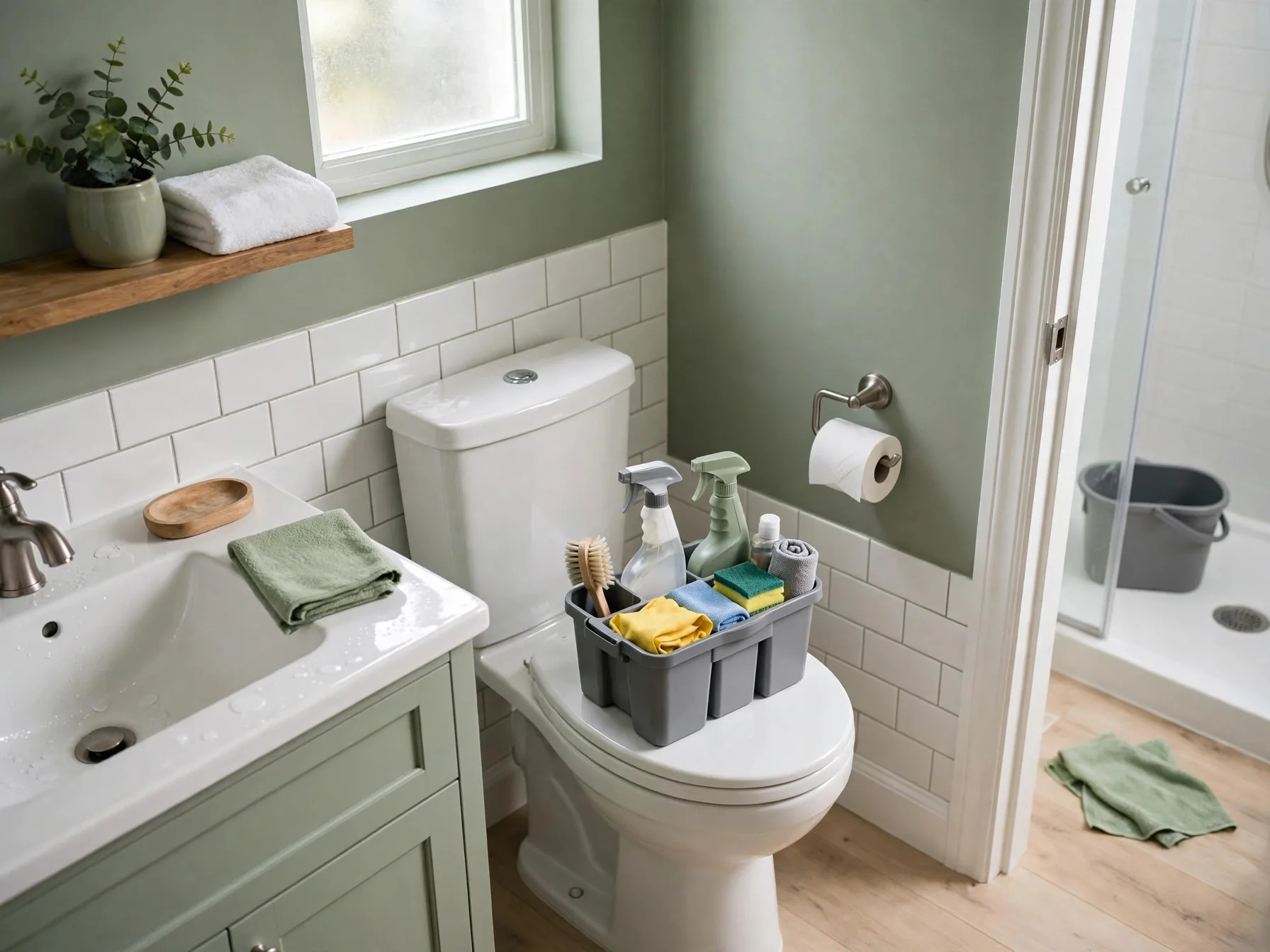
Monday’s bathroom round goes twice as fast when every supply lives in one caddy — our bathroom storage ideas show how to keep them within reach even in a tiny room.
Monthly: the short list
Monthly tasks are the slow-build jobs — the ones nobody notices until they are suddenly very noticeable. Eight tasks, one month. Either batch them into a single Saturday morning (about two hours with music on) or spread one or two across your Sunday resets. Both work; the only wrong choice is postponing them indefinitely.
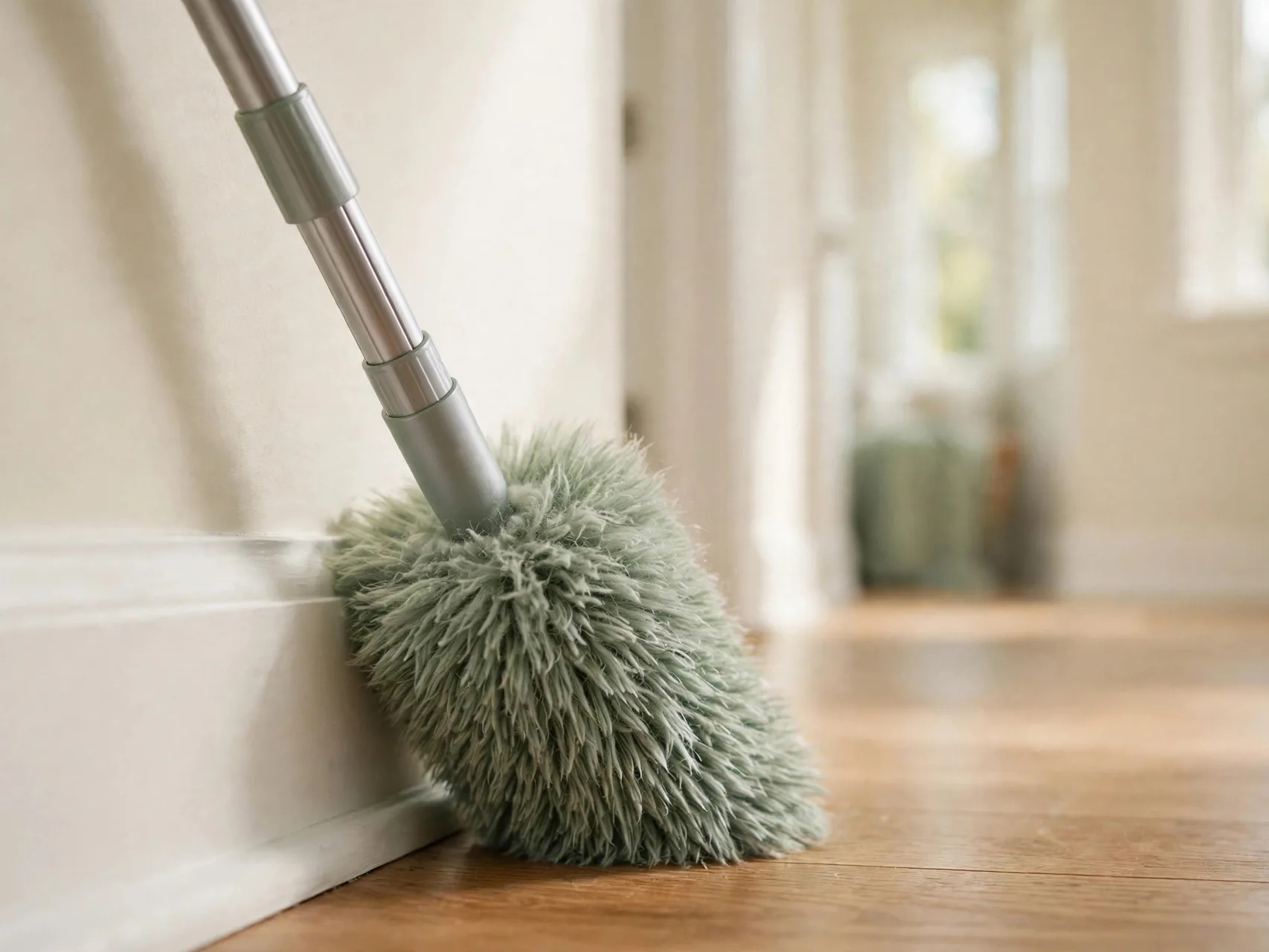
Start with baseboards and cabinet fronts — they collect the most visible grime for the least effort. Windows and appliances can wait for month two if you are short on time; the schedule survives a skipped task far better than it survives being abandoned.
What you’ll need
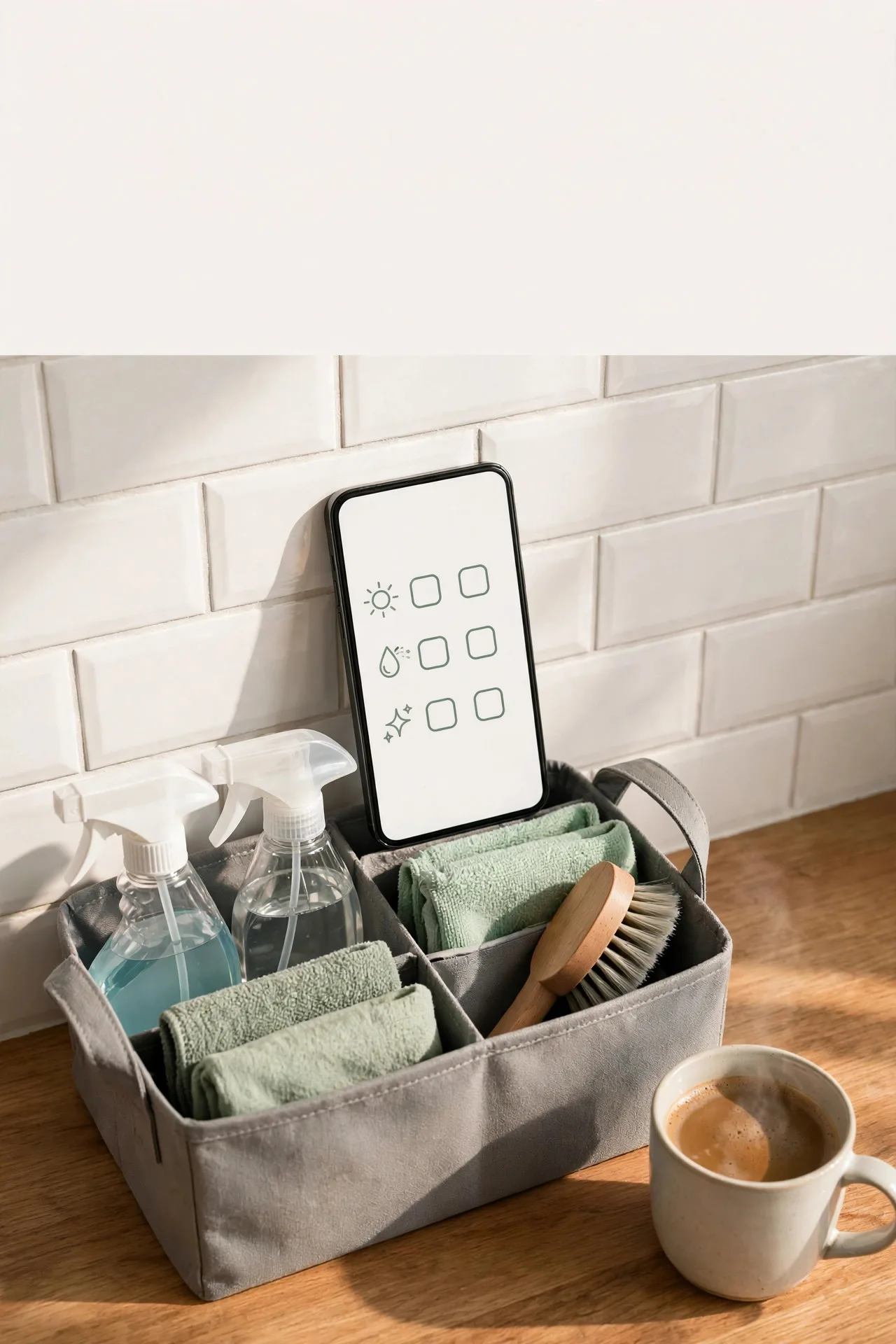
Nothing fancy. The whole schedule runs on microfibre cloths (a pack of 12 costs very little and lasts years), an all-purpose spray, a glass cleaner or a simple vinegar solution, an extendable duster, a vacuum and a mop. Keep them all in one caddy or under the sink so Monday’s zone never starts with a treasure hunt.
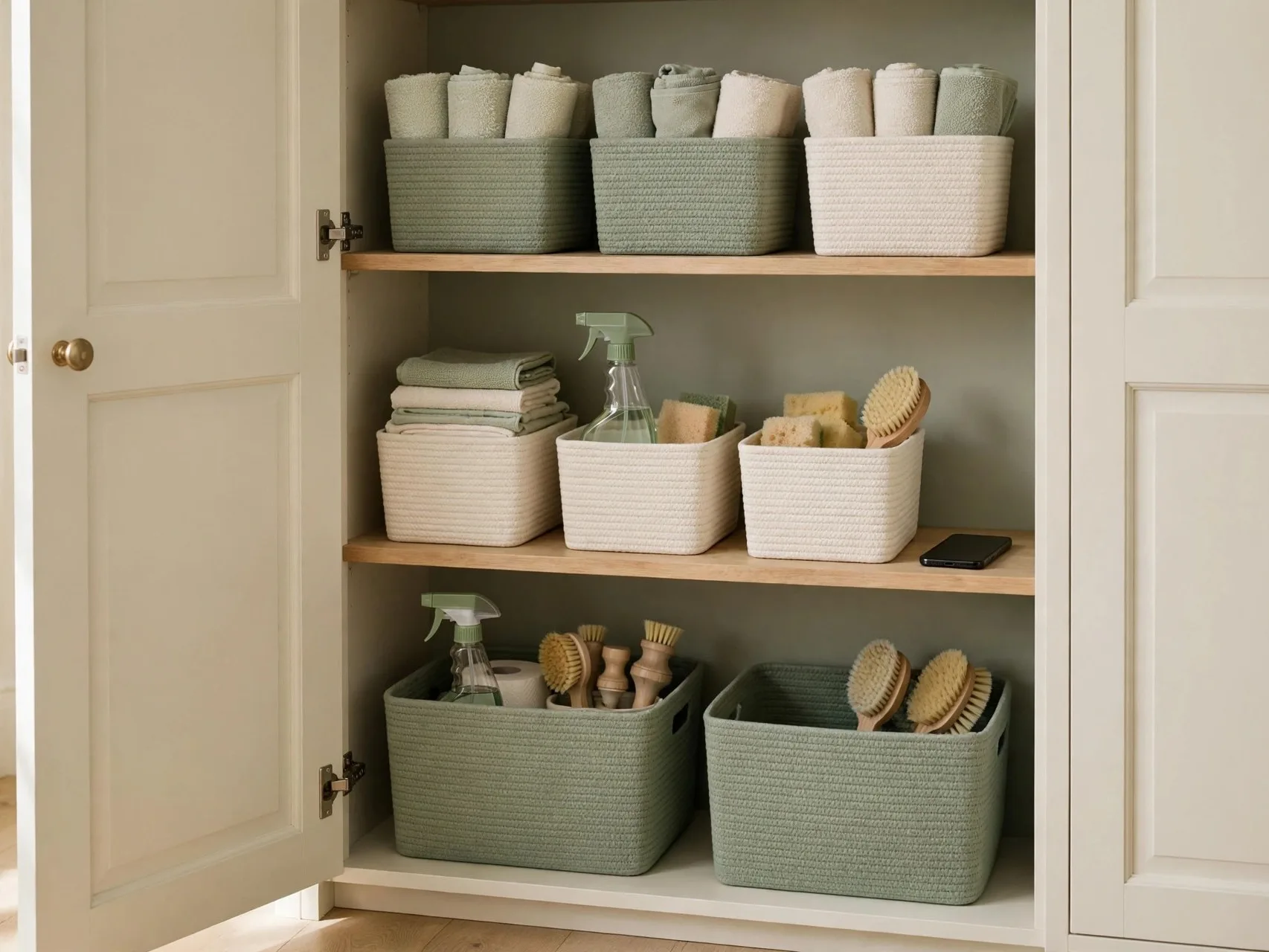
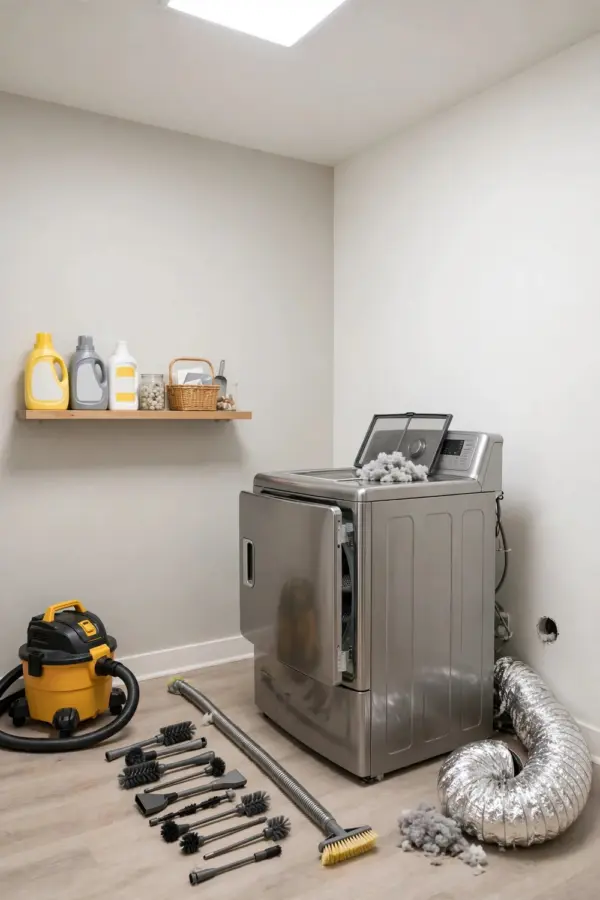
One caddy, one shelf, one home for everything. If laundry day is your dreaded zone, our laundry room organization guide makes Saturday’s wash-and-fold painless too.
How to make a cleaning schedule you will actually follow
The best schedule is the one that survives contact with your actual week. Five things that keep this one alive:
- Anchor tasks to habits you already have. Counters right after dinner, the reset after the children’s bedtime. Habits carry the schedule when motivation does not.
- Keep the daily reset sacred. It is the engine. A weekly zone can move to another day; the reset cannot.
- Adjust after two weeks. Your home will tell you what to change — maybe Tuesday dusting needs to be Thursday, or the monthly list needs a ninth task. Rewrite it; the schedule works for you.
- Share the load. Assign one weekday zone per person. A schedule taped inside a cupboard door beats a lecture every time.
- Done beats perfect. A wiped counter nobody photographs still counts. Miss a day? Start again tomorrow, not next month.
Questions, answered
The 5-5-5 rule is a simple time-boxing trick: clean 5 rooms for 5 minutes each, 5 days a week. That is 25 focused minutes a day — enough to keep every room moving without a marathon session. Some versions swap the last 5 for 5 tasks instead. Either way it works, because the timer removes the hardest part: deciding where to start.
Honestly? Not much. Dust settles, crumbs build up, the bathroom gets grimy and the laundry piles up — but nothing is ruined. The real cost is the reset: a skipped week usually takes an hour or two to catch up on. That is exactly what the daily 10-minute reset is for. Life happens; just pick the schedule back up where you left off.
Start smaller than you think: ten minutes a day and one zone per weekday. Anchor the tasks to habits you already have, like wiping the counters right after dinner. Run it for two weeks, then adjust the tasks to suit your home. A schedule you actually follow beats a perfect one you abandon by Friday.
Daily: the high-traffic resets — beds, dishes, counters, a quick bathroom wipe and a 10-minute pick-up. Weekly: one deeper zone per weekday — bathrooms, dusting, vacuuming, the kitchen, bed linen, laundry and floors. Monthly: the slow-build jobs — windows, baseboards, appliances, cabinet fronts and anything you only notice when guests are coming over.
Start tonight with the 10-minute reset — that single habit does most of the work. Then let the weekly and monthly lists fill in around it. Your home will not be perfect, and it does not need to be. It will be calm.