

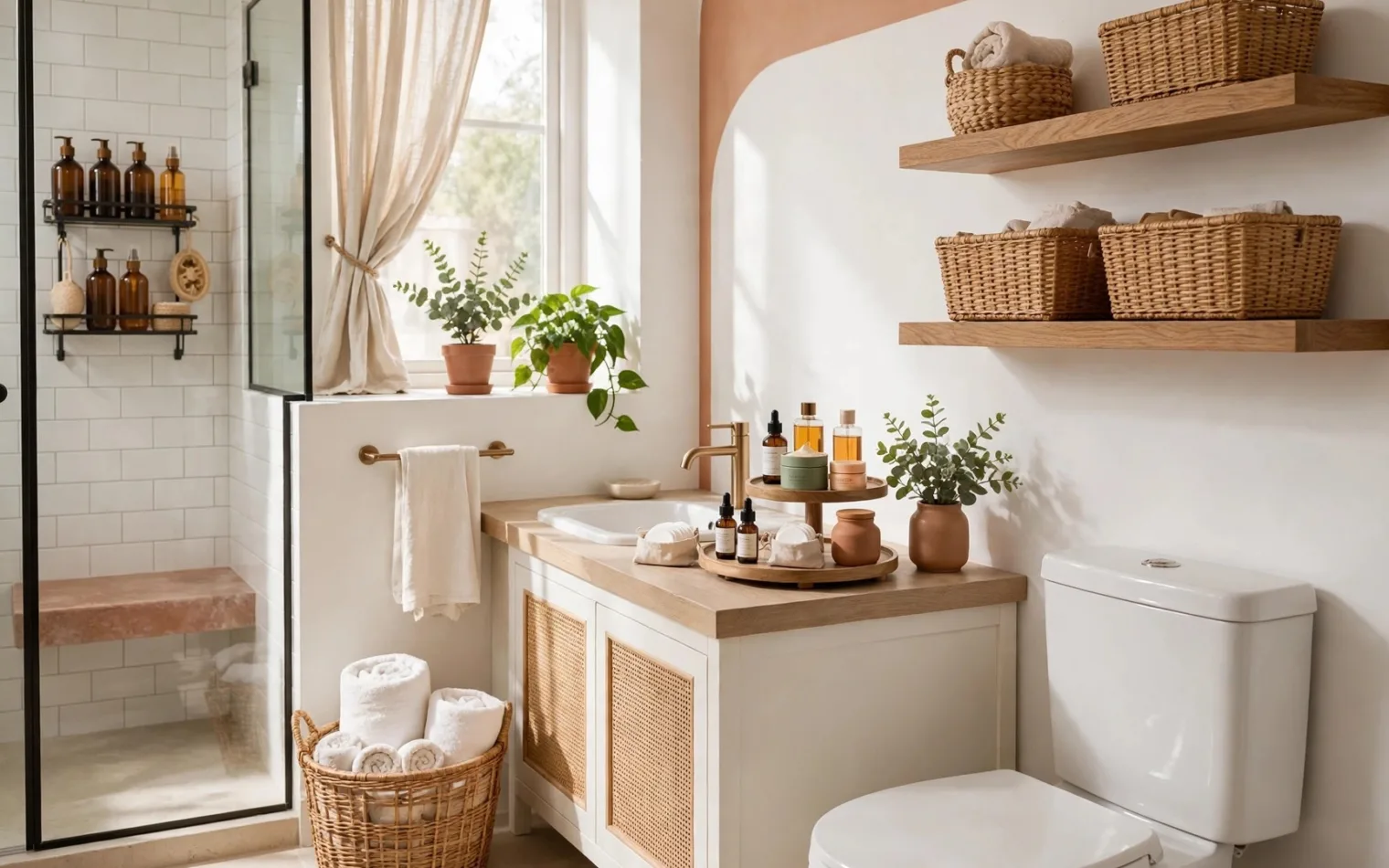
Bathroom clutter is sneaky. It is not one big mess — it is forty small things with nowhere to live: the half-used shampoo, the spare toothbrush, the towel that never quite dries. The fix is never a bigger bathroom. It is giving every item a home that fits how you actually use the room.
Thank you for reading this post, don’t forget to subscribe!These 40 storage ideas for bathroom clutter work zone by zone — counter, shower, sink, walls, toilet and drawers — and almost all of them cost under $25. Renters get plenty of no-drill options too. Pick the three zones that bother you most, start there, and enjoy the strangely satisfying feeling of a bathroom where everything has a place.
Bathroom counter ideas
1. Corral the counter with a clear acrylic organizer
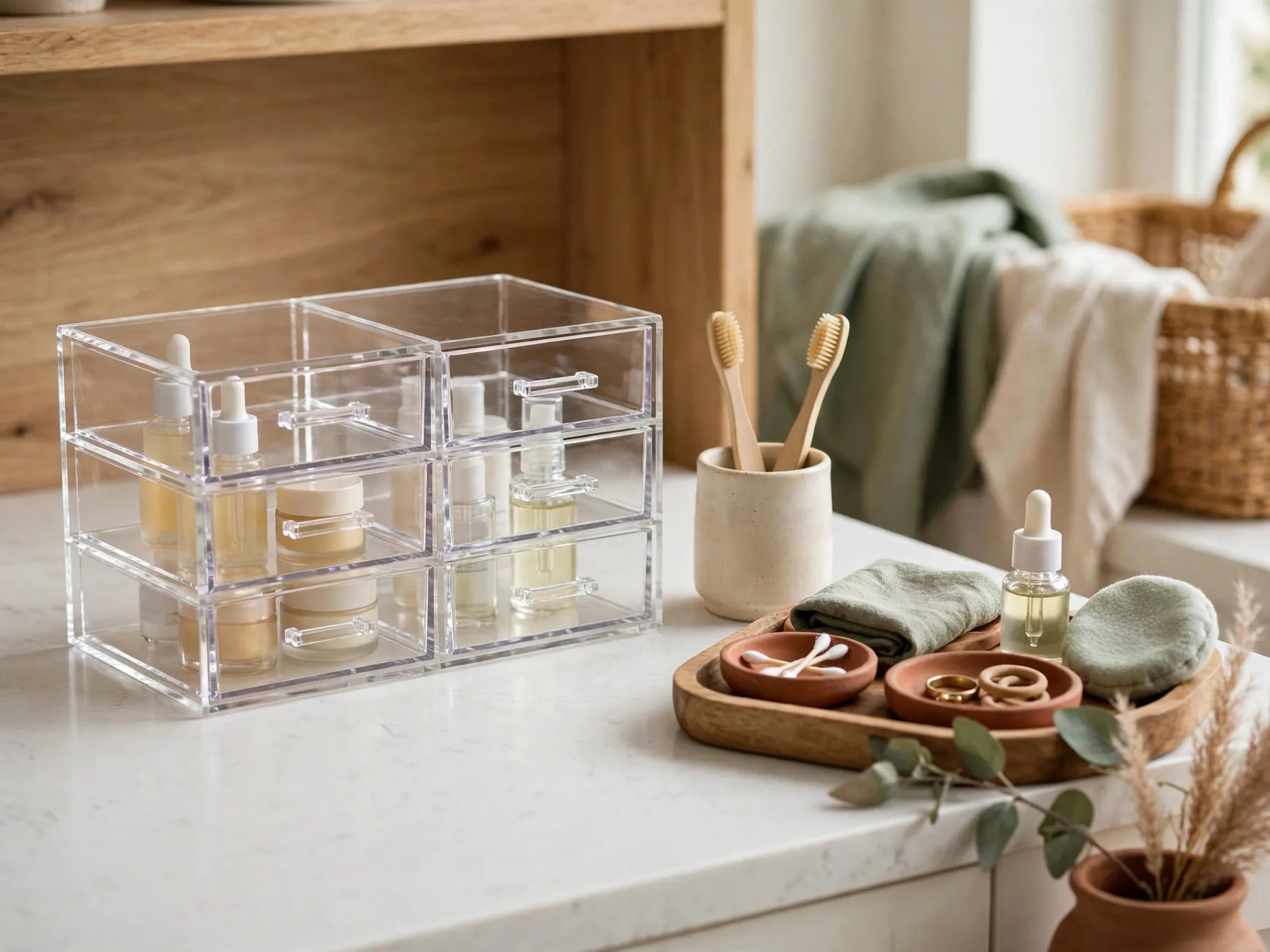
When everything sits loose on the counter, the whole bathroom looks messy even when it is clean. A clear acrylic organizer with two or three drawers gives your daily skincare, deodorant and contact solution a visible home, so nothing migrates across the quartz.
Pick one about 20 to 25 cm wide that fits between the tap and the wall; most cost $12 to $20. Because it is transparent you will actually see what is inside, which means you stop buying duplicates of things you already own.
2. Go vertical on the counter with a two-tier corner shelf
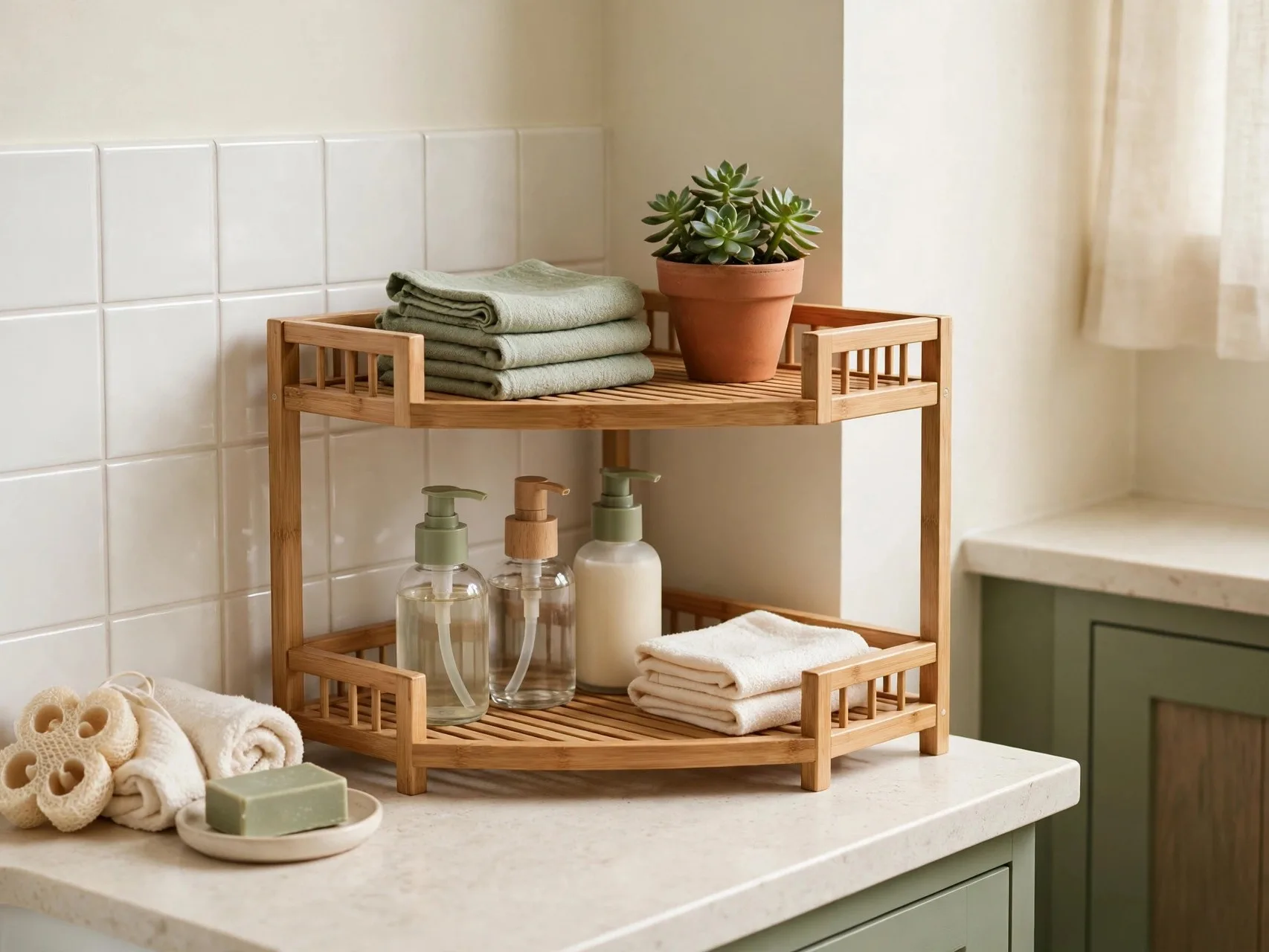
Counters are small, but the air above them is free. A two-tier corner shelf turns one lonely square of counter into two storage levels, which is exactly what a bathroom with a 40 cm vanity needs.
Look for a rust-proof metal or bamboo corner stand, roughly 18 cm per side, for $10 to $18. Keep daily items on the lower tier and back-up stock up top; the rule is simple — if you reach for it every morning, it earns the bottom shelf.
3. Match the toothbrush cup to the soap dispenser
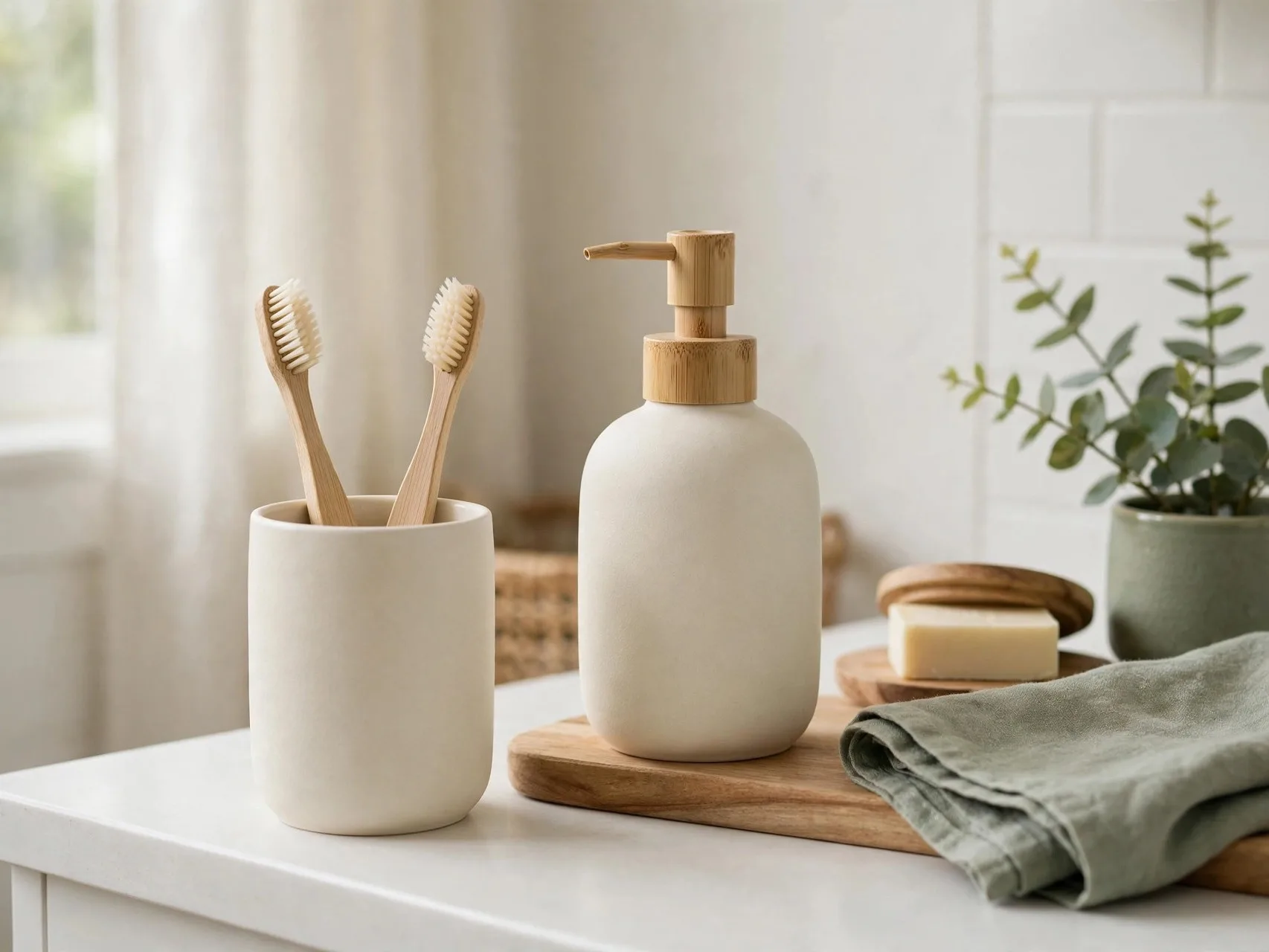
A cluttered counter is often a visual problem, not a volume problem. Five items in clashing colours look like chaos; the same five in one material look like a set. A ceramic toothbrush cup and matching soap dispenser in cream, sage or white cost $8 to $15 together and calm the whole sink area.
Choose a cup wide enough that the brush heads do not touch each other, and a dispenser you can refill from a large bottle — refillable pumps are cheaper per millilitre and cut plastic waste.
4. Give every daily item one tray to come home to
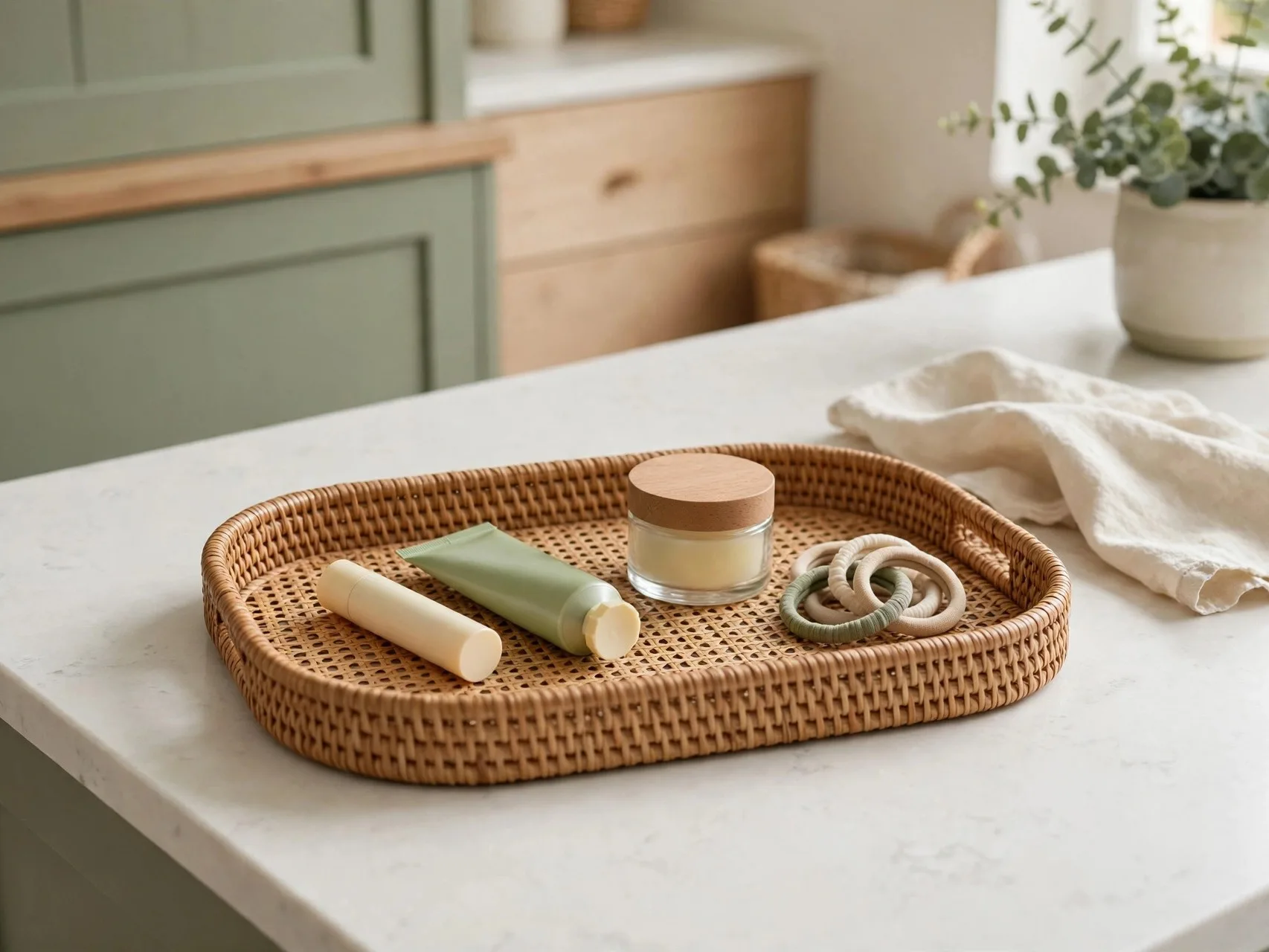
The tray rule is the fastest fix in this whole list: nothing lives loose on the counter except inside one shallow tray. Lip balm, hand cream, the hair tie you always lose — everything lands in the same 25 by 15 cm tray.
A rattan, bamboo or ceramic tray costs $6 to $12. When the tray looks full, you know it is time to put things away rather than buy a bigger organizer. Wipe it down weekly and the whole counter reset takes about thirty seconds.
5. Get the hair dryer off the counter with a wall-mount holder
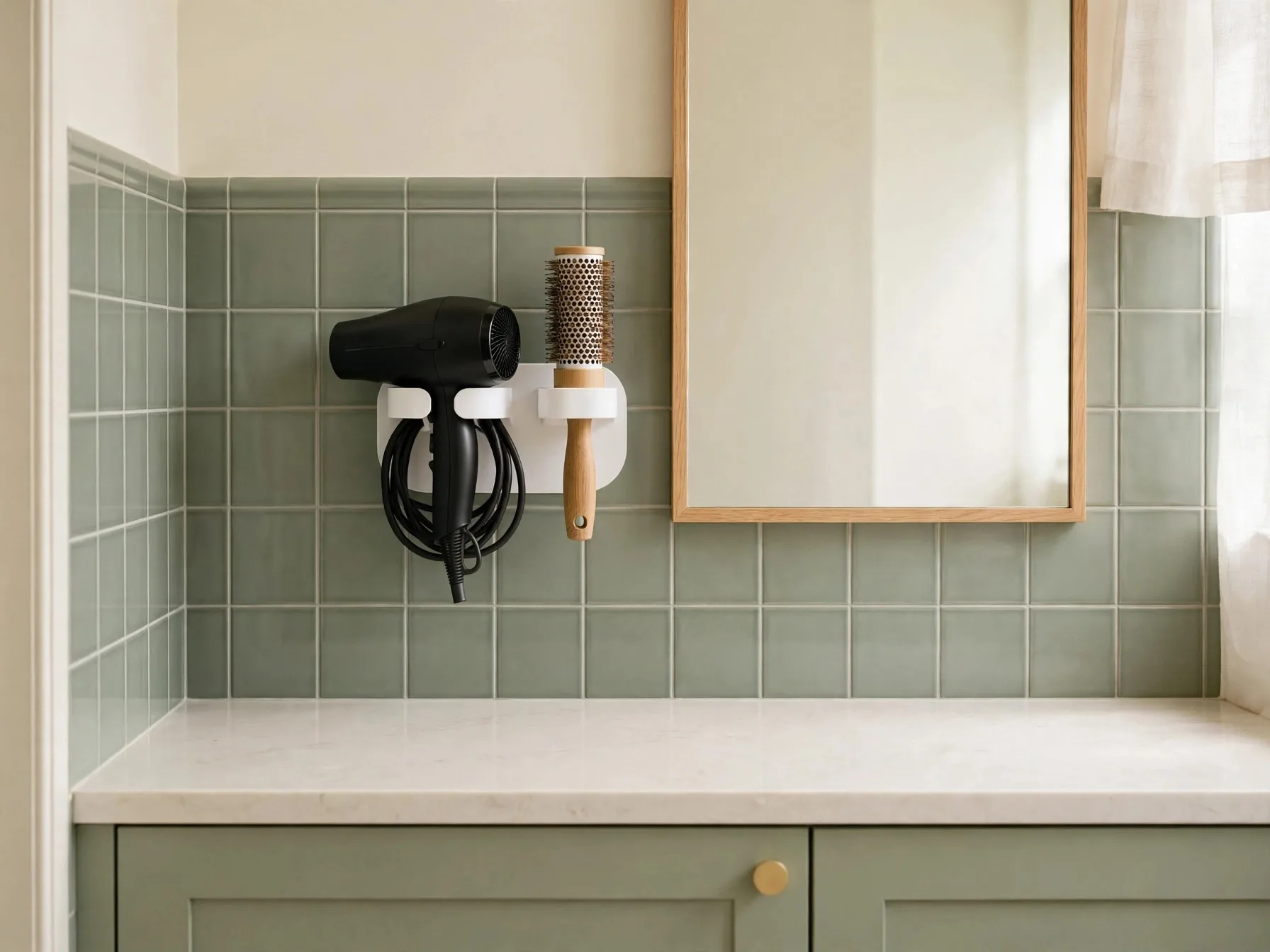
A hair dryer and its tangled cord claim a shocking amount of counter space. An adhesive wall-mount holder sticks to tile or the side of the vanity with no drilling, holds the dryer plus one or two brushes, and costs $8 to $14.
Mount it inside the vanity door or on the wall beside the mirror at elbow height so the cord never drapes across the sink. Check that the holder is heat-rated for your dryer model — most holders list the maximum wattage right on the packaging.
6. Spin a lazy Susan for shared bathrooms
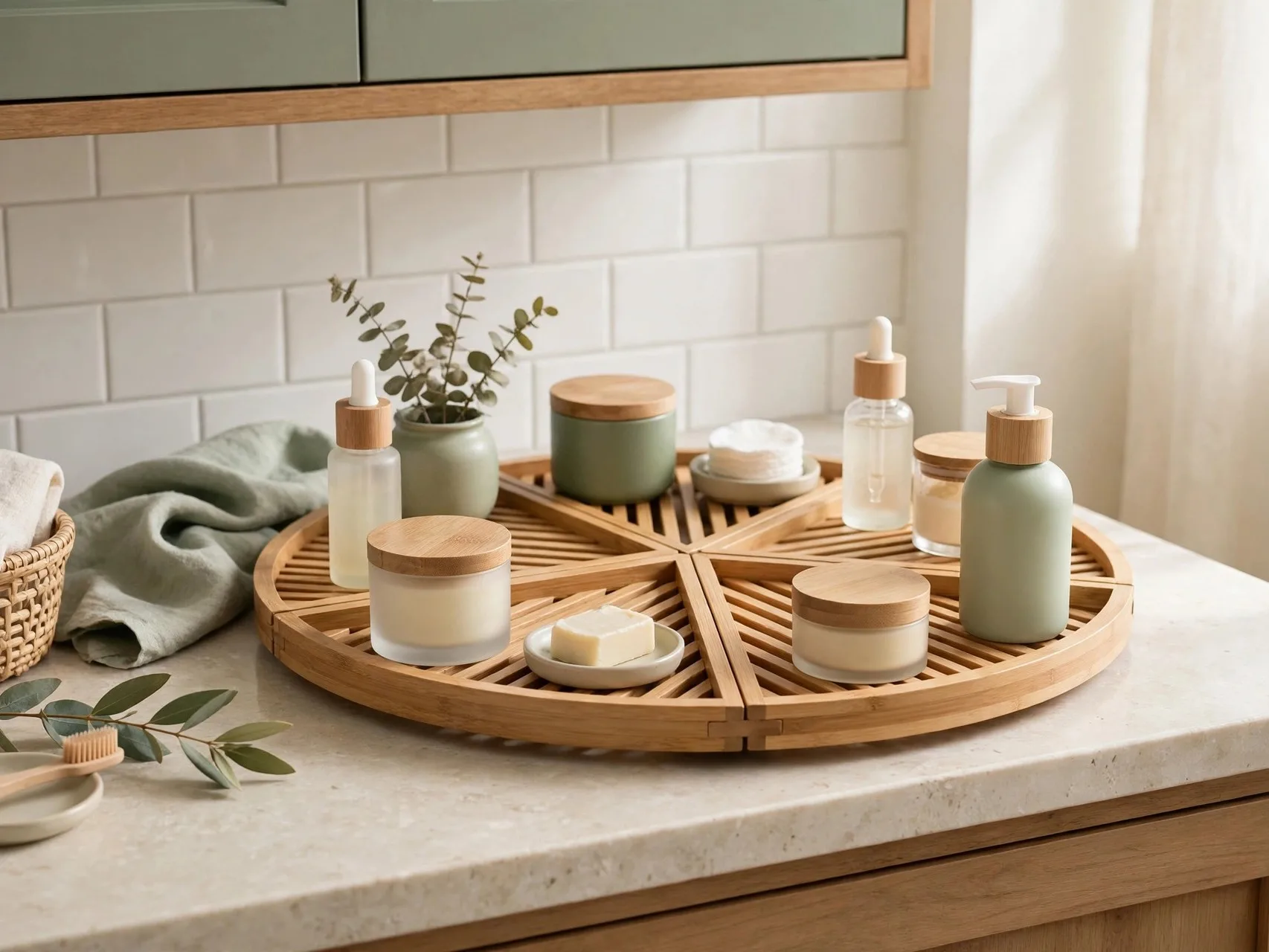
In a bathroom two or four people share, nobody remembers whose bottle is whose. A 25 cm lazy Susan turntable on the counter gives everyone a spin-to-find system for about $10 to $16, and it stops the daily shove-everything-back ritual.
Give each person one wedge of the turntable, or group by routine: morning items together, evening items together. A rimmed edge keeps bottles from sliding off when the spinning gets enthusiastic.
Shower and bath zone
7. Stick a stainless corner caddy in the shower
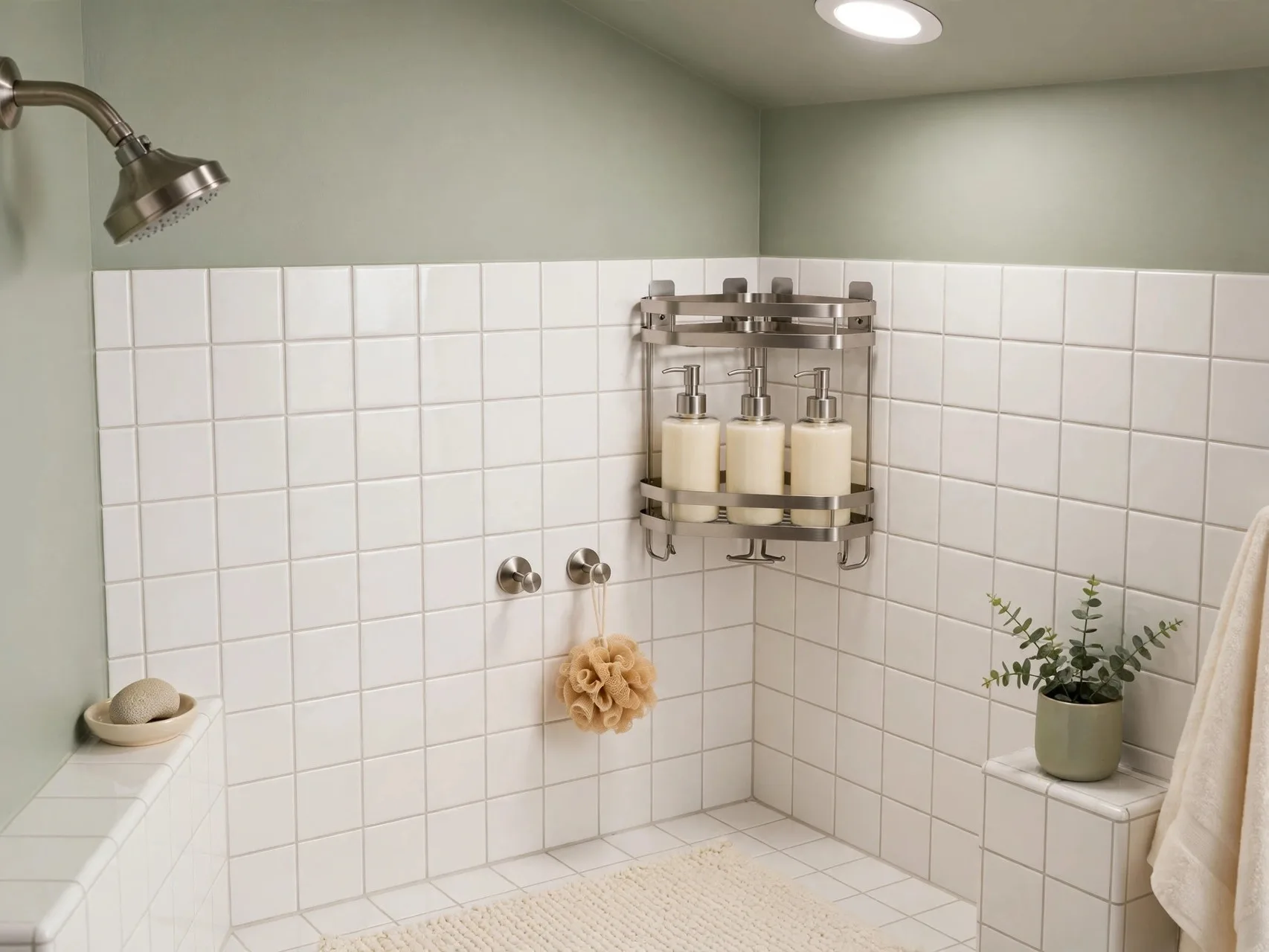
Bottles lined along the tub edge fall over, collect soap scum and make cleaning take twice as long. A stainless steel corner caddy with no-drill adhesive mounts lifts shampoo, conditioner and body wash into the dead corner space for $12 to $22.
Pick a two-shelf model with drainage slots so water runs straight through, and mount it at shoulder height on the wall opposite the showerhead. Refillable pump bottles in matching amber or clear glass make the whole caddy look calmer.
8. Hang a tension rod across the tub alcove with S-hooks
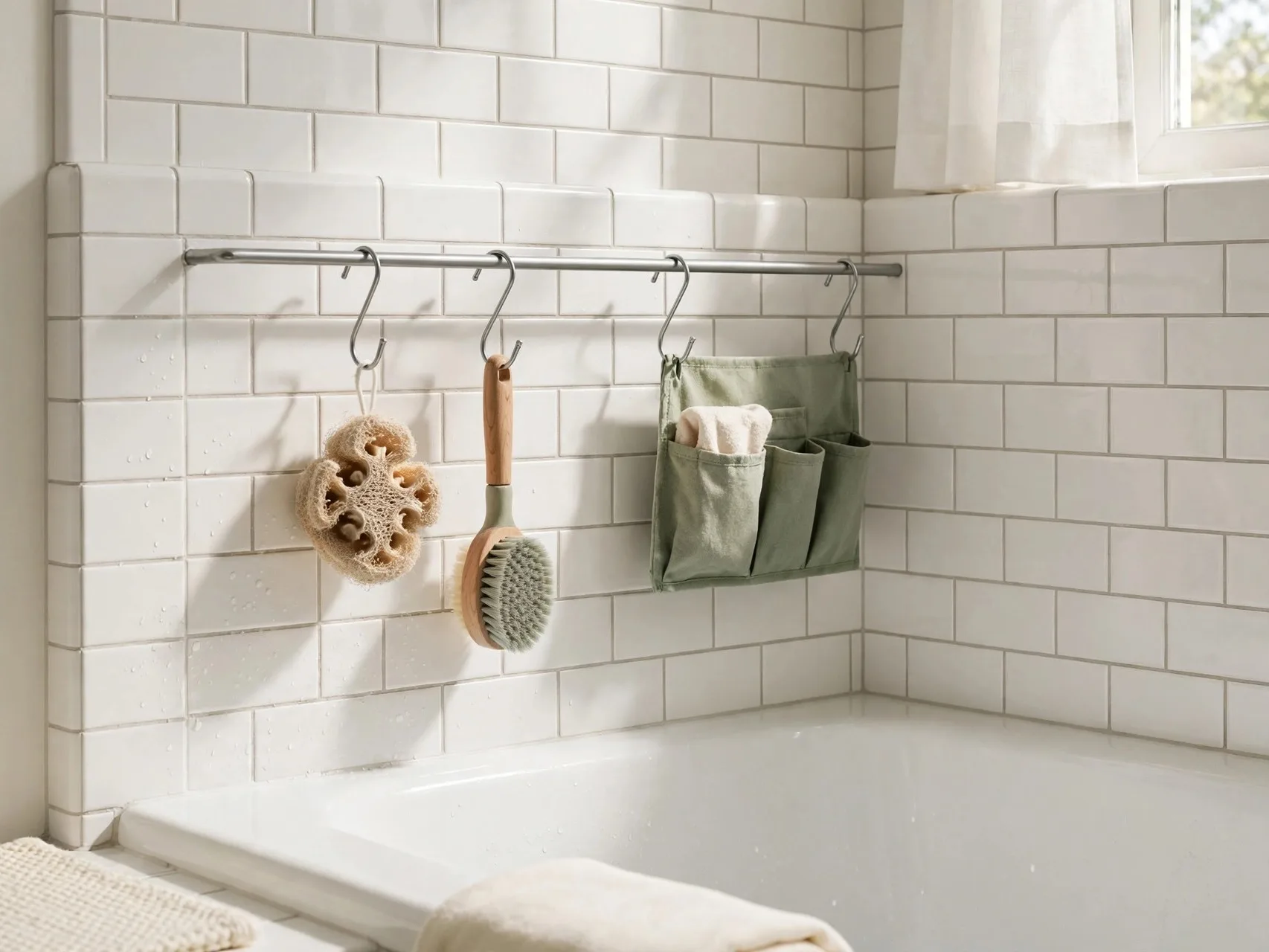
That empty strip of air above the tub edge is storage waiting to happen. A $6 to $10 shower-safe tension rod wedged across the alcove, plus a few S-hooks, holds loofahs, a bath brush and a hanging caddy for kids’ bath toys.
Measure the alcove before buying — most rods extend from 60 to 90 cm — and twist until it is genuinely tight; test it with a full wet washcloth before trusting it with bottles. Everything hangs where water drains straight back into the tub.
9. Drape a mesh organizer over the showerhead
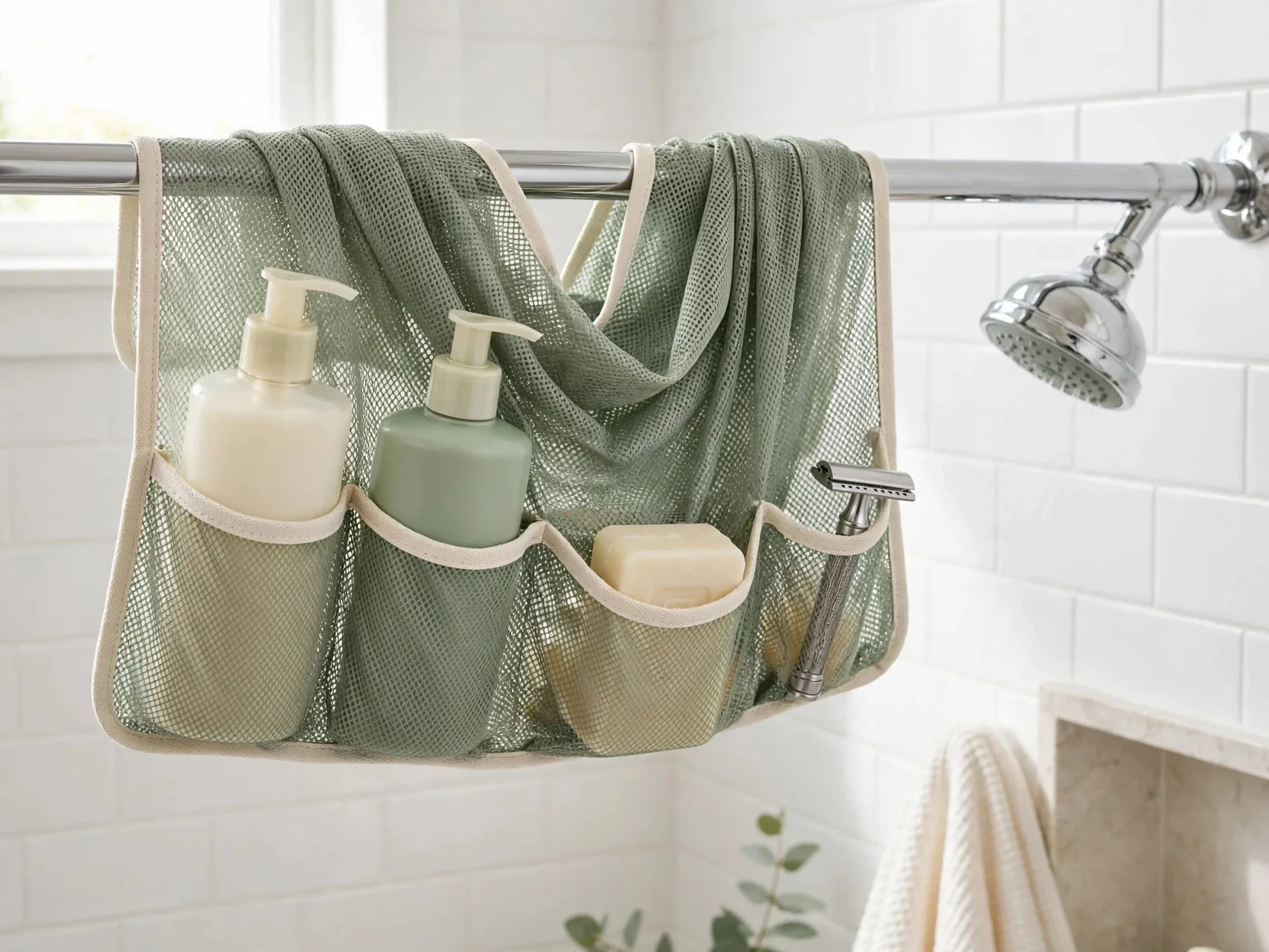
No wall space and no drill? A mesh organizer that hooks over the showerhead pipe adds three or four pockets of storage for about $8, and it comes off in seconds when you move out.
Use the deep pockets for shampoo and conditioner and the shallow mesh ones for the razor and soap bar so they air-dry. Rinse the organizer weekly — mesh dries fast, which is exactly why it beats a solid plastic caddy for mildew.
10. Lay a bamboo caddy across the tub
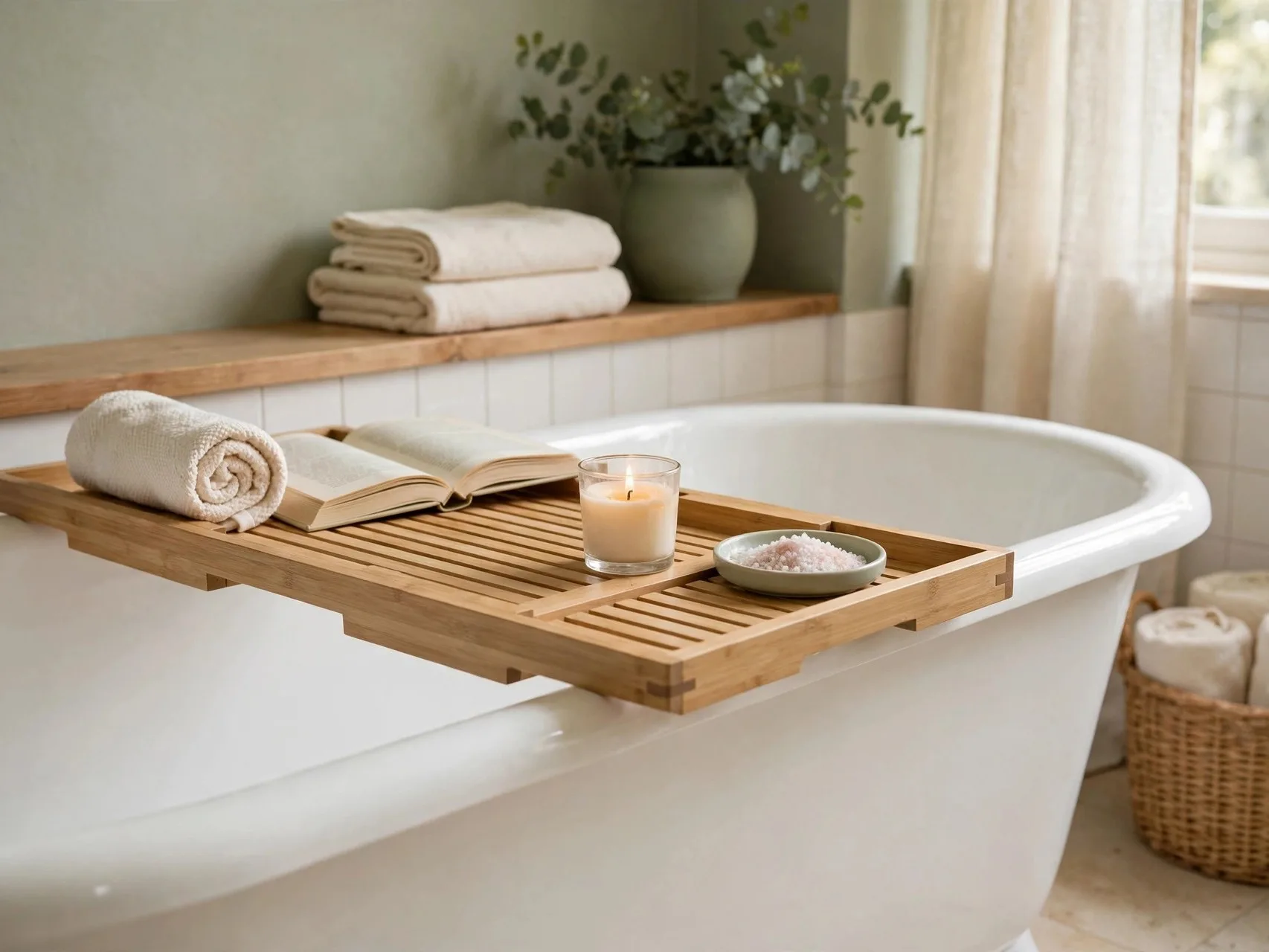
A bathtub caddy is part storage, part invitation to actually use the tub. A bamboo board that spans the tub width holds a book, a candle and a small tray of bath salts for $15 to $25, and it lifts those items off the tub rim where they got knocked into the water.
Measure your tub’s inner width first — most caddies adjust from 70 to 105 cm — and look for extendable arms with a phone or book rest. When it is not bath night, it stores rolled washcloths on the tub edge.
11. Stick suction-cup shelves on the shower glass
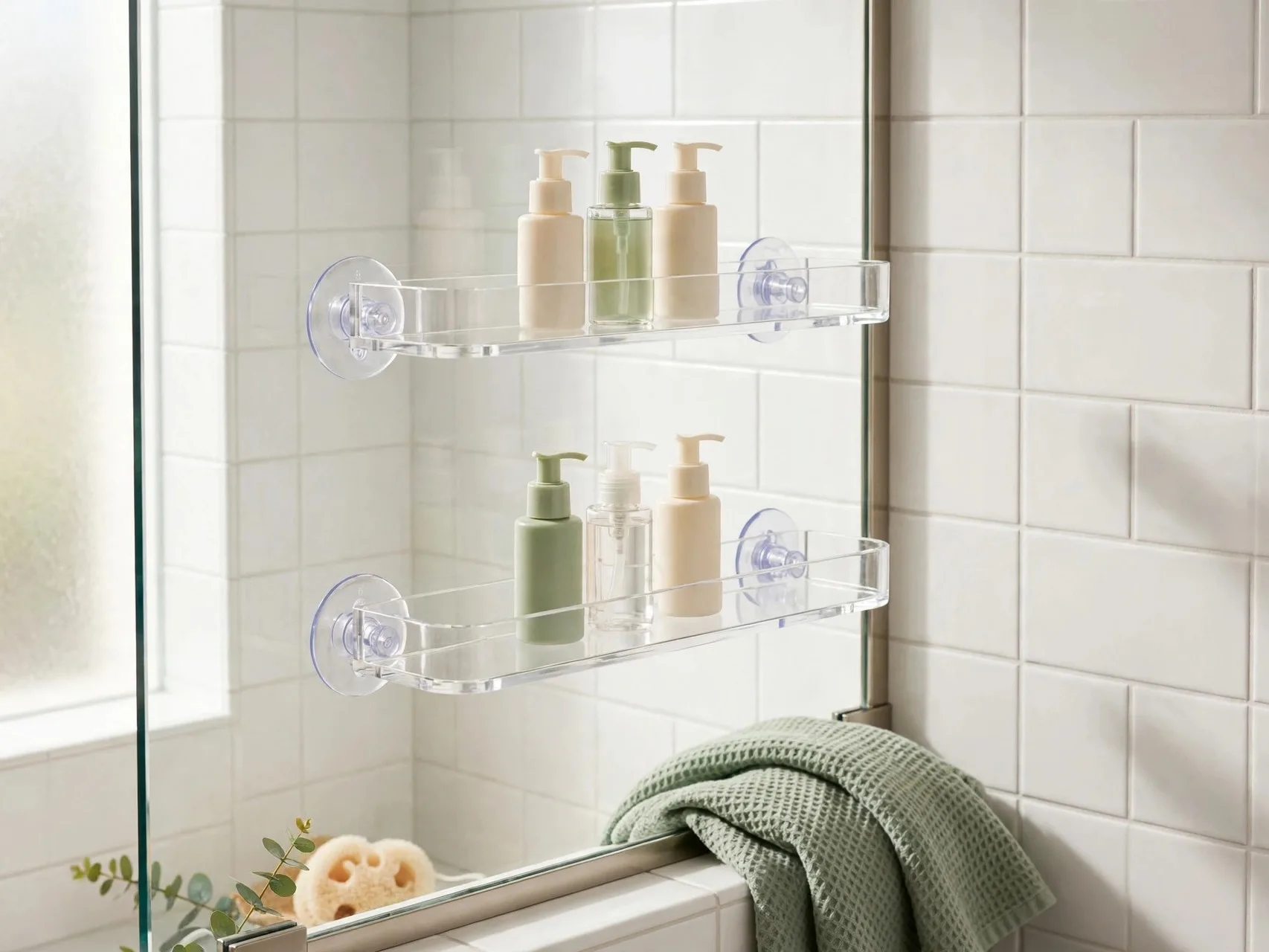
Renters, this one is yours: heavy-duty suction-cup shelves grip smooth tile or glass with no holes and hold two or three bottles each for $9 to $15 a pair. They are perfect for a shower where the landlord said no to drilling.
Press them onto clean, dry, flat tile — textured tile will not hold — and re-press once a month. Keep the load light: bottles, not the full-size economy shampoo. If one ever slips, it is telling you the surface was dusty, not that the idea failed.
Under the sink
12. Fit stackable pull-out drawers around the pipes
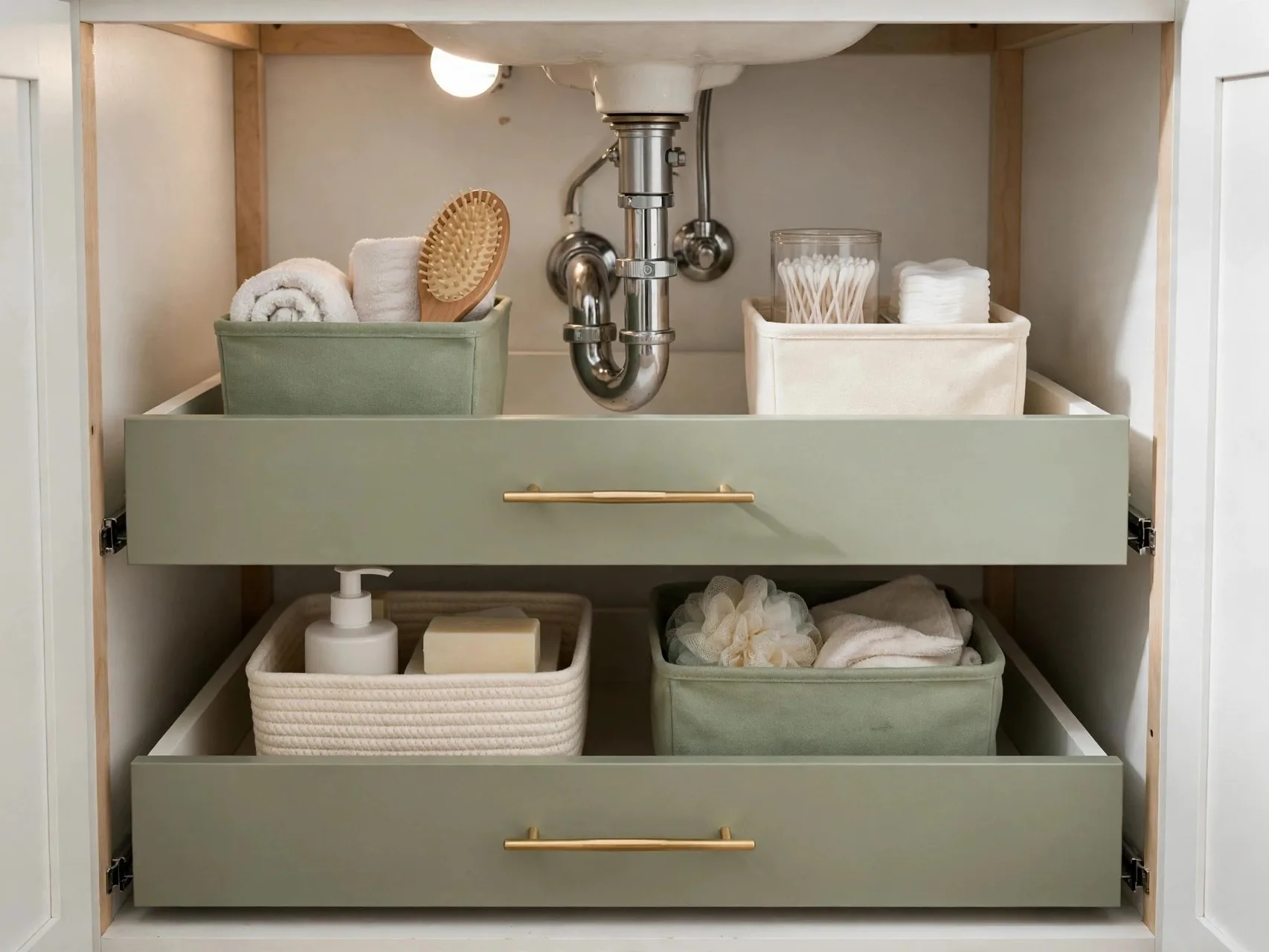
The cabinet under the sink is the biggest storage zone in most bathrooms and the least usable, because the pipes eat the middle. Two stackable pull-out drawers — one on each side of the plumbing — turn that dead space into slide-out shelves for $15 to $28 a pair.
Measure the interior height and the pipe positions before ordering; most drawers are 15 to 20 cm tall. Pull-outs beat static shelves here because you can reach the back without emptying the front, which is the whole reason under-sink cabinets become black holes.
13. Hang a tension rod under the sink for spray bottles
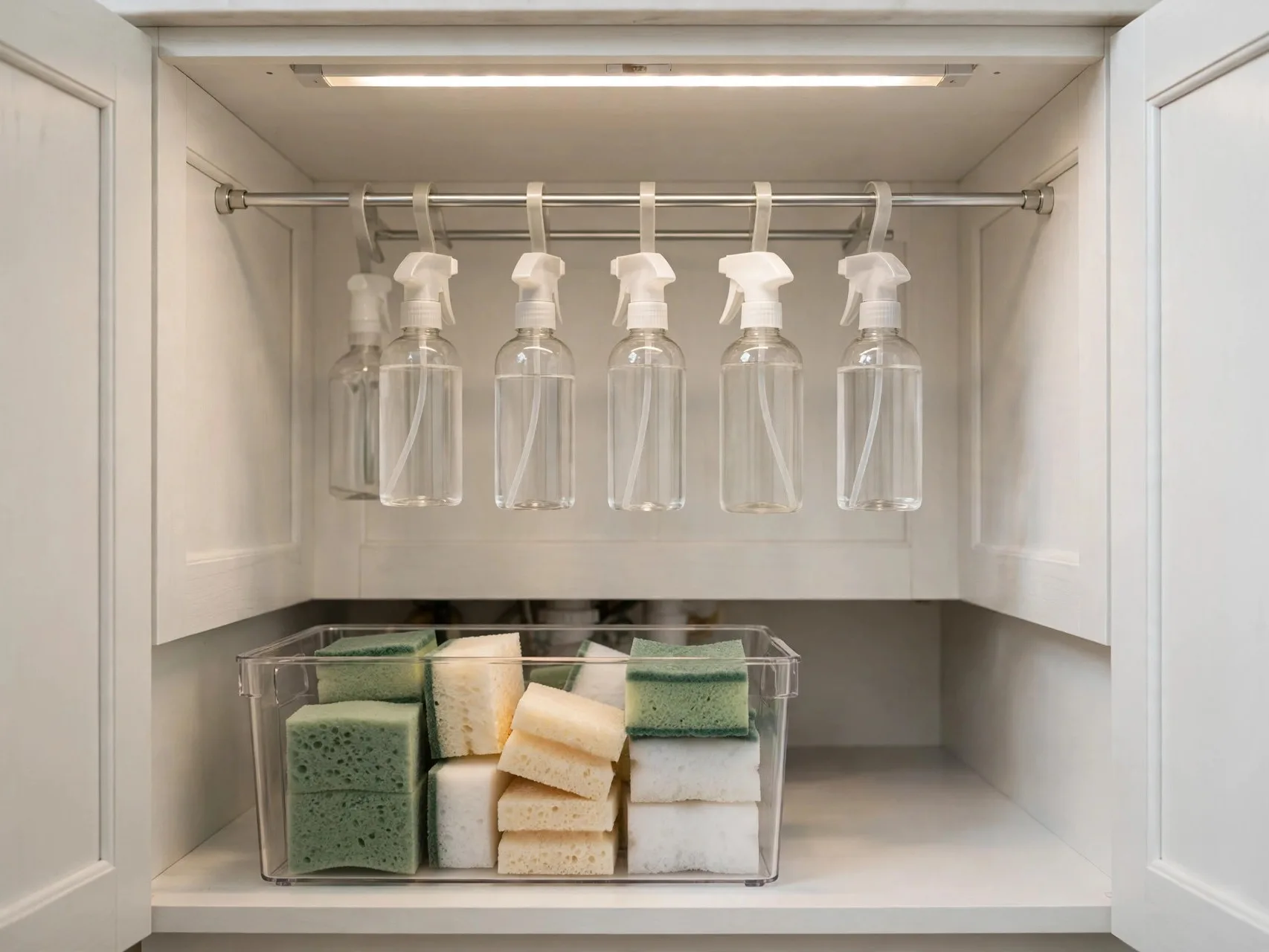
Here is the $6 version of under-sink organization: a small tension rod mounted high across the cabinet interior, with spray bottles hung by their triggers. It frees the entire cabinet floor for bins and stacks.
This works best in cabinets at least 45 cm wide. Keep the heaviest bottles on the floor and only the light everyday sprays on the rod — a rod is strong, but it is still friction holding everything up, so do not overload it.
14. Add an inside-door caddy for sponges and brushes
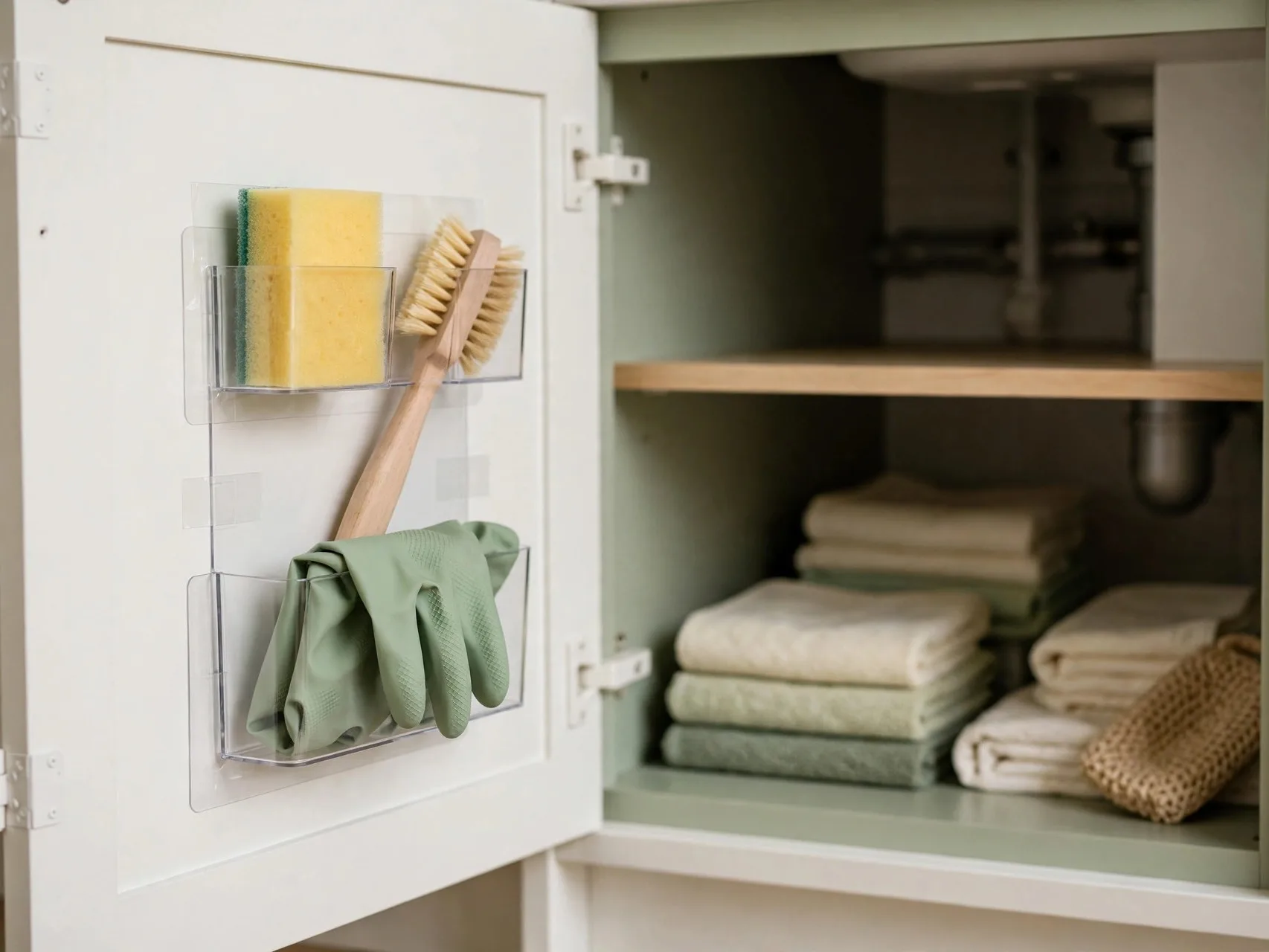
The inside of the sink cabinet door is about 30 by 40 cm of storage most people never use. A slim over-the-door or adhesive caddy there holds sponges, the toilet brush, gloves and spare trash bags for $7 to $12.
Stick to slim profiles — no more than 8 cm deep — so the door still closes. This is the ideal spot for the unglamorous stuff: cleaning gloves, the plunger-adjacent supplies, the things you need monthly but never want on display.
15. Spin cleaning supplies on a turntable
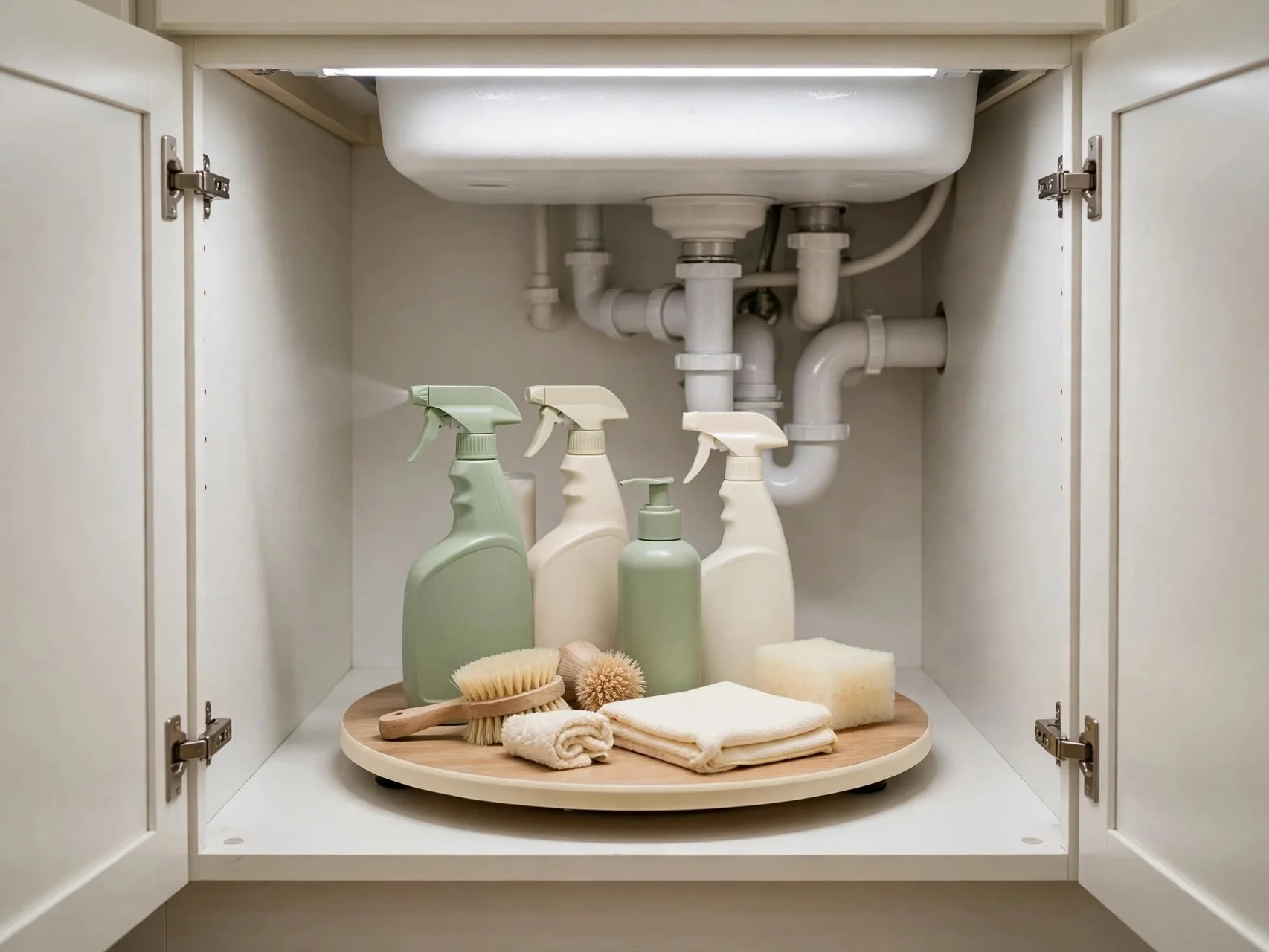
Cleaning bottles are tall, tippy and always hiding behind each other. A 25 cm turntable on the cabinet floor corrals them into one spin-to-reach zone for $9 to $14, and the raised rim stops the domino-topple when you grab the glass cleaner.
Group by task on the turntable: daily wipe-down sprays in front, deep-clean bottles behind. If your cabinet is tall, stack a second smaller turntable on a riser to use the vertical space too.
16. Sort the chaos into category bins
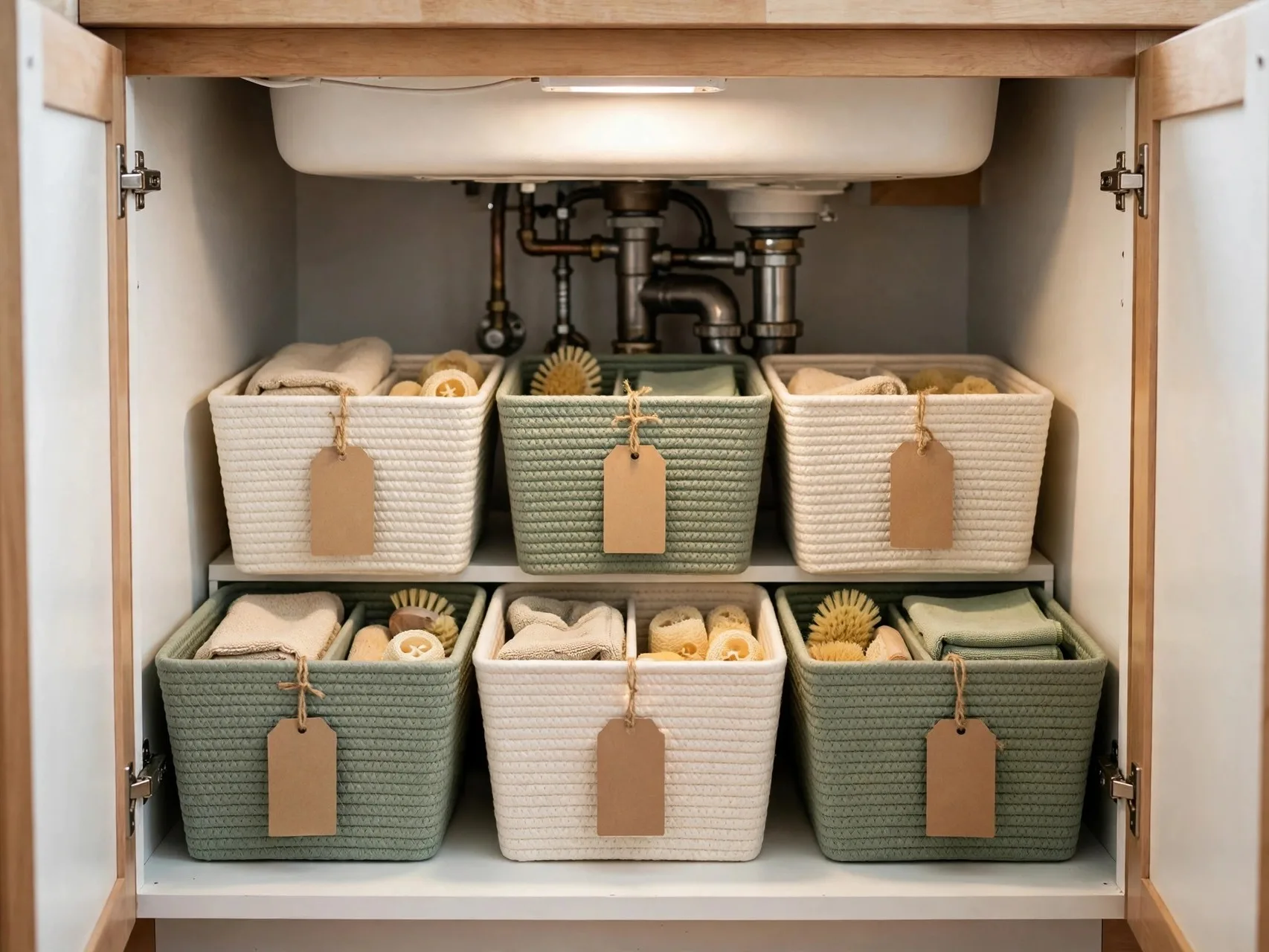
One big under-sink bin becomes a junk drawer with plumbing. Three or four small bins sorted by category — first aid, hair tools, cleaning, back-up stock — mean you pull out one bin instead of excavating, and most cost $3 to $6 each.
Keep the bins open-top or lidded depending on how dusty your cabinet gets, and stick to one material so they stack neatly. The categories matter more than the containers: when every item has a category, putting things away takes seconds.
17. Stack lidded bins to hide the messy middle
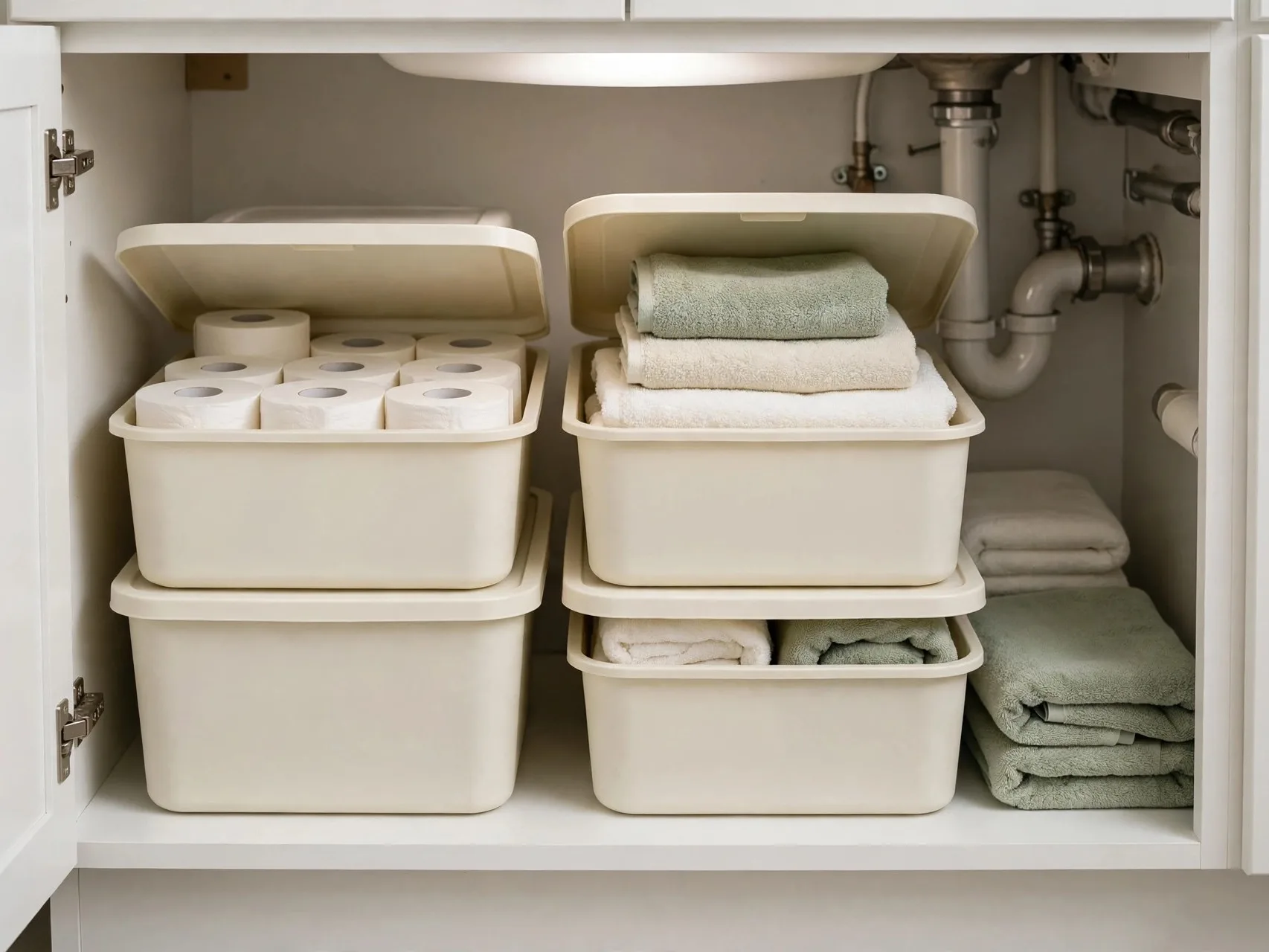
Some things do not need to be pretty; they need to be contained. Stackable lidded bins, about 20 by 30 cm, hide the visual mess of extra toilet paper, old towels awaiting donation and the half-used products you are finishing up, for $4 to $8 each.
Lids matter here: they let you stack two or three high and keep dust off. Put the rarely-touched bin on the bottom and the back-up toiletries on top, so the daily stuff is always the easiest to reach.
Walls and doors
18. Float two oak shelves above the toilet
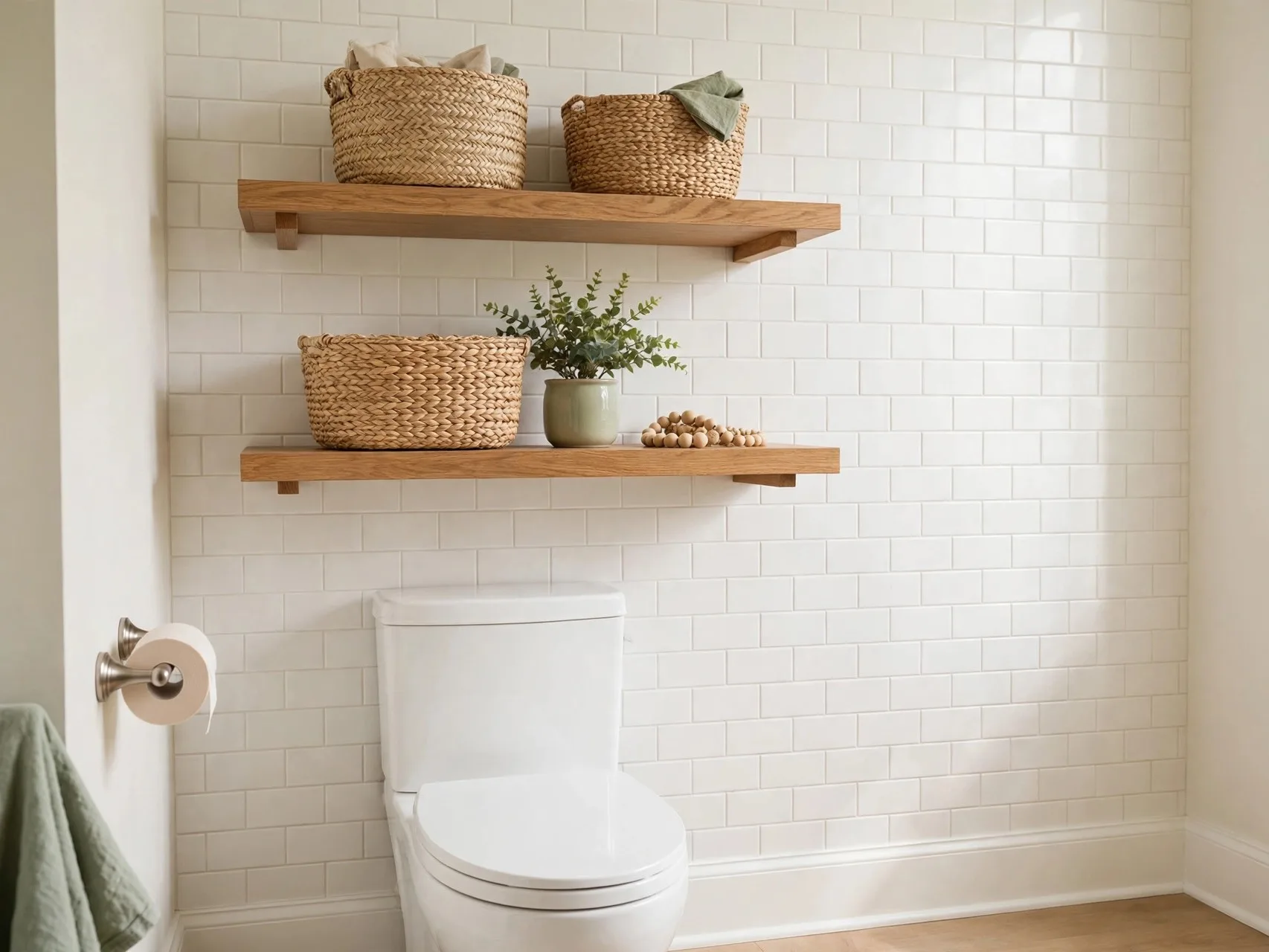
The wall above the toilet is the most underused real estate in the bathroom. Two floating oak shelves, each 60 by 15 cm, hold woven baskets of back-up toiletries and a small plant for $20 to $40 total, brackets included.
Mount into studs if you can; on tile, use proper masonry anchors and a level. Keep the lower shelf at least 25 cm above the tank lid so there is room to lift it, and reserve the shelves for things that do not mind a little humidity.
19. Lean a bamboo ladder shelf against the wall
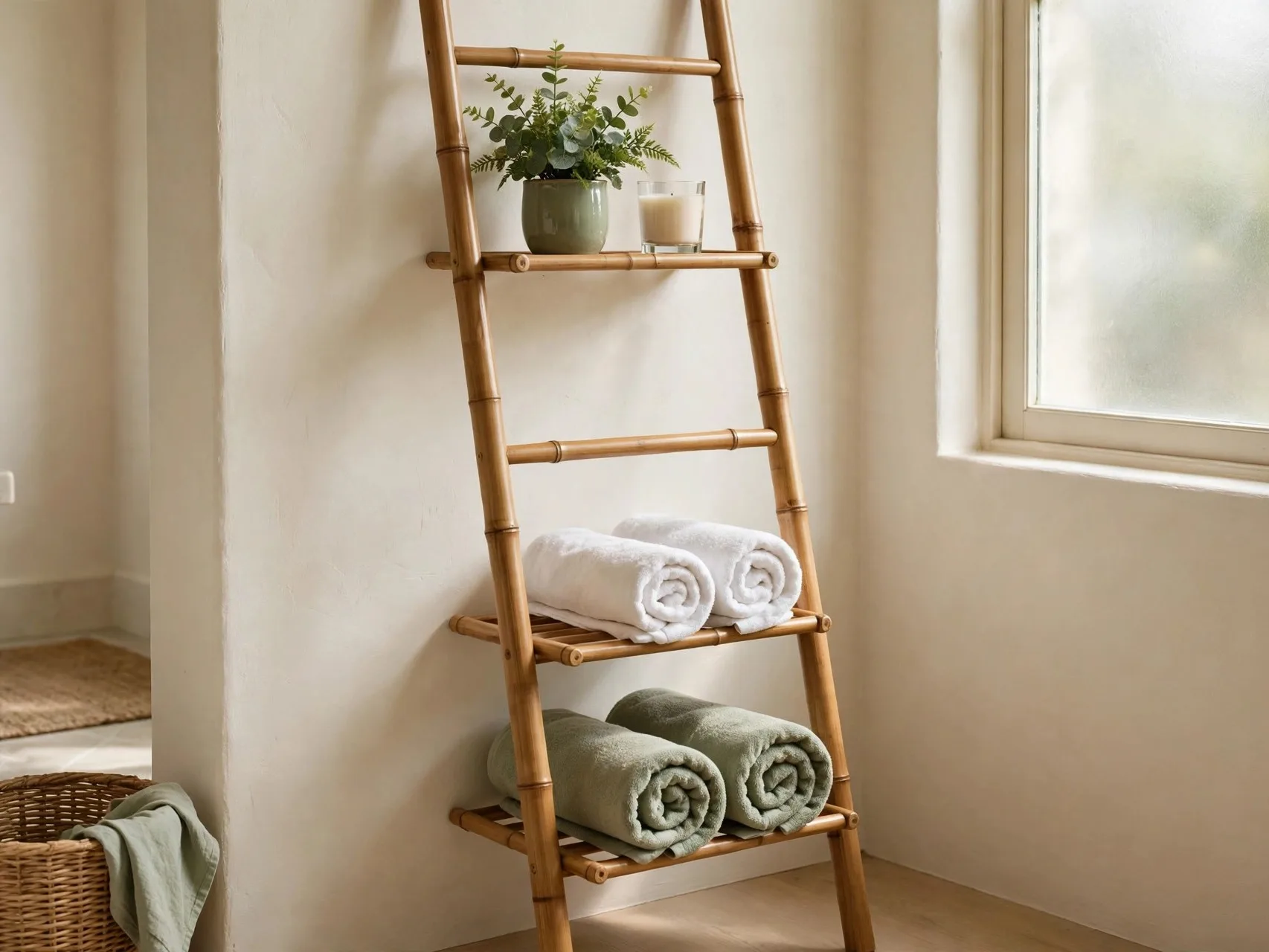
A ladder shelf needs no mounting, leans at a friendly angle and gives you four or five tiers in a 40 cm footprint — ideal beside the vanity or in that awkward gap by the door. Bamboo models run $25 to $45.
Roll towels on the wider lower rungs and keep the narrow top rungs for a candle and a small plant. The lean means it is renter-friendly, but anchor the top with an adhesive strap if you have toddlers who climb.
20. Fix a peg rail for robes and guest towels
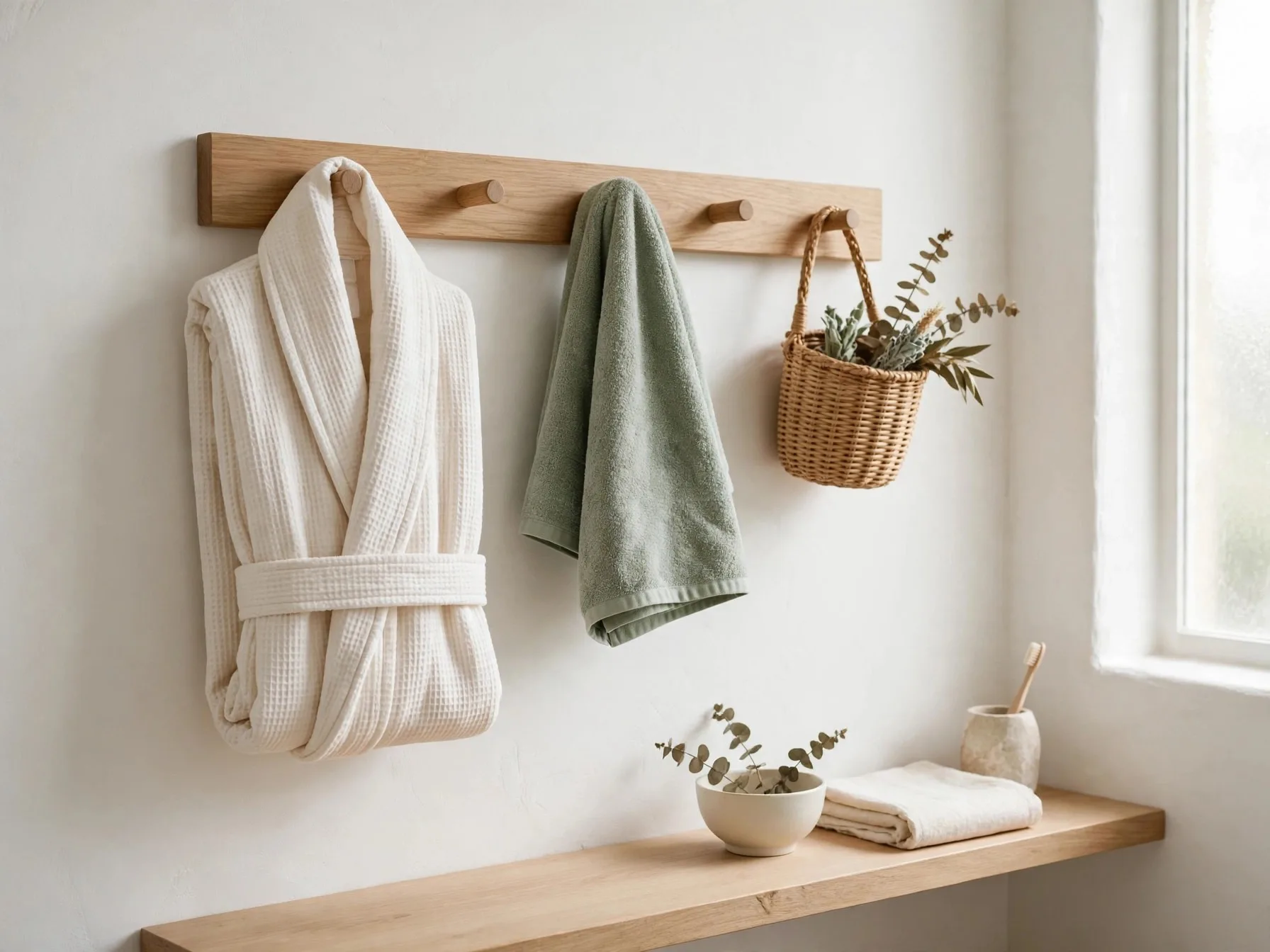
One blank wall becomes a whole wardrobe with a wooden peg rail. Six to eight pegs on a 60 cm rail hold robes, the guest towel and tomorrow’s outfit for $12 to $22, and everything hangs in the open where it actually gets used.
Mount at about 150 cm for adults or add a lower rail at 100 cm for kids. Pegs beat hooks here because robes and towels stay put on a peg — they slide right off a plain hook the moment the door slams.
21. Stick a magnetic strip inside the cabinet door
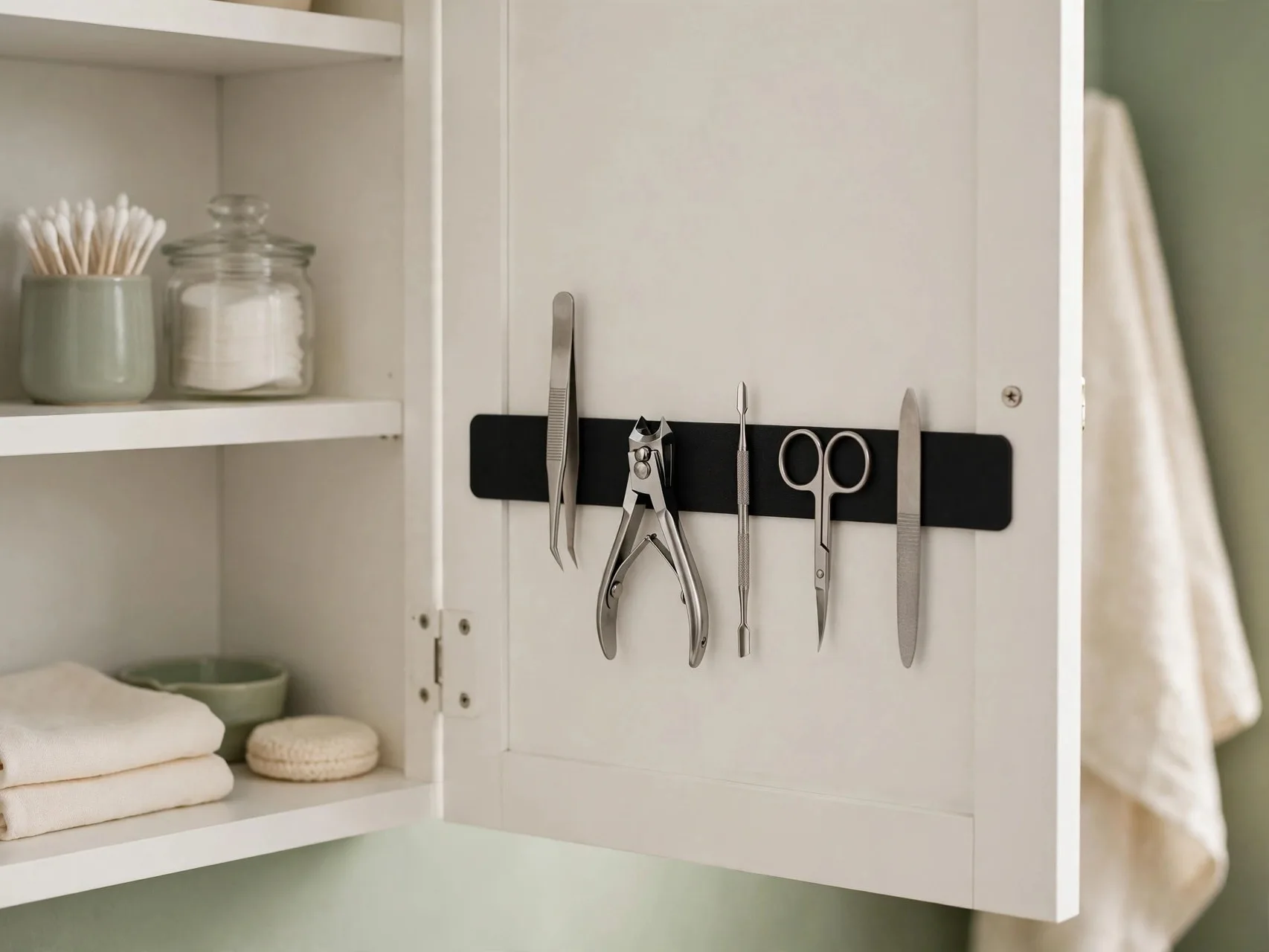
Tweezers, nail clippers and bobby pins vanish into drawers and never come back. A 20 cm adhesive magnetic strip inside the medicine cabinet or vanity door keeps every metal tool visible and grabbable for about $6.
Wipe the door surface with rubbing alcohol before sticking, and press firmly for a full minute. Keep the strip away from anything with a magnetic stripe, like hotel key cards, and it will hold its grip for years.
22. Hang an over-the-door organizer for heat tools
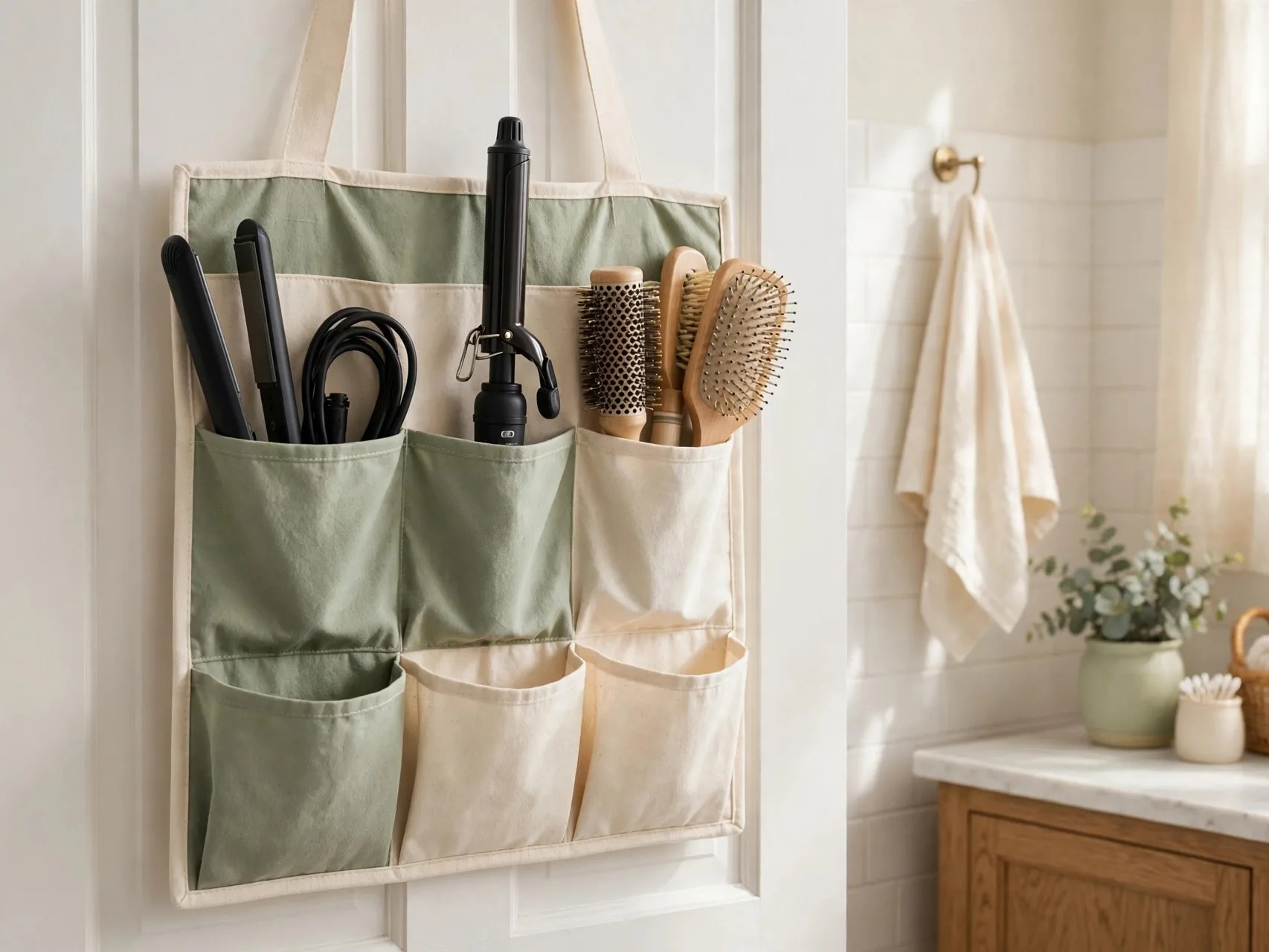
Straighteners and curling wands are the awkward teenagers of bathroom storage: long, hot and homeless. An over-the-door organizer with heat-safe pockets hangs on any standard door for $10 to $18 and gives each tool its own sleeve.
Let tools cool for five minutes before pocketing them, even in heat-rated fabric. The door back also swallows the hair dryer and round brushes, which clears the counter in one move.
23. Build a grab-and-go guest basket with the 10 essentials
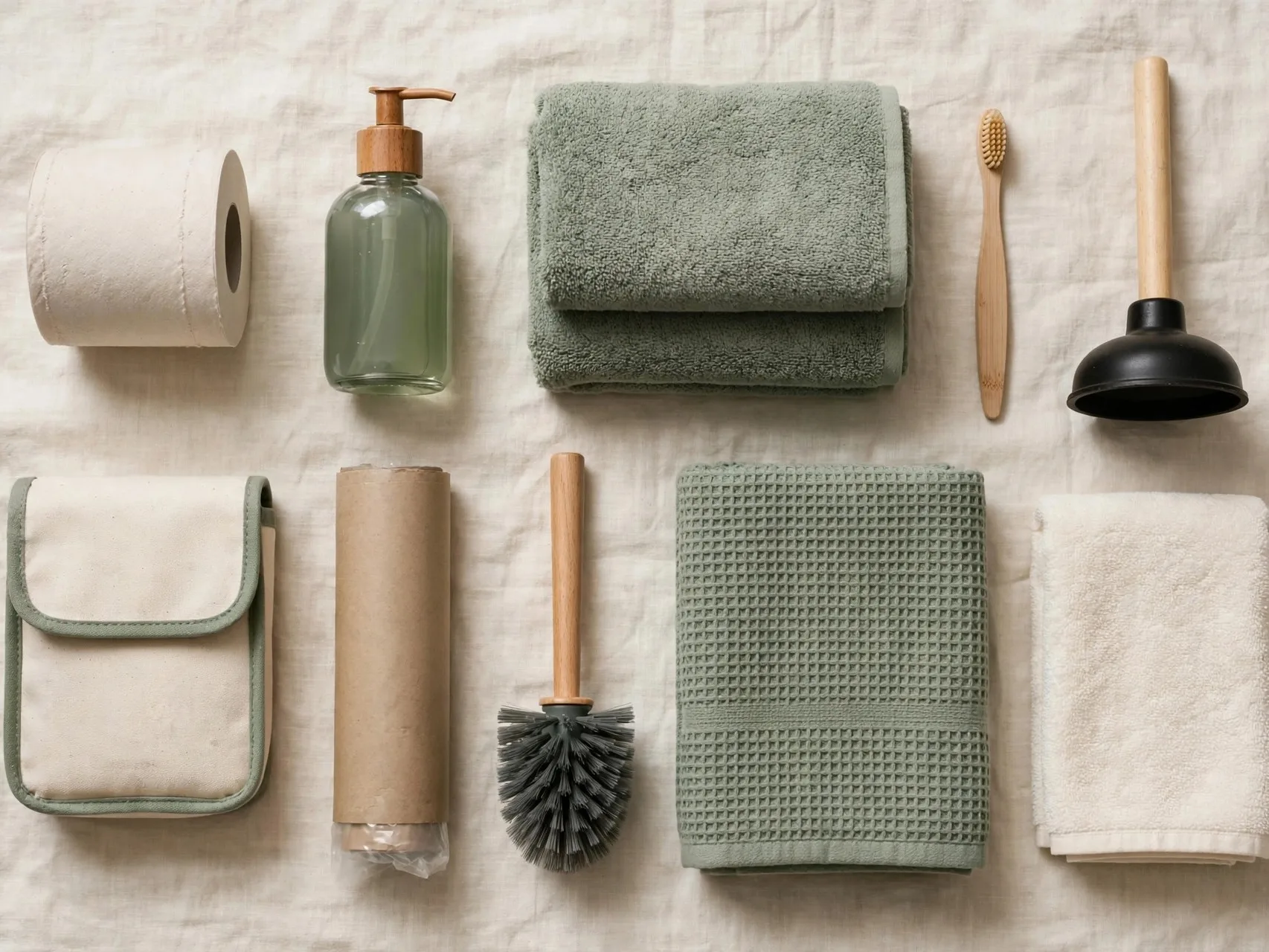
Guests should never have to ask where things are. One open woven basket stocked with the ten bathroom essentials — toilet paper, hand soap, towels, a toothbrush, a plunger, a first aid kit, trash can liners, a toilet brush, a bath mat and a hand towel — covers every awkward moment for the cost of a $10 basket plus things you mostly own.
Set it on the counter or the tank lid before visitors arrive, and refresh the consumables after they leave. It doubles as your own back-up station during the week.
Over the toilet
24. Stand a floor-standing etagere over the toilet
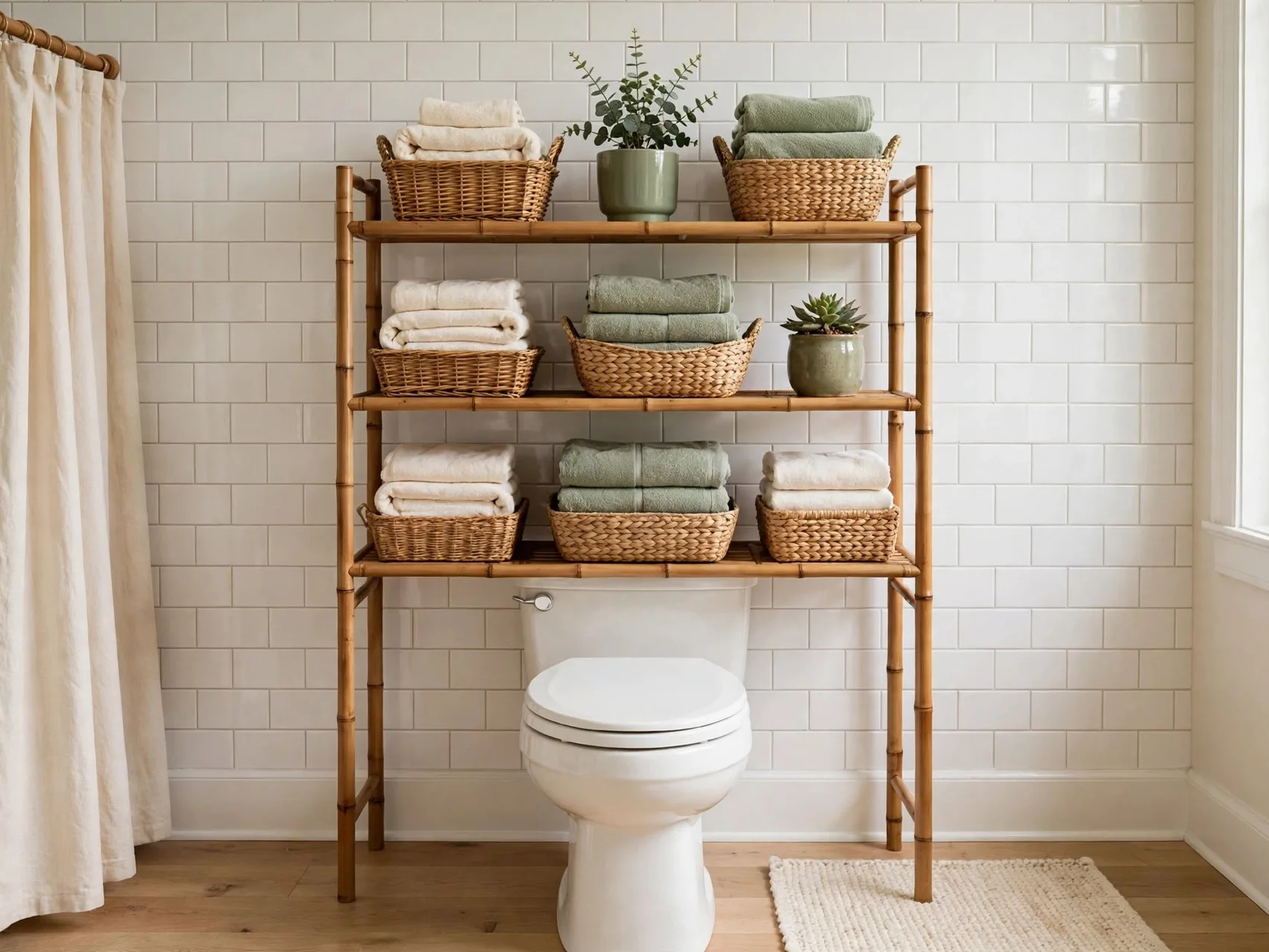
If drilling is off the table, a floor-standing etagere does the same job as floating shelves with zero holes. The slim frame straddles the toilet and offers three open shelves for baskets and folded towels, typically $30 to $55 in bamboo or metal.
Measure your toilet’s width and the tank height before buying — most frames fit tanks up to 70 cm wide. Anchor it to the wall with the included strap if it feels wobbly; a loaded etagere is top-heavy by nature.
25. Dress the toilet tank with a narrow tray
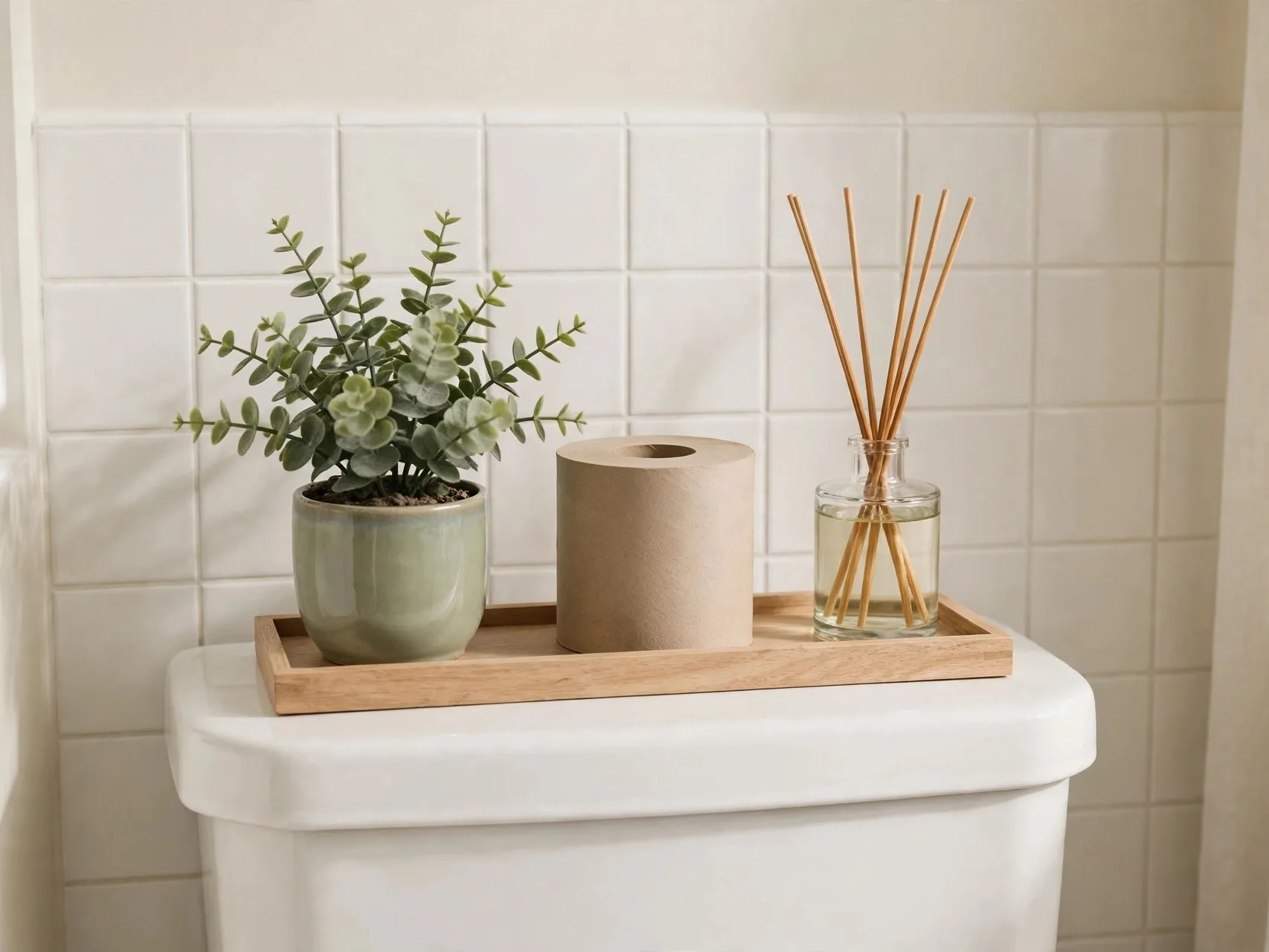
The tank lid is a free shelf hiding in plain sight. A narrow wooden or stone tray, about 30 by 12 cm, turns it into a tidy landing spot for a small plant, the spare roll and a reed diffuser — no drilling, no brackets, about $8 to $15.
Keep the tray shallow and the items light so the lid still lifts easily for maintenance. This is display-plus-function territory: one spare roll plus one pretty thing is the right ratio.
26. Slide a slim rolling cart beside the vanity
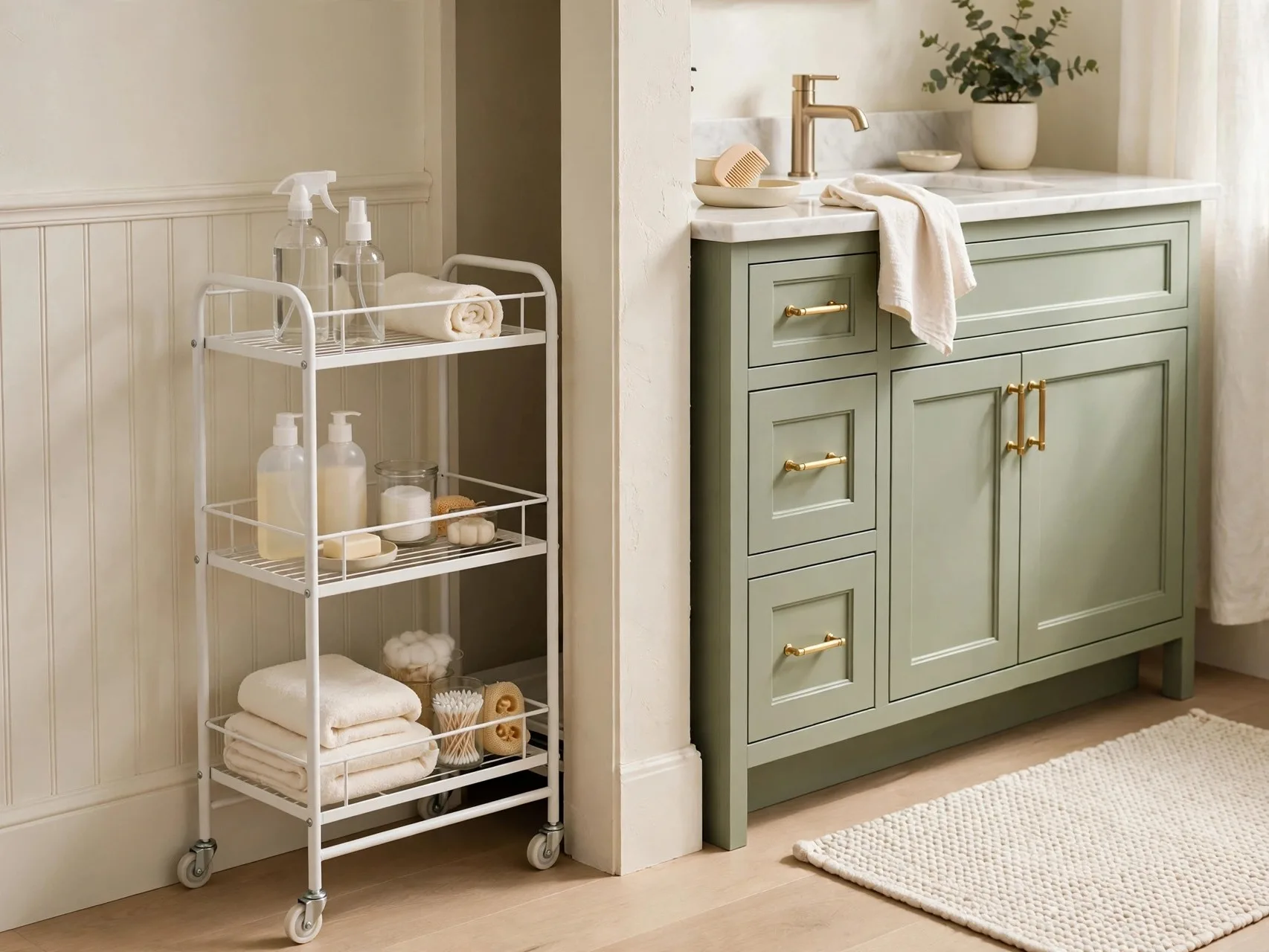
That 10 to 15 cm gap between the vanity and the wall is not wasted space — it is a cart waiting to happen. A slim three-tier rolling cart slides into the gap and holds cleaning sprays, back-up shampoo and the first aid kit for $15 to $25.
Measure the gap twice; carts come in 10, 13 and 18 cm widths and the wheels add about 3 cm. The roll-out design means you only see it when you need it, which keeps the bathroom looking bigger than it is.
27. Hang a mirror-front wall cabinet
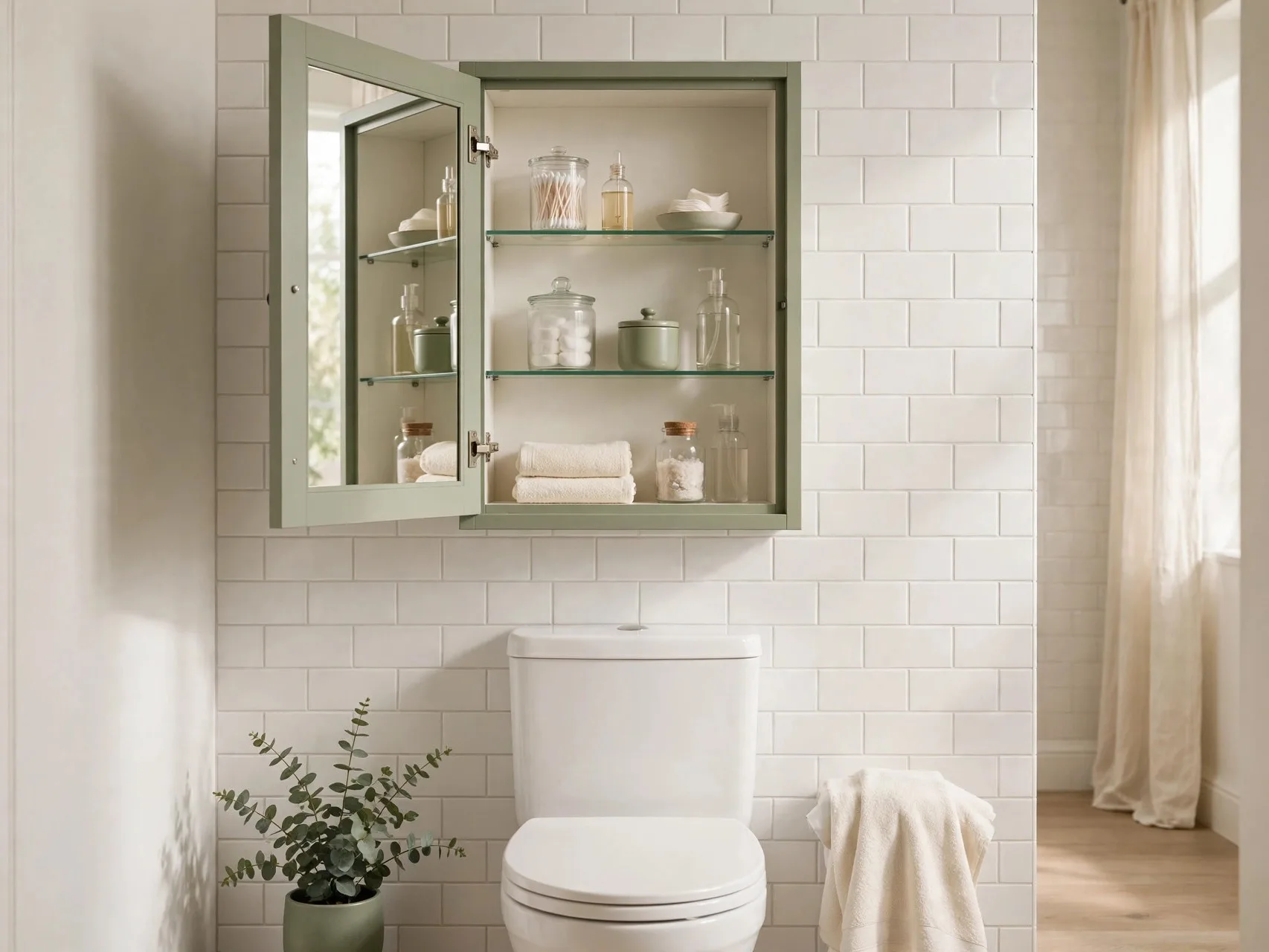
A mirror-front cabinet above the toilet or beside the vanity mirror doubles your storage without adding a single visual object — the mirror was going to be there anyway. Recessed models sit flush with the wall; surface-mount ones need about 12 cm of depth and cost $40 to $80.
This is the right home for daily medicines in sealed containers, contact lens supplies and the items you want behind a door but within arm’s reach of the mirror. Adjustable glass shelves stop tall bottles from wasting the top half.
Towels and linen
28. Roll towels into a rattan floor basket
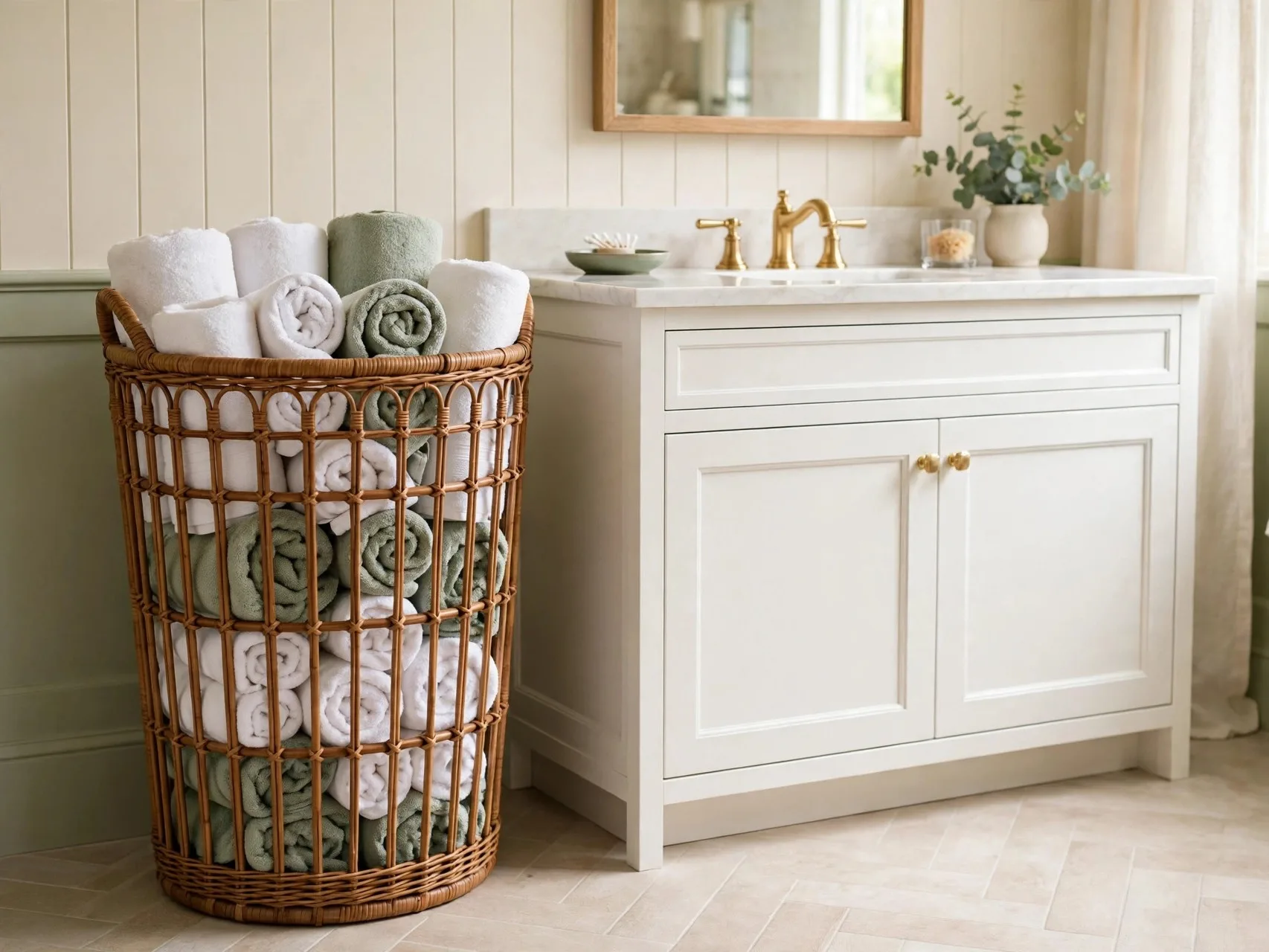
Rolled towels in a tall rattan basket look like a spa and store like a dream: a 40 cm basket swallows six to eight bath towels in a 30 cm footprint for $18 to $30. Rolling beats folding here because you can see every towel at a glance.
Keep the basket beside the vanity or in the corner by the shower, and toss a sachet of dried lavender inside so the towels smell as good as they look. Wash the basket’s liner monthly — bathrooms are humid and rattan appreciates the airflow.
29. Turn a wine rack into a towel cubby
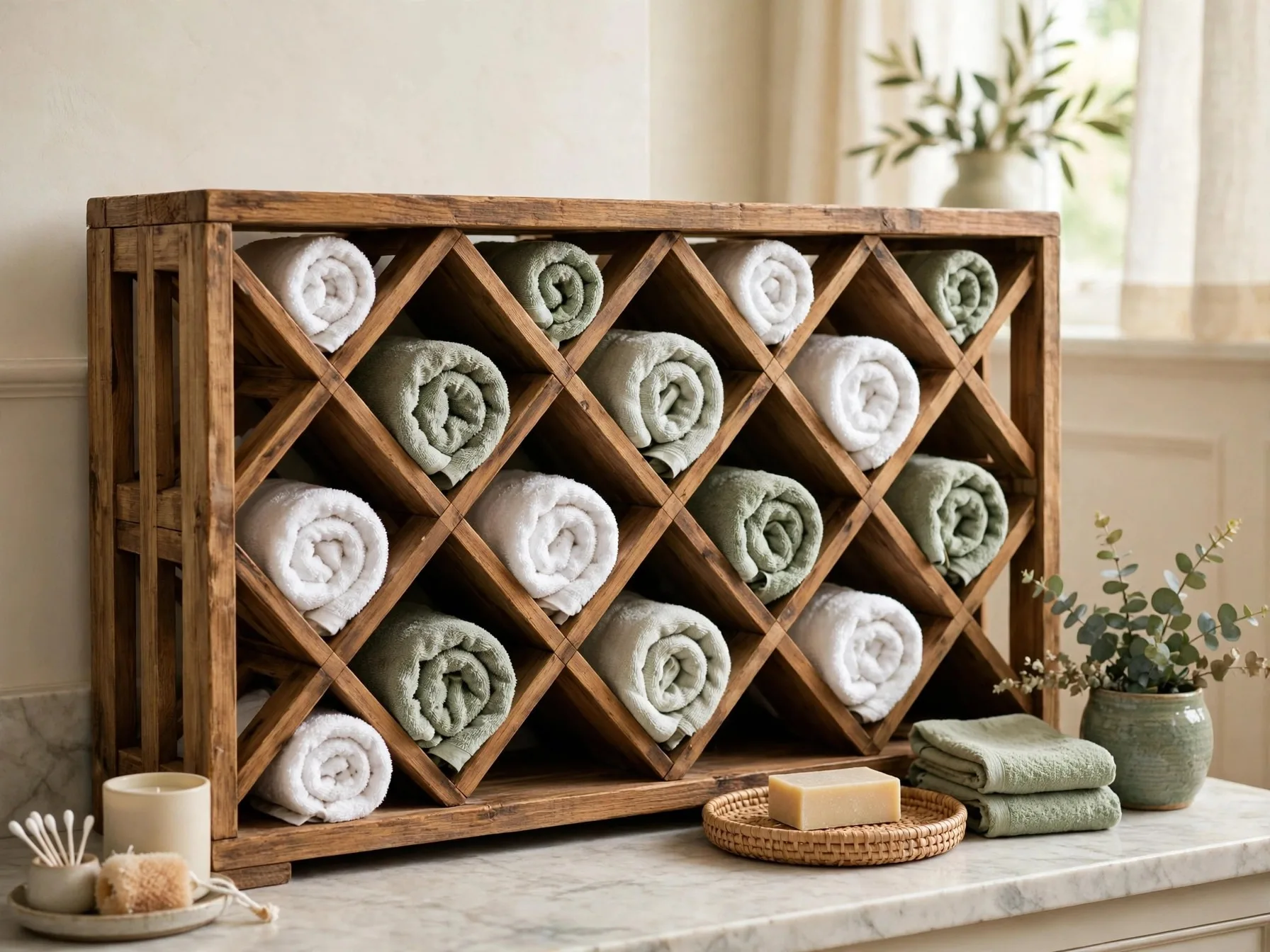
A wooden wine rack is secretly a perfect towel cubby: each X-shaped slot cradles one rolled bath towel or two hand towels, and the whole thing costs $12 to $20 second-hand. It is one of the cheapest ways to get that boutique-hotel towel wall.
Stand it on the counter in a big bathroom or mount a small one on the wall. Roll the towels tightly — loose rolls sag out of the slots — and keep one slot empty so there is always somewhere for the fresh towel to go.
30. Add a second towel bar where you actually dry off
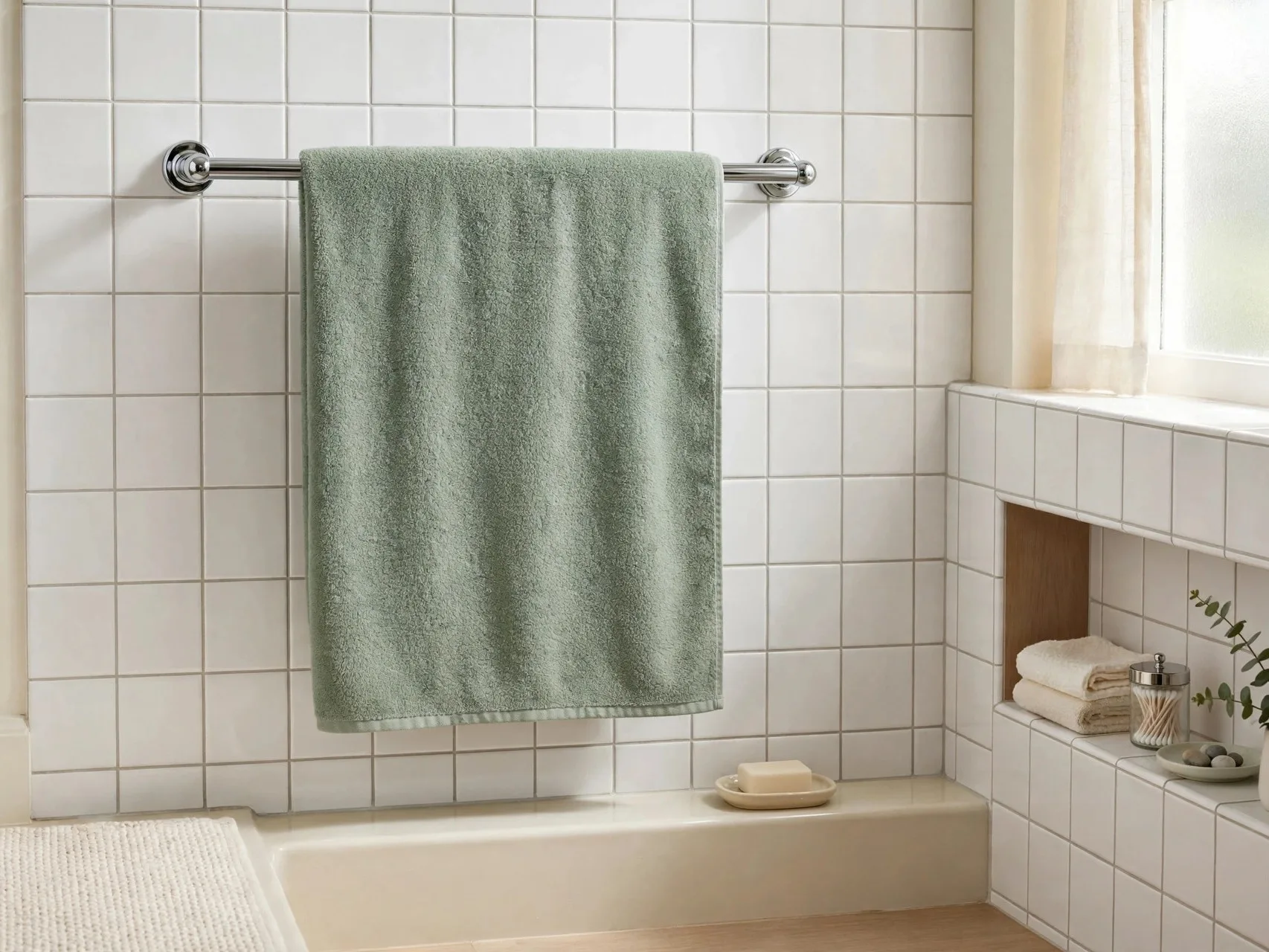
One towel bar by the sink means the shower towel lives draped over the shower door — damp, bunched and slow to dry. A second bar on the wall by the tub or inside the shower area gives every towel its own drying real estate for $10 to $18.
Adhesive or suction bars work on smooth tile for renters; screw-mounted bars are sturdier for heavy bath sheets. Hang bath towels fully spread, not folded in half, and they dry in hours instead of a day.
31. File-fold towels so you can see every one
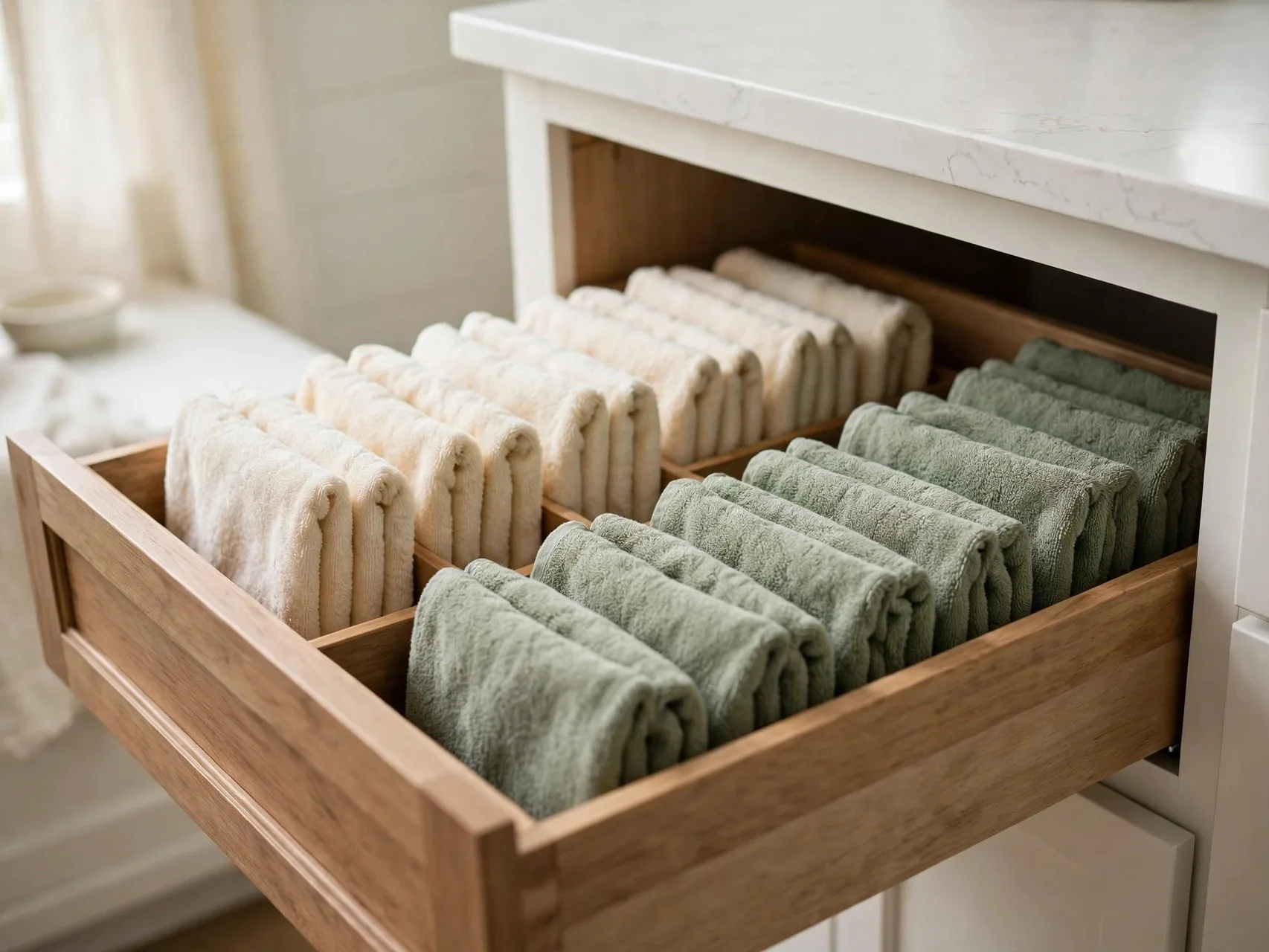
Stacked towels hide the good ones at the bottom forever. File-folding — folding each towel into a rectangle and standing them upright in a drawer or basket — lets you see every towel like files in a drawer, and it fits about 30 percent more in the same space.
This shines in a deep vanity drawer or a lidded basket on the shelf. Fold bath sheets into thirds before the final fold so they stand at the same height as the hand towels, and the whole drawer looks custom-fitted.
32. Swap the towel bar for hooks in a kids’ bathroom
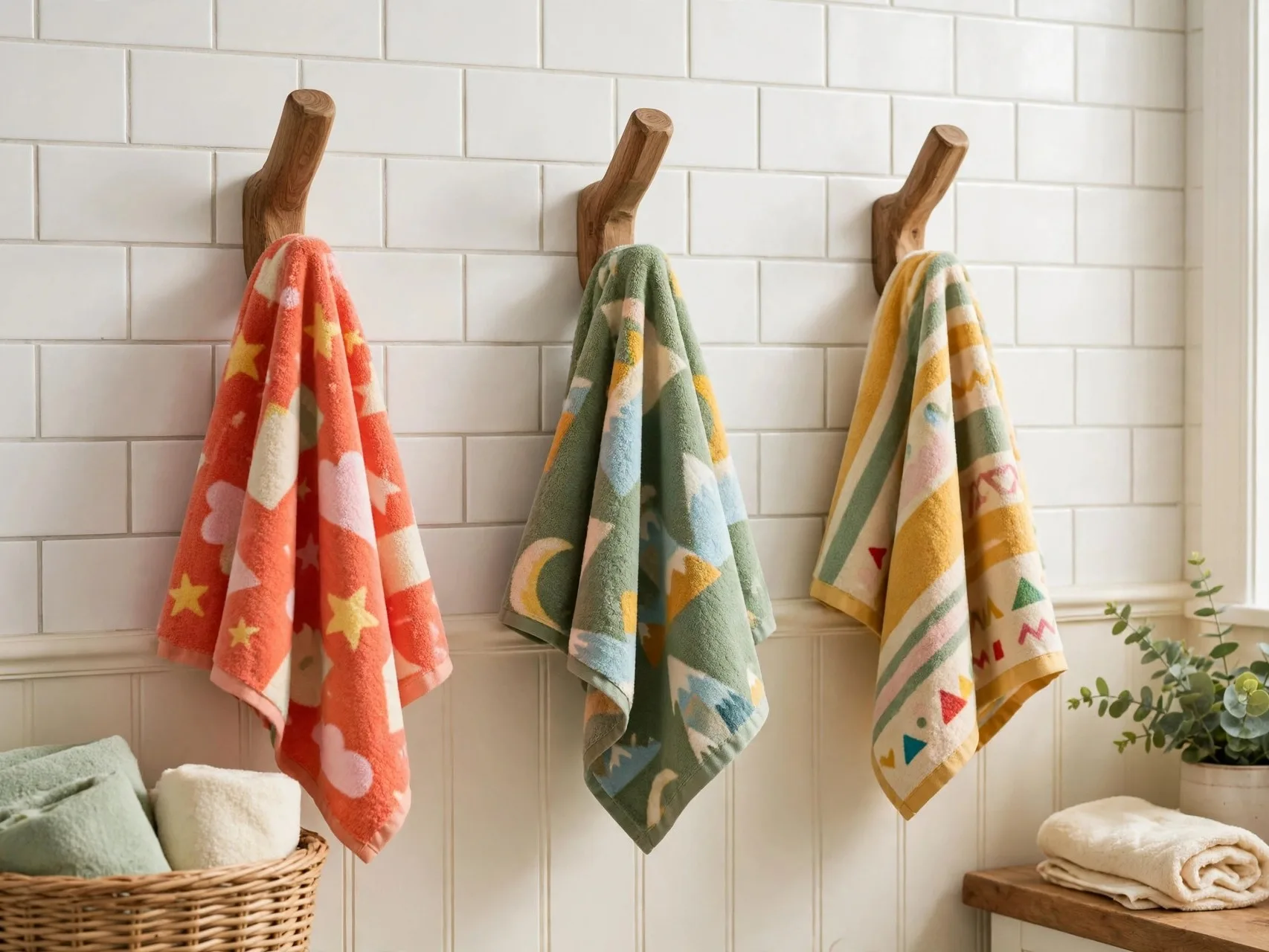
Kids will never fold a towel over a bar neatly — but they will sling it on a hook. Three chunky adhesive hooks at kid height (about 90 cm) hold the whole family’s towels for $8 to $12, and towels hung on hooks actually dry faster because air circulates around them.
Give each person their own hook and their own towel colour to end the mystery of whose towel is on the floor. Hooks also survive the daily yank far better than a bar’s mounting screws.
Drawers and vanity
33. Divide the vanity drawer with small trays
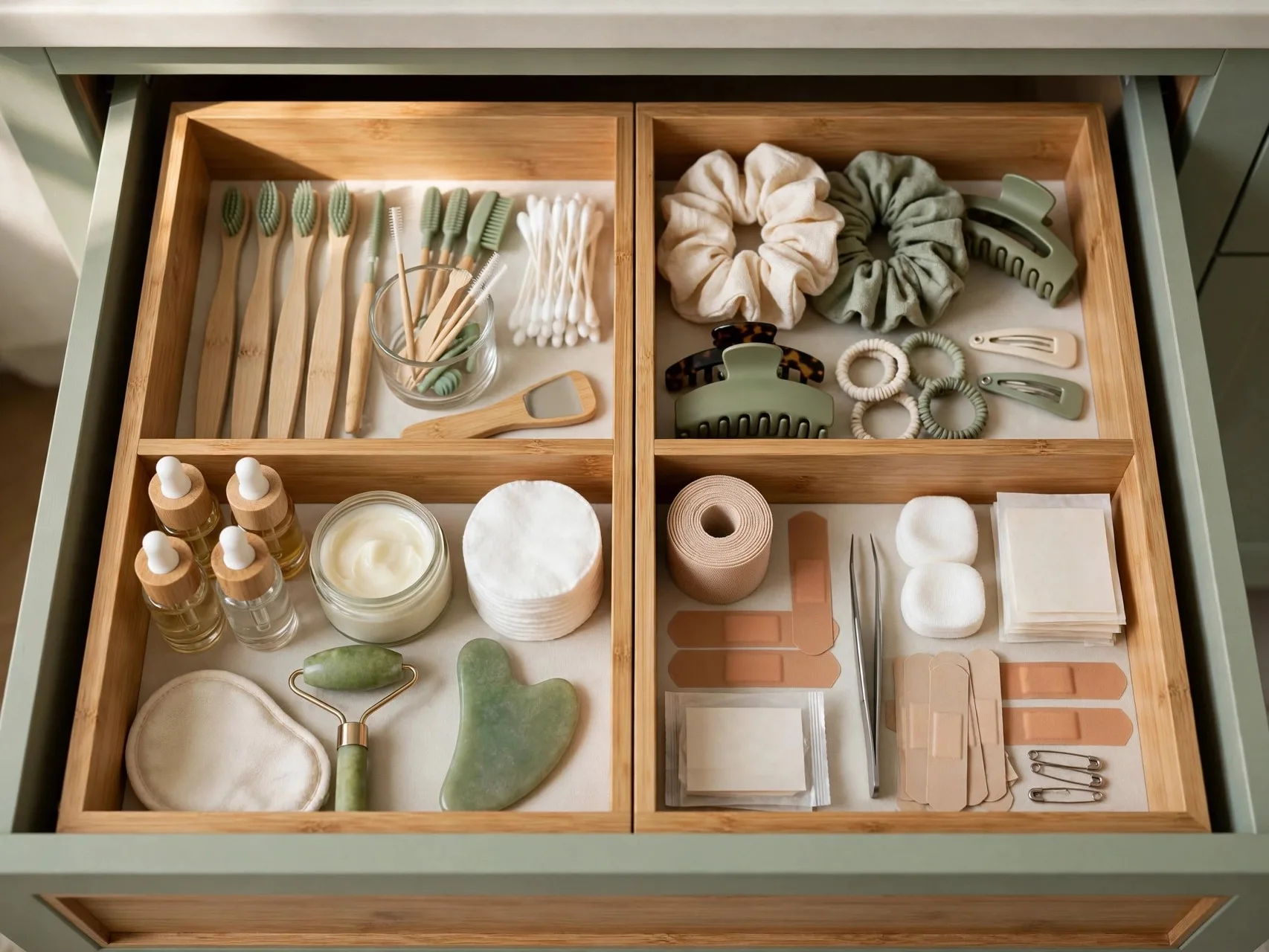
A deep vanity drawer without dividers is where hair ties go to die. Four to six small trays or a bamboo drawer organizer — $10 to $18 — split the drawer into zones for dental, hair, skincare and first aid, and suddenly everything is findable.
Measure the drawer’s interior before buying; most vanity drawers are 35 to 45 cm wide and 12 to 15 cm deep. Leave one tray empty on purpose: it becomes the landing zone for the things you are still deciding about.
34. Stack a clear makeup organizer
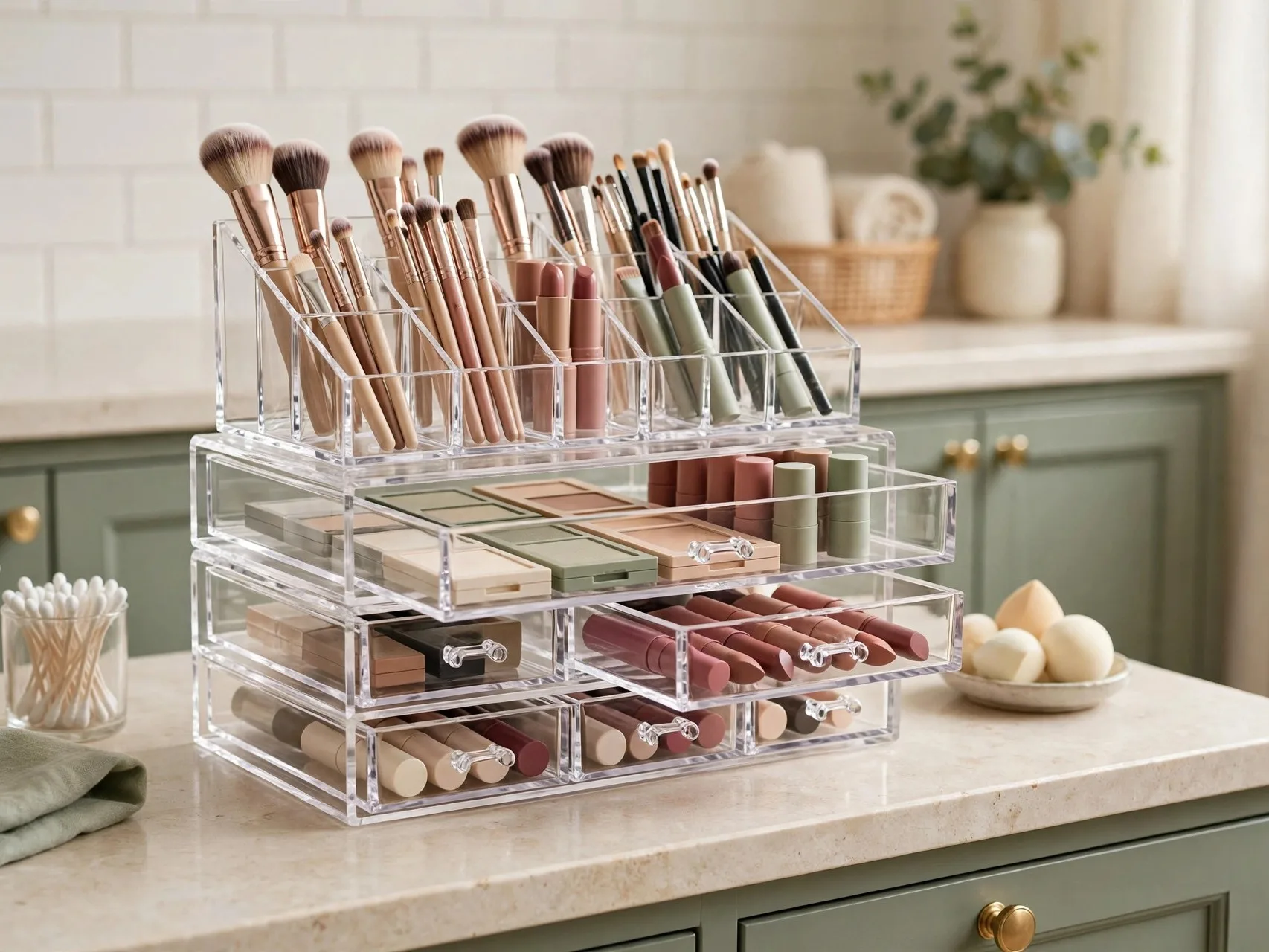
Makeup multiplies in the dark. A clear stackable organizer with drawers and top compartments — $12 to $20 — keeps palettes upright, lipsticks visible and brushes standing, so you use what you own instead of rebuying the same nude lipstick.
Keep it on the counter if you do makeup there, or inside a deep drawer if the counter needs to stay clear. Once a season, pull everything out and toss the expired mascara — most tubes only last three months once opened.
35. Decant cotton pads and swabs into apothecary jars
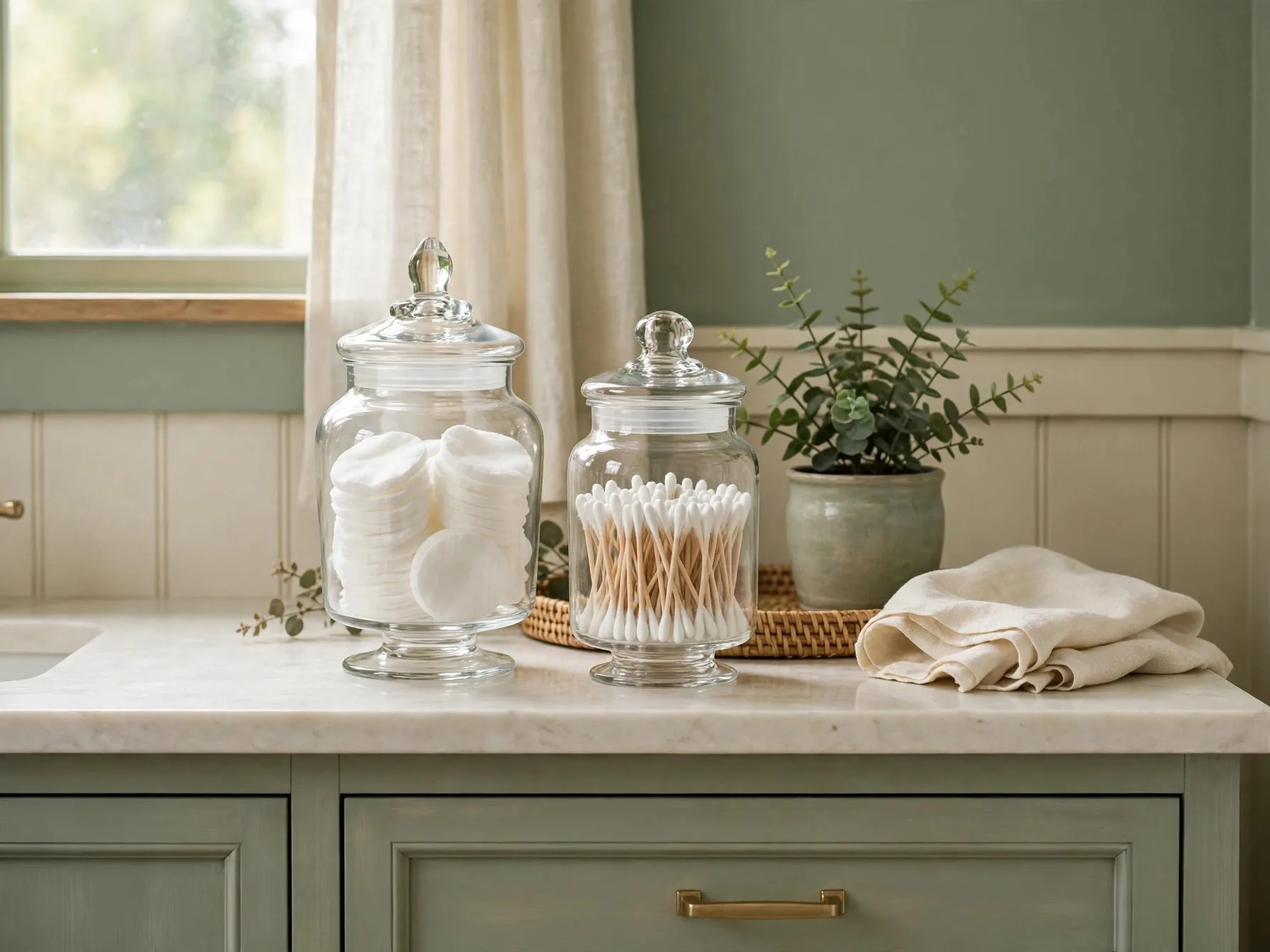
Cotton pads and swabs come in packaging that looks like clutter no matter what you do. Decanting them into glass apothecary jars — $6 to $12 for a set of two — turns a necessity into decor on the vanity or the open shelf.
Choose jars with lids to keep the humidity out, and pick a size you will actually refill: a jar that holds a month’s supply gets refilled, a giant one gets ignored. Line the jars up by height and the whole shelf looks styled.
36. Pocket the hot tools inside the vanity door
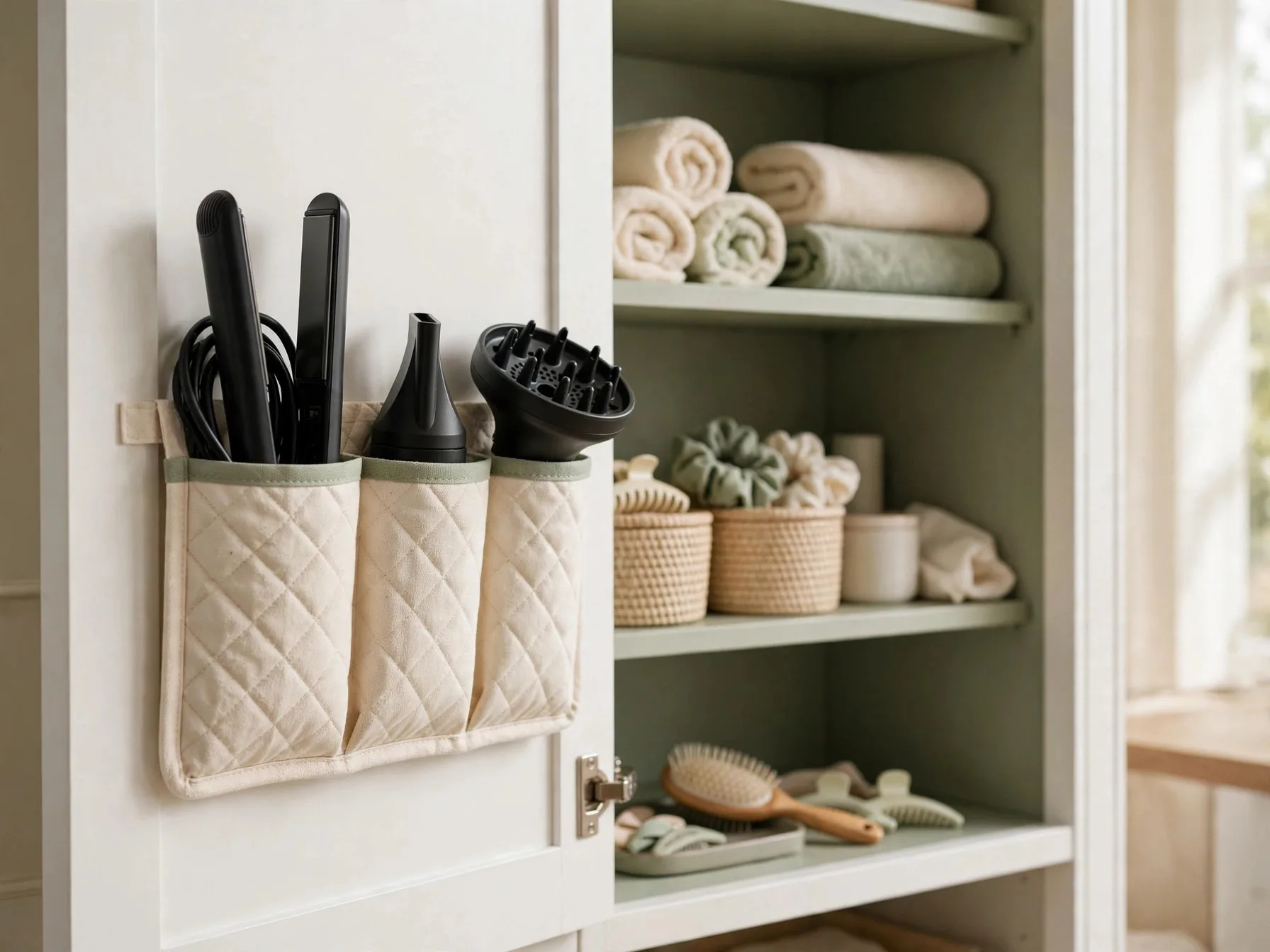
If the over-the-door organizer does not suit your door, the inside of the vanity door is plan B. A heat-safe adhesive pocket or a slim metal caddy mounted inside the door holds the straightener and dryer attachments for $9 to $15, completely out of sight.
Mount it on the door you open least often so the tools are not swinging every time you reach for toothpaste. Wait until tools are cool to the touch before pocketing — heat-rated means it tolerates warmth, not a fresh-off straightener.
Tiny bathrooms and renters
37. Squeeze floating shelves into a dead corner
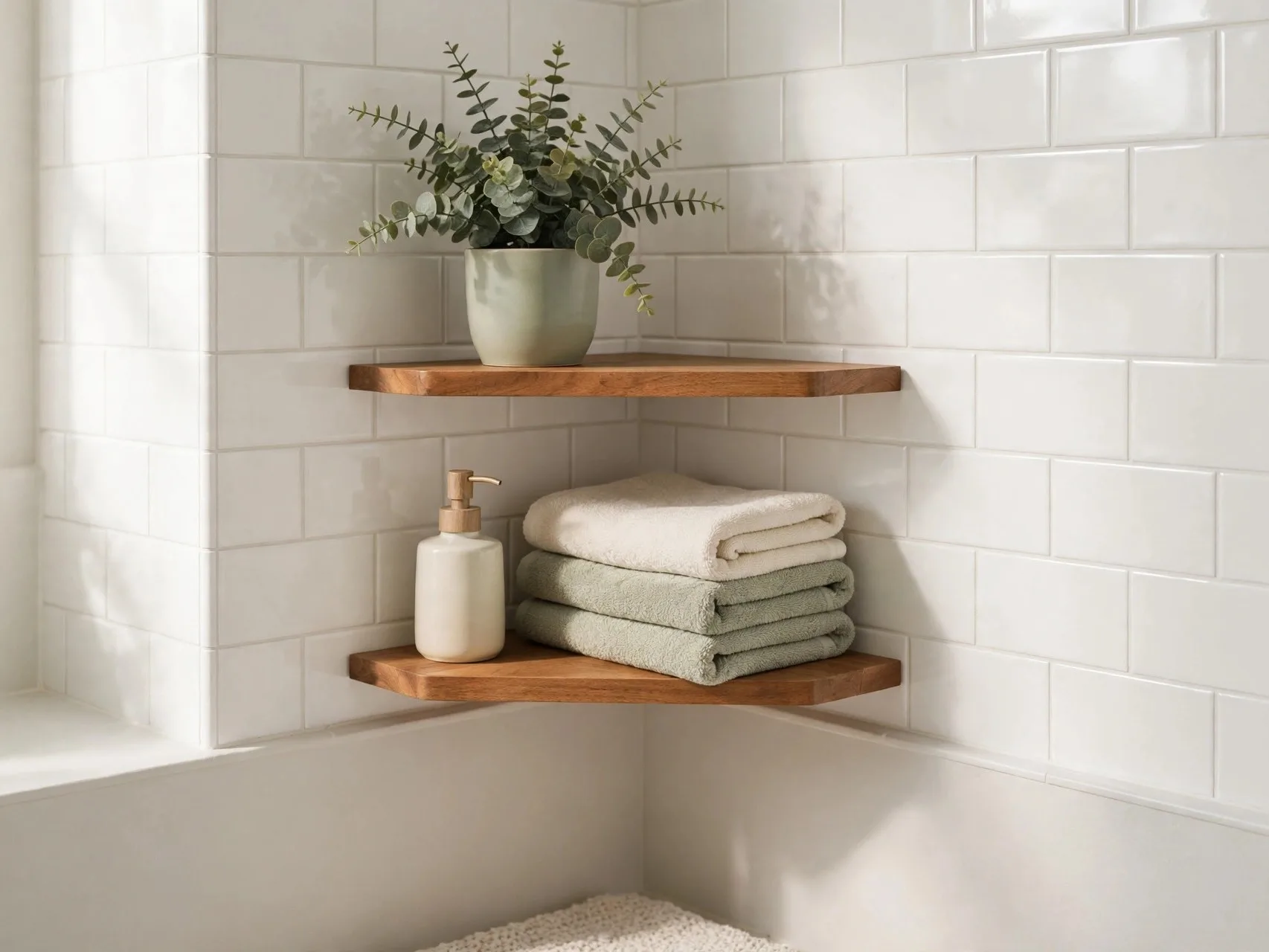
Every bathroom has a corner where nothing fits — too narrow for furniture, too awkward for a basket. Two small corner floating shelves, about 25 cm per side, claim that dead air for plants, spare rolls and the nice soap for $12 to $20.
Corner shelves need solid anchors; if the walls are hollow, use toggle bolts rated for the load. Style them lightly — three items per shelf maximum — or the corner starts looking cluttered instead of clever.
38. Stock spare rolls on a shelf above the door
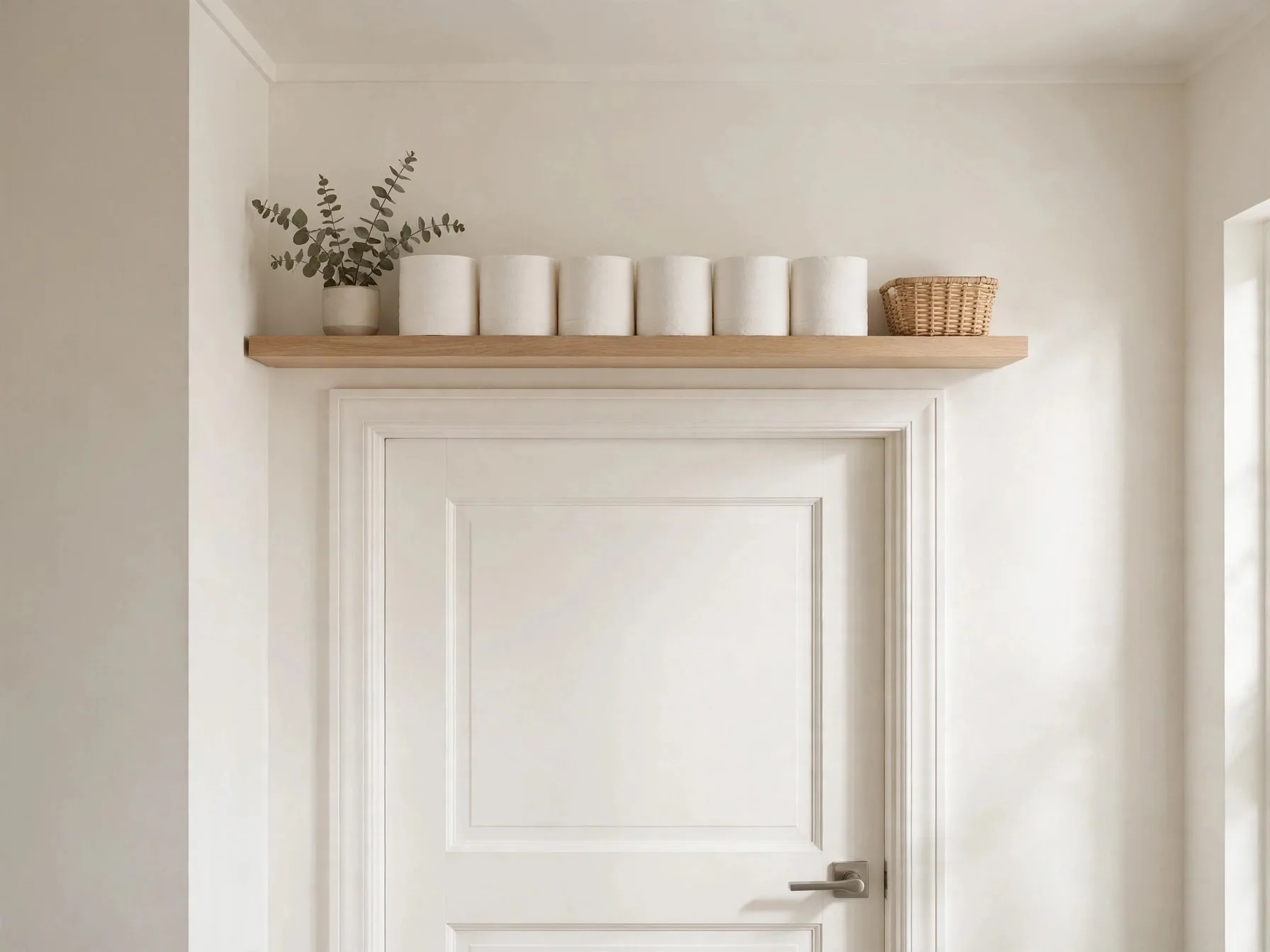
Nobody looks above the bathroom door, which makes it the perfect hiding spot for back-up stock. A 50 cm floating shelf mounted above the door frame holds six to eight spare toilet paper rolls for $10 to $16 — out of sight, exactly where you need them.
This is back-up storage, not display: a row of plain rolls reads as intentional from below. Keep a step stool nearby if the shelf sits above 200 cm, or the midnight restock becomes an adventure.
39. Pin the tiny stuff to a magnetic board
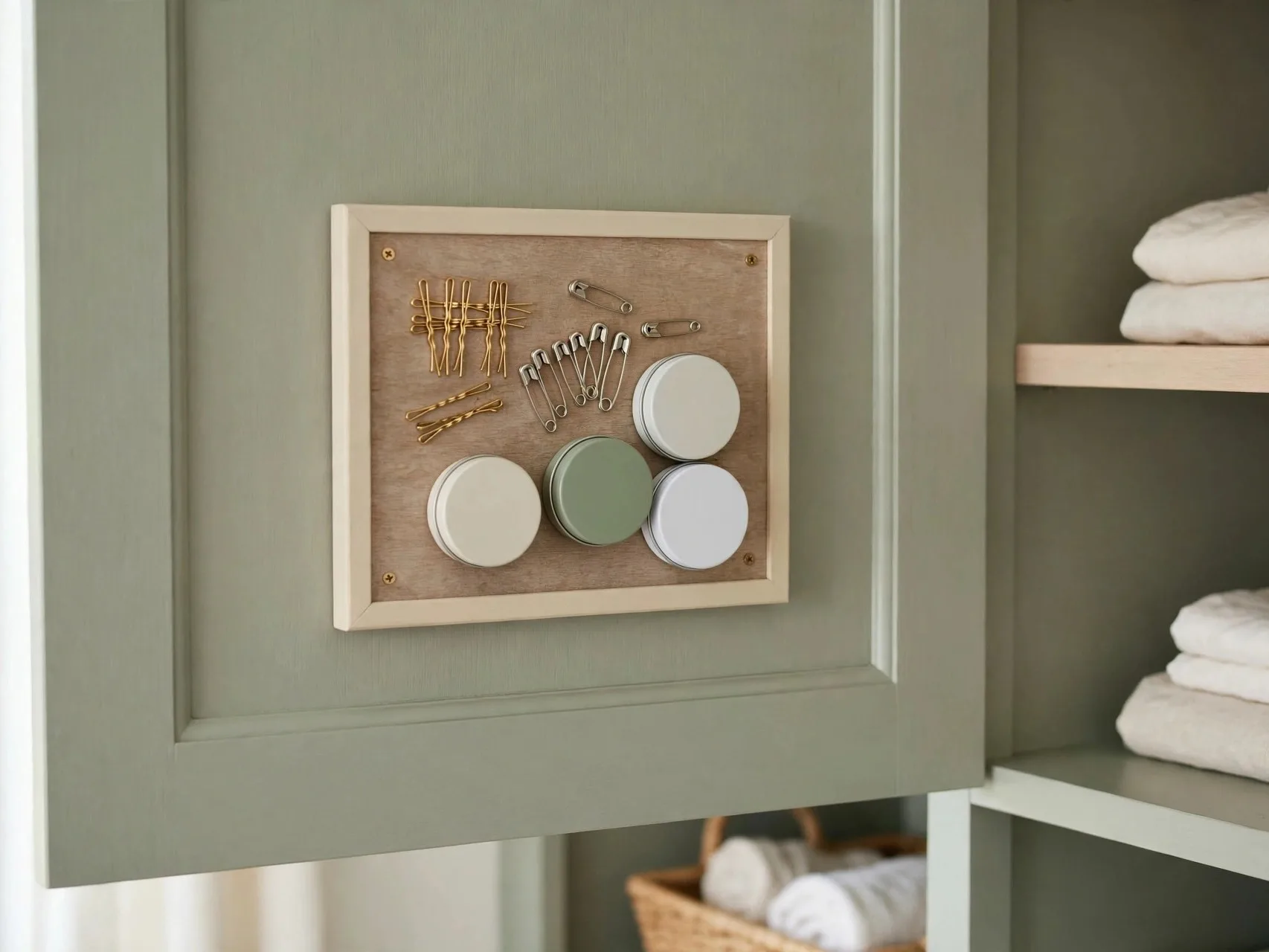
Bobby pins, safety pins, tweezers and nail clippers are too small for bins and too annoying to dig for. A small magnetic board — a framed sheet of metal, about 20 by 25 cm, for $8 to $14 — mounted inside a cabinet door turns them into a visible collection.
Drop magnetic spice tins onto the same board for cotton swabs and hair ties, and the whole tiny-stuff category lives in one 500-square-centimetre zone. Everything is visible, nothing rattles around a drawer.
40. Hide daily essentials behind the mirror
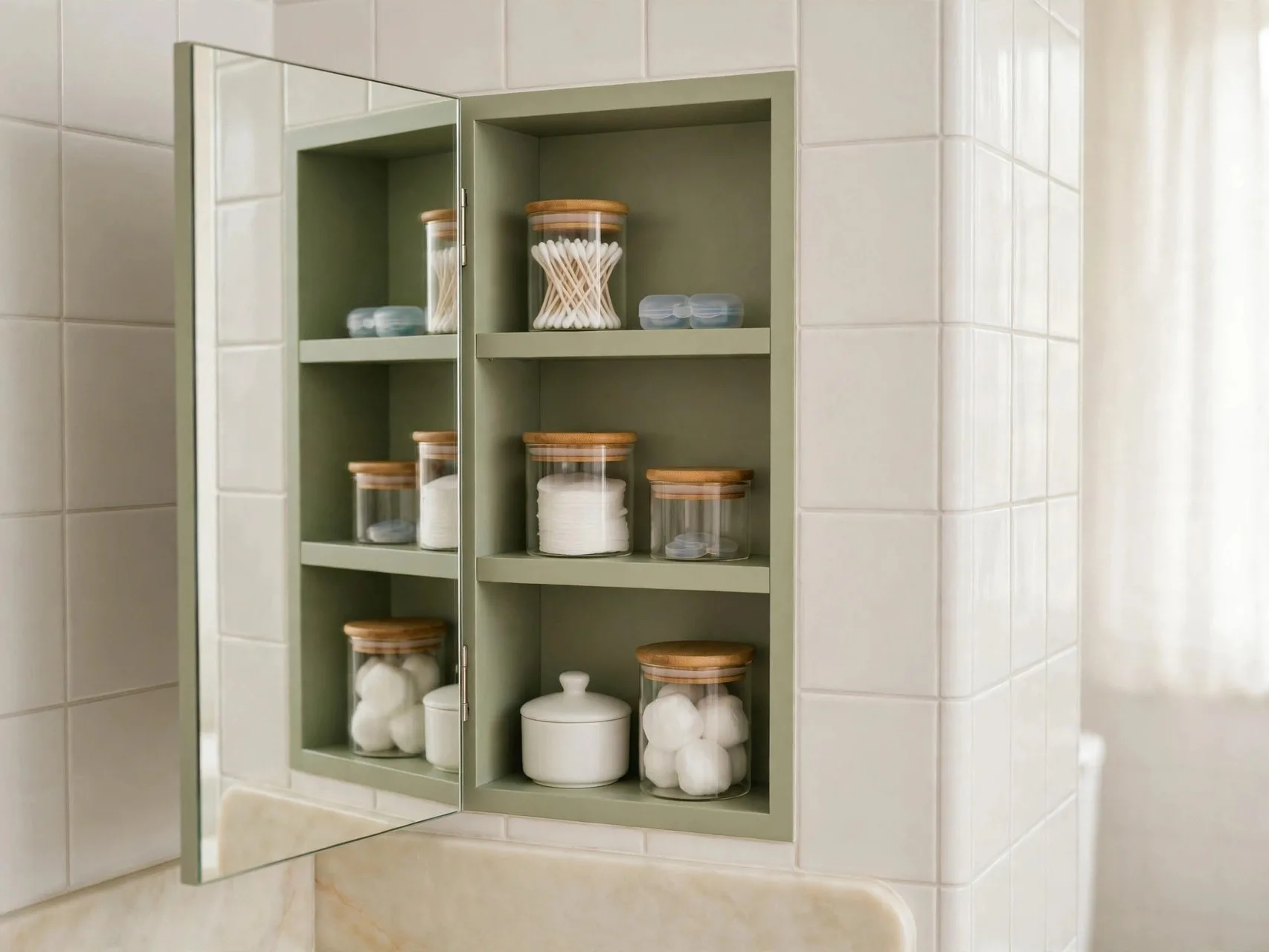
The last idea is the quietest: a slim behind-mirror cabinet for the things you reach for half-asleep — contact lens case, daily vitamins in sealed containers, the retainer. A surface-mount cabinet 40 cm wide and 12 cm deep costs $25 to $45 and keeps the counter permanently clear.
Keep prescription medicines out of the bathroom entirely — heat and humidity shorten their life — and reserve this spot for sealed daily essentials. One cabinet, one category, zero counter clutter: the perfect ending to a 40-idea reset.
Quick bathroom declutter checklist
Before you buy a single basket, spend twenty minutes on this reset. Storage only works when there is less to store — and if you want the full room-by-room version, our <a href=”https://tidyandtucked.com/declutter-your-home-room-by-room/”>declutter your home room by room plan</a> walks through the whole house the same way.
- Toss expired sunscreen, medicines and anything with a strange smell — check the dates, not your memory
- Recycle the hotel mini bottles and the samples you will never open
- Match every lid to its bottle; toss the orphans
- Keep one back-up of each consumable, not four
- Retire stretched-out hair ties, rusty razors and frayed loofahs
- Move prescription medicines out of the humid bathroom to a cool, dry spot
- Donate the towels that have gone crunchy — animal shelters love them
- Wipe every shelf and drawer before a single new organizer goes in
Questions, answered
What should not be stored in a bathroom?
Keep prescription medicines, perfume, and most makeup out of the bathroom — heat and humidity break them down faster, and some medicines lose potency. Extra razors rust in the damp air, and electronics hate the steam. Store these in a bedroom drawer or a cool hallway cabinet instead, and keep only sealed daily essentials in the bathroom itself.
What are 10 essential bathroom items?
The ten things every bathroom needs are: toilet paper, hand soap, towels, a toothbrush, a plunger, a first aid kit, trash can liners, a toilet brush, a bath mat, and a hand towel. Stock them in one grab-and-go basket (see idea 23) and you will never scramble before guests arrive — or during a midnight plumbing surprise.
What should every guest bathroom have?
Guests need the basics within reach and zero awkward questions: fresh hand and bath towels, hand soap, toilet paper plus one spare roll, a lined trash can, and a nightlight if the bathroom is down a dark hall. A small basket with the ten essentials above, plus a phone charger, makes visitors feel genuinely looked after.
What are the best bathroom storage solutions for a small budget?
Start with the cheapest wins in this list: a tension rod under the sink ($6), an over-the-door organizer ($10), a countertop tray ($8), and adhesive hooks ($8) solve most bathroom clutter for under $35 total. Add stackable bins and a lazy Susan next, and only buy furniture — like an etagere or ladder shelf — for the zones that still overflow after the cheap fixes are in.
Keep reading
- How to Declutter Your Home: A Simple Room-by-Room Plan
- 35 Pantry Organization Ideas That Actually Stay Neat
- Laundry Room Organization: 12 Steps + Labeling Ideas
Forty ideas, one calm bathroom. You do not need all forty — pick the zones that drive you maddest, try three ideas this weekend, and let the rest wait until you feel like it. Small bathrooms reward small, specific fixes, and every cleared surface makes the next one easier. Happy organizing, and may your counters stay clear.