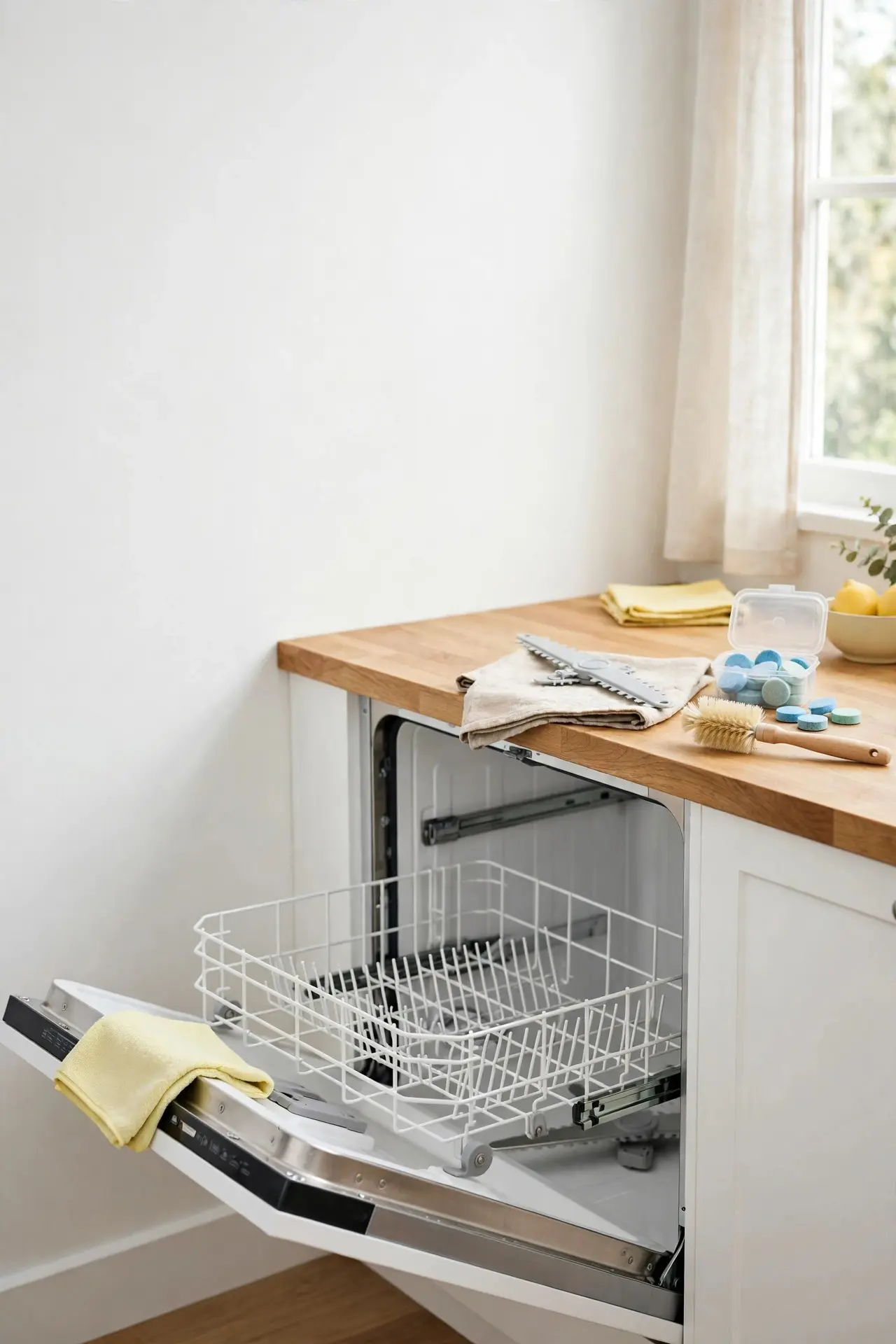
How do you clean a dishwasher? Pull the racks, rinse the filter, clear the spray arms, wipe the door seal and run an empty hot cycle with a dishwasher cleaner — then wipe the outside and set a monthly reminder. The whole routine takes about 20 minutes of hands-on time, and it is the difference between a dishwasher that smells fresh and one that leaves glasses cloudy and plates smelling stale.
Thank you for reading this post, don’t forget to subscribe!Part of our guide: How to Declutter Your Home: A Simple Room-by-Room Plan
A dishwasher that looks clean can still hide food in the filter, grease on the seal and limescale on the spray arms. That buildup is what causes smells, cloudy glasses and dishes that come out dirtier than they went in. This monthly routine works from the inside out, in the order that matters, and it needs no harsh scrubbing. Run it before the holidays too — a deep clean before a house full of guests is the cheapest insurance against a dishwasher that quits mid-dinner.
The 6-step routine at a glance
The whole routine, in the order that matters. Each step below has the full detail and a photo.
- Empty it and pull both racks out.
- Lift out the filter, rinse it and brush it clean.
- Clear the spray arm holes with a toothpick.
- Wipe the door seal and door edges.
- Run an empty hot cycle with a cleaner tablet.
- Wipe the outside and set a monthly reminder.
What you’ll need
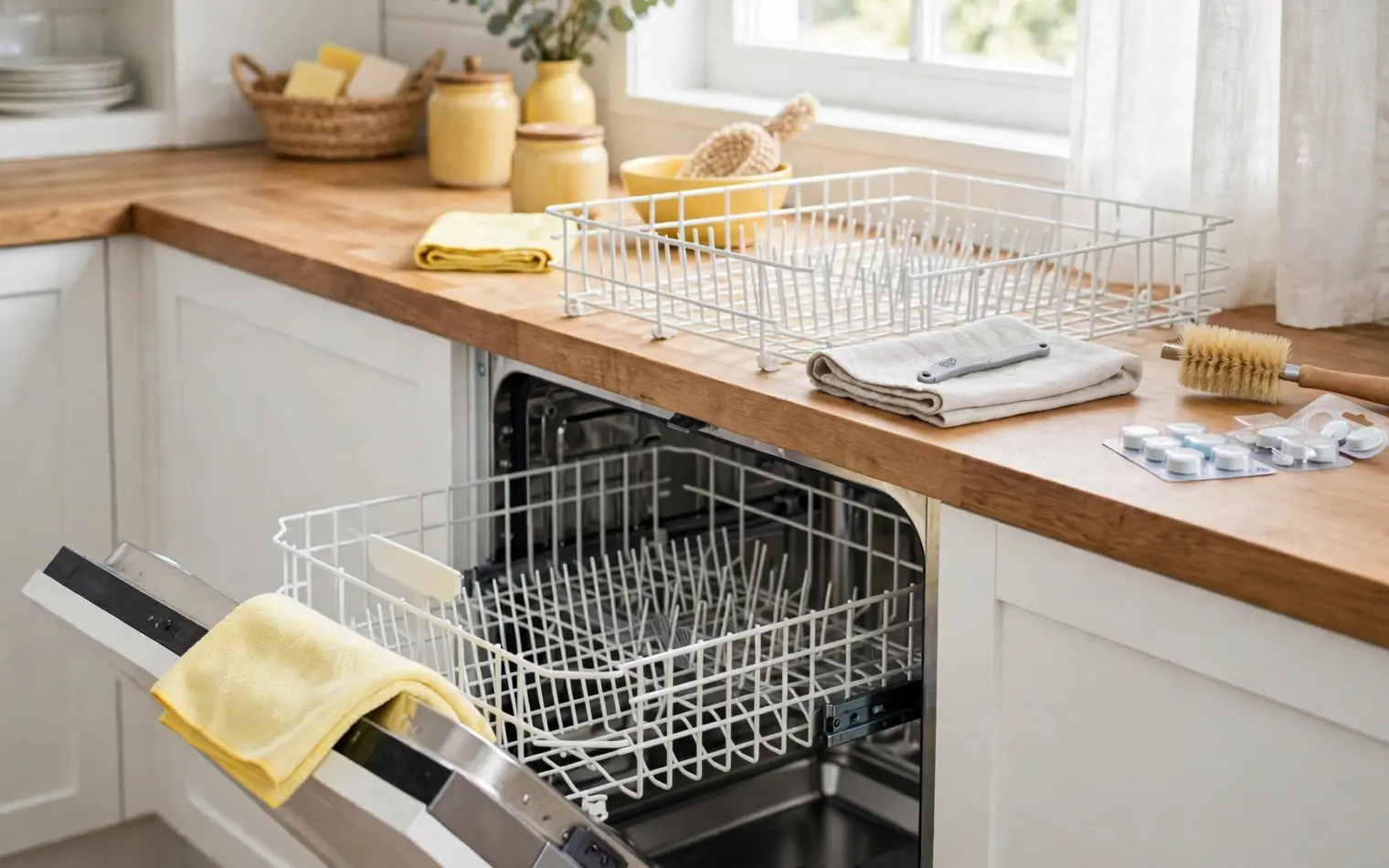
You need one cleaner, a few cloths and two small tools. Gather these before you start, switch the dishwasher off before you reach inside, and never mix bleach with any other cleaner.
- Dishwasher cleaner tablets, or white vinegar, or citric acid powder
- A bottle brush and an old toothbrush
- A wooden toothpick
- Two soft cloths and a drop of dish soap
- A small under-sink organizer for the supplies
1. Empty the dishwasher and pull the racks out
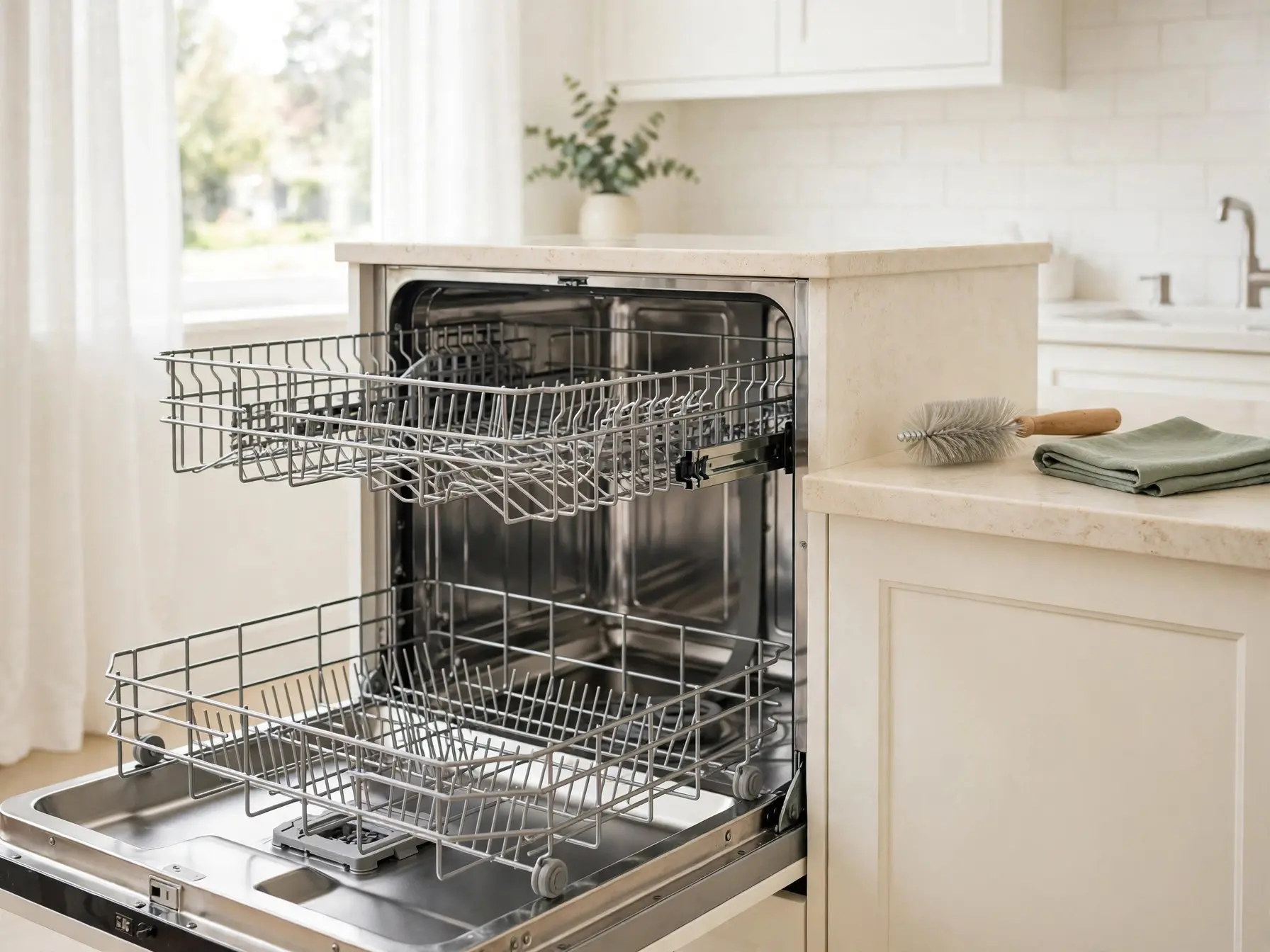
Start with an empty dishwasher — no dishes, no cutlery, nothing in the racks. Pull the bottom rack all the way out and set it on the counter, then do the same with the top rack. With the racks out you can see the tub properly, reach the filter and the spray arms, and spot the food and grease that hide under the rack rails. Give each rack a quick shake over the sink to drop crumbs, and wipe the rails with a damp cloth before you set the racks aside. This is the only step that needs any lifting, and it takes two minutes.
- Empty the dishwasher completely first
- Pull the bottom rack out, then the top rack
- Shake crumbs off each rack over the sink
2. Lift out the filter and rinse it clean
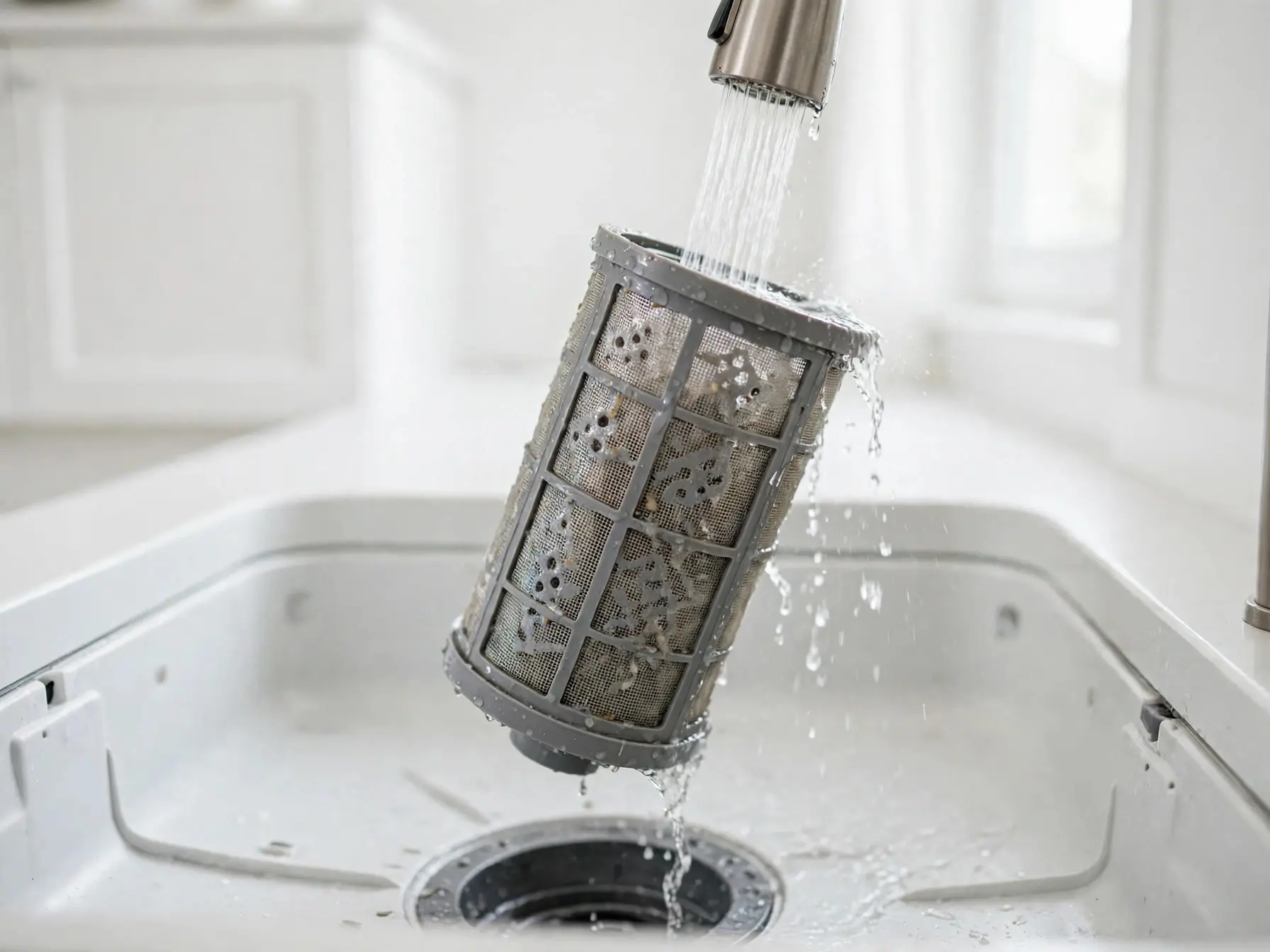
The filter sits in the bottom of the tub — a round cylinder you twist counterclockwise to lift out. Rinse it under a hot tap and brush it with an old toothbrush to clear the trapped food and grease; this is the part that causes most dishwasher smells, so take your time here. If it is slimy, soak it for ten minutes in hot water with a drop of dish soap, then rinse again. Check the drain area underneath for bones, glass or food, and lift out anything you find. Slot the filter back in and twist it clockwise until it locks — a loose filter lets food straight into the pump.
- Twist the filter counterclockwise to lift it out
- Rinse under a hot tap and brush with an old toothbrush
- Twist it clockwise until it locks when you put it back
3. Clear the spray arm holes with a toothpick
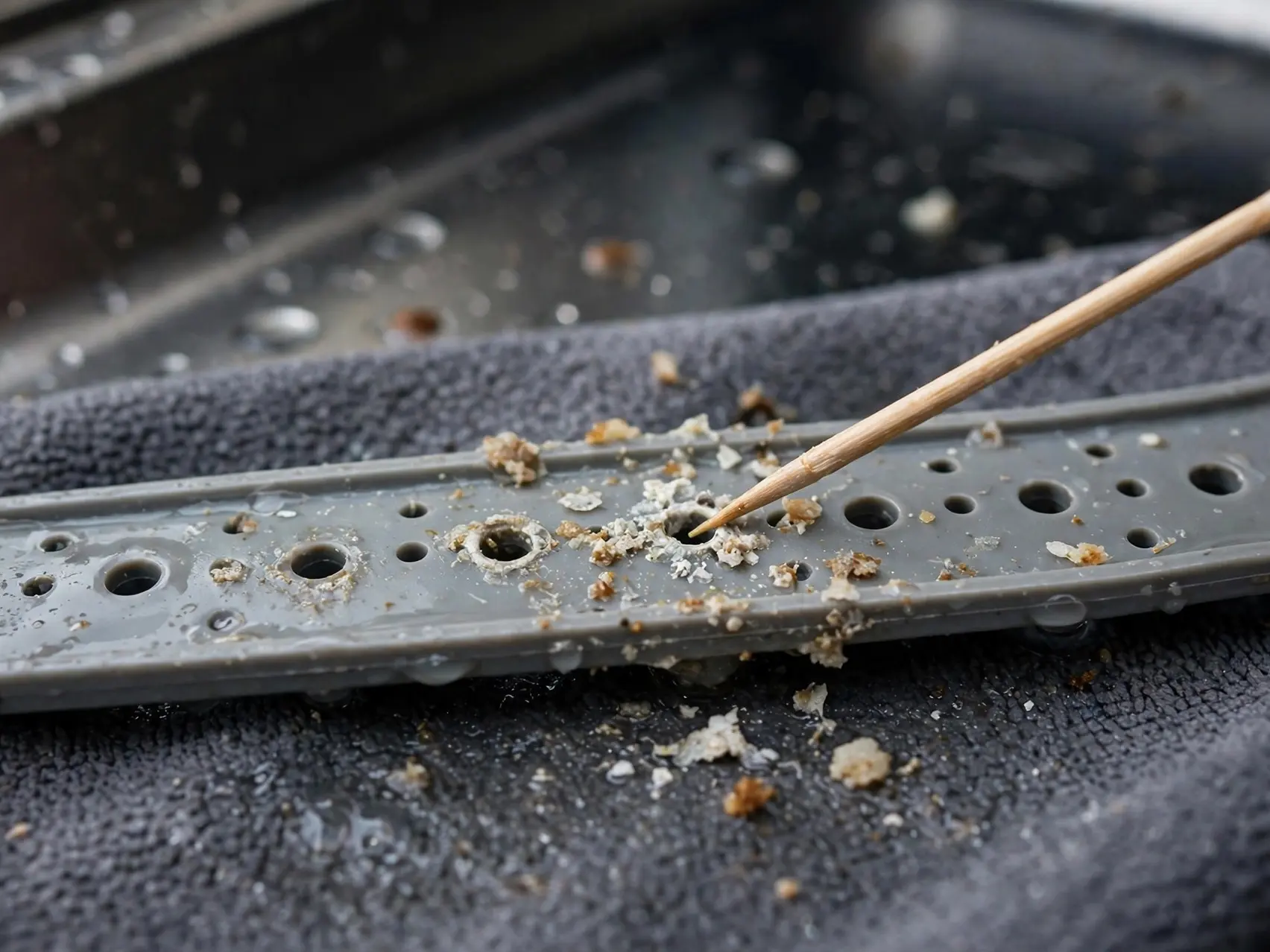
The spray arms are the flat bars that spin and spray water over the dishes, and their little holes clog with limescale and food. Most lower arms lift off with a twist or a clip — check your manual if yours feels stuck, and never force it. Hold the arm up to the light and clear each blocked hole with a wooden toothpick, then rinse the arm under a hot tap and shake the water out. Do the same for the upper arm, which is usually clipped to the top rack. Clear holes mean the water reaches every plate again, which is the whole point of the machine.
- Lift the lower arm off with a twist or a clip
- Clear each blocked hole with a wooden toothpick
- Rinse the arm under a hot tap and shake it out
4. Wipe the door seal and door edges
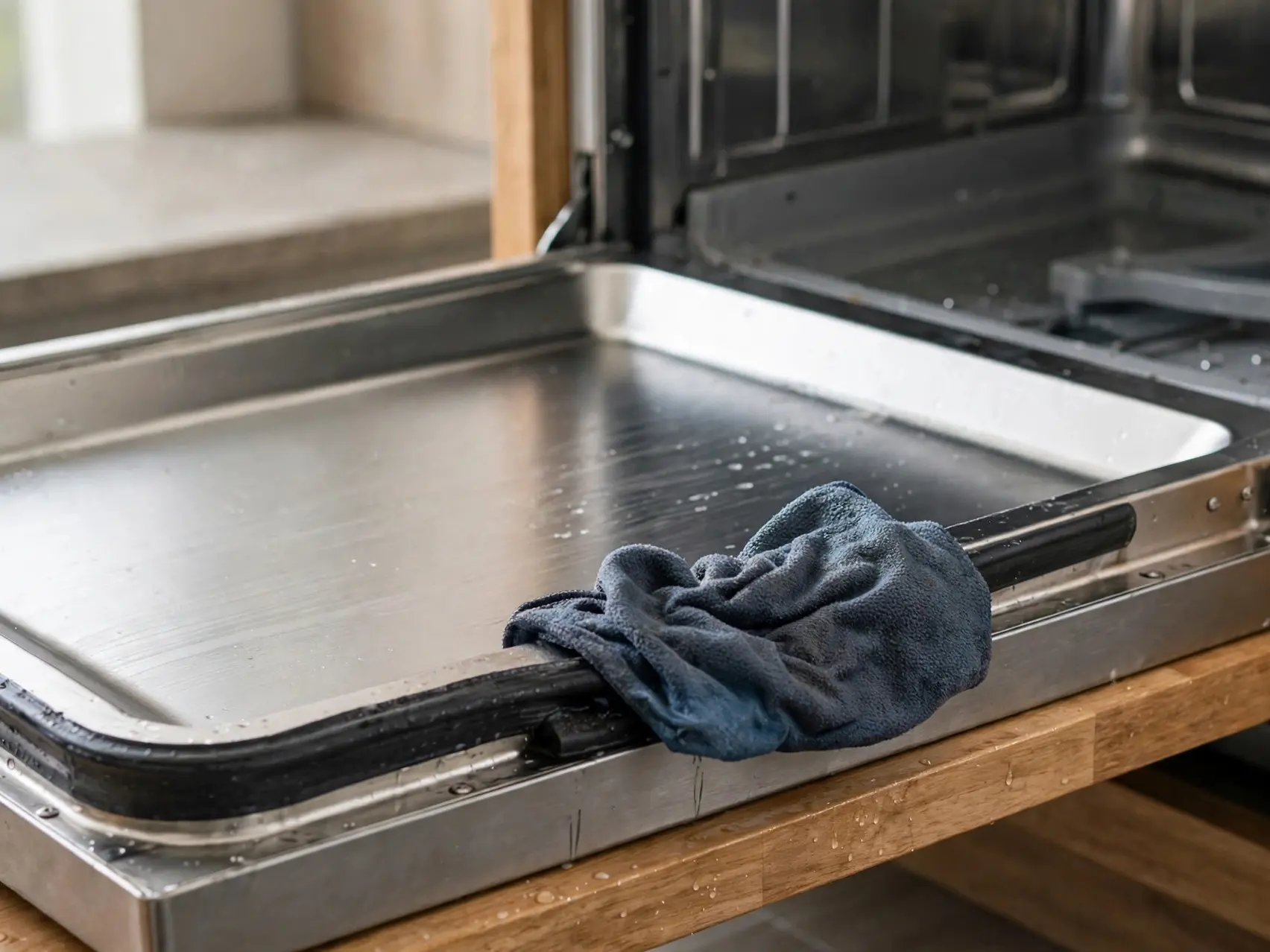
The rubber seal around the door traps food, grease and mold, and it is the second-biggest cause of a smelly dishwasher. Wipe the whole seal with a damp cloth and a drop of dish soap, folding the rubber back gently to reach the groove underneath. Wipe the door edges and the bottom of the door too, where drips collect and dry into a sticky line. If the seal is stained or smells after wiping, run a cloth dampened with white vinegar along it — but never use bleach on the seal, which dries the rubber out and shortens its life. Dry the seal with a clean cloth so no moisture sits in the fold.
- Wipe the whole seal, folding the rubber back gently
- Wipe the door edges and the bottom of the door
- Dry the seal so no moisture sits in the fold
5. Run an empty hot cycle with a cleaner tablet
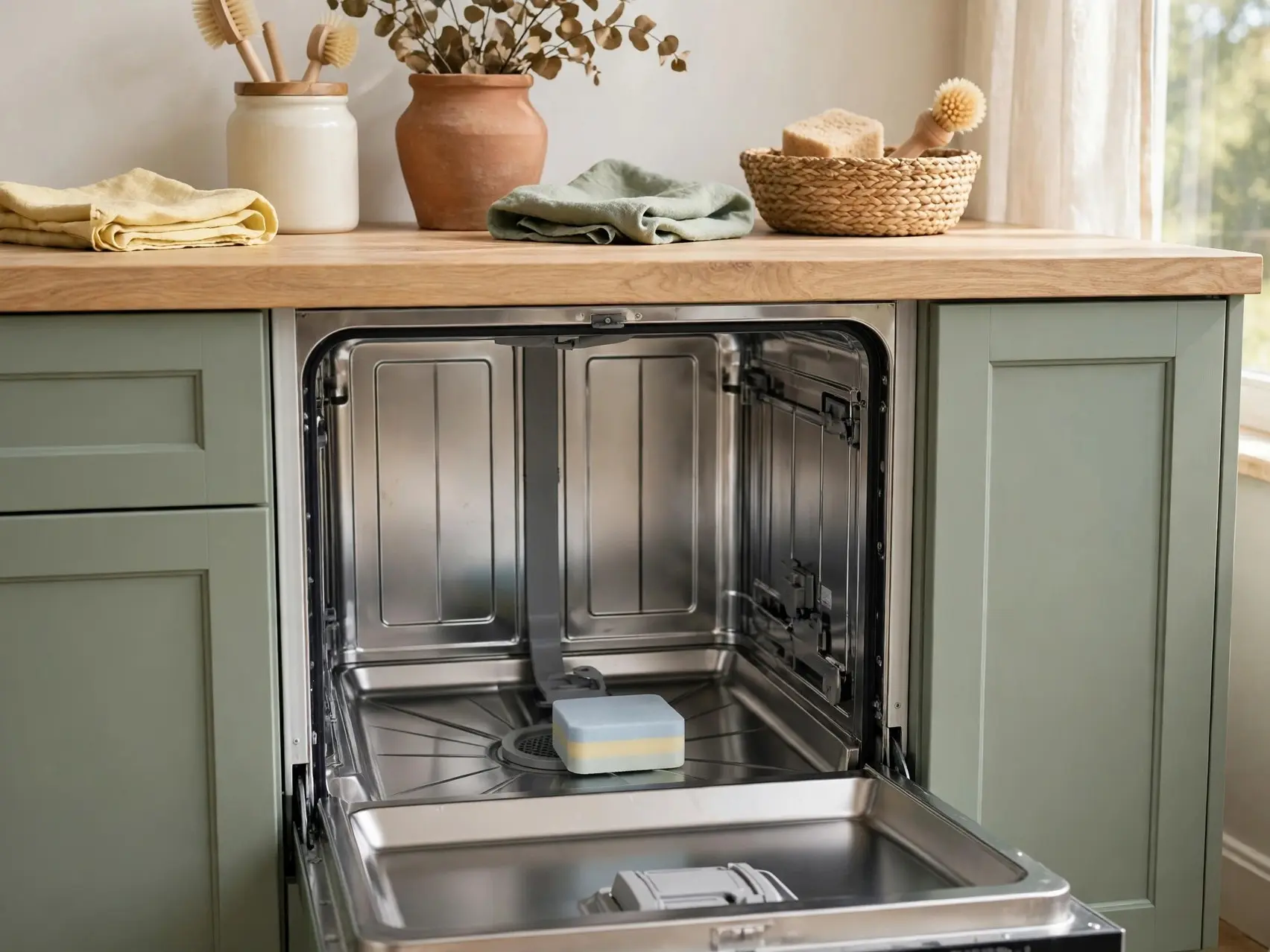
With the racks, filter and arms clean, put the racks back in and place one dishwasher cleaner tablet in the empty tub — not in the detergent dispenser, which opens too early in the cycle. Run the hottest, longest cycle the machine offers, with no dishes inside. The heat and the cleaner dissolve the grease and limescale you cannot reach, including inside the pump and the hoses. If you would rather use vinegar, put a cup of white vinegar on the top rack instead and run the same hot cycle — but do not use vinegar and a cleaner tablet together, and never use bleach. When the cycle ends, open the door and let the tub air out.
- One cleaner tablet in the empty tub, not the dispenser
- Hottest, longest cycle, with no dishes inside
- Open the door afterwards and let the tub air out
6. Wipe the outside and set a monthly reminder
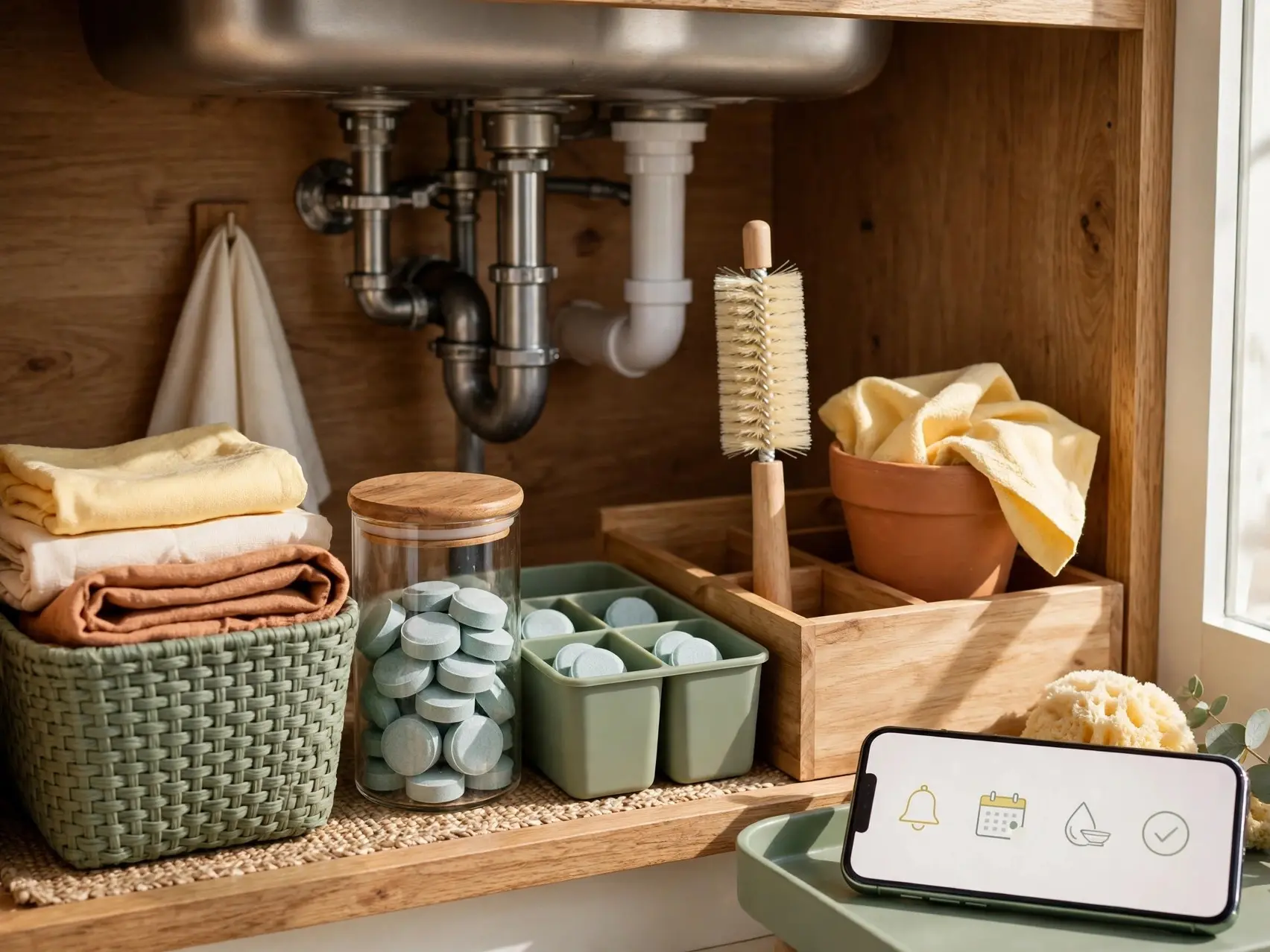
Finish with the outside: wipe the front panel and the control panel with a soft cloth dampened with warm water and a drop of dish soap, then dry it — on stainless steel, wipe with the grain so you do not leave streaks. Never spray cleaner straight onto the control panel, where it can seep behind the buttons. Then set a monthly reminder on your phone, and keep the cleaner tablets, bottle brush and cloths together in a small organizer under the sink, so the next clean takes 15 minutes instead of a hunt through cupboards. A monthly routine is what keeps the smell from coming back.
- Wipe with the grain on stainless steel, then dry
- Never spray cleaner straight onto the control panel
- Keep tablets, brush and cloths together under the sink
Dishwasher cleaner or vinegar: which to use
All three cleaners do the job. The real differences are the smell, the cost and how much limescale they shift — pick the one that fits your water and your nose.
| Cleaner | How to use | Smell | Best for |
|---|---|---|---|
| Cleaner tablet | One tablet in the empty tub, hottest cycle | Almost no smell | The monthly deep clean, and limescale |
| White vinegar | A cup on the top rack, hottest cycle | Strong vinegar smell while it runs | A quick freshen-up between deep cleans |
| Citric acid | 2 tablespoons in the tub, hottest cycle | Almost no smell | Hard-water homes, and heavy limescale |
Check your manual first — some makers warn against vinegar on rubber seals. If yours does, stick to cleaner tablets and skip the vinegar altogether.
How often to clean it, and the pre-holiday deep clean
A monthly routine is the backbone, but two small habits between deep cleans keep the smell away — and one well-timed clean before guests arrive is the most useful clean of the year.
- Monthly: run the full 6-step routine, filter to outside.
- Weekly: wipe the door seal and check the filter for trapped food.
- Before holidays and guests: run the full routine a day or two before everyone arrives — a dishwasher works hardest when the house is full, and a clean machine is the cheapest insurance against one that quits mid-dinner.
- After a heavy cooking weekend: run an empty hot cycle with a cleaner tablet to clear the extra grease before it sets.
Questions, answered
How often should you clean your dishwasher?
Give it the full inside-out clean once a month, and wipe the door seal and check the filter every week. In a hard-water home, run the cleaner cycle every three weeks instead of monthly, because limescale builds faster. A quick weekly wipe takes two minutes and stops smells before they start.
Why does my dishwasher smell bad?
The smell is almost always food trapped in the filter, the spray arms or the folds of the door seal — the three places this routine cleans. Standing water from a blocked filter or a kinked drain hose can smell too, so check both. Once those are clean, an empty hot cycle with a cleaner tablet clears the grease in the pump and hoses that you cannot reach.
Can you run a dishwasher cleaner with dishes inside?
No — run the cleaner cycle with the dishwasher empty, on the hottest and longest cycle. Dishes block the spray and soak up the cleaner, so the machine itself does not get cleaned. Load the dishes after the cleaning cycle finishes, and they will come out of a fresh machine.
How do you clean the outside of a stainless steel dishwasher?
Wipe it with a soft cloth dampened with warm water and a drop of dish soap, wiping with the grain of the steel, then dry it with a clean cloth so it does not streak. For fingerprints, a dab of stainless steel cleaner on a cloth works — never spray it straight onto the panel. Keep liquid away from the control panel buttons; a barely damp cloth is enough there.
Keep reading
A clean dishwasher is one piece of a kitchen that stays fresh on a schedule. Our guide to how to clean a washer covers the other appliance that needs the same monthly treatment, how to descale a kettle tackles the limescale that builds up wherever hard water flows, and our cleaning schedule for the home puts every filter, seal and vent on a rhythm so nothing gets forgotten.
A dishwasher that gets this 20-minute routine once a month stays fresh, washes properly and lasts longer — and the clean before the holidays is the most useful one of the year. Set the reminder now, while the steps are fresh, and the next clean will take half the time.