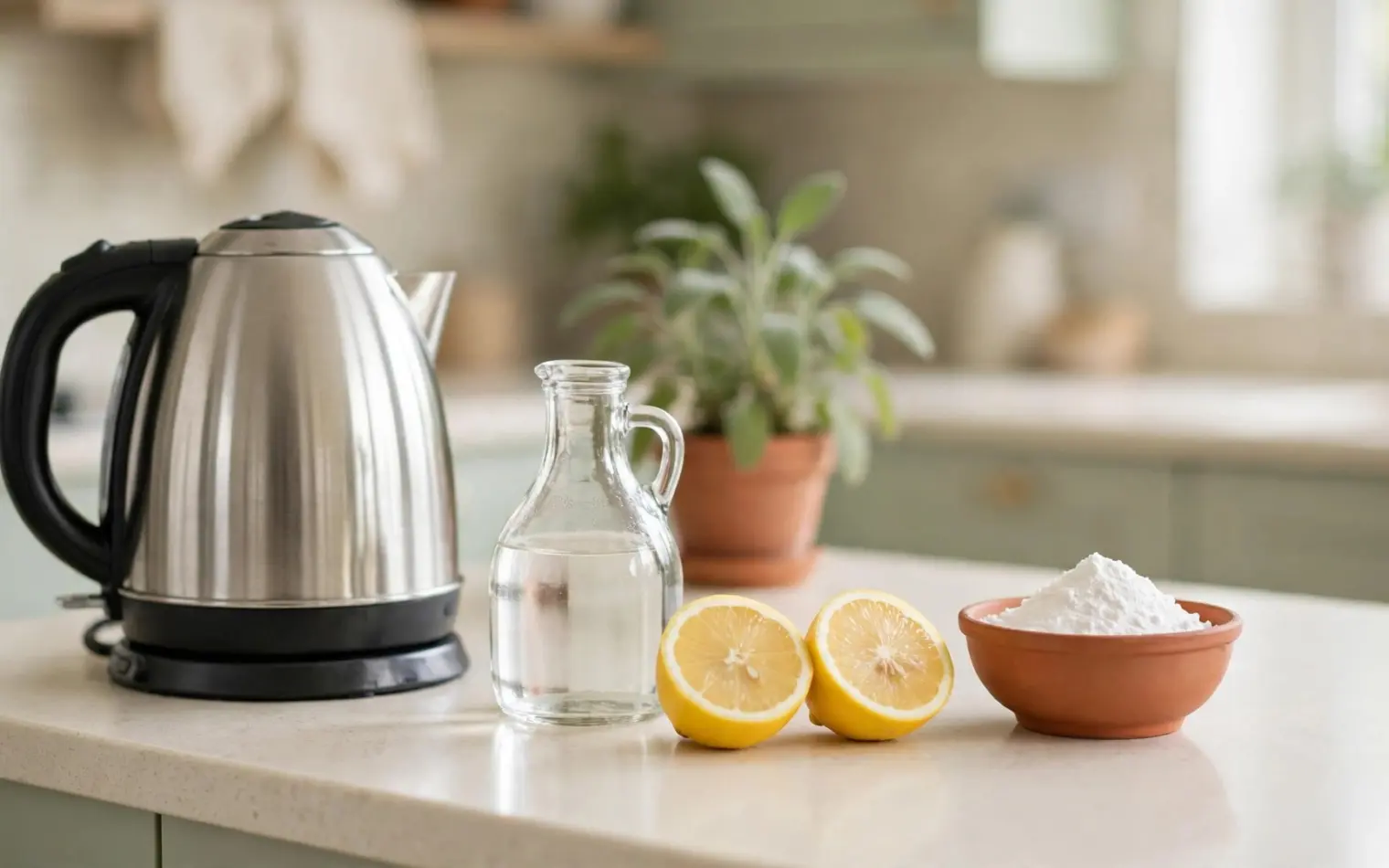
Descale a kettle by boiling it with an acid — equal parts water and white vinegar, or 1–2 tablespoons of citric acid in a boiled half-kettle — leaving it 15–30 minutes, then rinsing and boiling plain water once before use.
Thank you for reading this post, don’t forget to subscribe!Part of our guide: 35 Pantry Organization Ideas That Actually Stay Neat
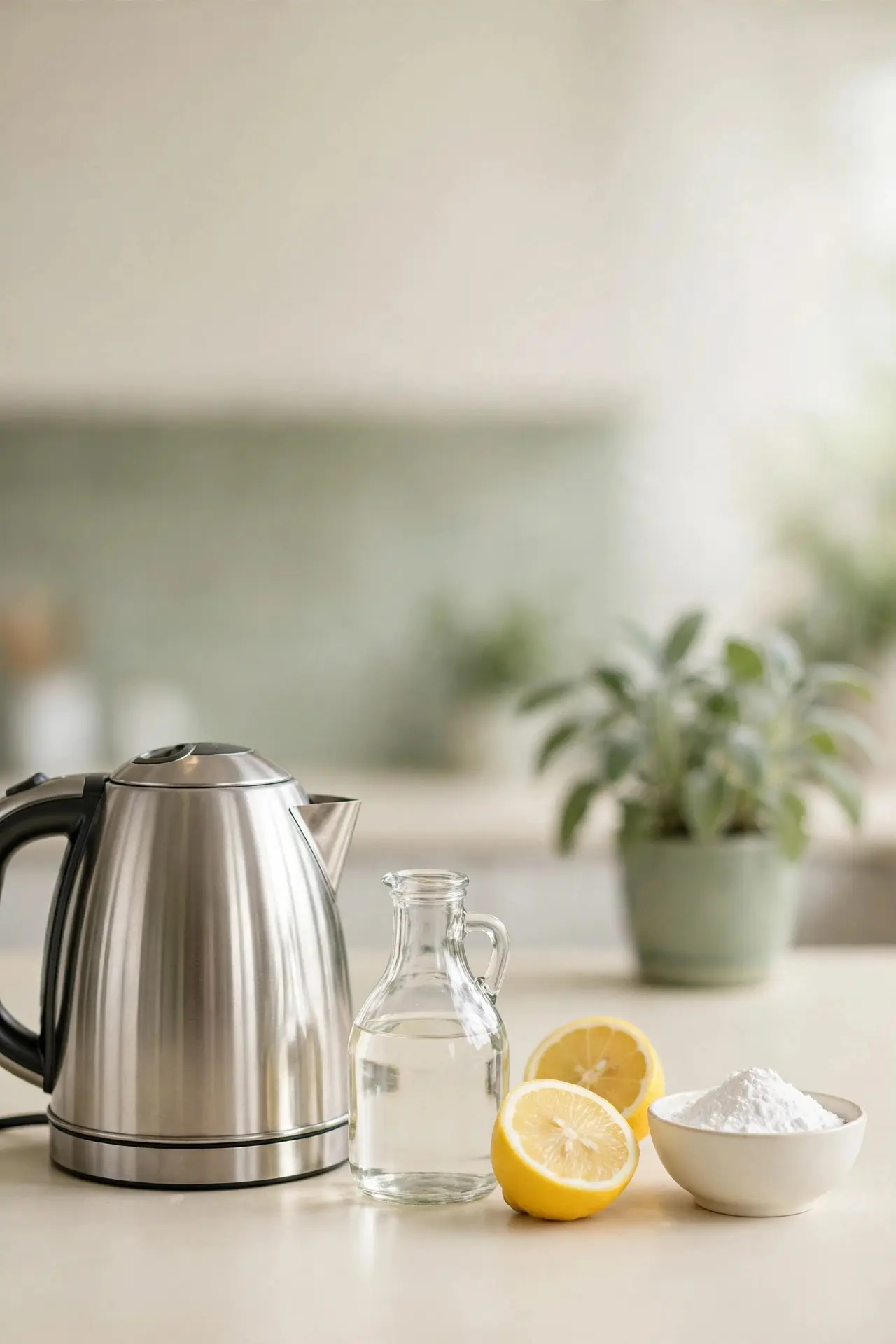
A kettle that takes longer to boil, clicks off early or leaves white flakes in your tea is not wearing out — it is scaled up. Hard water leaves limescale on the element, and any of the three acids below dissolves it in about 15 minutes. No scrubbing, no harsh chemicals, and nothing to buy if you already have vinegar or a lemon.
What you’ll need
You need only one acid — vinegar, citric acid or a lemon — plus water and a cloth. Gather these before you start, and never immerse an electric kettle or its base in water; unplug the kettle before you handle it, and never fill past the max line.
- Plain white vinegar, or food-grade citric acid powder, or 1–2 fresh lemons
- Cold water
- A soft cloth or sponge for wiping the inside
- An old toothbrush for the mesh filter
- A spoon, a jug and a timer
Method 1: White vinegar
Vinegar is the cheapest option and the one most kitchens already have. The smell is strong while it works, but it clears fast once you rinse and boil plain water.
1. Mix equal parts water and white vinegar
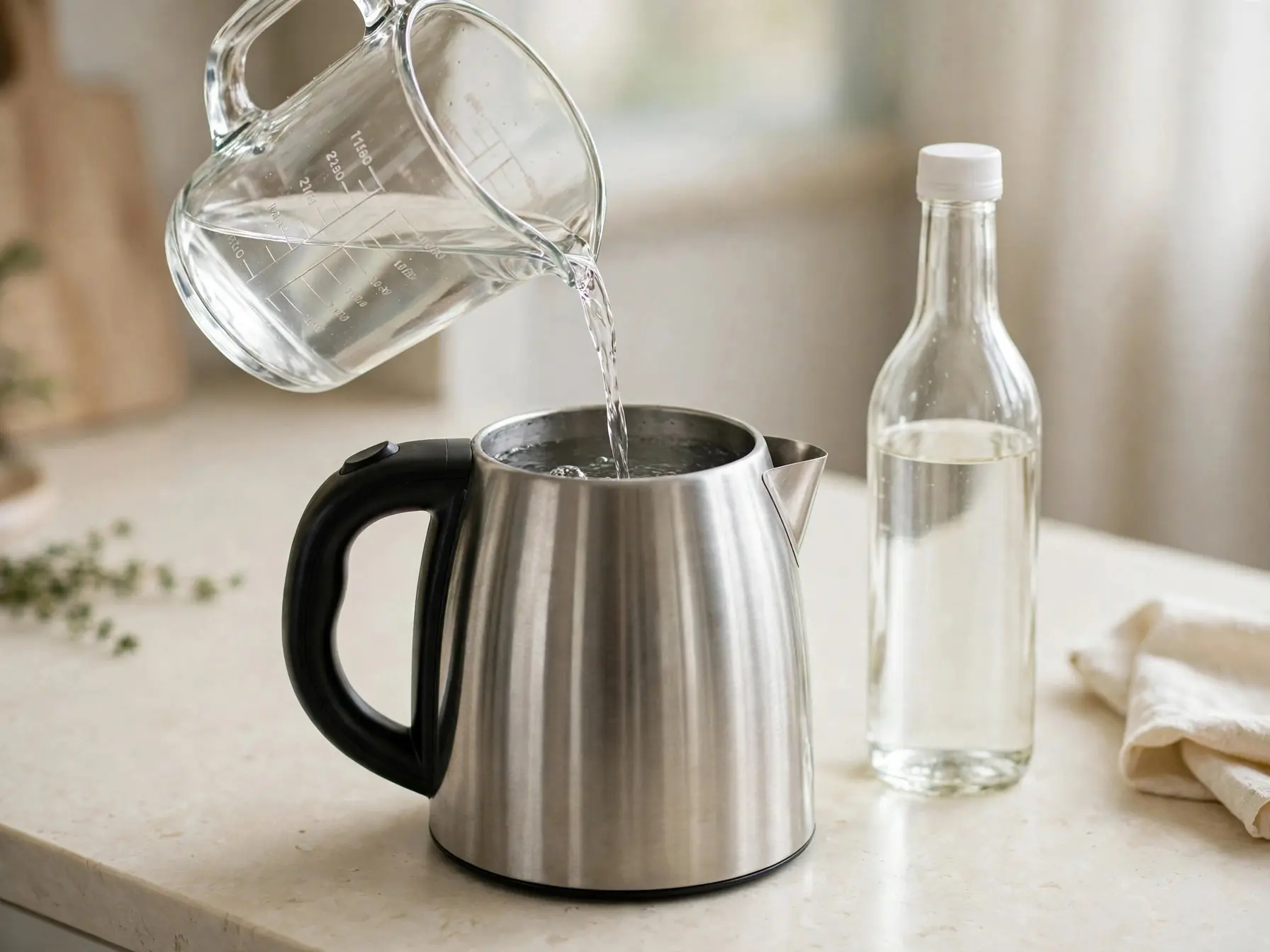
Fill the kettle halfway with equal parts cold water and plain white vinegar — half water, half vinegar. That is enough to cover the heating element and the worst of the scale without boiling over. Use plain white vinegar, not malt or apple cider vinegar, which can stain and leave a smell that lingers. Do not fill past the max line: the mixture foams as it heats, and an overfilled kettle spits hot vinegar water across the counter. Put the lid on, set the kettle on its base, and you are ready for the next step.
- Equal parts cold water and plain white vinegar
- Halfway up the kettle, never past the max line
- Plain white vinegar, not malt or apple cider
2. Boil the vinegar solution
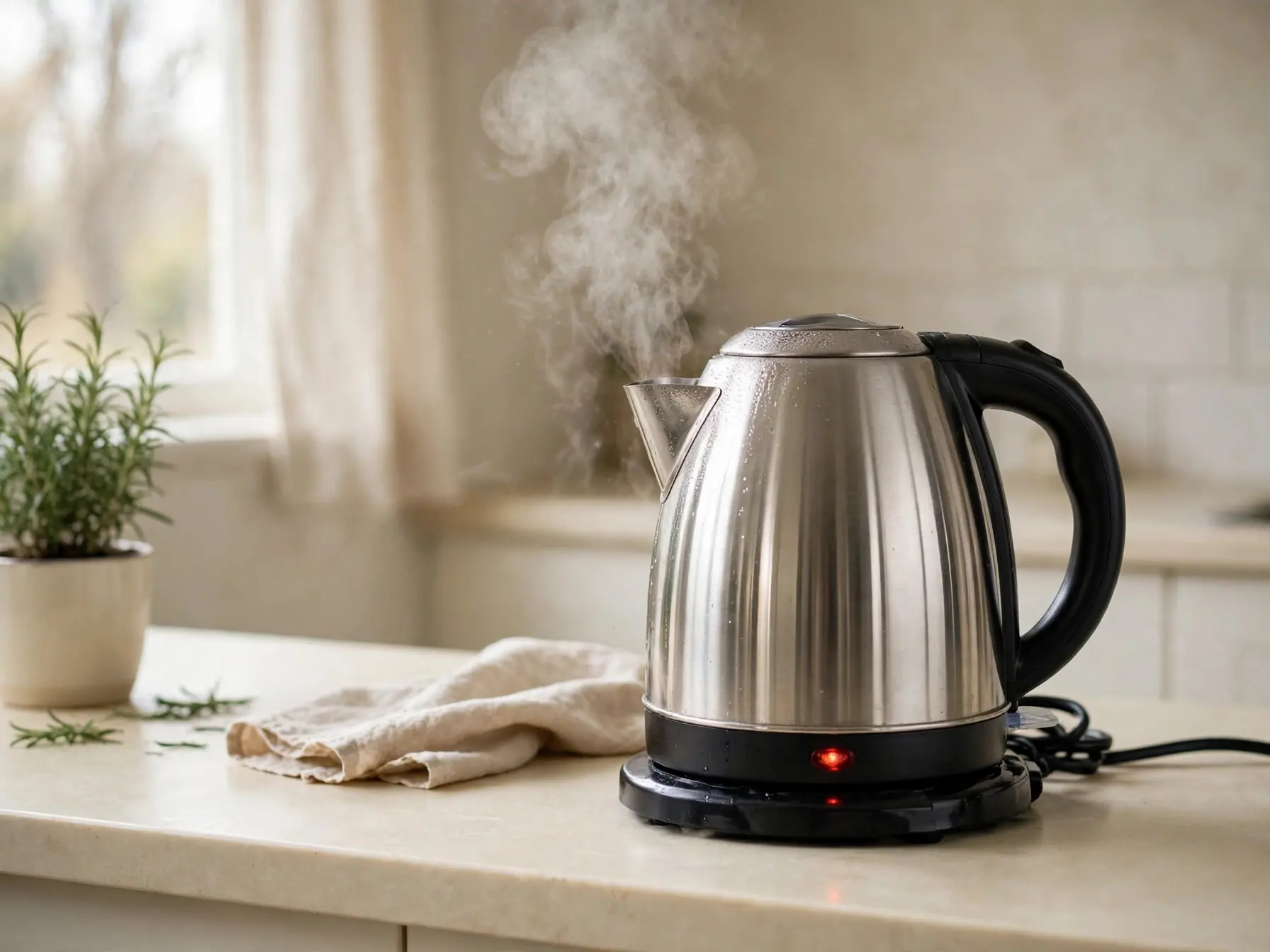
Switch the kettle on and bring the vinegar solution to a full boil, then switch it off as soon as it clicks. The heat is what makes the acid work: hot vinegar dissolves limescale far faster than cold vinegar ever will. Keep the kitchen window open or the extractor fan on, because the steam smells strongly of vinegar for a few minutes. Do not walk away and let it reboil — one boil is enough, and boiling the mixture again only fills the kitchen with more fumes.
- Bring it to one full boil, then switch off
- Open a window or run the extractor fan
- Do not let it reboil
3. Leave it to soak for 15 to 30 minutes
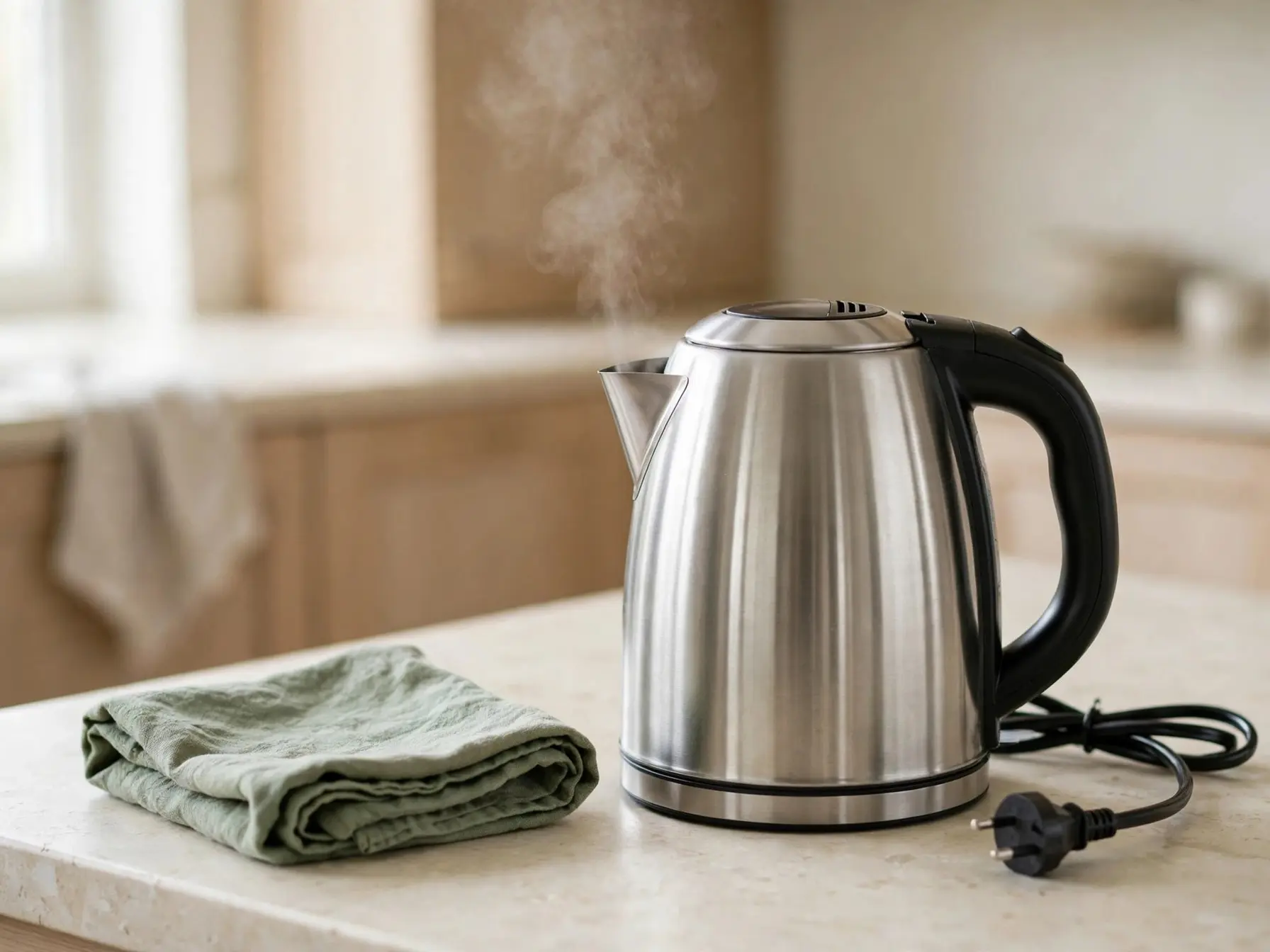
Leave the hot vinegar solution in the kettle for 15 to 30 minutes so it can work on the scale. Light buildup usually clears in 15 minutes; a kettle with a thick white crust needs the full half hour. You will see flakes of limescale loosening and drifting in the liquid — that is the acid doing its job. Do not leave it overnight: a very long vinegar soak can dull the finish inside some kettles and is not needed. Set a timer so you do not forget it.
- 15 minutes for light scale, 30 for a thick crust
- Flakes drifting in the liquid means it is working
- Do not leave it overnight
4. Tip it away, rinse and boil fresh water
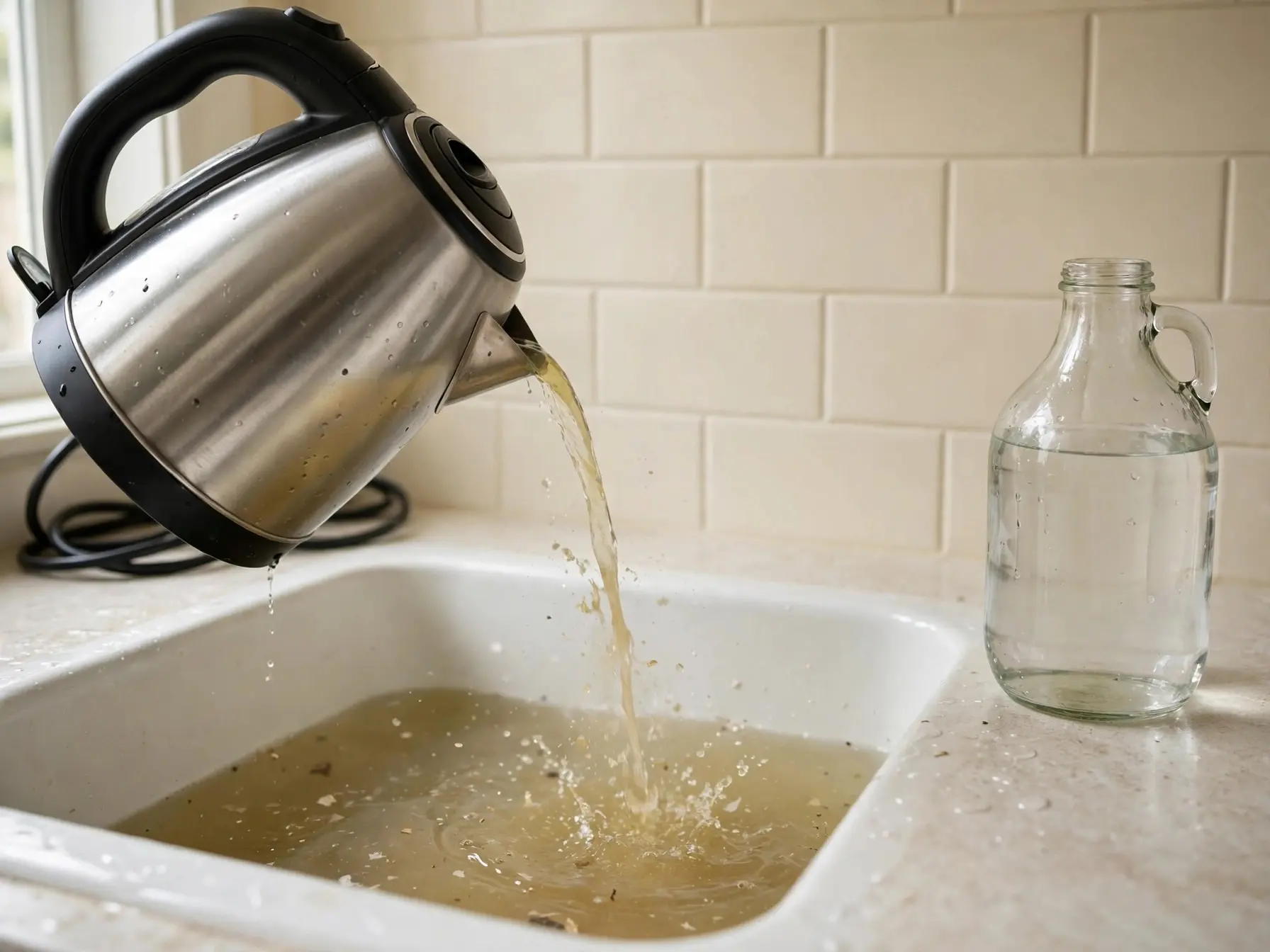
Tip the vinegar water down the sink, then rinse the kettle out twice with clean water to wash away the loosened scale and the vinegar smell. Fill it with fresh water to the halfway mark, boil it once, and tip that away too — this plain-water boil flushes out any vinegar left clinging to the element. Give the inside a quick wipe with a soft cloth if any flakes remain stuck. Your kettle is now descaled, and the next cup of tea should taste like tea again.
- Tip the vinegar water down the sink
- Rinse twice with clean water
- Boil plain water once and tip it away
Method 2: Citric acid
Citric acid is the best all-rounder: almost no smell, gentle on seals, and it dissolves scale fast. Buy food-grade powder from the baking aisle or a cleaning supplier.
5. Boil a half-kettle of plain water first
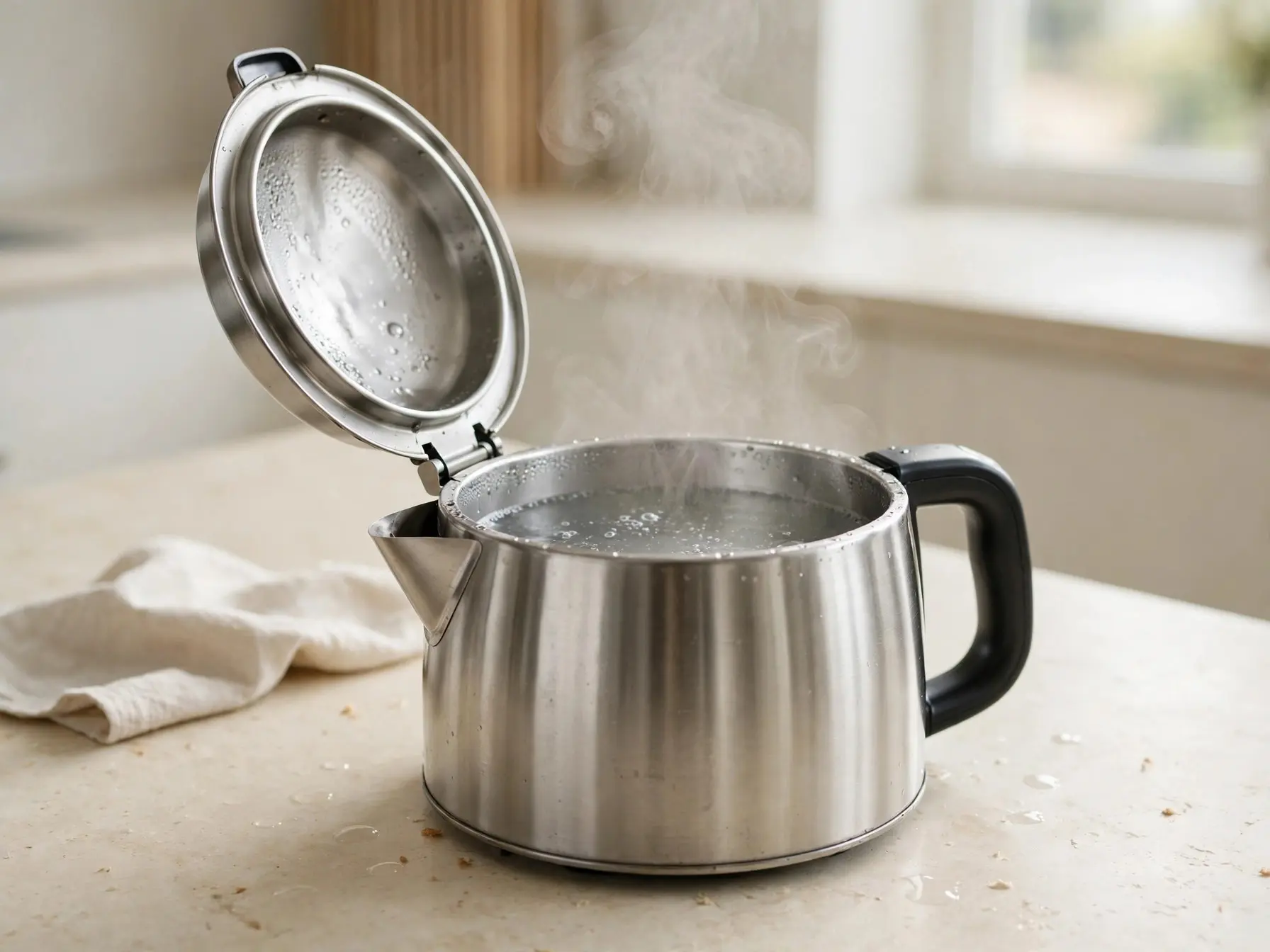
Fill the kettle halfway with plain cold water and bring it to a boil — no acid yet. Citric acid works best when it goes into water that is already hot, because the heat helps it dissolve instantly and start fizzing against the scale. Filling only halfway leaves room for the fizz without the kettle boiling over. Switch the kettle off as soon as it boils, and lift it off its base so you can add the powder safely.
- Plain cold water, halfway up the kettle
- No acid yet — it goes in after the boil
- Lift the kettle off its base before adding powder
6. Stir in 1 to 2 tablespoons of citric acid
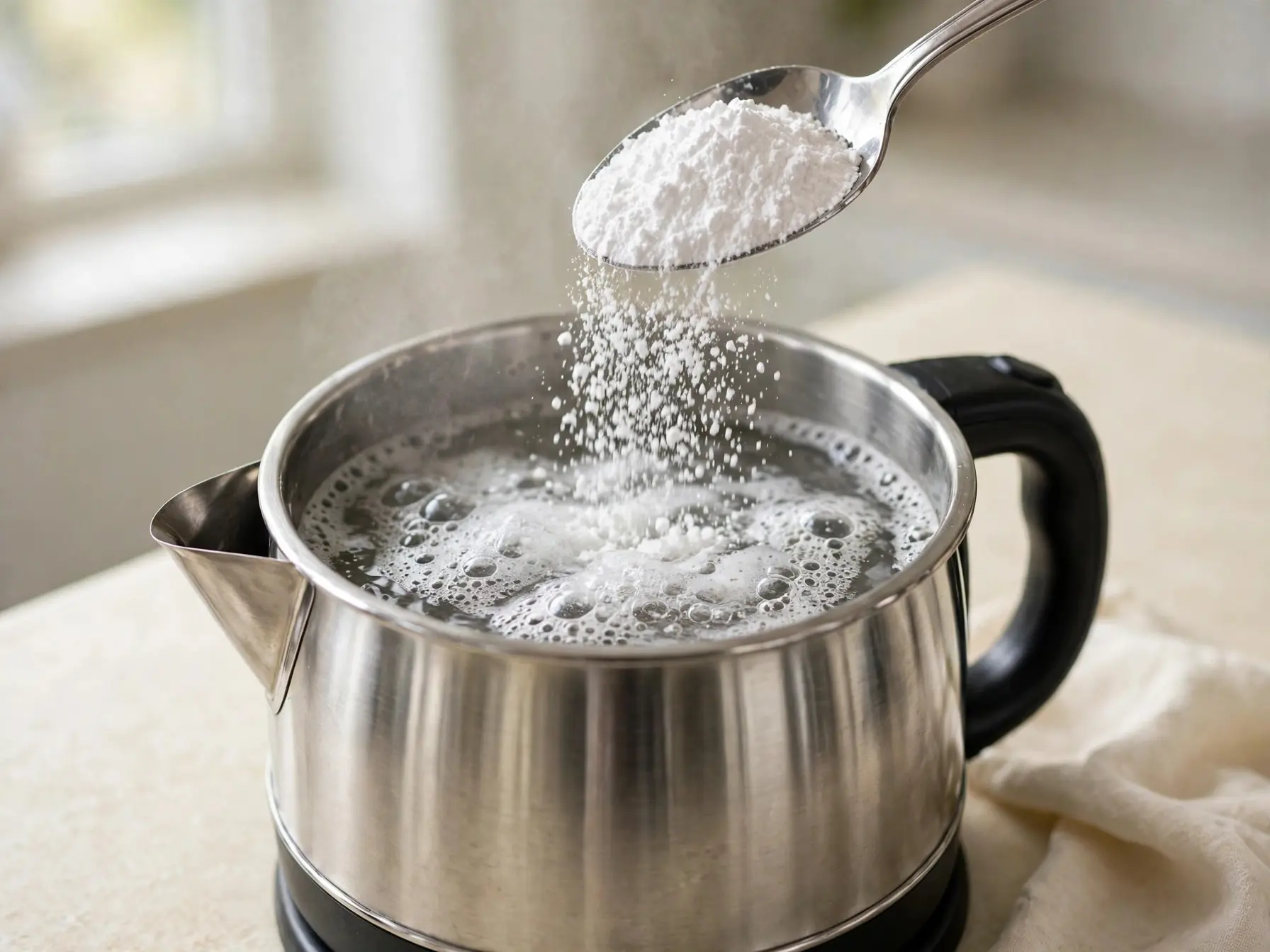
Spoon 1 to 2 tablespoons of citric acid powder into the hot water — one tablespoon for light scale, two for a heavy crust — and give it a gentle stir with a long spoon. It will fizz right away as the acid meets the limescale, which is exactly what you want to see. Citric acid is the white crystalline powder sold for jam making and cleaning; food-grade is fine. Keep your face back from the steam while you stir, and do not add the powder before the water boils.
- 1 tablespoon for light scale, 2 for a heavy crust
- Food-grade citric acid powder
- Stir gently with a long spoon
7. Leave it to fizz and soak for 15 to 30 minutes
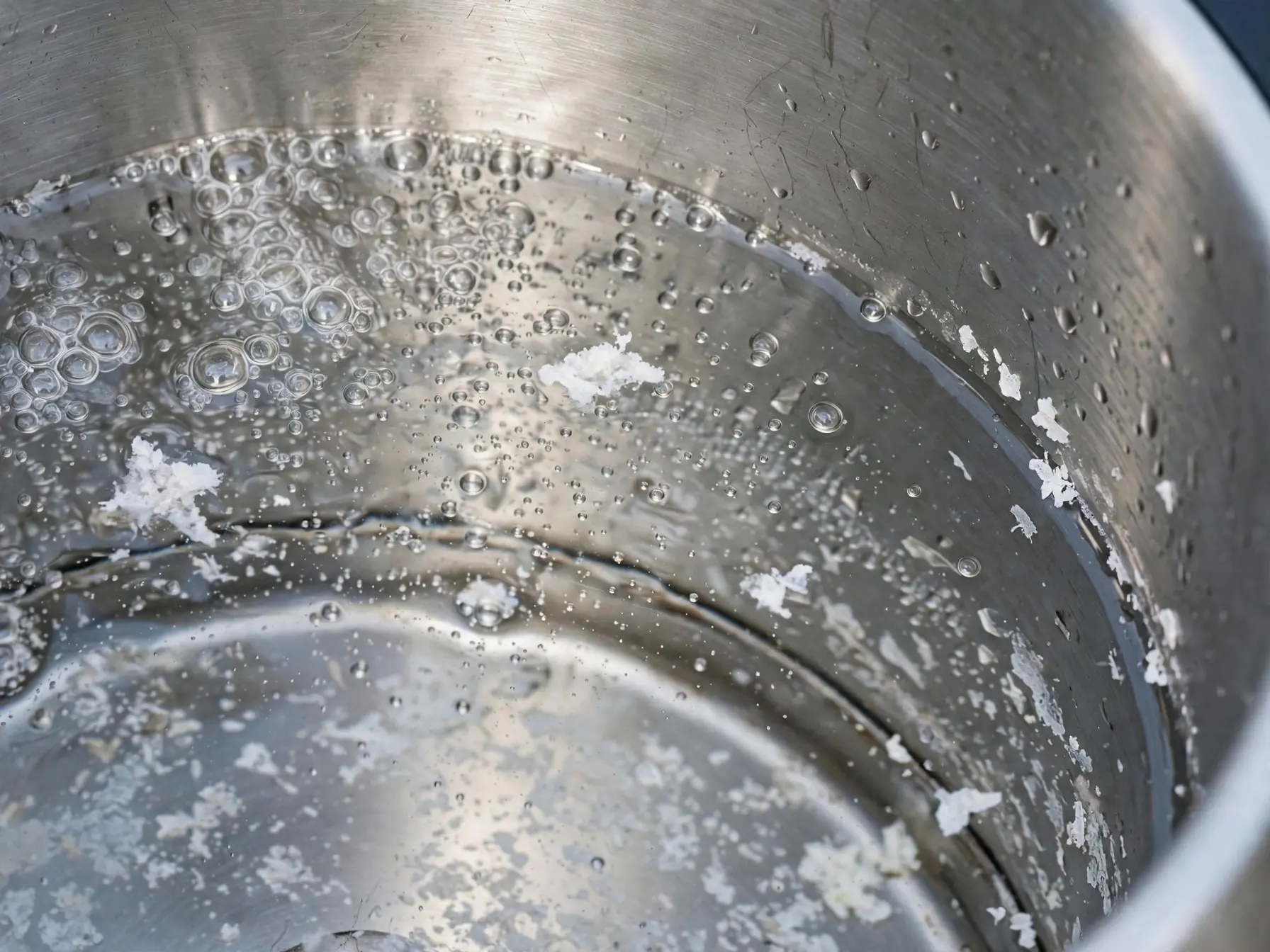
Leave the citric acid solution in the kettle for 15 to 30 minutes while it fizzes and dissolves the scale. Unlike vinegar, it has almost no smell, so you can leave the kitchen door shut and get on with something else. Thick crust may need the full half hour — check by looking inside after 15 minutes, and give it longer if white patches still cling to the element. Do not reboil the mixture: one hot soak is enough, and the acid keeps working as the water slowly cools.
- 15 minutes for light scale, 30 for thick crust
- Almost no smell — no need to open windows
- Do not reboil the mixture
8. Rinse well and boil plain water once
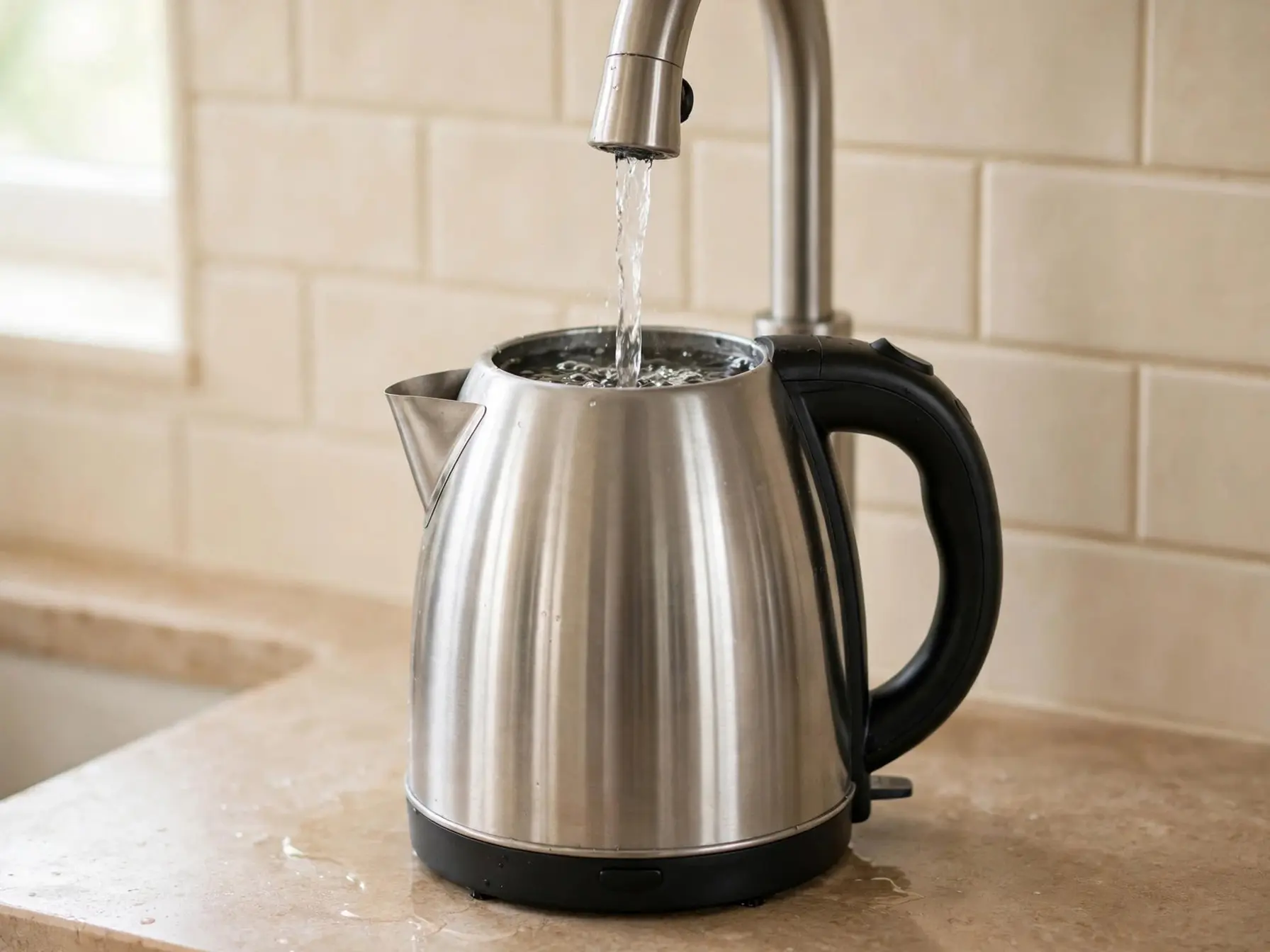
Tip the citric acid water away and rinse the kettle twice with clean water, swirling it around the element to wash out any loose flakes. Then fill it halfway with fresh water, boil it once, and tip that away as well — the same plain-water flush as the vinegar method, to make sure no acid taste reaches your next drink. Wipe the inside with a soft cloth if a few flakes are still stuck. The element should look bright steel again.
- Tip the citric acid water away
- Rinse twice, swirling around the element
- Boil plain water once and tip it away
Method 3: Lemon
Lemon is the gentlest method and smells the best, but it is the weakest. Use it for light scale or regular upkeep, not for a kettle with a thick crust.
9. Cut a lemon in half and squeeze it into the kettle
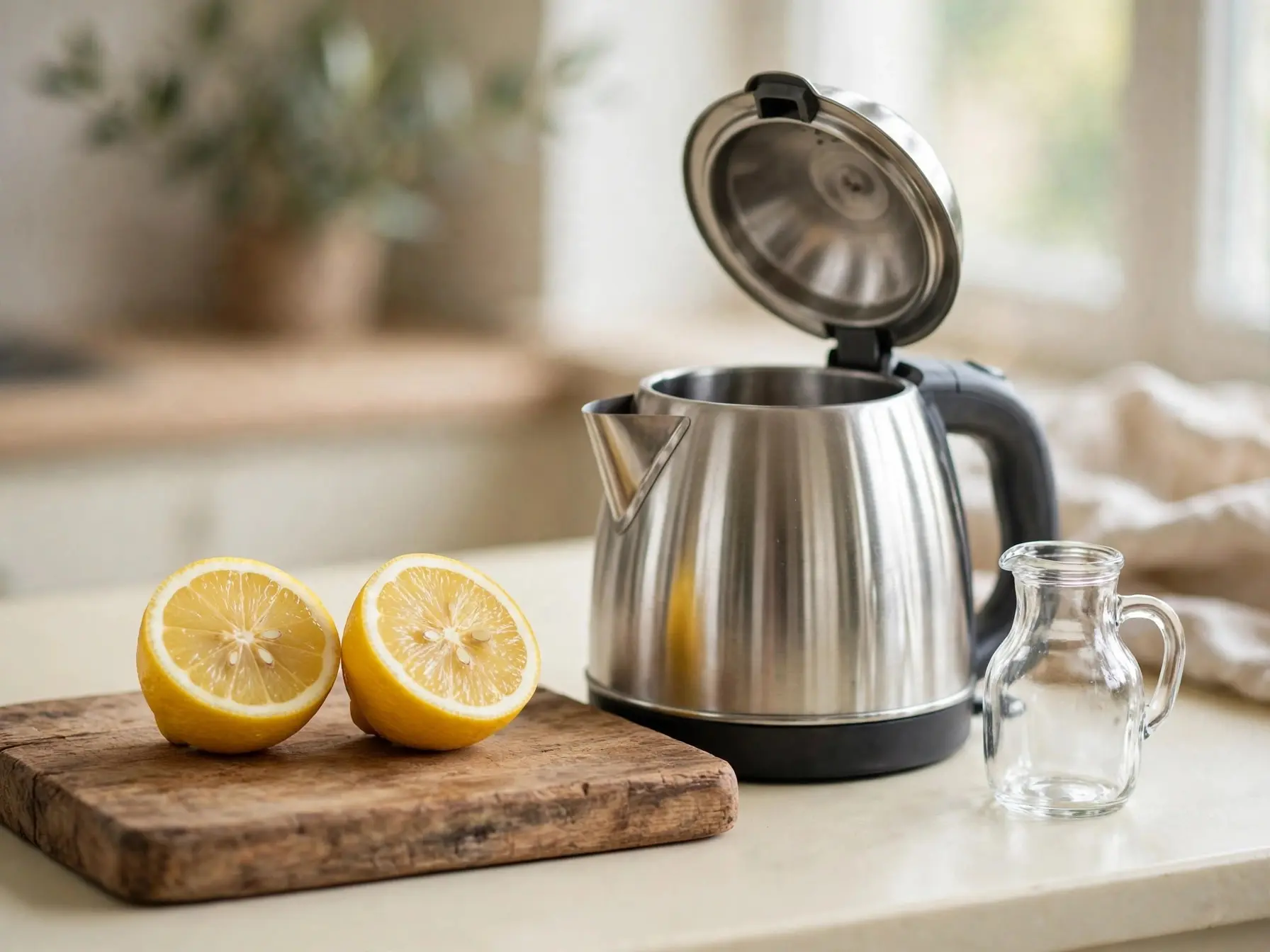
Cut a fresh lemon in half and squeeze both halves into the empty kettle, then drop the squeezed halves in too. The juice is the acid here, and the halves keep releasing it as the water heats. One large lemon is enough for a standard kettle; use two if the scale is heavy. This is the gentlest of the three methods and the best smelling, but it is also the weakest — save it for light scale or a kettle you descale often.
- One large lemon, or two for heavy scale
- Squeeze both halves, then drop them in
- Best for light scale, not a thick crust
10. Top up with water and boil
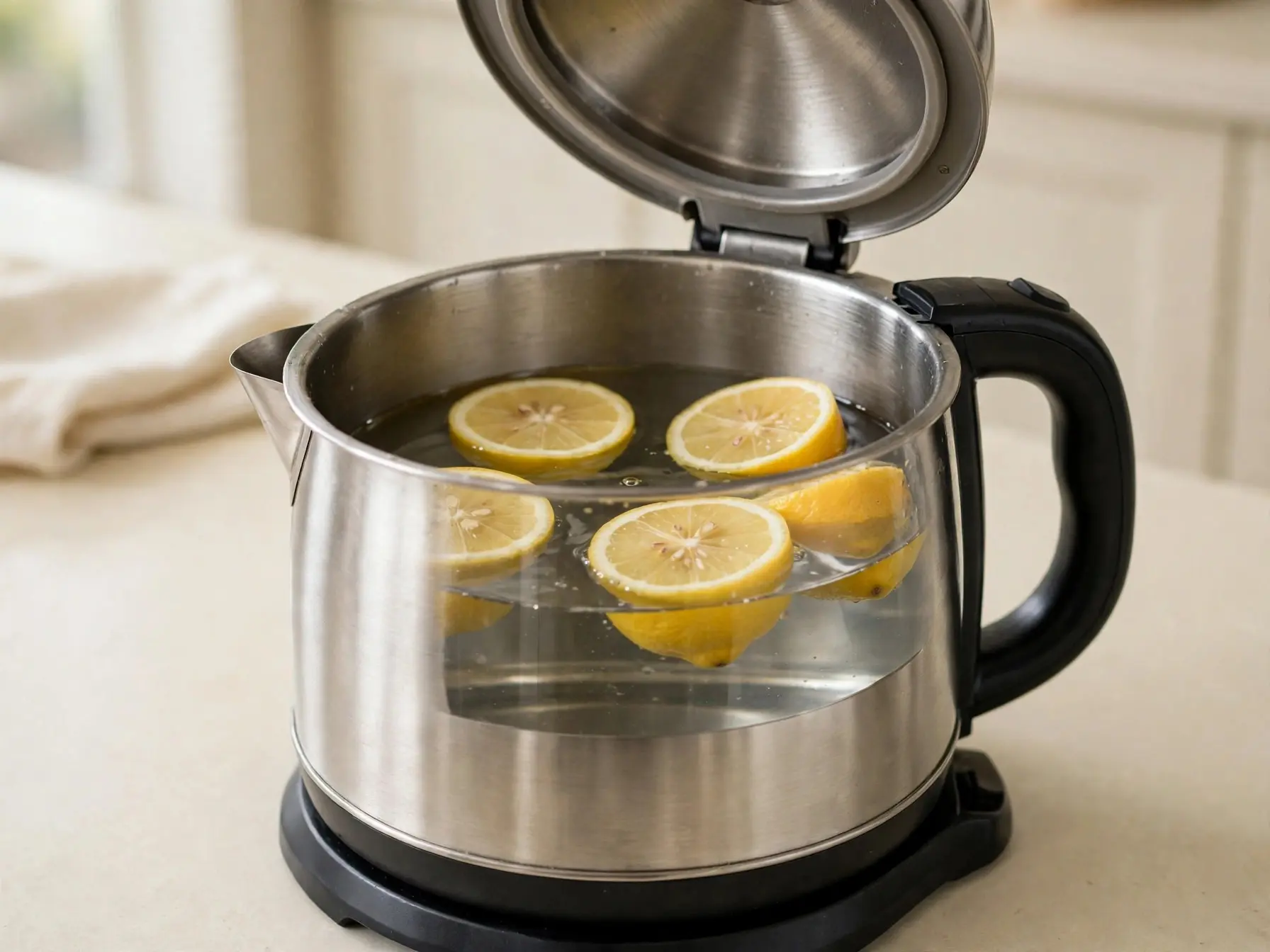
Top the kettle up with cold water to the halfway mark, put the lid on, and bring it to a boil. The lemon halves will bob in the water as it heats — that is normal, and they are doing the work. Keep the kettle below the max line, because lemon water foams a little as it boils and can spit. As soon as it clicks off, lift the kettle off its base and leave the lemon water inside to soak.
- Top up to halfway, never past the max line
- Put the lid on before switching on
- Lemon halves bobbing in the water is normal
11. Leave the lemon water to sit for 30 minutes
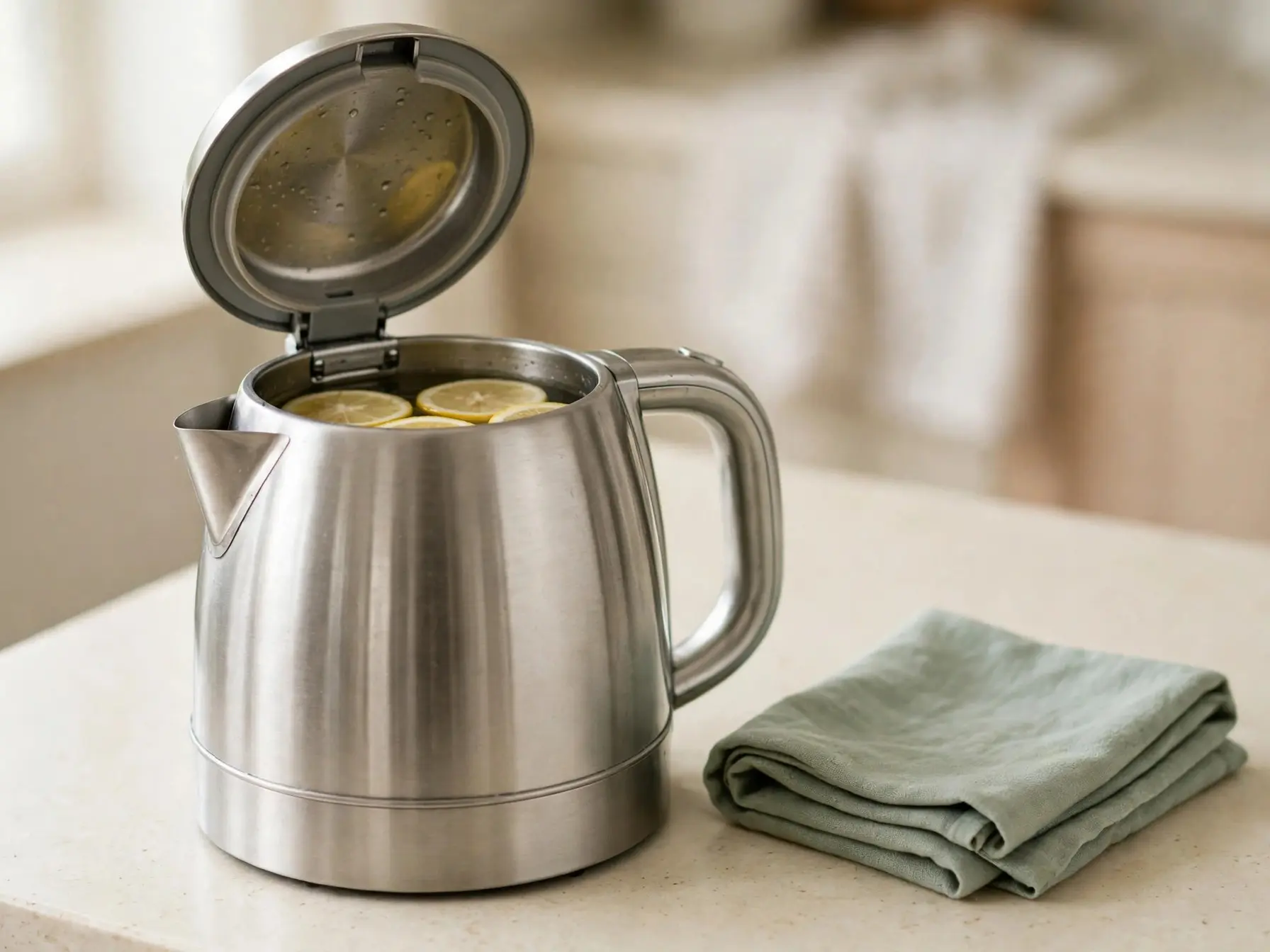
Leave the hot lemon water in the kettle for 30 minutes — longer than the other two methods, because lemon juice is a weaker acid than vinegar or citric acid. An hour is fine if the scale is stubborn, and the lemon halves will not harm the kettle in that time. Check inside after half an hour: light scale should have lifted, leaving the element mostly bright. If thick crust is still stuck, run the citric acid method next instead of repeating the lemon soak.
- 30 minutes for light scale, up to an hour if stubborn
- Check inside after half an hour
- If crust remains, switch to the citric acid method
12. Remove the lemon, rinse and boil plain water once
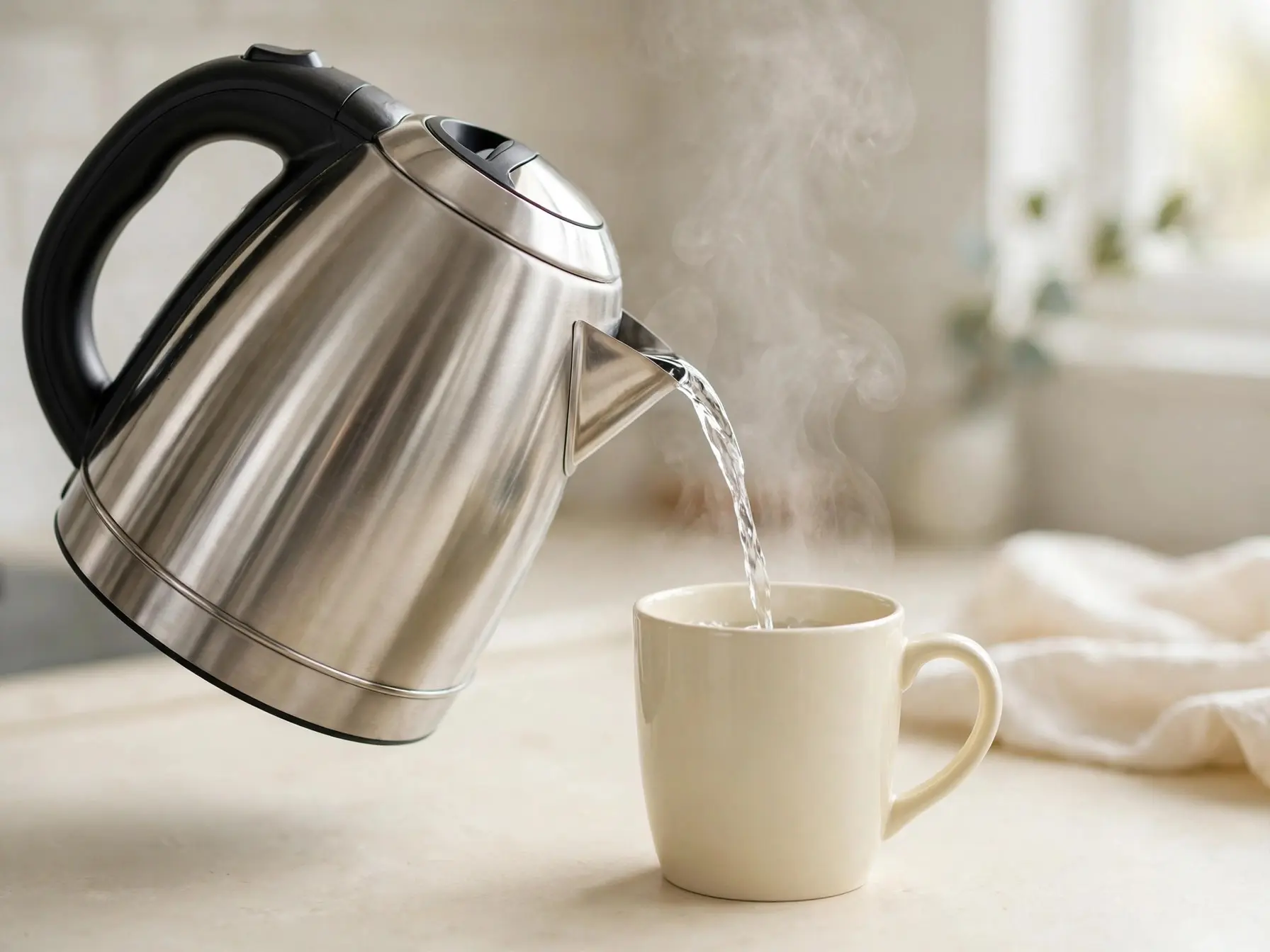
Fish the lemon halves out with tongs or a spoon and drop them in the bin, then tip the lemon water away. Rinse the kettle twice with clean water to clear the pulp and loose flakes, and wipe the inside with a soft cloth. Fill it halfway with fresh water, boil it once, and tip that away — the final flush that every method ends with. Fill it again, make a cup of tea, and check the taste: clean water, no sour note, no flakes.
- Fish the lemon halves out with tongs or a spoon
- Rinse twice to clear pulp and flakes
- Boil plain water once and tip it away
Vinegar vs citric acid vs lemon: which to pick
All three acids dissolve limescale. The real differences are the smell, the soak time and how gentle each one is on seals and coated elements — pick the one that fits your kettle and your nose.
| Method | Smell | Time | Seal-safe? |
|---|---|---|---|
| White vinegar | Strong vinegar smell while it works | 15–30 minute soak | Yes for most kettles; skip it if your manual warns against vinegar on a coated element |
| Citric acid | Almost no smell | 15–30 minute soak | Yes — the gentlest option for seals and coated elements |
| Lemon | Fresh citrus smell | 30 minute soak | Yes; best for light scale, less punch on heavy buildup |
The rule behind the table is simple: the stronger the smell, the cheaper the fix — and the gentlest option, citric acid, is the one to reach for when your kettle has a coated element or you want the easiest soak.
How often to descale, by water hardness
How fast scale builds depends on your water. Soft-water homes can go months between descales; hard-water homes need a monthly routine. Use this as your starting point, and descale sooner whenever the kettle boils slower, clicks off early or leaves flakes in your tea.
- Soft water: every 6 months, or when you see a faint film on the element.
- Medium water: every 2 to 3 months.
- Hard water: once a month.
- Very hard water: every 2 to 4 weeks, or whenever flakes appear in your tea.
Questions, answered
How often should you descale a kettle in a hard water area?
In a hard-water area, descale once a month as a routine — and every two to four weeks if you see white flakes in your tea or the kettle takes noticeably longer to boil. Hard water lays down scale fast, and a monthly 15-minute descale is easier than fighting a thick crust twice a year. If you use a water filter jug for the kettle, you can stretch it to every two or three months.
Is citric acid or vinegar better for descaling a kettle?
Citric acid is the better choice for most kettles: it has almost no smell, it is gentle on seals and coated elements, and it dissolves limescale just as well as vinegar. Vinegar wins on price and availability — it is already in most cupboards. Pick citric acid if the smell bothers you or your kettle has a coated element; pick vinegar if you want the cheapest fix today. Lemon trails both on heavy scale.
Can limescale in a kettle make you ill?
No — limescale is calcium carbonate, the same mineral found in hard tap water, and the small amounts in a kettle are not harmful to drink. It is unpleasant rather than dangerous: flakes in your tea, a chalky taste, and a kettle that boils slower and uses more power. Descale for taste and to protect the element, not because the scale itself will make you ill.
How do you clean the outside and filter of a kettle?
Wipe the outside with a damp cloth and a drop of dish soap, then dry it with a soft cloth — never immerse an electric kettle or its base in water. Lift the mesh filter out of the spout (most pull straight out), rinse it under the tap, and brush it with an old toothbrush. If it is crusted with scale, soak it in a cup of vinegar or citric acid water for 15 minutes, rinse, and slot it back in.
Keep reading
Descaling is one piece of a kitchen that stays clean on a schedule. Our guide to how to clean a shower head tackles the other fixture that quietly scales up, how to clean a washer covers the appliance that needs the same treatment, and home maintenance checklist puts every filter, vent and seal on a rhythm so nothing gets forgotten.
Pick the method that fits your kitchen — vinegar for the cheapest fix, citric acid for the easiest one, lemon for the lightest scale — and put it on a routine. Fifteen minutes, once a month in hard-water homes, is all it takes to keep the element bright and the tea tasting right.