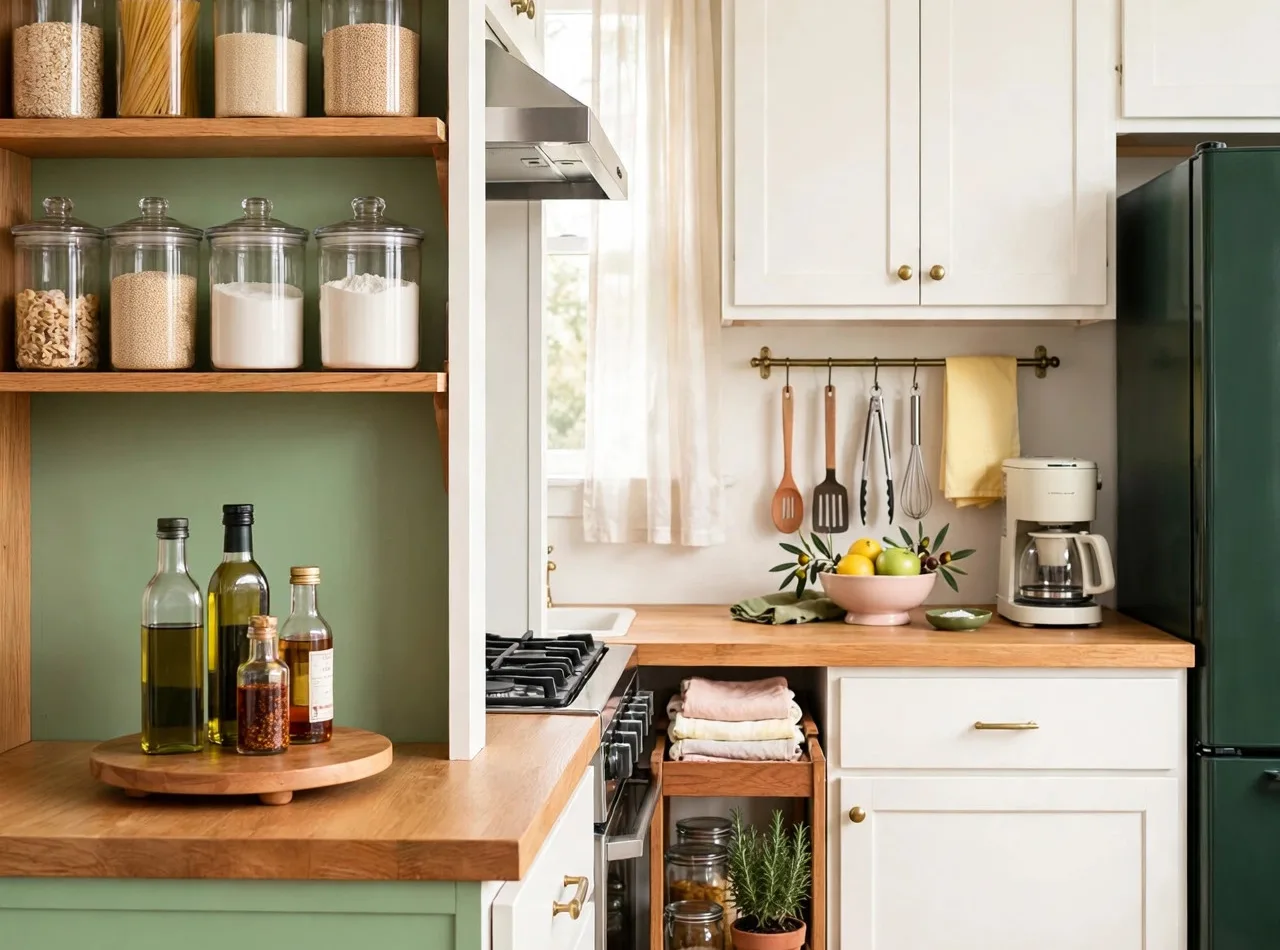
Small kitchens do not need more space — they need a system. When every shelf, drawer and corner has a job, cooking feels calmer, clean-ups take minutes, and you stop buying duplicates of things you already own. These 50 kitchen organization ideas are grouped by zone, from pantry to under the sink, so you can tackle one area at a time without turning the whole house upside down.
Thank you for reading this post, don’t forget to subscribe!If you love the pantry part, our pantry organization ideas post goes deeper on shelves and storage, and the same zone thinking works beyond the kitchen: try our closet organization ideas, the room-by-room declutter plan, or the cleaning schedule that keeps it all maintained. Now let’s make this kitchen work harder.
Pantry zone
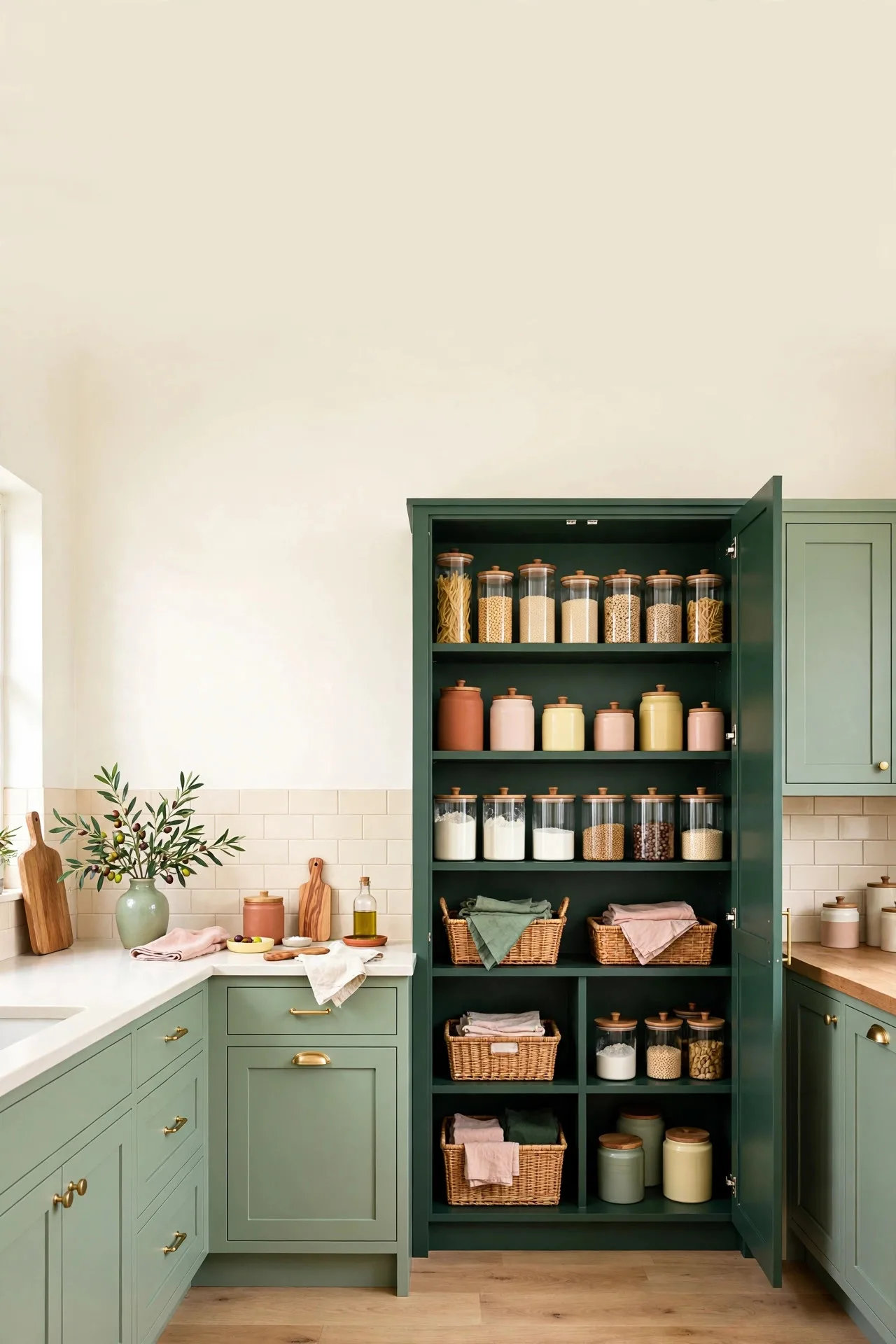
1. Set up pantry zones for snacks, grains and baking
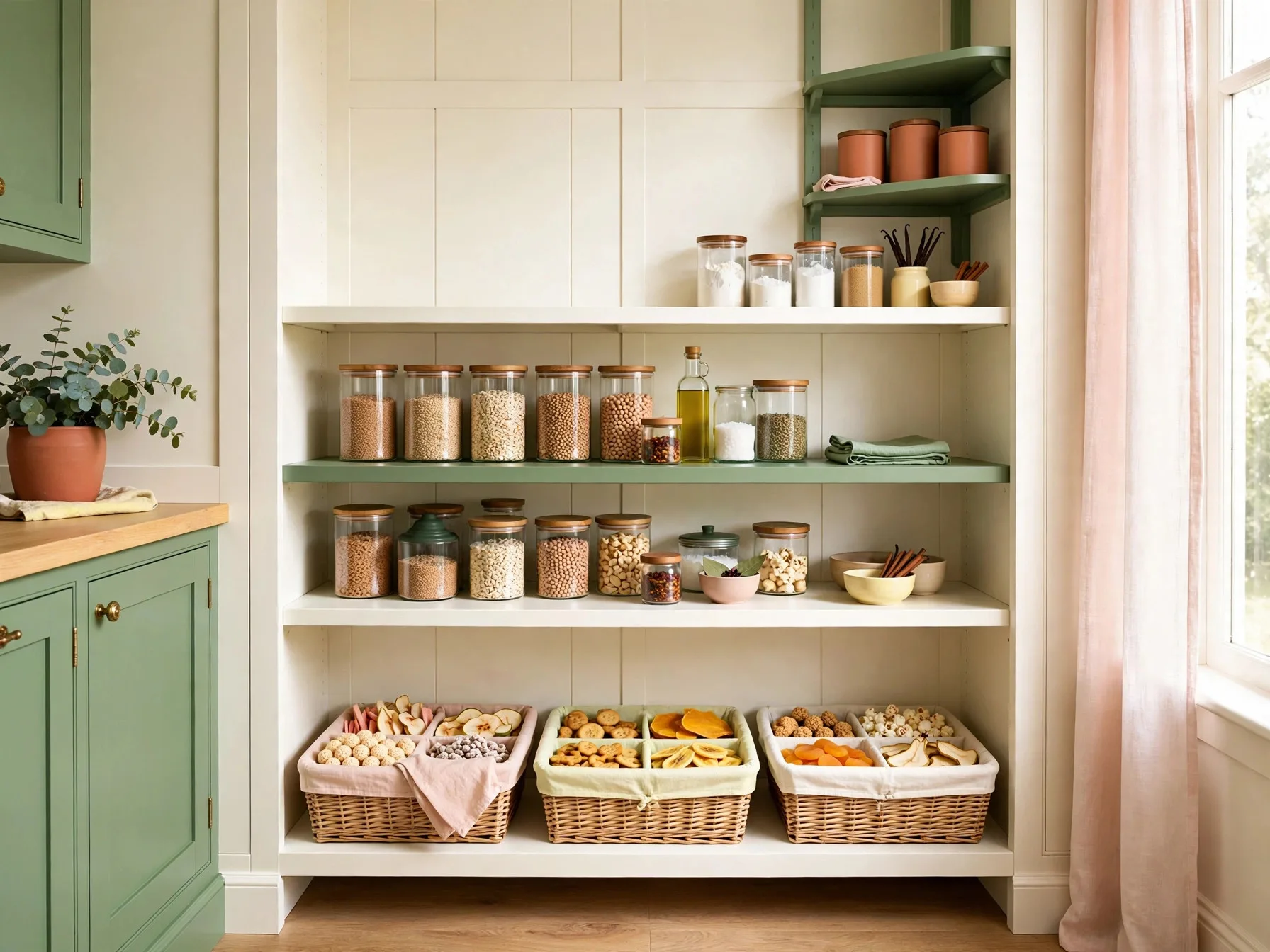
Group pantry shelves into simple zones so every item has a home. Keep children’s snacks low and easy to reach, cook grains and cooking essentials together, and gather baking supplies in one corner.
This small change makes daily kitchen organization calmer because you shop from one spot and return things quickly. Put heavier items on lower shelves and keep breakfast goods near the front.
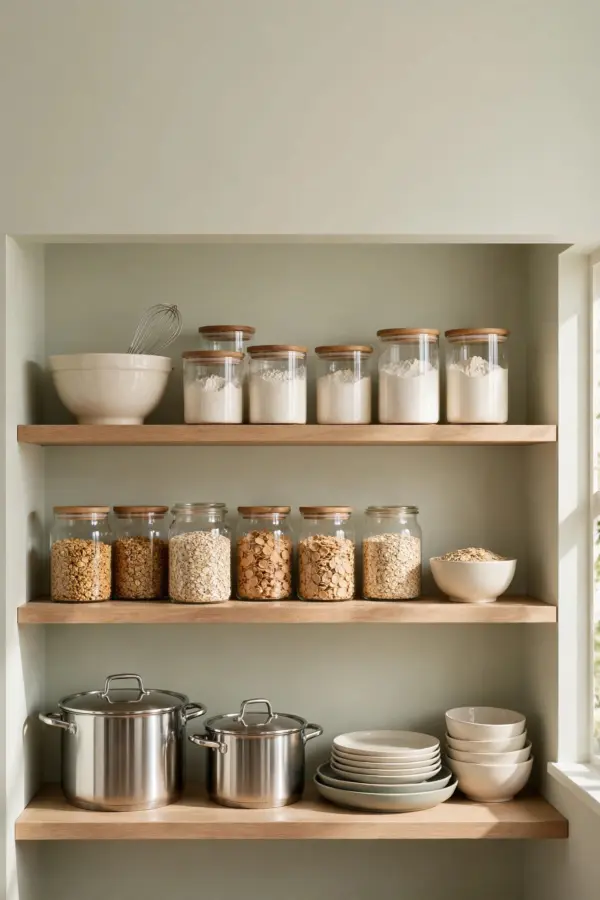
2. Decant staples into matching airtight canisters
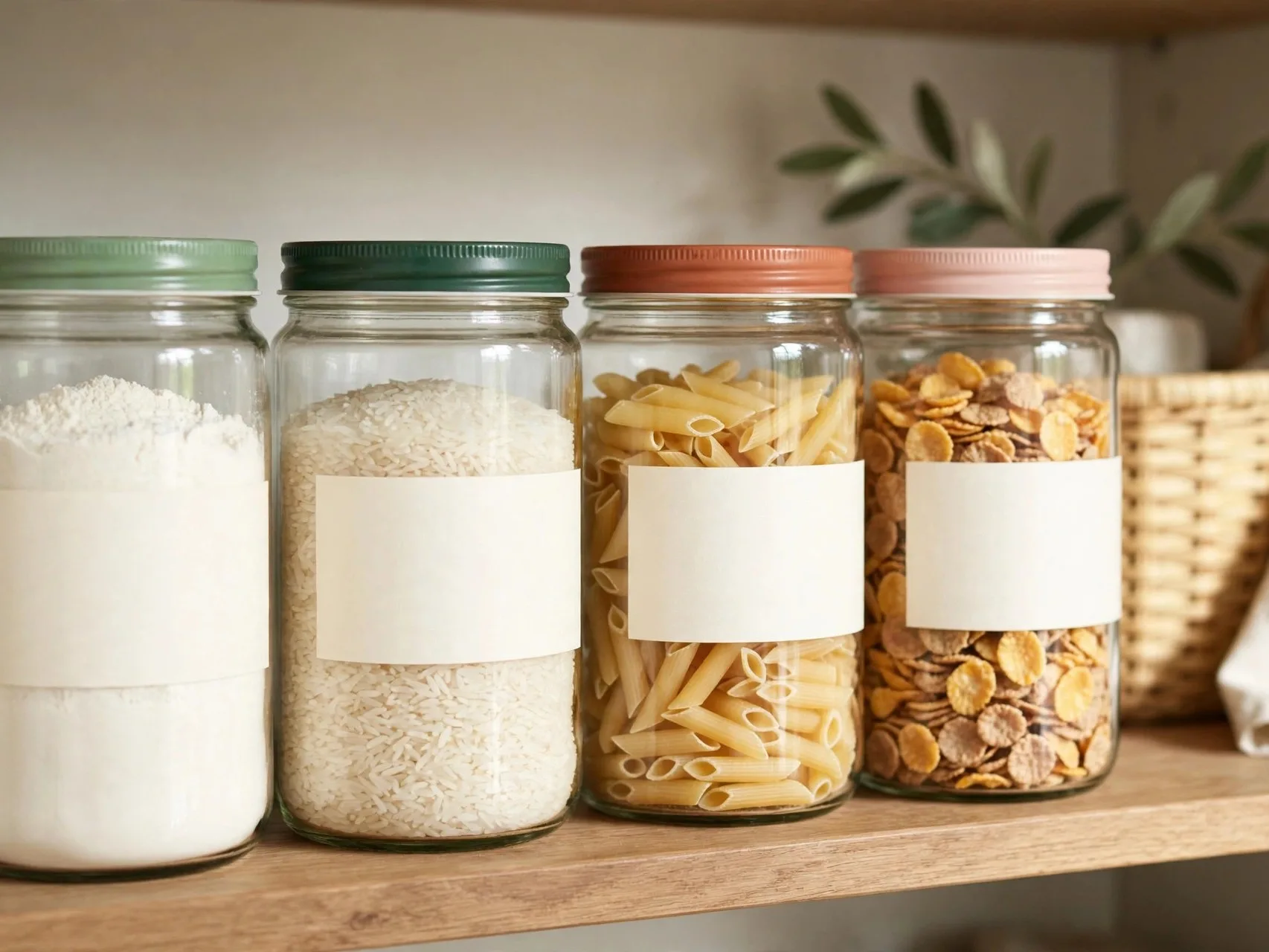
Pour flour, rice, pasta and cereal into matching airtight canisters so everything looks calm and stays fresh. Simple labels help everyone find ingredients fast and notice when stocks run low.
Choose one size family of jars for a neat row, then line them up with the most-used at the front. It is an easy kitchen organization upgrade that makes a cluttered shelf feel intentional.
3. Spin a turntable for oils and sauces
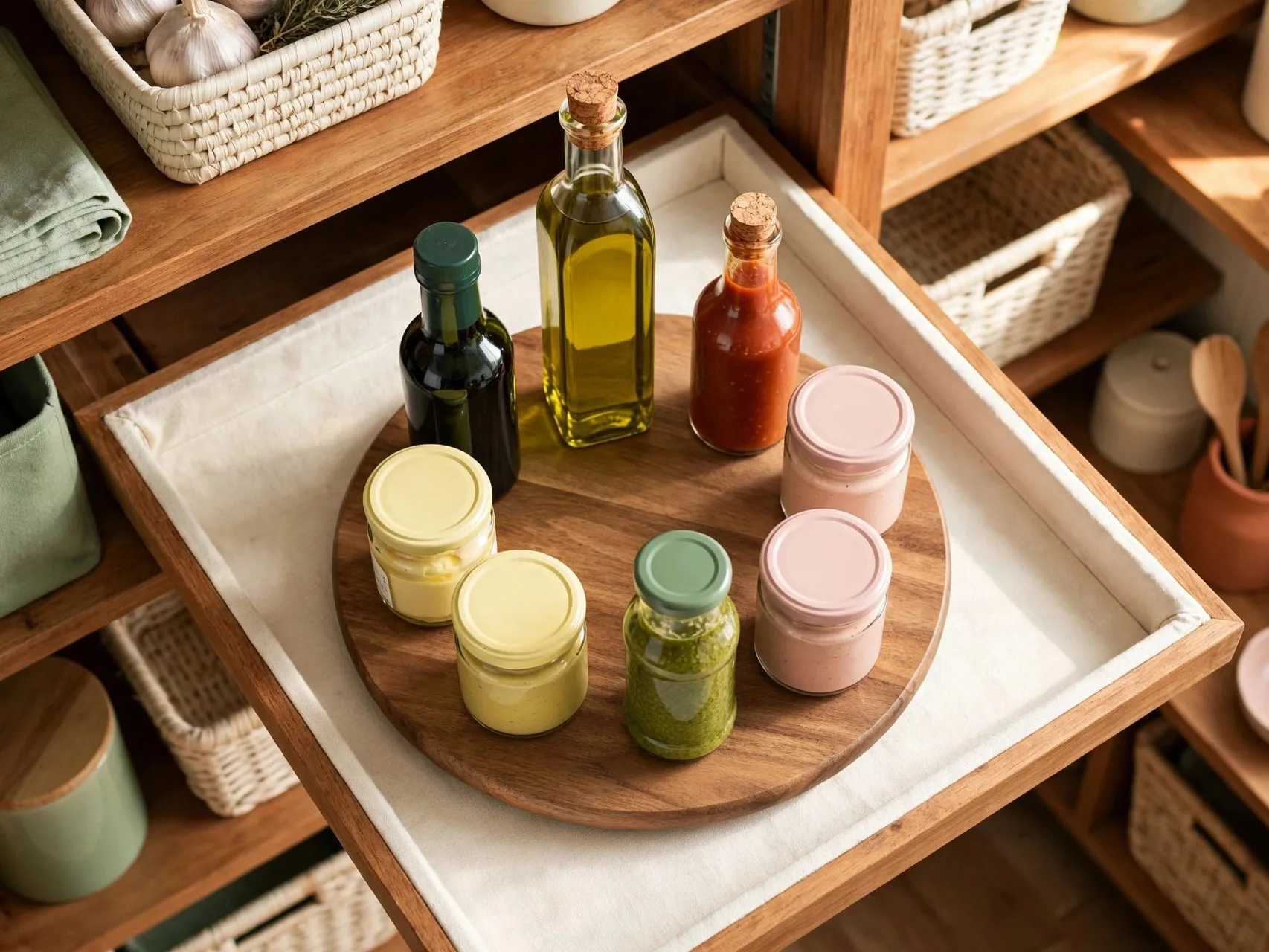
Place a turntable on a deep shelf and gather oils, sauces and condiments on it. One smooth spin brings the right bottle forward instead of pushing jars aside and losing track.
Group tall bottles in the middle and shorter ones around the edge for balance. This kitchen organization trick rescues awkward corners and keeps everyday cooking flavours within easy reach.
4. Add risers to double shelf height
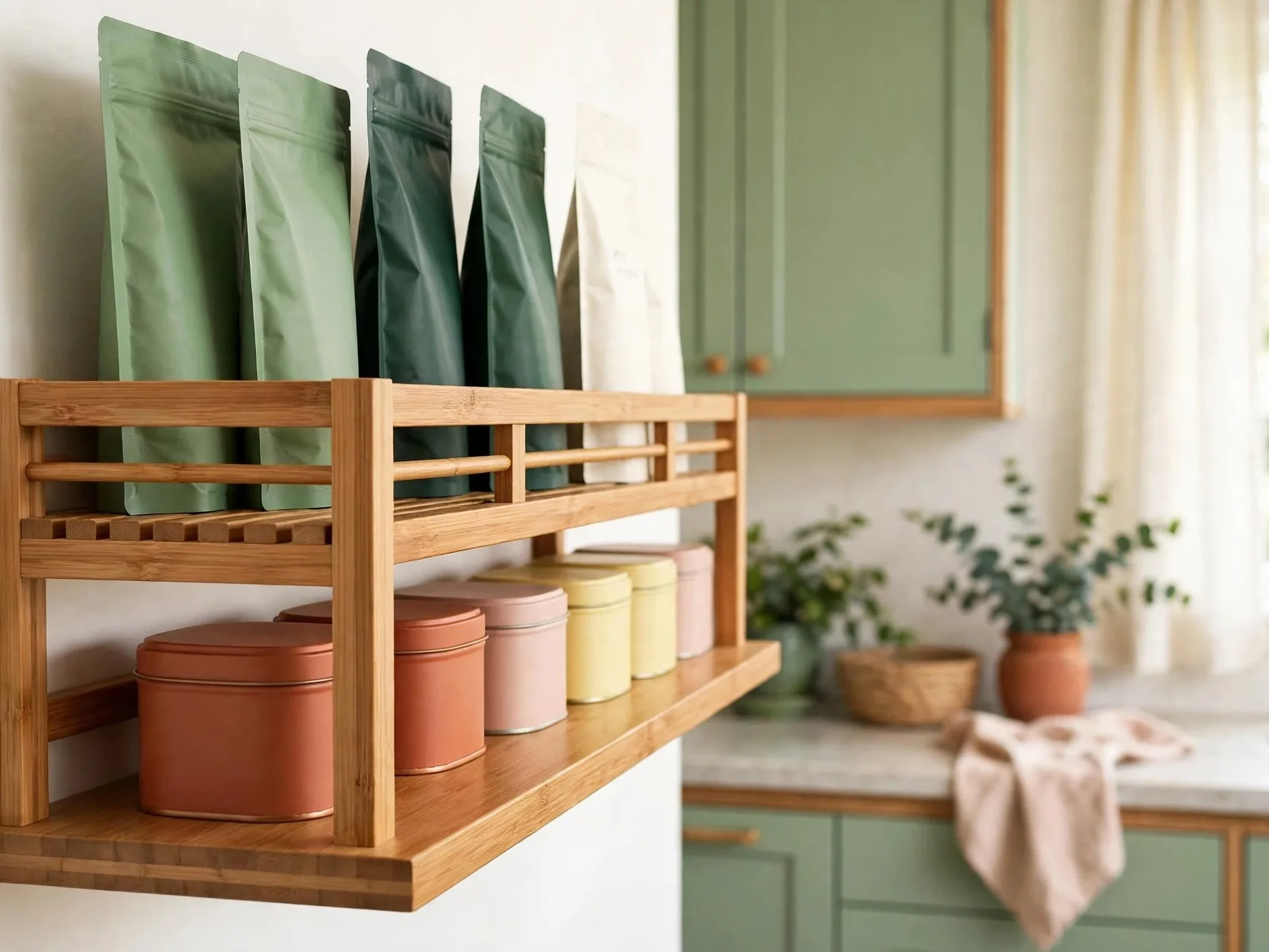
Slide risers or shelf stackers onto a tall pantry shelf to create two usable levels. Place short tins underneath and taller packets on top, so nothing hides behind anything else.
The extra tier instantly improves kitchen organization because every item gets breathing room and stays visible. Choose sturdy metal or bamboo risers that wipe clean and suit your shelf depth.
5. Keep backstock in one handy high bin
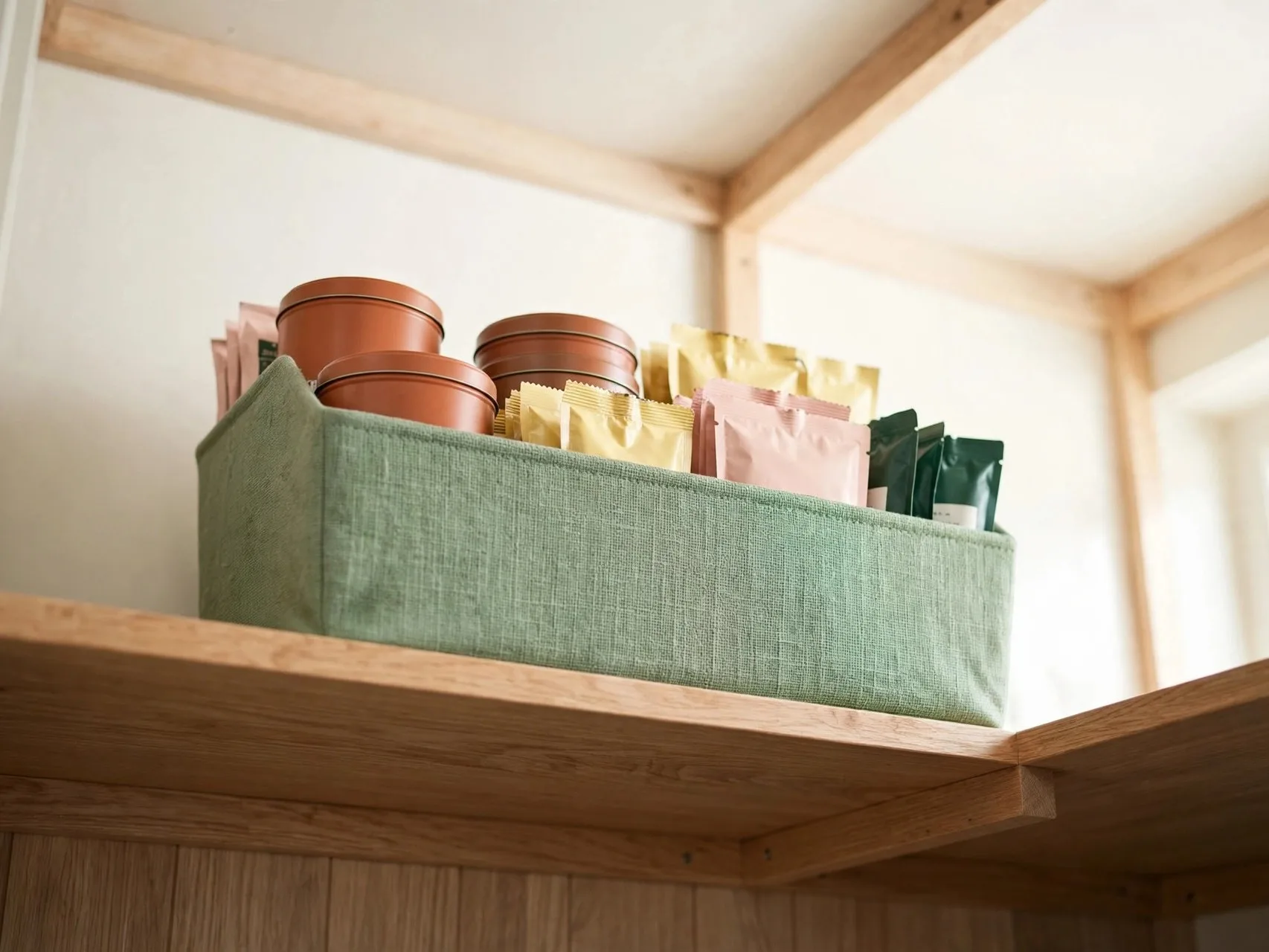
Keep spare tins, multipacks and refills together in one neat handy labelled bin on the highest shelf. You will always know where backstock lives, so midweek shops stay short and simple.
Restock the working shelves from this bin rather than letting spare extras drift everywhere. It is quiet kitchen organization that stops duplicate buying and keeps the pantry neatly tidy.
6. Line cans up on a stepped organizer
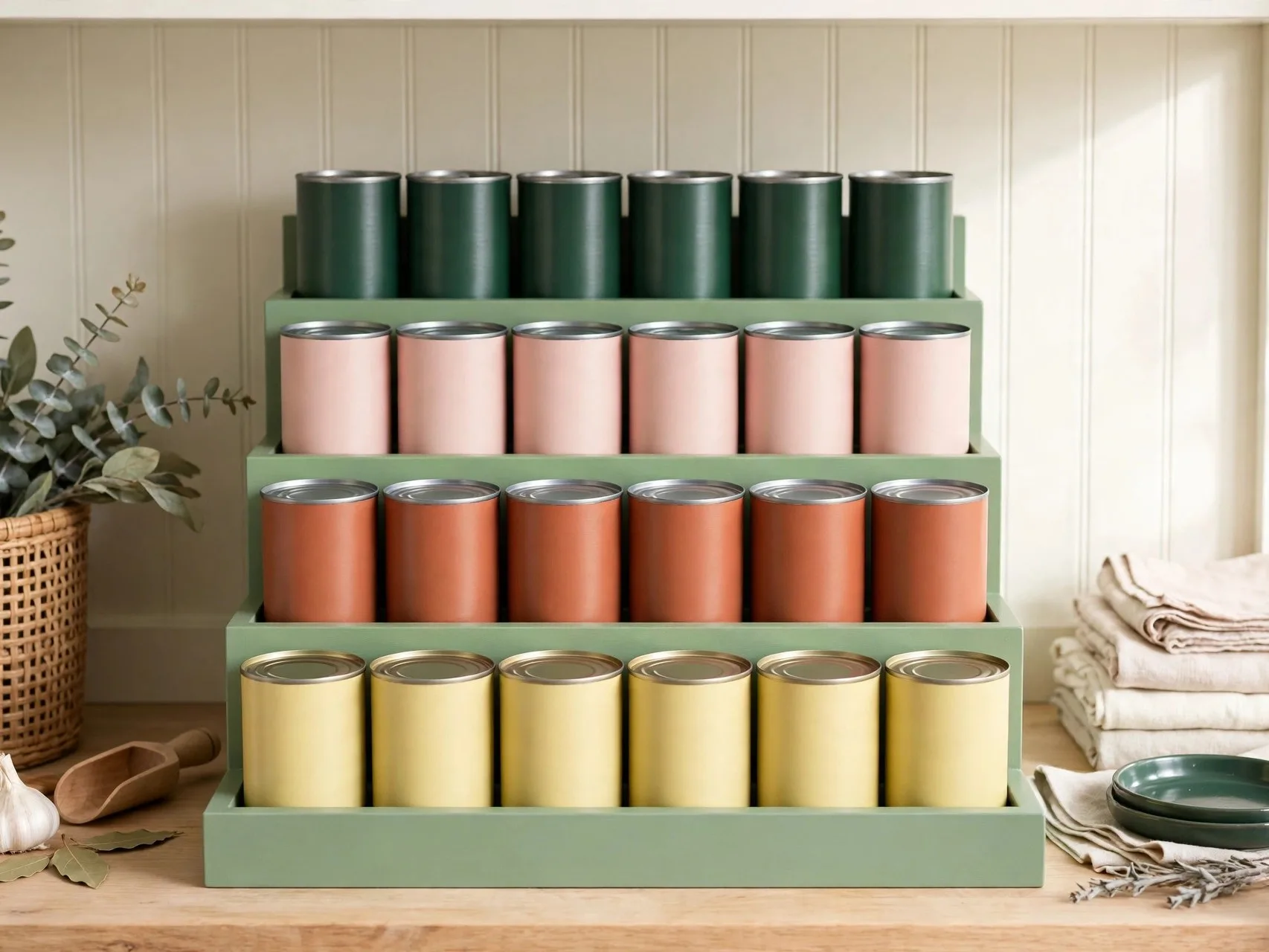
Arrange canned goods on a stepped organizer so every row sits slightly higher than the one in front. You can read each label at a glance instead of pulling tins out to check.
Group soups, tomatoes and beans in their own rows for quick meal planning. This tidy kitchen organization habit also makes it obvious which cans to use next.
7. Keep a small use-first bin handy
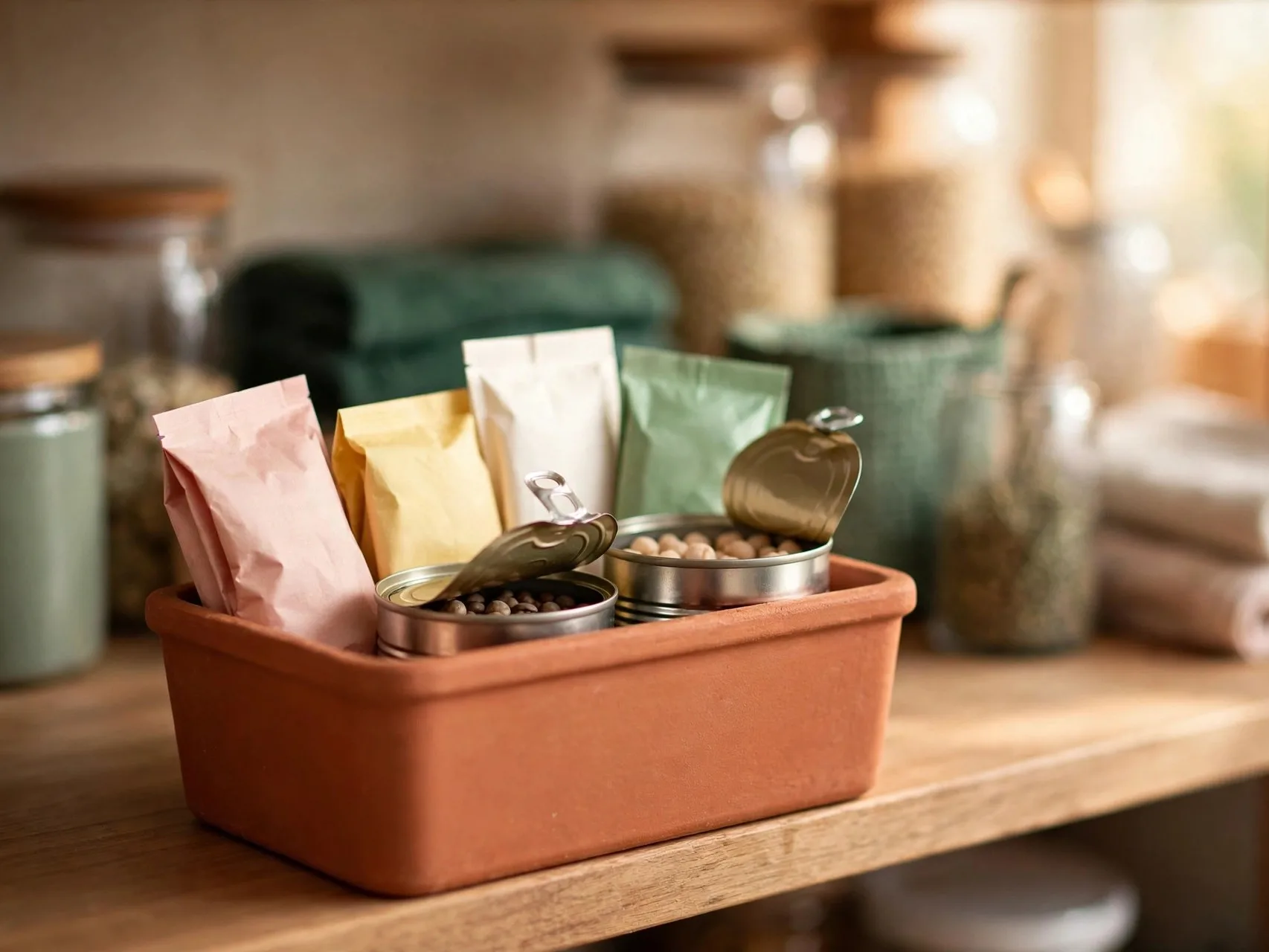
Place a small open bin at the front of the pantry for items nearing their expiry date. Add anything you opened but have not finished, plus short-dated packets and tins.
Check this bin first when planning meals so good food gets used in time. It is thoughtful kitchen organization that cuts waste and keeps the rest of the pantry fresh.
Upper cabinets
8. Store daily dishes at easy-reach height
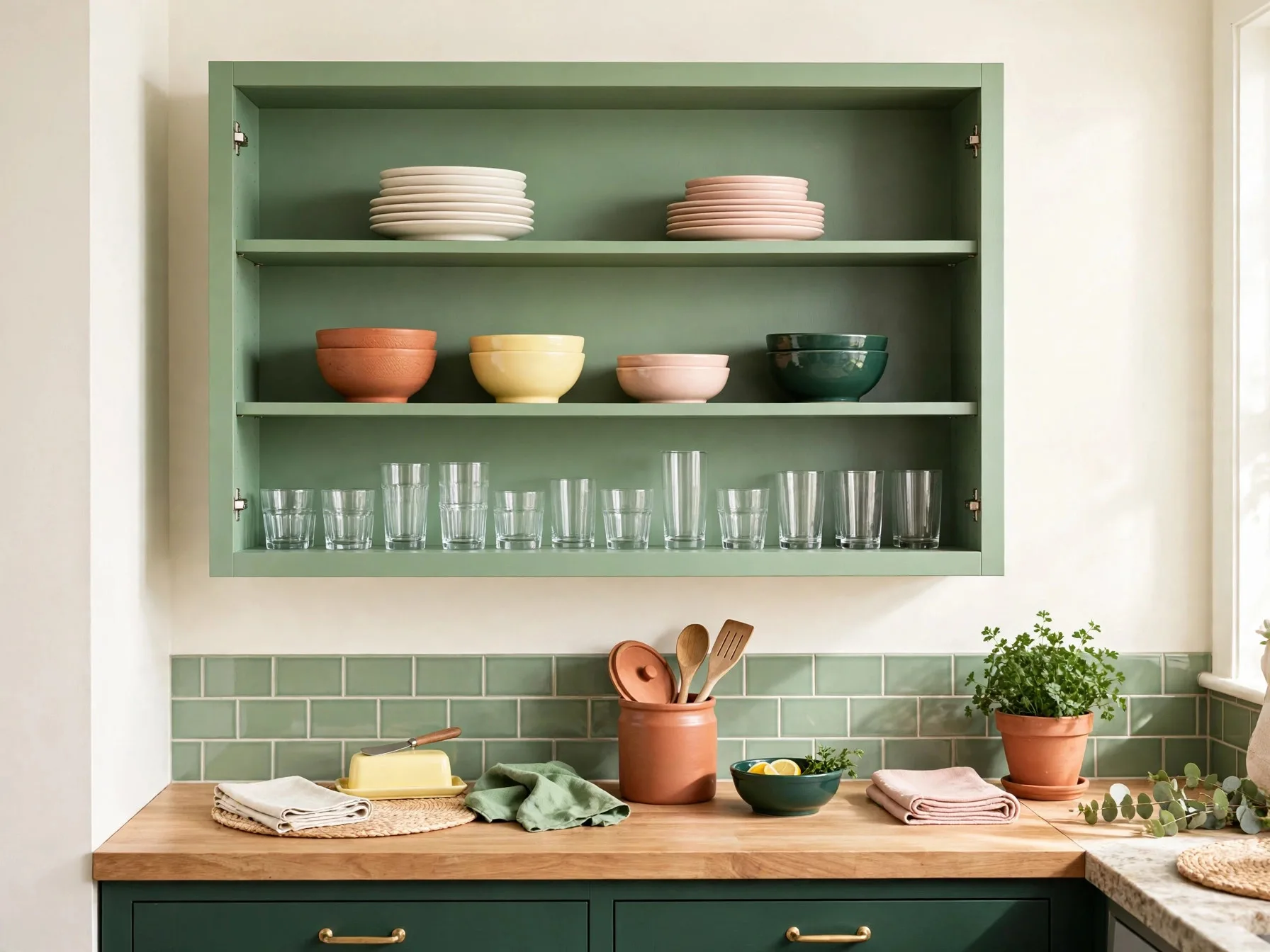
Store everyday plates, bowls and glasses between waist and eye level, where your hands naturally reach. This saves awkward stretching for daily dishes and keeps busy weekday mornings moving smoothly.
Reserve the shelves above your main prep area for these daily items if you can. Smart kitchen organization puts your most-used pieces closest, so unloading the dishwasher feels truly effortless.
9. Move rarely-used pieces to the top
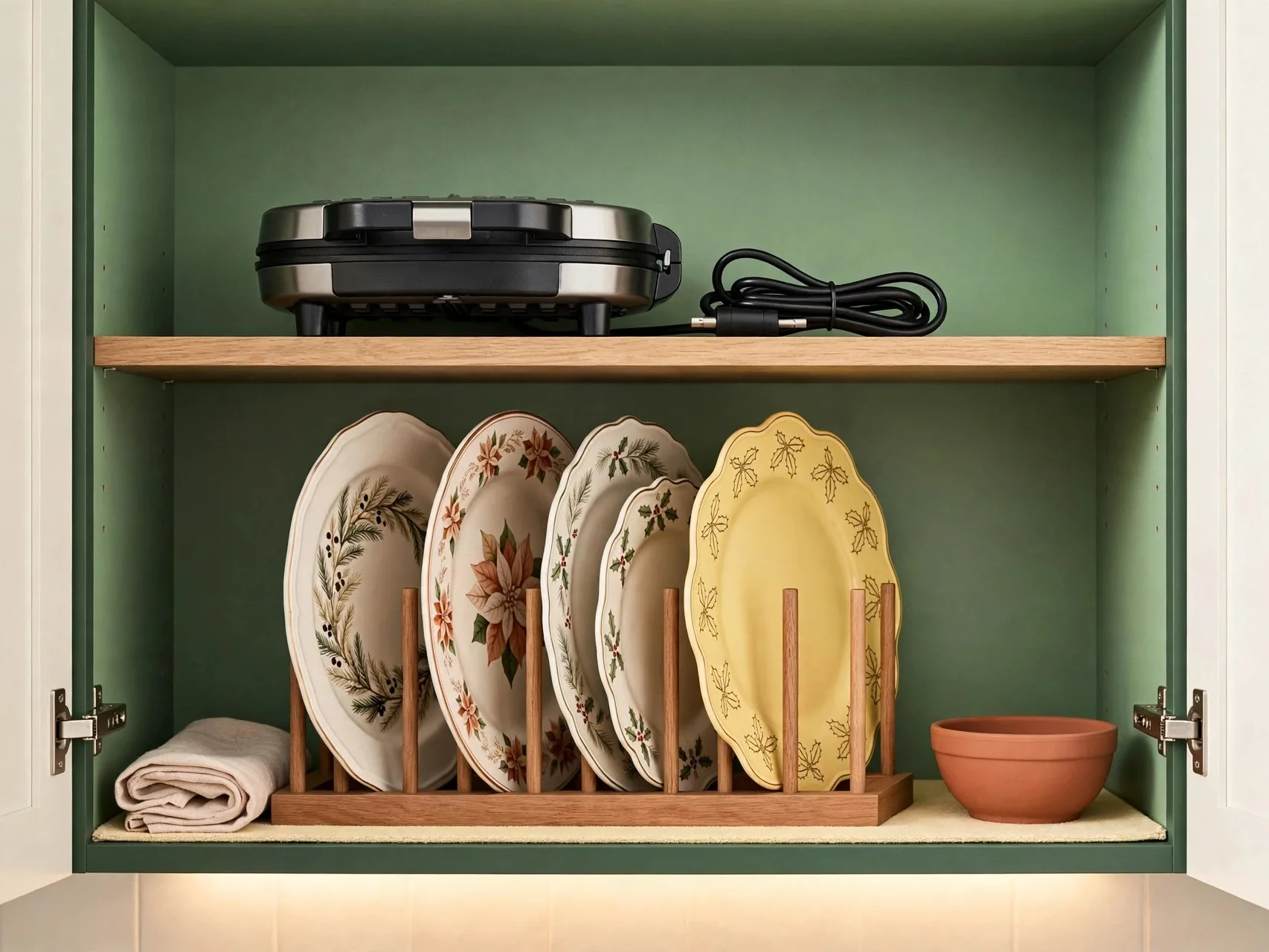
Move holiday platters, the waffle maker and other rarely-used pieces to the very top shelf. They stay clean and out of the way, yet remain easy to fetch for special occasions.
This is calm kitchen organization: daily shelves hold daily things, while occasional items wait high above. Wipe the top shelf twice a year so everything stays dust-free and ready.
10. Add sturdy stackable shelf inserts now
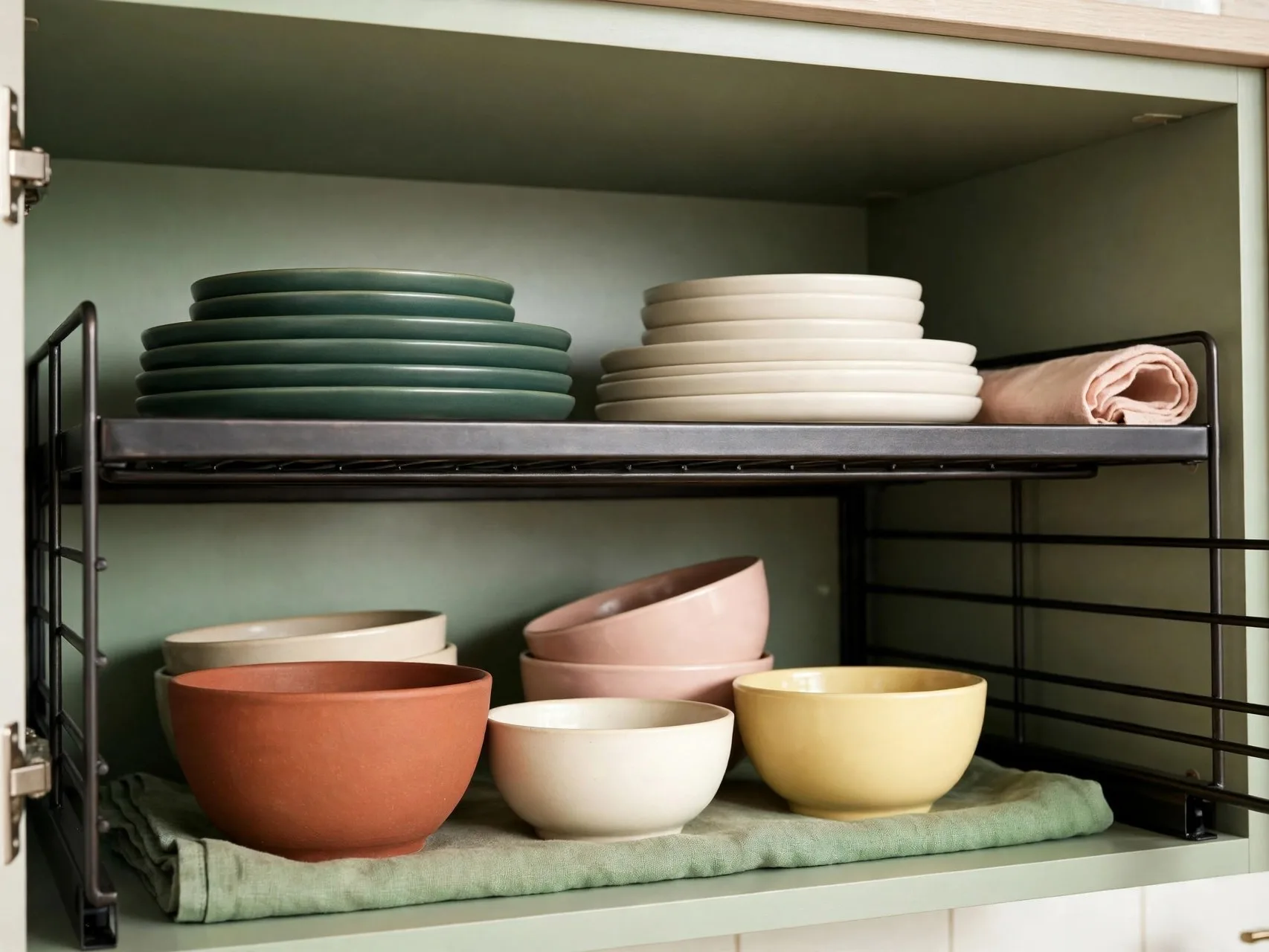
Slide sturdy stackable shelf inserts into deep cupboards to split tall, awkward gaps into two levels. Bowls can live below while side plates rest above, and nothing neatly gets buried anymore.
Measure your shelf height before buying so the insert fits with room to spare. It is clever kitchen organization that doubles usable daily space without any drilling or fuss.
11. Hang spices or wraps inside the door
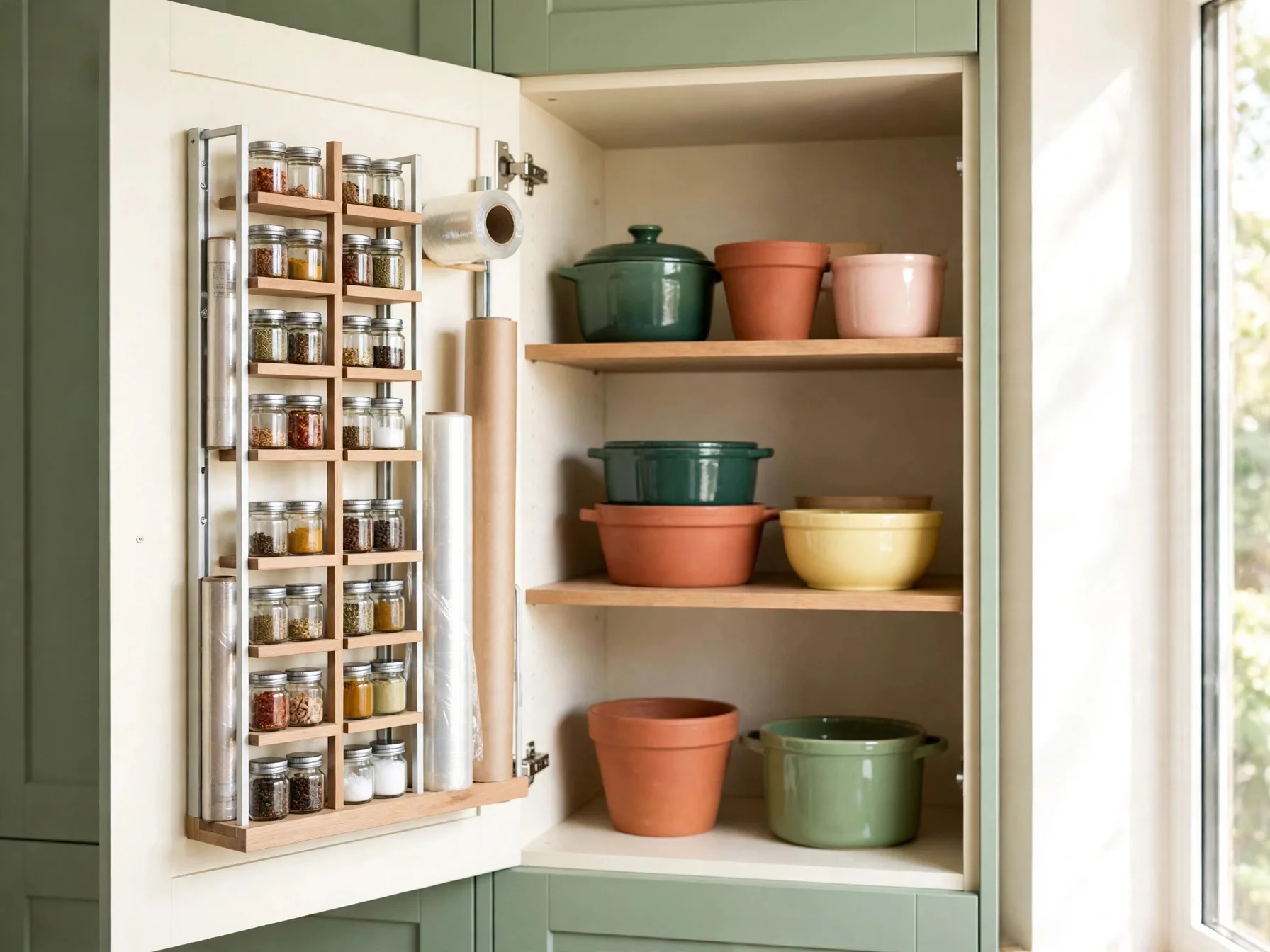
Fix slim racks to the inside of a cabinet door for spices, wraps or small daily packets. The door becomes useful storage instead of wasted space, and everything stays handy and visible.
Keep heavier jars on the shelves and lighter items on the door to protect hinges. This neat kitchen organization idea frees shelf room for bigger pots and mixing bowls.
12. Line shelves with non-slip liner
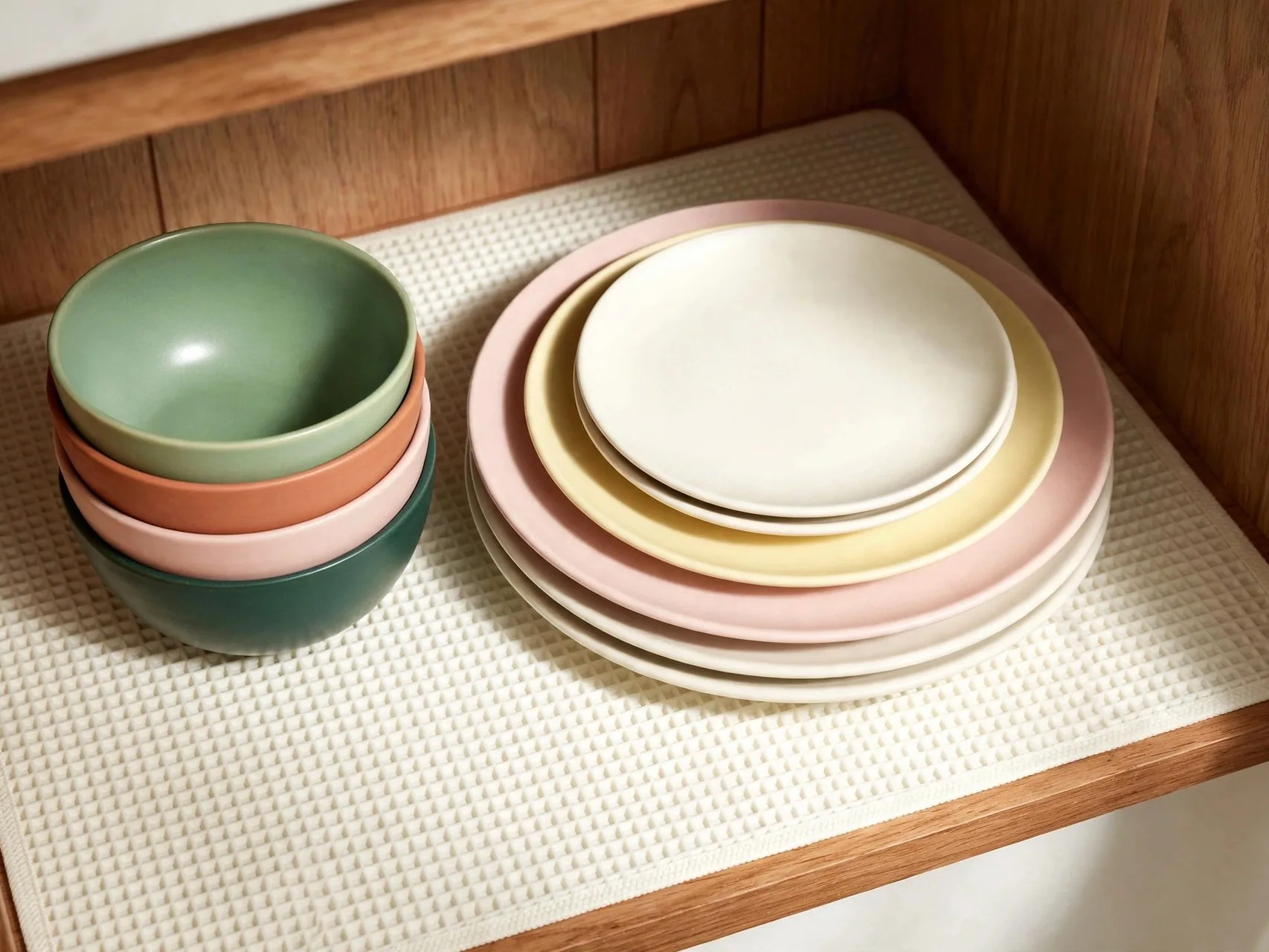
Lay non-slip shelf liner simply across each cupboard shelf before stacking dishes. The gentle grip stops plates and bowls sliding about when you reach for something at the very back.
Cut the liner slightly smaller than each shelf so edges stay neat and tidy. This quiet daily kitchen organization detail also protects shelves, and makes restacking feel steady and safe.
13. Group mugs on an under-cabinet hook rail
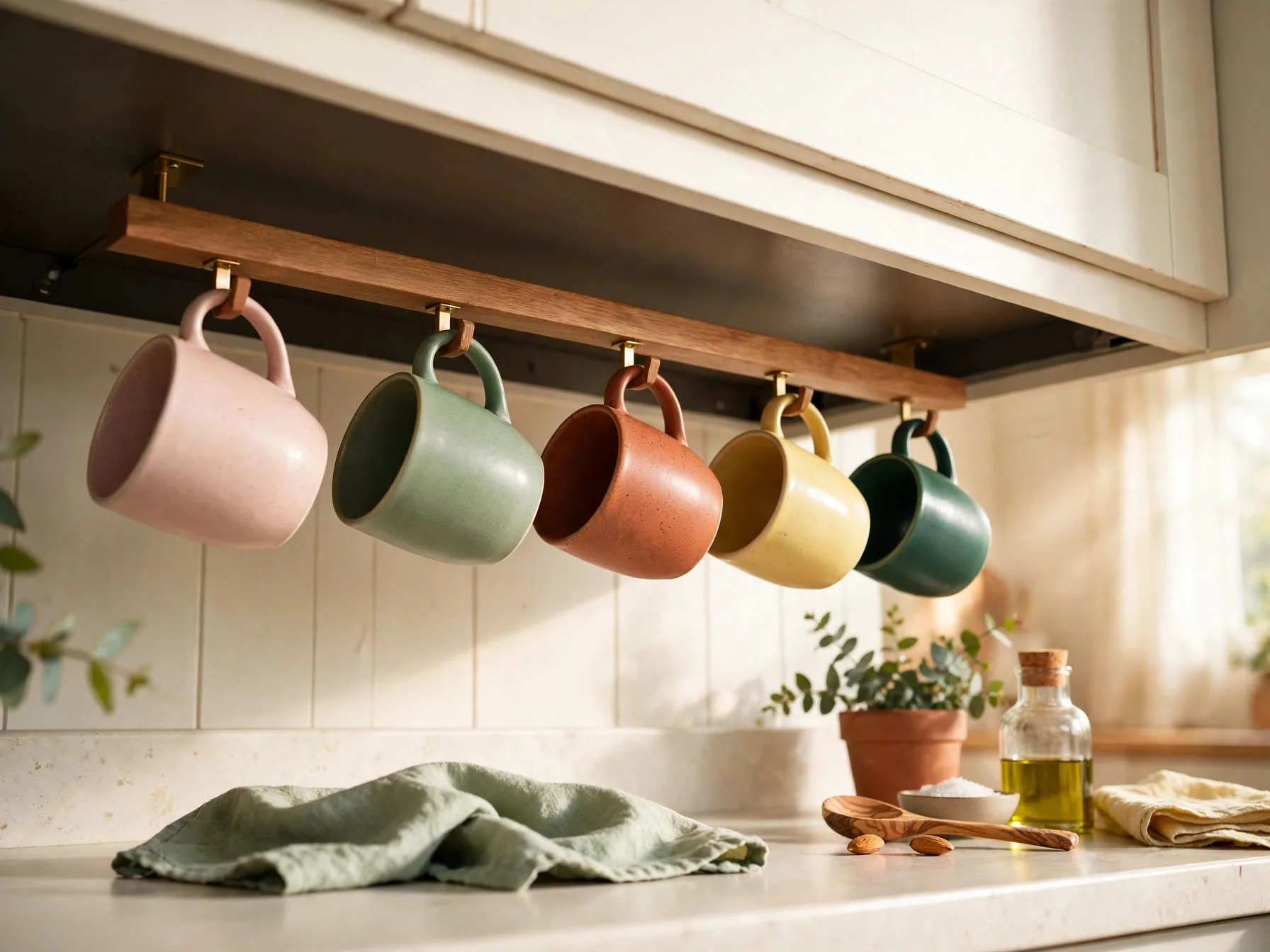
Screw a slim hook rail under a wall cabinet and hang daily mugs by their handles. Each cup gets its own spot, so there is no wobbly stacking or chipped rims.
Leave a little space between hooks so mugs gently lift off easily. This friendly kitchen organization touch keeps your favourite cups visible and ready for the warm morning brew.
14. Keep a step stool within reach
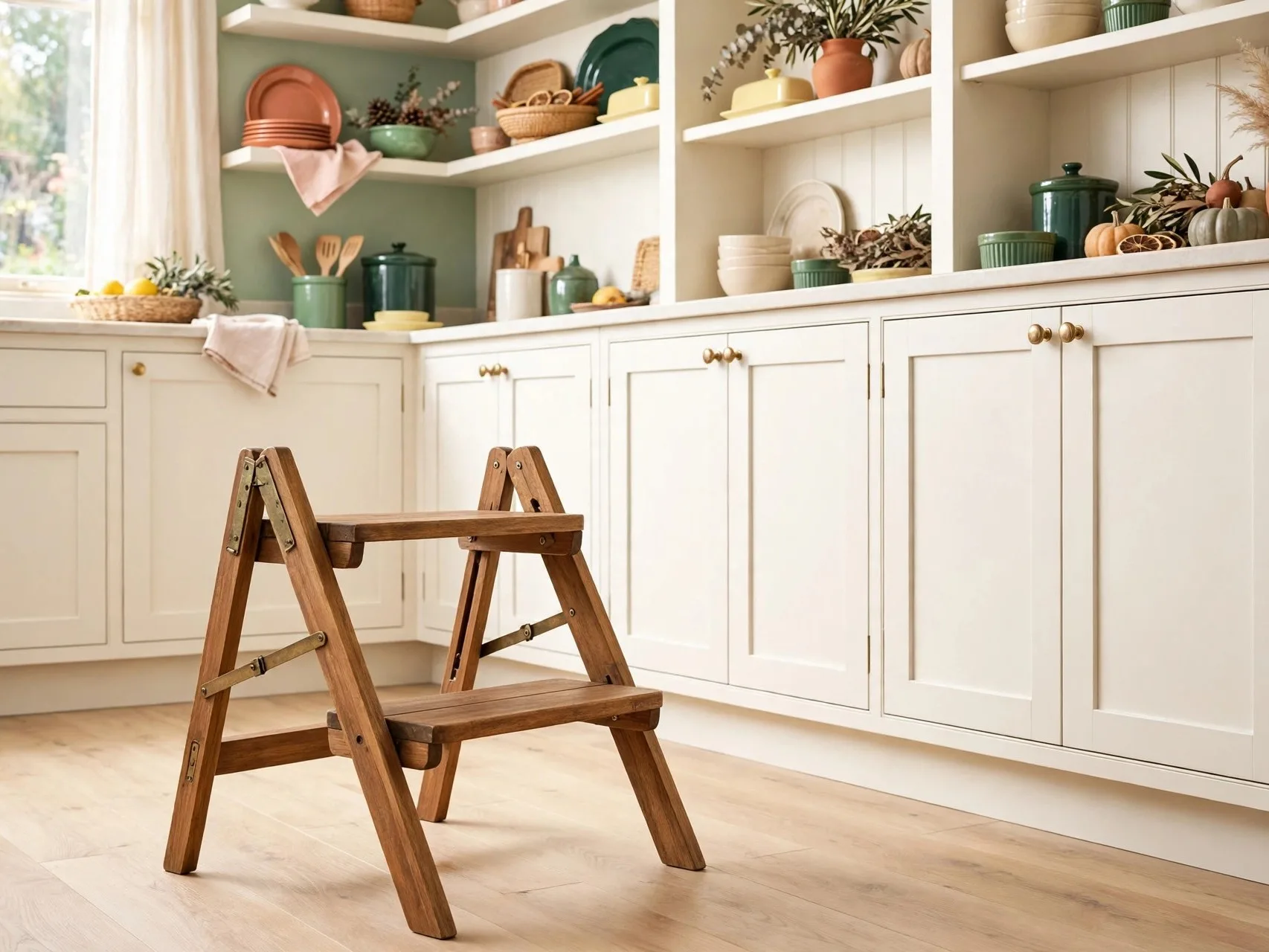
Tuck a handy sturdy folding step stool beside the cupboards or inside a nearby small tall unit. Top shelves stay useful when you can reach them safely in seconds.
Use it to simply rotate your seasonal pieces down and daily items up as needs regularly change. Good kitchen organization means nothing is forgotten up high, because everything stays easily reachable.
Drawers
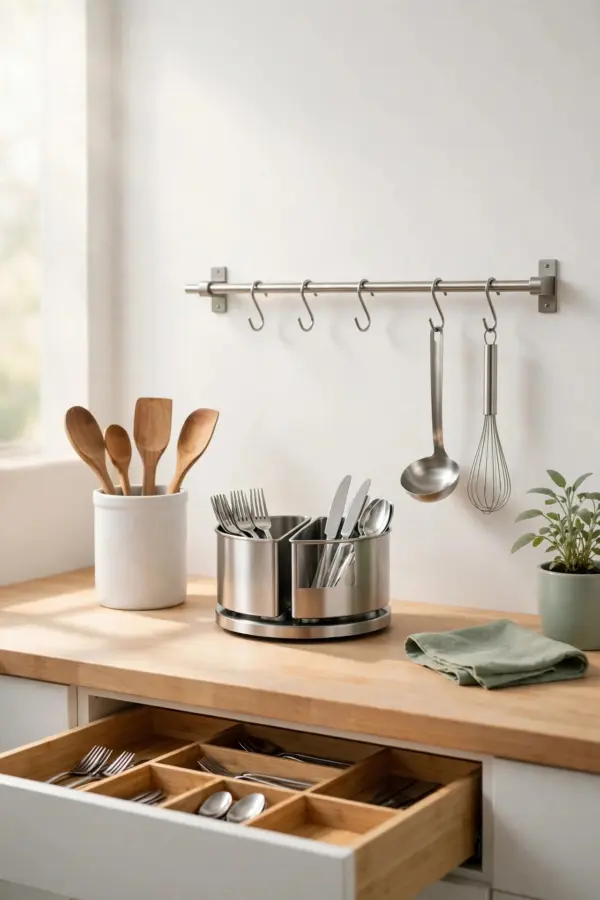
15. Sort utensils with an adjustable drawer divider tray
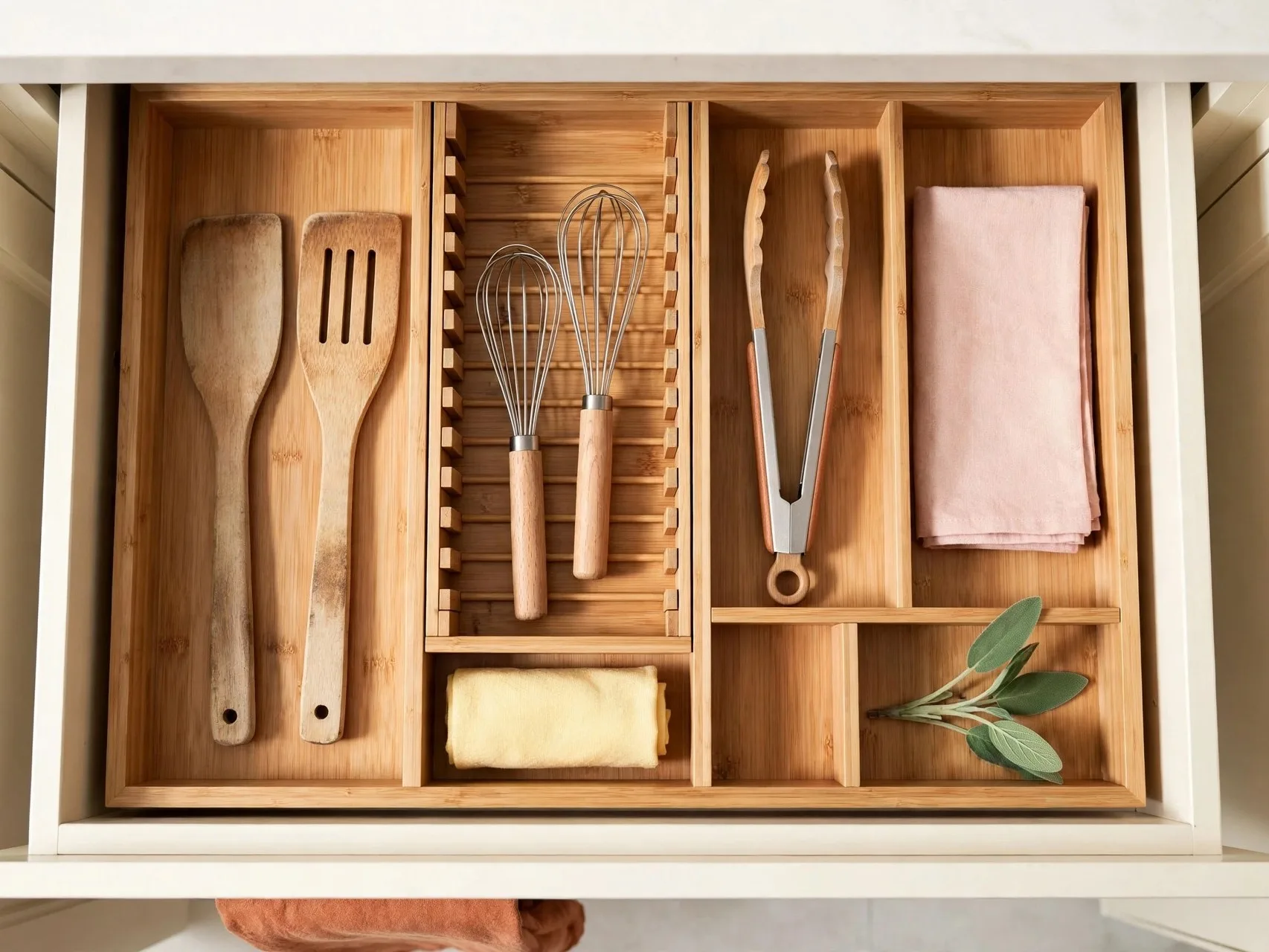
An adjustable divider tray turns one chaotic utensil drawer into neat, right-sized homes for every spatula, whisk and ladle. Slide the compartments to match what you actually own rather than a one-size layout, and group everyday tools at the front so they are easy to grab mid-cooking.
Leave the less-used gadgets further back or in a second drawer entirely. When everything has a visible slot, the drawer stays tidy on its own and putting things away takes seconds, which is the heart of good kitchen organization.
16. Put knives on a magnetic strip, not loose
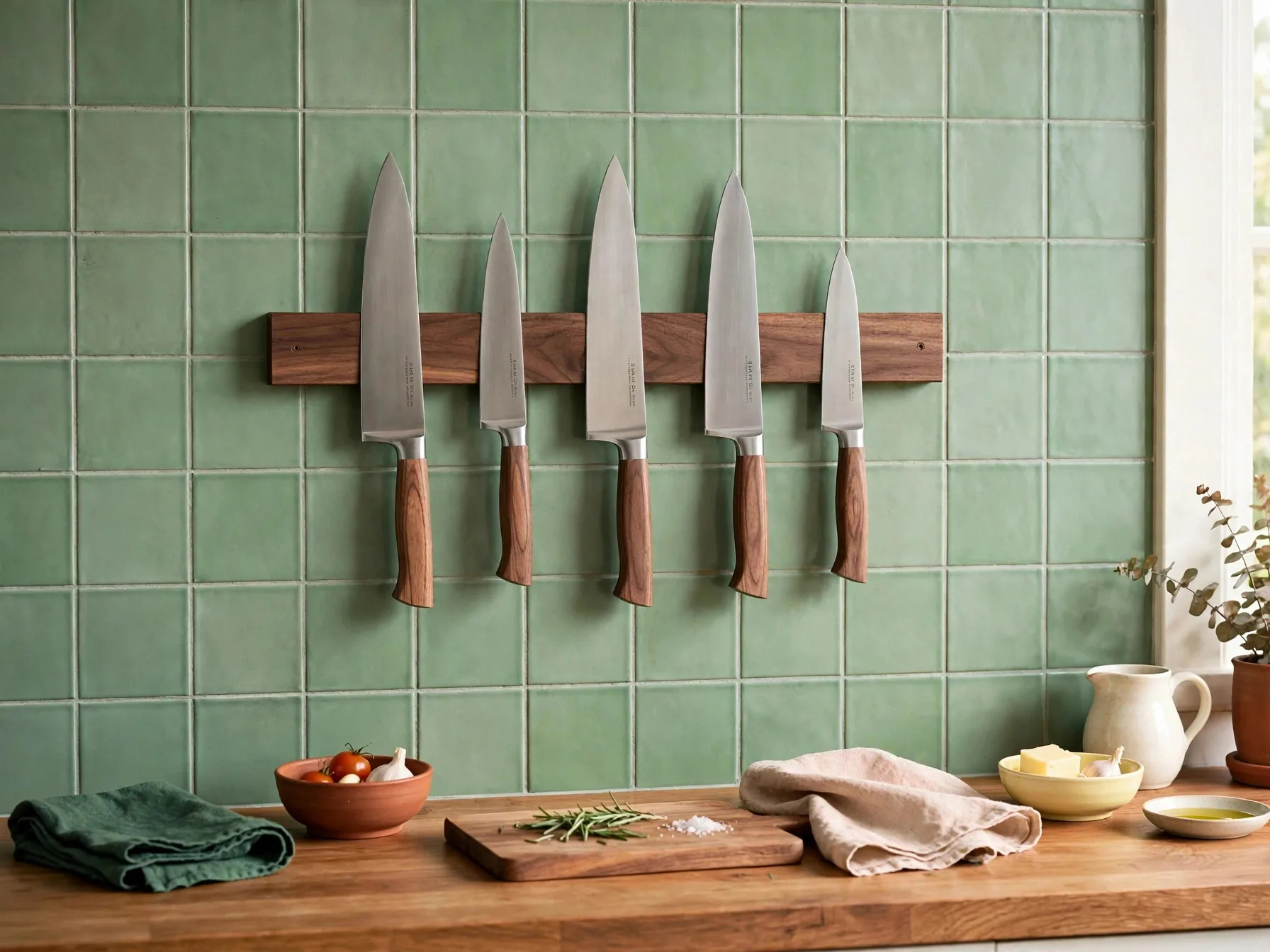
Loose knives rattling around a drawer are dangerous for fingers and terrible for blades. A magnetic strip mounted on the wall keeps every knife visible, reachable and safely separated, while an in-drawer block does the same job hidden inside the drawer if you prefer clear walls.
Pick whichever suits your kitchen: the strip saves drawer space entirely, the block keeps little hands safer. Either way, sharp tools earn their own home, and that single change lifts your whole kitchen organization game.
17. Keep the junk drawer to ONE drawer
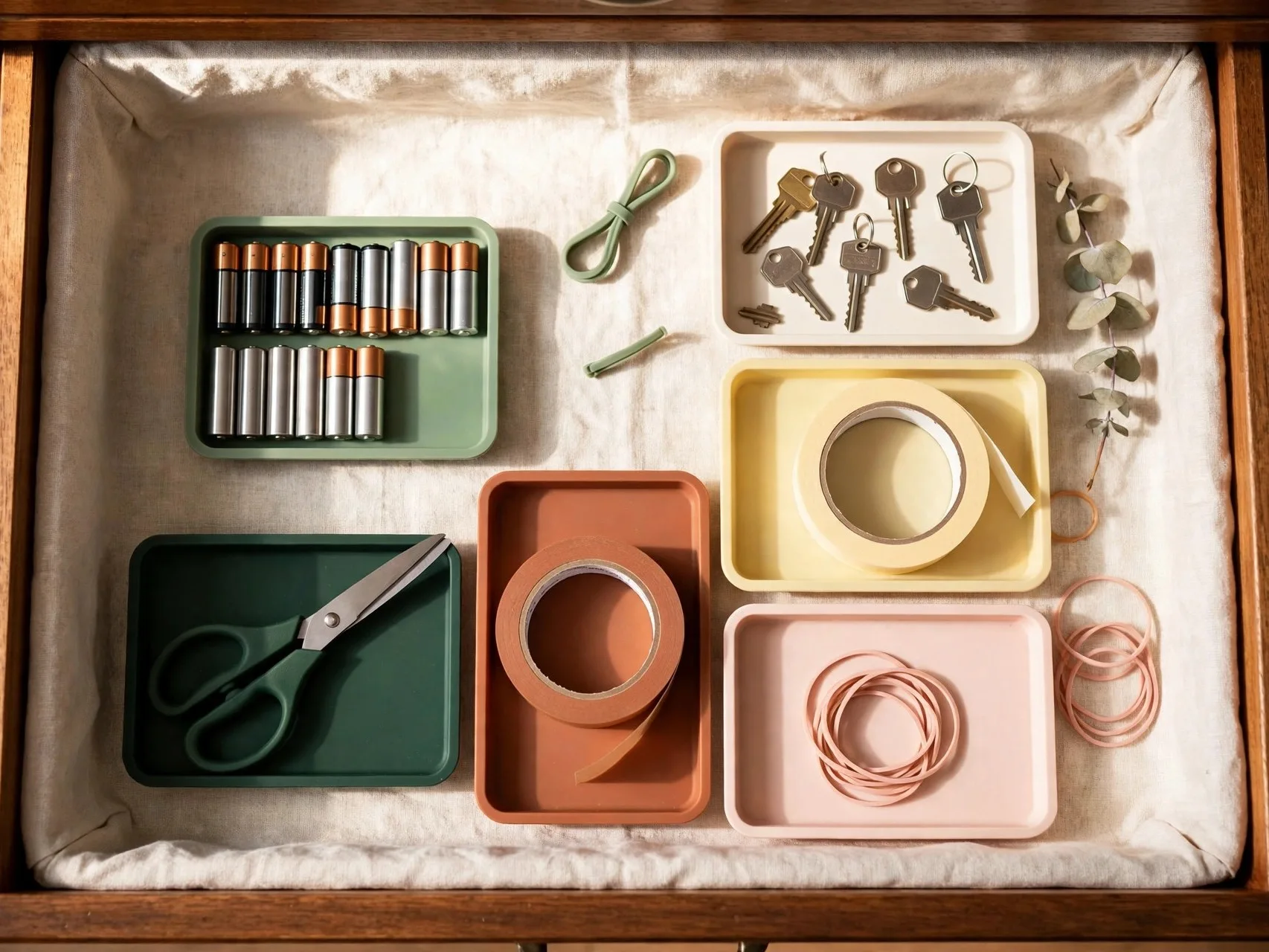
The junk drawer is not the enemy; three of them are. Choose a single drawer as the household catch-all and divide it with small bins or trays so batteries, spare keys and tape each claim their own corner instead of forming a mixed-up tangle.
Be strict about what qualifies: if it hasn’t been touched in six months, it doesn’t belong. A bounded, binned junk drawer stays useful rather than overflowing, and honest limits like this keep kitchen organization from sliding backwards.
18. Store foil and wraps upright, file-style
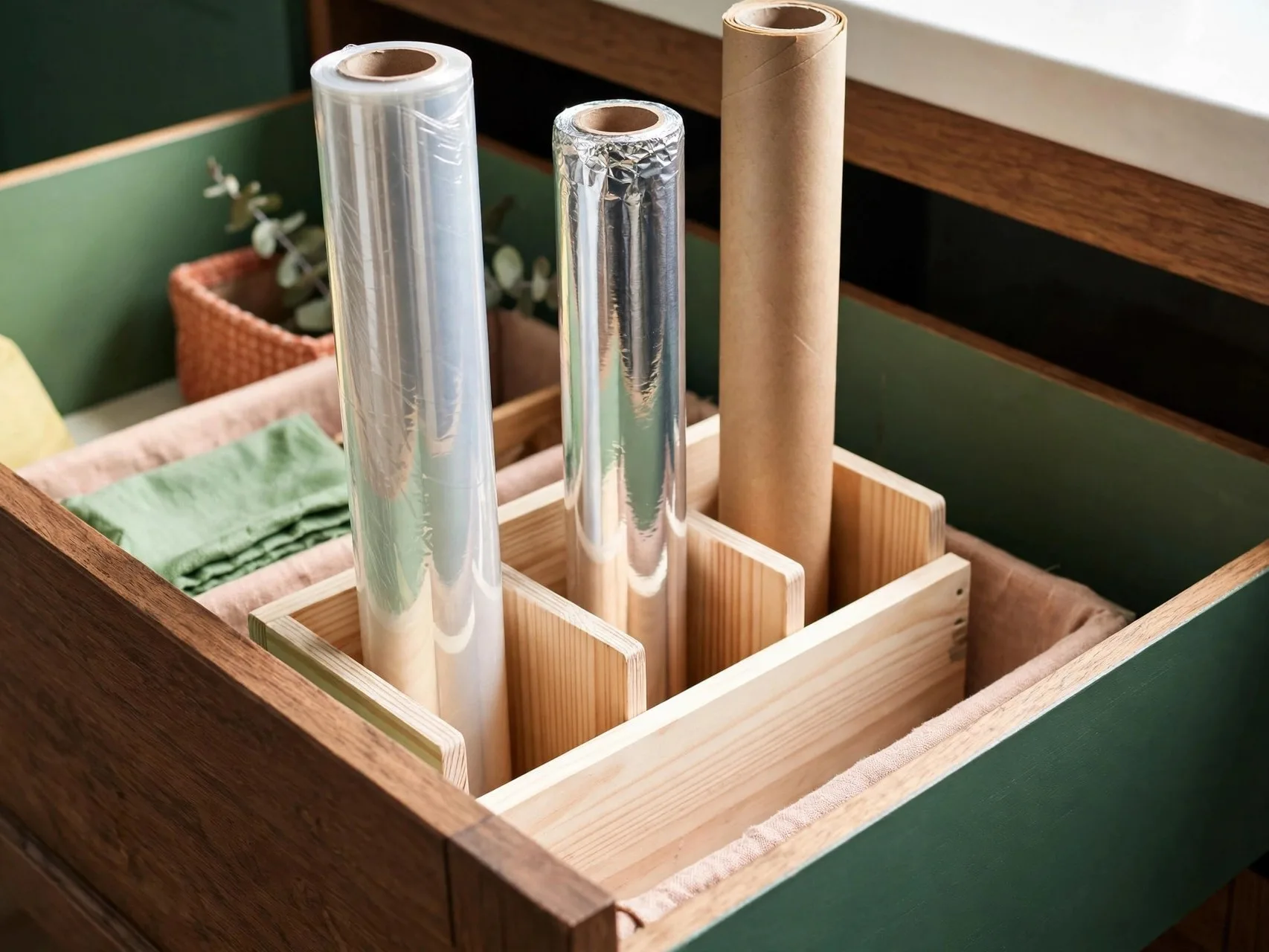
Boxes of cling film, foil and baking paper slide around hopelessly when stacked flat. Stand them upright in a tall, narrow file-style holder — inside a deep drawer or a slim cupboard — and every roll becomes easy to see, grab and put back without unstacking.
Keep the one you reach for most at the front. This simple vertical habit frees surprising space and stops the crumpled-box pile-up that quietly wrecks kitchen organization in lower drawers.
19. Divide a drawer for baking tools
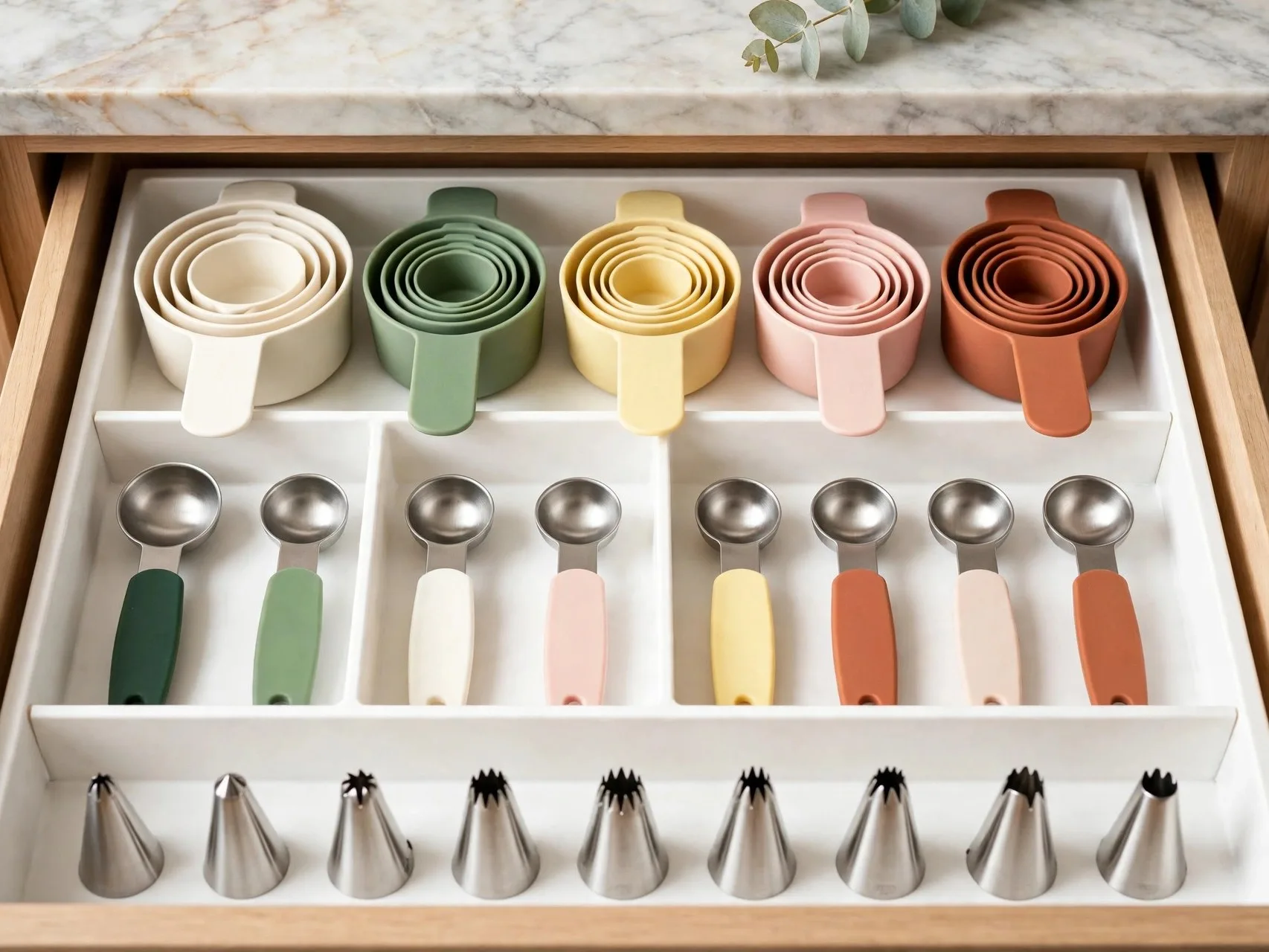
Measuring cups, spoons and piping nozzles are small, odd-shaped and forever lost at the back of drawers. A second divided drawer — or one tray split in two — gives baking tools their own zone, with cups nested together and tiny tools corralled in the smallest compartments.
Label-free order works here: shape sorts itself when each compartment fits its contents. Bakers will notice the difference immediately, and dedicated homes for fiddly tools are a quiet win for kitchen organization.
20. File-fold dish towels by the dishwasher
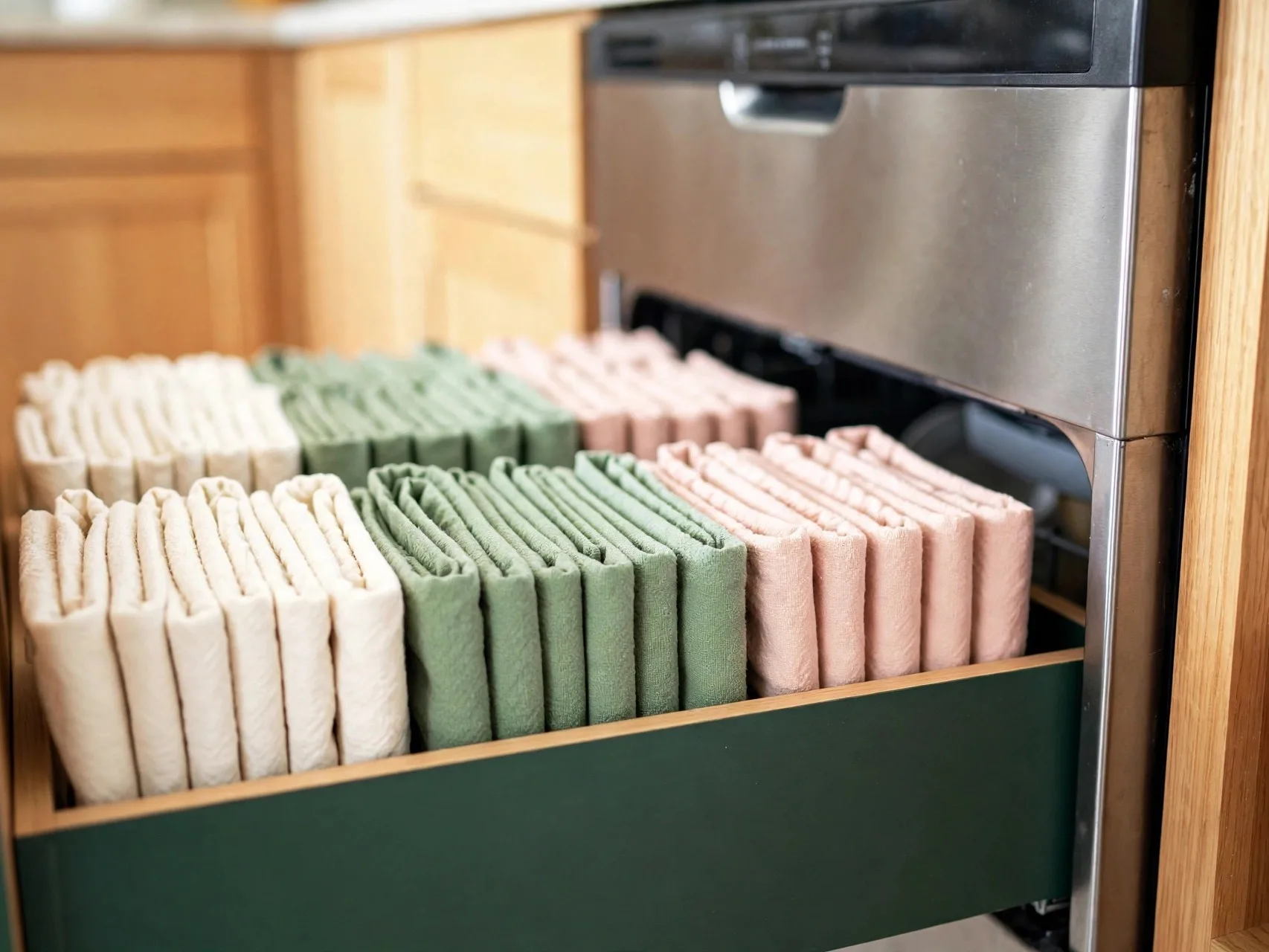
File-fold your dish towels — folded into rectangles and stood upright in rows — and you will see every towel at a glance instead of digging through a stack. A shallow drawer beside the dishwasher is the perfect spot, since used towels land within arm’s reach of where they dry.
Keep only the towels you actually rotate through the week; stained spares can live elsewhere. This little system keeps laundry moving and the linen drawer looking calm, which feeds straight into everyday kitchen organization.
21. Label drawer fronts so helpers cope
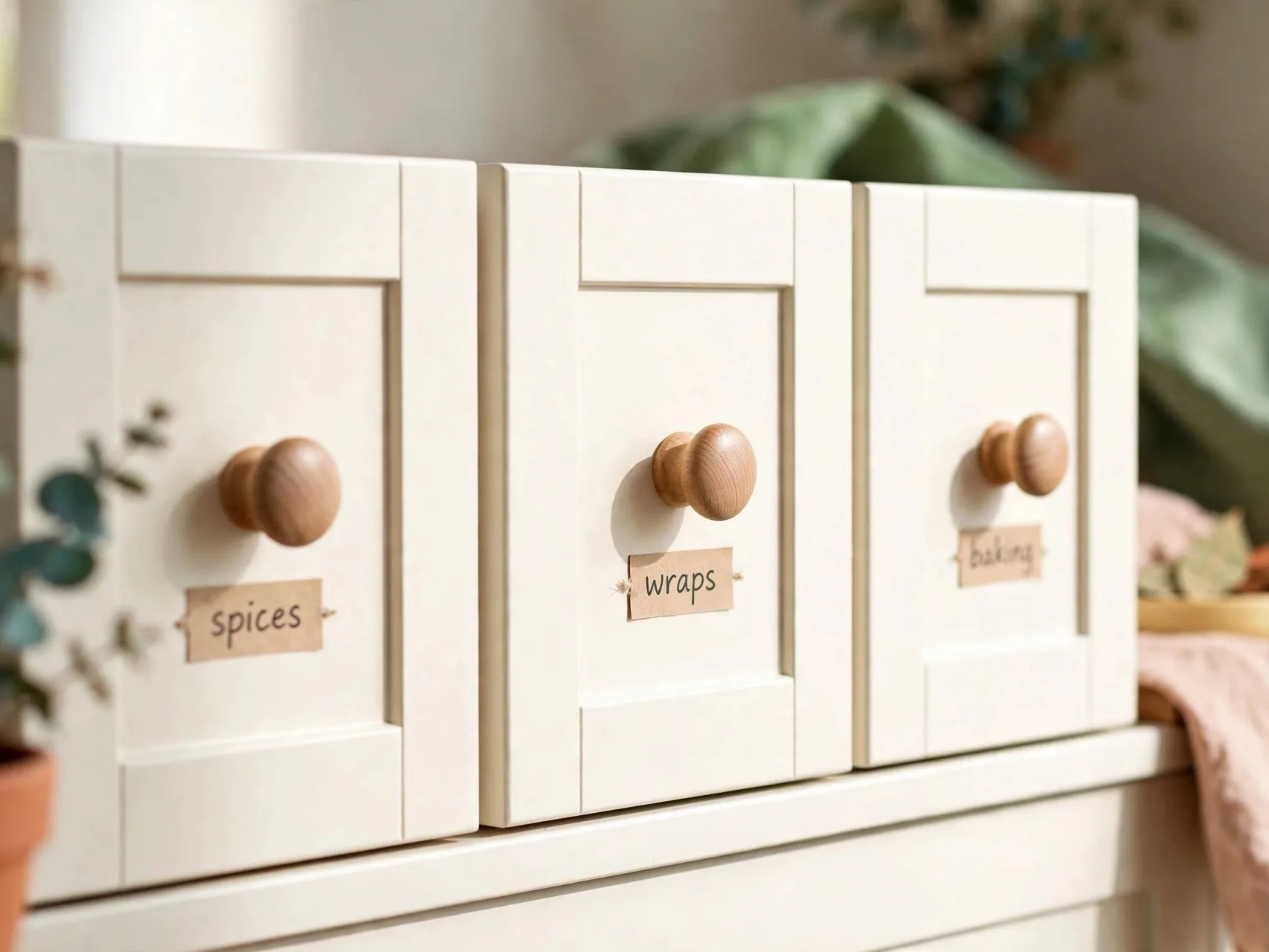
A small, neat label on each drawer front — spices, wraps, baking — means anyone helping in the kitchen puts things back where they belong. Subtle is key: tiny kraft tags or clear labels in a simple font look intentional rather than office-like.
Revisit labels twice a year and peel off any that no longer match the contents. When guests and family can tidy as they go, you stop being the only keeper of the system, and your kitchen organization holds without nagging.
Counters
22. Clear counters to the true essentials
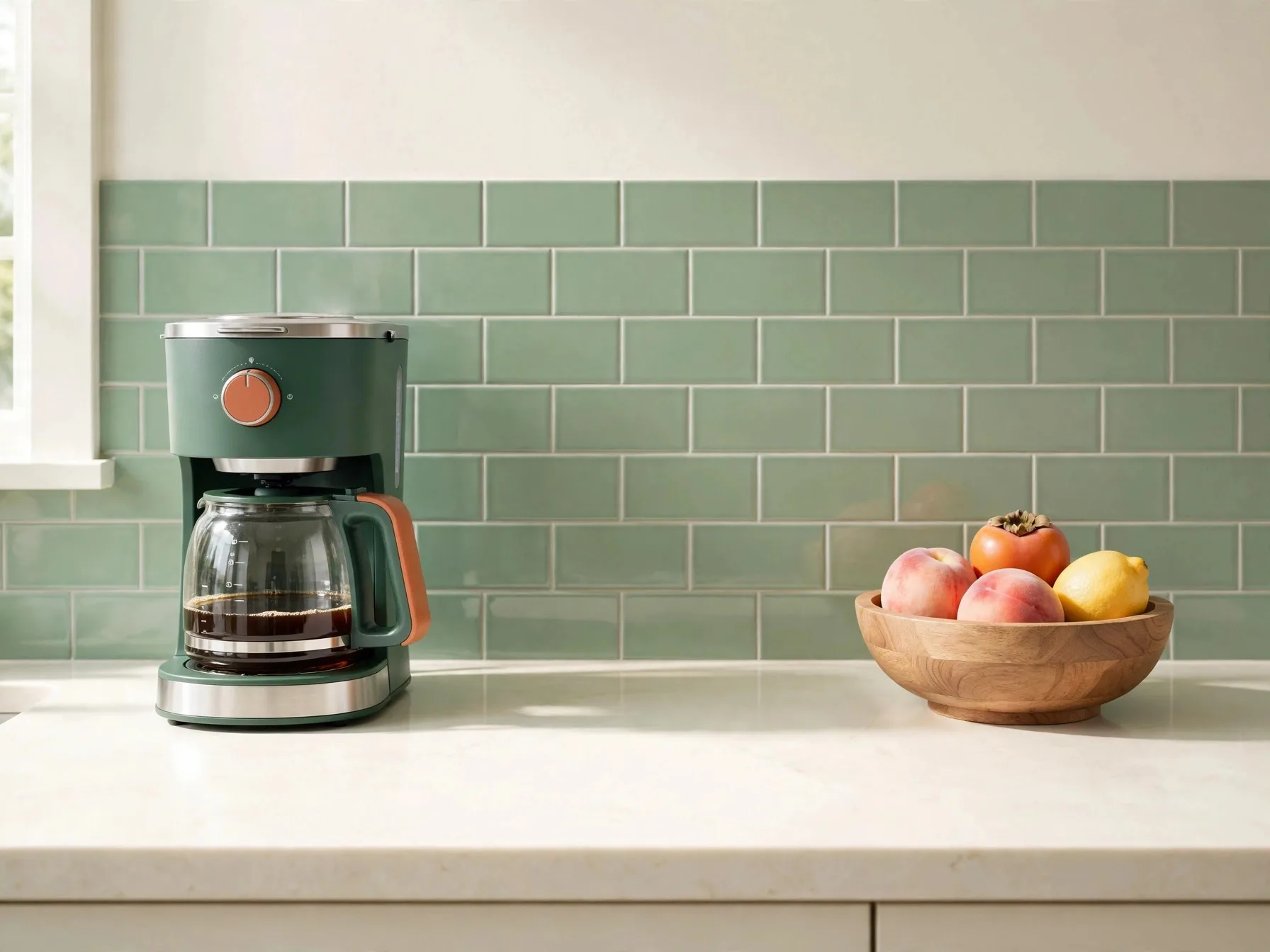
The coffee maker and the fruit bowl earn their counter space; the toaster you use twice a month does not. Clear everything else into cupboards and notice how much calmer the kitchen feels with open, wipeable surfaces between the true essentials.
Apply the same test to each item: used daily, or just stored here? Counters are workspace, not storage, and guarding that boundary is the single biggest leap you can make in kitchen organization.
23. Corral daily tools in a stove-side crock
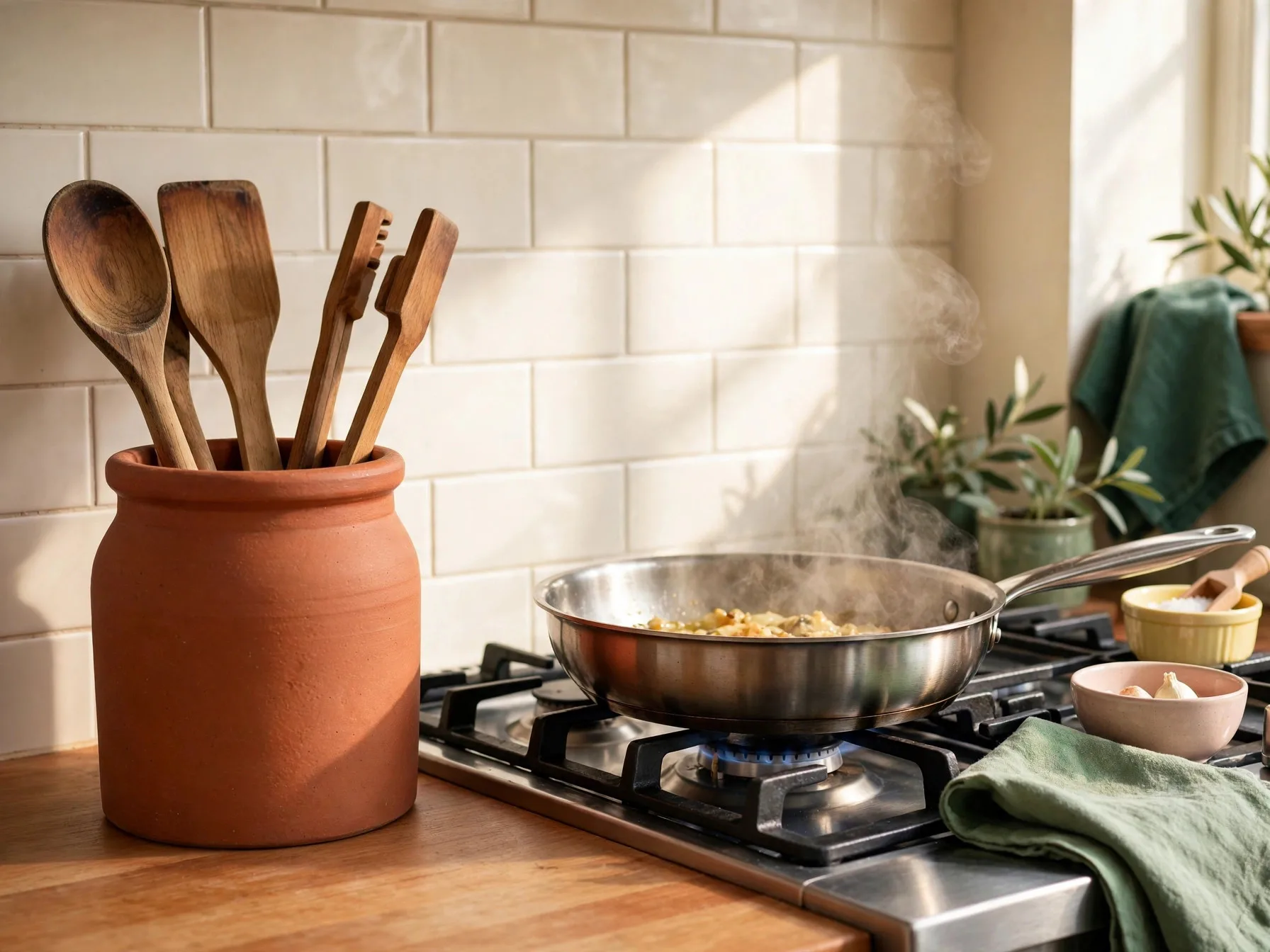
Daily cooking tools earn a home within arm’s reach of the hob. A sturdy crock — ceramic, weighted so it won’t tip — gathers spatulas, wooden spoons and tongs in one upright bundle, ready the moment the pan heats up.
Keep the crock to genuine daily drivers; anything used less often can live in the drawer. One well-chosen container by the stove beats a crowded drawer every time and keeps your kitchen organization working while you cook.
24. Mount a wall rail for utensils
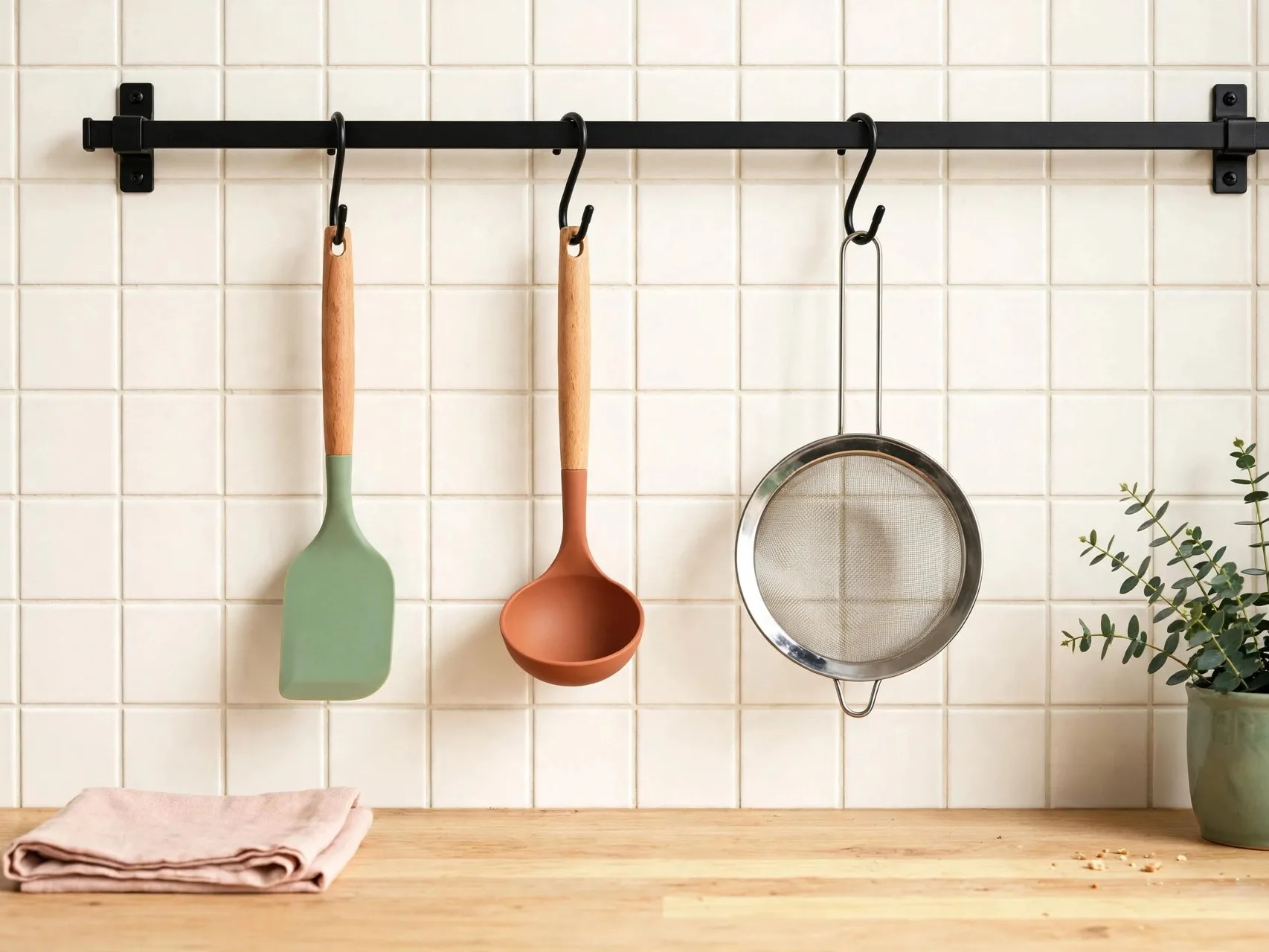
A wall rail with hooks lifts everyday utensils off the counter entirely and puts them at eye level where you can see everything. Hang the pieces you grab most — the spatula, the ladle, the sieve — and leave breathing room between them so it looks styled, not crowded.
Choose hooks that slide so the layout can evolve. Freeing that counter footprint makes prep space feel bigger, and visible tools quietly reinforce tidy kitchen organization habits.
25. Build a tiered coffee and tea corner
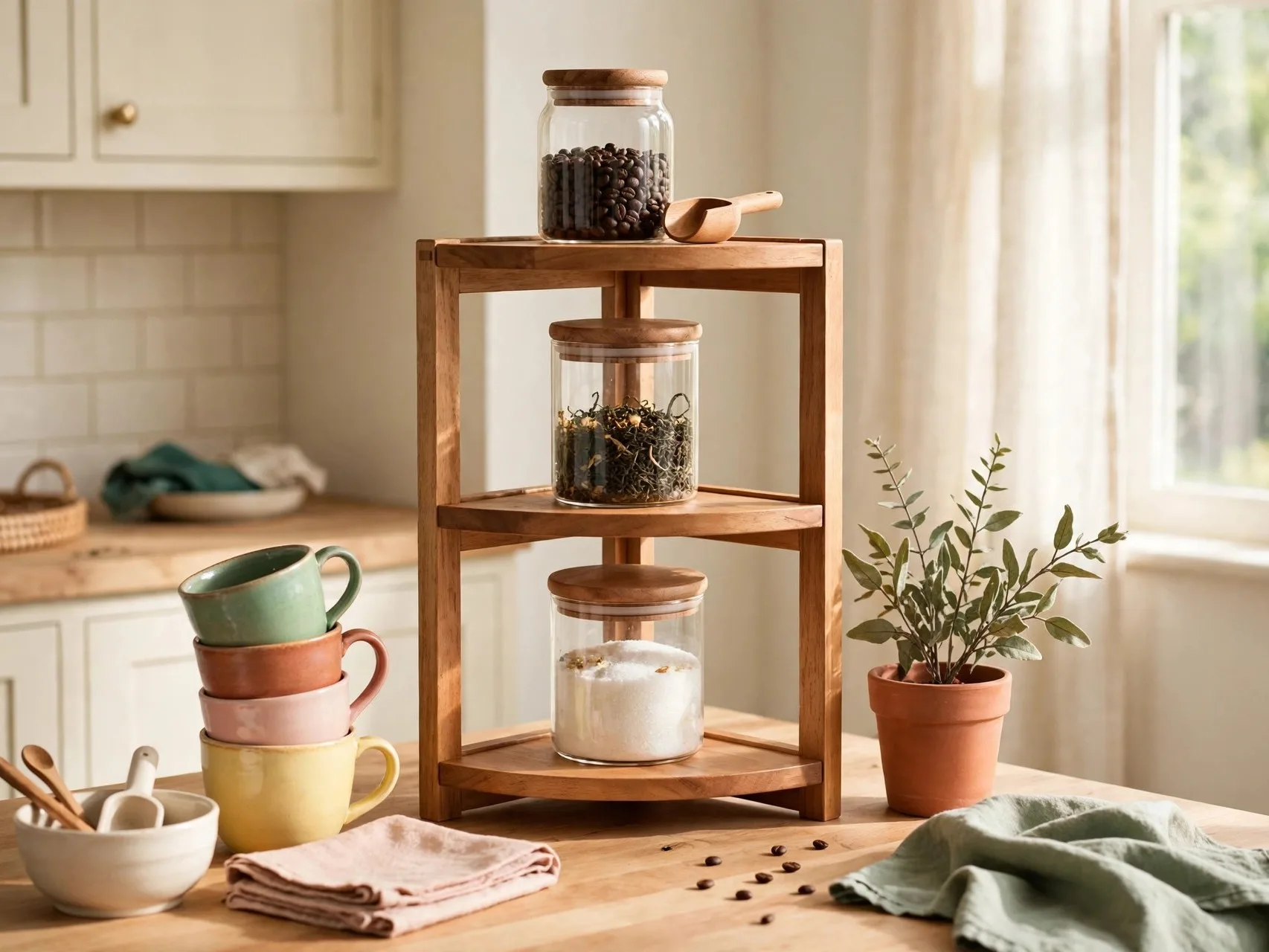
A two- or three-tier corner stand turns an awkward corner into a proper coffee and tea station. Mugs hang or stack below, jars of coffee, tea and sugar sit on the tiers, and everything you need for a morning cup lives in one compact footprint.
Keep the station stocked but not stuffed — a few favourites beat a crowded display. Corners are wasted space in most kitchens, so putting one to work is a clever little kitchen organization win.
26. Keep a lidded compost caddy handy
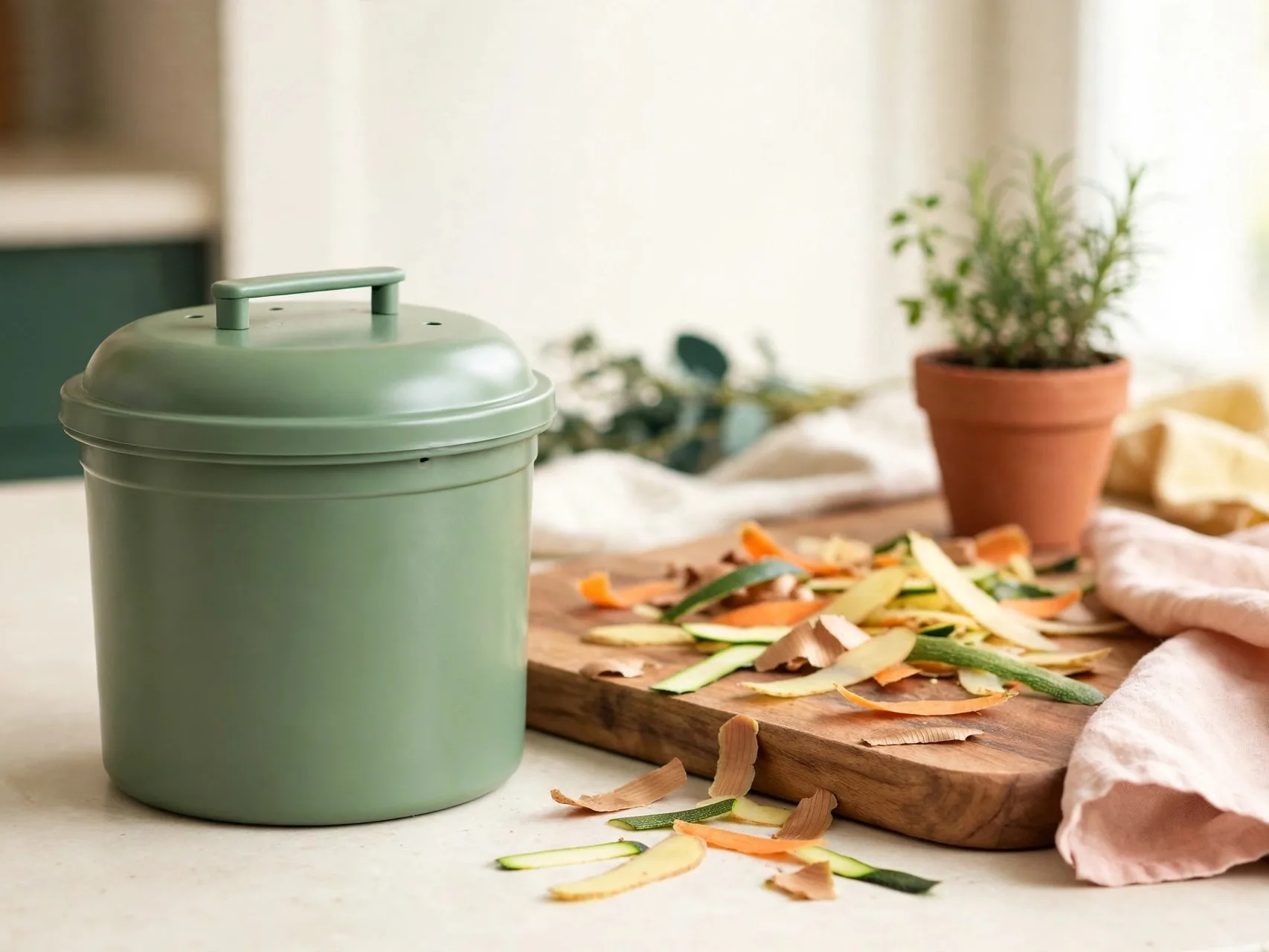
A lidded countertop caddy makes composting effortless: veg peelings and coffee grounds go straight in while you chop, instead of trekking to the bin. A tight lid keeps smells in and fruit flies out, which is what makes the habit stick.
Empty it into the main compost every day or two and rinse it out. Small, lidded and handled daily, it proves that even waste can have a tidy place in a well-run kitchen organization system.
27. Give appliances a home garage
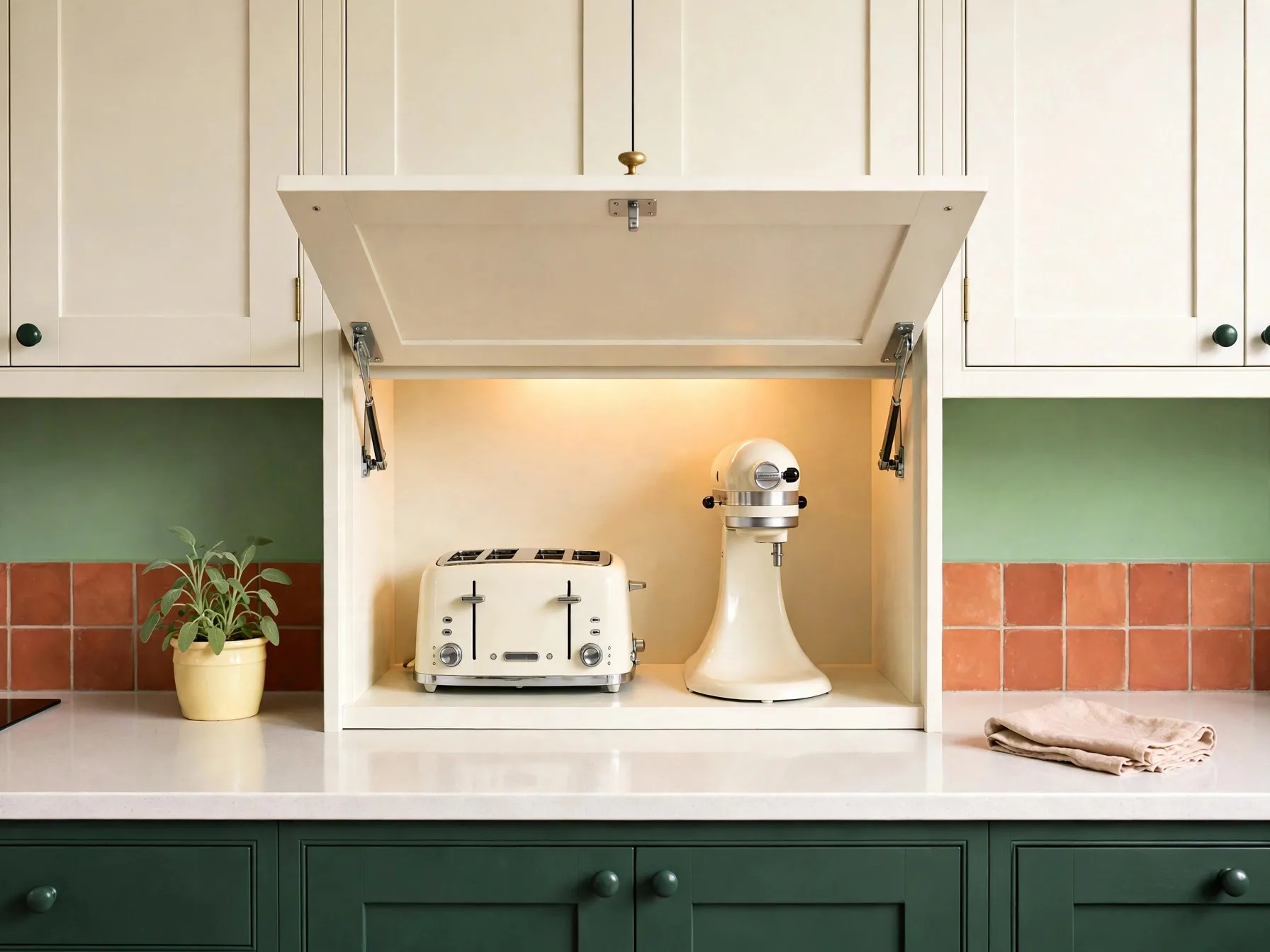
The toaster, mixer and blender don’t need to live on show. An appliance garage — a cupboard with a roll-up or lift-up door — hides them behind one tidy front while keeping them plugged in and ready, so the counter stays clear but nothing is buried.
If a full garage isn’t possible, dedicate one deep cupboard shelf as the appliance bay. Giving bulky gadgets a proper home ends the shuffle-across-the-counter dance and completes a calm, considered kitchen organization.
Lower cabinets
28. Use pull-out drawers for pots and pans
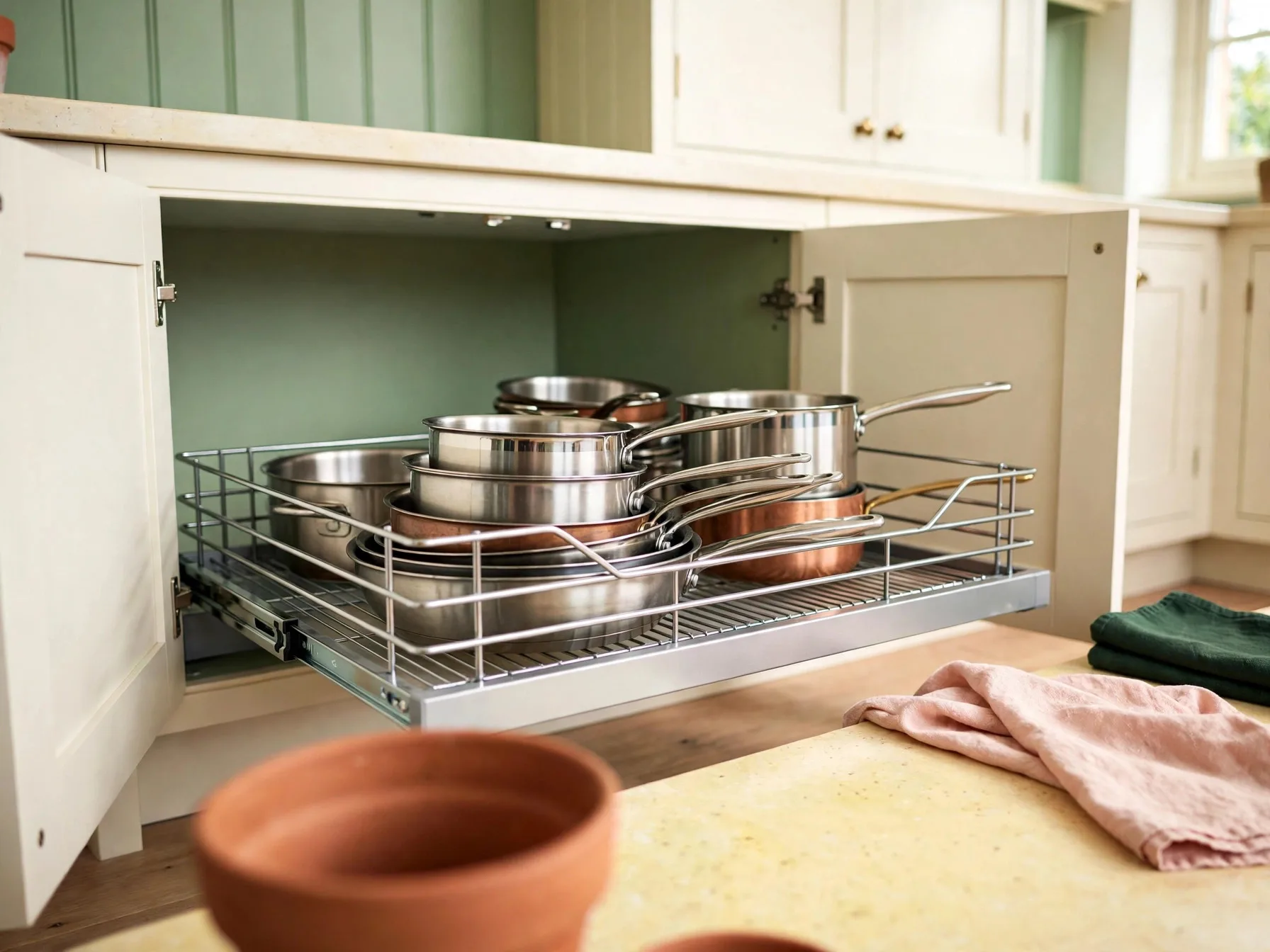
Digging through a stack of pots to find the one you need is a kitchen organization headache worth fixing. Pull-out drawers or deep wire baskets turn a dark lower cabinet into a sliding shelf where every pot and lid is visible at a glance.
Choose smooth-glide runners so even a heavy Dutch oven moves with one finger. It is a small upgrade that makes daily cooking calmer.
29. Store lids on a door-mounted rack
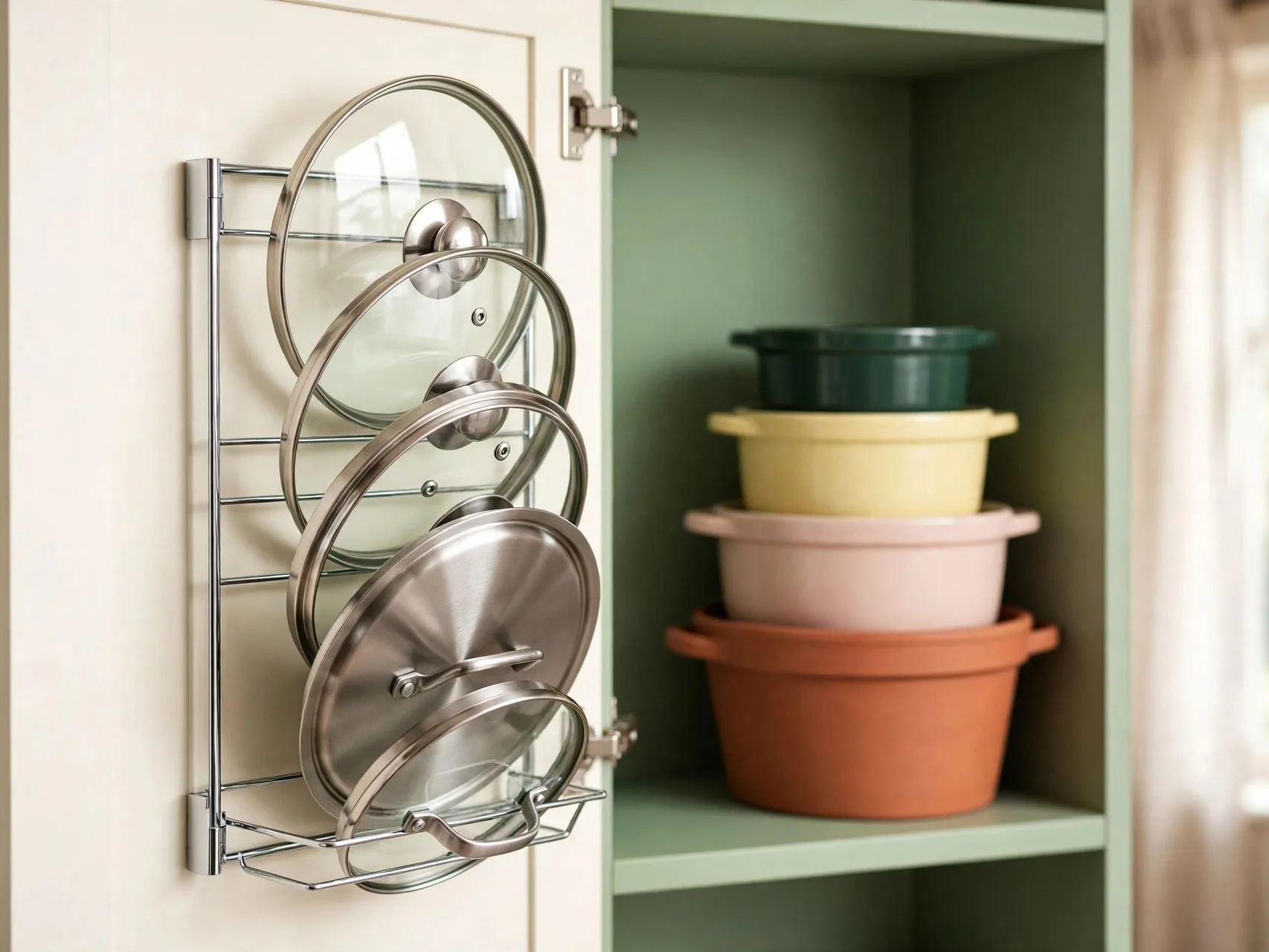
Stack pots and pans by size to save shelf space, then give the lids their own home. A door-mounted lid rack frees every stack from wobbling lids and turns wasted cabinet-door space into a tidy parking spot.
Mount the rack at a height you can reach without bending, and always return lids handles-up. This bit of kitchen organization keeps stacks stable and doors that close quietly.
30. File baking sheets vertically
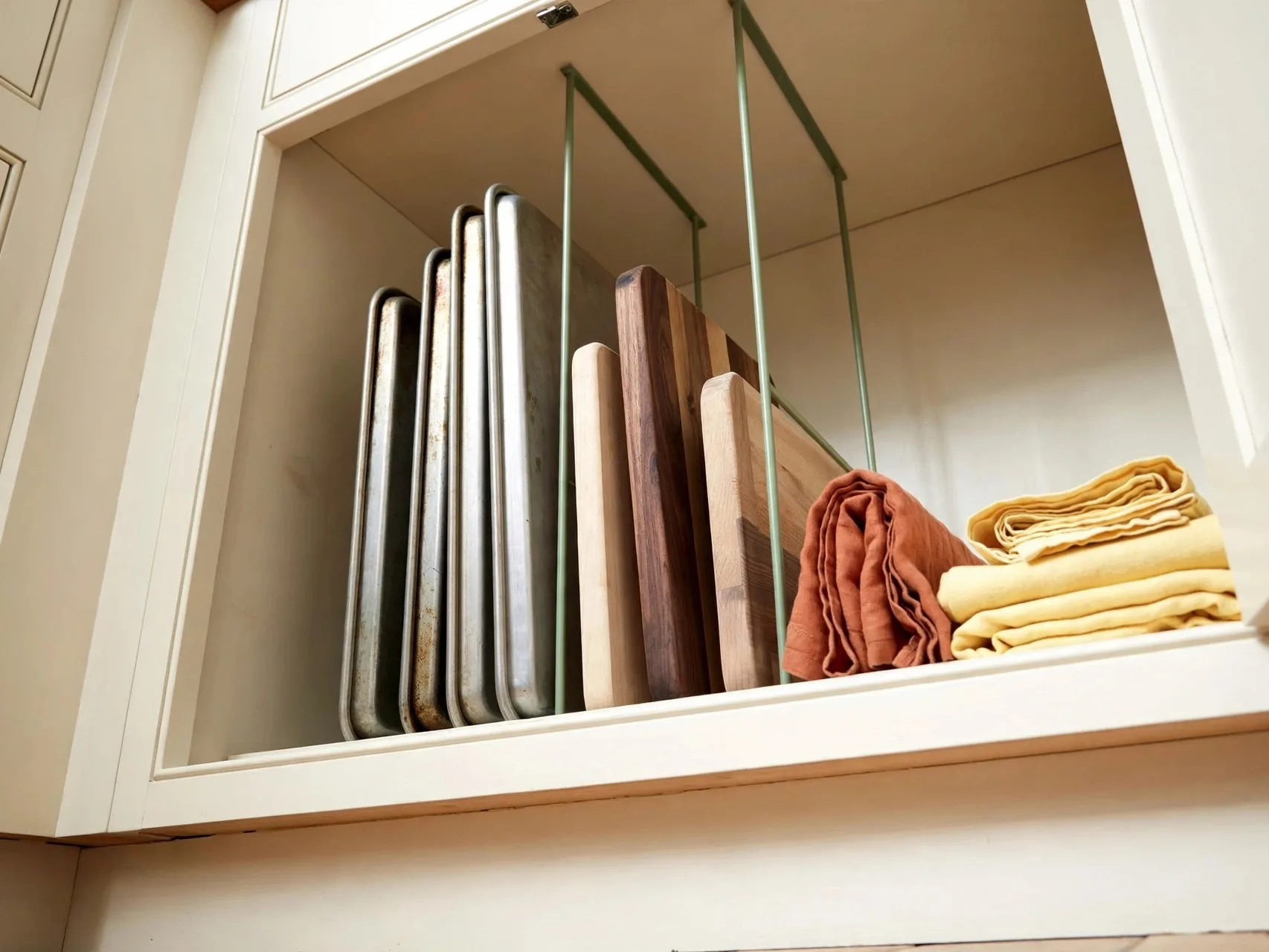
Store baking sheets, trays and chopping boards upright like files in a folder. A tension rod or a simple vertical rack splits the cabinet so each sheet slides out without dragging the rest behind it.
Measure the tallest sheet first so nothing sticks. It is a tiny change in kitchen organization that ends the clanging metal avalanche for good, at last.
31. Corral cleaning sprays on a turntable
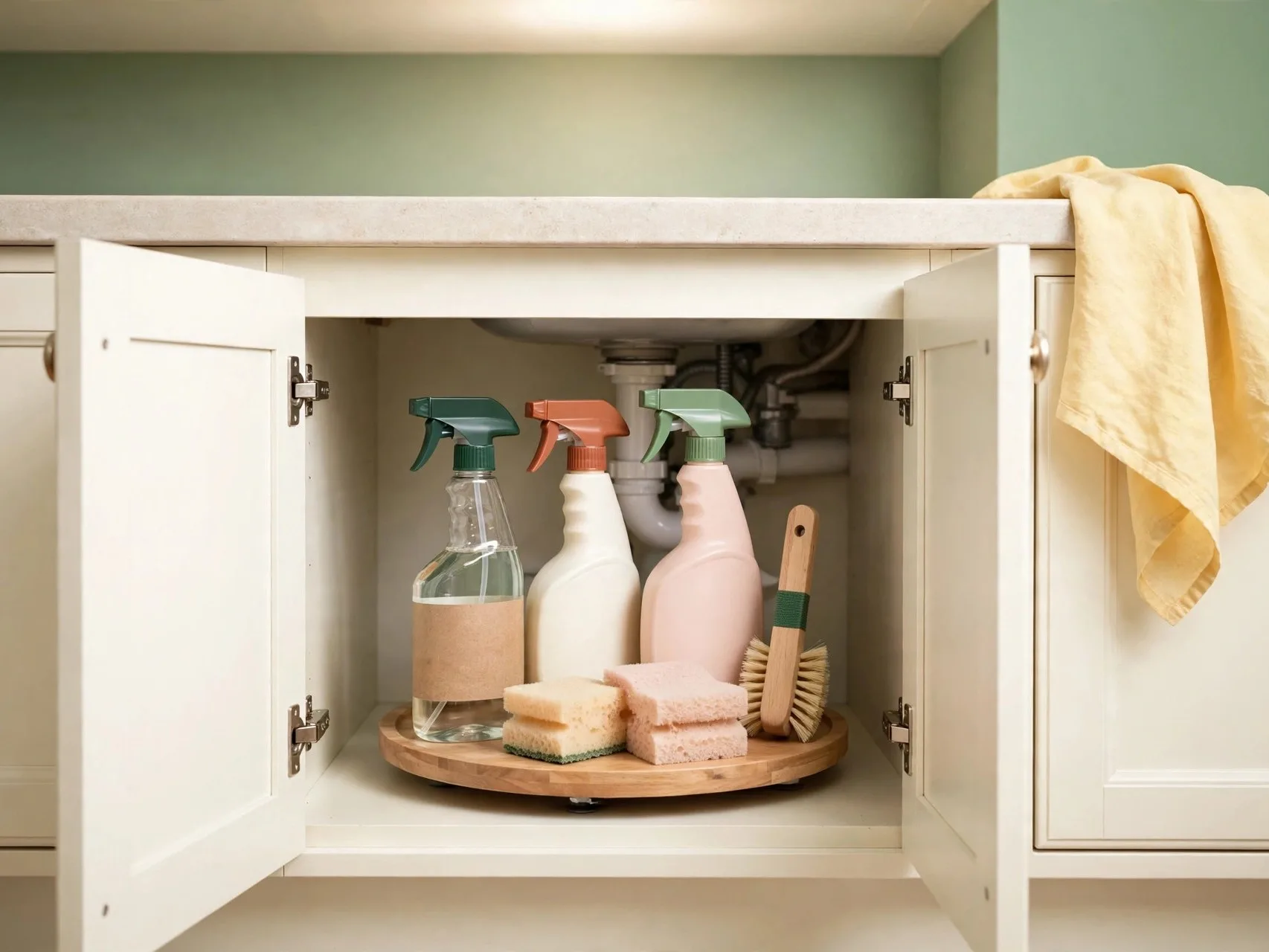
Gather every spray bottle, sponge and duster on one turntable inside the low cabinet beneath the sink. A quick spin shows you all, so you stop buying duplicates of cleaners you already own.
Pick a turntable with a raised lip so bottles never slide off. This compact kitchen organization move keeps chemicals grouped, safe, and easy to reach, even in a dark cabinet.
32. Add a pull-out trash and recycling station
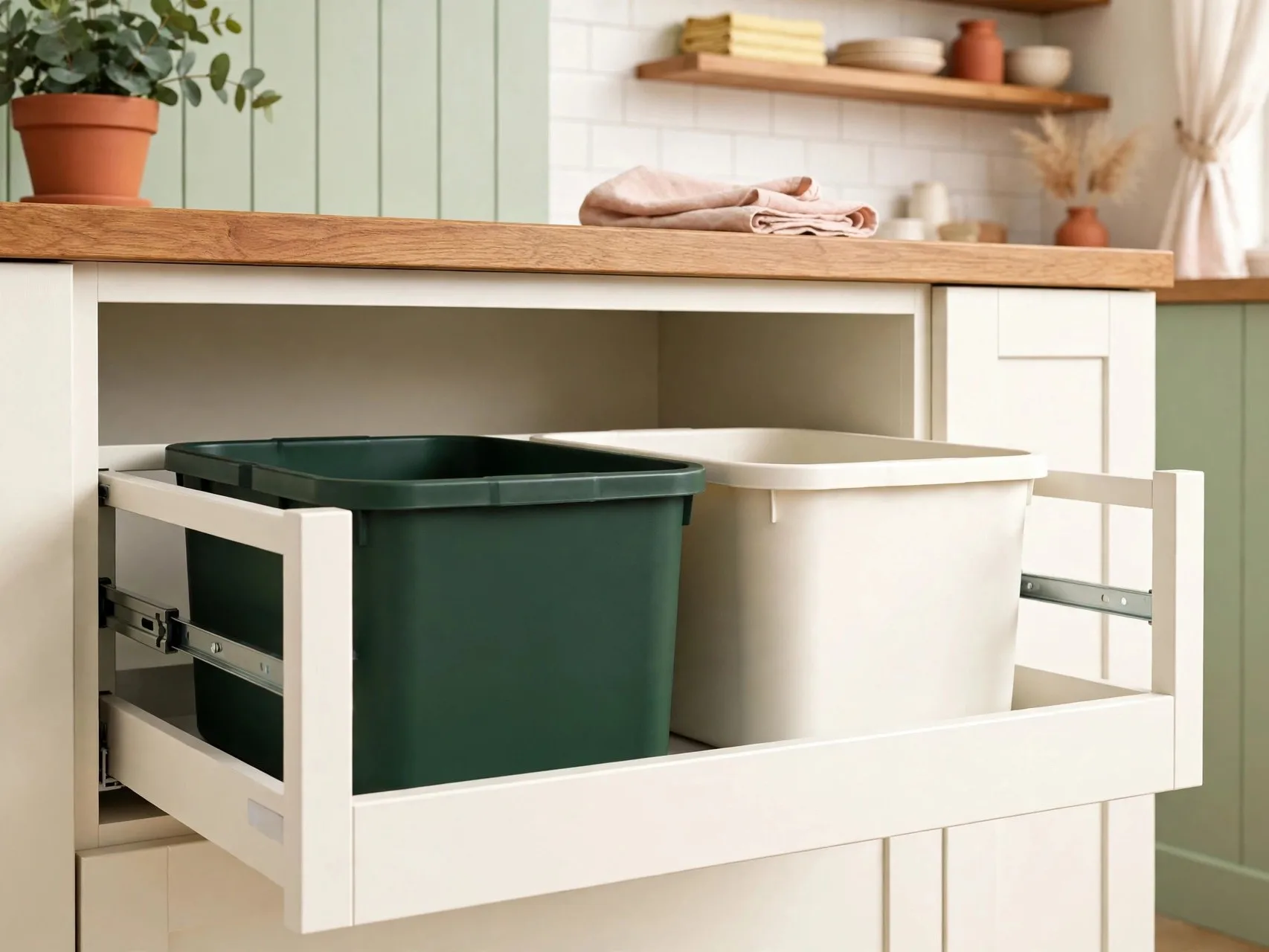
Hide the bins inside a pull-out station fitted under the counter. Two slim containers on runners keep rubbish and recycling side by side, out of sight but always within reach while you cook.
Fit a lid that opens as the drawer pulls for hands-free sorting. It is kitchen organization at its most practical, and the floor finally stays completely bin-free.
33. Stash heavy appliances on the cabinet floor
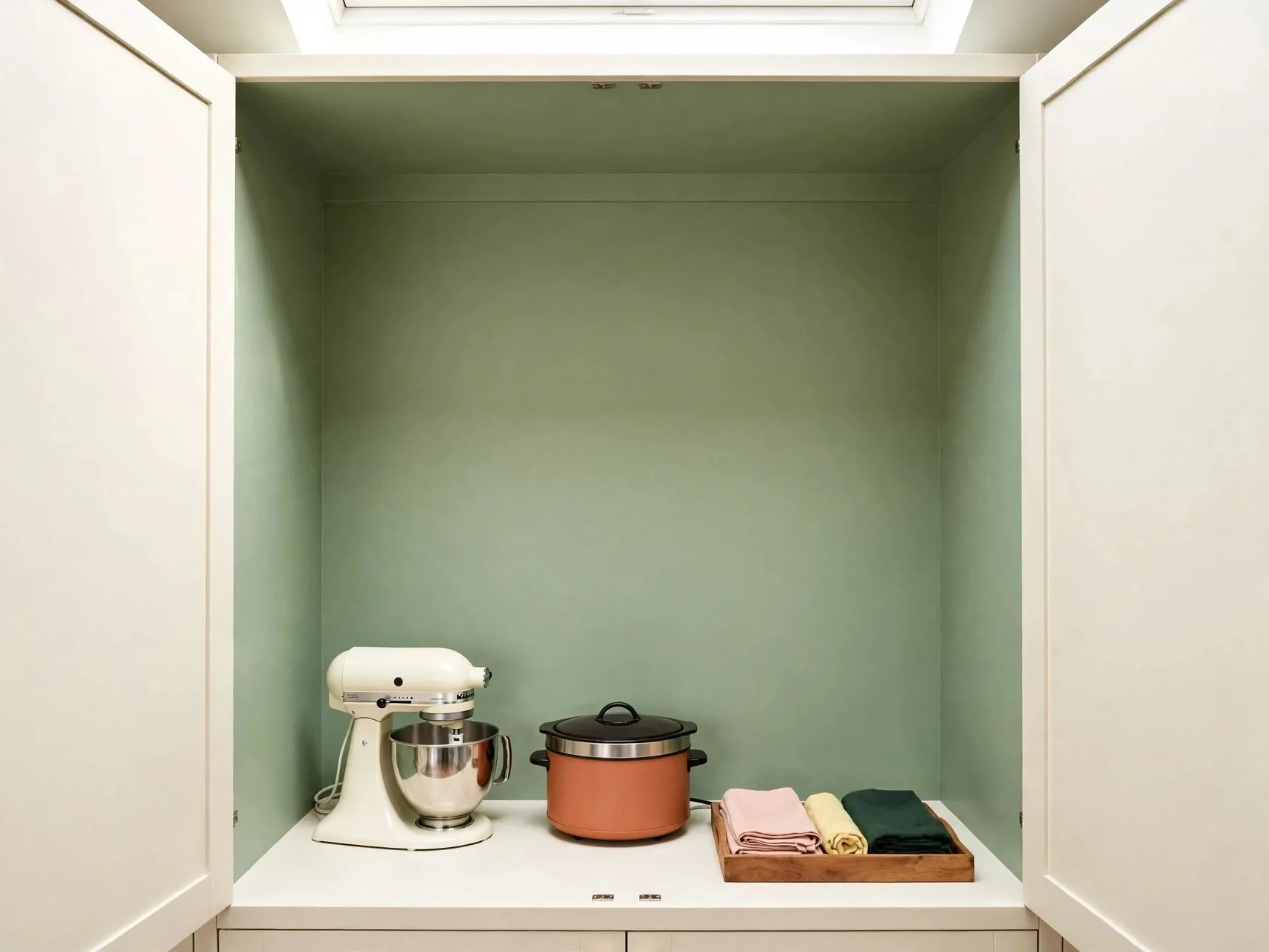
Dedicate the cabinet floor to the heavy hitters you barely use: the stand mixer, slow cooker or spare kettle. They stay upright, plugged in if possible, and off the worktop where they crowd your daily space.
Slide them forward on a small appliance tray when needed. This quiet kitchen organization rule protects your back and keeps the counter beautifully clear.
34. Add a lazy Susan to the corner cabinet
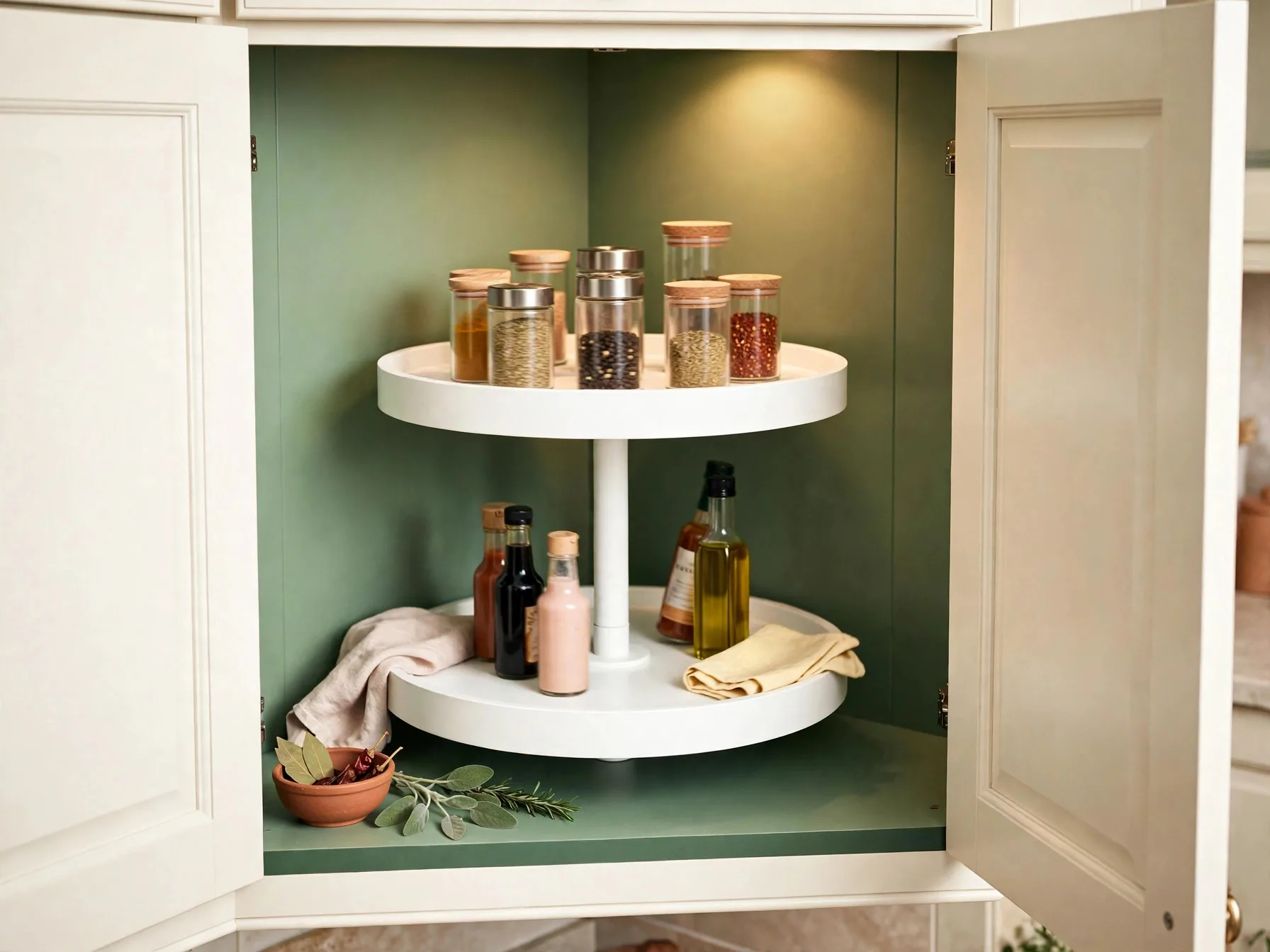
A lazy Susan ends the deep, dark, forgotten corner-cabinet black hole where jars vanish for years. One spin brings every single tin, spice and sauce bottle back into view without crawling halfway inside.
Use it for small, often-used items rather than bulky gear. It is the single smartest kitchen organization upgrade for a corner, and it ends endless rummaging too.
Fridge
35. Zone the fridge by shelf
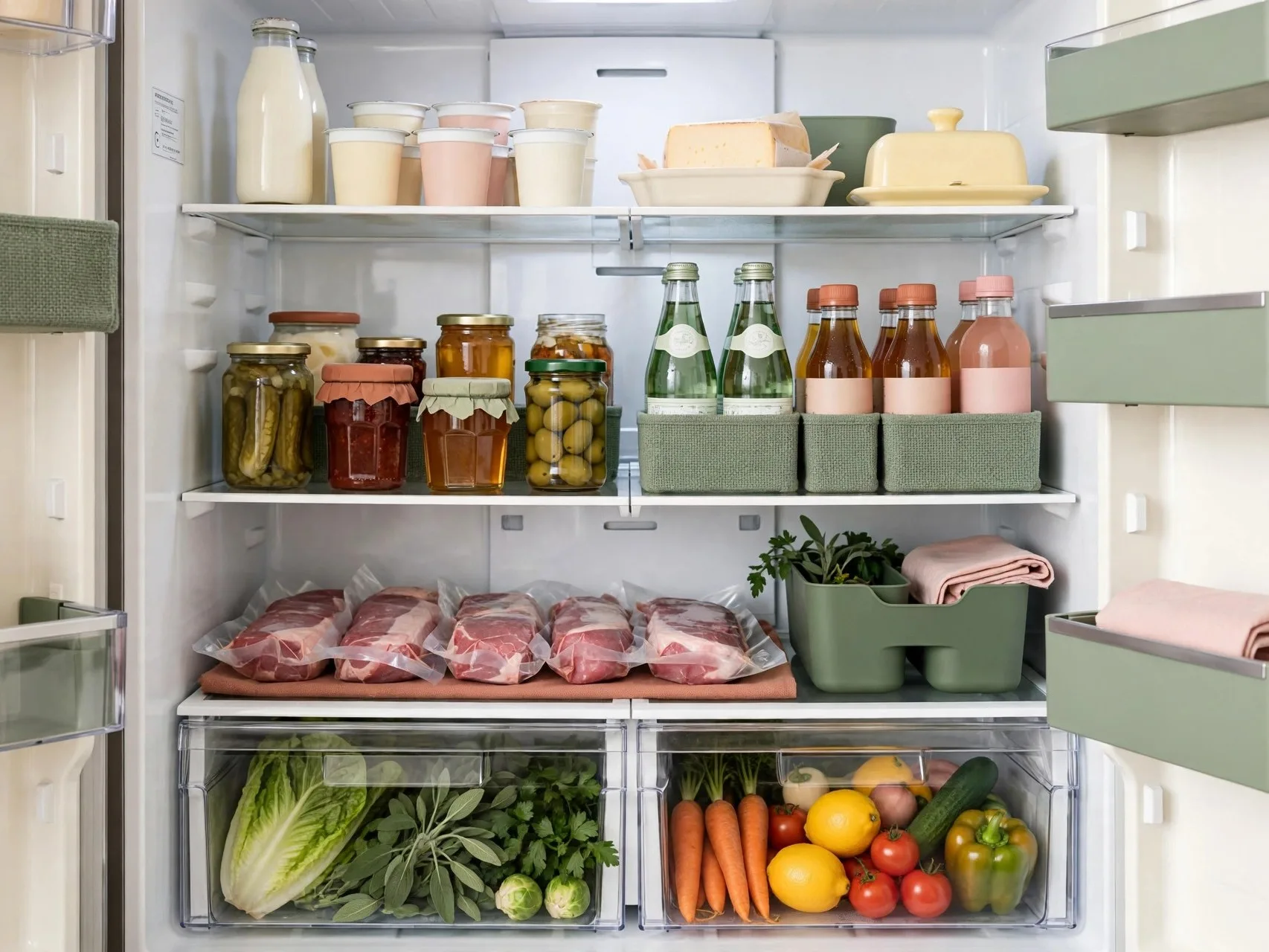
Give every fridge shelf a job and the whole fridge stays calm. Keep dairy and ready-to-eat foods up top, drinks and leftovers in the middle, raw meat sealed at the very bottom, and produce in the crisper drawers.
This simple kitchen organization system stops cross-contamination and shrivels the “where is the cheese” hunt. Rehearse it once and the family will follow.
36. Use clear bins for grab-and-go snacks
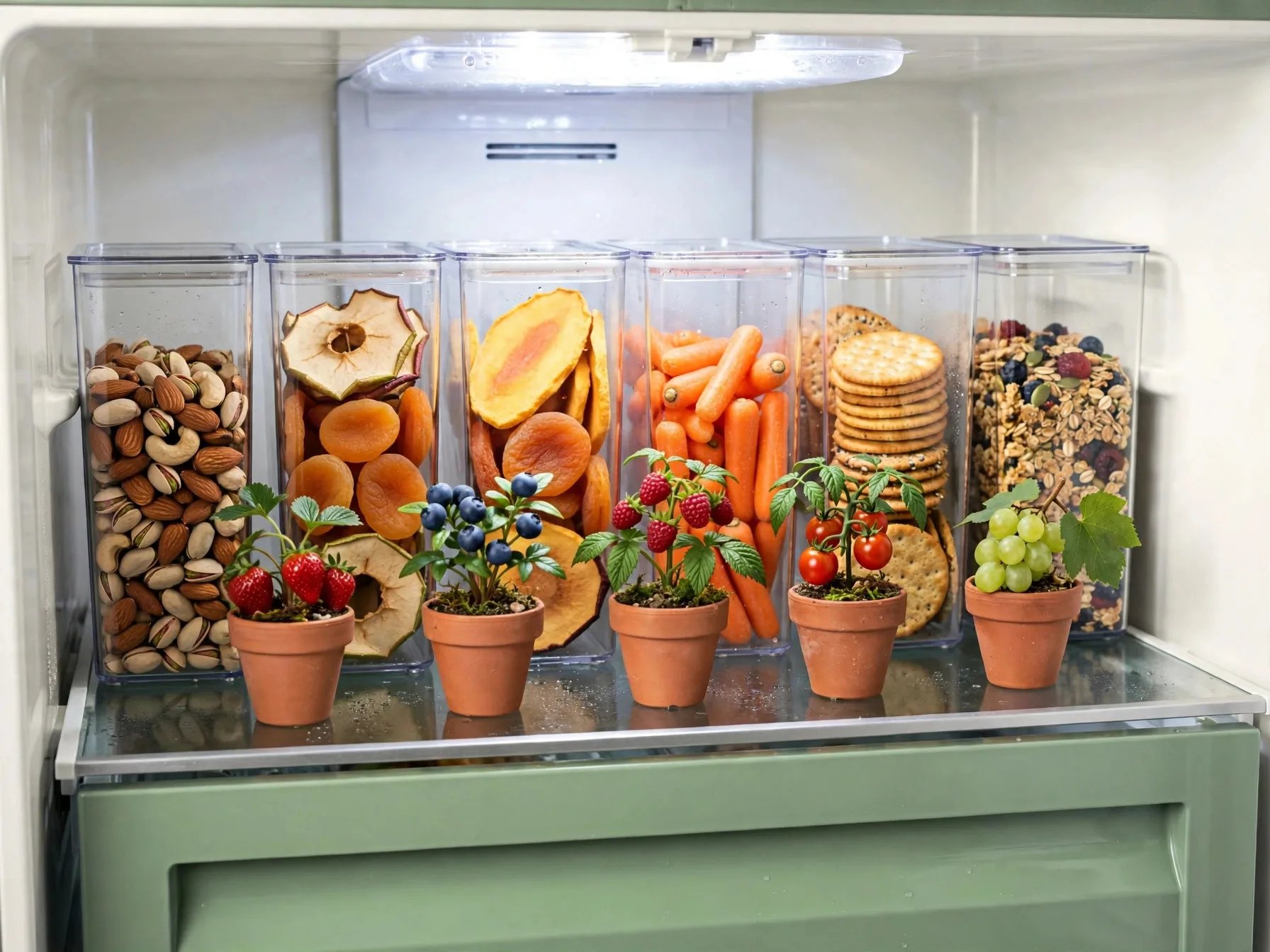
Set one clear bin per child on a low fridge shelf and fill it with their snacks. Little hands can see and grab what is theirs without emptying the whole shelf in a hunt.
Restock the bins weekly and keep treats visible at the front. It is kitchen organization the whole family keeps up because it actually makes life easier.
37. Keep an “eat me first” box at eye level
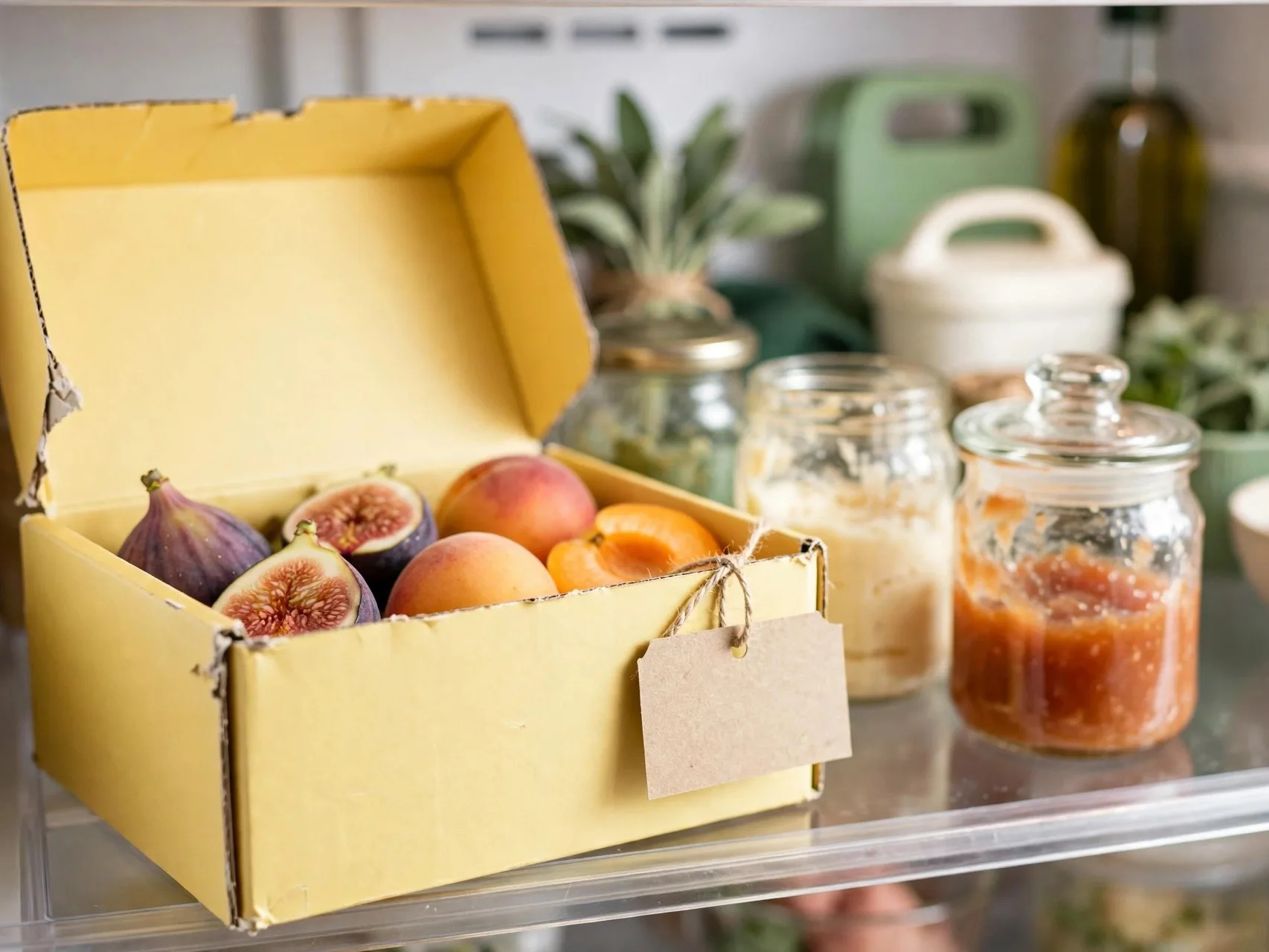
Place a small bright open box at eye level marked “eat me first” for food that needs eating soon. Soft fruit, half-used jars and almost-stale yoghurt get noticed instead of hiding behind fresher stock.
Check the box every single morning before you plan meals, and shop your list around it. This gentle kitchen organization nudge can cut household food waste dramatically over a month.
38. Line shelves with washable mats
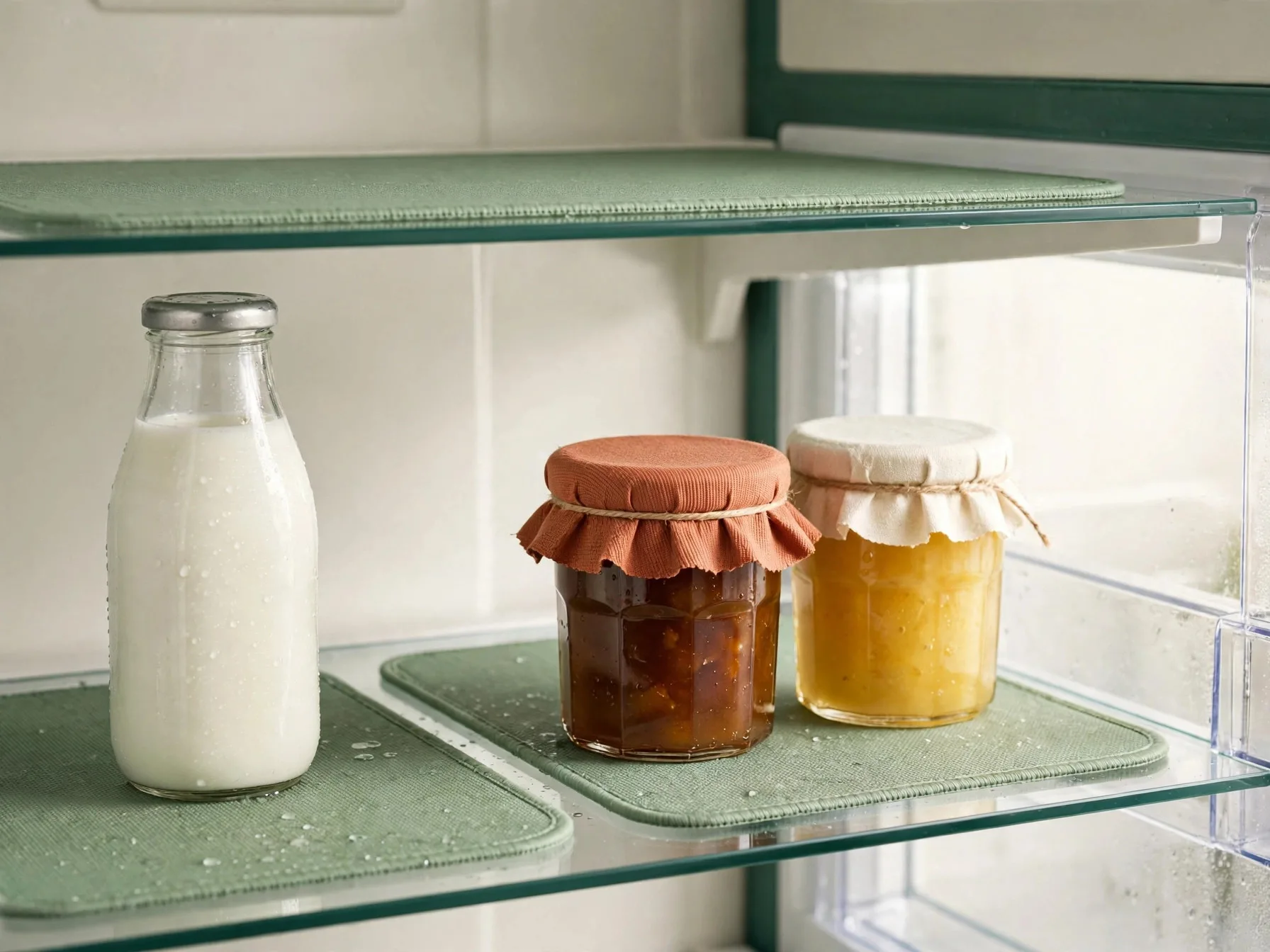
Line fridge shelves with slim washable mats and spills stop becoming a job. Leaky milk and sticky jam land softly on the mat, which you lift out, rinse, and slide back in seconds.
Choose mats cut exactly to fit and wash them monthly. It is low-effort kitchen organization that keeps the whole fridge feeling fresh with almost no scrubbing ever.
39. Label leftovers with date dots
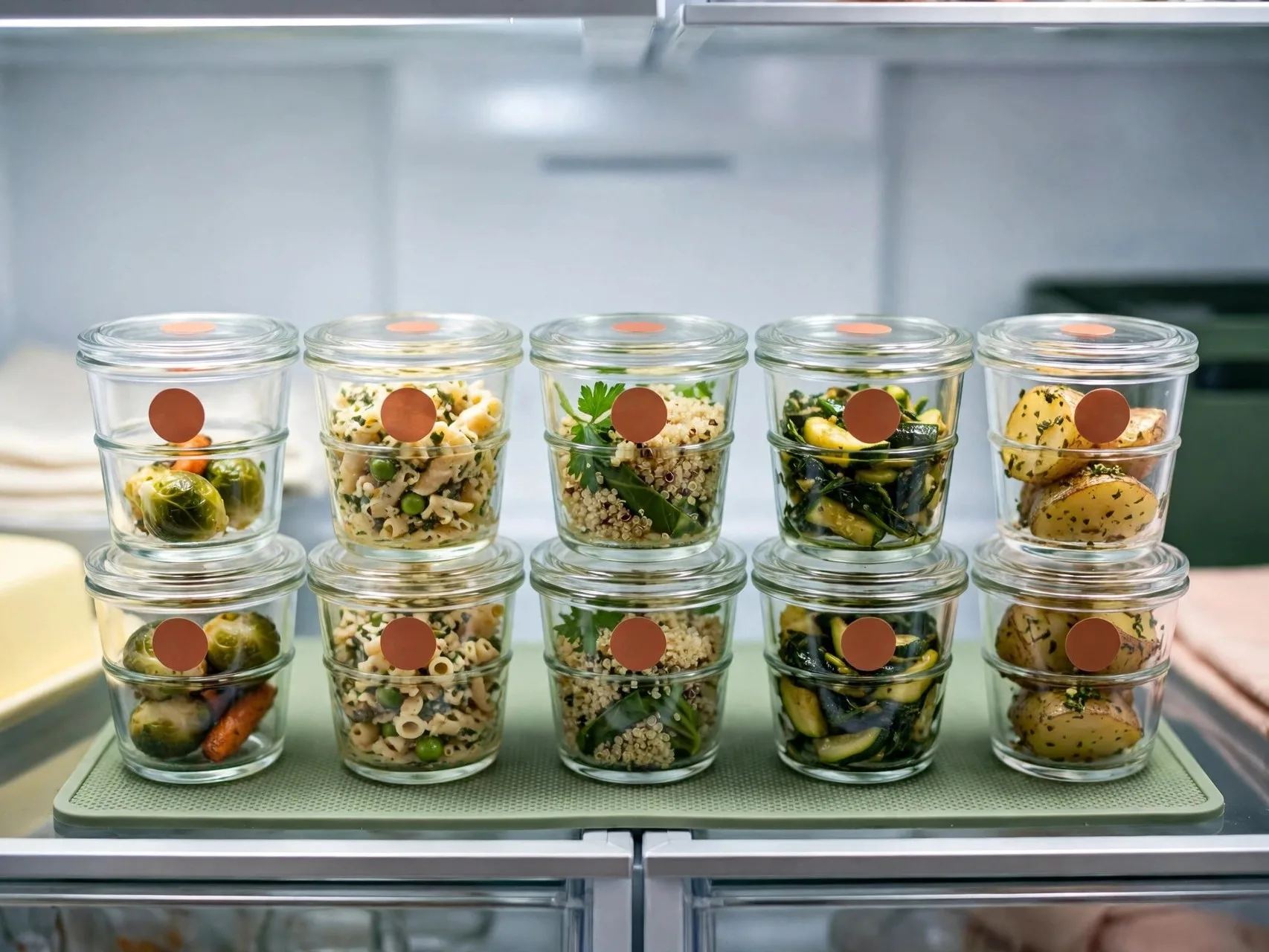
Stick a small date dot on every container of leftovers before it goes back in the fridge. You will clearly know at a glance what is still good and what has quietly passed its prime.
Toss anything older than three or four days without guilt. This tidy kitchen organization habit ends the mystery-soup containers nobody dares to open for good.
40. Leave one fridge shelf half-empty
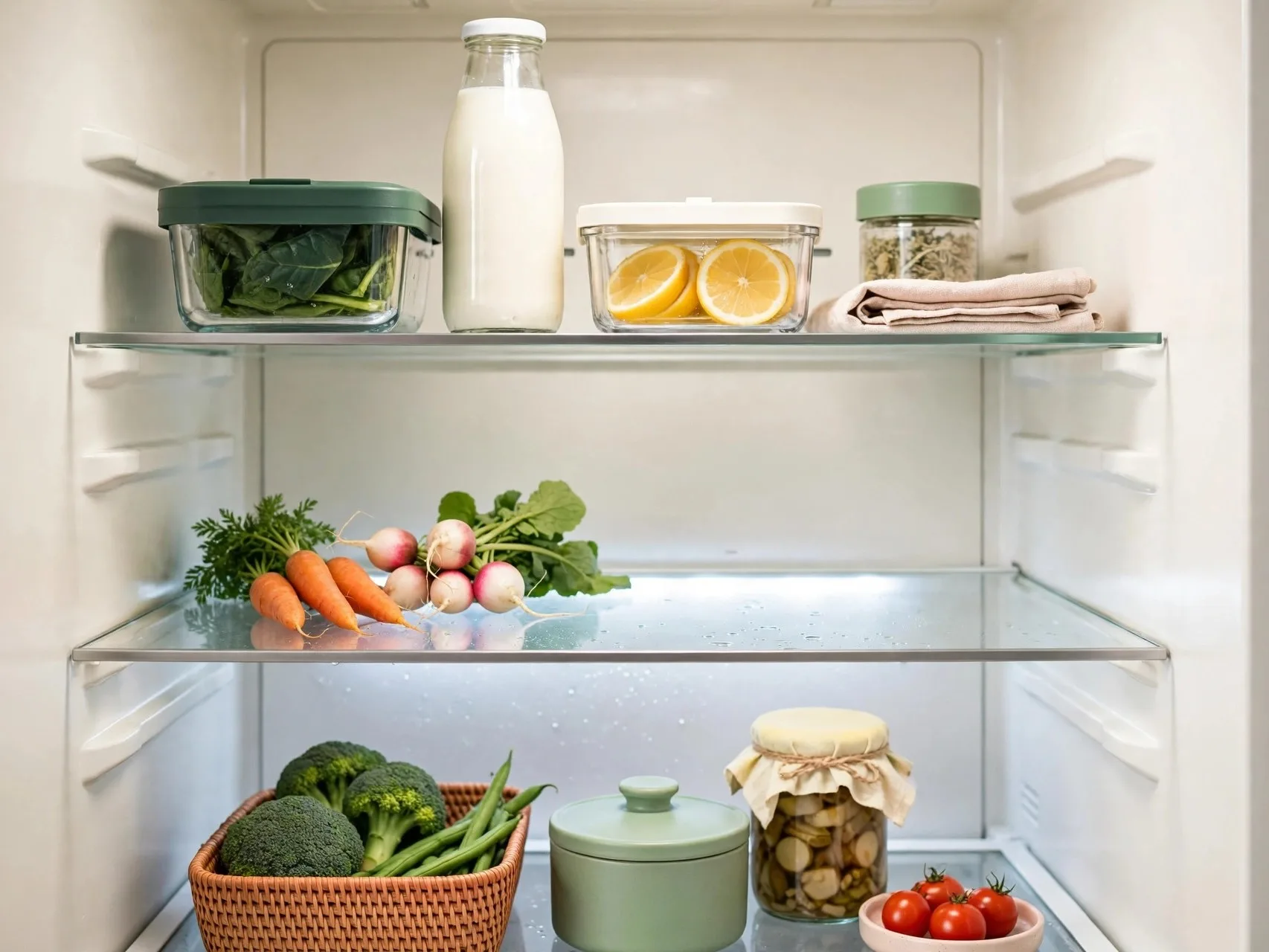
Resist the urge to fill every fridge shelf to the brim. One deliberately half-empty shelf gives new groceries a home the moment you unpack, instead of a teetering tower of bags on the counter.
It also keeps air flowing freely so the fridge chills evenly. This breathing-room kitchen organization rule makes unpacking fast, calm, and the fridge far less chaotic.
Under the sink
41. Hang spray bottles from a tension rod
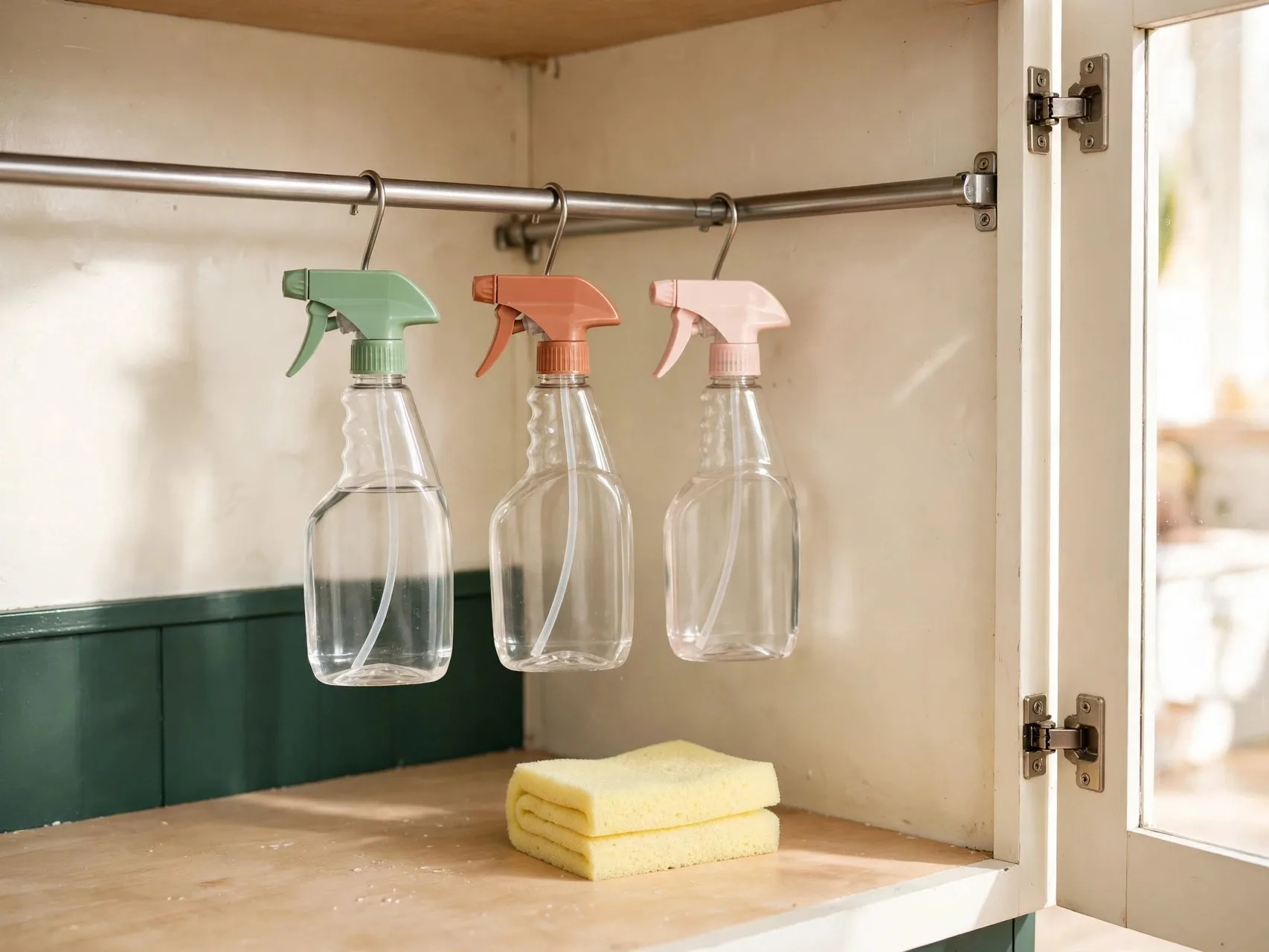
A tension rod slotted across your sink cabinet creates instant hanging space for spray bottles. Hook the triggers over the bar so they dangle neatly, leaving the cabinet floor clear for everything else. This is kitchen organization at its thriftiest — no drilling, no brackets, just a rod measured to fit.
It also makes bottles easier to grab mid-cleaning. Adjust the height so taller bottles fit underneath, and choose a rod with a rubber grip so it stays put on the cabinet walls.
42. Keep sponges in a pull-out caddy
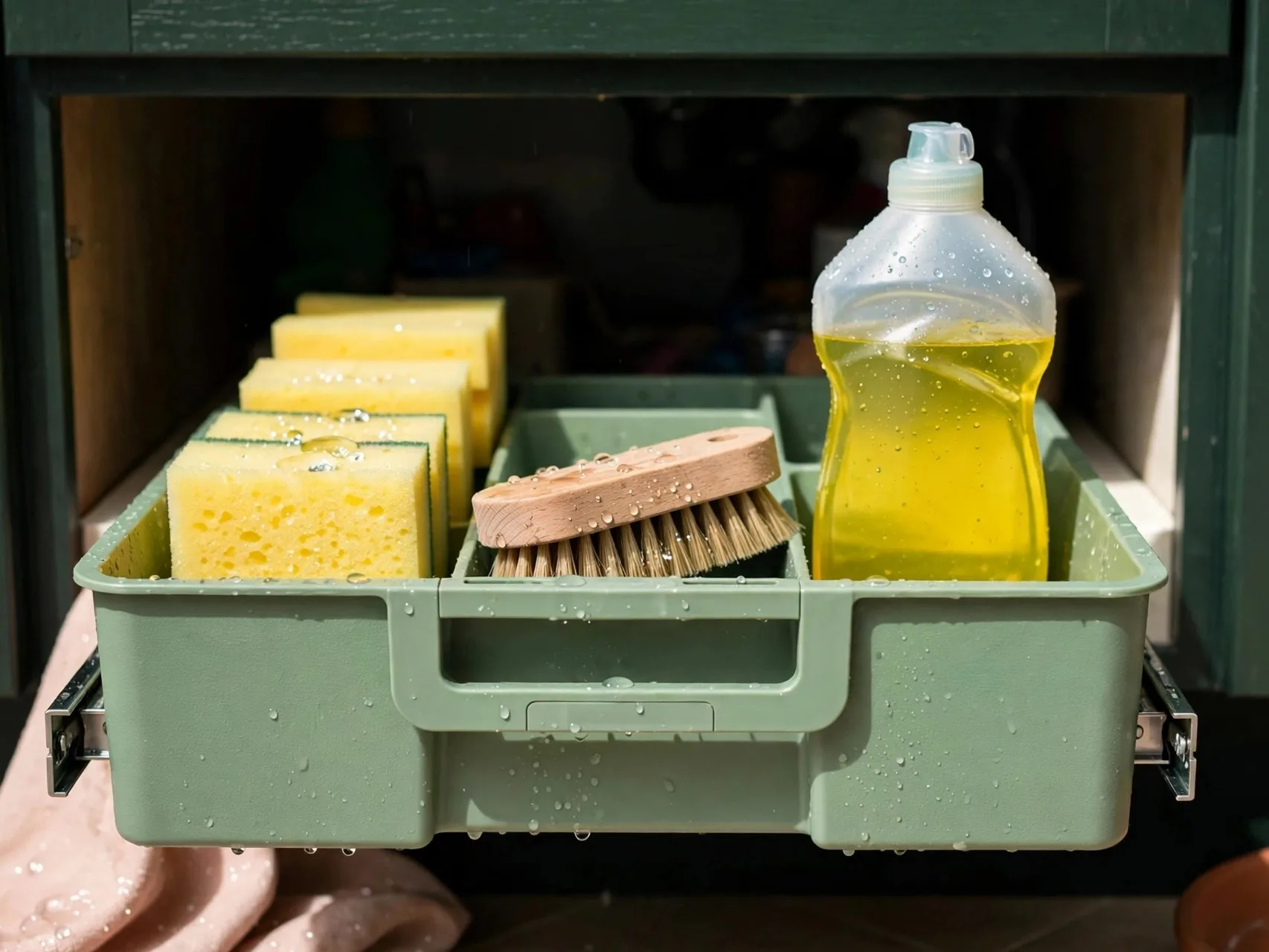
A pull-out caddy turns the awkward space under the sink into something you can actually use. Load it with sponges, brushes, and washing-up liquid, then slide the whole thing out whenever you need something — no more kneeling to rummage in the dark. It is one of those small kitchen organization upgrades that feels enormous in daily use.
Look for a caddy with drainage holes so damp sponges dry properly between uses. Measure your cabinet depth first, and leave room beside it for taller bottles.
43. Build a tiered shelf around the pipes
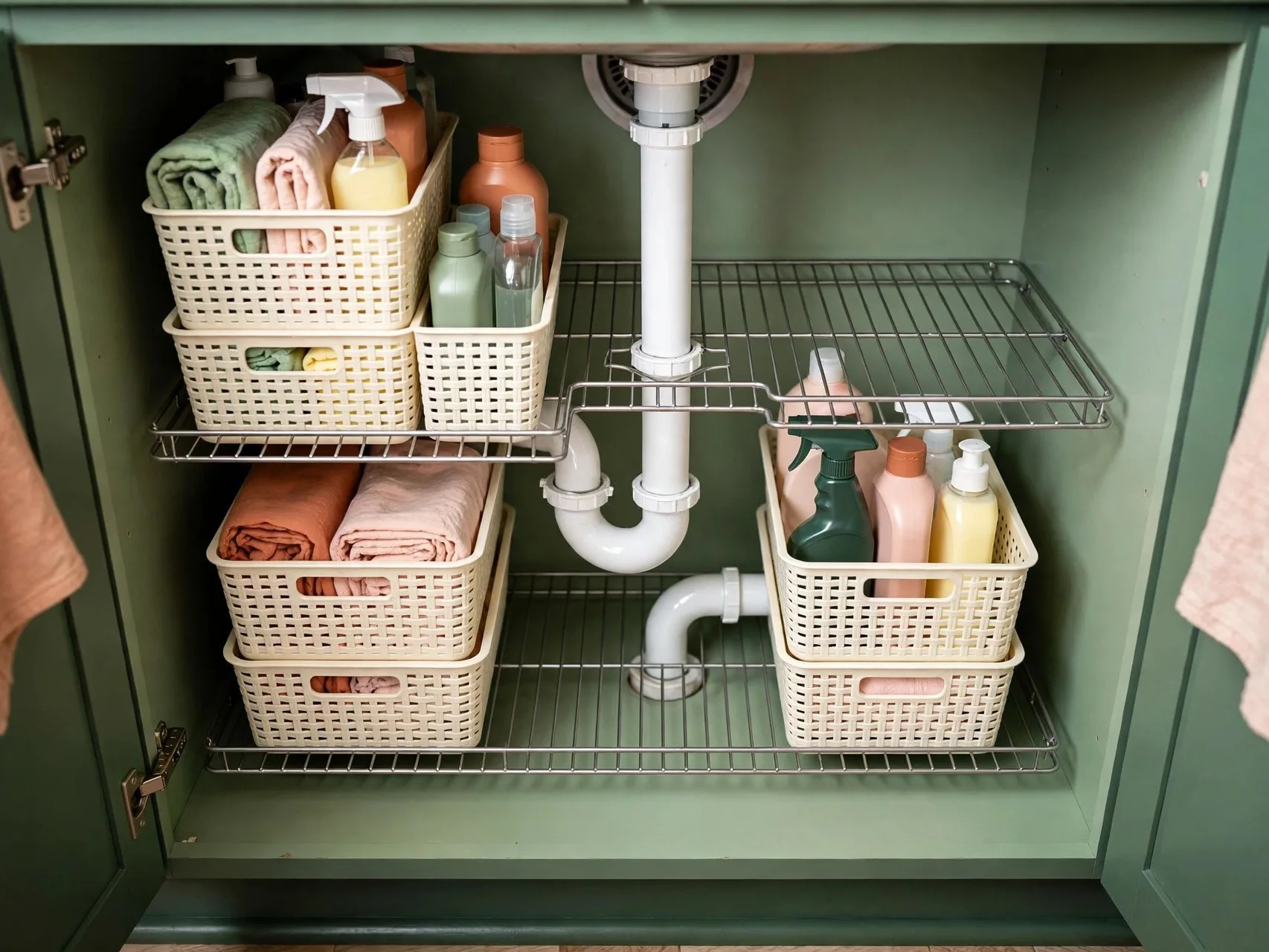
The U-bend pipe always steals the best under-sink real estate, so build around it instead of fighting it. A tiered shelf hugs the plumbing and stacks shallow bins vertically, doubling your storage in the same footprint. Suddenly that cramped cupboard becomes one of your smartest kitchen organization wins.
Keep daily-use items on the top tier and less-used bottles below. Label each bin so family members return things to the right spot.
44. Store backstock away from the sink
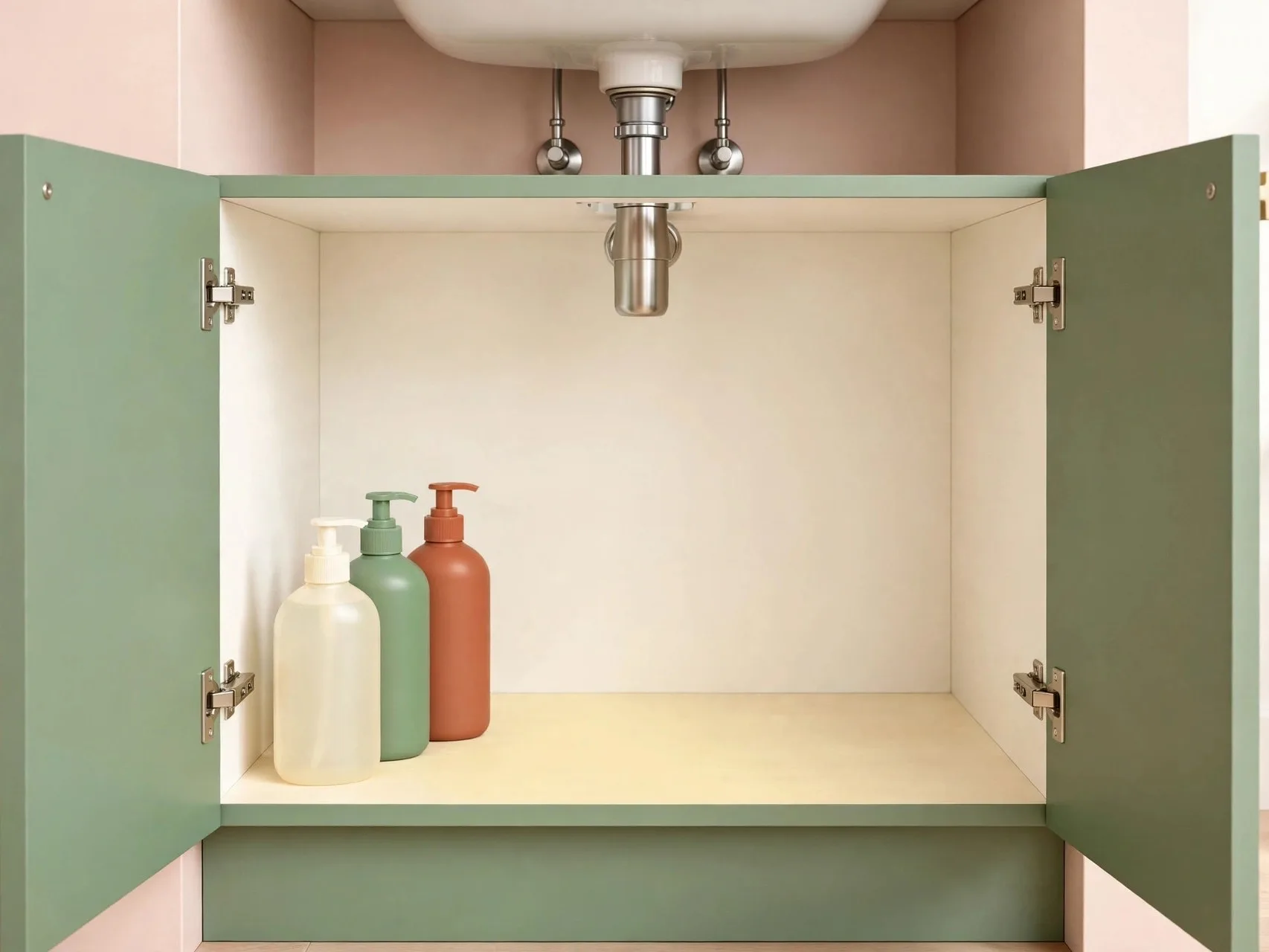
The under-sink cupboard is prime real estate, so stop letting it become a graveyard of half-used bottles. Keep only the cleaning products you reach for every week — washing-up liquid, one all-purpose spray, a limescale remover. Good kitchen organization means storing the right things in the right place, not everything in one place.
Move refills and bulk buys to a utility shelf or the top of a wardrobe. When a bottle runs out, you will know exactly where its replacement lives.
45. Fix a bag dispenser inside the door
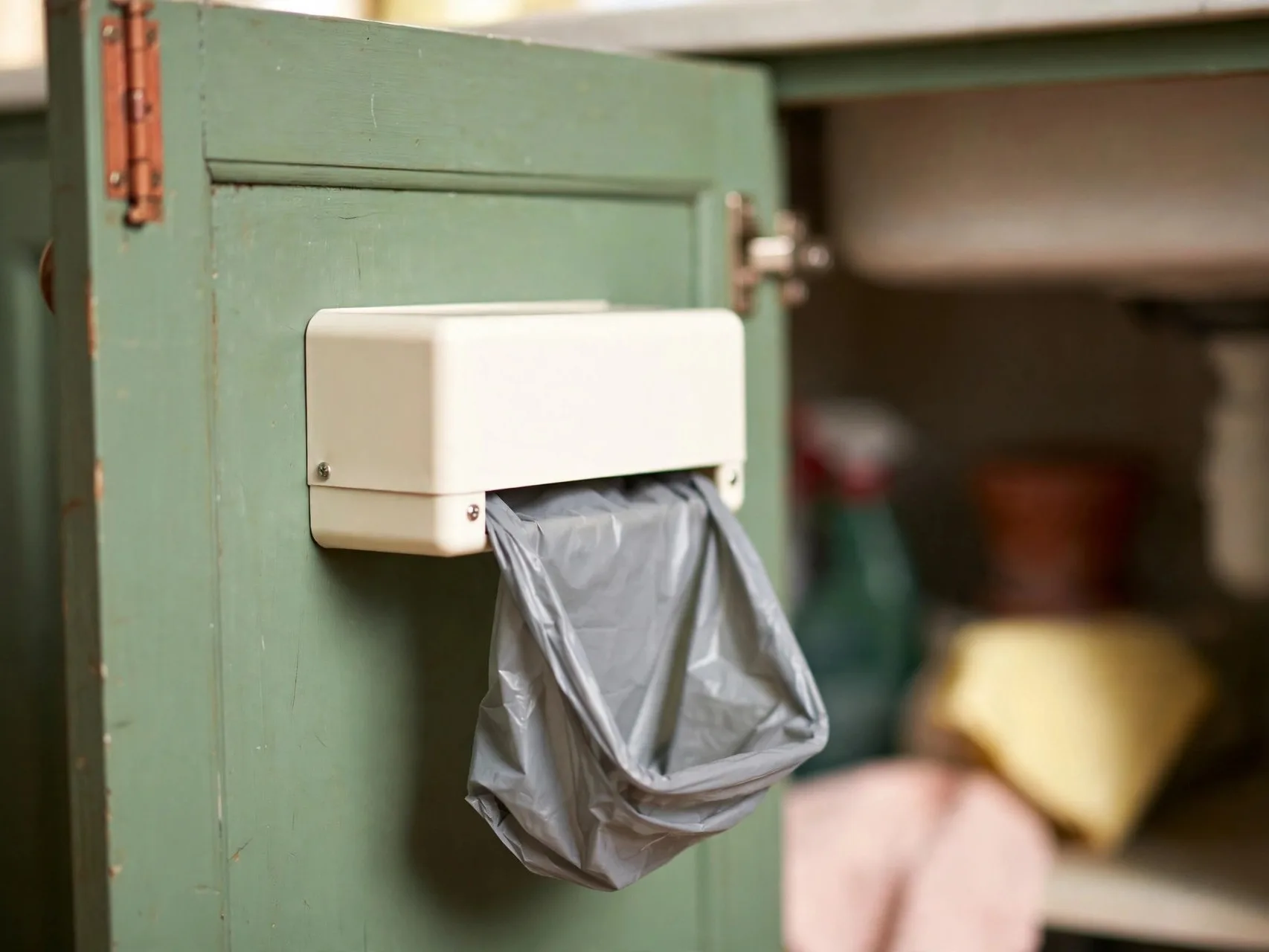
Tie a small roll of bin bags inside the cabinet door and you will never hunt for a fresh bag again. A simple stick-on dispenser or a repurposed wipe container keeps rolls tidy and pulls one bag at a time. It is the kind of tiny kitchen organization fix that saves you a trip across the kitchen mid-bin-change.
Position it low on the door so it clears the bins when the cupboard closes. Refill it the moment the roll runs out, not the next time you remember.
46. Line the cabinet with a waterproof mat
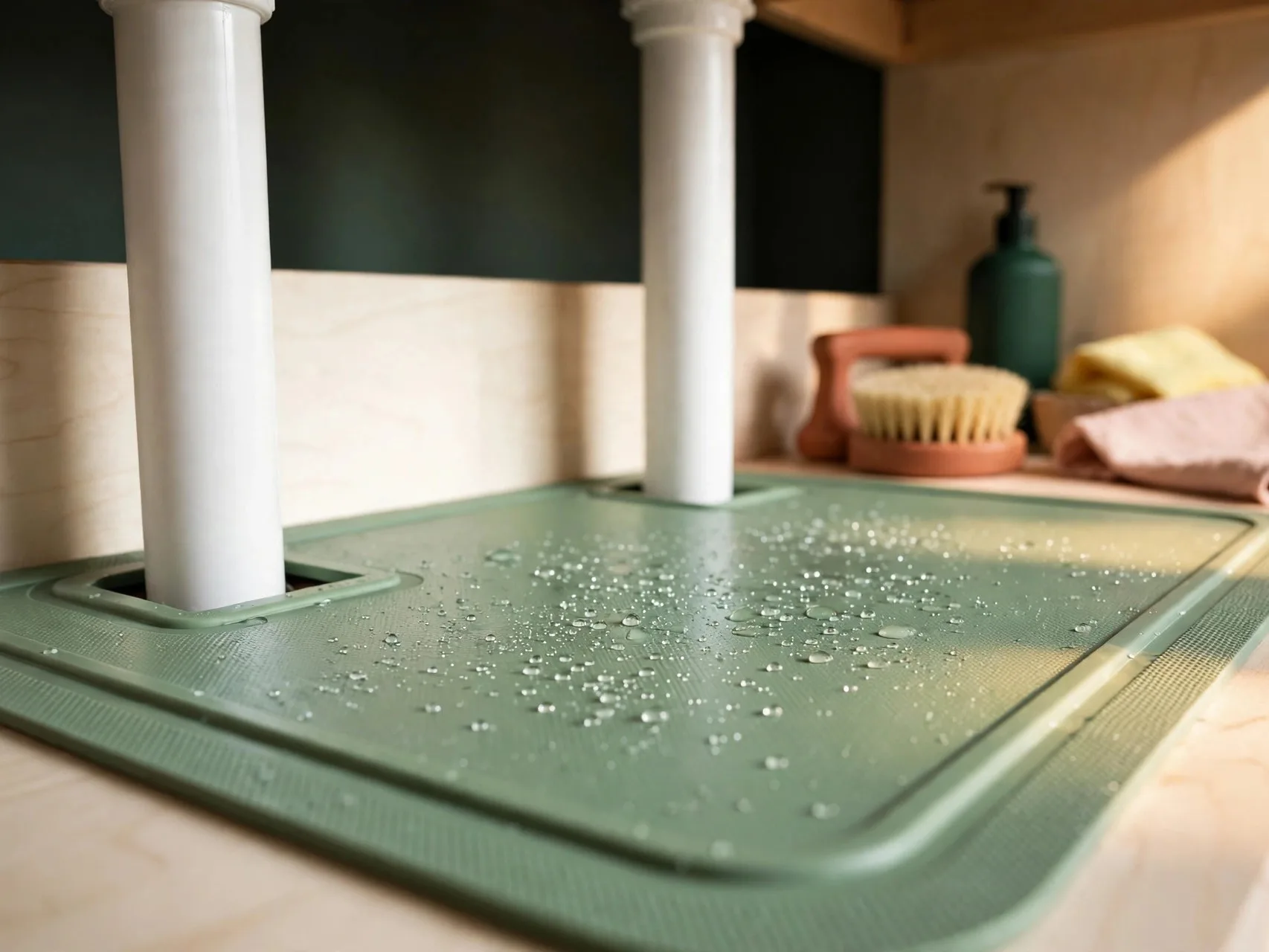
A waterproof mat under the sink catches the drips, leaks, and detergent spills before they soak into the wood. One slow leak from a trap can quietly warp a cabinet floor for months — a wipeable liner turns that disaster into a quick wipe. Sensible kitchen organization protects the cupboard as well as what is inside it.
Choose a mat with a raised lip to contain puddles, and cut it to fit snugly around the pipes. Wipe it down monthly when you restock.
Walls and doors
47. Add an over-door rack for packets
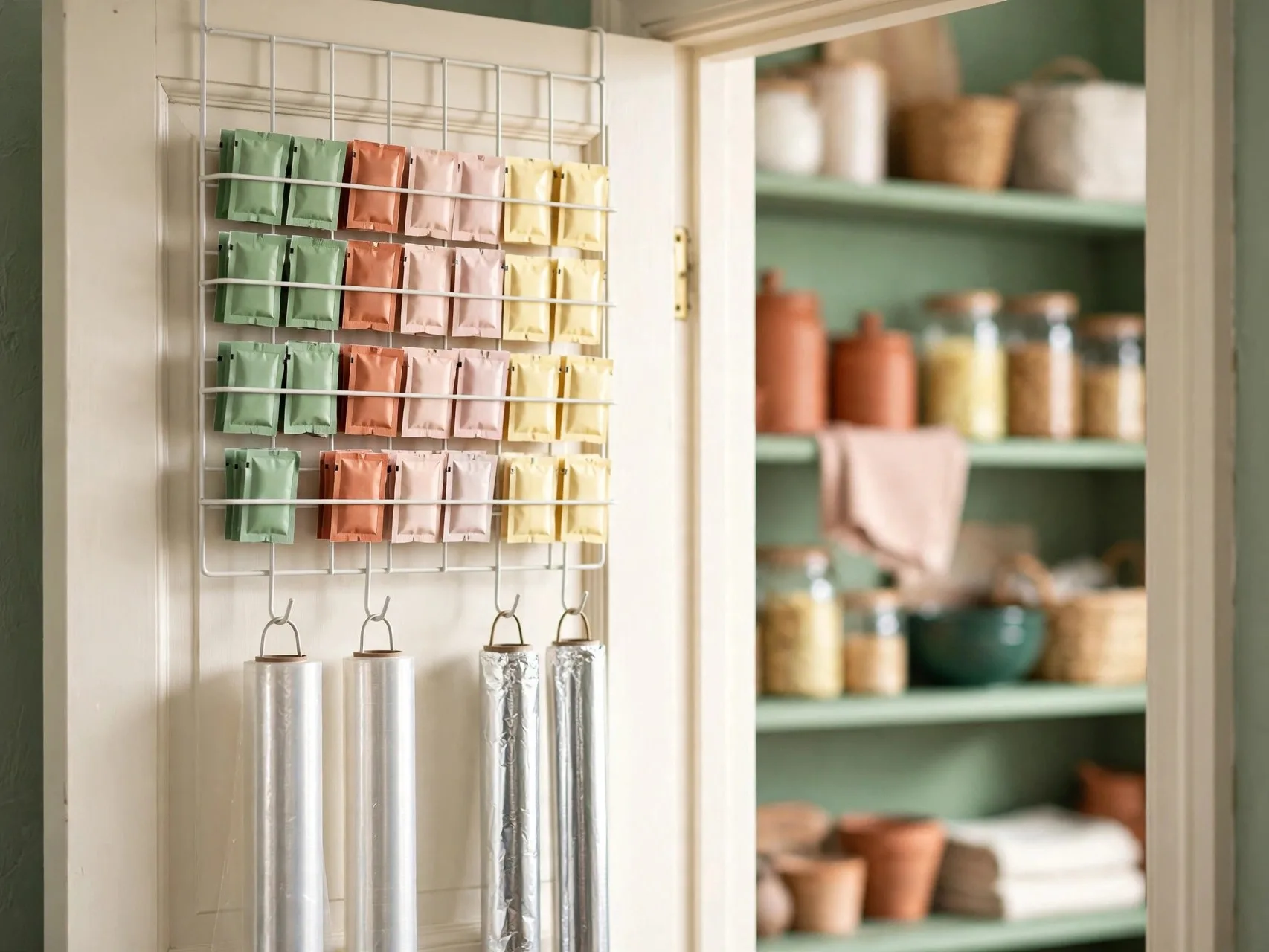
The back of the pantry door is wasted space in most kitchens, but an over-the-door rack turns it into a slim storage wall for seasoning packets, wraps, and cling film. It hooks over the top — no screws, no damage. In a compact galley, this bit of vertical kitchen organization can free an entire shelf.
Keep heavier items at the bottom so the door swings easily. Check the door still closes fully before you load the top tier.
48. Wheel a slim cart beside the fridge
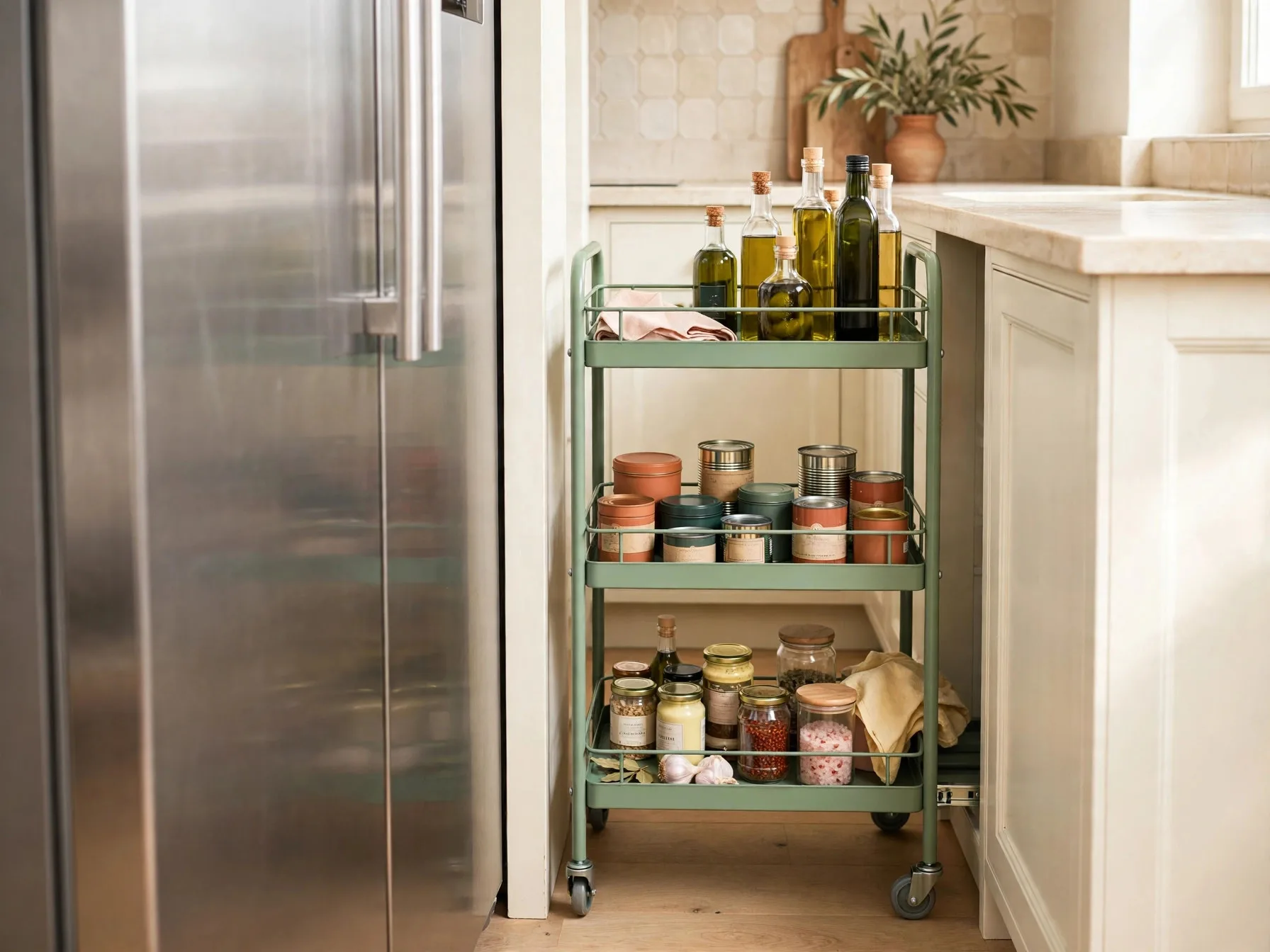
That dead six-inch gap between the fridge and the counter is begging for a slim rolling cart. Load it with oils, tins, and condiments, then wheel it out whenever you cook — everything lands within arm’s reach. It is rolling kitchen organization that makes a narrow kitchen feel properly planned.
Measure the gap before you buy, accounting for skirting boards. Choose a cart with locking wheels so it stays put when you lean on it.
49. Hang pots on a ceiling rack
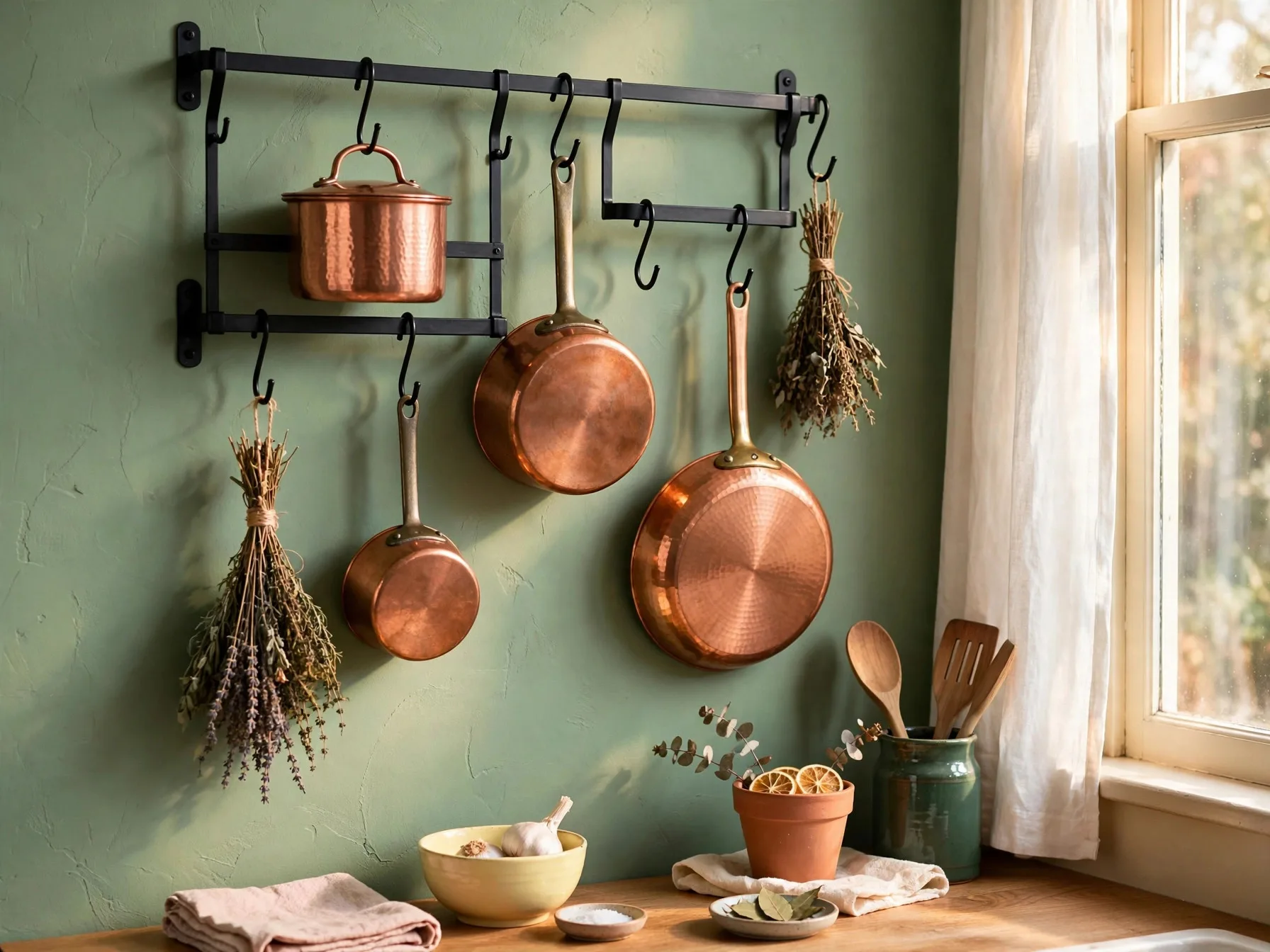
Bulky pots and pans swallow cabinet space and clatter every time you dig one out. Hang them from a ceiling or wall rack instead, and you free whole cupboards for food and tools. Displayed this way they become part of the decor — a little professional-kitchen theatre that shows off good kitchen organization.
Fit the rack into ceiling joists or solid wall plugs so it holds the weight safely. Hang the pans you use most at the front for easy grabbing.
50. Stick spice jars on a magnetic strip
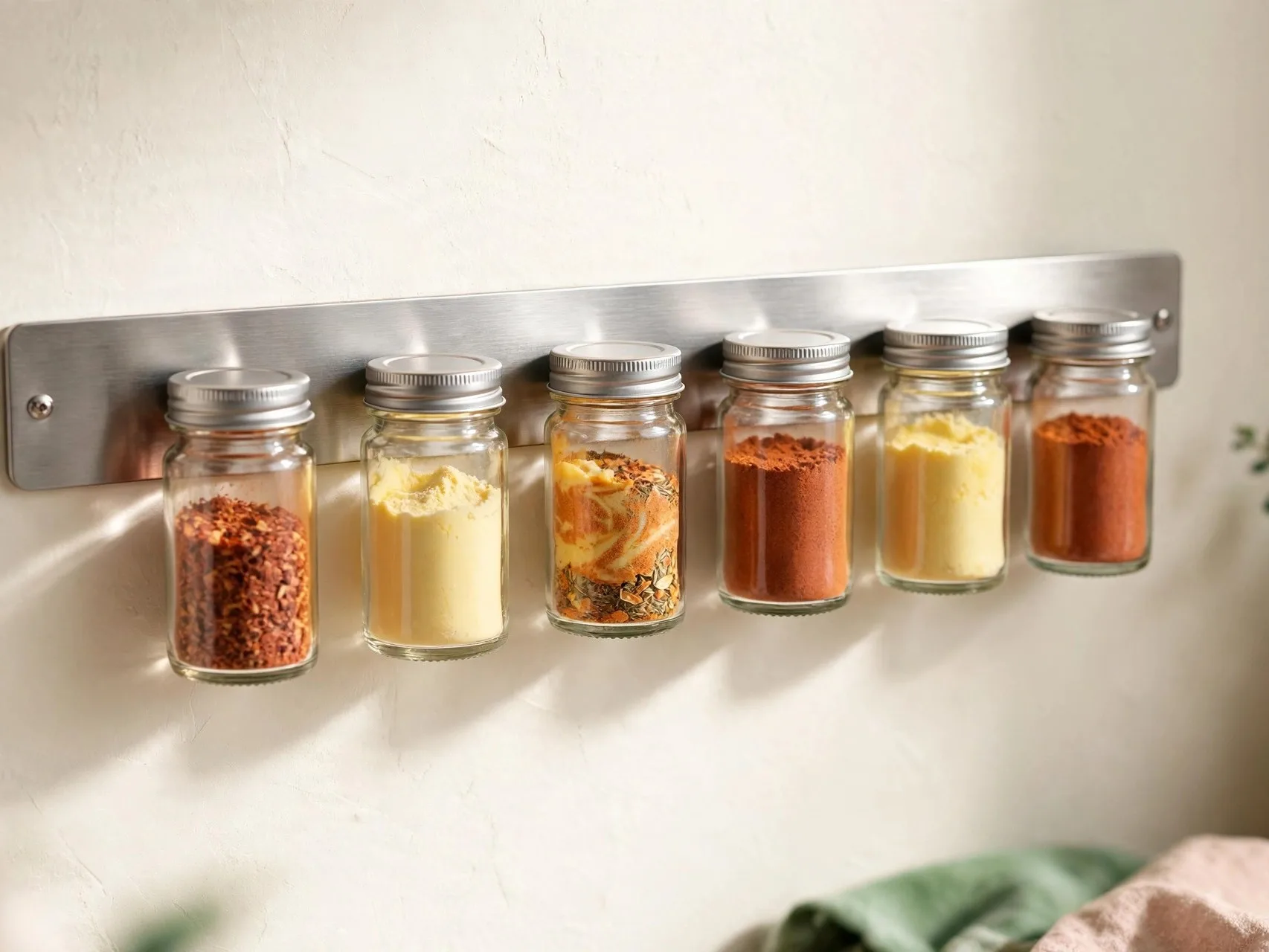
Fix a magnetic strip to a spare stretch of wall and your spice jars can live in a neat row, lids clinging to the magnet. No more digging through a dark cupboard for the paprika. This wall-level kitchen organization keeps spices visible, in date, and wonderfully easy to grab while you cook.
Use jars with metal lids or glue a small magnet disc inside each cap. Mount the strip at eye level beside the cooker, away from steam.
Kitchen organization checklist: one zone at a time
Work through this list zone by zone — no rush to do it all in one day. Tick off each area as you go and the kitchen resets itself.
- Pantry: pull everything out, toss expired items, group by category, decant and label
- Upper cabinets: move daily dishes to waist-to-eye level, shift rarely-used items up top
- Drawers: add dividers, sort utensils, keep the junk drawer to one drawer
- Counters: strip to essentials only, corral daily tools in a crock or rail
- Lower cabinets: add pull-outs or turntables for pots, file baking sheets vertically
- Fridge: zone the shelves, add an eat-me-first box, toss anything past its date
- Under the sink: keep only current-use cleaners, add a tension rod and waterproof mat
- Walls and doors: mount racks, hooks and a slim cart to claim dead space
- Label the spots you want family to respect — bins, drawers and fridge zones
- Stand back and remove one more thing from each surface: less is easier to keep
- Restock bins and liners: you only maintain what is easy to reach
- Set a 15-minute weekly reset so the zones never slide back into chaos
Questions, answered
How can I organize my kitchen?
Start by clearing one zone at a time instead of the whole kitchen. Pull everything out, toss expired and broken items, then store things where you use them: prep tools near the worktop, pots by the stove, wraps near the serving area. Add simple helpers like turntables, clear bins and shelf risers, and label the spots you want family to respect. Finish each zone completely before starting the next — momentum beats perfection.
What are the five zones in a kitchen?
The classic five zones are prep, cooking, cleaning, storage and serving. Prep holds cutting boards and knives near a work surface; cooking keeps pots, oils and utensils by the stove; cleaning gathers the sink, dishwasher and supplies; storage covers the pantry, fridge and dry goods; serving holds plates, glasses and wraps. Store items in the zone where you use them and the kitchen starts to tidy itself.
How to organize a kitchen for ADHD?
Make everything visible and obvious: clear bins instead of opaque tubs, open labels, and one clear home per item. Reduce the number of steps — if putting something away takes more than two moves, simplify it. Keep daily items in sight at waist-to-eye level, use an eat-me-first box in the fridge, and set a short daily reset timer. The goal is a kitchen that forgives a distracted brain, not one that demands a perfect one.
How do I organize a small kitchen with no pantry?
Turn another spot into the pantry: a tall freestanding cabinet, one deep lower cupboard, or even a closet near the kitchen. Use clear stackable bins so you can see everything, decant dry goods into slim containers that waste no shelf depth, and keep backstock minimal — small kitchens cannot absorb bulk buying. A slim rolling cart between the fridge and counter makes a brilliant overflow pantry for oils and packets.
Keep reading
- 35 Pantry Organization Ideas That Actually Stay Neat
- Declutter Your Home Room by Room
- Cleaning Schedule for Home: Daily, Weekly and Monthly Tasks
A small kitchen that works is not a small kitchen that settled — it is one where everything has a reason for being there. Pick one zone this weekend, give it the full treatment, and notice how much lighter the whole room feels. When you are ready for the next room, the room-by-room declutter plan is waiting, and the cleaning schedule will keep every zone exactly where you left it.