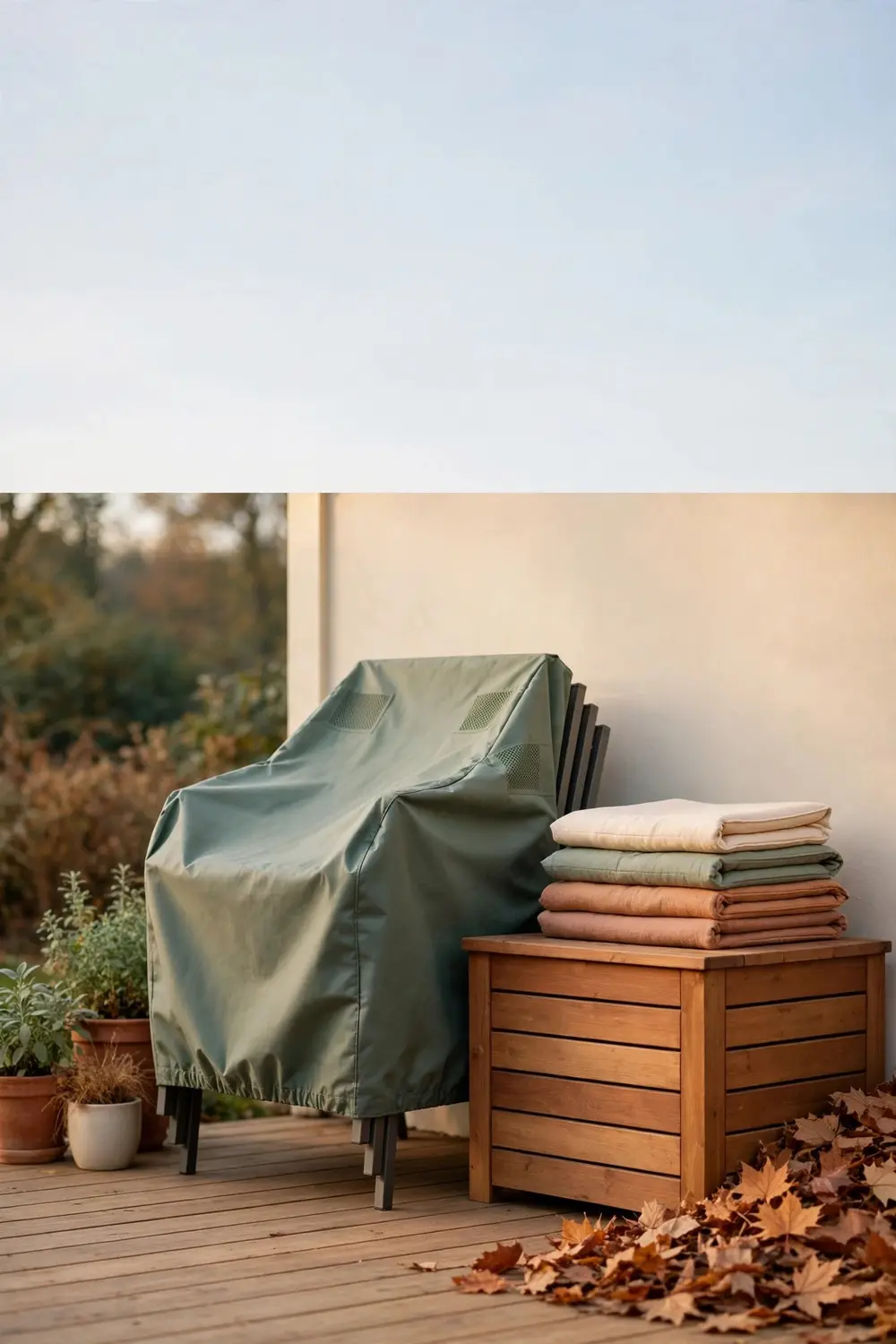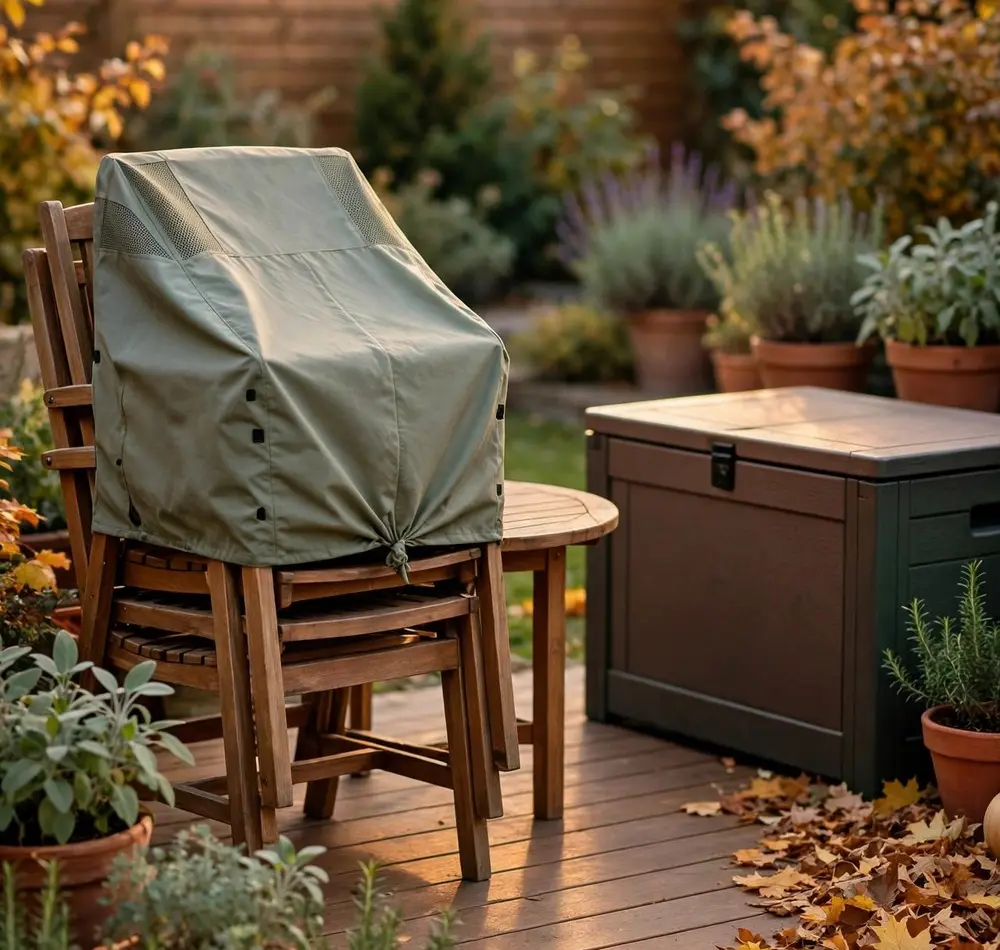
Store patio furniture clean and bone-dry: cushions indoors in breathable bags, wood and wicker under cover, metal and resin outside under vented covers raised off the ground — moisture, not cold, is what ruins it.
Thank you for reading this post, don’t forget to subscribe!This guide works through the put-away in order: cushions first, then the frames by material, then the umbrella, the rug and the small pieces — with a table at the end that settles the cover-or-bring-in question for every piece you own. Start on a dry, mild day, and the whole job takes one afternoon.
Step 1: Clean the cushions
Start with the cushions, because they are the part that goes mouldy first. Brush off leaves, crumbs and loose dirt, then wash the covers in mild soapy water with a soft brush — follow the label, and spot-treat any stains before they set. Rinse until the water runs clear. Never store a dirty cushion: the dirt holds moisture all winter, and moisture plus a closed bag is exactly how mildew starts.
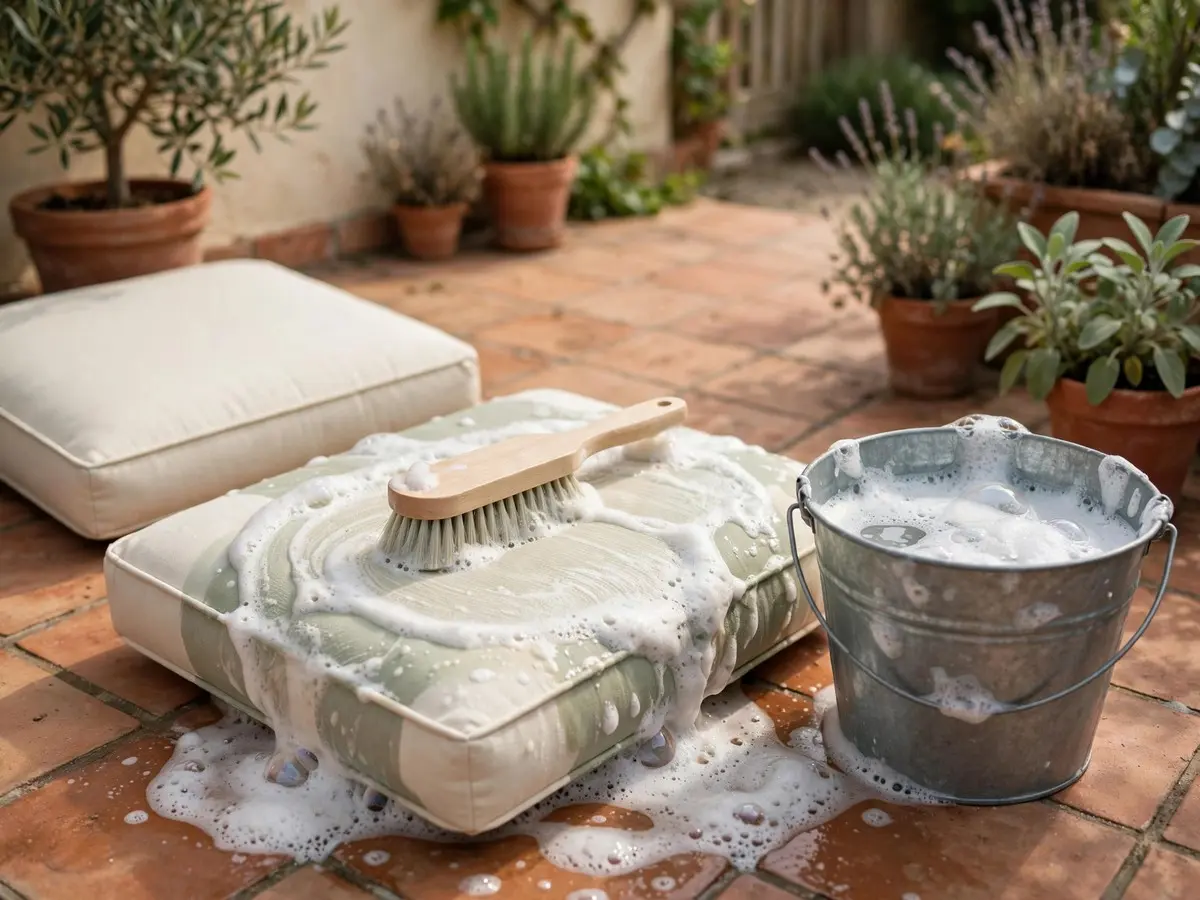
- Brush off leaves, crumbs and loose dirt first
- Wash the covers in mild soapy water with a soft brush
- Rinse until the water runs clear
Wash the cushion covers in the machine only if the label allows it — most outdoor covers are hand-wash only, and a machine cycle can shrink the fabric or damage the water-repellent coating.
Step 2: Dry the cushions bone-dry
Cushions must be bone-dry before they are bagged — damp seams are the usual culprit when a cushion comes out musty in spring. Stand the cushions on edge so water drains, then sun-dry both sides, flipping once, and allow a full day or two. Press the seams and the centre: if either feels cool or damp, keep drying. A cushion that feels dry on the surface can still hold water deep inside.
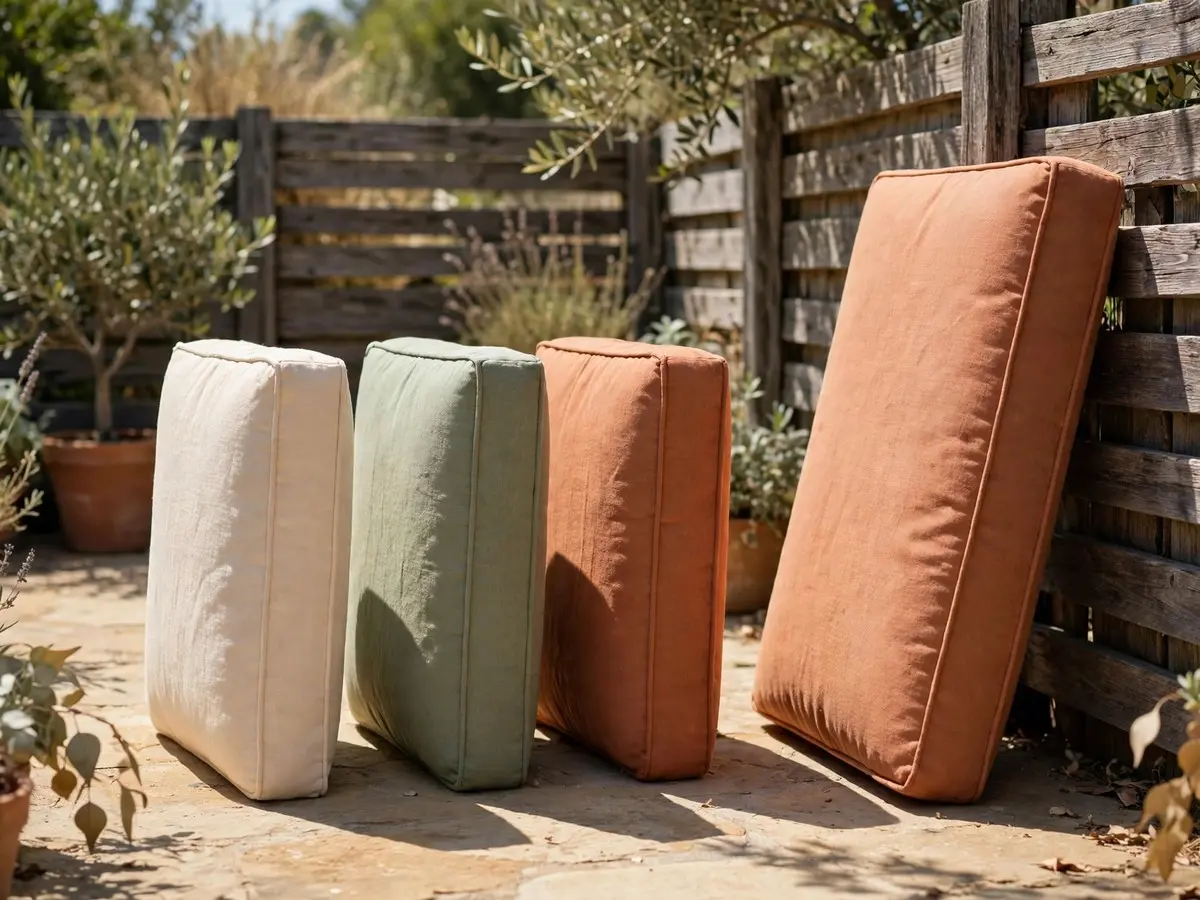
- Stand cushions on edge so water drains out
- Sun-dry both sides, flipping once
- Press the seams — if they feel cool or damp, keep drying
If the weather turns before the cushions are dry, bring them under cover and finish drying indoors with a fan — never bag a cushion that is still damp on the underside.
Step 3: Bag the cushions and bring them indoors
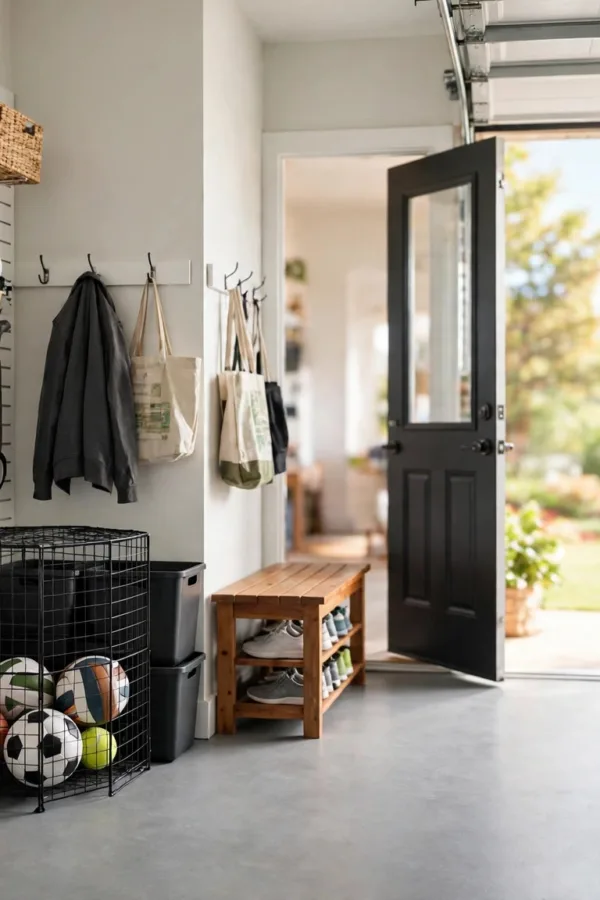
Bag the dry cushions in breathable fabric bags, or wrap them in old cotton sheets — never sealed plastic, which traps the moisture mould needs. Bring them indoors: a garage shelf, a shed, a spare closet or under a bed all work, as long as the spot stays dry. Store the bags off the floor on a shelf or pallet so a damp floor cannot wick moisture in, and label each bag by set.
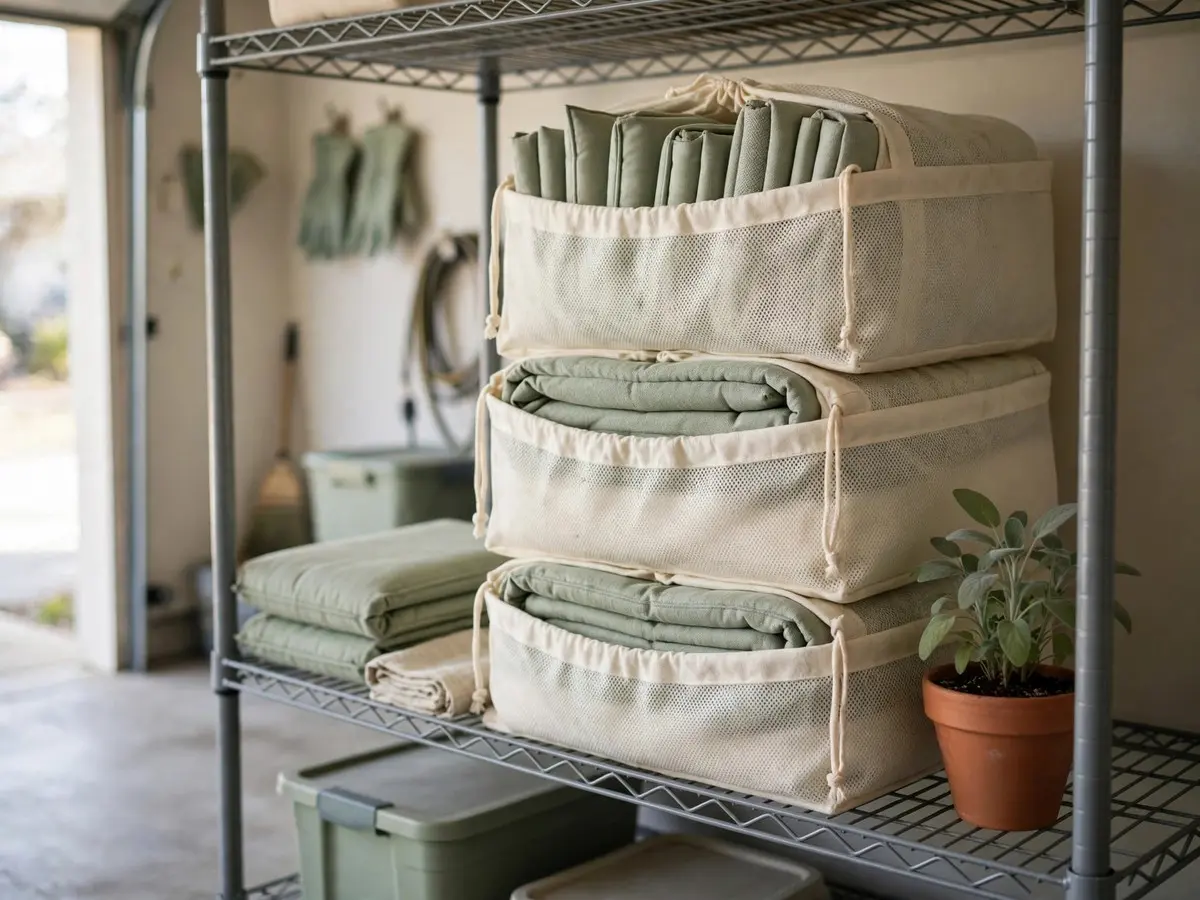
- Use breathable fabric bags or old cotton sheets
- Label each bag by furniture set
- Store the bags off the floor on a shelf or pallet
For the garage side of winter storage, our garage organization ideas show how to give the cushion bags a labelled shelf of their own, so they are easy to find in spring.
Step 4: Wood frames — clean, oil, cover
Wood frames need cleaning, drying and a cover — in that order. Wash the frame with mild soapy water and a soft brush, working into the joints where dirt collects, then let it dry completely in the sun. If the maker recommends it, rub in a light coat of outdoor furniture oil on bare wood. Then cover with a fitted, vented cover and raise the piece off the ground on small blocks.
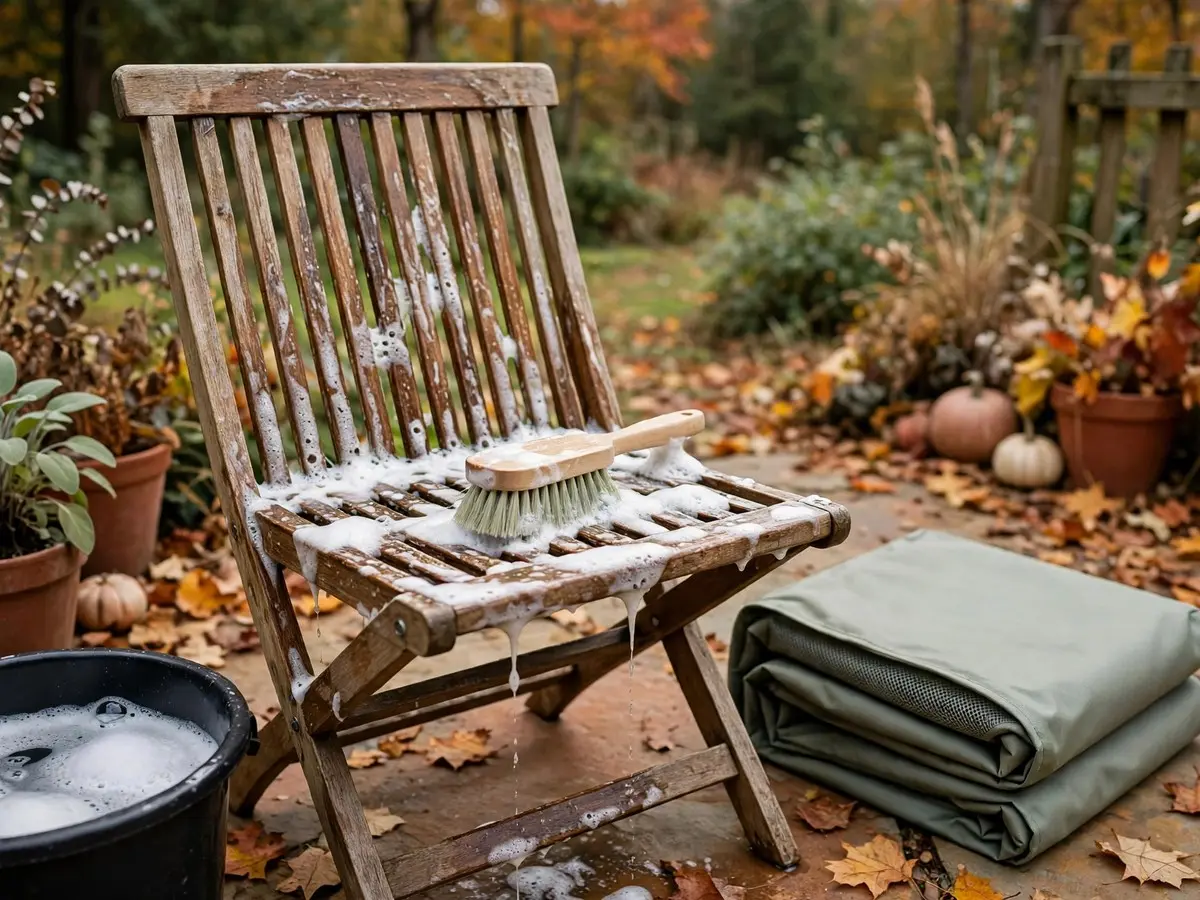
- Wash with mild soapy water, working into the joints
- Let the frame dry completely in the sun
- Oil bare wood lightly if the maker recommends it
- Cover with a fitted, vented cover, raised off the ground
If the wood is already grey and weathered, a light sanding before oiling brings the colour back — but oil seals in whatever dirt is underneath, so never oil a frame you have not washed first.
Step 5: Wicker frames — brush, dry, bring in if you can
Natural wicker is the frame most at risk in a wet winter: damp gets into the weave, and it cracks and moulds. Brush out leaves and dirt, wash gently with soapy water, and dry it thoroughly — the weave hides water. If you can, bring wicker indoors for the winter; if it must stay out, keep it in a sheltered spot under a vented cover, raised off the ground. Resin wicker is far tougher and can stay out covered.
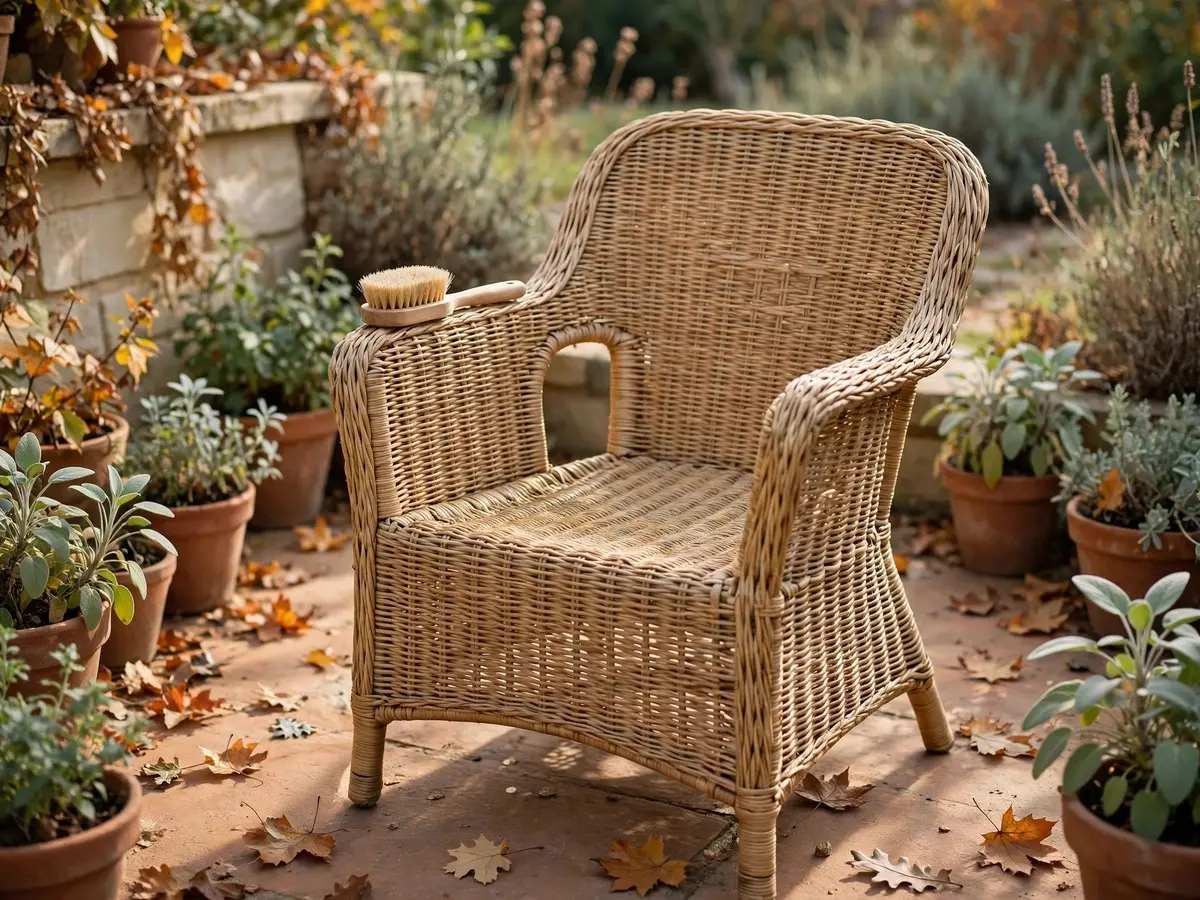
- Brush leaves and dirt out of the weave
- Wash gently and dry thoroughly — the weave hides water
- Bring indoors in wet winters; sheltered cover in dry ones
A quick test: if you can press a fingernail into the weave and it feels soft or gives easily, the wicker is already damp-damaged — bring it in and let it dry for a week before deciding whether it needs more care.
Step 6: Metal frames — check for rust, then cover
Metal frames survive winter well as long as rust cannot get a start. Wash the frame with soapy water, paying attention to the joints and the feet, and dry it completely. Touch up any chips in the paint with rust-proof paint — rust starts at a chip and spreads under the finish all winter. Aluminium can stay outside under a vented cover; steel or iron with chipped paint is better brought indoors.
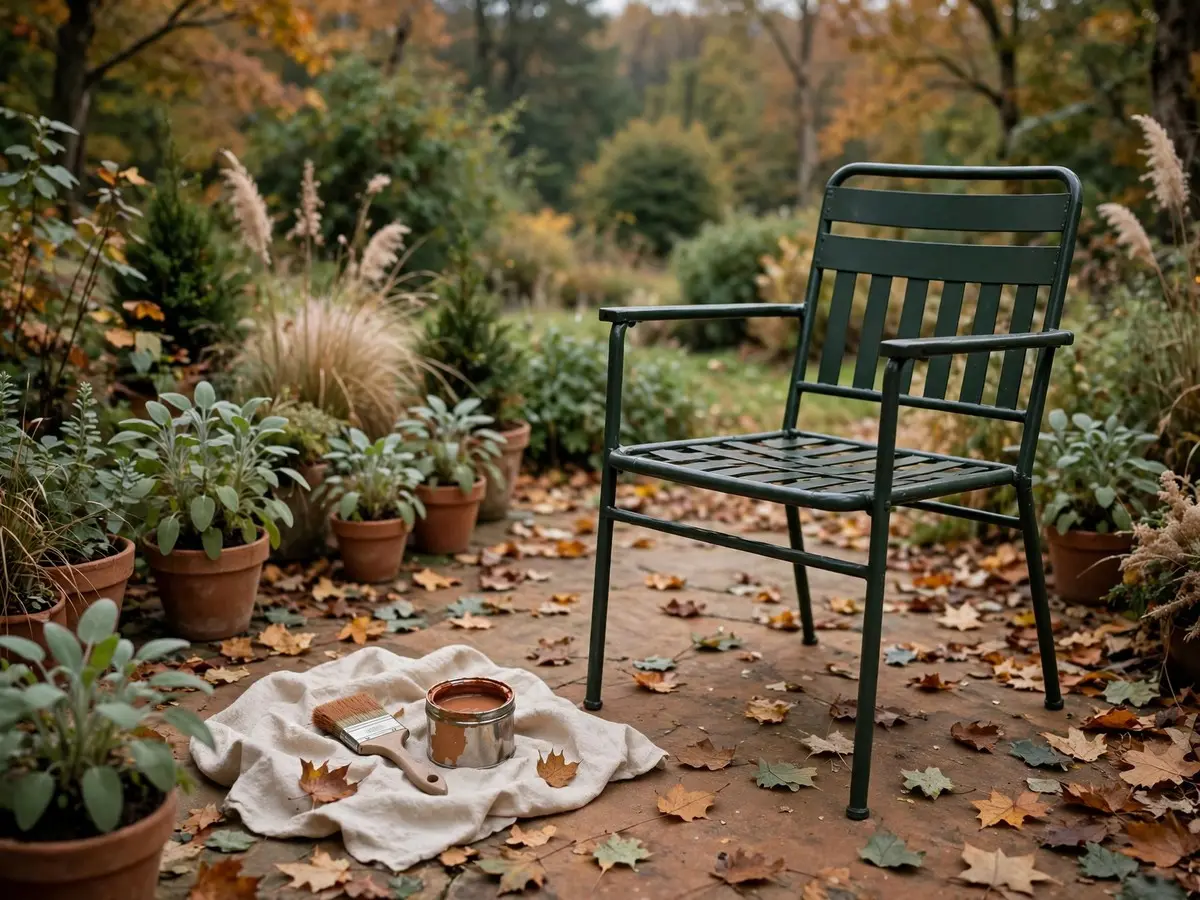
- Wash the frame, paying attention to joints and feet
- Dry it completely before covering
- Touch up paint chips with rust-proof paint
Check the feet and the underside of the joints, where rust starts first — a chair that looks fine from above can be rusting from below.
Step 7: Resin and plastic frames — stack, cover, lift
Resin and plastic frames are the easiest to put away: wash them with soapy water, let them dry, then stack the chairs and cover the stack with a vented cover, raised off the ground. They can stay outside all winter in most climates. The one exception is a hard freeze: very cold weather makes resin brittle, so if a deep freeze is forecast, bring the stack into the garage or shed for those nights.
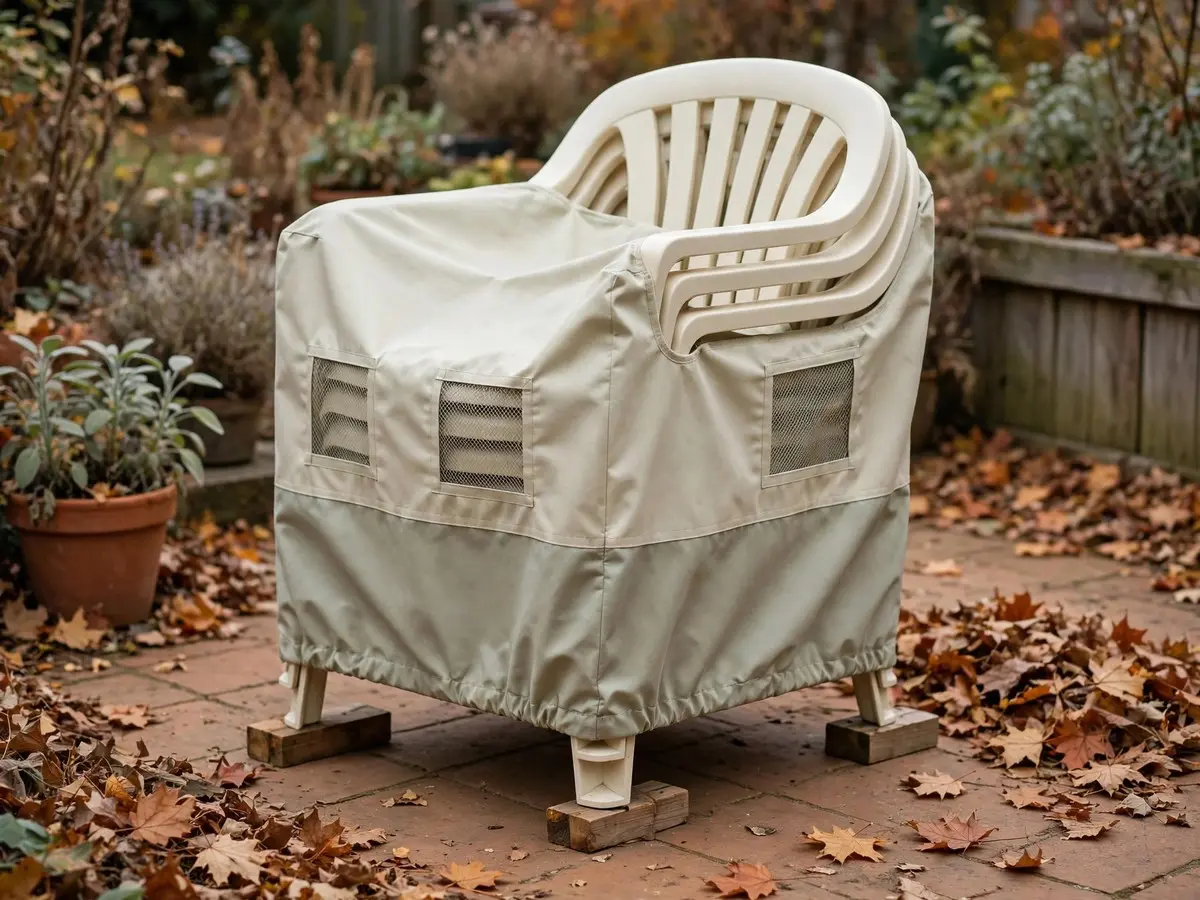
- Wash and dry, then stack the chairs
- Cover the stack with a vented cover, raised off the ground
- Bring the stack in for a hard freeze
Leave a small gap between the stacked chairs and the cover so air can move — a cover pulled tight over resin traps condensation against the seats.
Step 8: Umbrellas, rugs and small pieces
Finish with the pieces people forget: the umbrella, the outdoor rug and the small bits. Close the umbrella only once the canopy is fully dry, and store it indoors — fabric, ribs and crank all suffer in the damp. Roll the rug after brushing it off, and store it dry, standing on end. Side tables, lanterns and planters go into a deck box or the shed, so nothing small is left out to crack or blow away.
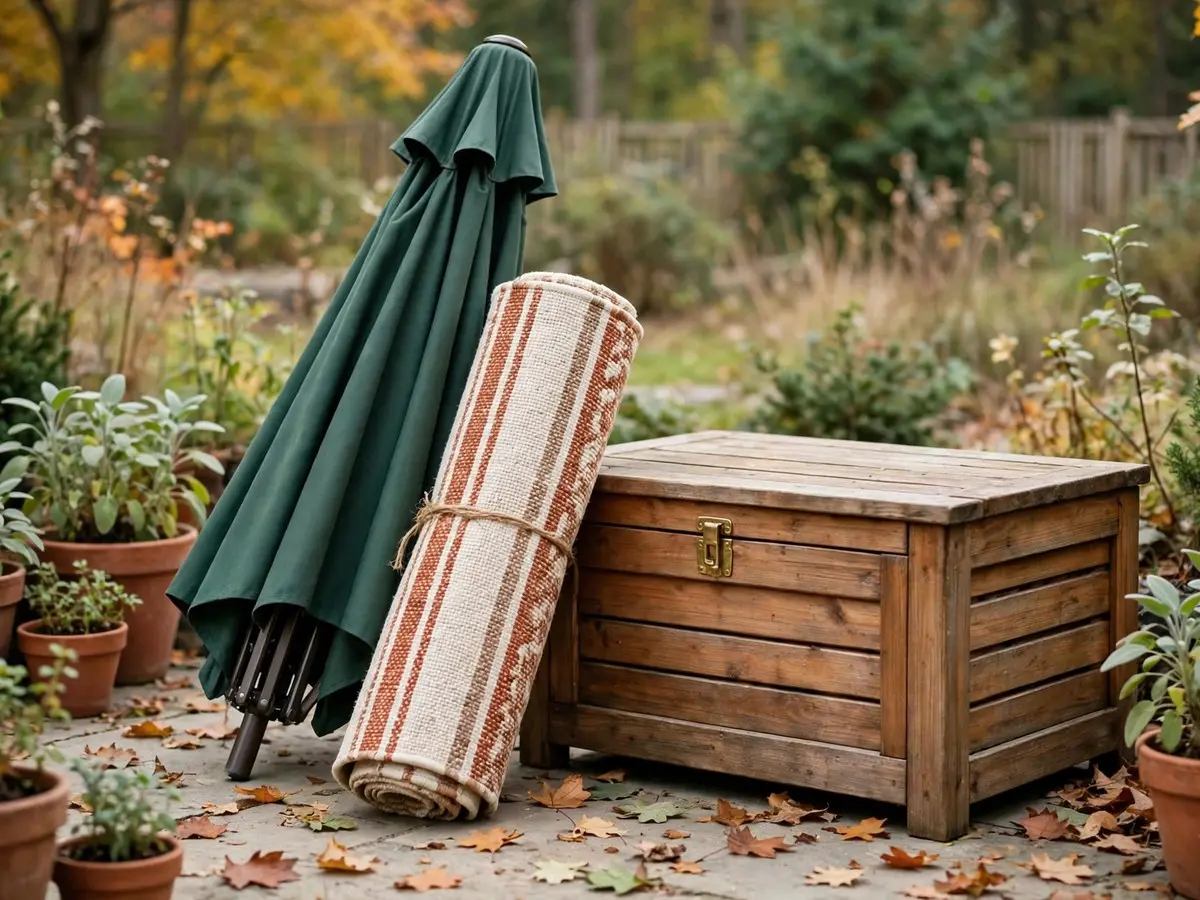
- Dry the umbrella canopy fully before closing it
- Roll the rug and store it dry, standing on end
- Deck-box the side tables, lanterns and planters
Store the umbrella with its cover on if it has one, and keep the crank handle dry — a seized crank in spring usually means damp got in over winter. The same deck-box system works for seasonal storage: our guide to how to store Christmas decorations uses the same labelled-box method for baubles and lights.
Can it stay outside?
Not every piece needs to come indoors — but the decision depends on the material. Use this table to settle it for each piece you own.
| Material | Cover only | Must come indoors |
|---|---|---|
| Wood | Vented cover, raised off damp ground | In freezing, wet winters — or if the finish is bare |
| Wicker (natural) | Only under a sheltered, vented cover in dry winters | In wet or freezing winters — damp cracks and moulds it |
| Metal | Vented cover, raised off the ground | Steel or iron with chipped paint — rust starts at the chip |
| Resin / plastic | Vented cover, raised off the ground | In a hard freeze — cold makes resin brittle |
| Cushions | Never — cushions never stay outside | Always — indoors in breathable bags |
| Umbrella fabric | Only if the canopy is bone-dry and covered | Always in winter — fabric, ribs and crank come indoors |
When in doubt, bring it in. A covered frame that stays dry will last years longer than one left to the rain, and the only pieces that truly need indoor space are the cushions and the umbrella fabric.
Questions, answered
Can you leave patio furniture outside in winter?
Yes, most frames can stay outside under a fitted, vented cover raised off the ground — metal and resin handle it best, while wood and wicker need a sheltered spot in wet or freezing winters. Cushions and umbrella fabric always come indoors. The rule is simple: moisture, not cold, is what ruins patio furniture, so whatever stays out must stay dry and ventilated.
How do you store outdoor cushions so they don’t go mouldy?
Wash the covers, then dry the cushions completely — bone-dry, including the seams — before they go anywhere near a bag. Store them indoors in breathable fabric bags or wrapped in old cotton sheets, never sealed plastic, which traps the moisture mould needs. Keep the bags off the floor on a shelf or pallet so a damp garage floor cannot wick moisture in.
Should you wrap patio furniture in plastic for storage?
No. Sealed plastic traps condensation against the frame and the cushions, and that trapped moisture is exactly what grows mould and lifts finishes. Use a fitted, vented furniture cover that lets air move, or a breathable fabric bag for cushions. If all you have is a tarp, leave the bottom edge open and the furniture raised off the ground so air can circulate.
When should you put patio furniture away for winter?
Put it away before the first hard frost and before the autumn rain settles in — for most of the US, that is late October to mid-November. Aim for a dry, mild day so everything goes into storage clean and dry rather than damp. If a cold snap is forecast and the cushions are still out, bring the cushions in first — they are the part that suffers fastest.
Keep reading
For the garage side of winter storage, our garage organization ideas show how to give every stored piece a labelled home. For the rest of the seasonal put-away, how to store Christmas decorations covers the same labelled-box system for baubles, lights and wreaths. And for the everyday rhythm once winter is over, our cleaning schedule for the home sets out the daily, weekly and monthly jobs that keep a house ticking over.
One dry afternoon is all it takes: clean cushions, dry cushions, bag them indoors, and cover each frame the way its material needs. Come spring, the furniture comes out clean, dry and ready — no mildew, no cracks, and no emergency shopping trip for replacements.