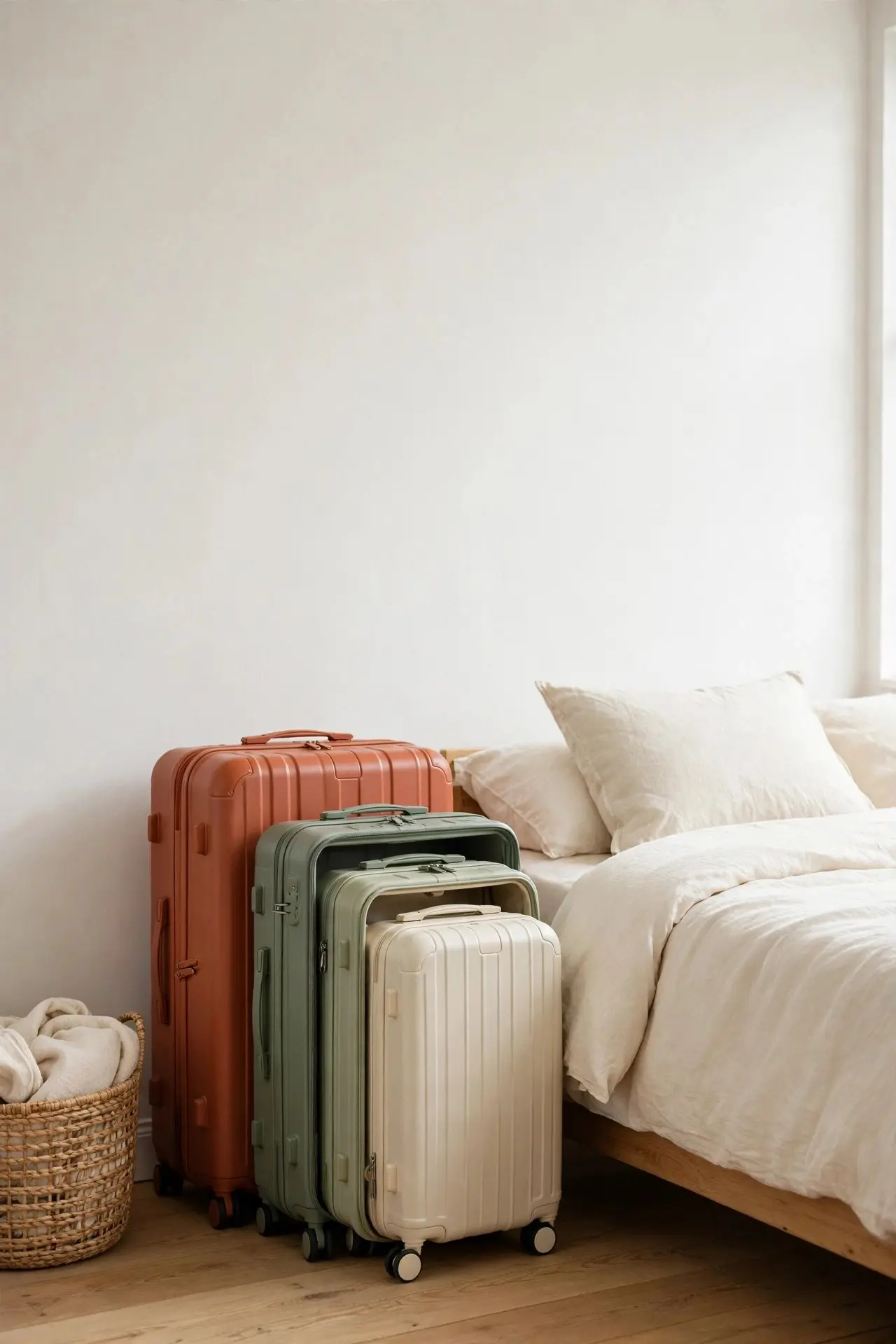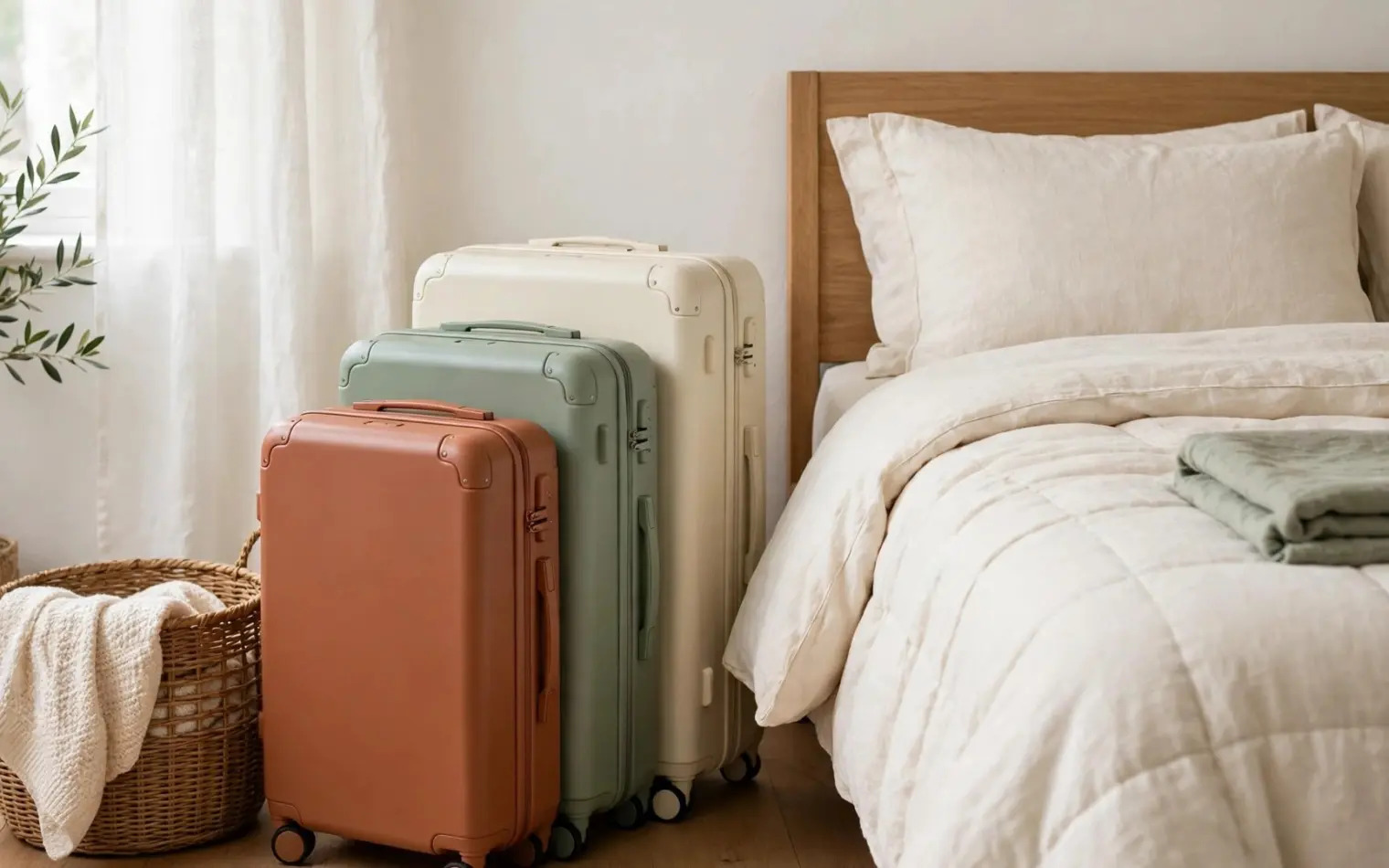
Store luggage nested — smaller cases inside the largest — then put the set where temperature and humidity stay stable: under the bed (about 10 inches of clearance for a carry-on, 13 for a checked bag) or in a closet; garages and attics are last resorts because heat and damp warp shells and grow mould.
Thank you for reading this post, don’t forget to subscribe!Part of our guide: 30 Toy Storage Ideas to Finally Tame the Toy Clutter
Suitcases are the bulkiest rarely used object in a small home: they sit empty for months, yet they take up the space of a piece of furniture. The fix is twofold — shrink the set by nesting, then hide it in a spot that is already wasted space. The 12 ideas below are grouped by hiding place, from the under-bed gap to the closet top, and the safety table at the end shows which spots are kind to your cases and which ones to avoid. If you want the under-bed numbers in more depth, our guide to underneath-bed storage ideas covers the same gap for bins, bags and shoes.
Under the bed: the best first stop
The under-bed gap is dry, dark, out of the way and easy to reach the night before a trip. If your bed has the clearance, start here — these three ideas make it work for almost any case.
1. Nest smaller cases inside the largest
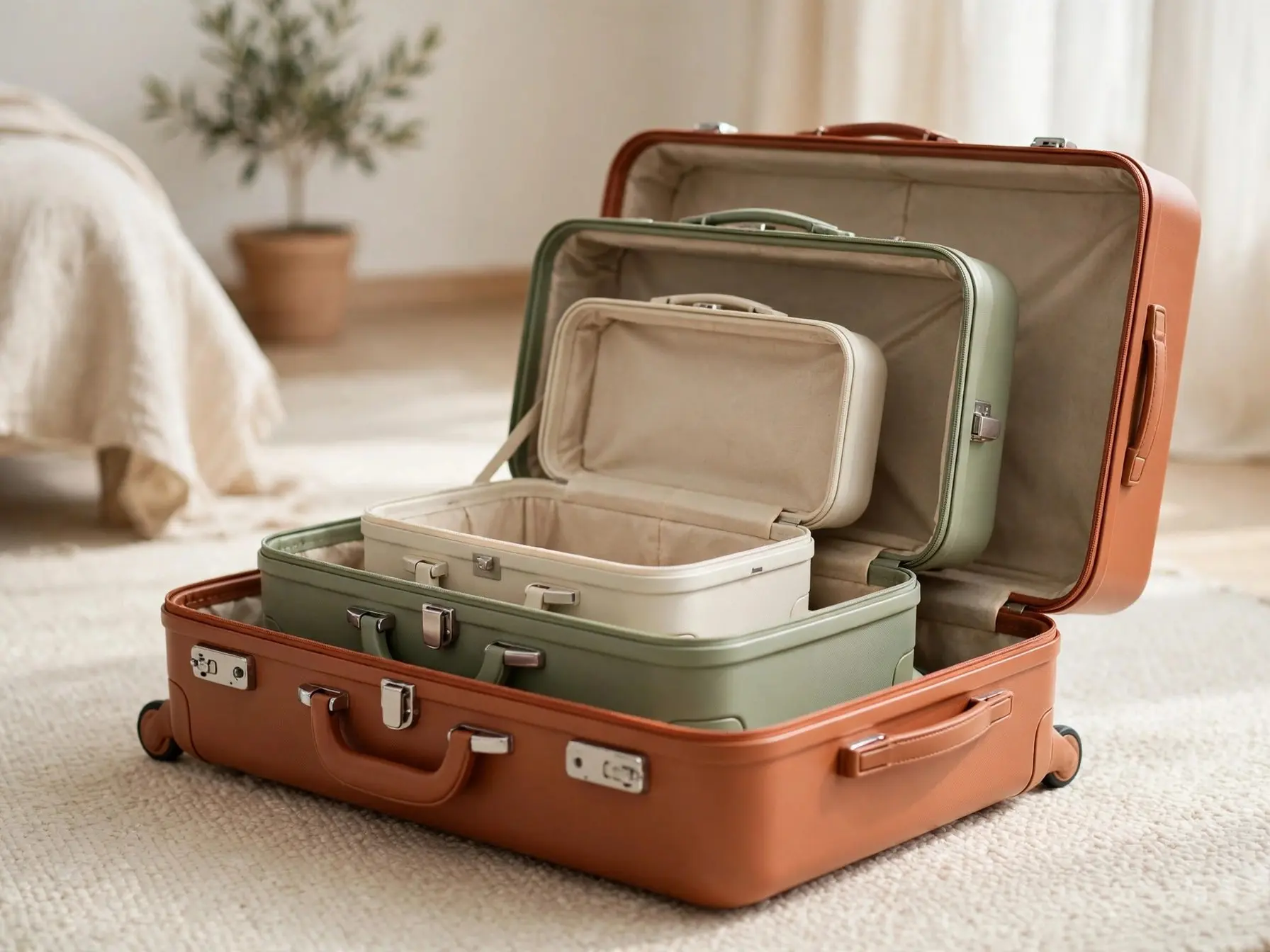
Start by nesting: open the largest case and set the next size down inside it, then the next, until the smallest sits in the middle like a set of dolls. A family set of three or four cases collapses into the footprint of one, which is the single biggest space saving in this whole list. Keep the nested set’s zippers closed and the wheels facing the same way so nothing snags when you pull the set out. If a case has an expandable zipper, close it first — an expanded case will not fit inside its parent. Weigh the nested set before you lift it: four cases together are heavy, so slide it across the floor instead of carrying it.
- Open the largest case and set the next size inside it
- Close expandable zippers before nesting
- Keep all wheels facing the same way
2. Slide the nested set under the bed
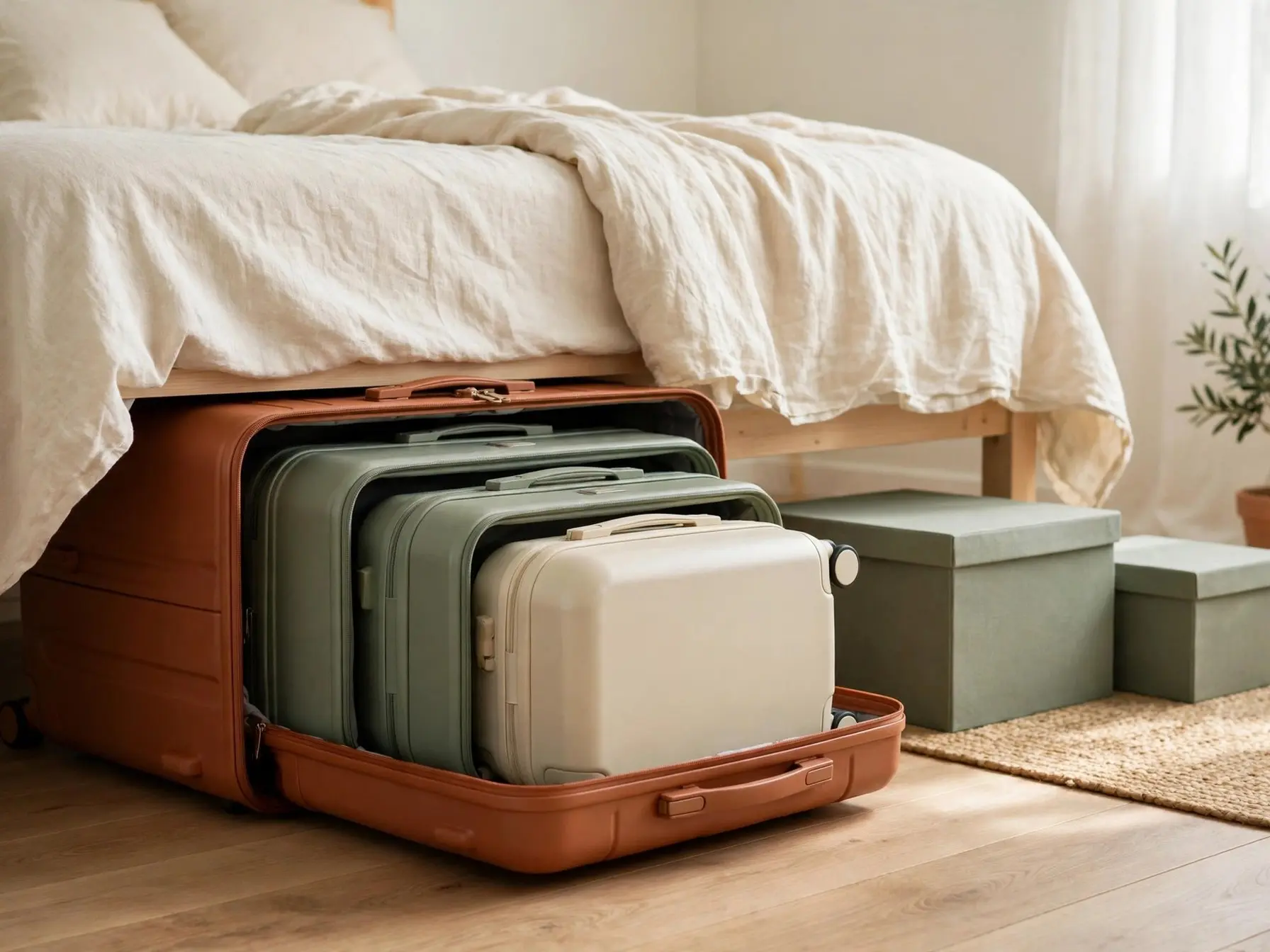
The under-bed gap is the best home for a nested set: it is dry, dark, out of the way and easy to reach the night before a trip. A carry-on needs about 10 inches of clearance and a checked bag about 13, measured with the case lying flat including its wheels and handles — the wheels add an inch most people forget. Slide the set in wheels-first so you can pull it out by the handle. Keep the set near the foot of the bed, where you can reach it without moving the mattress. If the bed has a dust ruffle, lift it while you slide the case in so the fabric does not catch on the wheels.
- About 10 inches for a carry-on, 13 for a checked bag
- Measure flat, including wheels and handles
- Slide in wheels-first, pull out by the handle
3. Raise the bed with risers if the case won’t fit
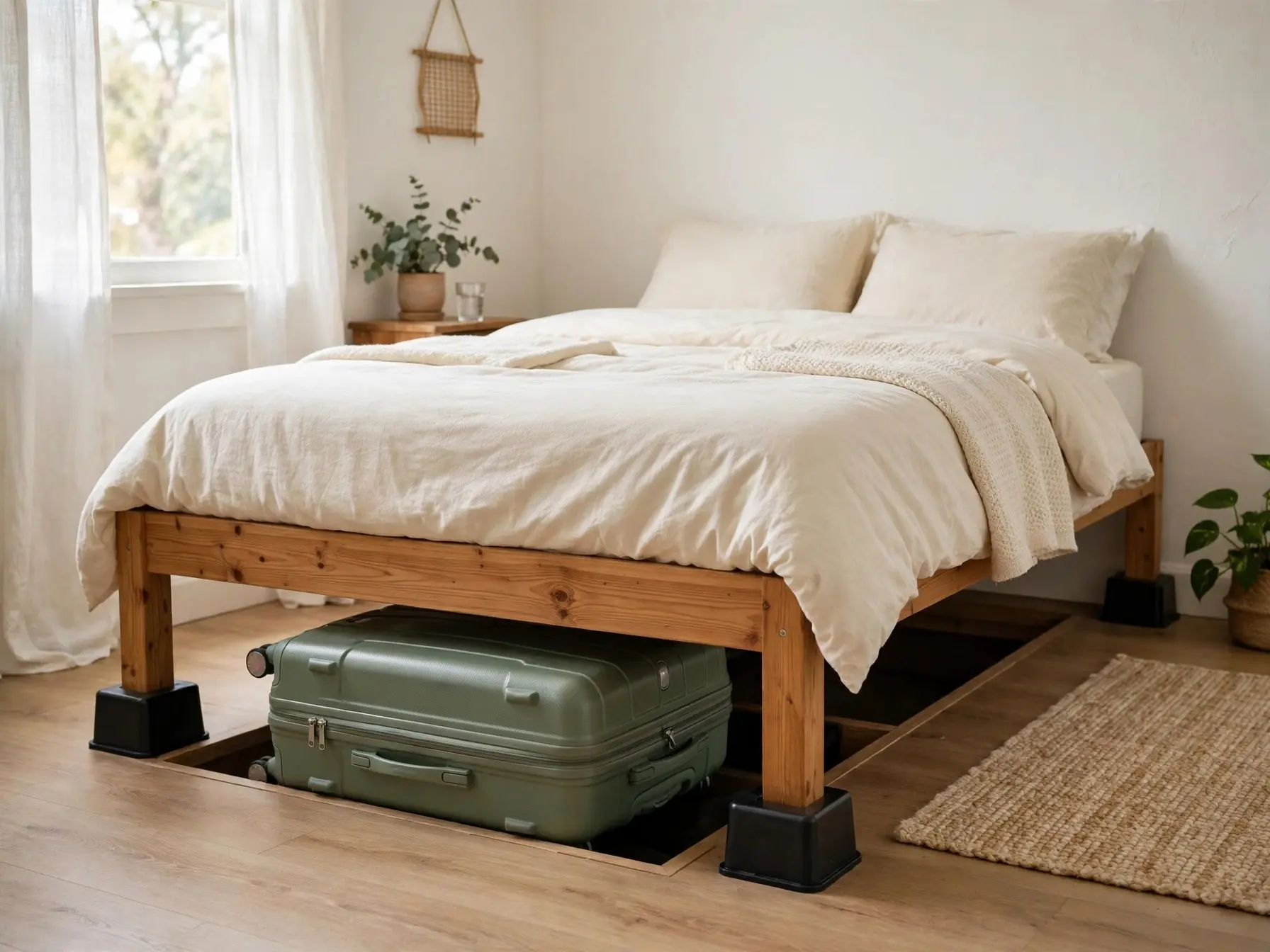
If the case is an inch too tall for the under-bed gap, bed risers are the cheapest fix: a set of four lifts the frame by 3 to 7 inches and costs less than a storage box. Choose risers rated for your bed’s weight plus the people who sleep in it — a double bed with two sleepers needs a higher rating than a single. Check the bed stays steady after lifting: rock it gently and make sure all four legs sit flat in their cups. Measure again before you buy, because risers come in fixed heights and you want the case to slide in with an inch to spare, not scrape the frame every time.
- Risers add 3 to 7 inches of clearance
- Choose a weight rating above your bed plus sleepers
- Rock the bed gently to check it sits steady
Closet spots that swallow a suitcase
A closet already holds the things you use least often, so it is the natural second home for luggage. These three spots use space that is usually empty: the top shelf, the floor behind hanging clothes and the hall closet.
4. Use the top shelf of the closet
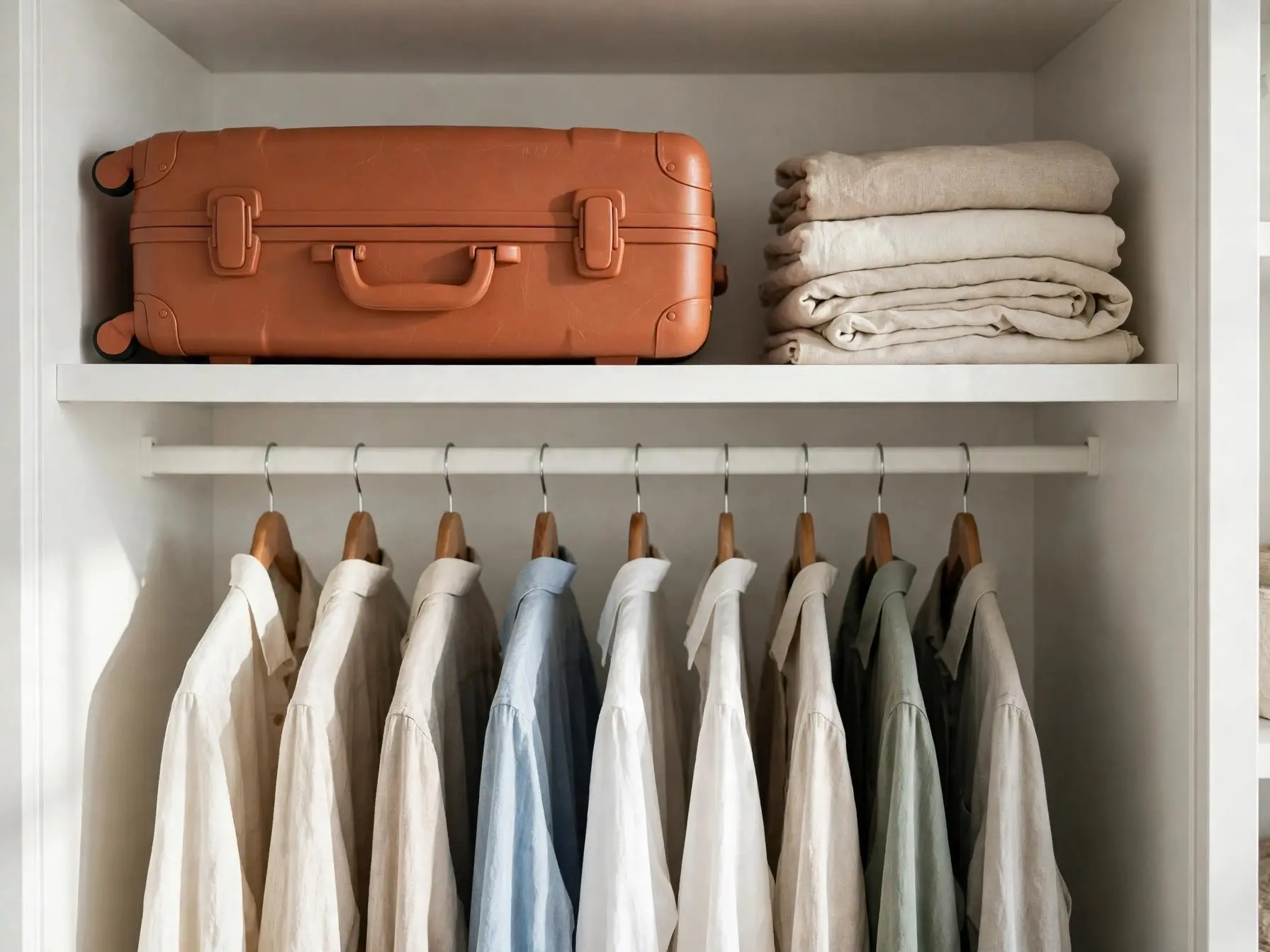
The top shelf of a closet is usually half empty, and it is the perfect perch for the case you use least. Lie the case flat so its weight spreads across the shelf, and choose a hard-shell case up here — a soft case sags and slides toward the edge over time. Keep the wheels facing out so you can hook a finger under the handle and pull it toward you. Put the lightest case on the top shelf and the heavier ones lower down: lifting a packed checked bag overhead is how shelves bend and backs complain. A small step stool kept in the closet makes the top shelf a spot you actually use.
- Hard-shell cases only up top
- Lie the case flat, wheels facing out
- Keep a small step stool nearby
5. Tuck a case on the closet floor behind hanging clothes
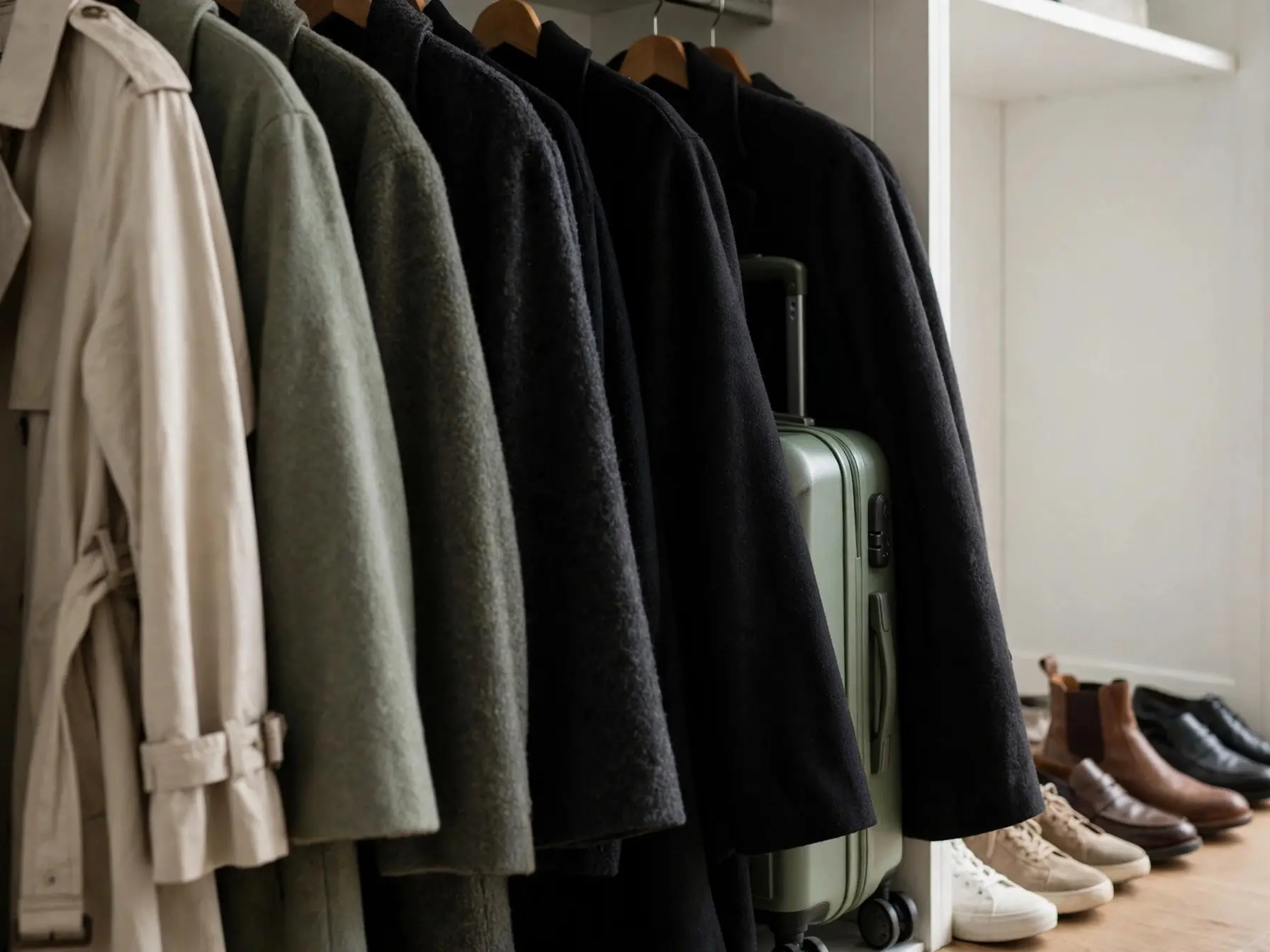
The floor of a closet, behind the hanging clothes, hides a case completely — you see coats, not luggage. Stand the case upright with the wheels down and slide it behind the longest coats, where the floor is usually wasted space. This spot suits the case you reach for most, because you can pull it out by the handle without moving anything else. Keep the case slim: a bulky checked bag eats the floor space your shoes need. If the closet floor is carpeted, set the case on a thin mat so the wheels do not leave dents in the pile over a long stay.
- Stand the case upright, wheels down
- Slide it behind the longest coats
- Pull it out by the handle, not the zipper
6. Use the hall closet, standing on end
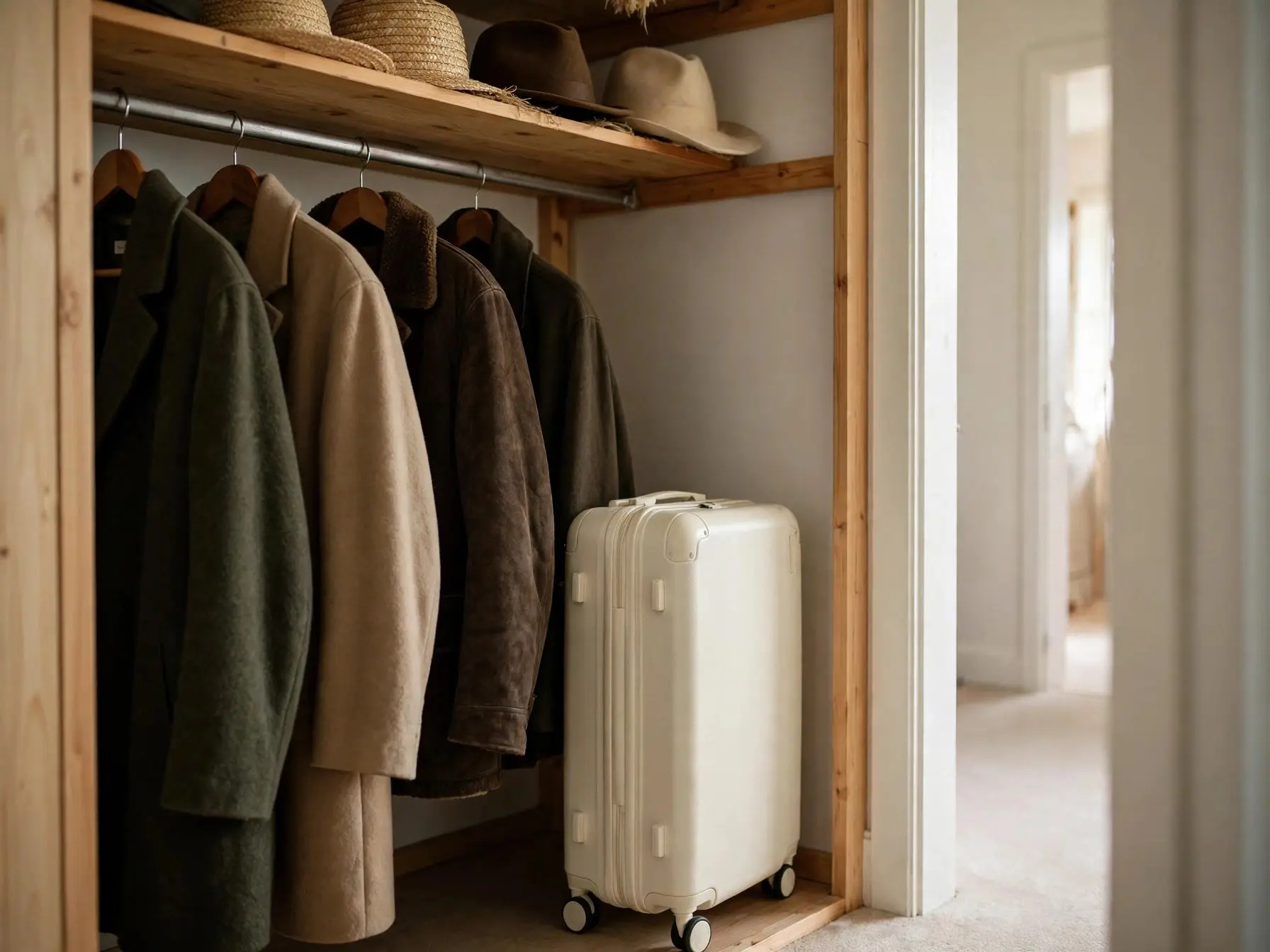
The hall closet is the most overlooked luggage spot in a small home: it sits by the front door, so the case is ready the moment you are. Stand a slim case on end in the gap beside the coats, wheels facing out, and it takes up no more room than a pair of boots. Soft-sided cases work well here because they squeeze into a gap a hard shell cannot. Leave enough room for the door to close fully — a case that stops the door is a case that will end up back in the hallway. This is the best spot for the carry-on you grab for weekend trips.
- Wheels facing out for a quick grab
- Soft cases squeeze into narrower gaps
- Leave the door able to close fully
Hidden in plain sight around the home
When the bed and the closets are full, a slim case can still disappear into the room itself — behind the sofa, on a wall hook or under a console table, where it reads as furniture rather than clutter.
7. Slide a slim case into the gap behind the sofa
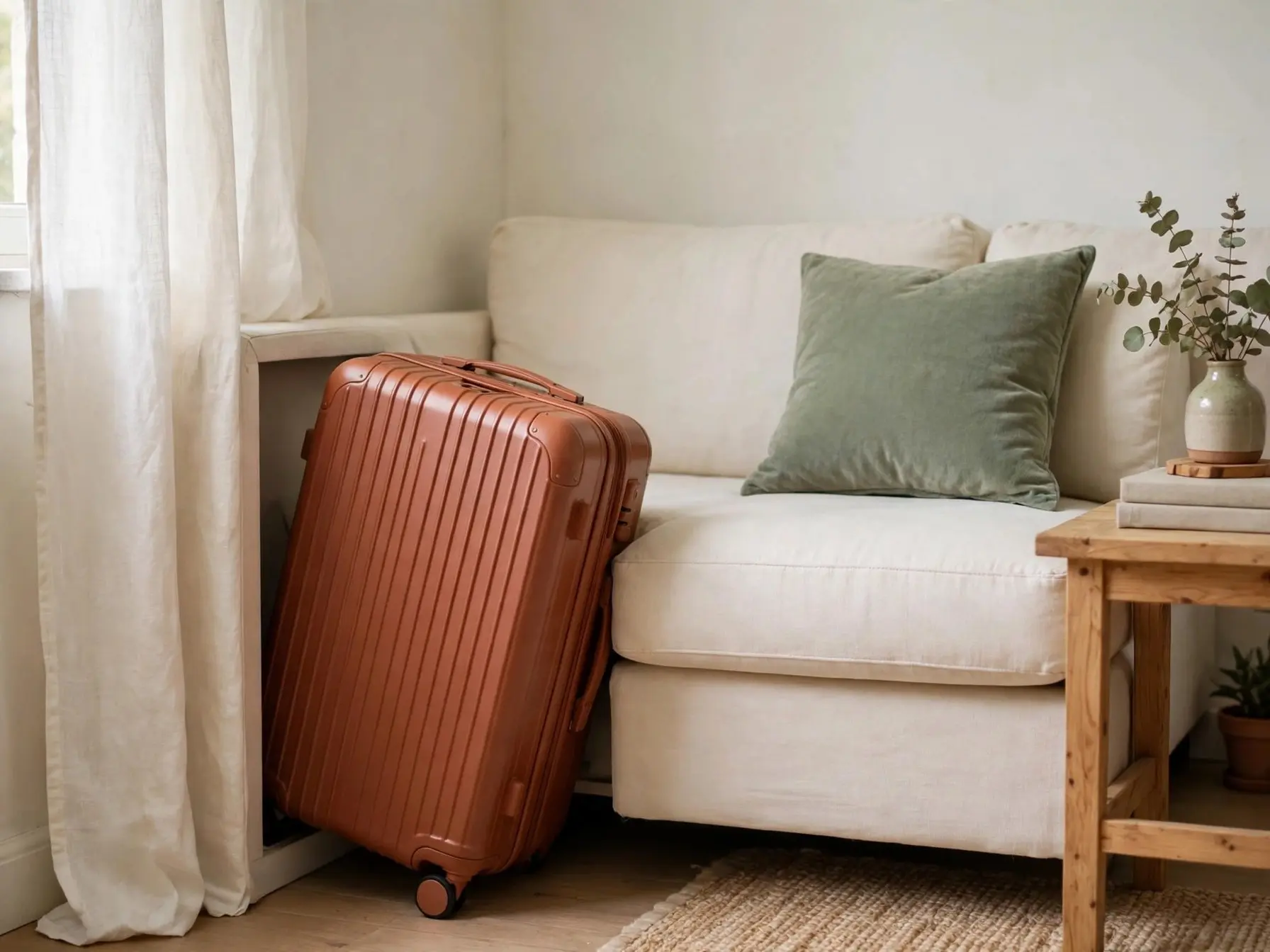
The gap between a sofa and the wall is dead space in most living rooms — usually 6 to 10 inches of it — and a slim hard-shell case slides straight in. Measure the gap first and pick a case that clears it with an inch to spare; hard-shell only here, because a soft case bulges and sticks when you try to pull it out. Keep the handle at the end you can reach, so one pull brings the case out. This spot works best for the case you use once or twice a year: it is out of sight, out of the way, and it costs no closet or under-bed space at all.
- Measure the gap before you buy a slim case
- Hard-shell only — soft cases bulge and stick
- Keep the handle reachable at one end
8. Hang a small carry-on on sturdy wall hooks
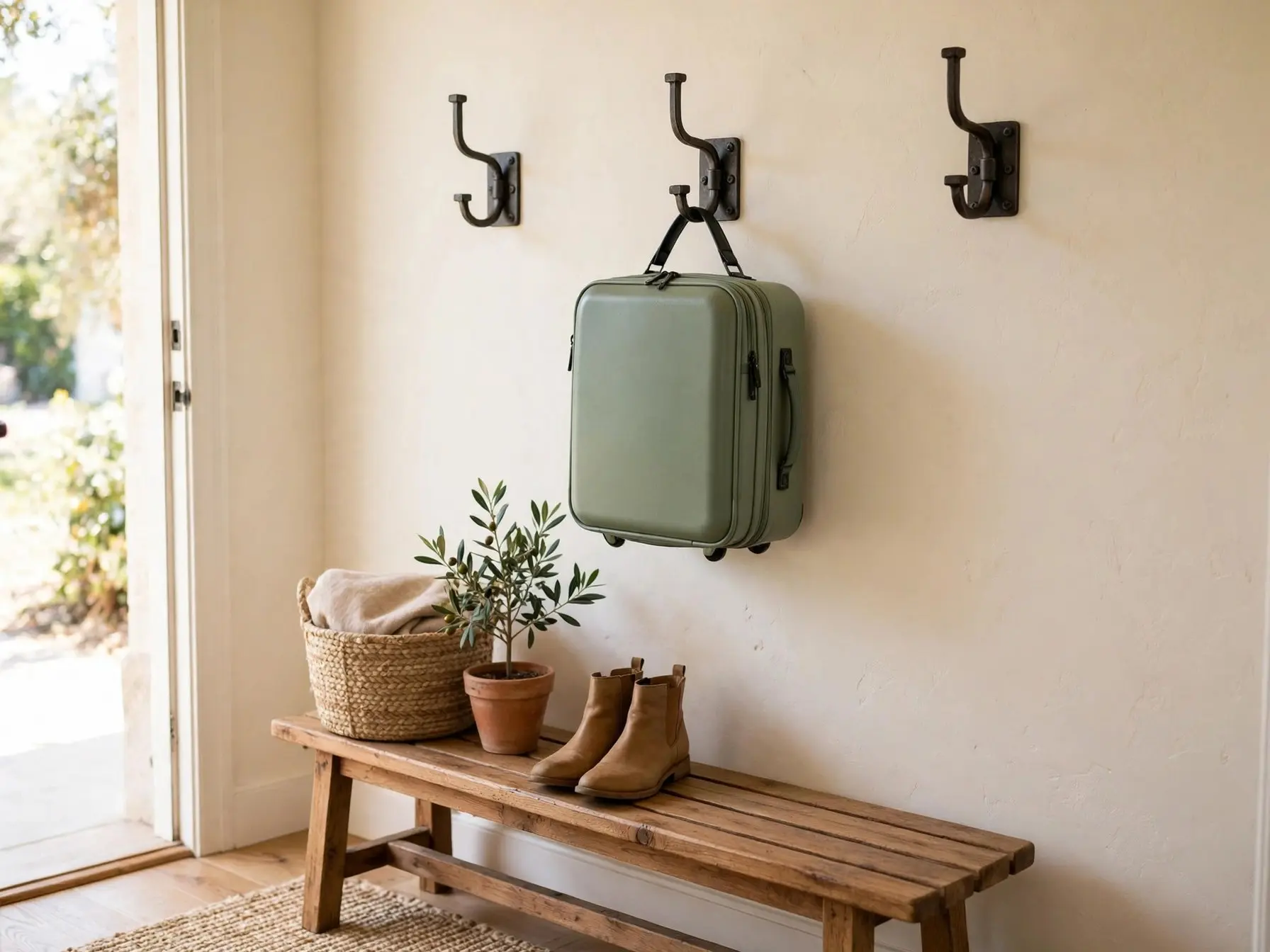
A small carry-on does not need floor space at all: two sturdy wall hooks in the entryway or inside a closet door hold it by the handle, off the ground and out of the way. Use hooks rated for at least 15 to 20 pounds and screwed into a stud or a solid anchor — adhesive hooks will not hold a case for long. Hang the case by its handle, never by a pull strap, which stretches and tears. Keep the case empty or light when it hangs: this spot is for the carry-on itself, not for the case plus everything you stuffed inside it. It also keeps the case aired, which helps it stay fresh.
- Hooks rated for at least 15 to 20 pounds
- Hang by the handle, never by a strap
- Keep the case empty or light
9. Slide a case under a console table, hidden by a throw
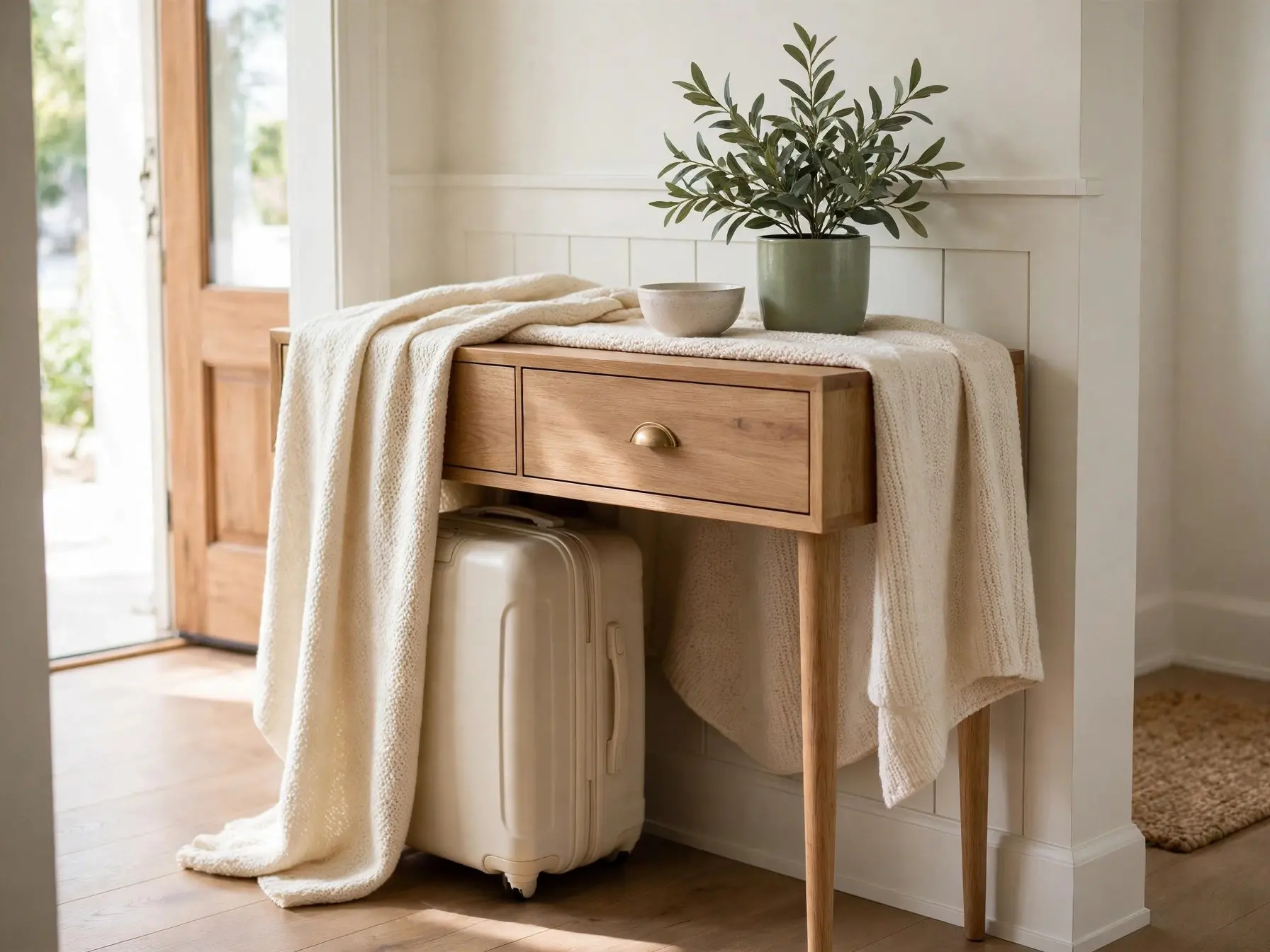
A console table in the entryway or hallway has a whole case-sized space underneath it, and a throw over the top turns the whole thing into a piece of furniture. Pick a case about the height of the table so it slides in without sticking out at the front, then drape a throw or a table runner so it covers the case fully. Visitors see a styled table; you see your luggage, right by the door. Do not keep passports or travel documents in this case — it is the most reachable spot in the house, so keep the valuables somewhere less obvious and use this case for the bag itself.
- A case about the height of the table works best
- Drape the throw so it covers the case fully
- Keep travel documents out of this case
Put the empty case to work
An empty suitcase is a free storage box with a lid and wheels. Once the cases have a home, fill the space inside them with the things that would otherwise take up a shelf.
10. Fill empty cases with out-of-season clothes
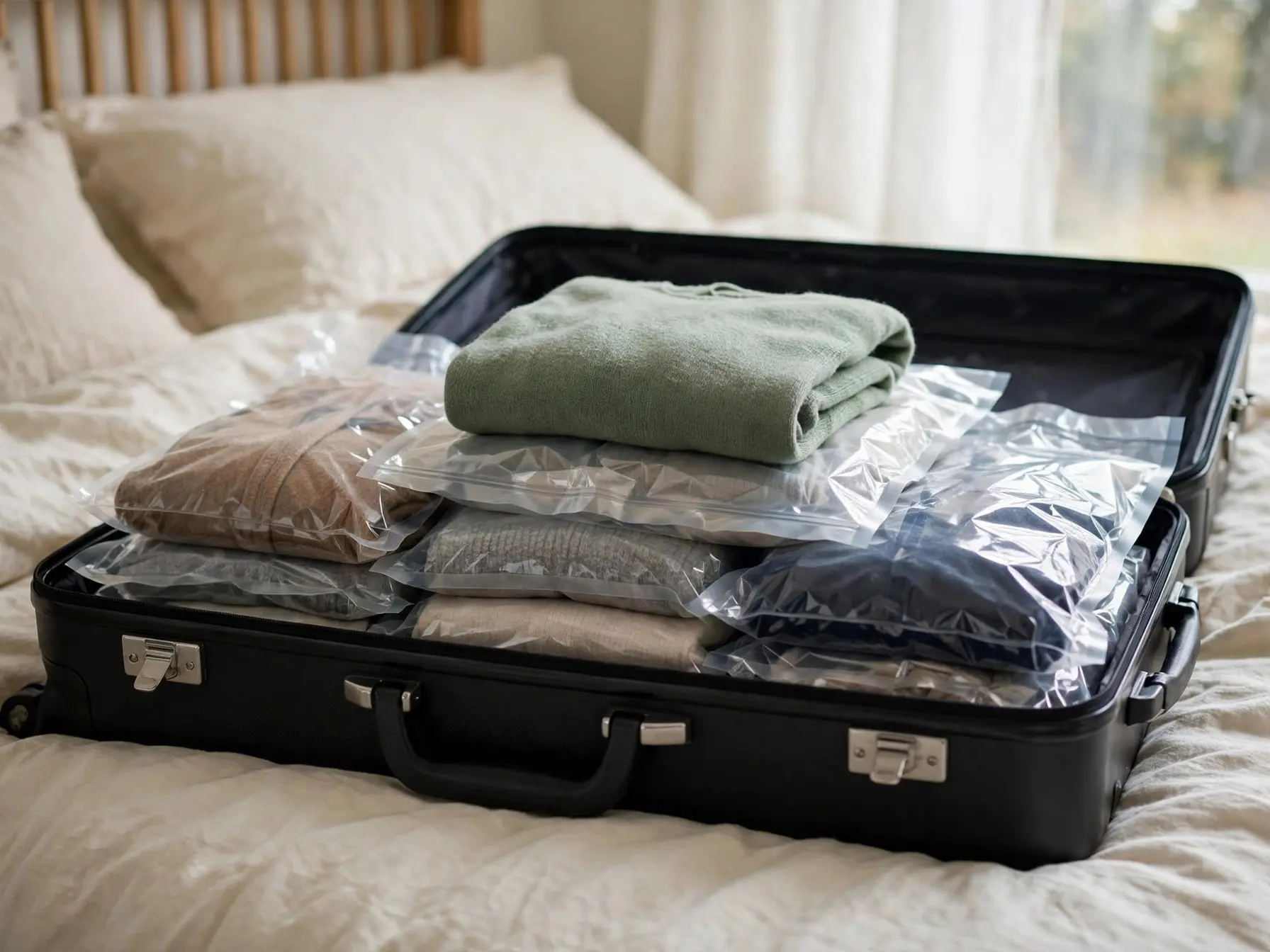
An empty suitcase is already a dust-proof box with a lid, so fill it with the clothes you will not wear for months. Winter coats, heavy sweaters or summer dresses pack flat inside a case, and a vacuum bag inside the case shrinks them further — two layers of protection against dust and damp. Fold rather than roll for a flat stack that closes without forcing the zipper. Label the bag inside with the season so you can find it without opening every case. When the season turns, the clothes come out clean and the case is empty again, ready for the trip.
- Vacuum bags shrink clothes to fit the case
- Fold, don’t roll, for a flat stack
- Label the bag so you find it next season
11. Fill them with spare bedding and linens
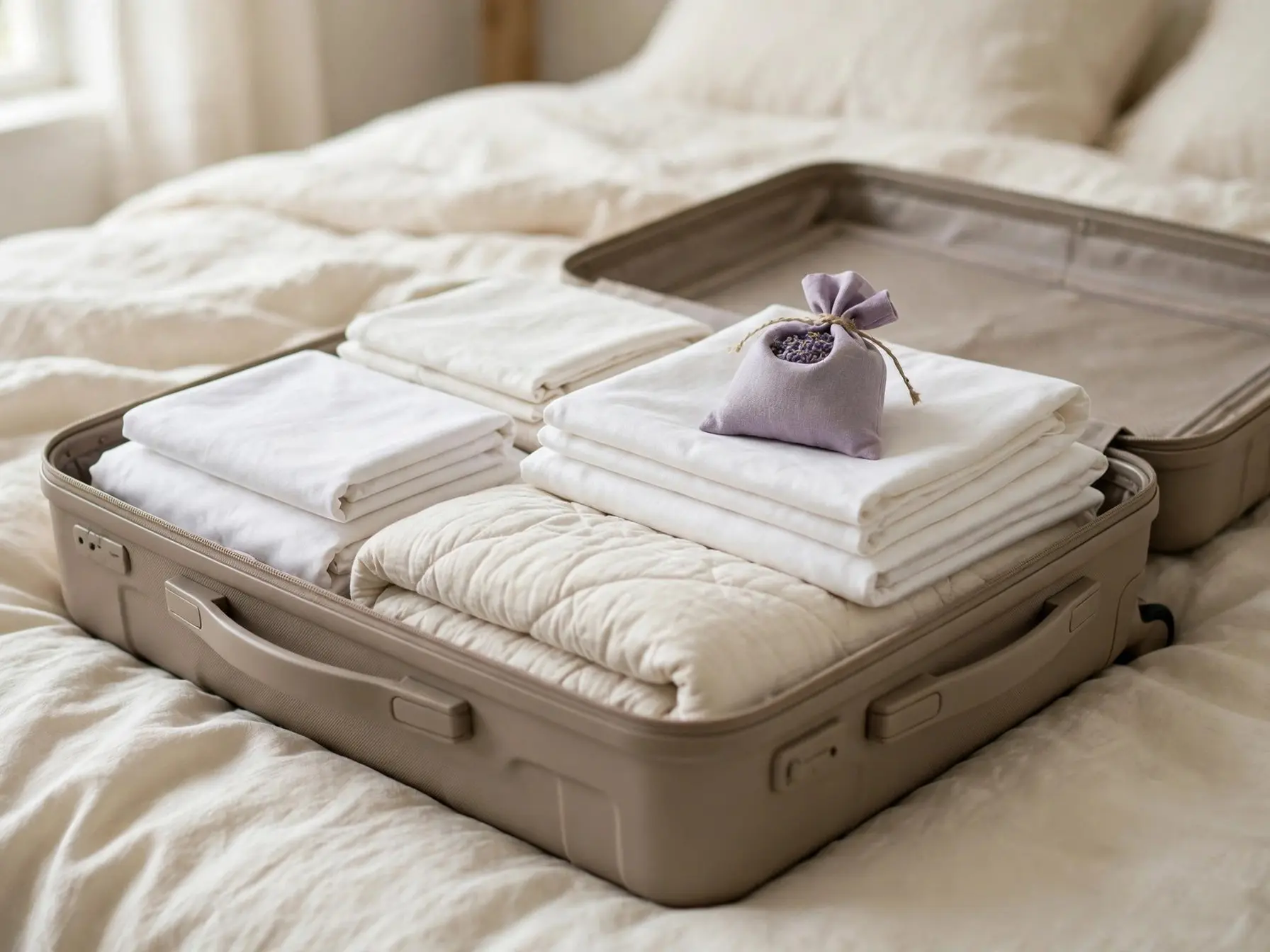
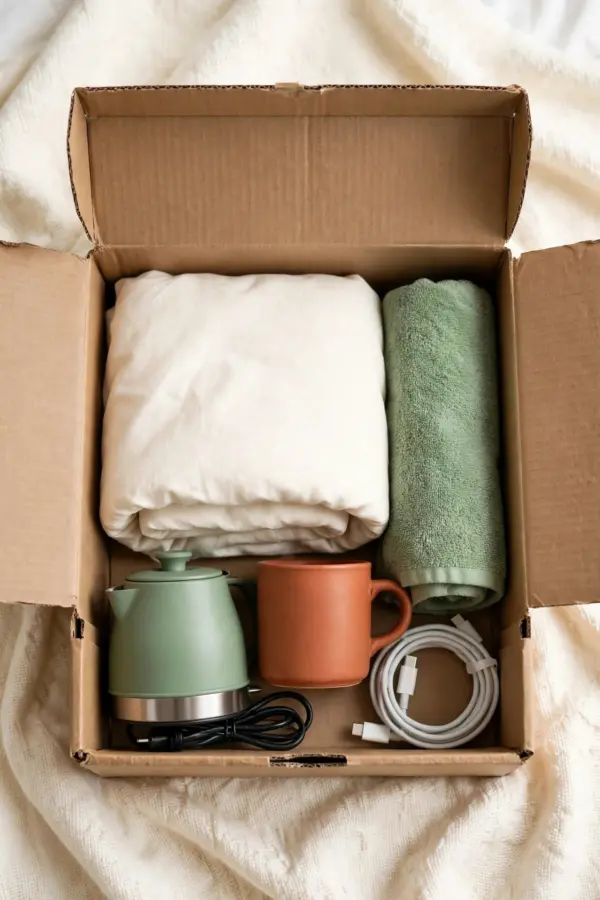
Spare bedding is bulky, rarely used and always in the way — exactly the sort of thing a suitcase was made to hold. A full guest set — sheets, a duvet and two towels — fits in one medium case, folded flat and zipped shut, safe from dust on a closet shelf or under the bed. Add a lavender sachet so the bedding smells fresh when it comes out, not stale. Air the bedding for a day before guests arrive, since even clean stored linen benefits from fresh air. One case per guest bed keeps the linen closet free for the towels and sheets you actually use every week.
- Guest sheets, a duvet and towels fit one case
- Add a lavender sachet to keep it fresh
- Air the bedding for a day before guests arrive
12. Keep one carry-on packed as a ready-to-go bag
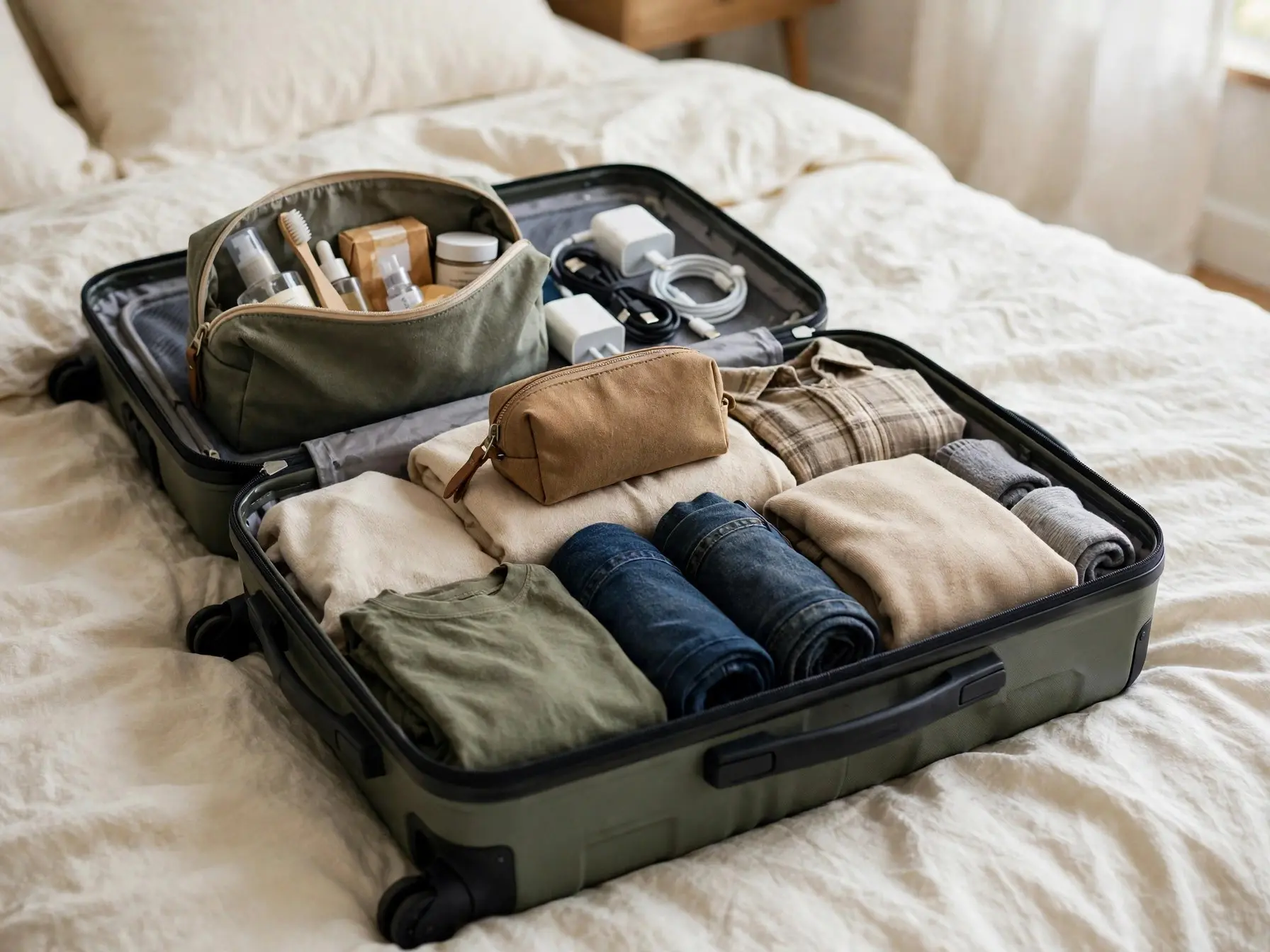
The most useful case in the house is the one that is already packed. Keep a carry-on ready with the basics: a toiletry bag, phone chargers, a change of clothes and a small first-aid pouch, so a last-minute trip means grabbing the case, not packing from scratch. Refresh it every few months — swap the toiletries, check the chargers still fit your devices, and replace anything that has expired. Keep passports, tickets and medication with you rather than in the bag, so the case is ready to grab but nothing irreplaceable lives inside it. Store it in the easiest spot you have: the hall closet, by the door.
- Toiletries, chargers and a change of clothes
- Refresh the bag every few months
- Keep passports and tickets with you, not in the bag
Where each spot is safe — and where it is not
The rule is simple: a spot is safe for luggage when it stays dry and its temperature stays steady. Bedrooms and closets pass easily; garages and attics fail on both counts, so they stay last resorts even for hard-shell cases.
| Spot | Humidity risk | Hard-shell only? |
|---|---|---|
| Under the bed | Low — dry, stable room temperature | No — any case works |
| In a closet | Low — dry and out of sunlight | No — any case works |
| Behind the sofa | Low — dry living space | Yes — a hard shell holds its shape in a tight gap |
| On wall hooks | Low — dry, aired room | No — small soft cases hang best |
| In the garage | High — damp and temperature swings | Yes — and even then only as a last resort |
| In the attic | High — summer heat warps shells, damp grows musty smells | Yes — and even then only as a last resort |
If the only spot you have is the garage or the attic, treat the case as stored, not abandoned: a hard shell, a breathable cover, off the floor, and a check every few months for damp or warping.
Questions, answered
Can you store luggage in the attic or garage?
Treat the attic and garage as last resorts, not first choices. Summer heat in an attic can warp a hard shell, and damp in a garage grows musty smells and can stain fabric cases. If there is genuinely nowhere else, use a hard-shell case only, set it off the floor on a shelf or pallet, slip it inside a breathable cover, and check it every few months for damp or warping.
What should you store inside empty suitcases?
Out-of-season clothes in vacuum bags, spare bedding and guest linens, holiday decorations, gift wrap rolls, and kids’ keepsakes all fit well inside an empty case. Keep everything clean and dry before it goes in, add a small sachet of baking soda or a cedar block, and do not overload the case — a case stuffed past its zipper strains the seams and the wheels.
How do you keep stored luggage from smelling musty?
Air the case out fully before you store it, inside and out, and never put a damp case away. Wipe the inside with a cloth dampened with diluted white vinegar, let it dry completely with the lid open, then store it with a small open box of baking soda or a cedar sachet inside. If a case already smells musty, repeat the wipe and leave it open in fresh air for a day before you close it up.
How much clearance do you need to store a suitcase under a bed?
About 10 inches of clearance for a carry-on and about 13 inches for a checked bag, measured with the case lying flat and including the wheels and handles — the wheels add an inch most people forget. If the gap is an inch or two short, a set of bed risers lifts the frame by 3 to 7 inches and usually closes the gap.
Keep reading
Luggage is one piece of a small home that stays tidy on a system. Our guide to storage ideas for small spaces, underneath-bed storage ideas, and how to organize anything all build on the same idea: give everything one home, and the small space stops fighting you.
Suitcases are the bulkiest rarely used object in a small home, but they do not need a storage unit or a spare room. Nest the set, slide it under the bed or into a closet, and put the empty space inside each case to work — the cases disappear and the things they hold stop taking up a shelf of their own.