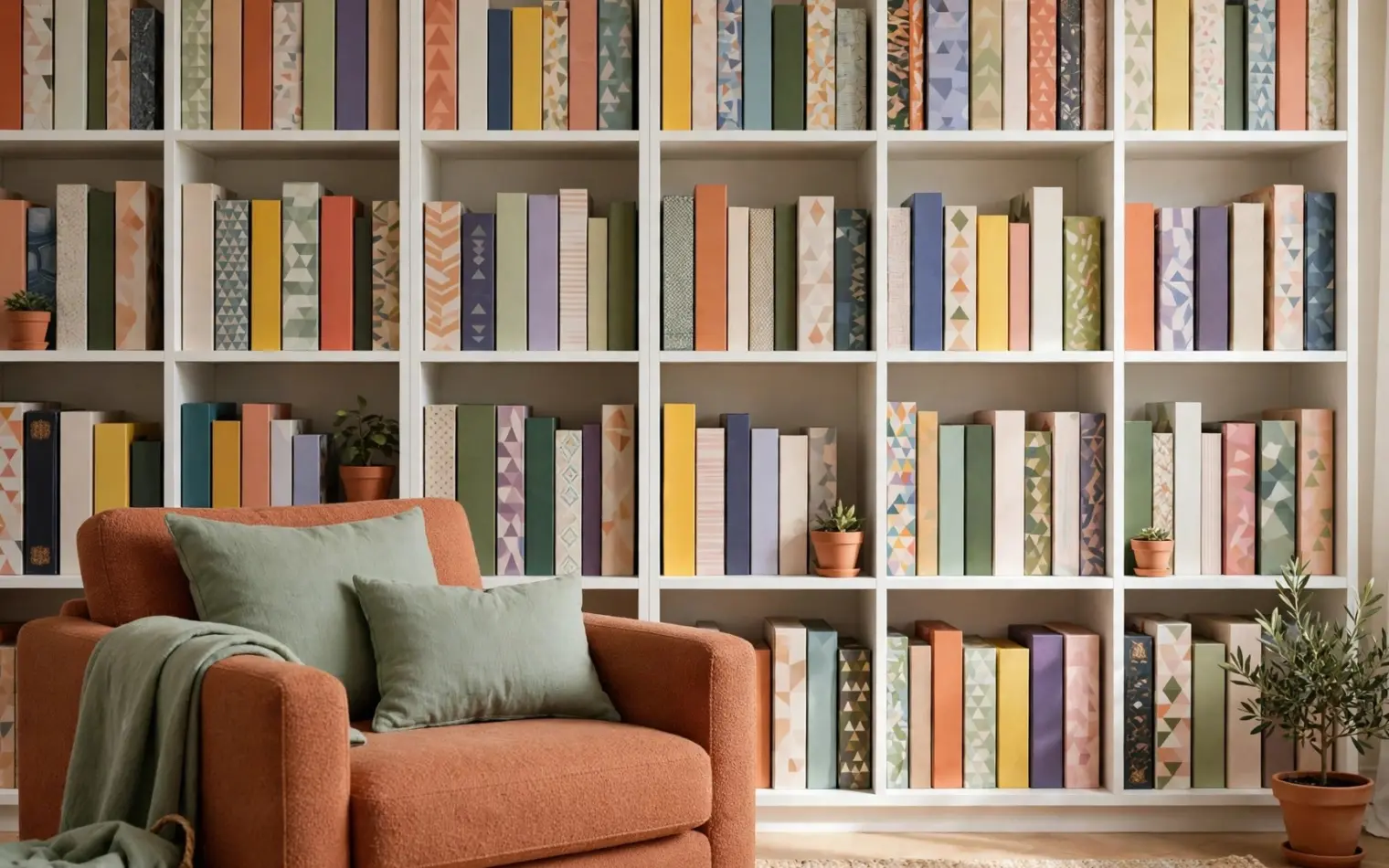
Store board games vertically like books on a shelf at least 11 inches deep with 11 inches of clearance — cube shelves fit standard boxes best — and move small pieces into labeled bags so one game comes out without unstacking five.
Thank you for reading this post, don’t forget to subscribe!Board games fail in storage the same way every time: a flat stack crushes the box at the bottom, a leaning row bends the corners, and one missing token retires a game nobody has even finished. The fix is a system, not a bigger shelf — vertical storage, the right unit for the size of the collection, and bagged pieces inside every box.
The storage system by furniture type
Work through the twelve ideas below in order — shelf, closet, living-room furniture, then the inside of the box — because the furniture decides the storage, and the bagging decides whether the game is playable when it comes out. Every idea works in a small home, and most of them use furniture you already own.
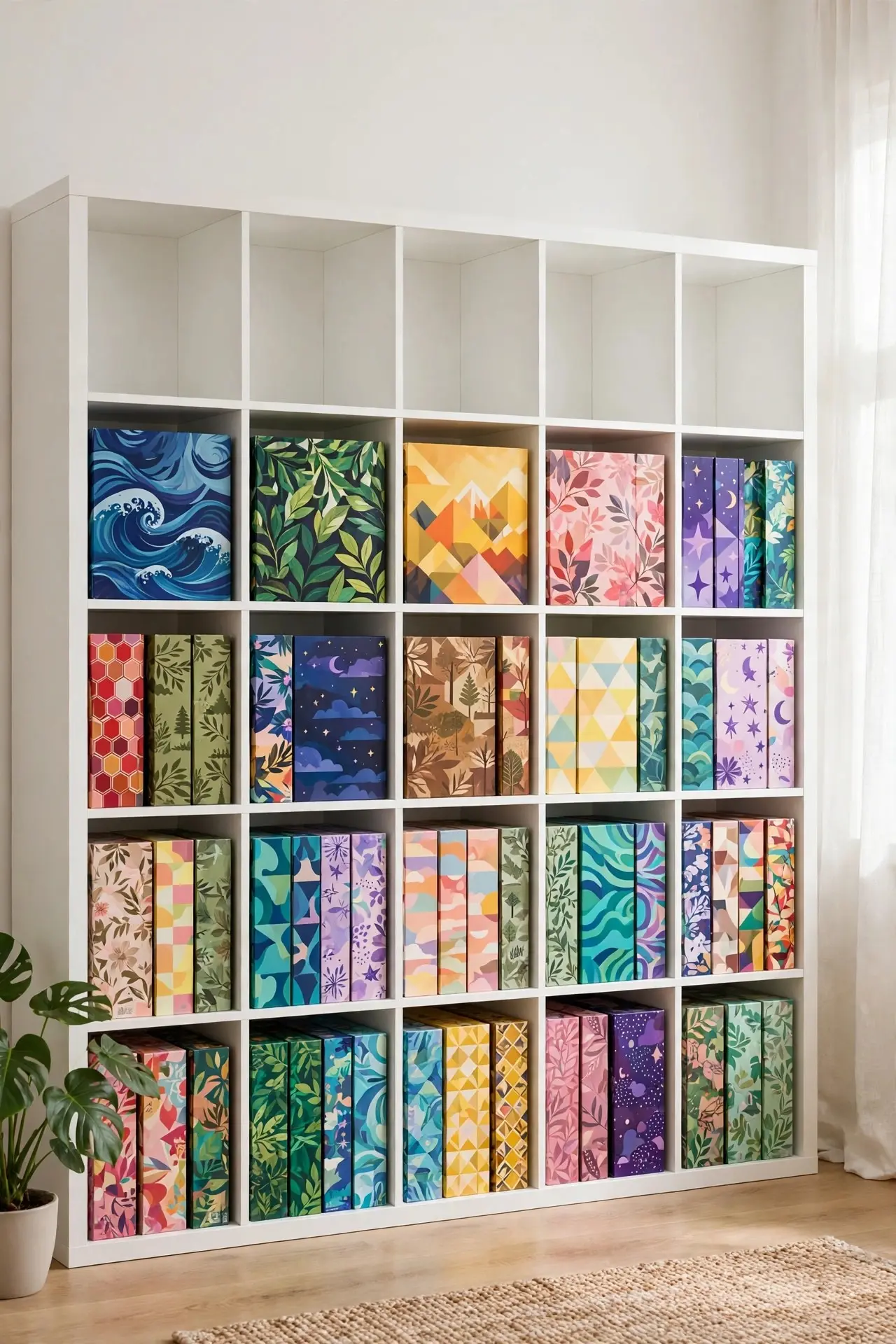
1. Cube shelves: the game-night standard
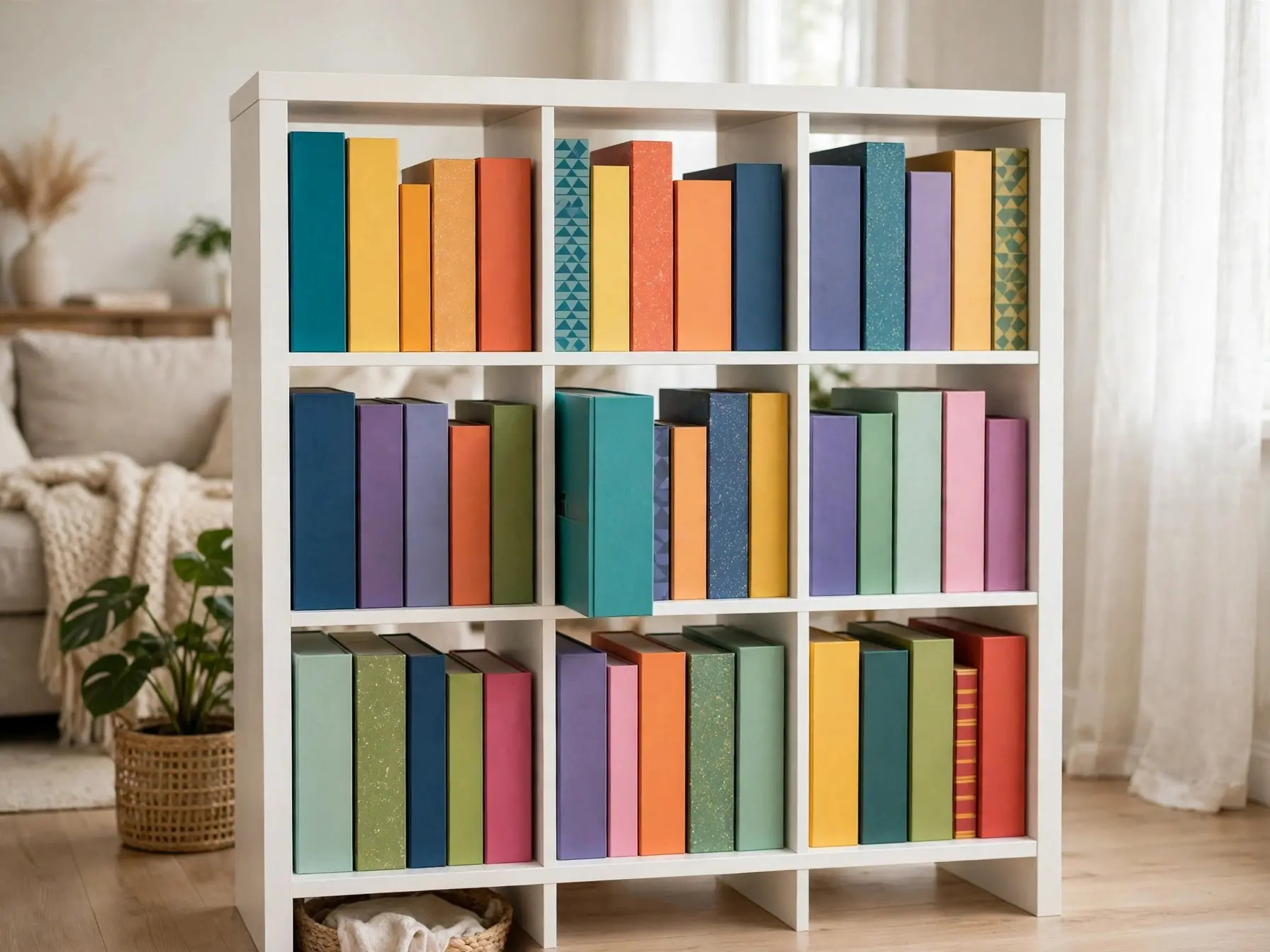
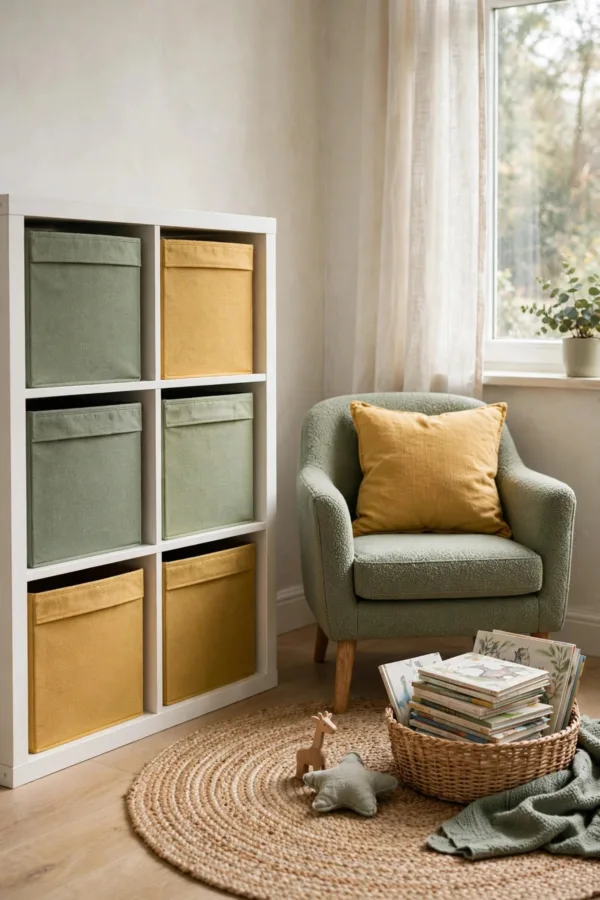
A cube shelf is the standard for a reason: each cube is about 13 inches square, so a standard game box — roughly 11.5 inches square — slides in vertically with room to spare, and you can pull one game out without unstacking five. Start with a 2×2 unit for a small collection and add units as it grows; two 2×4 units side by side hold about 40 games. Keep the heaviest boxes at the bottom, the games you play most at eye level, and leave one cube empty for the game in progress. The open fronts mean every box spine is visible at a glance.
- About 13-inch cube openings fit standard 11.5-inch boxes
- Start with a 2×2 unit; add units as the collection grows
- Heaviest boxes at the bottom, most-played at eye level
2. A bookcase works too — if it is deep enough
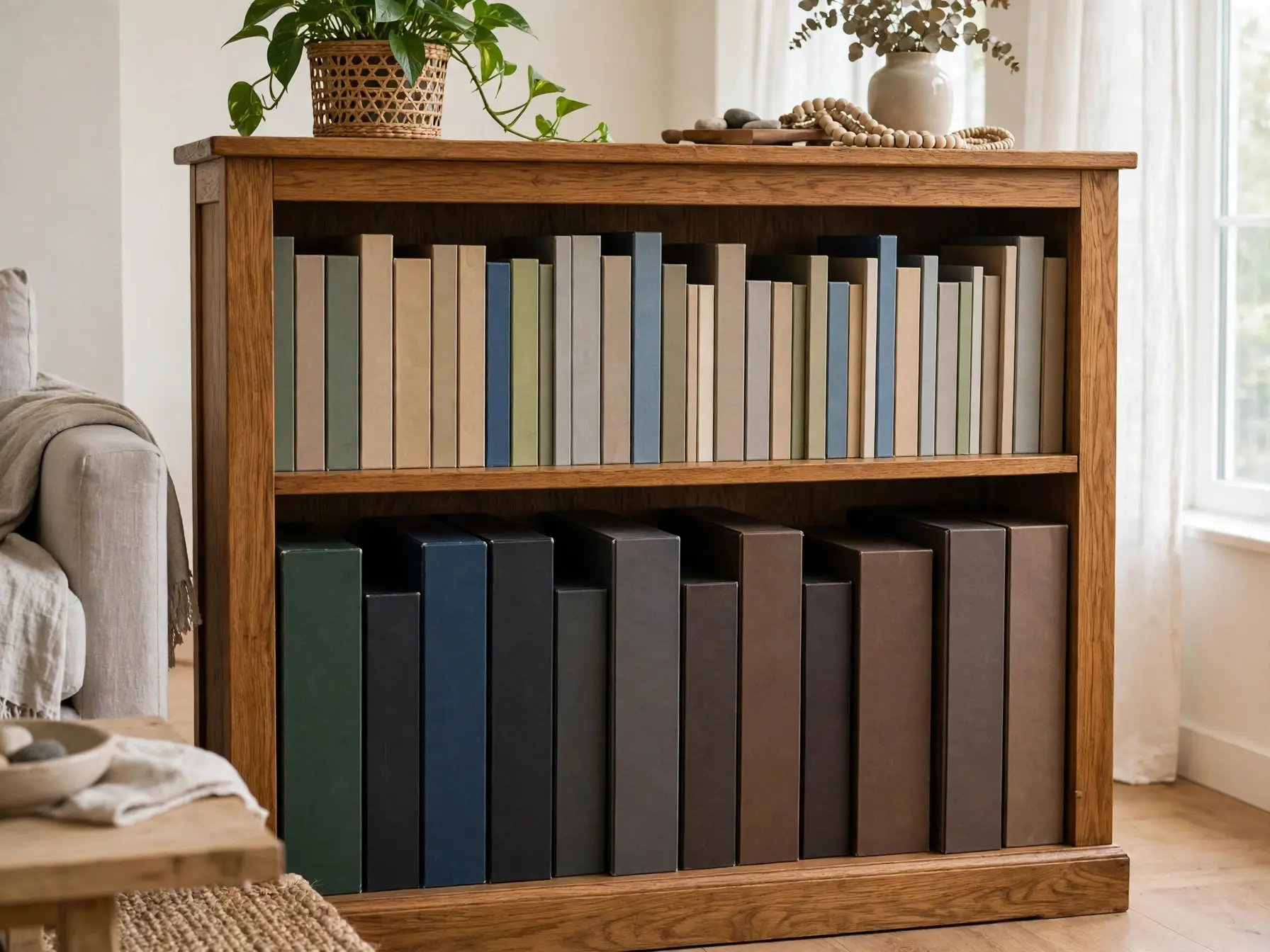
A bookcase you already own works just as well, as long as it is deep enough. Measure the shelf: you need at least 11 inches of depth and 11 inches of clearance between shelves, or the boxes will stick out and the stack will lean. Store the games vertically like books, spine out, heaviest at the bottom. Adjustable shelves are the win here — move one shelf up an inch and the tall boxes fit without a gap. If the shelves are fixed and too short, lay the tallest boxes flat on top of the bookcase instead of forcing them in.
- Measure first: at least 11 inches deep, 11 inches clearance
- Adjustable shelves let tall boxes fit without a gap
- Lay the tallest boxes flat on top if the shelf is too short
3. Closet shelves take the overflow
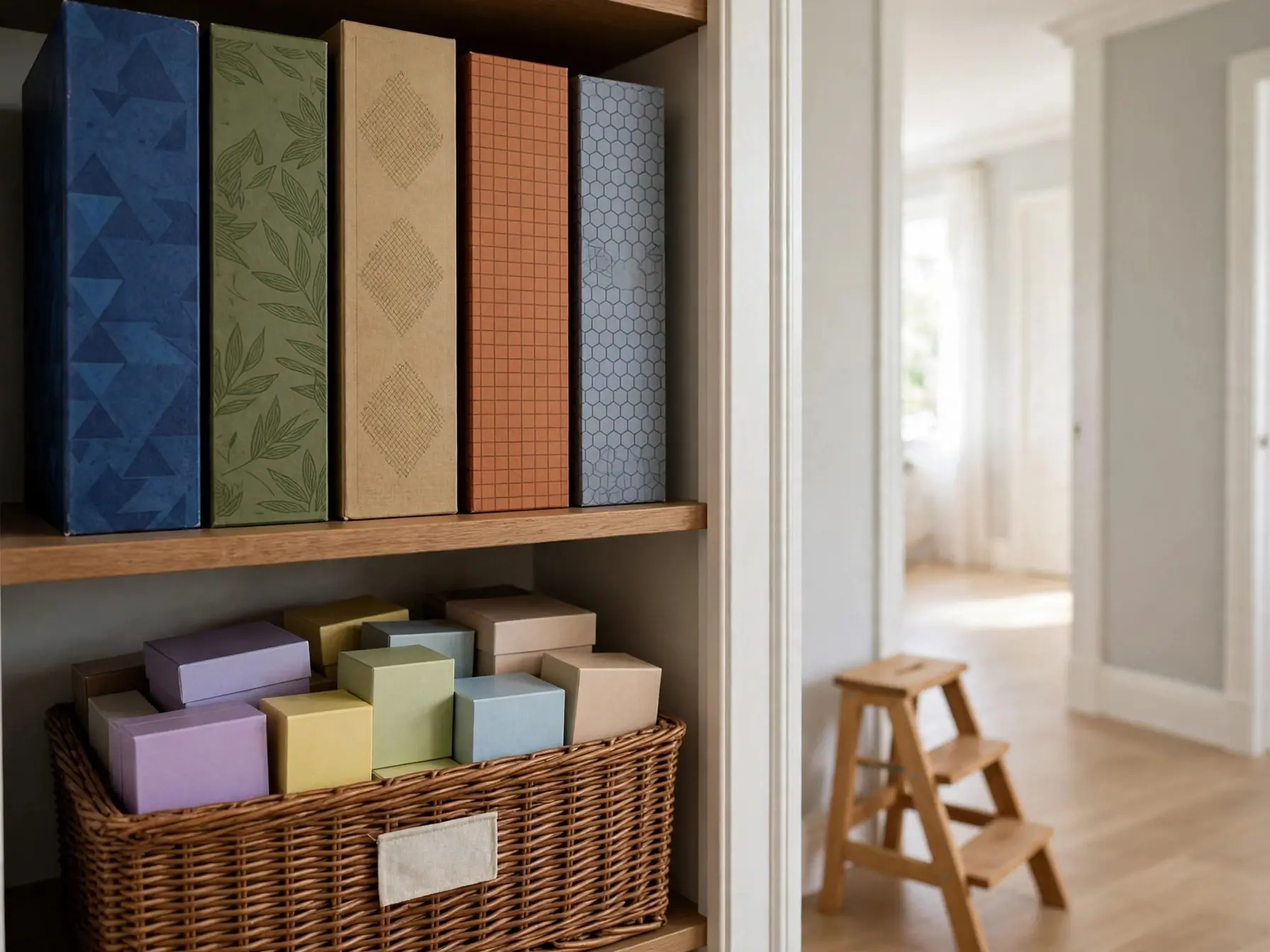
The hall or bedroom closet is the natural home for the overflow — the games you love but play twice a year. Put the big boxes on the top shelf, vertical, and the small card games in a labeled bin on the shelf below so they do not slide around. Keep a short step stool nearby if the shelf is high, or the games will stay up there forever. One rule: the closet holds the overflow only. The games in current rotation stay in the living room, or nobody will ever fetch them.
- Big boxes on the top shelf, vertical
- Small card games in a labeled bin on the shelf below
- Keep a step stool nearby or the games stay up there
4. A low credenza keeps games in the living room
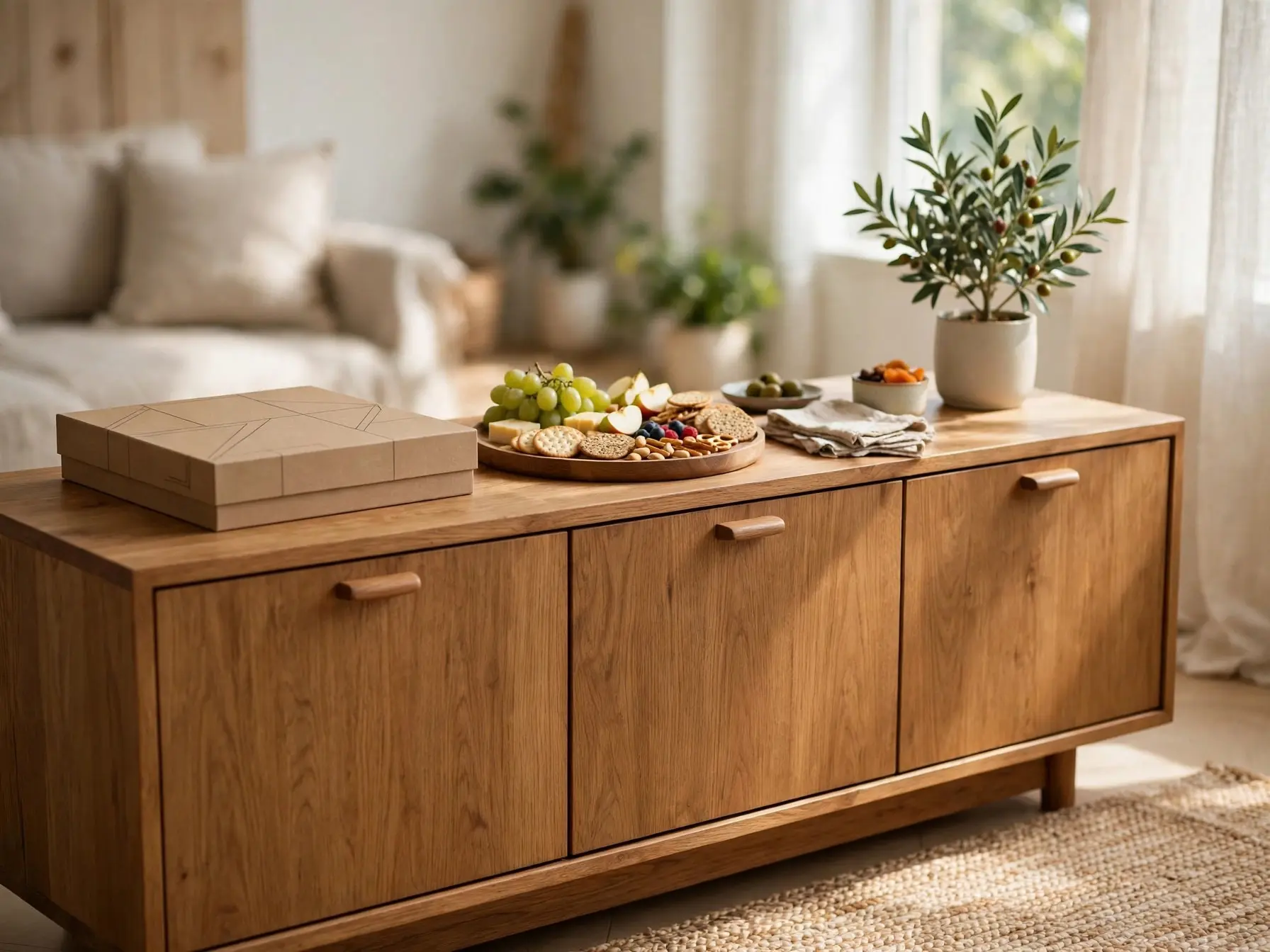
A low credenza or media console puts the games where game night actually happens — the living room — without looking like a toy store. Choose one at least 15 inches deep with adjustable shelves inside, so standard boxes fit vertically behind closed doors. The top doubles as a serving surface for snacks and drinks, and the closed doors hide the visual clutter between game nights. Measure first: a console that is too shallow forces boxes flat, and flat stacks are exactly how boxes get crushed.
- At least 15 inches deep with adjustable shelves inside
- Closed doors hide the clutter between game nights
- The top doubles as a serving surface for snacks
5. Wall ledges display the favorites
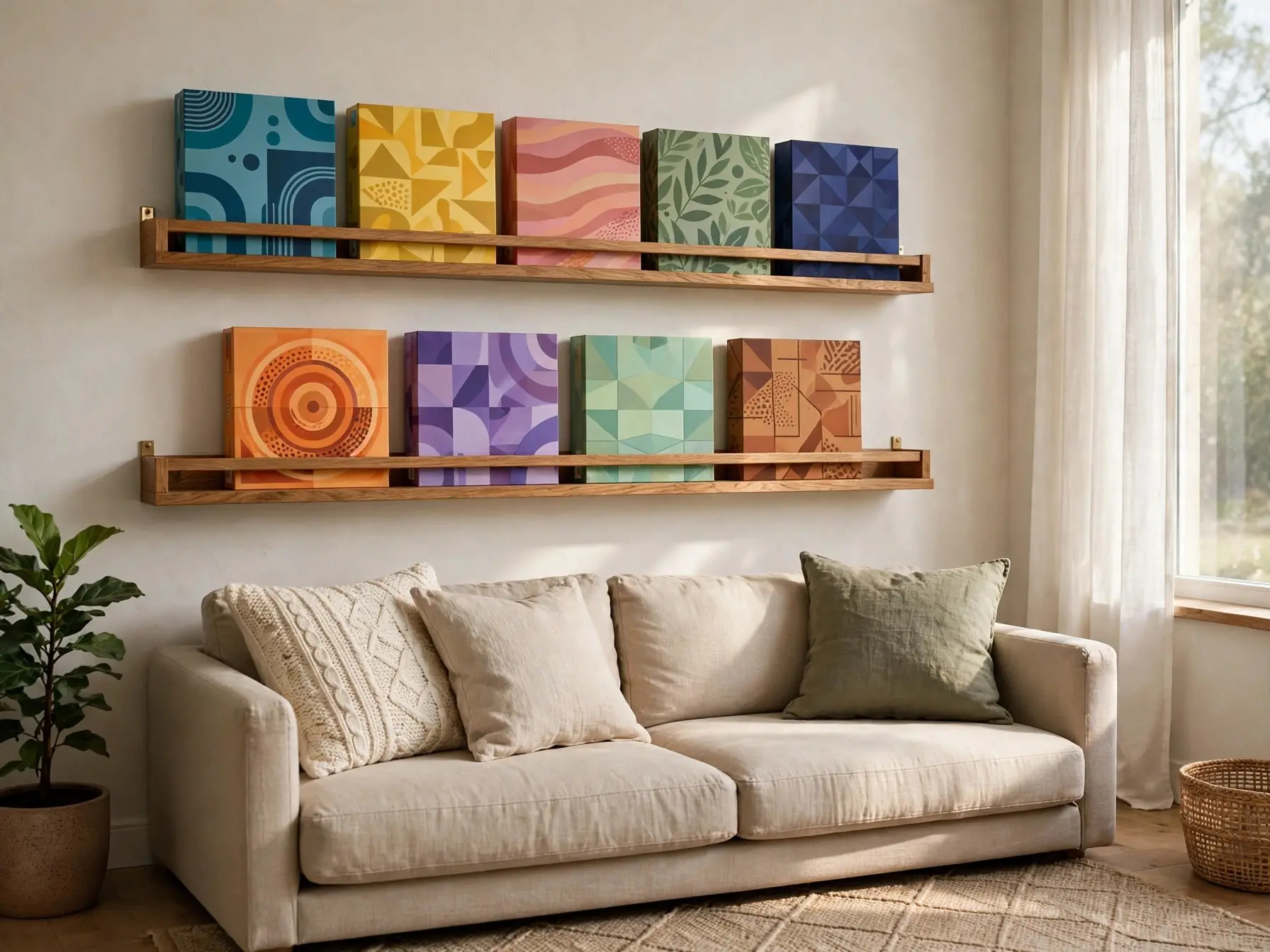
Picture ledges are the display option: a row of narrow ledges on one living-room wall turns your five favorite boxes into art, spine out, easy to grab. Use ledges at least 2 inches deep with a small lip, mounted into studs — a full shelf of games is heavier than framed prints. Keep it to one or two ledges; the point is a rotating display of the games you play most, not storage for the whole collection. Swap the front row each season and the wall stays fresh.
- Ledges at least 2 inches deep with a small lip
- Mount into studs — a shelf of games is heavy
- Keep it to one or two ledges, favorites only
6. Under-bed rolling bins for the rarely played
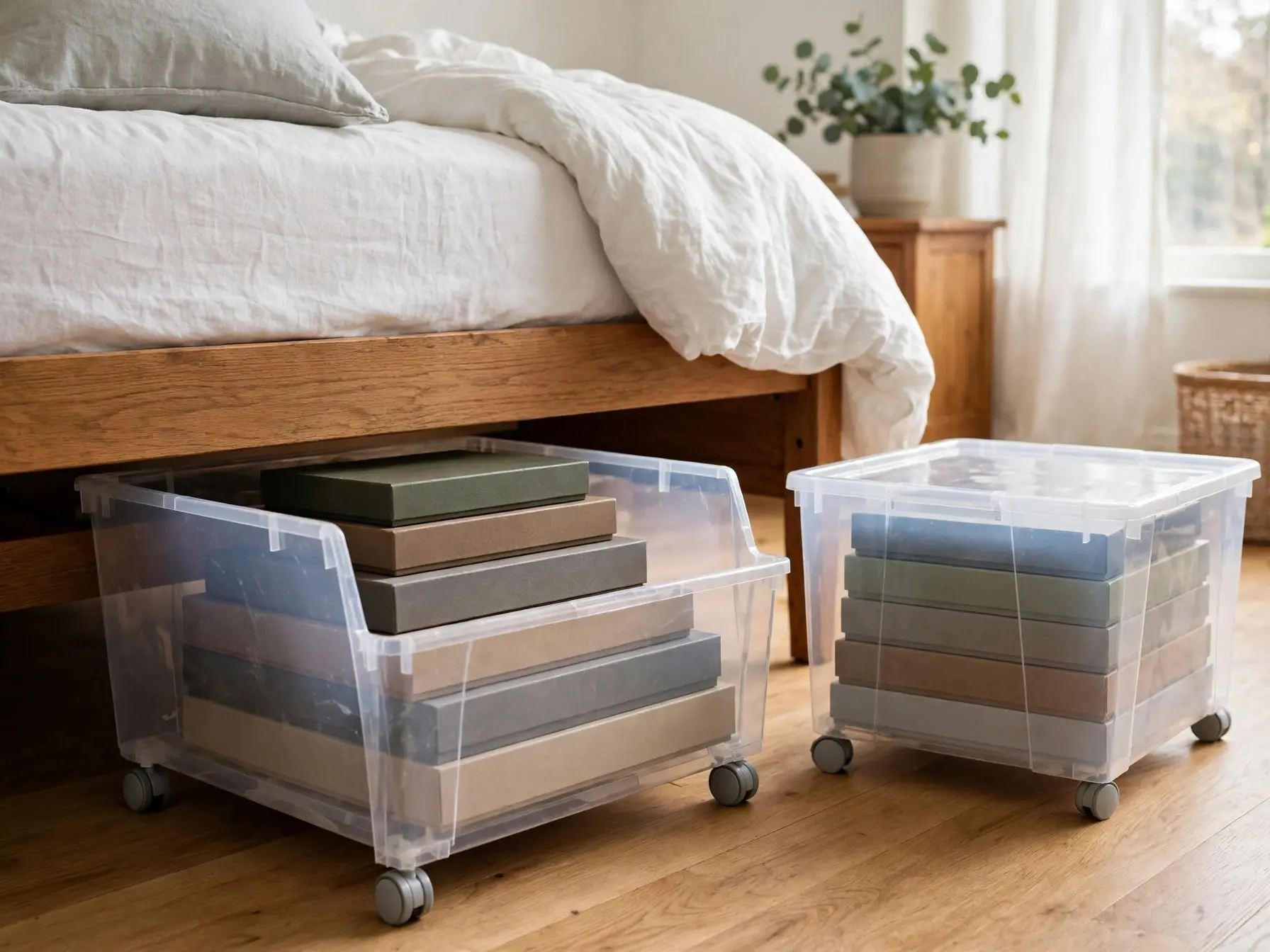
Flat rolling bins under the bed swallow the games you play rarely — the big holiday games, the legacy campaign boxes, the ones the kids outgrew but you are keeping. Choose bins no taller than your floor-to-frame clearance minus 1 inch, with wheels and a clear lid so you can see what is inside without pulling the bin out. Label the short end, not the top, so the label faces the room. One caution: under-bed storage is for games you reach for a few times a year, not the weekly rotation.
- Bin height must be clearance minus 1 inch
- Wheels and a clear lid so you can see inside
- Label the short end, so it faces the room
7. A storage ottoman holds the current rotation
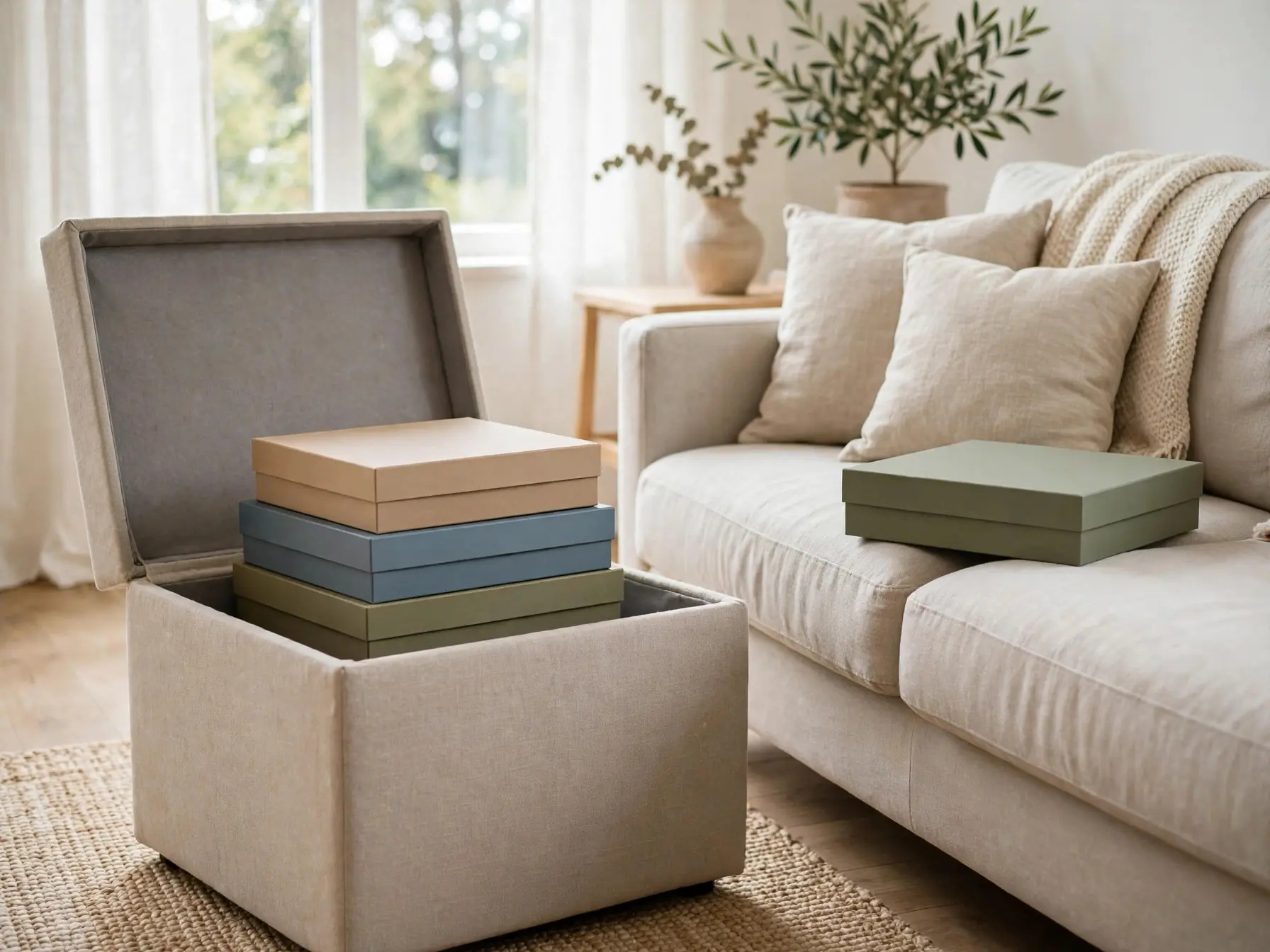
A storage ottoman holds the current rotation — three or four games — right next to the sofa, so game night starts without a trip to the shelf. Pick one with a lift-off or hinged lid and a flat interior at least 12 inches deep; shallow ottomans fit card games only. Keep the pieces bagged inside each box so nothing spills when the lid comes off mid-game. When the rotation changes, swap the games out in one trip and the ottoman is reset for next week.
- Flat interior at least 12 inches deep
- Three or four games is the right rotation
- Swap the games in one trip when the rotation changes
8. A rolling cart for game night
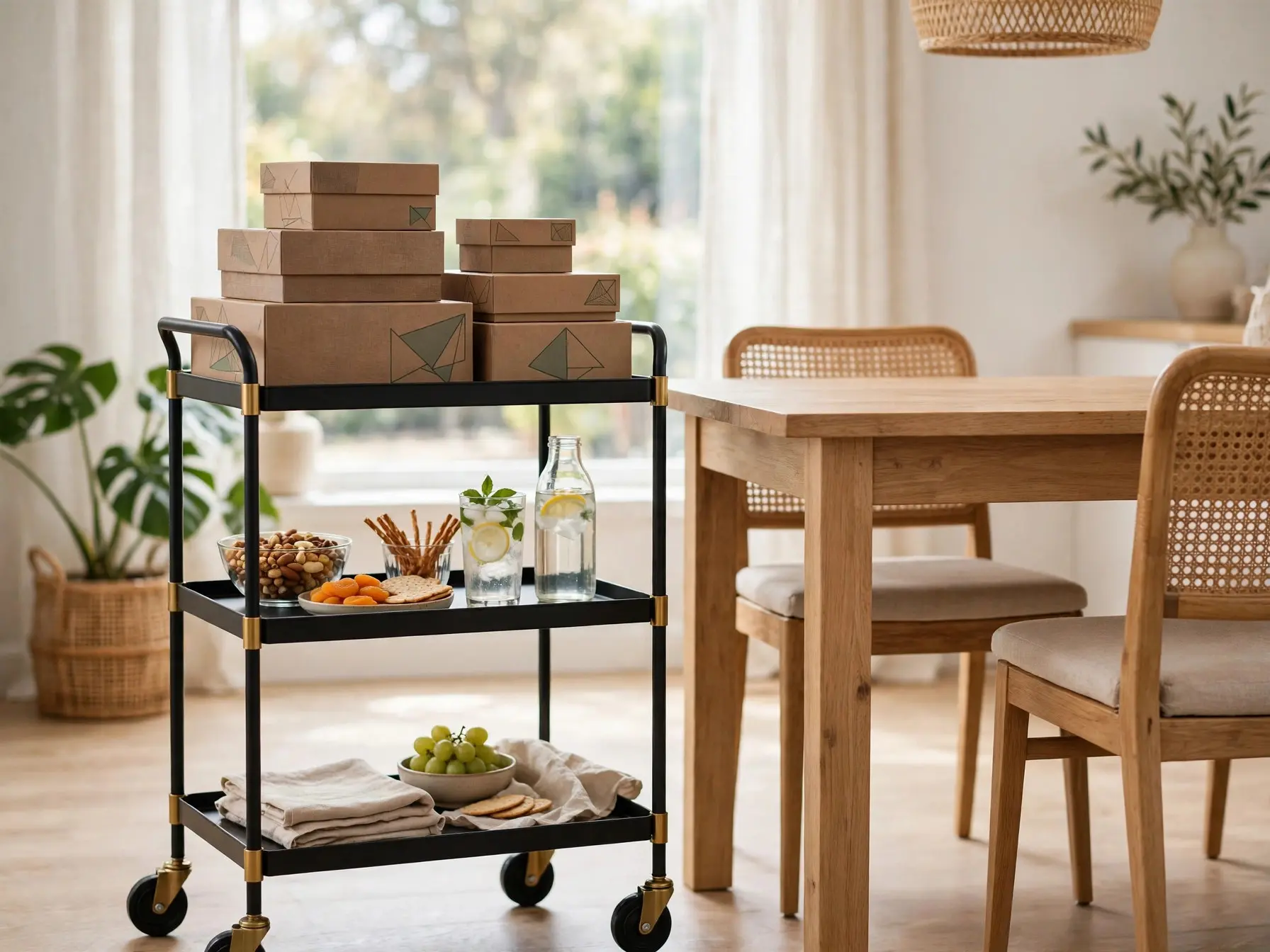
A three-tier rolling cart is game night in a box: tonight's games on the top tier, snacks and drinks on the middle, score pads and timers on the bottom. Wheel it to the table when you play and park it in a corner when you don't. It works best for the current rotation rather than the whole collection — four or five boxes is the sweet spot. Choose a cart with a lip on each tier so nothing slides off in transit, and keep the heaviest box on the bottom tier so it does not tip.
- Tonight's games on top, snacks in the middle
- A lip on each tier so nothing slides off
- Heaviest box on the bottom tier so it cannot tip
9. Bag the pieces inside every box
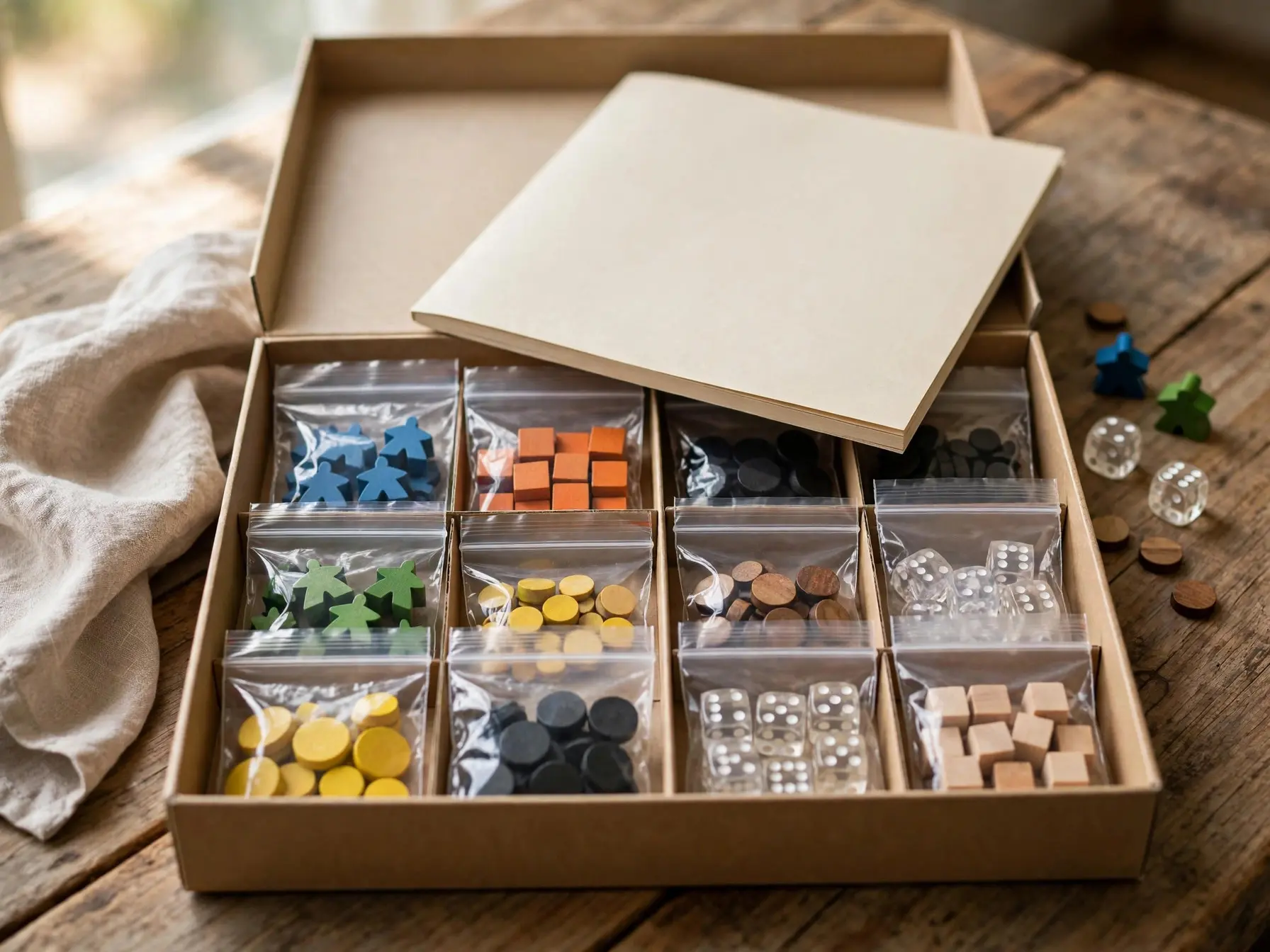
Loose pieces are why games get abandoned: one missing token and the game is unplayable. Inside every box, move the small pieces into labeled zip bags — one bag per player color or piece type — and rubber-band the cards. The bags stop pieces sliding around the box, and setup drops from ten minutes to two because everything is already sorted. Keep the rulebook on top of the bags, not underneath them, so the game opens ready to play.
- One labeled bag per player color or piece type
- Rubber-band the cards so they cannot scatter
- Rulebook on top of the bags, never underneath
10. Dividers and bookends stop the lean
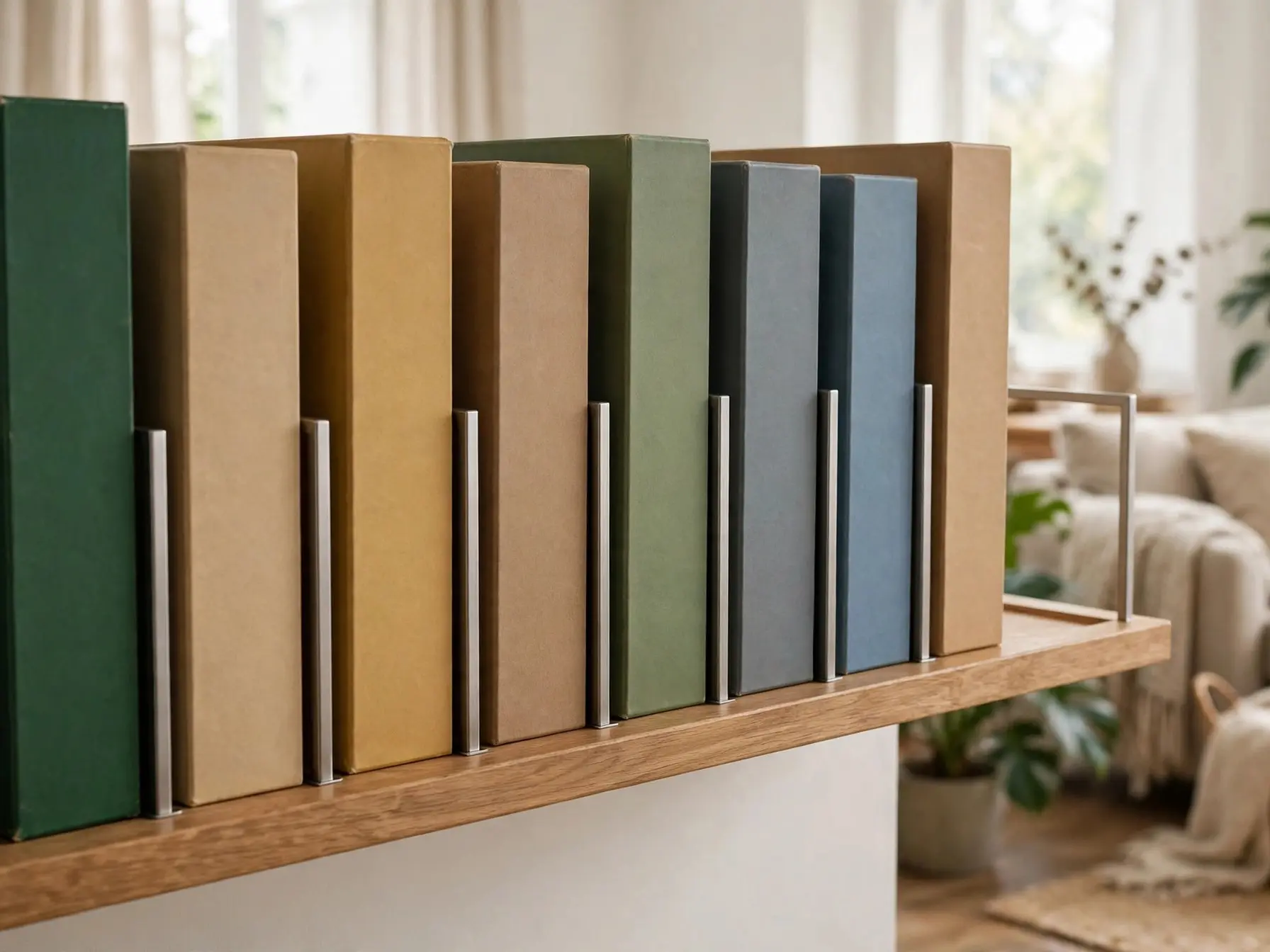
Vertical storage only works if the row stays upright. A leaning row of boxes bends corners and crushes lids, so add shelf dividers or heavy bookends at the end of each row — one divider per six to eight boxes is about right. Adjustable dividers that clamp to the shelf are the most flexible, since collections grow unevenly. And leave a finger-width of breathing room at the end of each row: a shelf packed tight means every game comes out with a fight.
- One divider per six to eight boxes is about right
- Clamp-on dividers flex as the collection grows unevenly
- Leave a finger-width of breathing room at the row end
11. A deep drawer for card games and small boxes
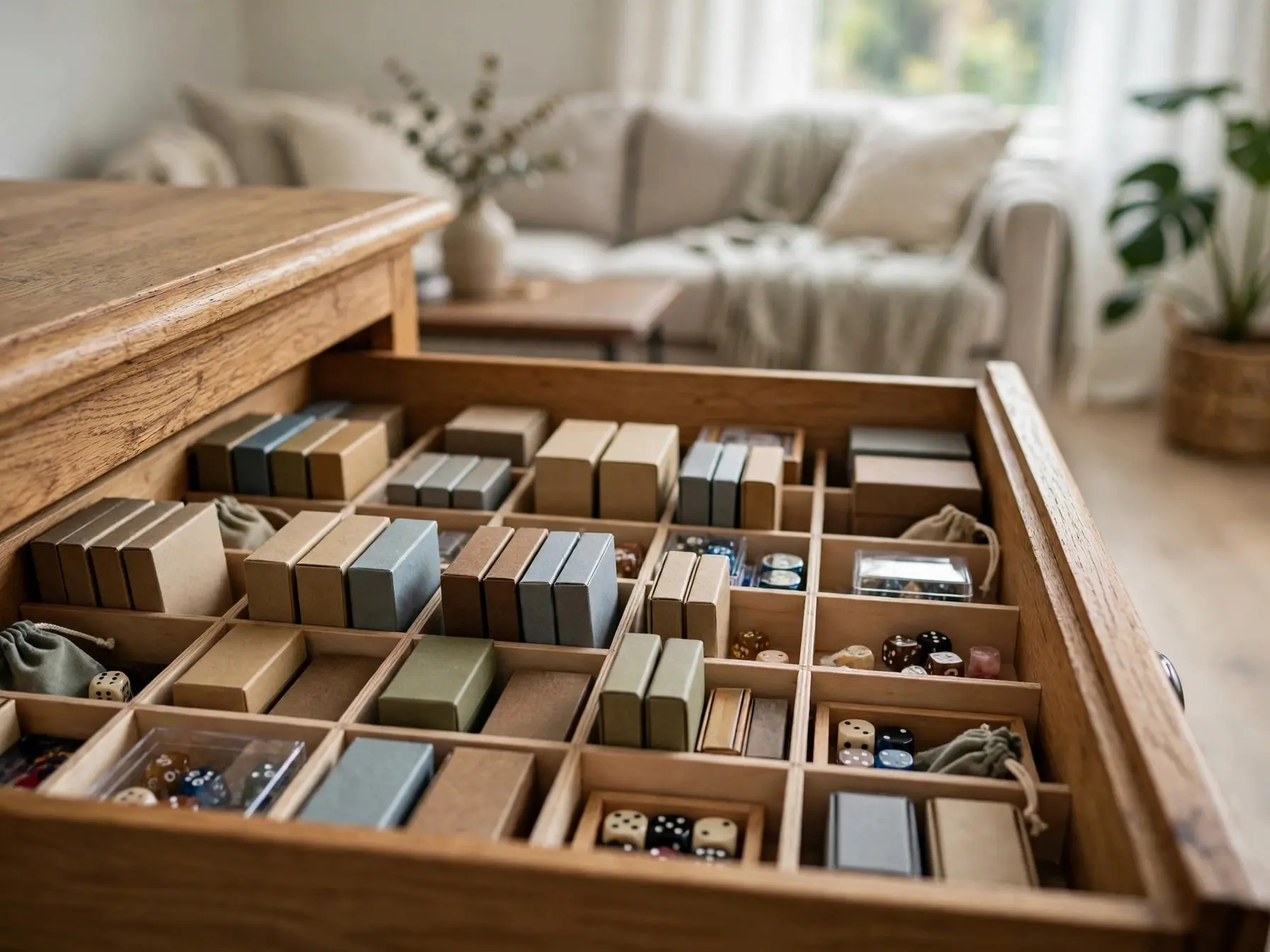
Card games, dice games and small-box games disappear on a deep shelf, so give them a drawer. A dresser drawer with small dividers — or a shallow bin inside the drawer — keeps twenty small games visible in one layer, spine up, instead of stacked ten deep. Label the drawer front if it lives in a shared piece of furniture, so everyone in the house knows where the quick games are. This is also the best spot for travel games and the ones you take to friends' houses.
- Small dividers keep twenty small games in one layer
- Store them spine up, not stacked ten deep
- Label the drawer front so the quick games are findable
12. A dedicated cabinet for collections of 40 or more
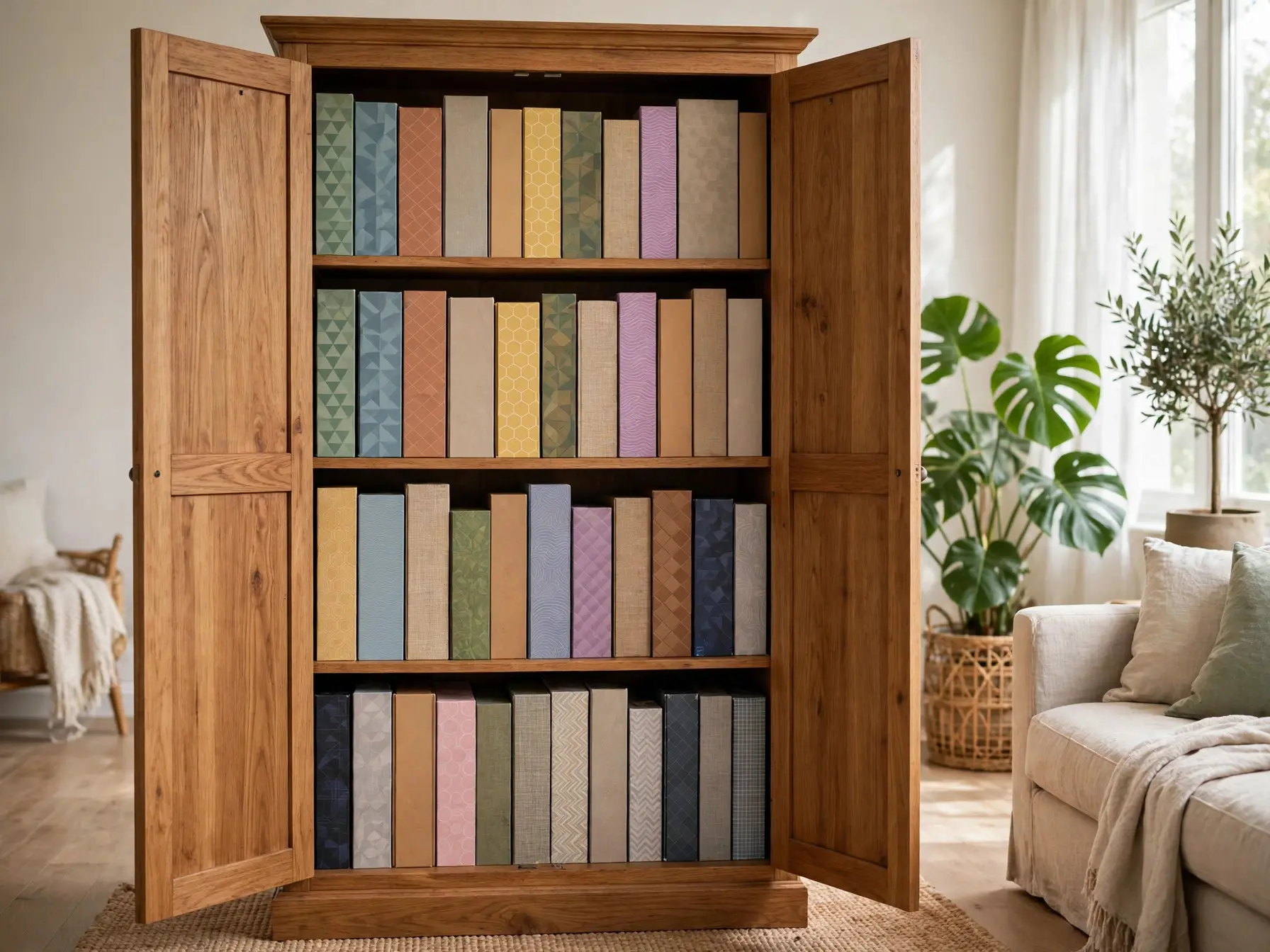
Once the collection passes 40 games, it earns its own cabinet: an armoire or a tall storage cabinet with adjustable shelves, at least 12 inches deep, doors that close. Adjustable shelves are non-negotiable — fixed shelves waste the space above short boxes and crush the tall ones. Put the collection-size table below to work here: under 20 games needs one cube unit, 20 to 40 needs a 2×4 or a bookcase, and 40 to 80 needs the full cabinet wall. The cabinet also ends the slow spread of games across every room in the house.
- Adjustable shelves are non-negotiable
- Doors that close end the spread across every room
- Use the table below to size the cabinet to your count
Why vertical wins — and what to do with the pieces
Vertical storage wins because it removes weight from the equation. A box at the bottom of a flat stack carries every box above it, and over months the lid bows, the corners crush and the pieces inside shift into a jumble. Stored vertically, each box carries only itself, and each one slides out without disturbing the rest. The only cost is discipline: the row must stay upright, which is what dividers and bookends are for.
The inside of the box matters just as much as the shelf. A game with loose pieces is a game that takes ten minutes to set up and five minutes to argue over, because nobody can find the blue token. Bag the pieces, rubber-band the cards, keep the rulebook on top — and the game opens ready to play, every time, for years.
Which unit fits your collection size
Buy the unit for the collection you have, not the one you hope to have — but leave room for ten more games, because collections grow one birthday at a time. The table below is the quick reference: find your count, take the unit, and check the depth and clearance numbers before you buy.
| Collection size | The right unit | Shelf depth | Clearance |
|---|---|---|---|
| Under 20 games | One 2×2 cube shelf, or a single bookcase shelf | At least 11 in | 11 in |
| 20–40 games | A 2×4 cube shelf, or a full bookcase | 11–12 in | 11 in |
| 40–80 games | A wall of cube shelves, or a dedicated cabinet | 11–12 in | 11–12 in |
The numbers behind the table are simple: a standard box is about 11.5 inches square, so 11 inches of depth and 11 inches of clearance are the minimums that matter. Anything shallower leaves boxes sticking out, and anything shorter crushes the tall ones.
Questions, answered
Is it better to store board games vertically or flat?
Vertically, in most cases. Stored vertically like books, each box slides out on its own, so you never unstack five games to reach the one at the bottom — and the weight of a flat stack is what crushes lids and bends corners over time. Flat storage only wins for very heavy boxes or boxes with loose pieces that shift, and even then keep the stack to three or four boxes high.
How do you store board games without the box?
Move the board, pieces and rulebook into a labeled zip bag or a slim document box, one game per bag, and store the bags vertically in a bin or drawer. It saves real space — a shelf of boxes becomes a single bin — but keep the original box for games you might resell or gift, since the box is part of the value. Photograph the box art first if the game has a beautiful cover you want to remember.
What shelf fits standard board game boxes?
A shelf at least 11 inches deep with 11 inches of clearance between shelves, which is why cube shelves fit so well — each cube opening is about 13 inches square. Standard boxes run about 11.5 inches square and 2 to 3 inches thick, so a 10-inch-deep bookcase leaves the boxes sticking out. Measure before you buy, and check the clearance as well as the depth: tall boxes need the full 11 inches of height.
How do you keep board game pieces from getting lost?
Bag them: one labeled zip bag per player color or piece type inside the box, cards rubber-banded, and the rulebook on top. Count the pieces against the rulebook's inventory list once, when the game is new, so you know what a complete set looks like. And make the pack-away part of the game — the last five minutes of game night are bagging pieces, not the first five of the next one.
Keep reading
Game storage is one part of a home where everything has a place. Our guide to toy storage ideas tames the rest of the playroom clutter, storage ideas for small spaces finds room for the collection in a home that feels full already, and how to organize anything is the five-step method behind every system on this site. Start with the cube shelf, then let the system spread.
Twelve ideas, one rule: store them vertically, bag the pieces, and buy the unit for the collection you have. Do it that way and the only crushed box in the house will be the one the delivery driver sat on.