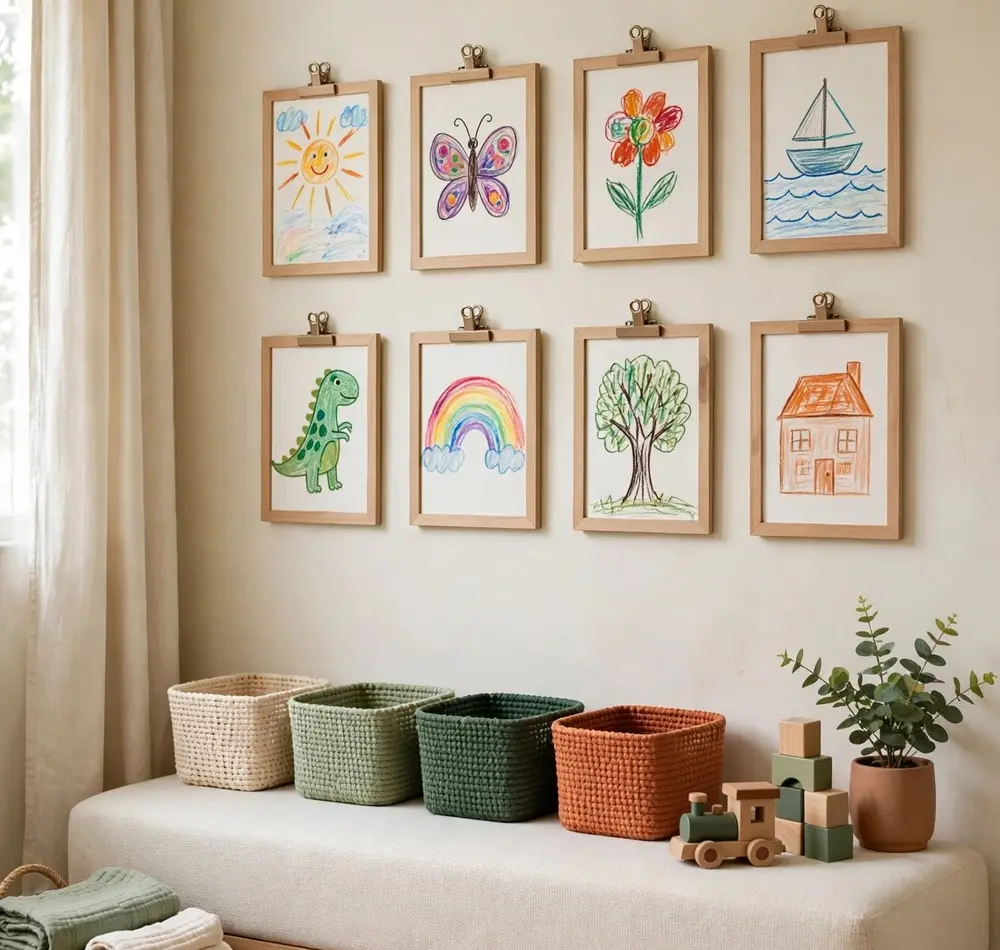
Keep kids’ artwork in three tiers: display the current favourites, file the term’s best pieces in one portfolio per child, and photograph then recycle the rest — one box per child per school stage is enough.
Thank you for reading this post, don’t forget to subscribe!Part of our guide: 30 Toy Storage Ideas to Finally Tame the Toy Clutter
School artwork arrives faster than any storage system can absorb it. A painting a week, plus drawings, cards, collages and the occasional pasta masterpiece, adds up to a pile that fills a drawer by half term and a whole shelf by the end of the year. The answer is not a bigger box. It is a small, repeatable routine: a few pieces on show, a tight selection kept properly, and everything else photographed and let go. The eleven ideas below give every piece a destination, so nothing drifts into a mystery pile.
Start with the three tiers
Before you buy a single box, sort the current pile into three groups. Tier one is display: the pieces your child is proudest of right now, up on the wall for a few weeks. Tier two is the archive: the term’s best work, filed in one portfolio per child. Tier three is everything else — photographed in good daylight, then recycled. Most families find that tier three holds about three quarters of the pile, and that is exactly as it should be. The memory is kept in the photograph; the paper does not need to be kept as well.
1. One portfolio per child
Give each child one large artist portfolio with clear sleeves, and make it the only long-term home for original artwork. When a piece earns its place, it goes in the portfolio in date order; when the portfolio is full, something must come out before anything new goes in. That single limit stops the archive growing without end, and it means that in ten years you will have one beautiful folder per child instead of a loft full of boxes you never open.
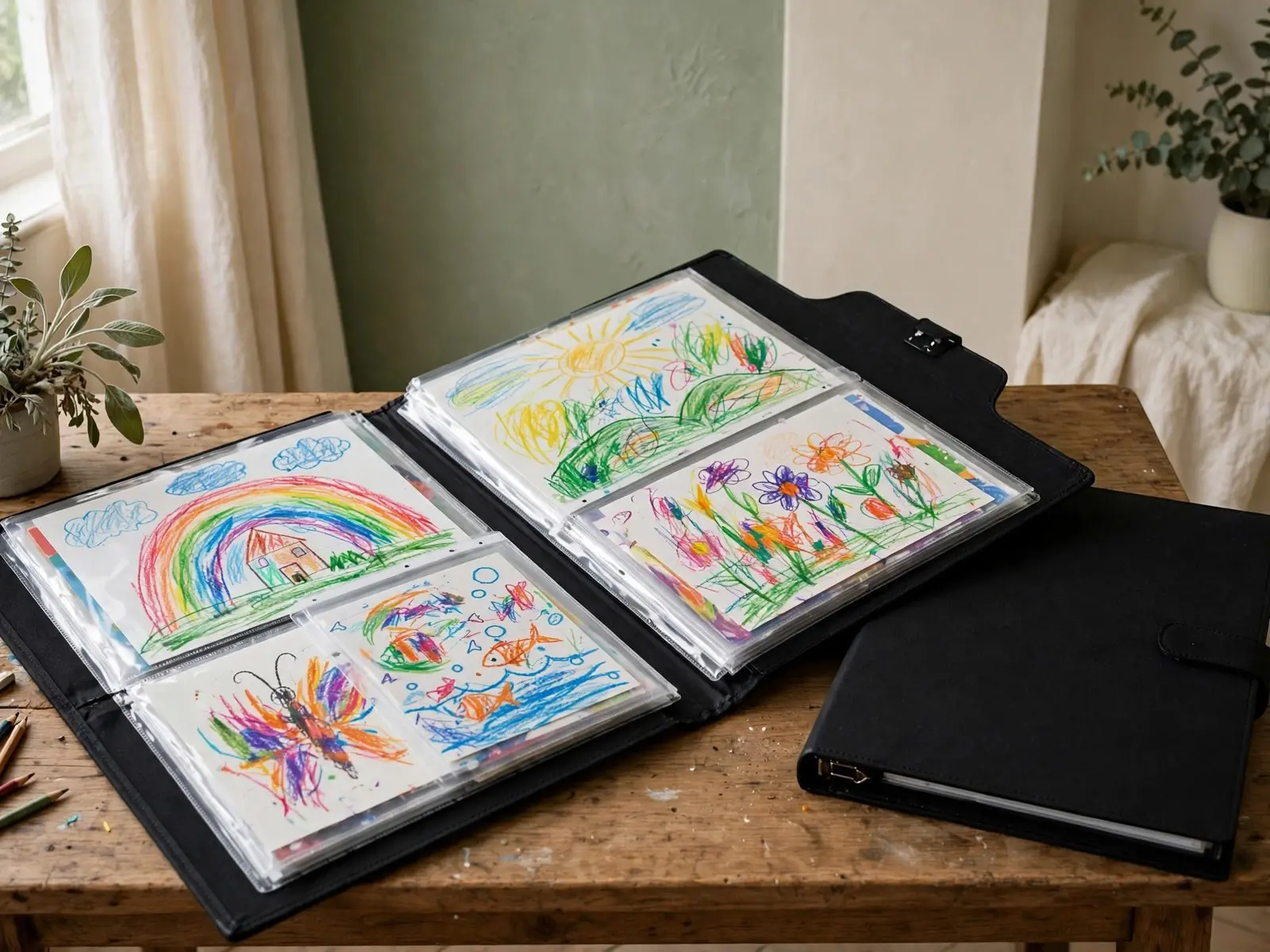
Choose a portfolio with sturdy sleeves that fit the largest paper your child usually brings home — A3 covers most school work. Label the spine with the child’s name and the school stage, and keep it somewhere reachable, not in the loft, so filing a piece takes seconds rather than becoming a weekend project.
2. A rotating gallery wall with clip frames
Clip frames are the secret to a gallery wall that never looks cluttered: the artwork swaps in seconds, with no glass to clean and no frame to dismantle. Hang a row of six to eight matching clip frames in a hallway or playroom, and rotate the display every few weeks — new favourites in, older pieces photographed and filed or recycled.
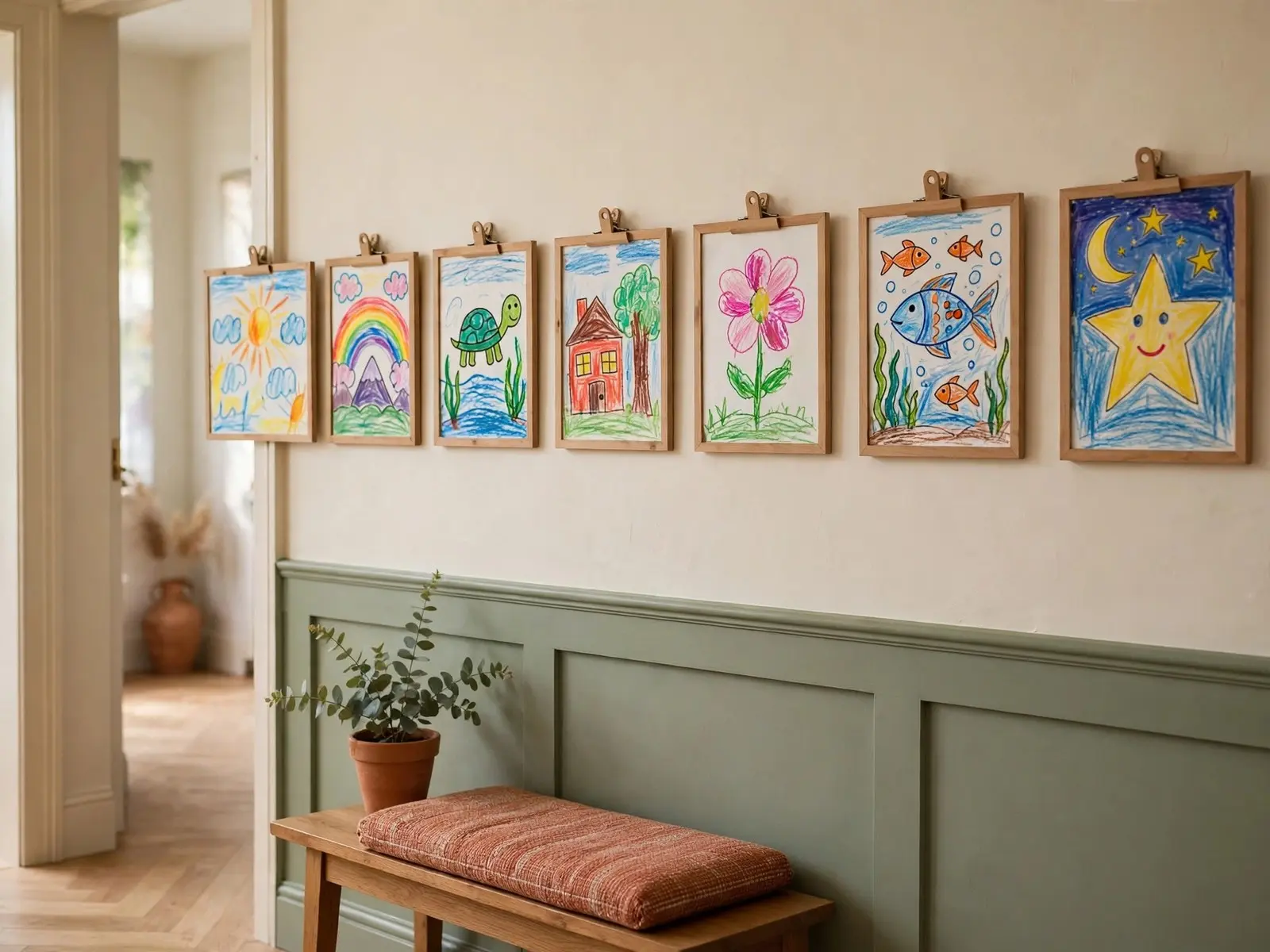
Keep the frames identical and the spacing even, and the wall reads as one intentional display rather than a random collection. Let your child choose the rotation — it is their gallery, and choosing what goes up teaches them to value their best work rather than every sheet equally.
3. One box per year keepsake stack
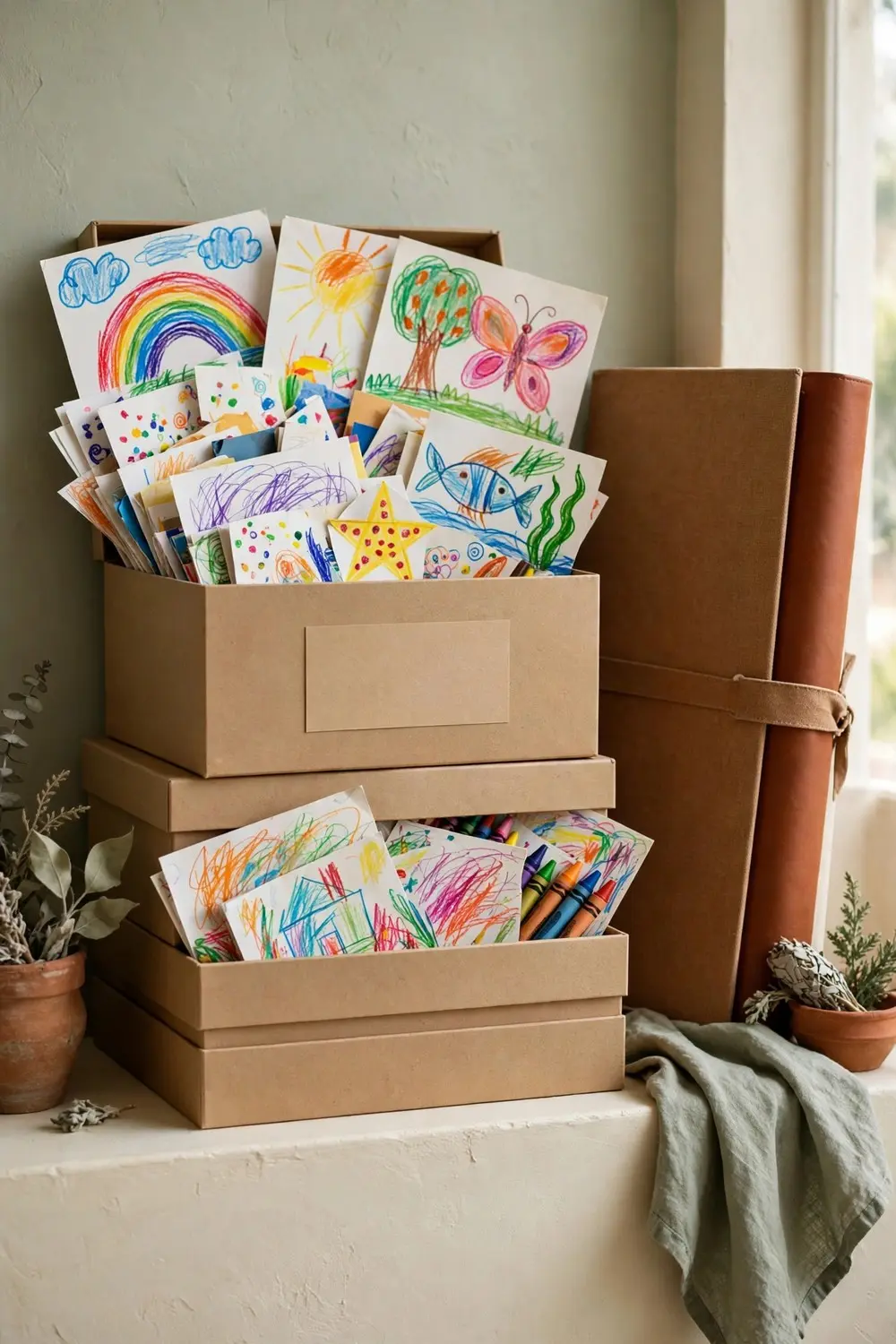
For the pieces that are too big, too fragile or too three-dimensional for a portfolio — the clay handprint, the oversized poster, the first story booklet — keep one box per child per school year. Anything that does not fit in that year’s box does not stay, which keeps the keepsake stack to a tidy row on a shelf rather than a mountain in the spare room.
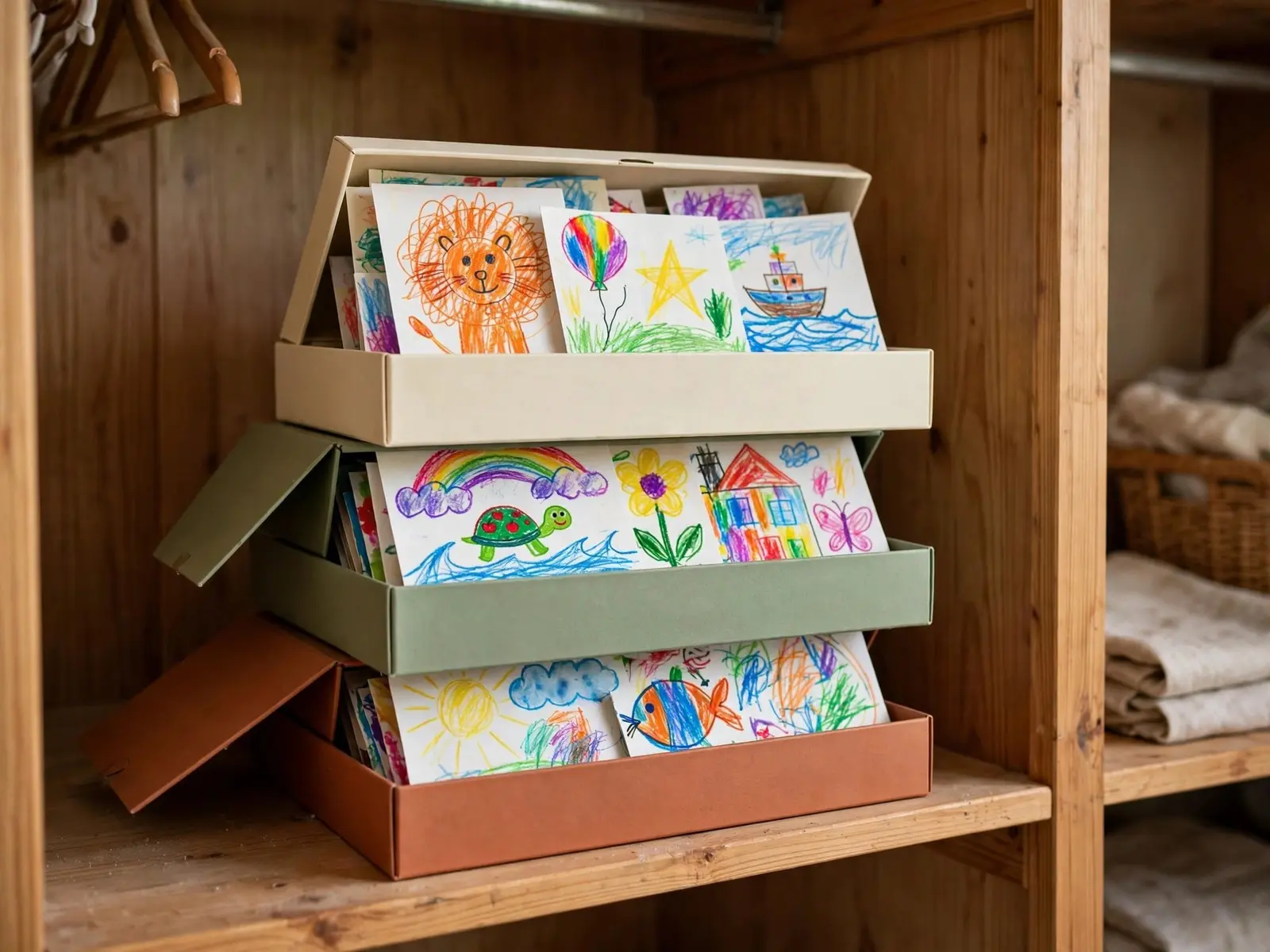
Use the same size and colour of box for every year so the stack looks calm, and label each box with the child’s name and the school year. At the end of the year, sit down together and choose what earns a place — five or six pieces is plenty, and the choosing is part of the memory.
4. Photograph everything, keep the best
A photograph taken in bright, even daylight, with the artwork flat against a plain wall, preserves a painting far better than a faded sheet in a damp box. Set up a simple routine: once a week, photograph the new pieces, save them in a folder named by school year, and recycle the originals that did not make the portfolio or the keepsake box.
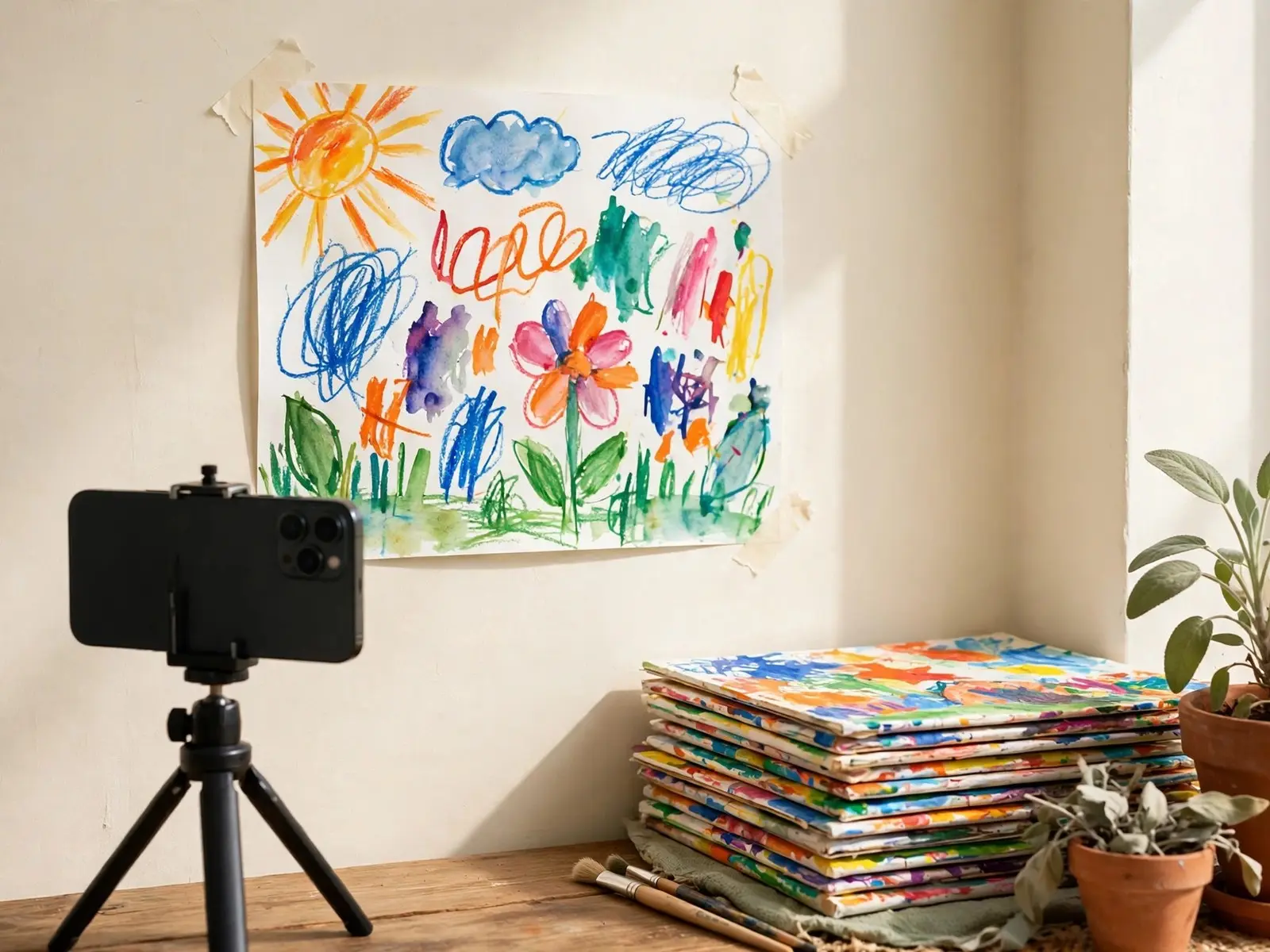
Photograph the back of a piece too if your child has written their name or the date there — that detail is often what makes the photo meaningful years later. Back the folder up in the same place you keep family photos, so the artwork archive survives a lost phone.
5. An art wire with clips
A wire strung along a playroom or kitchen wall, with small wooden clips, holds a changing line of artwork for almost no money and no wall damage. It suits younger children especially well, because they can hang their own new piece and take down an old one without help — and the display changes as fast as they produce.
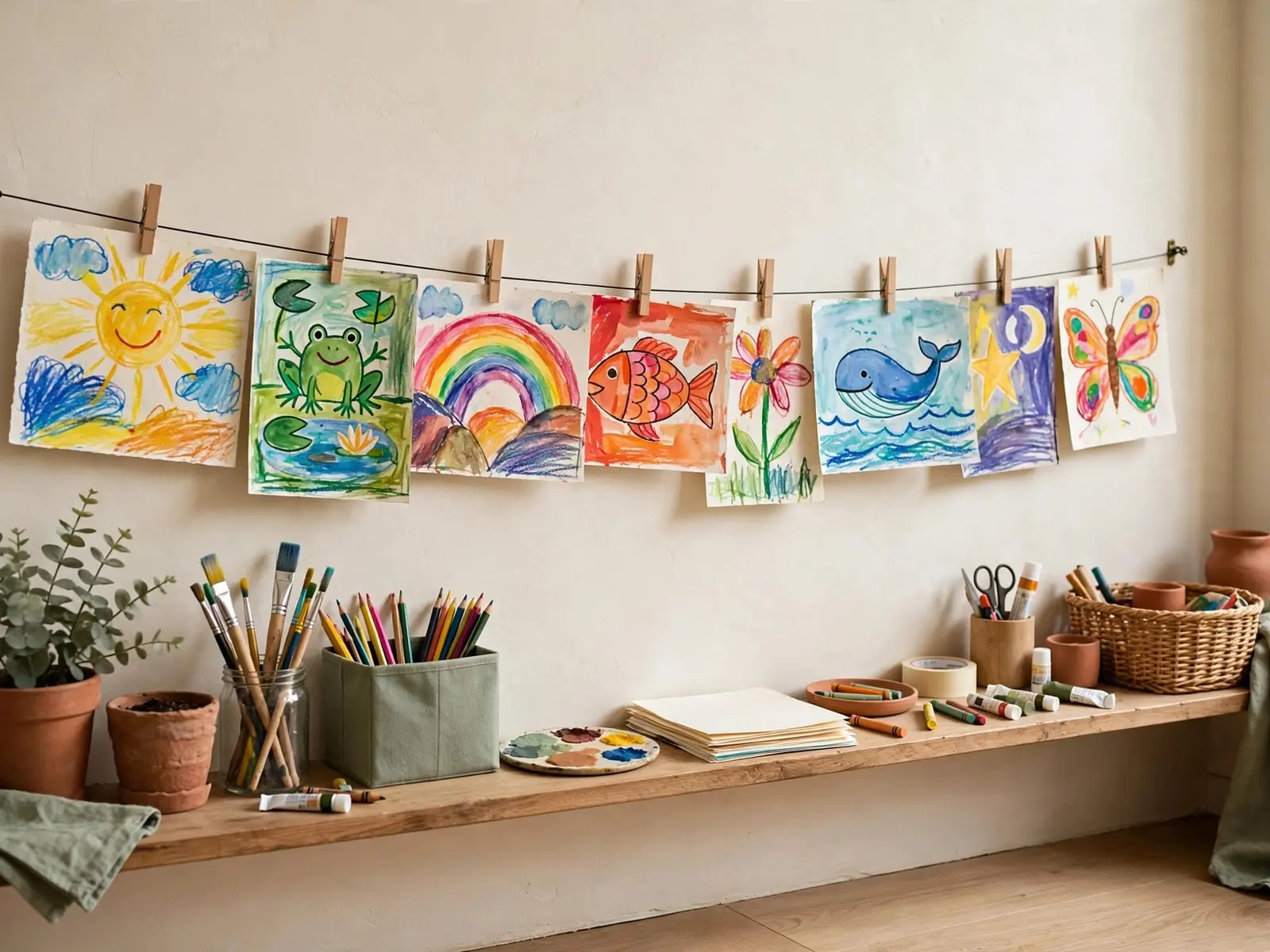
Limit the wire to what it holds comfortably — eight to ten pieces — and treat it as a display, not storage. When the wire is full, the oldest piece comes down, gets photographed, and moves on to the portfolio, the keepsake box or the recycling.
6. One framed masterpiece at a time
Alongside the casual displays, keep one proper frame in a prominent spot for the current masterpiece — the piece your child is most proud of this term. A single framed painting among everyday decor signals that the work matters, and swapping it every term keeps the honour meaningful.
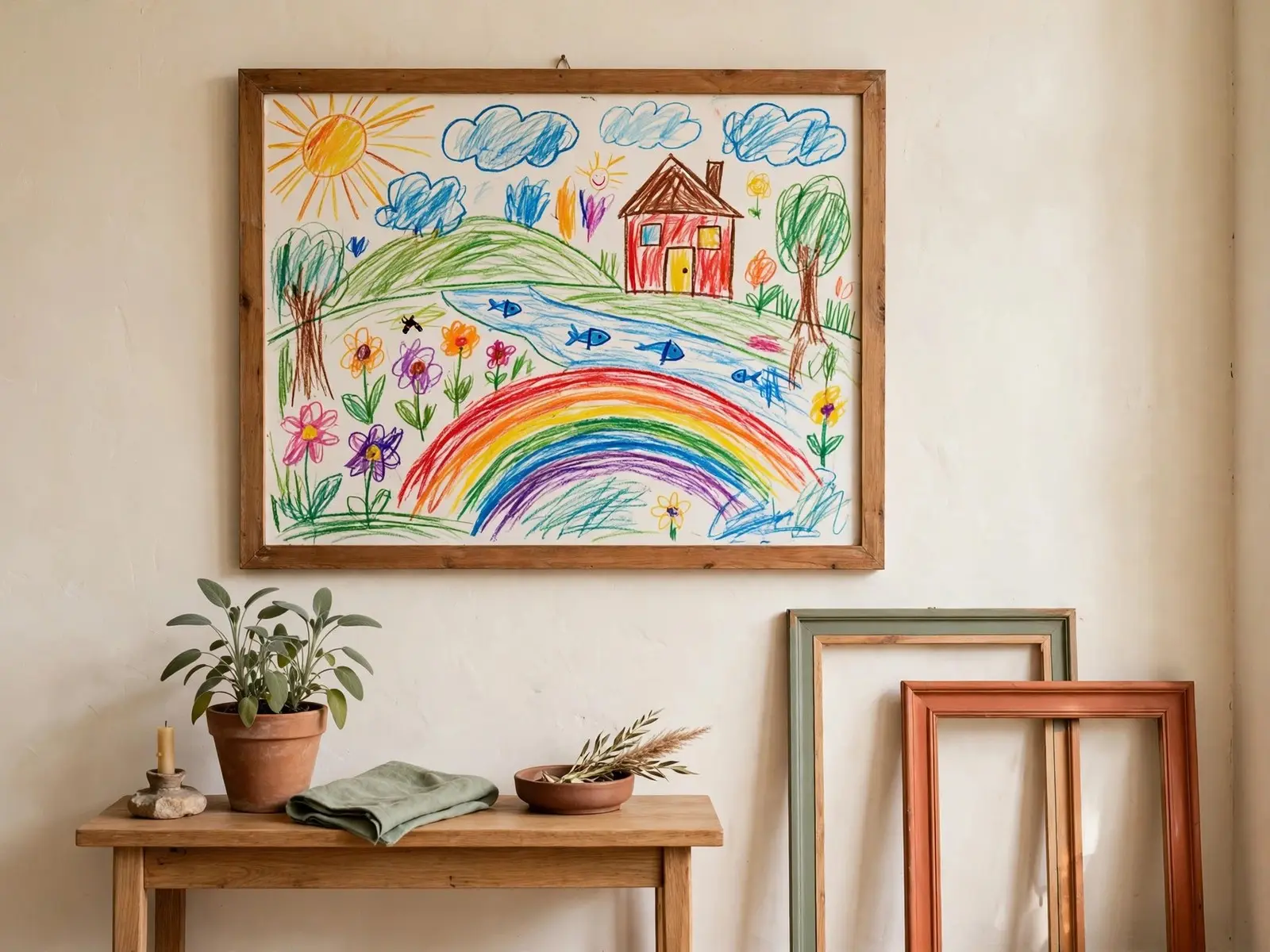
When a new masterpiece takes the frame, the outgoing piece goes straight into the portfolio — never into a pile. Keep two spare frames of the same style nearby so the swap takes a minute, and so siblings can rotate through the frame fairly.
7. School papers filed by term
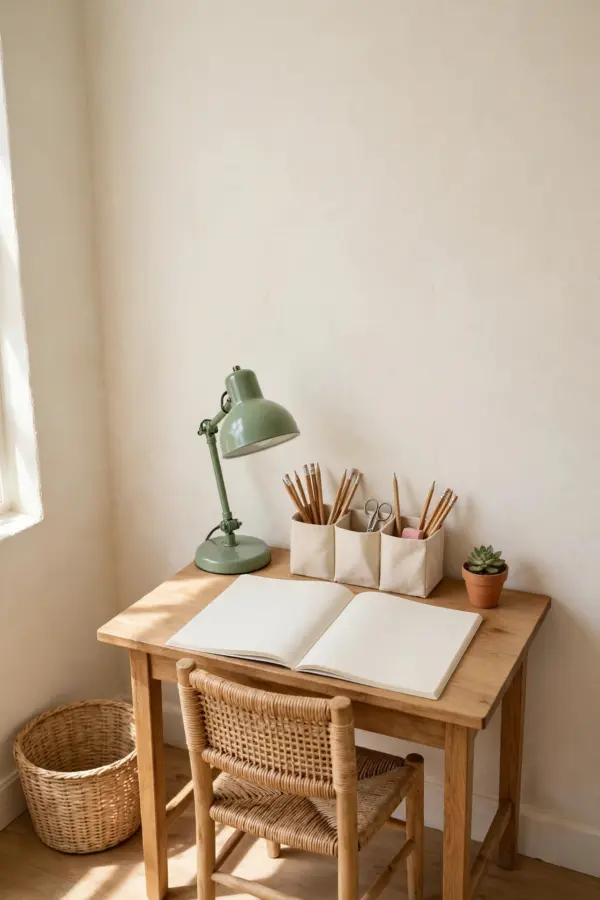
Artwork is only half the paper mountain; reports, certificates, class lists and story booklets arrive alongside it. File school papers in labelled folders by term, in a desktop file box, and keep only what tells the story of the year: the report, the best story or project, and any certificate. Worksheets and practice sheets, once photographed if you want them, can go.
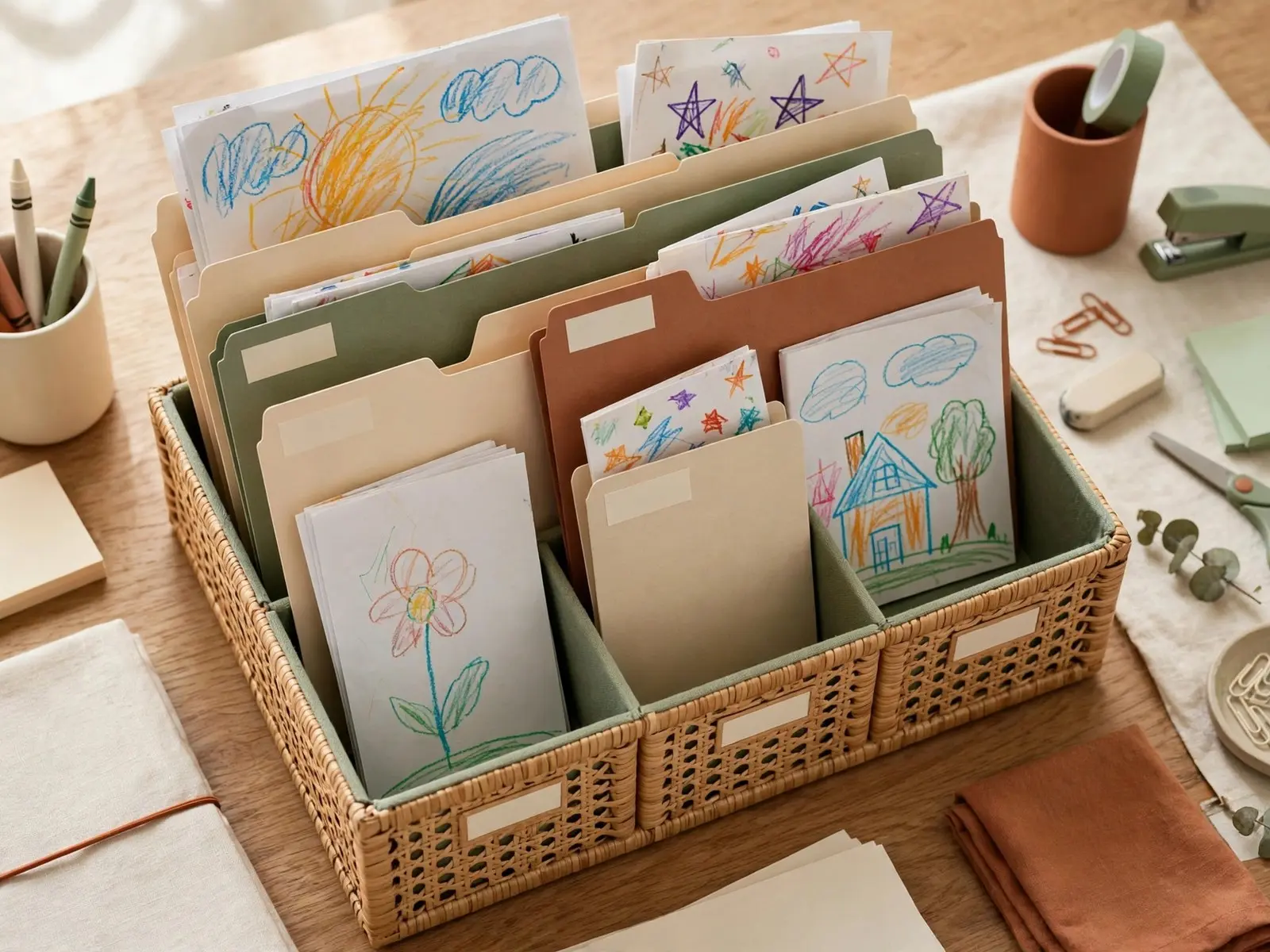
At the end of the school year, move the term folders into the keepsake box for that year, or condense them into one slim folder. If a folder is bulging, it is holding too much — the best two or three items per term are the ones you will actually enjoy looking back at.
8. A bound art book for each school stage
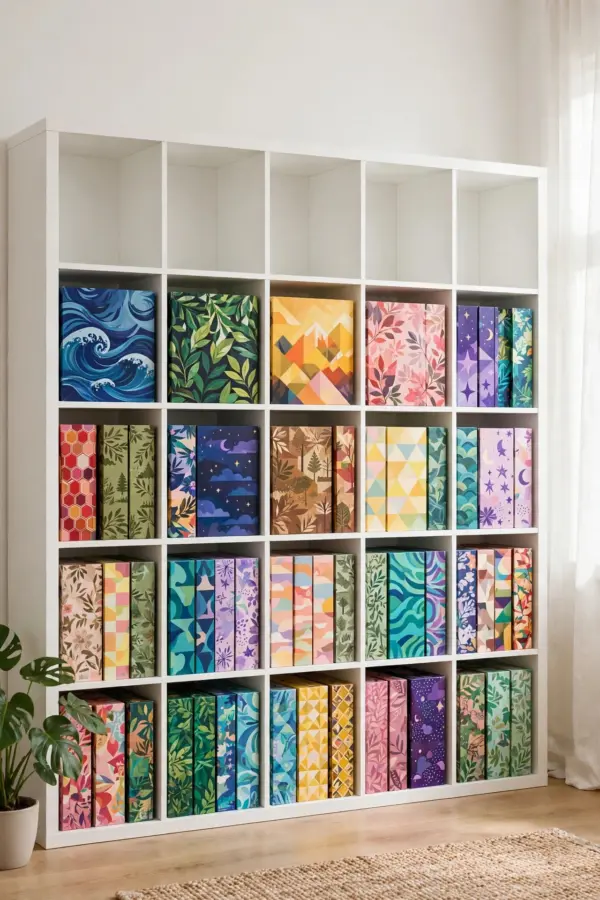
Once a school stage ends — nursery, primary, secondary — turn that stage’s photographed artwork into a bound art book. Seeing a whole stage of work in one slim volume is far more satisfying than flicking through loose sheets, and it is the format grandparents actually enjoy receiving. One book per stage per child keeps the shelf tidy for life.
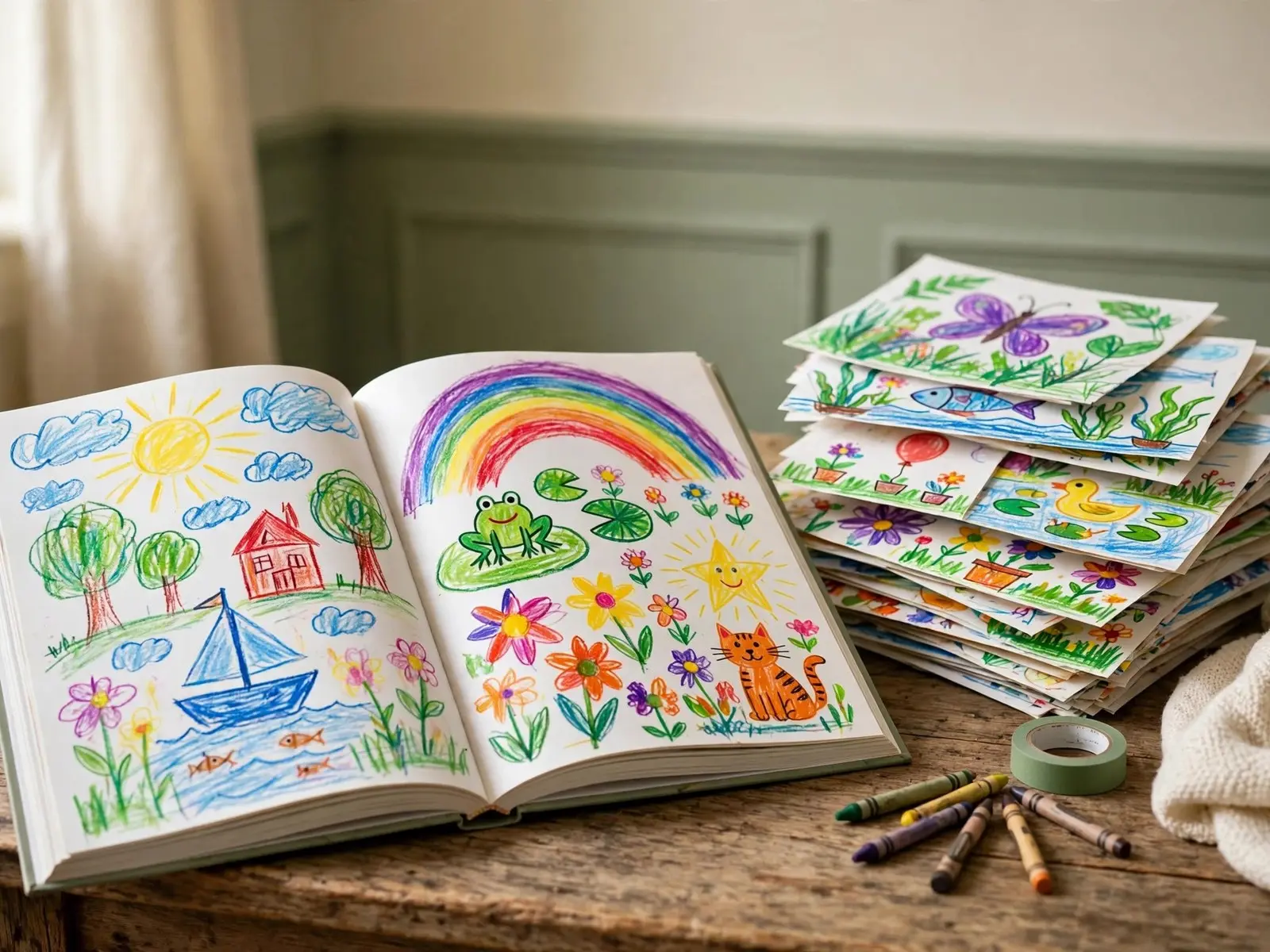
Pick twenty to thirty pieces per book — the portfolio favourites plus a few funny ones that show personality. Add the year and the child’s age to the cover, and keep the originals that matter most in the portfolio alongside it.
9. A memory binder with sleeves
For children who produce mixed sizes — small cards, odd shapes, concert programmes alongside paintings — a three-ring binder with clear sleeves is more forgiving than a portfolio. Each sleeve holds one item, the binder stands on a bookshelf like a book, and new sleeves can be added without disturbing the order.
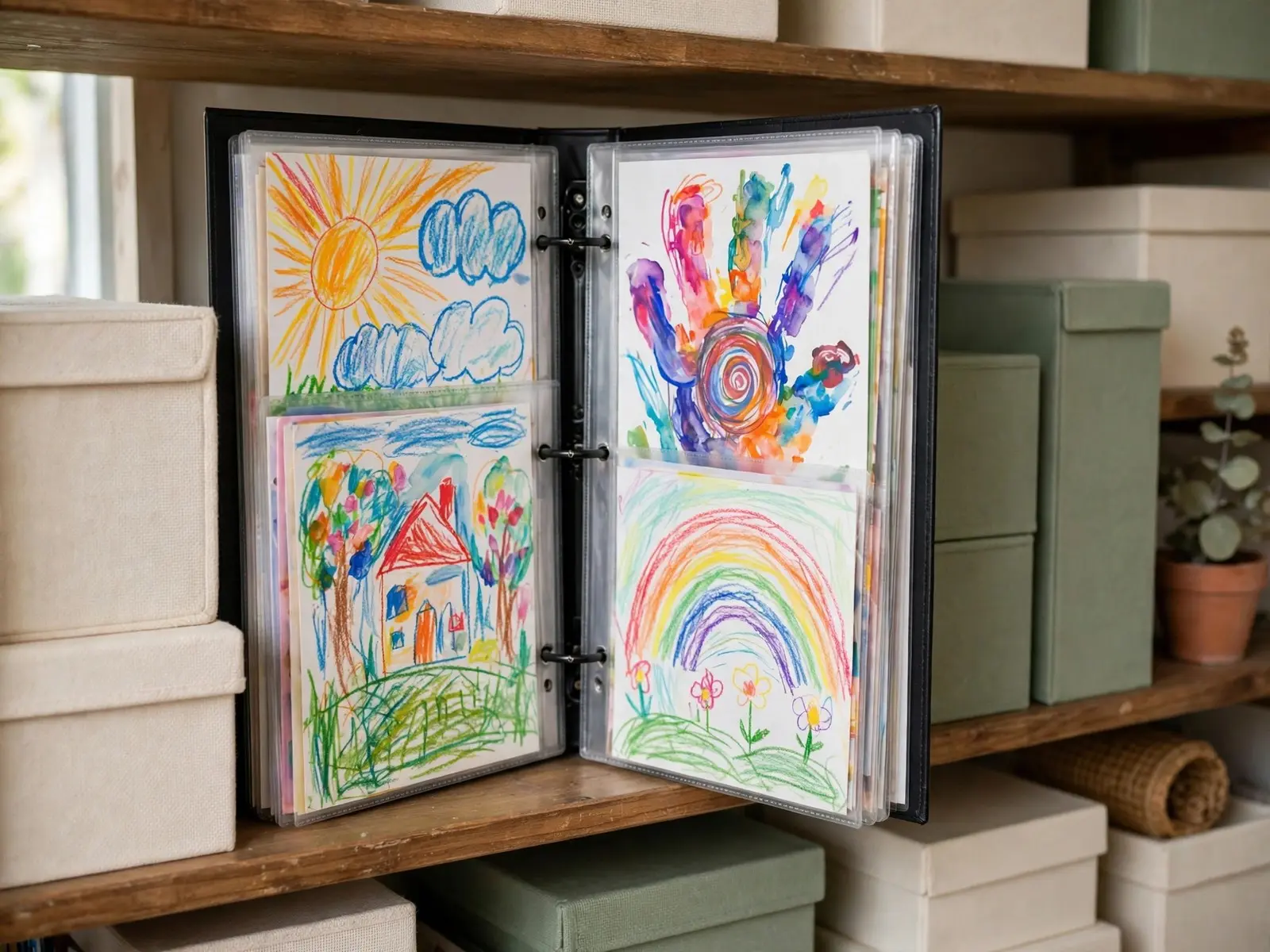
Use dividers for school years, and slip a short note into the front of each section — what the child was learning, which teacher they loved, the activity they talked about at home. Ten years on, those notes are worth more than the artwork itself.
10. A kitchen gallery with a strict limit
The fridge door and kitchen board are where most artwork actually lives — and where the clutter builds fastest. Give the kitchen gallery a strict limit: one board, six magnets, six pieces. When a seventh piece arrives, the oldest comes down and moves into the three-tier system the same day.
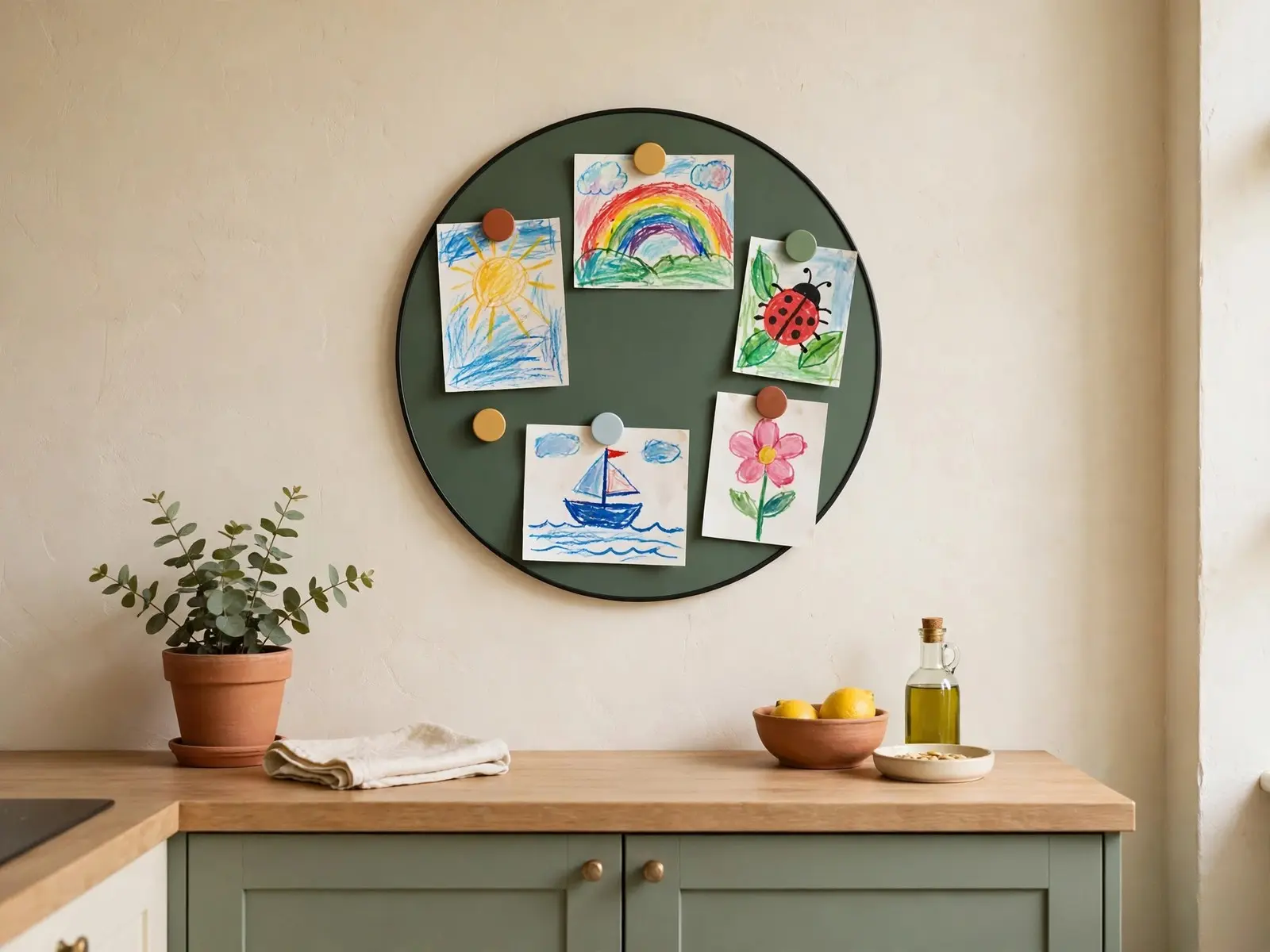
A round magnetic board or a single framed board keeps the display looking deliberate rather than chaotic. Keep the board at your child’s eye level if you can — they see their work celebrated every day, and they learn that display space is earned by choosing, not by accumulating.
11. The end-of-term keep-or-let-go ritual
Twice a year, at the end of term, sit down with your child and sort the term’s pile together. They pick their five favourites for the portfolio, one for the keepsake box, and one for the frame; you photograph the rest together and recycle them. Done as a ritual — with a drink and no rush — it stops being a clear-out and becomes a celebration of the term.
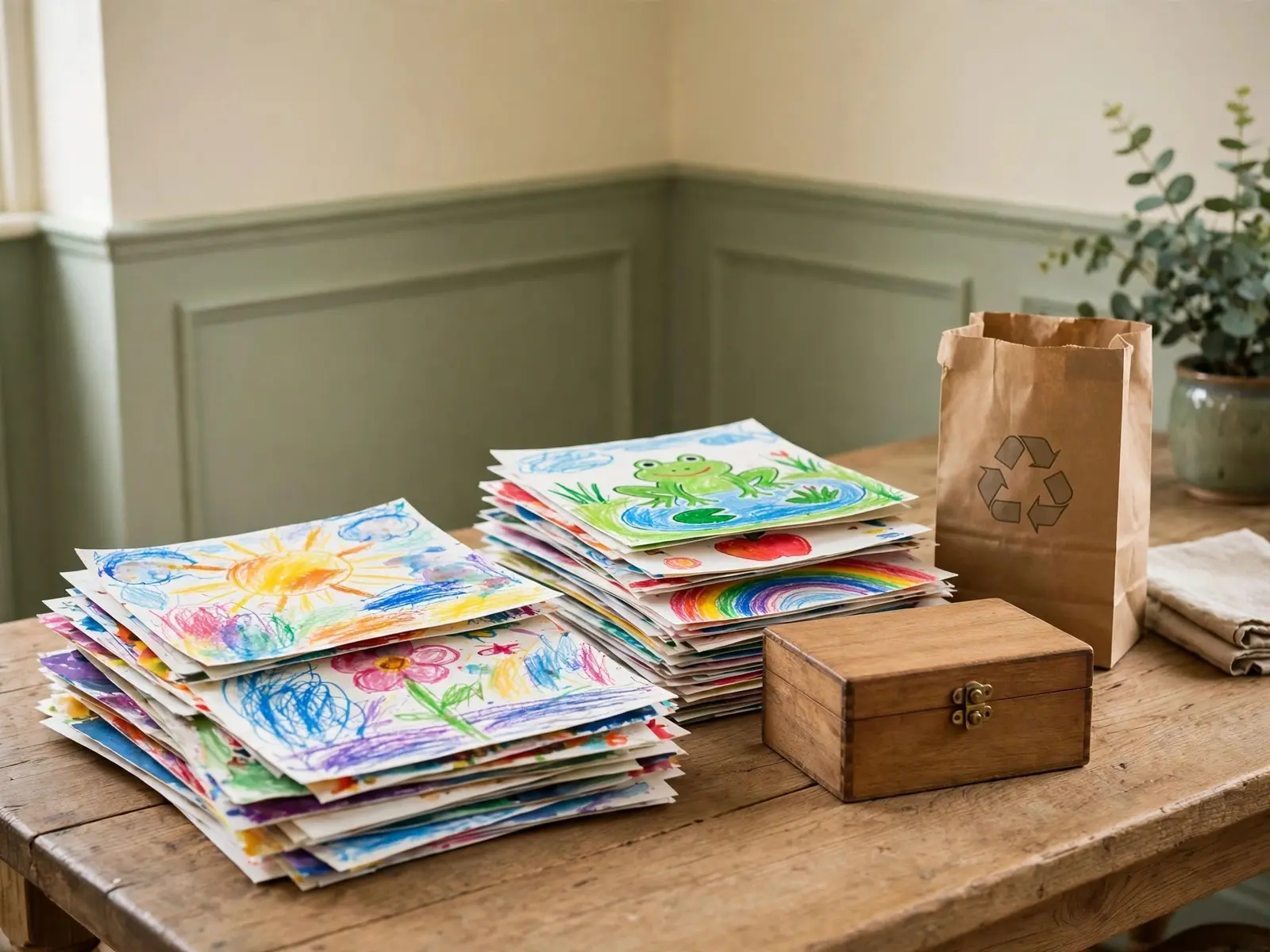
Let your child make the final call on their own work, even when you would keep something they want to let go. The ritual works because they trust that what they love will be kept properly — and that trust is what keeps the piles from returning.
Keep or let go: decision rules by age
What is worth keeping changes as a child grows. Use these rules at each end-of-term sort, and the decisions get quicker every time.
| Age | Keep | Photograph then recycle | Recycle straight away |
|---|---|---|---|
| Nursery and preschool (ages 2–4) | First paintings, handprints, anything with a name or date written on it | Daily paintings and colouring sheets — keep the photo, not the paper | Duplicates, torn sheets, and anything already photographed twice |
| Primary school (ages 5–11) | Best piece per term, first stories, prize-winning work, class projects | Regular classwork, practice sheets, and most holiday crafts | Worksheets, rough drafts, and anything your child does not remember making |
| Secondary school (ages 11+) | Exam coursework, portfolio pieces, and work tied to a real achievement | Sketchbook highlights and project work worth remembering | Routine homework, mock papers, and printed worksheets |
One rule holds at every age: if you hesitate over a piece for more than a few seconds, photograph it and let the paper go. The photograph keeps the memory, and the shelf keeps its space for the pieces that truly matter.
Questions, answered
How do you store kids’ artwork long term?
Store the best originals flat, in the dark and dry: one portfolio per child with clear sleeves, kept upright on a shelf away from damp and direct sunlight. Oversized or three-dimensional pieces go in one labelled box per child per school year. Keep the total small — a portfolio and a row of boxes — and photograph everything else, because paper fades and warps even in good storage, while a well-kept photo lasts.
How much of my child’s school work should I keep?
Far less than arrives. A good guide is five or six original pieces per term in the portfolio, plus one or two keepsake items per year in the box, and photographs of the rest. That keeps roughly one slim portfolio and one box per school year per child — a collection you will actually open and enjoy, rather than a loft full of unsorted paper.
How do you display kids’ art without it looking cluttered?
Limit the display and match the frames. One gallery wall of identical clip frames, one wire, or one board — each with a fixed number of pieces — reads as intentional, while artwork scattered across every surface reads as clutter. Rotate the display regularly, keep the frames and spacing consistent, and move older pieces into the archive instead of adding more display space.
Is it better to digitize kids’ artwork or keep the originals?
Do both, for different pieces. Keep the originals of the few pieces that matter most — the first painting, the prize winner, the handprint — because texture and scale do not survive in a photo. Photograph everything else and let the paper go: the photo preserves the image, takes no shelf space, and can be gathered into a bound art book at the end of each school stage.
Keep reading
If the paper pile includes school forms and reports as well as art, our guide to how to organize paperwork at home covers the same sort, file and label system for the whole household. For the wider clear-out, declutter your home room by room shows how to run the same keep-or-let-go decisions in every room. And when the artwork boxes need a seasonal home, how to store seasonal clothes covers the under-bed and top-shelf storage those boxes share.
Kids’ artwork does not need a bigger storage system — it needs a smaller one, used often. Display the current favourites, file the term’s best in one portfolio per child, photograph the rest, and sort together at the end of every term. Do that, and the pile stops growing, the best work gets the wall it deserves, and the memories survive in a form you will actually look at again.