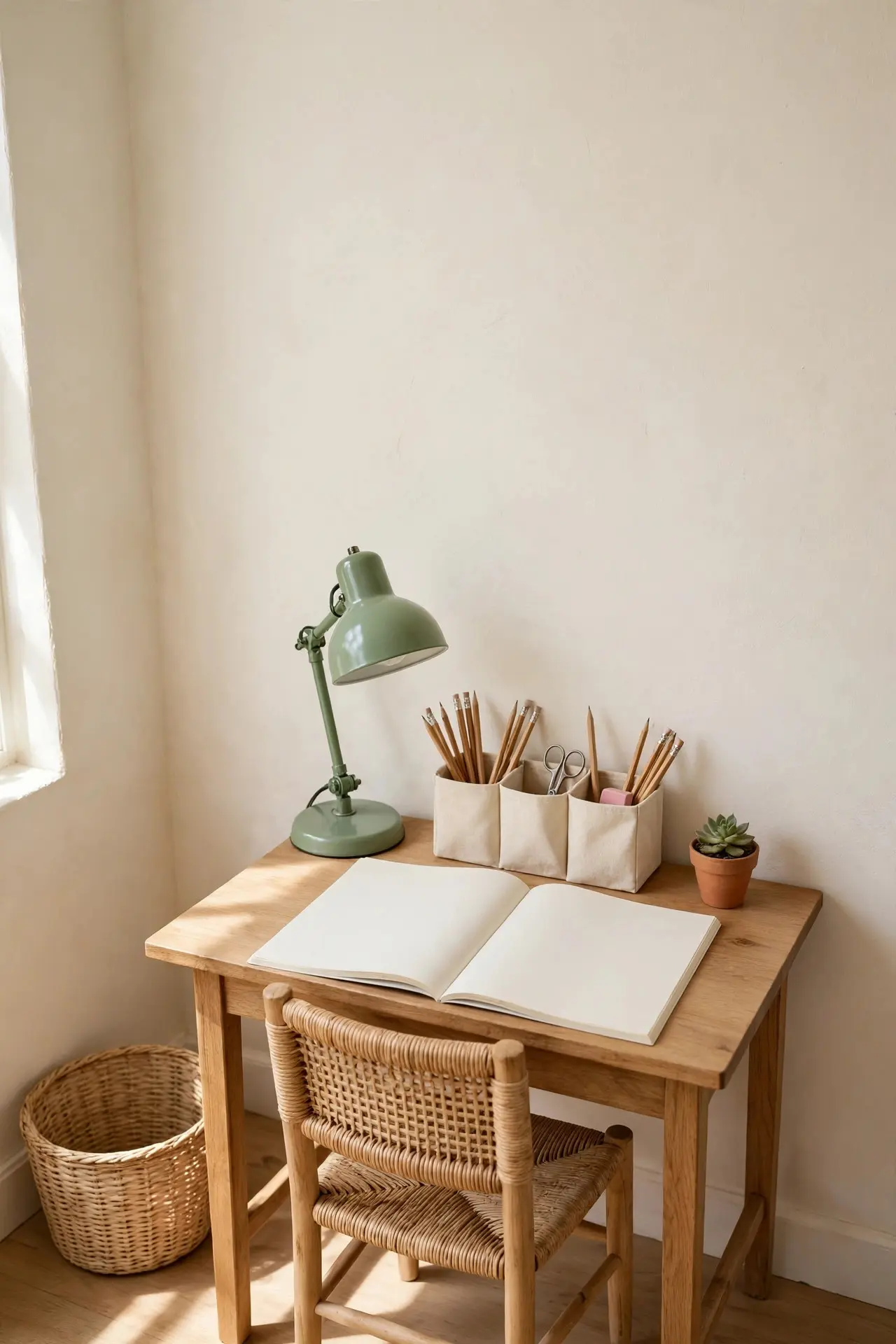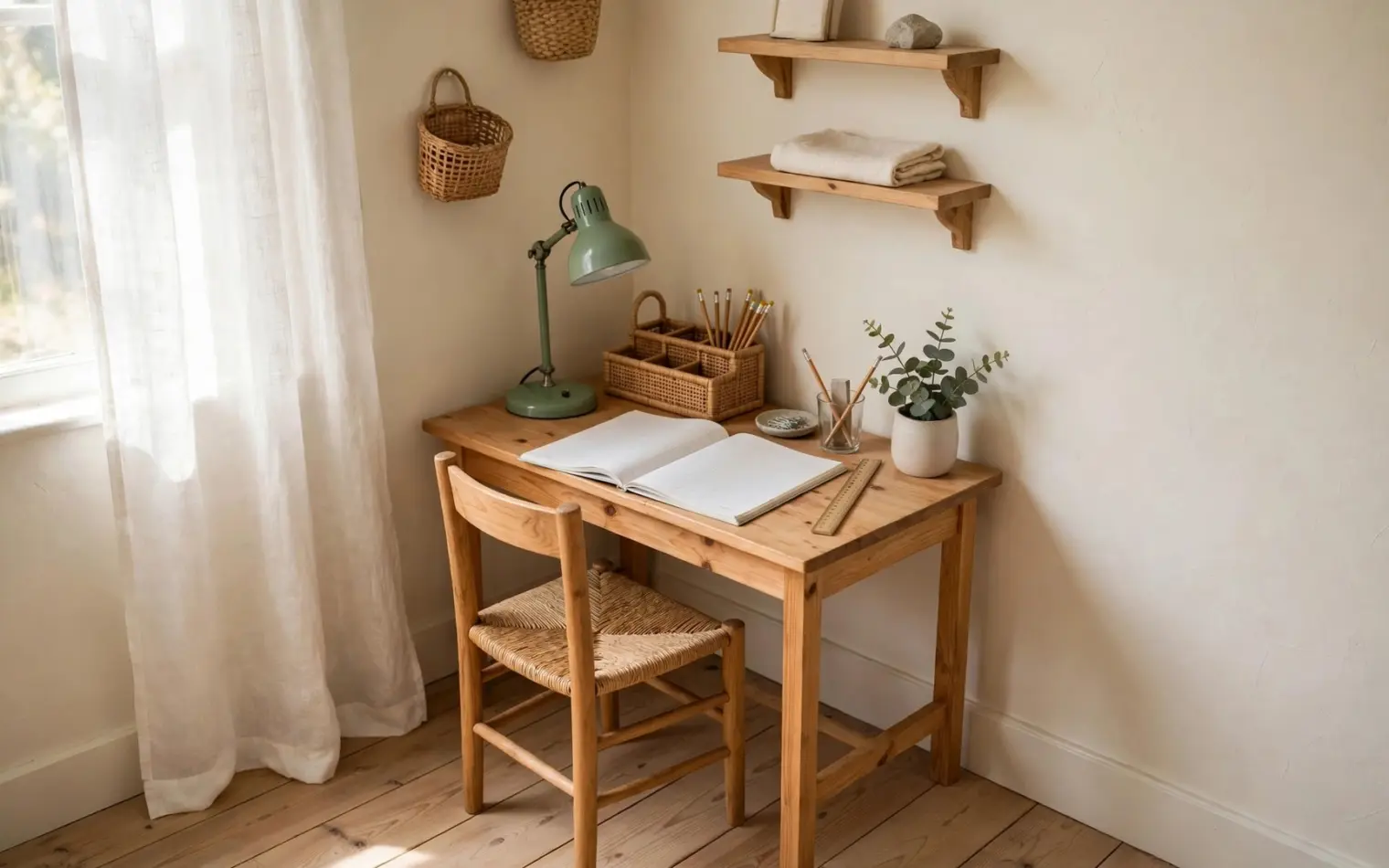
A homework station needs only four things in one consistent spot: a flat surface at elbow height, a chair with feet flat, a lamp, and one caddy holding the daily supplies — a corner, a closet nook or a rolling cart all work in a small home.
Thank you for reading this post, don’t forget to subscribe!The 12 setups below are grouped by the space they use — closet nooks, corners, carts and shared rooms — so you can jump straight to the one that matches your home. Every setup runs on the same essentials kit, and the 5-minute reset at the end keeps whichever one you pick tidy. If the toy clutter is the bigger battle, our guide to toy storage ideas tames the playroom first, so the homework corner stays a homework corner.
Closet nooks: a desk that closes away
A closet is the best homework station a small home can offer — it already has walls, a shelf and a door that closes. These three ideas turn it into a nook that hides when homework is done.
1. Turn a spare closet into a homework nook
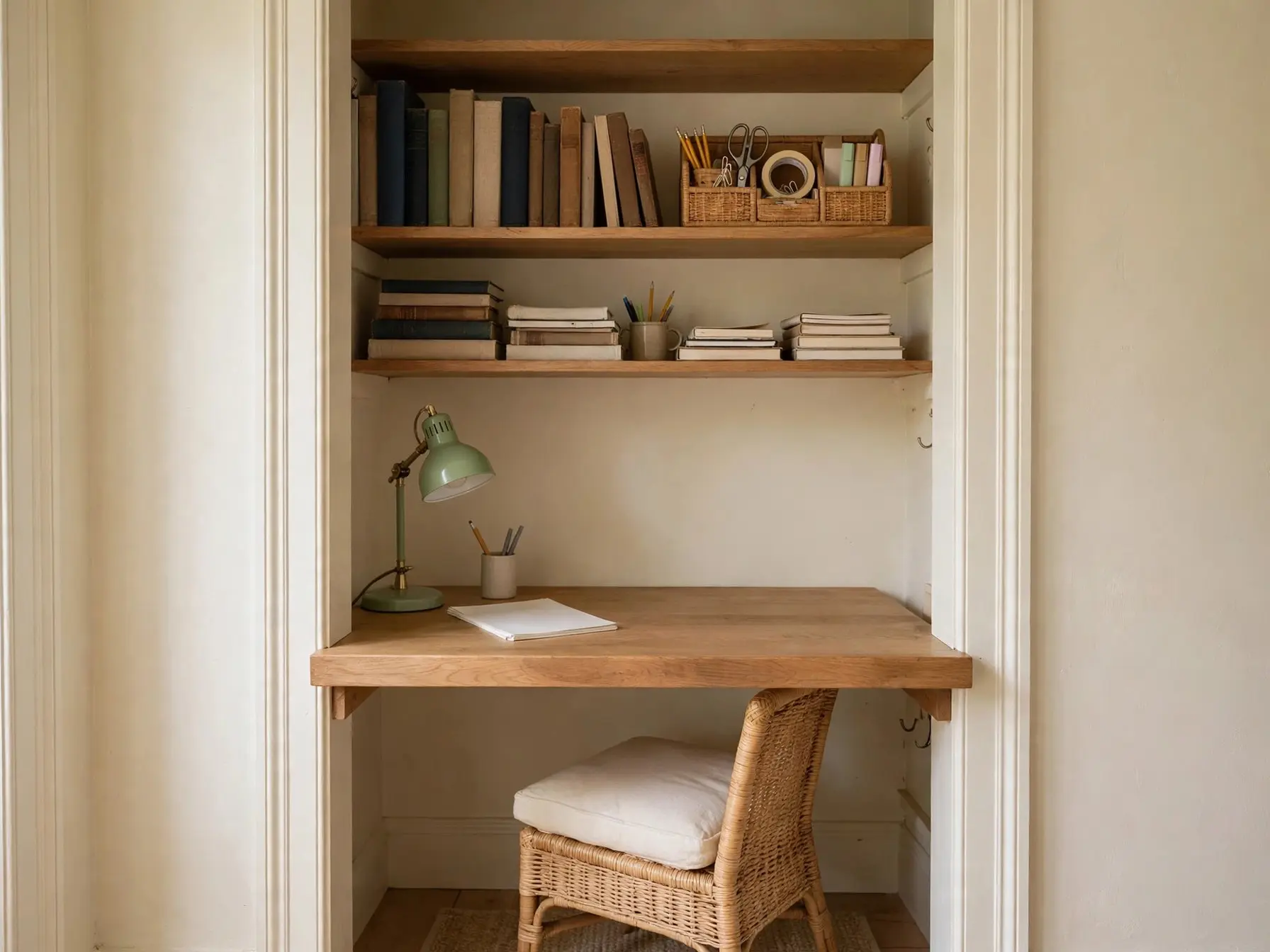
A spare closet is the best homework station a small home can offer: take the door off its hinges, set a desktop board across the opening at elbow height, and add two shelves above for books and the supply caddy. A small lamp on the desk and a chair that slides fully inside mean the whole station closes away behind a curtain when homework is done. Measure the closet first — most reach-in closets are about 24 inches deep, which fits a laptop and an open workbook side by side. Keep the top shelf for the things used least, so the daily supplies stay at arm’s reach.
- Take the closet door off its hinges
- Set the desktop at elbow height
- Keep daily supplies at arm’s reach
2. Fold a desk down from the closet wall
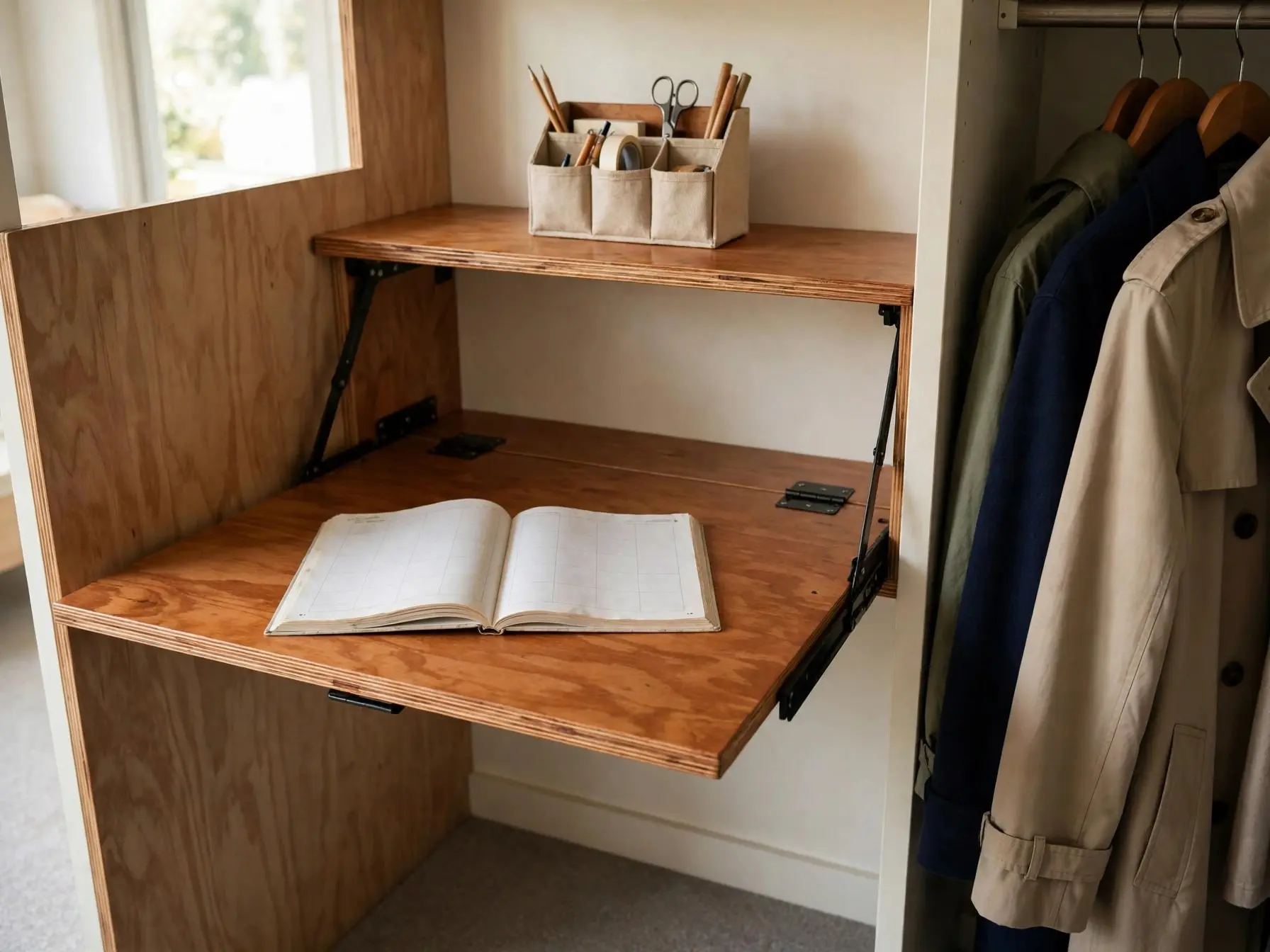
When the closet still holds coats, a fold-down desk uses the wall instead of the floor: mount a hinged desktop at elbow height inside the closet, with a small shelf above for the caddy and a lamp. Fold it up after homework and the coats go back in front of it, so nothing in the room changes. Choose a desk at least 24 inches wide so a workbook opens flat, and fit a small lip or rail at the front edge so pencils do not roll off when the desk is up. A wall-mounted lamp keeps the desktop clear, and a hook on the side holds the backpack.
- Mount the desk at elbow height
- Fit a lip at the front edge
- Use a wall-mounted lamp
3. Turn the closet door into a supply wall
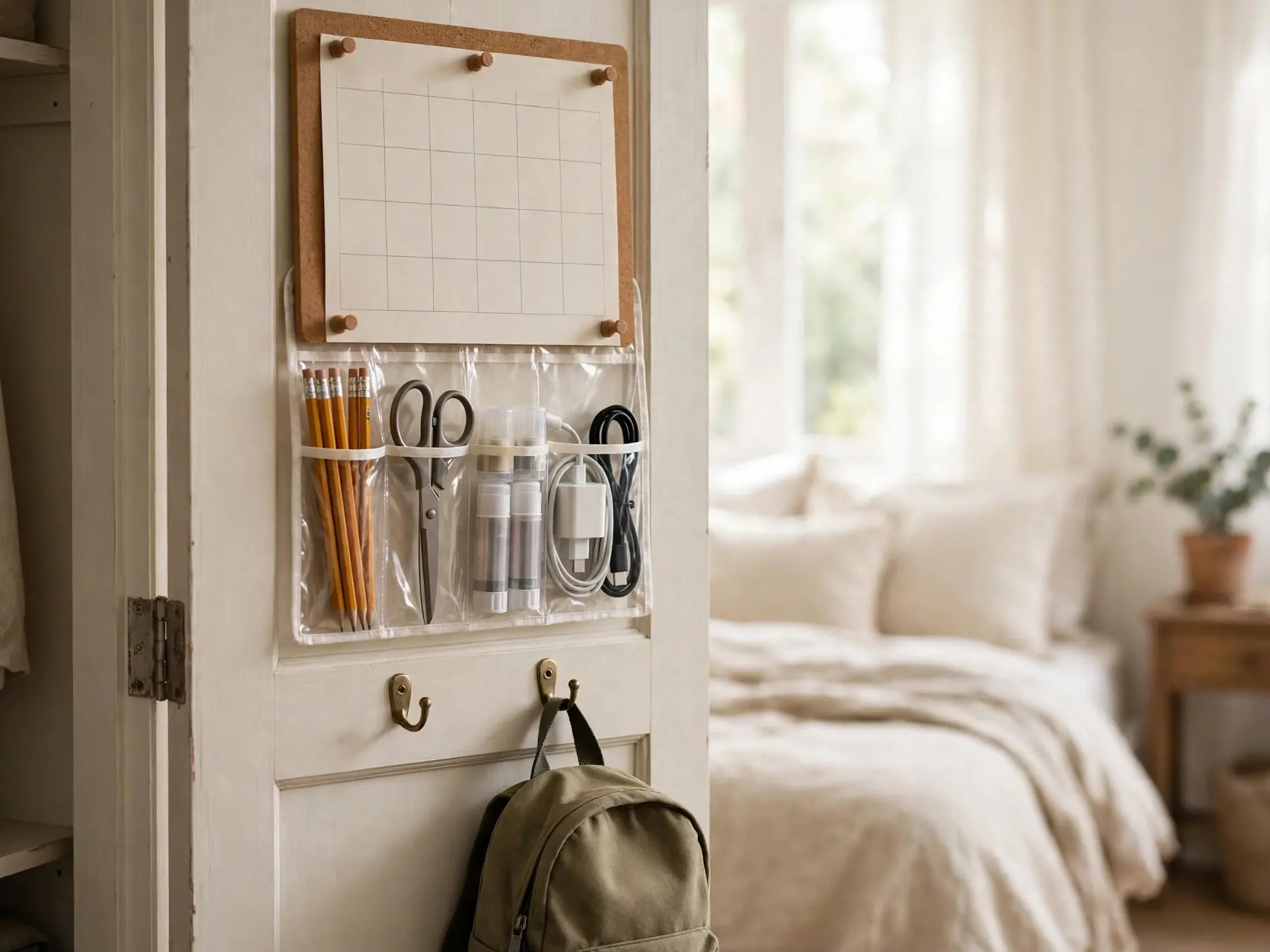
The inside of a closet door is a whole supply wall hiding in plain sight: hang a clear pocket organizer over the door and fill the pockets with pencils, scissors, glue sticks and chargers, then add two adhesive hooks for the backpack and a small cork board for the weekly schedule. Everything is visible at a glance, so nothing gets lost at the bottom of a bag. Keep the heaviest items in the lowest pockets so the door still closes easily, and leave one pocket empty for the thing that comes home tomorrow. This works on a bedroom door too, if the closet is full.
- Hang a clear pocket organizer
- Add hooks for the backpack
- Leave one pocket empty
Corners: dead space that works
Every room has a corner that holds nothing but a laundry pile. A small desk, a lamp and a caddy turn that dead space into the one place homework always happens.
4. Fit a small corner desk into an empty bedroom corner
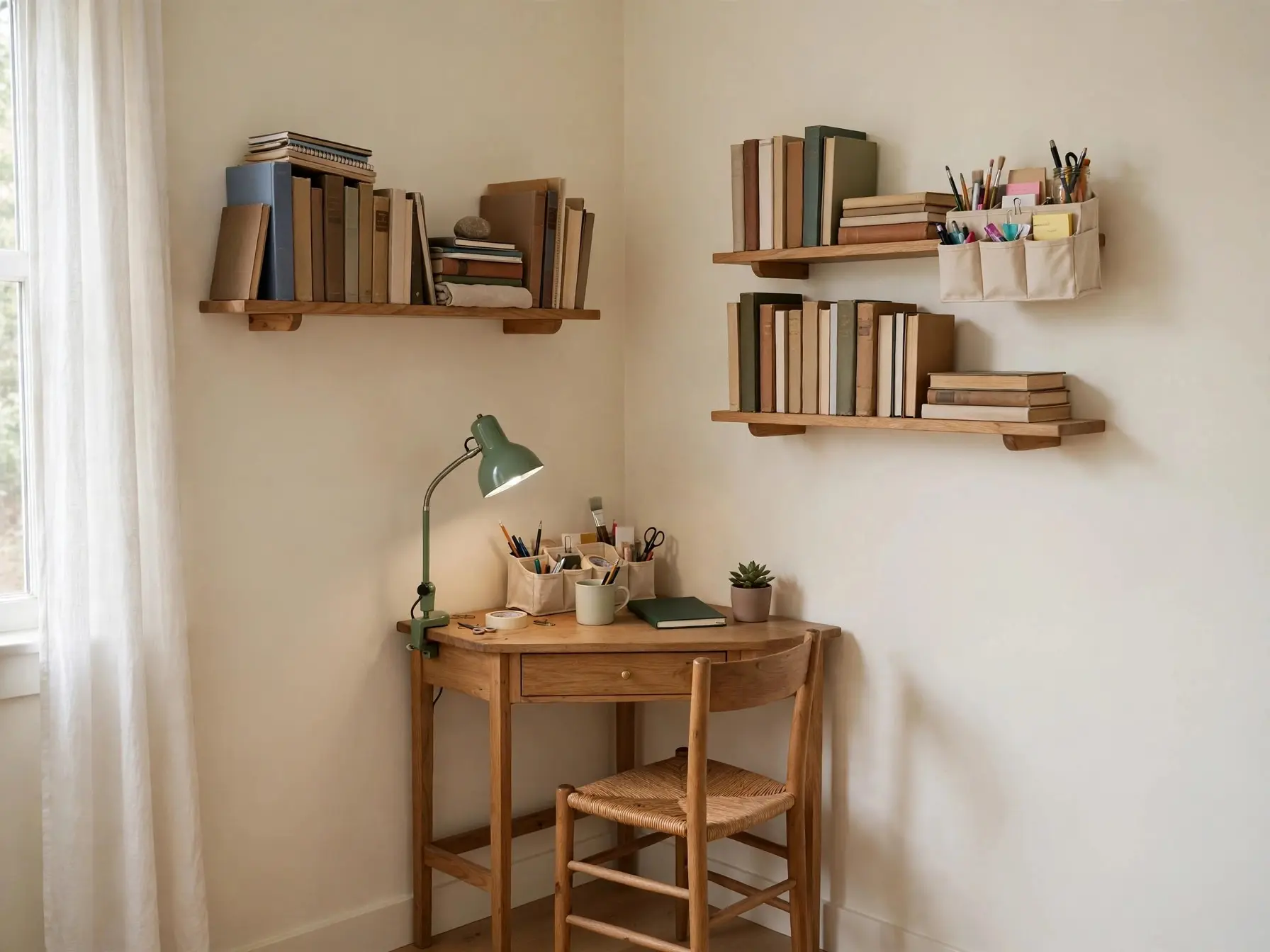
Every bedroom has a corner that holds nothing but a laundry pile: set a small corner desk there, about 30 inches wide, with the chair tucked in facing the wall. The two walls hold shelves for books and the caddy, so the desktop stays clear for actual work. A corner desk needs less floor than a straight one because the chair slides under it instead of out into the room. Add a clip-on lamp to the desk edge and a small wastebasket beside the chair, and the corner becomes the one place homework always happens.
- About 30 inches wide fits most corners
- Face the wall, not the room
- Clip a lamp to the desk edge
5. Claim the corner by the window
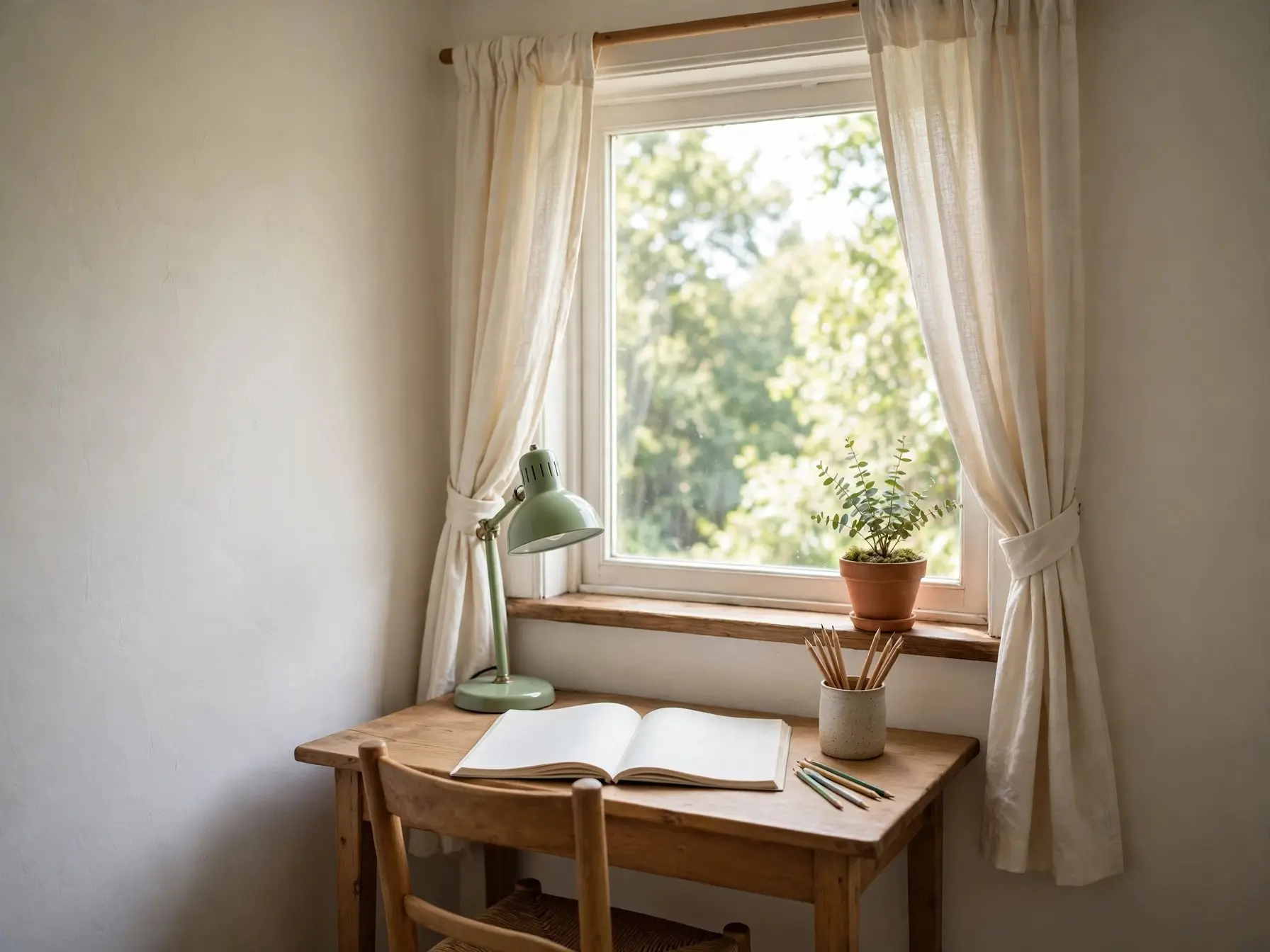
Light matters more than square footage for homework: put the desk in the corner beside a window so the child works in daylight, with a lamp on the desk for evenings. A windowsill holds the pencil cup and a small plant, which keeps the desktop free. Hang a curtain or a blind the child can pull when the sun glares on the screen, and keep the chair facing the window rather than the room so the view is sky, not the toy shelf. This corner suits older kids who do most of their work on a laptop, since the screen stays readable.
- Work in daylight by the window
- Add a lamp for evenings
- Face the window, not the toy shelf
6. Set up a homework corner in the living room
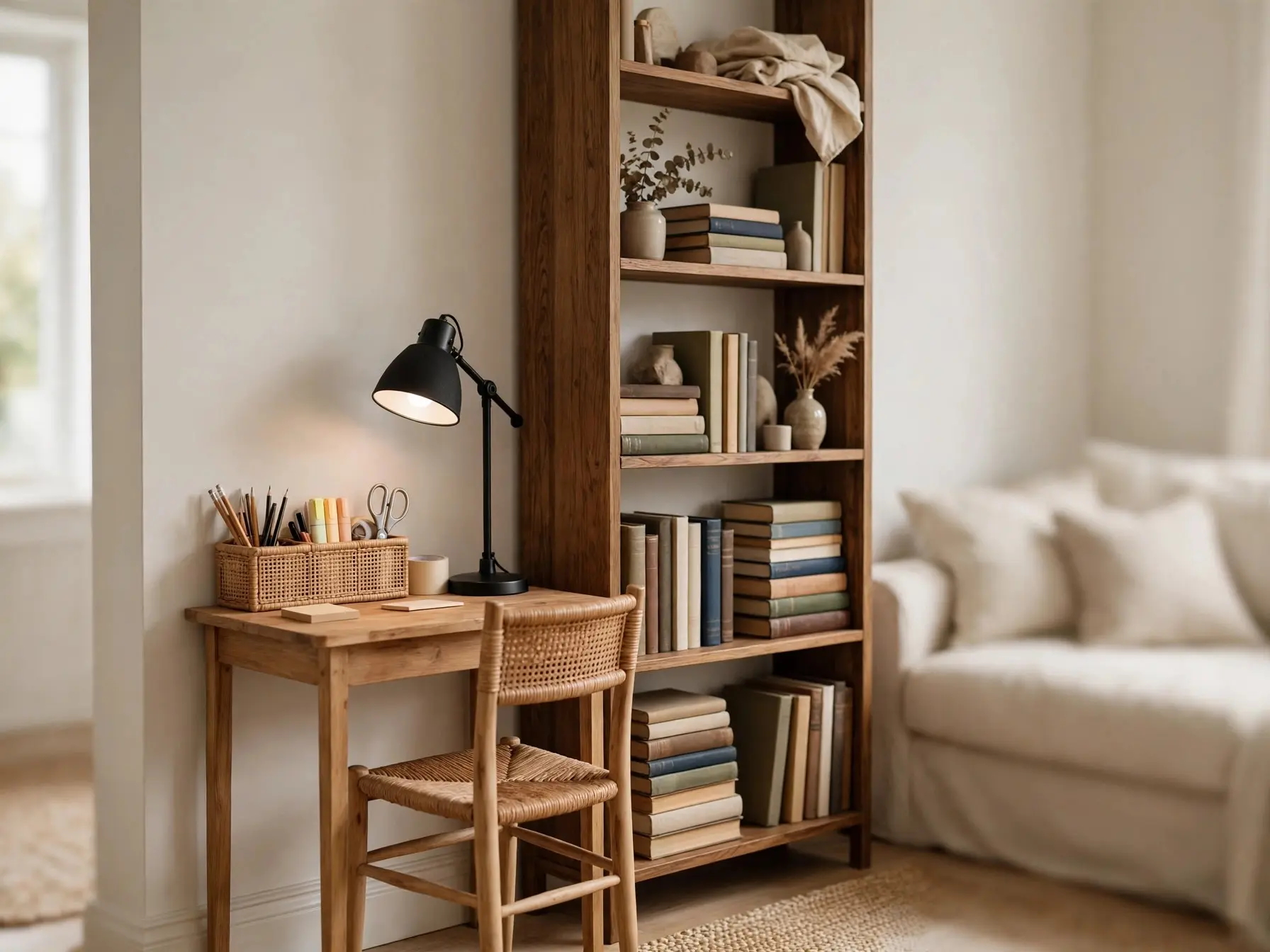
When bedrooms are shared, the living room corner can host homework: a small desk beside the bookshelf, facing the wall, with the supply caddy on the desk and a chair that slides under. A folding screen or a tall bookshelf marks the boundary so the homework corner reads as its own spot, not as the middle of the living room. Keep the supplies in the caddy, not spread across the coffee table, and agree on quiet hours while homework happens. At the end of the session the caddy goes on the shelf and the desk is a side table again.
- Face the desk to the wall
- Mark the boundary with a shelf
- Keep supplies in the caddy
Carts and portable stations
When no single spot is free, the station itself moves. A cart, a lap desk or a backpack station carries the whole kit to wherever homework happens that day.
7. Build a rolling cart station that parks anywhere
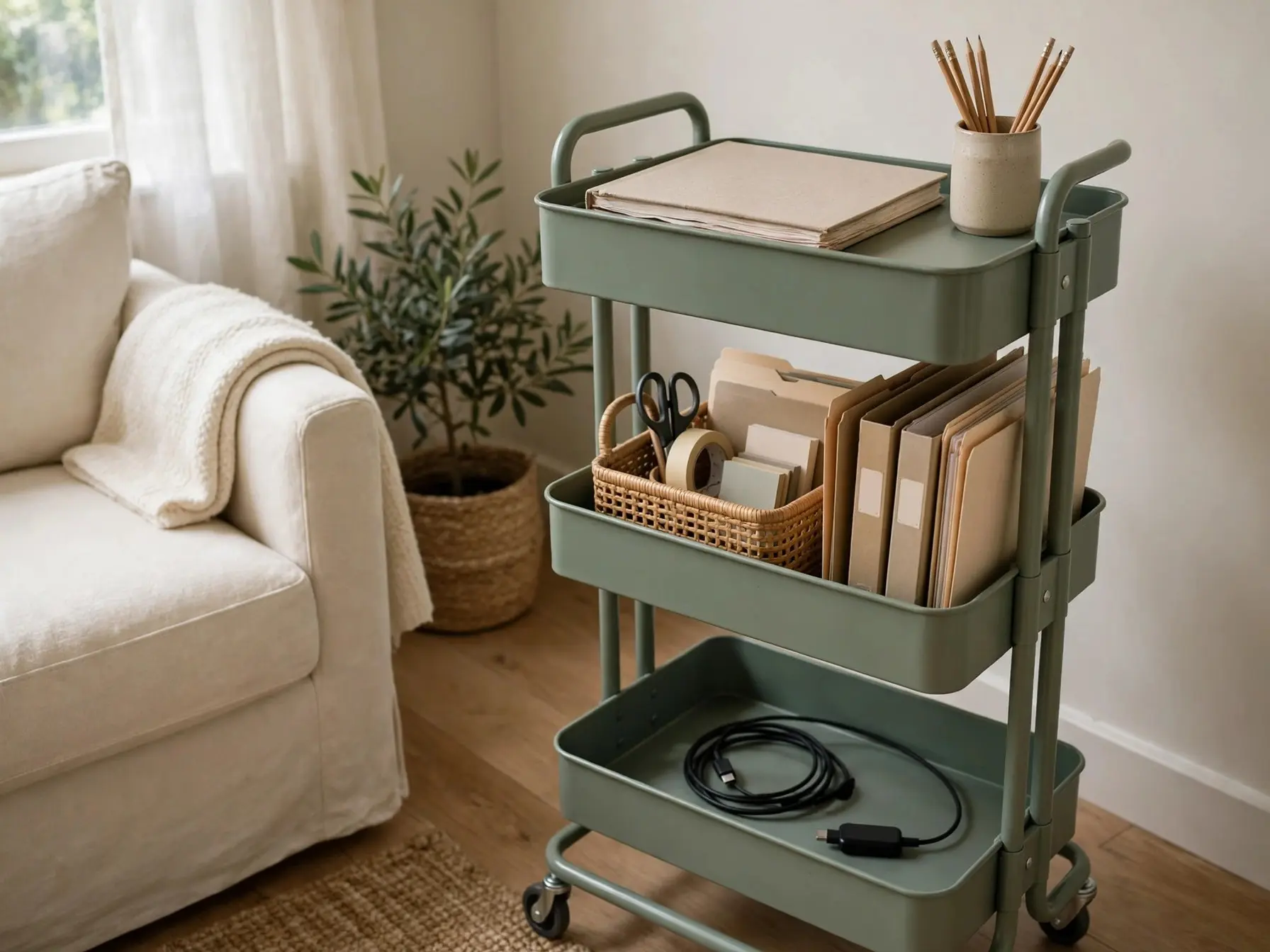
A three-tier rolling cart is the most flexible homework station in a small home: the top tier is the work surface for a workbook or a laptop, the middle tier holds the supply caddy and the to-do folder, and the bottom tier holds chargers and the done folder. Roll it to the kitchen table, the bedroom or the living room, then park it in a corner when homework is done. Choose a cart with locking wheels so it stays put while the child writes, and keep the top tier clear of anything but the current task — a cart that holds everything holds nothing well.
- Top tier is the work surface
- Middle tier holds the caddy
- Lock the wheels while writing
8. Use a lap desk and a caddy for couch homework
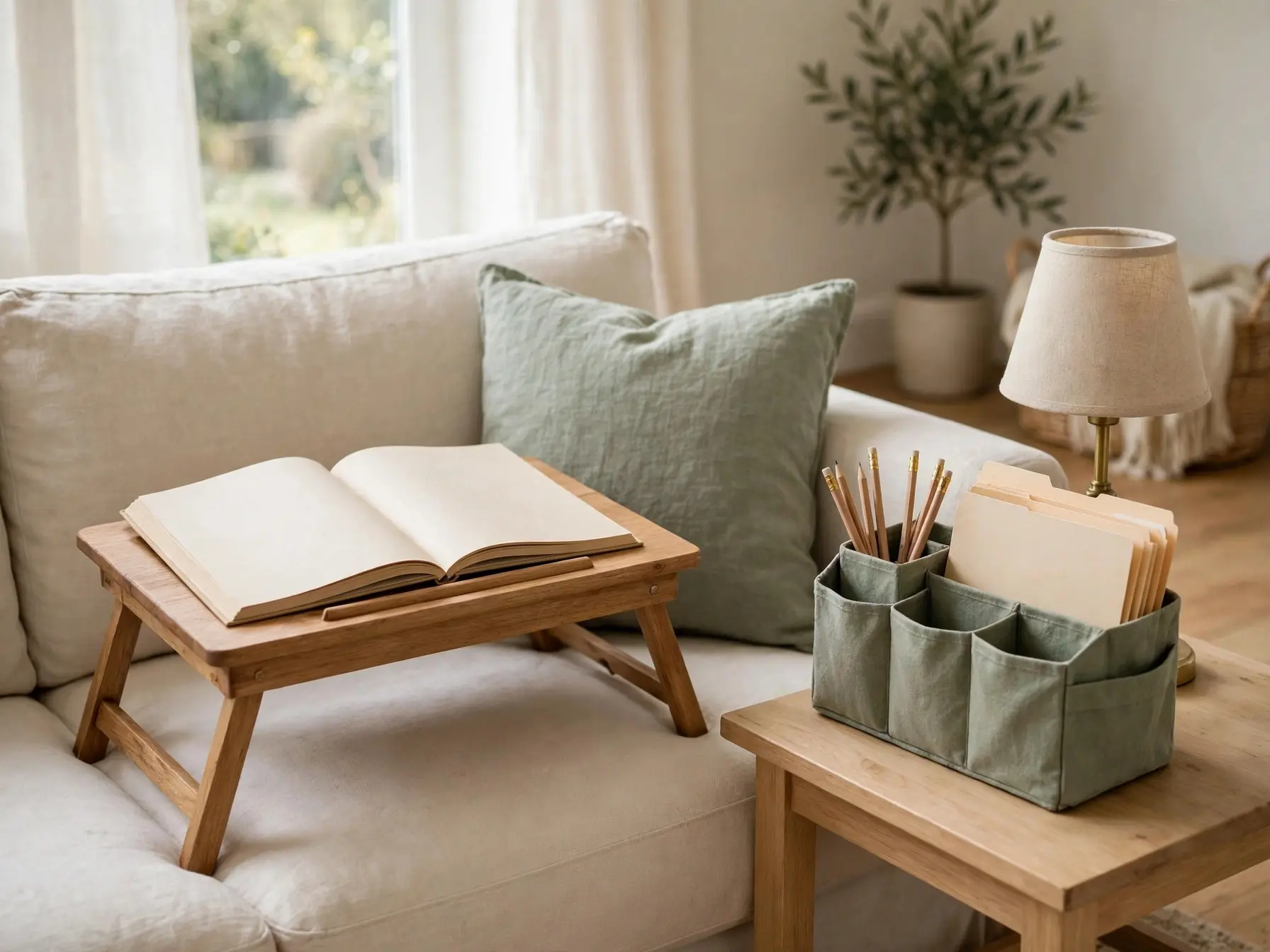
Not every homework session needs a desk: a lap desk with a flat top and a cushion base turns the couch into a station, paired with a supply caddy that lives on the side table. The caddy holds the pencils, the workbook and the to-do folder, so the child sits down and starts instead of hunting for supplies. Pick a lap desk with a small lip at the bottom edge so the workbook does not slide off, and a cup holder or a slot for the pencil cup. This setup suits short sessions and younger kids, and it packs away in under a minute.
- Pick a lap desk with a lip
- Keep the caddy on the side table
- Packs away in under a minute
9. Park a homework backpack station by the door
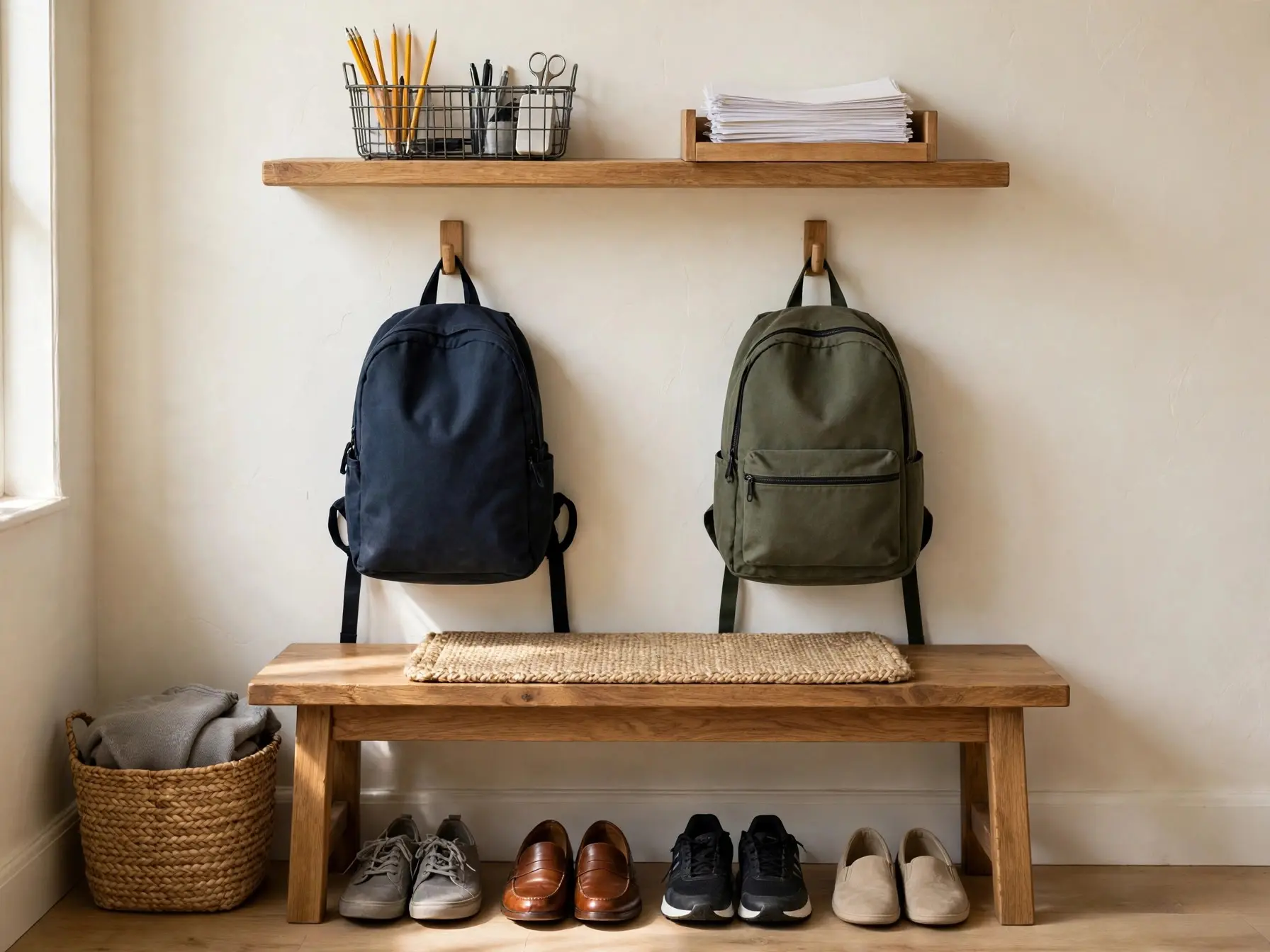
Homework starts and ends at the front door, so build the station there: two hooks for backpacks, a small cubby or shelf for the lunchbox and library books, and the supply caddy on the shelf above. The child hangs the bag, pulls out the homework, and works at the nearest table — and when it is done, the finished work goes straight back into the bag. Keep a small tray on the shelf for permission slips and forms, so paper never lands on the kitchen counter. This station works best for families where homework happens at the kitchen table.
- Two hooks for backpacks
- A tray for slips and forms
- Finished work goes back in the bag
Shared rooms and the dining table
Shared bedrooms and shared tables need stations that respect everyone else in the room. These three setups give homework a boundary without taking over the house.
10. Split a shared bedroom into two mini stations
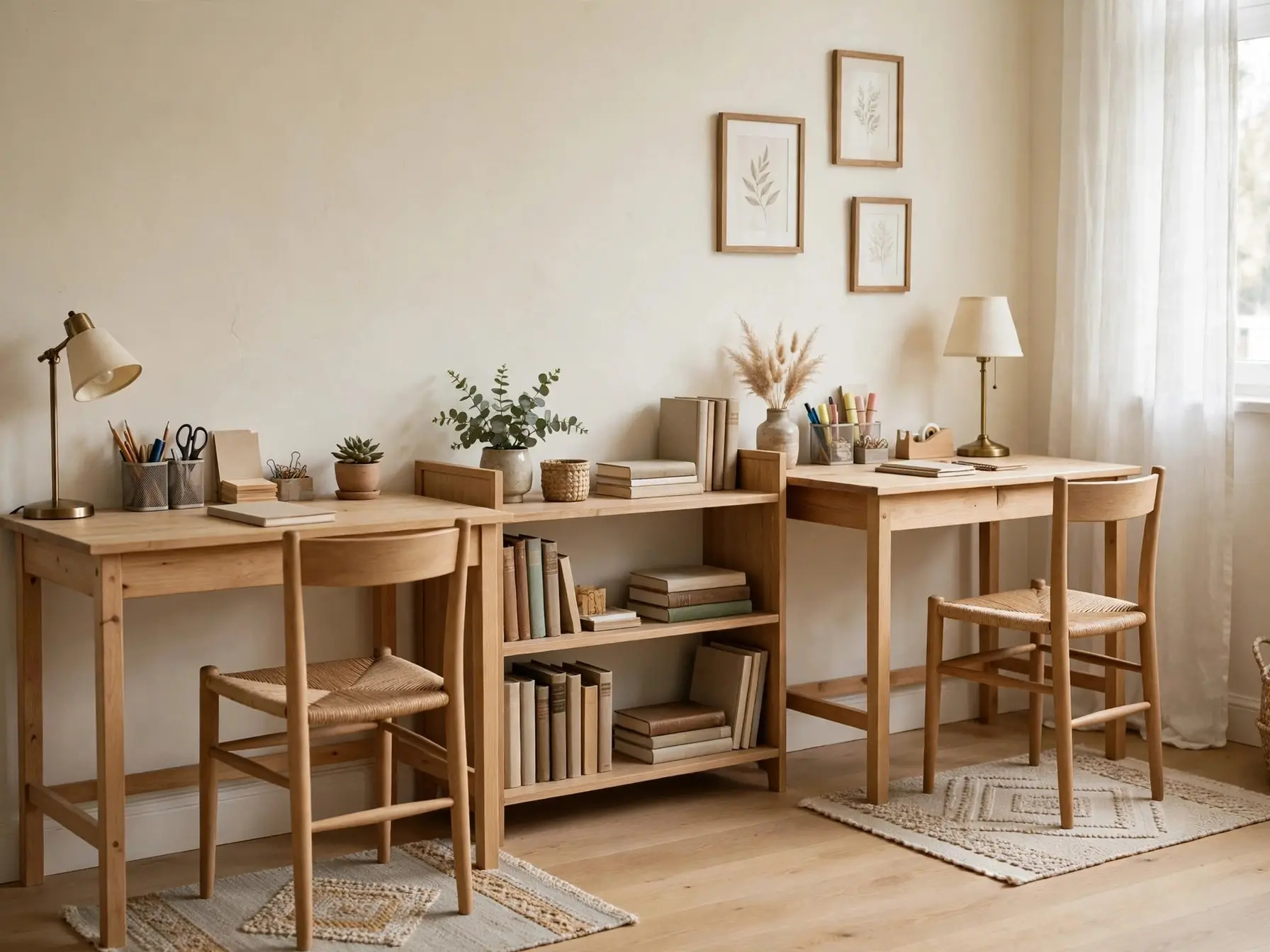
Two kids sharing a bedroom can still have two stations: place two small desks back to back in the middle of the room, or side by side along one wall with a bookshelf as a divider between them. Each child gets the same kit — a surface, a chair, a lamp and a caddy — and a small shelf each for their own books. Agree on a rule that each station is the other child’s space, and keep the shared supplies in one caddy between the desks. A rug under each desk marks whose spot is whose, and the divider blocks the view that starts most arguments.
- Two small desks, one divider
- Same kit at each station
- A rug marks each boundary
11. Mount a wall desk that folds up when homework is done
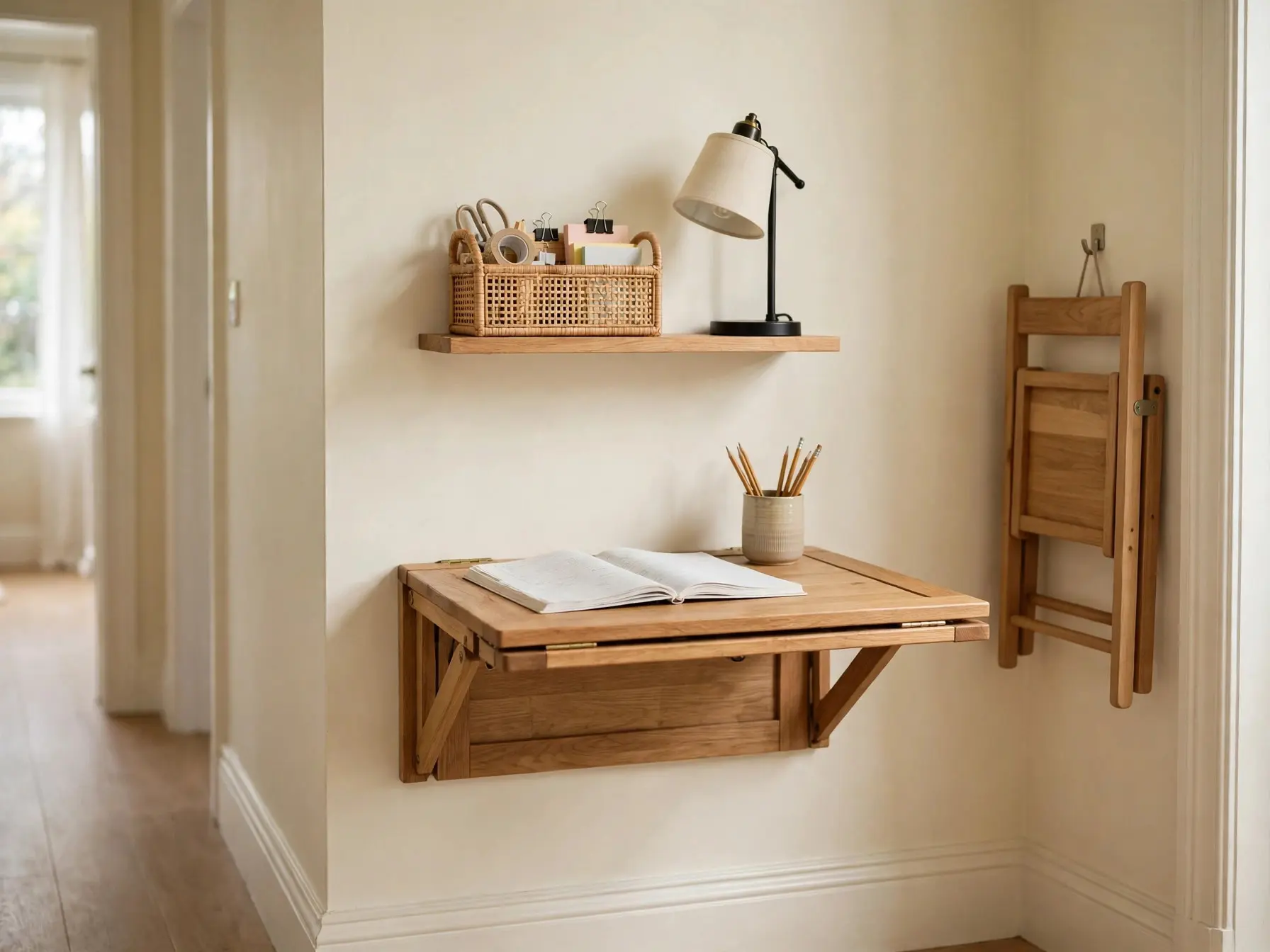
A wall-mounted desk that folds up is the smallest real desk there is: mount it in a hallway, a bedroom or even the kitchen at elbow height, with a small shelf above for the caddy and a lamp. Fold it down for homework, fold it up for dinner, and the room never loses a square foot to furniture. Choose a desk at least 24 inches wide with a sturdy bracket, and mount it into a stud so it holds a laptop and a stack of books. A chair that hooks on the wall beside it completes the station, and the folded desk reads as a shallow shelf.
- Mount it into a wall stud
- Fold it up after homework
- Hook the chair on the wall beside it
12. Run homework from the dining table with a pack-away caddy
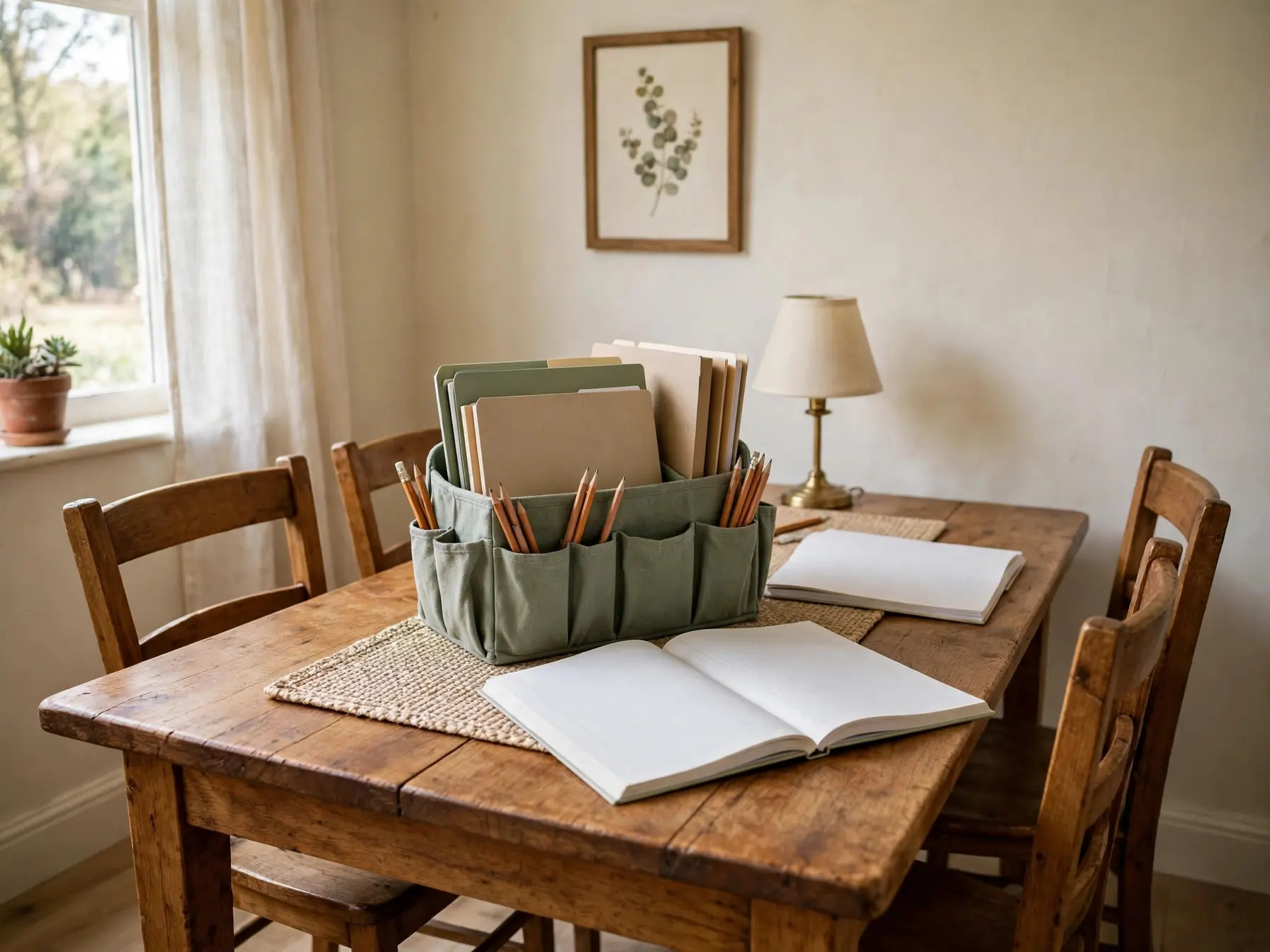
The dining table is the homework station most small homes already own: the trick is the pack-away caddy that carries everything in and out. Fill one caddy with the pencils, the workbook, the to-do folder and the charger, and keep it on a shelf by the table. At homework time the caddy lands on the table and the child starts in under a minute; at dinner time it goes back on the shelf and the table is a table again. Set a rule that the table is cleared before dinner, and keep a placemat under the work area so pencil marks never reach the wood.
- One caddy carries everything
- Clear the table before dinner
- A placemat protects the wood
The homework essentials kit: six things, one caddy
Every setup in this list runs on the same six-item kit. Pack it into one caddy and the station works anywhere — a closet, a corner or a cart.
- A flat surface at elbow height — a desk, a shelf board or the top tier of a cart
- A chair with feet flat on the floor — a dining chair or a small desk chair, not the bed
- A lamp — daylight by the window, a desk lamp for evenings
- A supply caddy — pencils, scissors, glue stick, ruler, eraser and a pencil sharpener
- To-do and done folders — one for work to start, one for finished work to hand in
- A charging spot — one outlet or power strip for a tablet or laptop
The 5-minute reset that keeps it tidy
A homework station stays tidy on a reset, not a deep clean. Run these five steps after every session — it takes about five minutes, and it means tomorrow starts with a clear desk.
- Clear the surface — books and papers off the desk, nothing left behind
- Return supplies to the caddy — every pencil, ruler and glue stick back in its slot
- Move finished work to the done folder — the to-do folder holds only what is left
- Plug devices in to charge — tablet or laptop on the charger, not in the bag
- Set tomorrow’s first task on top — the workbook open to the next page, ready to start
Questions, answered
Where is the best place for a homework station in a small home?
The best place is the quietest corner you already have — a closet nook, an empty bedroom corner or the end of the kitchen counter — because a consistent spot matters more than a big one. Choose a place with good light, a surface at elbow height and room for a chair with feet flat on the floor. Avoid the bed and the couch as the main spot: they signal rest, not work, and homework done there takes longer and gets messier.
What supplies should a homework station have?
A homework station needs a flat surface, a chair with feet flat, a lamp, a supply caddy with pencils, scissors, glue and a ruler, a to-do folder and a done folder, and a charging spot for a tablet or laptop. That is the whole kit — six things — and everything else is optional. Keep the supplies in one caddy so the station can move or pack away, and restock the caddy on Sunday so Monday starts with a full set.
How do you make a homework station in a shared bedroom?
Give each child their own mini station — two small desks side by side with a bookshelf divider, or back to back in the middle of the room — each with the same kit: surface, chair, lamp and caddy. Keep shared supplies in one caddy between the desks, and agree that each station belongs to one child. A rug under each desk marks the boundary, and matching quiet hours keep both children working at the same time.
How do I keep a homework station tidy?
Run a 5-minute reset after every session: clear the surface, return supplies to the caddy, move finished work to the done folder, plug devices in to charge, and set tomorrow’s first task on top. Do it at the same time every day so it becomes a habit, not a chore. Once a week, empty the caddy completely, toss dried-out pens and broken pencils, and check the folders — a station that gets a weekly reset never needs a big cleanup.
Keep reading
Homework is one piece of a small home that stays tidy on a system. Our guide to toy storage ideas, storage ideas for small spaces, and how to organize anything all build on the same idea: give everything one home, and the small space stops fighting you.
A homework station does not need a spare room or a big desk — it needs one consistent spot, four essentials and a caddy that holds the daily supplies. Pick the setup that fits the space you already have, build the kit, and run the 5-minute reset after every session: the station stays tidy, and homework starts the moment your child sits down.