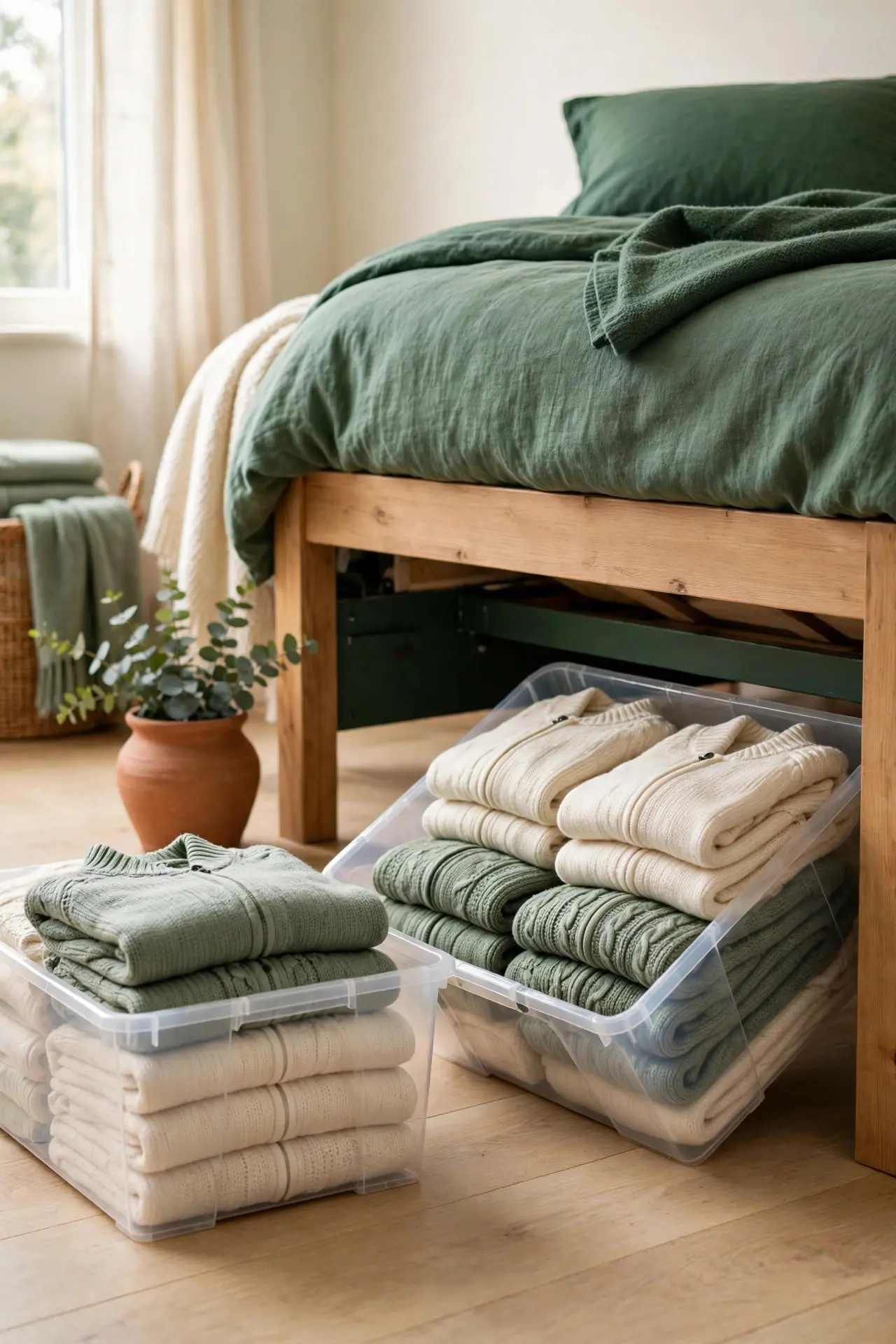
Store seasonal clothes clean and completely dry, in labelled bins or vacuum bags, in the driest spot you have — under-bed or top-shelf — and swap the whole wardrobe in one session when the season turns.
Thank you for reading this post, don’t forget to subscribe!That single session is the whole trick. A wardrobe swap that drags on for weeks leaves half your clothes in bags on the bed and the other half still hanging where you cannot reach them. Done in one sitting — wash, sort, pack, label, store, then hang the new season — it takes an afternoon and the closet stays usable for the next six months. The steps below work in both directions, whether you are putting winter away for summer or bringing the coats back out.
1 Wash and dry everything first
Nothing goes into storage dirty. A faint mark, a trace of body oil or a splash of food may be invisible in April, but after months sealed in a bin it sets into a stain and invites moths. Wash or dry-clean the whole off-season wardrobe, then dry it completely — clothes that feel dry to the touch can still hold dampness in thick seams and cuffs.
- Wash everything, including items that look clean — knitwear, coats that can be laundered, scarves and hats.
- Dry flat where the label says so, and give thick jumpers an extra day of air before packing; dampness in a sealed bin means mildew.
- Air coats outdoors for a few hours on a dry day, then brush them down before they go away.
- Send anything that needs dry-cleaning now, not at the start of next season when you want to wear it.
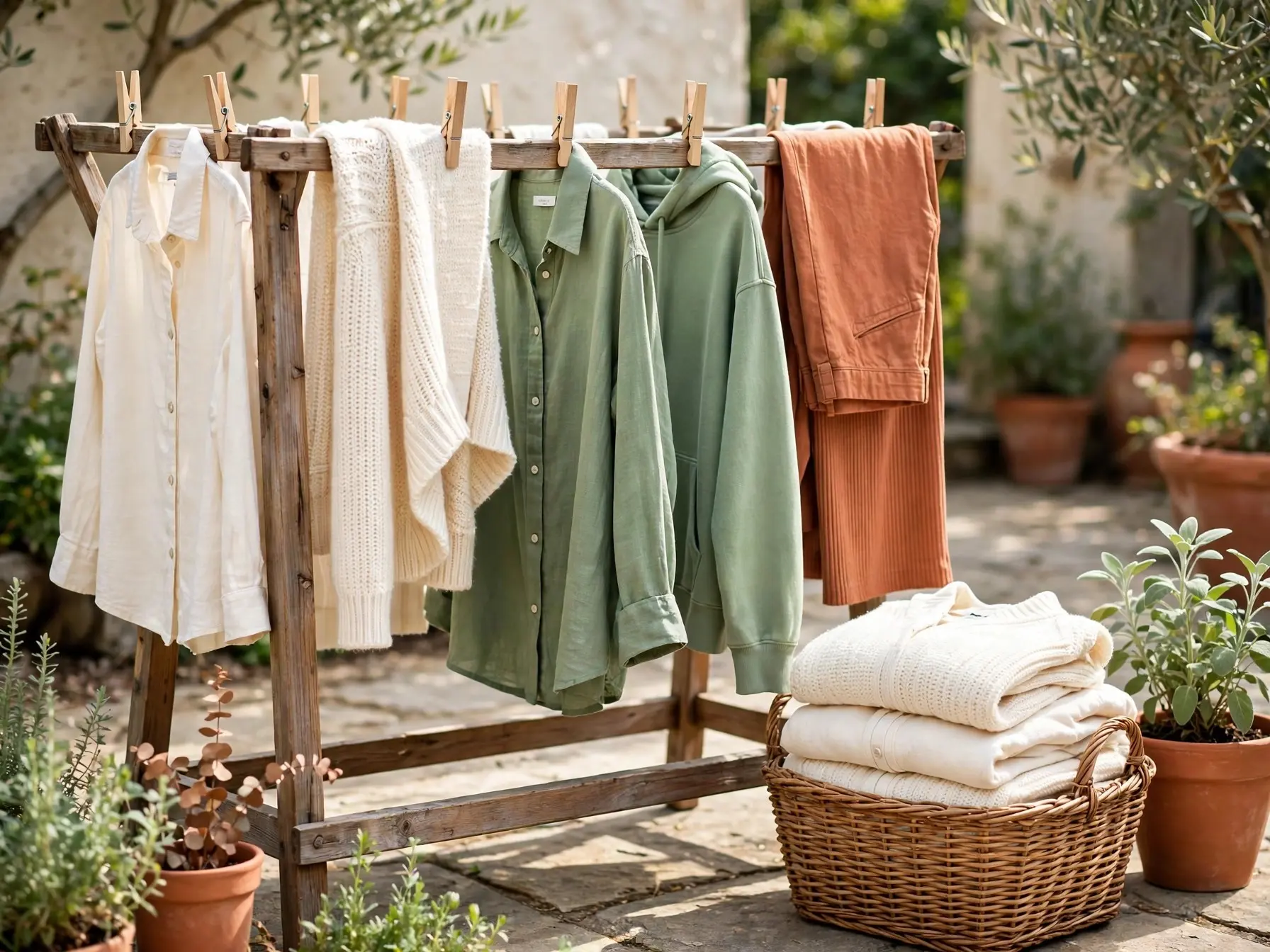
If you are short on time, prioritise the items that sat closest to skin — jumpers, base layers and scarves — and anything with a visible mark. Outerwear that was only worn over other layers can be aired and brushed, but it still needs to be fully dry.
2 Sort and repair
With everything clean, sort it into four groups before a single item is packed: keep for next season, repair, donate, and discard. Storing clothes you no longer wear is just paying rent — in closet space — for clutter.
- Keep: anything you wore regularly this season and expect to wear again next year.
- Repair: loose buttons, small tears, a broken zip — fix them now while the item is in your hands, or they will still be broken next season.
- Donate: good clothes you did not reach for all season, in clean condition.
- Discard: stained, stretched or threadbare pieces that are past donating.
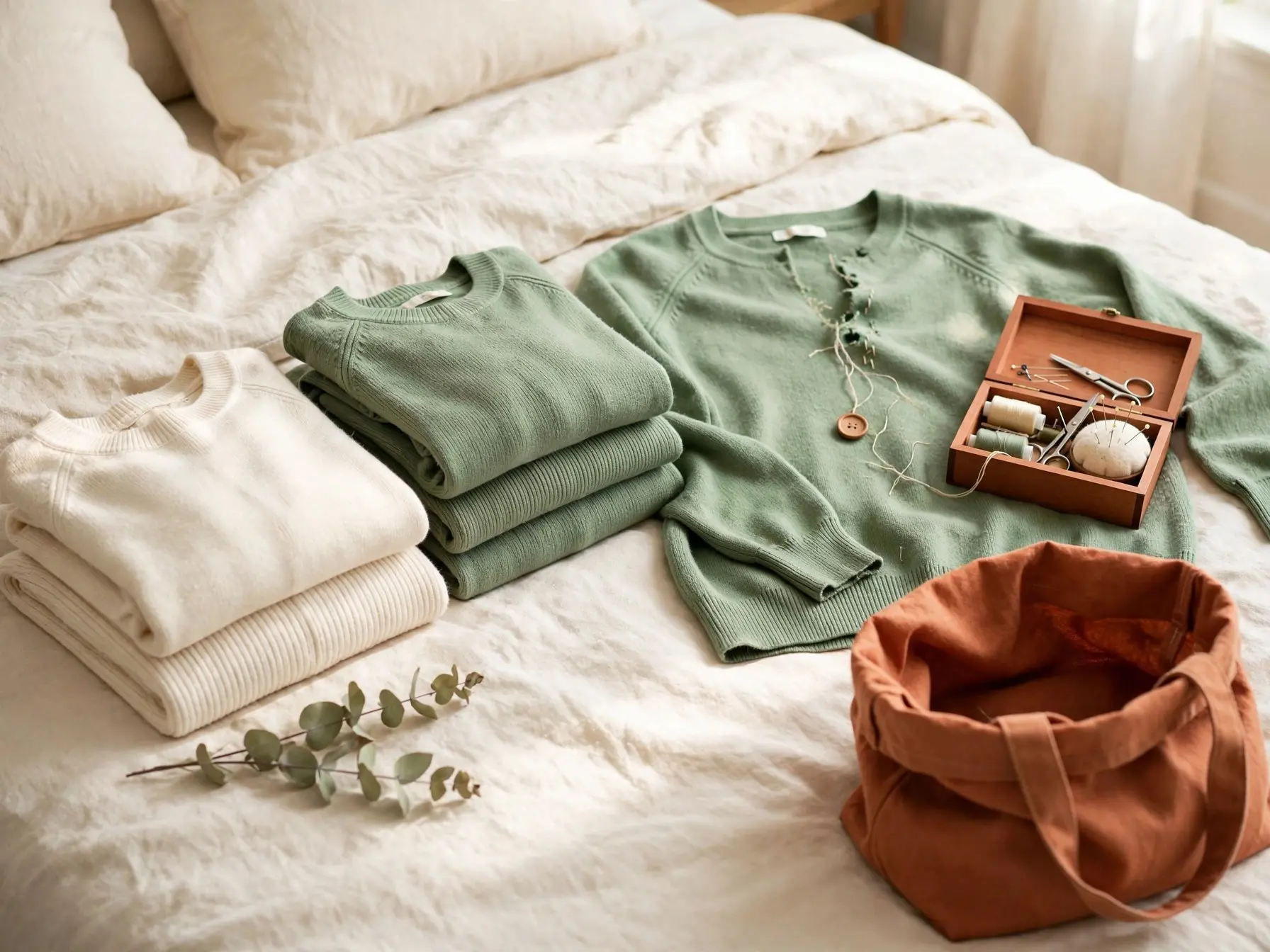
Be honest about the maybe pile. If you hesitated over an item all season, it belongs in the donation bag, not in a bin for another six months. The swap is also the easiest declutter of the year, because every item is already in your hands.
3 Choose the right container
No single container suits everything. Bins protect shape, vacuum bags save space, and garment bags protect hanging pieces — so mix them by item type rather than forcing the whole wardrobe into one kind of storage.
- Bins: best for knitwear, folded jumpers and anything that must keep its shape. Clear bins let you see contents at a glance; lidded bins keep out dust and moths.
- Vacuum bags: best for bulky, sturdy items — spare bedding, chunky knitwear and everyday coats — where space matters more than shape.
- Garment bags: best for coats, suits and dresses that wrinkle or lose their shape folded, and for anything you want to hang straight into the wardrobe next season.
- Avoid vacuum bags for leather, fur, silk and down that must keep its loft; those need air and a breathable bag or bin.
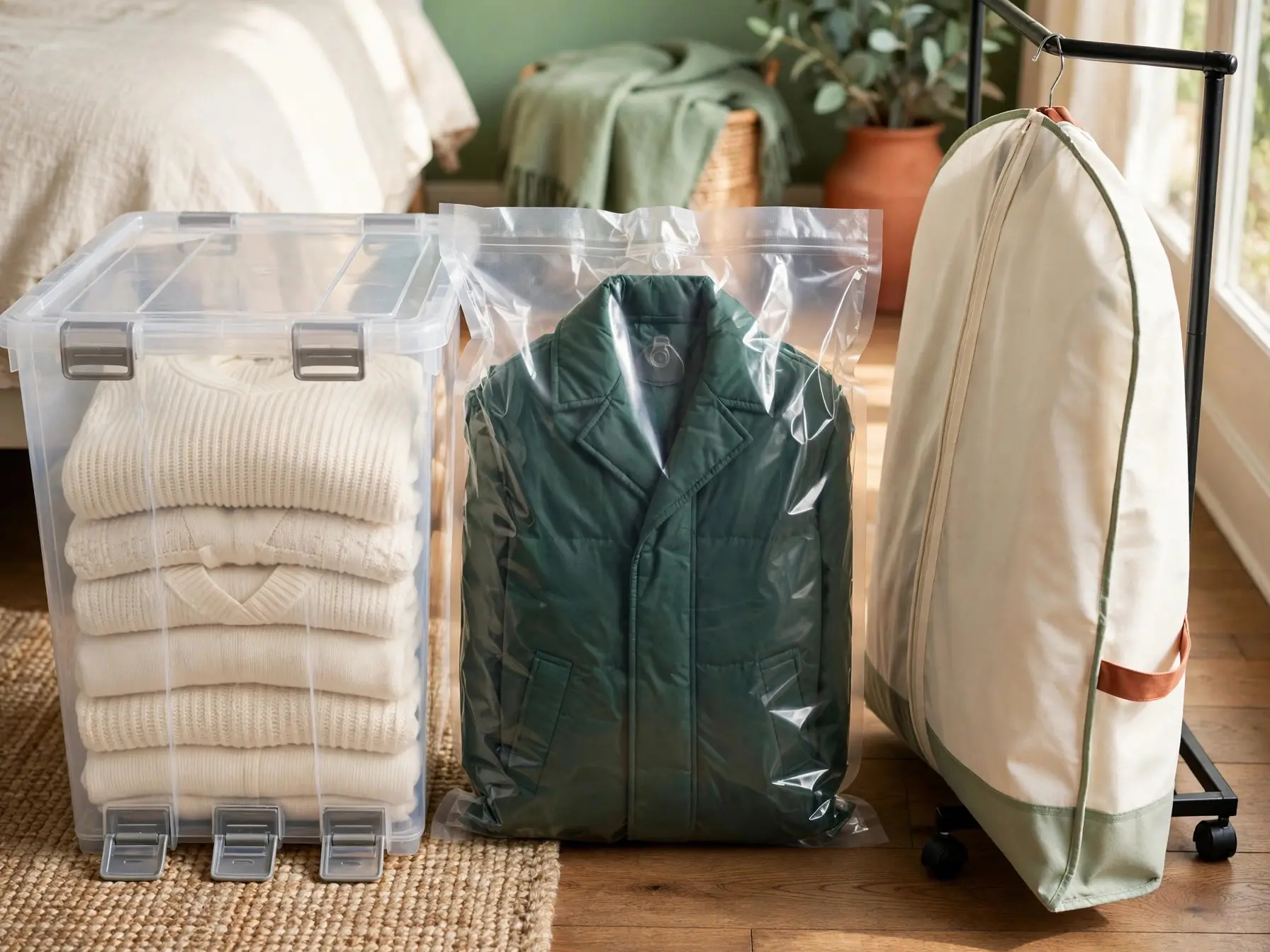
Whatever you choose, make sure it closes fully and is clean and dry inside before packing. A bin with a cracked lid or a bag with a failing seal is an invitation to dust and damp.
4 Fold, roll and pack
Pack by category, not by grabbing armfuls: all jumpers together, all trousers together, scarves and hats in their own pouch. That way next season you unpack one bin at a time instead of hunting through three.
- Fold knitwear rather than hanging it — hangers stretch shoulders out of shape over months.
- Roll soft items such as T-shirts, leggings and scarves to save space and avoid hard fold creases.
- Put tissue paper between delicate folds and on top of the pile to cushion the contents.
- Do not overfill: a bin packed tight crushes fibres and strains the lid, and a vacuum bag filled past its line will not seal properly.
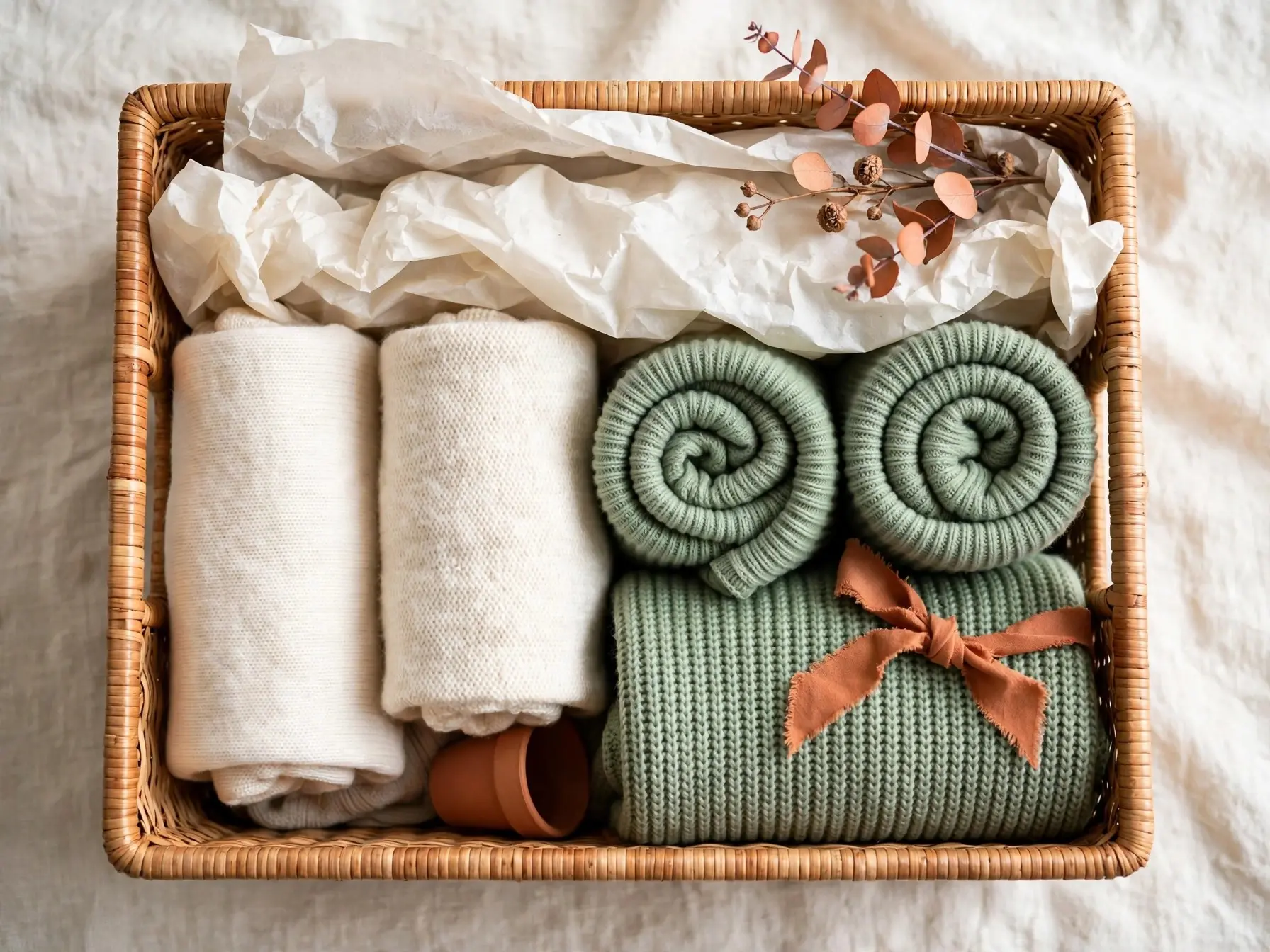
Add a lavender or cedar sachet to each bin if you like — it keeps stored clothes smelling fresh and discourages moths — but never pack mothballs loose against fabric, and never add anything damp, scented or stained to a sealed container.
5 Label and store in the driest spot
Label every container on two sides with the season and the contents — “Winter: knitwear and scarves” beats “Clothes” every time you go looking for one jumper in October. Then store the bins in the driest spot you have.
- Best spots in a small home: under-bed bins, the top shelf of a wardrobe, or a high closet shelf.
- Keep bins off the floor where you can, and away from outside walls that get condensation.
- Avoid damp basements, leaky garages and hot lofts — heat warps fibres and elastic, and damp breeds mildew.
- Stack heavier bins at the bottom, lighter ones on top, and never stack anything heavy on a garment bag.
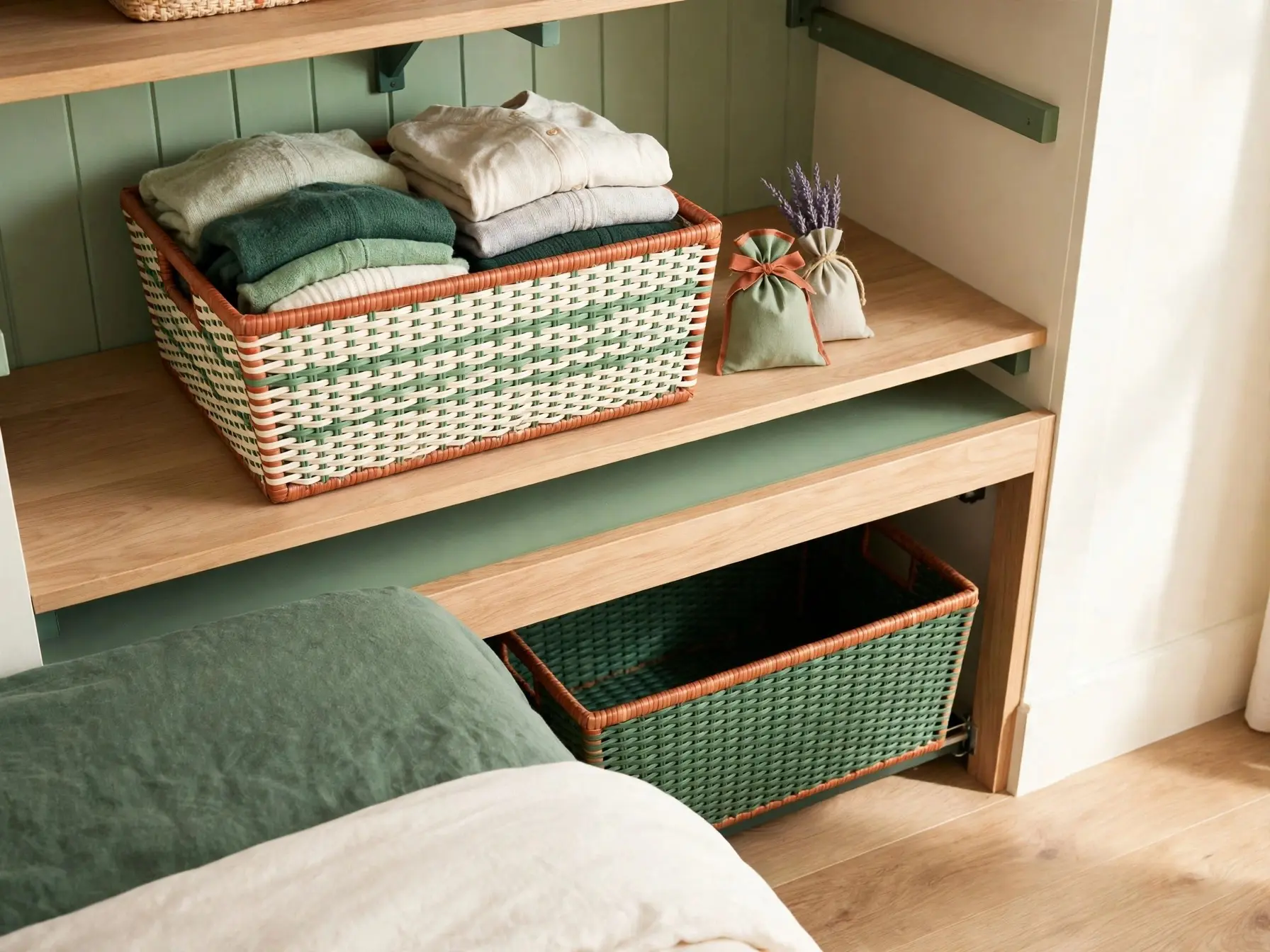
Write the label as if a stranger will read it in six months — because in six months, that stranger is you. A photo of the bin contents tucked inside the lid is a useful extra if you store more than a few bins.
6 Swap in one session
Now bring the new season out. Hang the incoming clothes, fold the rest onto shelves, and put the empty bins straight back where the outgoing season came from — ready to be filled at the next swap. Do not leave bags on the bed “to finish tomorrow”: tomorrow is how swaps turn into month-long mess.
- Air incoming clothes for a day before hanging them, and shake out any creases.
- Try on anything you are unsure still fits before it takes up a full season of rail space.
- Put the outgoing bins away immediately, labels facing out, so they are findable next time.
- Finish by wiping the shelves and vacuuming the closet floor while it is empty — it will not be this accessible again for six months.

Set a reminder for the reverse swap now — a calendar note six months out, on a weekend, with the same one-session rule. Twice a year, one afternoon each, and the wardrobe never overwhelms the closet again.
Bins vs vacuum bags vs garment bags
Use this comparison to pick the right container for each category, rather than buying one type for the whole wardrobe.
| Container | Protects against | Space saved | Best for |
|---|---|---|---|
| Labelled bins | Dust, moths, crushing and light damp | Low — bins stack but do not compress | Knitwear, folded jumpers and anything that must keep its shape |
| Vacuum bags | Dust and moths, once sealed | High — bulky items shrink by more than half | Spare bedding, chunky knitwear and everyday coats in a small home |
| Garment bags | Dust, snagging and wrinkles while hanging | None — they need rail space | Coats, suits and dresses that wrinkle or lose shape when folded |
Questions, answered
What is the best way to store winter clothes in summer?
Pack winter clothes clean and completely dry in labelled bins or vacuum bags, and keep them in the driest spot you have — under the bed or on a top shelf. Heavy coats and knitwear go in bins so they keep their shape; bulky bedding and spare jumpers can go in vacuum bags to save space. Check the spot stays dry through the summer, and air everything for a day before it goes back into the wardrobe.
Where is the best place to store off-season clothes in a small home?
The driest spot inside your home, not the dampest corner of a garage or basement. In a small home that usually means under-bed bins, the top shelf of a wardrobe, or a high closet shelf, with vacuum bags for anything bulky. Keep the bins off the floor where you can, label them by season and contents, and avoid anywhere with a leak, condensation or strong heat, such as beside a boiler or in a hot loft.
Do vacuum storage bags damage clothes?
Not for a normal seasonal stint, if you use them on the right items. Vacuum bags are fine for sturdy knitwear, bedding and everyday coats for a few months. Avoid them for leather, fur, silk and anything that must keep its loft, such as a down coat you want to stay puffy, and do not leave delicate or structured pieces compressed for a year or more — fibres crease permanently and need time to recover.
Should you wash clothes before storing them for the season?
Yes, always. Stains, body oils and food marks that look faint now set over months in storage and attract moths and carpet beetles. Wash or dry-clean everything first, then make sure it is completely dry before it is packed — even slight dampness in a sealed bin causes mildew and a musty smell that is hard to shift.
Keep reading
For the closet itself, start with closet organization ideas to get the rail and shelves working before the swap. If a bigger clear-out is on the cards, our moving checklist covers the same sort, label and pack system at whole-home scale. And for a screen-side tidy while the closet airs, see how to clean a TV screen without streaks or damage.
A seasonal wardrobe swap is not a big project — it is six small jobs done once, in order, in a single session. Wash and dry, sort and repair, pick the right container, pack by category, label and store dry, then swap in one go. Do it twice a year and the closet stays calm, the clothes last longer, and the next season starts with everything clean, findable and ready to wear.