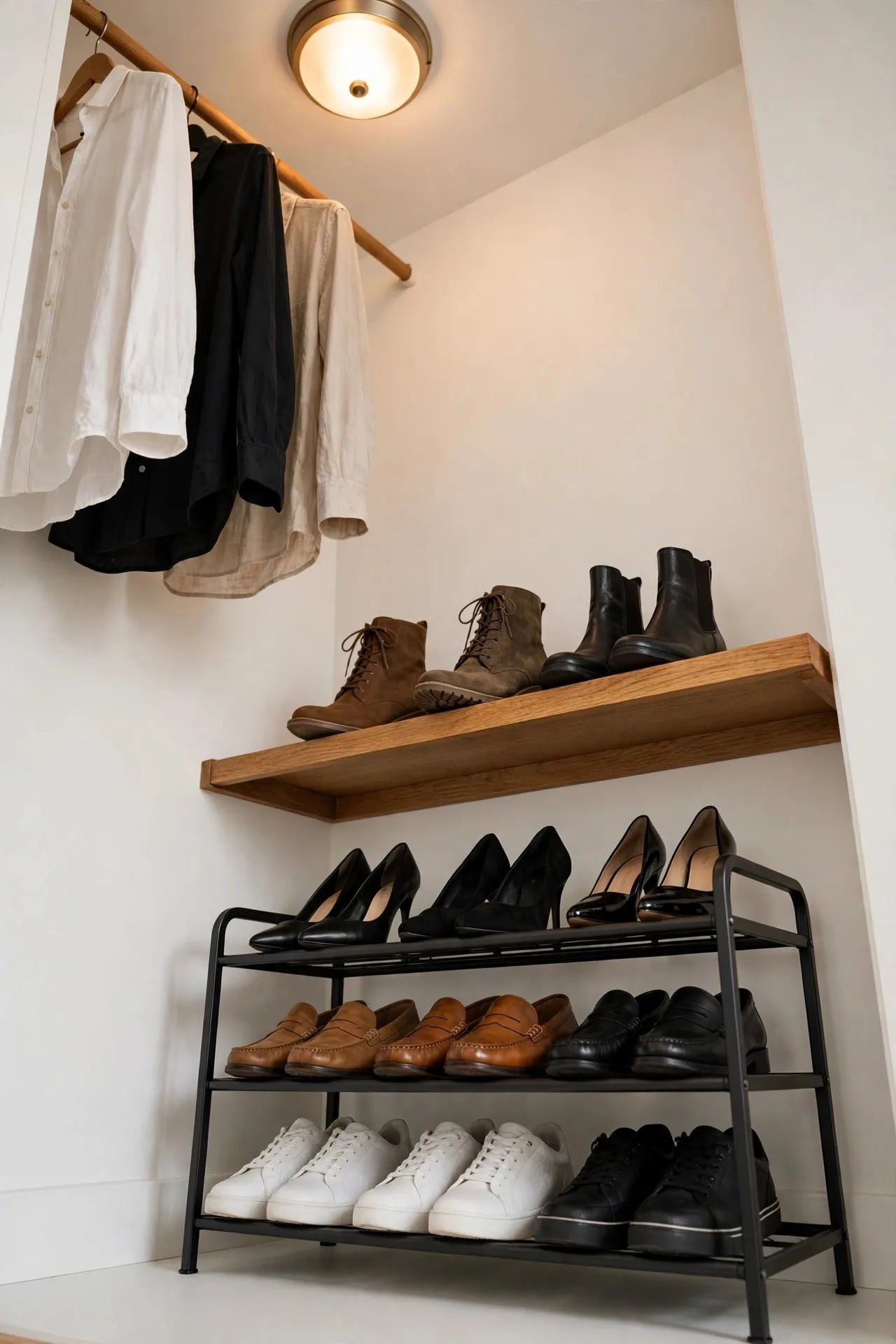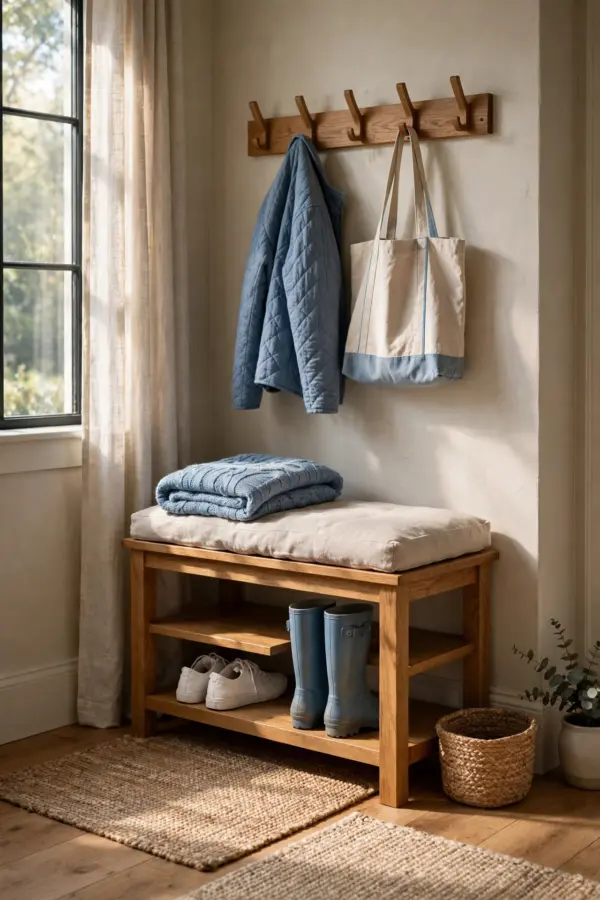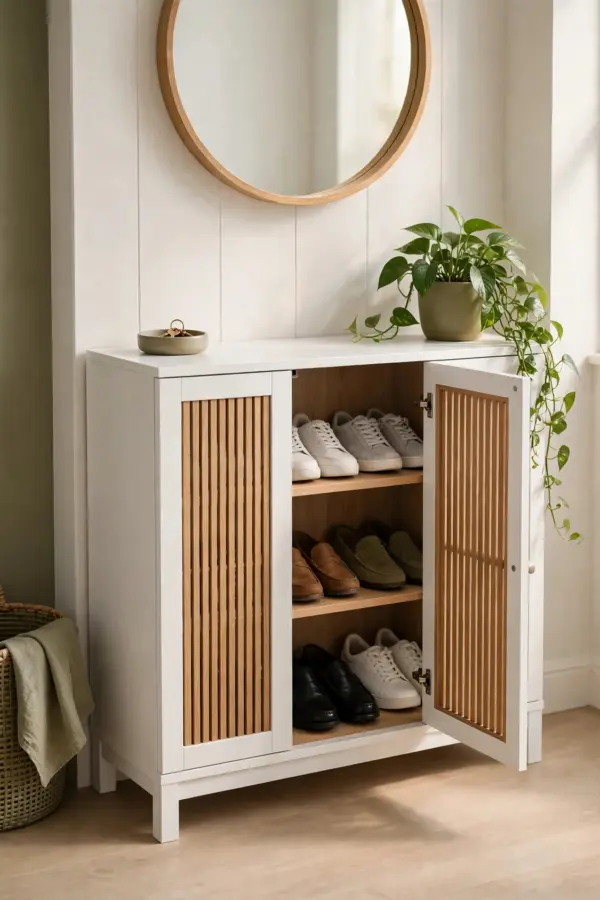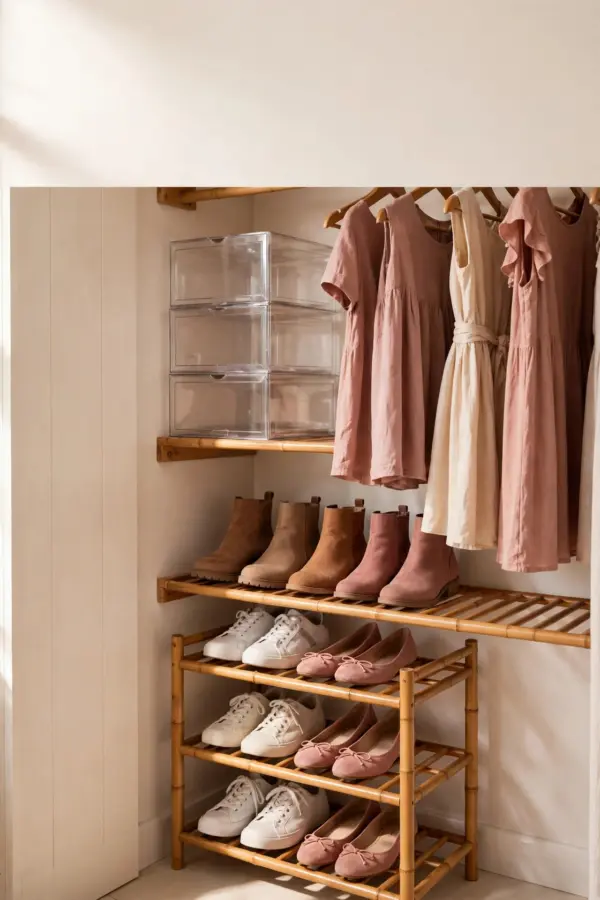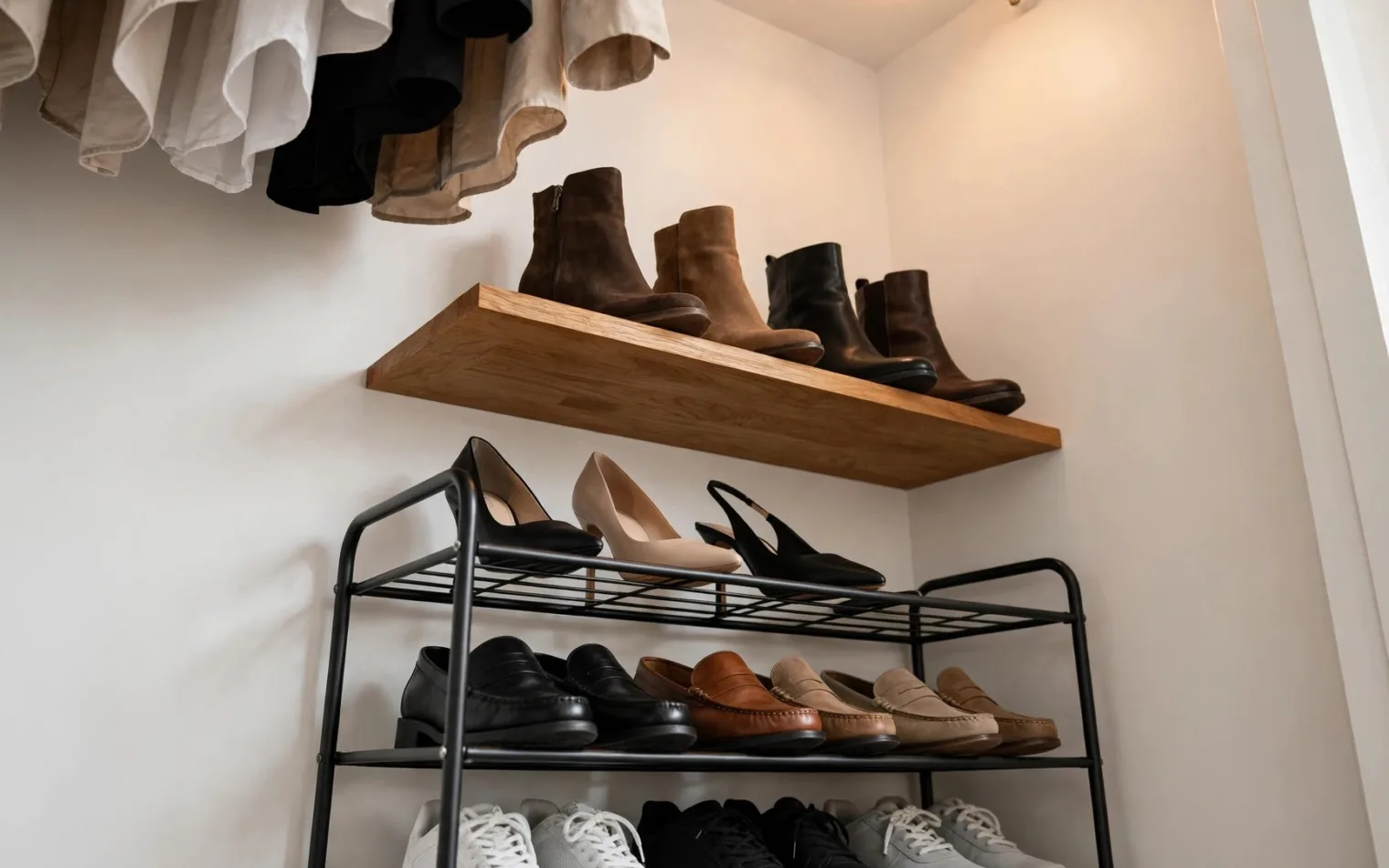
Shoes piled on the closet floor turn every morning into a scavenger hunt. A shoe rack for closet spaces ends that: it lifts pairs off the floor into neat, visible rows, and the right size does it without stealing your hanging space. Below are 15 real picks, from low two-tier racks that slide under your shortest shirts to tall towers that hold 40 pairs, each matched to a closet size.
Thank you for reading this post, don’t forget to subscribe!Measure your closet floor once, find your width below, and buy the rack that fits your space and the pairs you actually own.
How we chose
Every pick below earned its spot against five plain criteria. If a rack failed any one of them, it did not make the list.
- Closet fit: widths that match real reach-in and walk-in closets, from 10-inch slim towers to 36-inch wide shelves.
- Stability: no wobble in daily use, and tall towers get a clear anchor-or-brace note where they need one.
- Capacity honesty: pair counts based on one tier holding about four adult pairs, not the marketing number on the box.
- Materials: steel, bamboo and wood that survive closet humidity, not flimsy plastic that cracks in a year.
- Value: a fair price for what each rack actually holds, from $20 budget picks to solid-wood keepers.
Stackable towers that grow with you
1. The 4-tier stackable metal tower
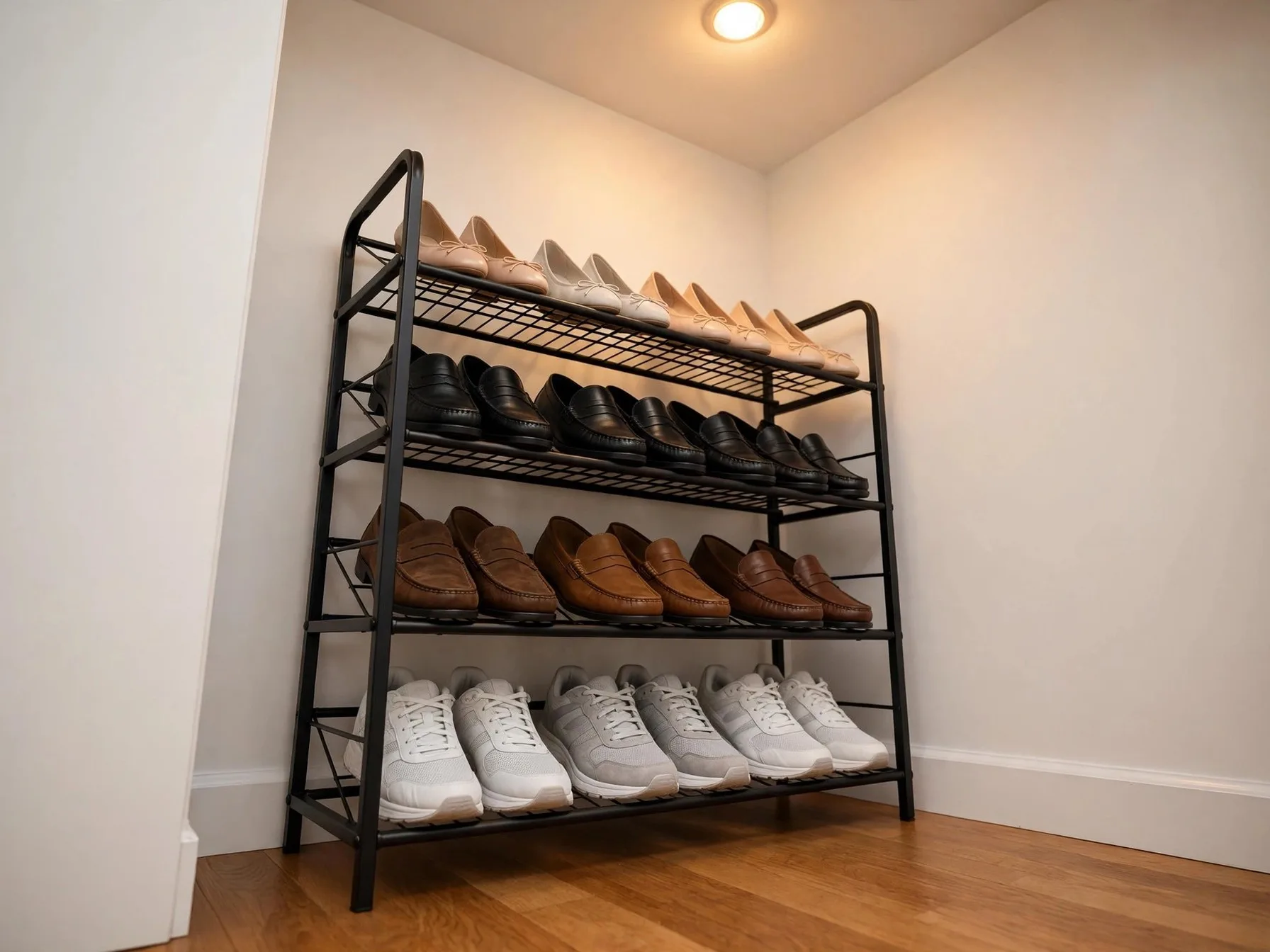
Four tiers of black steel turn one corner of a reach-in closet into 16 organized pairs. Each tier holds about four adult pairs — sneakers low, heels up high where they will not get knocked — and the tubes slot together by hand, no tools or hardware bag. At 26 inches wide it fits the leftover corner beside most hanging sections.
Place the heaviest pairs on the bottom tier for stability, and keep the shoes you wear most on the top tier so they are grab-and-go.
Our pick
4-Tier Stackable Metal Shoe Tower
A corner of a reach-in closet where you want to build up instead of out.
Pros: Stacks in minutes with no tools and no hardware; Slim 26-inch width fits the corner of a standard reach-in closet; Open metal tubes allow air flow so shoes stay fresh
Cons: Mesh shelves can sag under heavy boots; Plastic tube caps can pop off when you move it
2. The 6-tier stackable tower with fabric shelves
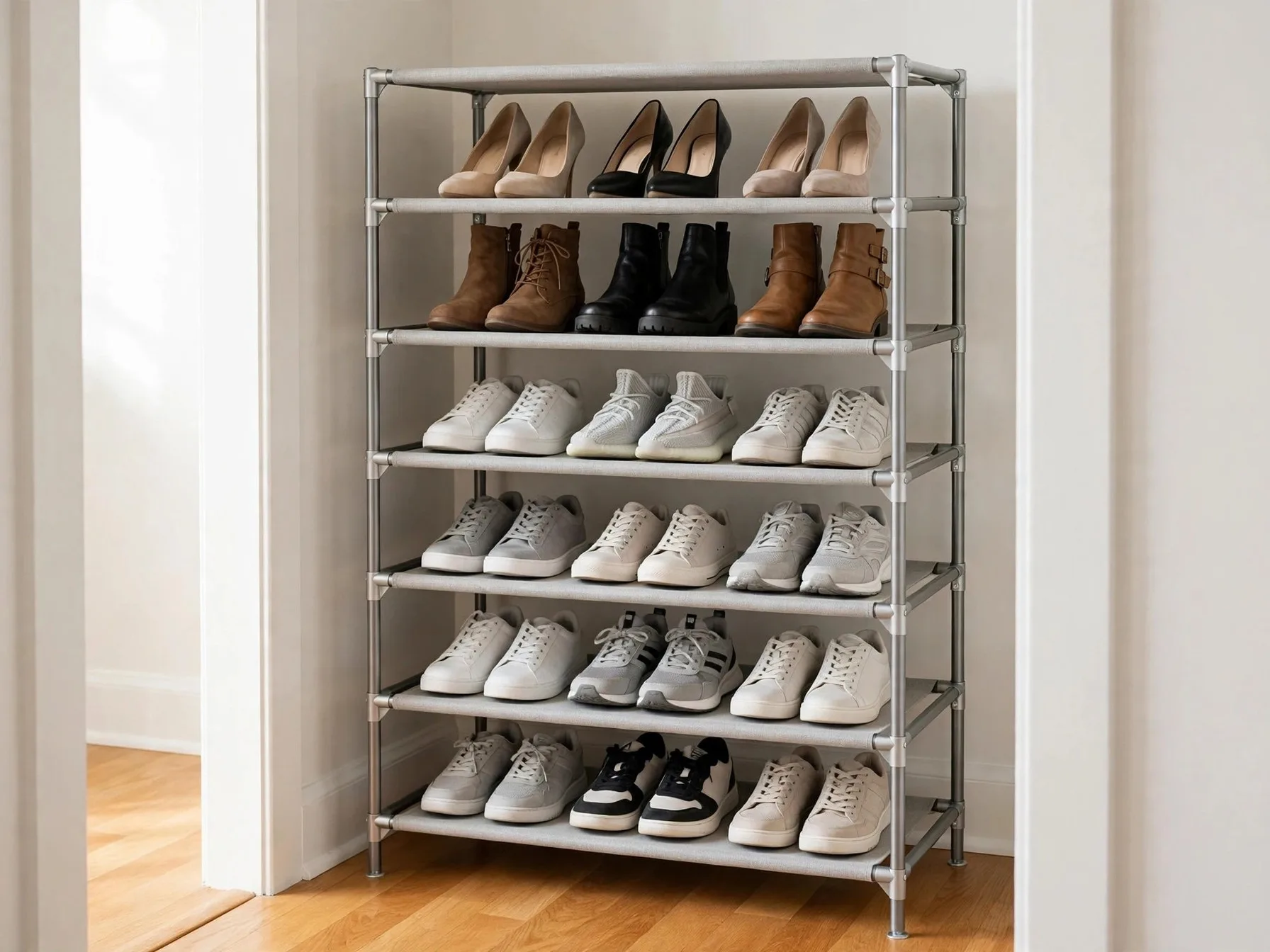
Six deep fabric shelves swallow 24 pairs in the same 26-inch width as a four-tier rack. The fabric cradles heels and ankle boots so they do not slide around, and the frame snaps together fast. Shake each shelf out now and then, since fabric collects dust faster than metal, and keep wet shoes elsewhere.
Split the unit into two three-tier racks if you move — it is one of the few towers that happily becomes two.
Our pick
6-Tier Stackable Tower With Fabric Shelves
Collections of around 20 pairs that need one tall, tidy home.
Pros: Deep fabric shelves cradle heels and ankle boots without slipping; Each tier snaps together quickly and the whole unit splits into two smaller racks; Holds 24 pairs in a 26-inch footprint
Cons: Fabric shelves collect dust and need shaking out; Not the best home for wet or muddy shoes
3. The 8-tier tall stackable tower
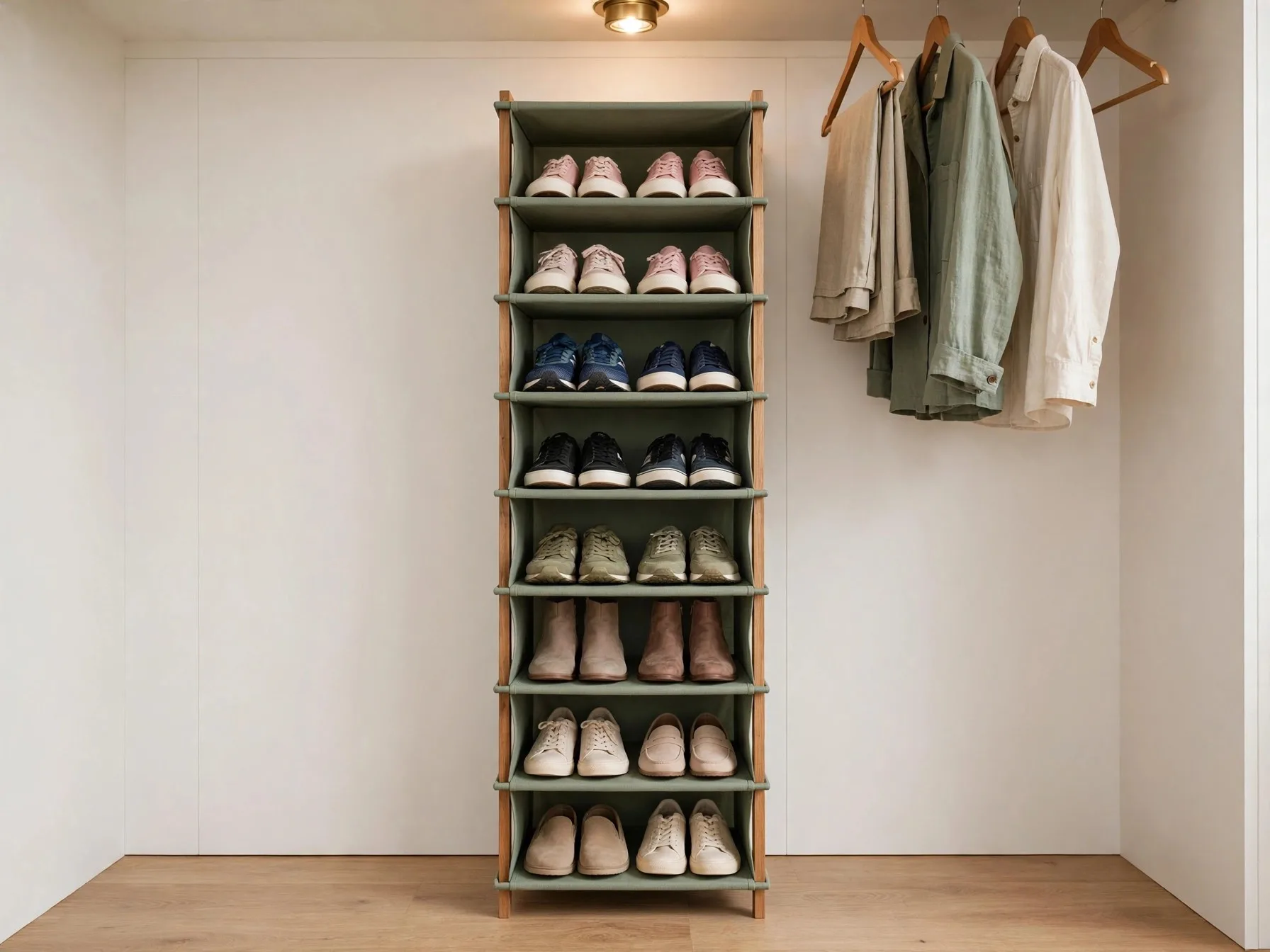
Eight tiers hold 32 pairs in about two square feet of floor — the most capacity per dollar on this list. It stands tall enough to feel like a shoe wall, so anchor it to the wall before you load it: tall plus narrow is a tip-over risk. The canvas shelves bow a little under heavy winter boots, so keep boots on the bottom two tiers.
Line pairs up by color from bottom to top and the whole tower reads as organized, not stuffed.
Our pick
8-Tier Tall Stackable Tower
Big collections in a walk-in closet where floor space is free but shelf space is not.
Pros: Holds 30-plus pairs in a 26-inch footprint; Stackable units separate into two 4-tier towers if you move; Tallest capacity-per-dollar pick on this list
Cons: Tall and narrow, so anchor it to the wall to stop tip-over; Canvas shelves bow in the middle under heavy pairs over time
Low floor racks that slide under hanging clothes
4. The low 2-tier bamboo floor rack
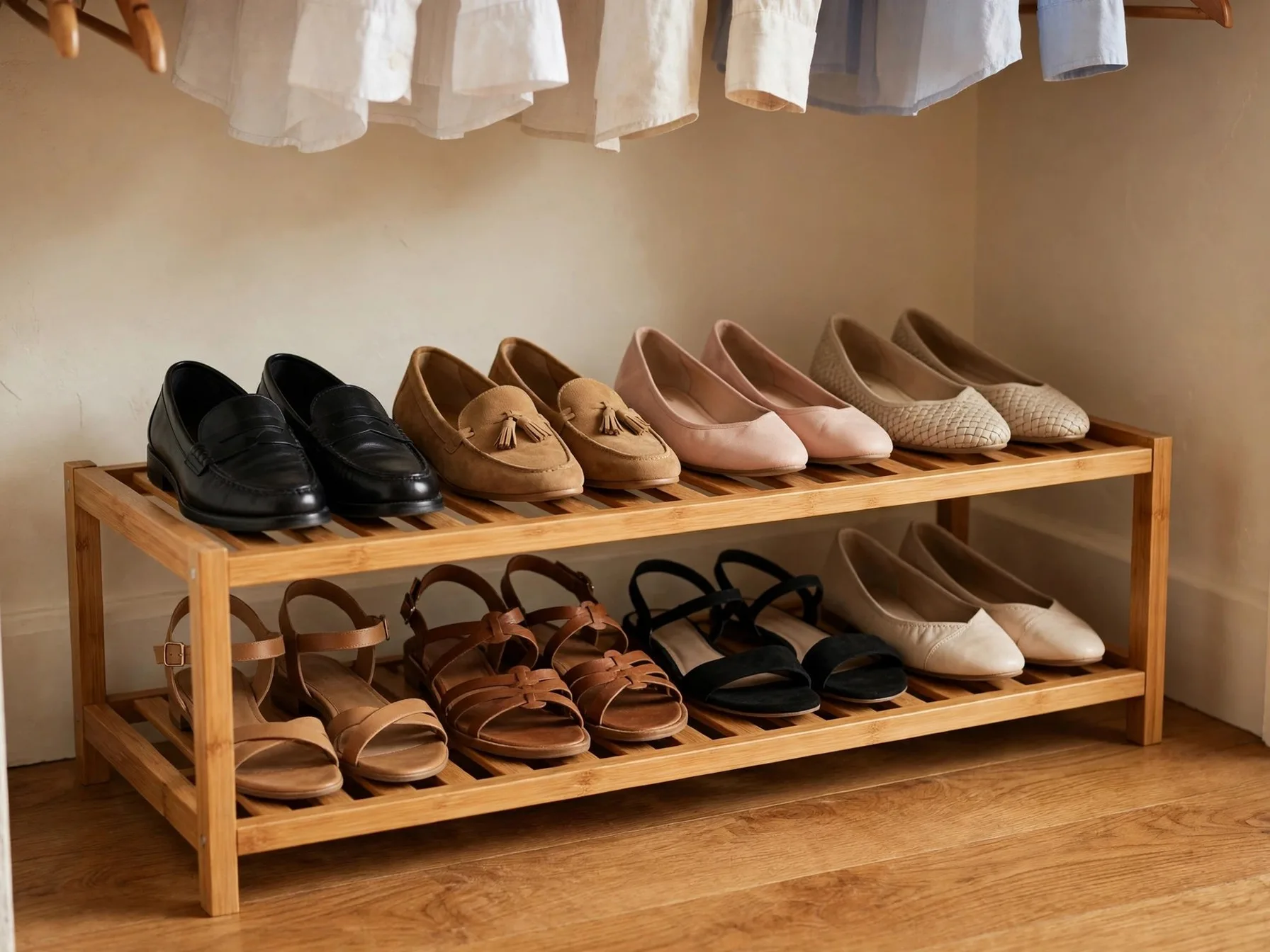
Eleven inches tall is the magic number: this low bamboo rack slides under most hanging shirts and jackets, turning dead floor space into eight neat pairs. Solid bamboo shrugs off closet humidity and does not hold odors the way fabric does. Boots will not fit the lower tier, so reserve this one for flats, sandals, loafers and low sneakers.
Put the pairs you wear daily on the top tier — the 30-inch width puts everything within arm’s reach.
Our pick
Low 2-Tier Bamboo Floor Rack
The dead floor space under short hanging shirts and jackets.
Pros: Only 11 inches tall, so it slides under most hanging clothes; Solid bamboo resists odors and moisture better than fabric; Warm wood finish looks built-in, not temporary
Cons: Holds only 8 pairs; Boots do not fit the lower tier
5. The 3-tier low-profile metal floor rack
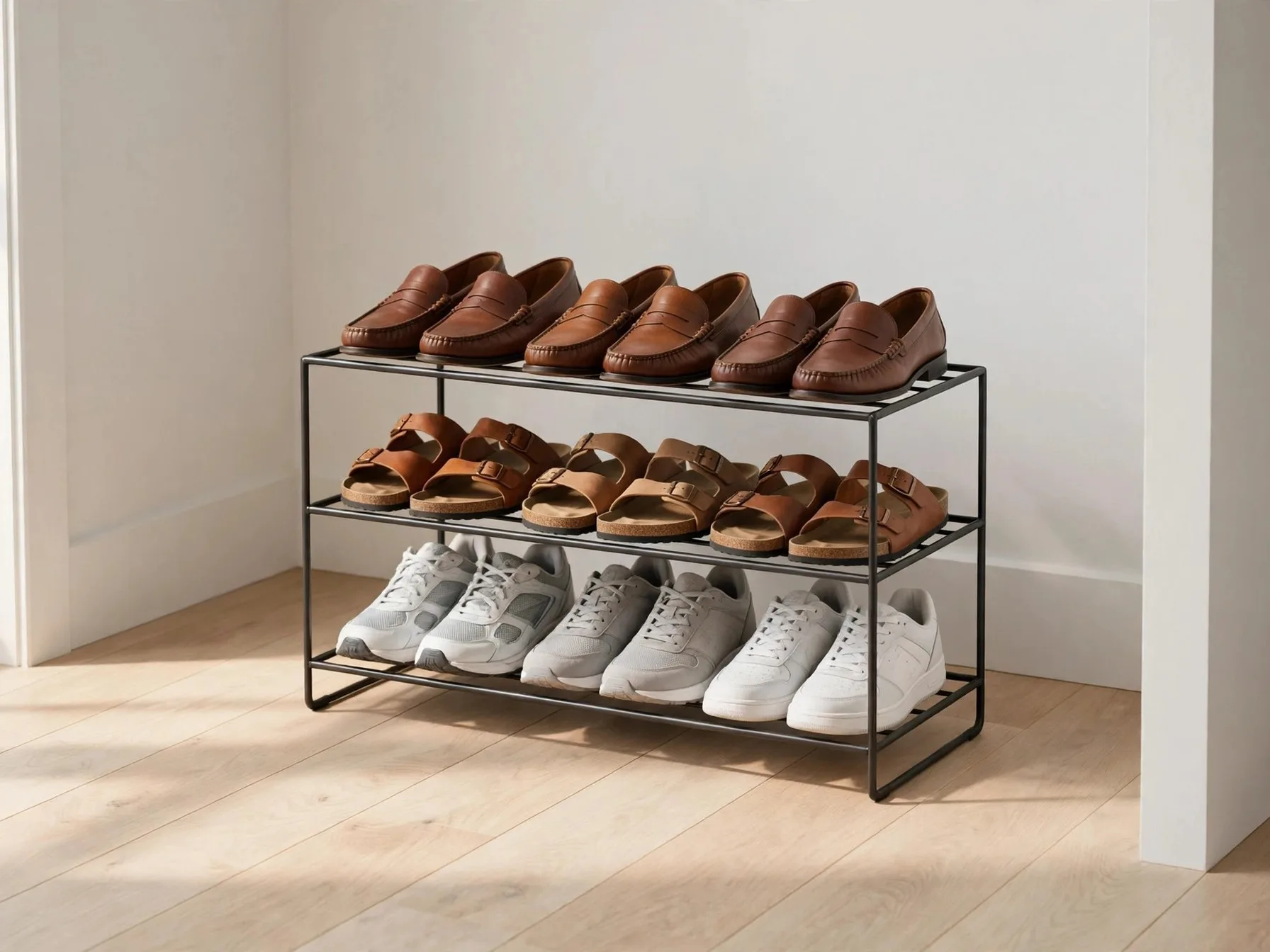
Three full rows of shoes in a unit only 12 inches tall — the cheapest honest pick on this list and the best for tight floors. The 27-inch width handles men’s size 13 without toe overhang. Open tubes mean dust settles on every shelf, so give it a quick wipe when you vacuum the closet.
There are no side rails, so push the rack against the wall and bumped shoes cannot slide off the back.
Our pick
3-Tier Low-Profile Metal Floor Rack
A tight closet floor where every inch of height counts.
Pros: Three full rows of shoes in a unit only 12 inches tall; 27-inch width fits men's size 13 without toe overhang; Cheapest honest pick on this list
Cons: Open tubes let dust reach every shelf; No side rails, so shoes can slide off if bumped
6. The expandable adjustable-width floor rack
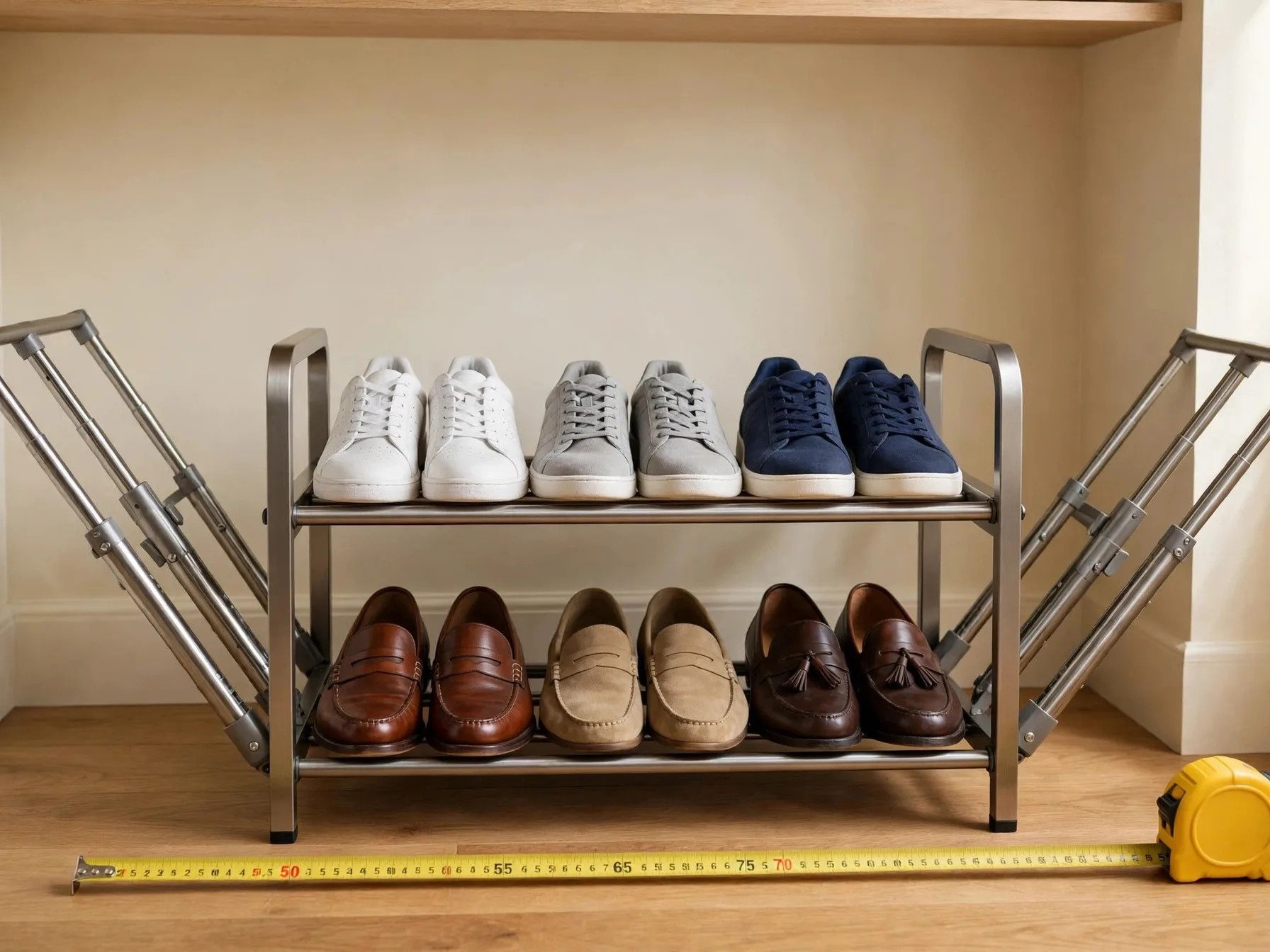
Closets are rarely the size the floor plan claimed. This rack’s telescoping rods stretch from 24 to 42 inches, so it fills your exact floor width instead of leaving a gap that collects lost socks. Two low tiers keep every pair visible at a glance. Do not fully extend it unless you must — the joints flex at maximum width.
Measure the floor once, set the width, and tighten everything before you load a single shoe.
Our pick
Expandable Adjustable-Width Floor Rack
Closets that fall between standard sizes, or floors shared with storage bins.
Pros: Width telescopes from 24 to 42 inches to match your exact closet; Fits odd nooks and shared floors that standard racks miss; Two low tiers keep every pair visible at a glance
Cons: Expansion joints flex when the rack is fully extended; Fewer pairs per foot of width than a fixed-frame rack
Bamboo and wood shelves that look like furniture
7. The solid bamboo 3-tier shoe shelf
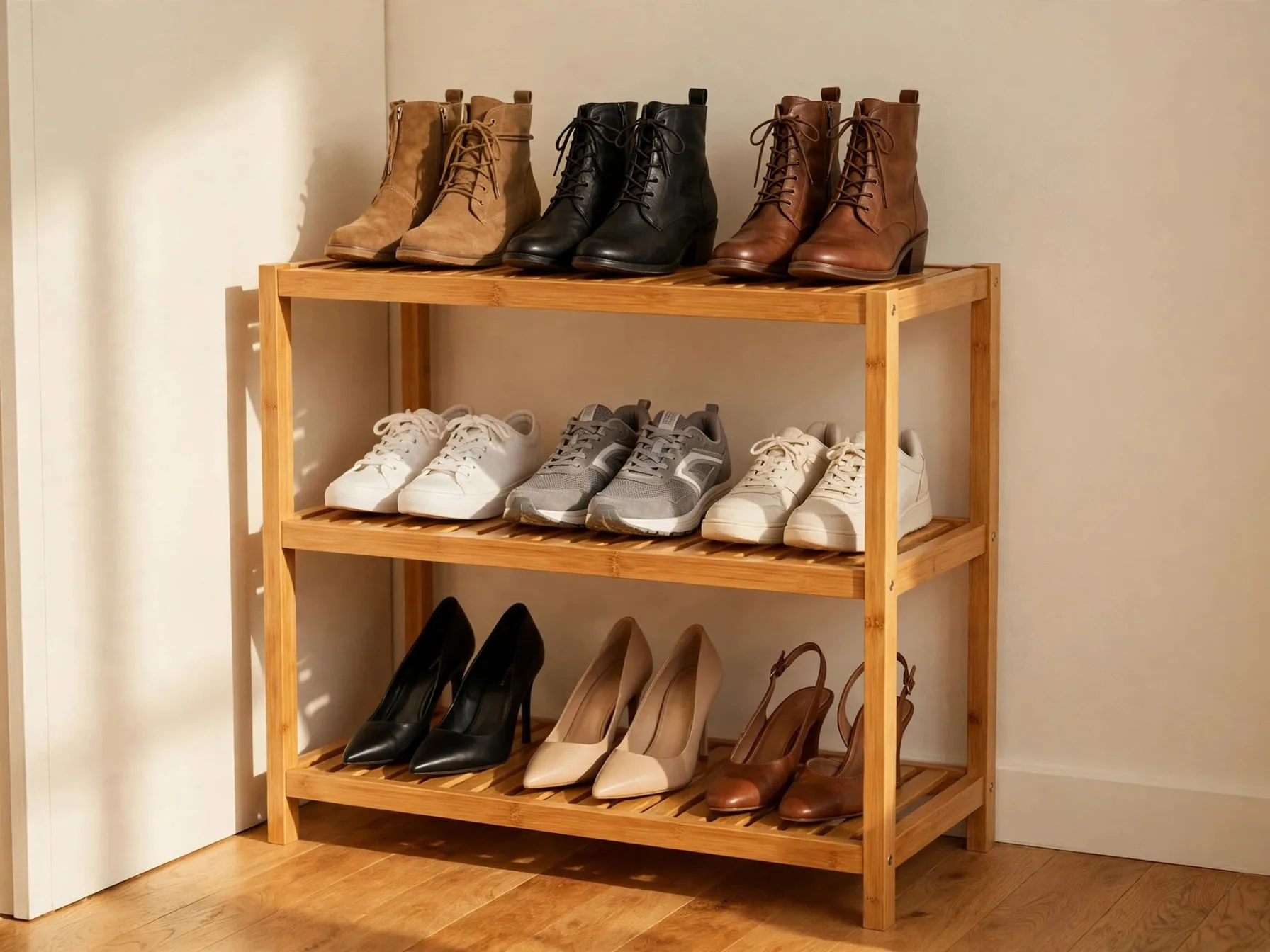
This is the rack you buy once and keep through three apartments. Solid bamboo slats hold boots without bowing and handle humid closets without warping, and the honey finish looks like furniture instead of a utility rack. Nine pairs is modest capacity for the price — you are paying for looks and longevity.
Oil the slats once a year and scuffs stay invisible.
Our pick
Solid Bamboo 3-Tier Shoe Shelf
Renters who want one good-looking rack they keep for years.
Pros: Sturdy solid slats hold boots without bowing; Bamboo handles closet humidity without warping; Looks like furniture, not a utility rack
Cons: Higher price per pair stored than metal picks; Wood slats scuff and need occasional oiling
8. The wide 4-tier solid wood shoe shelf
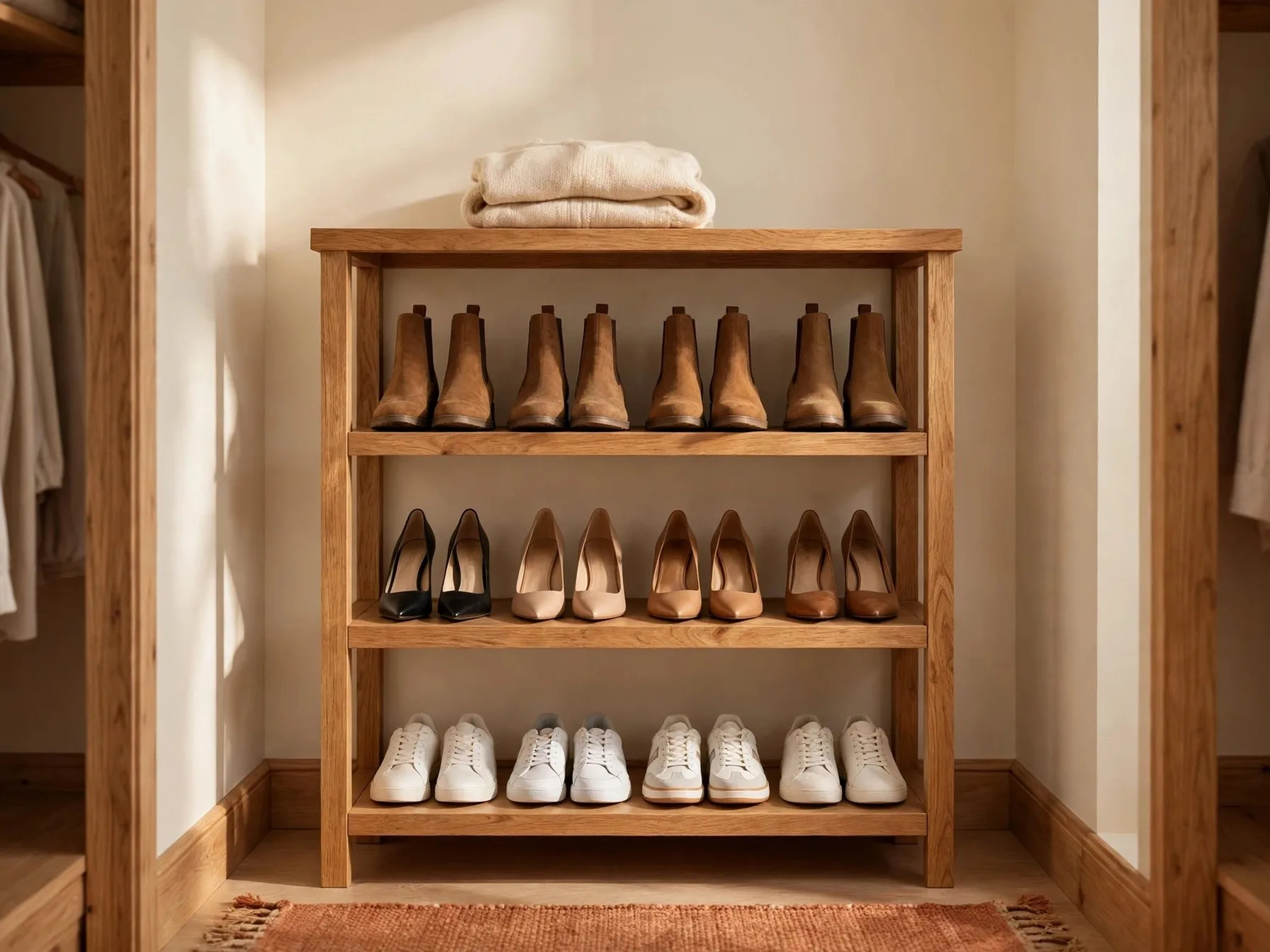
Thirty-six inches of solid wood is a wall of shoe storage that doubles as a bench: sit down, lace up, done. Four tiers hold 14 pairs with room for men’s sizes and wide widths, and the solid build will not wobble when you sit on it. It is heavy once assembled, so build it where it will live.
Keep a folded sweater or a small basket on the top shelf and the whole thing reads like a dressing room.
Our pick
Wide 4-Tier Solid Wood Shoe Shelf
Walk-in closets with a full wall to spare.
Pros: 36-inch width holds men's size 13s with room to spare; Solid enough to sit on while you lace up boots; Warm wood finish suits walk-in closets that feel like dressing rooms
Cons: Heavy to move once assembled; Premium price next to metal racks
9. The low bamboo bench-style shoe shelf
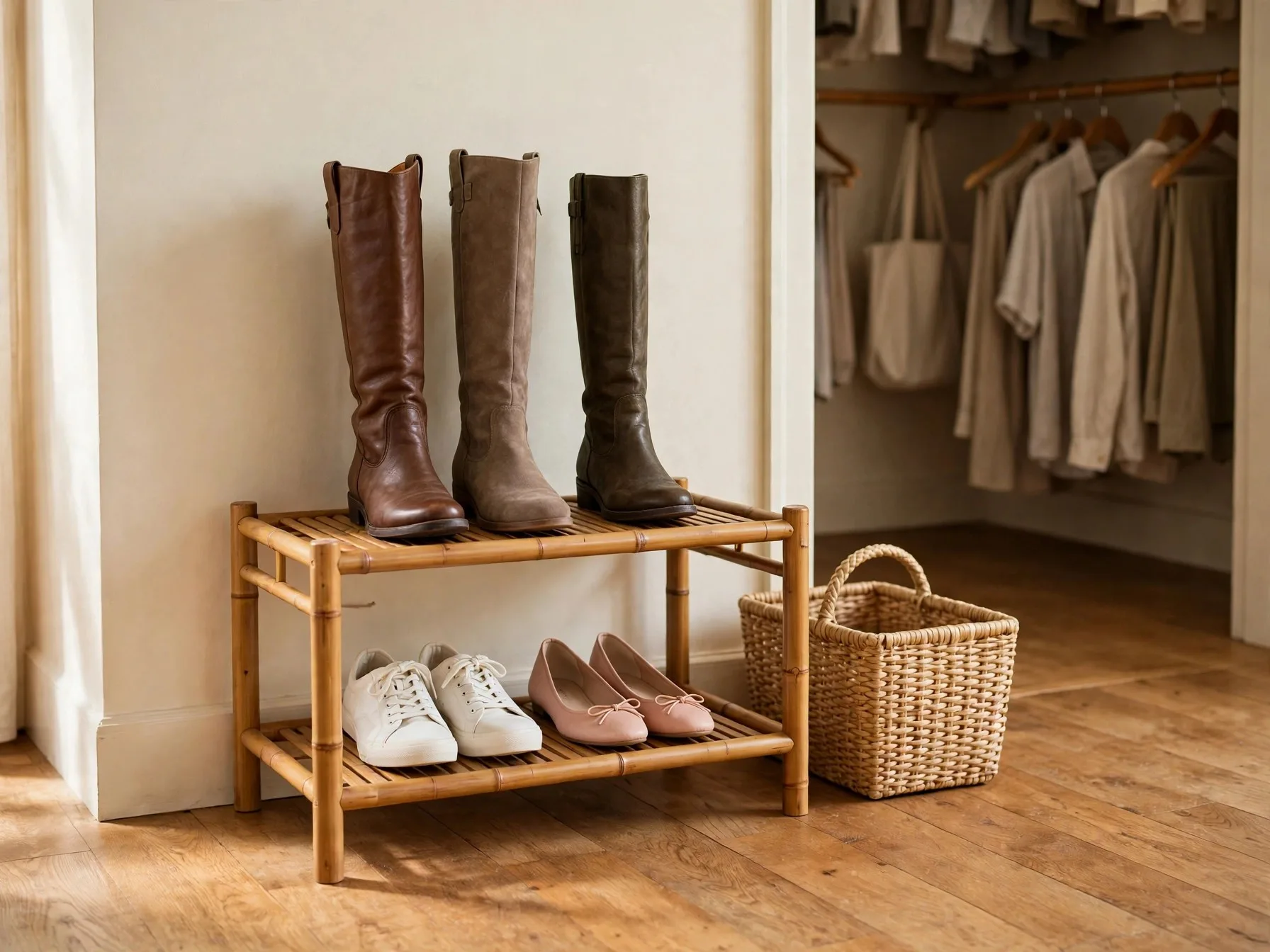
Two tiers, 32 inches wide, and low enough to perch on while you wrestle with ankle boots. The open top shelf takes tall boots upright — the pair type most racks punish — while the lower tier handles everyday sneakers and flats. Eight pairs is the trade-off for furniture looks.
Slide it just inside the closet entry so it is the first thing you reach when shoes come off.
Our pick
Low Bamboo Bench-Style Shoe Shelf
The closet entry or walk-in corner where you sit to lace up.
Pros: Low enough to sit on while you put shoes on; Open top shelf fits tall boots upright; Softens a closet with furniture warmth
Cons: You pay furniture prices for an 8-pair rack; Needs floor space a taller rack would not
Slim racks and wall-mounted shelves for tight closets
10. The slim 10-inch 4-tier narrow rack
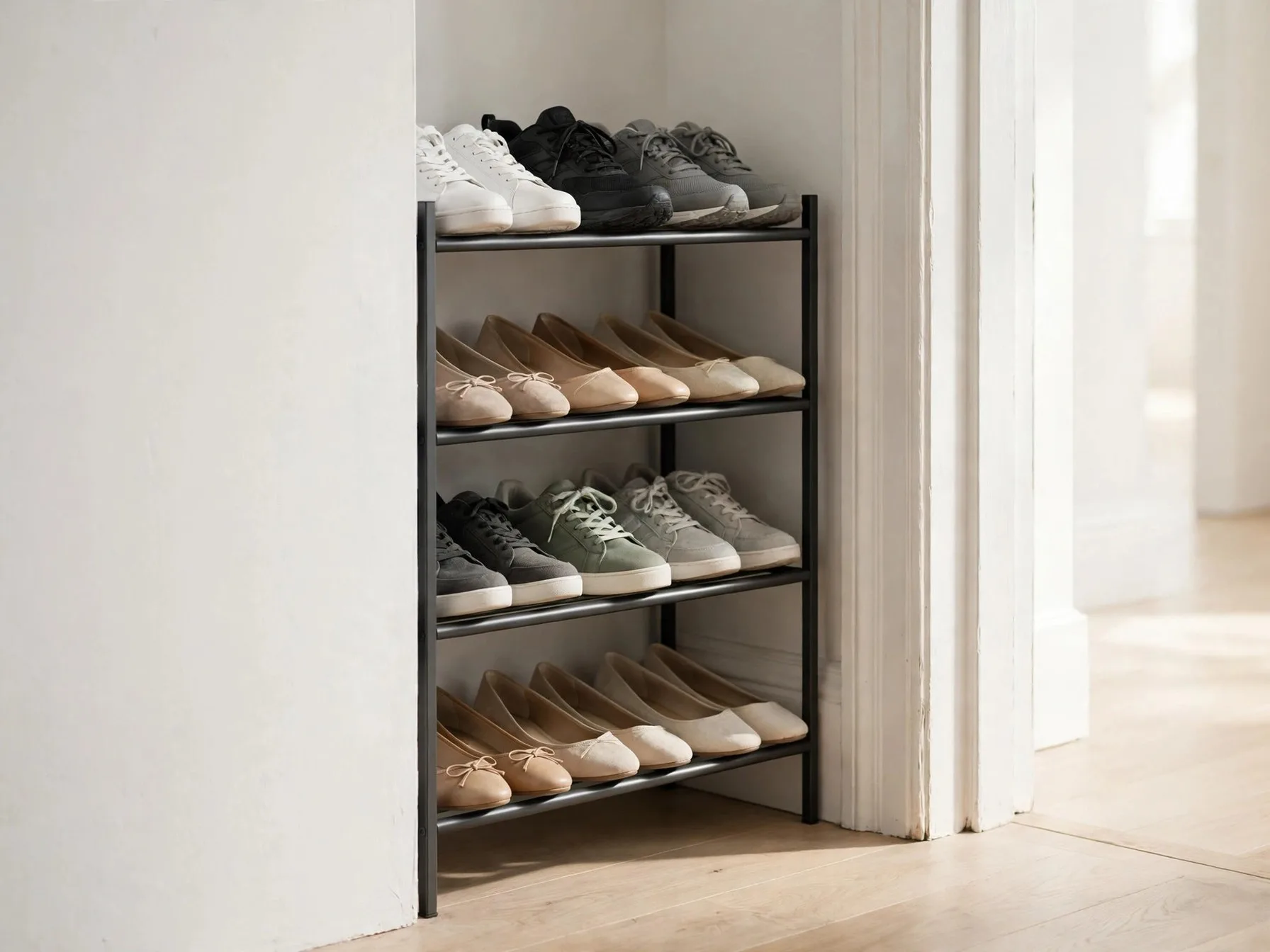
The strip of floor beside a closet door is usually wasted. This 10-inch-wide tower turns it into 12 pairs stacked in single-file rows. Rows that narrow mean back pairs hide behind front ones, so put everyday shoes in front and occasion shoes behind.
It is light enough to tip if bumped hard — wedge it between the wall and a dresser or bin and it stays put.
Our pick
Slim 10-Inch 4-Tier Narrow Rack
The wasted strip of floor beside a closet door or dresser.
Pros: Only 10 inches wide, slips into the gap beside a closet door; Holds 12 pairs in single-file rows; Costs less than a pizza night
Cons: Back pairs are hard to reach in single-file rows; Light frame can tip if bumped hard
11. The leaning ladder-style bamboo rack
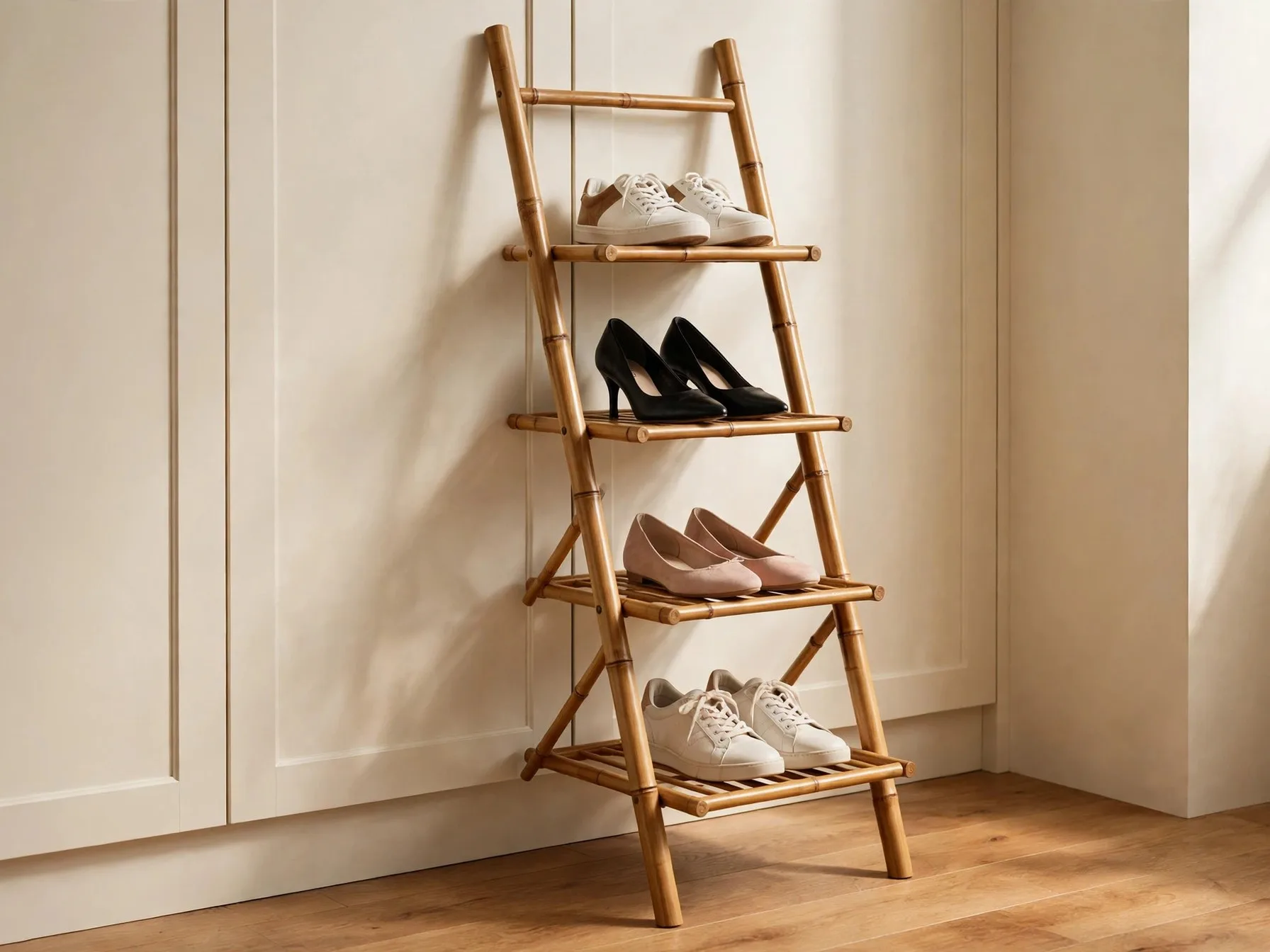
No screws, no drilling, no landlord conversation: this bamboo ladder leans against the wall and is done. The angled shelves display shoes like a shop window, which makes grabbing the right pair fast in the morning. The lean eats about 16 inches of floor depth, so it suits reach-ins with a spare foot of floor.
The top tiers slope enough that kids’ shoes and heels sit best up there.
Our pick
Leaning Ladder-Style Bamboo Rack
Renters who cannot drill into closet walls.
Pros: Leans against the wall with no screws or drilling; Angled shelves display shoes like a shop, easy to grab pairs; Folds flat if you move
Cons: The lean eats about 16 inches of floor depth; Top tier fits kids' shoes or heels best
12. The angled wall-mounted wooden shoe shelves
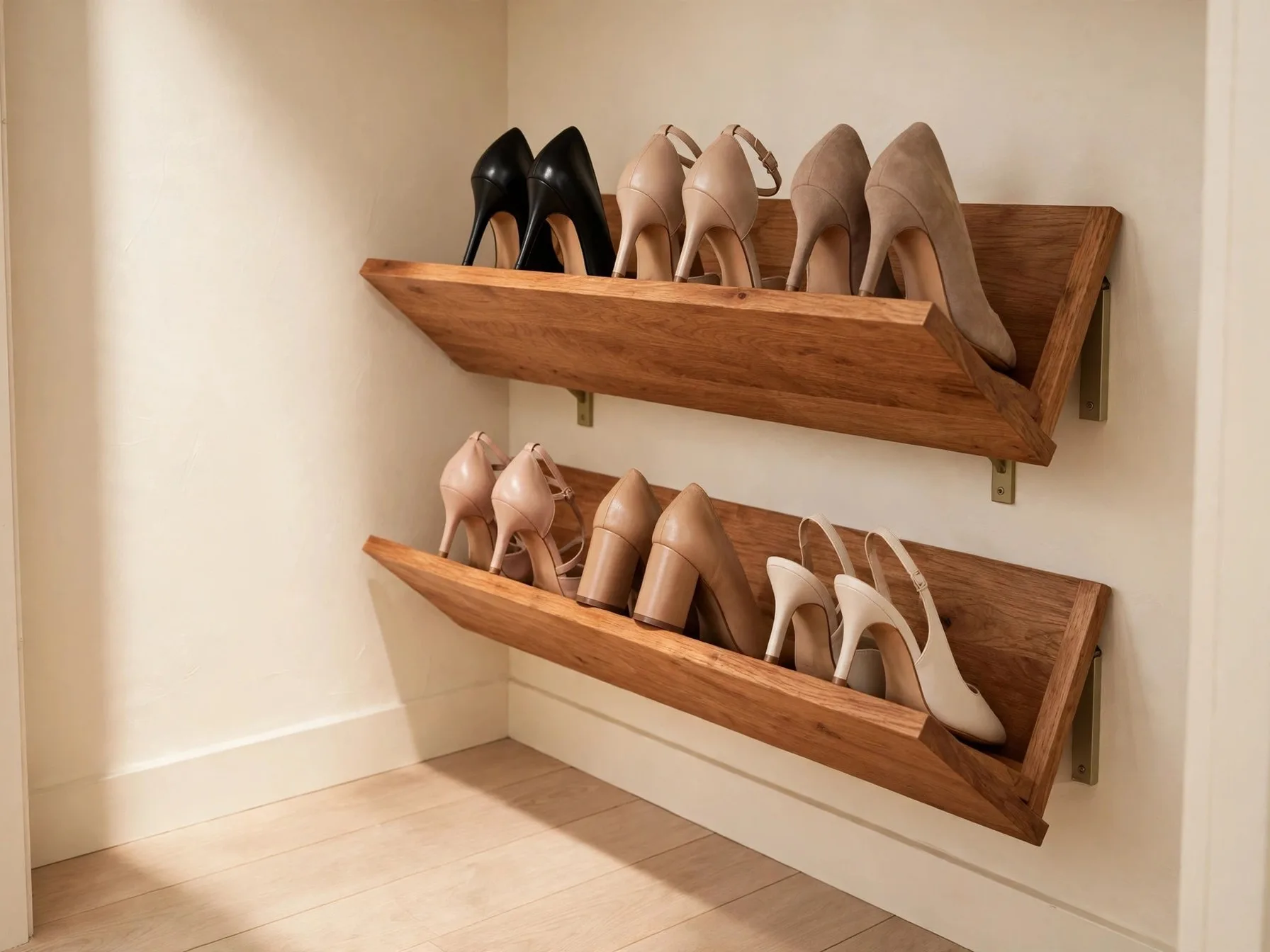
When the closet floor belongs to laundry baskets and storage bins, the wall is your only option. Two angled wooden shelves hold six pairs tilted for easy grabbing, and the whole install is two shelves and a few screws — about five minutes with a drill. Renters, skip this one or ask first, since it needs holes in the wall.
Mount it at eye level so the tilt reads as display, not clutter.
Our pick
Angled Wall-Mounted Wooden Shoe Shelves
Small reach-in closets where the floor must stay clear.
Pros: Frees the entire closet floor for bins and laundry; Angled shelves keep pairs visible and easy to grab; Only two shelves, so the install is a five-minute job
Cons: Needs screws in the wall, so it is not renter-friendly; Only six pairs, plan which ones earn the wall
Tall towers for big collections
13. The 10-tier tall metal shoe tower
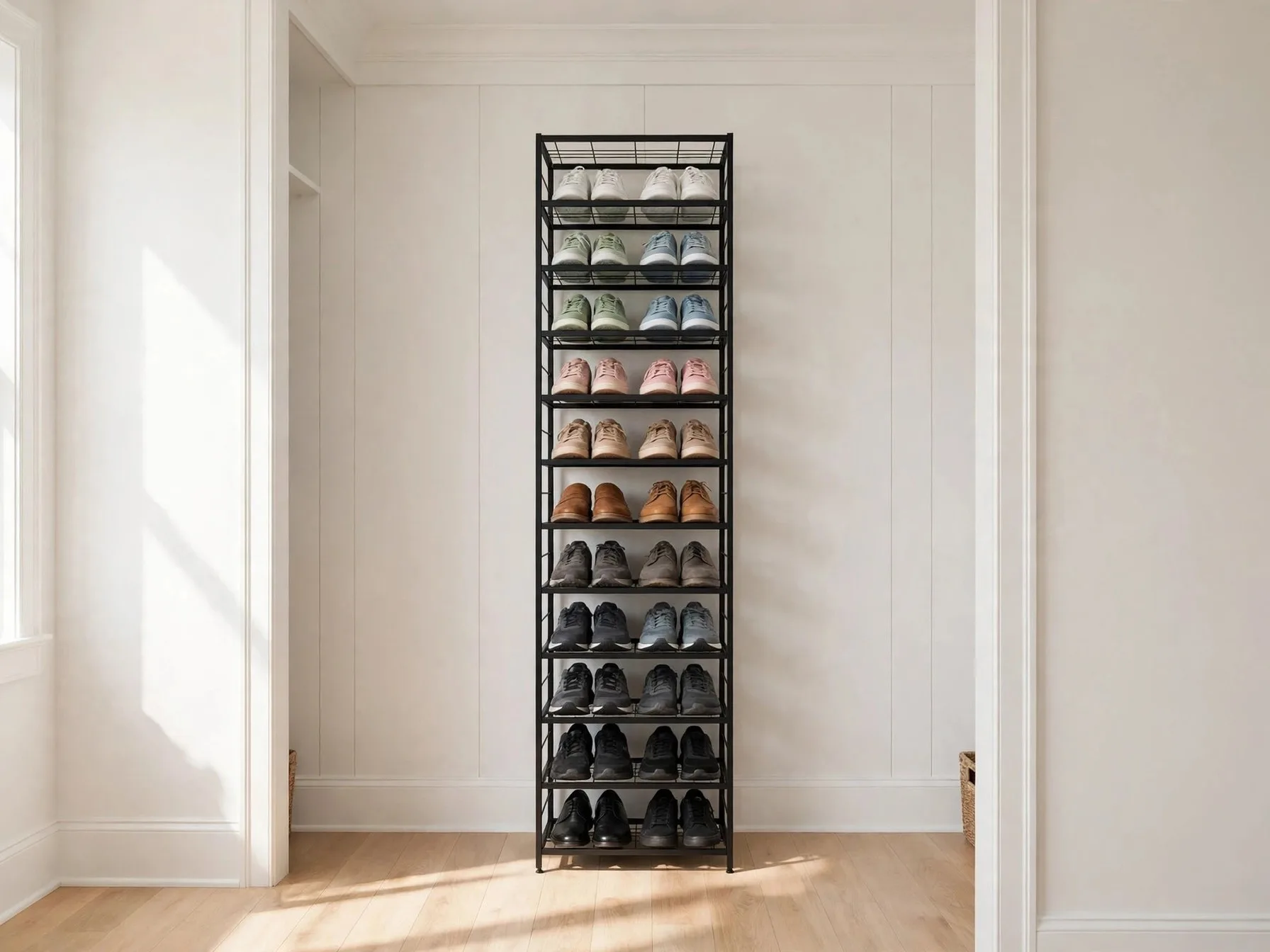
Forty pairs. One tower. The cheapest price per pair on this list. Ten tiers of steel mesh in a 30-inch footprint hold a serious collection, but the top two tiers need a step stool and the whole frame needs a wall anchor — tall plus narrow is a tip-over risk. Mesh shelves let air circulate, which helps shoes dry out between wears.
Organize by color from bottom to top and even 40 pairs look calm.
Our pick
10-Tier Tall Metal Shoe Tower
Collectors who want every pair in one tower.
Pros: Holds 40 pairs in a 30-inch footprint; Cheapest price per pair on this list; Mesh shelves let closet air circulate around shoes
Cons: Top tiers need a step stool to reach; Tall frame must be anchored to the wall
14. The 12-tier fabric tower with side pockets
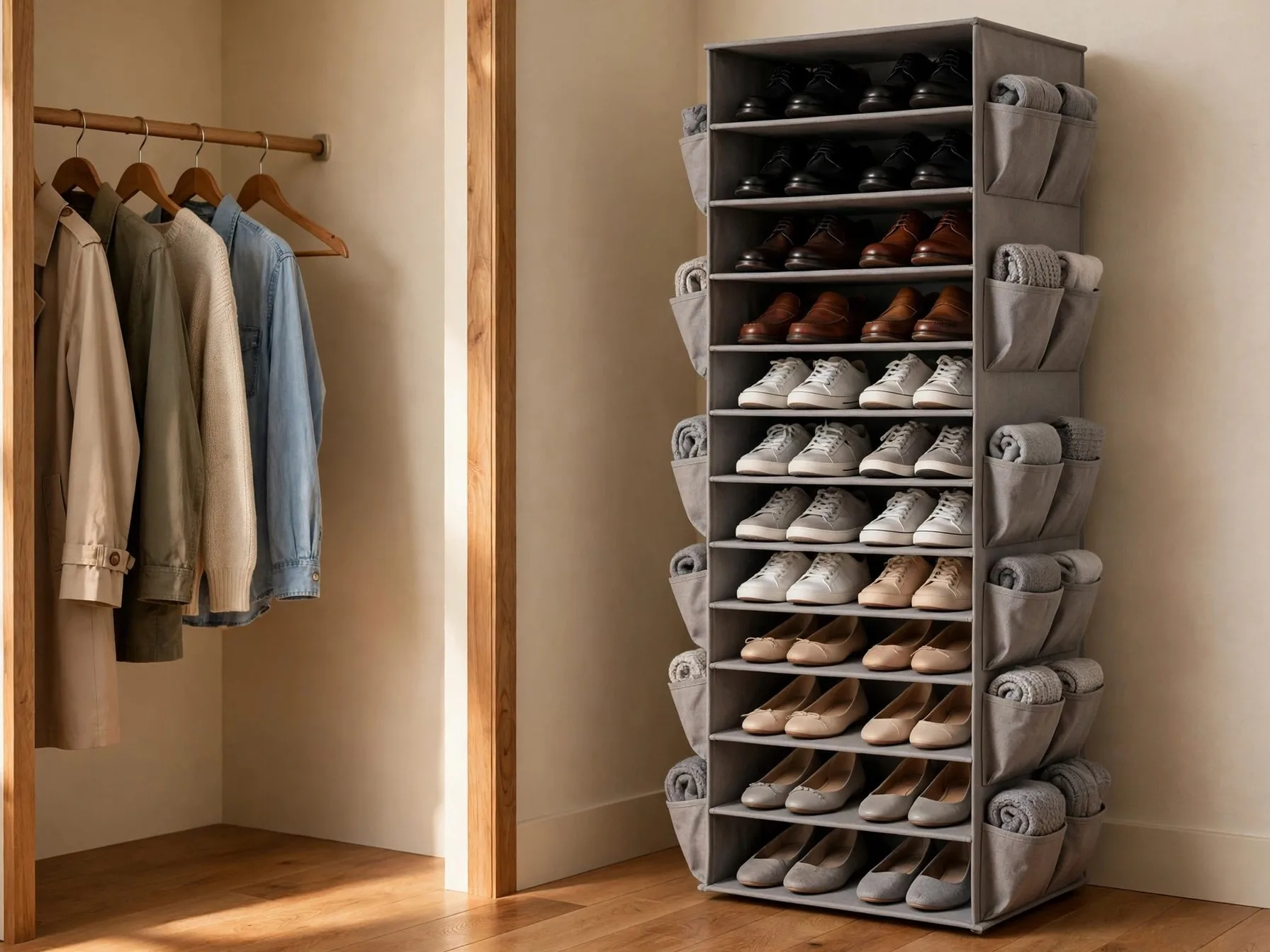
Twelve soft tiers hold 36 pairs, and the side pockets swallow socks, insoles and polish — small things that usually clutter a closet floor. The whole unit is light enough to move fully assembled, which matters when you rearrange. Fabric sags under heavy winter boots and the top rows wobble on thick carpet, so keep boots low and the tower on firm flooring.
Best value for dorm-style closets and first-apartment budgets.
Our pick
12-Tier Fabric Tower With Side Pockets
Dorm-style closets and budget makeovers that need big capacity fast.
Pros: 36 pairs plus side pockets for socks and insoles; Light enough to move fully assembled; Soft shelves will not scratch delicate finishes
Cons: Fabric sags under heavy winter boots; Top rows wobble on thick carpet
15. The wide 36-inch commercial-style metal rack
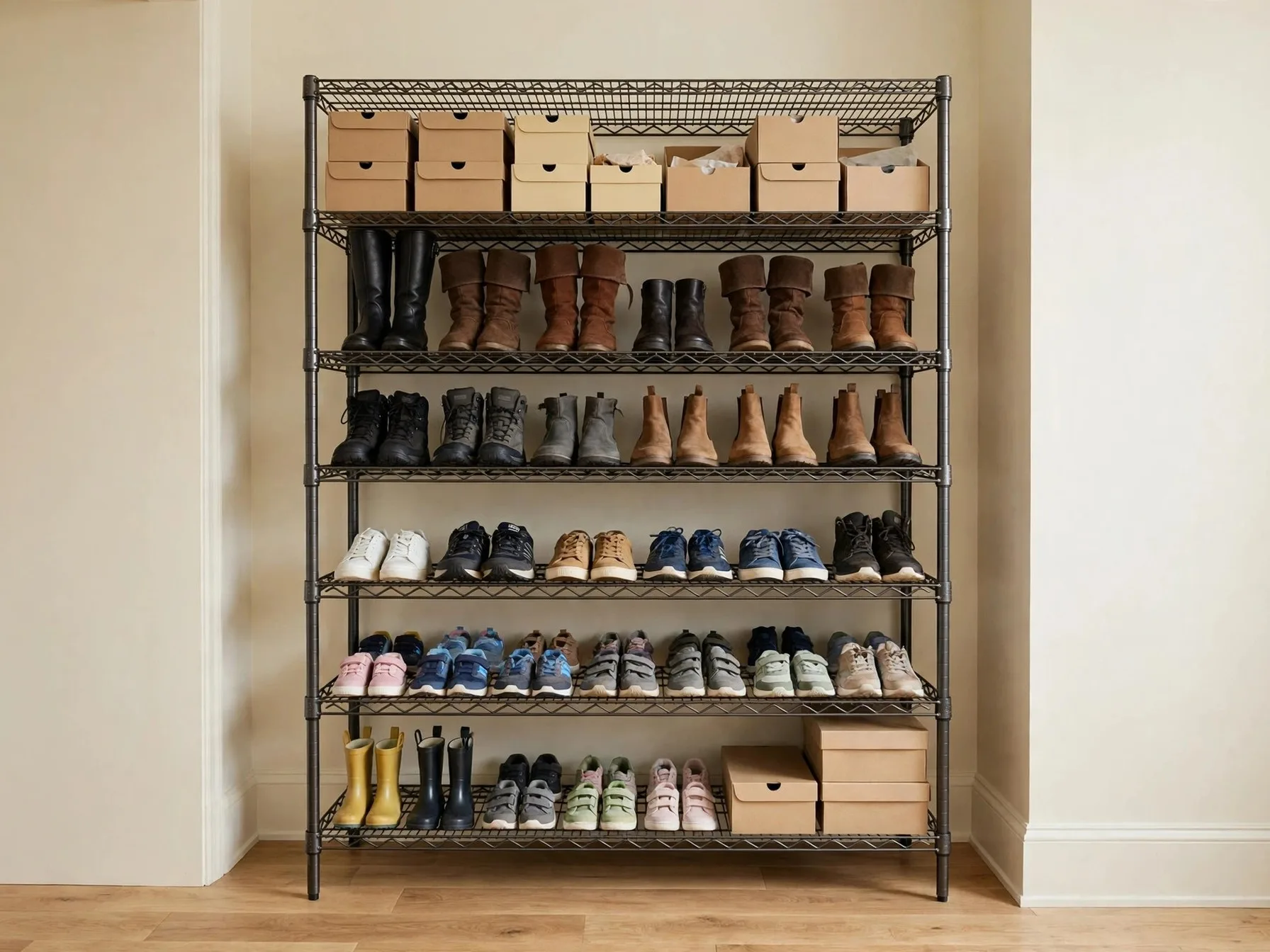
Built like warehouse shelving and priced like it, this 36-inch steel rack takes everything: tall boots, shoe boxes, handbags, two people’s daily rotation. It will not wobble, bow or complain. The 36-inch width needs a walk-in closet, and the industrial look suits some spaces more than others.
If you share a closet, give each person three tiers and the arguments about floor space end.
Our pick
Wide 36-Inch Commercial-Style Metal Rack
Walk-in closets shared by two people who both own too many shoes.
Pros: Rock-solid under heavy loads and tall boots; Wide shelves fit boots, shoe boxes and handbags; Commercial build quality that survives moves
Cons: 36-inch width needs a walk-in closet; Industrial look suits some closets more than others
What to measure first
Three numbers decide everything, and they take five minutes with a tape measure. First, the floor width where the rack will stand: most closets give you 24 to 48 usable inches once the hanging clothes are accounted for. Second, the depth from the wall to the closet door swing or the walking path — most racks are 10 to 14 inches deep, so anything shallower than 12 inches of clearance is a no-buy zone.
Third, the height under your shortest hanging clothes. Shirts and jackets usually hang about 41 inches down from the rod, and a low rack needs only 11 to 12 inches of that — which is why picks 4 through 6 above are such quiet space-savers. Measure boot height too: tall boots need about 12 inches of shelf clearance, which standard tiers do not have, so they belong on a top shelf, a floor row, or a bench-style rack like pick 9.
Write the three numbers on your phone before you shop. A rack that fits the first time is cheaper than a return.
Questions, answered
What size shoe rack fits in a standard closet?
A standard reach-in closet is about 24 inches deep, so most floor racks are built 10 to 14 inches deep to leave walking room. Measure the floor width first: low racks usually run 24 to 30 inches wide, which leaves space for hanging clothes beside them. Also measure the height under your shortest hanging clothes — many racks stand 11 to 12 inches tall precisely so they slide under shirts.
Are stackable shoe racks sturdy?
Yes, when they are assembled fully and used as designed. Steel tube frames handle sneakers, flats and heels on every tier without trouble. Wobble usually comes from two mistakes: setting a tall tower on thick carpet, or loading heavy boots up high. Keep boots on the bottom tiers and anchor any tower taller than six tiers to the wall.
Is a metal or bamboo shoe rack better for a closet?
Metal racks cost less per pair stored and offer more tiers for the money, which makes them the practical pick for big collections. Bamboo and wood racks look like furniture, hold boots without bowing and handle closet humidity well. Choose metal for value and capacity, or bamboo when the rack will be seen every day and you want it to look good.
How many tiers of shoe rack do I need?
Start by counting the everyday pairs you actually wear — most adults land between 8 and 15. One tier holds roughly four adult pairs, so a 2- or 3-tier rack covers most people. Buy one tier more than you need today, because collections grow. And plan for boots: they need about 12 inches of vertical clearance, which most standard tiers do not have.
Keep reading
Start with our shoe storage ideas for every room to find the right style for the hallway, bedroom and entryway too. Then browse these closet organization ideas that make mornings easier, and our room-by-room decluttering guide if the shoe pile is only part of the story.
Measure once, buy the width that fits, and your closet floor stays clear for good.