A good closet system does more than add shelves: it decides how much of your wardrobe you can actually reach, how fast getting dressed feels, and whether the closet still looks tidy on a busy morning. This roundup compares 12 closet systems by type, price range, and install effort, so you can match the system to your space, your budget, and your lease.
Thank you for reading this post, don’t forget to subscribe!You will find renter-friendly picks that need no drilling, budget picks that rebuild a reach-in closet for the lowest cost, and premium laminate systems that look built in. No brand names, no invented prices: each pick is described by its type, with an honest price band, install effort, and renter-friendliness, so you can compare like with like.
How we chose
We judged each system on four things: how much storage it creates in a standard reach-in or walk-in closet, how hard it is to install, whether a renter can take it when moving, and what it costs relative to the other types here. Price bands are broad ranges, not quotes: Budget range means the lowest-cost tier, Midrange sits above wire and freestanding kits, and Premium range covers full laminate systems. Where a pick has a clear weakness, we say so.
Measure your closet before you fall for any pick. The next section covers the five measurements that matter.
What to measure first
Start with width, depth, and height, then check the door swing and the space in front of the closet, since drawers and hampers need room to pull out. Count your hanging clothes against your folded clothes: if most of your wardrobe hangs, prioritize double rods; if most of it folds, prioritize shelves and drawers. For layout ideas to pair with these measurements, see our closet organization ideas.
- Width: wall to wall at the height where the top shelf will sit, since walls are rarely perfectly square.
- Depth: front to back, leaving room to stand in front of hanging clothes.
- Height: floor to ceiling, and the height under your shortest hanging clothes.
- Door swing and clearance: drawers, hampers, and doors all need pull-out room.
- Hanging versus folded count: the split decides rods versus shelves and drawers.
The picks
1. Freestanding double-rod tower
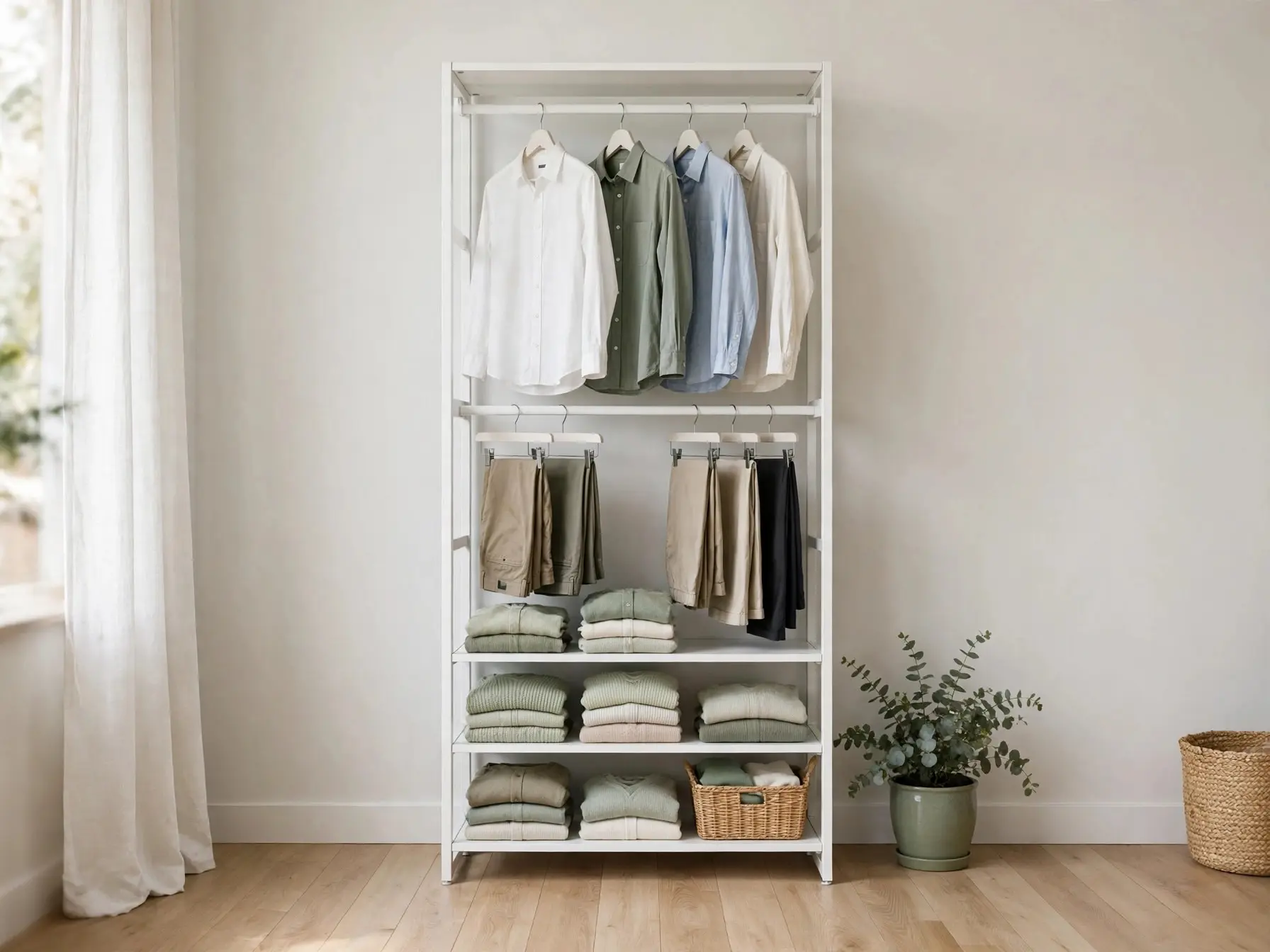
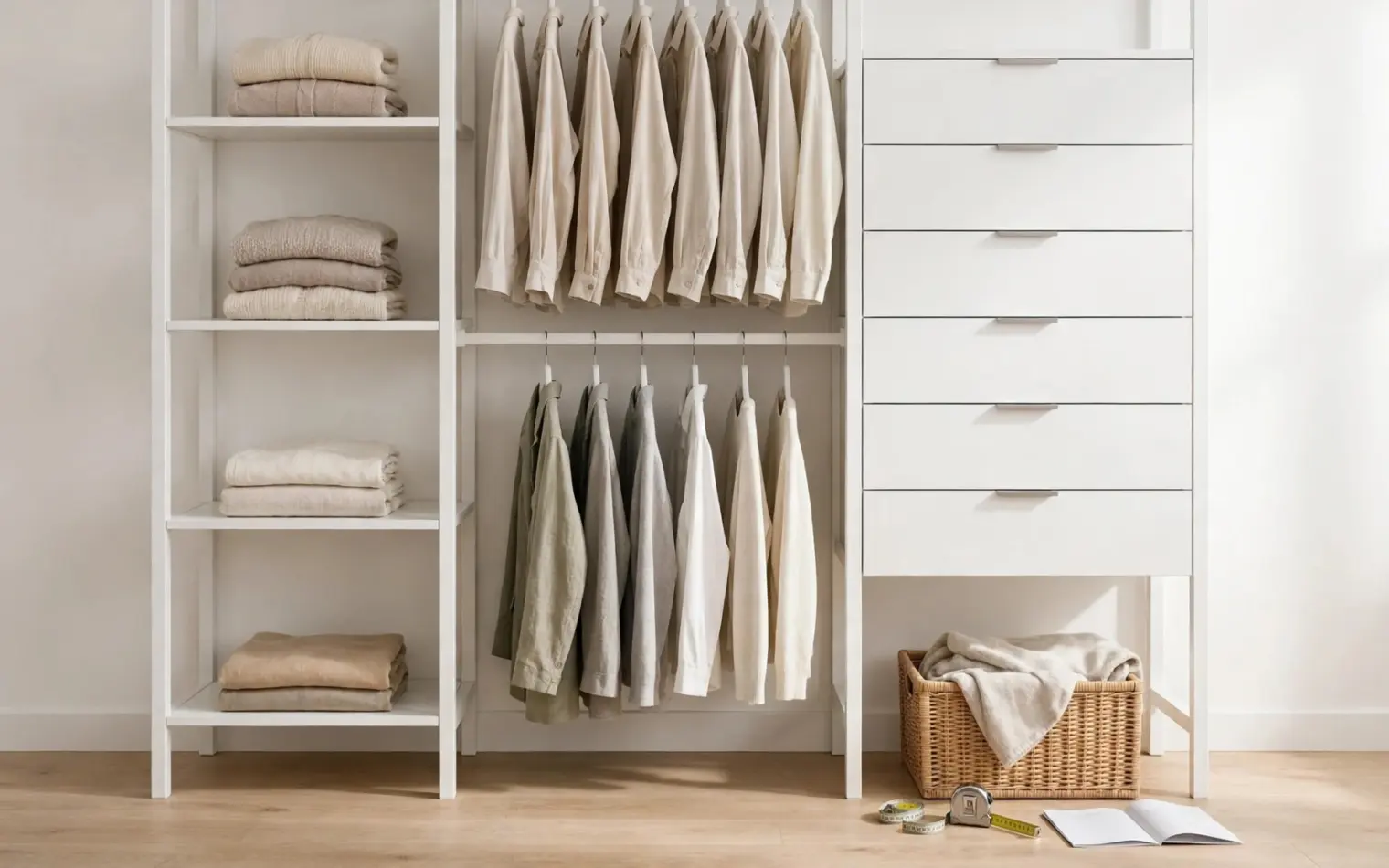
This is the pick to start with if you rent. A freestanding double-rod tower stands on its own against the wall, so there is no drilling, no wall anchors, and nothing to patch when you move out. Two rods double the hanging space of a single rod, and the shelves above hold folded sweaters and bags where a single rod would waste the top half of the closet.
It suits reach-in closets and bedrooms with no built-in closet at all. Check the assembled height against your ceiling and the width against your wall before you buy, since the frame does not adjust to fit. Keep heavier items low so the tower stays steady.
Price range: Budget range · Renter-friendly: Yes, fully renter-friendly: no drilling, moves with you. · Install effort: No drilling; assembly only.
Our pick
Freestanding double-rod tower
Our renter-friendly pick: two rods, open shelves, and zero holes in the wall. Best for apartments and anyone who wants a closet system that moves with them.
2. Wire ventilated reach-in system
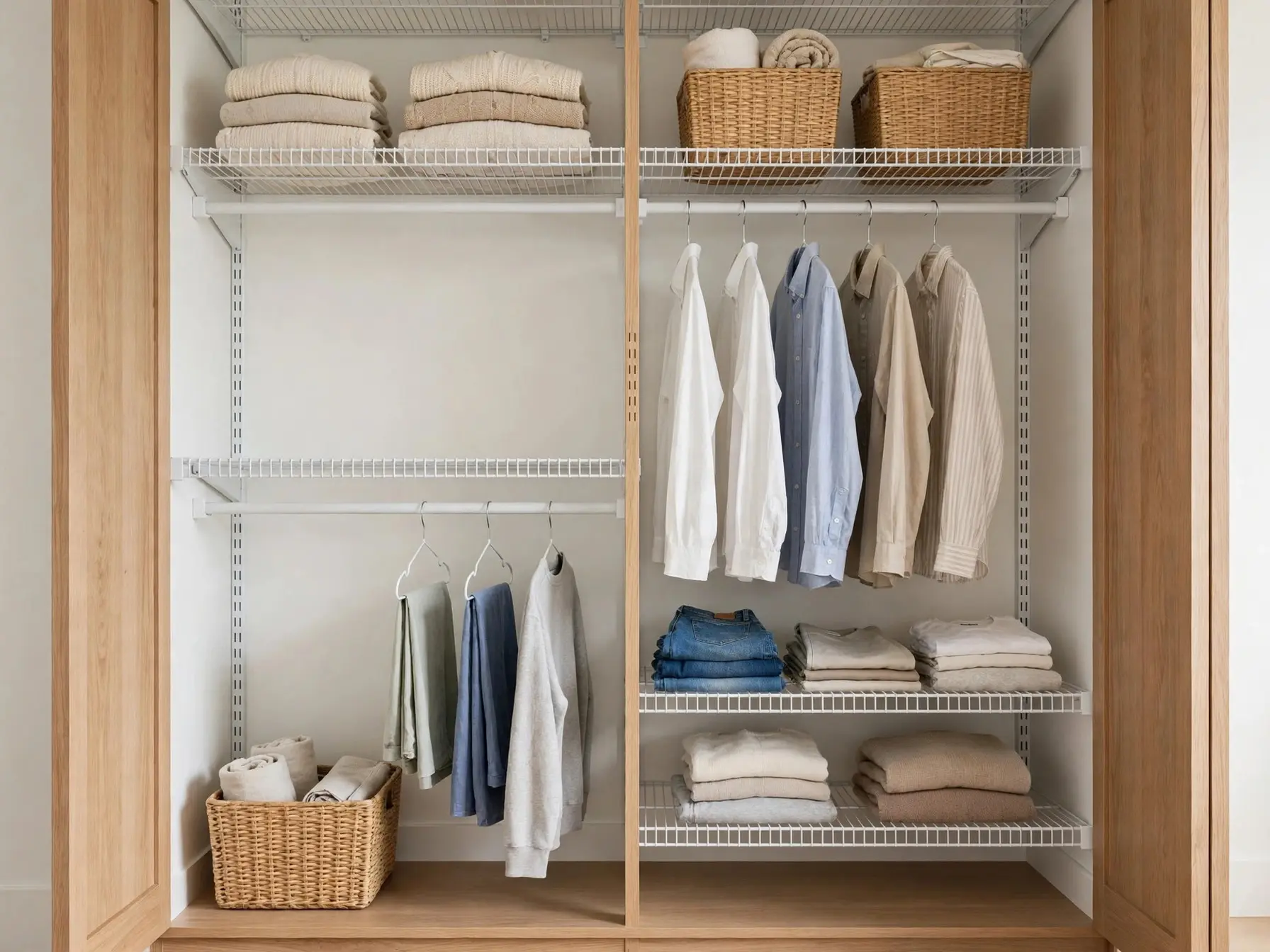
Wire is the lowest-cost way to rebuild a reach-in closet, and the ventilated shelves let air move so clothes stay fresh. A typical kit pairs double hanging rods with a shelf tower, which turns one rod and a single shelf into a full layout for shirts, pants, and folded items. It is also the lightest system here, so one person can usually carry and install it alone.
The trade-off is looks: wire shelves show everything and small items can tip through the gaps. Line the shelves with shelf liner if you store folded knits, and keep the heaviest items on the lowest shelf. For a first closet system on a tight budget, wire is hard to beat.
Price range: Budget range · Renter-friendly: With permission only: needs screws in the wall. · Install effort: Moderate: brackets and rods to mount.
Our pick
Wire ventilated reach-in system
The budget pick: ventilated wire shelves and double rods for the lowest cost. Best for first closets and anyone who wants air flow around their clothes.
3. Track-mounted adjustable system
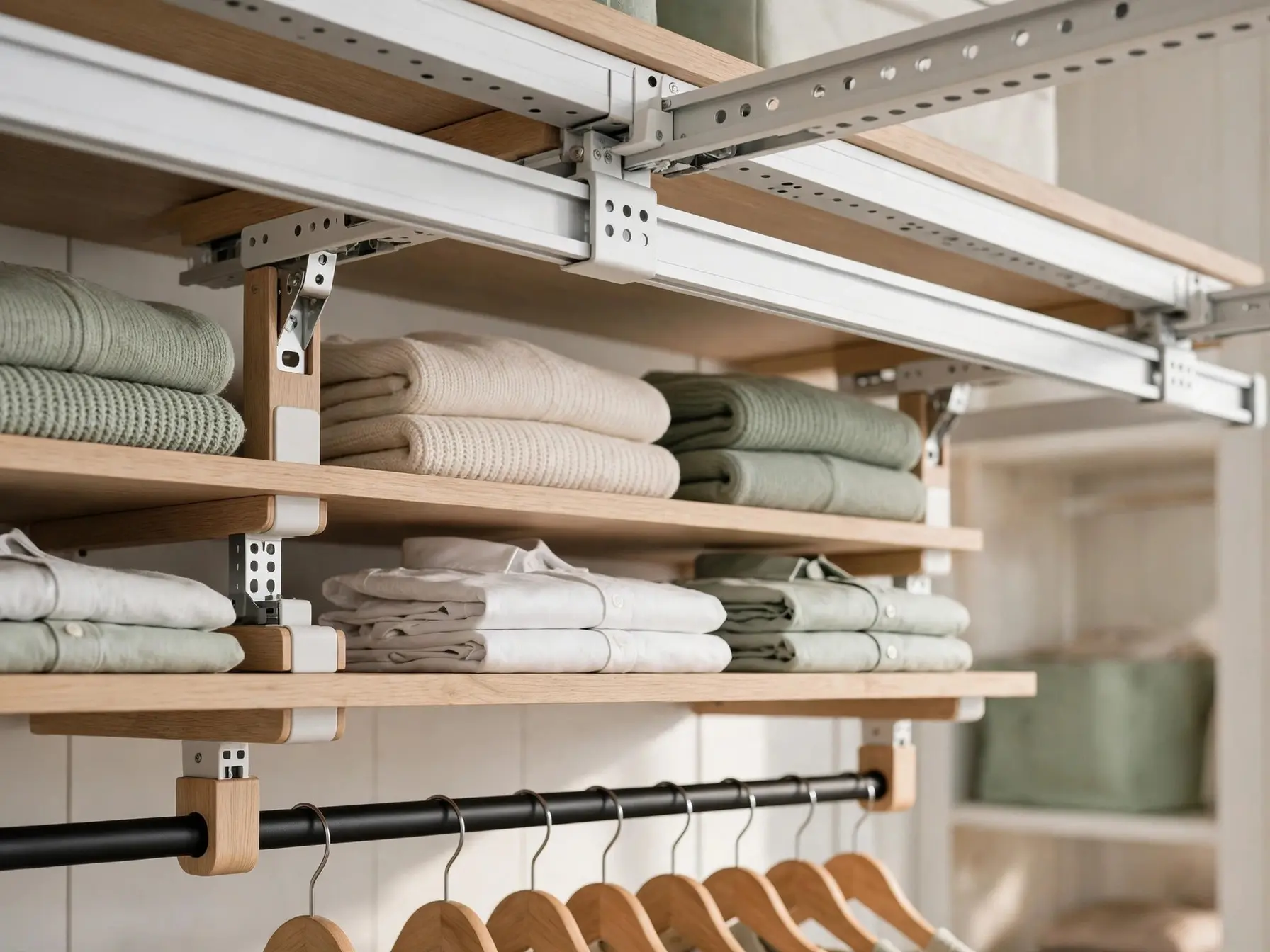
A track system hangs everything from one horizontal rail, which is why it is the easiest mounted system to adjust. Once the rail is level, shelves, rods, and drawers clip onto it and slide along it, so you can move a shelf up a few inches without new holes. That flexibility pays off when your wardrobe changes or a second person moves in.
Install effort is moderate: the rail itself must be level and anchored into studs, but after that the rest of the build is quick. It costs more than wire, and the rail shows above the top shelf, so it suits people who value adjustability over a fully built-in look.
Price range: Midrange · Renter-friendly: With permission only: the rail needs wall anchors. · Install effort: Moderate: one rail to level and anchor; parts clip on after.
Our pick
Track-mounted adjustable system
The flexible pick: one level rail carries shelves, rods, and drawers that slide and adjust. Best for shared closets and wardrobes that change.
4. Laminate built-in-look system
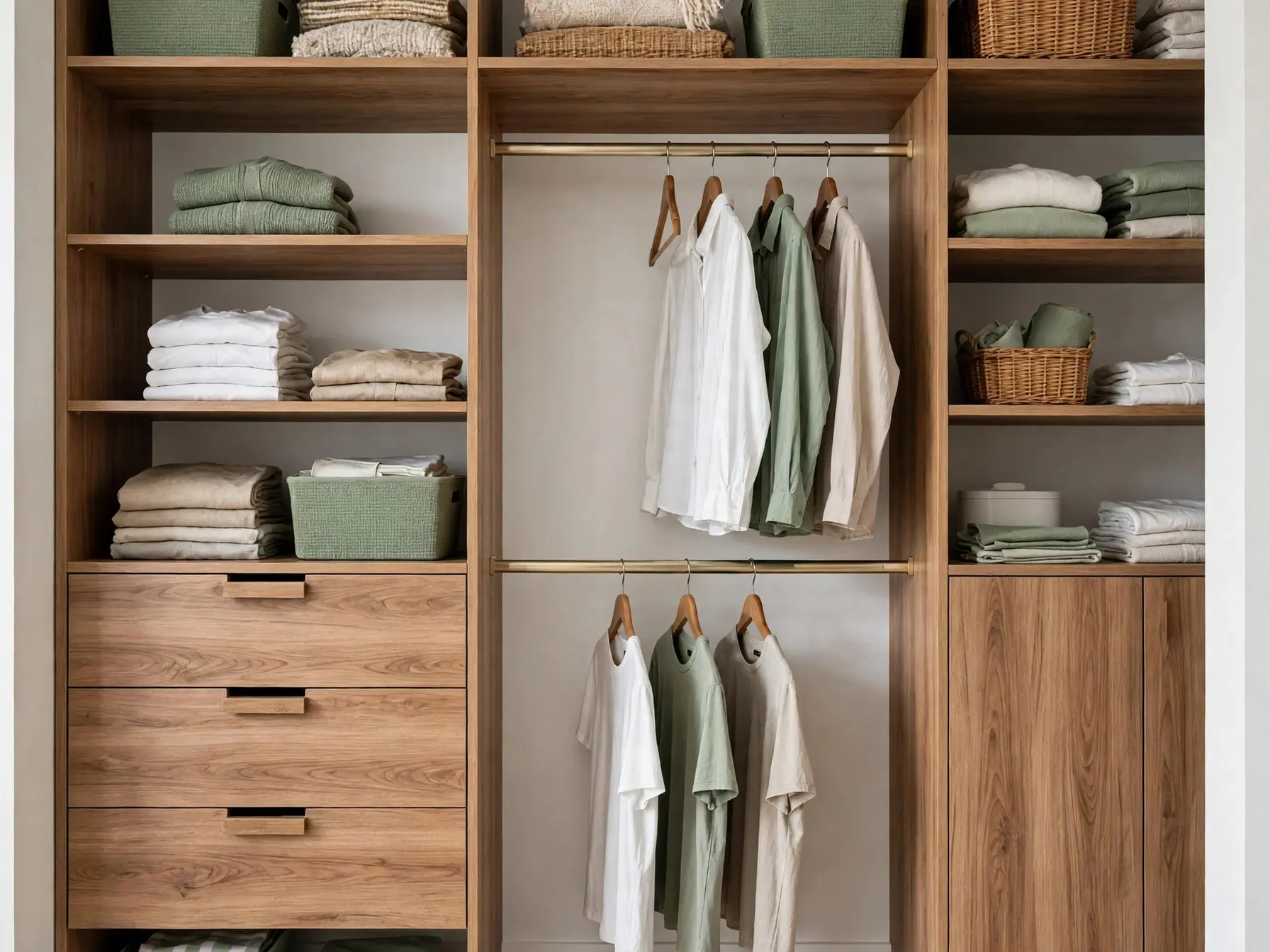
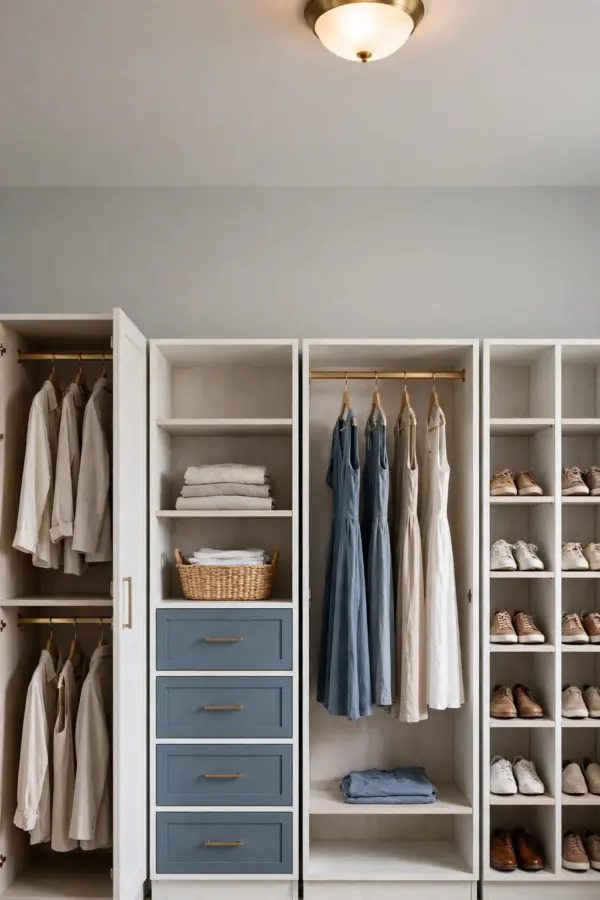
Laminate is the pick if you want the closet to look built in. Solid panels in a warm wood grain hide the structure, the drawers close smoothly, and the finished ends look like furniture rather than hardware. It is the most polished system in this roundup, and the one most likely to make a bedroom feel renovated.
That finish comes with weight and cost: panels are heavy, the kit sits in the premium range, and installation takes the longest here. Plan for two people and a full afternoon, and measure twice, since cut panels are hard to return. For a home you own and a closet you use every day, the result is worth it.
Price range: Premium range · Renter-friendly: No: heavy panels and many wall fixings. · Install effort: High: heavy panels, longest install.
Our pick
Laminate built-in-look system
The polished pick: wood-grain panels and drawers that look built in. Best for owned homes and everyday closets worth investing in.
5. Freestanding wardrobe tower with drawers
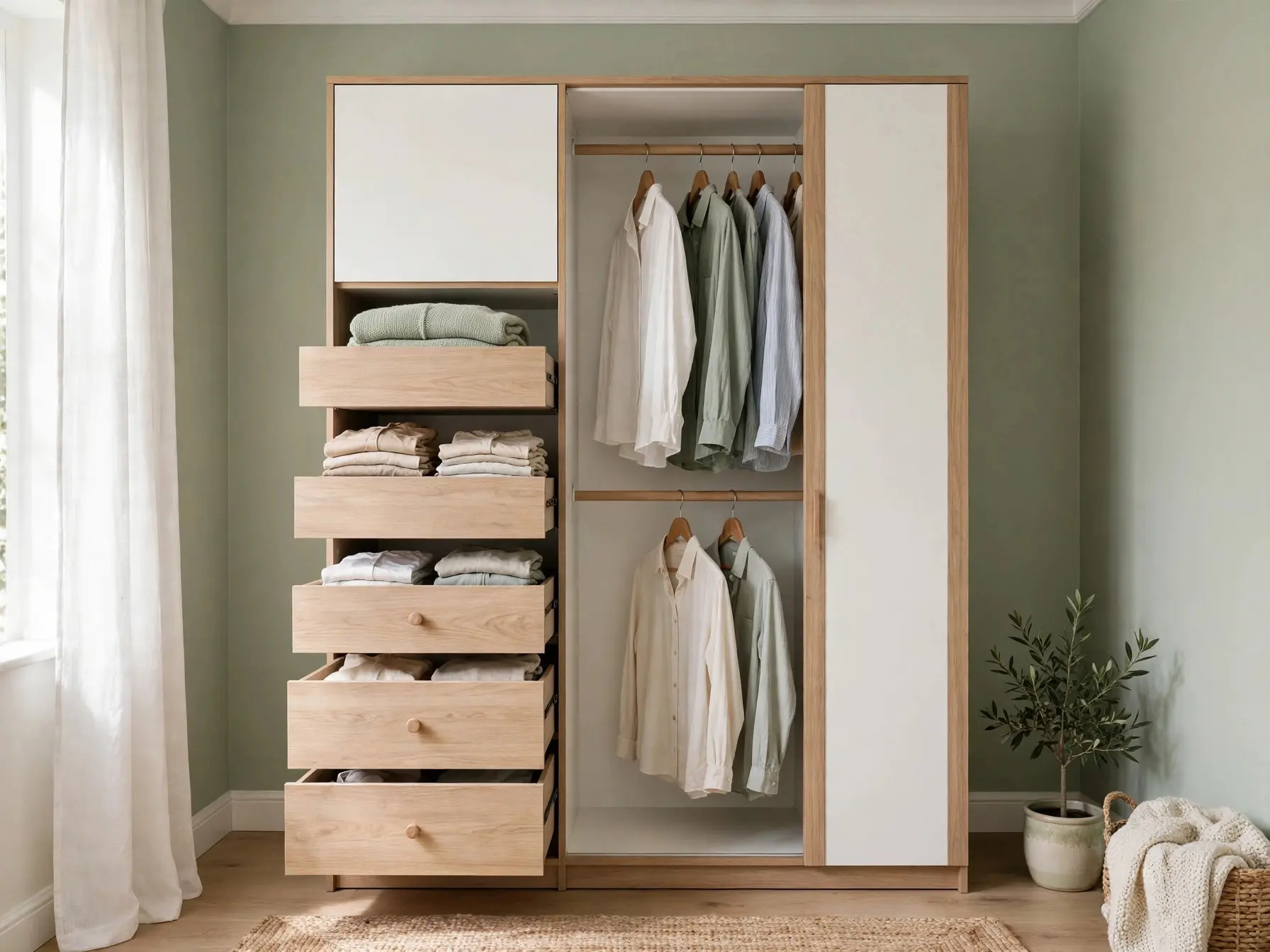
This tower adds what most freestanding units skip: a column of drawers. That makes it a real dresser replacement, which matters in small bedrooms where a separate dresser would eat the floor space. Hang shirts and pants on the rods, fold knits on the shelves, and keep socks, underwear, and accessories in the drawers.
It still needs no drilling and moves with you, but the drawer column adds weight, so check that the assembled unit fits through your doorways and up the stairs. If your bedroom has no built-in closet at all, this is the freestanding pick that covers the most needs in one footprint.
Price range: Midrange · Renter-friendly: Yes, fully renter-friendly: no drilling, moves with you. · Install effort: No drilling; assembly only, heavier to move.
Our pick
Freestanding wardrobe tower with drawers
The dresser-replacement pick: rods, shelves, and a drawer column in one freestanding tower. Best for bedrooms with no built-in closet.
6. Wire double-hang and shelf tower combo
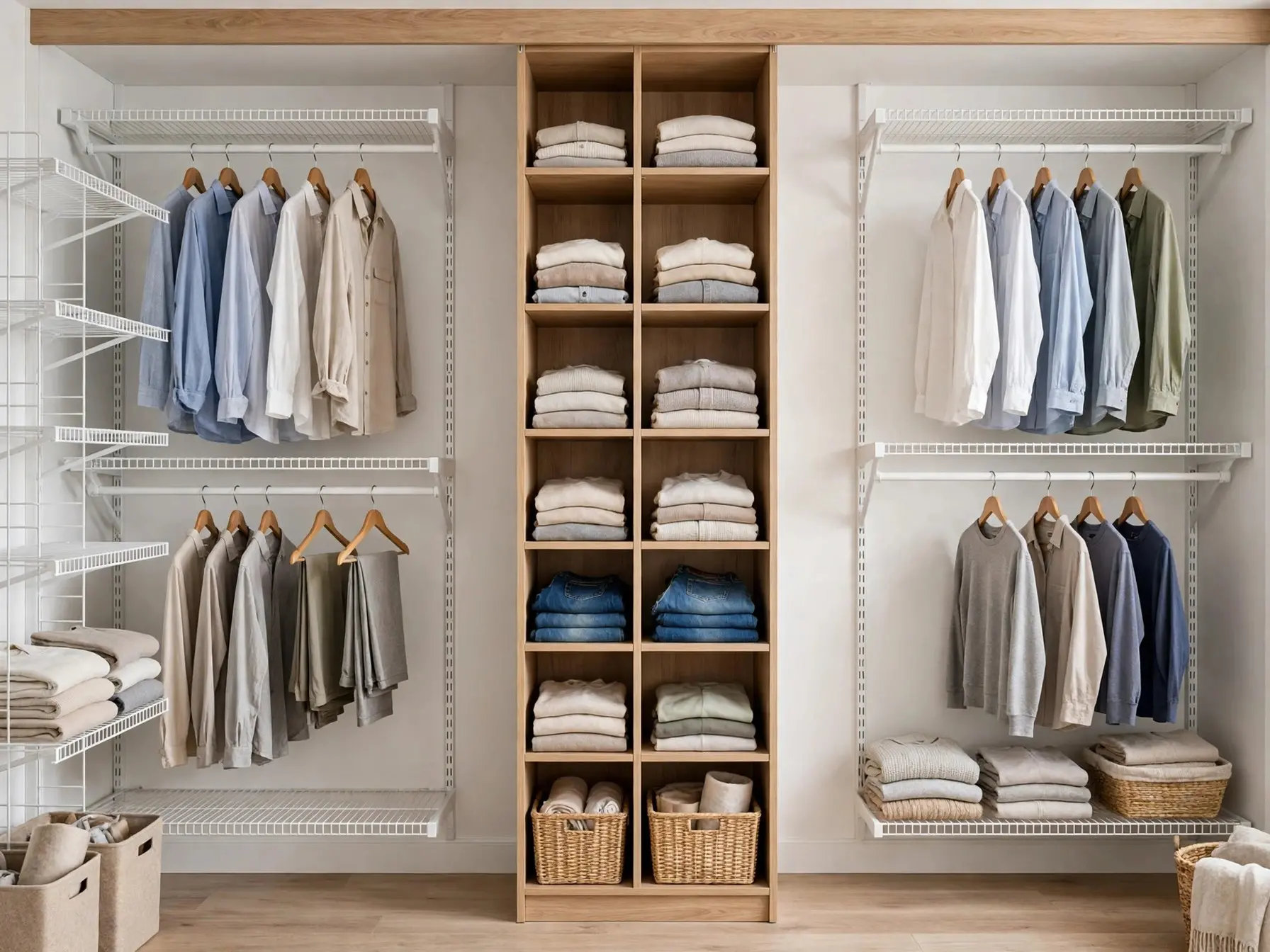
A shelf tower in the middle with double hang on both sides is the classic family layout, and wire does it for the lowest cost. The tower holds folded clothes, bags, and bins at eye level, while each side handles one person’s hanging clothes. It is a practical way to split one closet between two people without a divider.
Wire keeps the price down and the air moving, but the open shelves need bins or liners to look tidy. Label the bins per person if the closet is shared, and reserve the top shelf for out-of-season items so daily clothes stay within reach.
Price range: Budget range · Renter-friendly: With permission only: needs screws in the wall. · Install effort: Moderate: brackets and rods to mount.
Our pick
Wire double-hang and shelf tower combo
The shared-closet pick: a center shelf tower with double hang on both sides. Best for couples and families sharing one closet.
7. Track system with drawers and shoe shelves
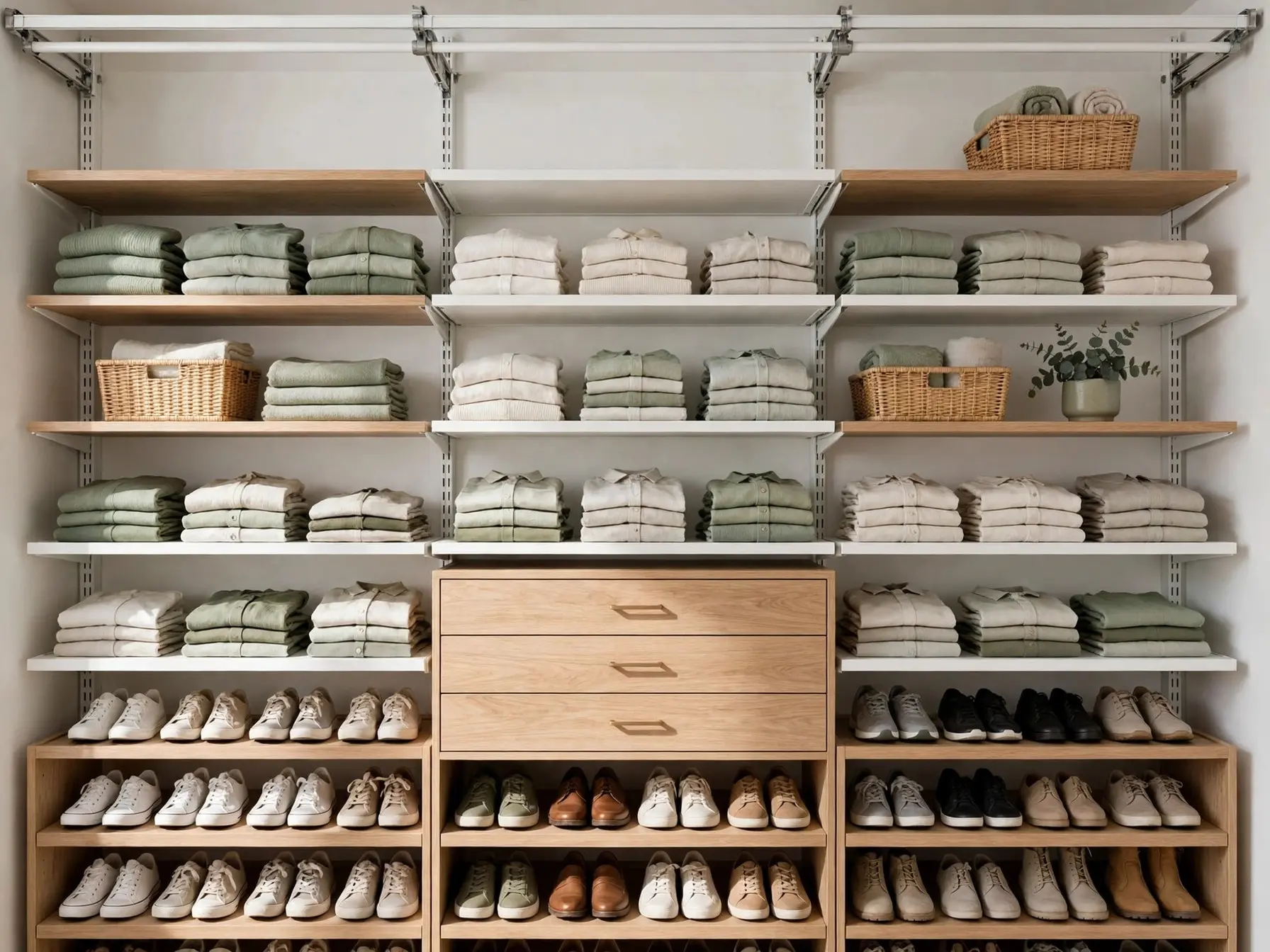
This is the track system grown up: drawers and shoe shelves join the adjustable shelves and rods. Shoes get a proper home at the bottom instead of a pile on the floor, and the drawers take the small items that usually end up on top of the dresser. Everything still clips onto the same rail, so you can shift a shelf when your shoe collection grows.
It costs more than a basic track kit, and the drawer unit adds weight to the rail, so anchor into studs. If you want one system that handles hanging, folded, and shoe storage together, this is the most complete midrange option here.
Price range: Midrange · Renter-friendly: With permission only: the rail needs wall anchors. · Install effort: Moderate: rail plus a heavier drawer unit.
Our pick
Track system with drawers and shoe shelves
The complete midrange pick: track adjustability plus drawers and shoe shelves. Best for one closet that must do everything.
8. Laminate walk-in system with long hang
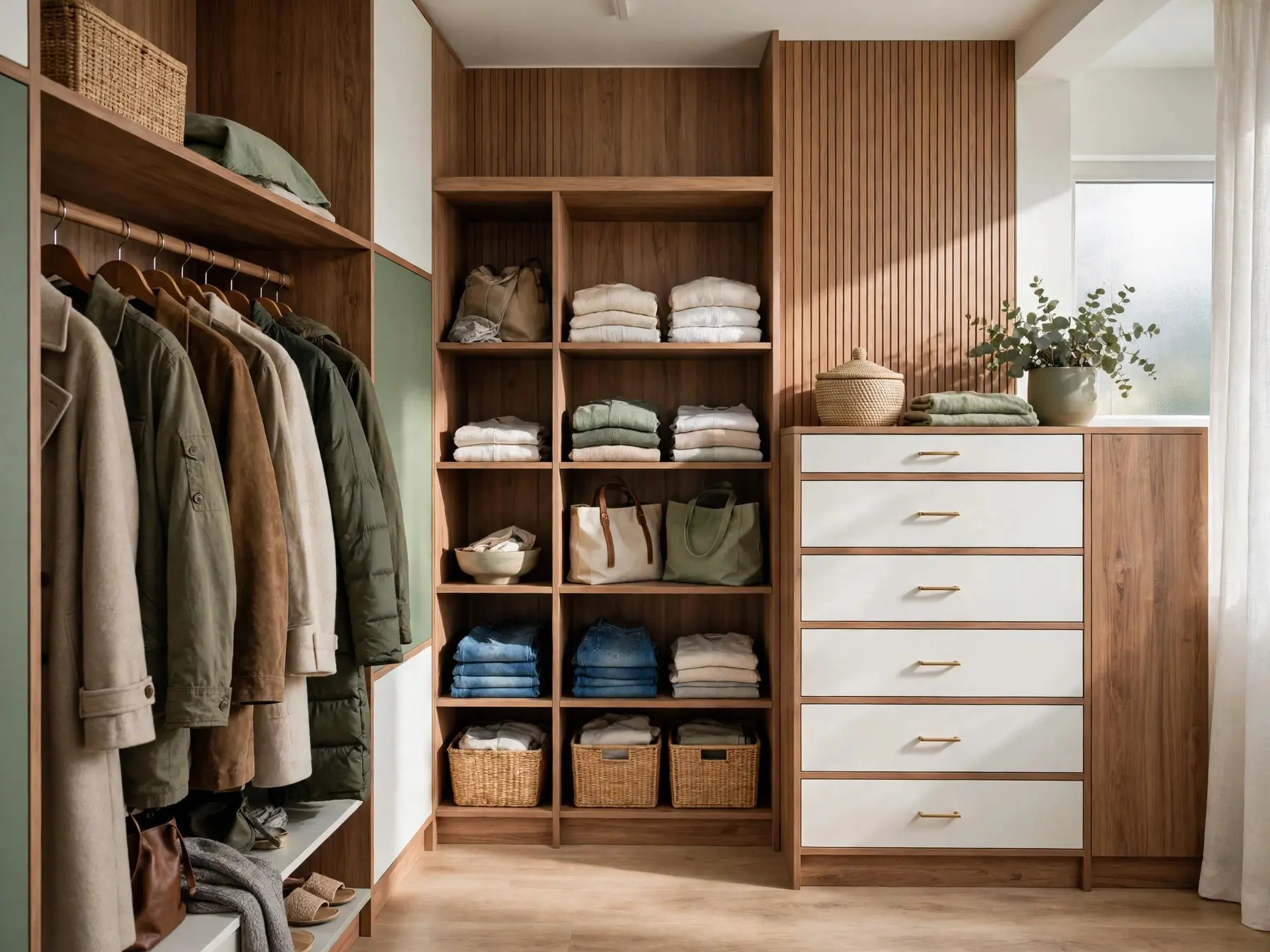
Walk-in closets deserve a system that uses their depth, and laminate does it best. A long-hang section keeps coats and dresses wrinkle-free, shelves handle folded items and bags, and drawers take the small stuff. The panels give the whole room a fitted, furniture-like finish that wire and track cannot match.
This is a premium-range, two-person install, and it only makes sense where the closet is deep enough for the panels plus walking space. Measure the depth carefully: you need room to stand in front of the hanging clothes, not just to fit the system in.
Price range: Premium range · Renter-friendly: No: heavy panels and many wall fixings. · Install effort: High: heavy panels, longest install.
Our pick
Laminate walk-in system with long hang
The walk-in pick: long hang, shelves, and drawers in a fitted laminate finish. Best for walk-in closets with room to move.
9. Expandable freestanding rod-and-shelf kit
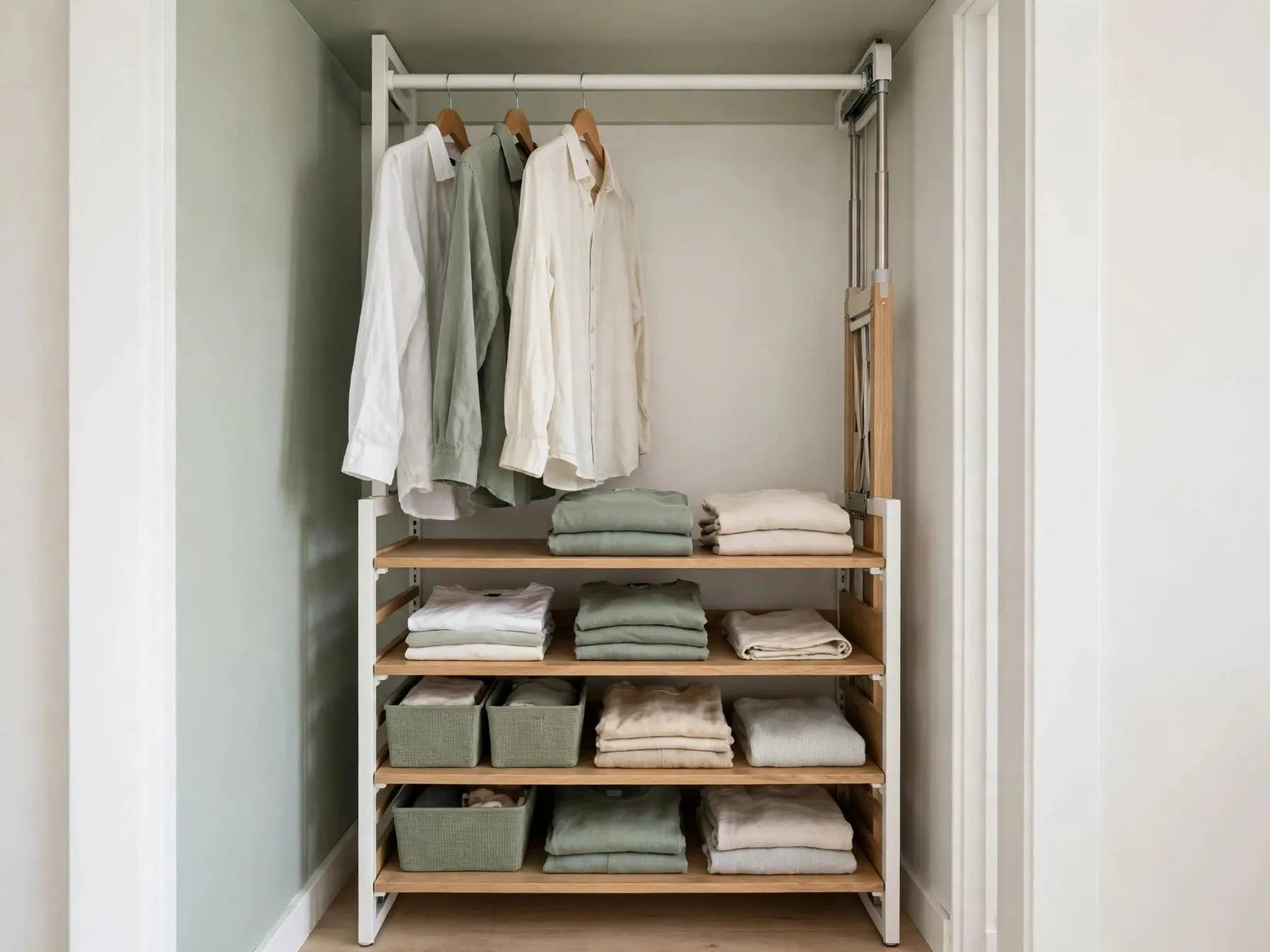
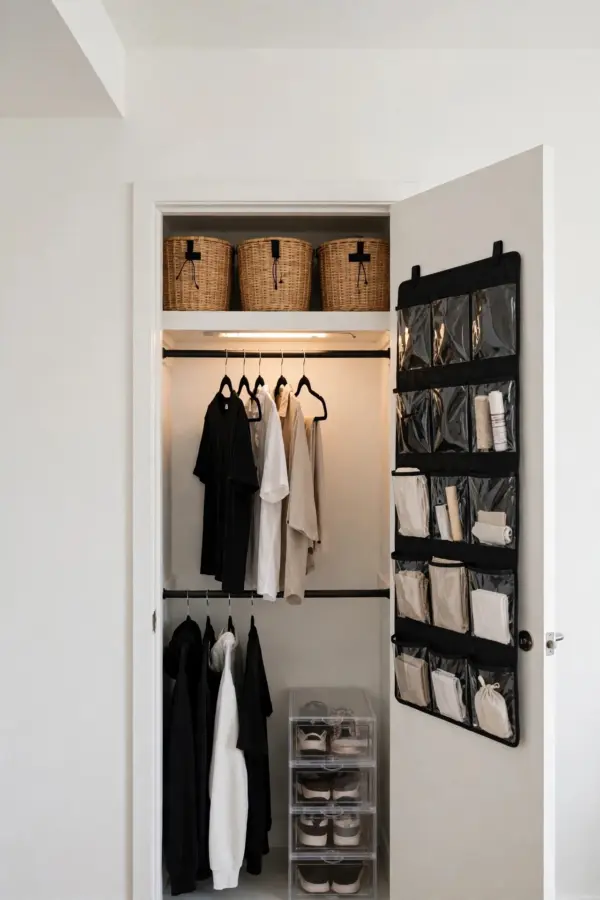
Small closets and dorm rooms need a system that adjusts to the width you actually have, and this expandable kit does exactly that. The rod and shelves extend to fit narrow or awkward widths, and the whole kit stands freely, so it works in rentals and in closets where drilling is not allowed.
Capacity is modest: this is a one-person kit, not a family system, and very heavy coats can bow an extended rod. Keep the span as short as your closet allows, and use the shelves for folded items so the rod carries only hanging clothes.
Price range: Budget range · Renter-friendly: Yes, fully renter-friendly: no drilling, moves with you. · Install effort: No drilling; assembly only.
Our pick
Expandable freestanding rod-and-shelf kit
The small-space pick: an expandable rod-and-shelf kit that fits narrow closets. Best for dorms, rentals, and single-person closets.
10. Wire corner system for L-shaped closets
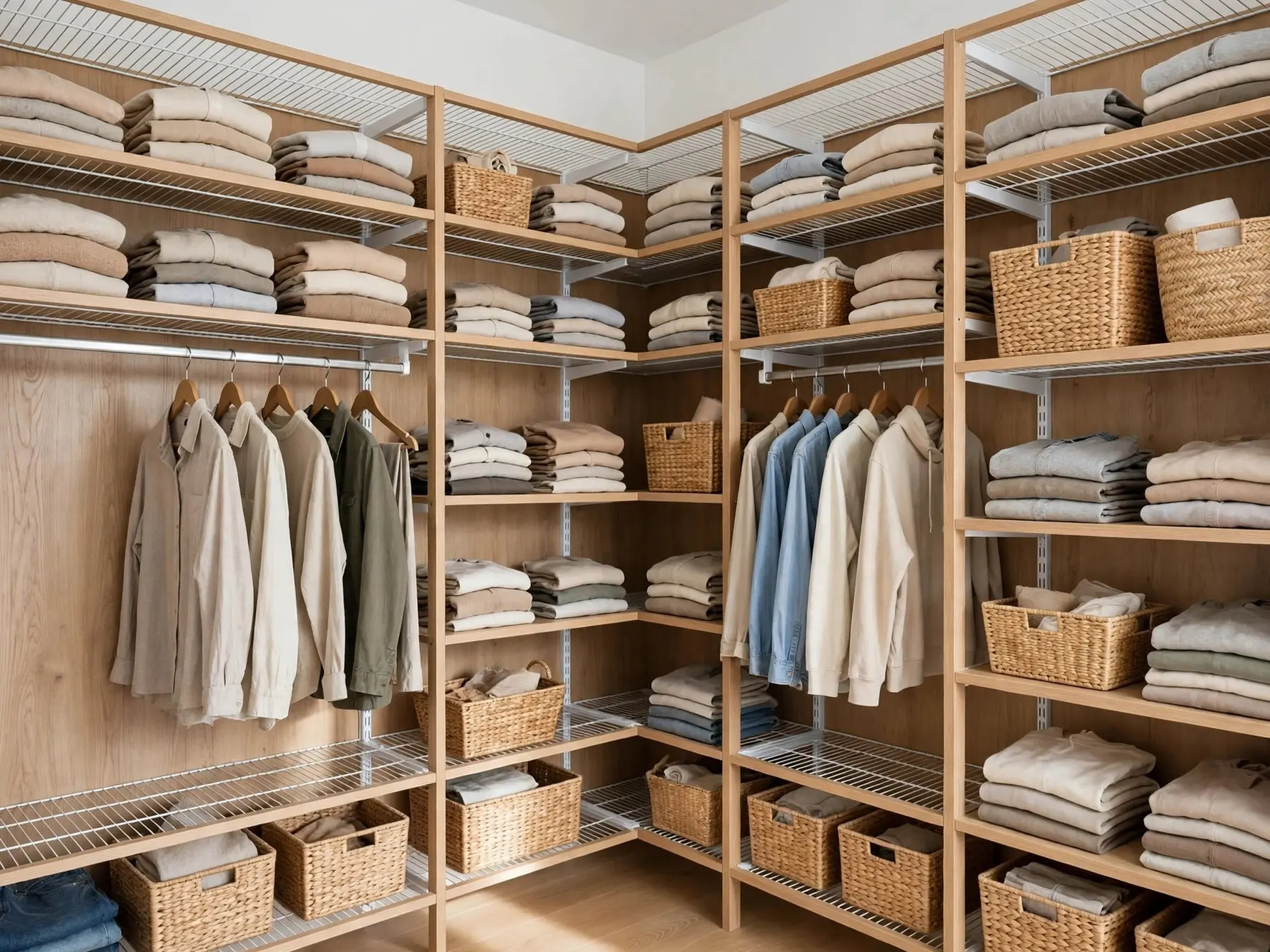
L-shaped closets waste their corner, and a wire corner system is the cheapest way to claim it. Shelves turn the corner so folded clothes and bins use both walls, and rods on each wall keep hanging clothes accessible from either side. Wire suits corners well because the open shelves do not block light or air in the tight turn.
The corner shelves need careful measuring: both walls must be square, and the turn shelf has to clear the door swing. If your closet has a dead corner that currently holds nothing, this is the pick that turns it into useful storage.
Price range: Budget range · Renter-friendly: With permission only: needs screws in the wall. · Install effort: Moderate: brackets and rods to mount on two walls.
Our pick
Wire corner system for L-shaped closets
The awkward-corner pick: wire shelves and rods that wrap the L-shape. Best for L-shaped closets with a wasted corner.
11. Modular cube-and-rod hybrid
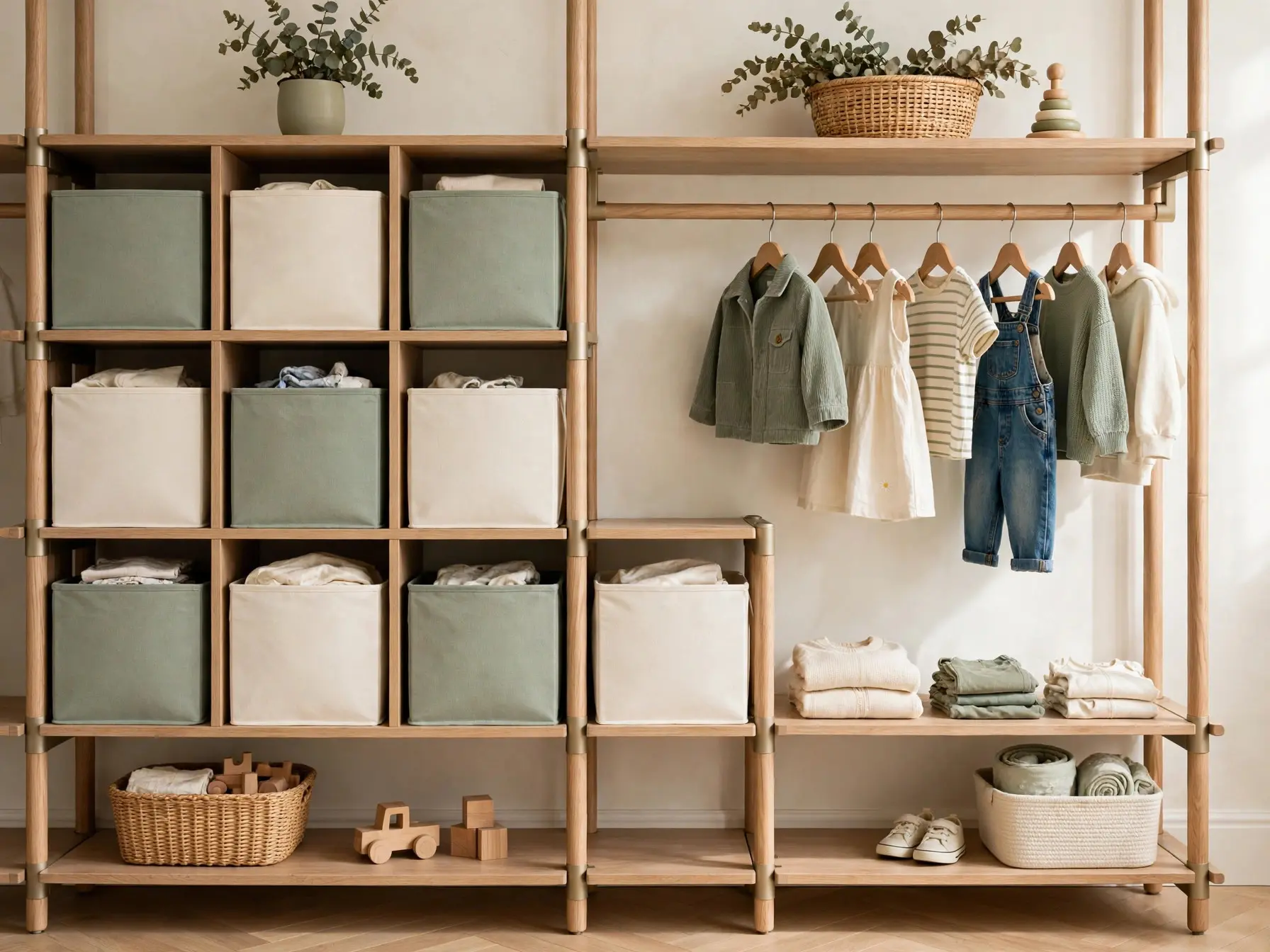
Cubes plus a rod is the most flexible system here, and it shines in kids’ closets. The cubes hold toys, folded clothes, and bins that a child can pull out and put back, while the rod handles hanging clothes at a height they can reach. Rearrange the cubes as the child grows, or move the whole unit to another room later.
It is a budget-range pick, but the cubes hold less than a full shelf tower, and the fabric bins need occasional cleaning. For a kids’ room, a playroom closet, or anyone who rearranges often, the flexibility is worth the smaller capacity.
Price range: Budget range · Renter-friendly: Yes, fully renter-friendly: no drilling, moves with you. · Install effort: No drilling; assembly only.
Our pick
Modular cube-and-rod hybrid
The flexible pick: cubes and a rod you can rearrange as needs change. Best for kids’ closets and rooms that get rearranged.
12. Laminate system with hamper and valet rod
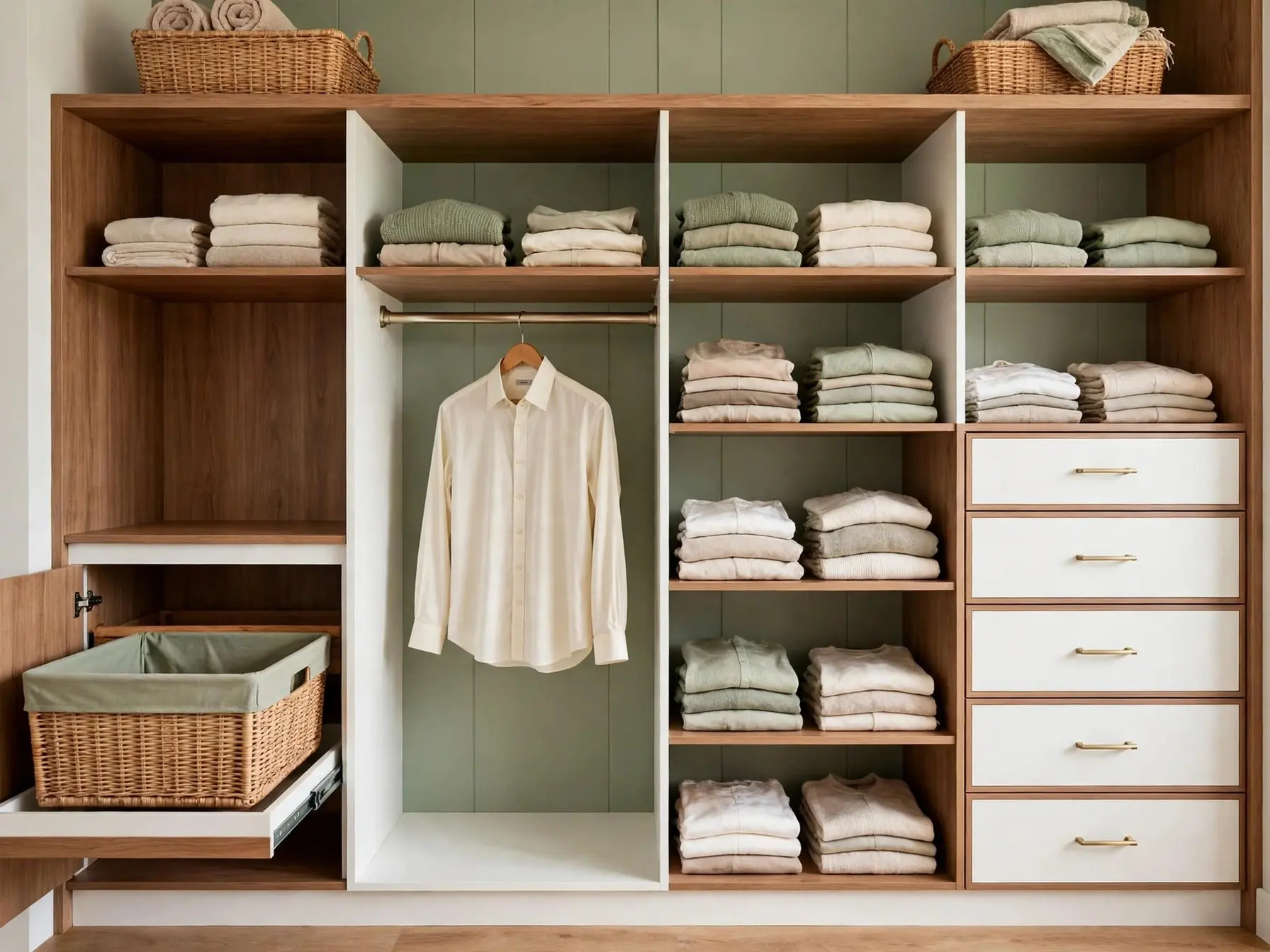
This is the full-service laminate system: a pull-out hamper for laundry, a valet rod for tomorrow’s outfit or steaming, plus the usual shelves and drawers. It suits a primary bedroom closet, where laundry and outfit planning happen in the same space, and it keeps dirty clothes out of sight instead of on the floor.
It sits in the premium range and needs the longest install, and the hamper needs clearance to pull out fully, so measure the floor space in front of it. If you want one closet system that handles storage, laundry, and getting dressed, this is the most complete pick in the roundup.
Price range: Premium range · Renter-friendly: No: heavy panels and many wall fixings. · Install effort: High: heavy panels, longest install.
Our pick
Laminate system with hamper and valet rod
The full-service pick: hamper, valet rod, shelves, and drawers in laminate. Best for primary bedroom closets.
Questions, answered
How much should a closet system cost?
It depends on the size of the closet and the material. A simple wire kit for a reach-in closet sits in the budget range, while a track system lands in the midrange and a full laminate system in the premium range. Measure first, then compare kits that cover the same width, because a cheap kit that needs extra parts can end up costing as much as the next tier up.
Is it cheaper to build or buy a closet system?
Buying a kit is usually cheaper once you count materials, tools, and time. A ready-made wire or track kit includes the rods, shelves, and hardware in one box, and most people can install it in an afternoon. Building from scratch makes sense only if your closet has an awkward shape no kit fits, or you already own the tools and enjoy woodworking.
What is the best closet system for renters?
A freestanding system is the best closet system for renters. It stands on its own against the wall, needs no drilling and no wall anchors, and moves with you to the next home. Look for a tower with double rods and shelves, and check that it fits through your doorways before you buy, since freestanding units ship as one tall frame or a few large panels.
What type of closet system is easiest to install?
A freestanding system is the easiest to install because there is nothing to mount: you assemble the frame, stand it up, and load it. Next easiest is a track system, which hangs from one horizontal rail, so you level a single line instead of many brackets. Wire and laminate systems take longer because every shelf and bracket needs its own fixings, and laminate panels are heavy to hold in place while you work.
Keep reading
- 35 Closet Organization Ideas That Actually Stay Tidy
- Shoe Rack for Closet: 15 Best Picks by Size and Capacity
- Underneath Bed Storage: 20 Smart Ideas for Small Bedrooms
The best closet system is the one that fits your measurements, your lease, and the way you actually get dressed. Measure first, pick the type that matches your budget and install comfort, and start with the section you use every morning: once that works, the rest of the closet follows.