

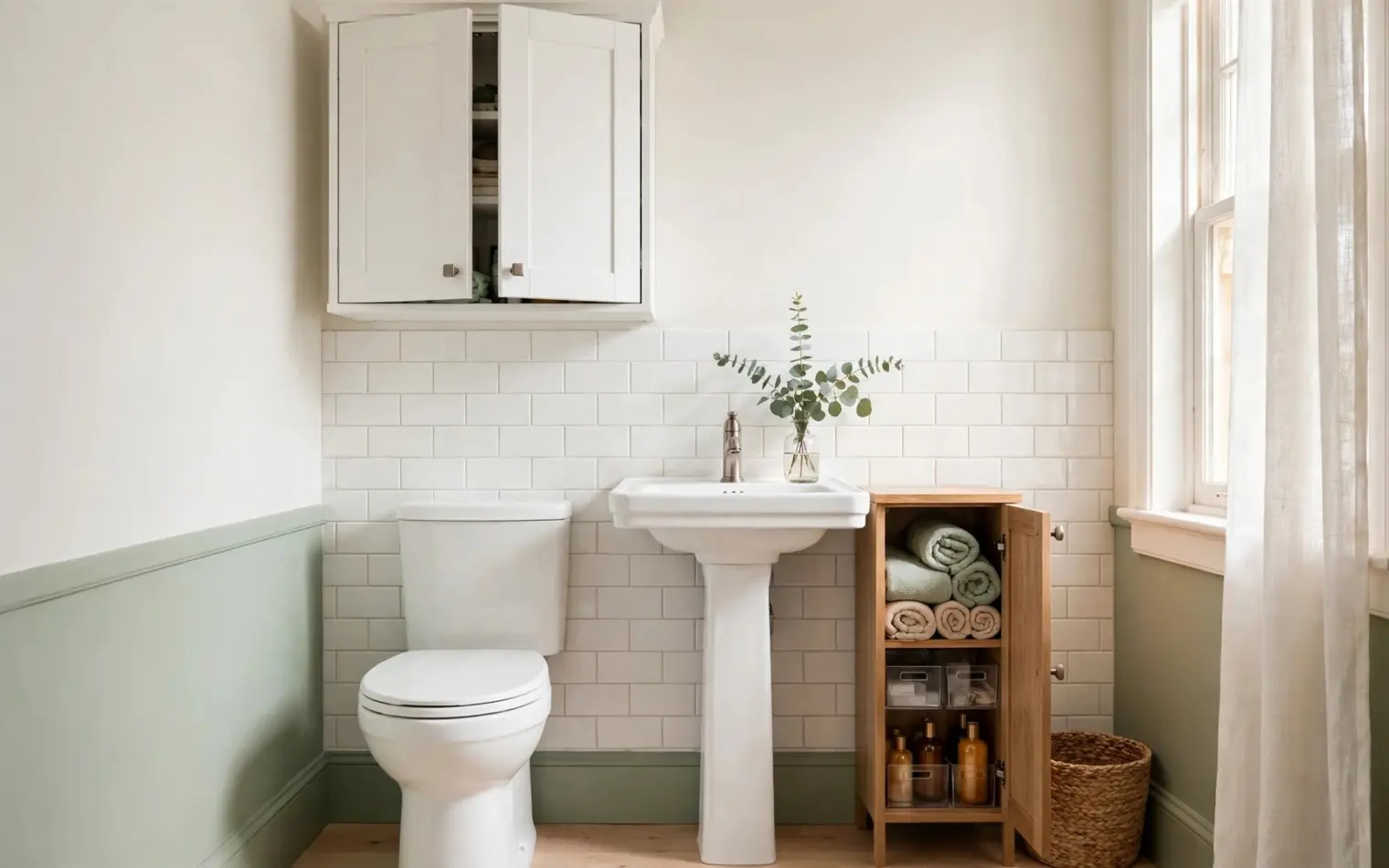
A small bathroom does not need more square footage; it needs one good bathroom storage cabinet in the right spot. The right cabinet takes the bottles off the counter, the spare towels off the floor and the cleaning spray out from behind the toilet, and it does all of that inside a footprint of a square foot or two.
Thank you for reading this post, don’t forget to subscribe!This list walks through 21 cabinet ideas for small bathrooms: wall, tall, floor and compact styles, renter-friendly options that need no drilling, and a few clever shapes for corners and gaps you probably think are unusable. Each idea says where it fits, what it holds and what to check before you buy, so you can match the cabinet to your room instead of guessing.
How to choose the right cabinet
Start with the spot, not the style. Small bathrooms have four storage zones: the wall above the toilet, the gap beside the sink, the space under the sink and any spare floor corner. Pick the zone that bothers you most, then choose the cabinet type built for it. For zone-by-zone ideas beyond cabinets, see our guide to storage ideas for bathroom clutter.
Then decide how the cabinet opens. Doors hide clutter but need swing room; drawers suit small items and tight spaces because they pull toward you; open shelves need no clearance but only look good filled with towels and baskets. Renters should start with freestanding and over-toilet designs that stand on the floor, since they add storage without a single hole in the wall.
Measure first
Most bathroom storage cabinets are 10 to 14 inches deep, and the right one is the one that fits your gap with room to spare. Measure these five things before you shop, and write them down: a cabinet that fits on paper but blocks a door swing is no bargain at all.
- Gap width and depth: measure at the narrowest point, skirting boards included.
- Height: floor to ceiling, or up to the lowest fitting, rail or window.
- Door swing: cabinet doors, drawers and the bathroom door itself all need clearance.
- Plumbing: the position of the pipes and the trap under the sink.
- Your tallest bottle: the shelf height your shampoo and cleaning bottles actually need.
The ideas
1. Over-toilet wall cabinet
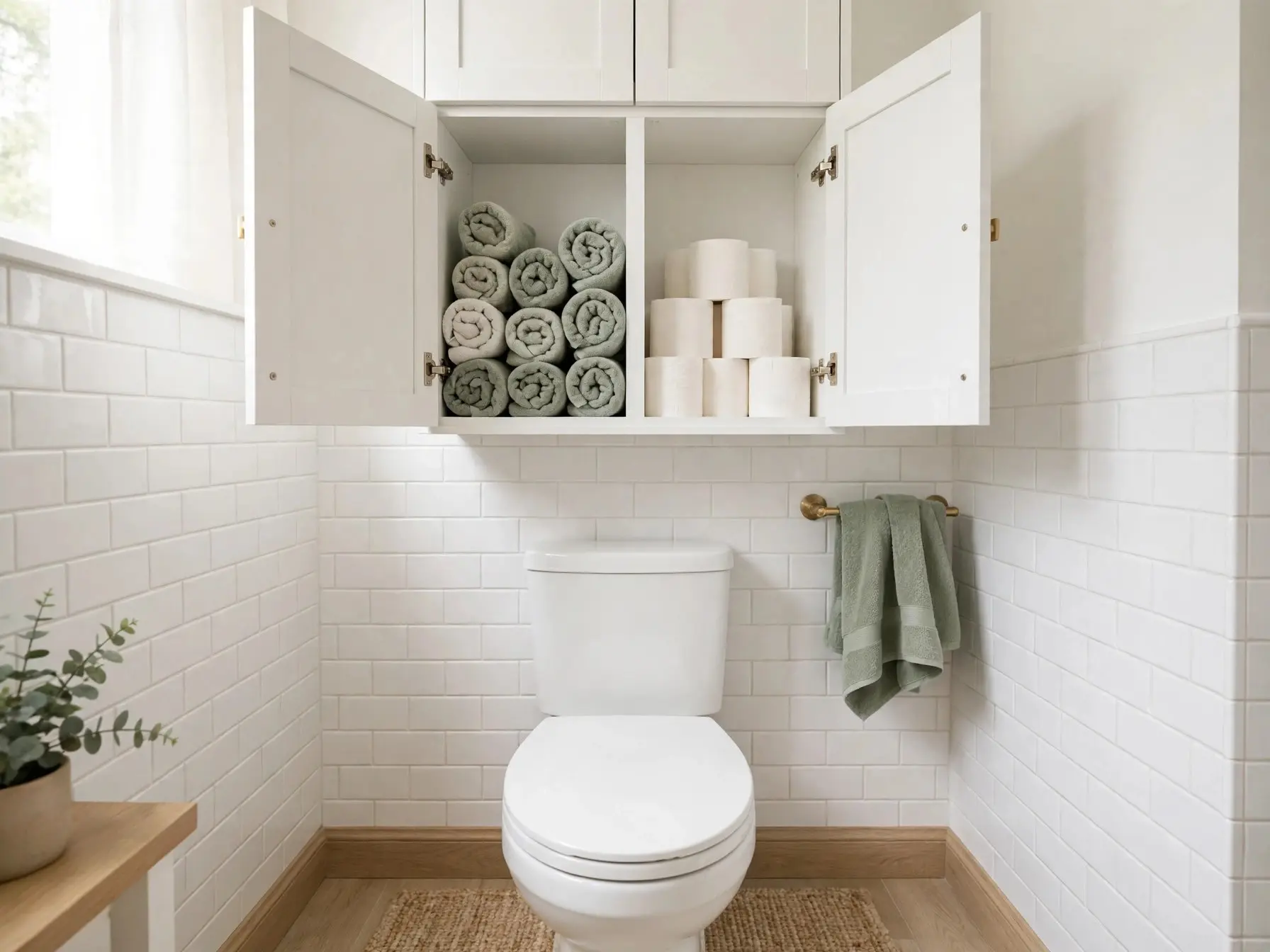
The wall above the toilet is the most wasted space in a small bathroom, and a wall cabinet sized to the tank turns it into two or three shelves of real storage. Spare toilet paper, folded hand towels and back-up toiletries all fit, and everything stays off the floor and the tank lid.
Choose a cabinet no deeper than about 8 inches so it does not crowd anyone sitting down, and leave a hand’s width between the tank lid and the cabinet base so the lid can lift off for repairs. Shaker-style doors suit most bathrooms and hide the visual noise of mixed bottles.
2. Slim floor cabinet beside a pedestal sink
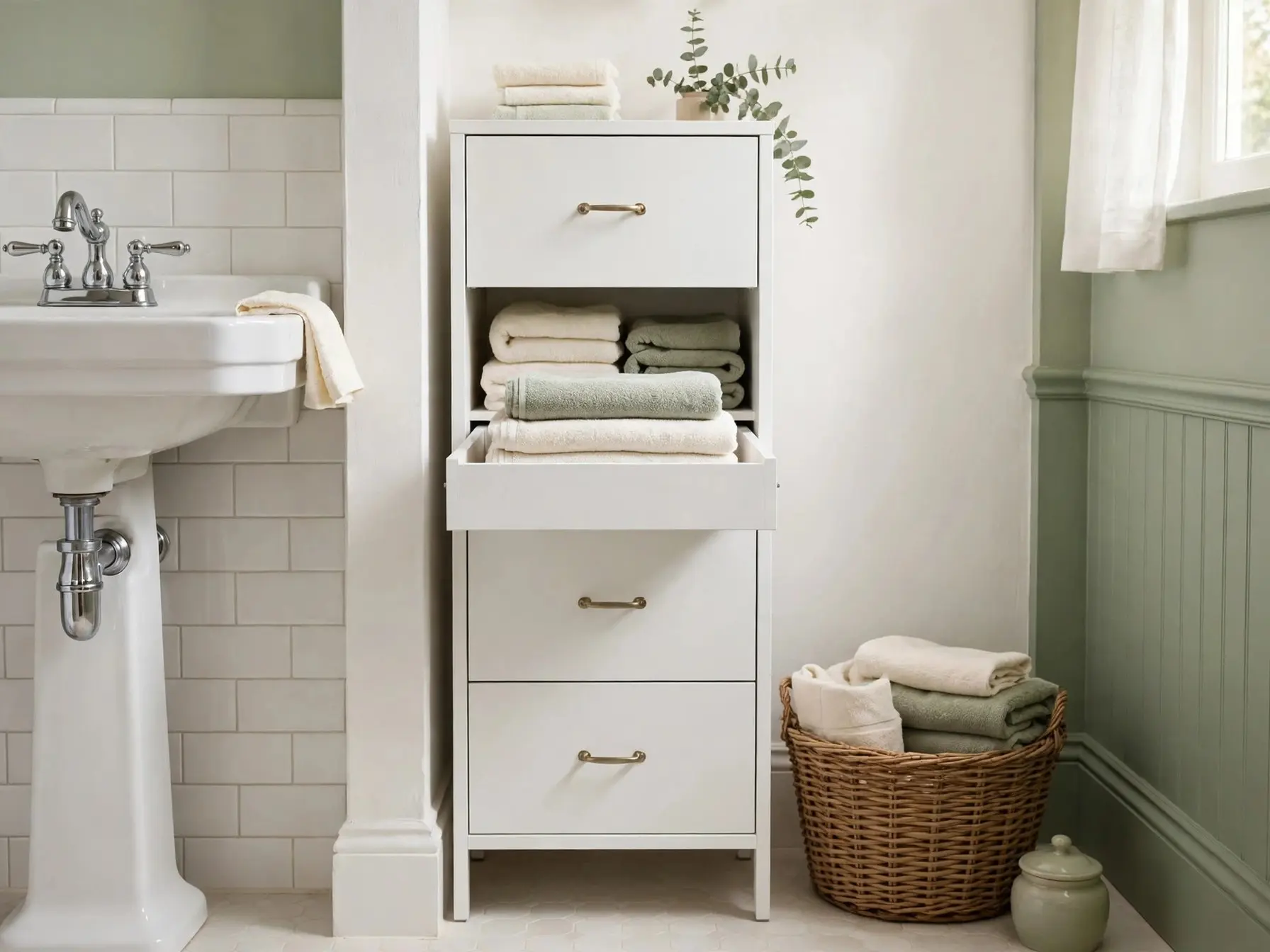
A pedestal sink looks airy but stores nothing, and the narrow gap beside it is usually just wide enough for a slim floor cabinet. Units around 12 inches deep hold folded towels, a hair dryer and daily toiletries without crowding your elbows at the sink.
Measure the gap at its narrowest point, skirting board included, and check that cabinet doors or drawers can open past the pedestal bowl. A slim cabinet with drawers suits this spot best, because drawers pull toward you instead of swinging into the sink.
3. Tall linen tower
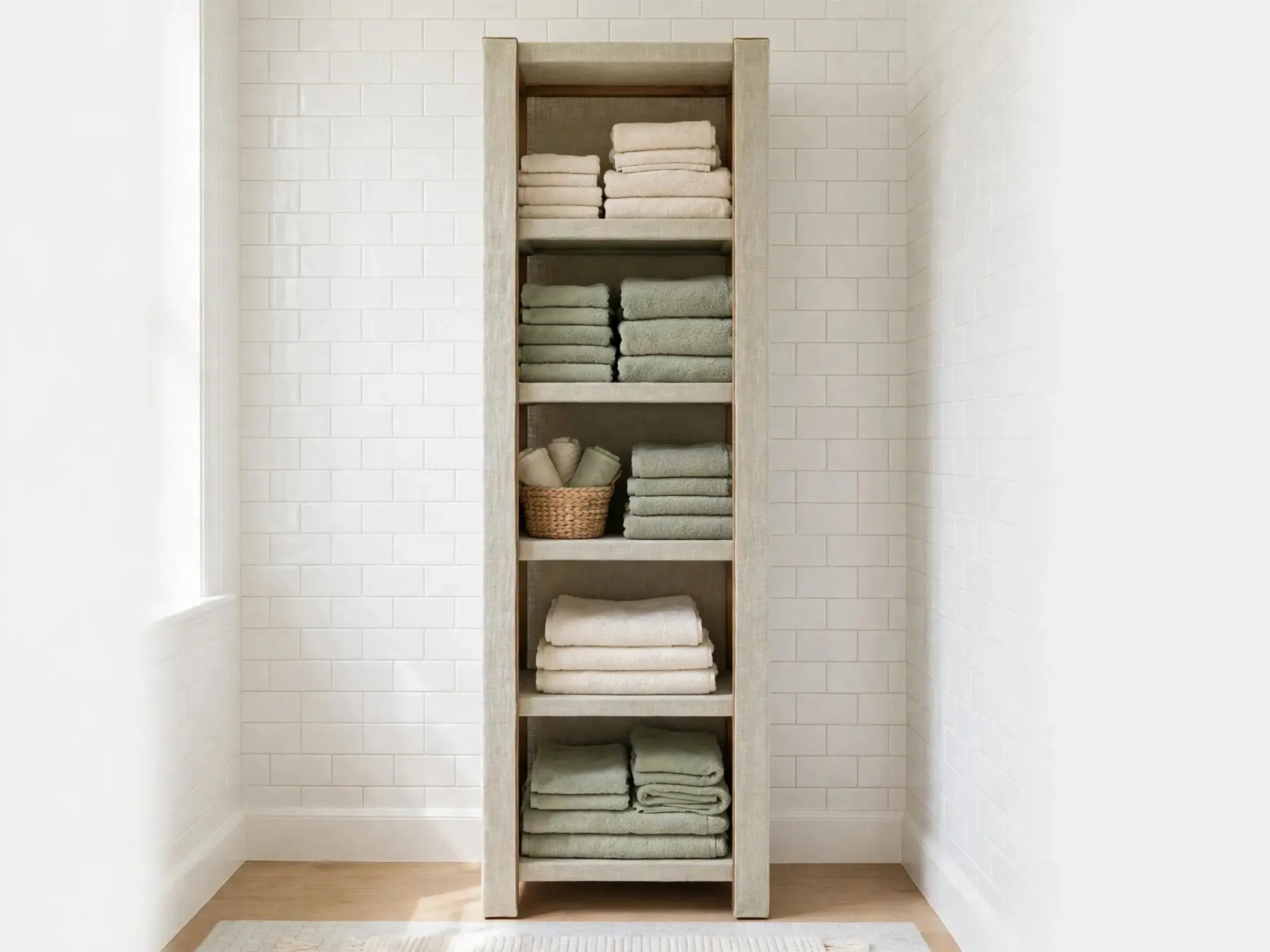
When floor space is tight, go up. A tall linen tower only needs about a square foot of floor, and its shelves stack a full set of bath towels, hand towels and washcloths in one column. It is the closest thing a small bathroom has to a linen closet.
Put daily towels at shoulder height, guest towels higher, and heavy items like spare shampoo bottles on the lowest shelf so the tower stays steady. Anchor a tall unit to the wall if your home allows it, or use an anti-tip strap if it does not.
4. Corner cabinet for the dead corner
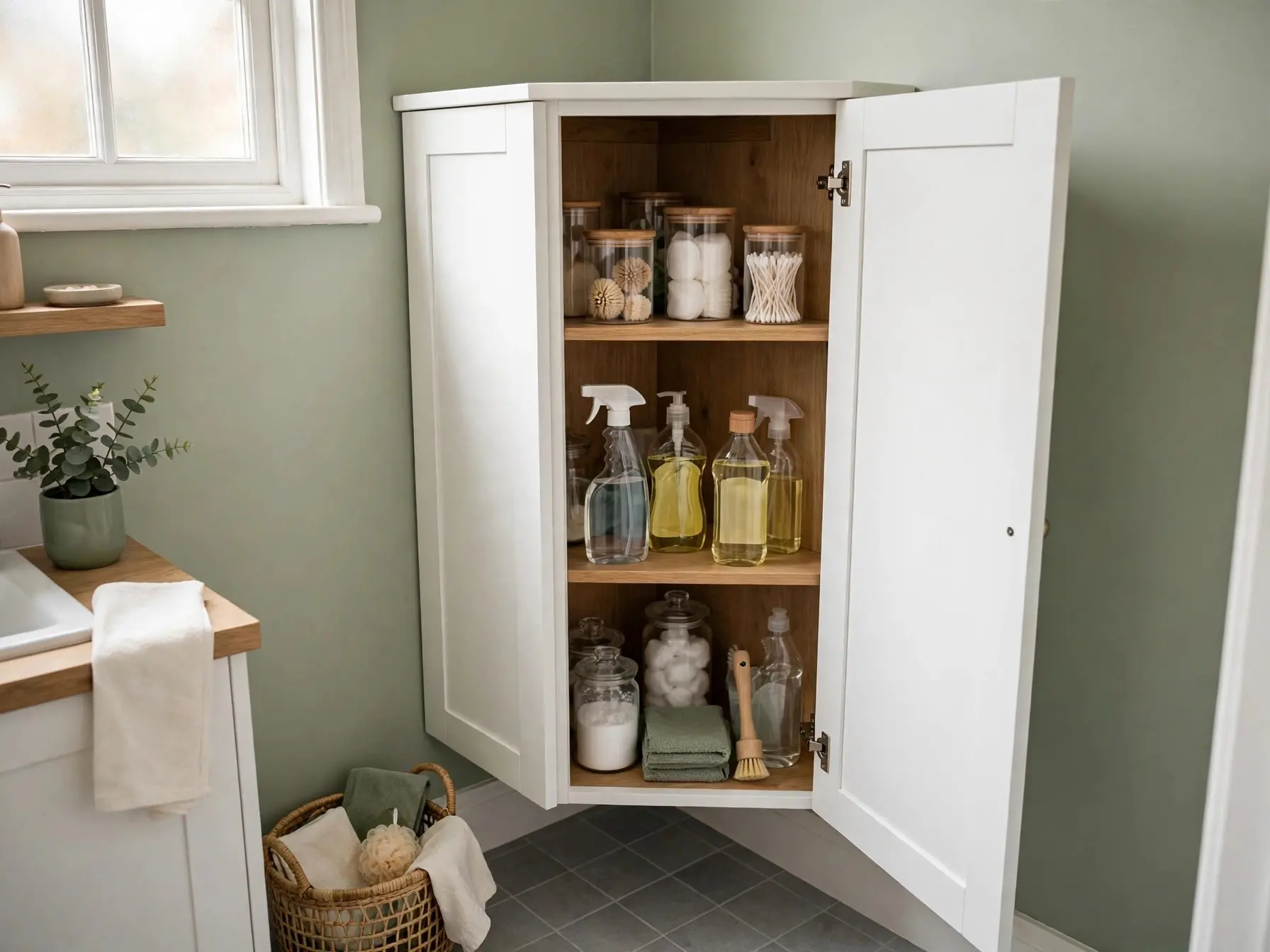
Corners collect dust and a stray plunger, but a corner cabinet turns that dead angle into shelved storage. Angled or quarter-round designs fit where a square cabinet cannot, and they are a natural home for cleaning supplies and back-up bottles you do not need every day.
Measure both walls from the corner out, because corner cabinets need a clear run on each side to sit flat. Keep the door swing in mind too: in a tight bathroom, a corner unit with a sliding or bi-fold door beats one that swings into the room.
5. Under-sink cabinet with pull-out drawers
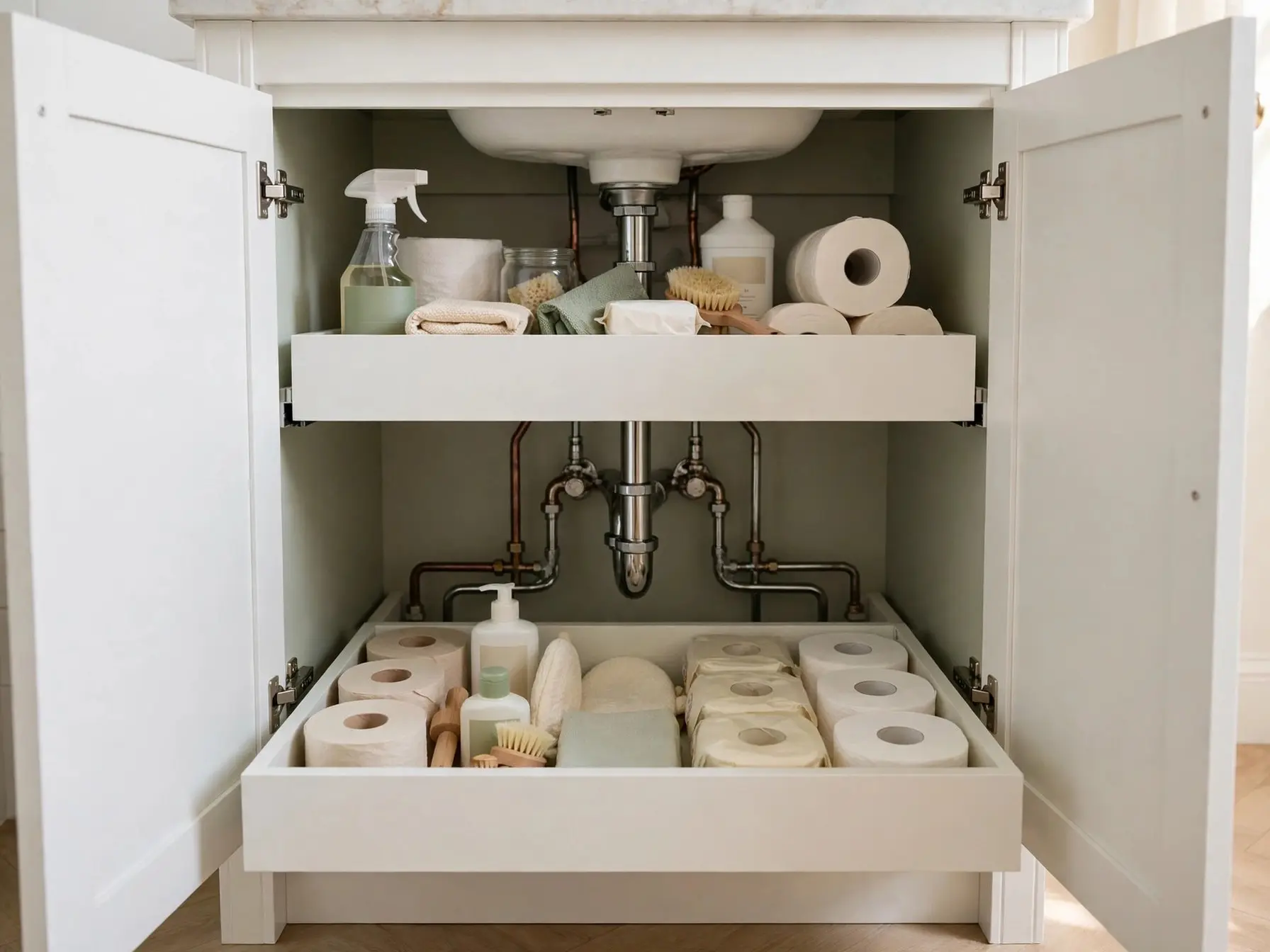
The space under the sink is deep, dark and usually a jumble, because the pipes eat the middle. A cabinet or insert with pull-out drawers works around the plumbing: shallow drawers slide out either side of the trap, so you can reach the back without emptying the front.
Measure the position of the pipes before you buy, since trap placement varies and some inserts need a clear center channel. Keep cleaning supplies in one drawer and daily back-ups in the other, and the under-sink zone stops being the bathroom’s junk drawer.
6. Mirrored medicine cabinet
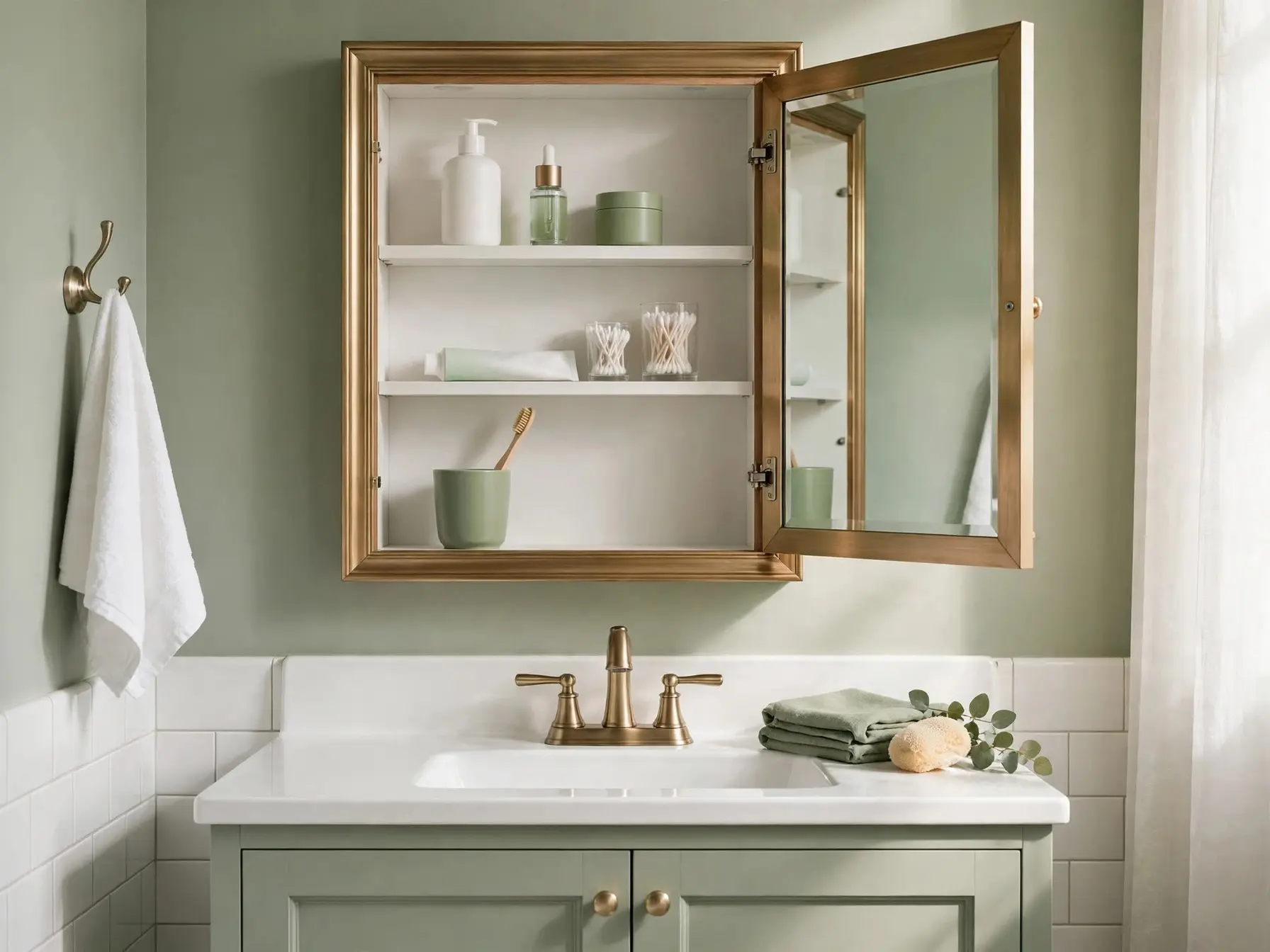
A medicine cabinet stores your daily routine at eye level, exactly where you use it, and the mirrored door means it earns its space twice. Toothpaste, skincare and contact solution sit on shallow shelves that stop bottles hiding behind each other.
Recessed models sit inside the wall for a flush finish, while surface-mounted ones hang like a picture and suit renters or anyone avoiding a big hole. Either way, keep only daily items inside: the small shelves fill fast, and back-ups belong in a bigger cabinet.
7. Freestanding cabinet for renters
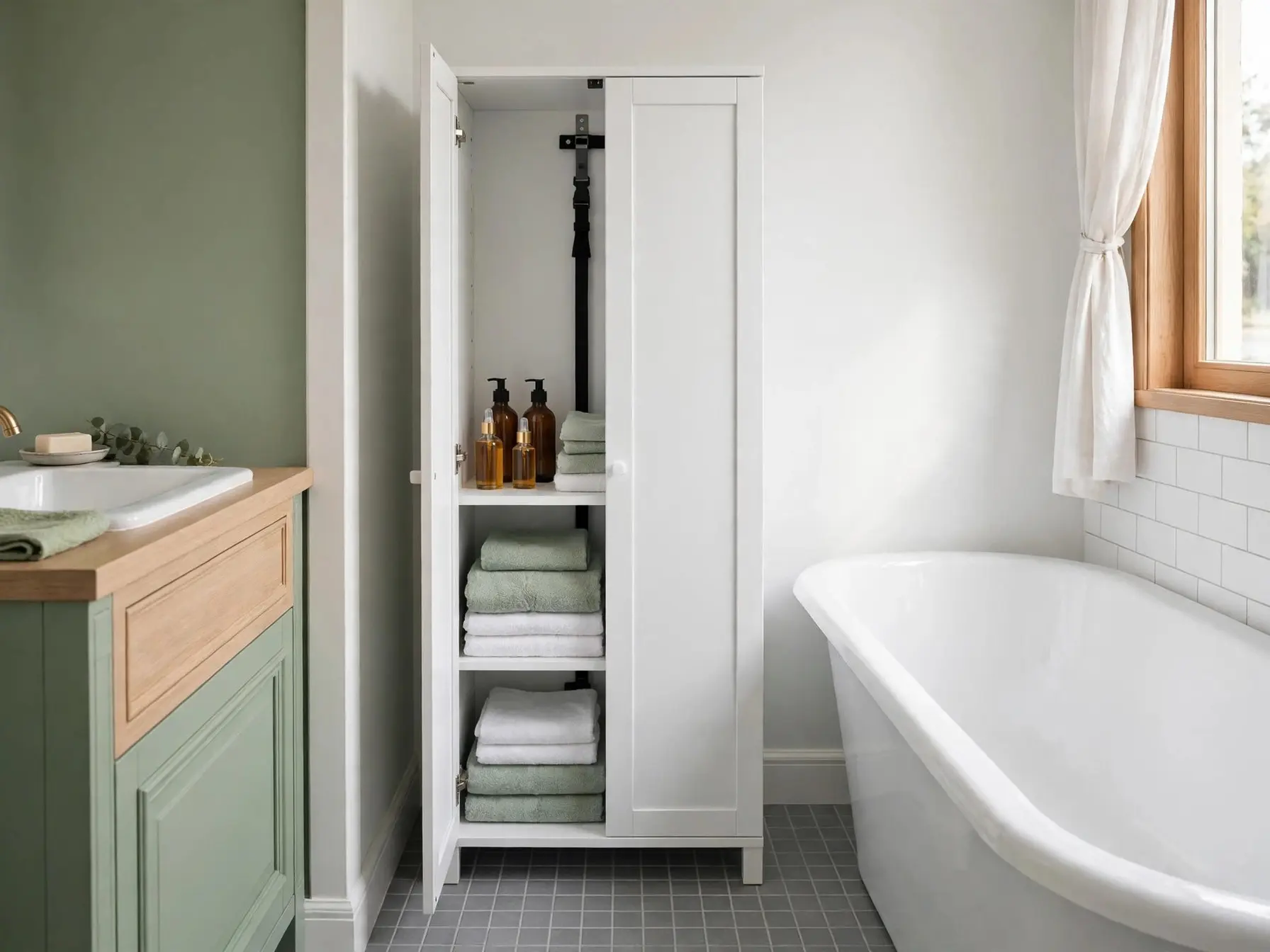
Renters, this is your cabinet. A freestanding floor cabinet needs no drilling, no anchors and no permission: you stand it in a gap, load it, and take it with you when you move. Slim models fit the slot between a vanity and the tub that nothing else uses.
Tall freestanding units must be steadied, so use the anti-tip strap with adhesive pads if screws are off the table, and load heavy bottles low. Check the footprint against your floor gap and the height against any window or rail before you order.
8. Compact countertop cabinet
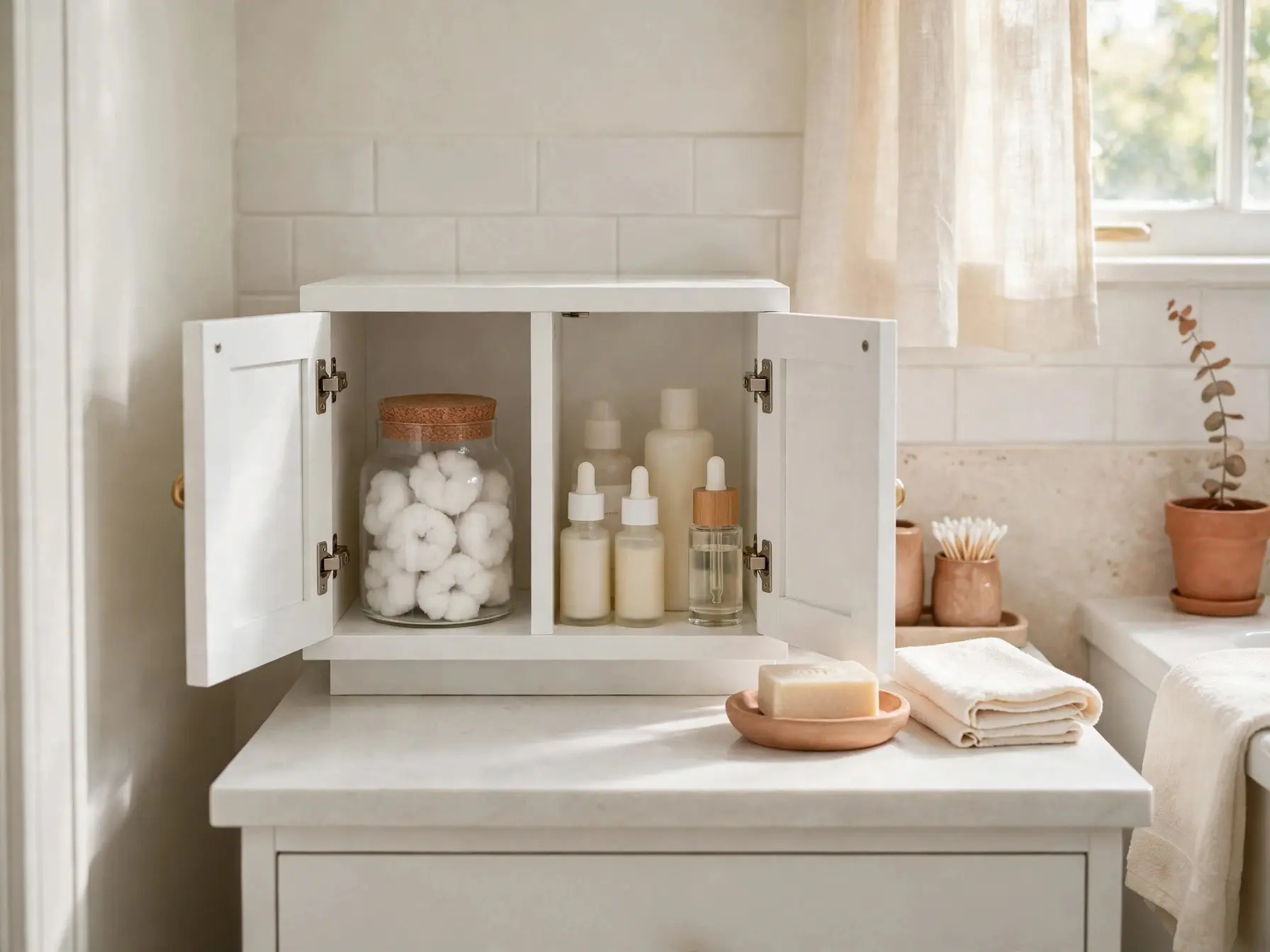
If your vanity top is wide but your walls are full, a compact countertop cabinet corrals the small stuff where you use it. Cotton rounds, skincare and the morning routine sit behind little doors instead of spreading across the counter, and the sink area looks calm again.
Keep it small: a countertop cabinet should hold daily items only, and it needs a footprint that leaves room for the soap dish and toothbrush cup. Wipe the base weekly, since the bottom edge lives in the splash zone.
9. Open-shelf cabinet for rolled towels
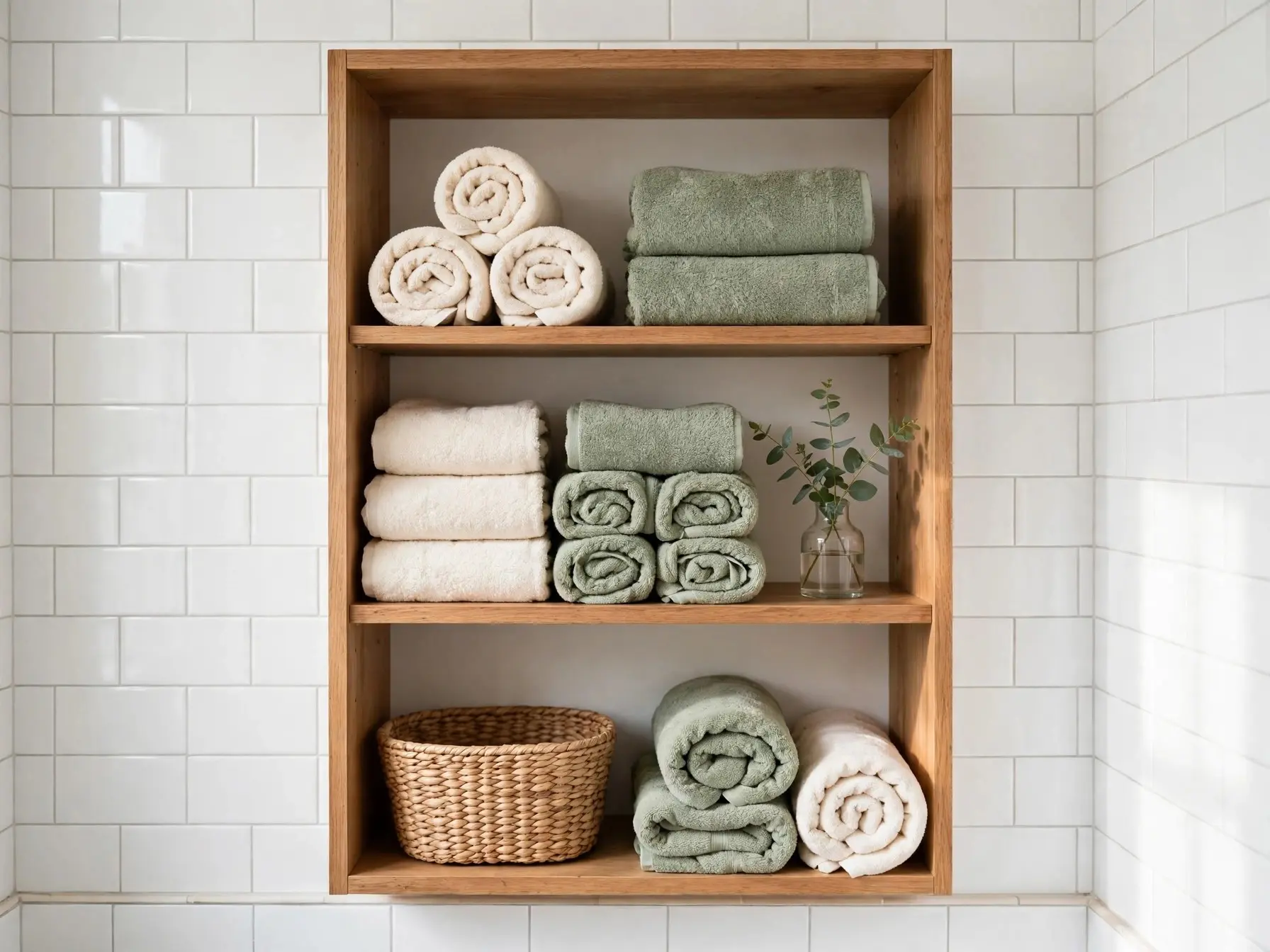
Rolled towels on open shelves give a small bathroom that calm, spa-like feel, and an open-shelf cabinet makes it practical. No doors means no swing clearance to plan around, and you can see at a glance when the towel shelf needs restocking.
Open storage only works if the contents look tidy, so keep the shelves to towels, a basket or two and one plant. Mixed bottles on open shelves read as clutter; those belong behind a door in one of the closed cabinets on this list.
10. Shaker-style two-door wall cabinet
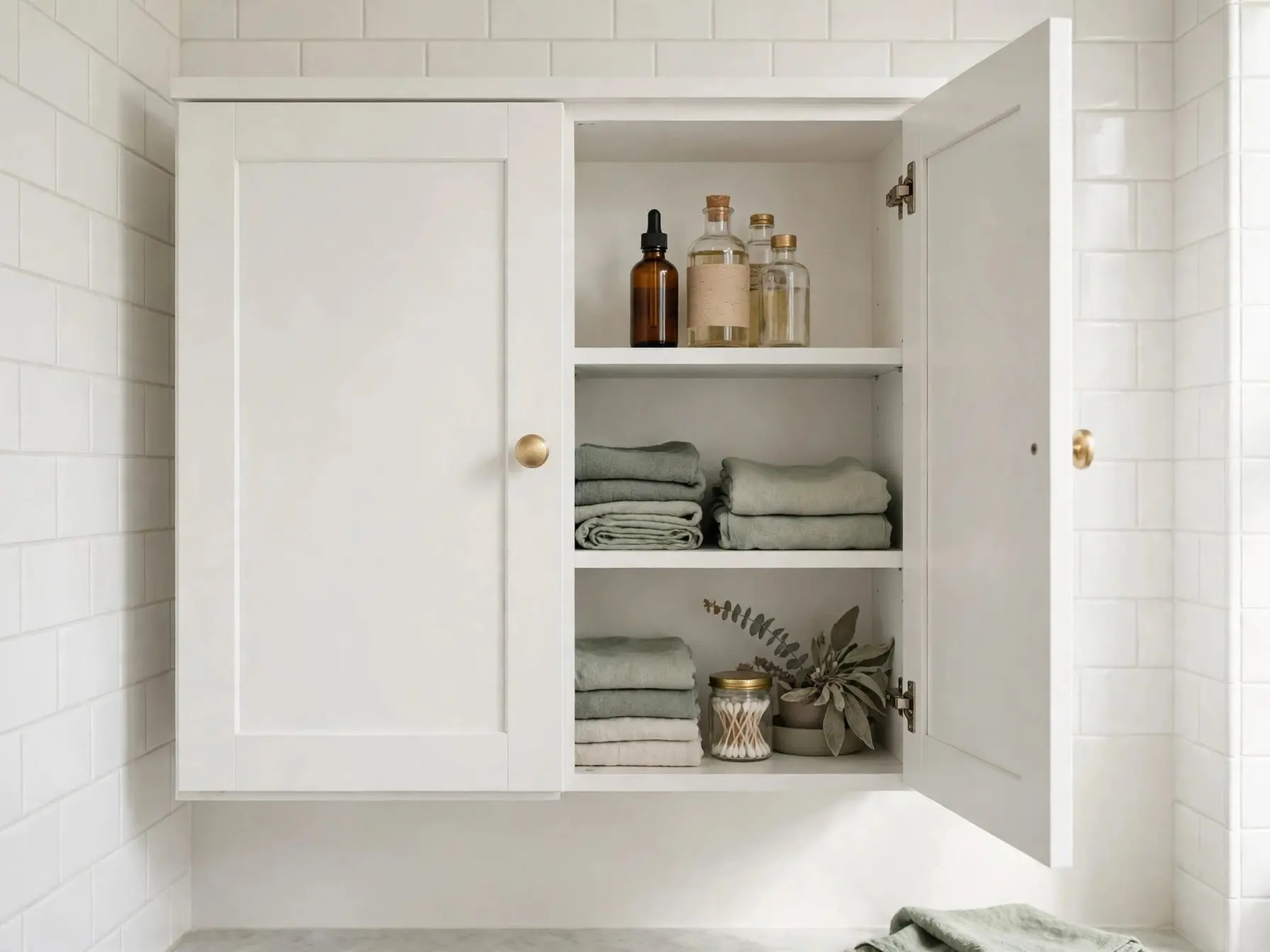
The shaker two-door is the classic bathroom wall cabinet for a reason: framed doors in white or sage suit almost any tile, and closed doors hide the mixed bottles that make a small room feel messy. It is the safe, good-looking default above a sink or toilet.
Two doors need swing room on both sides, so check the cabinet against light fittings and the mirror before mounting. Inside, add a small shelf riser if tall bottles waste the top half of each shelf, and group items by person or by routine.
11. Drawer cabinet for small essentials
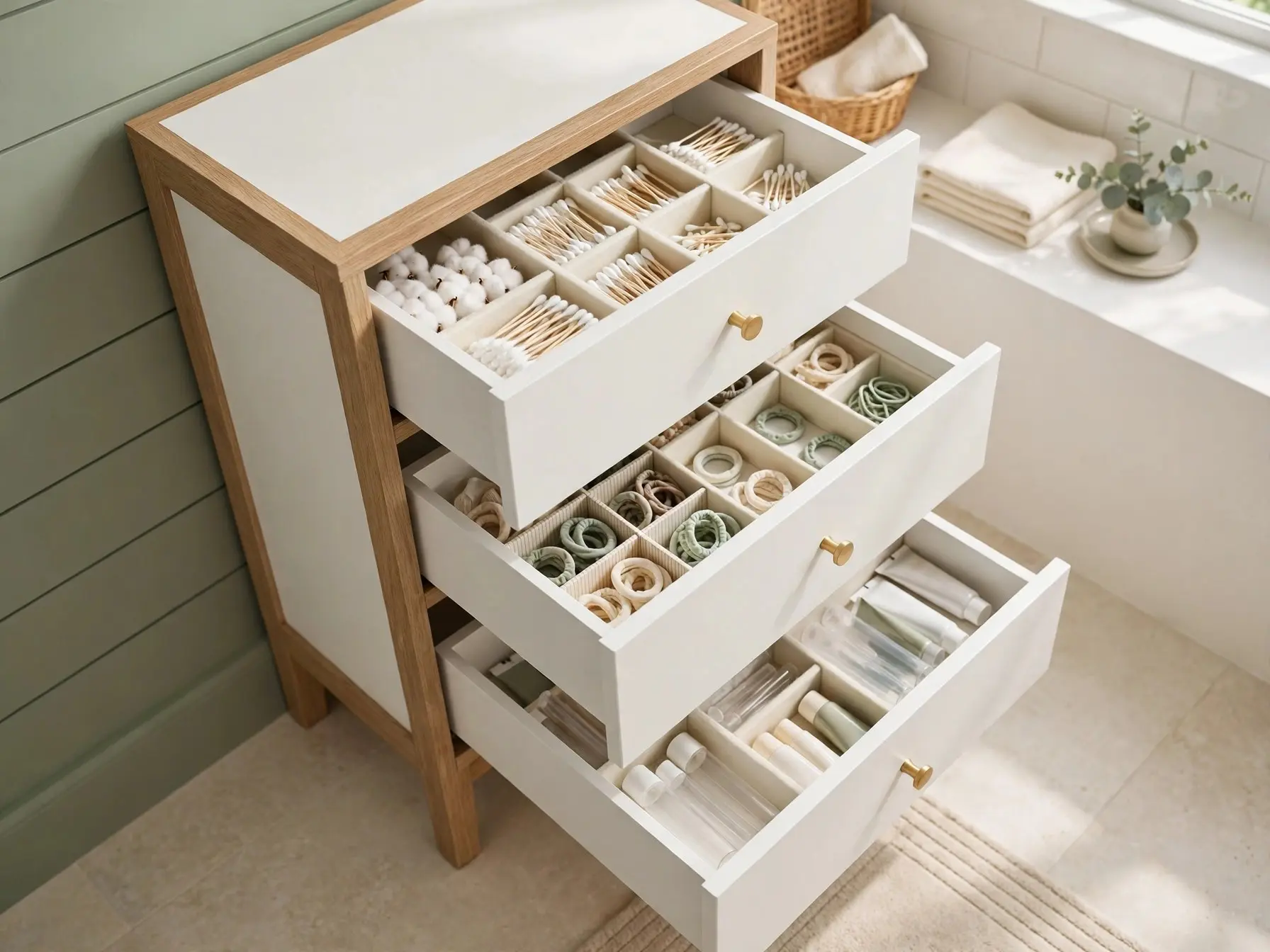
Small items are what make bathroom storage feel chaotic: hair ties, cotton buds, spare tubes and nail tools all migrate. A cabinet with drawers gives each category a shallow home, and drawer dividers stop the morning rummage.
Drawers suit under-sink and floor cabinets best, where you look down into them. Keep one drawer for daily smalls, one for first aid, and one for back-ups, and the cabinet stays sorted with almost no effort because every item has exactly one place to land.
12. Tilt-out hamper cabinet
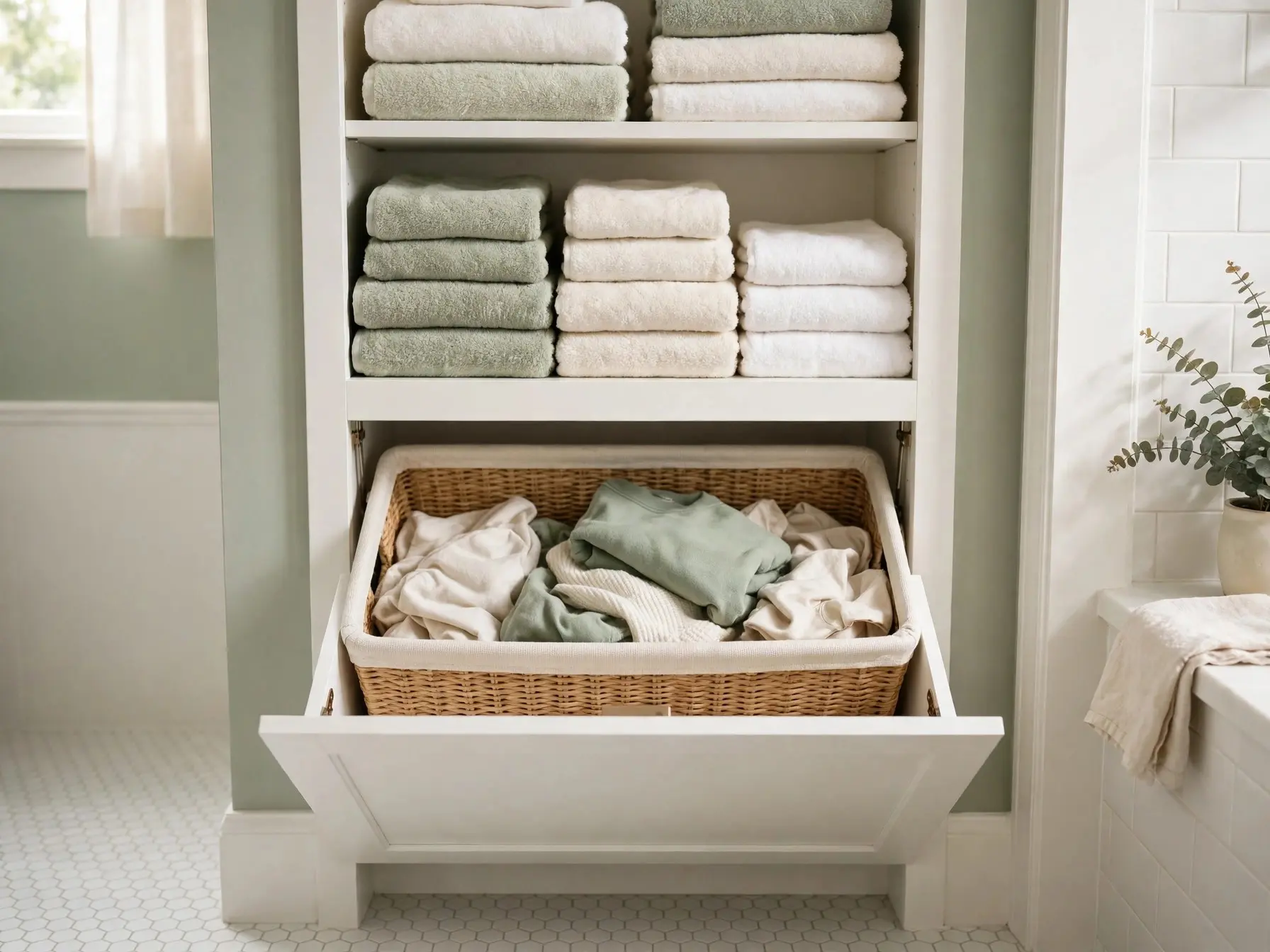
Laundry on the bathroom floor makes even a tidy room look undone. A cabinet with a tilt-out hamper hides the laundry inside the furniture, and the shelves above still hold towels and toiletries, so one footprint does two jobs.
Check that the hamper section pulls out fully without hitting the door or the tub, and pick a removable liner bag so laundry day is a carry, not a scoop. Ventilation matters: a slatted or fabric-front hamper keeps damp towels from smelling.
13. Basket-front open cabinet
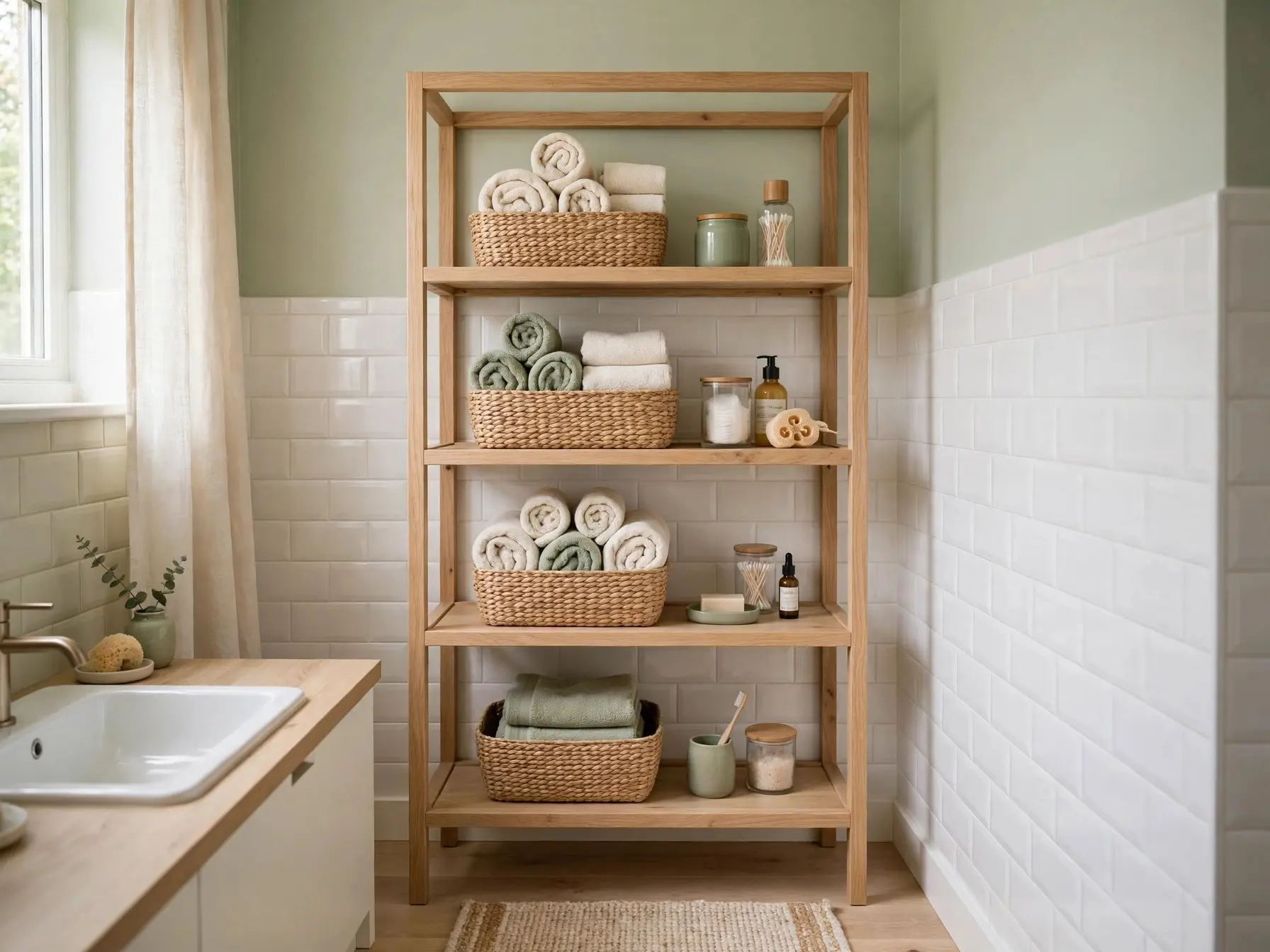
An open frame with woven baskets is the softest look on this list: the baskets hide clutter like closed doors do, but the texture keeps a small bathroom from feeling boxy. Pull a basket out, use it at the sink, and slide it back.
Baskets work best grouped by job: one for hair tools, one for cleaning, one for guest supplies. Measure the shelf openings before buying baskets, and choose lined ones for small items so nothing slips through the weave onto the shelf below.
14. Slim rolling cabinet for the vanity gap
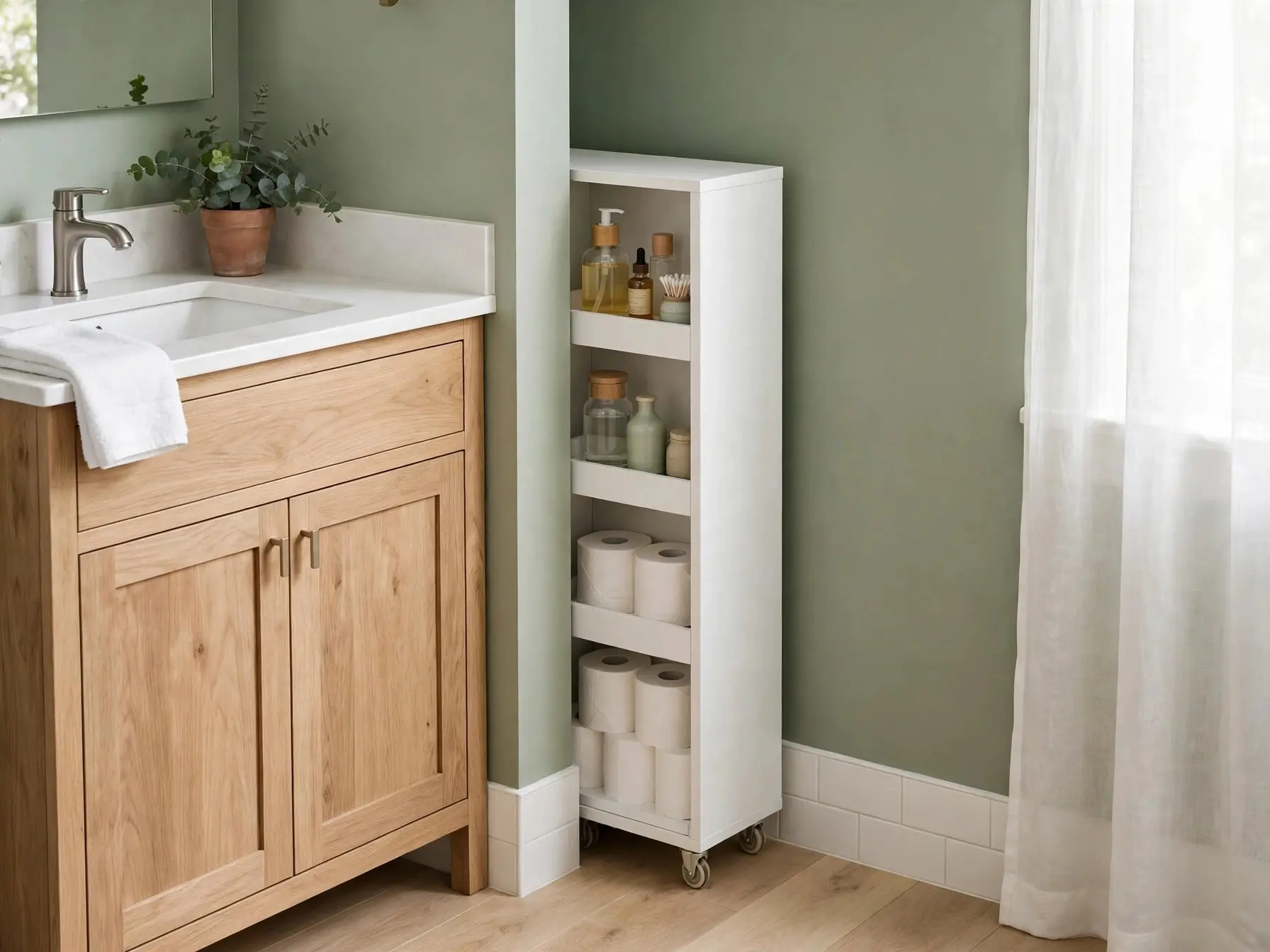
Most small bathrooms have a 6 to 8 inch gap beside the vanity that fits nothing but dust. A slim rolling cabinet slides into that slot and rolls out when you need it, holding spare toilet paper, cleaning spray and tall bottles in a space that was pure waste.
Measure the gap at floor level, since skirting boards steal an inch, and pick a cart with a handle or finger pull you can reach from above. Keep the heaviest bottles on the bottom shelf so the narrow cabinet rolls without tipping.
15. Tall cabinet with adjustable shelves
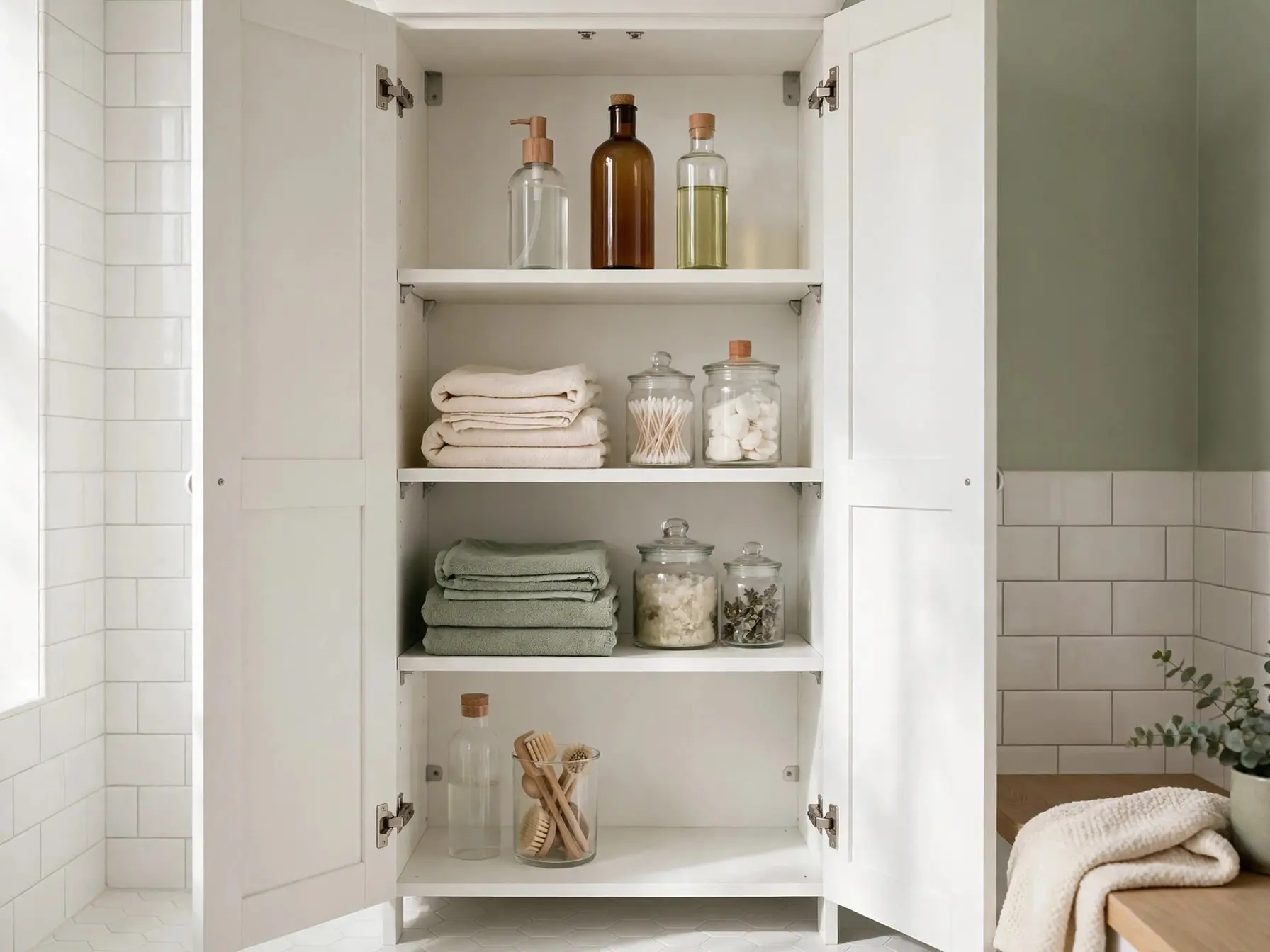
Fixed shelves waste space: tall shampoo bottles need height, jars need half of it. A tall cabinet with adjustable shelves lets you set each shelf to its contents, so no shelf is half air. It is the most adaptable cabinet type for families whose supplies change often.
Plan the shelf heights before you load it: measure your tallest bottle, set one shelf for it, then split the rest into shorter shelves for jars and folded cloths. Revisit the heights once a year, because the right layout changes as routines change.
16. Wall cabinet with a towel rail underneath
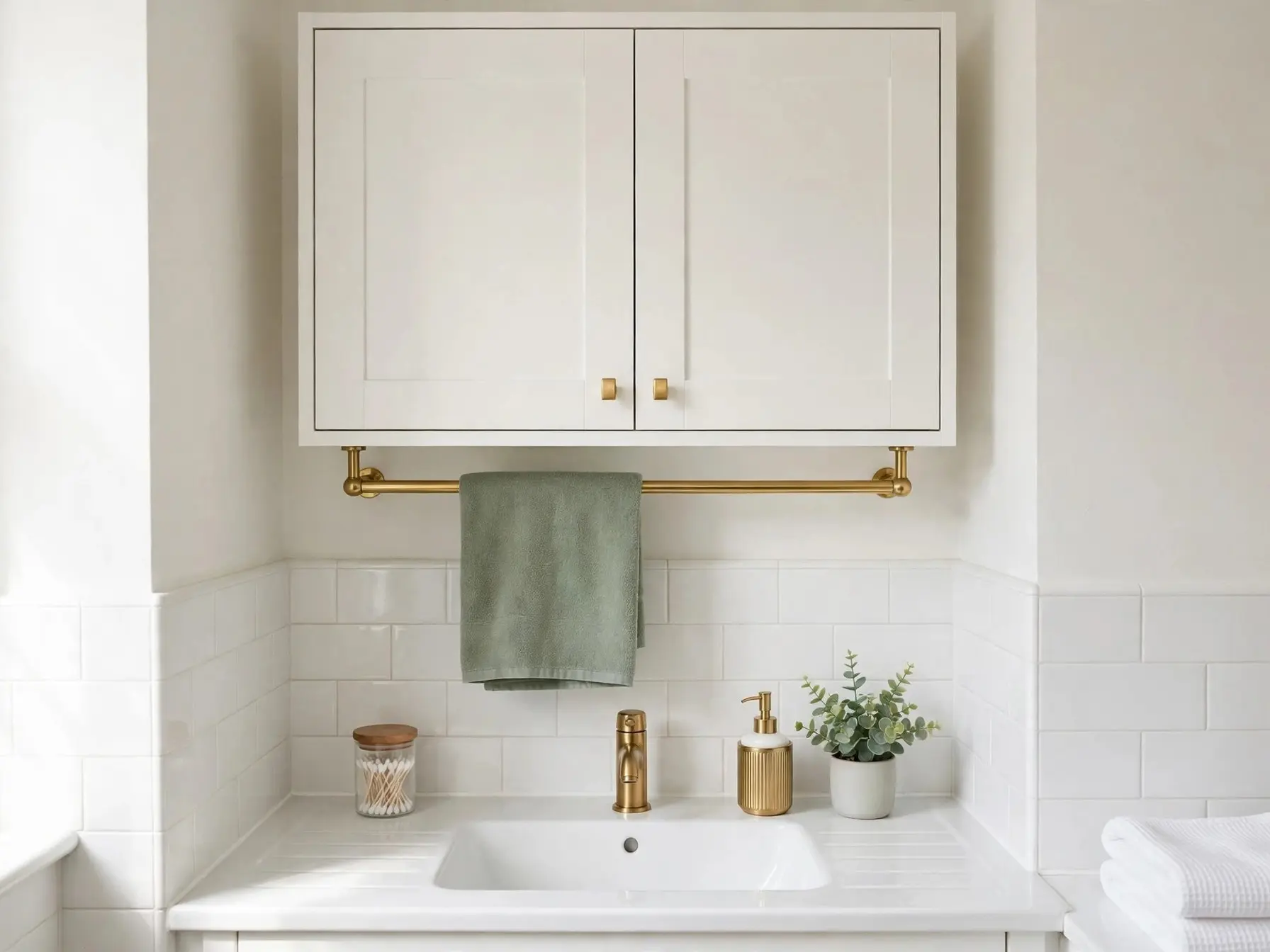
A wall cabinet with a towel rail underneath does two jobs on one stretch of wall: storage above, a dry hand towel below, right where you wash. It is a smart pick beside the sink, where wall space is precious and towels usually end up draped over the tap.
Hang the cabinet so the rail clears the splash zone and the towel does not touch the sink rim. Inside the cabinet, daily skincare sits at the front of the shelf nearest the rail, so the whole wash routine happens in one spot.
17. Compact cabinet beside the tub
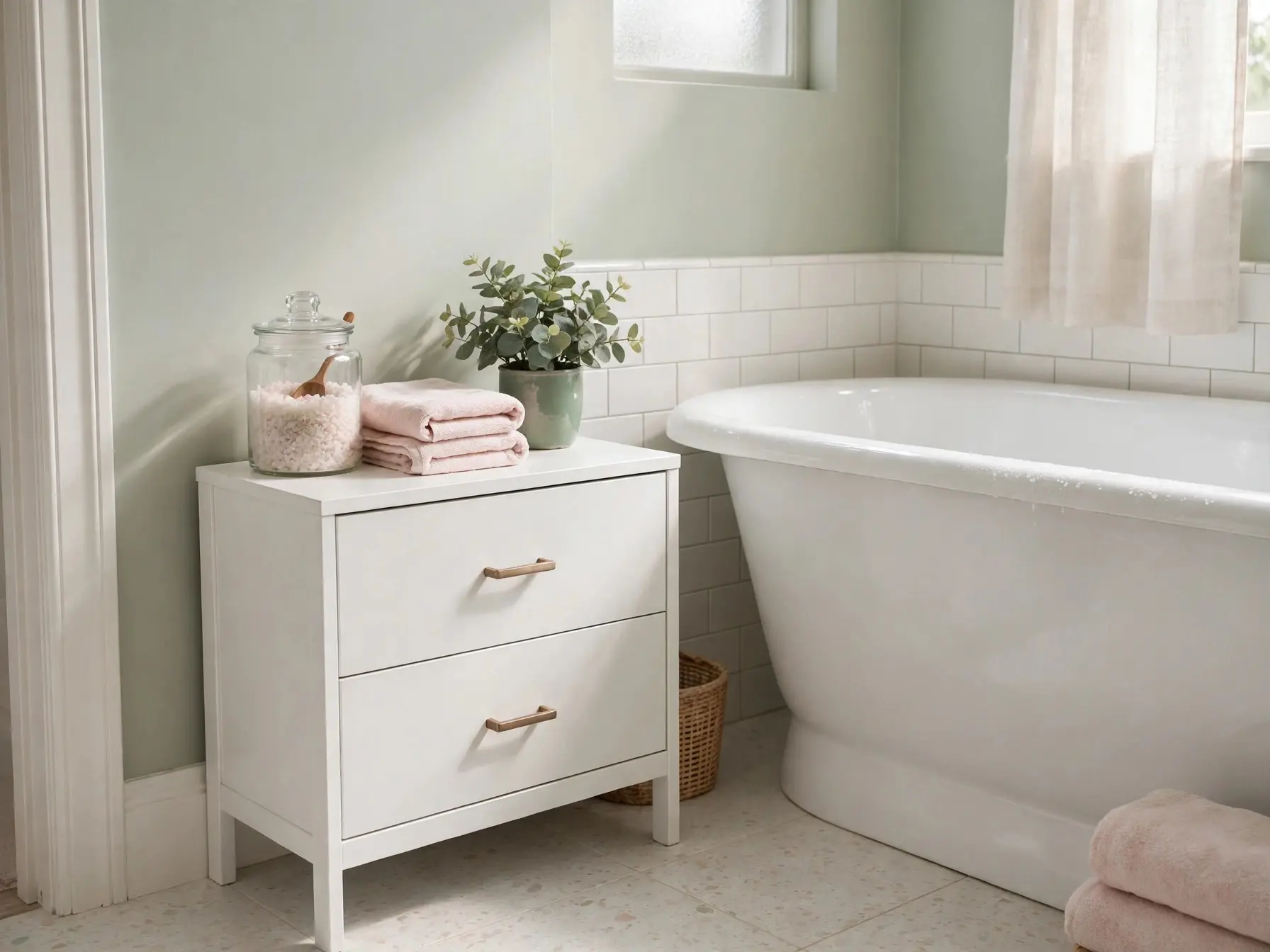
Baths are better when everything is within arm’s reach, and a compact cabinet beside the tub keeps bath salts, a spare towel and the good soap where you soak. It also gives the tub edge back: no more bottles balanced on the rim.
Choose a finish that tolerates splashes, and keep the top clear except for one plant or a candle so the cabinet reads as furniture, not overflow. A single-door or drawer model around knee height suits most tubs.
18. Frosted-glass door cabinet
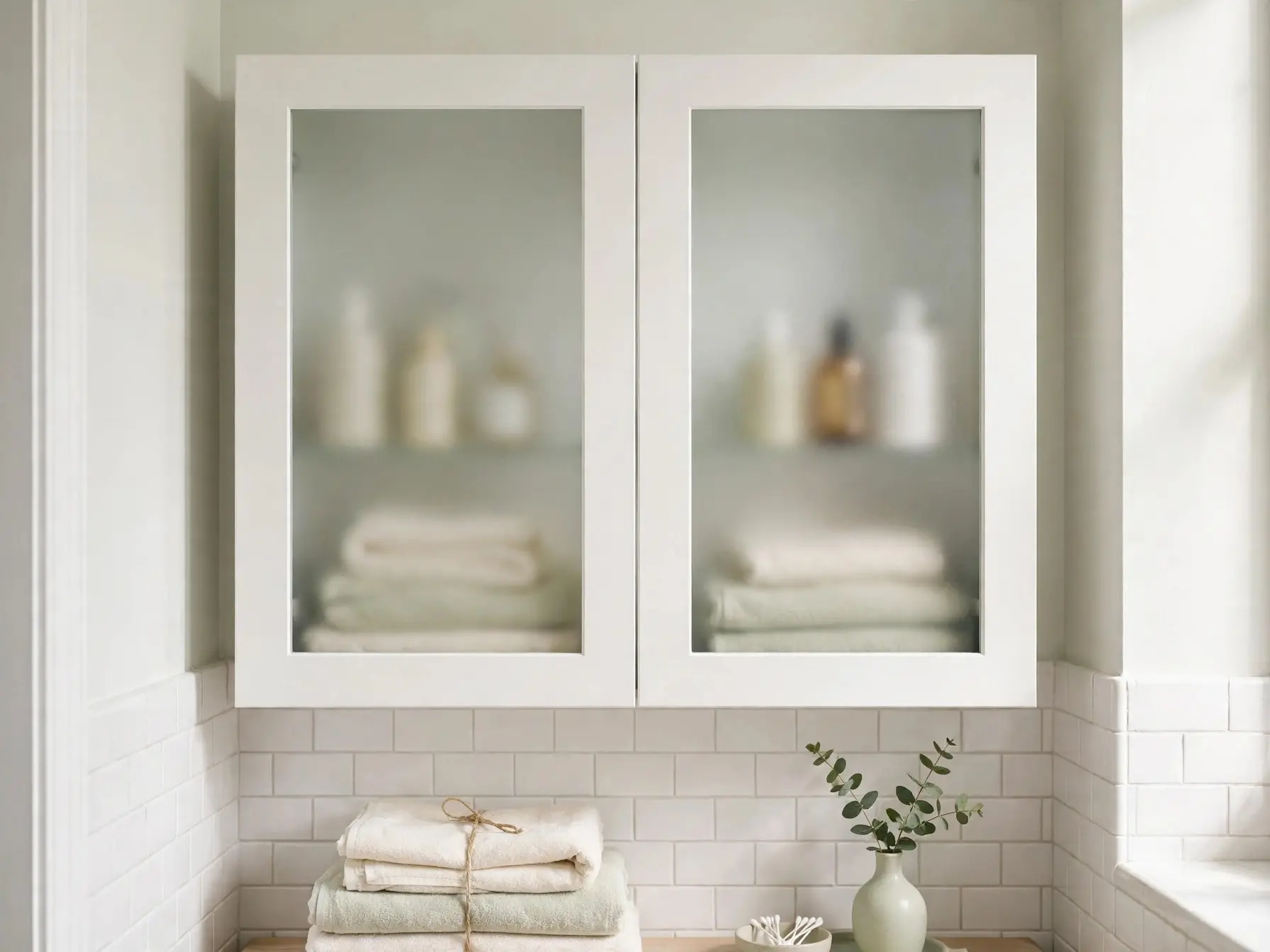
Frosted glass is the middle path between open shelves and solid doors: you get a hint of what is inside, but the colors and labels blur into a calm, soft surface. In a small bathroom, that softer look makes the room feel less busy than either extreme.
Frosted doors suit cabinets holding similar items, like all-white towels or matching bottles, since tidy contents show as tidy shapes. Keep one shelf for the pretty things and let solid-door cabinets elsewhere hide the rest.
19. Double-door floor cabinet for shared bathrooms
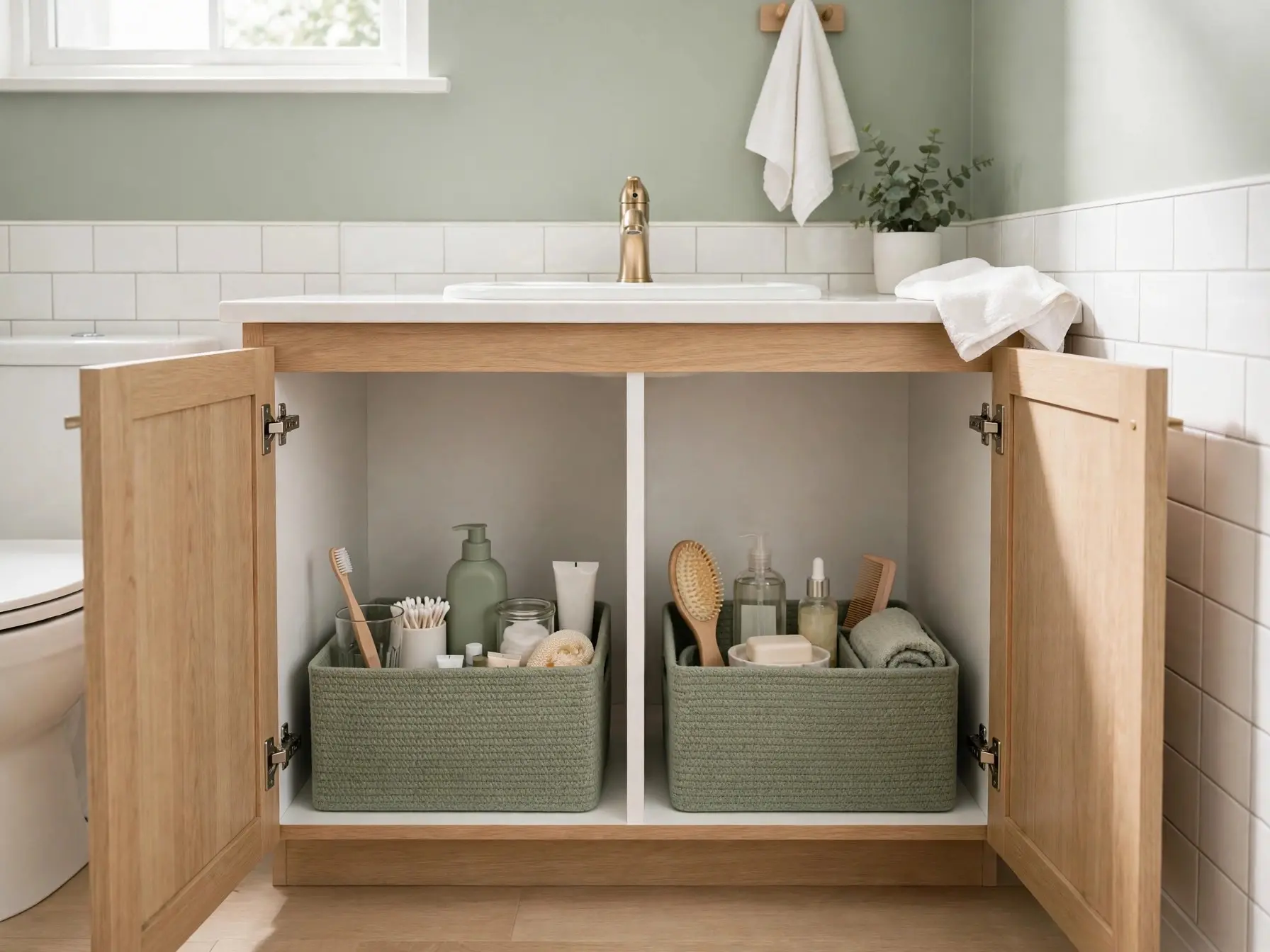
Shared bathrooms stay peaceful when each person’s things have a side. A double-door floor cabinet under or beside the counter splits naturally: one door each, one shelf each, no mixing. It is the simplest way to end the whose-bottle-is-this problem in a small room.
Agree the split once and the cabinet keeps it for you. Back-ups and shared items like spare toilet paper go on a shared middle shelf or in a second cabinet, so the his-and-hers sides stay personal and quick to use.
20. Wall cabinet with an open middle shelf
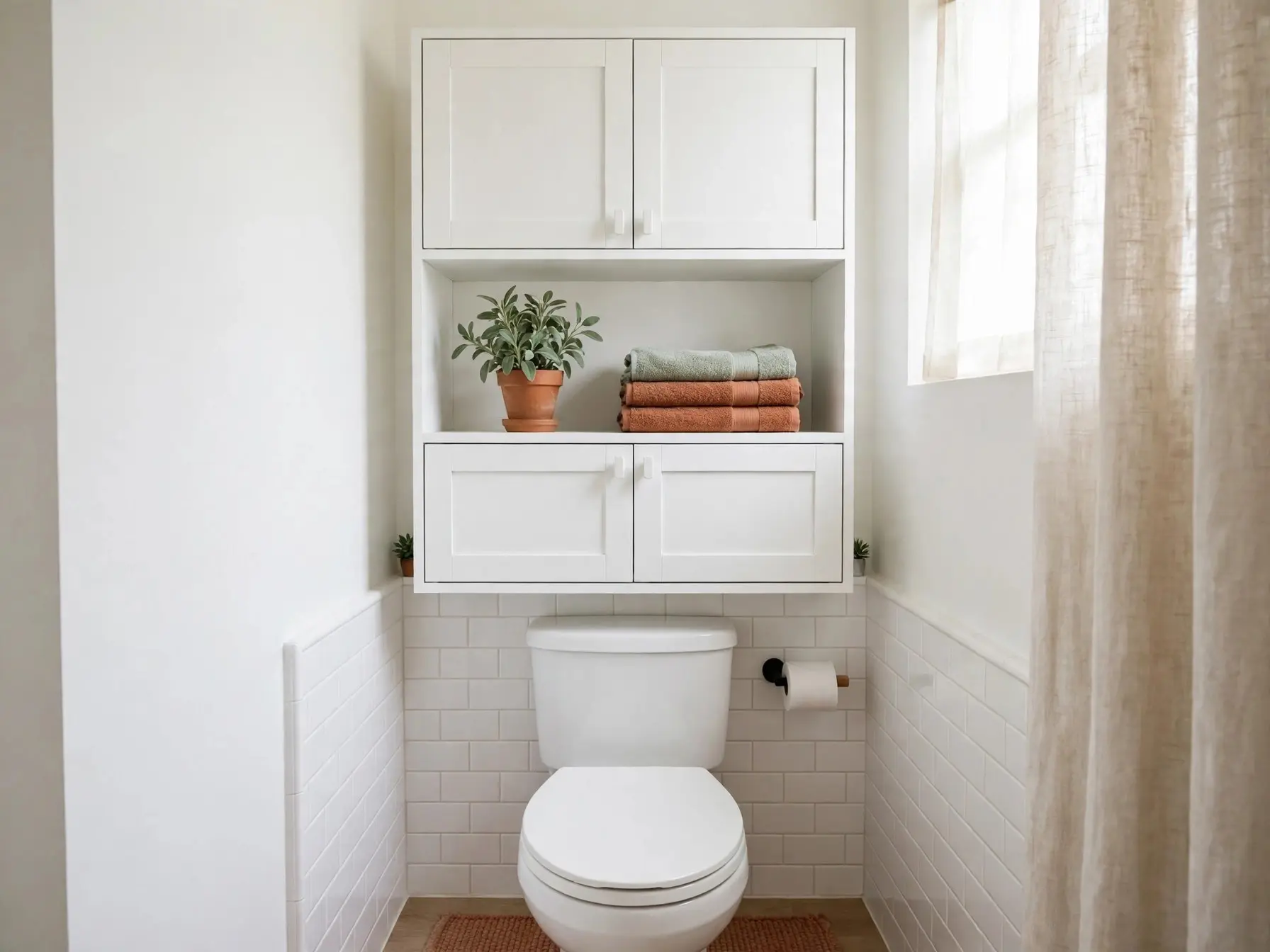
Some things deserve display and most do not. A wall cabinet with an open middle shelf gives you both: doors hide the bottles above and below, while the open shelf holds a plant, folded hand towels and one nice jar at eye level.
Style the open shelf sparingly, three items is plenty, and keep it to things that look good dusty-free for a week. This layout suits the wall above the toilet or beside the mirror, where a fully solid cabinet can feel heavy in a small room.
21. Pale-finish cabinet that opens up the room
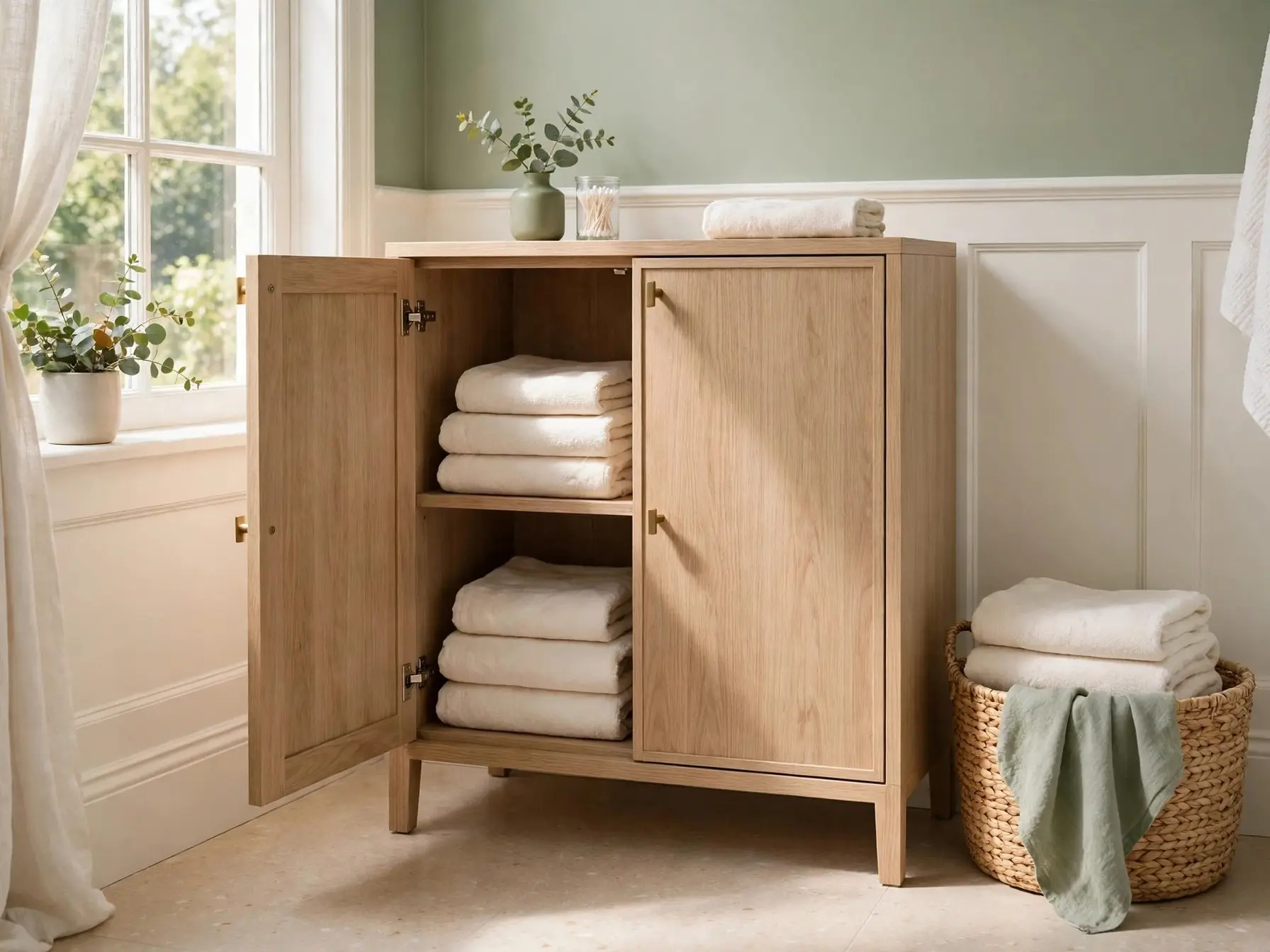
In the smallest bathrooms, the cabinet’s finish matters as much as its size. A pale finish, white, warm white or light oak, reflects light and visually recedes, so the room feels bigger than the same cabinet in a dark stain. It is the easiest feel-bigger trick on this list.
Pair a pale cabinet with light walls and one darker accent, like a sage towel or a woven basket, so the room does not wash out. If you already own a dark cabinet, try it against the lightest wall before replacing it: placement can do half the work.
Questions, answered
What should not be stored in a bathroom?
Heat and humidity are hard on some everyday items. Medicines can lose strength in a steamy bathroom, perfume fades faster, makeup and brushes collect moisture and bacteria, and carbon-steel razors rust. Store those in a dry spot outside the bathroom, like a bedroom drawer or a hallway linen closet, and keep only true daily items in the cabinet.
Which things are used in the bathroom?
The everyday kit is short: toothbrush and toothpaste, soap, shampoo and conditioner, towels, spare toilet paper, a small first-aid set and the cleaning spray for the room itself. A good bathroom storage cabinet gives the daily items the easy shelves, the weekly items the higher shelves, and keeps back-ups together so you can see when something is running low.
What size bathroom storage cabinet fits a small bathroom?
Most small-bathroom cabinets are 10 to 14 inches deep, which is enough for folded towels and standard bottles without crowding the room. An over-toilet cabinet usually spans the width of the tank, and a beside-the-sink floor cabinet can be as slim as 12 inches deep. Measure the gap, the door swing and the space in front of the cabinet before you buy, and leave room to stand at the sink.
Can renters add a bathroom storage cabinet without drilling?
Yes. Freestanding floor cabinets, over-toilet frames that stand on the floor, and compact countertop cabinets all add storage with no drilling at all. For tall units, use the anti-tip strap with adhesive pads instead of screws, and check your lease before using any wall anchors. When you move out, the cabinet goes with you and the bathroom looks exactly as you found it.
Keep reading
- 40 Clever Storage Ideas for Bathroom Clutter on Any Budget
- How to Declutter Your Home: A Simple Room-by-Room Plan
- Cleaning Schedule for Home: Daily, Weekly and Monthly Tasks
The best bathroom storage cabinet is the one that fits your gap, your lease and the way you actually use the room. Start with the zone that frustrates you most, measure it honestly, and let the cabinet do the hiding: once the clutter has a door to close behind it, a small bathroom feels twice the size.