To get a stain out of clothes: blot — never rub — treat it with the right agent for that stain type before washing, and never tumble-dry until the mark is gone, because heat sets most stains permanently.
Thank you for reading this post, don’t forget to subscribe!That is the whole system in one sentence. The rest of this guide is the detail: four rules that apply to every stain, then the chart itself — twelve stains in order, each with what to do right now and how to wash it — plus a table you can check at a glance and answers to the four questions everyone asks.
The four rules before you touch any stain
Every stain in the chart below obeys the same four rules. Get these right and most stains come out on the first try; get them wrong and even an easy stain can become permanent.
- Act fast. A fresh stain is a stain sitting on the fibers; a set stain is a stain bonded to them. Treat within minutes when you can, and never leave a stained garment in the laundry pile for days.
- Blot, never rub. Press a clean cloth onto the stain and lift. Rubbing pushes the stain deeper, spreads it wider and can damage the fabric.
- Cold first, hot only when the stain type says so. Hot water sets protein stains like blood, sweat and egg, and it sets most dyes. Start cold until you know what you are dealing with.
- Never tumble-dry a stain. Check the mark is gone before the garment goes in the dryer. If a shadow remains, air-dry it and treat it again — heat sets most stains permanently.
One more habit that saves shirts: always test a treatment on a hidden spot first — an inside seam or hem — and always read the care label before choosing a wash temperature. The chart below assumes you have done both.
1. Grass
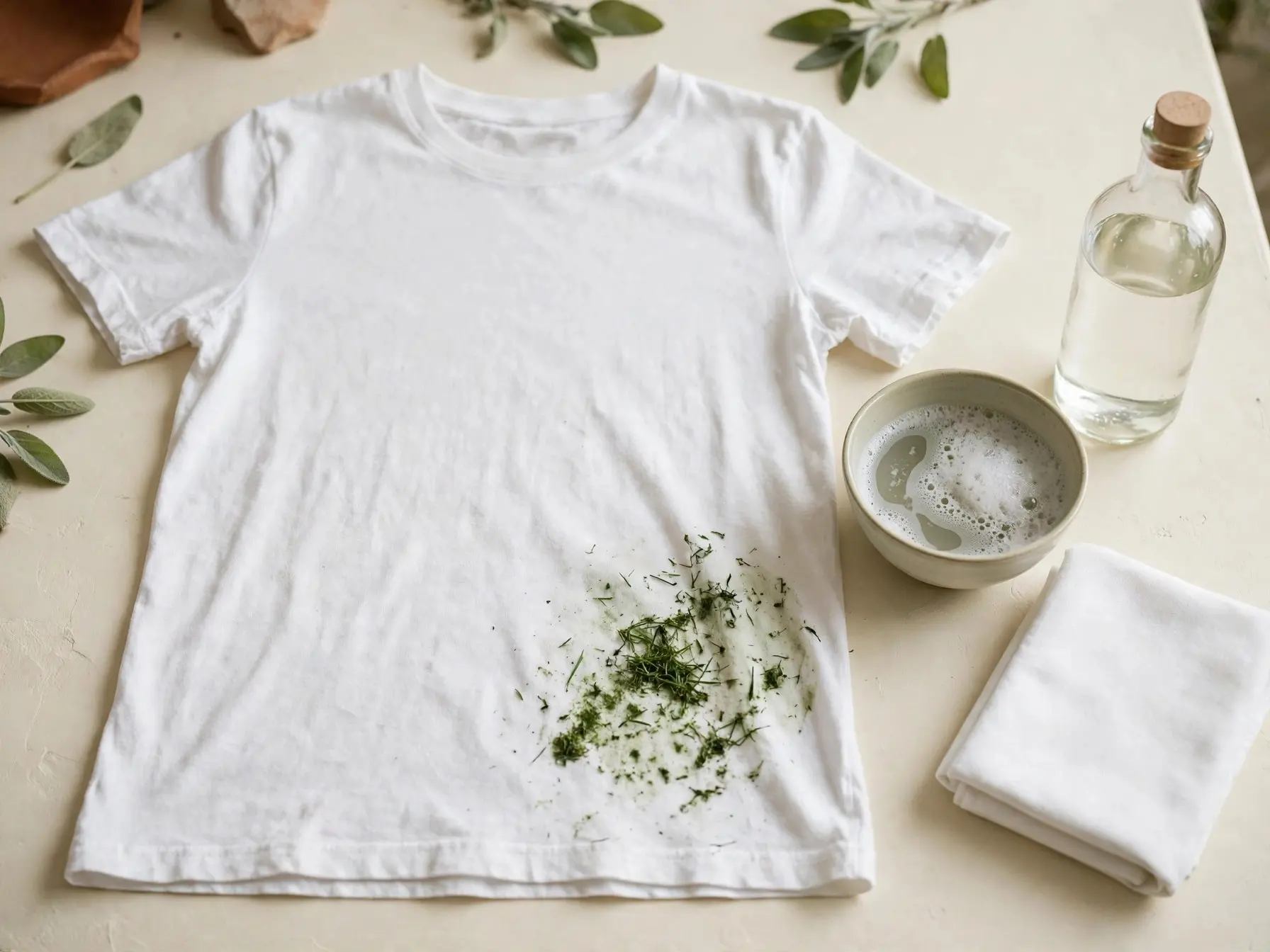
Grass stains are dye stains, so speed matters more than scrubbing. Blot up any loose dirt, then work a drop of dish soap into the stain and add a splash of white vinegar — the soap lifts the green pigment and the vinegar helps break it down. Let it sit for 15 minutes, then rinse from the back of the fabric with cold water so the stain flushes out instead of deeper in. Wash as usual with an enzyme detergent, and check before drying.
- Blot off loose dirt first
- Dish soap + white vinegar, 15 minutes
- Rinse cold from the back, then wash
2. Grease
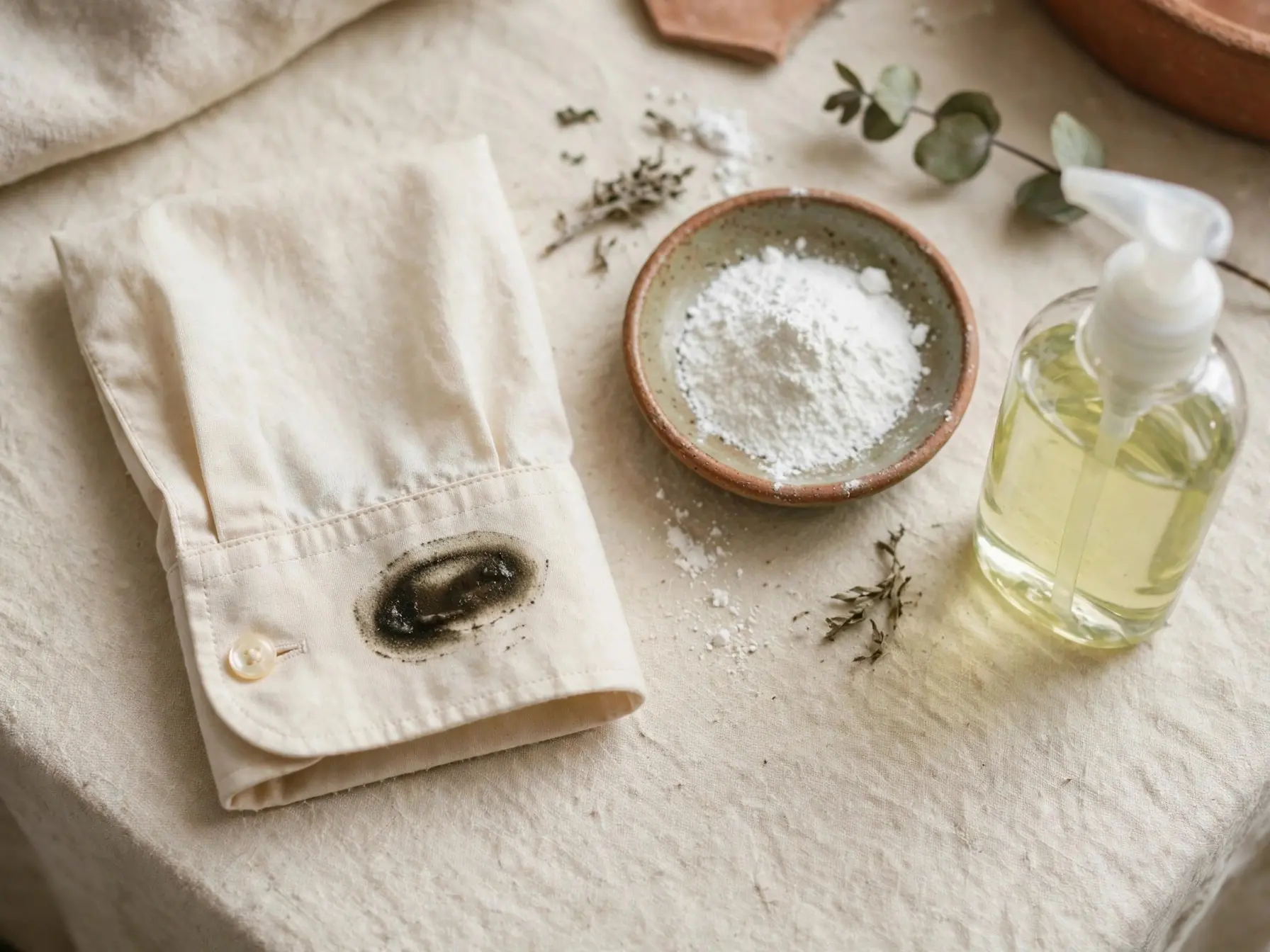
Grease needs a degreaser, not more water. Blot off what you can, then cover the stain with baking soda or cornstarch and leave it for 15 minutes to pull the oil out of the fibers — brush the powder off and repeat if the stain still looks dark. Work in a drop of dish soap and let it sit for 10 minutes. Wash in the hottest water the care label allows, and check the stain is gone before the dryer — heat sets grease for good.
- Baking soda or cornstarch to absorb the oil
- Dish soap worked in, 10 minutes
- Hottest wash the label allows
3. Red wine
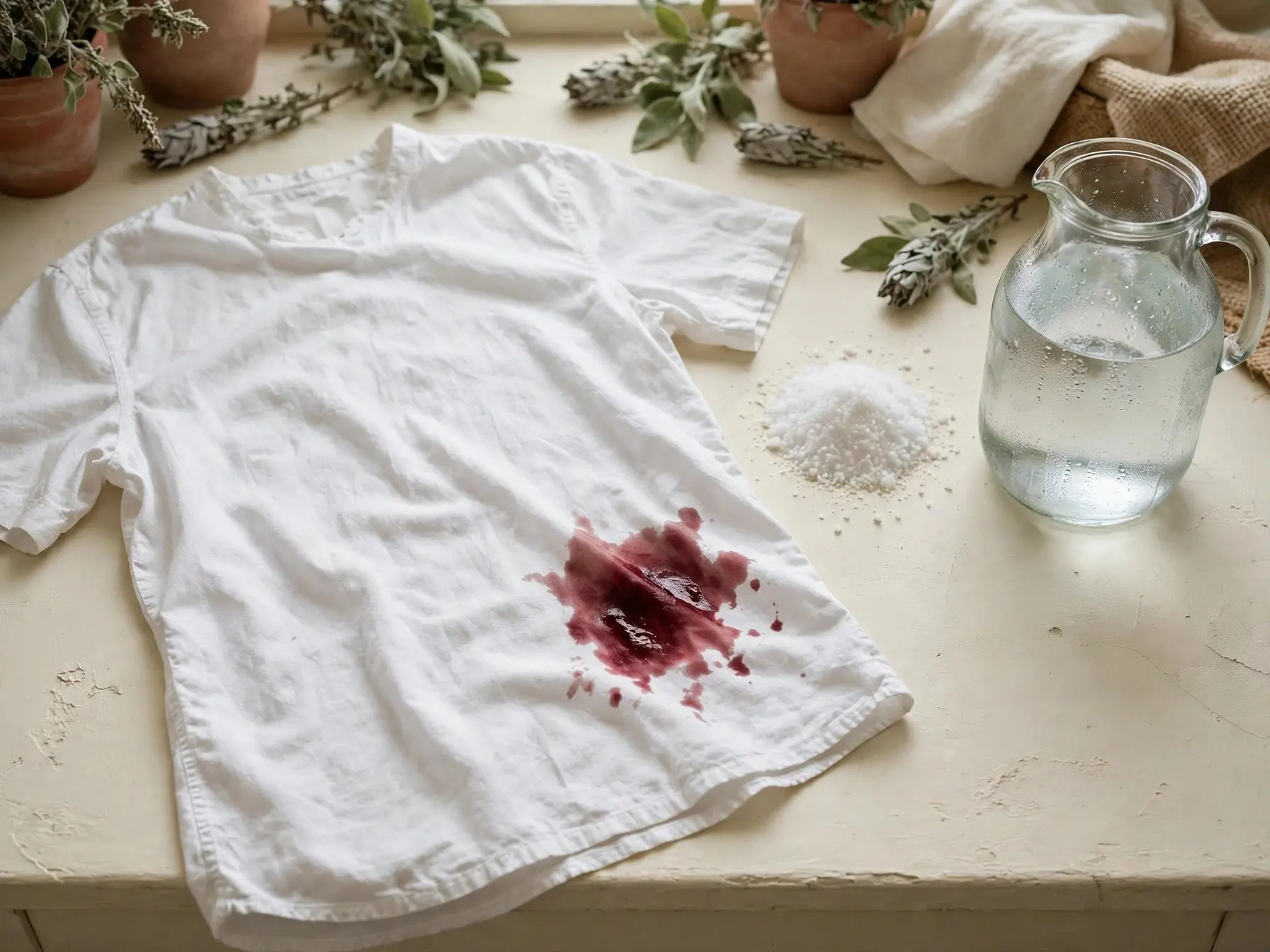
Red wine is a race against the clock. Blot — never rub — then cover the stain generously with salt or baking soda, which draws the wine out of the fibers as it dries. After 10 minutes, brush the salt off and flush the stain from the back with cold running water. Treat any pink shadow with dish soap or an oxygen-bleach soak, then wash cold. Salt and cold water do the real work.
- Blot, then pile on salt or baking soda
- Flush cold water through from the back
- Oxygen-bleach soak for any pink shadow
4. Blood
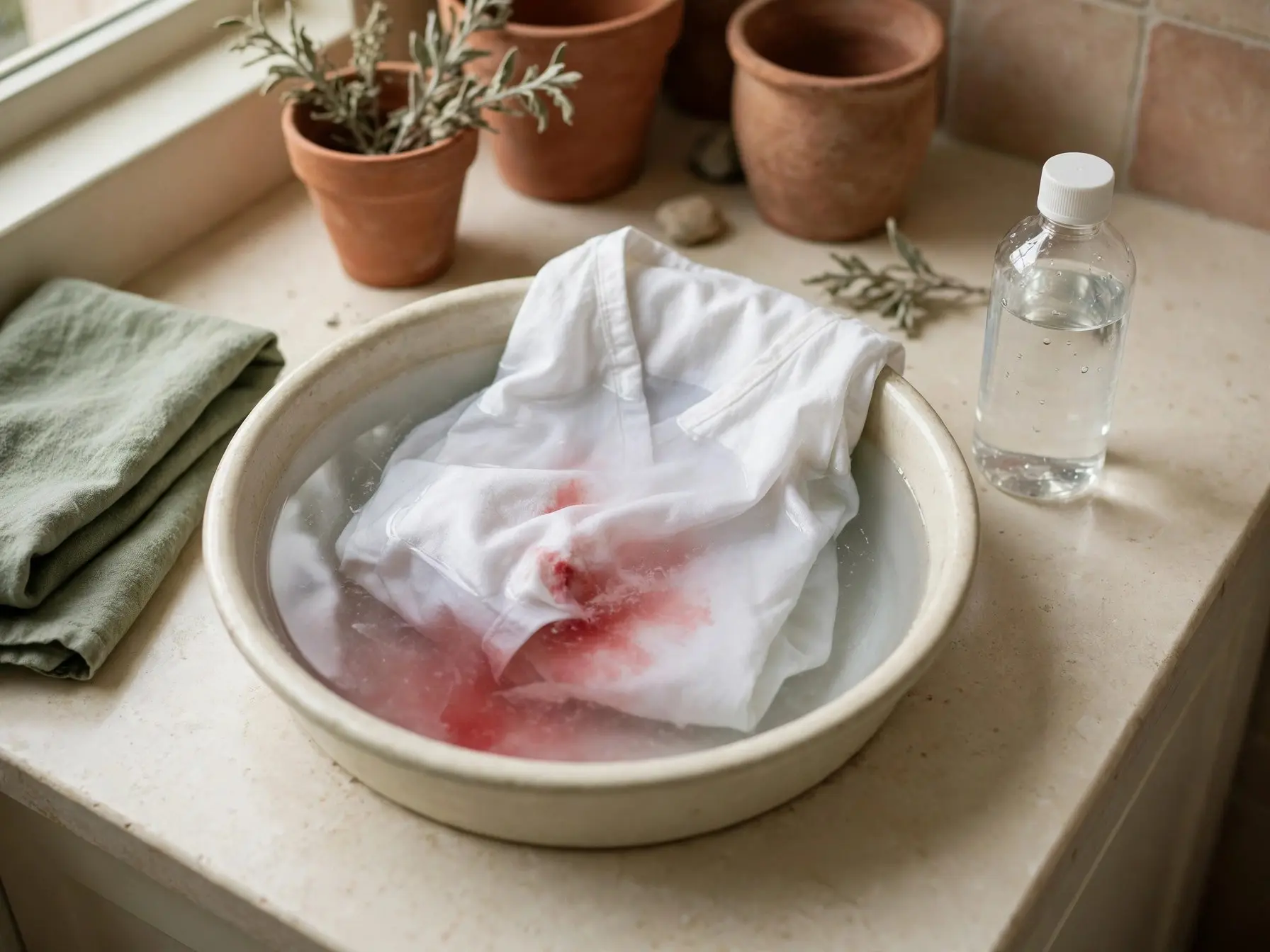
Blood is a protein stain, and hot water cooks it into the fabric permanently — so cold water is the whole game. Rinse the stain under cold running water, then soak the garment in cold salted water for 30 minutes. For a dried stain, work in a paste of cold water and enzyme detergent and leave it for an hour. On whites, dab on hydrogen peroxide (3%) before the soak. Wash cold with an enzyme detergent, and never put the garment in the dryer until the stain is gone.
- Rinse under cold water right away
- Soak 30 minutes in cold salted water
- Hydrogen peroxide on whites; enzyme paste on colors
5. Ink
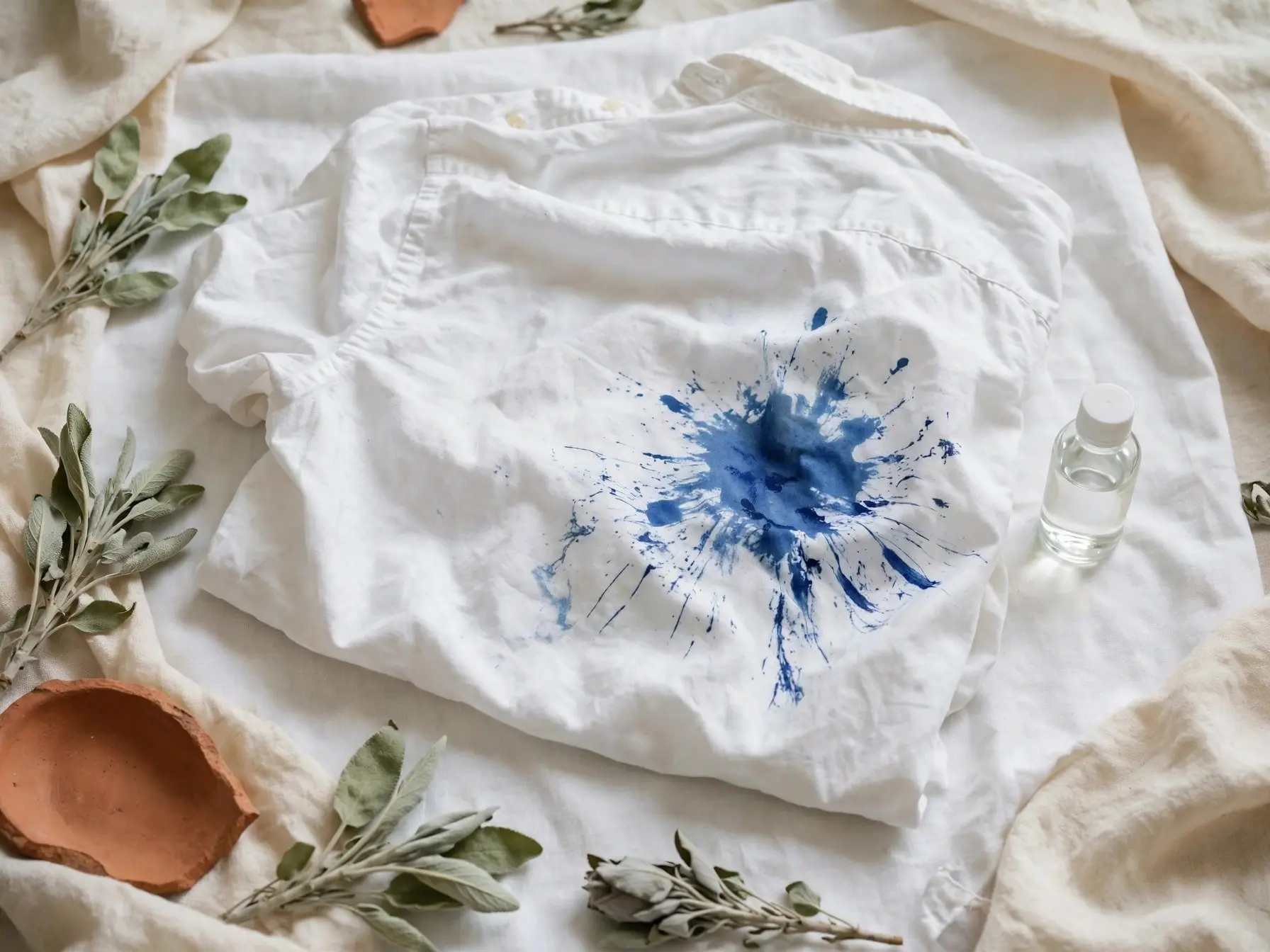
Ink stains need a solvent, and rubbing alcohol is the one that works on most ballpoint ink. Lay the stained area face-down on a clean white cloth, then dab — never rub — rubbing alcohol onto the back of the stain so the ink transfers onto the cloth below. Move the cloth to a clean spot often. Repeat until no more ink lifts off, then rinse and wash warm with detergent. For gel or fountain-pen ink, soak first in cold milk for 30 minutes before the alcohol step.
- Stain face-down on a clean white cloth
- Dab rubbing alcohol on the back
- Wash warm once no more ink lifts off
6. Coffee

Coffee is a tannin stain, and it comes out easily if you move fast. Blot up the excess, then flush the stain with cold water from the back of the fabric. Work in a mix of one part dish soap, one part white vinegar and two parts cold water, and let it sit for 15 minutes — the vinegar dissolves the tannin while the soap lifts the oils. Rinse, then wash warm with regular detergent. On whites, an oxygen-bleach soak clears any brown shadow that remains.
- Flush cold water through from the back
- Dish soap + vinegar mix, 15 minutes
- Oxygen-bleach soak for whites
7. Sweat and yellowing
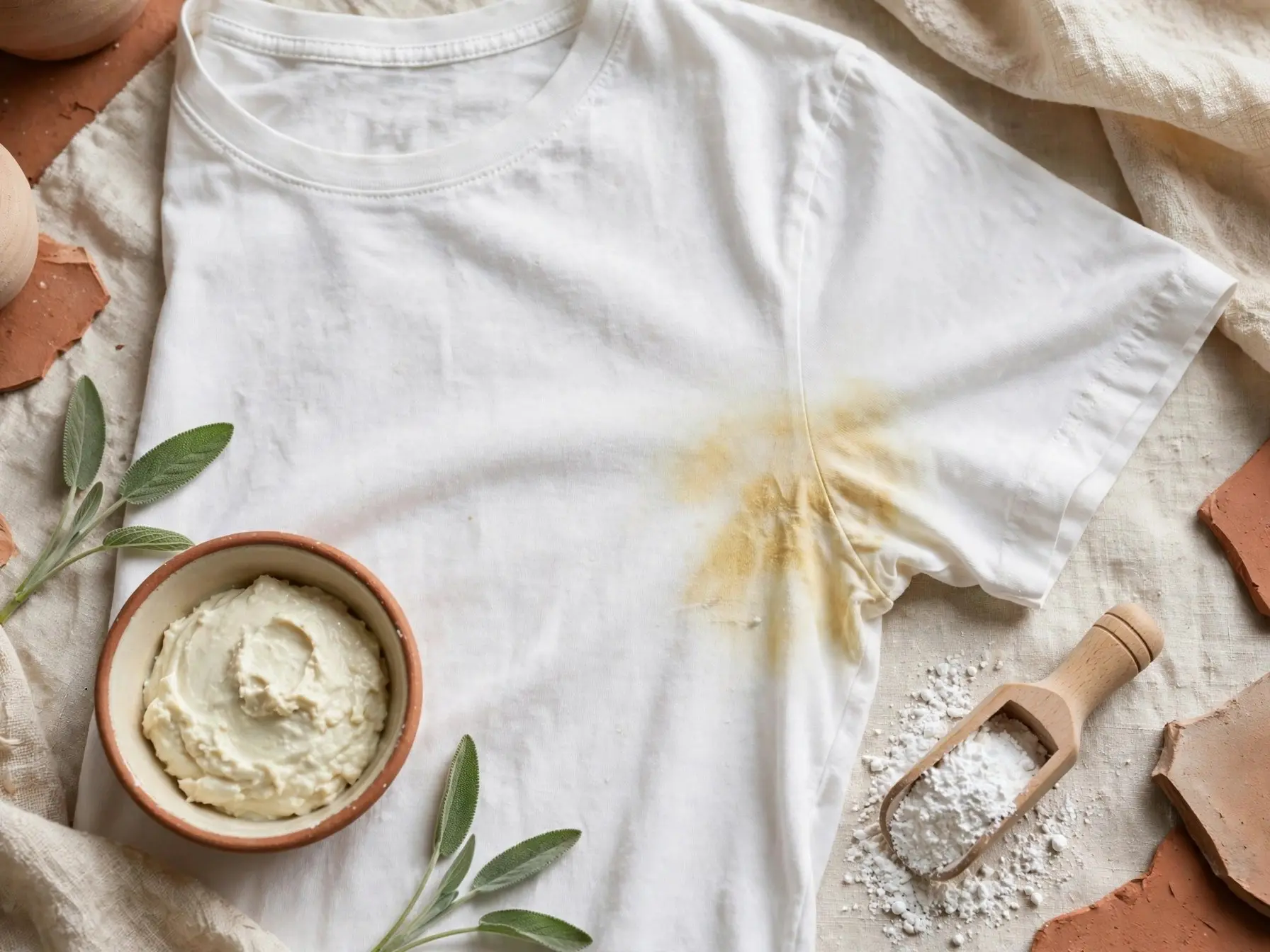
Yellow sweat stains are a mix of sweat salts and deodorant reacting with fabric, and they build up slowly. Make a paste of baking soda and water, spread it over the yellowed area and leave it for 30 minutes. Then soak the shirt in warm water with oxygen bleach for 1 to 4 hours. Wash warm with an oxygen-bleach booster. On whites, lemon juice and an hour in the sun fade the last of the yellow. Skip chlorine bleach — it can make protein stains yellower.
- Baking soda paste, 30 minutes
- Oxygen-bleach soak, 1–4 hours
- Lemon juice + sun for whites
8. Chocolate
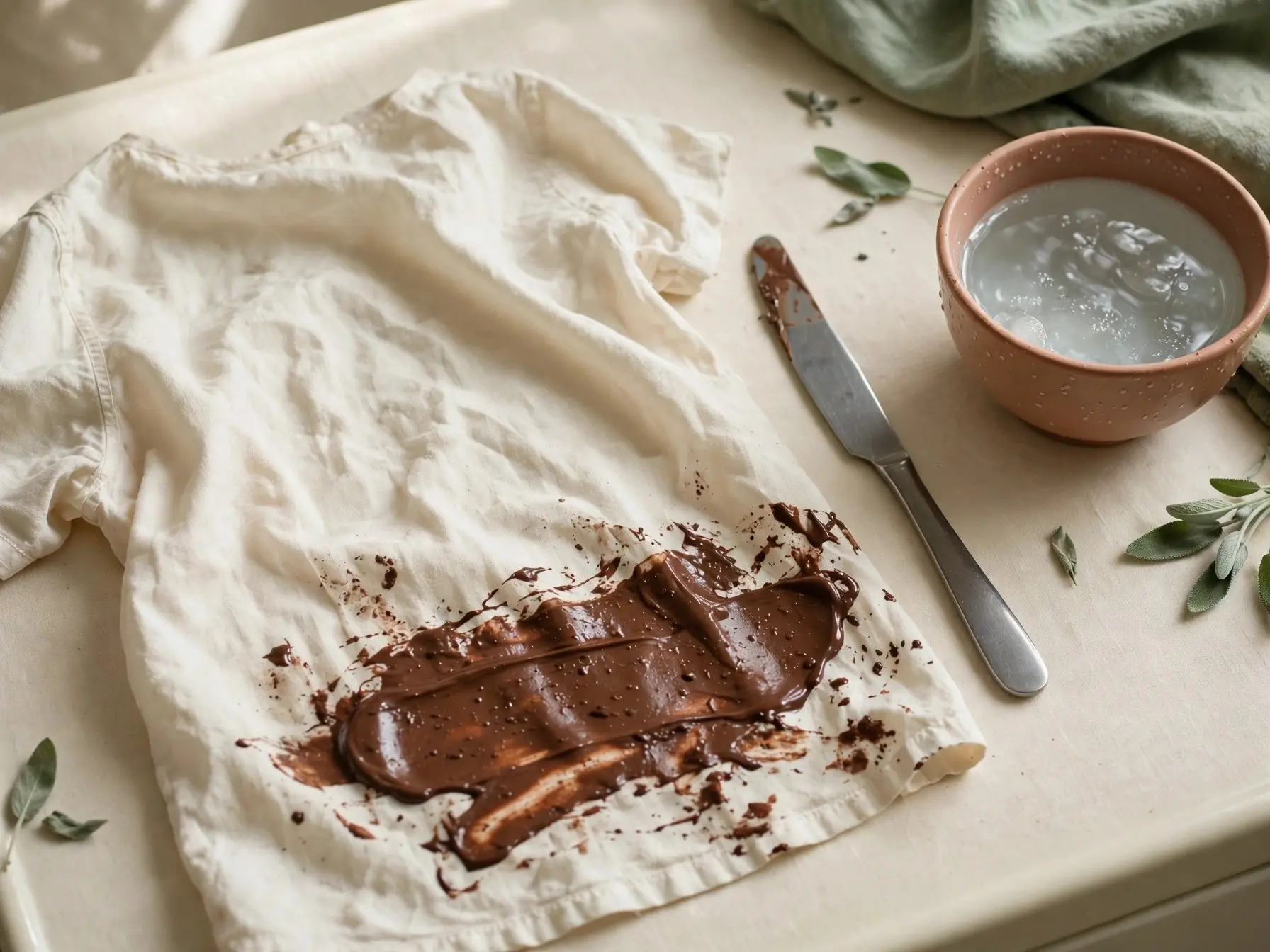
Chocolate is fat plus color, so cold water comes first and heat stays away until the stain is gone. Scrape off as much as you can with a blunt knife, then rinse the stain from the back with cold water. Work in a drop of dish soap and let it sit for 10 minutes, then wash warm with an enzyme detergent. If a brown shadow remains, soak in oxygen bleach. Never use hot water first — it melts the chocolate deeper into the fibers and sets the color.
- Scrape off the excess with a blunt knife
- Cold rinse from the back, then dish soap
- Oxygen-bleach soak for any brown shadow
9. Tomato
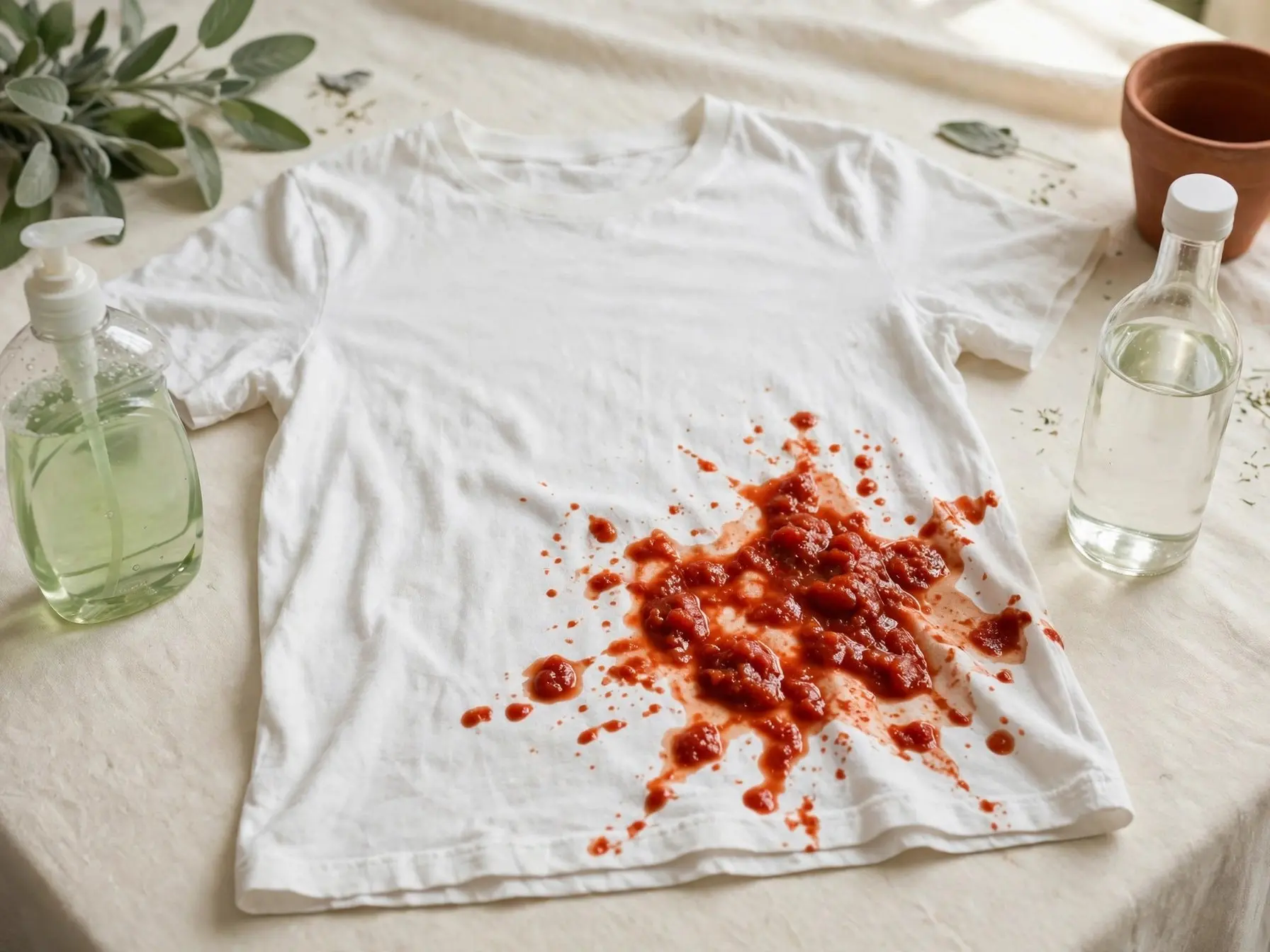
Tomato sauce is an oil-and-dye stain, and it fights back if you use hot water first. Scrape off the excess, then run cold water through the stain from the back of the fabric. Work in dish soap or a splash of white vinegar and let it sit for 15 minutes, then wash warm with an enzyme detergent. If a faint orange tint remains on whites, lay the damp garment in direct sun — sunlight is a gentle bleach for tomato dye. Check before drying; heat sets the tint.
- Scrape, then cold water from the back
- Dish soap or white vinegar, 15 minutes
- Sunlight fades the orange tint on whites
10. Sunscreen
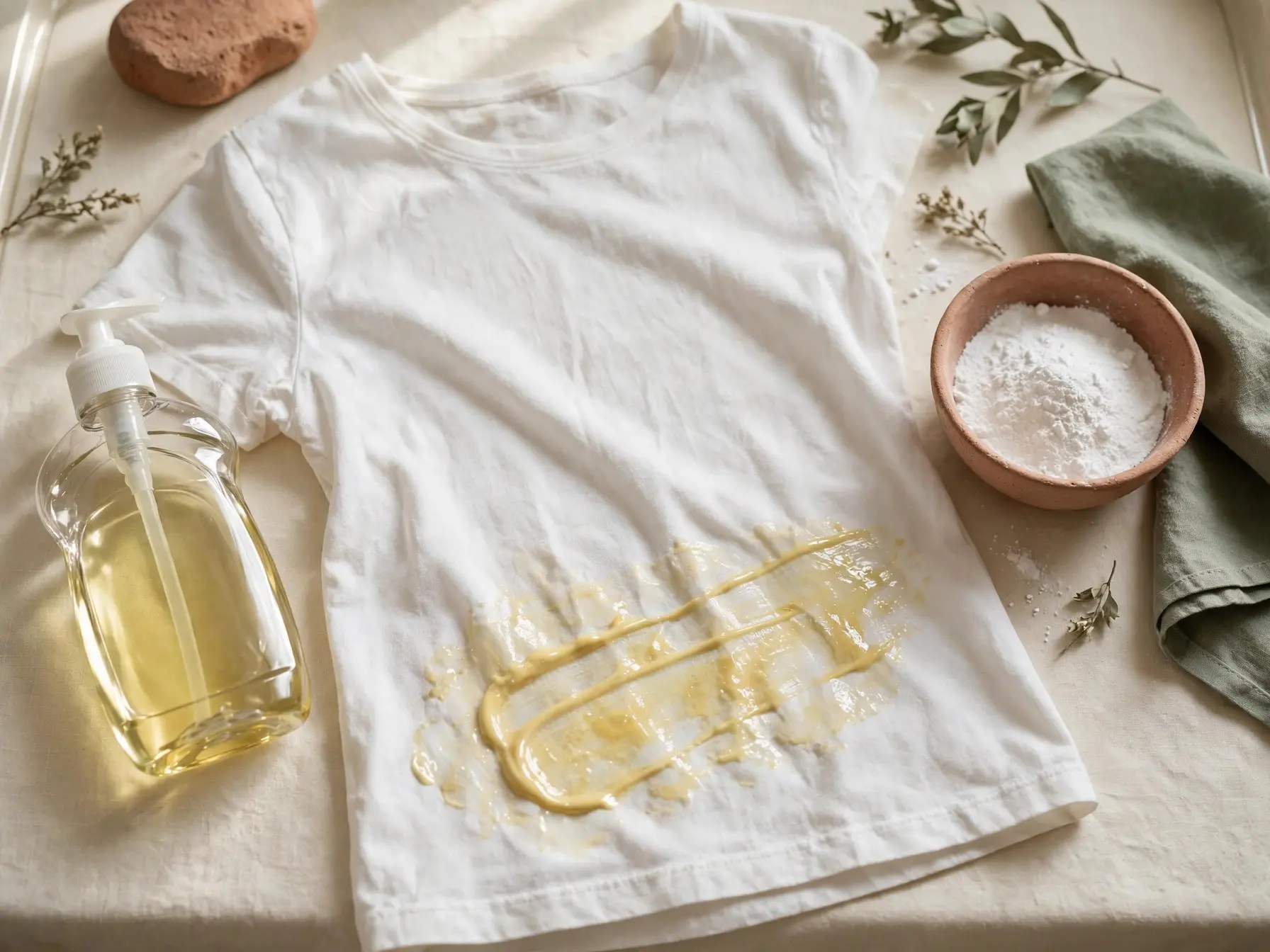
Sunscreen stains are oily and chemical at once — the UV filters bond to fabric, which is why a normal wash often leaves a yellow mark. Work dish soap into the stain first; it cuts the oils that carry the filters. For a stubborn mark, make a paste of baking soda and water and leave it for 30 minutes. Wash warm with an enzyme detergent. Skip chlorine bleach — it reacts with the UV filters and can turn the mark a deeper yellow. Treat before washing, or the stain sets.
- Dish soap worked in to cut the oils
- Baking soda paste for stubborn marks
- Warm wash with enzyme detergent
11. Mud
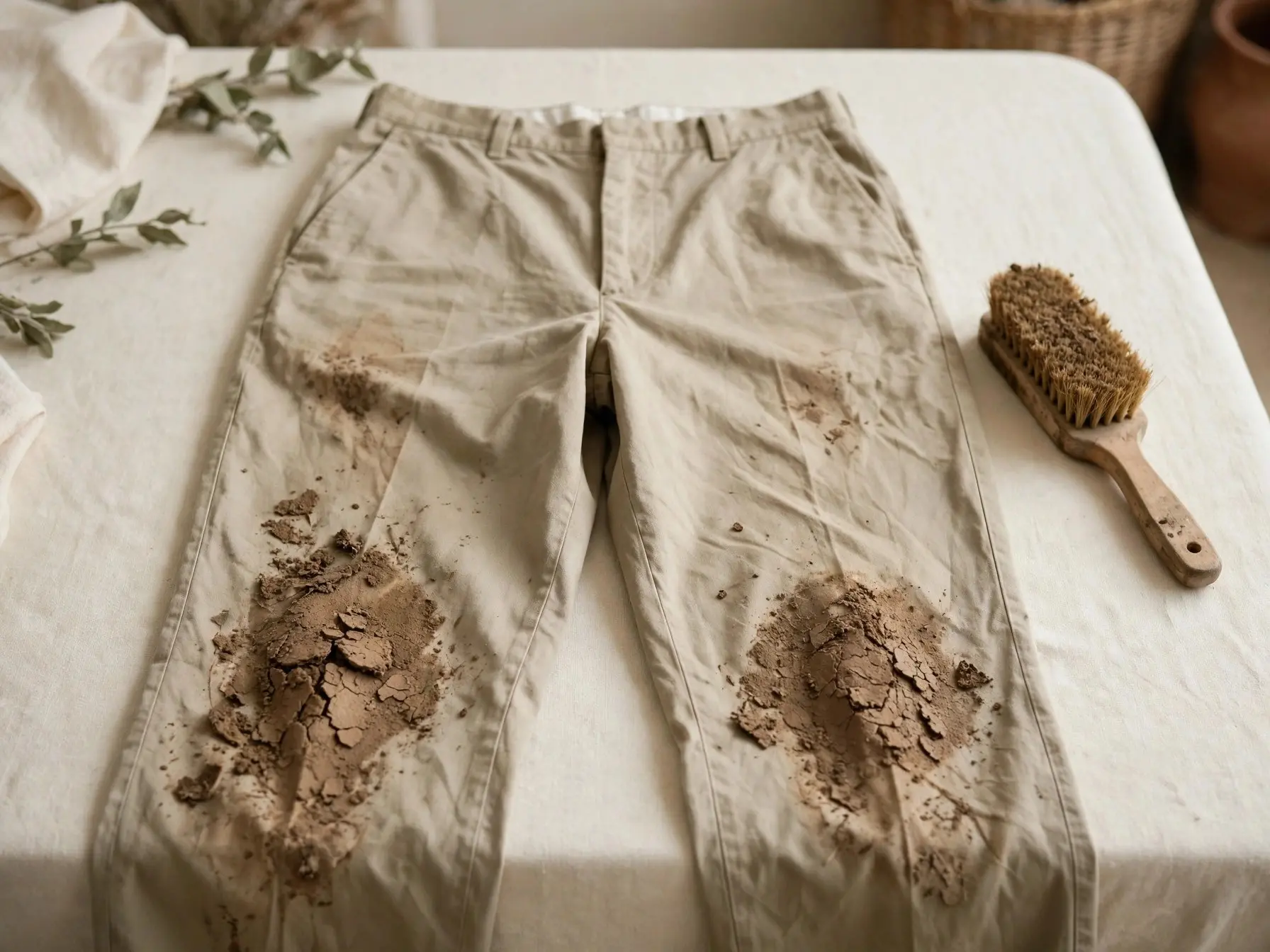
Mud is the one stain you should not touch while it is wet. Let it dry completely — a few hours, or overnight — then brush off as much as you can with a stiff brush. Work dish soap into what is left and rinse with cold water, then wash warm with detergent. Dried mud is mostly dirt, so it lifts easily. If the garment went through the wash while still muddy, the stain may have set — soak in oxygen bleach and wash again before drying.
- Let it dry fully, then brush off
- Dish soap on what is left, cold rinse
- Warm wash; oxygen bleach if it set
12. Deodorant

White deodorant marks are waxy buildup, not dye, so they dissolve rather than bleach out. Rub the mark with a damp white cloth, or press a pair of clean nylon tights against it — the friction lifts the waxy residue. For a mark that has been through the wash, work in white vinegar or lemon juice and leave it for 15 minutes, then wash warm with an enzyme detergent. A baking soda paste also works on older buildup. Prevent them by letting deodorant dry before dressing.
- Rub with a damp cloth or nylon tights
- White vinegar or lemon juice, 15 minutes
- Wash warm with enzyme detergent
The stain × treatment chart
Here is the whole chart in one place. Find your stain, treat it now, then wash it the way the third column says — and check before anything goes in the dryer.
| Stain | Treat now | Wash |
|---|---|---|
| Grass | Dish soap + white vinegar, 15 min | Cold rinse, then enzyme detergent |
| Grease | Baking soda to absorb, then dish soap | Hottest water the label allows |
| Red wine | Salt or baking soda, then flush cold | Cold, oxygen bleach for pink shadow |
| Blood | Cold rinse, then cold salted soak | Cold, enzyme detergent |
| Ink | Rubbing alcohol, dab from the back | Warm, regular detergent |
| Coffee | Dish soap + vinegar mix, 15 min | Warm; oxygen bleach for whites |
| Sweat / yellowing | Baking soda paste, then oxygen soak | Warm with oxygen-bleach booster |
| Chocolate | Scrape, cold rinse, dish soap | Warm, enzyme detergent |
| Tomato | Dish soap or white vinegar, 15 min | Warm; sun fades the tint on whites |
| Sunscreen | Dish soap to cut the oils | Warm, enzyme detergent |
| Mud | Let dry, brush off, dish soap | Warm, regular detergent |
| Deodorant | White vinegar or lemon juice, 15 min | Warm, enzyme detergent |
When in doubt, default to cold water and dish soap — that combination is safe on almost every fabric and every stain type, and it buys you time to look up the right treatment instead of setting the stain with heat.
Questions, answered
What is the best way to remove old, set-in stains from clothes?
Start by rehydrating the stain: soak it in cold water with oxygen bleach for 4 to 8 hours, or overnight for whites, then work in the treatment for that stain type — dish soap for grease, rubbing alcohol for ink, white vinegar for deodorant marks. Wash warm with an enzyme detergent and repeat the soak if a shadow remains. Be honest with yourself: a stain that has been through the dryer several times may only lighten, not disappear — but most set-in stains improve a lot with two or three patient rounds.
Does hot or cold water remove stains better?
Cold water first, almost always. Cold water flushes out most fresh stains without setting them, and it is essential for protein stains like blood, sweat and egg, which hot water cooks into the fabric. Hot water helps only after the stain is treated — it boosts detergent on grease and oil. The rule is simple: treat cold, wash at the temperature the stain type and the care label allow, and never tumble-dry until the stain is gone.
How do you get yellow sweat stains out of white shirts?
Work a baking soda paste into the yellowed areas and leave it for 30 minutes, then soak the shirt in warm water with oxygen bleach for 1 to 4 hours. Wash warm with an oxygen-bleach booster, and if a faint tint remains, lay the damp shirt in direct sun — lemon juice on the stain plus sunlight fades the last of the yellow. Avoid chlorine bleach: it can react with the proteins in sweat and make the yellowing worse, not better.
Can vinegar and baking soda remove any stain?
No — they are useful helpers, not a universal stain remover. White vinegar dissolves tannin stains like coffee and tomato, and cuts deodorant buildup; baking soda paste absorbs grease and lifts sweat stains. But neither removes dye-based stains like ink or red wine on its own, and mixing them together cancels both out — the fizz is the acid and the base neutralizing each other. Use each one for the job it actually does, and reach for the right solvent for the rest.
Keep reading
Stains are only half the laundry battle — the machine itself needs care too, and the room it lives in matters just as much. Our guide to how to clean a washer keeps the machine that washes your clothes from adding its own smells and residue. For the space around it, laundry room organization shows how to give every bottle, cloth and basket a home. And when the stain panic is over and you want the whole house in the same shape, declutter your home room by room takes you through it one room at a time.
Twelve stains, four rules, one habit: blot, treat, wash cold, and check before the dryer. Keep this chart saved for the next spill — the treatment that works is almost always already in your kitchen cupboard.