Clean a shower head by soaking it in white vinegar — a bag tied over the head overnight, or the head removed into a bowl — then clear each nozzle with a pin and flush; limescale is what sprays water sideways and drops pressure.
Thank you for reading this post, don’t forget to subscribe!Part of our guide: How to Declutter Your Home: A Simple Room-by-Room Plan
A shower head that sprays sideways, dribbles from half its nozzles or has lost its pressure is almost never broken — it is scaled up. Hard water leaves limescale inside the nozzles, and the vinegar bag method below dissolves it with one ingredient, one bag and one night. No tools, no removal, no harsh chemicals.
The vinegar bag method
1. Fill a bag with white vinegar
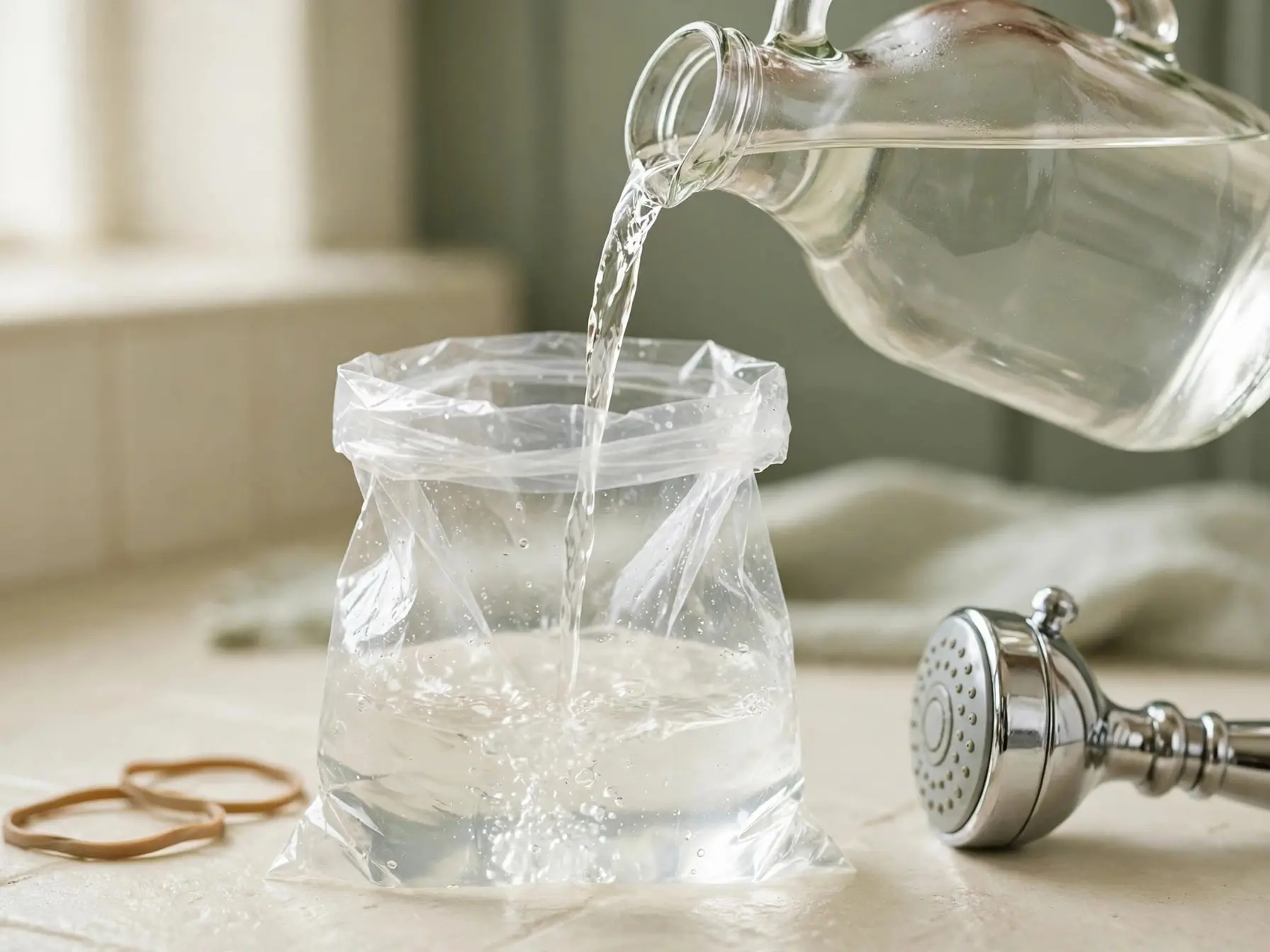
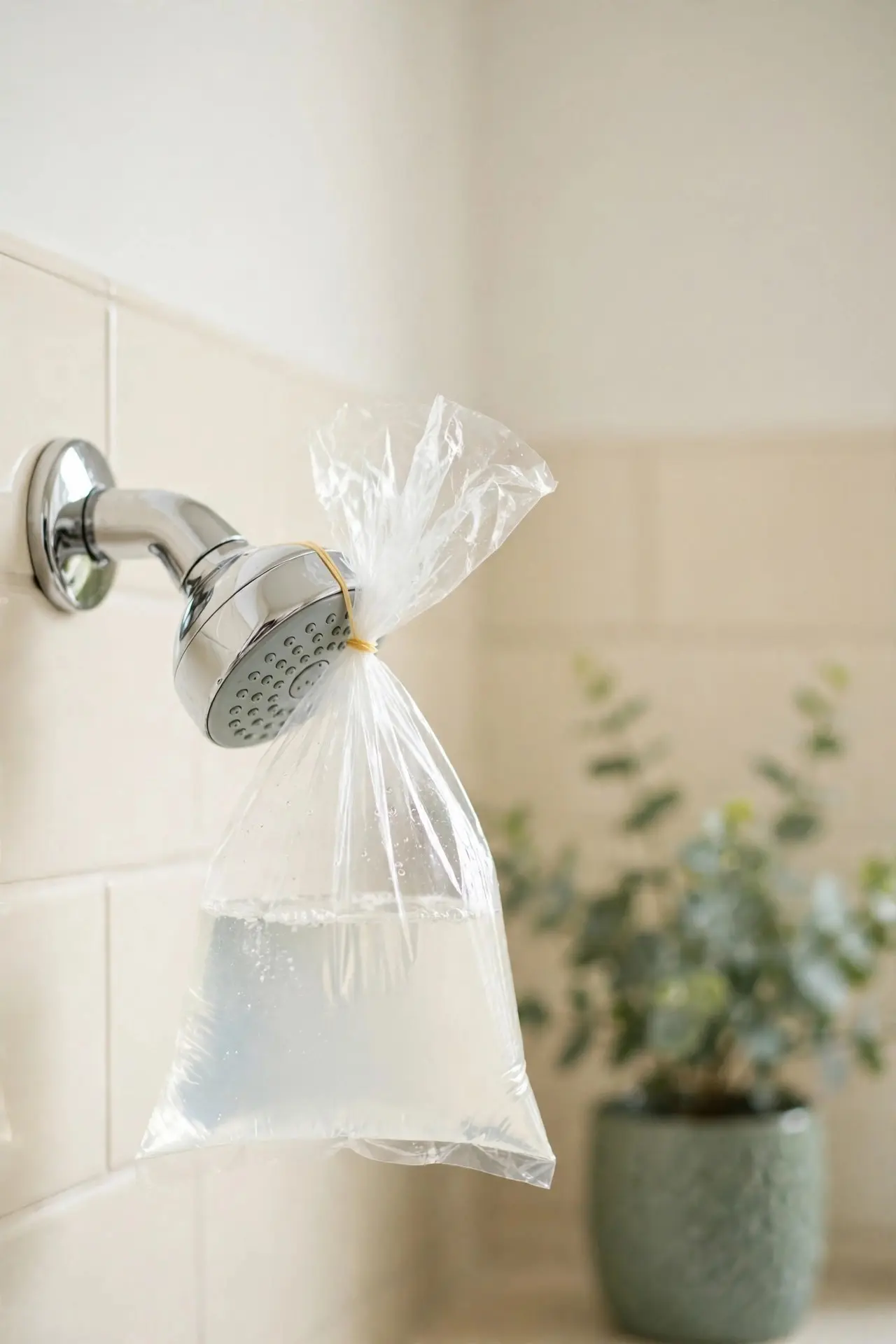
Start with plain white vinegar — the clear, cheap kind, not malt or apple cider vinegar, which can stain. Pour enough into a sturdy plastic bag to cover the shower head’s nozzles once the bag is tied on: about a cup for a standard head, a little more for a wide rain head. A freezer bag or a thick produce bag works best; thin bags split under the weight. Keep a rubber band or a zip tie ready beside it, because you will need both hands for the next step.
- Plain white vinegar, not malt or apple cider
- Enough vinegar to cover the nozzles
- A sturdy bag that will not split
2. Secure the bag over the shower head
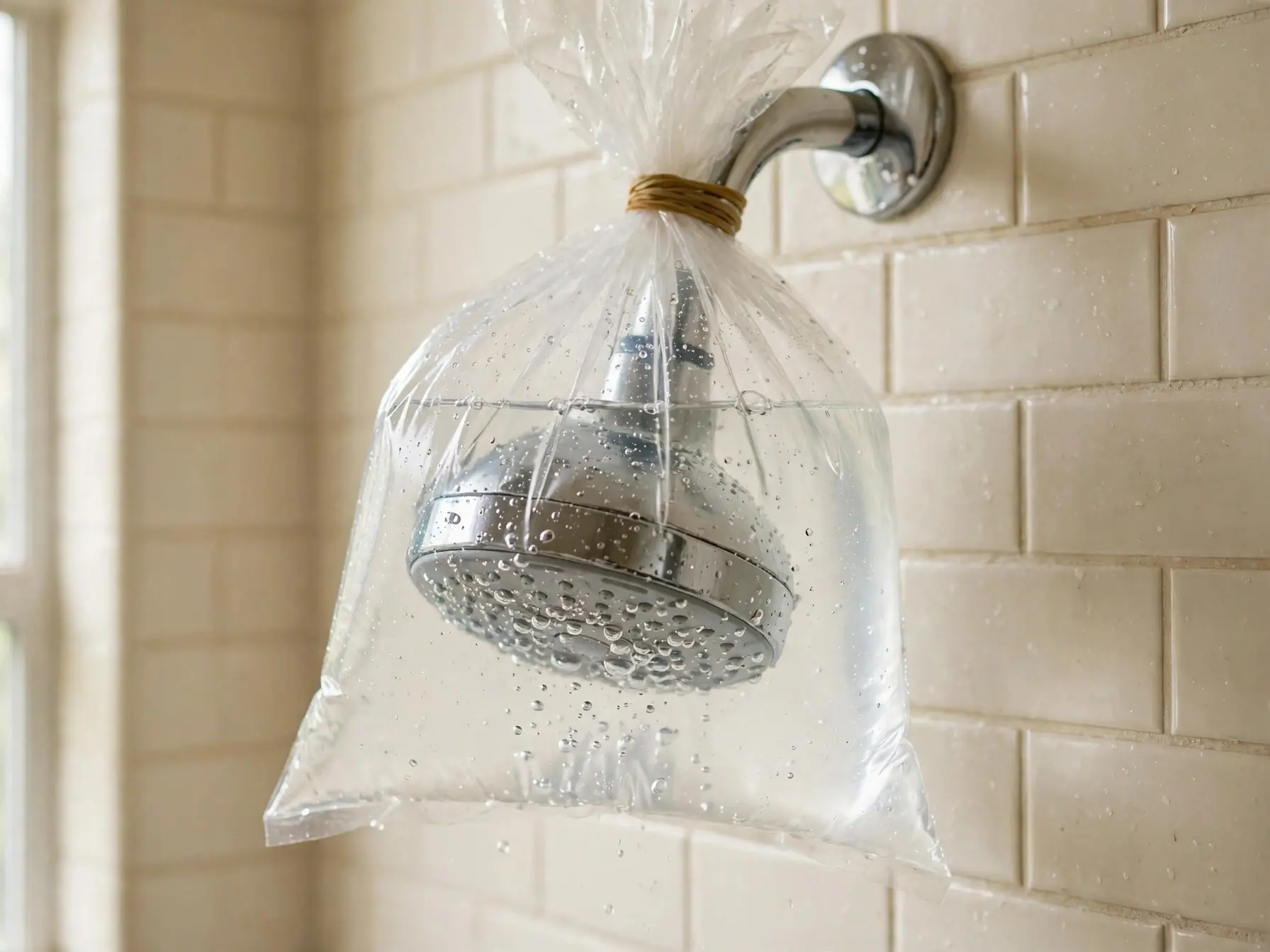
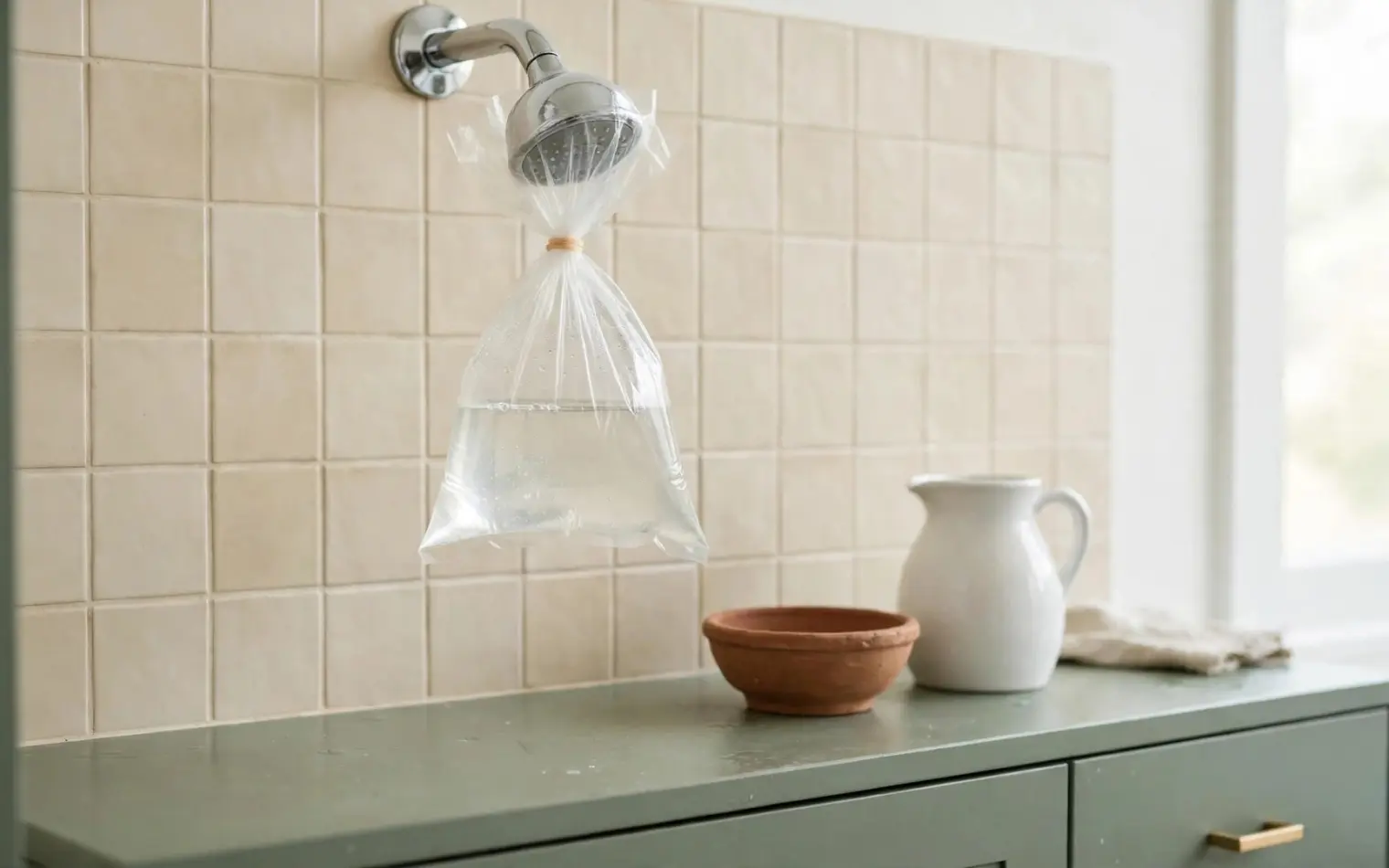
Lift the bag up over the shower head so every nozzle sits under the vinegar, then gather the open end above the head and fasten it tight with the rubber band or zip tie. The bag should hug the head snugly — if it hangs loose, the vinegar level drops and the top nozzles stay dry. Give it a gentle tug to check it will hold overnight, and lay an old towel in the shower tray to catch any drips. If the bag slips, tie a second band a little higher up.
- Nozzles fully under the vinegar
- Bag tied tight above the head
- A towel under the shower to catch drips
3. Soak overnight
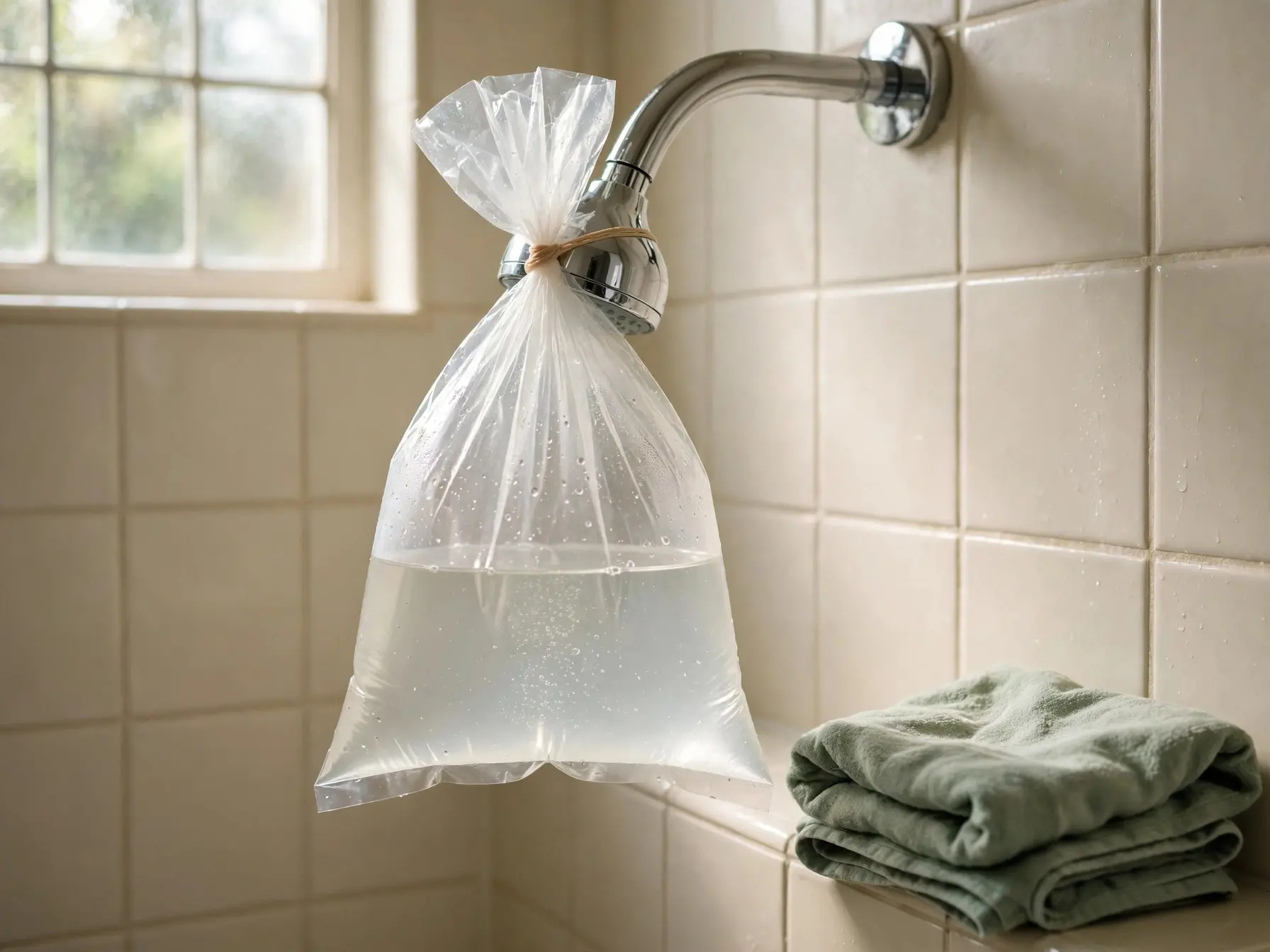
Leave the bag on overnight — at least eight hours — so the vinegar has time to dissolve the limescale inside the nozzles. You will see white flakes loosening in the liquid by morning, which is exactly what you want. The one exception is finish: matte black and brass heads should soak for one to two hours only, because a long vinegar bath can dull them. Do not run the shower while the bag is on, and keep the bathroom door closed if the vinegar smell bothers you.
- Leave it at least 8 hours
- Matte black or brass: 1 to 2 hours only
- Do not run the shower while it soaks
4. Remove the bag and scrub
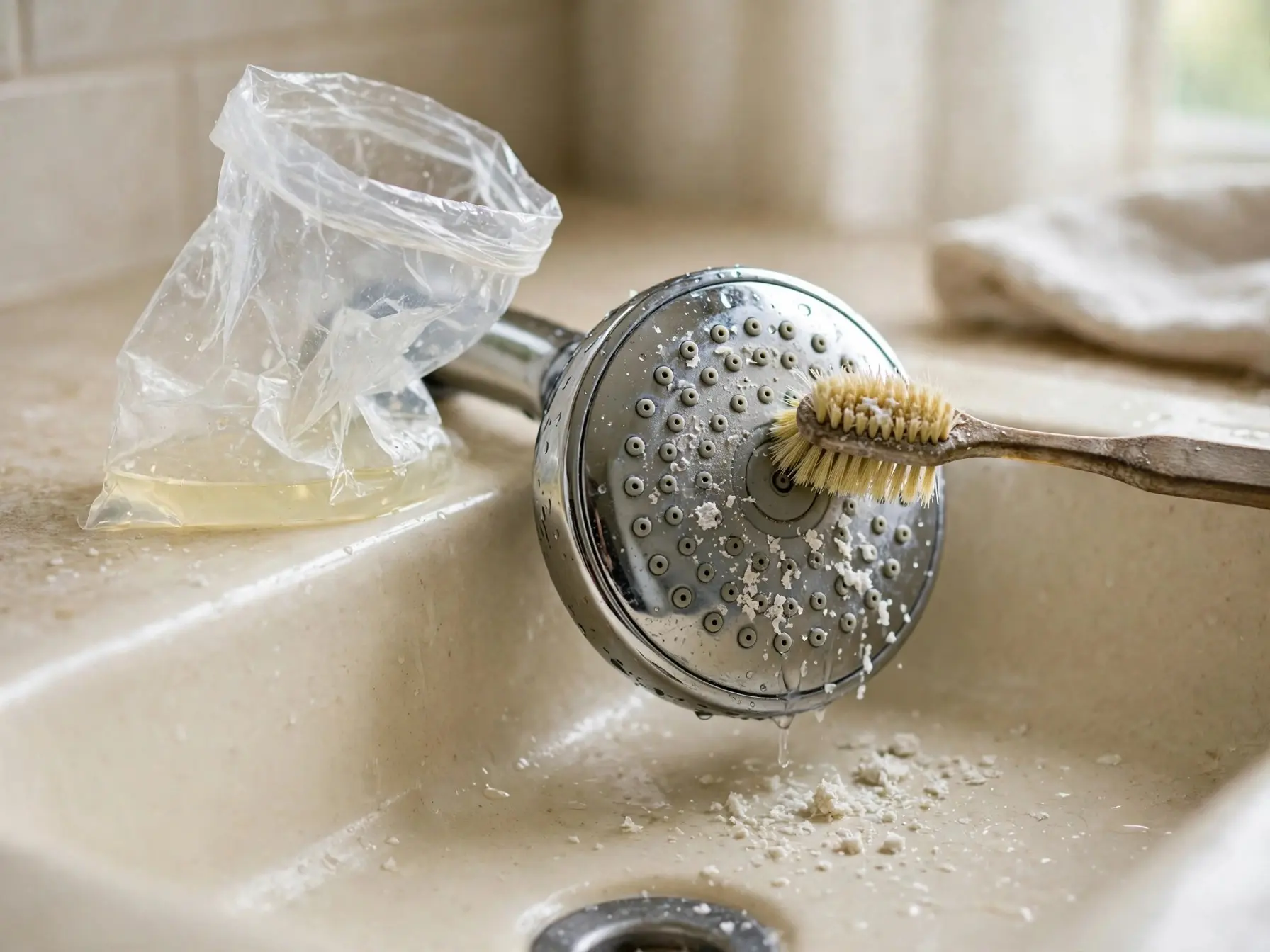
In the morning, untie the bag and tip the vinegar down the drain. The limescale will have softened into flakes, so take an old toothbrush and scrub the nozzle plate in small circles, working across every hole. Pay attention to the rim where the plate meets the head — crust hides there. Then rinse the outside of the head under the tap or with a jug of clean water, and wipe it dry with a soft cloth so water spots do not form on the fresh finish.
- Tip the vinegar into the drain
- Scrub the nozzle plate with an old toothbrush
- Rinse the outside under the tap
5. Clear each nozzle with a pin
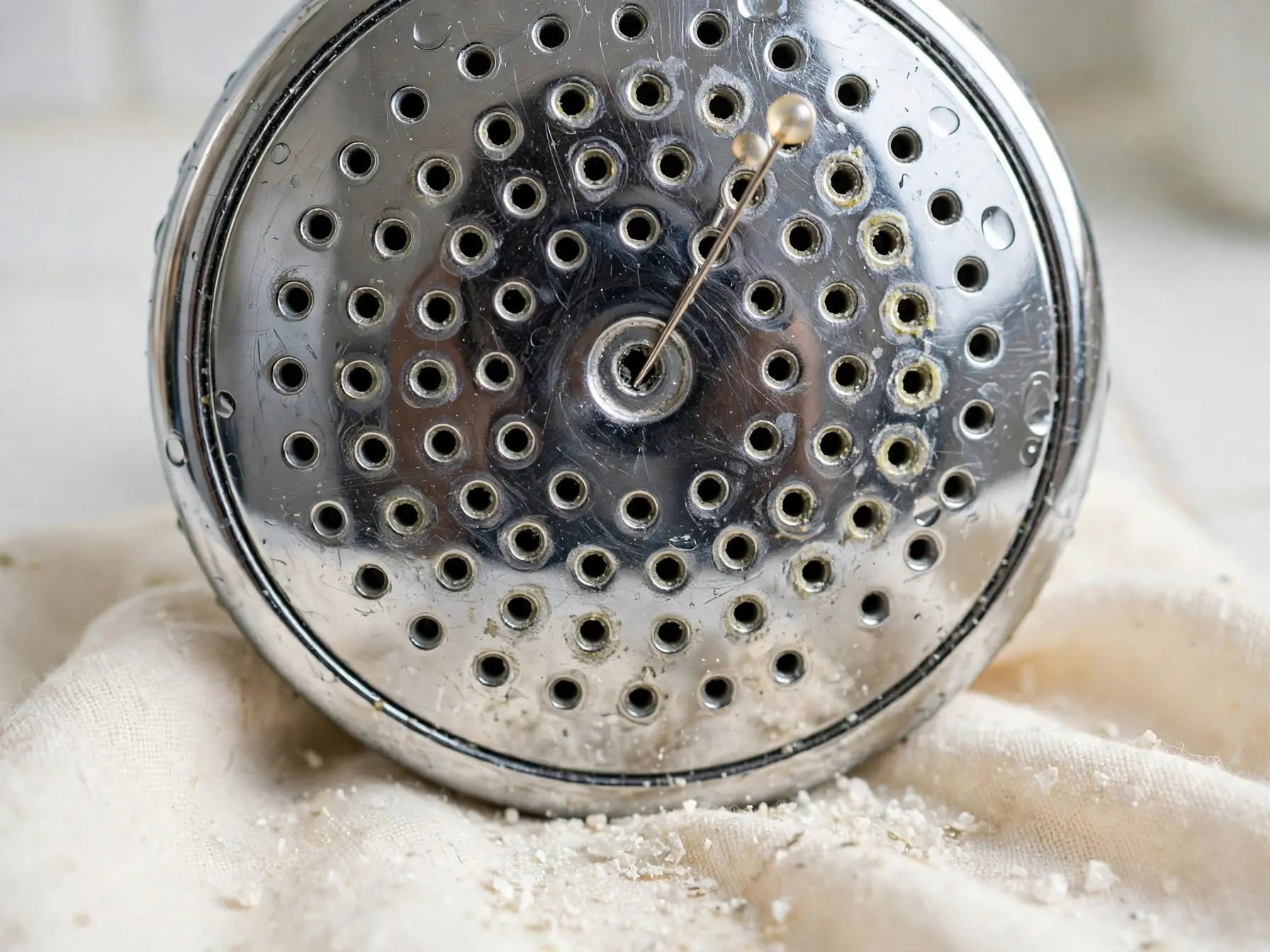
Some nozzles stay blocked even after the soak, because a plug of scale sits too deep for the vinegar to reach. Take a sewing pin or a needle and push it gently into each nozzle, one at a time, wiggling it slightly to break the plug free. Work across the whole plate so you do not miss a hole — a single blocked nozzle is enough to throw the spray sideways. Do not force the pin: the rubber nozzles are soft, and a hard push can tear them. Rinse the head again when every nozzle is open.
- A sewing pin or a needle
- One nozzle at a time, gently
- Rinse again after pinning
6. Flush and test the spray
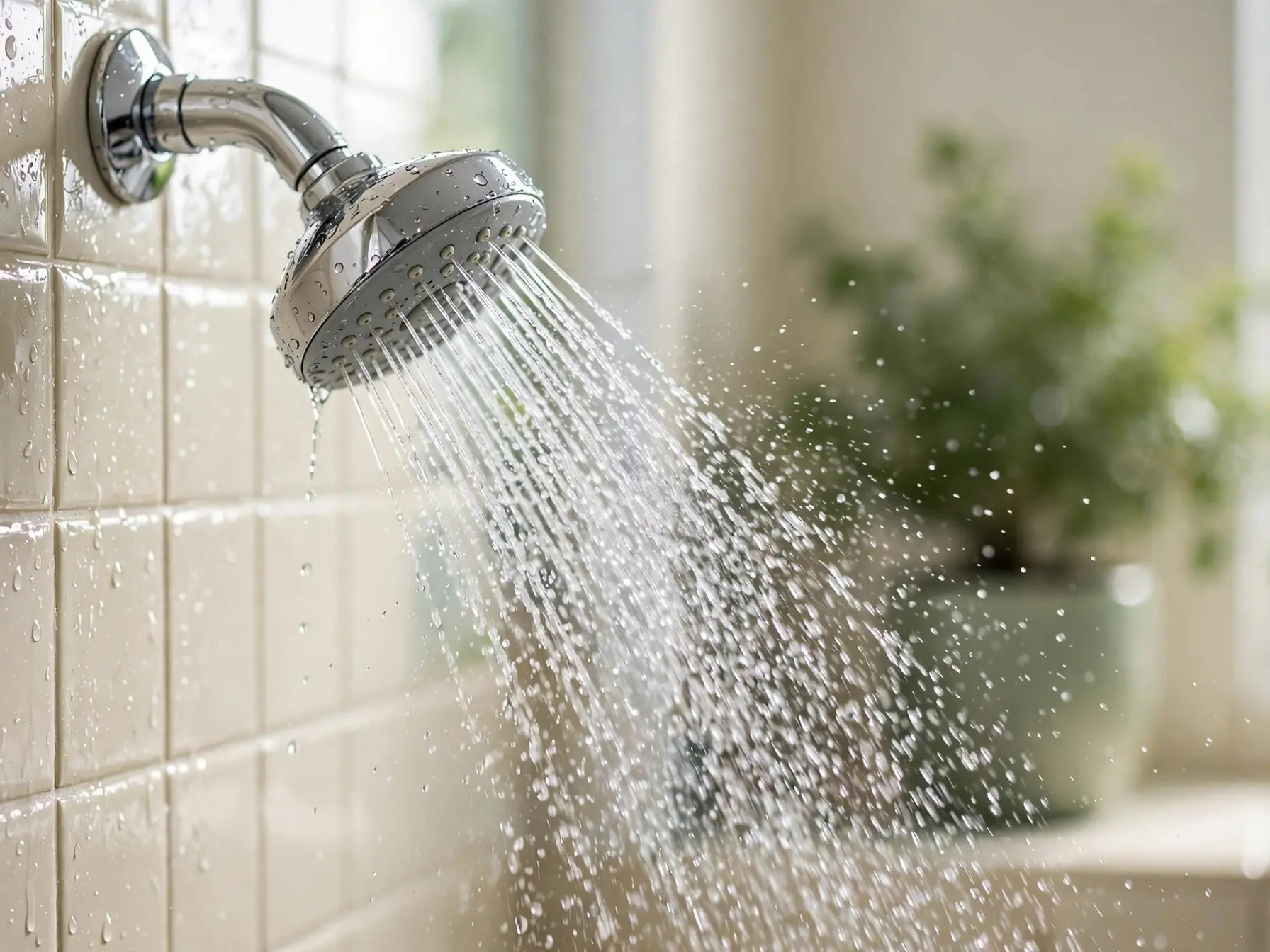
Turn the shower on and let it run for a full minute to flush out the last vinegar and loose scale. Watch the spray pattern: it should be an even fan, with every nozzle firing in the same direction. If a few nozzles still spray sideways, repeat the pin step on those holes and flush again. Once the spray is even, turn the water off and wipe the head dry with a soft cloth — that final wipe is what leaves the finish spotless instead of streaked.
- Run the shower for a minute
- Check the spray is even
- Wipe the head dry for a spotless finish
Deep clean: remove the head
If the bag method leaves the spray uneven, or the head has not been cleaned in years, take it off and soak it properly. Unscrew the head from the shower arm by hand — if it is stiff, wrap a cloth around the fitting first so the wrench does not mark the finish. Drop the head into a bowl of white vinegar so the nozzle plate is fully covered, and leave it for two to three hours.
While it soaks, look inside the fitting: most shower heads have a small mesh filter screen where they meet the arm. Lift it out, rinse it under the tap and brush it gently with an old toothbrush to clear the grit and scale caught there — a clogged screen alone can halve your pressure. Rinse the head, screw it back on, and wrap a few turns of plumber’s tape around the thread first if the joint used to drip.
Finish care: what not to use on each shower head
Vinegar is gentle on most finishes, but not all of them. Matte black and brass need a shorter soak, and abrasive pads will ruin any finish. Check the table before you start, and when in doubt, test a hidden spot first.
| Finish | Safe to use | Do not use |
|---|---|---|
| Chrome | White vinegar soak overnight, baking soda paste, soft cloth | Abrasive pads, steel wool, bleach-based cleaners |
| Matte black | Short vinegar soak (1 to 2 hours), mild dish soap, soft cloth | Overnight vinegar soaks, abrasive sponges, harsh descalers |
| Brass | Short vinegar soak (1 to 2 hours), warm soapy water, soft cloth | Overnight vinegar soaks, acidic descalers, metal polish on lacquered brass |
The rule behind the table is simple: the softer the finish, the shorter the soak and the gentler the tool. Chrome forgives an overnight vinegar bath; matte black and brass do not. A soft cloth and a little patience clean any of them.
Questions, answered
How often should you clean a shower head?
In most homes, every three to six months is enough. If you live in a hard-water area, or you start seeing white crust on the nozzles or spray shooting sideways, clean it every two to three months instead. A quick monthly rinse under the tap between deep cleans keeps buildup from hardening.
Can you clean a shower head without removing it?
Yes — that is exactly what the vinegar bag method is for. You tie a bag of white vinegar over the head, leave it overnight, and the nozzles soak without you touching a wrench. Only remove the head if the buildup is heavy, or if you need to reach the filter screen inside the fitting.
Does vinegar damage a shower head finish?
White vinegar is safe on chrome and most finishes when you keep the soak to one night and rinse well afterward. Matte black and brass finishes are the exception: long vinegar soaks can dull them, so limit the soak to one or two hours and test a hidden spot first. Never use vinegar on a gold-plated finish.
Why is my shower pressure low after cleaning?
First, check that every nozzle is open — a pin clears the last bits of scale that the soak loosened. Then unscrew the head and rinse the small filter screen inside the fitting, which often traps grit. If pressure is still low, the problem is usually upstream: a partially closed shutoff valve or a clogged shower filter, not the head itself.
Keep reading
A clean shower head is one piece of a bathroom that stays clean on a schedule. Our guide to how to clean a washer tackles the other appliance that quietly scales up, cleaning schedule for home puts every cleaning job on a rhythm so nothing gets forgotten, and home maintenance checklist covers the filters, vents and seals that keep the whole house running. Start with the shower head, then let the routine spread.
Six steps, one bag of vinegar and one night: that is all a scaled-up shower head needs. Do it every few months and the spray stays strong — and the only thing shooting sideways will be the water, exactly where you want it.