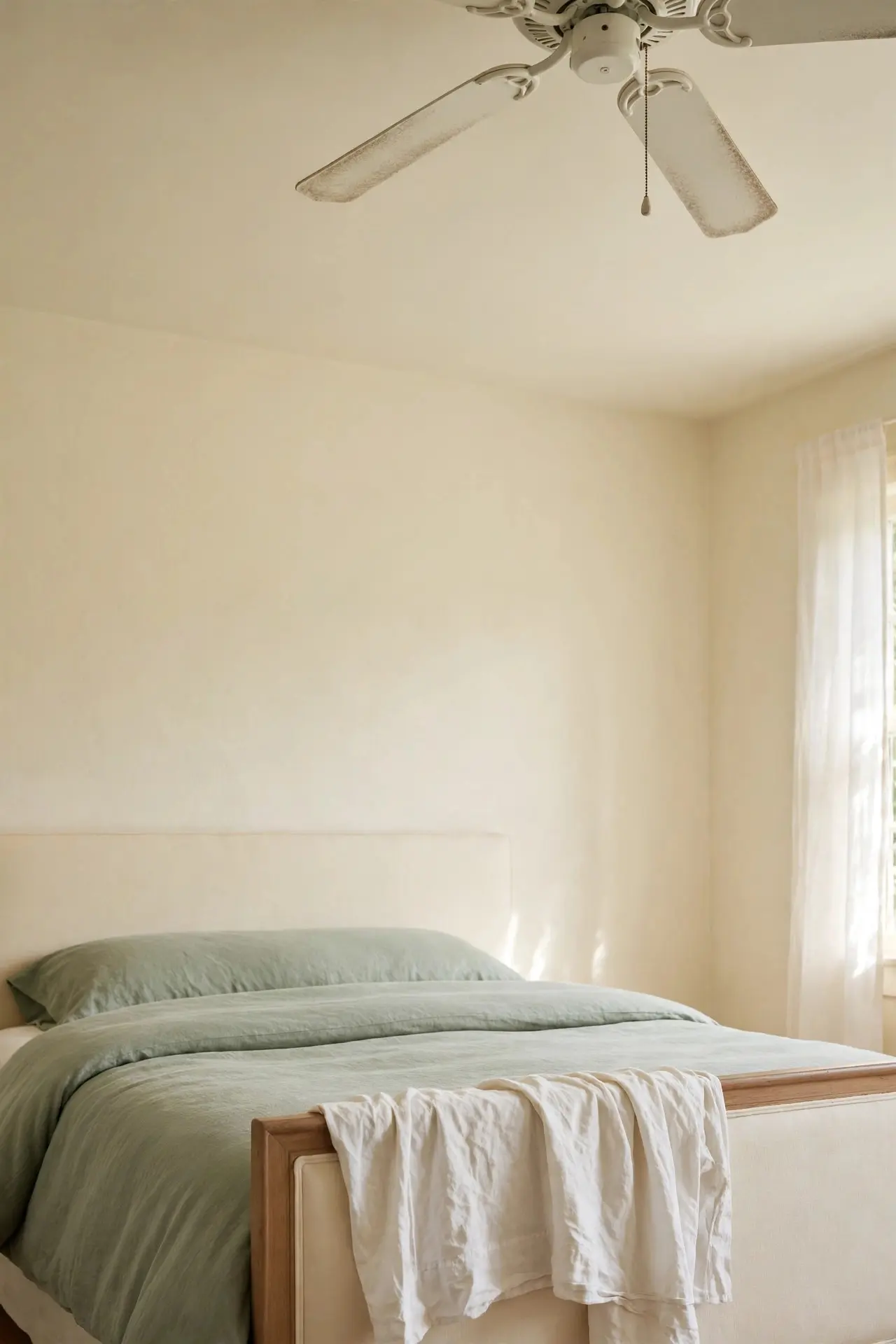
Clean a ceiling fan by sliding an old pillowcase over each blade and pulling it back toward the hub — the dust stays inside the case instead of falling on the bed or floor — then wipe the light covers and motor housing.
Thank you for reading this post, don’t forget to subscribe!Part of our guide: How to Declutter Your Home: A Simple Room-by-Room Plan
A ceiling fan quietly collects a thick gray coat of dust on top of its blades, and the usual fix — a feather duster waved from below — sends most of it raining onto the bed, the floor and everything in between. The pillowcase method fixes that: the case wraps the blade and traps the dust inside, so the dirtiest job in the room leaves nothing behind. Eight steps, about fifteen minutes, and a fan that spins clean air again.
What you’ll need
You need almost nothing for this job — an old pillowcase does the heavy lifting. Gather these before you climb up, and never stand on a chair or a bed: use a sturdy step stool or ladder that lets you reach the blades comfortably.
- An old pillowcase you do not mind getting filthy (a flat sheet works for very wide blades)
- A sturdy step stool or ladder tall enough to reach the blades
- A damp microfiber cloth for the second pass
- A dry microfiber cloth for the light covers and motor housing
- A small bowl of warm water with a drop of dish soap for greasy blades
- A bag to carry the dusty pillowcase straight to the wash
The pillowcase method, step by step
This is the whole method: the pillowcase does the dry clean, a damp cloth does the finish, and the last step sets the fan for the season. No special tools, nothing to buy, and nothing falls on the bed.
1. Turn the fan off and let the blades stop
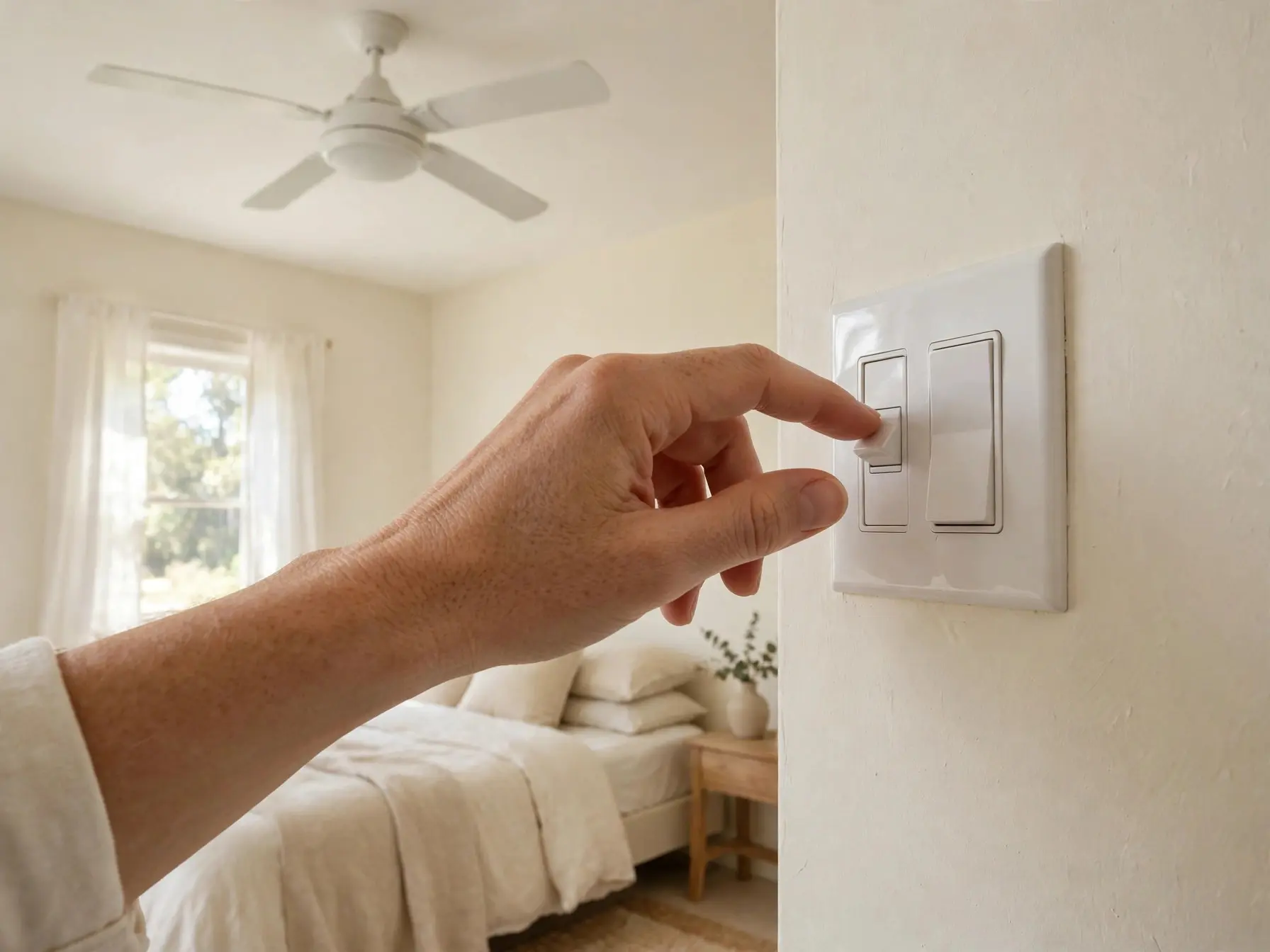
Switch the fan off at the wall or with the pull chain, then wait until the blades have completely stopped moving. A blade that is still turning will smack the pillowcase out of your hand and scatter dust across the room — and a spinning blade is the one thing that can actually hurt you in this job. While you wait, open a window if the room feels stuffy, and lay a sheet or an old towel over the bed or furniture directly below the fan, just in case a stray clump escapes. Two minutes of patience here saves ten minutes of cleanup later.
- Switch off at the wall or pull chain
- Wait until the blades are fully still
- Lay a sheet over the bed or furniture below
2. Gather your tools and set up the step stool
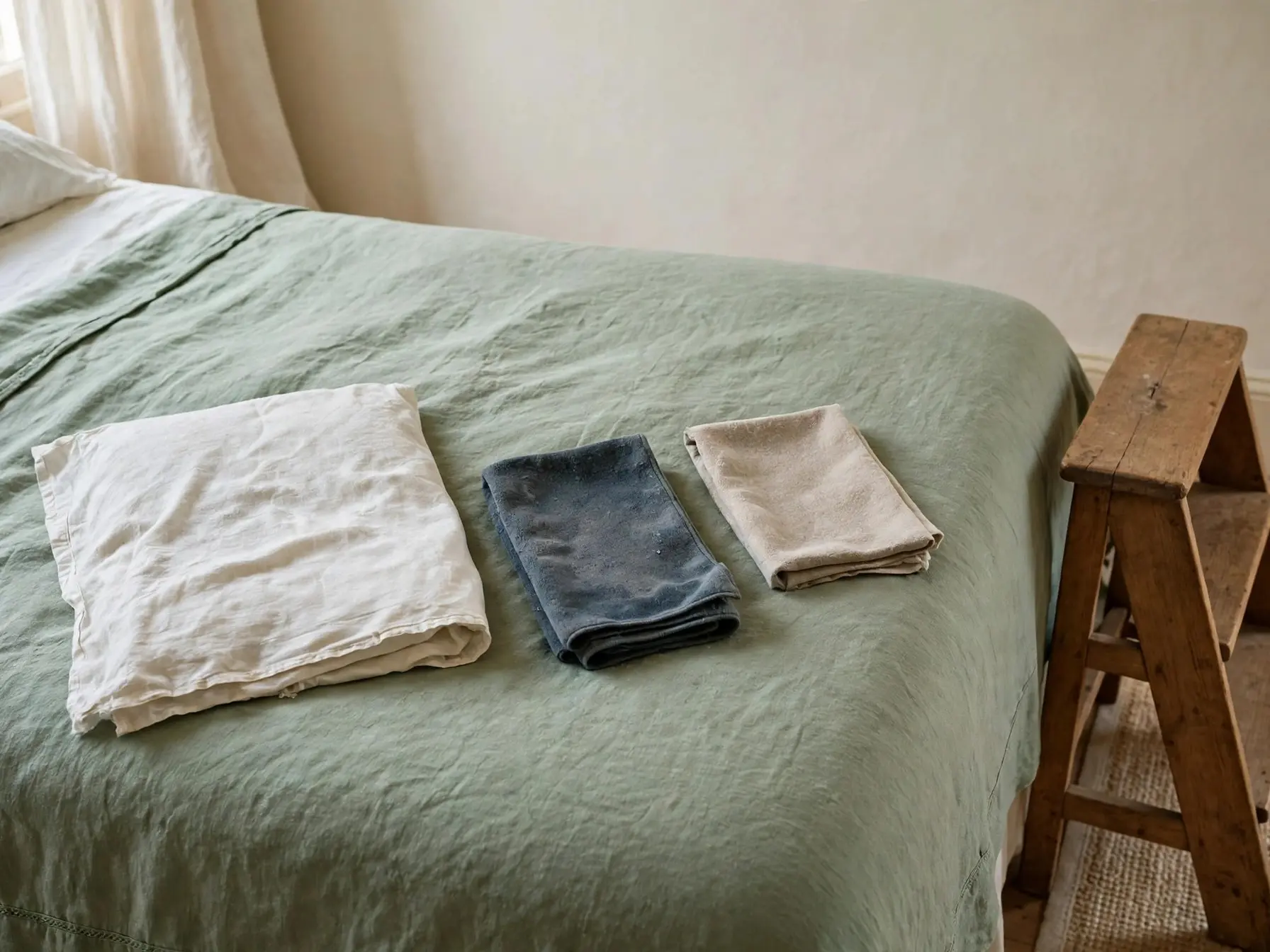
Put the pillowcase, the damp cloth and the dry cloth within arm’s reach of the fan — on the bed or a nearby table, not on the floor where you will trip over them. Set the step stool directly under the fan, on flat ground, and test it with both feet before you climb: it should not rock or slide. You want to stand close enough that the blades are at chest height, so you can slide the case on without stretching. If you have to reach up on tiptoes, the stool is too short — get a taller one rather than leaning.
- Pillowcase, damp cloth and dry cloth within reach
- Step stool flat on the ground, tested for wobble
- Blades at chest height when you stand on the stool
3. Slide the pillowcase over the first blade
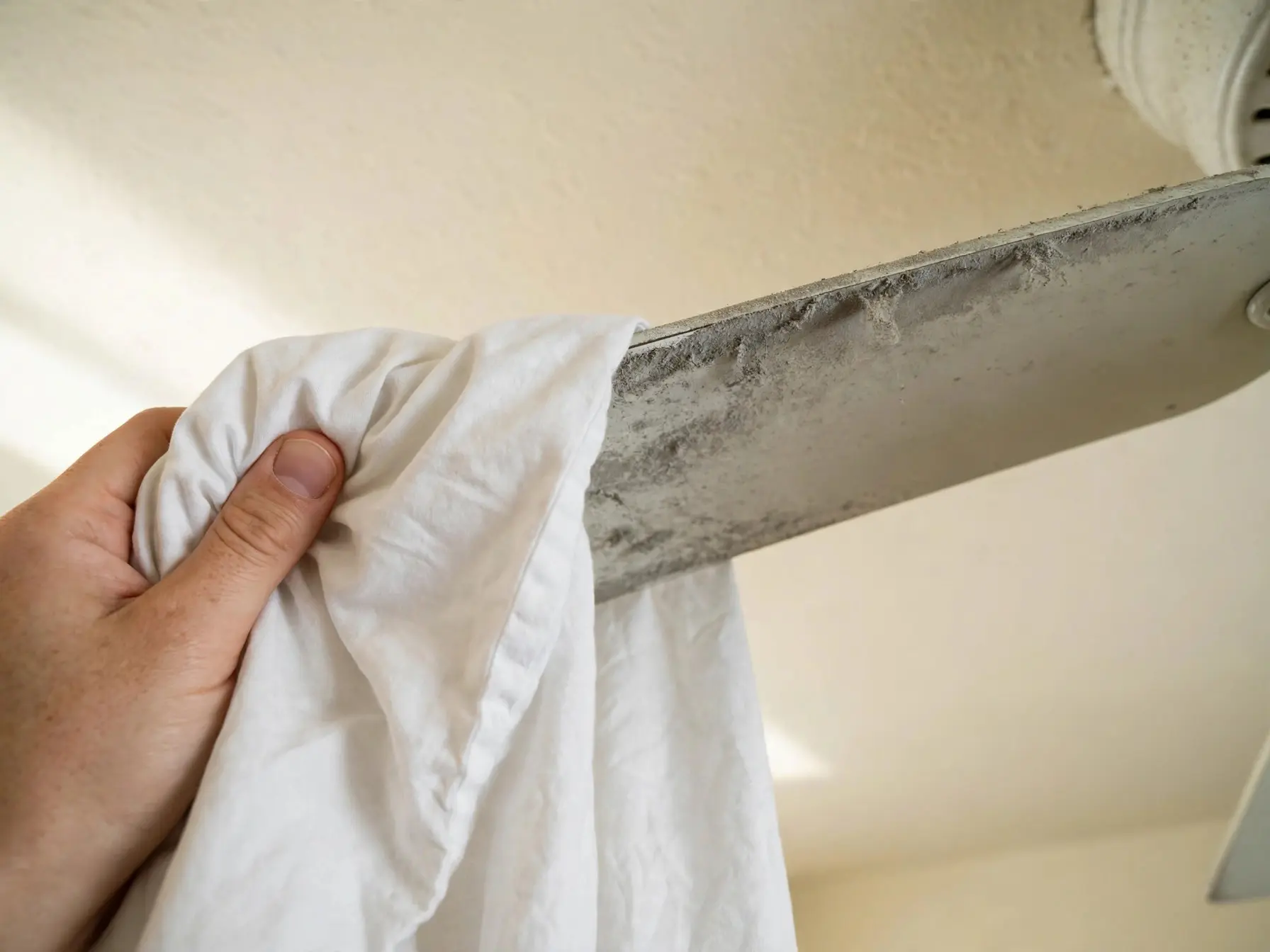
Hold the pillowcase open with both hands and slide it over the end of the first blade, the way you would put a pillow into its case. Push it along until the whole blade is inside and the closed end of the case sits near the tip. Keep the open end of the case around the blade near the hub, and hold the fabric loosely — you are about to drag it back, and a tight grip just squeezes dust out of the sides. If the blade is very wide, use a king-size case or a flat sheet folded into a sleeve.
- Hold the case open with both hands
- Slide it on until the whole blade is inside
- Keep the open end near the hub, not the tip
4. Pull the case back slowly toward the hub
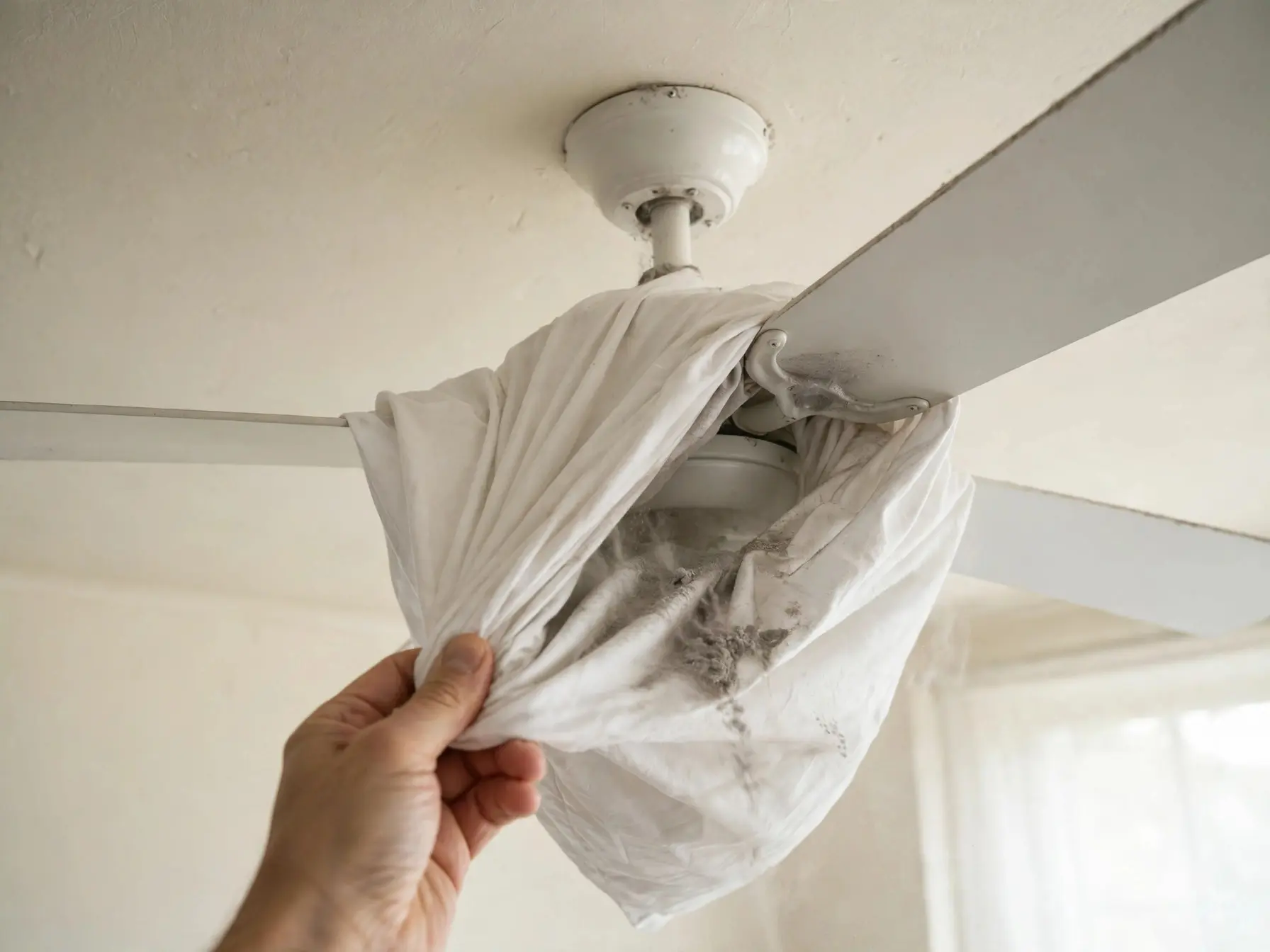
Now press the top and bottom of the pillowcase gently against the blade and pull it back toward the motor, slow and steady. The fabric wipes the dust off the top and the underside at the same time, and every speck stays trapped inside the case instead of drifting down onto the bed. Go slowly — a fast yank shakes dust out of the open end. When the case comes off the blade, keep the open end pinched shut and peek inside: the gray smear on the fabric is the dust that would have rained down on you.
- Press the fabric lightly against both sides of the blade
- Pull slow and steady toward the hub
- Pinch the open end shut as the case comes off
5. Work around the fan, one blade at a time
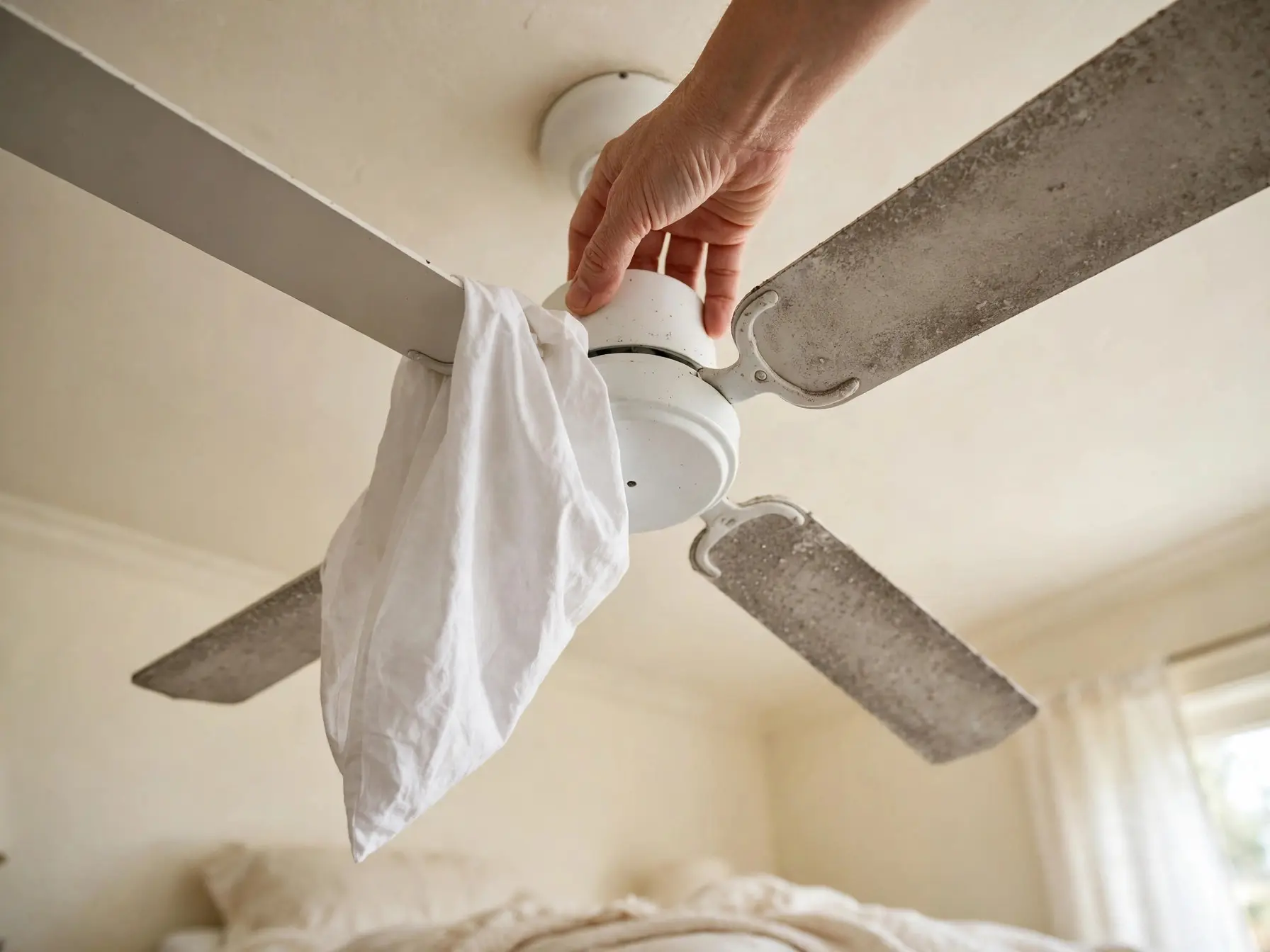
Move to the next blade and repeat the same slide-and-pull, using a clean section of the pillowcase each time. Turn the fan by hand — gently, from the motor housing — so each blade comes to you, rather than climbing down and moving the stool for every blade. Most fans have four or five blades, and the whole round takes about five minutes. If the case gets so dusty that it stops picking dust up, turn it inside out or swap in a second old case and keep going.
- Use a clean section of the case for each blade
- Turn the fan by hand from the motor housing
- Swap in a fresh case if the first one fills up
6. Give the blades a damp second pass
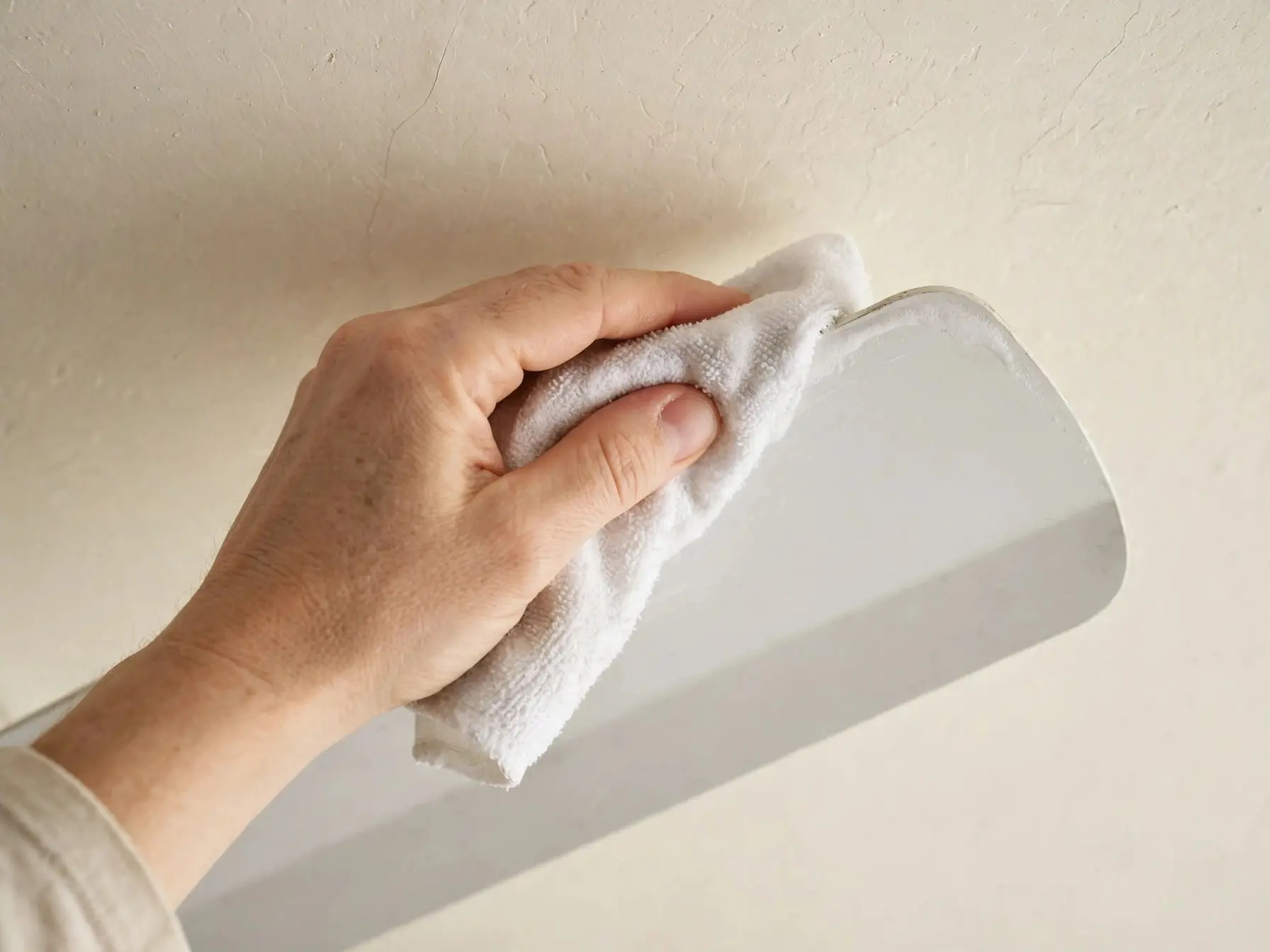
The pillowcase catches the loose dust, but a thin gray film usually stays behind on the blade surface. Wring out the damp microfiber cloth until it is barely moist, then wipe the top and underside of each blade, one at a time. Work from the hub out to the tip so you are not pushing dirt back onto a clean blade. Rinse the cloth in the bowl as it picks up grime, and wring it out again before the next blade — a dripping cloth leaves streaks and can drip into the motor.
- Wring the cloth until it is barely moist
- Wipe top and underside, hub to tip
- Rinse and wring out between blades
7. Wipe the light covers and motor housing
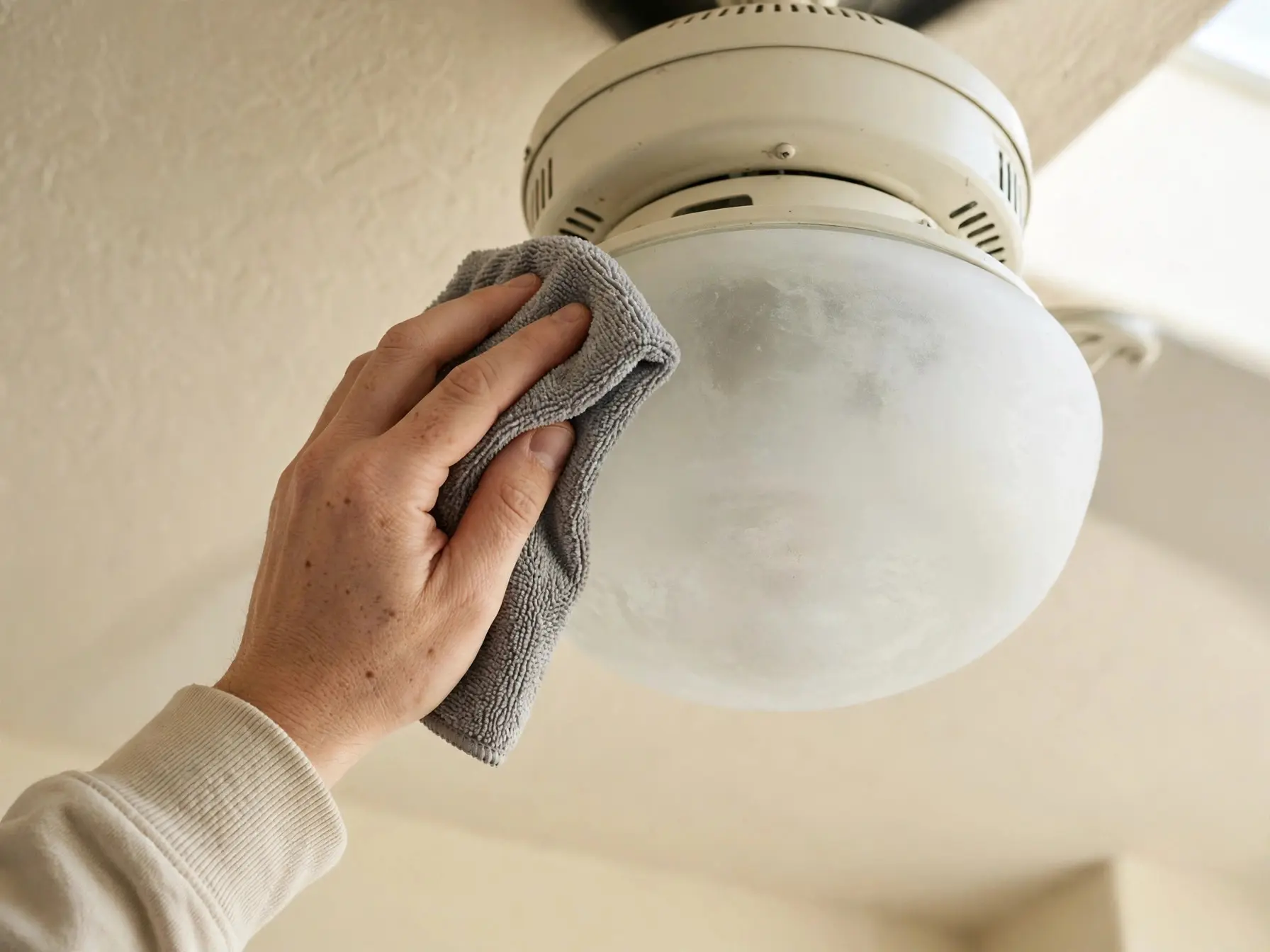
With the blades clean, turn to the light kit: unscrew or unclip the glass covers if they come off easily, wash them in warm soapy water, dry them well and put them back. If they do not come off, wipe them inside and out with the damp cloth while they are still on the fan. Then wipe the motor housing — the round body in the middle — with the dry cloth, working around the small direction switch without flipping it yet. Dust collects thickly on top of the housing, so wipe the upper edge you cannot see from below.
- Remove glass covers if they come off easily, or wipe them in place
- Wash covers in warm soapy water and dry before refitting
- Wipe the motor housing with the dry cloth
8. Set the direction for the season and switch it back on
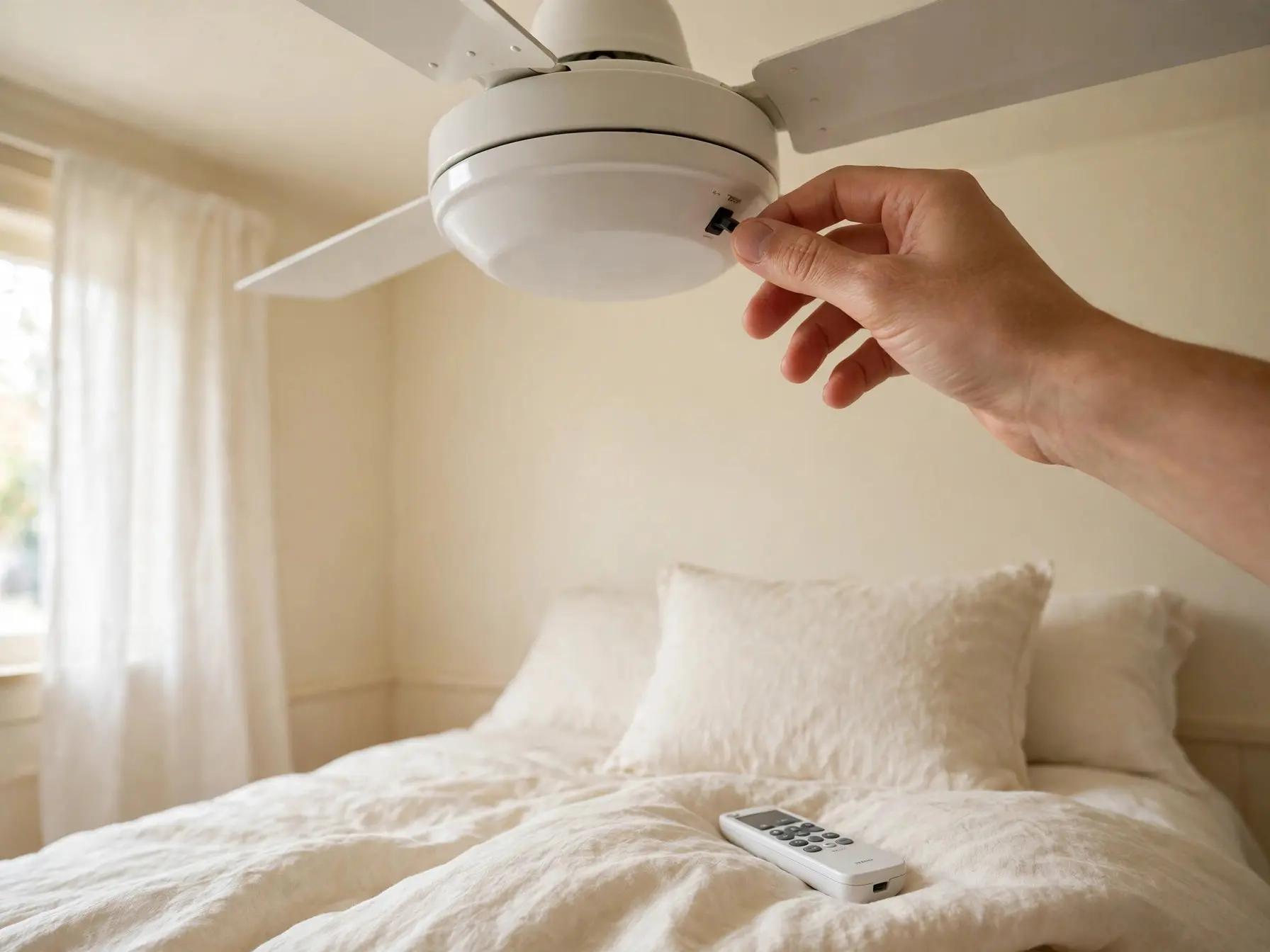
Before you switch the fan on, set the direction for the season. In summer the blades should spin counterclockwise, pushing cool air down toward you; in winter they should spin clockwise on a low speed, pulling cool air up and pushing the warm air trapped at the ceiling gently back down the walls. Find the small slide switch on the motor housing — or the reverse button on the remote — and set it. Then switch the fan on at low speed first and check that nothing rattles: a clean fan should run quiet and smooth.
- Counterclockwise in summer, clockwise in winter
- Use the slide switch on the housing or the remote
- Start on low speed and listen for rattles
Pillowcase vs duster vs vacuum brush: which tool to use
All three tools remove dust from a ceiling fan, but only one keeps it off the floor. If you want the fan on a regular rhythm, add it to your home maintenance checklist so the monthly wipe and the seasonal direction flip never slip your mind.
| Tool | Dust control | Reach | Best for |
|---|---|---|---|
| Old pillowcase | Best — dust stays trapped inside the case | Arm’s length from a step stool | Bedroom and living-room fans you clean by hand |
| Extendable duster | Poor — most dust falls to the floor | Up to 5 feet from the floor | Quick dusting between deep cleans, high ceilings |
| Vacuum brush attachment | Good — dust goes straight into the vacuum | As far as the hose and wand reach | Very dusty fans and allergy households |
The rule behind the table is simple: if the dust has to go somewhere, make it go into the pillowcase or the vacuum — not onto the bed below. Use the duster only for a quick dusting between proper cleans.
How often to clean a ceiling fan
A ceiling fan over a bed collects dust faster than any other fixture in the room, because you sleep under it every night. Use this rhythm, and tie the seasonal direction flip to your cleaning routine so both happen twice a year.
- Bedroom fans: once a month.
- Living rooms and other rooms: every 2 to 3 months.
- Kitchen fans: every 2 weeks, because cooking grease makes dust stick.
- Flip the direction every spring and autumn, and wipe the blades at the same time.
Questions, answered
How often should you clean a ceiling fan?
Once a month in the bedroom and every two to three months elsewhere is a good rhythm — dust builds fastest over a bed, where you breathe it all night. Kitchen fans need it every two weeks, because cooking grease makes the dust stick and stain. If you can see a gray edge on the blades from the floor, you are overdue. A monthly pillowcase wipe takes about ten minutes and keeps the dust from ever getting thick enough to rain down.
Can you clean a ceiling fan without a ladder?
Yes, if you can reach the blades safely from the floor with an extendable duster — but the dust will fall, so lay a sheet over the bed and furniture first and vacuum after. A long-handled duster with a microfiber head works for a light monthly dusting. For a proper clean, though, a step stool is worth it: the pillowcase method only works when you can slide the case over each blade by hand, and that needs you close to the fan.
Should a ceiling fan spin clockwise or counterclockwise in winter?
Clockwise in winter, on a low speed. Spinning clockwise pulls cool air up toward the ceiling and pushes the warm air that collects up there gently back down along the walls, so the room feels warmer without raising the heating. In summer, switch it back to counterclockwise, which pushes air straight down and creates the cooling breeze. Flip the small switch on the motor housing — or the reverse button on the remote — each spring and autumn.
How do you clean a greasy kitchen ceiling fan?
Wipe the blades first with the dry pillowcase method to remove the loose dust, then go over them with a cloth dampened in warm water with a drop of dish soap — grease needs soap, not just water. For stubborn film, leave a soapy cloth draped over the blade for five minutes, then wipe and dry. Never spray cleaner directly onto the fan: it can drip into the motor. Clean a kitchen fan every two weeks so the grease never bakes into a sticky layer.
Keep reading
A clean fan is one piece of a home that stays clean on a schedule. Our guide to how to clean a shower head tackles the other fixture that quietly scales up, how to clean a washer covers the appliance that needs the same treatment, home maintenance checklist puts every filter, vent and seal on a rhythm, and cleaning schedule for home turns the whole routine into a weekly habit so nothing gets forgotten.
Fifteen minutes, one old pillowcase, and the dustiest fixture in the room is clean — with nothing raining onto the bed below. Put it on a monthly rhythm, flip the direction with the seasons, and the fan will move clean air instead of the dust it has been spinning over your head.