To get rid of fruit flies, remove what they’re breeding in — overripe fruit, recycling residue and drain biofilm — then trap the adults with apple cider vinegar and a drop of dish soap; most infestations clear within one to two weeks.
Thank you for reading this post, don’t forget to subscribe!Part of our guide: How to Declutter Your Home: A Simple Room-by-Room Plan
This guide shows how to get rid of fruit flies in five steps, in order: work out which fly you have, remove the breeding sites, trap the adults, clean the drains, and lock in the habits that stop them coming back. Everything here uses things most kitchens already have, and nothing needs a spray or a special product.
What you’ll need
- Apple cider vinegar
- Washing-up liquid (one drop)
- A small jar or glass, cling film and an elastic band — or a paper funnel
- Bicarbonate of soda and white vinegar for the drains
- A long-handled bottle brush or an old toothbrush
- A kettle of boiling water
- Bin bags, a cloth and a lidded bin
The five steps
Work through these in order. The first step decides which fix works, the second is the one that actually ends the infestation, and the last three clear the flies that are already flying and keep them from returning.
Step 1: Identify the fly: fruit fly or drain fly?

Before you trap anything, work out which fly you have, because the two kinds need different fixes. Fruit flies are small and tan with red eyes, and they hover in little clouds over fruit, bins and glasses. Drain flies are darker and fuzzy, look like tiny moths, and spend most of their time resting on the wall near a sink, bath or shower. Watch where they gather for a day: if they hover over the fruit bowl or the bin, they are fruit flies; if they sit on the wall by the drain and only hop short distances, they are drain flies. The table below sets out the differences side by side. Getting this right first saves a week of trapping the wrong insect — a vinegar trap will not clear drain flies, and scrubbing the drain will not clear fruit flies that are breeding in a forgotten onion.
Time: 1 day of watching.
Step 2: Remove the breeding sites
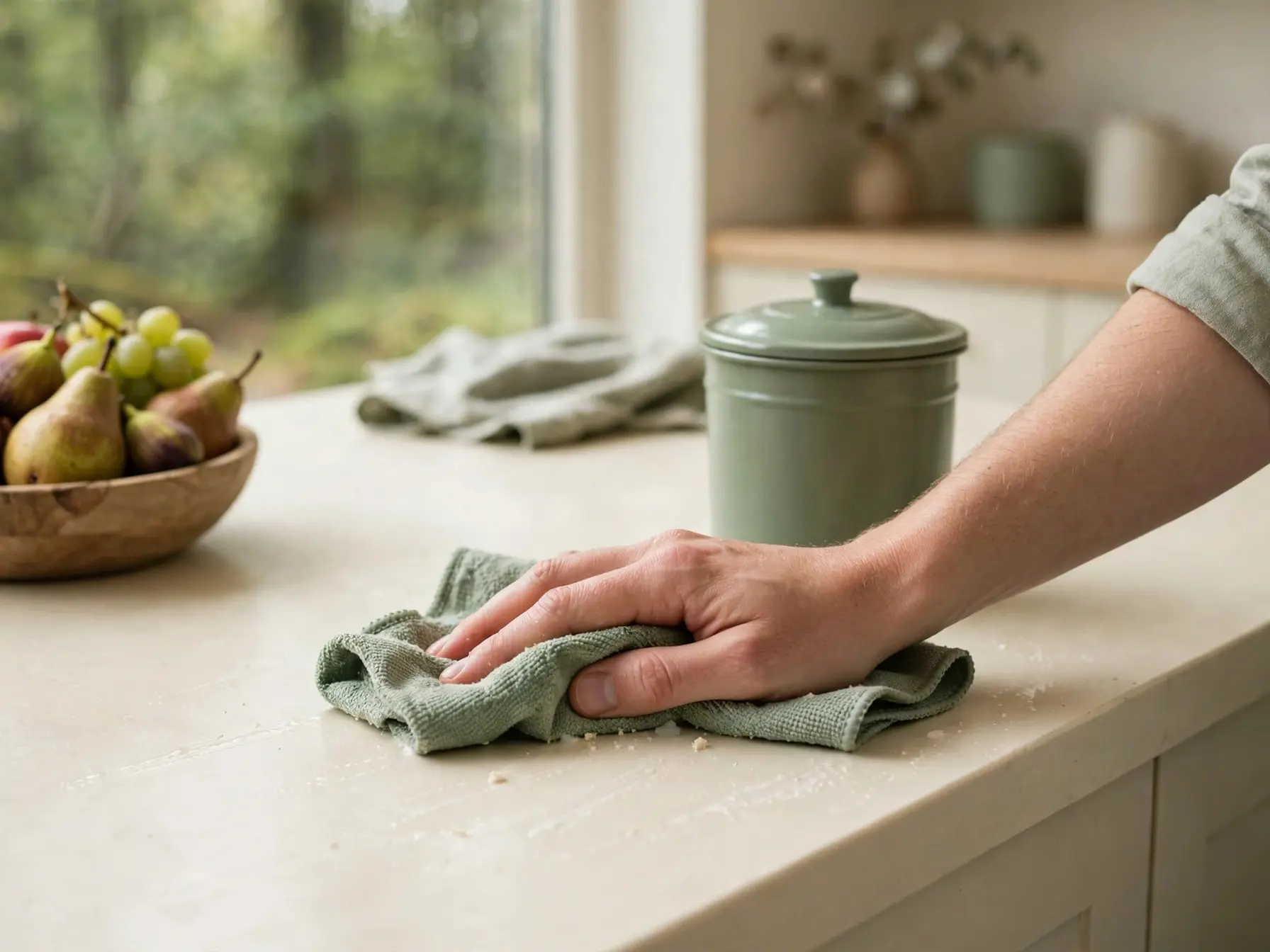
Fruit flies breed wherever food is fermenting, so the first job is to take all of it away. Throw out any overripe or soft fruit and vegetables, including the ones at the bottom of the bowl you forgot about. Empty the bin, wipe it out and put in a fresh bag. Take the recycling out and rinse any jar, bottle or tin that held juice, wine or sugary drinks before it goes back in the box. Wipe the counters, the hob and the floor under the bin, and check the spots people miss: the spill dried under the fridge, the onion or potato gone soft in the cupboard, the damp mop head and the sponge by the sink. If the kitchen still has one breeding site left, the flies keep coming — this step is the one that actually ends the infestation, and the trap in the next step only deals with the adults already flying.
Time: 20–30 minutes.
Step 3: Set the apple cider vinegar trap
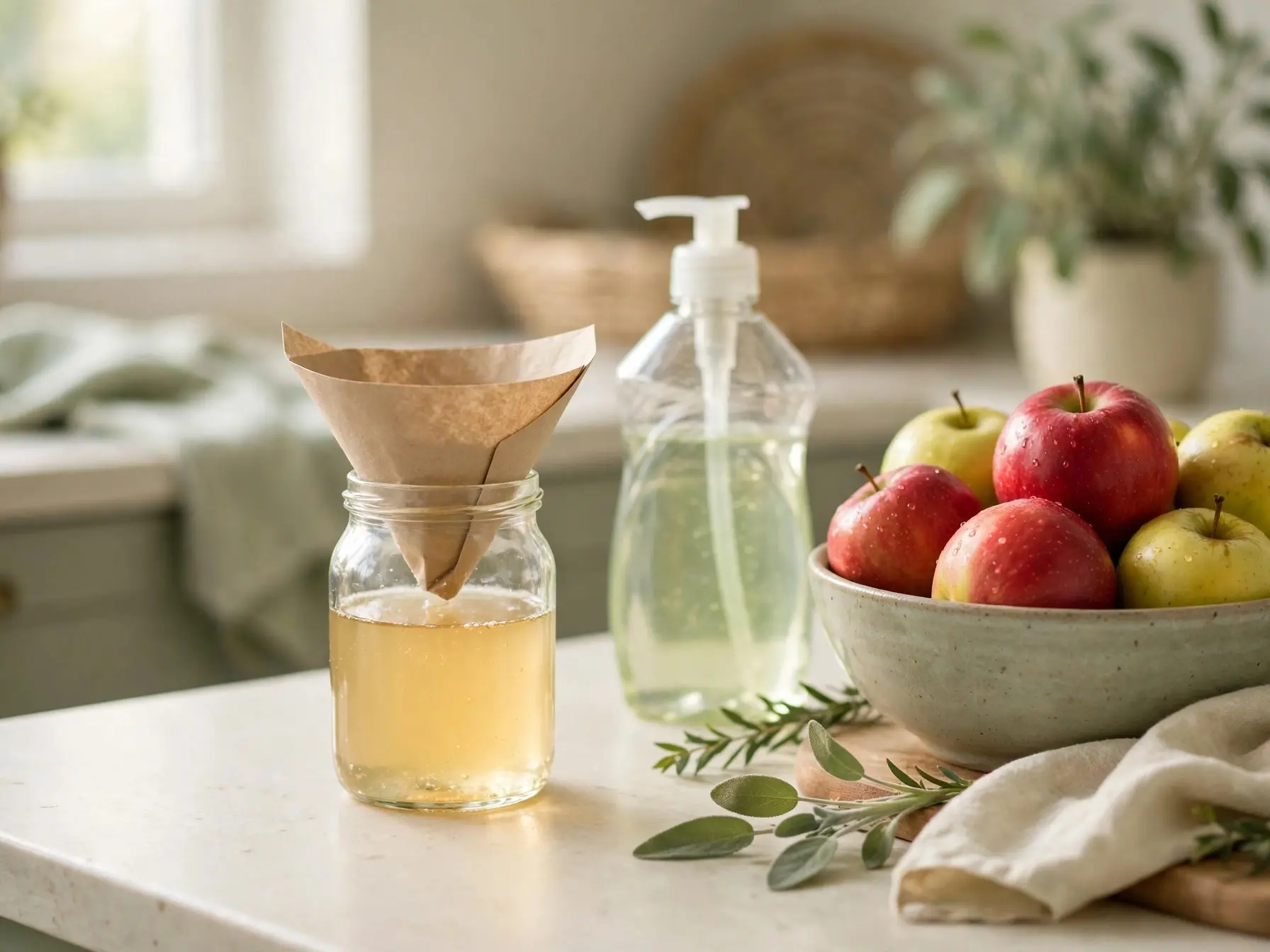
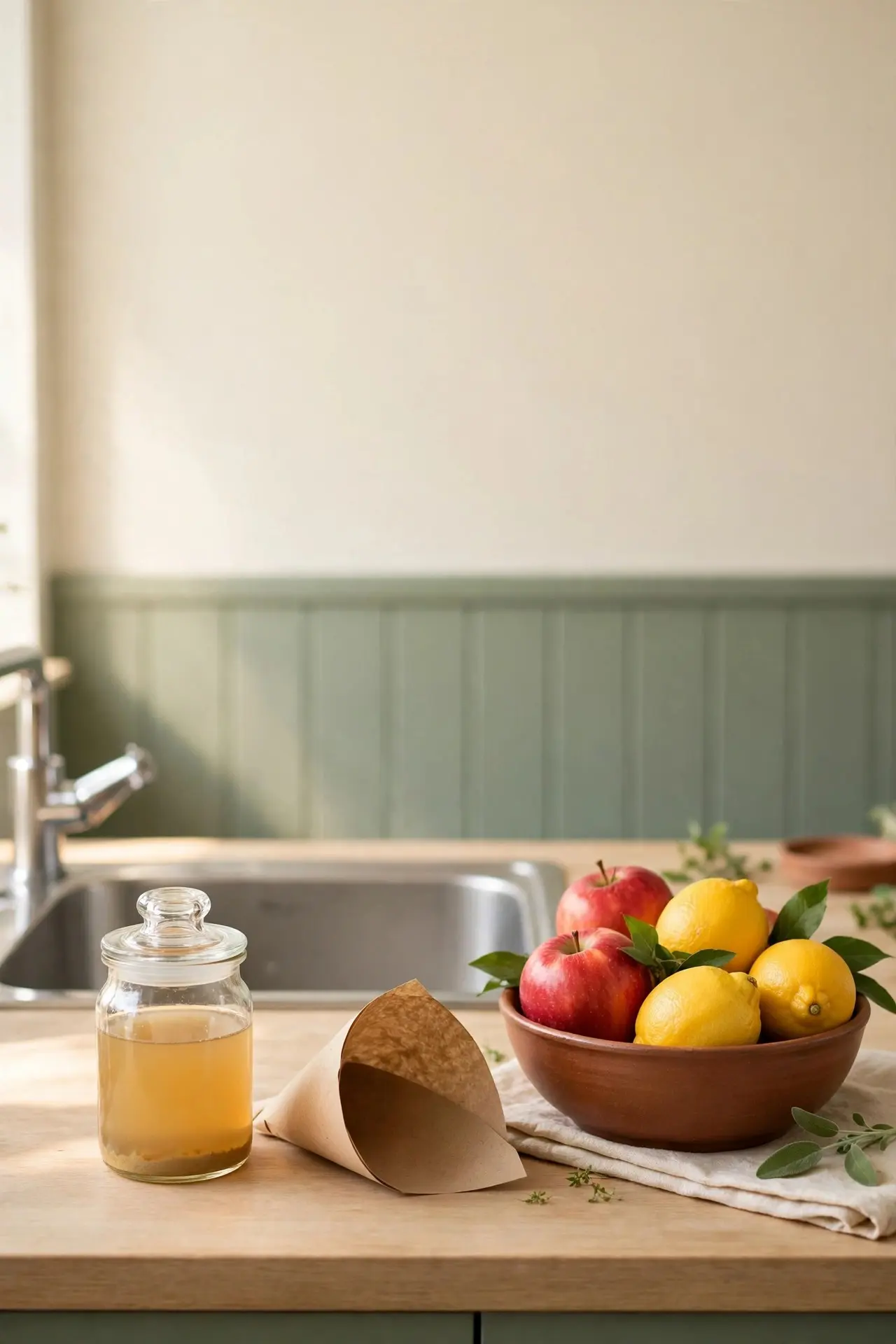
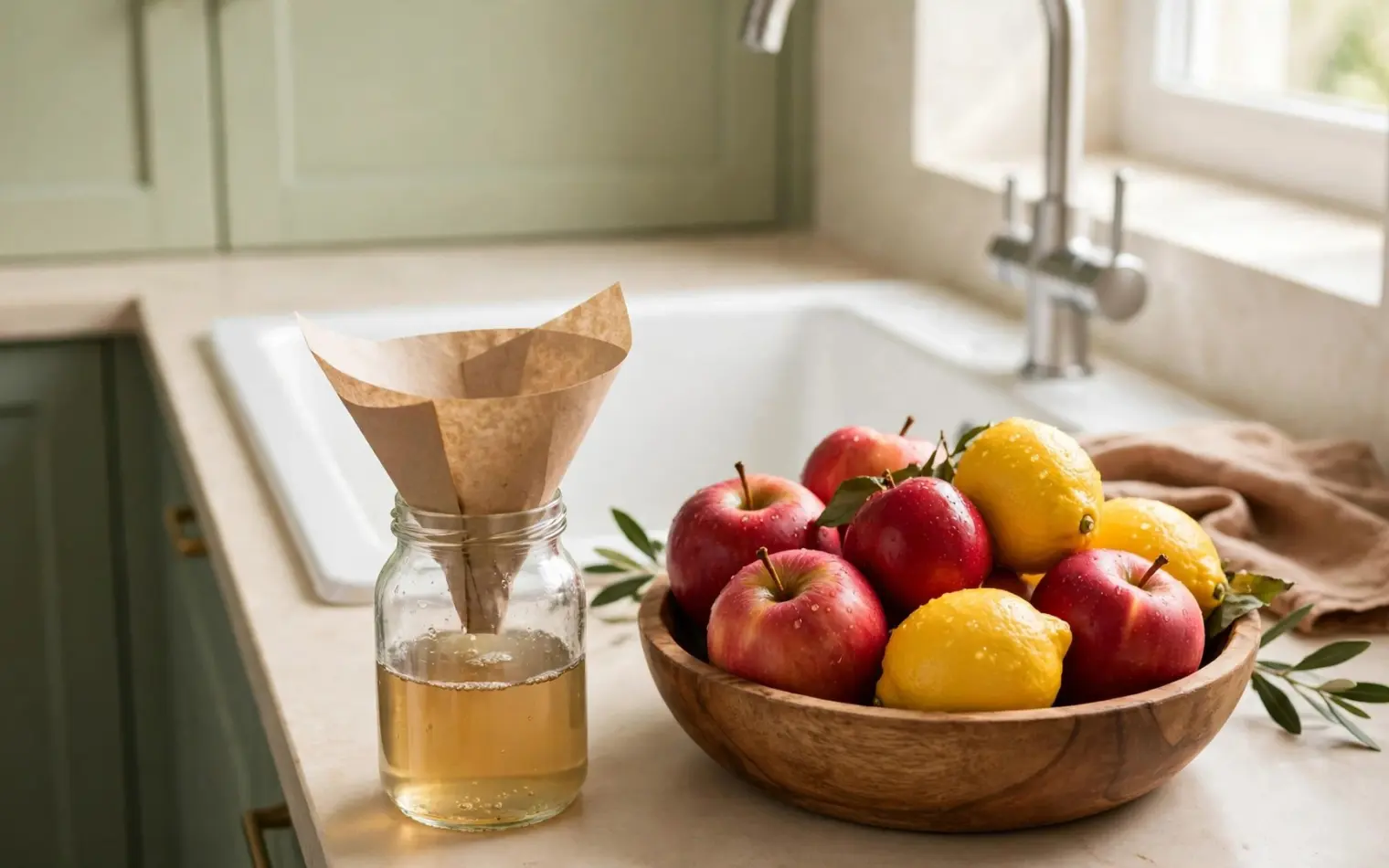
With the breeding sites gone, trap the adults that are still flying. Pour about 5 cm of apple cider vinegar into a small jar or glass, add one drop of washing-up liquid, and cover the top with cling film held by an elastic band — then poke a few small holes in the film with a toothpick. The vinegar smell draws the flies in through the holes, and the washing-up liquid breaks the surface tension so they sink instead of landing on the liquid and flying off again. A paper funnel rolled into the jar neck works just as well if you have no cling film. Put the trap where the flies gather — beside the fruit bowl or the sink — and leave it alone. Empty and refill it every two or three days, or when it stops catching. One trap is enough for a small kitchen; use a second one by the bin if the cloud is large.
Time: 5 minutes to set up.
Step 4: Clean the drains: scrub the biofilm, then flush
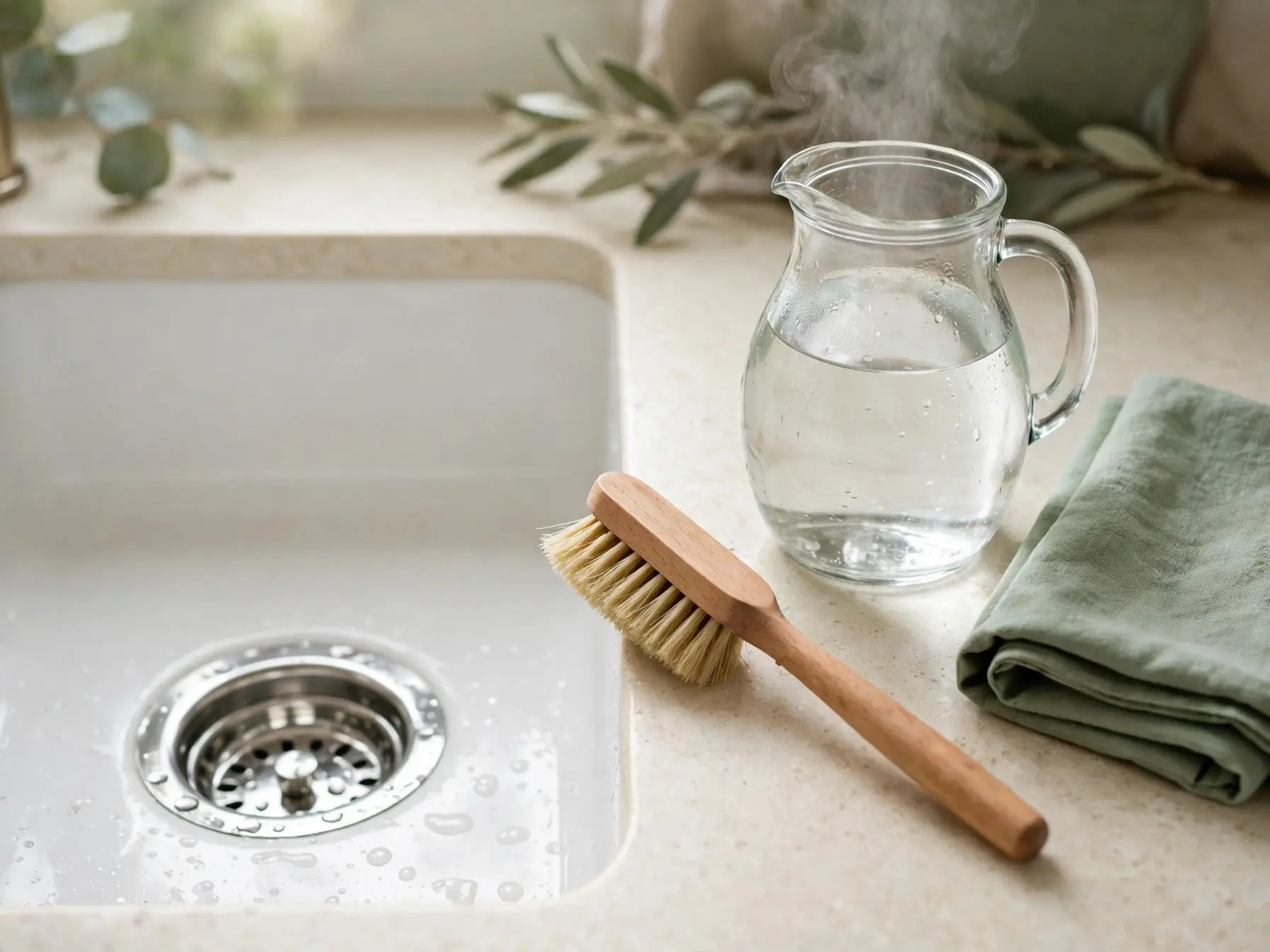
If flies are still appearing after the trap and the clear-out, the drain is almost certainly the breeding site. Fruit flies and drain flies both lay eggs in the slimy layer of food and grease — biofilm — that coats the inside of a drain, and pouring cleaner down the plughole does not remove it: the film has to be scrubbed off. Push a long-handled bottle brush or an old toothbrush as far down the drain as it will go and scrub the sides, then flush with a kettle of boiling water. Follow with half a cup of bicarbonate of soda and a cup of white vinegar, leave it to fizz for fifteen minutes, then flush again with boiling water. Do every drain in the room — the kitchen sink, the dishwasher drain and any rarely used sink — and repeat the flush once a week for a month. A drain that is truly clean has no film left for eggs to stick to.
Time: 15 minutes, plus a weekly flush.
Step 5: Keep them away: the habits that stop them returning

Once the flies are gone, five small habits keep them gone. Store ripe fruit in the fridge or in a sealed container rather than in an open bowl, and use up the softest pieces first. Wipe the counters and the hob every evening so no sugary film dries overnight. Take the bin and the recycling out before they are full, and rinse jars and bottles before they go in the recycling. Swap the kitchen sponge and wring out the mop head so neither sits damp, and flush rarely used drains with boiling water once a week. None of these takes more than a minute or two, and together they remove every breeding site a fruit fly needs. If a few flies appear again — after a shop, or in a hot week — set the vinegar trap out for two days and the cycle stops before it starts.
Time: 2 minutes a day.
Fruit fly vs drain fly: how to tell them apart
If the flies are still a mystery after watching them for a day, this table settles it. Match what you see against the two columns — the breeding site row is the one that decides the fix.
| Feature | Fruit fly | Drain fly |
|---|---|---|
| Size | About 3 mm long | About 2–5 mm long |
| Colour and eyes | Tan body, red eyes | Dark grey, fuzzy, moth-like |
| Wings | Clear, held flat over the back | Broad, held roof-like over the body |
| Where you see them | Hovering in small clouds over fruit, bins and glasses | Resting on the wall near a sink, bath or shower |
| Breeding site | Fermenting fruit, sugary residue, recycling | The slimy biofilm coating the inside of a drain |
| When they are active | Daytime, drawn to light and food smells | Mostly at night, weak fliers that hop more than fly |
| The fix that works | Remove the food source, then trap the adults | Scrub and flush the drain — traps alone will not clear them |
If your flies match the fruit fly column, the food source is the problem — start with step 2. If they match the drain fly column, skip the trap and go straight to step 4: only scrubbing the drain will clear them.
Questions, answered
What attracts fruit flies into a kitchen?
The smell of fermenting fruit and vegetables — a banana going soft on the counter, a tomato past its best, juice or wine residue in a glass left in the sink. They also follow sugary residue in recycling, in the bin and around the drain. Most arrive through an open window or door, or ride in on shop-bought fruit, so a kitchen can have them even when it looks clean.
How long does it take to get rid of fruit flies?
Most infestations clear within one to two weeks once the breeding sites are gone and a trap is catching the adults. Adult fruit flies only live for about a week or two, so the cycle breaks quickly when no new eggs are laid — but if the drain or the bin still holds residue, a new generation keeps appearing and the count never drops.
Why do I have fruit flies when there’s no fruit out?
Because fruit is only one breeding site. Fruit flies also breed in drain biofilm, in the residue at the bottom of the recycling bin, in a damp mop or sponge, in a forgotten onion or potato, and in a spill dried under the fridge or the bin. If the trap keeps catching flies but nothing is out on the counter, check the drain first — it is the most common hidden site.
What’s the difference between fruit flies and drain flies?
Fruit flies are small and tan with red eyes, and they hover in little clouds over fruit, bins and glasses. Drain flies are darker and fuzzy, look like tiny moths, and rest on the wall near a sink or shower rather than hovering. They breed in different places too — fermenting food for fruit flies, the slimy biofilm inside a drain for drain flies — so telling them apart decides which fix works.
Keep reading
For the weekly rhythm that keeps the kitchen from reaching this point, our cleaning schedule for the home sets out the daily, weekly and monthly jobs in order. The same act-fast logic works on laundry: how to get stains out of clothes covers twelve common stains, each with its treat-now method. And for the drains, filters and vents that sit behind the kitchen, the home maintenance checklist runs the monthly and seasonal jobs that stop small problems growing.
Start today: clear the fruit bowl, set the trap, and give the drain a scrub. In a week or two the kitchen is quiet again — and the five habits in step 5 keep it that way.