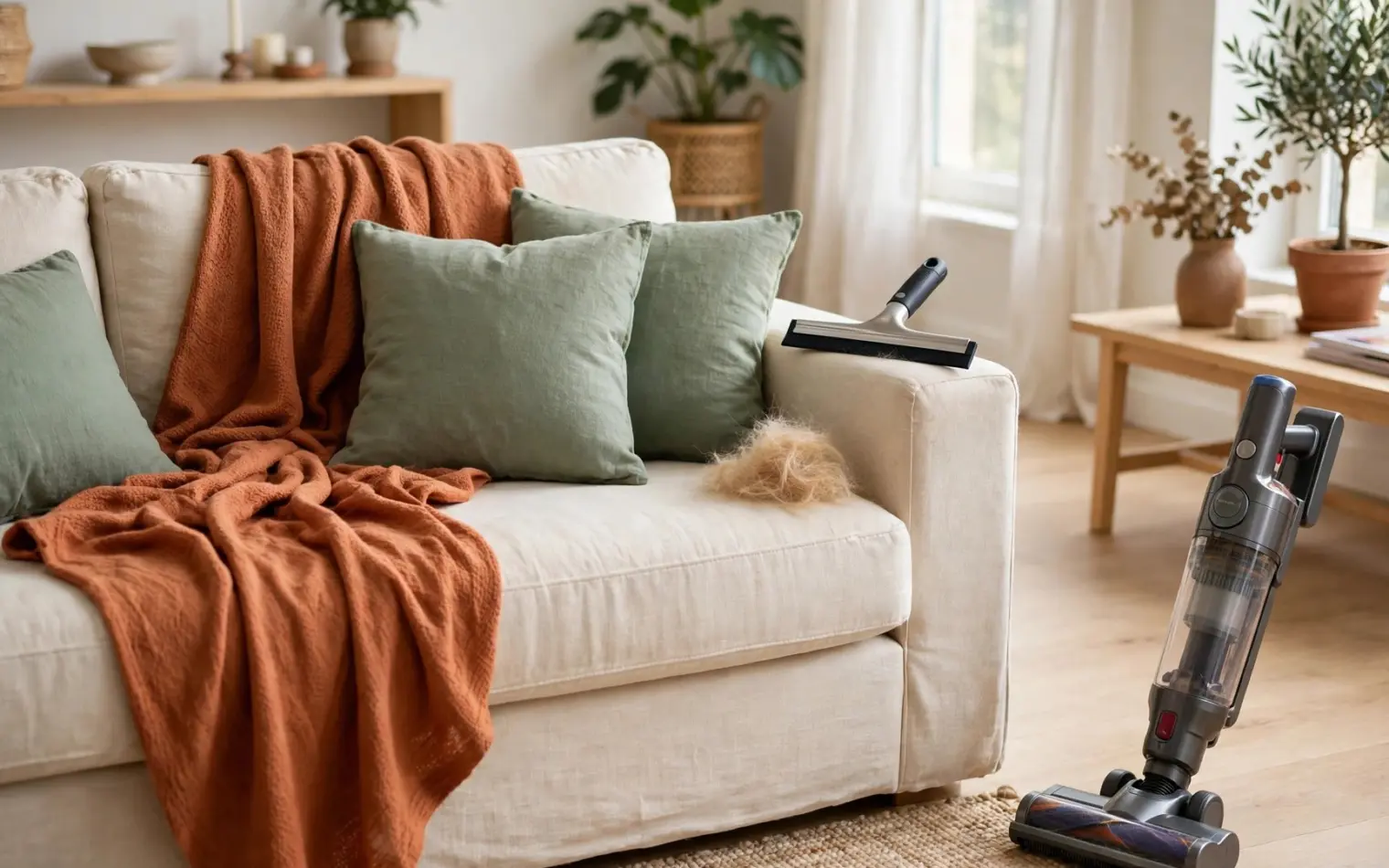
Remove pet hair with the tool matched to the surface: a rubber squeegee or brush on carpet and upholstery, an electrostatic roller on furniture, a damp rubber glove on clothes, and a vacuum with a pet attachment for the deep clean.
Thank you for reading this post, don’t forget to subscribe!Pet hair is not one problem — it is five, one per surface, and the tool that works on the sofa fails on the carpet. The system below matches the tool to the surface, in the order that wastes the least effort: dry work first, the vacuum last, and the laundry routine that keeps hair from coming straight back.
The surface-by-surface system
Work through the surfaces in this order — sofa, carpet, hard floors, clothes, car — because each one uses a different tool, and starting with the vacuum on any of them leaves hair behind. Every step below takes five to ten minutes once you know the motion.
1. Sofa and upholstered furniture: squeegee first, roller second
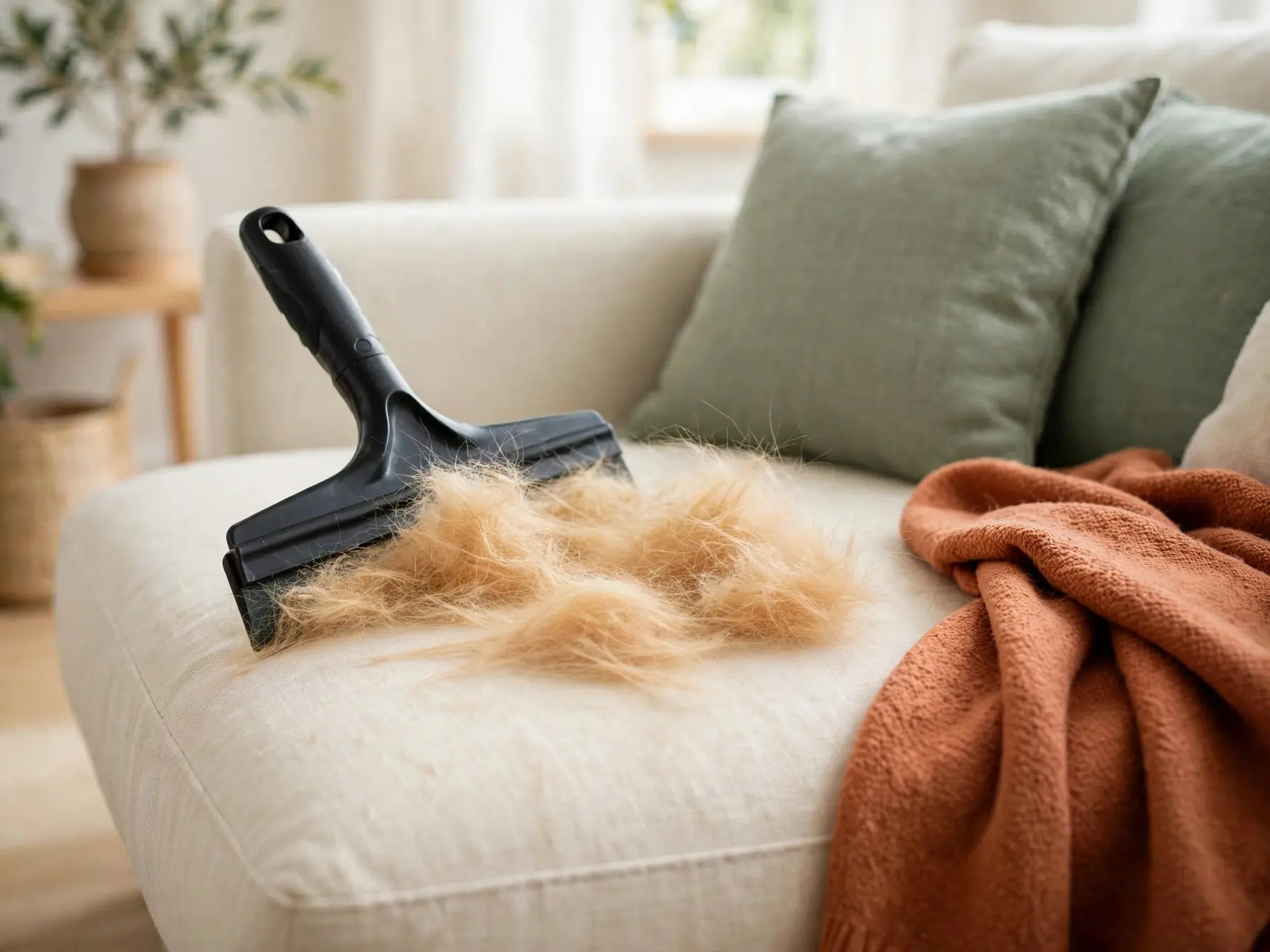
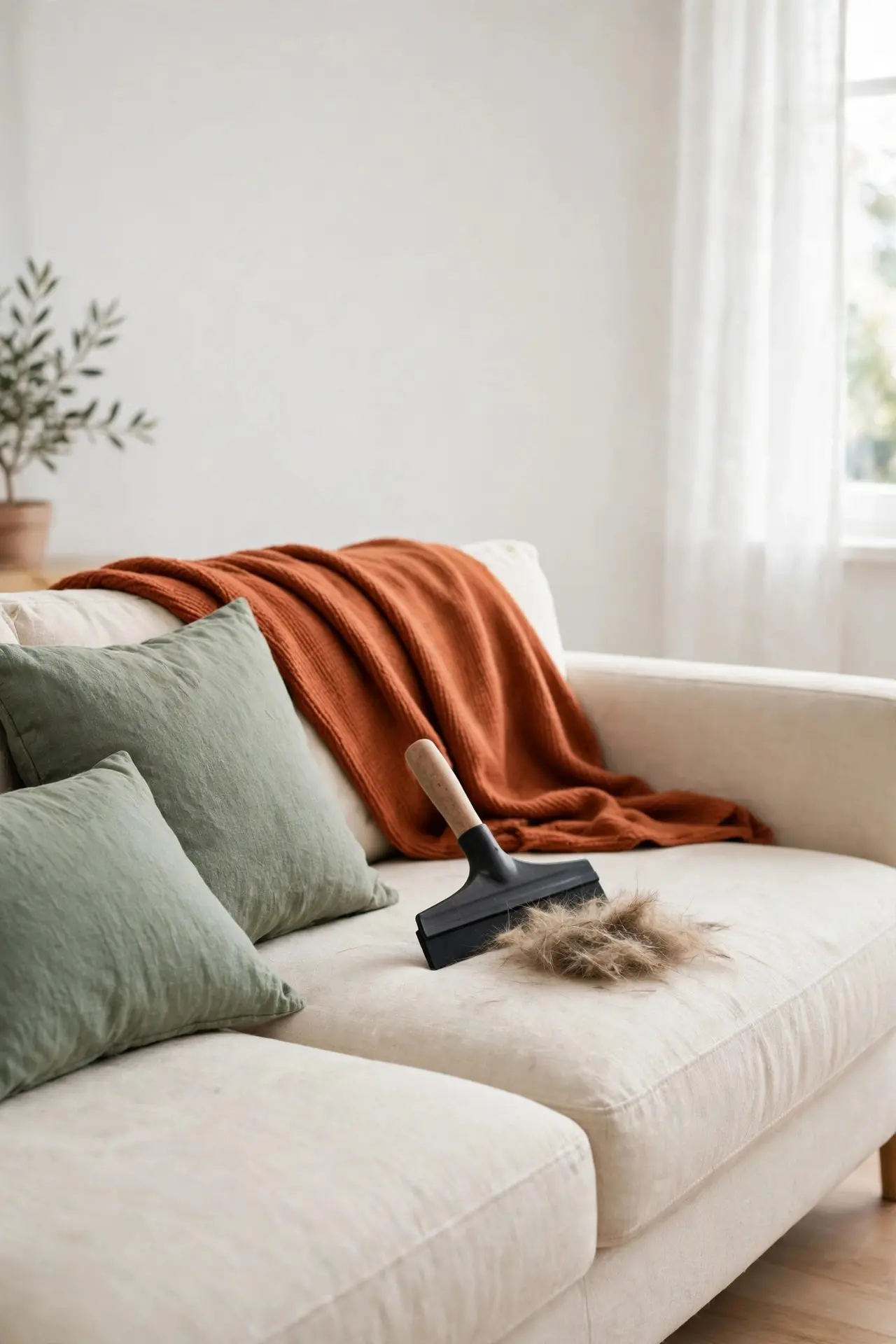
Start dry, and start with the squeegee. Drag a rubber squeegee across the cushion in short strokes, always in the same direction, and the hair rolls into a neat line you can lift off by hand. A damp cloth or a lint roller just moves the top layer around; the rubber edge grips the hair woven into the weave and pulls it out. Follow with an electrostatic roller for the fine stragglers, working cushion by cushion so you can see what is clean and what is not. Finish by running the vacuum's upholstery attachment over the seams and under the cushions, where hair collects out of sight.
- Work on dry fabric — wet hair smears
- Short strokes, always in one direction
- Lift the rolled hair off by hand, then roll again
2. Carpet: a rubber edge, then the vacuum
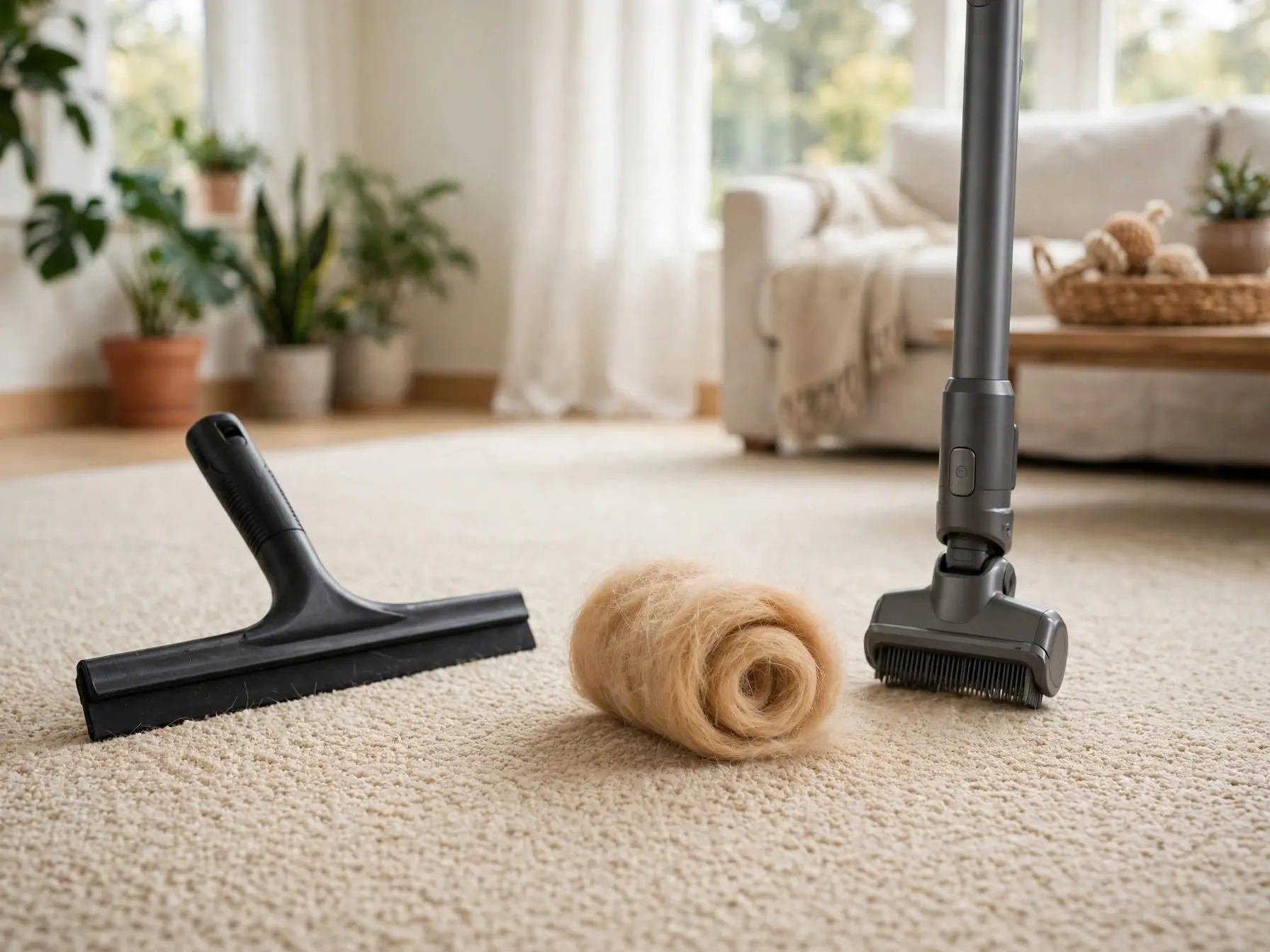
Carpet is the hardest surface in the house, because the pile holds hair like a trap. Do not start with the vacuum — start with a rubber squeegee or a stiff rubber brush, dragged across the carpet in firm, short strokes. The rubber pulls hair out of the pile and rolls it into a visible line, and you will be surprised how much a vacuum alone leaves behind. Pick the line up by hand, then vacuum slowly in overlapping passes with the pet attachment, going in two directions so the brush bar reaches hair lying both ways. Empty the bin before it is half full, or suction drops and hair stays put.
- A rubber squeegee or rubber brush first
- Vacuum slowly — two passes, overlapping
- Empty the vacuum bin before it is half full
3. Hard floors: sweep it into a line, then mop
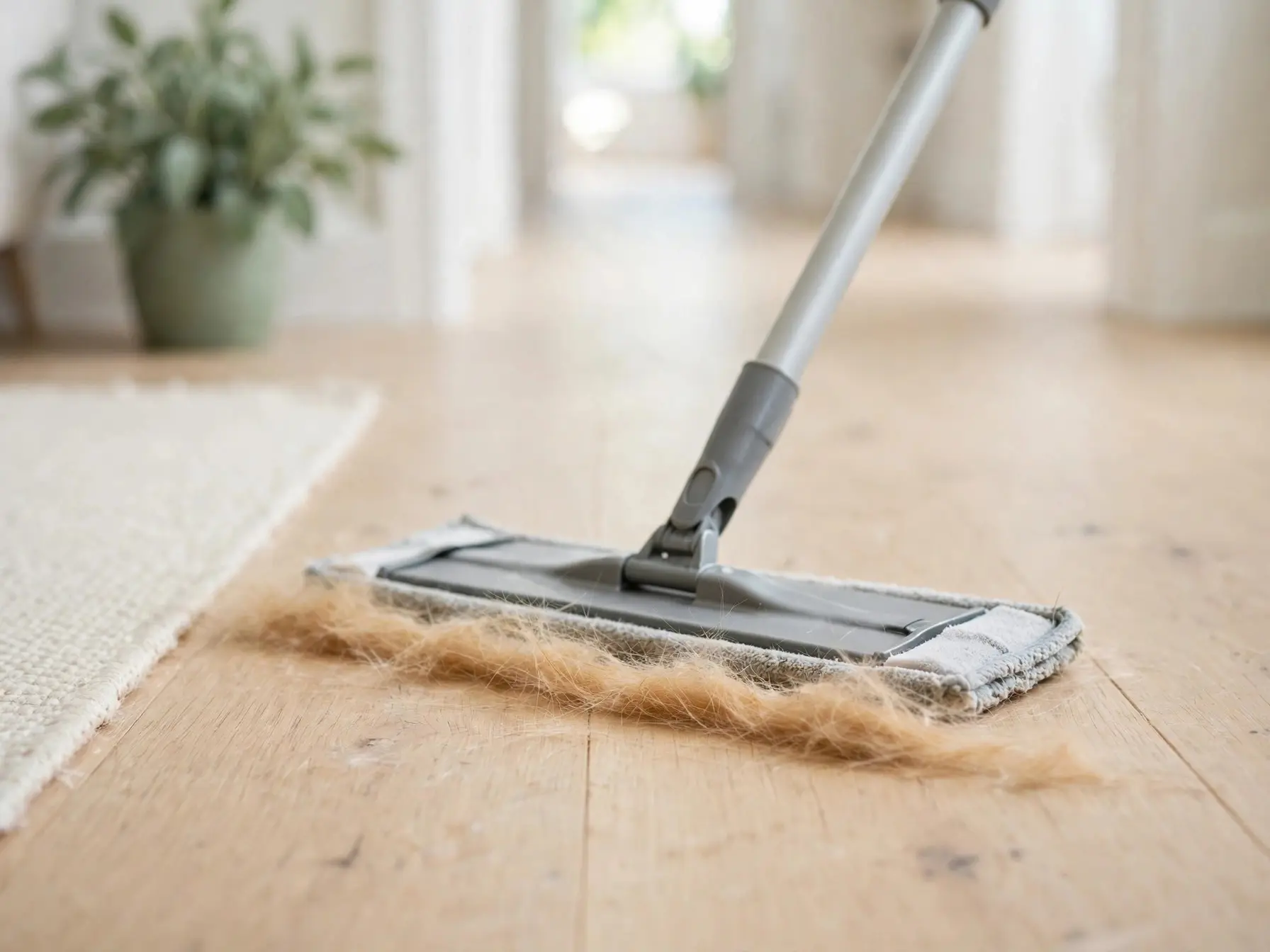
Hard floors are the easiest surface — if you work in the right order. Start with a dry dust mop or an electrostatic sweeper, which grabs hair with static instead of pushing it around like a broom does. Work the hair into one line along the baseboard, then pick it up. Only then damp-mop: mopping first turns loose hair into wet clumps that stick to the floor and smear into corners. In shedding season, a two-minute daily pass keeps hair from drifting under furniture and into rug edges, where it mats down and becomes a much bigger job. Keep the dust mop by the door so the quick pass actually happens.
- A dry dust mop or electrostatic sweeper
- Gather hair into one line before you mop
- Damp-mop last — never mop dry hair around
4. Clothes and laundry: glove first, dryer second
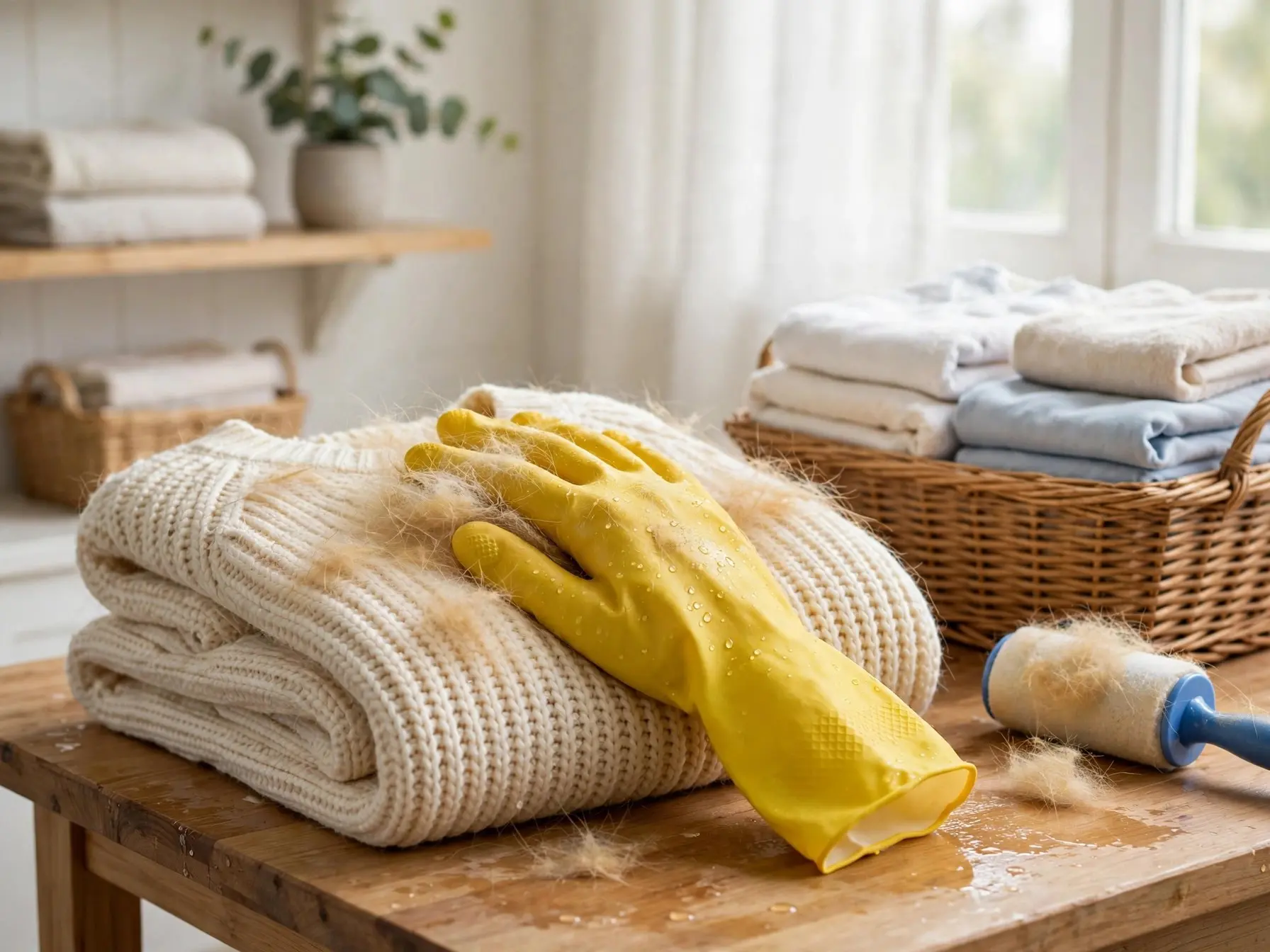
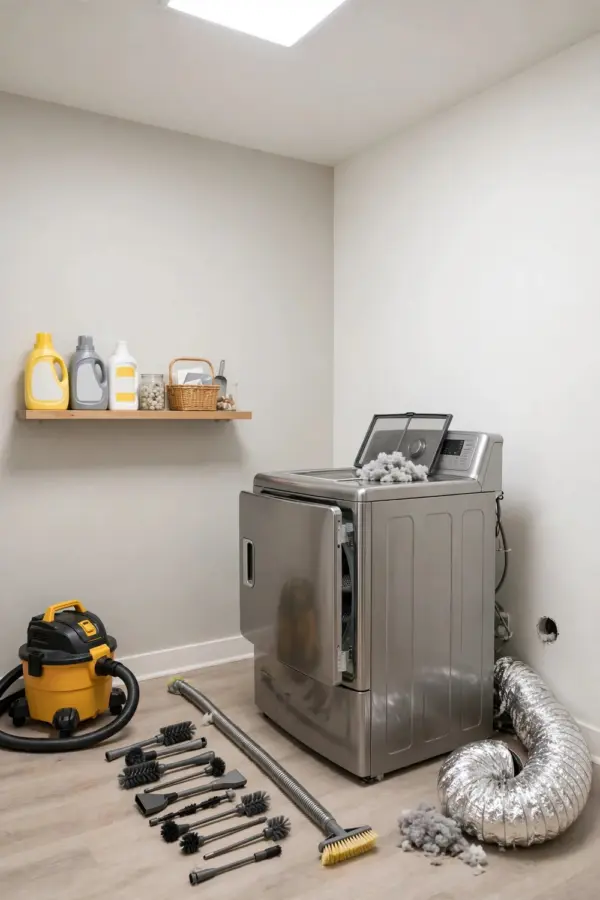
Clothes need the glove before the machine. Put on a damp rubber glove and wipe it down each garment — the moisture makes hair ball up so you can peel it off in one piece, and it works on knitwear and fleece that a lint roller just skims. Shake everything outside before it goes in the washer, then add half a cup of white vinegar to the rinse cycle to cut the static that makes hair cling. Tumble dry on low with a wool dryer ball: the tumbling knocks loose hair into the lint trap instead of pressing it into the fabric. Clean the lint trap and the washer filter after every pet load.
- Shake items outside before the wash
- Half a cup of white vinegar in the rinse
- Tumble dry low with a wool dryer ball
5. Car interior: brush, vacuum, then cover the seats
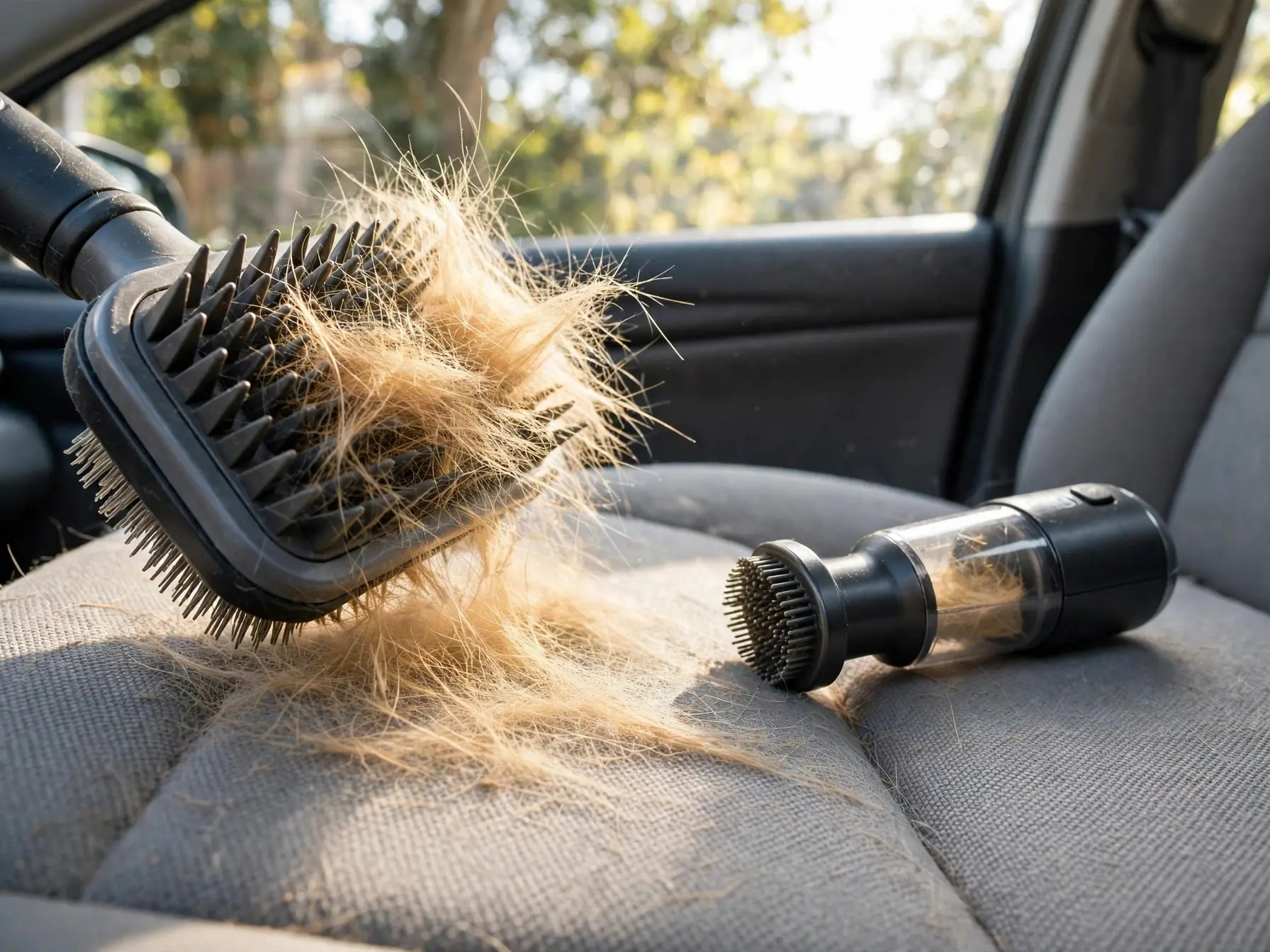
Car seats are upholstery in a small, hot box — and the fabric holds hair even harder than a sofa. Work dry with a stiff rubber brush, dragging it across the seat in short strokes until the hair rolls into a line, then lift it off. Follow with a handheld vacuum or the car vacuum's pet attachment, using the crevice tool in the seams and along the seatbelt anchors, where hair packs in tight. For pet bedding and blankets that travel in the car, shake them out before they go back in. Then fit a washable seat cover: it will not stop the hair, but it turns the next clean into a thirty-second shake-out instead of another full session.
- A rubber brush for seats and carpet mats
- Vacuum with the crevice tool in the seams
- A washable seat cover stops the next round
Why pet hair sticks — and the routine that breaks the cycle
Hair sticks because of static and wet fibers. Dry hair clings to dry fabric with static; once it is wet, the fibers grip it and the washer presses it deeper instead of rinsing it away. That is why the order matters: remove the hair dry, wash with vinegar in the rinse to cut the static, and dry with a ball that knocks the last of it into the lint trap.
The routine that keeps it from building up again is small: brush the pet outside for two minutes a day during shedding season, run the squeegee over the sofa once a week, sweep hard floors daily, and wash pet bedding every week. Ten minutes spread across the week beats an hour-long deep clean every month — and the hair never gets the chance to mat into the carpet pile.
The tool comparison: which tool for which surface
If you buy one tool first, make it the rubber squeegee — it is the cheapest and it works on the two hardest surfaces. The table below is the quick reference: find your surface, take the tool, and check whether it is worth buying or borrowing.
| Tool | Best surface | Cost | Reusable? |
|---|---|---|---|
| Rubber squeegee | Carpet and upholstery | Under $10 | Yes — rinse and reuse |
| Electrostatic roller (ChomChom-style) | Sofas, cushions and pet beds | $20–$30 | Yes — empty the chamber |
| Rubber brush | Car seats, stairs and tight corners | Under $15 | Yes — rinse and reuse |
| Vacuum with pet attachment | Carpet deep clean and whole house | $150+ (or the attachment alone) | Yes — empty the bin |
| Damp rubber glove | Clothes, lampshades and small items | Under $5 | Yes — rinse and reuse |
The rule behind the table is simple: rubber grips hair, rollers lift it, and the vacuum finishes what both leave behind. Buy the squeegee first, add the roller for sofas, and let the vacuum do the deep clean — not the first pass.
Questions, answered
What is the best tool to remove pet hair from a couch?
A rubber squeegee does the heavy lifting on a couch: drag it across the cushion in short strokes and the hair rolls into a line you can lift off by hand. Follow with an electrostatic roller for the hair woven into the weave, and finish with a vacuum upholstery attachment once a week to pull out what the tools leave behind.
How do I get pet hair out of laundry?
Shake each item outside before it goes in the machine, then add half a cup of white vinegar to the rinse cycle — it cuts the static that makes hair cling. Tumble dry on low with a wool dryer ball, which knocks loose hair into the lint trap, and clean the trap and the washer filter after every pet load.
Why does pet hair stick to clothes in the wash?
Wet fibers grip hair, and the washer's agitation presses it deeper into the weave instead of rinsing it away. Static makes it worse: dry hair clings to dry fabric, and the wash cycle swaps one kind of cling for another. Vinegar in the rinse and a dryer ball in the dryer break the cycle by cutting static and shaking the hair loose.
How often should you vacuum with a shedding pet?
With a heavy shedder, vacuum high-traffic carpet three to four times a week during shedding season, and twice a week the rest of the year. Hard floors need a quick daily sweep or dust-mop pass, because hair drifts and resettles fast. Furniture gets a squeegee pass once a week, and pet bedding goes through the wash weekly.
Keep reading
Pet hair is one part of a home that stays clean on a schedule. Our guide to how to clean a washer keeps the machine that handles the pet laundry free of hair and odor, cleaning schedule for home puts every cleaning job — including the weekly squeegee pass — on a rhythm so nothing gets forgotten, and declutter your home room by room clears the surfaces hair loves to settle on. Start with the squeegee, then let the routine spread.
Five surfaces, five tools, one order: dry first, vacuum last, laundry routine every week. Do it that way and the hair never gets ahead of you — and the only golden pile in the living room will be the one you just rolled up on purpose.