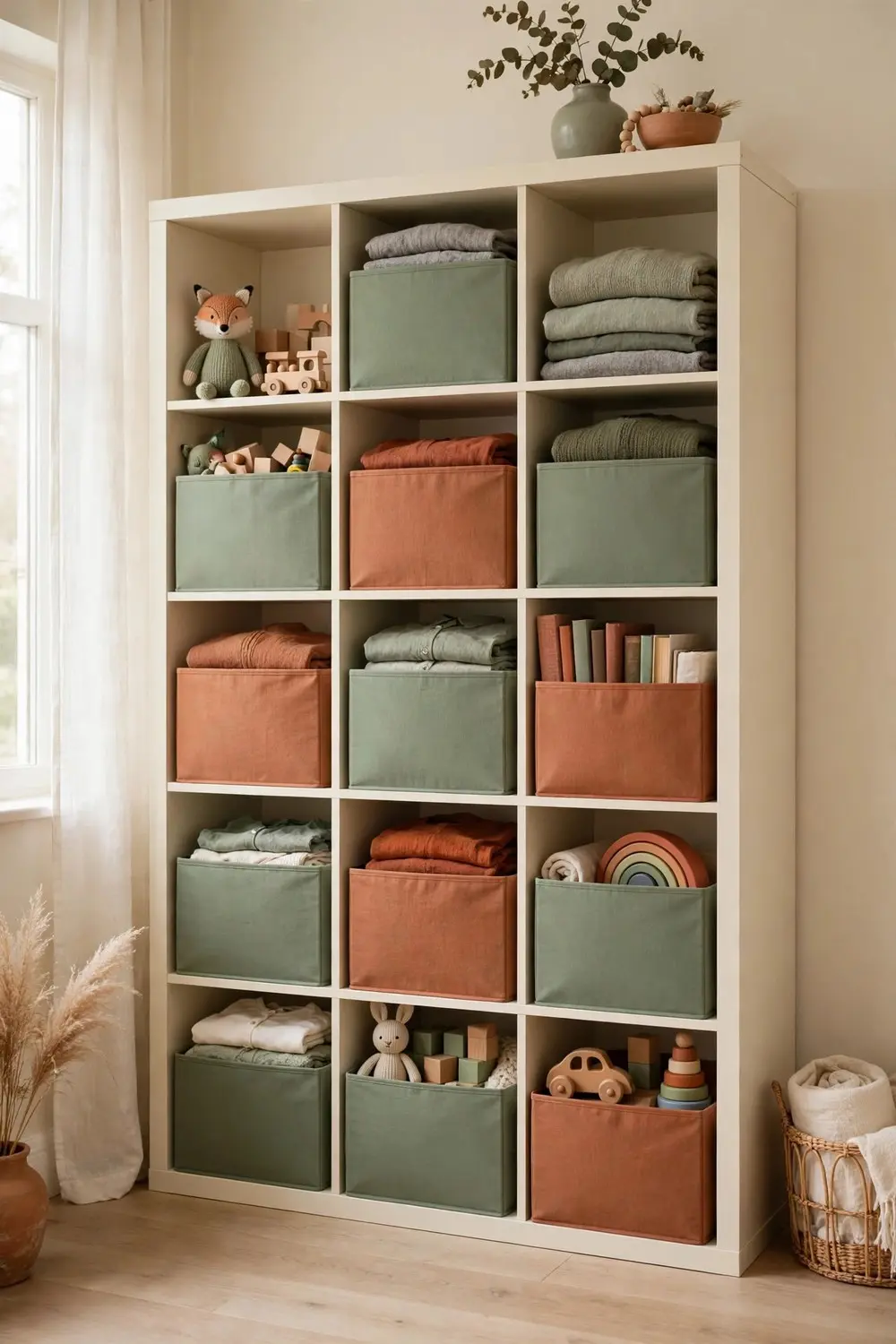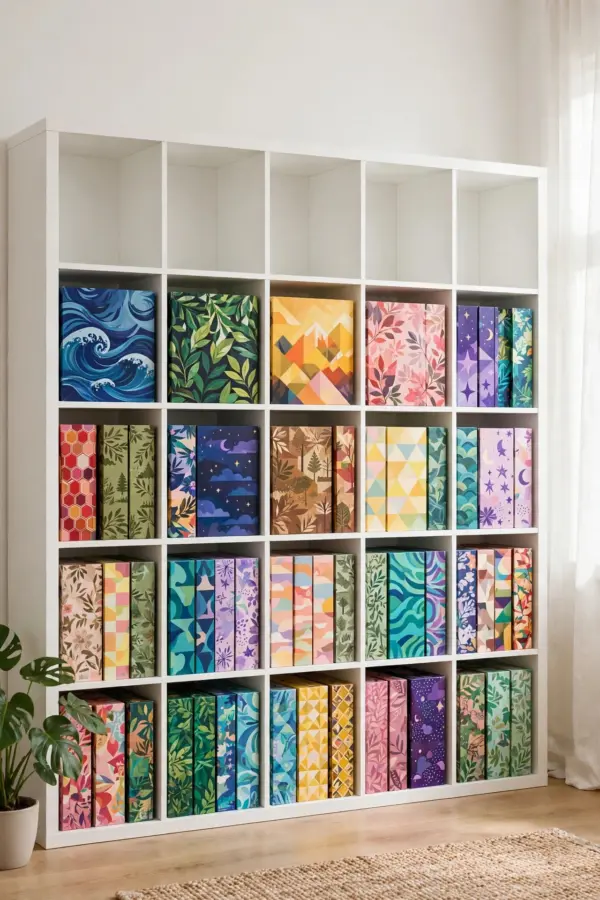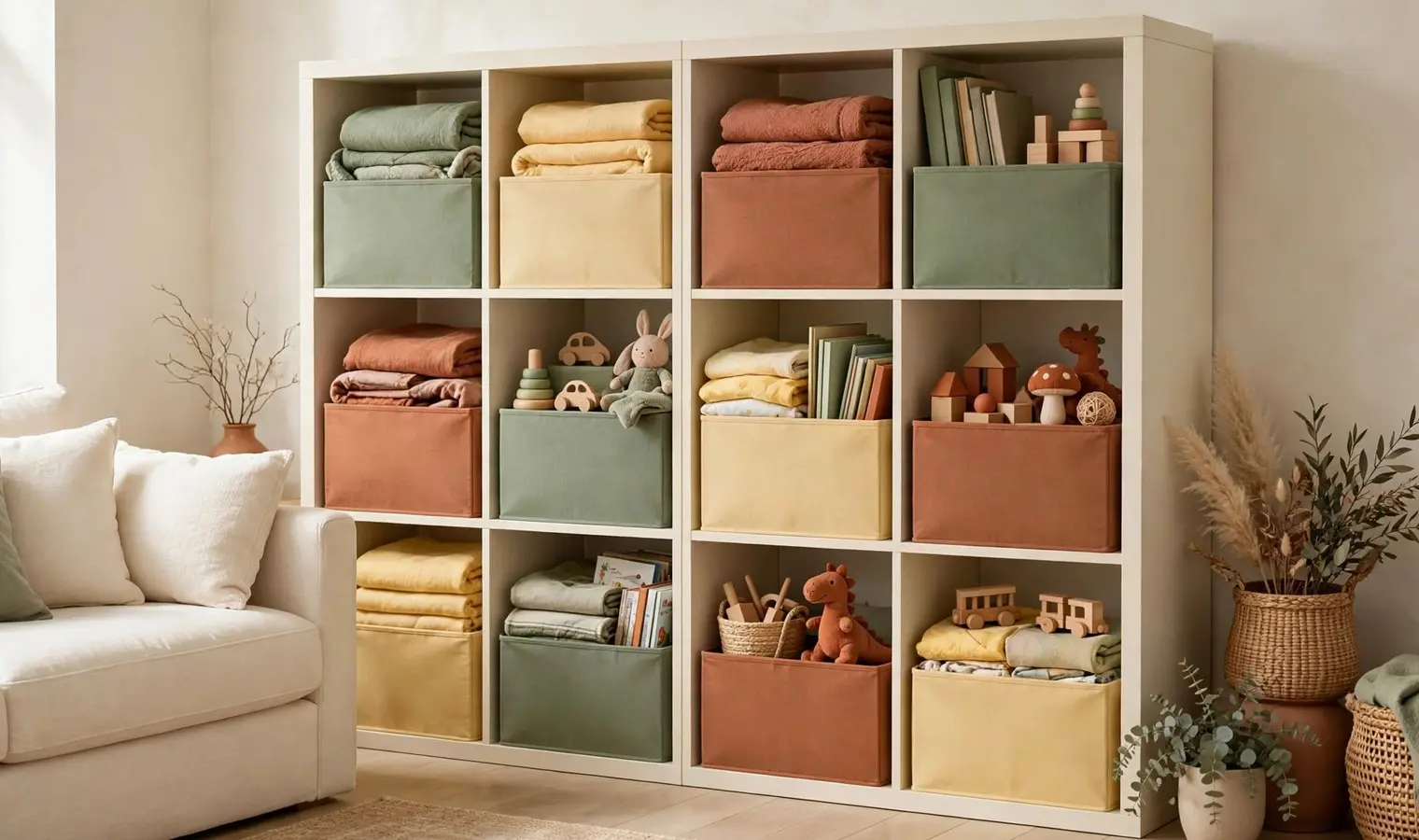
Standard storage cubes come in two sizes — 11-inch and 13-inch — and work in almost every room: folded clothes and toys in 13-inch, books, paperwork and craft supplies in 11-inch.
Thank you for reading this post, don’t forget to subscribe!Part of our guide: 30 Toy Storage Ideas to Finally Tame the Toy Clutter
Cube storage works because it is boring in the best way. A square shelf, a square bin, and a label you can actually read from the doorway. No bespoke furniture, no drilling, no system to learn. The thirteen ideas below walk room by room through a home, and each one names the cube size that suits what lives there, so you buy the right bins the first time instead of discovering — mid-tidy — that your cubes are an inch too big for the shelf.
Measure first: the size and capacity guide
Before you order anything, measure one shelf opening — width, height and depth — and check it against the cube, not the shelf unit’s headline size. A cube that fits snugly looks tidy but is hard to pull out; leave about half an inch of breathing room on each side.
| Cube size | Best for | What fits inside | Watch out for |
|---|---|---|---|
| 11-inch | Books, paperwork, craft supplies, small toys | Paperbacks upright, A4 folders, yarn, small games | Too small for folded jumpers or bulky toys |
| 13-inch | Folded clothes, toys, towels, bedding | Folded jumpers, soft toys, rolled towels, spare pillowcases | Heavy when full — keep these cubes low |
As a rule of thumb: if it folds, it probably wants a 13-inch cube; if it stands up — books, files, jars — it probably wants an 11-inch cube. Solid cubes suit the heavy end of that list, fabric bins suit the soft end, and most homes end up using both.
1. Entryway: a landing zone that swallows the daily pile
The entryway is where clutter is born: shoes kicked off, bags dropped, keys and gloves scattered across the nearest surface. A low cube bench by the door gives every one of those things a home, and the bench top doubles as a seat for putting shoes on. Give each person one cube — shoes in one, bag in another — and the hallway stops being a dumping ground.
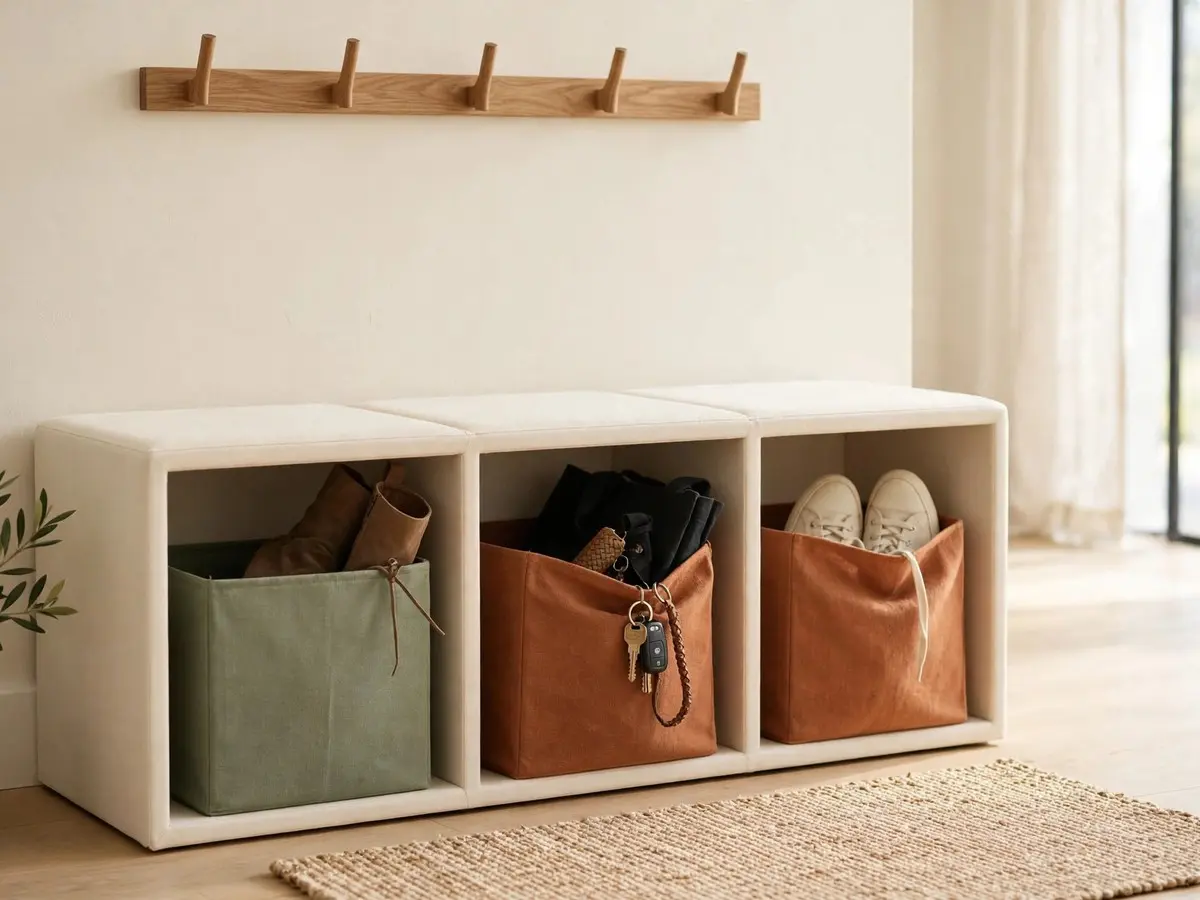
Use 13-inch cubes here so shoes and bags fit without squeezing, and keep one cube empty on purpose. That spare cube is where the odd parcel, the returned library book, or the bag that needs to go back upstairs waits — instead of living on the floor.
2. Living room: the clutter catch-all beside the sofa
Living rooms collect small things: remote controls, chargers, magazines, board games, and the throw that migrates from sofa to chair. A low cube unit beside the sofa hides all of it behind fabric fronts, so the room looks calm even when life is not. Folded throws go in a 13-inch cube; remotes, chargers and games fit neatly in 11-inch cubes.
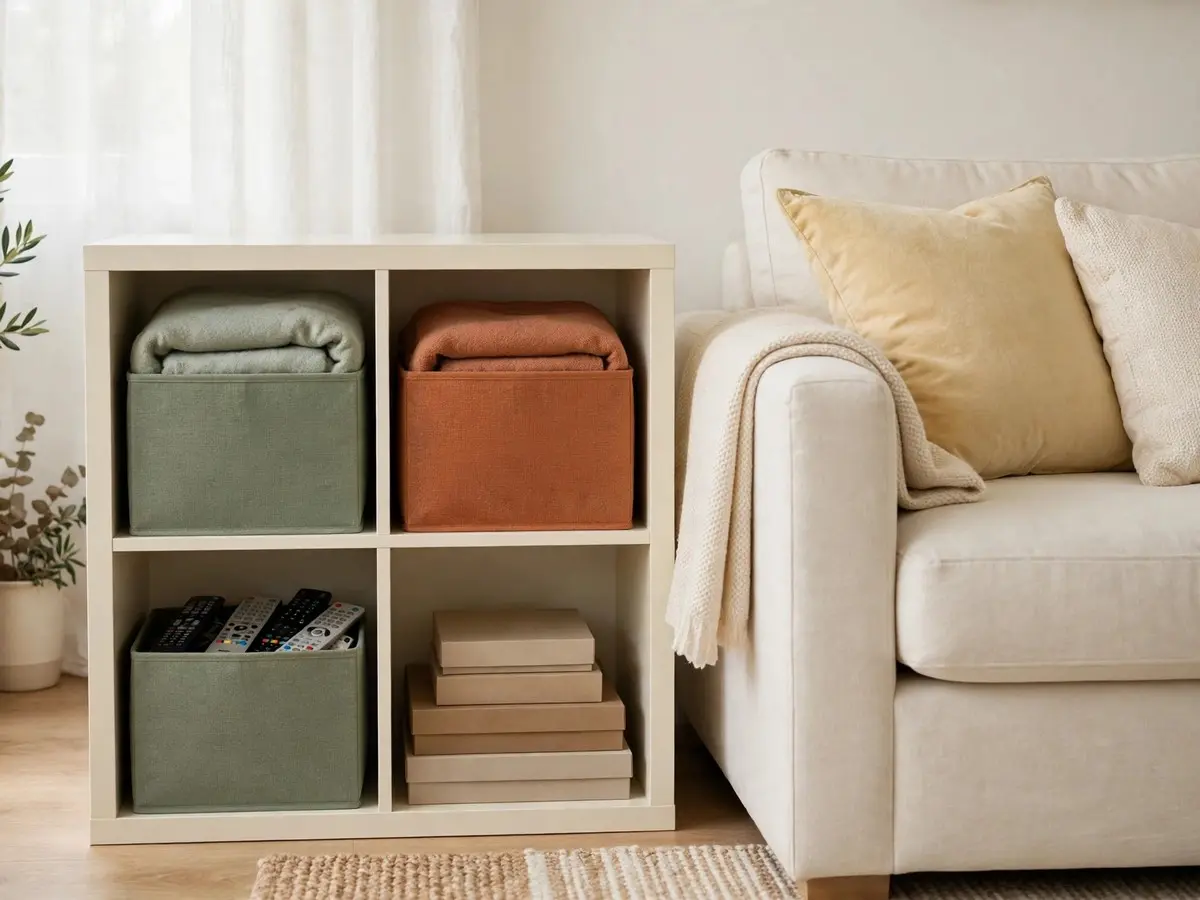
Keep the top of the unit clear except for one lamp or plant. The moment the top becomes storage, the whole unit reads as clutter again — the cubes are doing the hiding, so let them do it.
3. Bedroom closet: folded clothes in 13-inch cubes
This is the classic cube-storage job, and it earns its reputation. Folded jumpers, T-shirts and jeans stack neatly in 13-inch cubes, one category per cube, where you can see and reach them without pulling a whole drawer out. Hang the things that crease — shirts, trousers, dresses — and cube everything else.
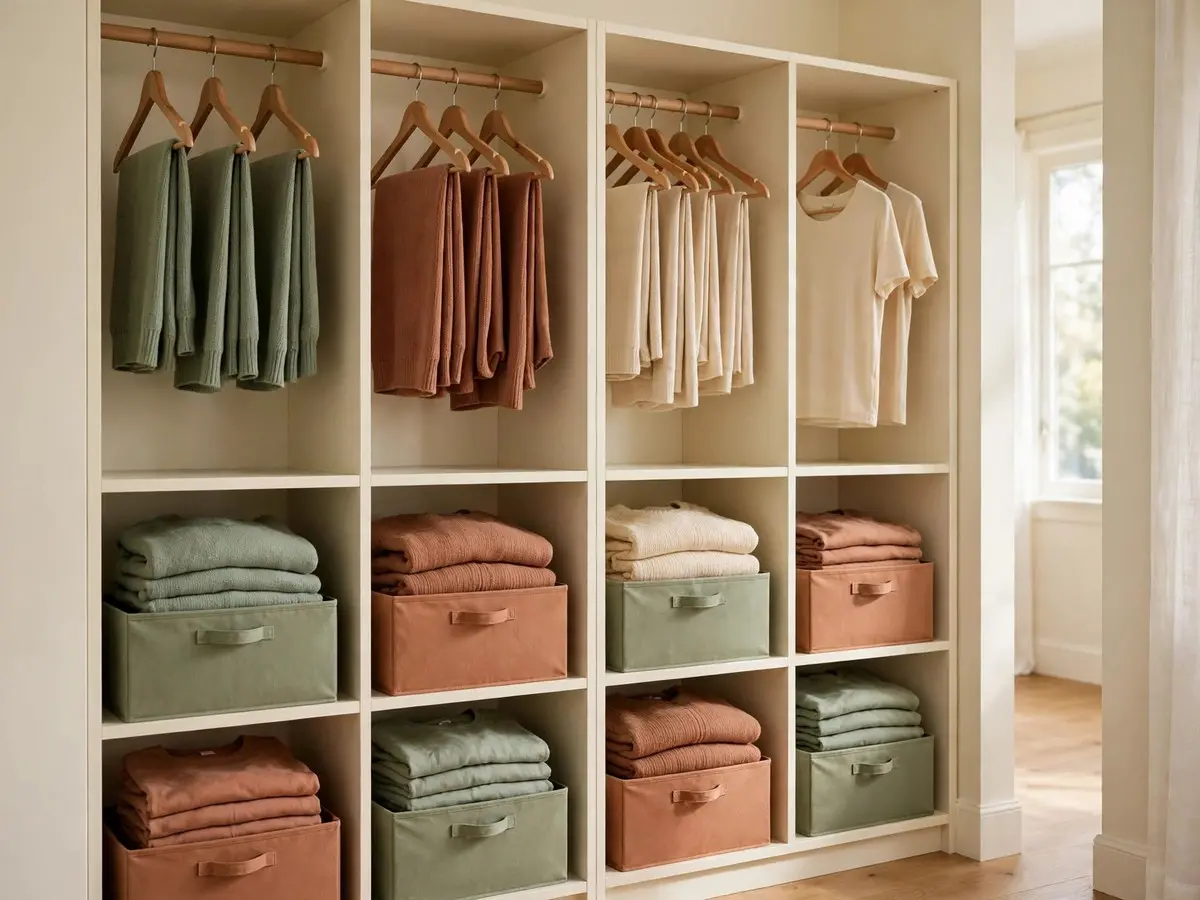
Put everyday clothes at arm height and out-of-season clothes up high, and use the same colour of cube throughout the closet so the wall of storage looks calm rather than patchy. One cube per category is the limit — when a cube overflows, something in it needs to go.
4. Kids’ rooms: toys in big cubes they can reach
Children tidy up only when tidying is easy, and a low cube unit at their height is the easiest system there is: one cube for soft toys, one for blocks, one for cars. Big 13-inch cubes suit bulky toys, and fabric bins are light enough for a child to pull out, tip onto the floor for play, and push back in afterwards.
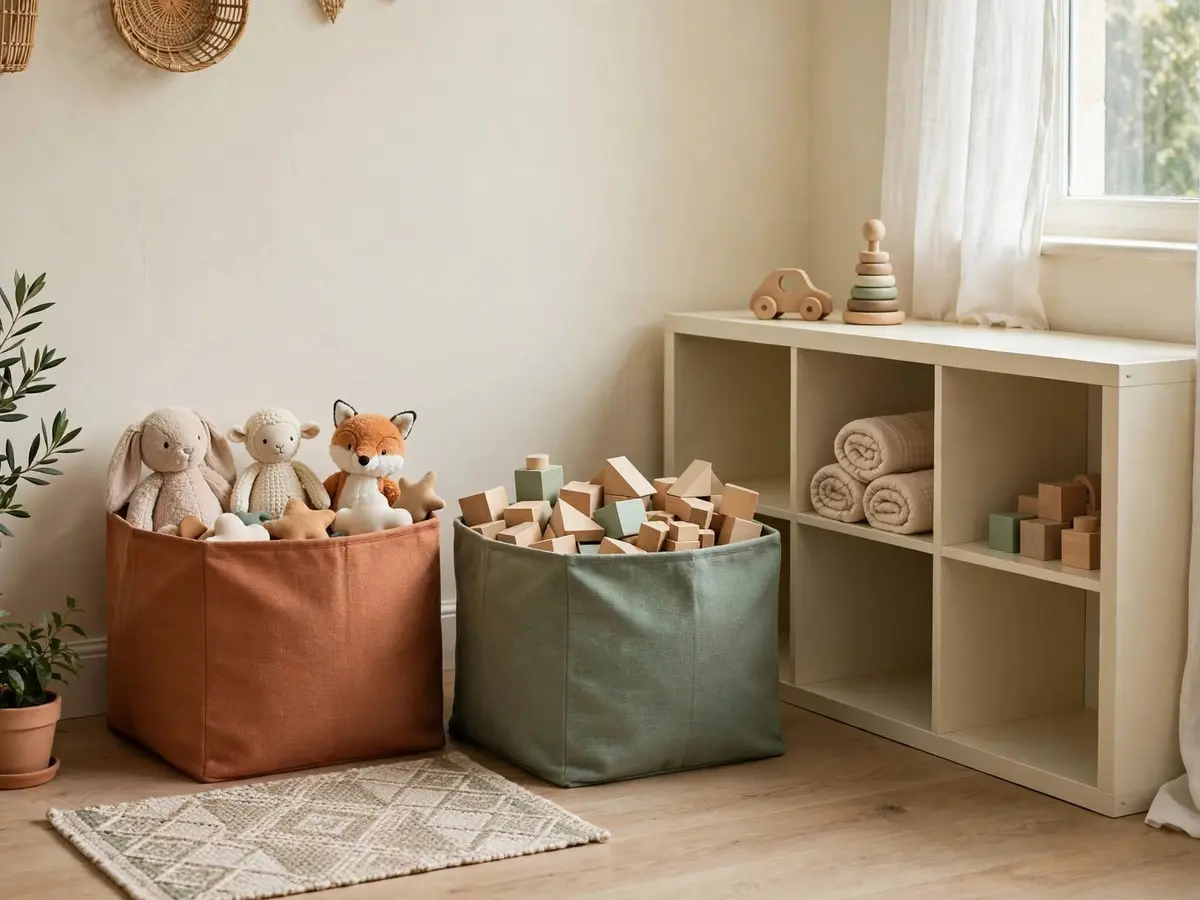
Keep the unit low and bolt it to the wall — a climbing child and a freestanding shelf are a bad combination. Label cubes with pictures for younger children, so tidying does not depend on reading.
5. Home office: paperwork and books in 11-inch cubes
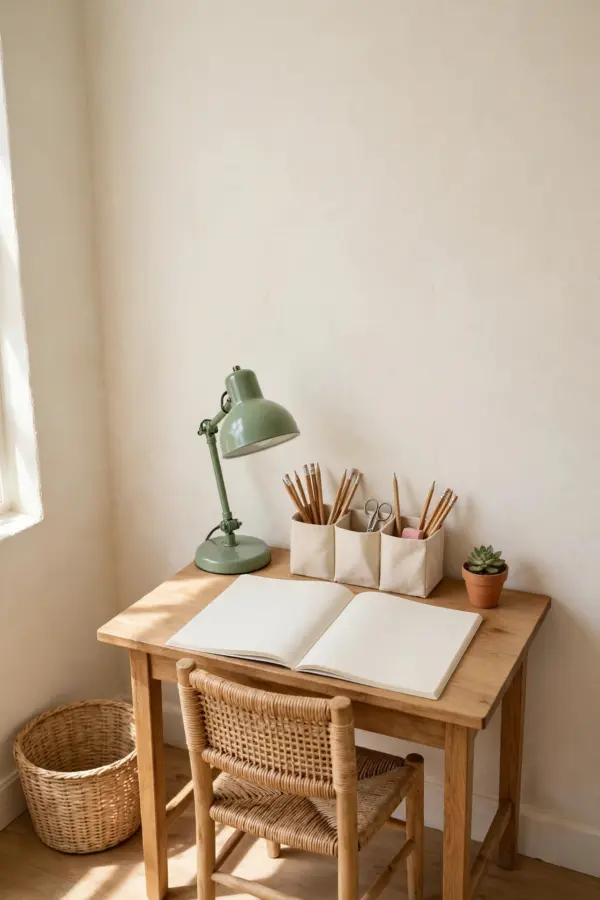
A home office needs small, upright storage, and that is exactly what 11-inch cubes do best. Books stand upright, folders file vertically, and stationery sits in a small cube or open bin within the compartment. Keep current paperwork in the cube nearest your chair and archived files higher up, so the daily pile never spreads across the desk.
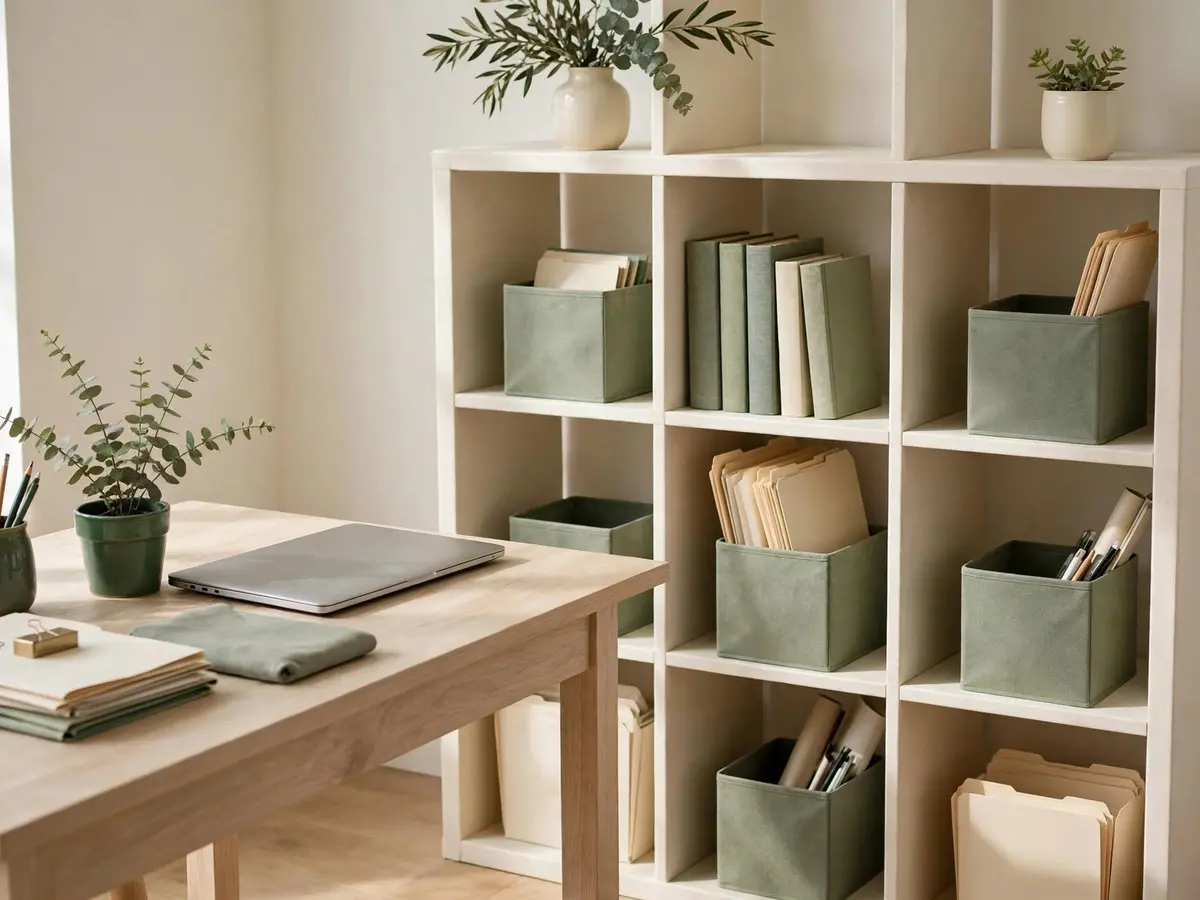
Use solid cubes or open compartments for books — a full fabric bin of books is heavier than it looks and sags over time. Save the fabric bins for stationery, cables and the soft clutter that offices quietly accumulate.
6. Craft corner: small supplies, sorted by type
Craft supplies are the worst kind of clutter: hundreds of small pieces that belong together but never stay together. Cube storage fixes this by giving each supply type its own compartment — paper in one 11-inch cube, yarn in another, beads and small parts in lidded jars inside a third. When everything has a type and a place, a craft session starts with making, not hunting.
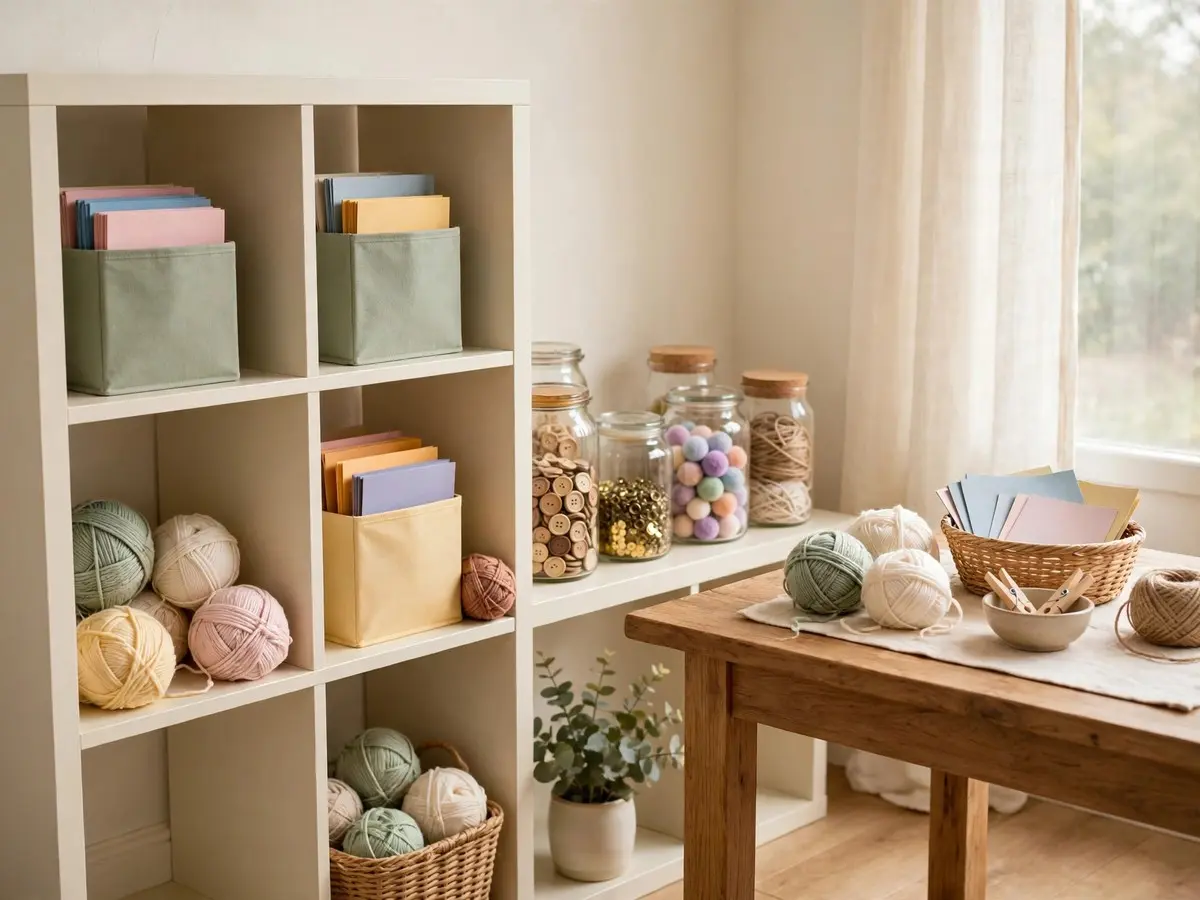
Keep the supplies you use every week at arm height and the seasonal or specialist stock up high. A rolling cart beside the cube unit holds the current project, so the cubes stay sorted while the work is in progress.
7. Kitchen: pantry overflow and cookbooks
Kitchens run out of cupboard space first, and a cube unit in a corner or against a spare wall is the cheapest extra pantry you can buy. Dry goods in sealed jars sit in 11-inch cubes, cookbooks stand upright beside them, and the folded tablecloths and spare tea towels that never fit in a kitchen drawer get a 13-inch cube of their own.
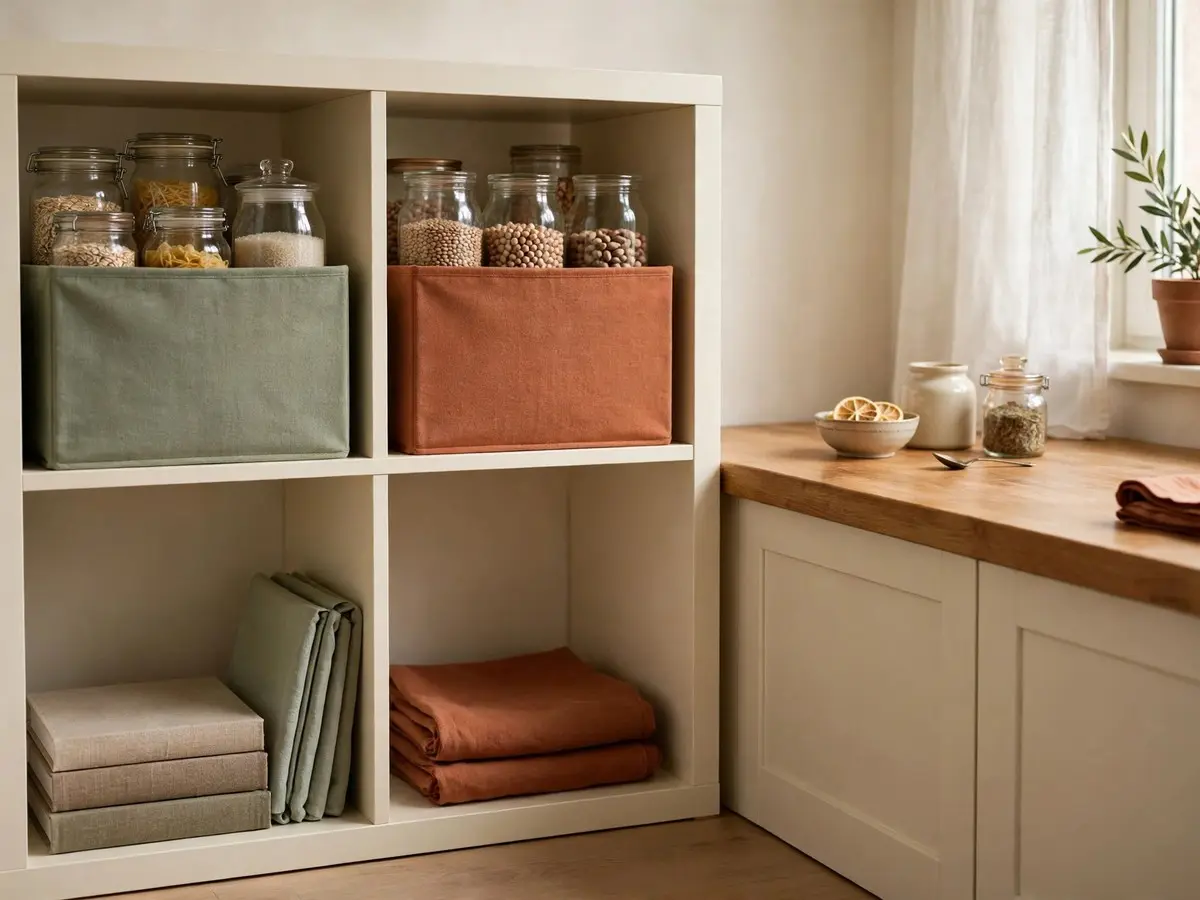
Keep food in sealed containers inside the cubes, never loose — open shelving near a kitchen collects grease and dust. And keep the cube unit away from the cooker and the sink, where steam and splashes do the cubes no favours.
8. Bathroom and linen closet: towels and toiletries
Bathrooms rarely have enough closed storage, and linen closets tend to become a leaning tower of towels. Rolled towels fit beautifully in 13-inch cubes — rolling saves space and makes it obvious when the stock is running low — while toiletries, spare toilet rolls and first-aid bits sit in smaller cubes or baskets within the compartments.
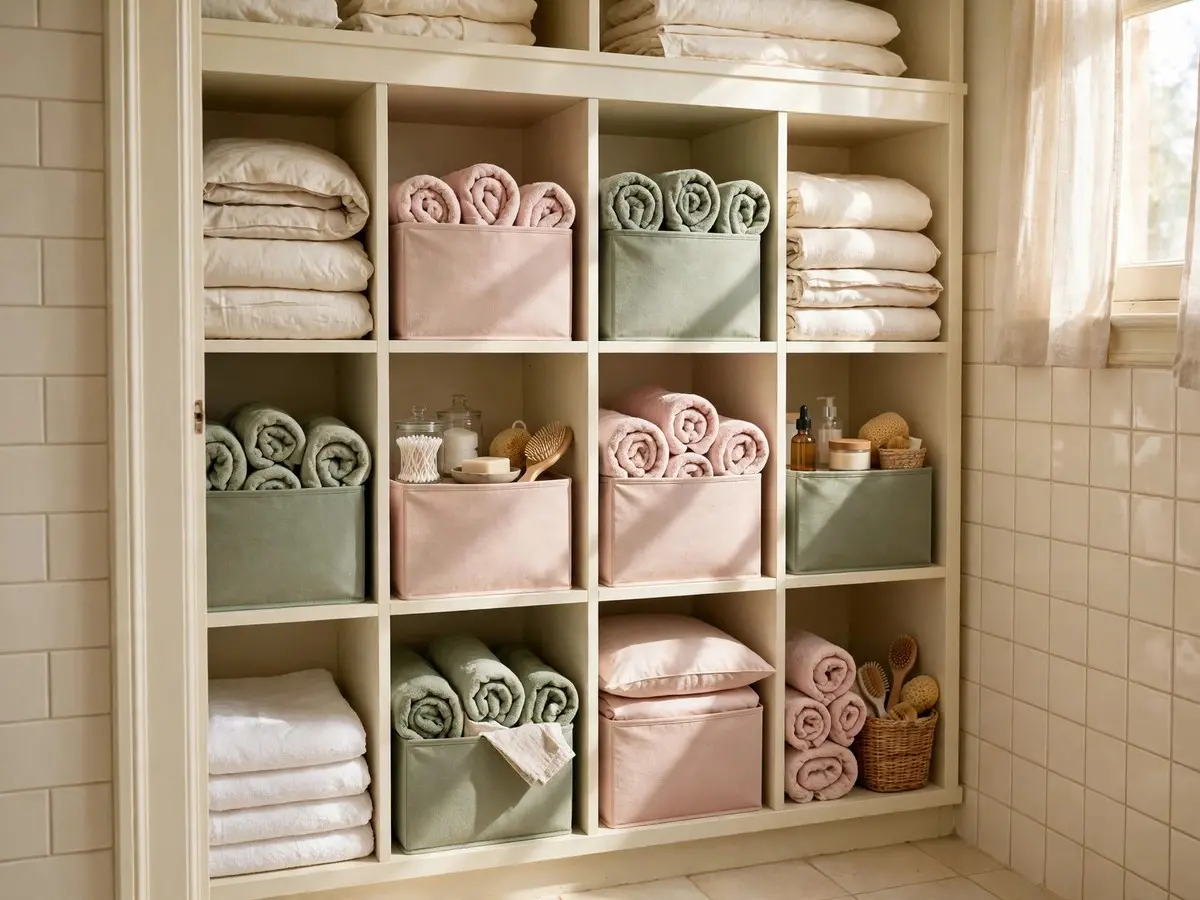
Give each household member a towel cube if space allows — it ends the mystery of whose towel is whose, and it makes laundry sorting a one-grab job. Keep medicines and cleaning products out of reach of children, in a high cube with a lid.
9. Laundry room: supplies off the machine top
The top of the washing machine is not a shelf, however often it gets used as one. A cube unit above or beside the machines holds detergent, stain treatments, cloths and pegs in separate cubes, so the machine top stays clear for folding — and nothing vibrates off mid-cycle.
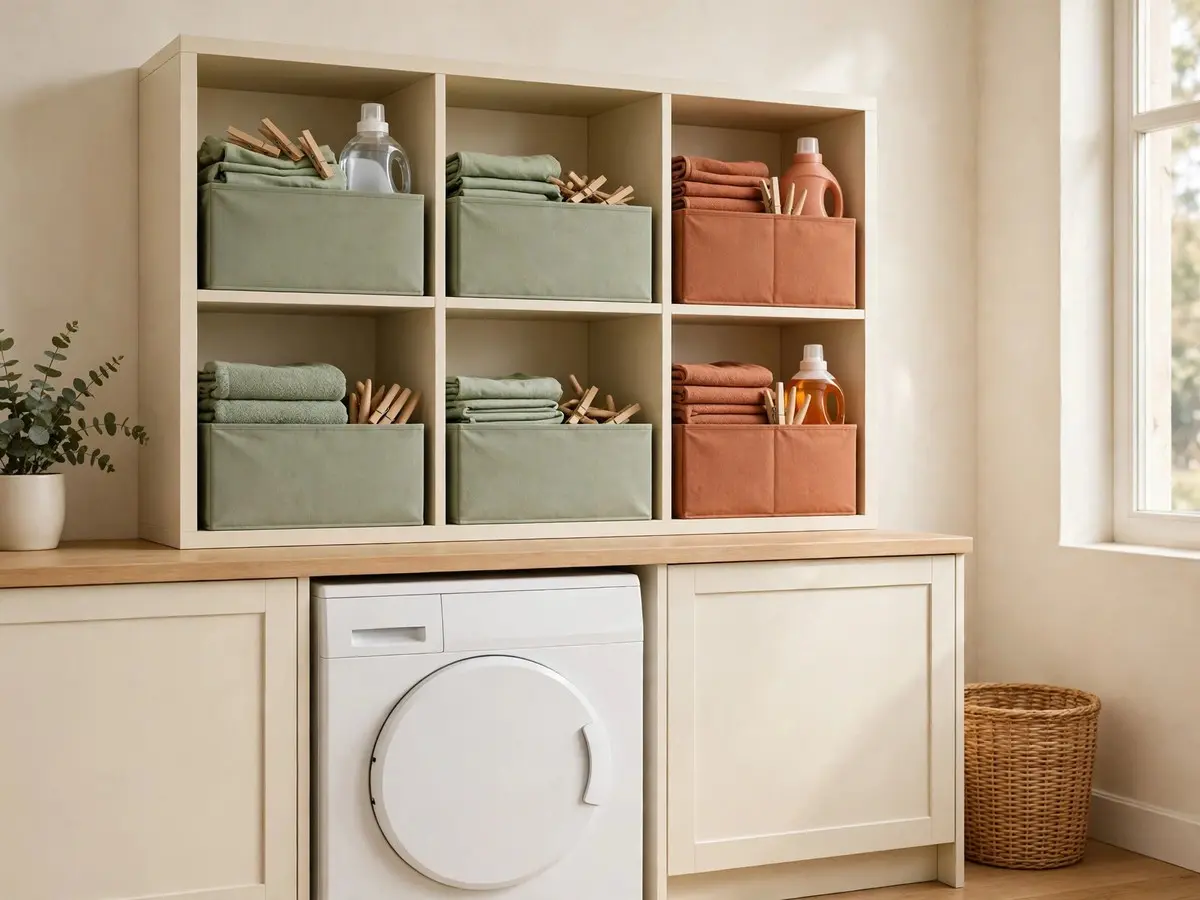
Put the everyday detergent at arm height and the bulk refills higher up, and keep one cube for the single socks and small items that come out of every wash. Empty it monthly, or it becomes its own clutter problem.
10. Nursery: tiny clothes and daily essentials
Baby clothes are small, numerous, and outgrown fast, which makes them perfect cube-storage territory. Folded sleepsuits and vests go in 13-inch cubes by size, nappies and wipes in a cube by the changing table, and the next size up waits in a labelled cube on the top row — ready before the growth spurt, not after it.
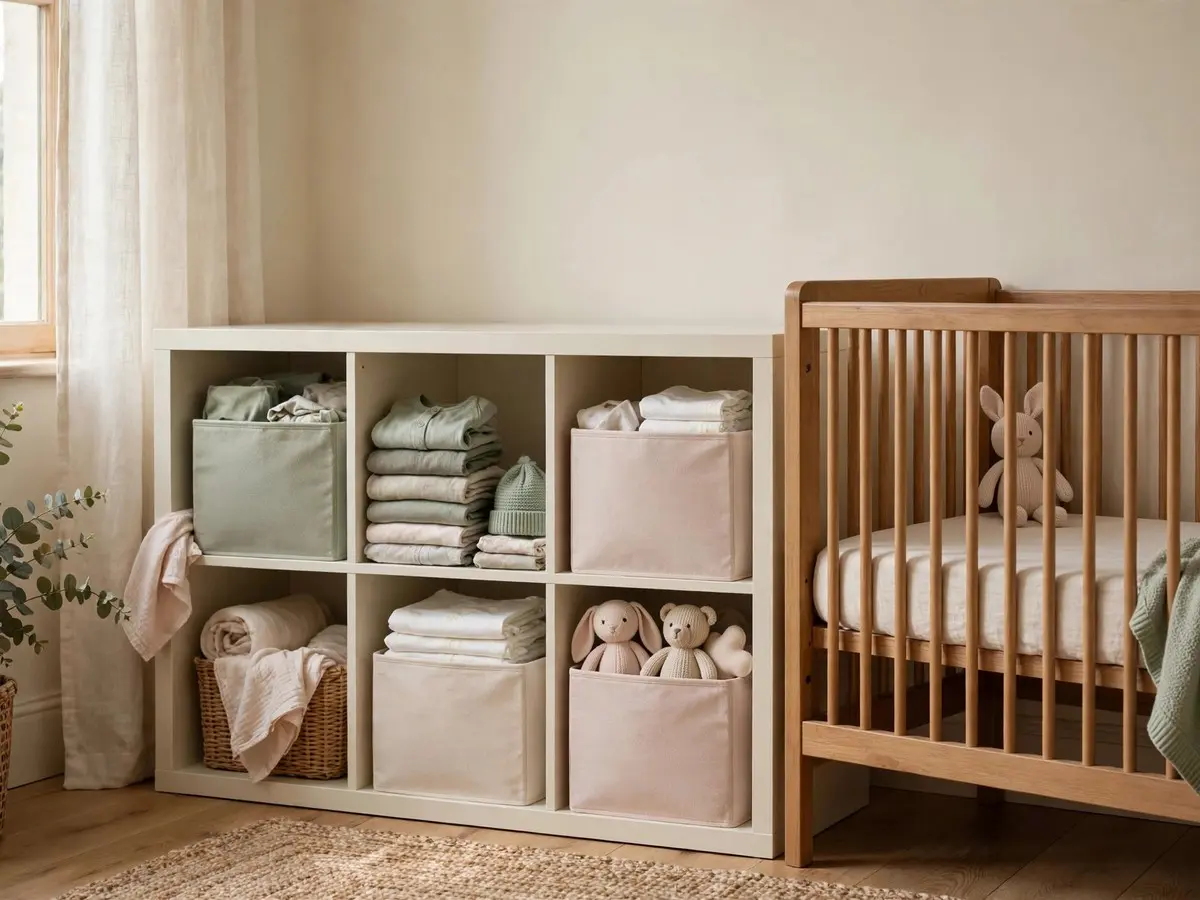
Keep the unit low, bolted to the wall, and free of small loose items a baby could reach. As each size is outgrown, its cube empties, gets washed, and is ready for the next size — the system resets itself.
11. Garage and mudroom: sports gear and outdoor kit
Garages eat storage systems alive — heavy, muddy, oddly shaped things that defeat neat boxes. Cubes cope better than most because they are open, wipeable, and big enough for balls, hats, gloves and bags. Give each sport or each child one large cube, and keep the muddy boots on a tray beneath the unit, not inside it.
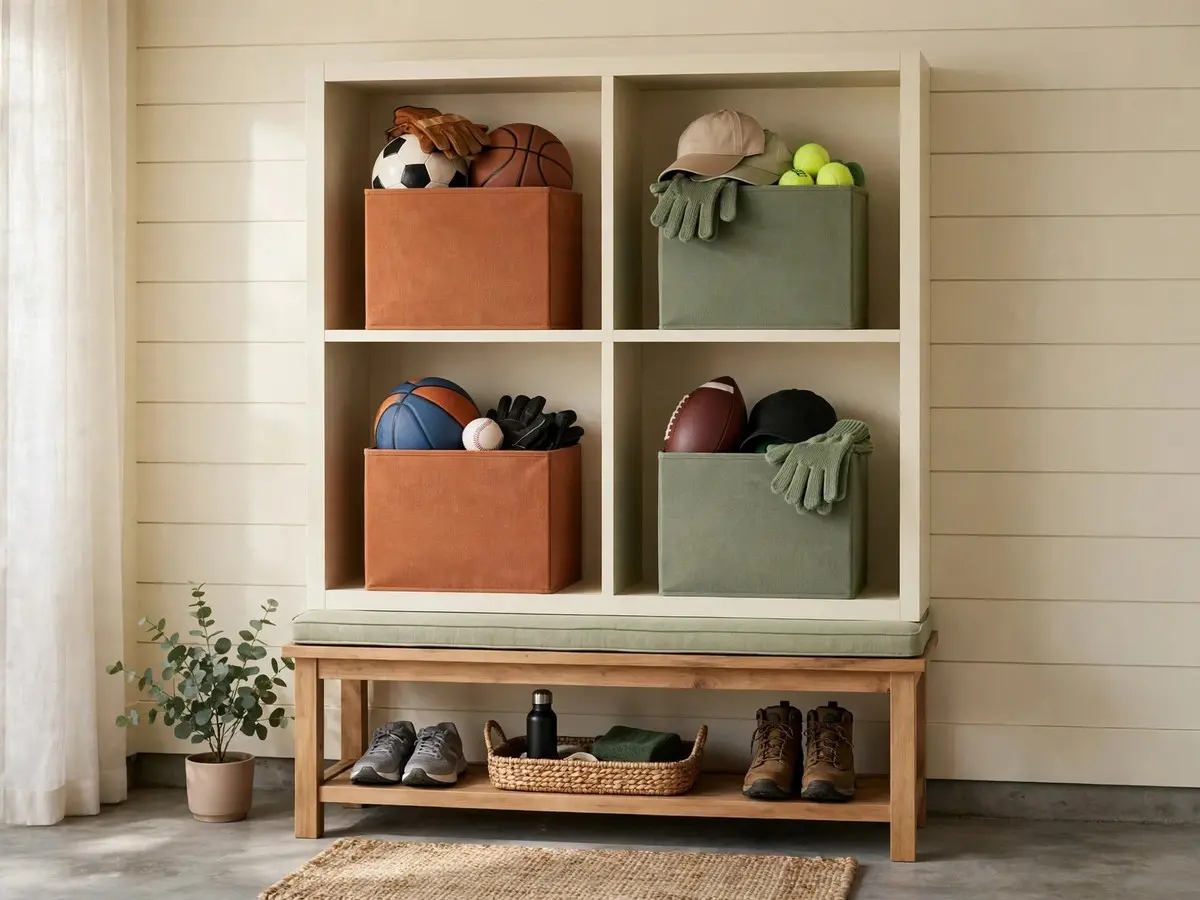
Use solid or rigid cubes here rather than soft fabric bins — damp kit and heavy balls wear fabric out fast. And keep one cube empty for the seasonal swap: winter hats out, summer caps in, without a full garage clear-out.
12. Reading nook: books upright, blanket in a cube
A reading nook needs two things stored close at hand: the books and the blanket. A cube bookshelf does both — paperbacks stand upright in open 11-inch compartments, and a folded blanket lives in a fabric cube on the bottom row, ready to pull out without disturbing the shelf.
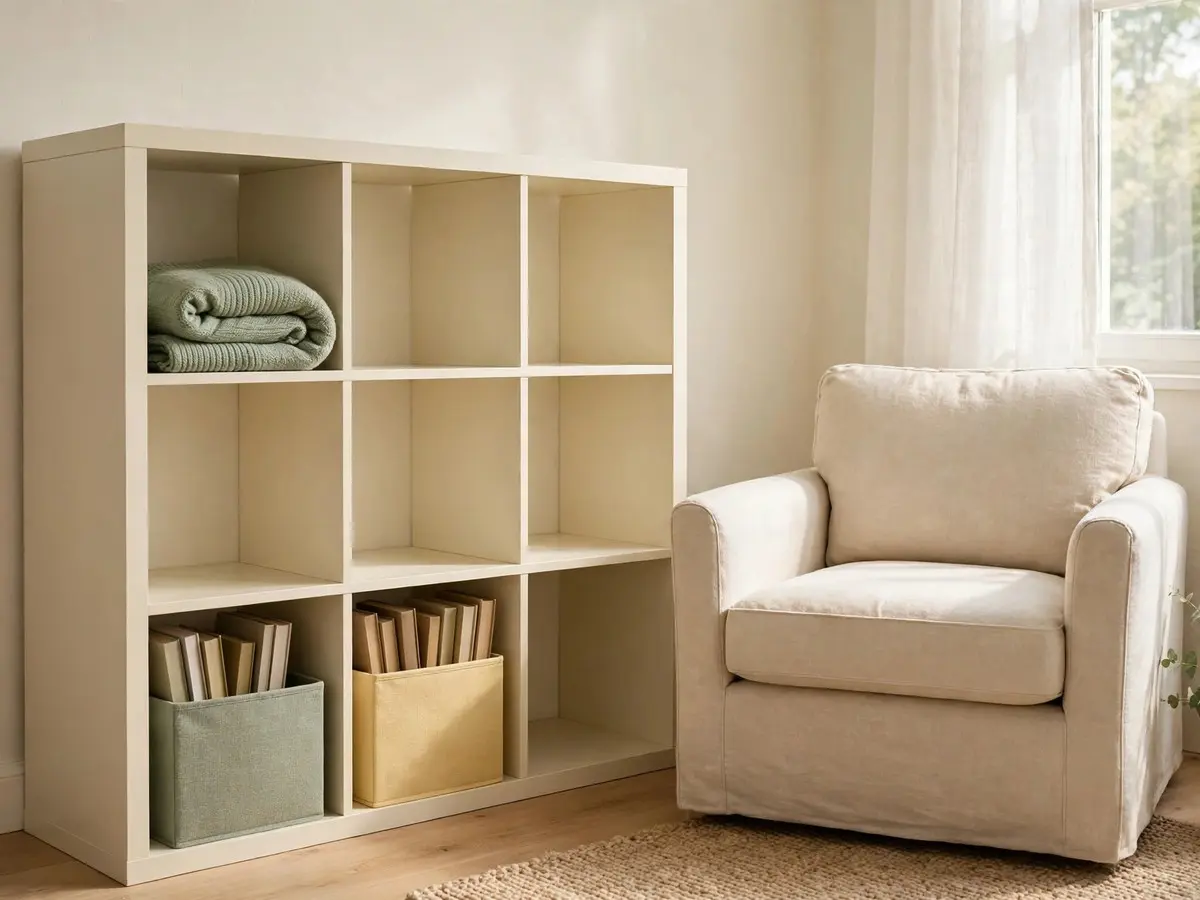
Sort books by the way you actually choose them — by mood, by author, or by what you are reading next — not by a system you will never maintain. One cube for “to read next” keeps the pile beside the chair from growing into a second bookshelf.
13. Guest room: spare bedding ready for visitors
Guest rooms fail in one specific way: the bedding is somewhere else when the guest arrives. A cube unit at the foot of the bed or against one wall holds a full spare set — sheets, pillowcases, towels — in 13-inch cubes, plus a small basket of the things guests always ask for: a phone charger, fresh towels, and an extra blanket.
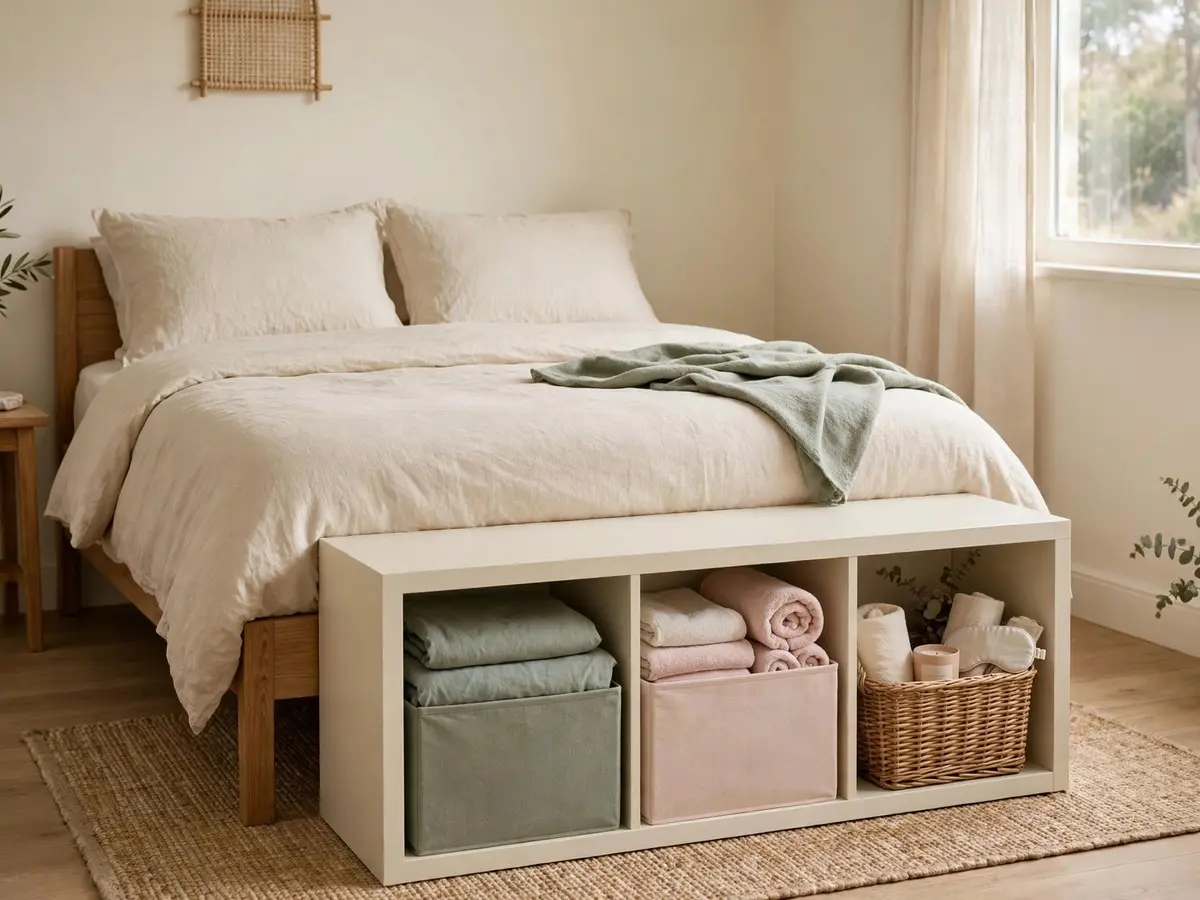
Refresh the guest cubes between visits — fresh sheets in, used sheets straight to the laundry — and the room is guest-ready without a weekend of preparation. The cubes also mean the spare bedding never migrates back into the main linen closet and vanishes.
Questions, answered
What size are standard storage cubes?
Standard storage cubes come in two sizes: 11-inch and 13-inch, measured to fit the open compartments of cube shelving units. Always measure your own shelf opening before ordering, because a cube labelled 13-inch may measure a little under that once the fabric and handles are counted, and a tight fit is hard to pull out.
What can you store in cube storage units?
Almost anything that fits in a square compartment and does not need hanging: folded clothes, toys, books, paperwork, craft supplies, towels, bedding, shoes, board games, and pantry overflow. Keep heavy items low, keep daily items at arm height, and reserve the top row for light, rarely used things.
Are storage cubes good for small spaces?
Yes — cube storage is one of the best small-space systems because it turns an empty wall or an awkward alcove into closed storage without built-in furniture. One unit holds a whole category, the cubes hide the clutter, and you can move the unit or swap the cubes when the room changes use.
Are fabric bins or solid cubes better for cube shelves?
It depends on what goes inside. Fabric bins are lighter, cheaper, and easy to pull out and carry to another room, which suits clothes, toys, and laundry. Solid cubes — wood, metal, or rigid plastic — hold heavier items, keep their shape on open shelves, and suit books, files, and pantry goods. Many homes use both: fabric for soft things, solid for heavy things.
Keep reading
For the closet ideas in point 3 in more depth, our guide to closet organization ideas covers the full closet system those cubes sit inside. If the kitchen overflow in point 7 has you rethinking the pantry, pantry organization ideas shows how to organize the shelves themselves. And for the seasonal swap behind points 3 and 13, how to use vacuum storage bags covers shrinking bulky bedding and out-of-season clothes to a fraction of their size.
Storage cubes earn their place because they are simple, cheap, and moveable: measure the shelf, match the cube to the contents — 13-inch for folded things, 11-inch for things that stand up — and give every category one cube. Do that room by room, and the whole home gets calmer without a single built-in.