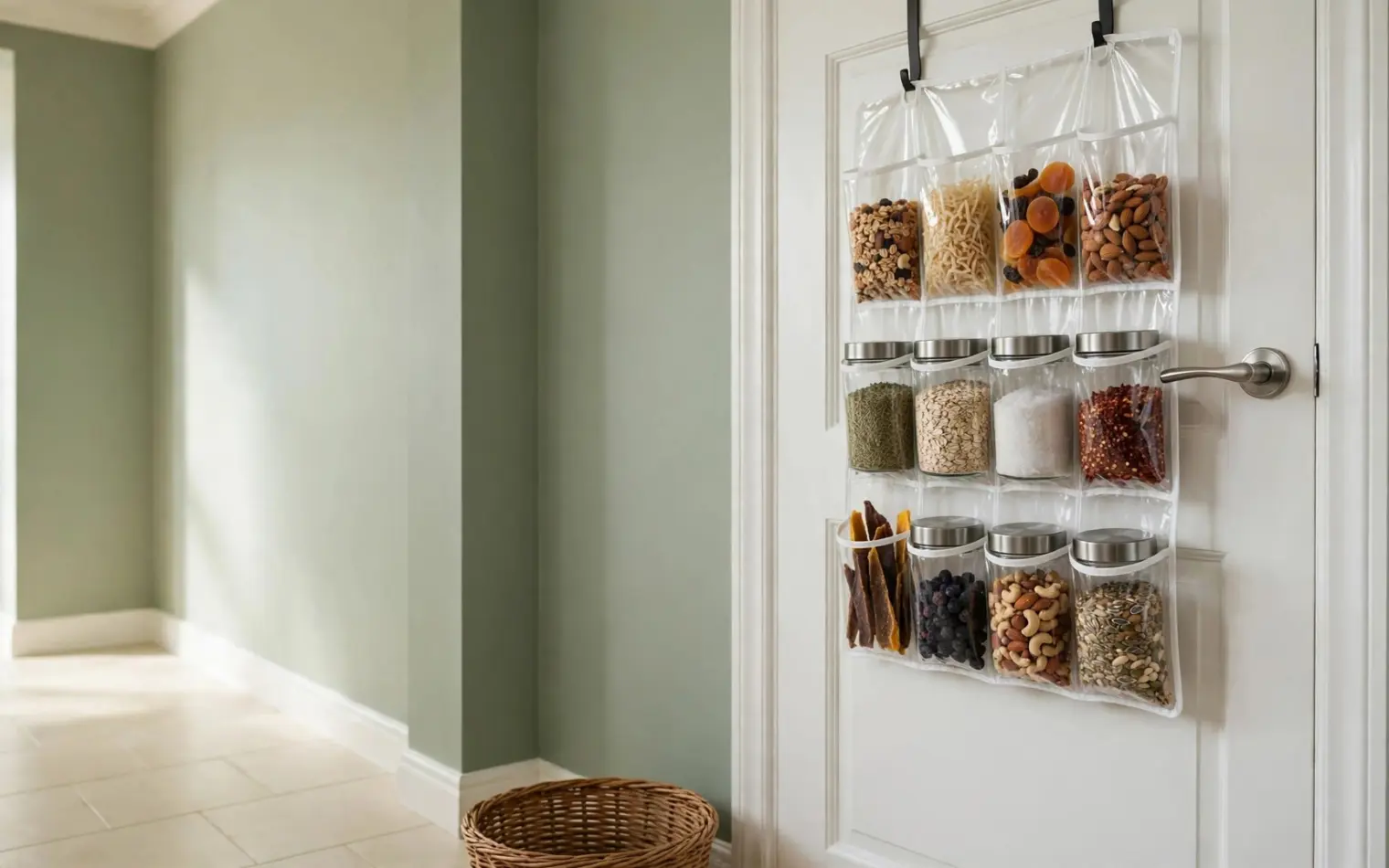
The back of a standard door gives you roughly 12 square feet of storage you are probably not using — clear pocket organizers suit shoes and supplies, shelf-style rails suit pantry and bathroom stock, and felt pads on the hooks stop door damage.
Thank you for reading this post, don’t forget to subscribe!Part of our guide: 30 Toy Storage Ideas to Finally Tame the Toy Clutter
These over the door storage ideas are grouped room by room — pantry, bathroom, nursery, cleaning cupboard, shoes, gift wrap and the entryway — so you can start with the door that bothers you most and work through the rest. Every idea hangs over the door: nothing is drilled into the wall, and most of them lift off when you move out.
The pantry door: overflow storage
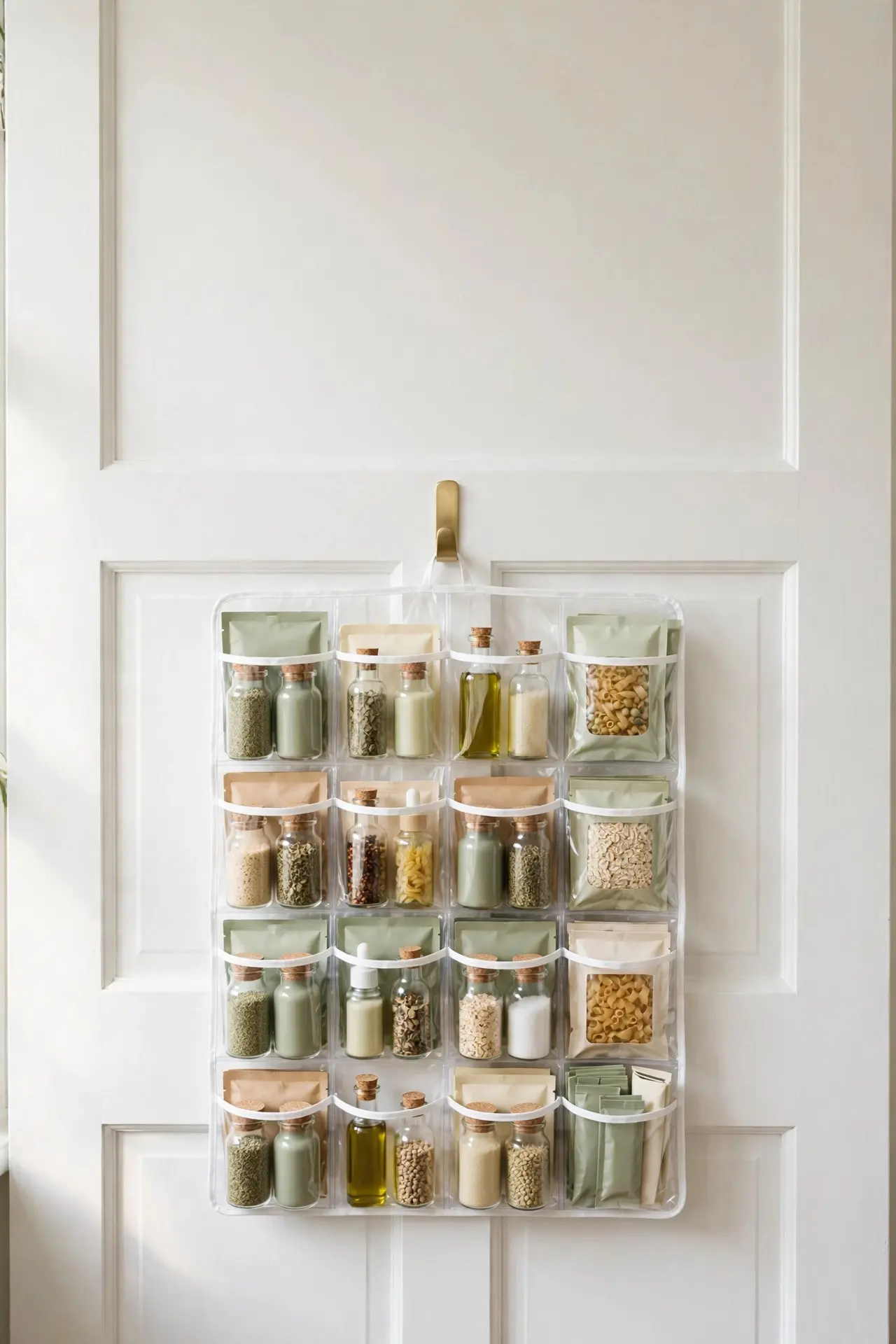
1. Clear pocket organizer for pantry overflow
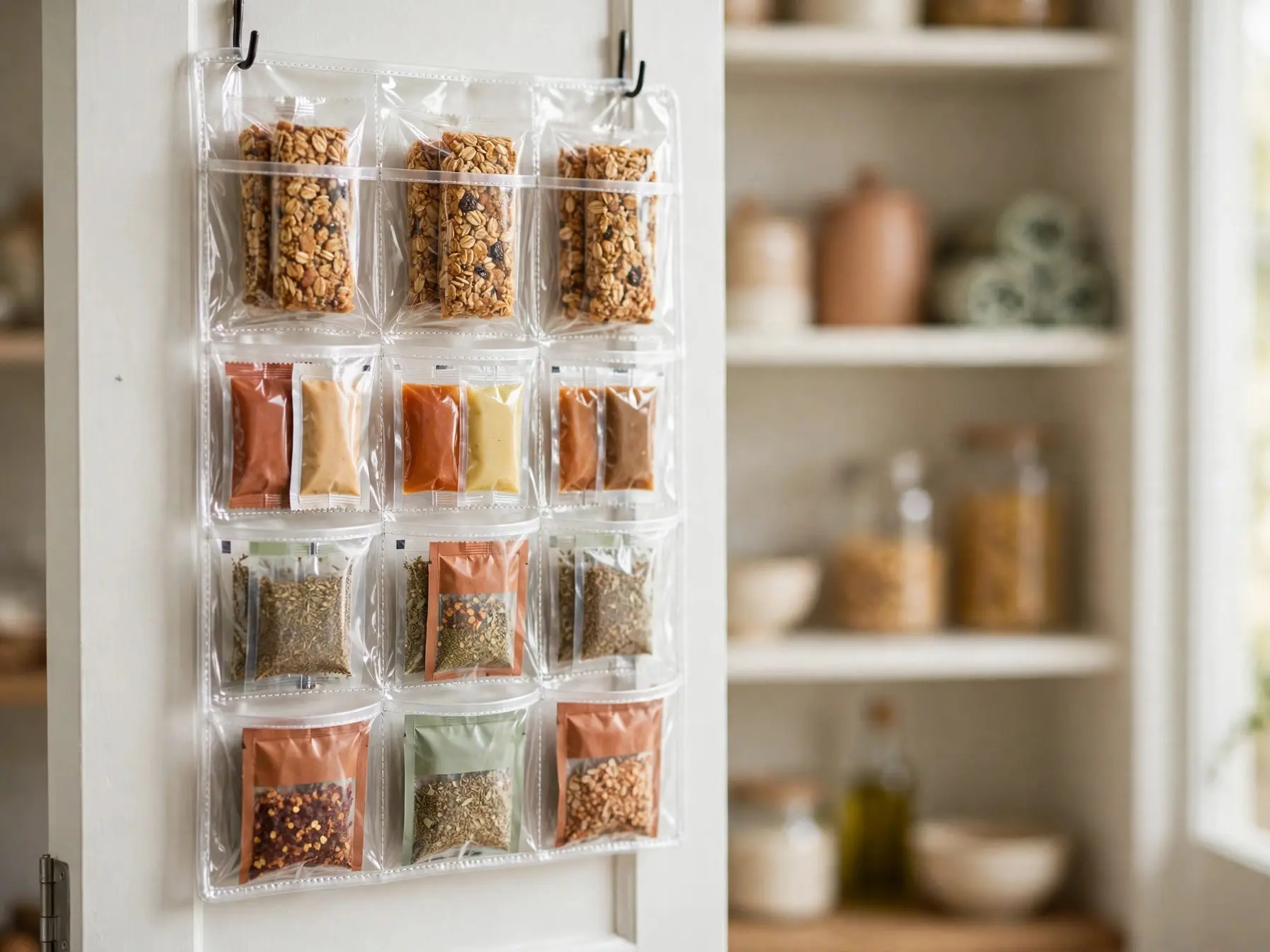
When the pantry shelves are full, the door is the overflow shelf you already own. A clear pocket organizer holds snack bars, sauce packets, spice sachets and small bags where you can see them all at once — no more digging behind the cereal boxes. Hang it on the inside of the pantry door so the pockets face the shelves, keep the heaviest items in the lowest pockets, and leave the top row for light packets you reach for daily.
- Clear pockets so you can see everything
- Heaviest items in the lowest pockets
- Hang it inside the door, pockets facing in
2. Shelf rail for cans and jars
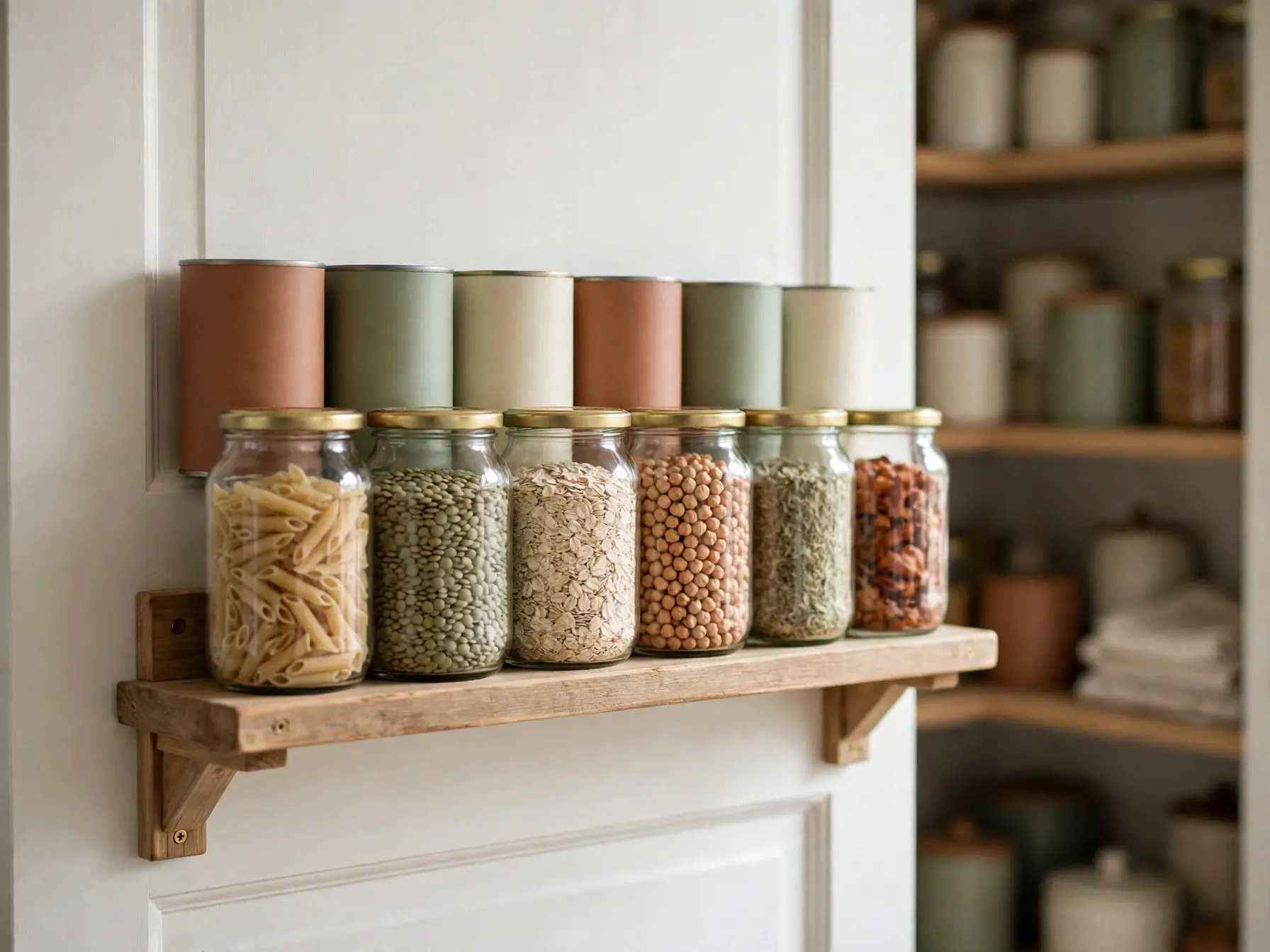
A shelf-style rail turns the pantry door into a second shelf unit. The shallow rails hold cans, jars and bottles upright, so nothing tips when the door swings — choose a rail with a lip at least an inch high, and measure the gap between the door and the shelf edge before you buy, because a rail that is too deep will stop the door closing. Keep the heaviest jars at the bottom and lighter tins up top.
- Measure the door-to-shelf gap first
- Lip at least an inch high
- Heaviest jars on the lowest rail
3. Spice rack on the pantry door
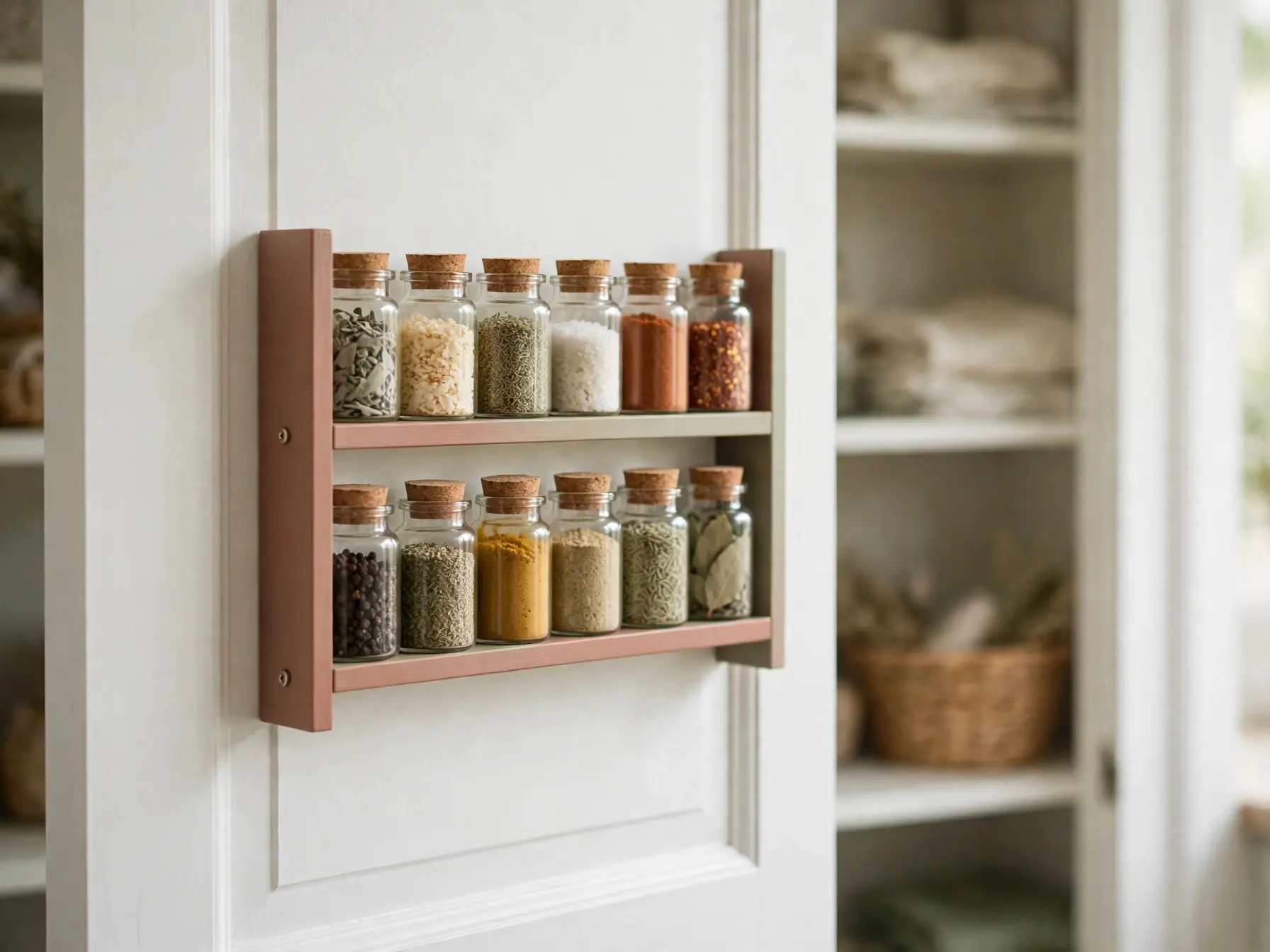
Spices are the classic pantry-door win: small, light and used daily. A slim spice rack on the inside of the door keeps every jar at eye level and frees a whole shelf for bigger items. Pick a rack sized for standard spice jars, and fix it with the hooks or adhesive strips it comes with rather than screws — the door stays undamaged and the rack comes off cleanly when you move.
- Sized for standard spice jars
- Hooks or adhesive strips, not screws
- Daily spices at eye level
The bathroom door: towels and toiletries
4. Hook rail for towels
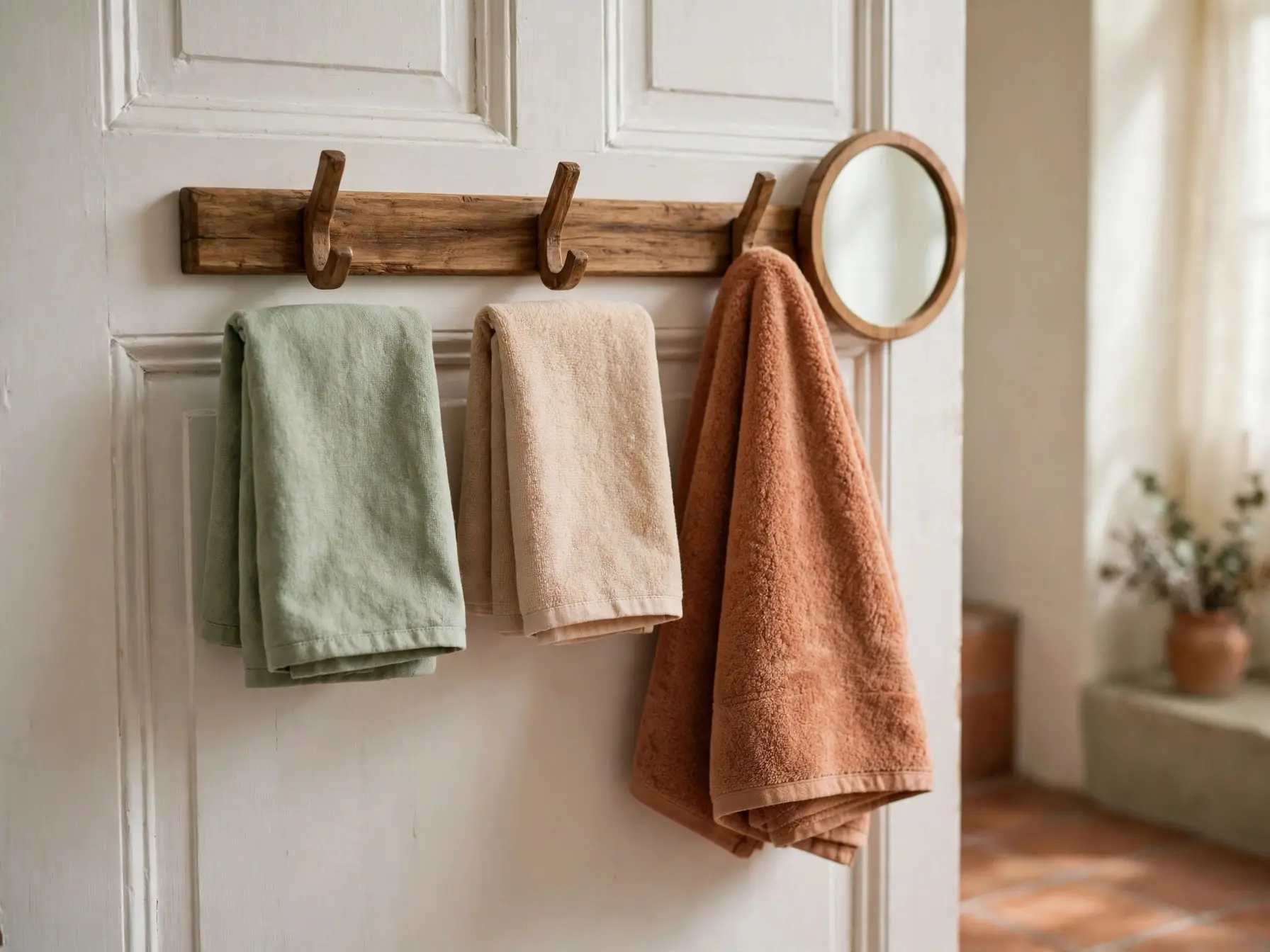
One hook rail on the back of the bathroom door ends the towel-on-the-floor habit. Two or three sturdy hooks hold hand towels and a bath towel each, and because the rail hangs over the door there is nothing to drill into tiles. Add felt pads where the hooks touch the door face, leave a finger-width gap between towels so they dry, and keep the rail at a height everyone in the household can reach.
- Felt pads where hooks touch the door
- A finger-width gap between towels
- Height everyone can reach
5. Pocket organizer for hair tools and toiletries
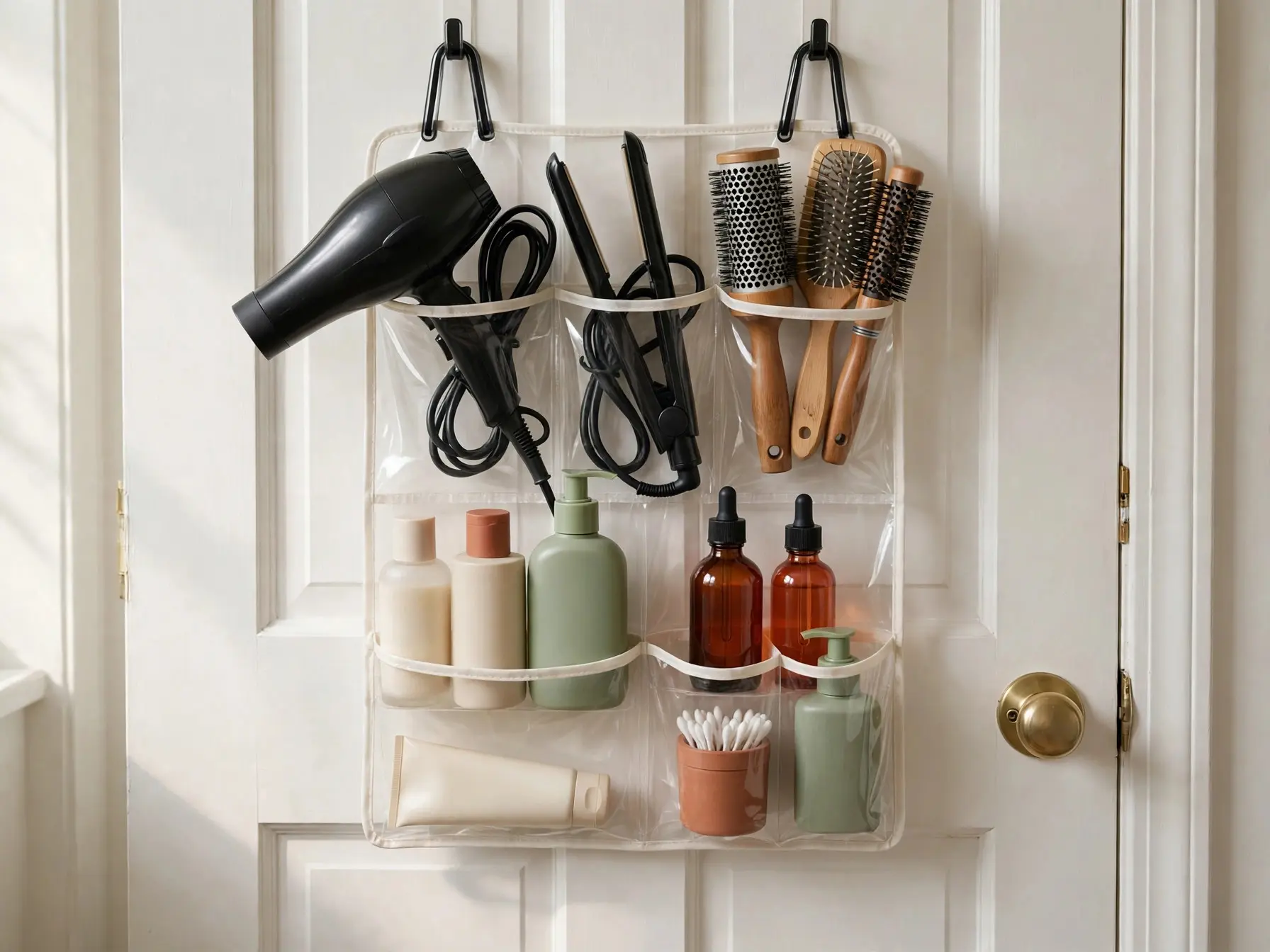
Hair dryers, straighteners, brushes and bottles are awkward shapes for a bathroom shelf — and perfect for a pocket organizer. Heat-resistant pockets hold hot tools safely, while the clear rows keep bottles upright and visible. Hang it on the inside of the bathroom door, keep the dryer in a bottom pocket with its cord looped over a hook, and reserve the top pockets for the items you use every morning.
- Heat-resistant pockets for hot tools
- Dryer low, cord looped over a hook
- Daily items in the top pockets
6. Shelf rail for bathroom stock
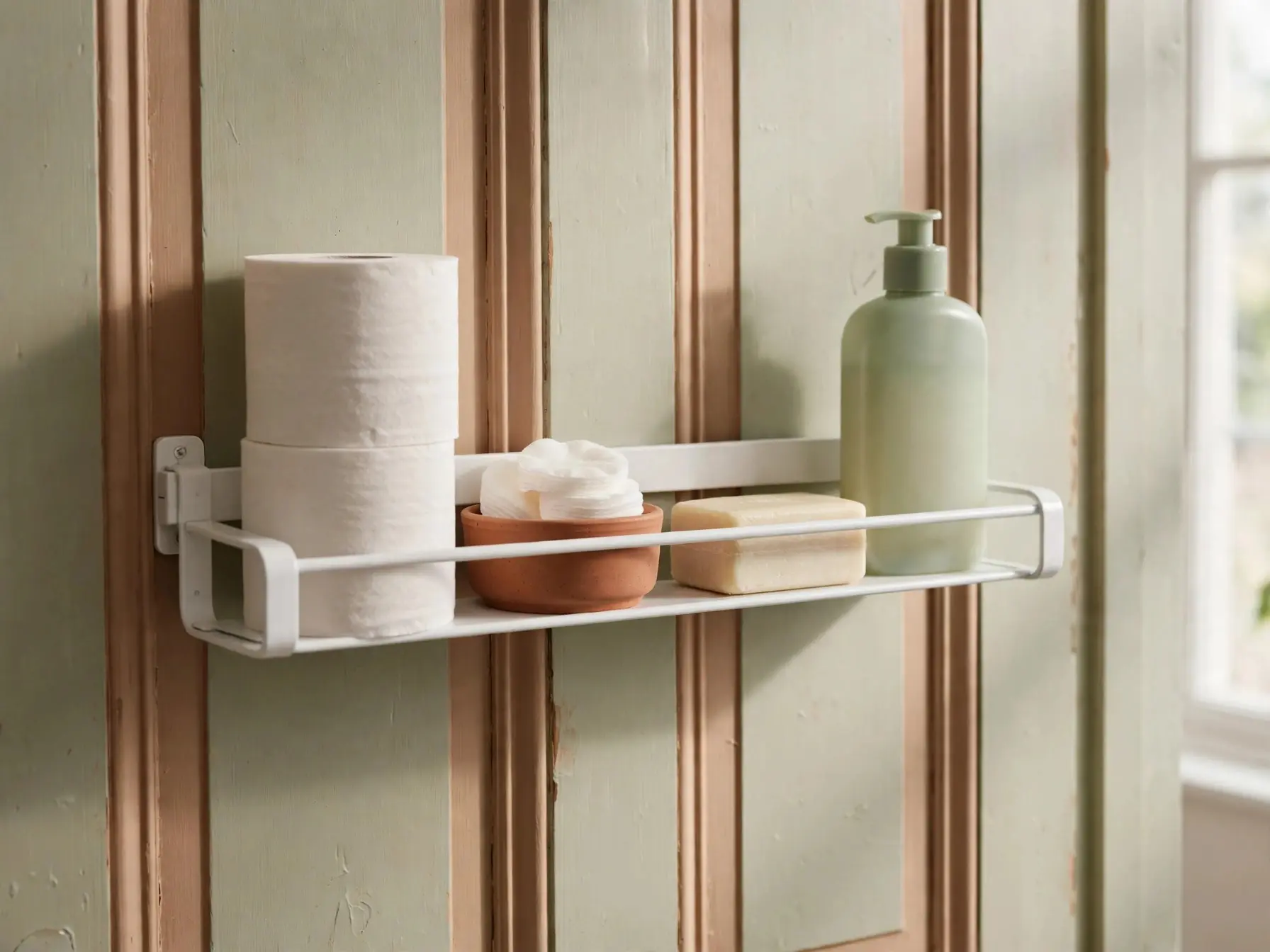
A shelf rail on the bathroom door is the backup cupboard you never had to build. It holds spare toilet rolls, cotton pads, spare soap and the next bottle of shampoo — the stock you reach for when the one in use runs out. Choose a rail with a solid base rather than open wire if you store small items, and keep anything in glass low, so a swinging door never sends it to the floor.
- Solid base for small items
- Glass bottles on the lowest rail
- Spare stock only — daily items stay at the sink
The nursery and kids’ doors: books and craft supplies
7. Book pockets on the nursery door
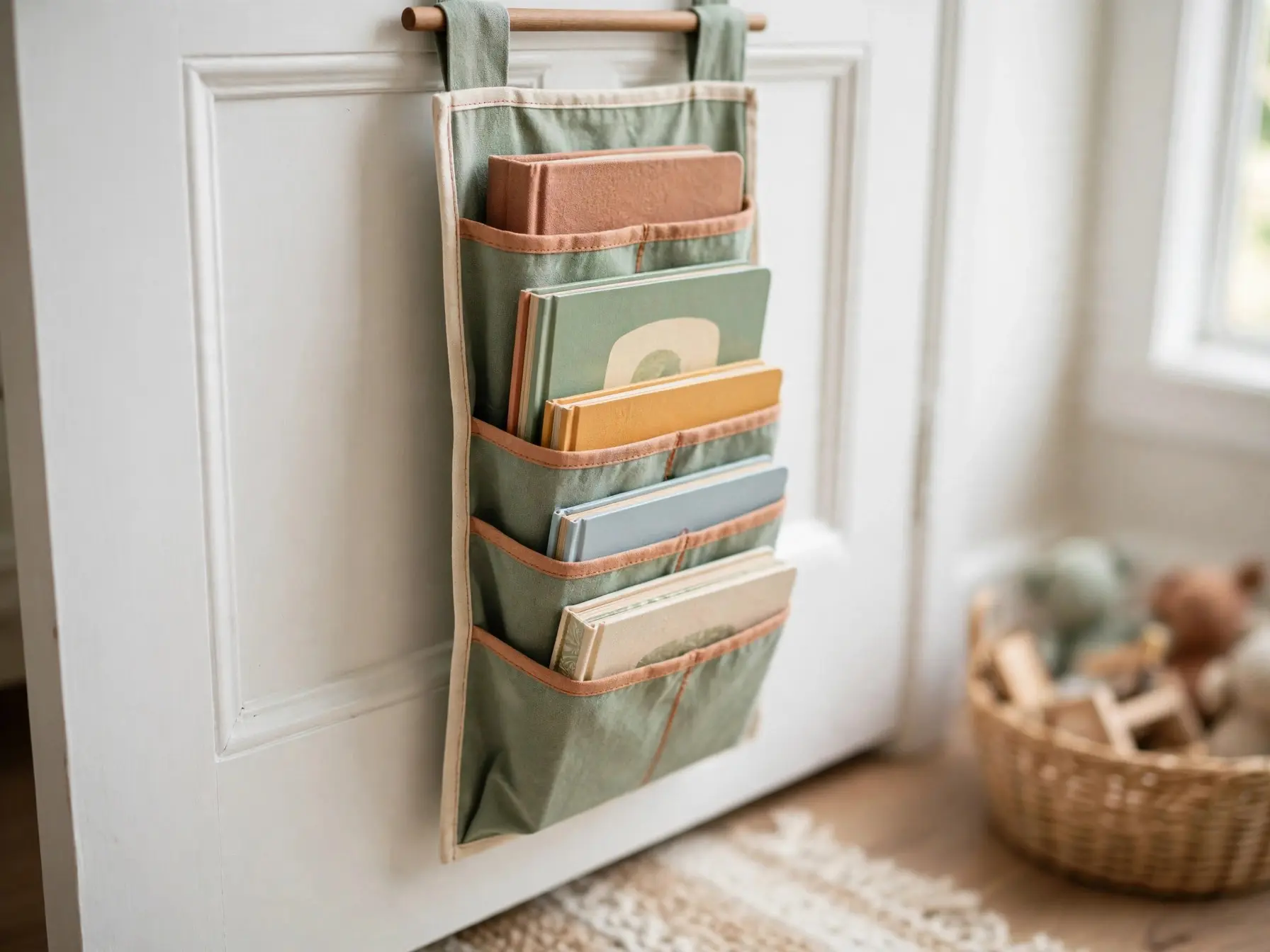
A pocket organizer on the nursery door becomes a tiny library at toddler height. Board books slide into the wide pockets spine-out, so a child can see the covers and choose one — and put it back in the same slot. Hang it low enough for small hands to reach, keep the heaviest books in the bottom row, and rotate the books every few weeks so the same ten titles do not go stale.
- Hang it low enough for small hands
- Books spine-out so covers show
- Rotate titles every few weeks
8. Craft-supply pockets for kids
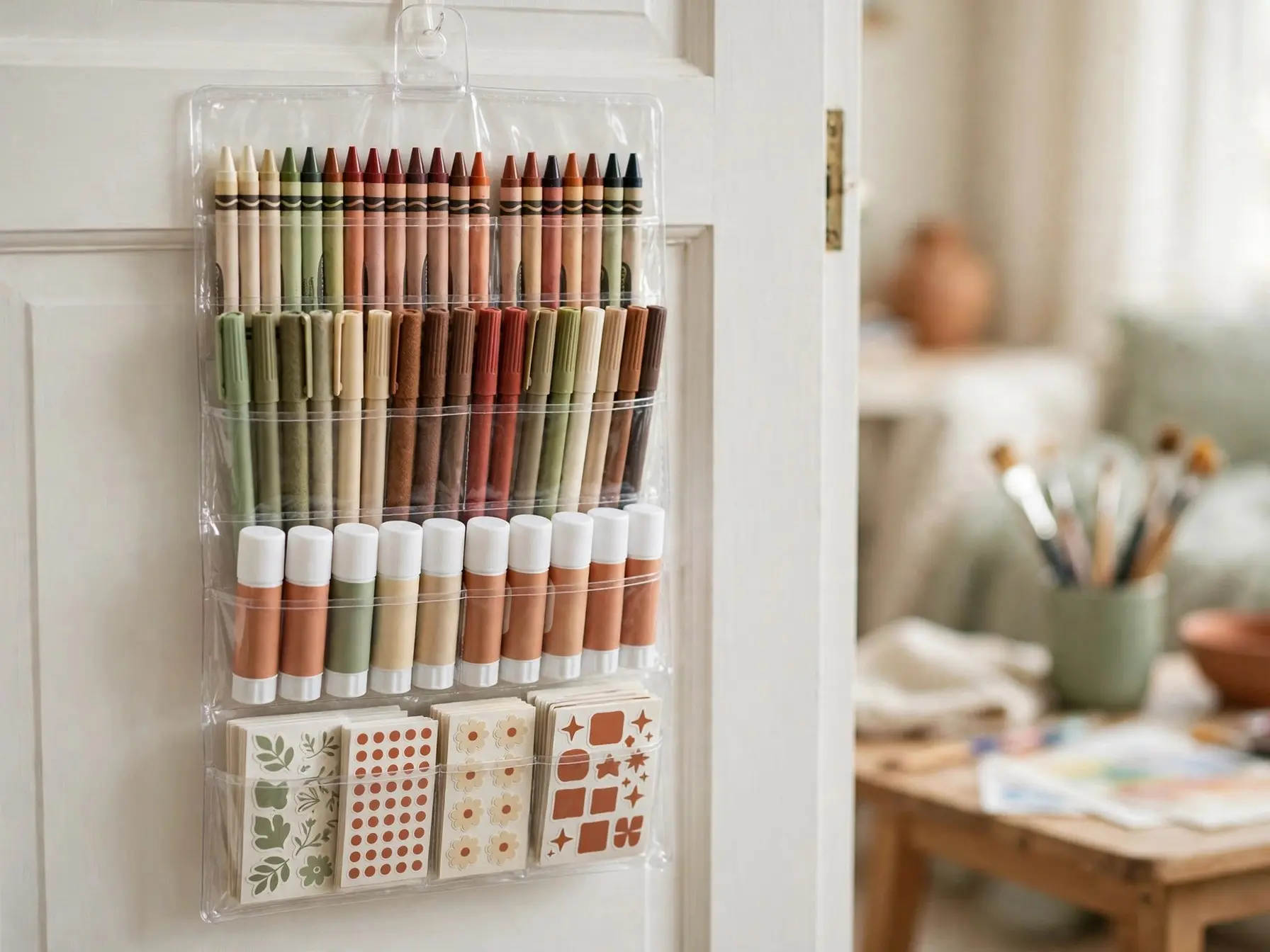
Crayons, felt tips, glue sticks and sticker sheets multiply fast — and a clear pocket organizer on the bedroom or playroom door keeps them sorted and visible. Give each pocket a job: crayons in one row, pens in the next, paper and stickers below. The see-through pockets mean children can find what they want without emptying a box, and putting away becomes a matching game.
- One pocket row per supply type
- Clear pockets so kids can see inside
- Scissors and glue on the top row, out of toddler reach
9. Small-shoe pockets for kids’ shoes
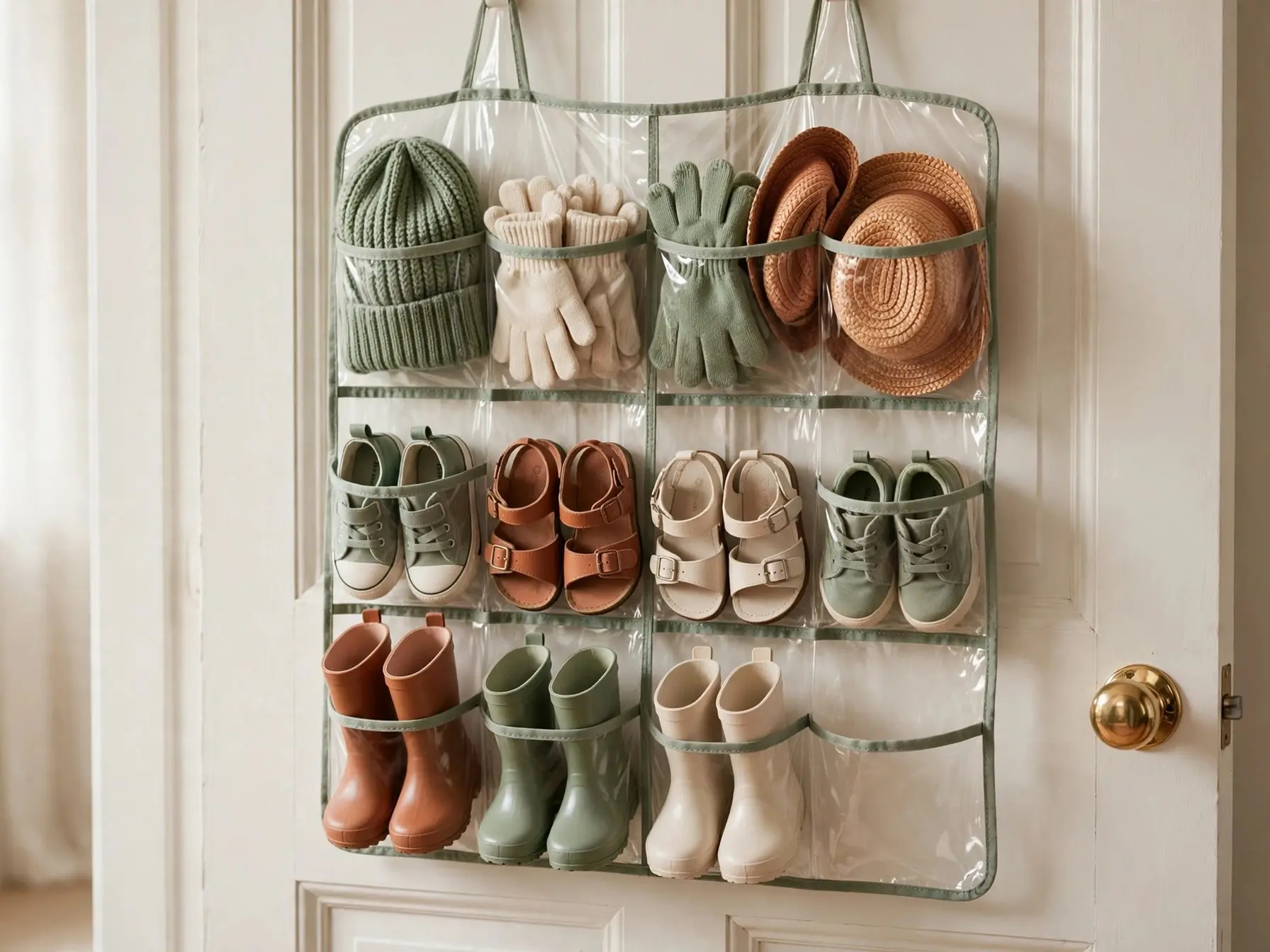
Children’s shoes are small enough to vanish into a pile — and small enough to fit two to a pocket. A pocket organizer on the bedroom door holds a week’s worth of shoes, sandals and rain boots in pairs, plus hats and gloves in the top row. Assign each child a column, keep the muddy pair at the bottom, and the morning shoe hunt disappears.
- One column per child
- Two small shoes per pocket
- Muddy pair in the bottom row
The cleaning cupboard door: sprays and cloths
10. Spray-bottle rail on the cleaning cabinet door
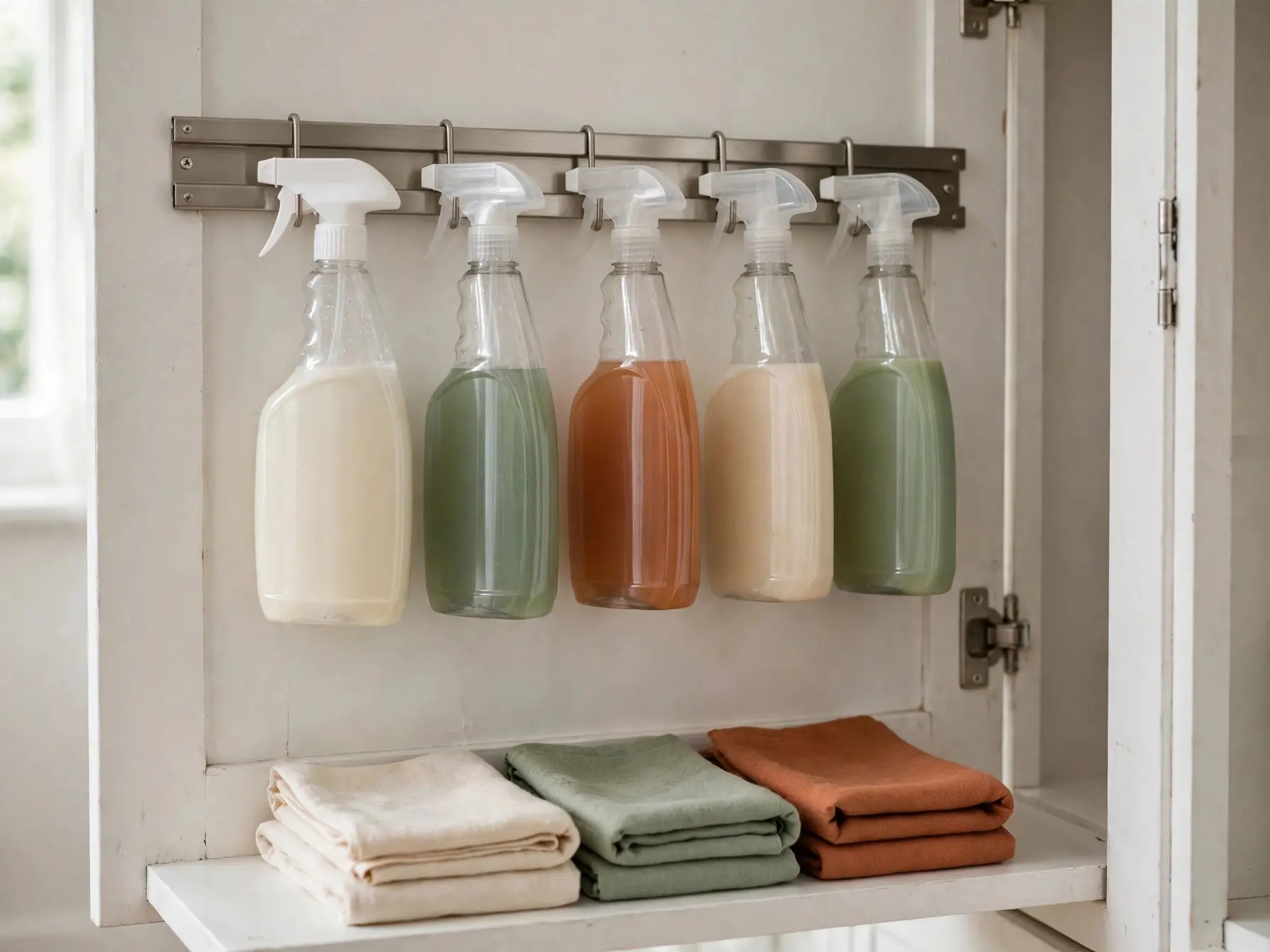
Cleaning sprays live best on the door of the cabinet they belong to. A rail with a lip holds spray bottles upright by their triggers, so they never topple and leak — and the shelf space below stays free for cloths and boxes. Measure the tallest bottle before you buy the rail, keep bleach-based sprays away from anything ammonia-based, and hang the rail on the inside so the door still closes flat.
- Measure the tallest bottle first
- Triggers facing out, bottles upright
- Bleach sprays kept apart from ammonia ones
11. Pocket organizer for cloths and gloves
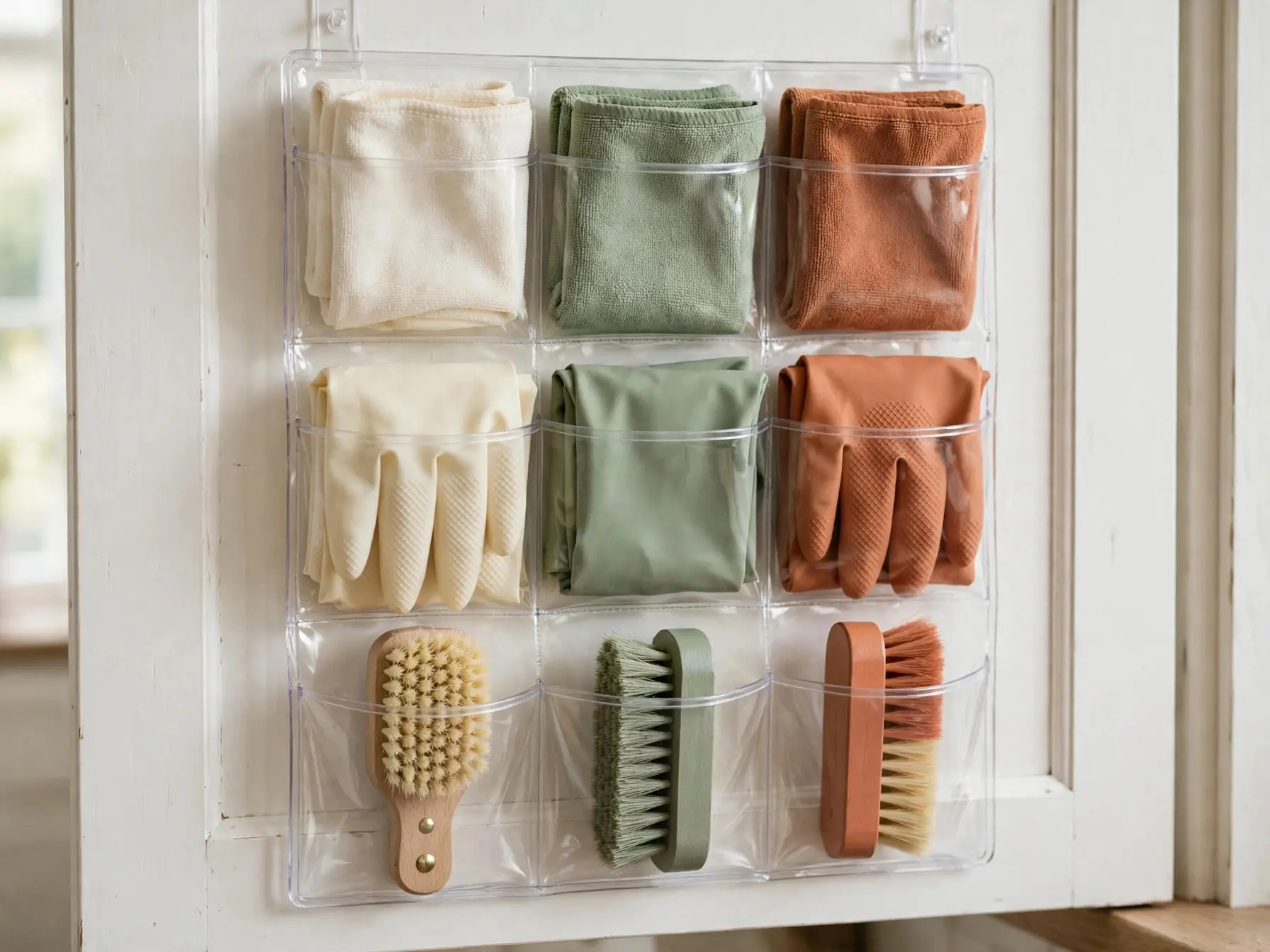
The small stuff — microfiber cloths, rubber gloves, sponges, scrub brushes — is what turns a cleaning cabinet into a jumble. A pocket organizer on the cabinet door gives each of them a home: cloths folded in one row, gloves in the next, brushes below. Everything is visible, nothing gets buried, and you can grab the whole kit in one motion on cleaning day.
- Cloths folded, one per pocket
- Gloves in their own row
- Brushes in the bottom pockets
The bedroom door: shoes and boots
12. 24-pocket shoe organizer on the bedroom door
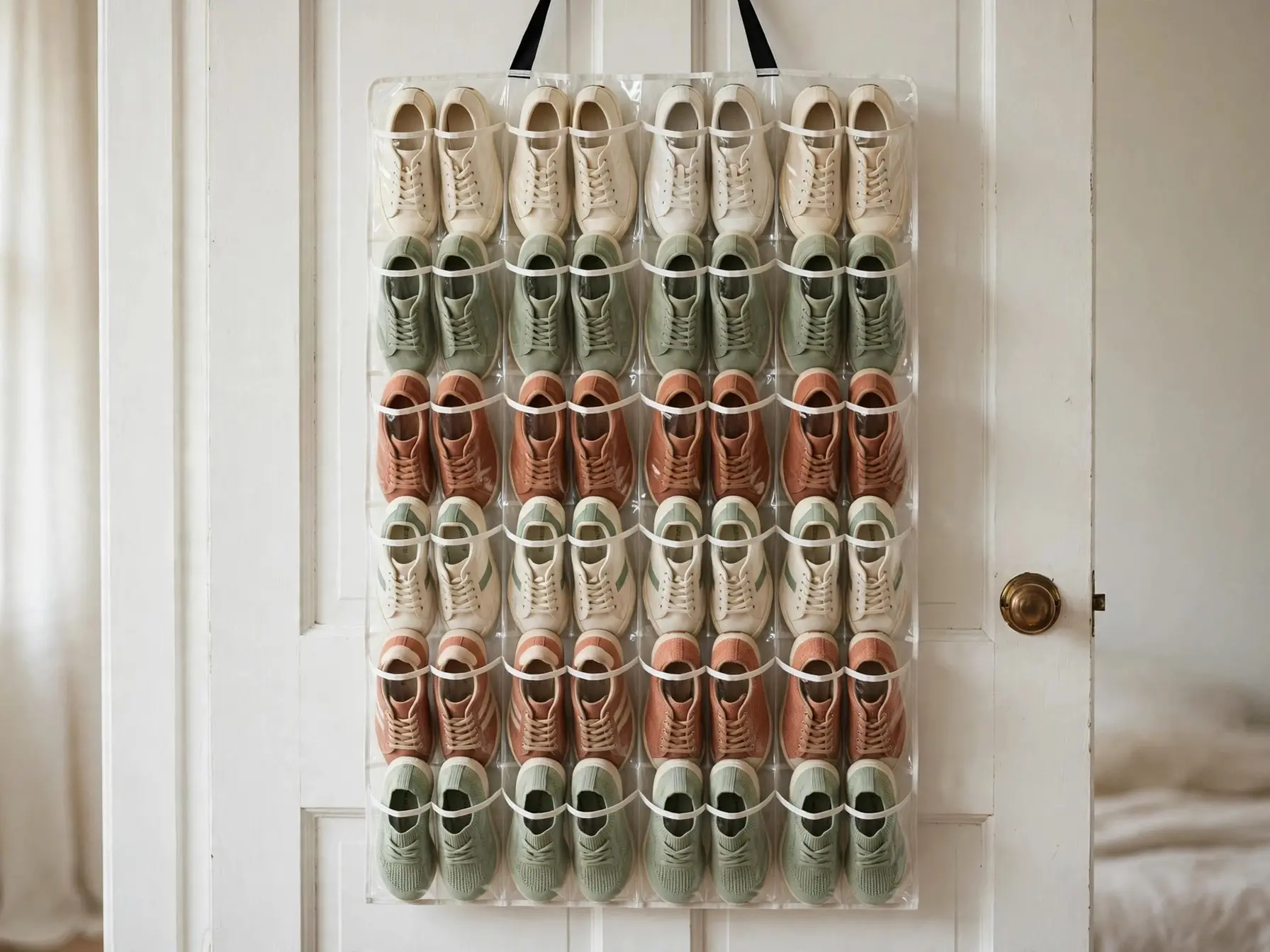
The classic over-door shoe organizer earns its place on the bedroom door: 24 clear pockets hold a whole rotation of shoes without taking a single inch of floor. Pairs go in toe-first so heels do not snag, the heaviest shoes sit in the bottom row, and the top row — the hardest to reach — is for the pair you wear least. Clear pockets mean you can see the pair you want before you open the door.
- Pairs in toe-first
- Heaviest shoes in the bottom row
- Least-worn pair in the top row
13. Hook rail for boots and heels
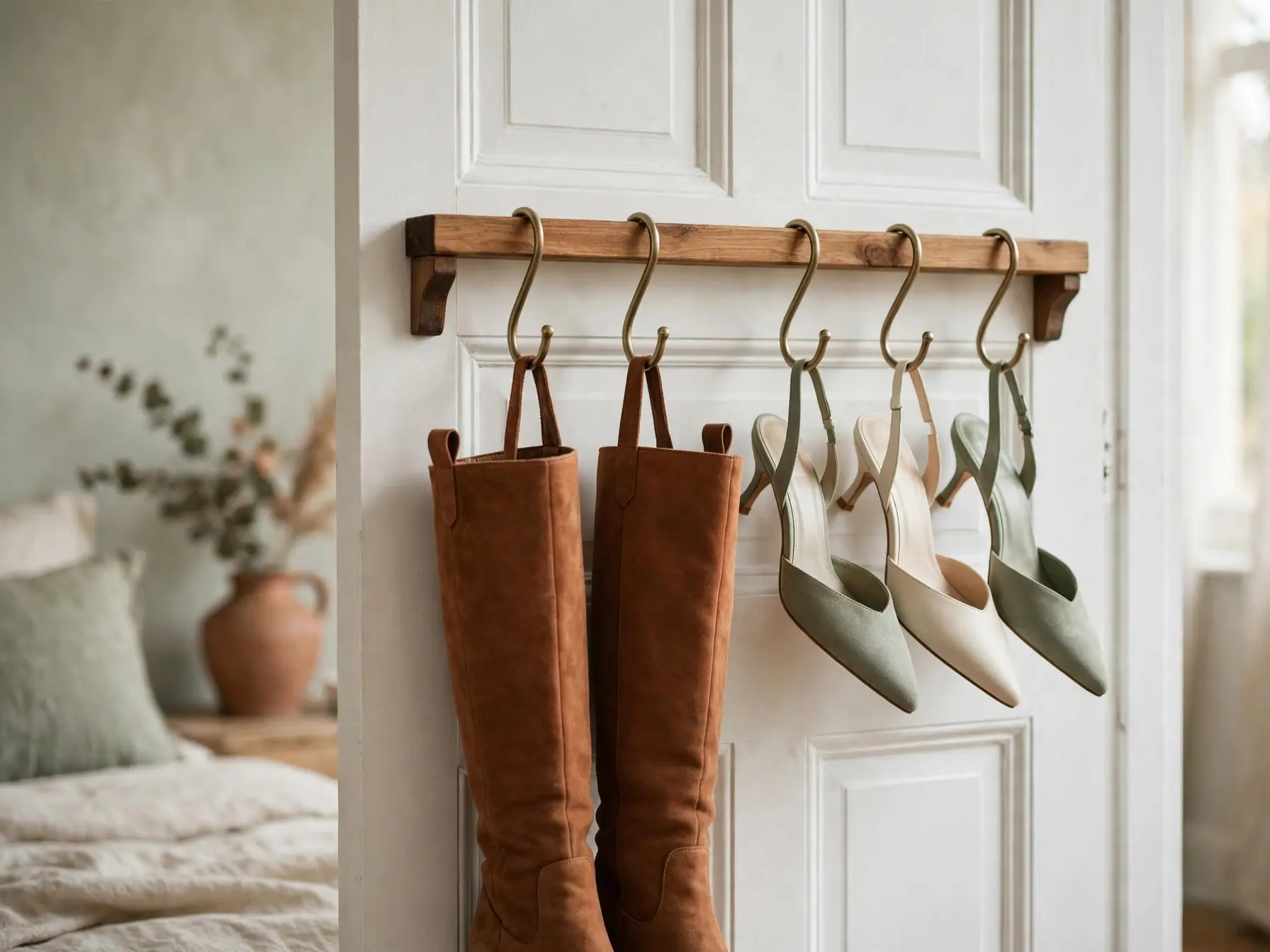
Boots and heels do not fit pockets, but they hang beautifully from a hook rail. Wide S-hooks looped over the rail hold boots by their pull tabs and heels by their straps, keeping them off the floor and holding their shape. Keep the rail on a door that opens against a wall — not one that swings into a walkway — and add felt pads behind each hook so the door paint stays clean.
- Wide S-hooks for boots and heels
- Door that opens against a wall
- Felt pads behind every hook
The closet and entryway doors: gift wrap and grab-and-go
14. Gift-wrap station on the closet door
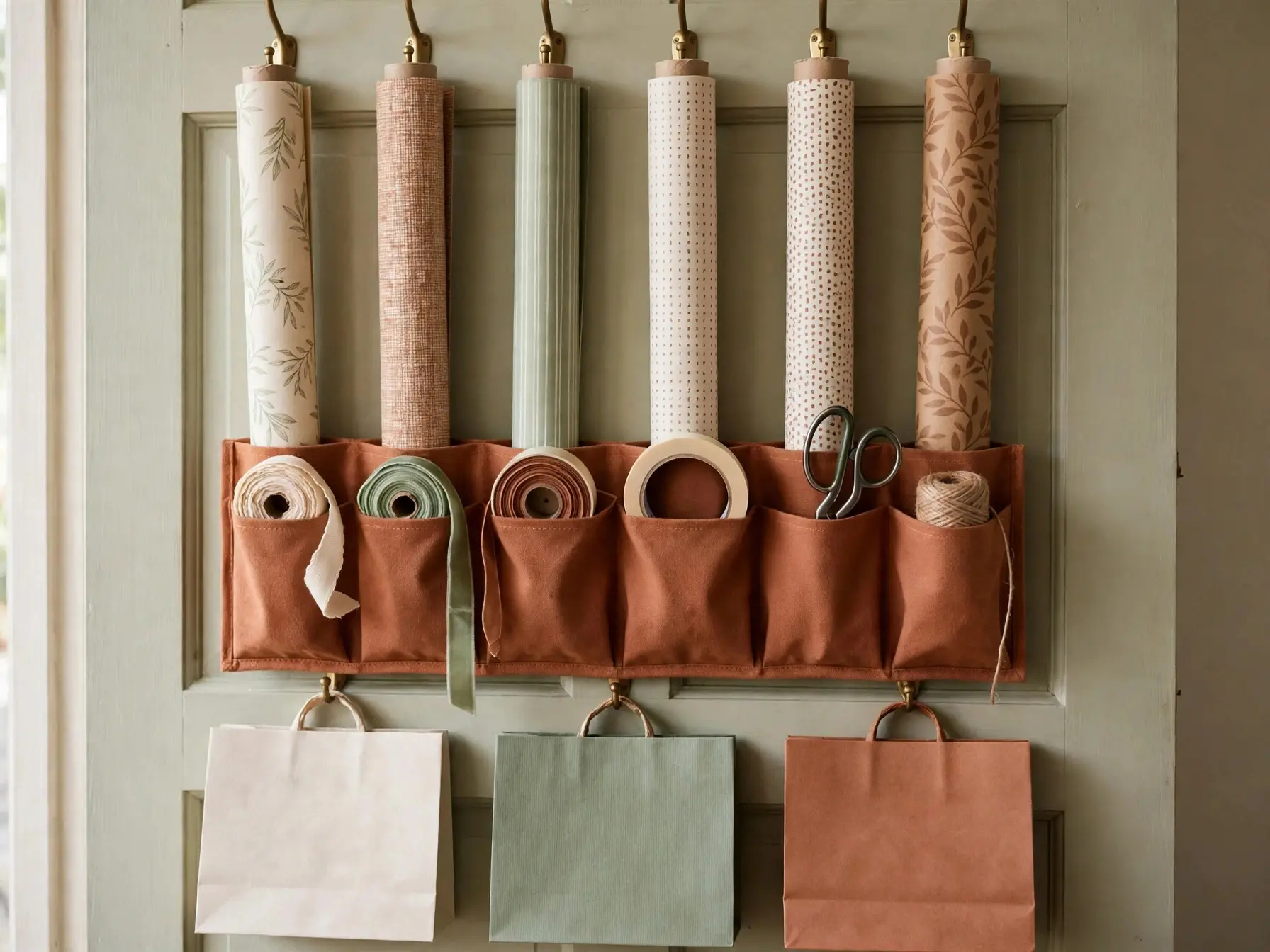
Gift wrap rolls are long, awkward and always in the way — until they live on the back of a closet door. A pair of hooks or a narrow rail holds the rolls upright, a small pocket row holds ribbon, tape and scissors, and a gift-bag hook keeps the bags flat. Everything for wrapping sits in one place, the rolls stay uncreased, and the closet floor is free again.
- Rolls upright on hooks or a rail
- Ribbon, tape and scissors in pockets
- Gift bags hung flat on their own hook
15. Entryway door: keys, leash and sunglasses in one row
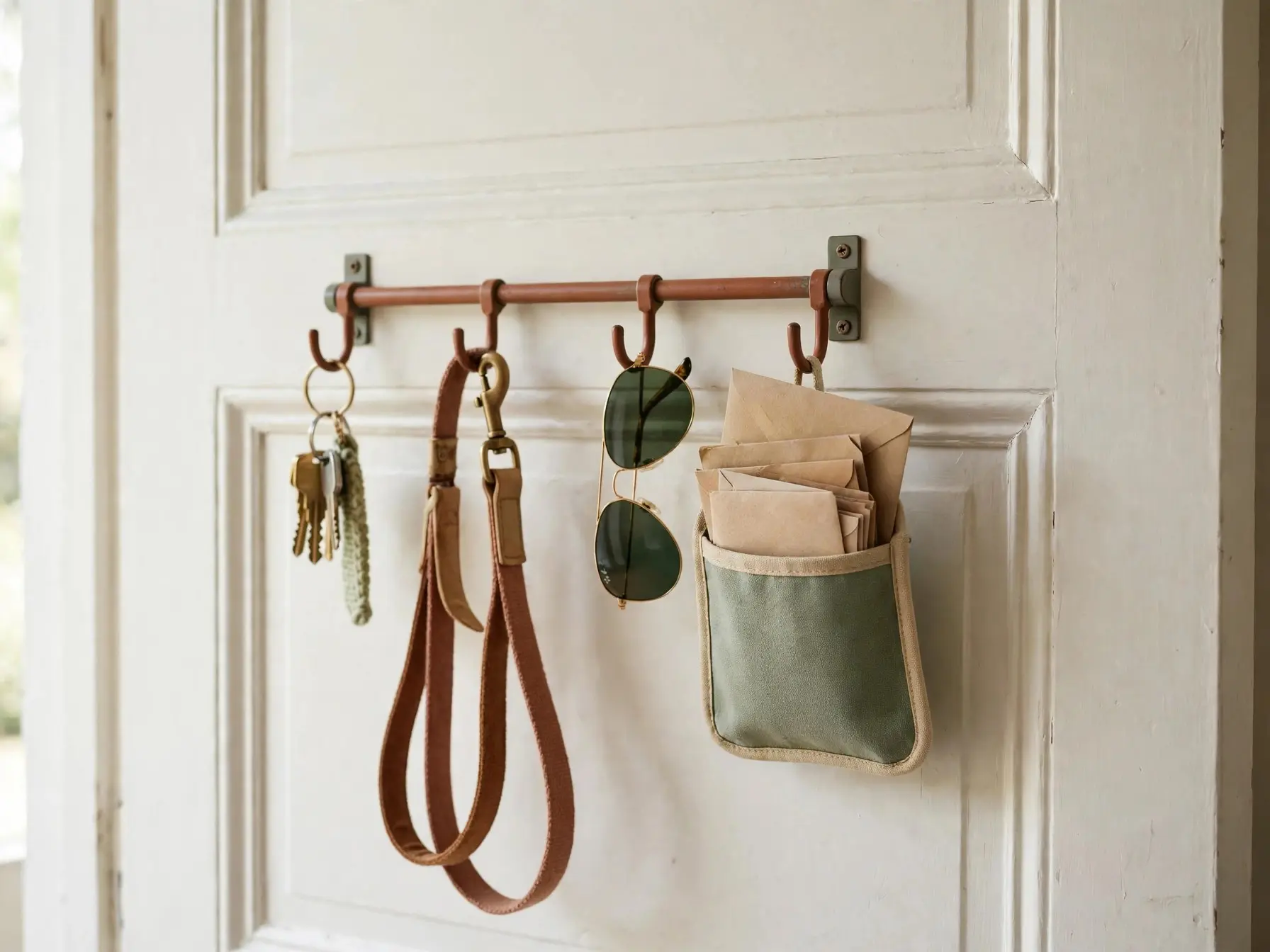
The last door in the house to get organized is usually the one you use most. A short pocket row or hook rail on the inside of the entryway door holds keys, the dog leash, sunglasses and the day’s outgoing mail — the four things you hunt for every morning. One hook per person keeps it fair, the leash hangs by the door so walks start without a search, and nothing here is heavy enough to strain the door.
- One hook per person
- Leash by the door for walk time
- Outgoing mail in the top pocket
Pocket, shelf rail or hook rail? The buyer’s table
Three types cover almost every over-door job, and they are not interchangeable. Pockets are best for light, flat things you want to see at a glance. Shelf rails carry the heavier stock. Hook rails are for things that hang. Pick the type for the room first, then the size — the table below is the shortcut.
| Type | Best for | Capacity | Door damage risk |
|---|---|---|---|
| Clear pocket organizer | Shoes, pantry packets, toiletries, craft supplies | Light items, one per pocket | Low — felt pads on the hooks, keep the load light |
| Shelf-style rail | Cans, jars, spice bottles, bathroom stock | Heavier items, weight sits on the rail | Medium — check the hooks, keep heavy items low |
| Hook rail | Towels, coats, bags, leashes, gift-wrap rolls | A few hanging items per hook | Low — felt pads stop paint rub, never overload one hook |
Whichever type you choose, two habits keep the door safe: felt pads where metal touches the door, and the heaviest items low. Check the hinges after the first week — if the door drags or squeaks, lighten the load before it gets worse.
Questions, answered
Do over-the-door organizers damage doors?
Usually not, if you fit them properly. The risk comes from three things: hooks rubbing paint, too much weight pulling the door out of square, and screws drilled into the door. Avoid all three and most doors are fine: stick felt pads where metal touches the door, keep the load light and spread across both hooks, and choose organizers that hang rather than screw in. If your door is hollow-core — most interior doors are — never screw into it. Check the hinges after the first week: if the door drags, lighten the load.
What can you store in an over-the-door organizer besides shoes?
Almost anything light and flat: pantry packets and spice jars, bathroom toiletries and hair tools, cleaning cloths and spray bottles, kids’ books and craft supplies, gift wrap and ribbon, hats, gloves and scarves. The rule is weight and shape — if it fits a pocket without stretching it and the pocket row stays light, it belongs. Heavy or fragile items like full cleaning-product bottles and glass jars belong low, on a shelf rail, not in a pocket.
How much weight can an over-the-door organizer hold?
It depends on the organizer and the hooks, so check the product’s stated limit before you load it — most pocket organizers are built for light items, and the limit is usually set by the hooks, not the fabric. Two over-door hooks share the load better than one, and the weight should sit low: heavy items in the bottom pockets, light items up top. If the door starts to drag, squeak or not close properly, take weight off straight away — that is the door telling you it is overloaded.
Are over-the-door organizers renter friendly?
Yes — they are one of the most renter-friendly storage options there is. Nothing is drilled, screwed or stuck to the wall: the organizer hangs over the door and lifts off when you move out. Add felt pads where the hooks touch the door and you leave no marks at all. The only caution is your lease: a few tenancies ban over-door hooks on fire doors, so check the fire door in your flat before hanging anything on it — and never block a fire door from closing.
Keep reading
Doors are only the start — the shelves and cubes behind them need the same treatment. Our guide to storage cubes ideas shows how to give every shelf a job, how to store seasonal clothes covers the off-season swap, and closet organization ideas takes the same room-by-room approach to the whole closet. Start with one door, then let the system spread.
Fifteen doors, fifteen ideas, one habit: use the back of the door before you buy another shelf. The space was always there — now it is working.